Pingyao
If you happened to be 60 miles south of Taiyuan and didn't know better, you might skirt the fringe of Pingyao and not bother looking around.
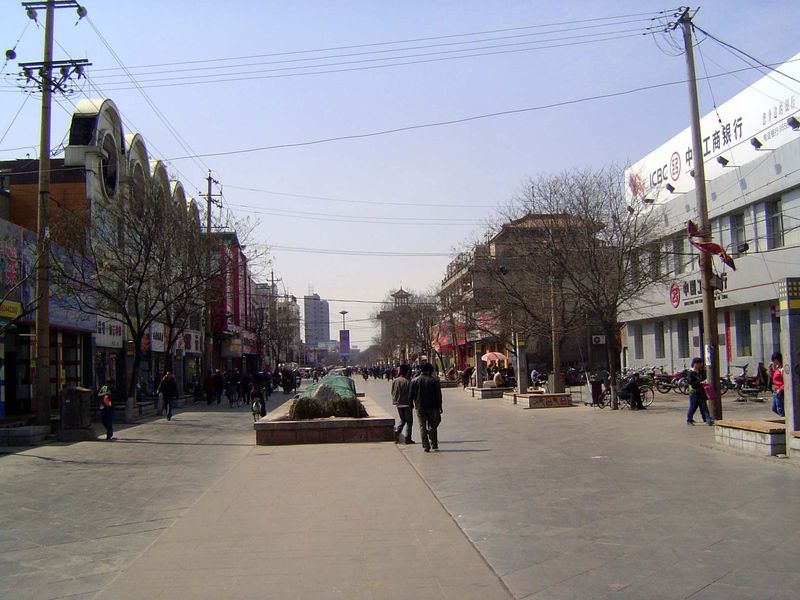
You might think it was like a thousand other Chinese towns of 50,000. (You'd know better if you actually stood on this spot, because it's just outside the Gongji Gate.)
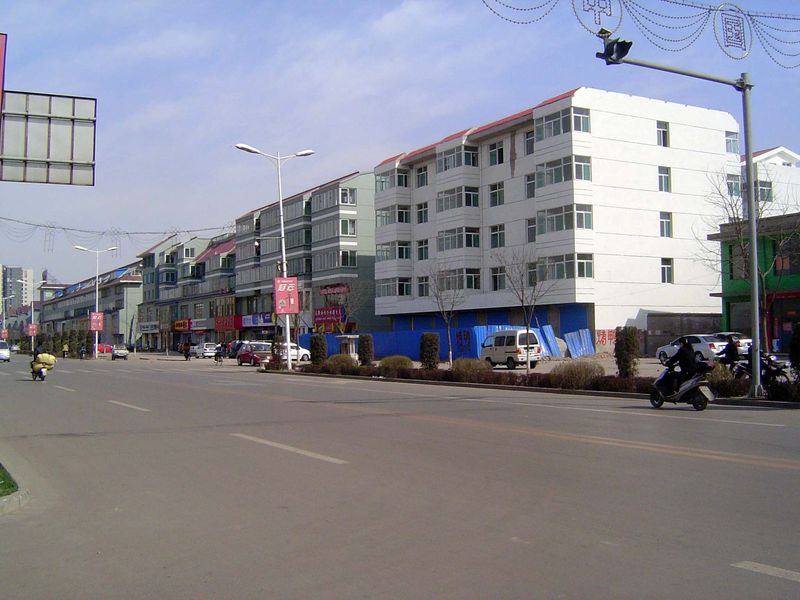
There's plenty of new housing and wide roads.
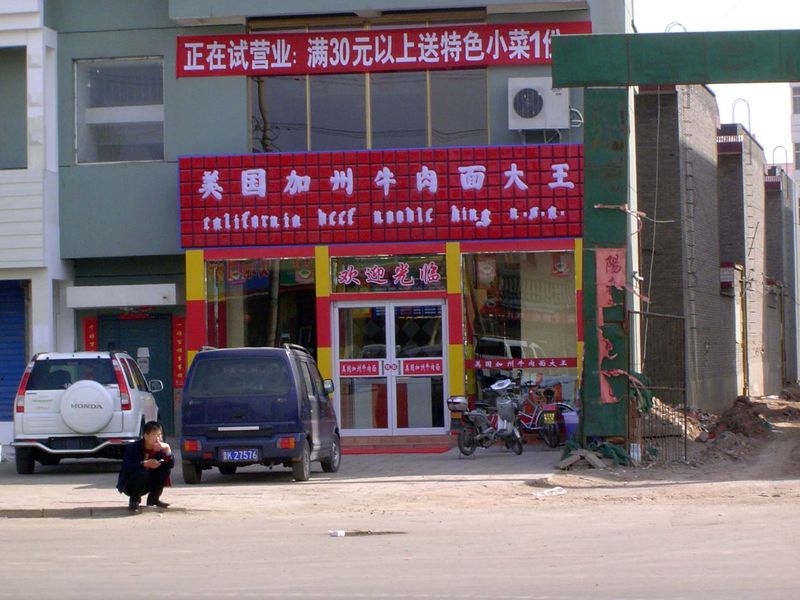
Knock-off fast food.
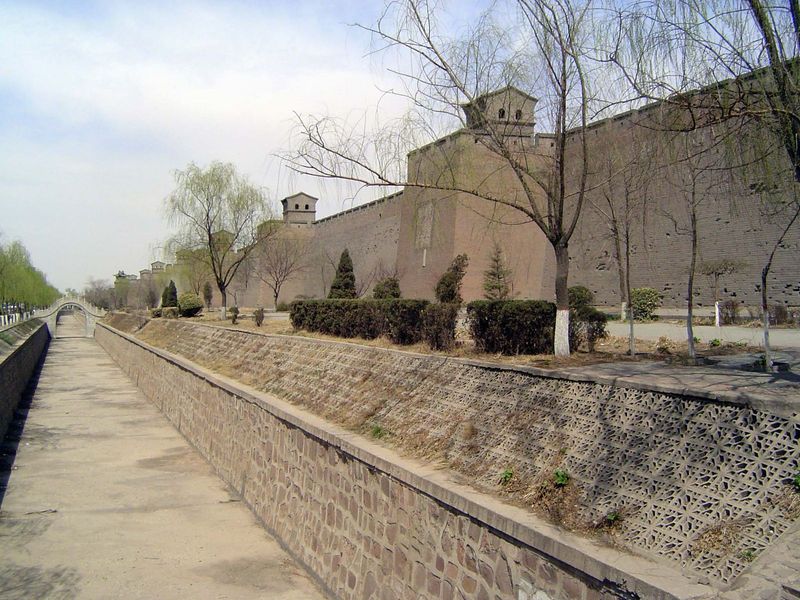
Pingyao has been a UNESCO World Heritage site since 1997, but its luck began 20 years earlier, when the city wall protected the urban core from a flood. In 1981, the government contemplated demolishing the wall anyway. A planner then suggested that the old city might, if kept intact, become a tourist magnet. Which indeed it has. Here the view is of the wall at the Fenyi or west-side gate. The wall is rectangular with a total length of about 4 miles.
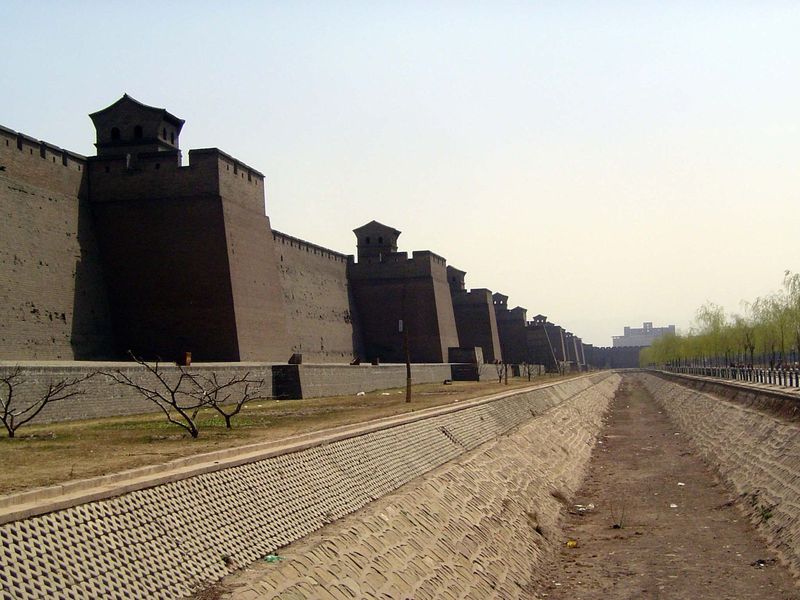
The view looking the other way. The body of the wall is of earth, sensibly obtained during the excavation of the moat.
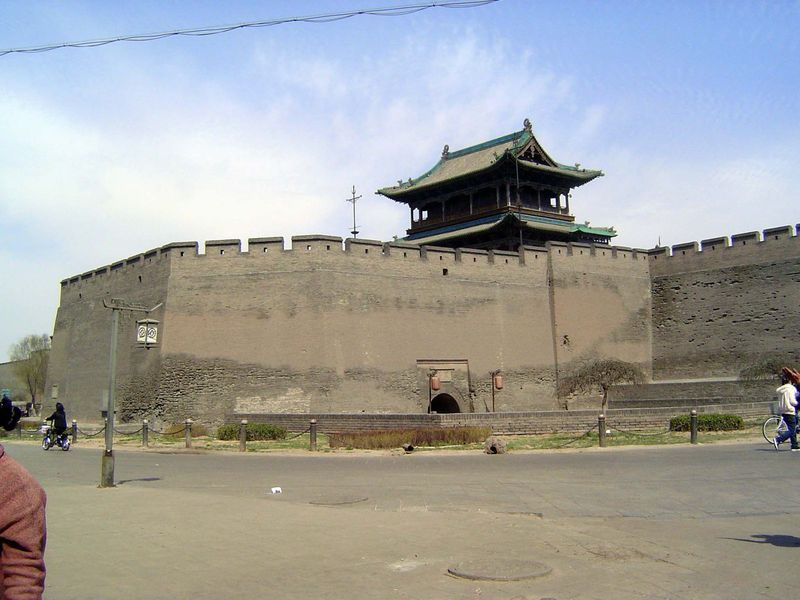
The western or Fengyi Gate, one of four main gates. The wall was built in 1370, when it replaced a wall enclosing only the southeast part of the presently enclosed area. The wengcheng barbican shown here was added in the Ming Dynasty. All the main gates were named by Liu Xu, county magistrate in 1851.
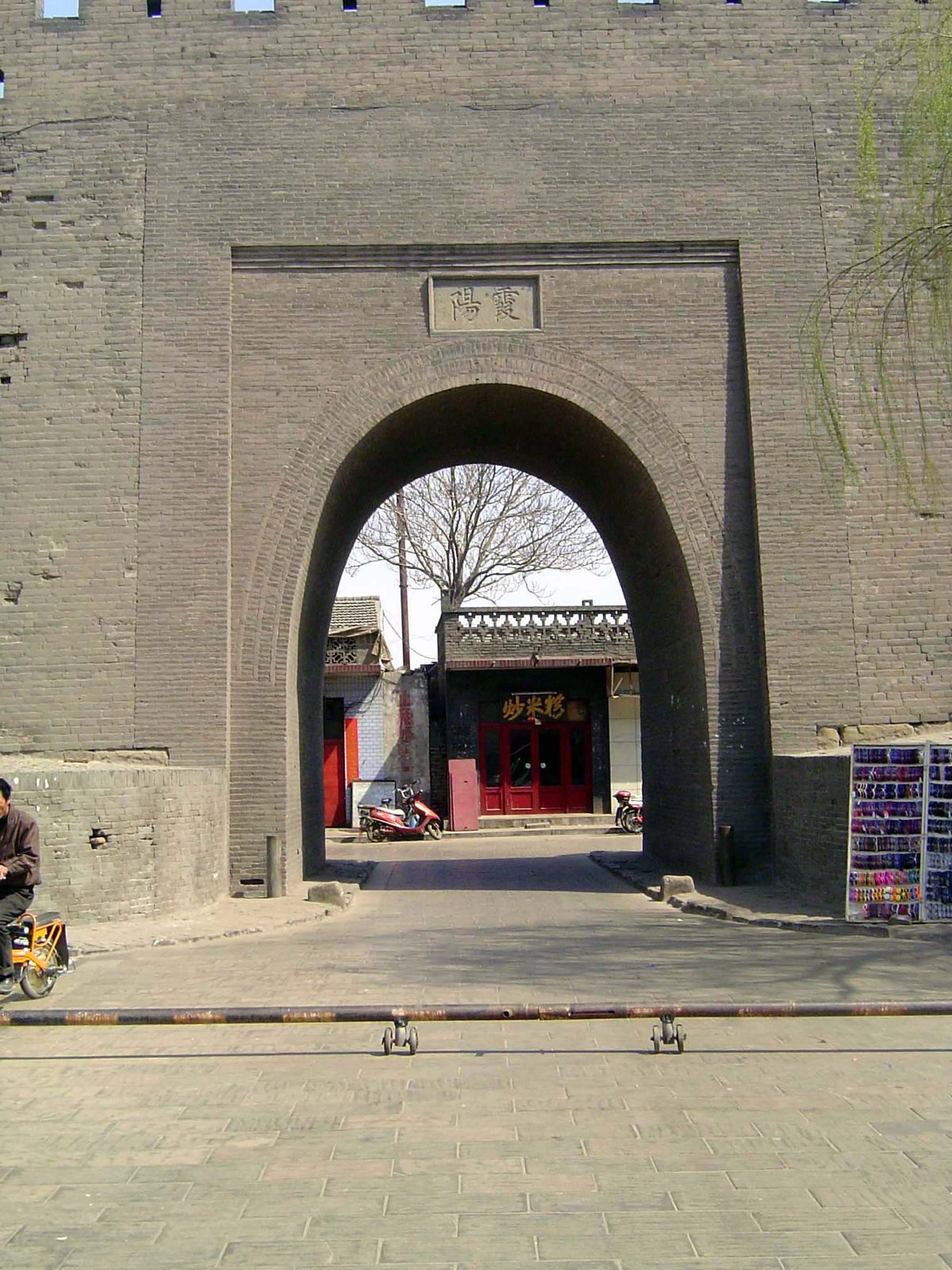
A simpler entrance nearby shows that the city is now organized to discourage vehicles with more than two wheels. The minute you pass inside, you'll appreciate the difference.
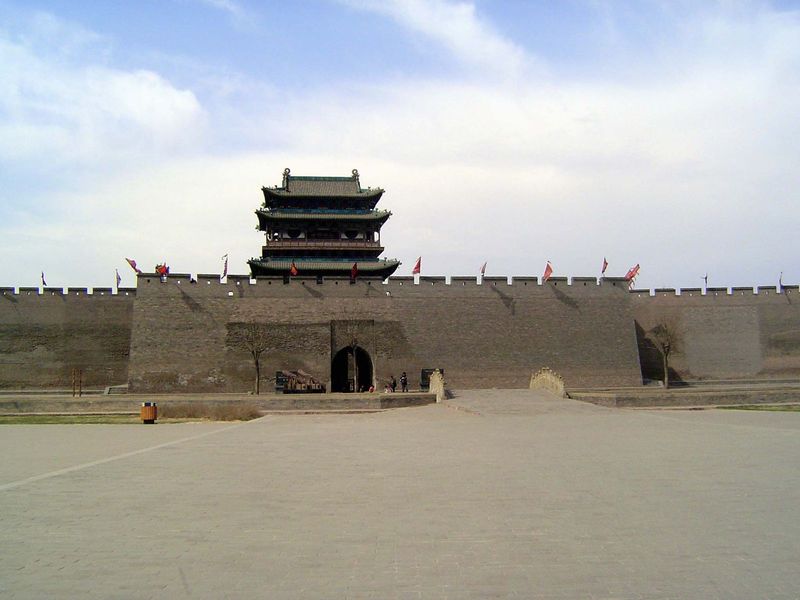
Before we go in, we'll do a bit of a circuit, here with the southern or Ying Xun Gate, built in 1703. The immense modern plaza is yet another indicator of China's continuing obsession with the Forbidden City.
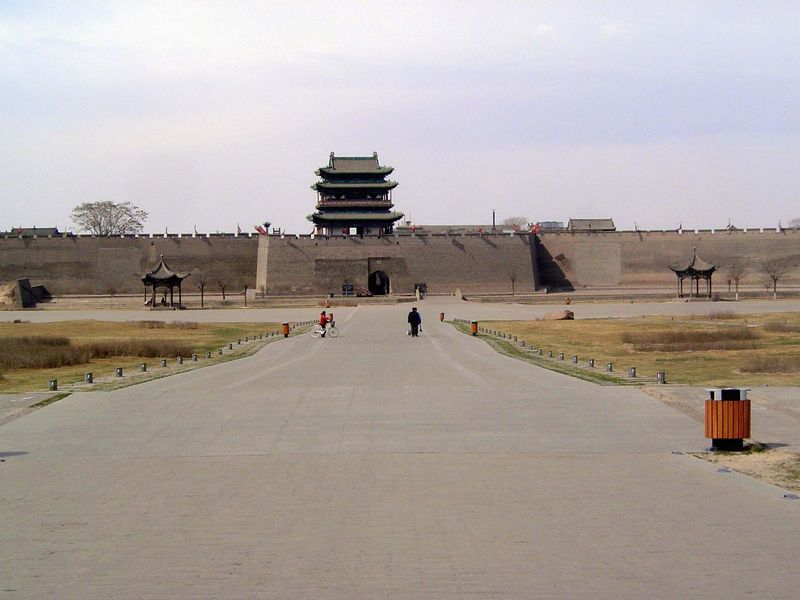
Create a dead zone and call it grand.
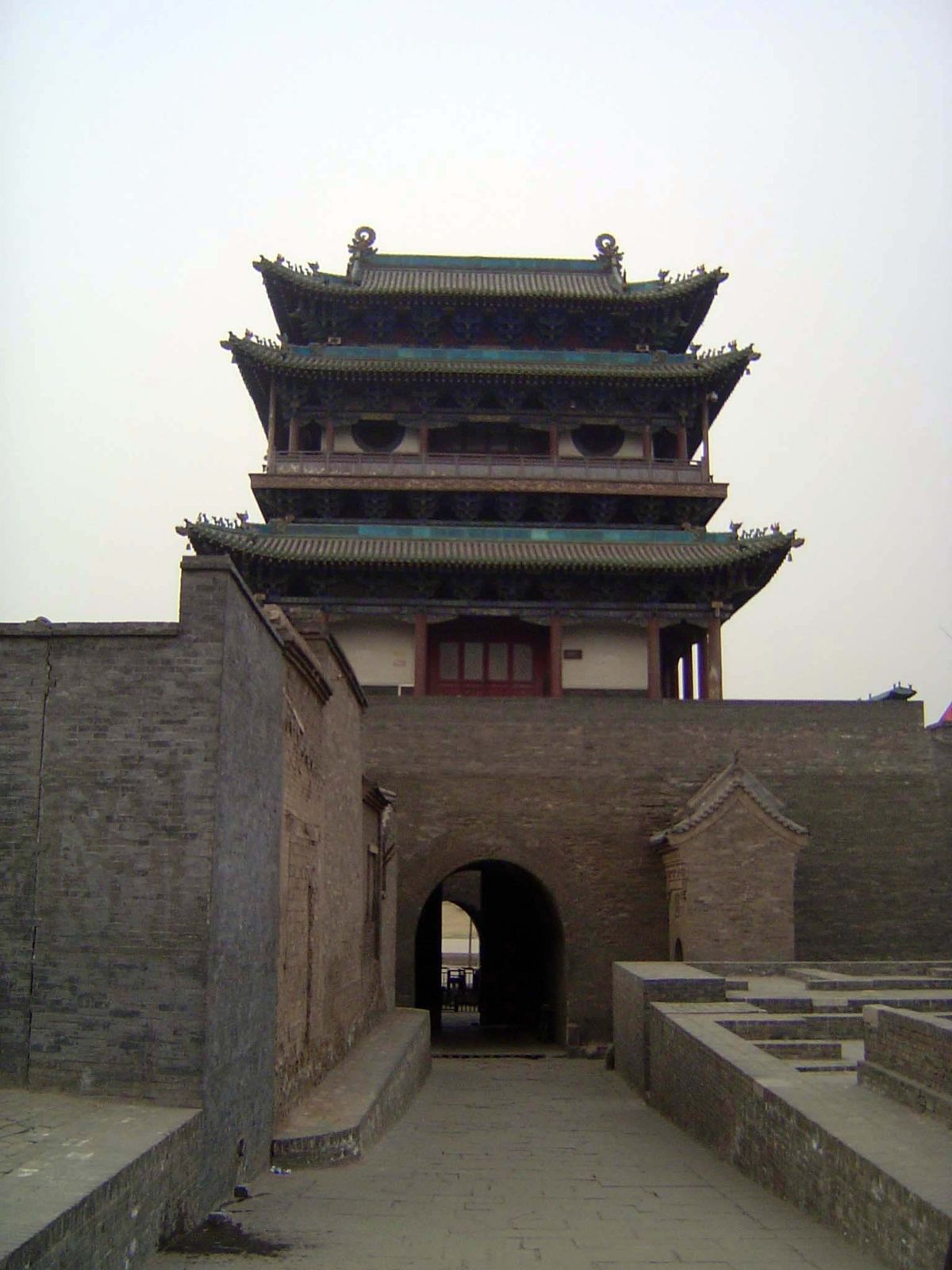
The view of the same gate from the inside. The entrance in this case has no right-angle turns, supposedly rendered superfluous by the river running outside.
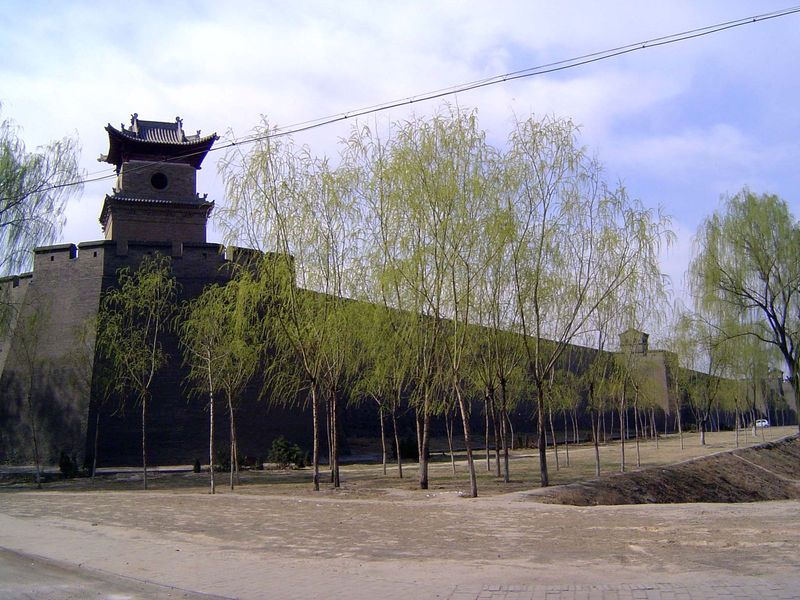
The southeast corner and Kui Xing Tower.
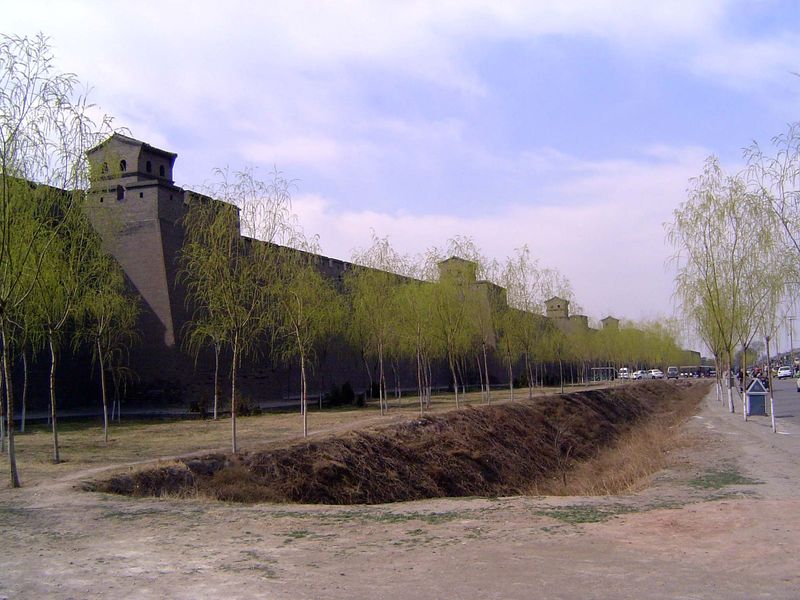
The east wall.
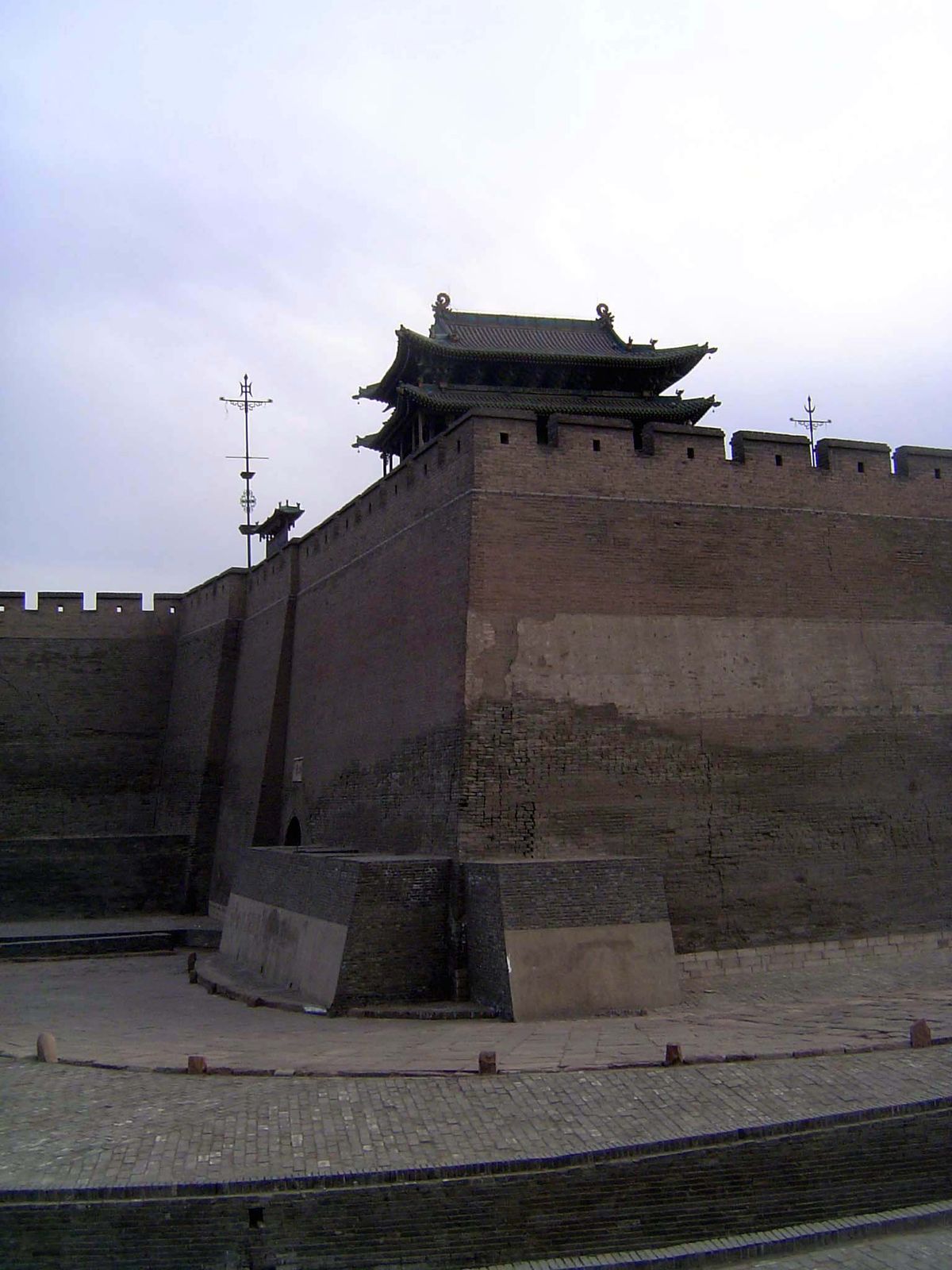
The north or Gongji Gate.
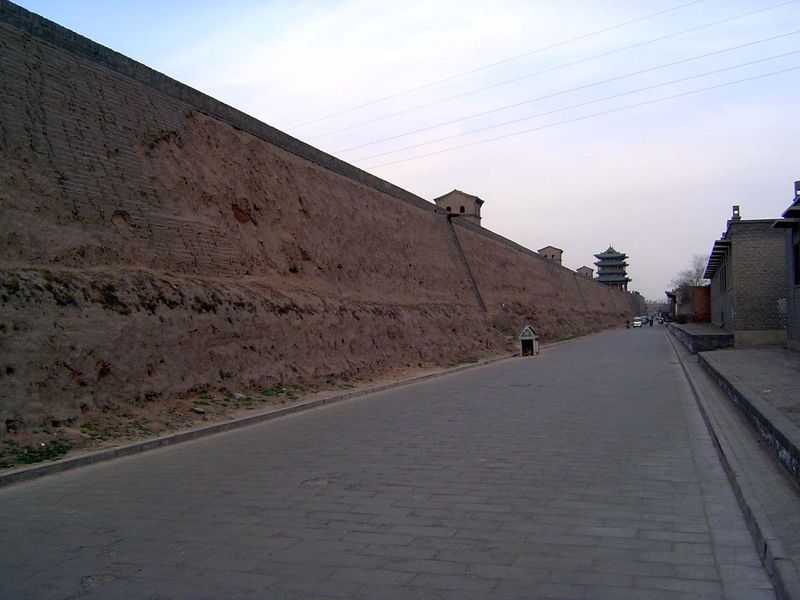
The unfaced inside surface of the wall, here on the north side, reveals the wall's earth core.
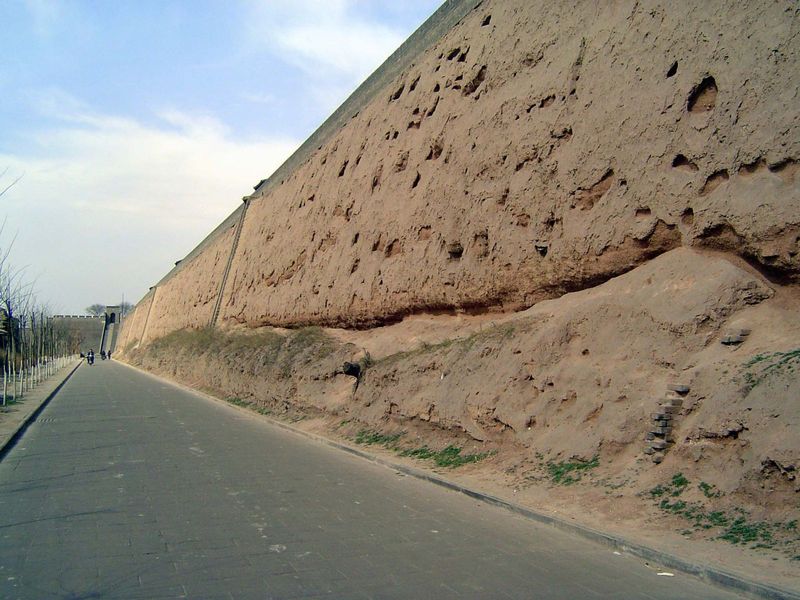
The enemy here is water.
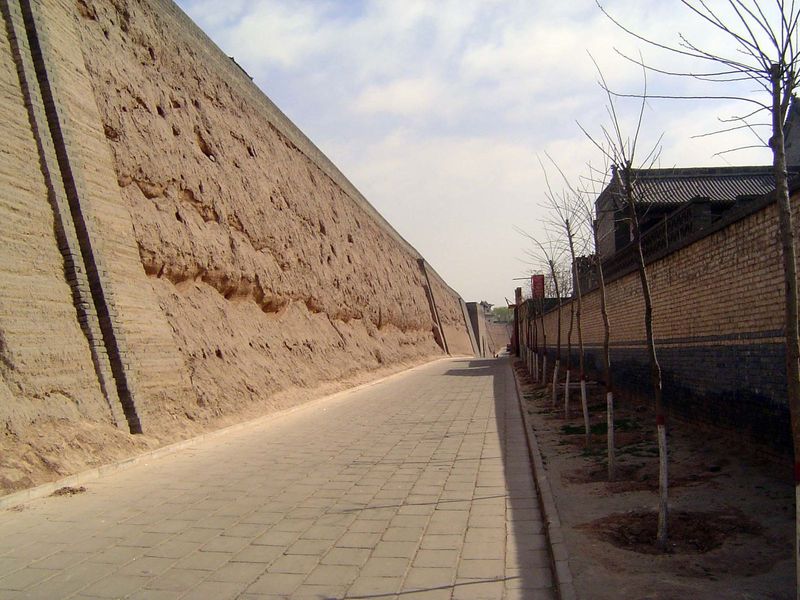
The solution is periodic drains, like these.
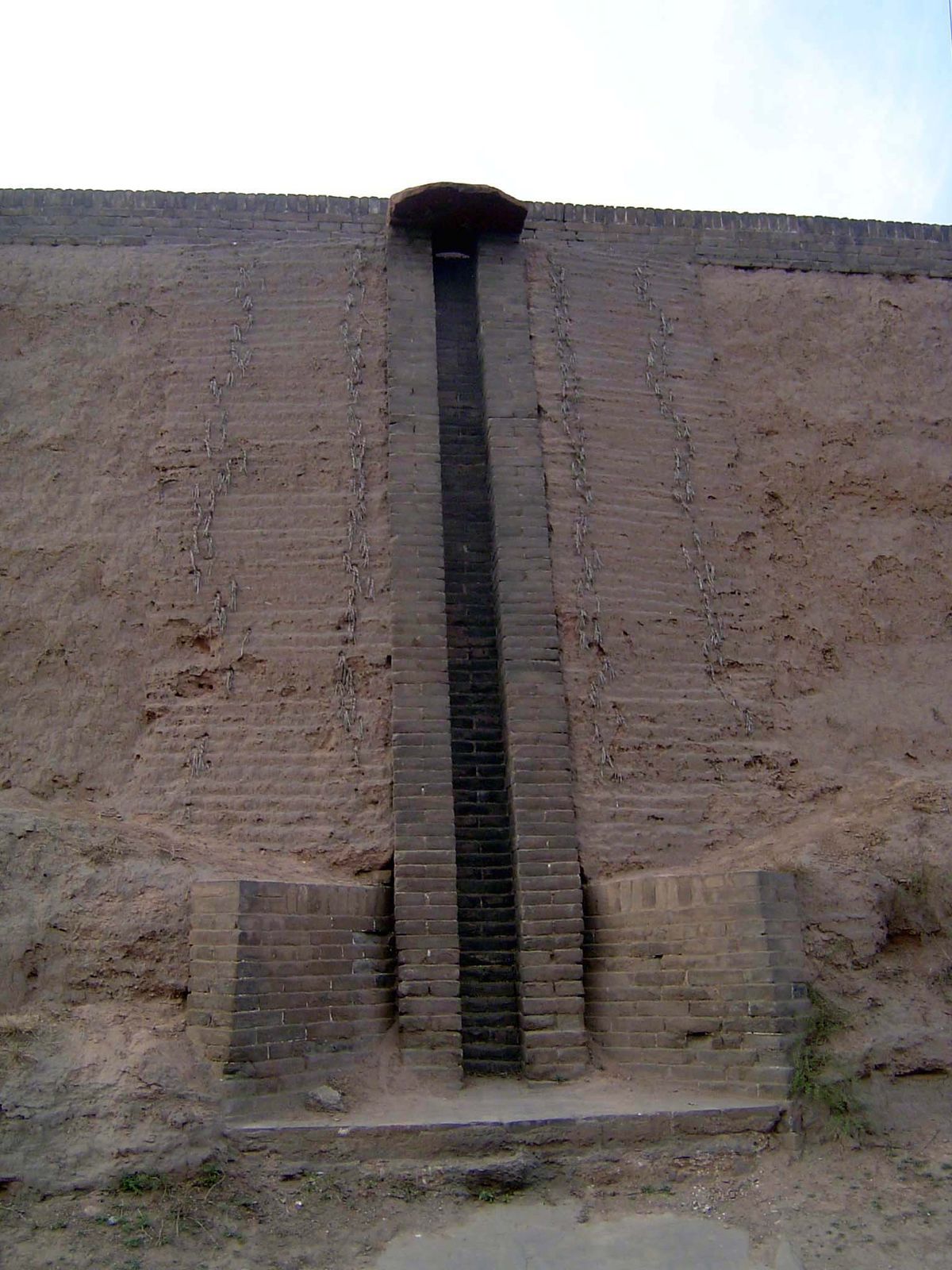
Close-up.
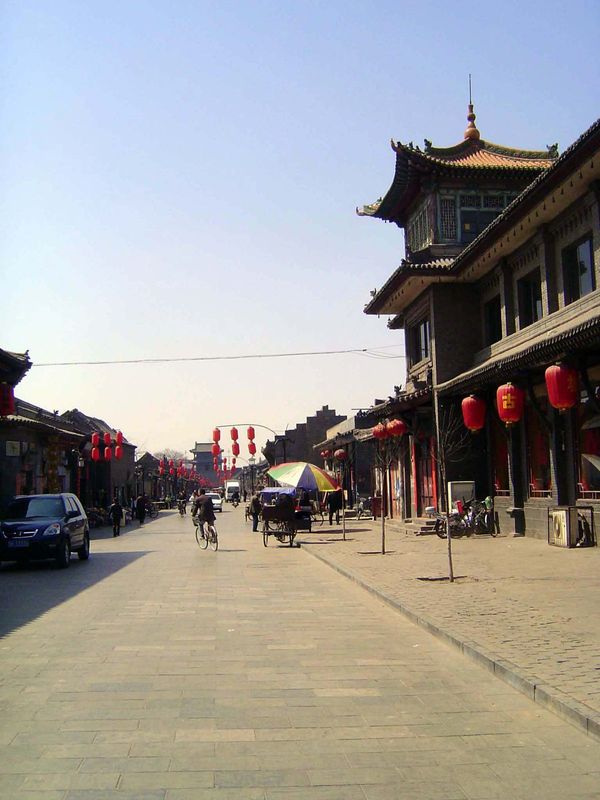
We'll venture inside the west or Fengyi Gate. Predictably, the streets are gridded. This is the primary east-west street, which runs from gate to gate. The layout is imperfect because of the expansion of the city in the 14th century. The main streets preserve the original pattern of a main east-west and a main north-south street, but those streets now occupy only the southeast corner of the walled area. The street shown here, which is the main east-west street of the expanded city, lies atop the original north wall, extended west to the gate here in the distance. Yes, there are a few cars, but not many. It's a fine place for bicycles.
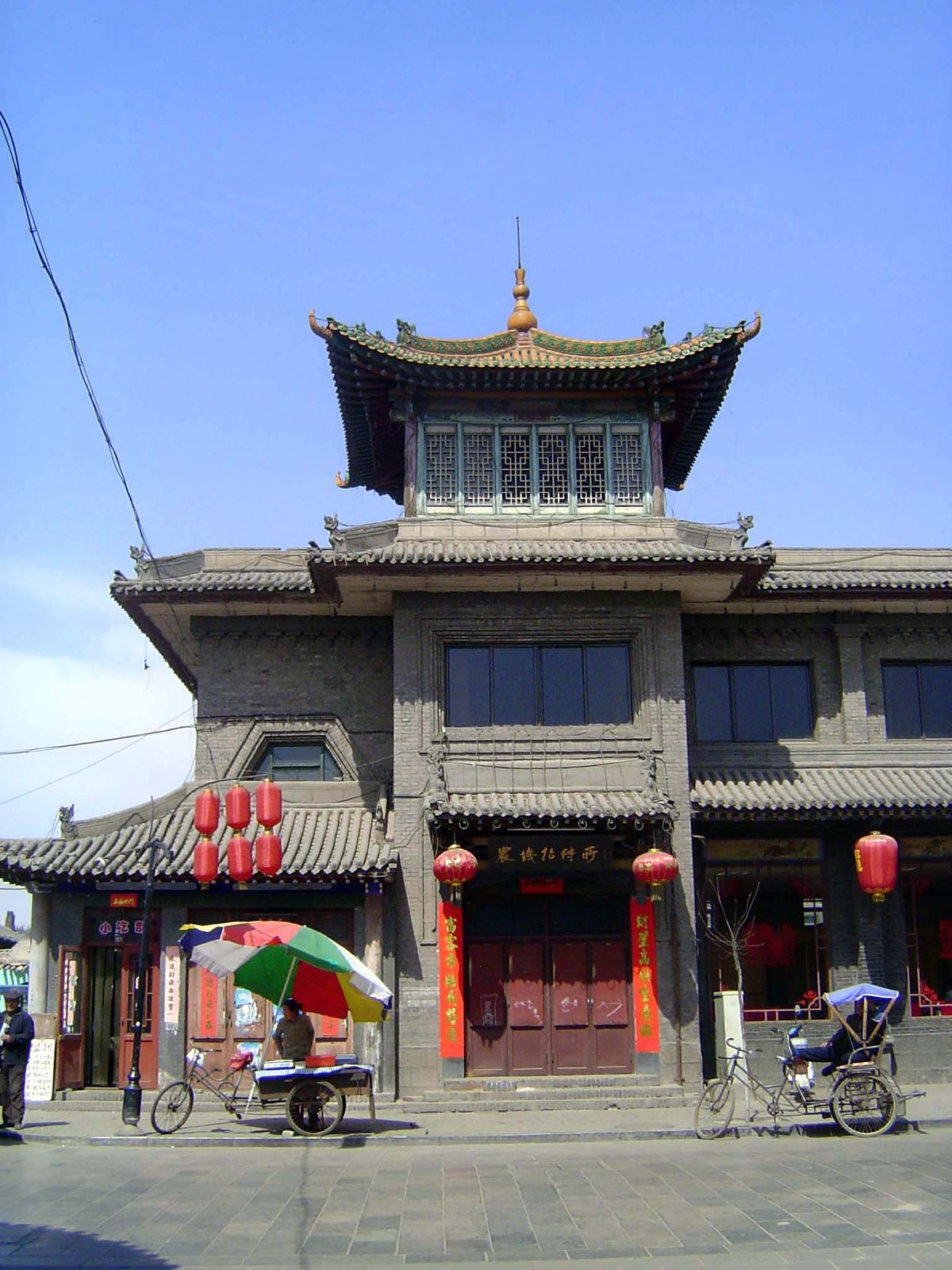
Most buildings along the street are a single story, but a few are more. This one lies at the crossing of the main east-west street with Zhanmadao Street, a north-south street on the line of the city's original west wall.
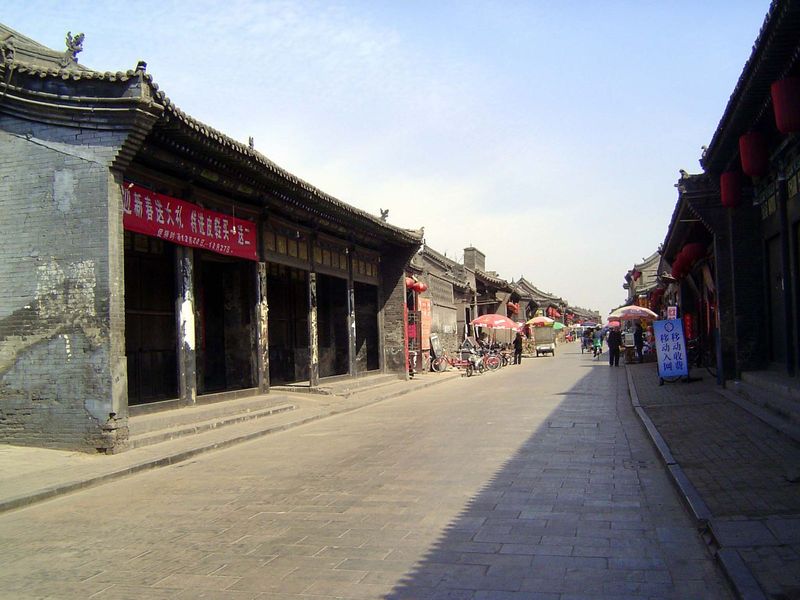
Looking east along the same street.
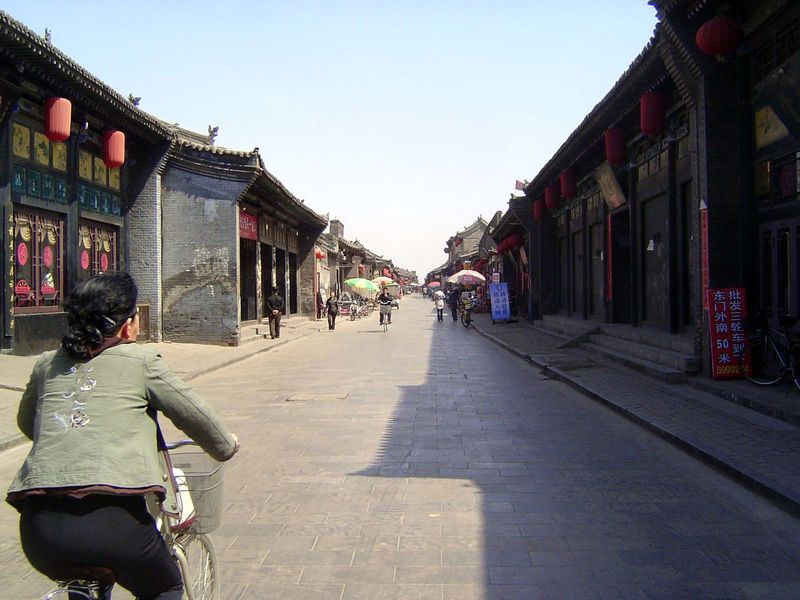
It's quiet.
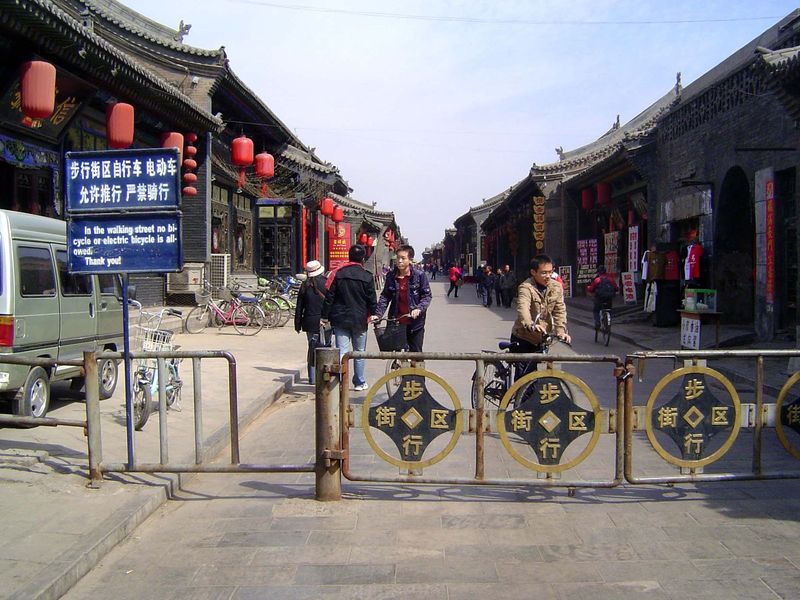
Efforts to ban bicycles from the core of the town have failed.
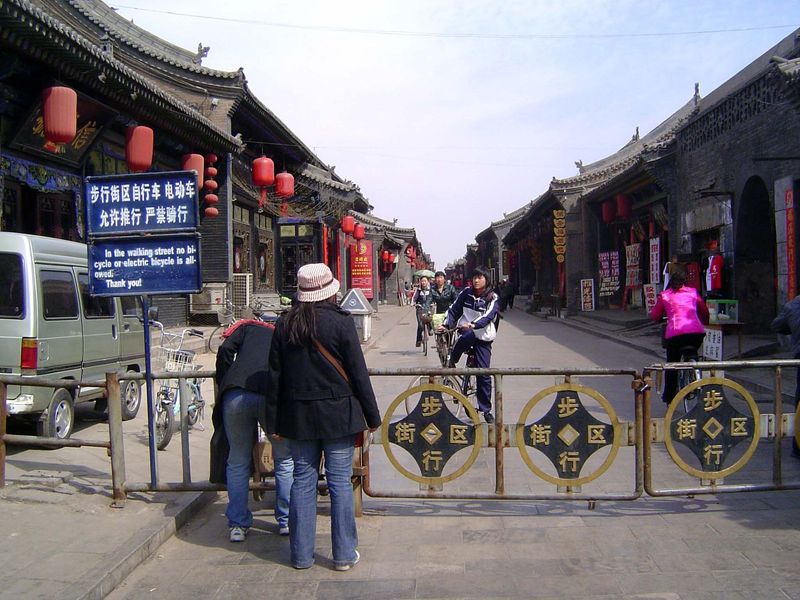
Dismount and carry.
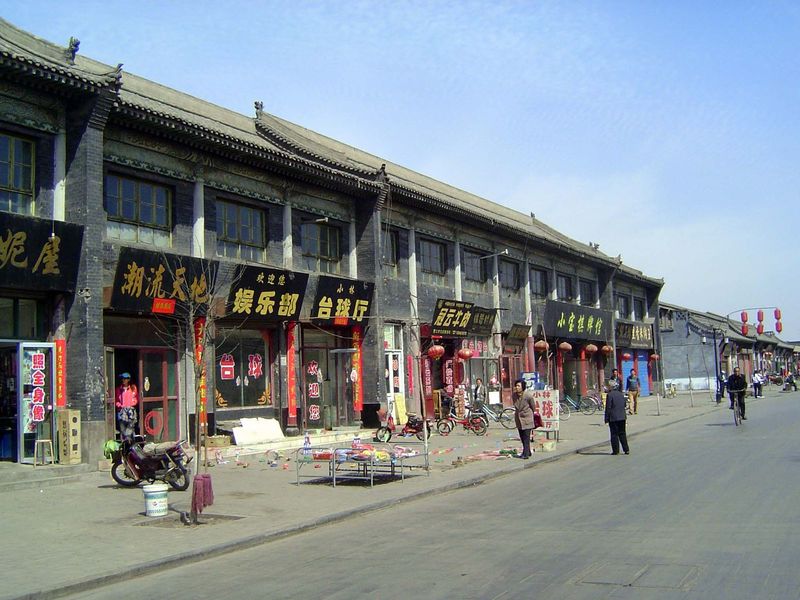
There's a range of commercial activity on the main streets.
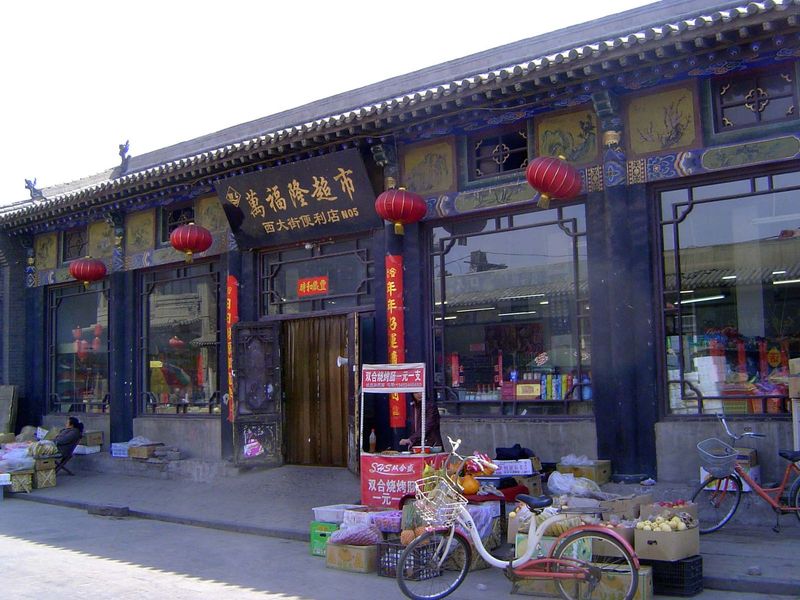
Supermarket.
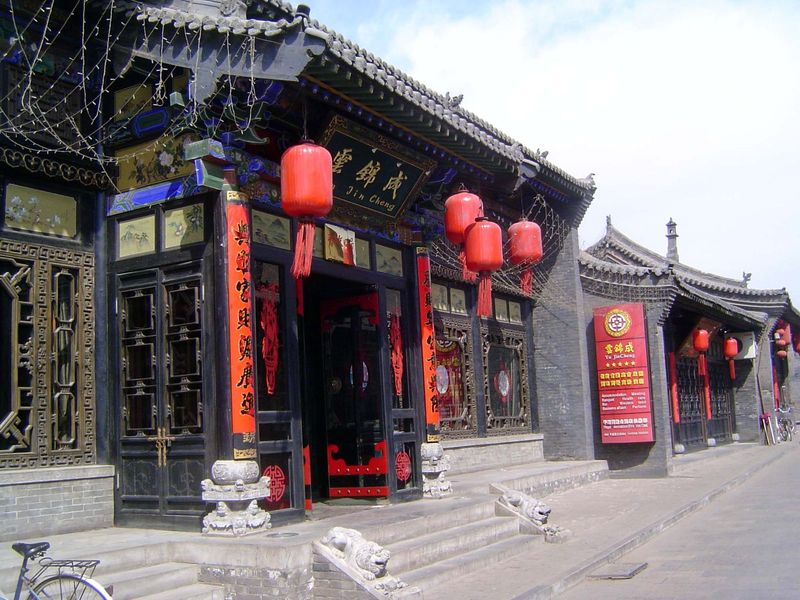
Restaurant.
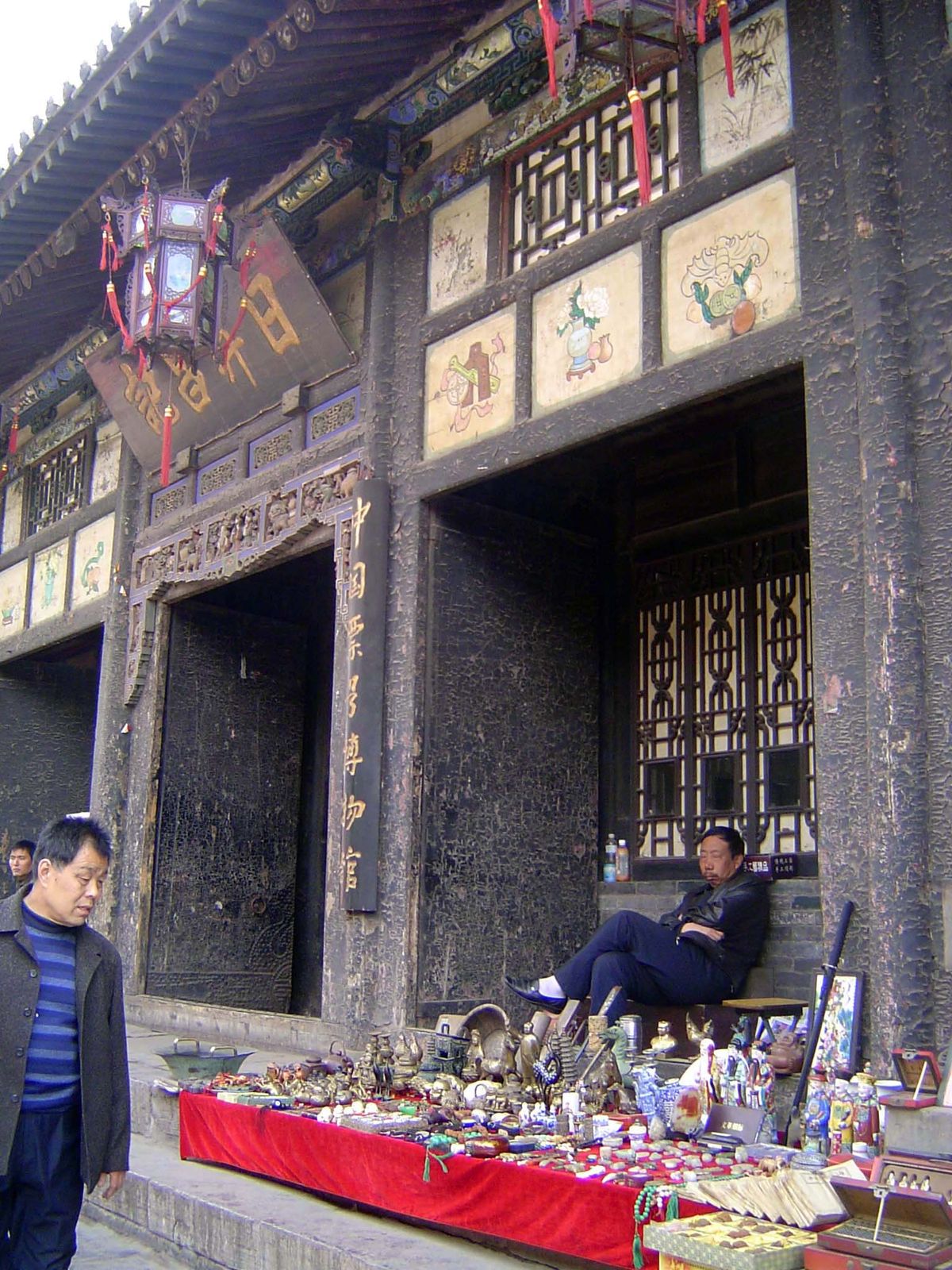
For the tourist trade.
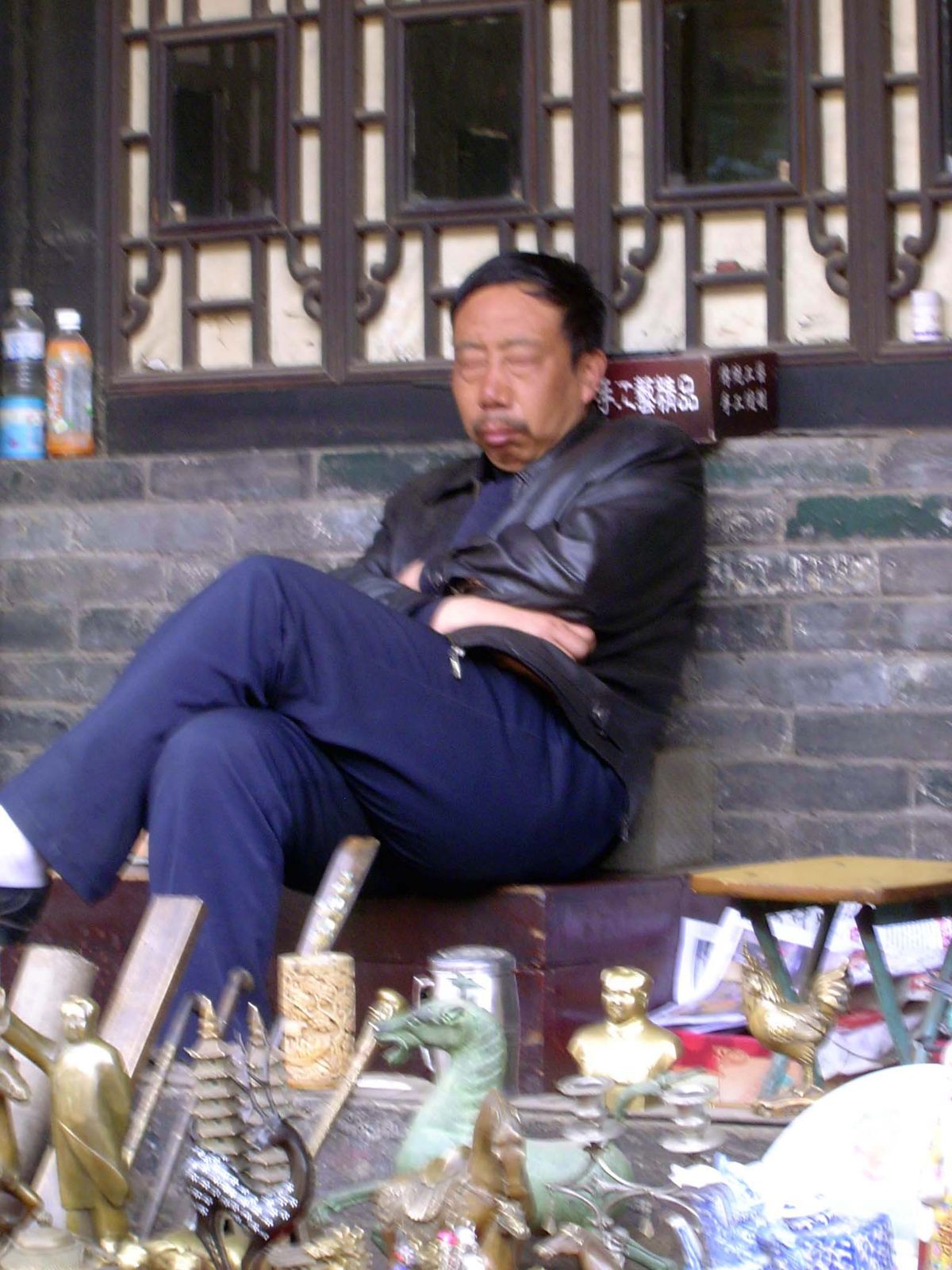
Slack business.
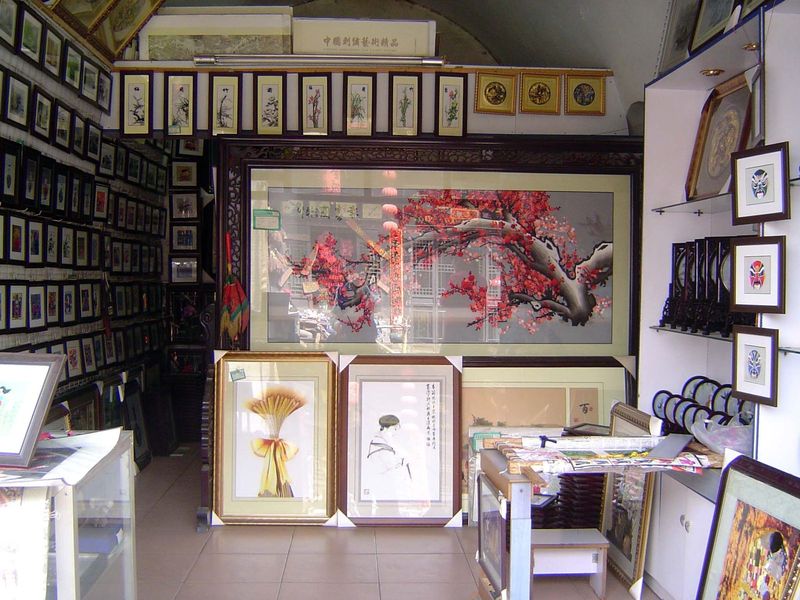
Silk embroidery.
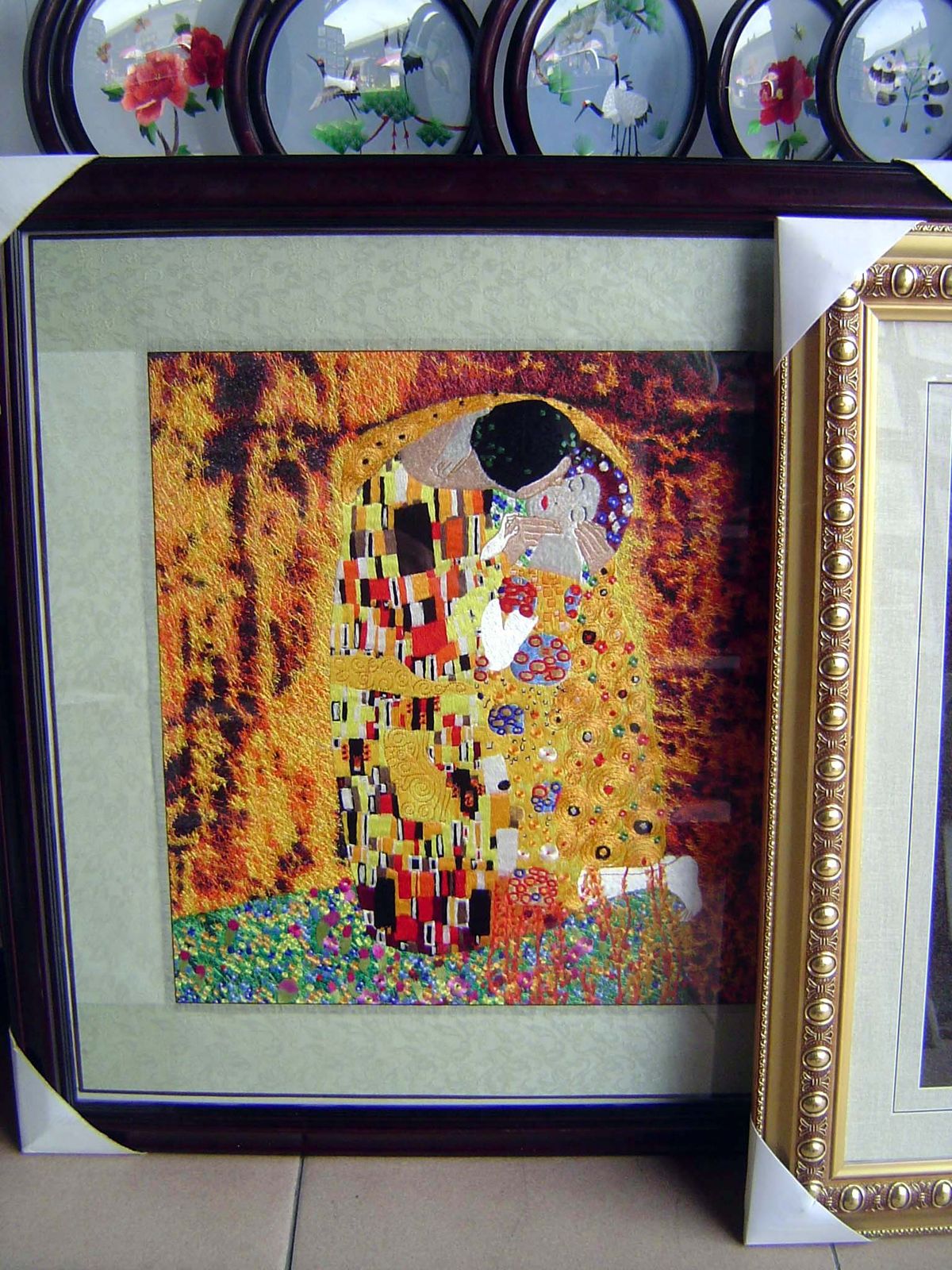
Cultural diffusion par excellence.
A shopowner enjoys his success.
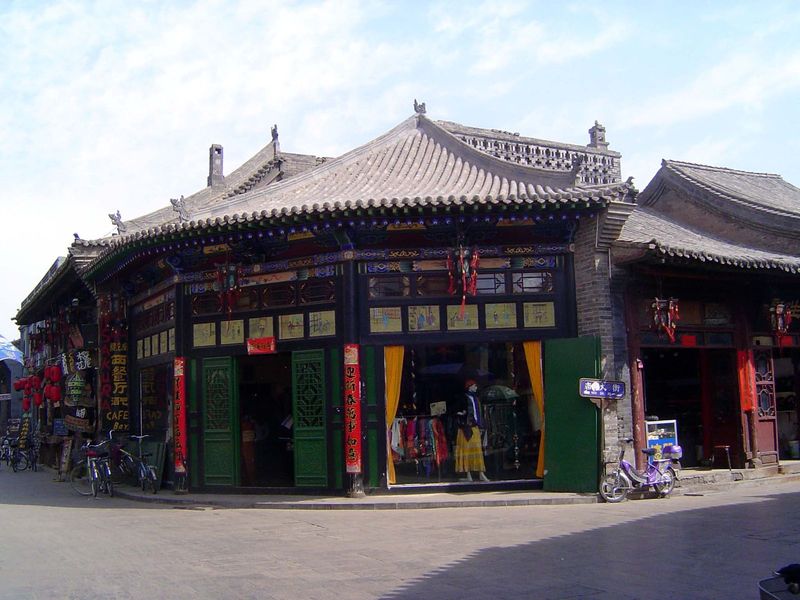
An unusual design at the division point where West Street turns into East Street at the intersection with South. Yes, there is a North Street, but it's offset to the west.
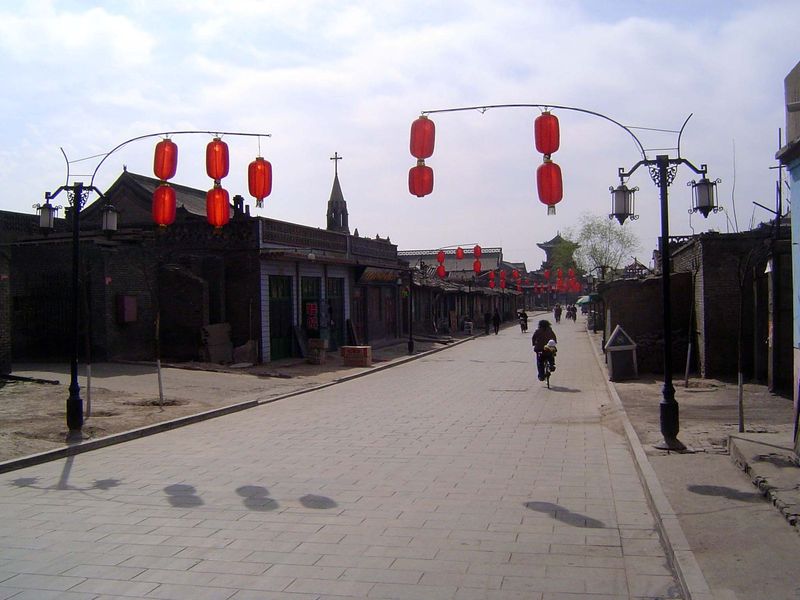
Farther east, commercial development drops off. In the distance, the Ting Yu tower over the east gate. You see the church; we'll circle back to it.
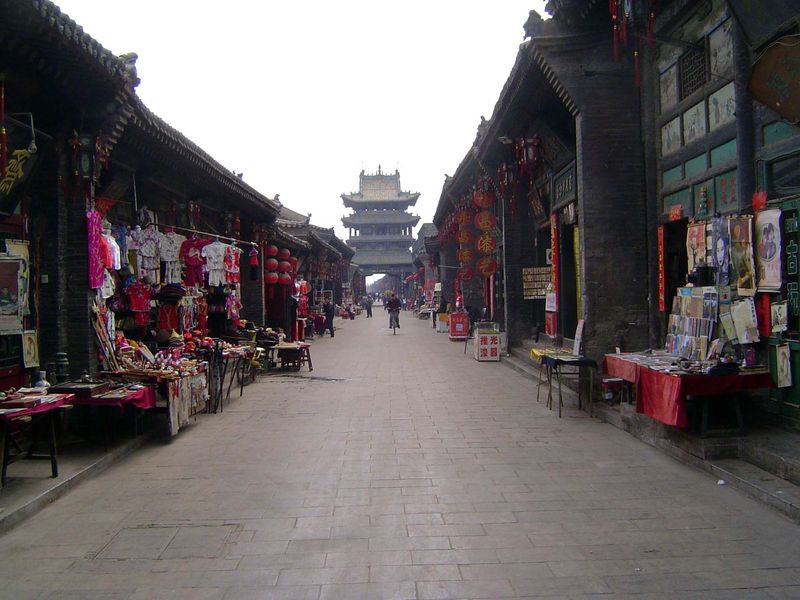
South St. Until 1370, the tower here was the city center, at the intersection of this and what is now called Government Street. The town-god temple lay to the east on Government Street, while the county government buildings were to the west. Temples were arrayed with a similar and compulsive symmetry.
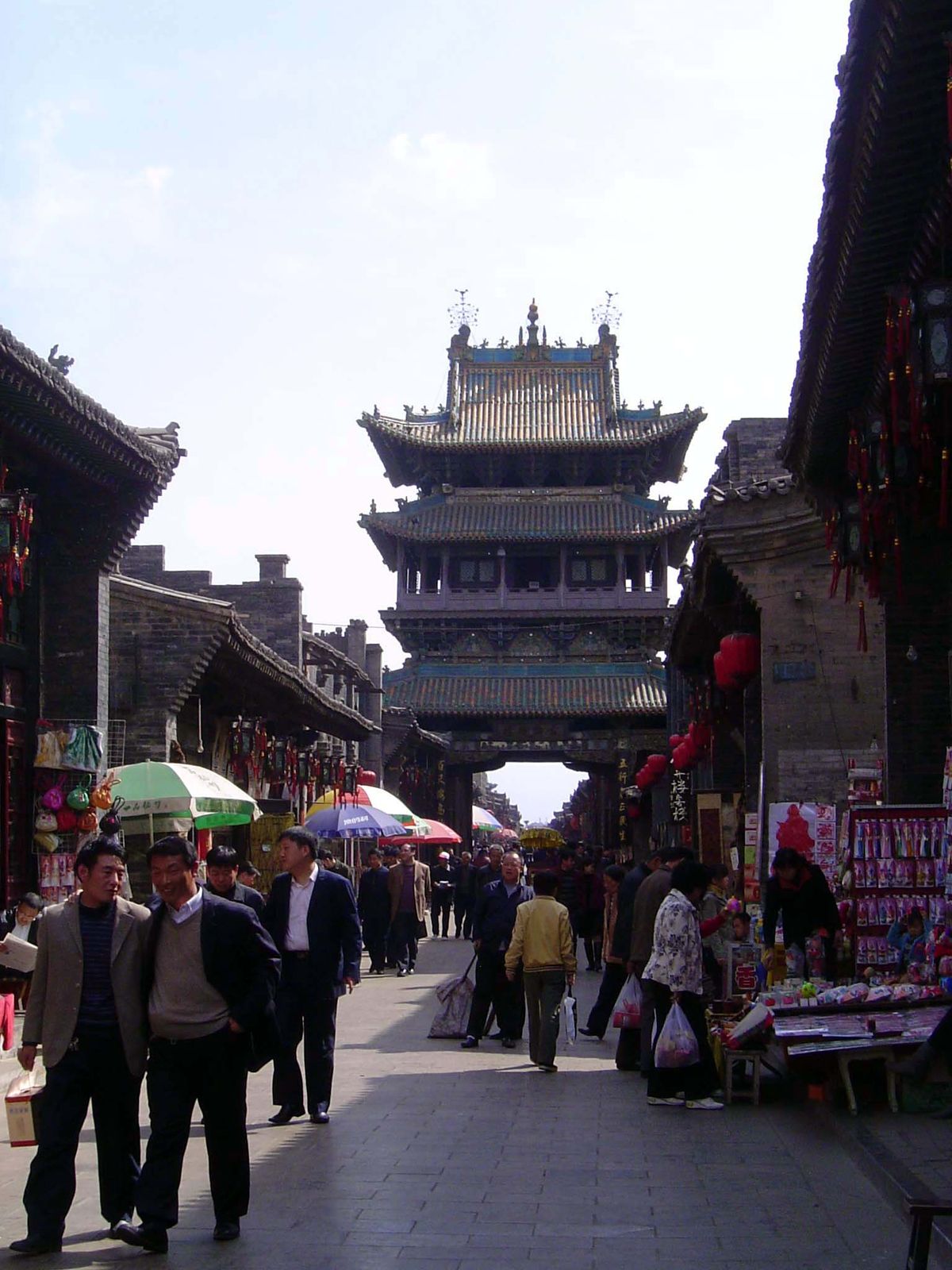
The Ancient City Tower, its top floor once used for divination. Tourist Central.
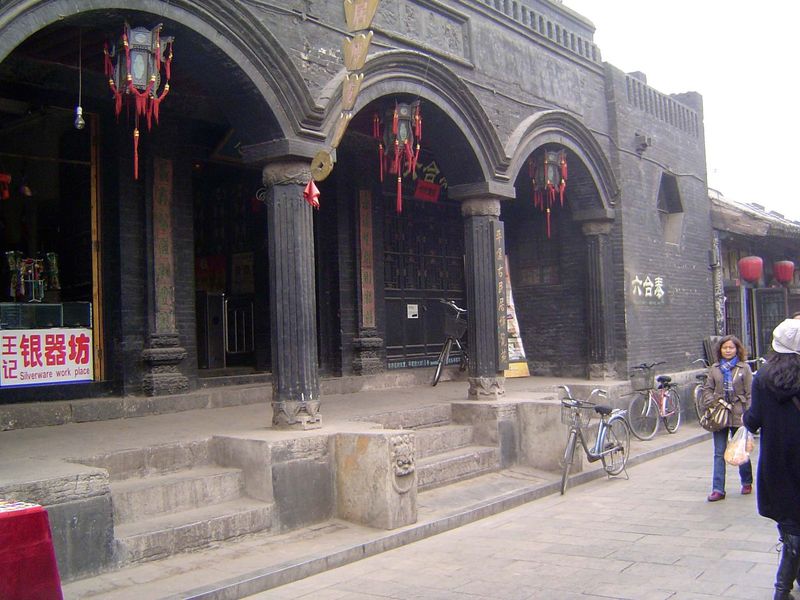
The site of the former Wei Tai Hou, an early bank.
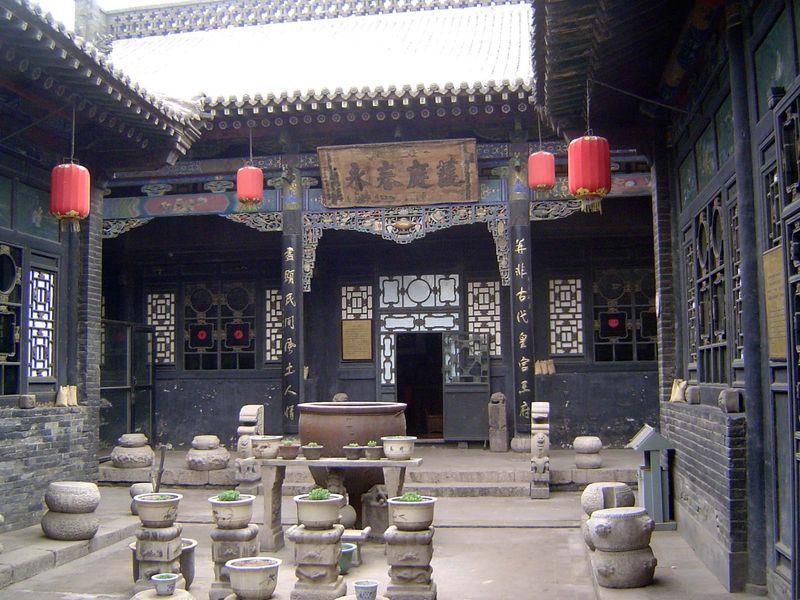
The interior, now a museum, has a typical courtyard layout.
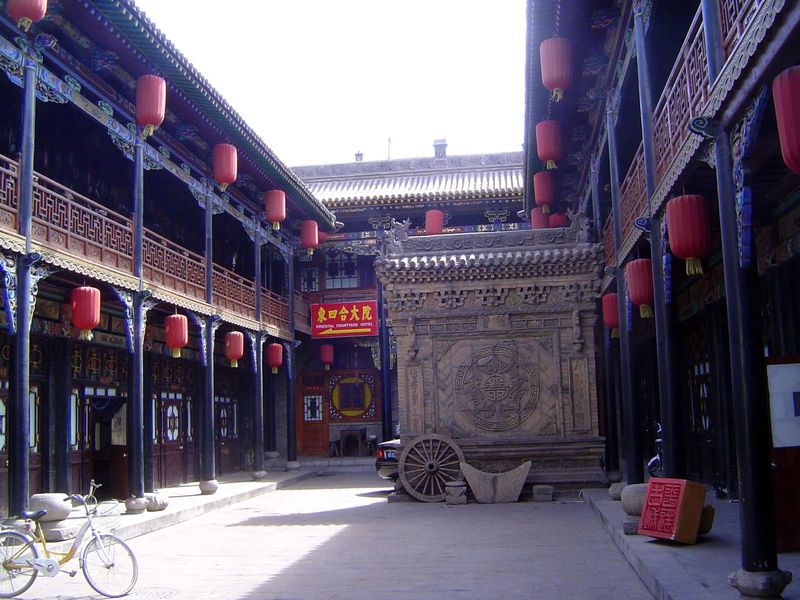
Another example, now a hotel.
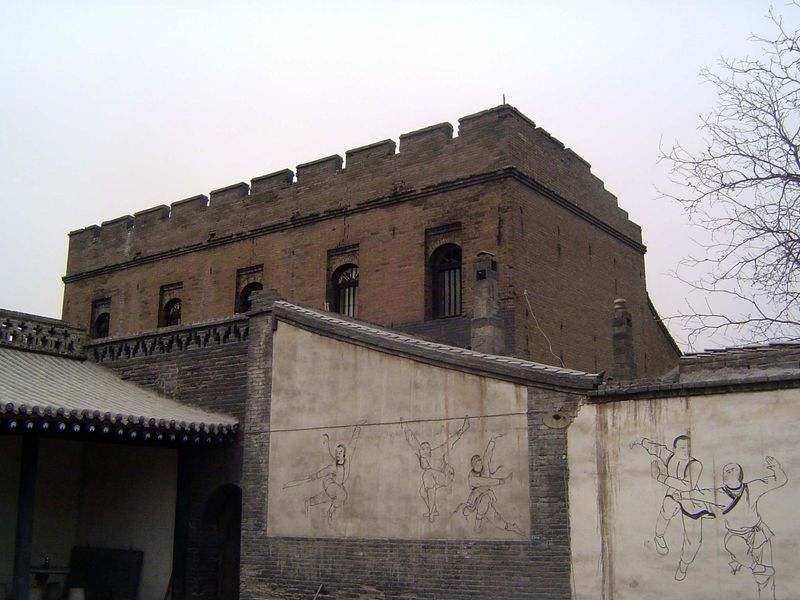
An exception to the rule: this unusual, European-styled building housed the Chinese Armed Escort Agency. Hence the murals surrounding the courtyard where guards practiced their skills.
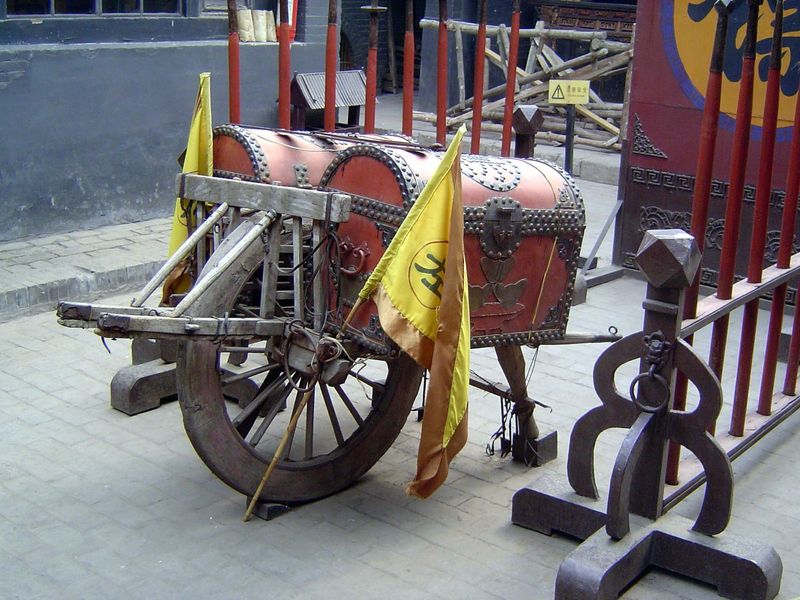
The business often involved protecting shipments sent by armored cart.
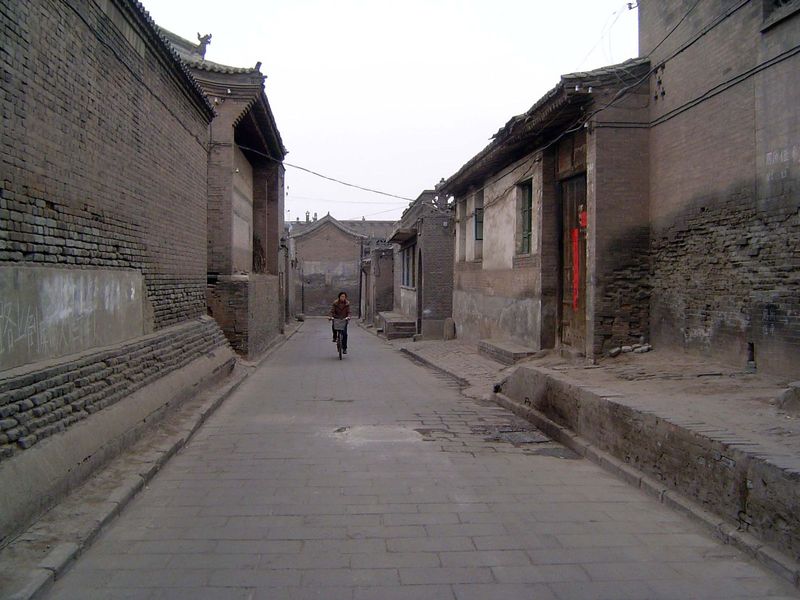
Away from the main streets, the neighborhoods become much quieter.
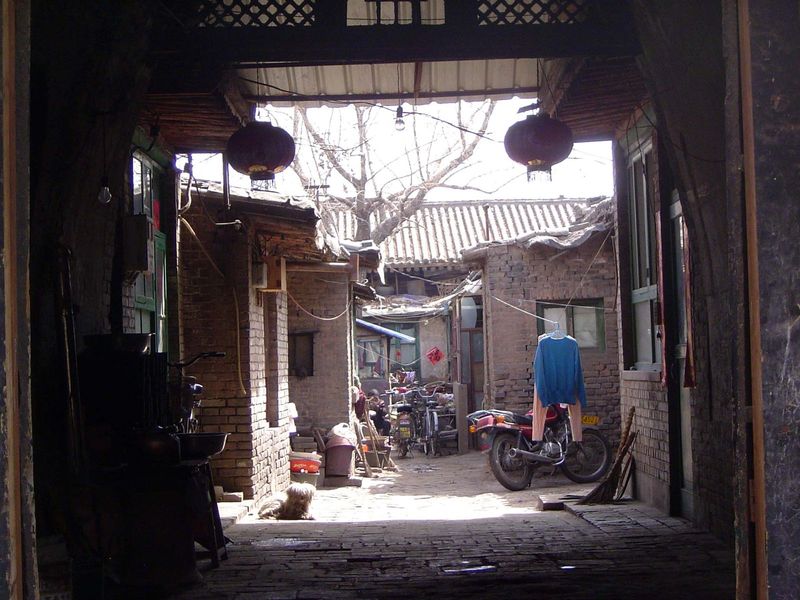
Much of the housing remains ramshackle.
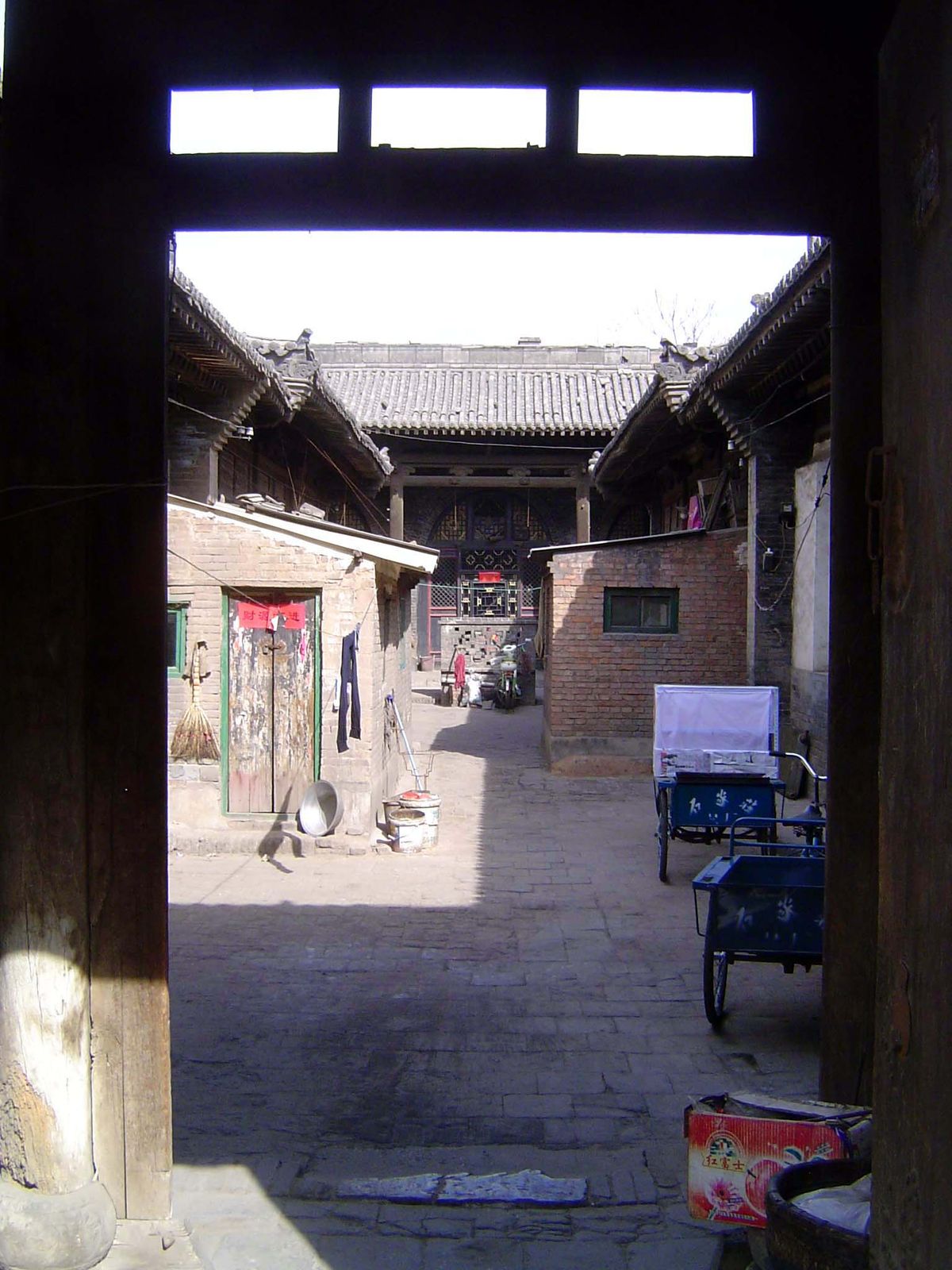
There are plenty of courtyard houses that have not been upgraded for tourists.
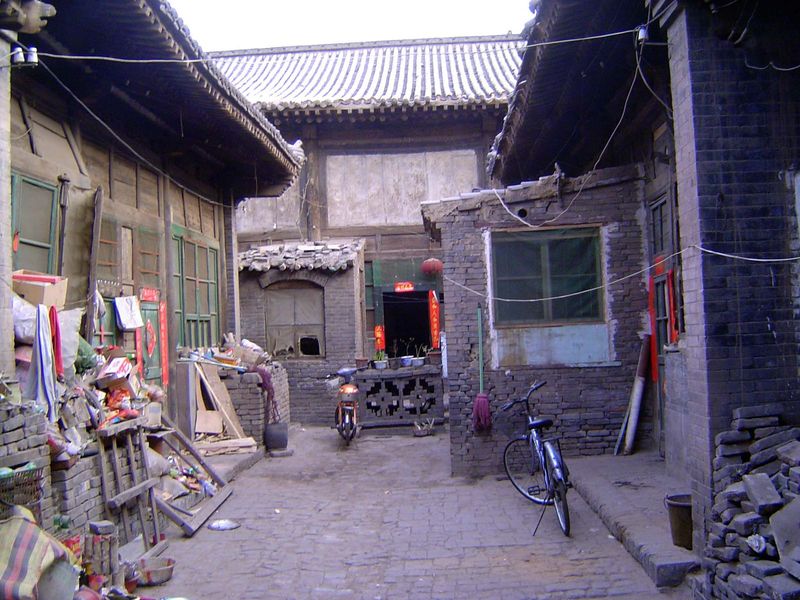
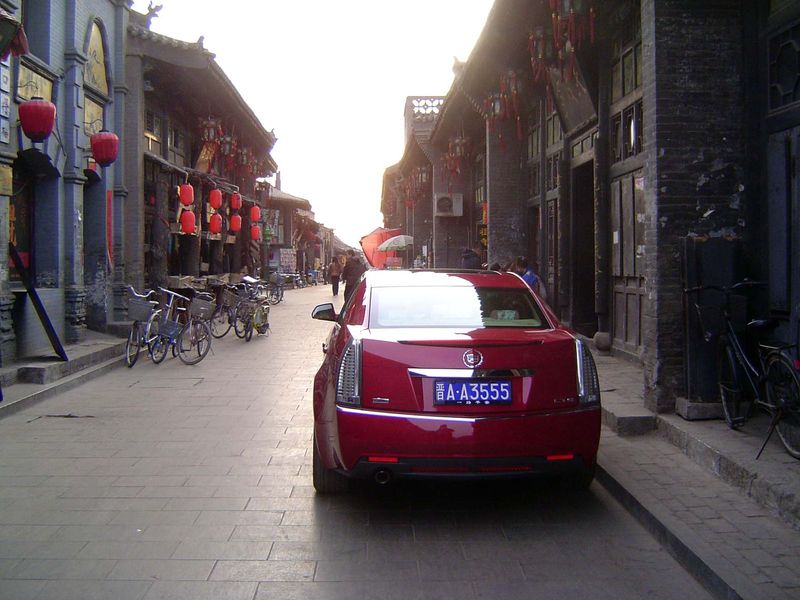
A long way from red Cadillacs.
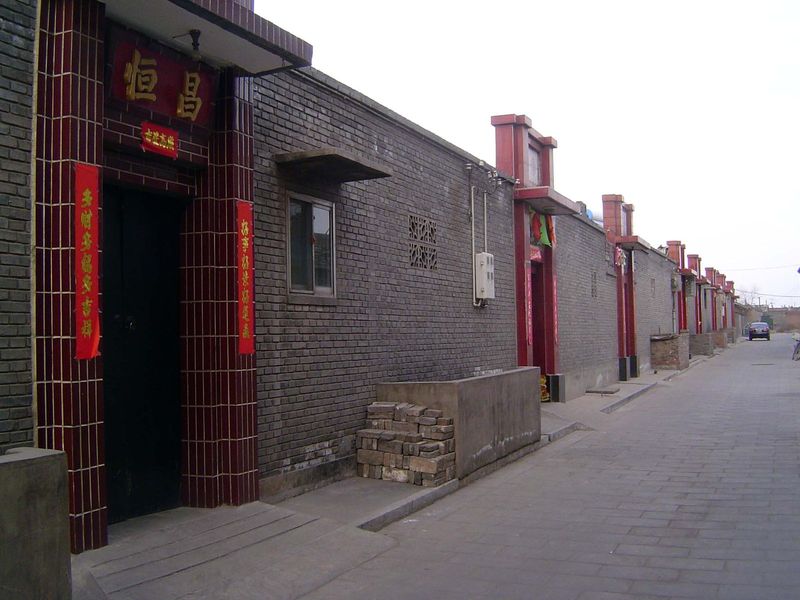
The north half of the walled area has many newer houses.
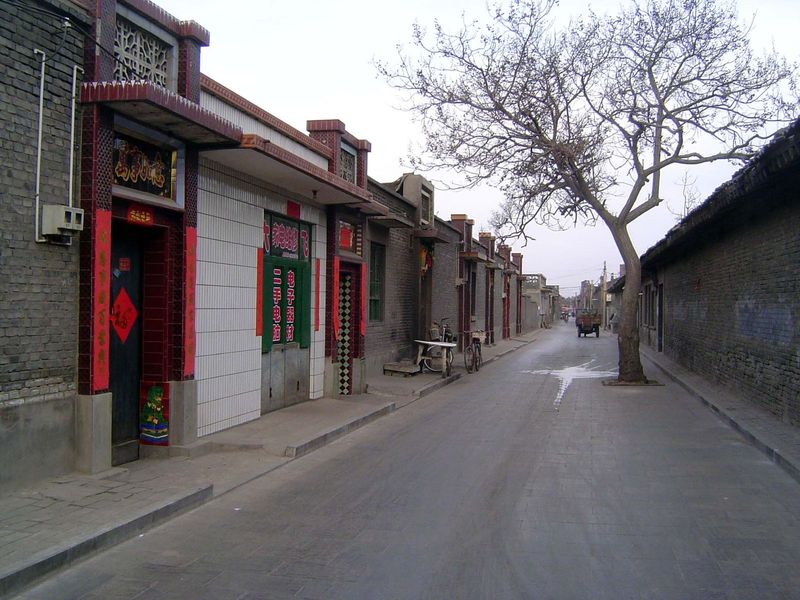
Another example.
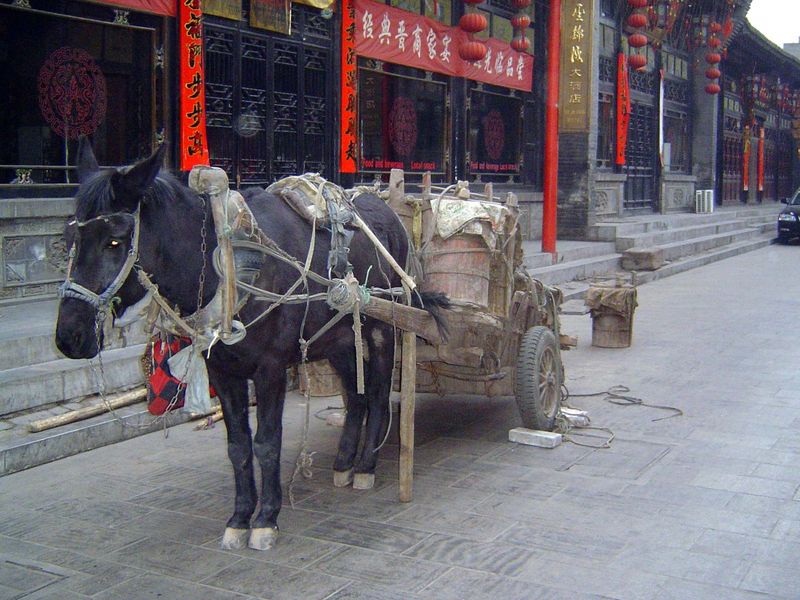
Fast food.
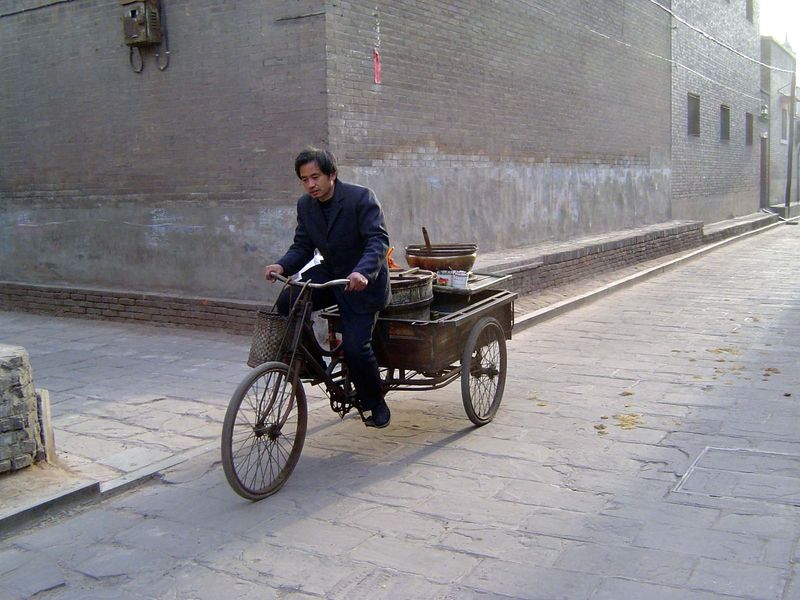
Sewage pickup.
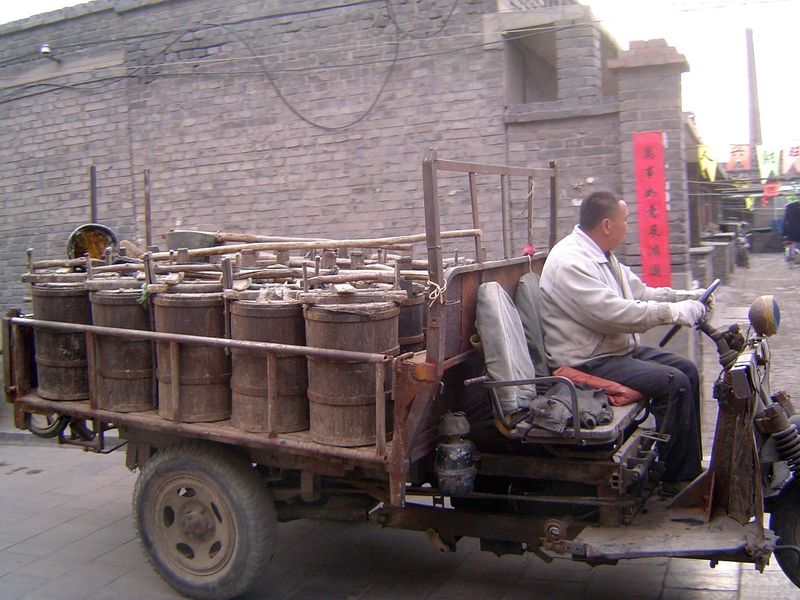
Pickup by tricycle.
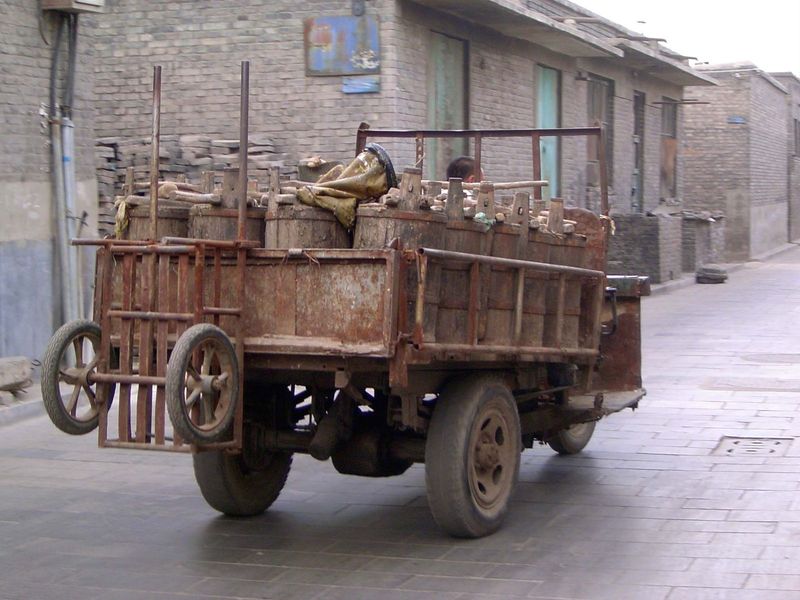
Rear view.
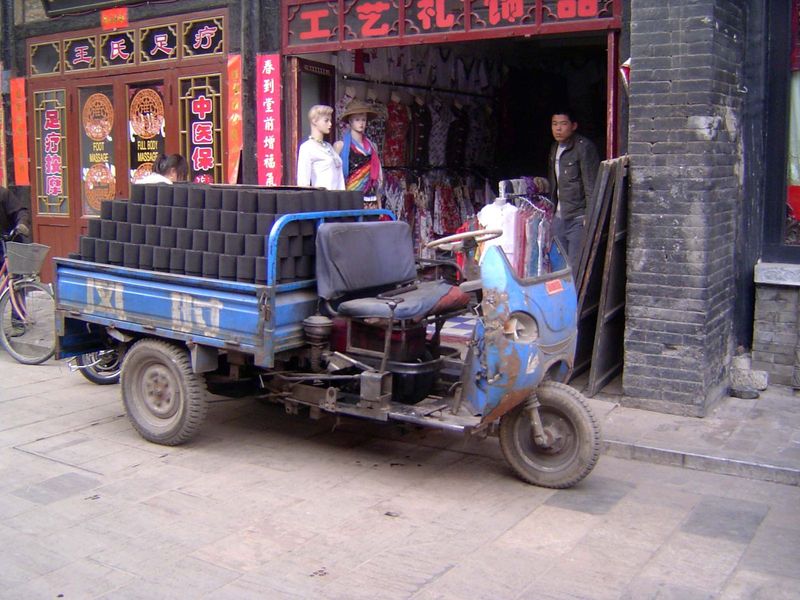
Charcoal delivery.
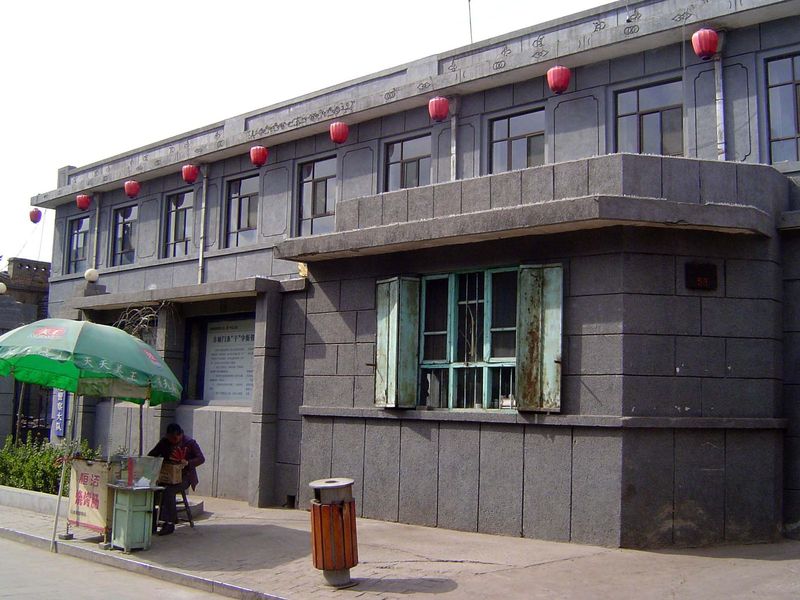
Police station.
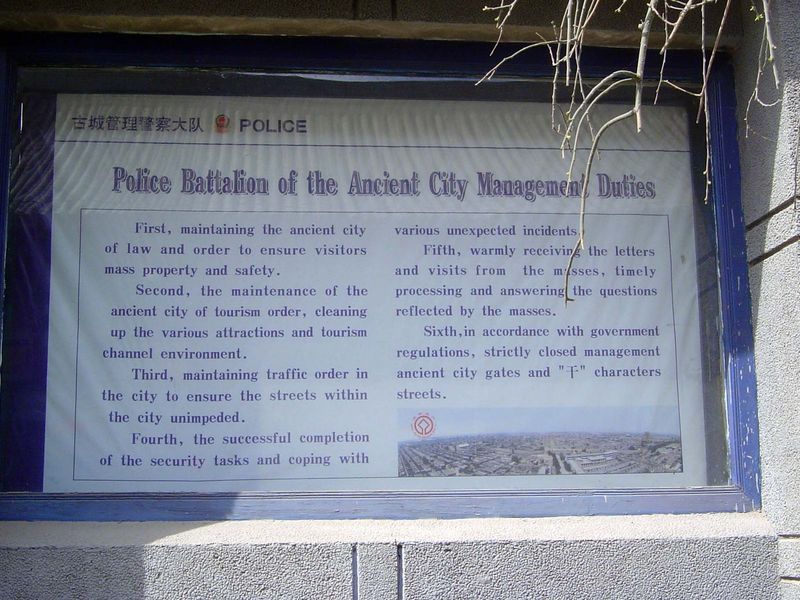
Addressed to foreign visitors, this sign has no Chinese-language companion.
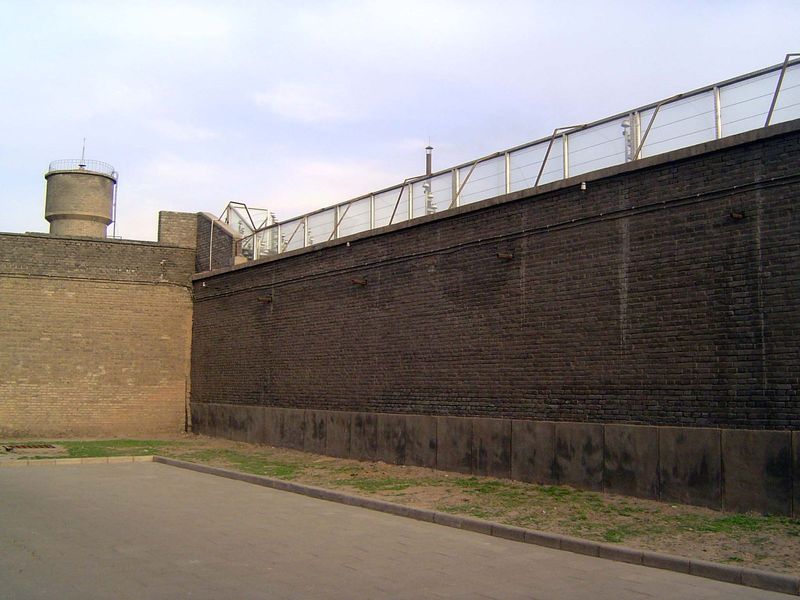
Unsigned, the jail.
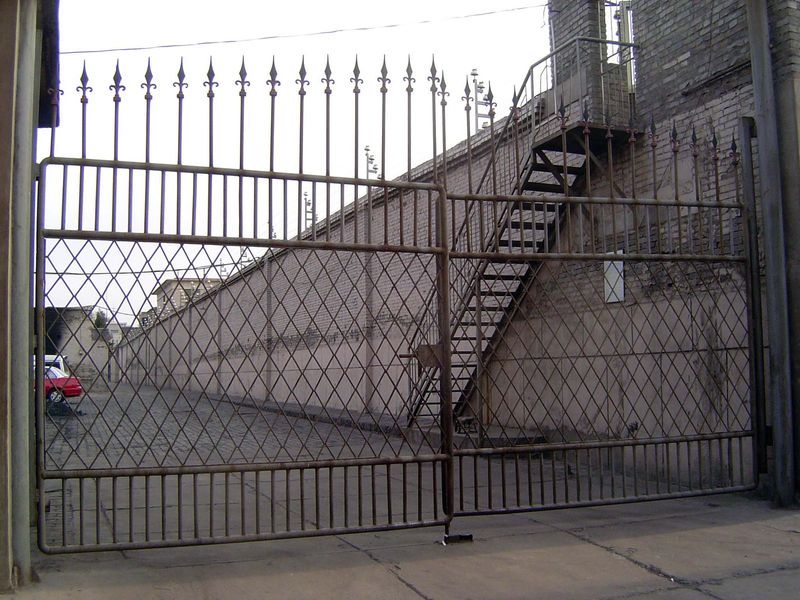
Entrance.
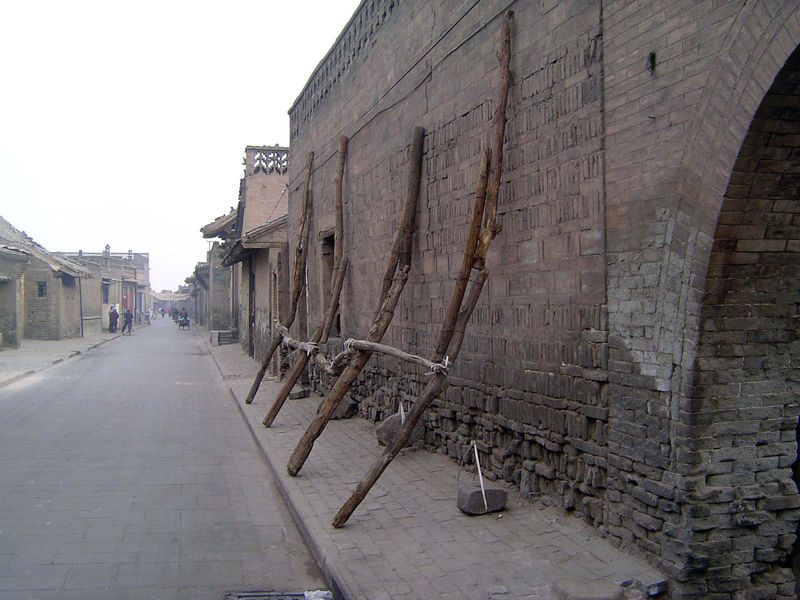
Parts of the city are in danger of collapse and are simply but ingeniously stabilized.
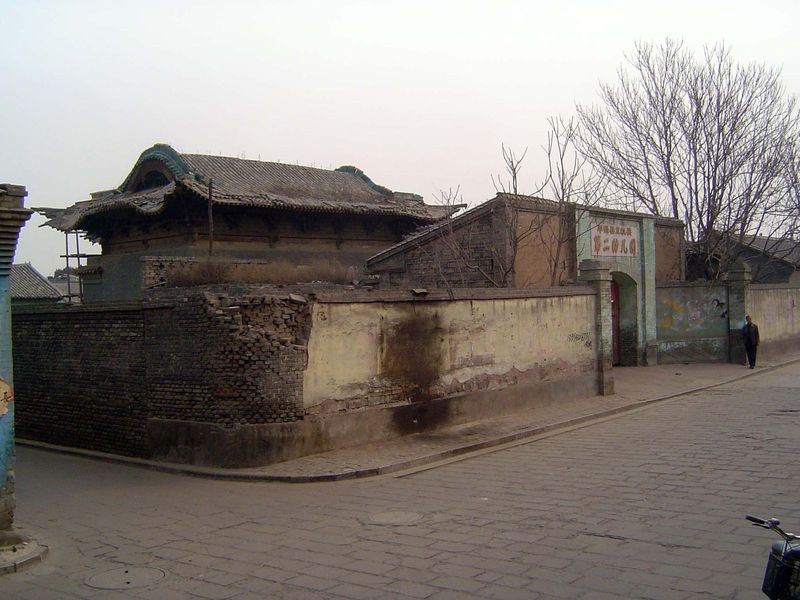
An abandoned home.
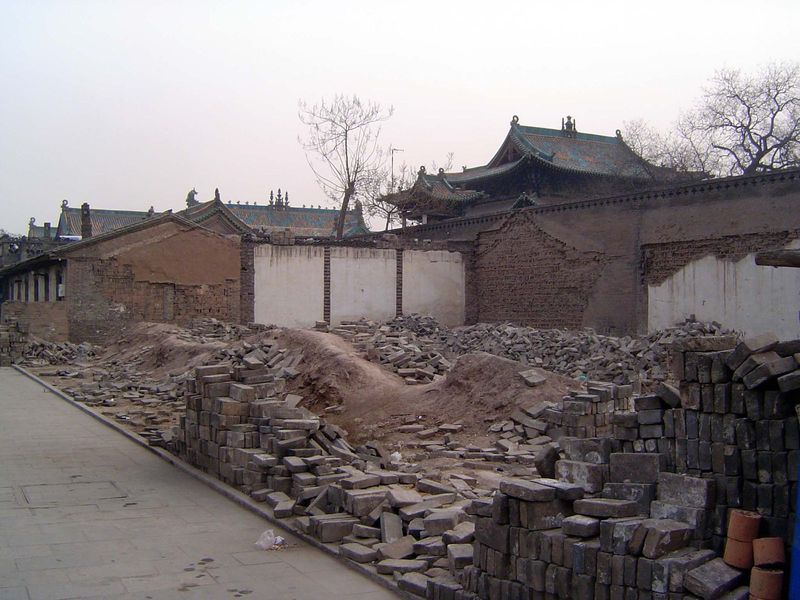
Demolition complete.
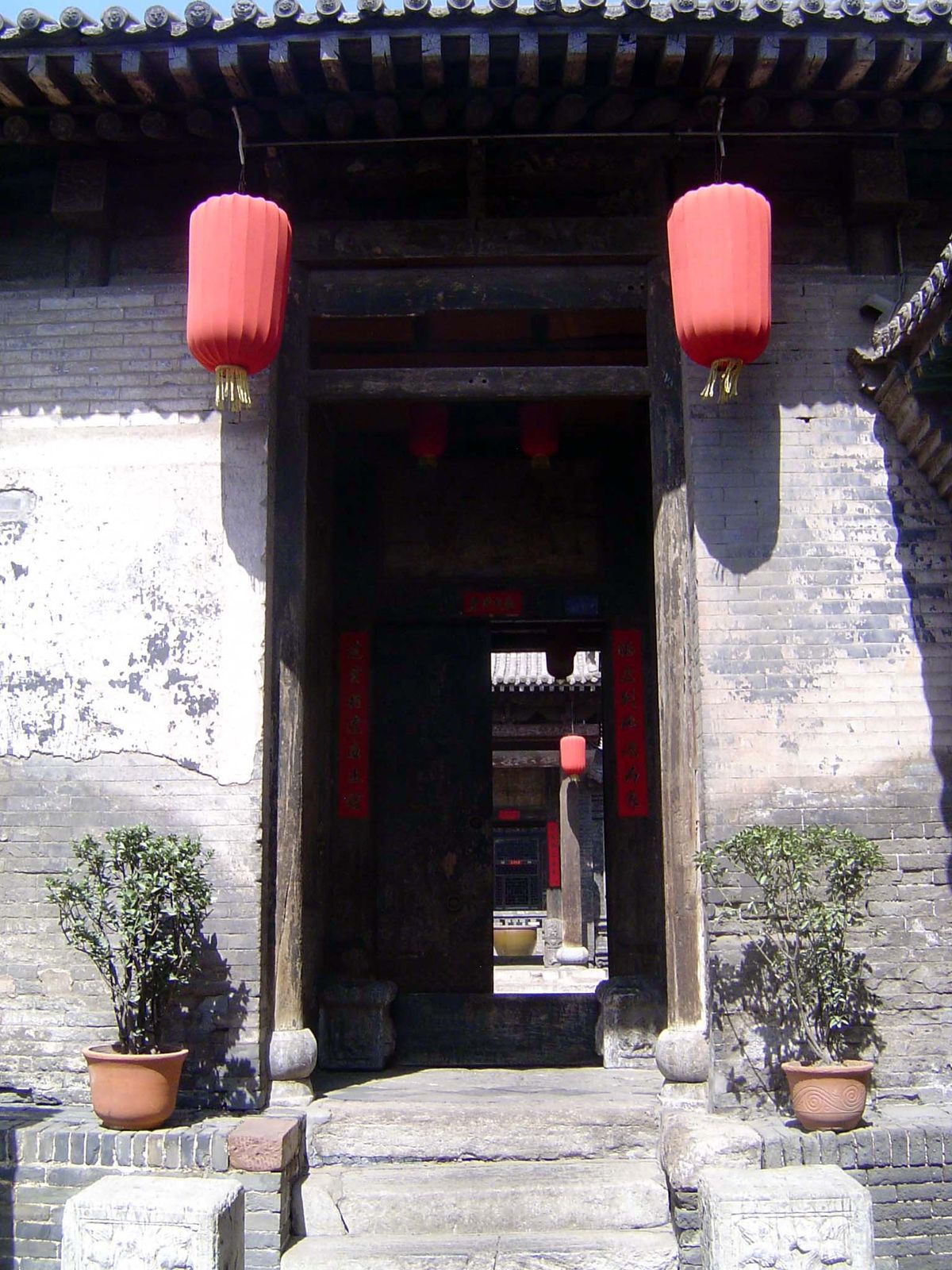
A courtyard house renovated as a hotel.
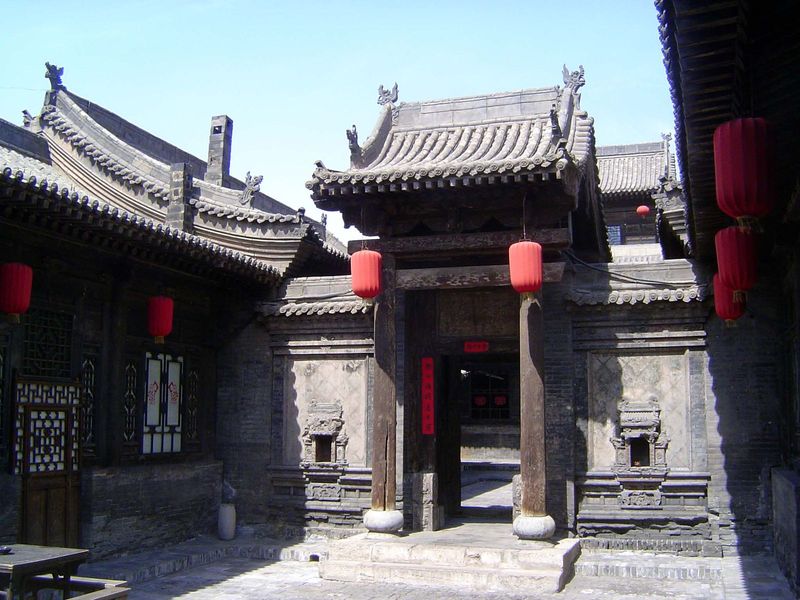
It's actually a double courtyard.
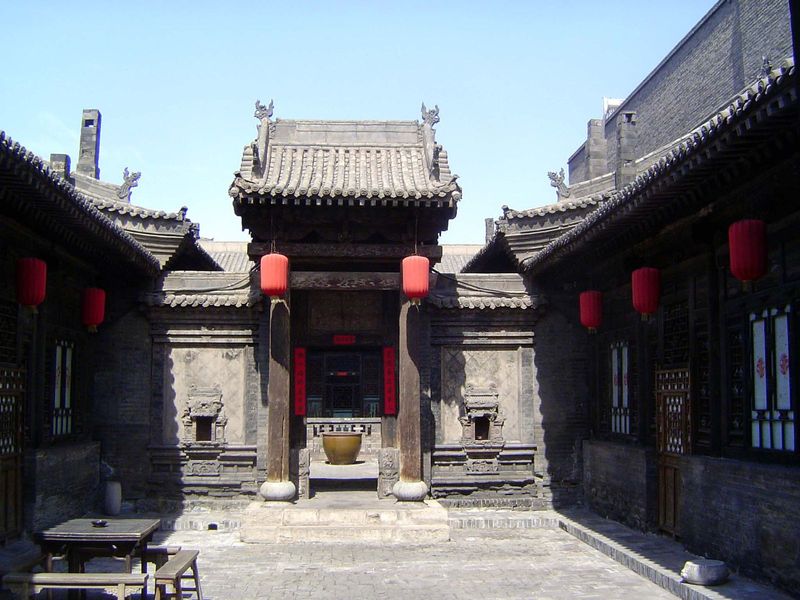
It's one of 400 of the city's 3,800 old houses that are reportedly in good condition.
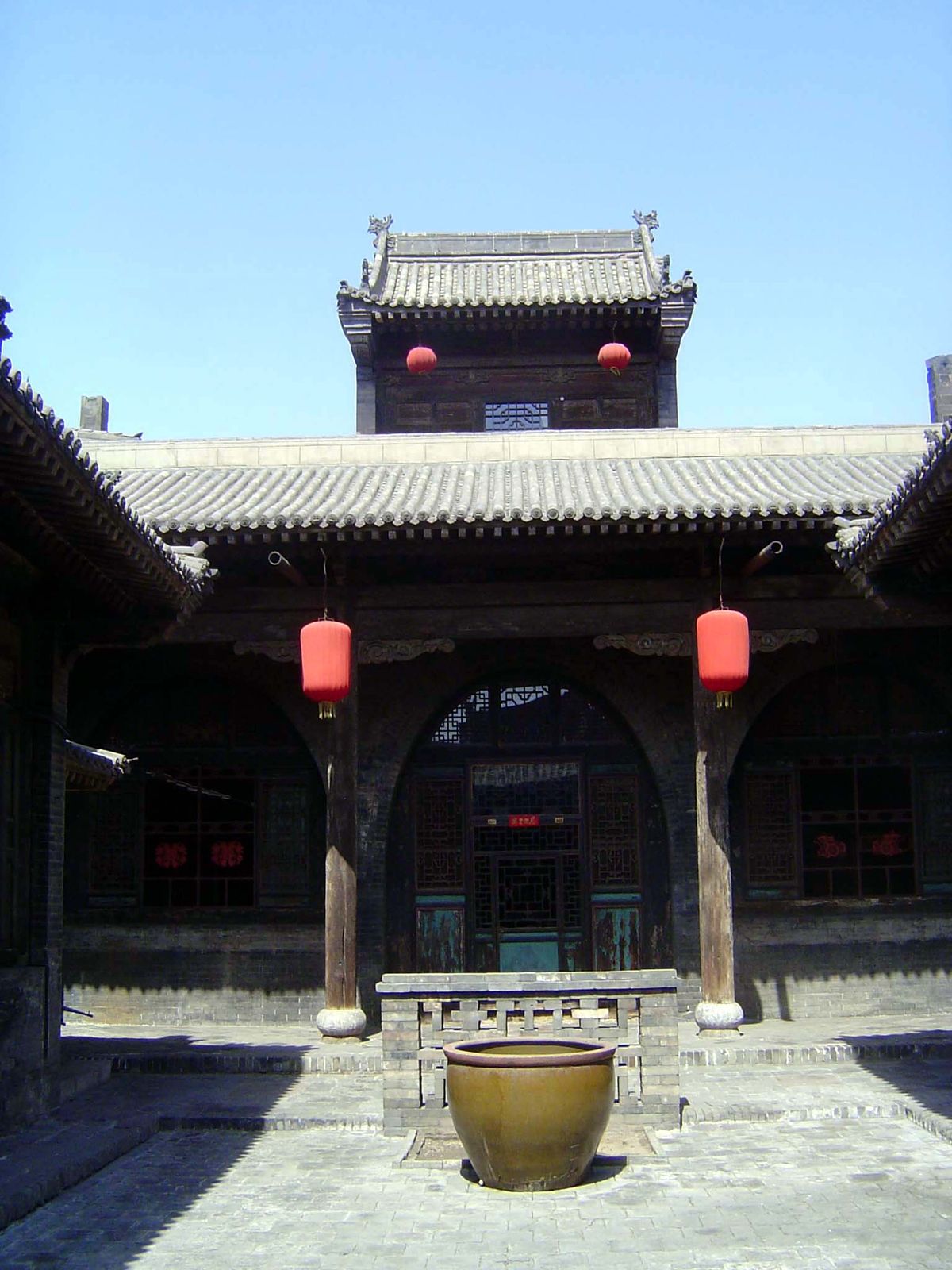
At the far end of the farther courtyard, there's an arched room called a cave and consciously evocative of the real caves frequently cut into the loess hills north and west of Pingyao.
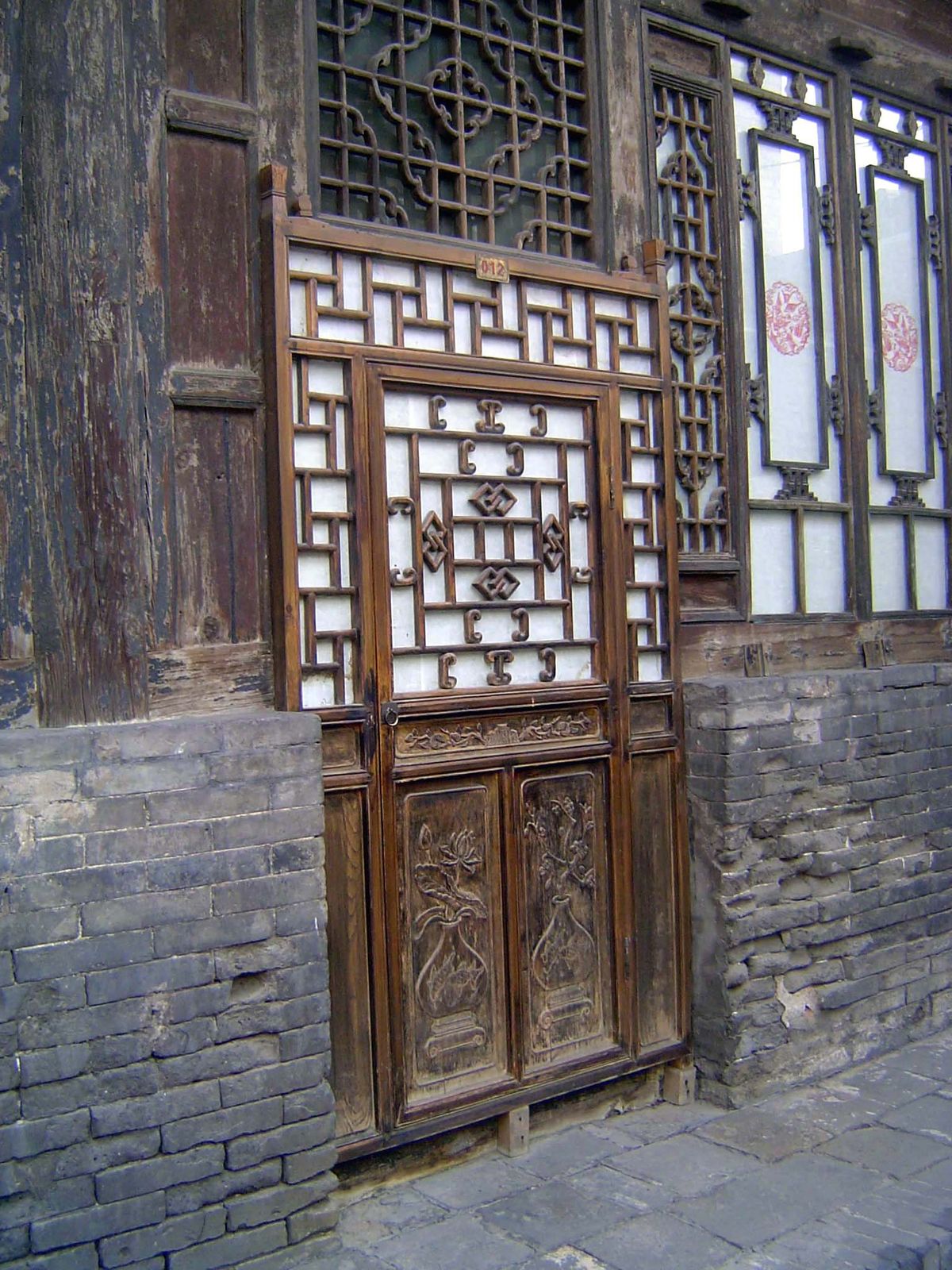
A "two-skin" door, with a thick wooden inner door and a delicate, lattice-frame outer one.
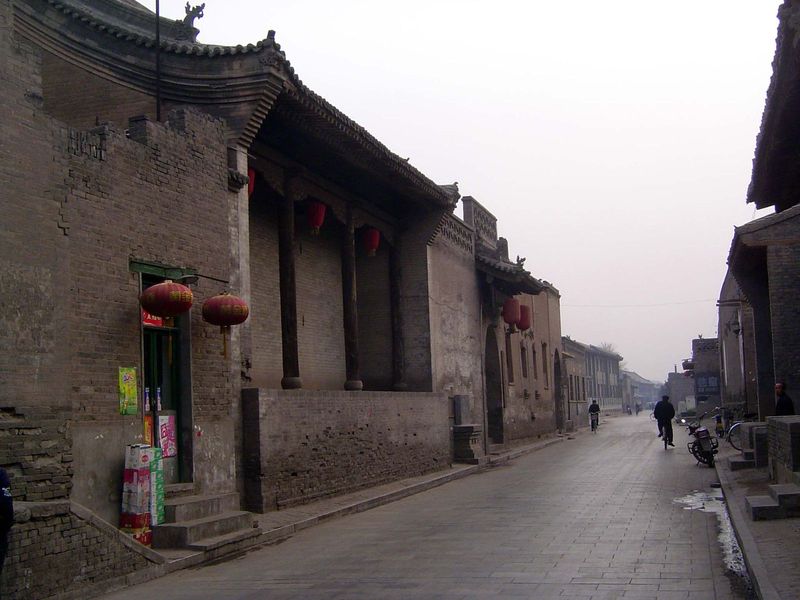
This house, the former residence of the pioneer banker Lei Lutai, is now a museum. Its exterior south wall is on the left here, with a sheltered balcony that has no entrance from the house and no easy entrance from the street.
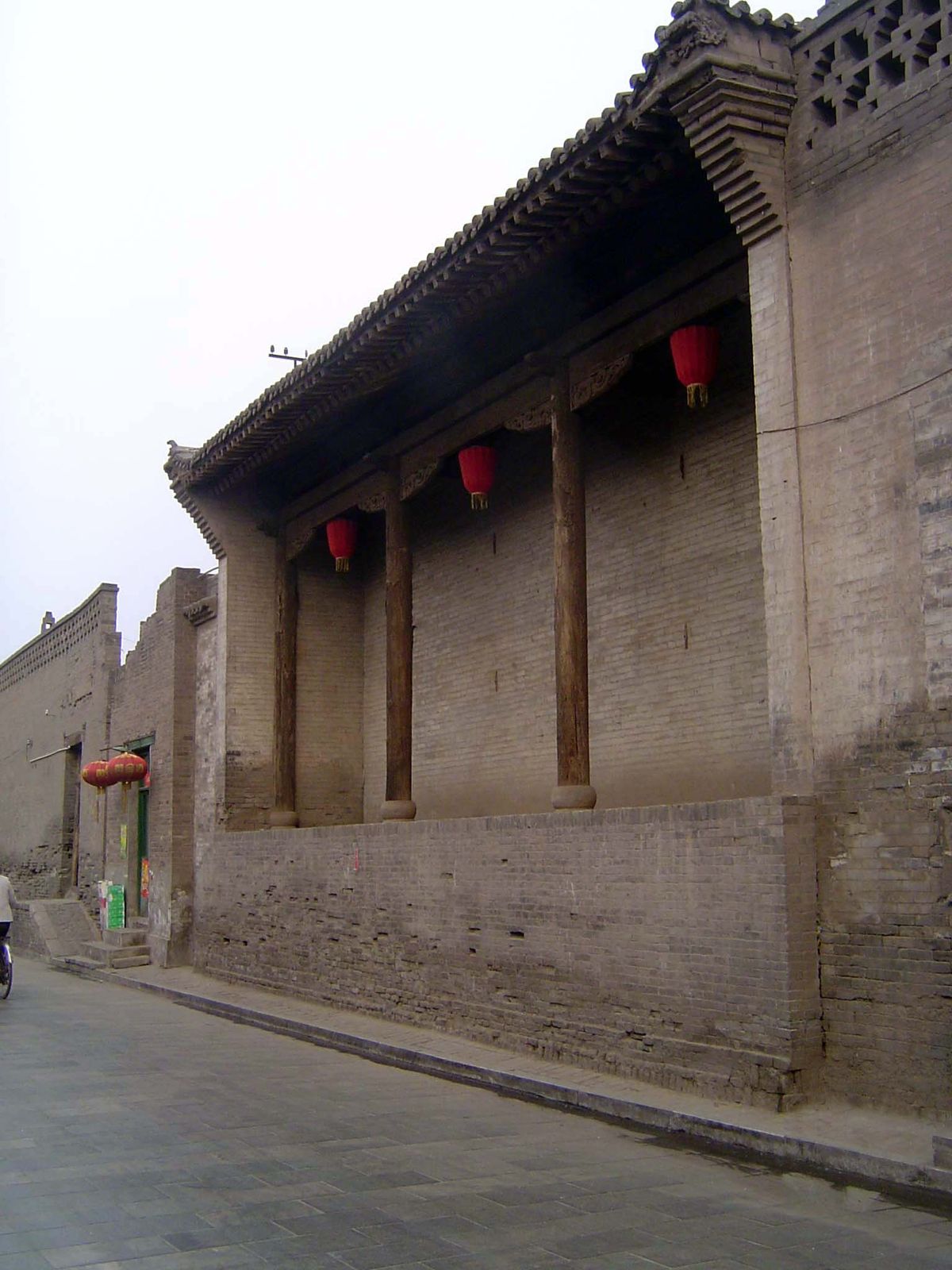
Another view. The house dates from shortly after 1800.
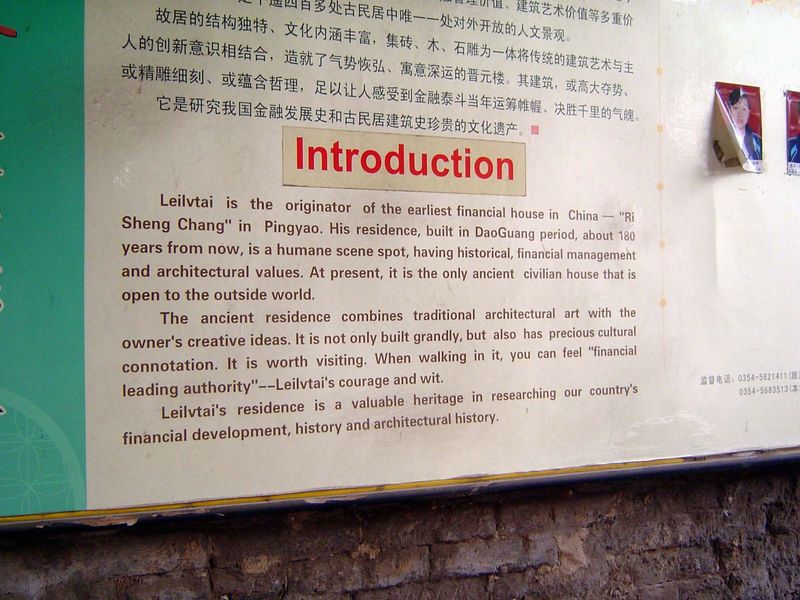
Tourism promotion.
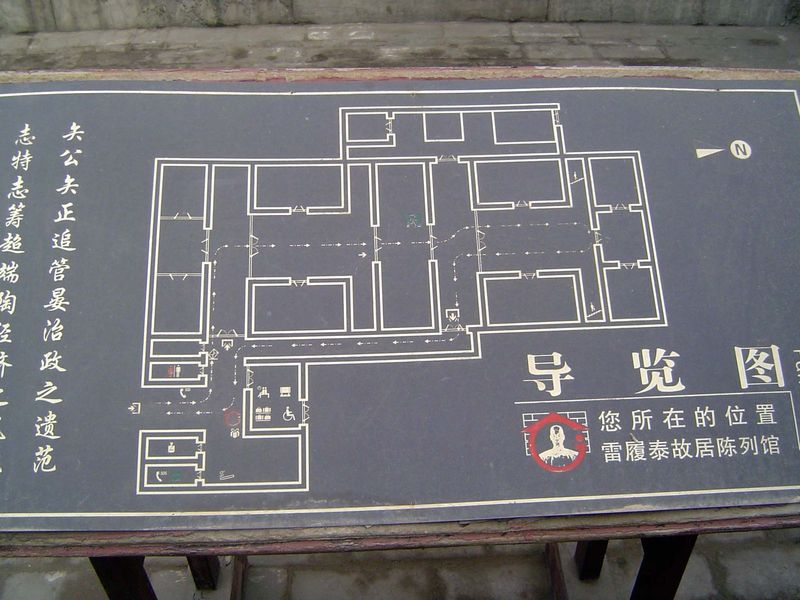
House plan. The balcony of the previous pictures is not shown here but should be on the left. We'll walk inside and drift left to right.
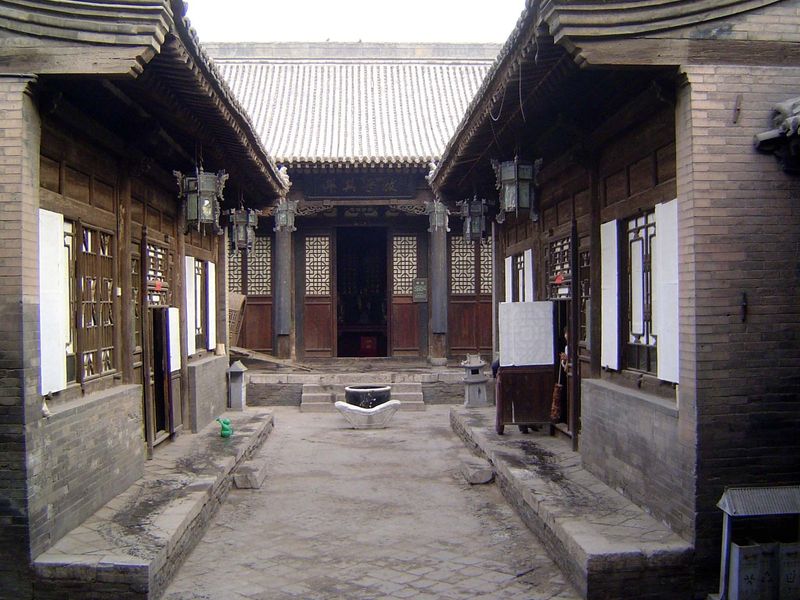
We're looking south to the hall on the south, a reception building. The view to the north is similar, except that the building at that end is double-storied.
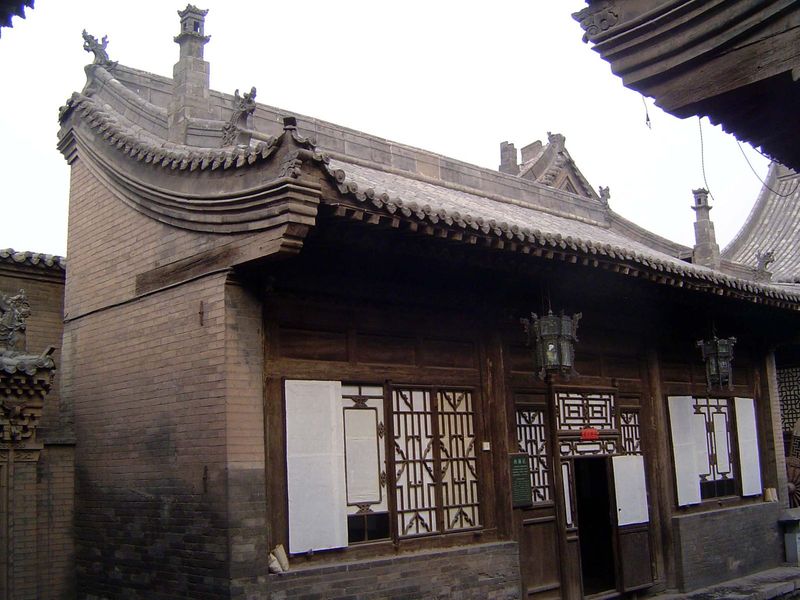
A side building, assigned as servants' quarters.
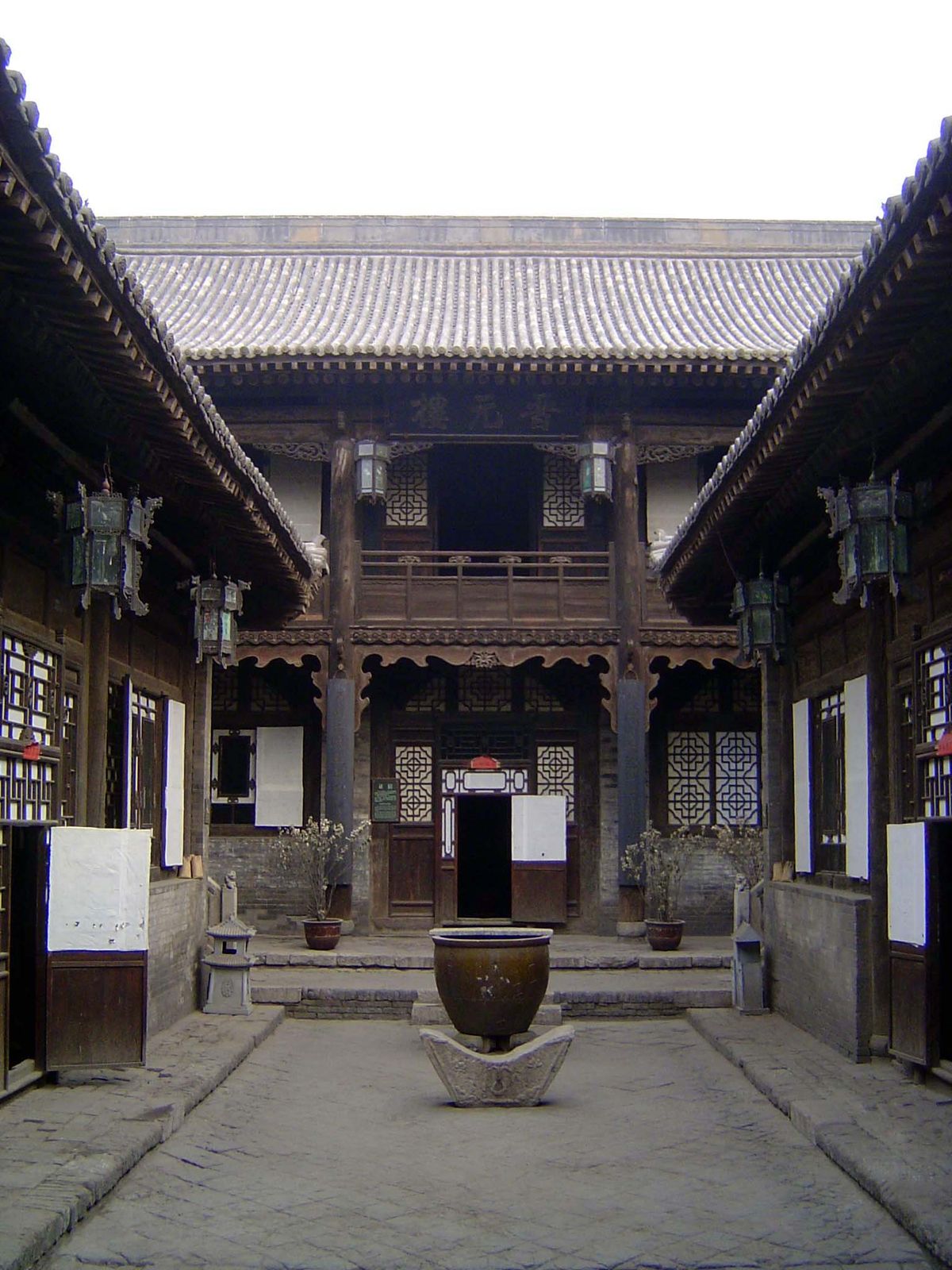
The principal rooms, on the north side.
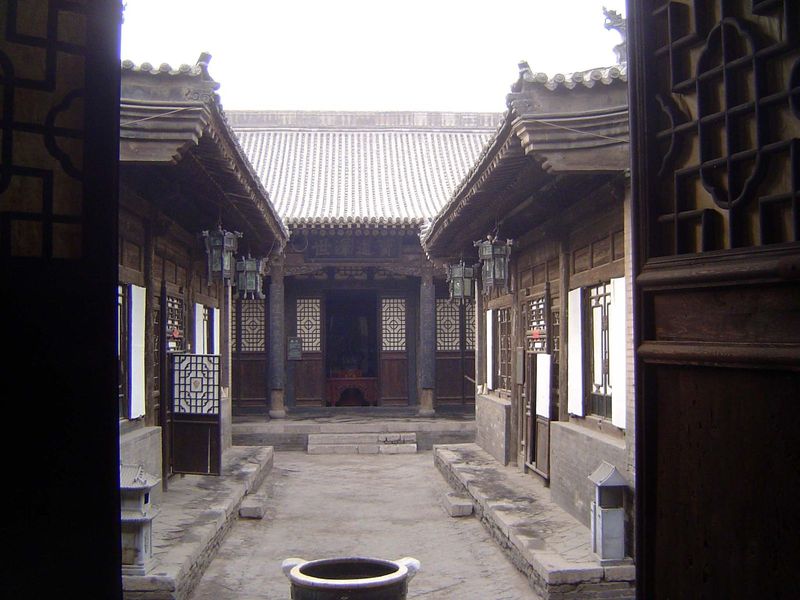
The view from the principal rooms across the courtyard.
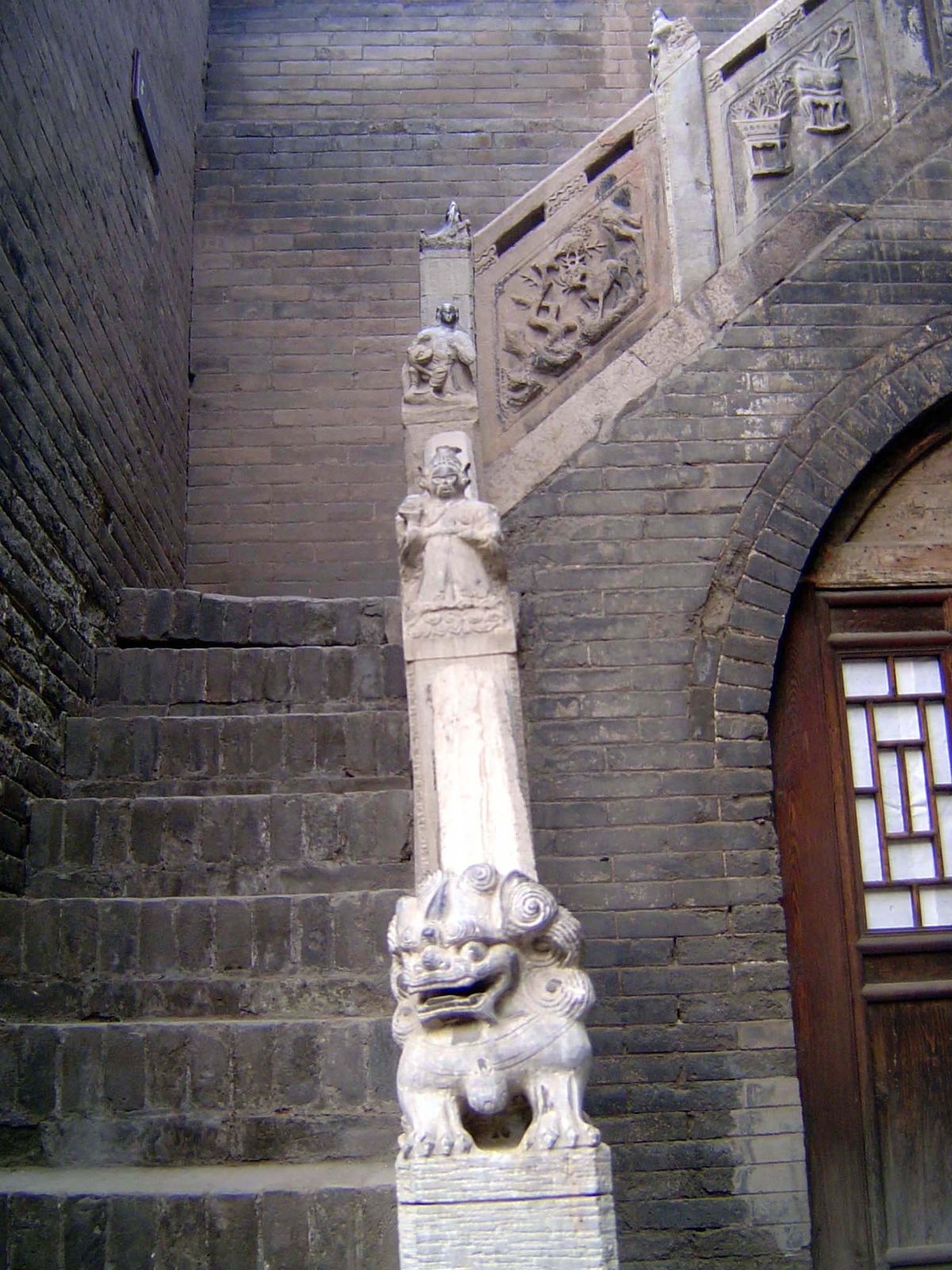
One of the pair of flanking staircases to the upper floor.
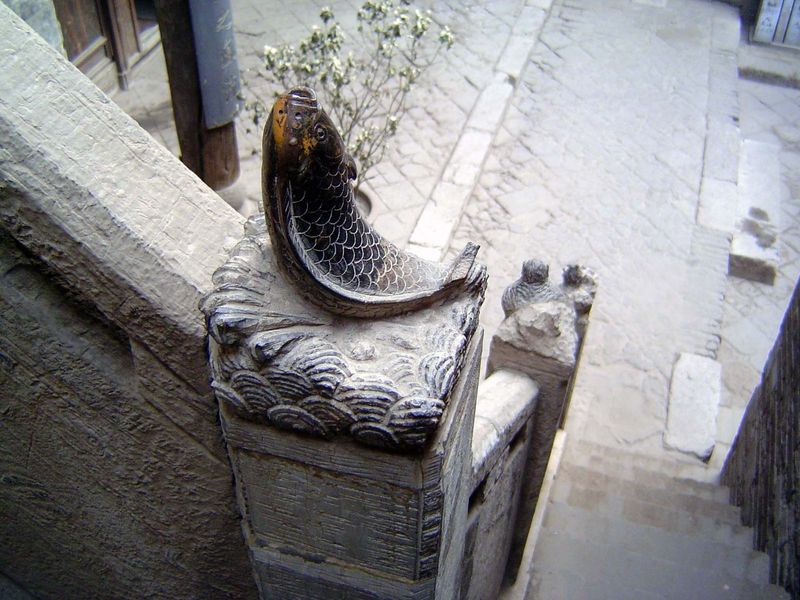
Balustrade detail.
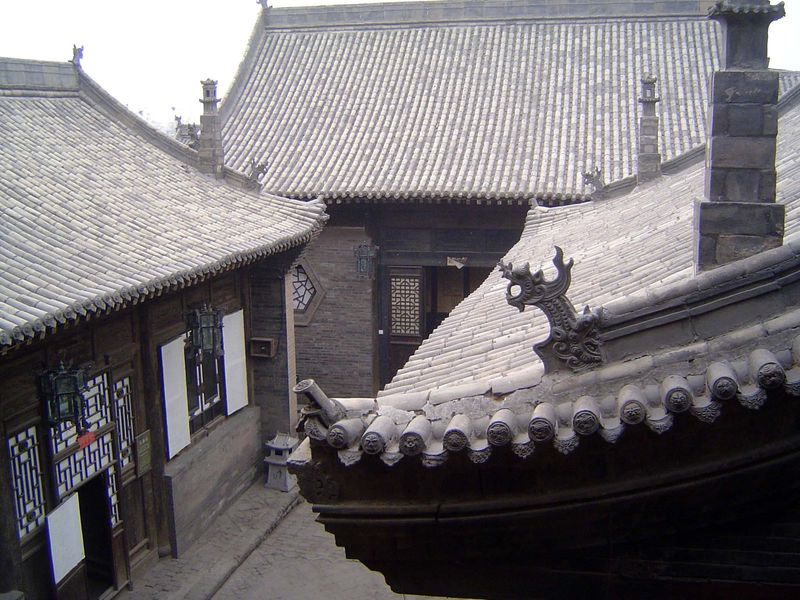
View from the upper floor.
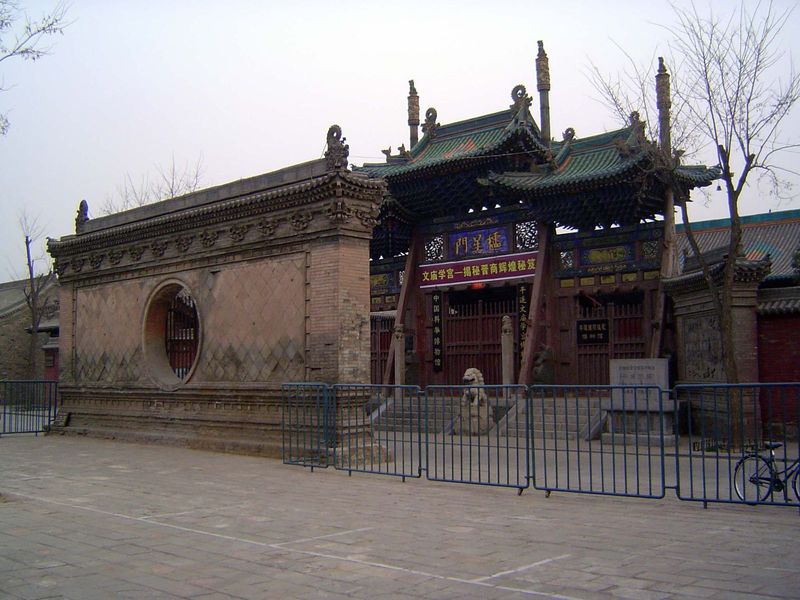
We've drifted east to the Confucian Temple, here with a screen wall facing the street and the Lingxing ("Intelligent Nature") Gate.
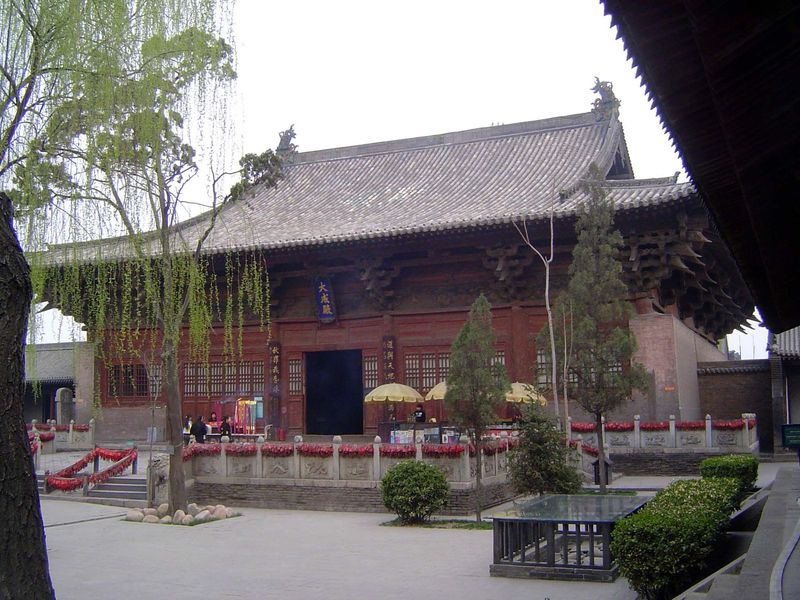
Inside, the Dacheng Palace, the main hall, rebuilt in 1163.
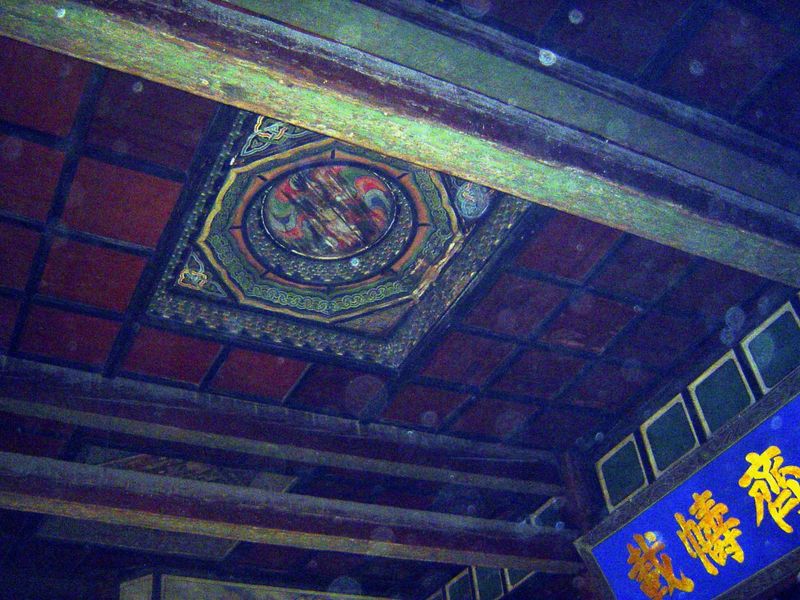
Coffered ceiling.
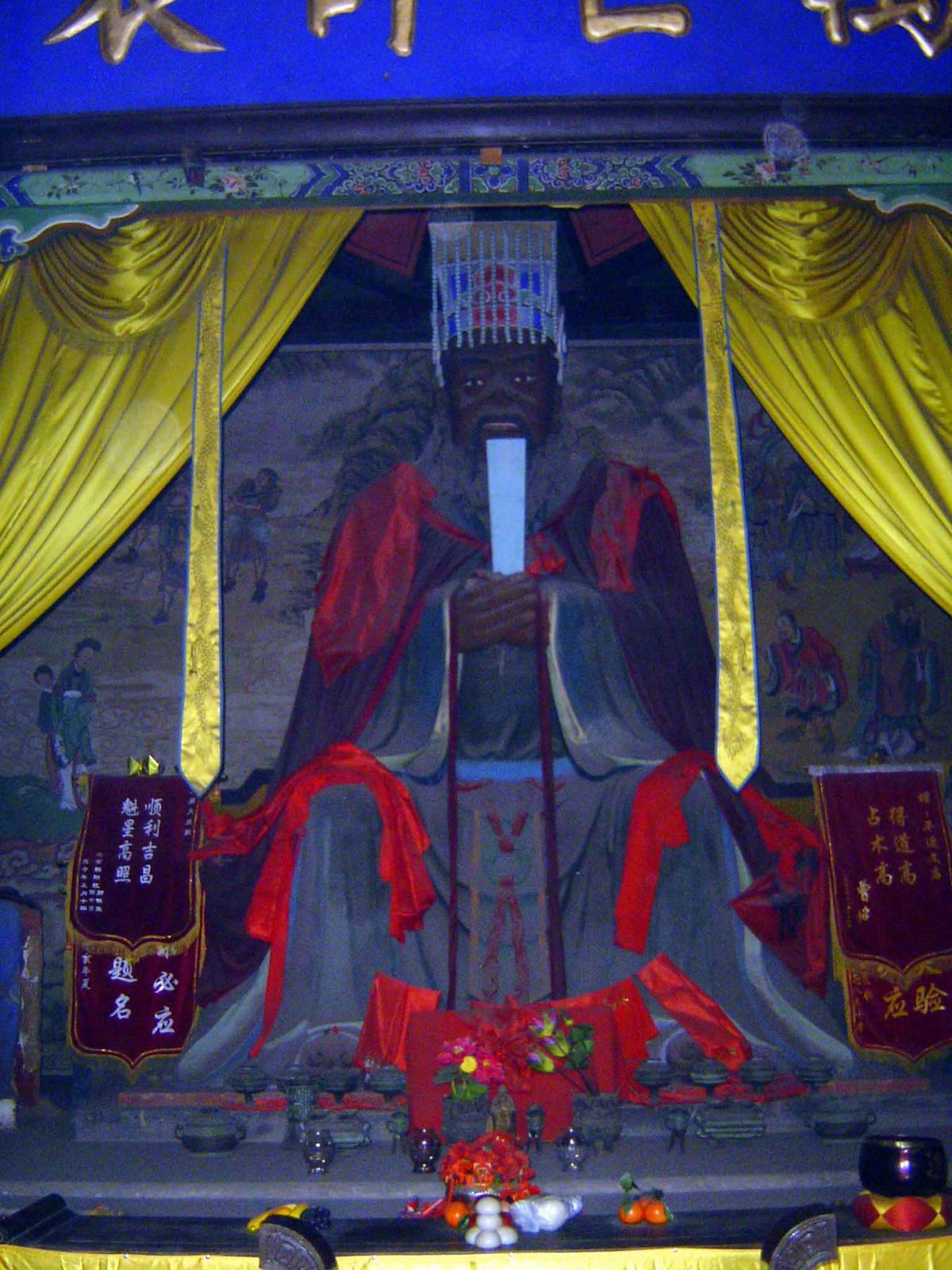
Central image of Confucius.
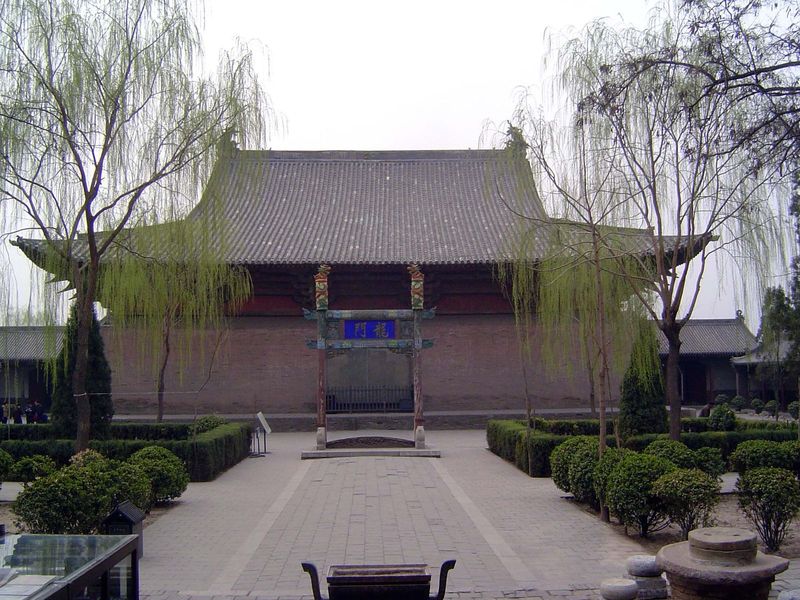
Rear of hall, with Dragon Gate.
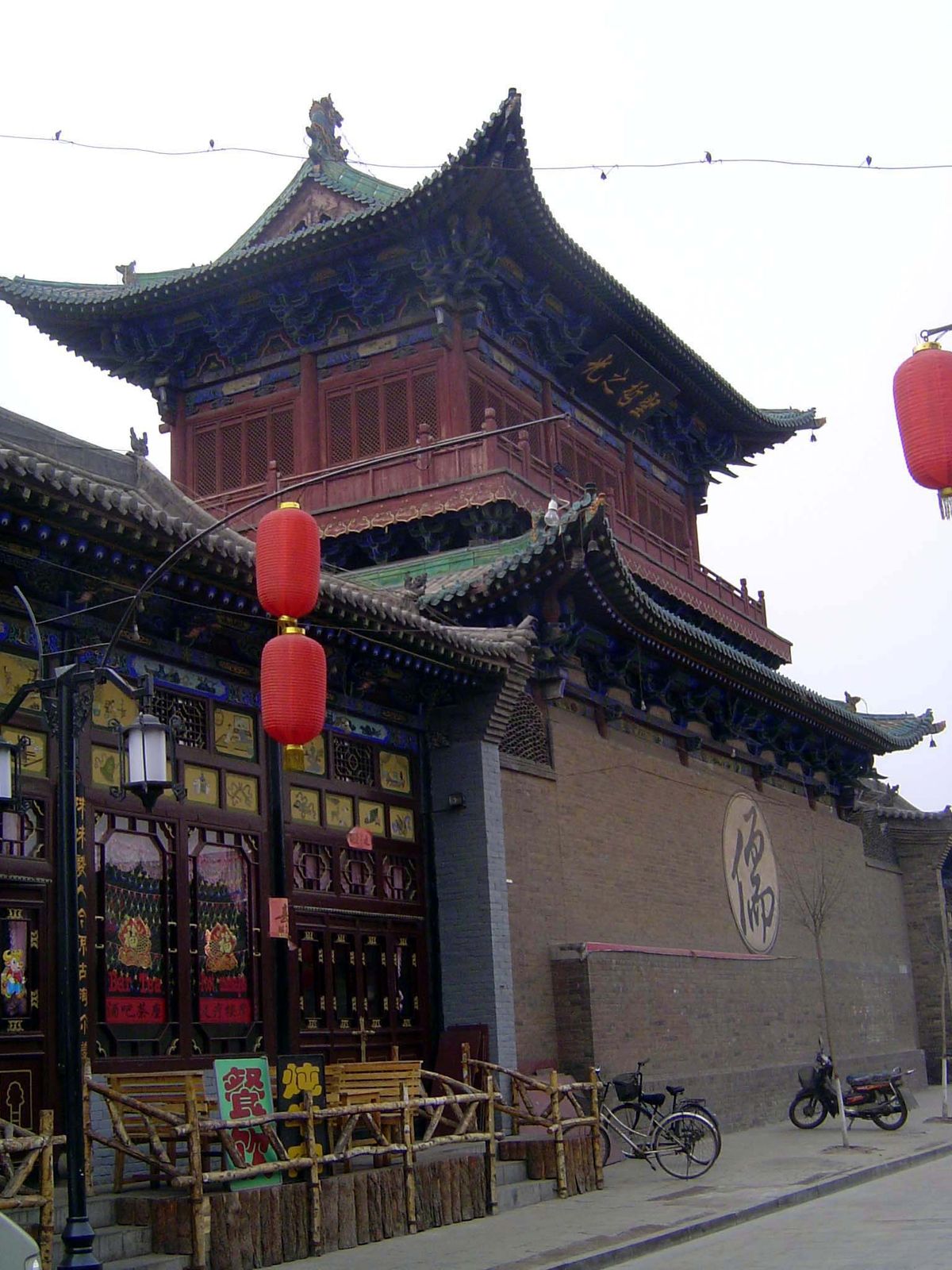
The Confucius Temple was for centuries a school, and upstairs, in the Zunjing Building north of the Dacheng Palace, there's a remarkable document.
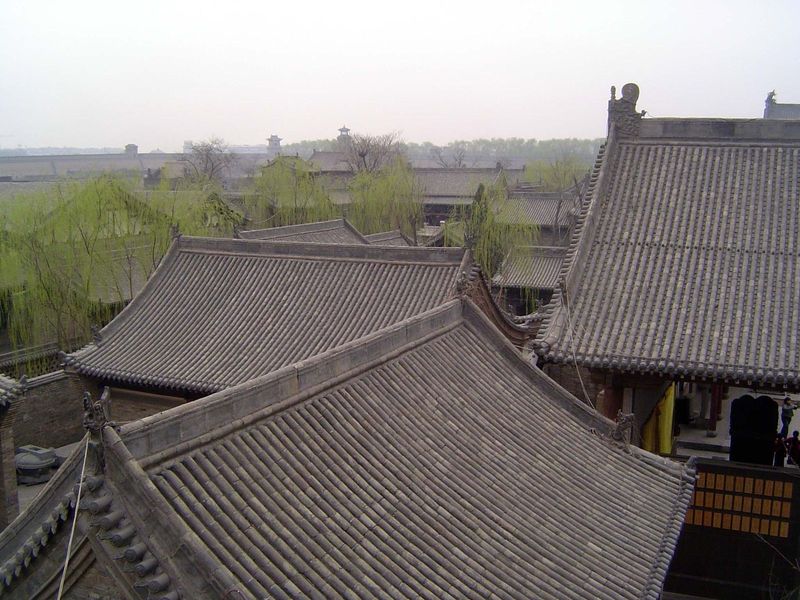
The view from the upstairs balcony.
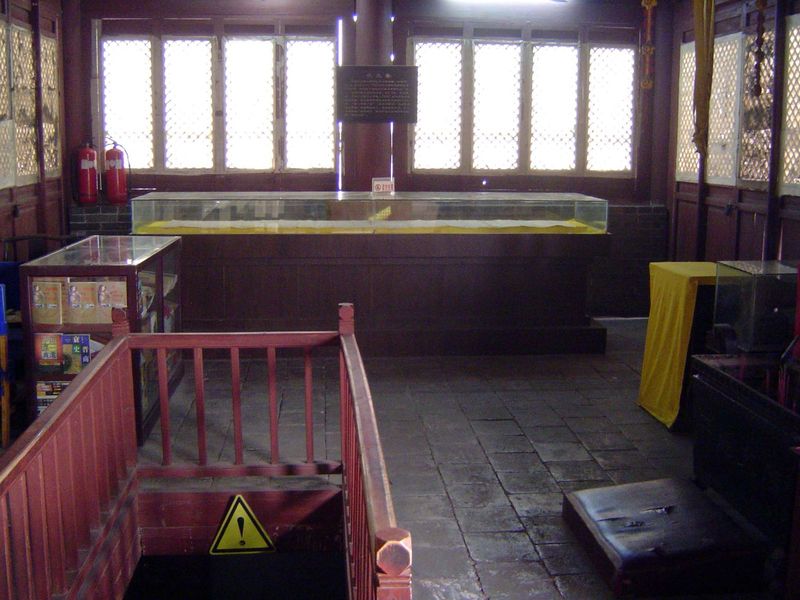
When the imperial-examination system came to an end, the school here became for a time the Pingyao County Industrial School. But in that glass case....
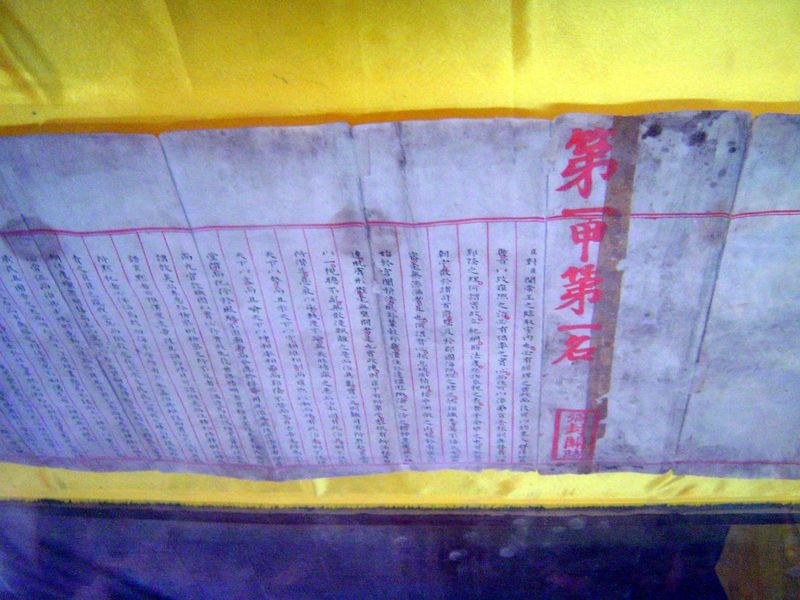
...is kept China's only remaining Zhuangyuan ("champion" or "scholar") exam paper, the top score in the exam of 1598, written by Zhao Bingzhong from Wuxu. He was able to retain the paper, which was kept for centuries by his descendants.
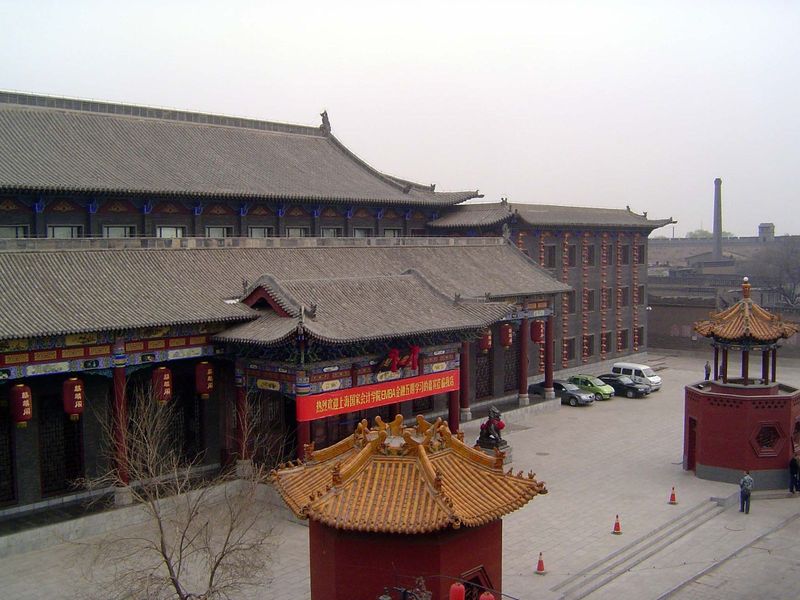
Time moves on: north of the tower is the walled city's first international-style hotel.
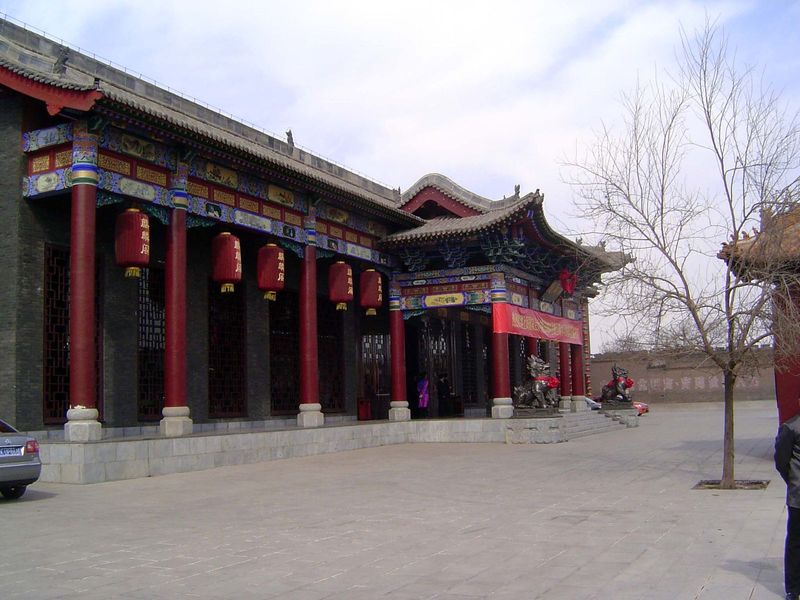
Entrance, mimicking traditional styles.
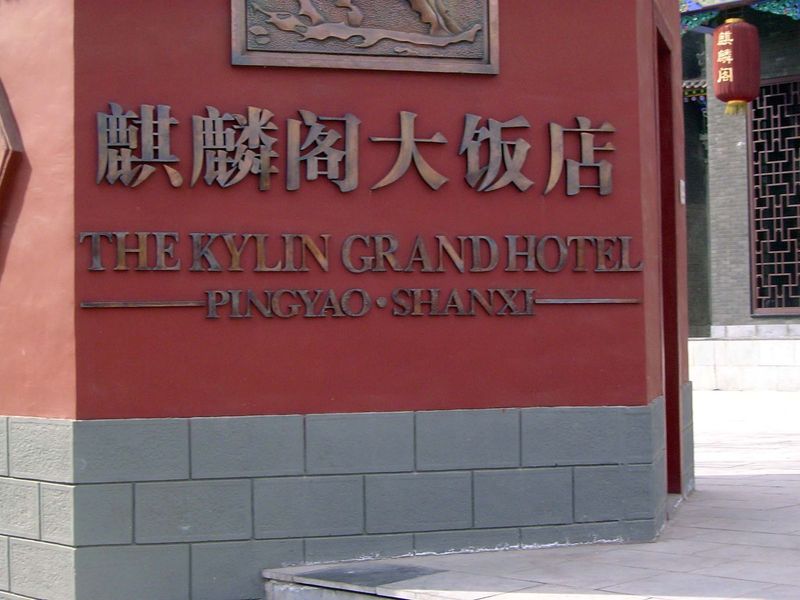
If you must know....
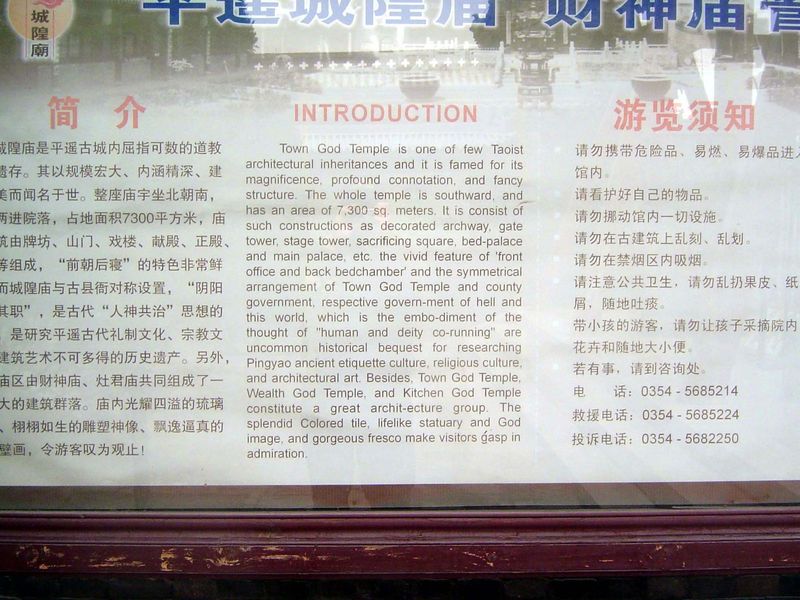
Any questions?
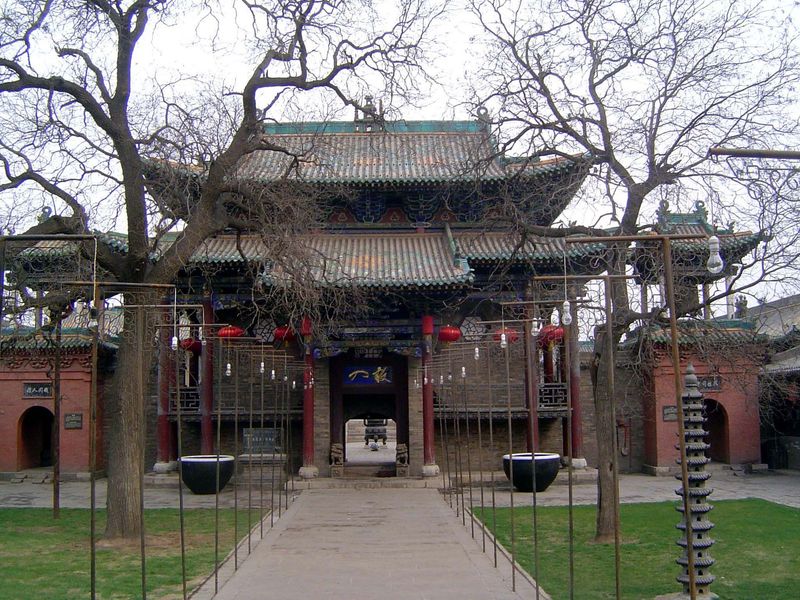
The front yard of the town god temple, rebuilt in 1555. It's located east of South Street and is in a position mirrored on the west by the county government offices. The message is that the town god is more important than the bureaucrats on the other side. An official history from 1707 states, "When a new official arrives, he will go the temple and swear before the god, and worship the god each month."
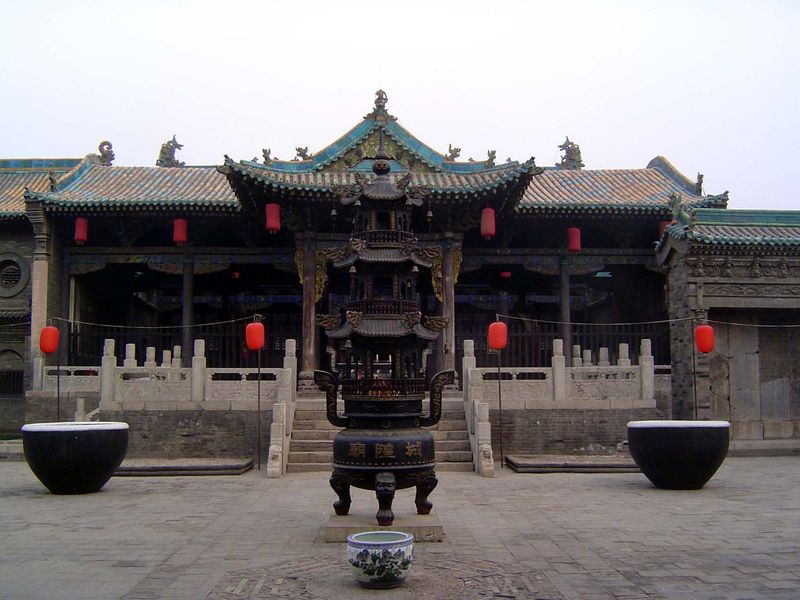
There's an elaborate complex here, with many buildings, including this, the Xian Palace.
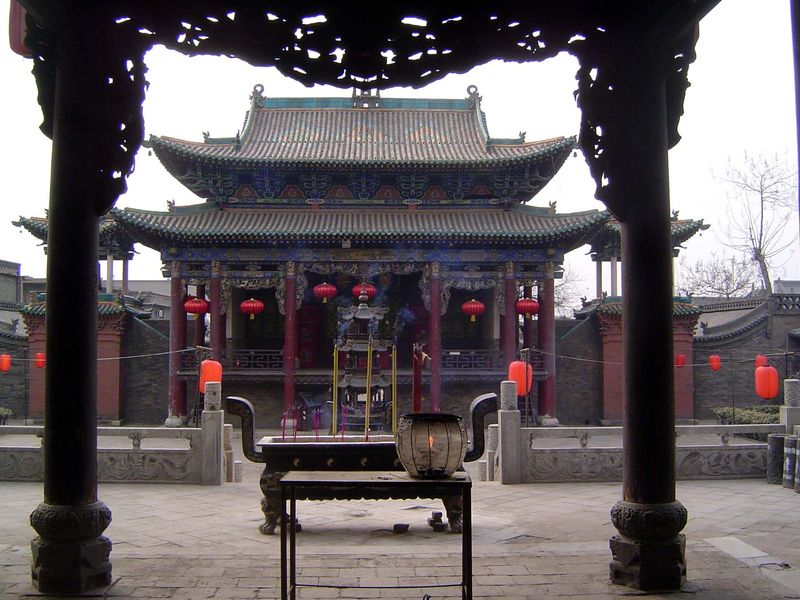
The Music Tower.
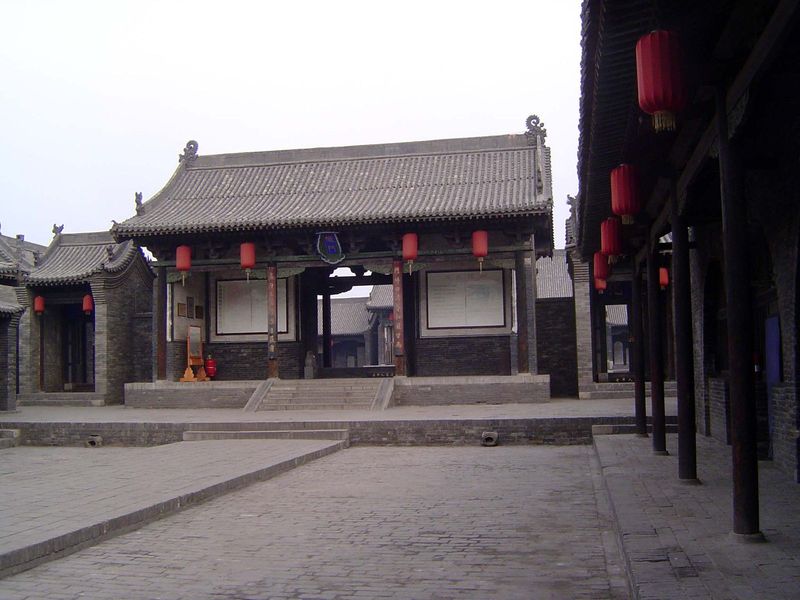
The Gate of Dignity.
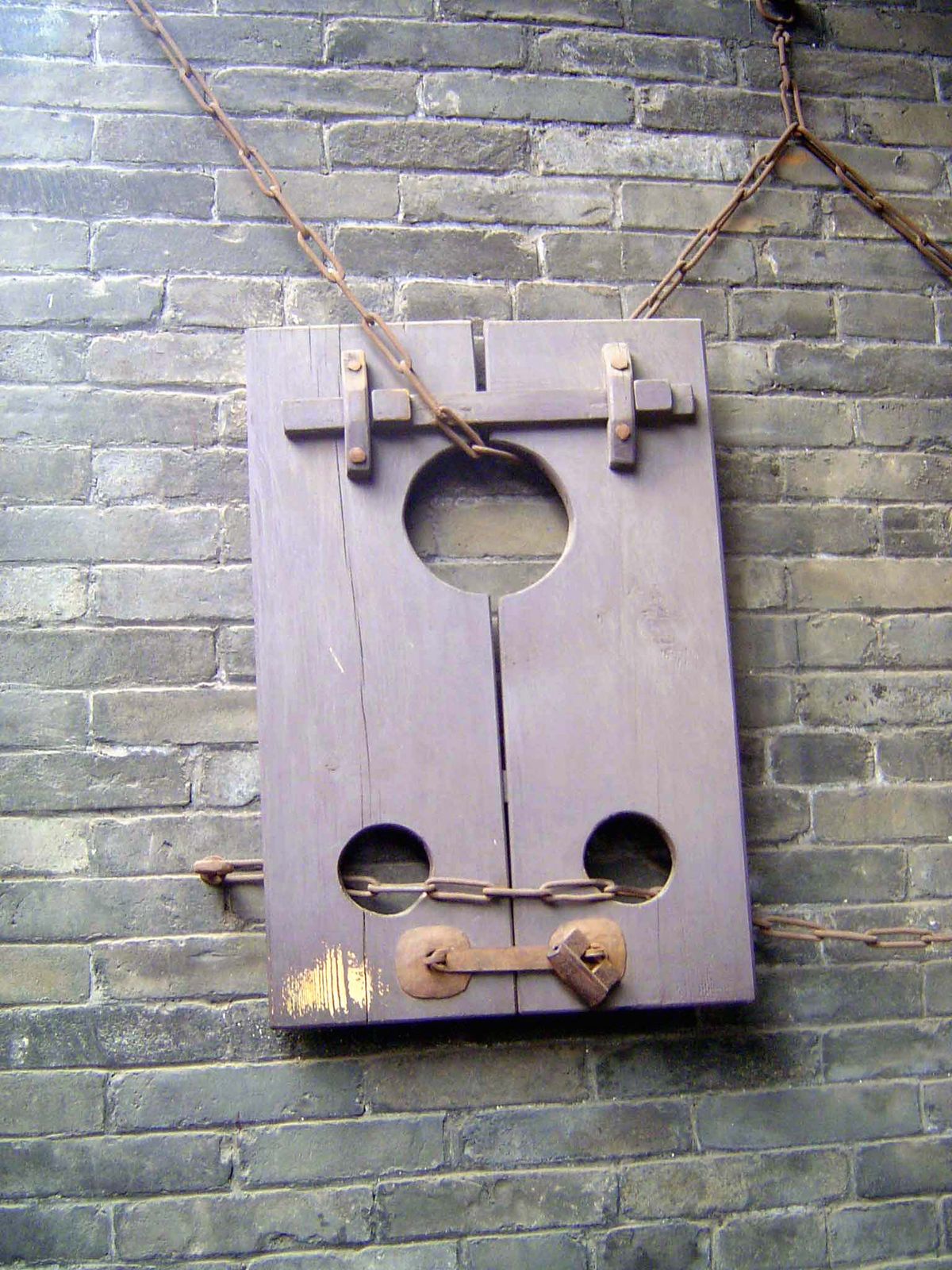
The collar of indignity.
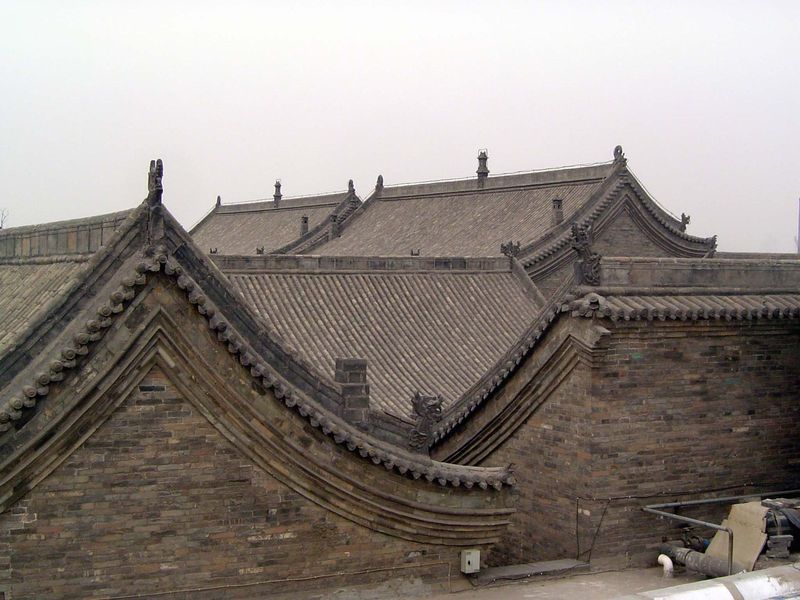
Roofs.
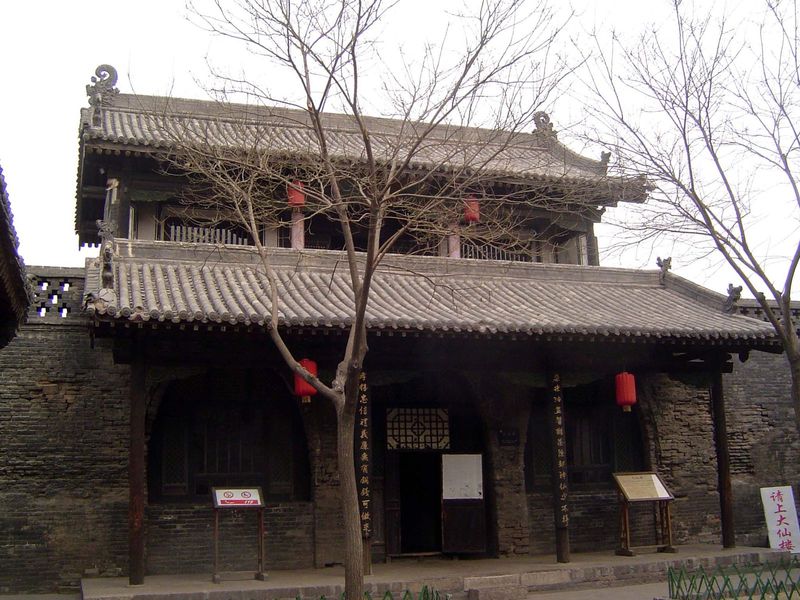
The Tower of the Fox Immortal, where the magistrate made offerings to the deity who protected the official seal. The downstairs cave was the magistrate's dining room.
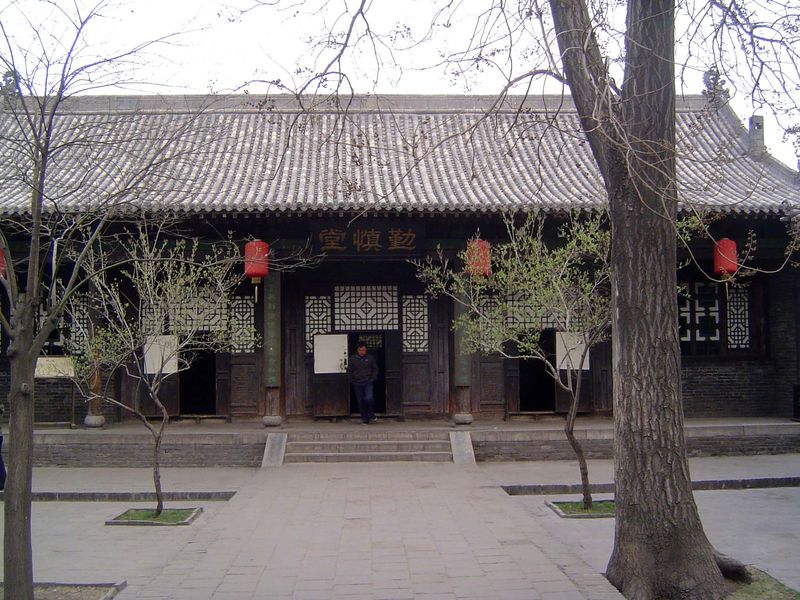
The magistrate's house.
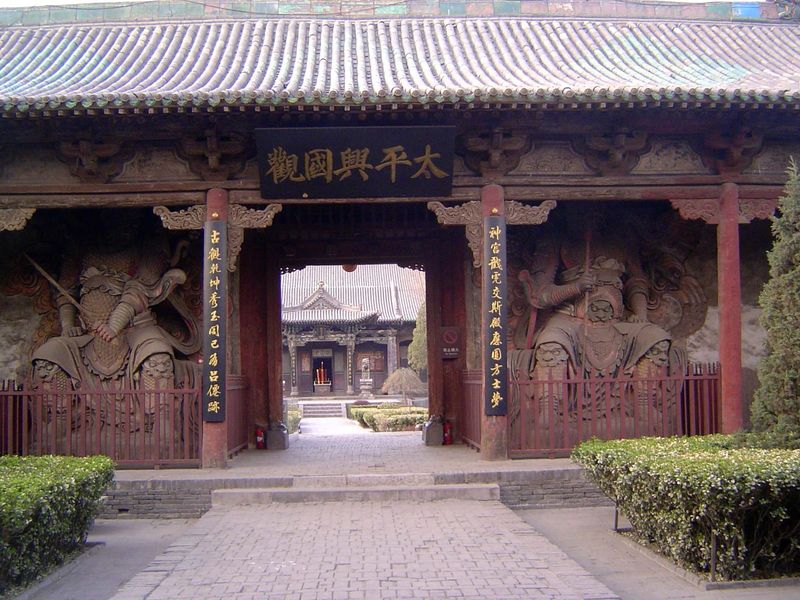
The grandest complex in the city is probably the Taoist Temple, built originally in 757 and rebuilt in 1065, since when it has been called the Qing Xu Temple. The entrance is through this Hall of Dragon and Tiger, with guardian statues representing the deities protecting the east (the blue dragon) and the west (the white tiger).
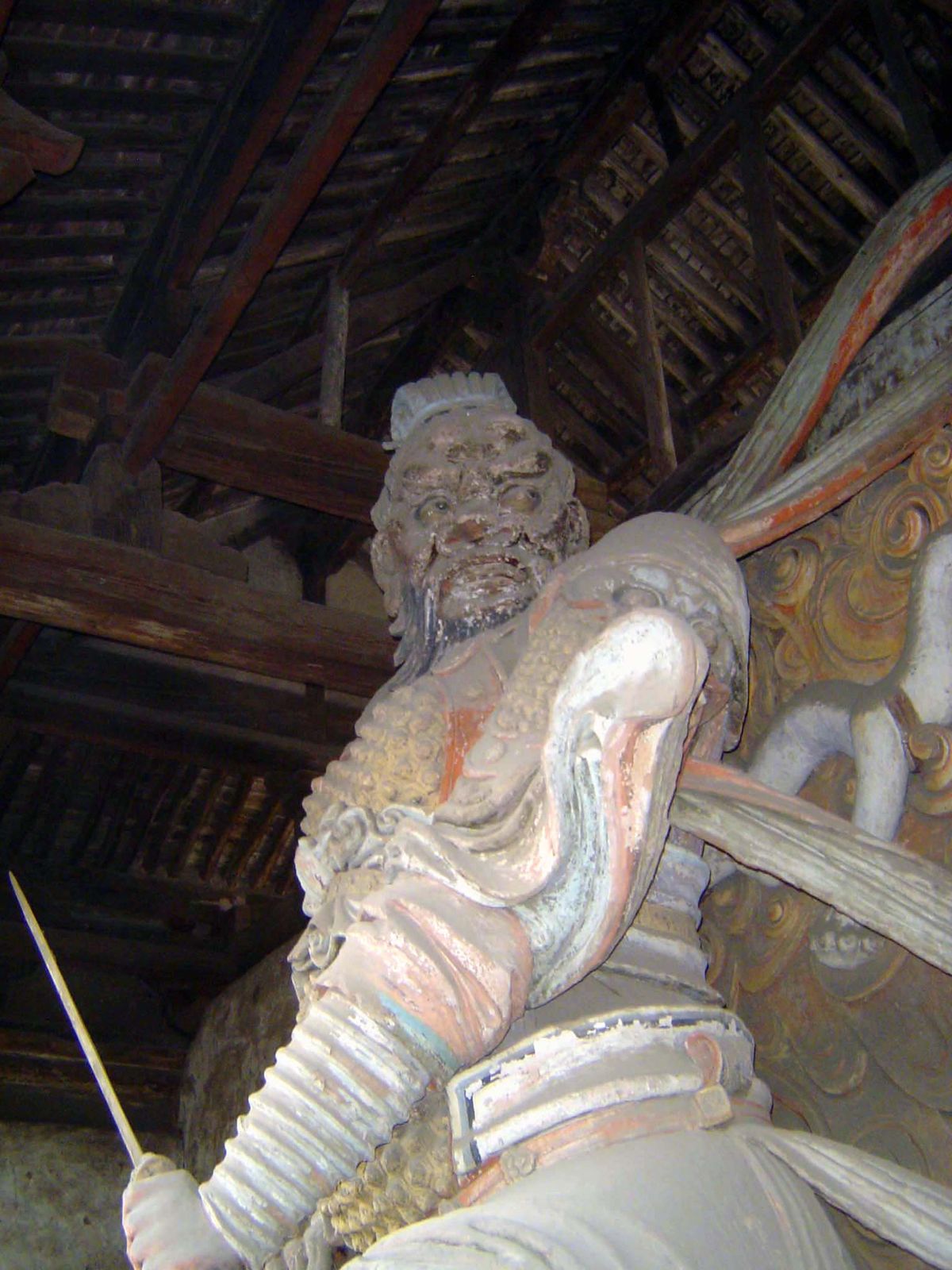
Closeup of the god of the blue dragon.
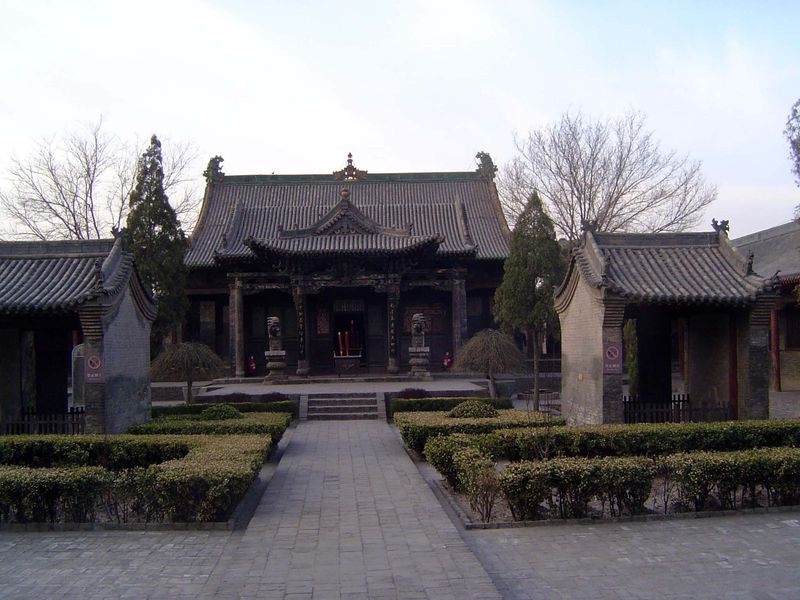
Chunyang Palace, blocking the sight of the Sanqing Temple, immediately behind.
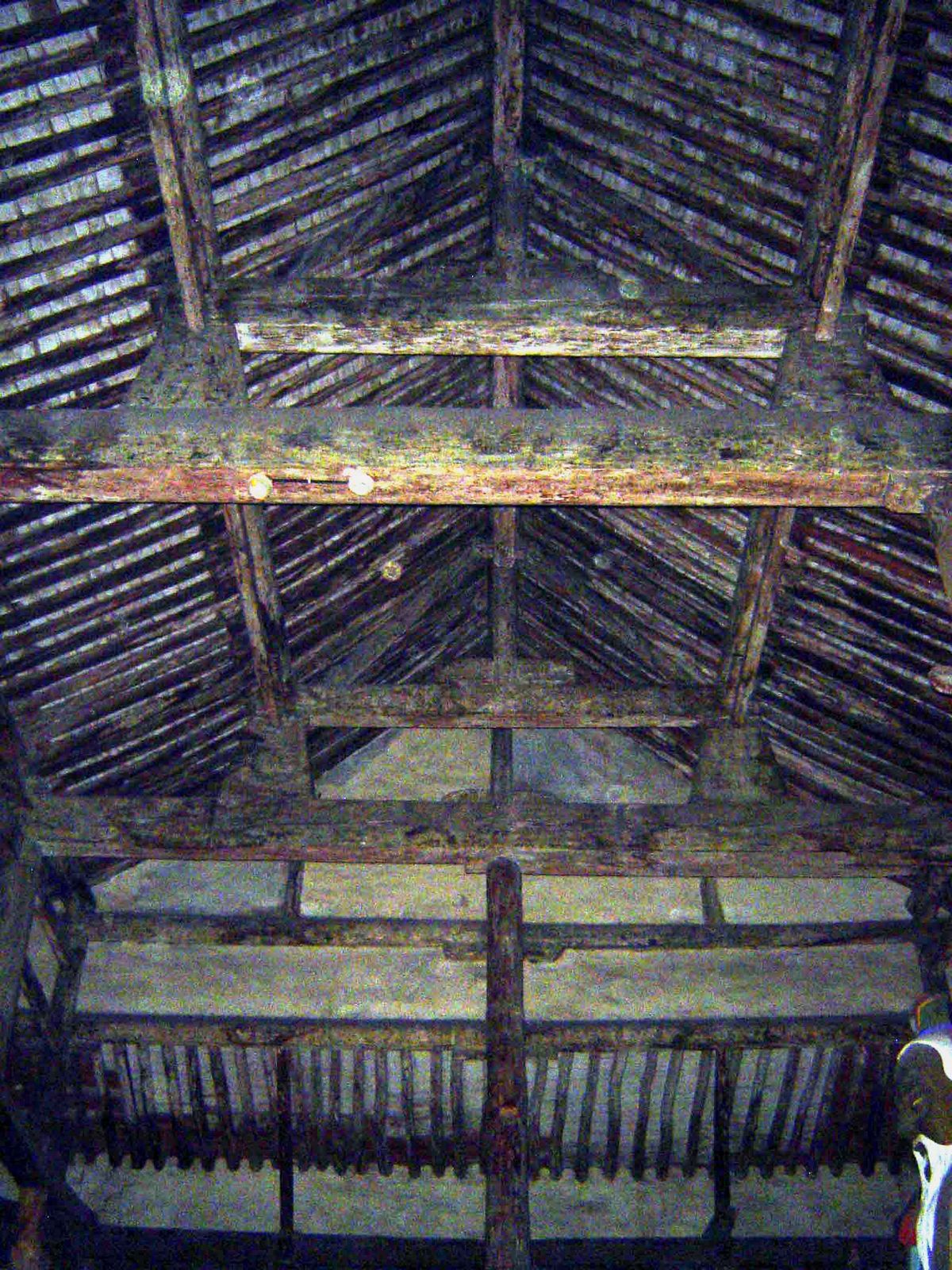
Sanqing Palace framing.
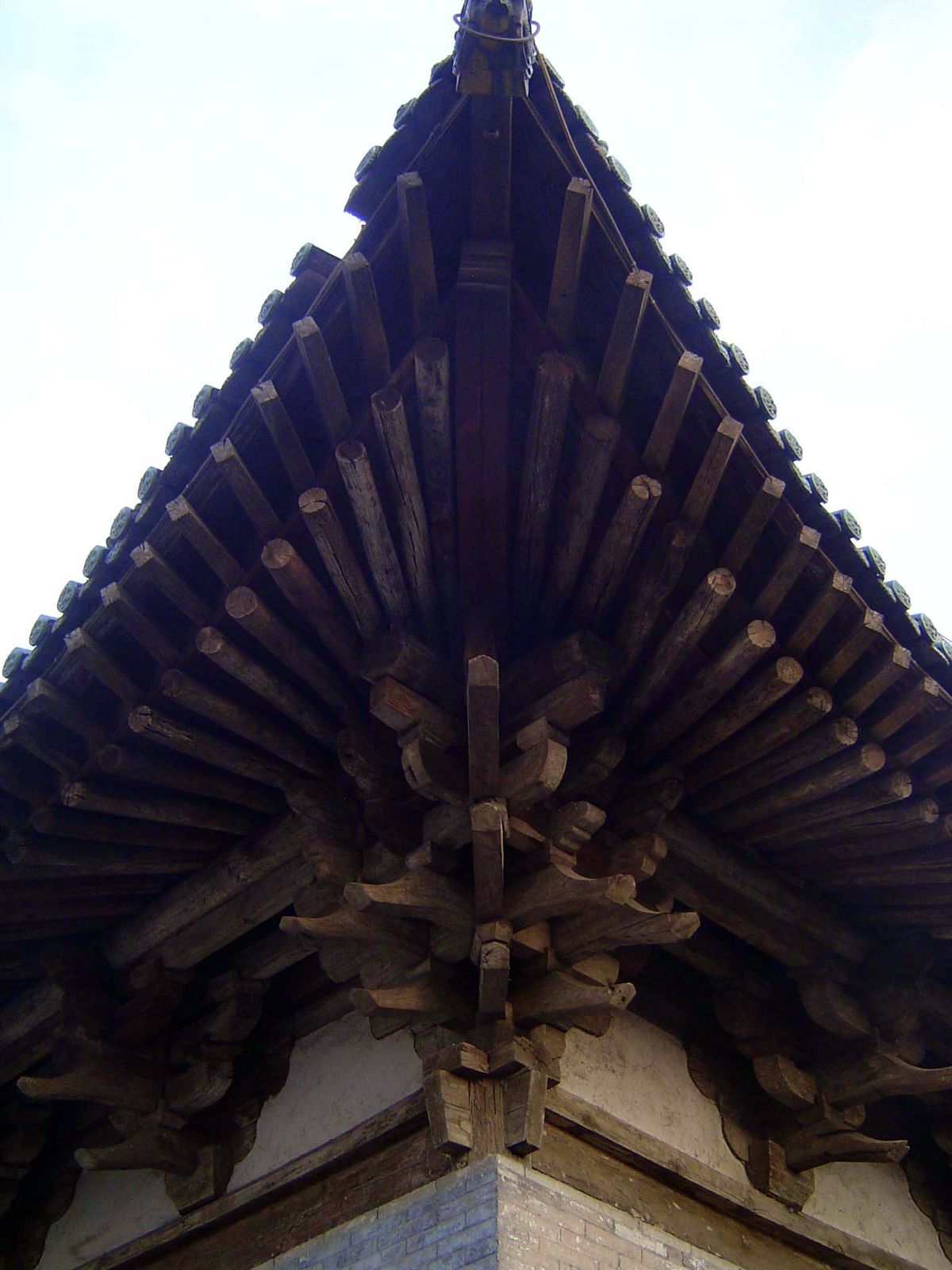
Eave corner of Sanqing Palace.
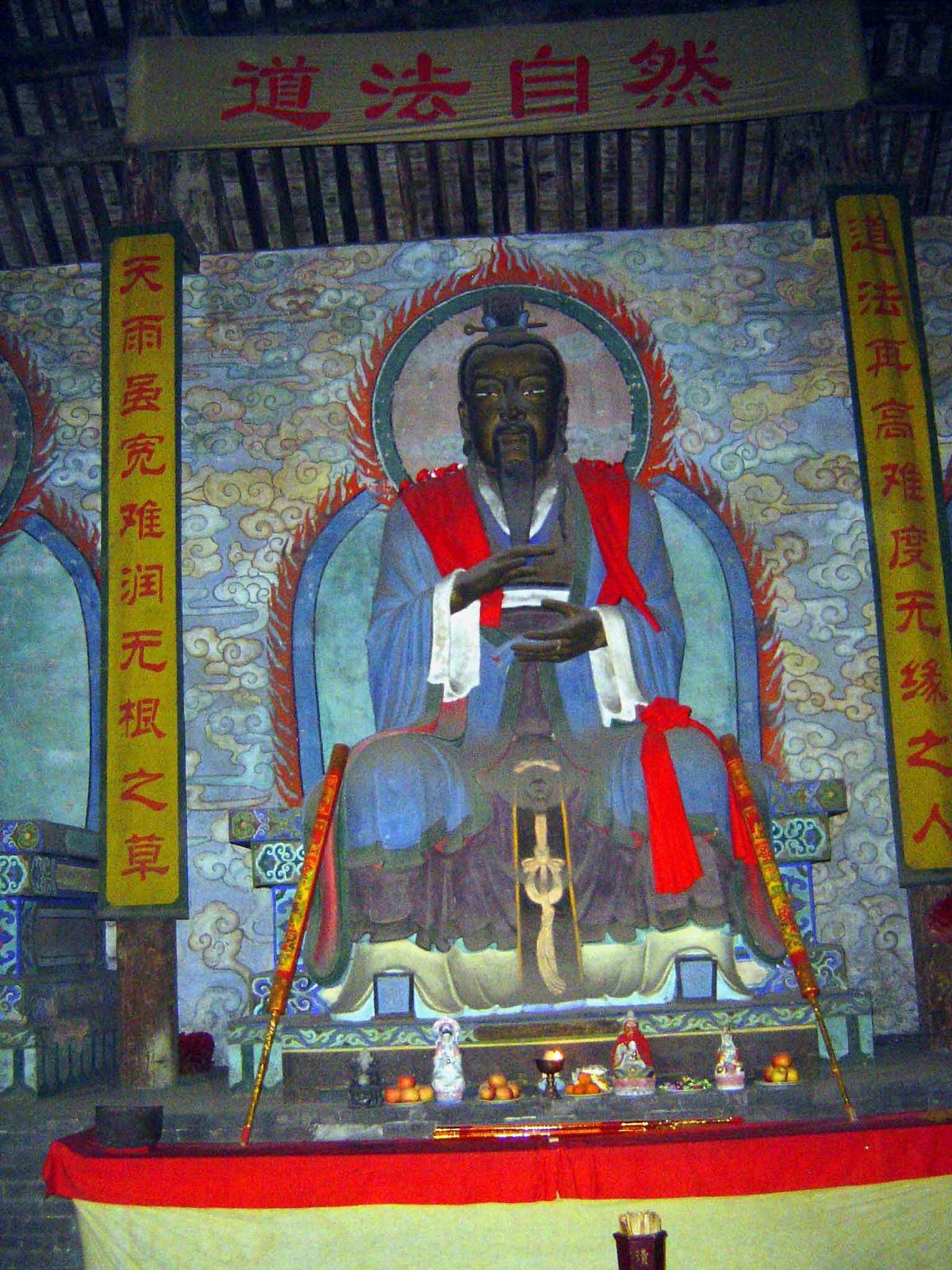
One of three images embodying Lao Zi; the originals were destroyed in the 1950s.
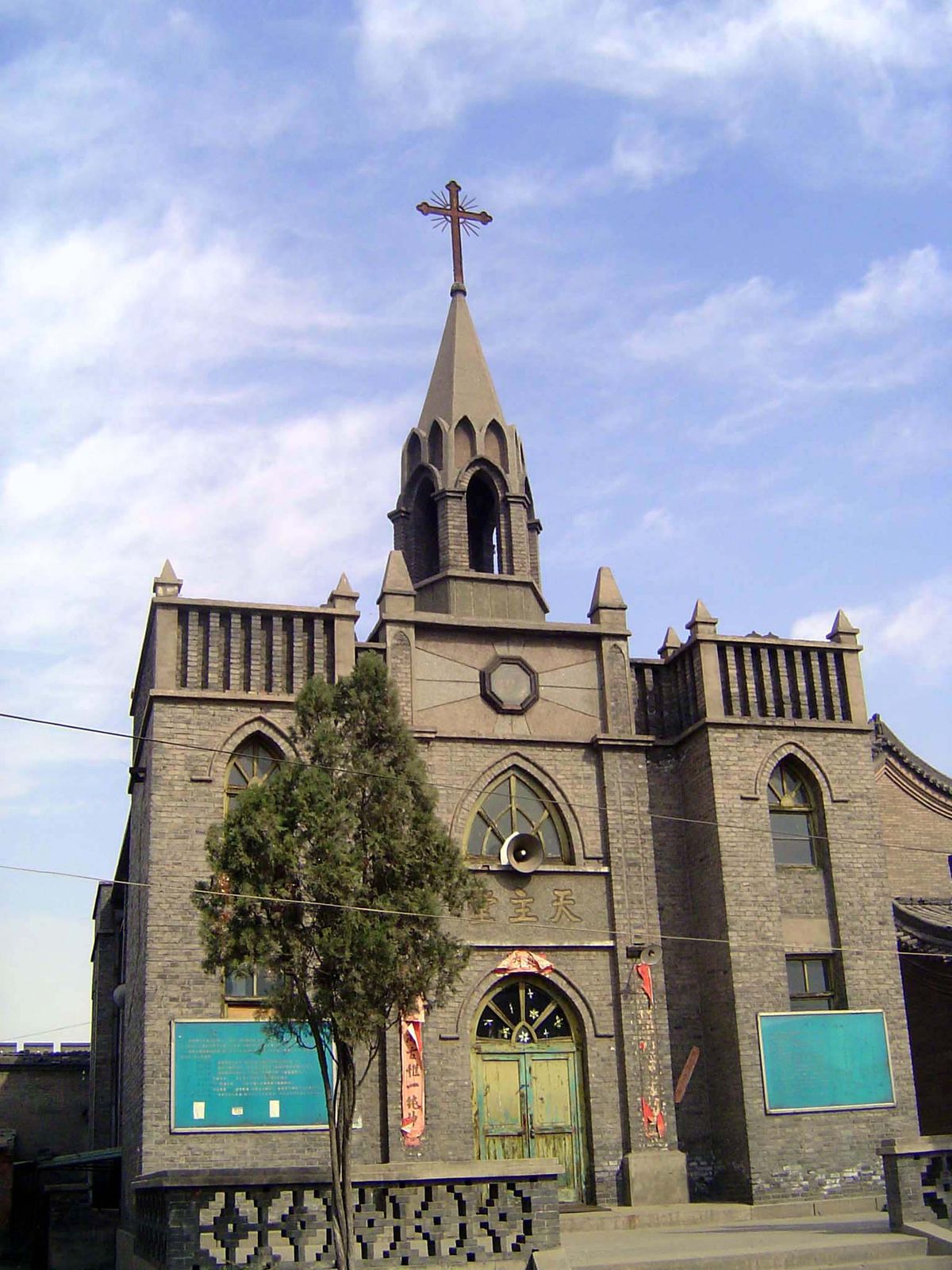
And here, finally, is that church we saw before.
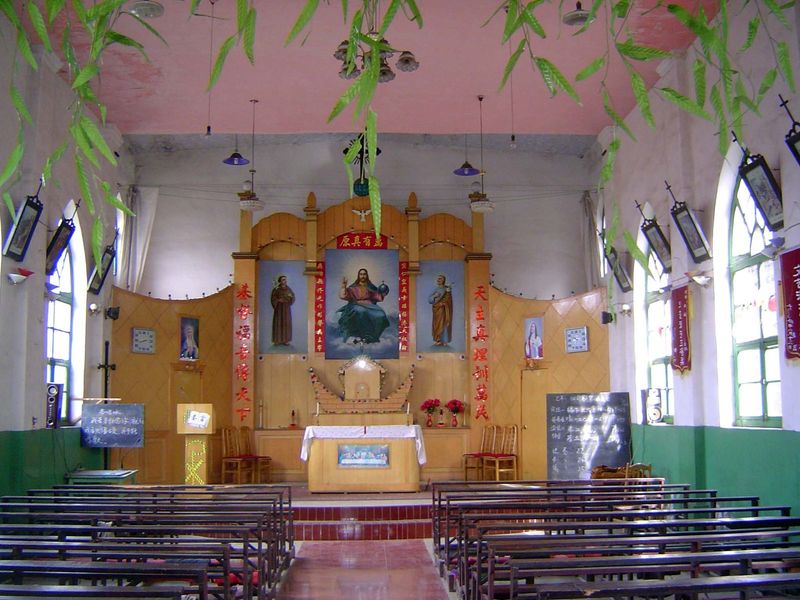
The interior.