Historic Cairo 2
We continue south on the main road of the old city.
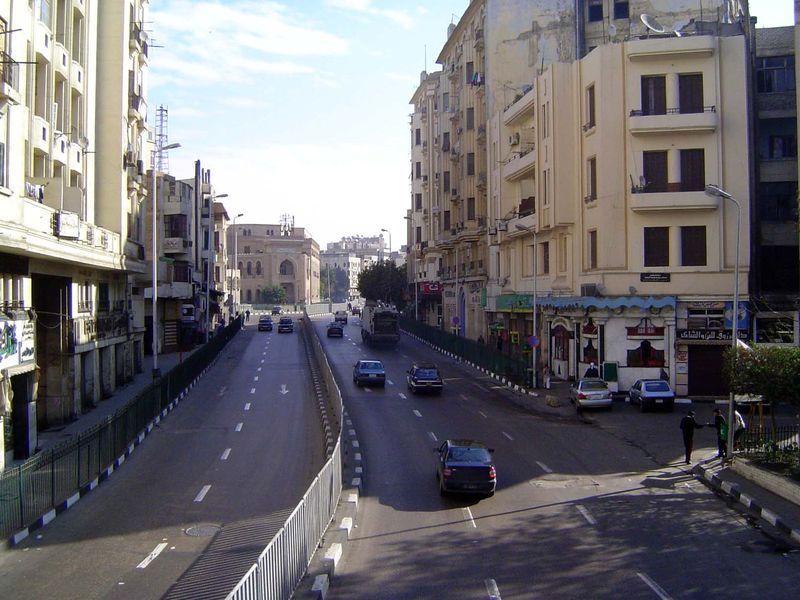
Since the 1930s, the old city has been slashed east-west through its midriff by this road, just north of the city's most famous mosque, al-Azhar. We begin there.
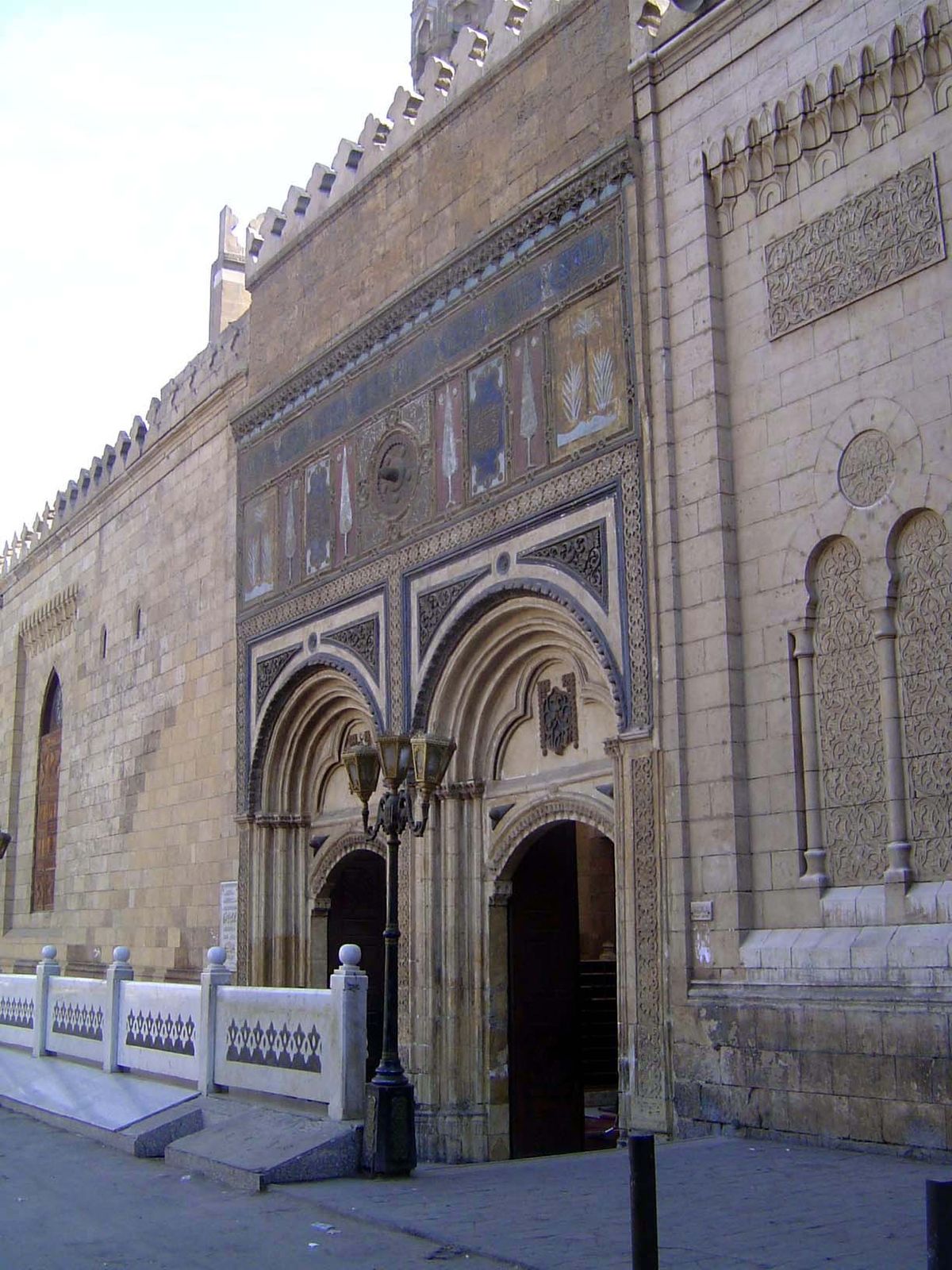
(No. 97) The Mosque of al-Azhar, "The Shining," was established in 970 as the new city's chief mosque. A side door is shown here because the main facade of the mosque is hidden by later additions.
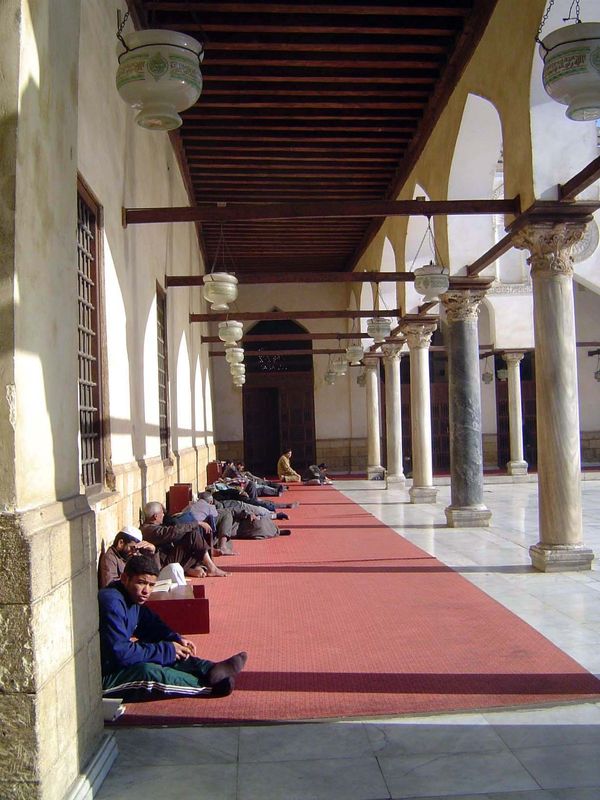
The fame of this mosque and its university is such that it's a lot more crowded than any other mosque on this tour. Access for non-Muslims used to be tricky. Here's Creswell talking about the duplicity of one 19th Century French visitor: "In or about 1820 Pascal Coste made the first plan of the mosque. Muhammad 'Ali had asked him to submit plans for two mosques. Coste replied that before doing so he must make himself acquainted with the interiors of the principal mosques of Cairo, and was therefore given a firman for this purpose, but was told not to go to the Mosque of al-Azhar. However, being very anxious to complete his series of plans, he went one day to see the chief of this mosque, was extremely well received, and remarked that he had been told by the Pasha to report on the pavement of the various parts of the mosque which needed repair. By this means he was able, without being troubled by the students, to take a number of measurements, sufficient to make a very rough plan of the general layout of the mosque...." (Creswell, vol. 1, p. 41)
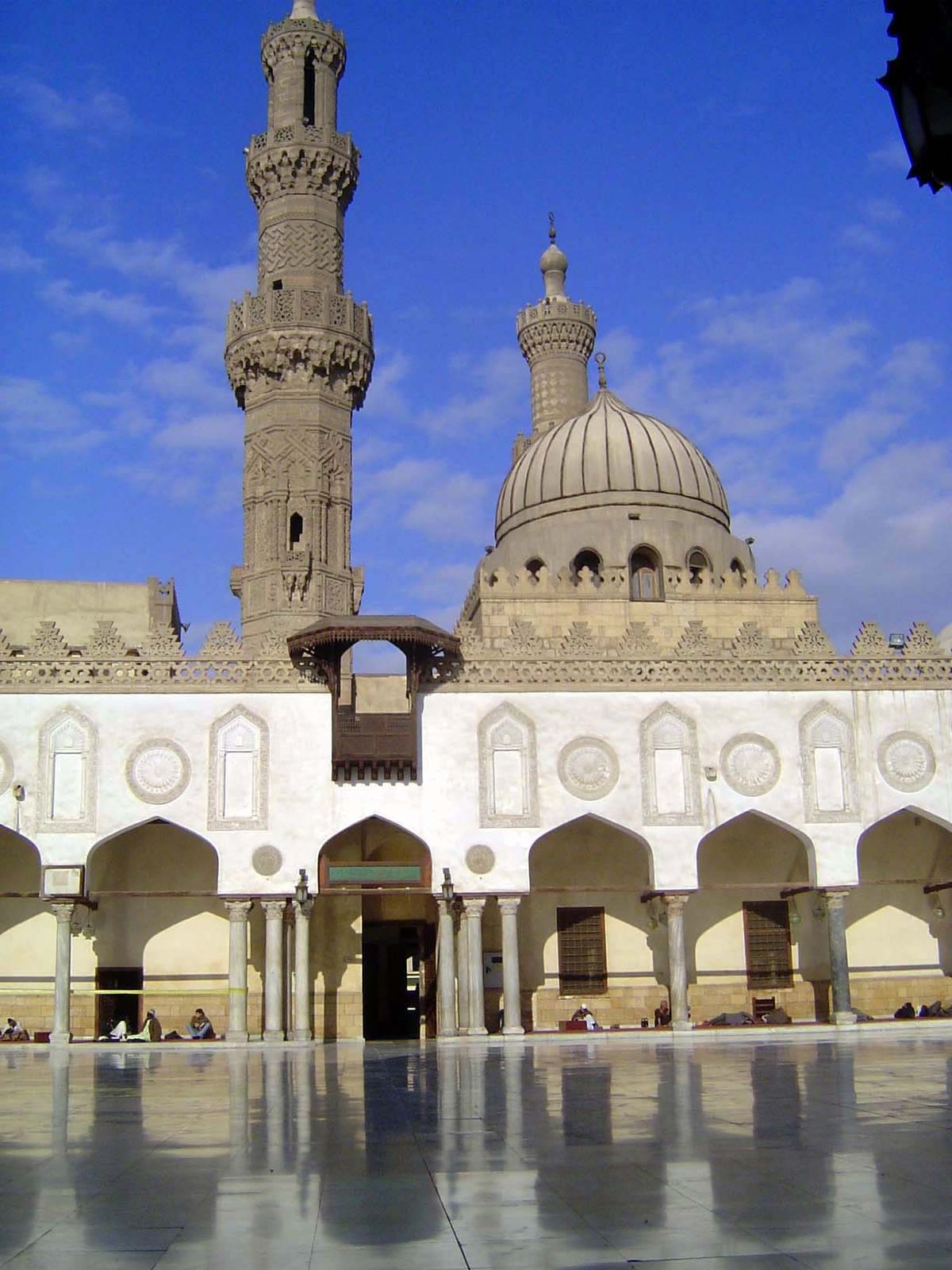
Like so many others, this mosque has been extensively remodeled over the centuries. The minaret was added by Sultan Quytbay in 1495, and the portico that fails to shade anyone in the morning was reconstructed in 1891.
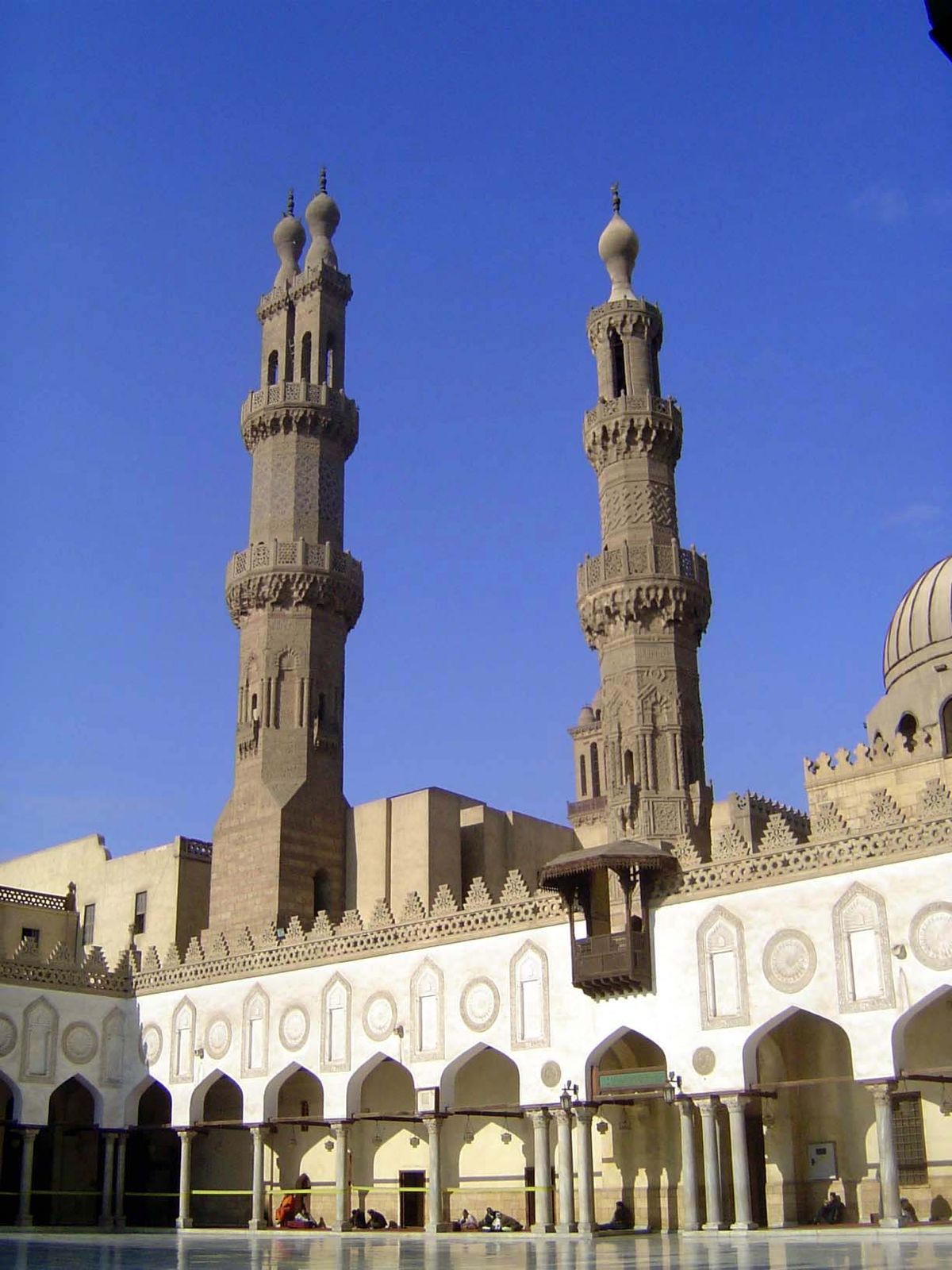
To its left is a minaret added in 1510 by Sultan al-Ghuri, whose nearby mosque is coming up momentarily.
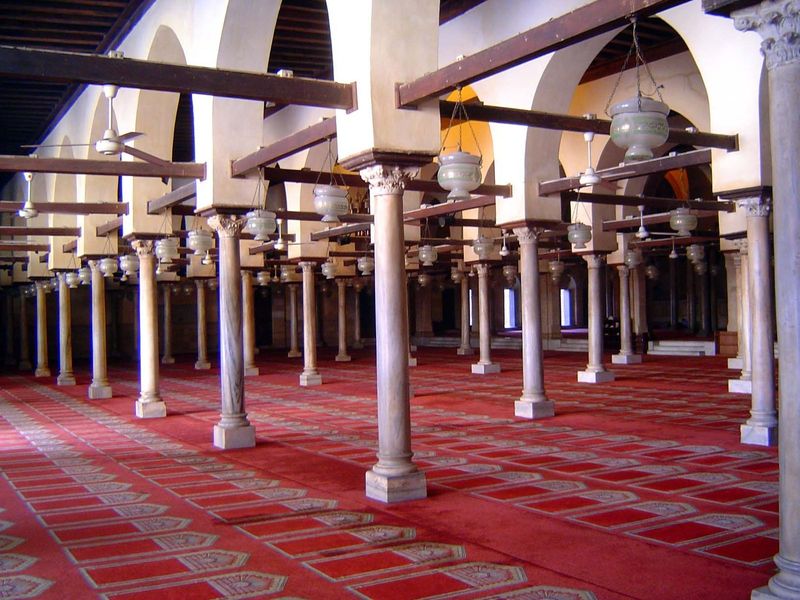
Original arcades, from 972, on the qibla side of the courtyard.
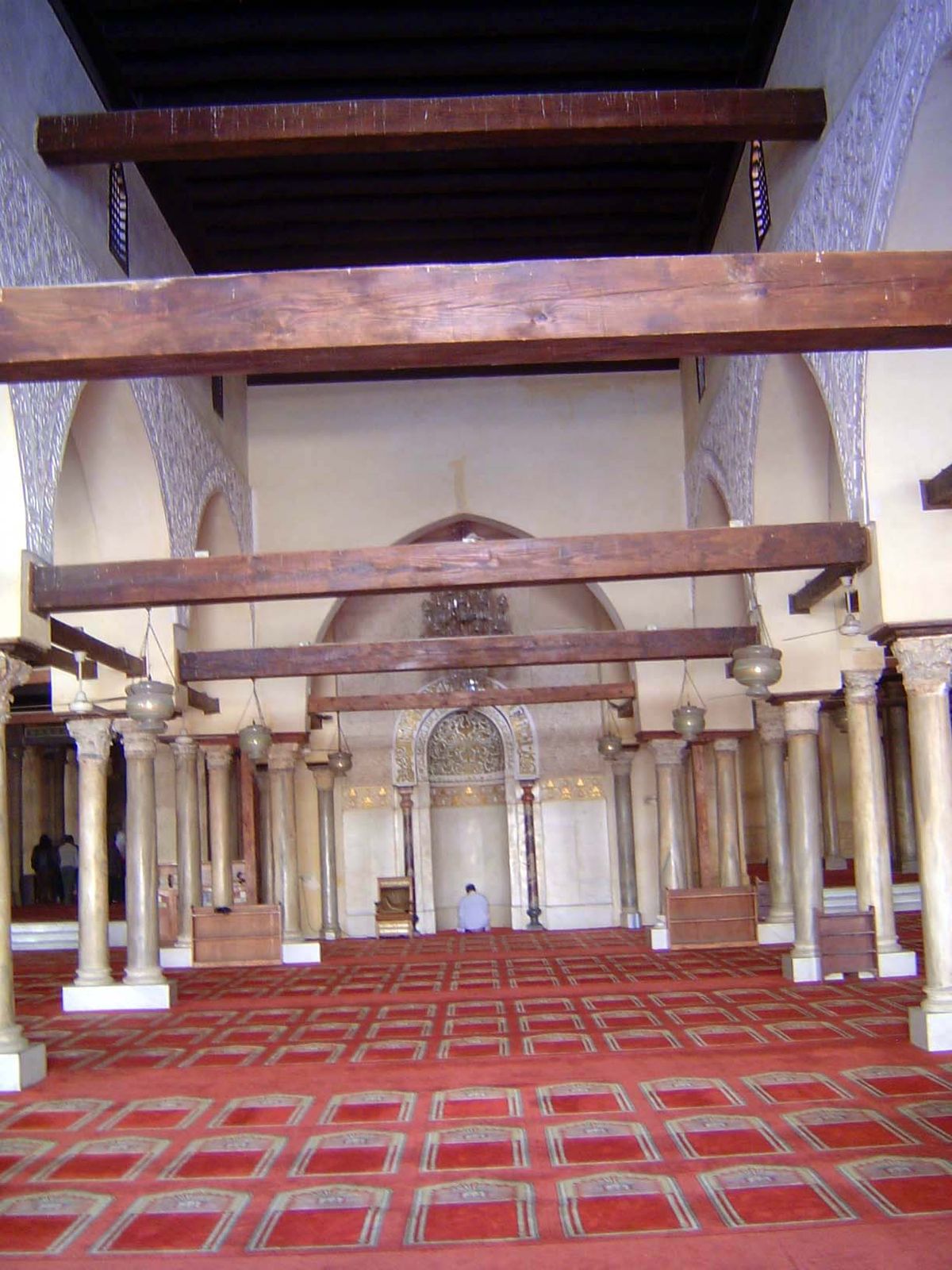
Original mihrab or prayer niche, of the same age. A second one lies farther back to the left, where four additional aisles were added in 1751.
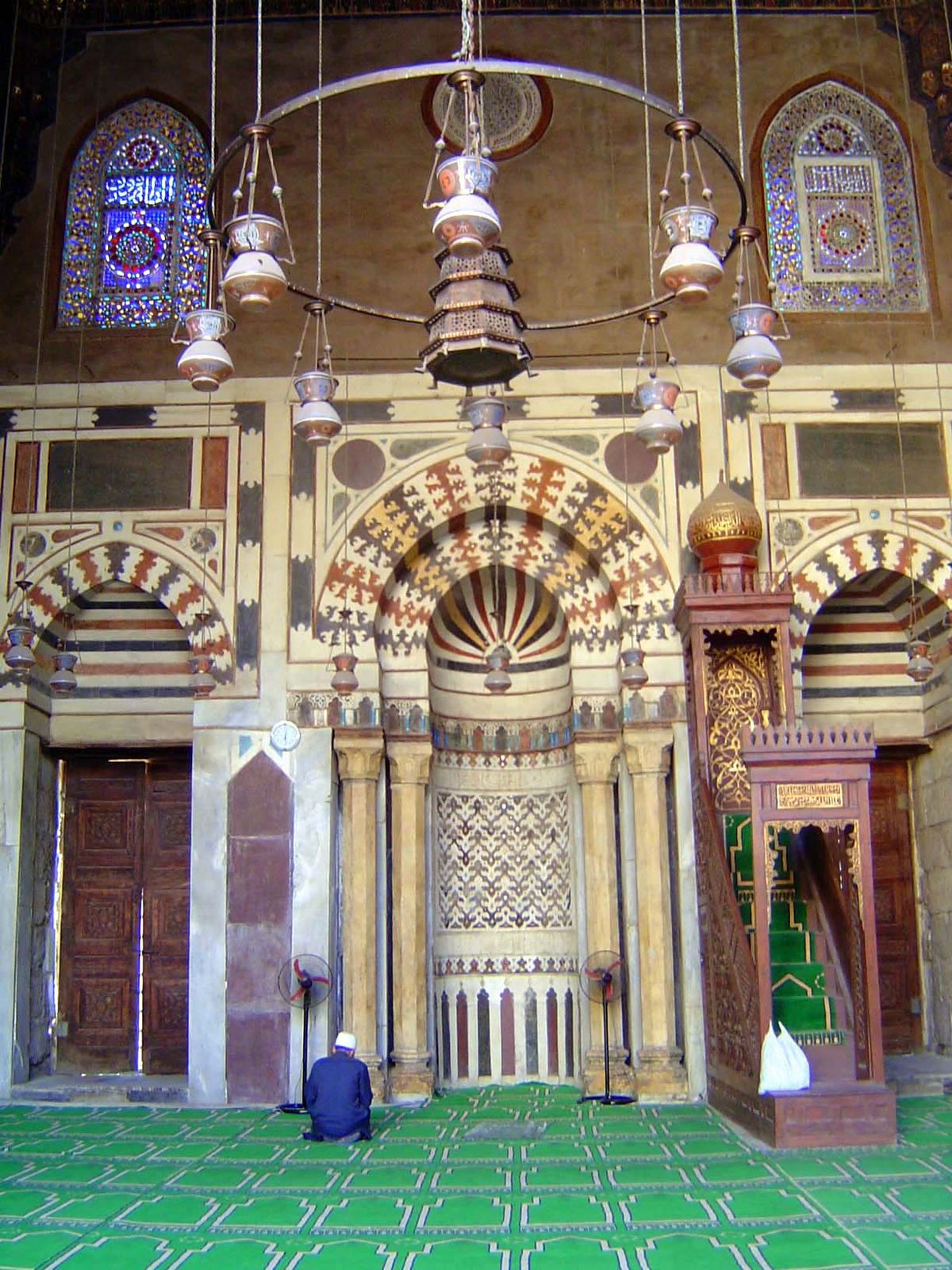
The newer mihrab.
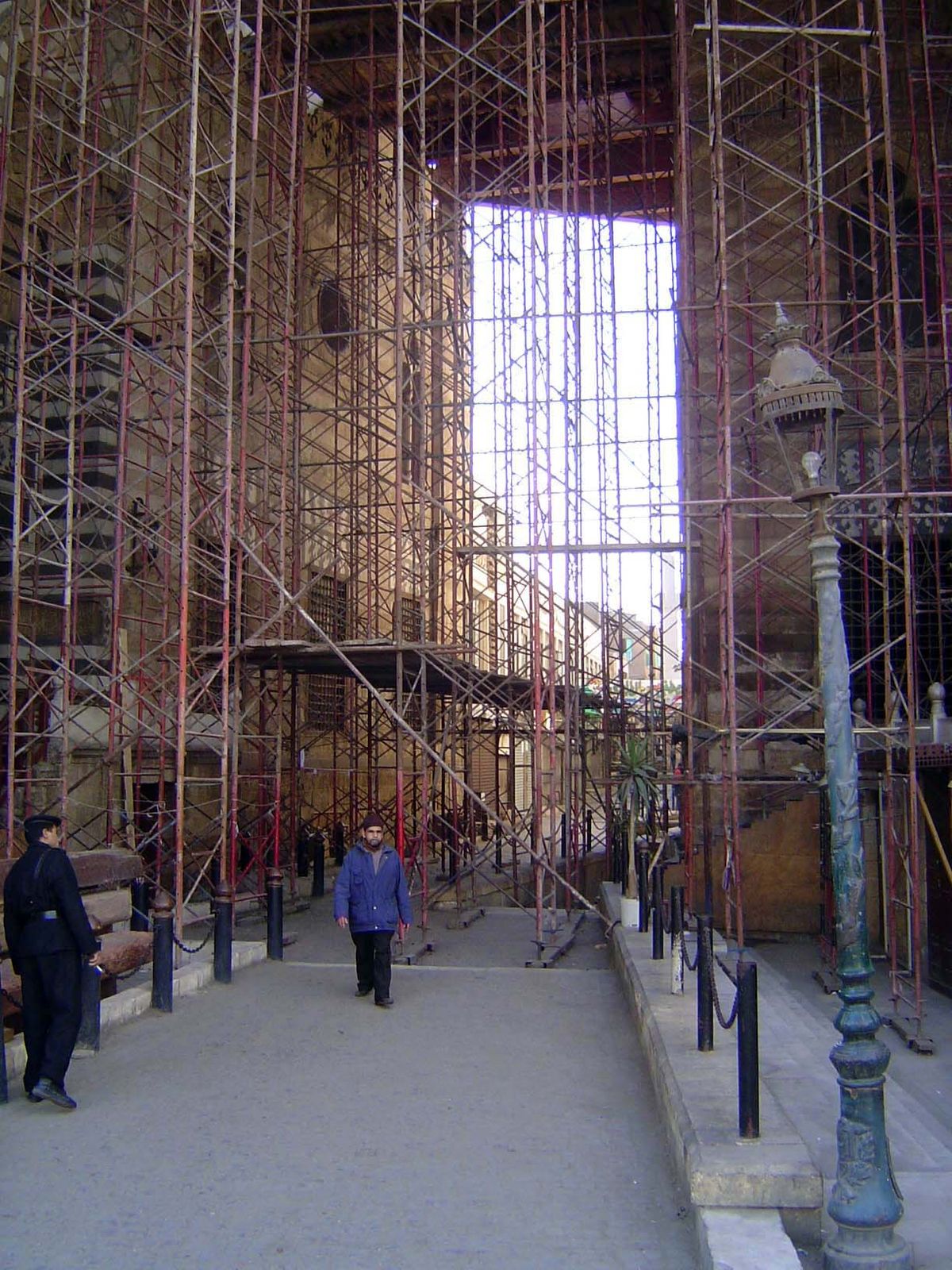
Just to the west of al-Azhar are the mosque and mausoleum of Sultan al-Ghuri. The mosque was accessible early in 2007; the mausoleum was not.
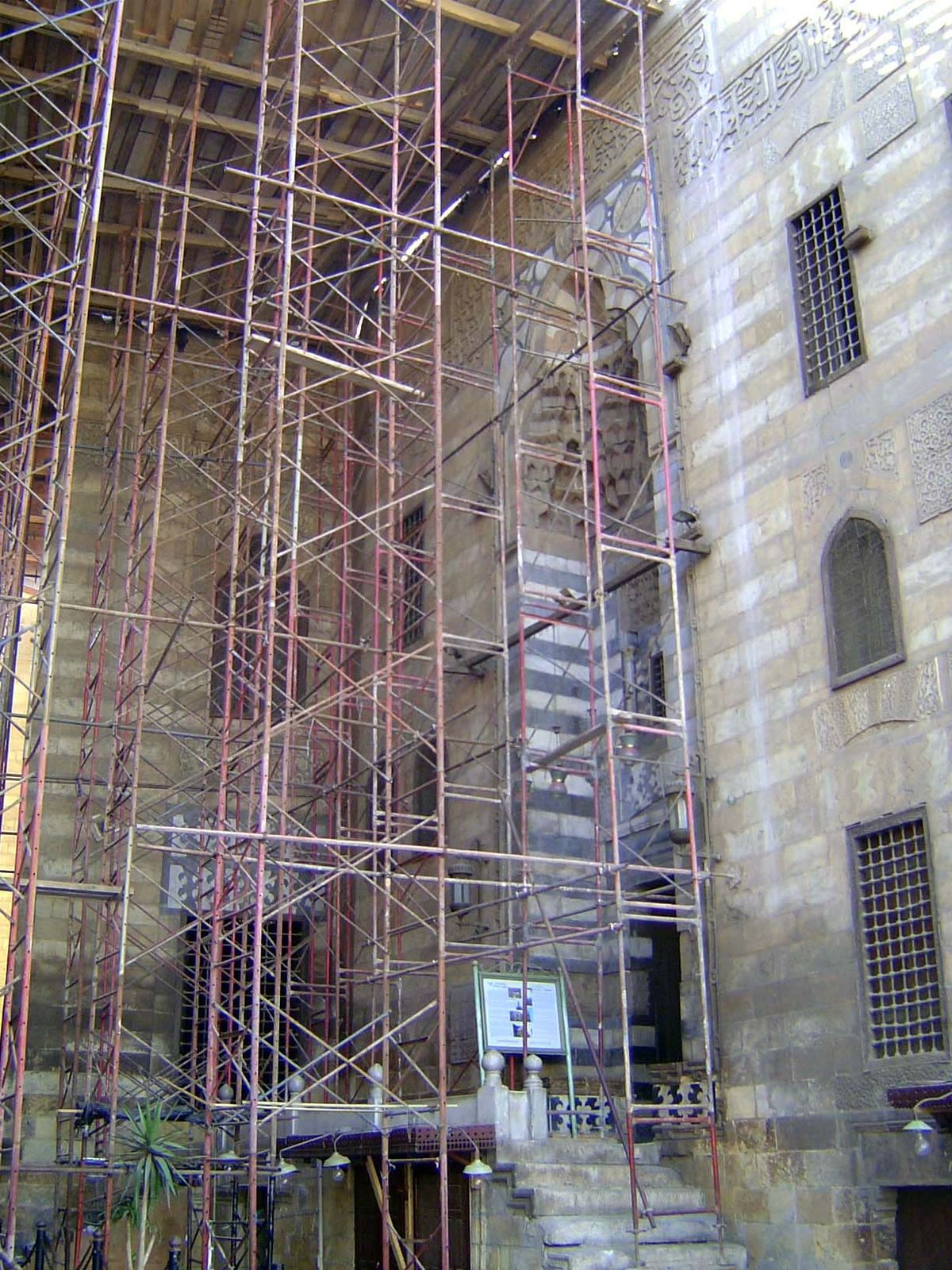
(No. 189) Entrance to the Mosque of al-Ghuri, built 1504-5.
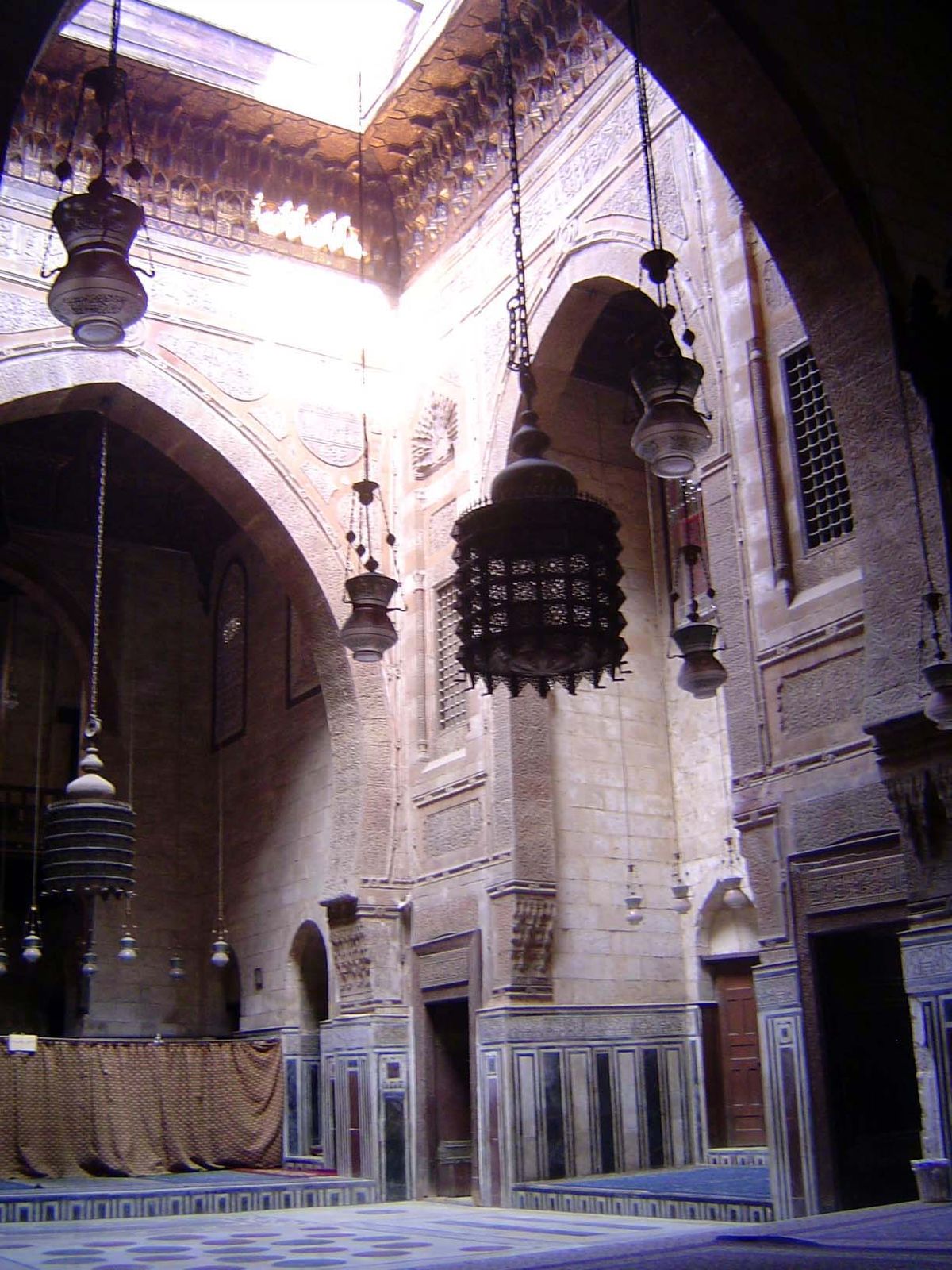
The interior has a cruciform layout; the top of the courtyard is rimmed with a heavy muqarna cornice.
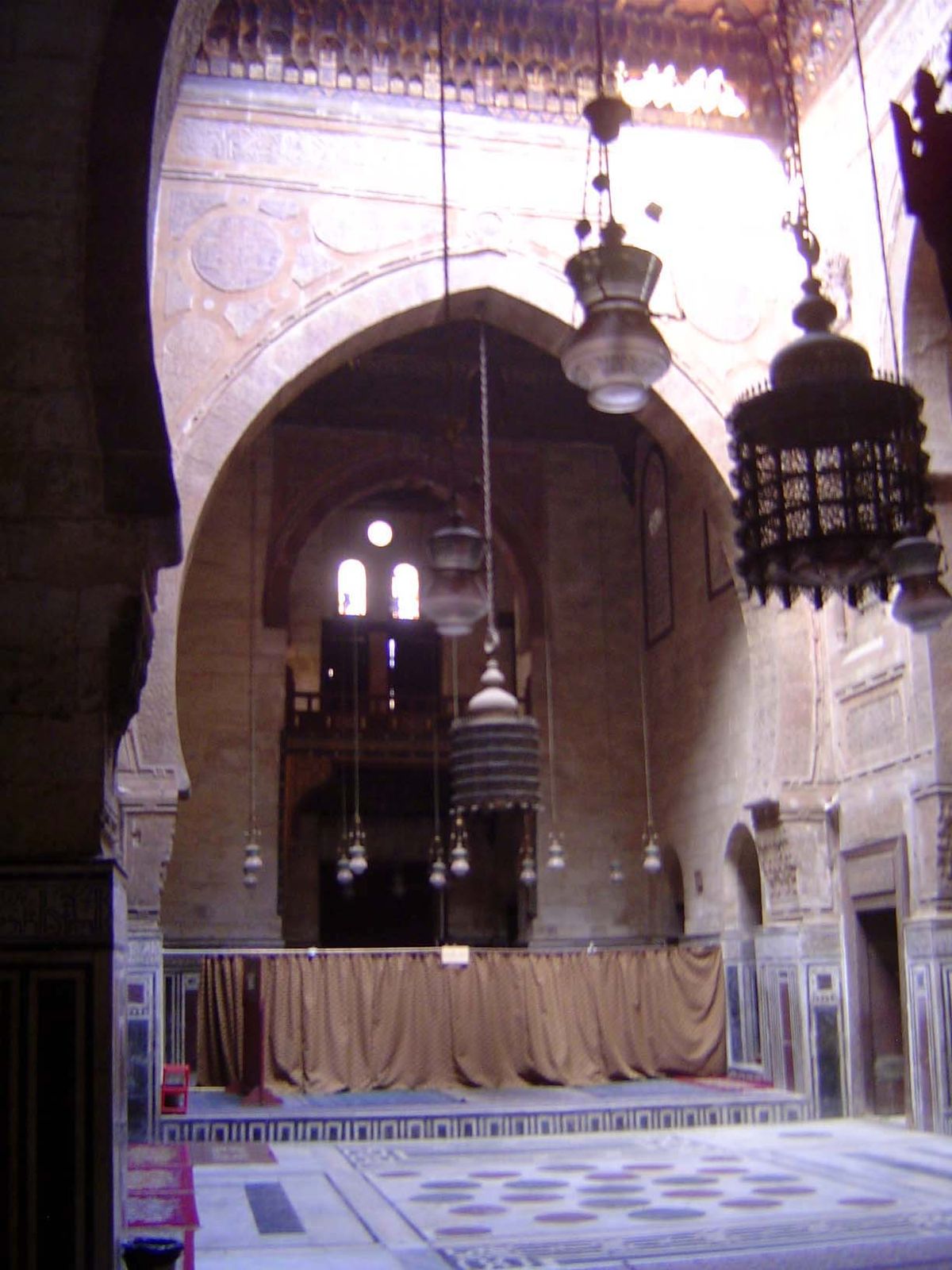
One of four iwans.
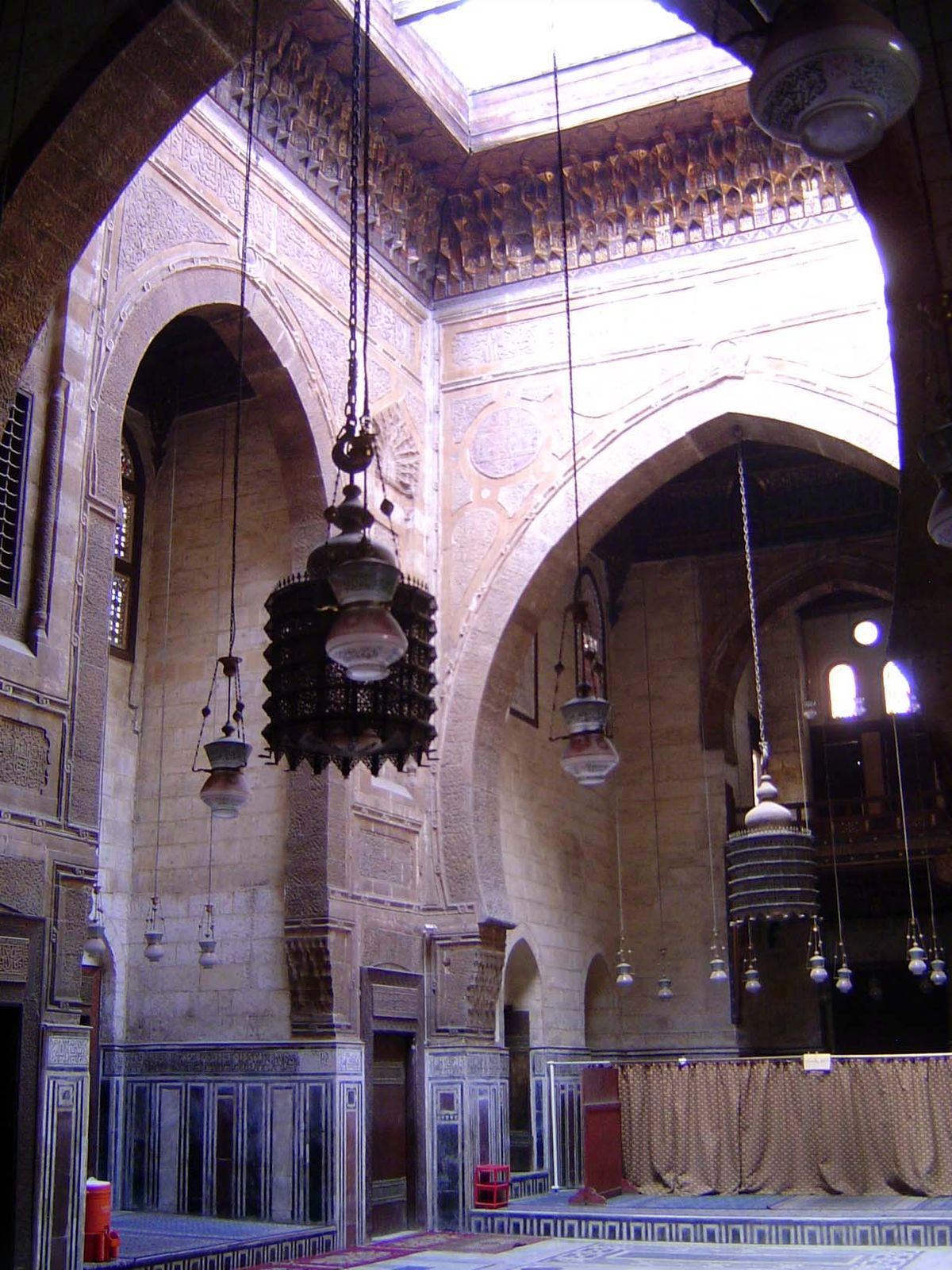
Another perspective.
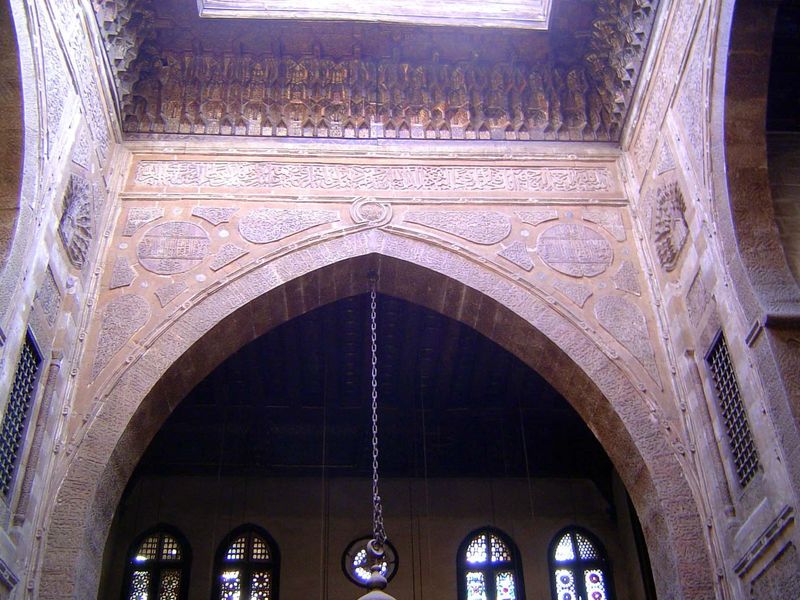
Arch and cornice.
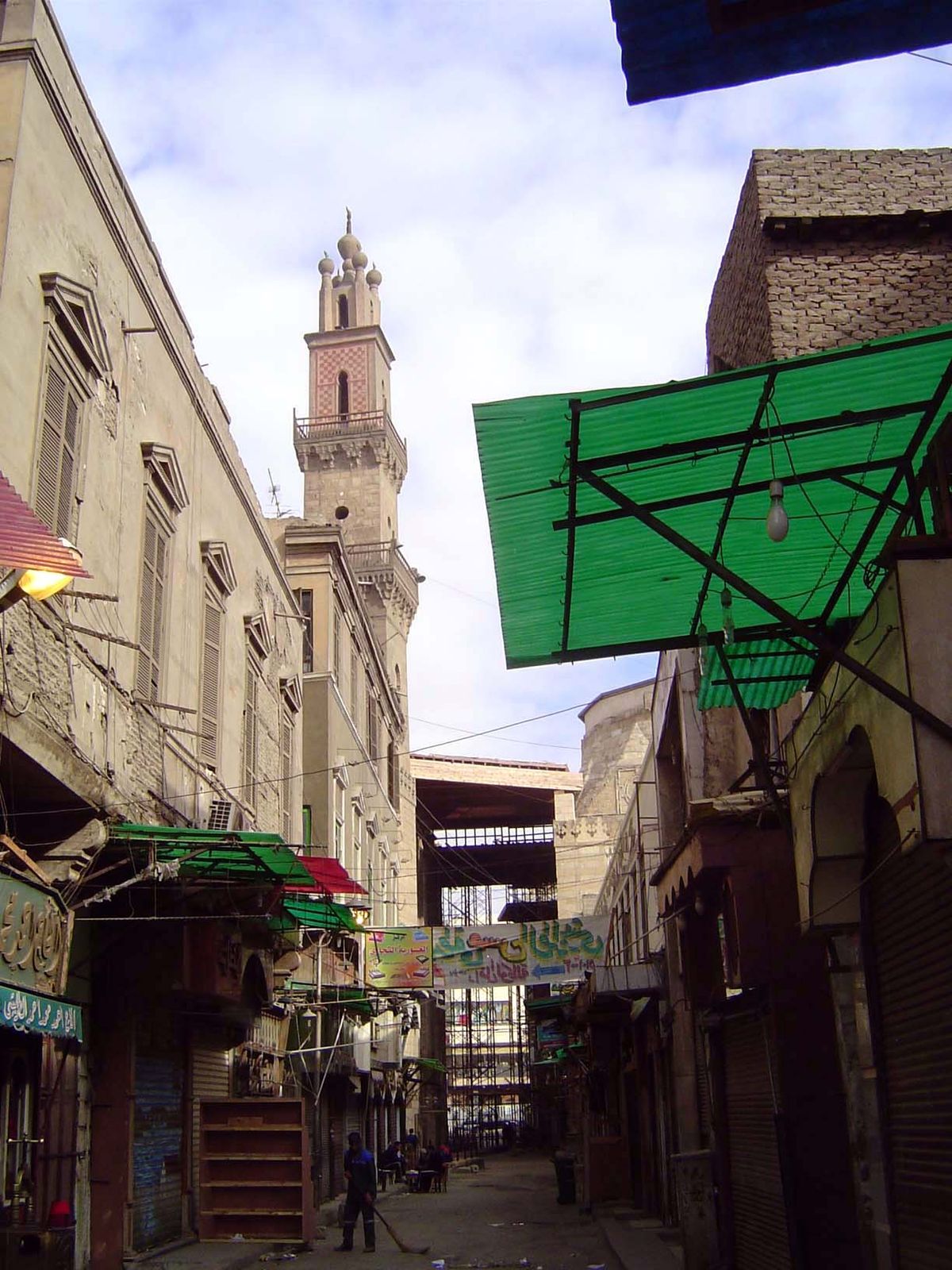
Farther south down the main street, with the minaret of the Mosque of al-Ghuri on the left.
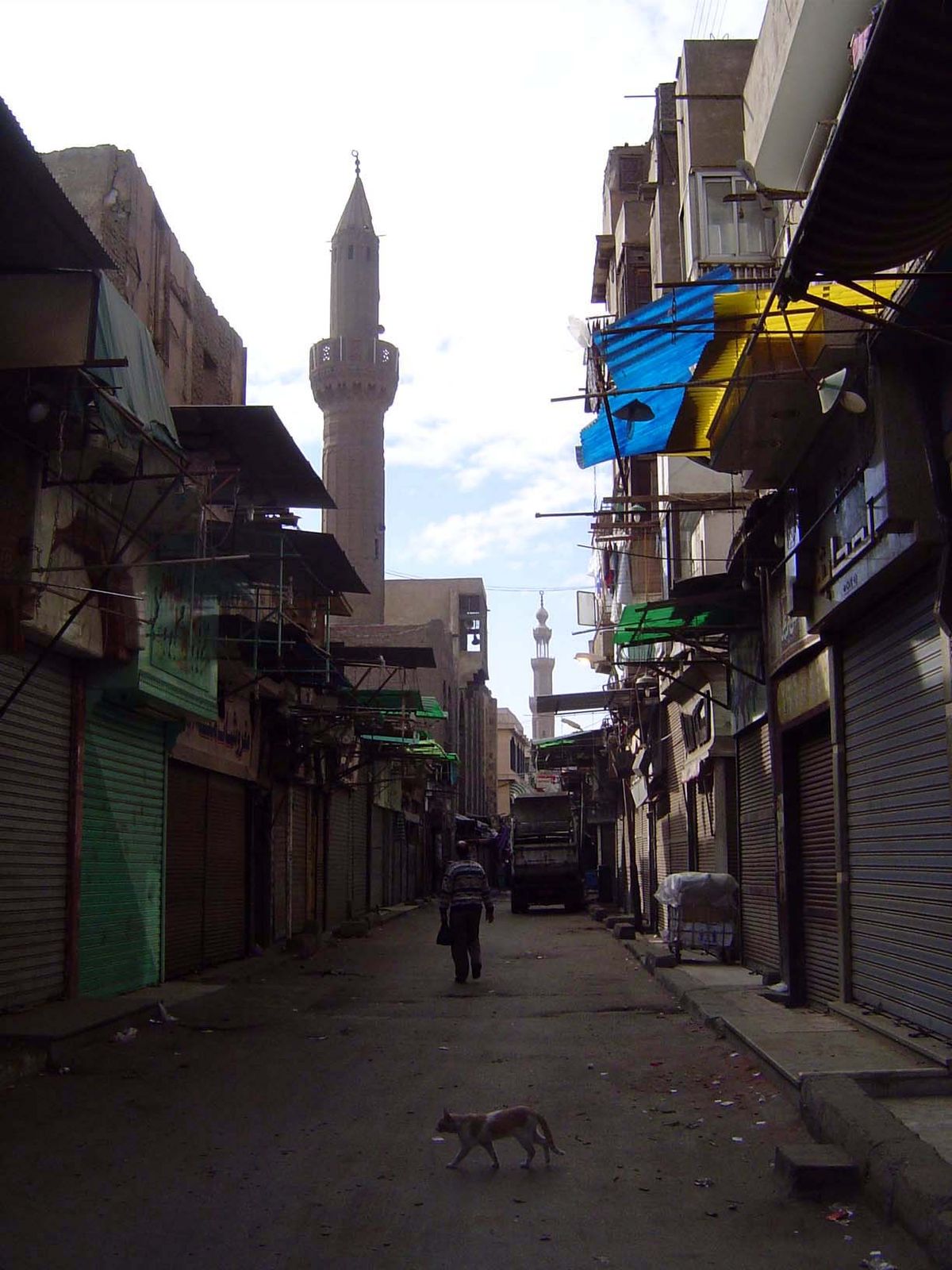
Early in the morning, the street is quiet. The minaret ahead belongs to the Mosque of al-Fakahani, "the fruitseller."
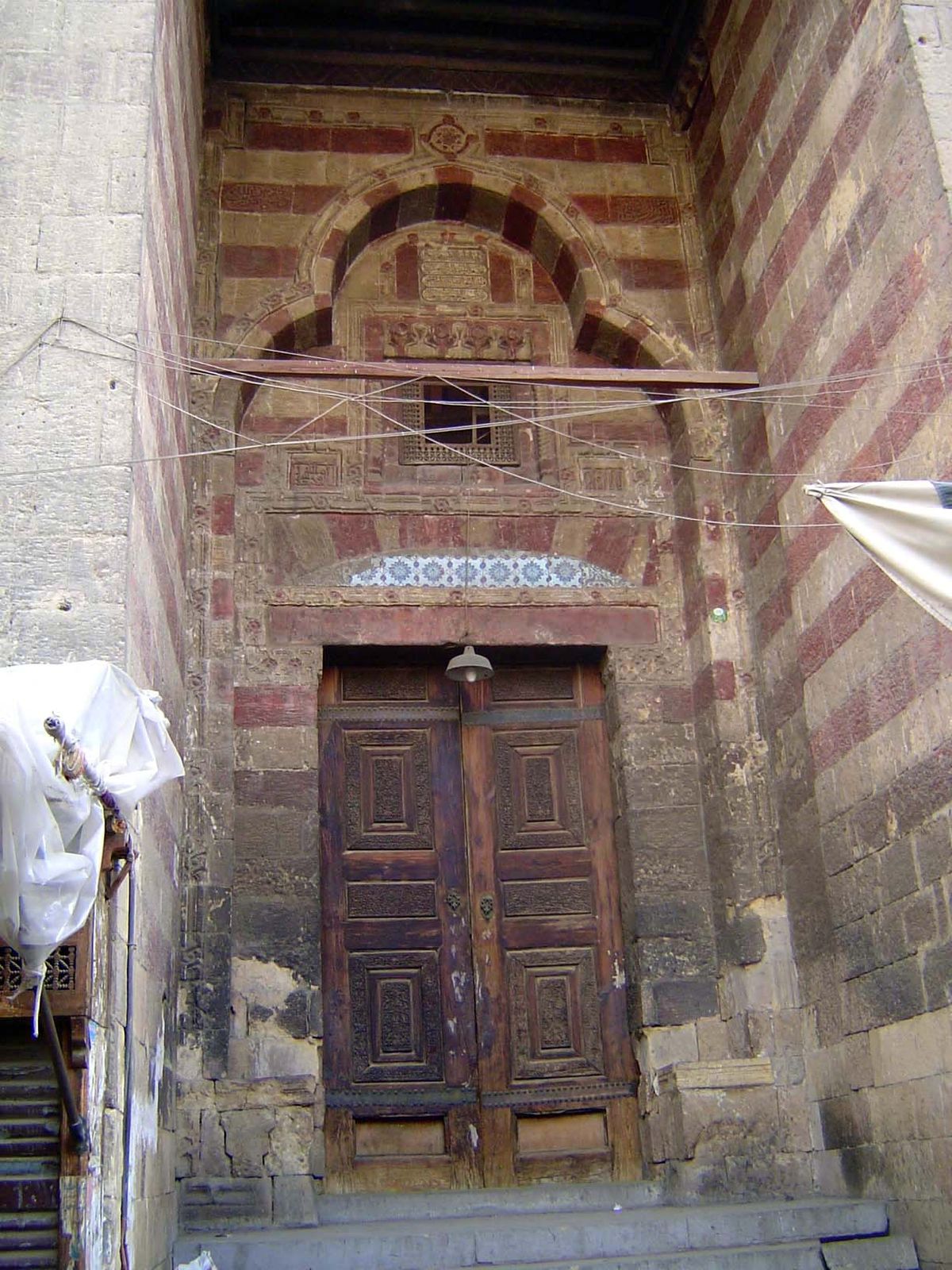
(No. 109). The Mosque of al-Fakahani, with trilobate entrance with ablaq decoration. Inside, there's a covered courtyard, but the whole place is closed today.
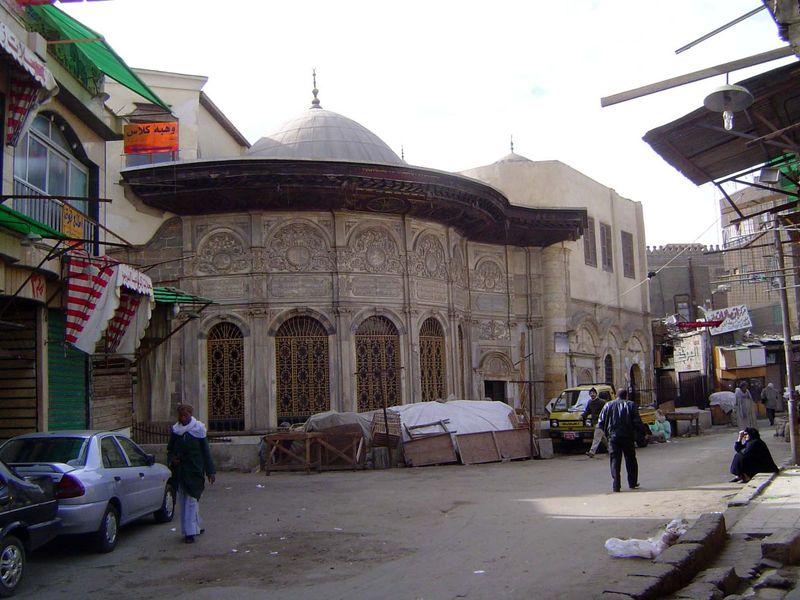
(No. 401). The Sabil-Kuttab (waterpoint-school) of Tusun Pasha, built in 1820. Tusun was another of Muhammad Ali's sons who died young.
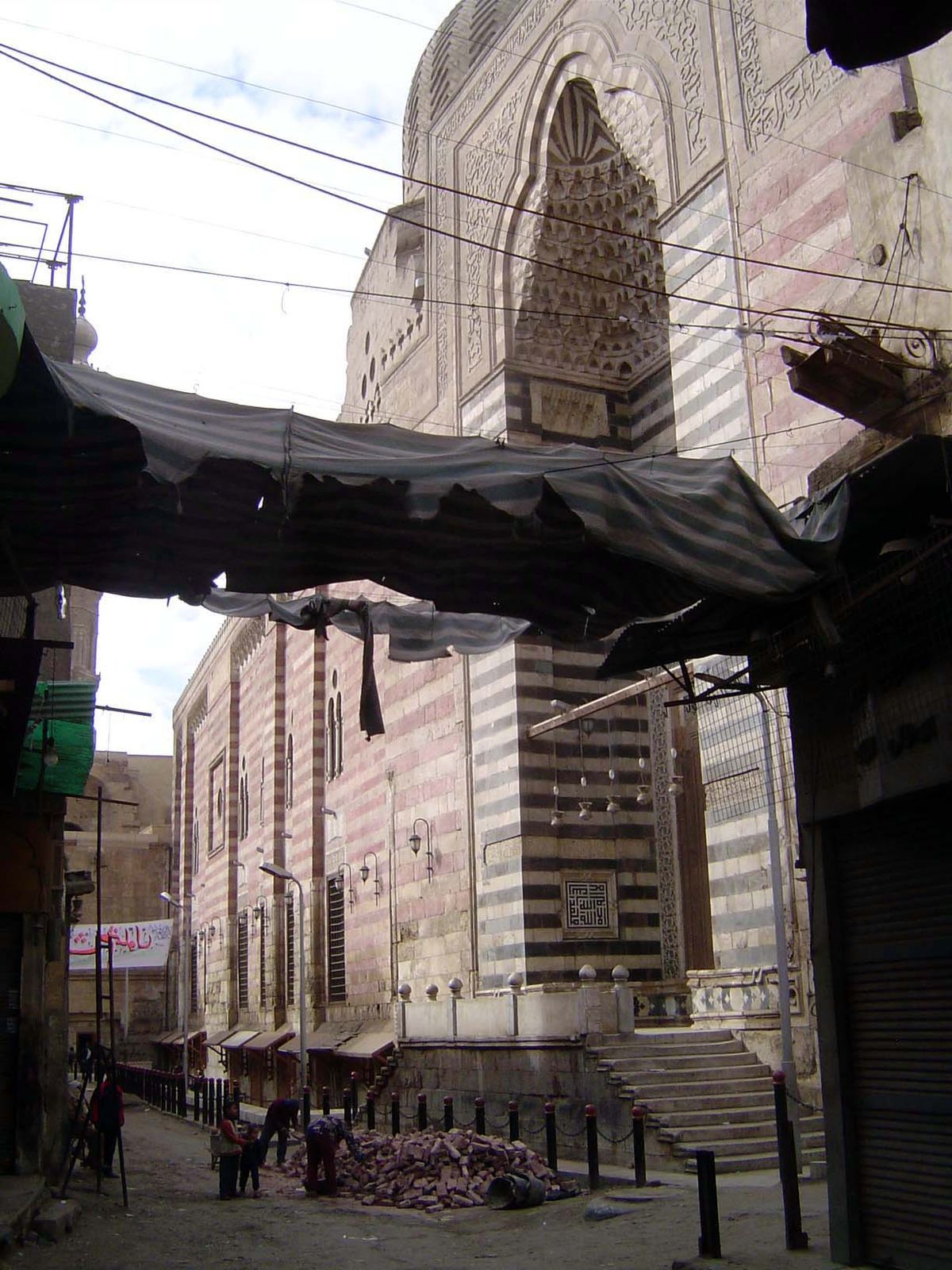
(No. 190) Facade of the Mosque of al-Mu'ayyad Shaykh, built in 1420 in fulfillment of a vow he made while held as a prisoner on the site. The wall was rebuilt in 1874.
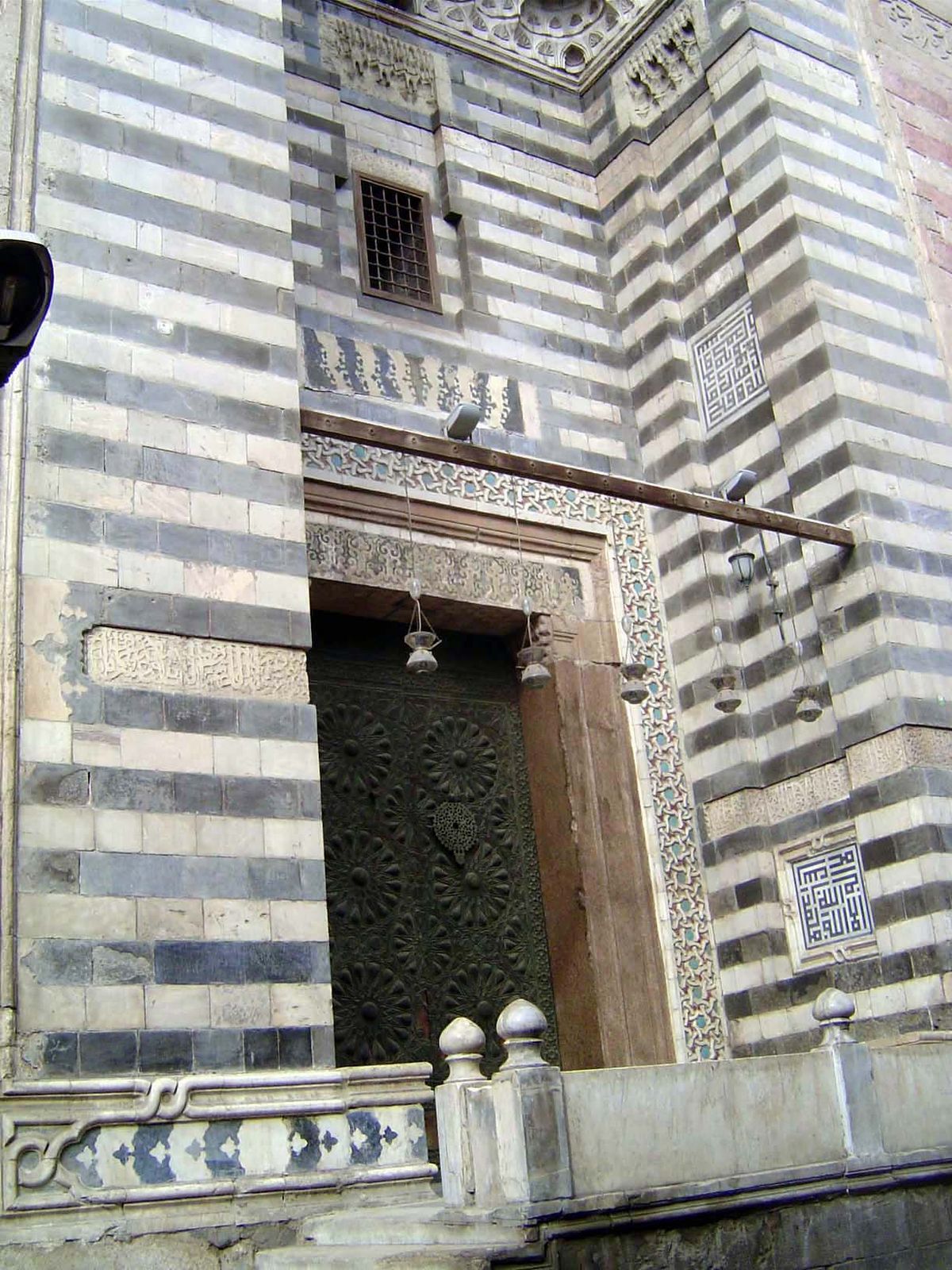
Entrance.
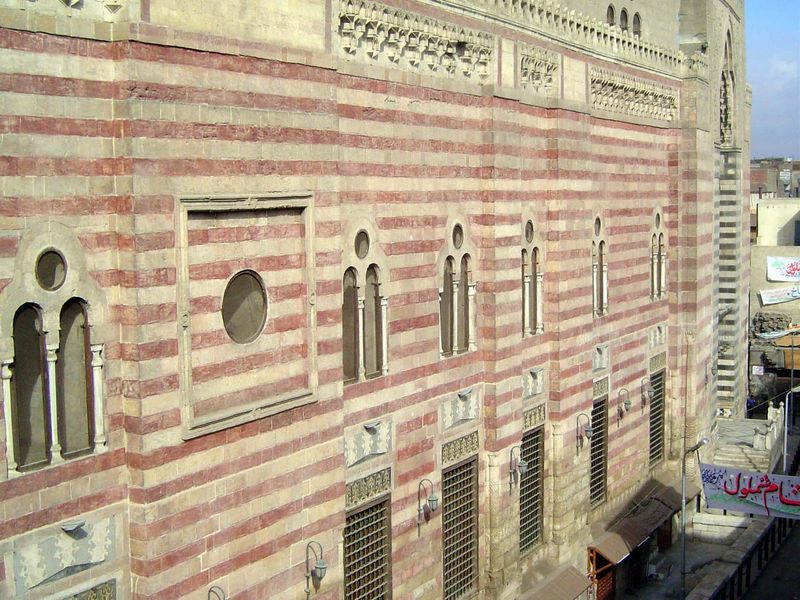
Another view of the same east wall.
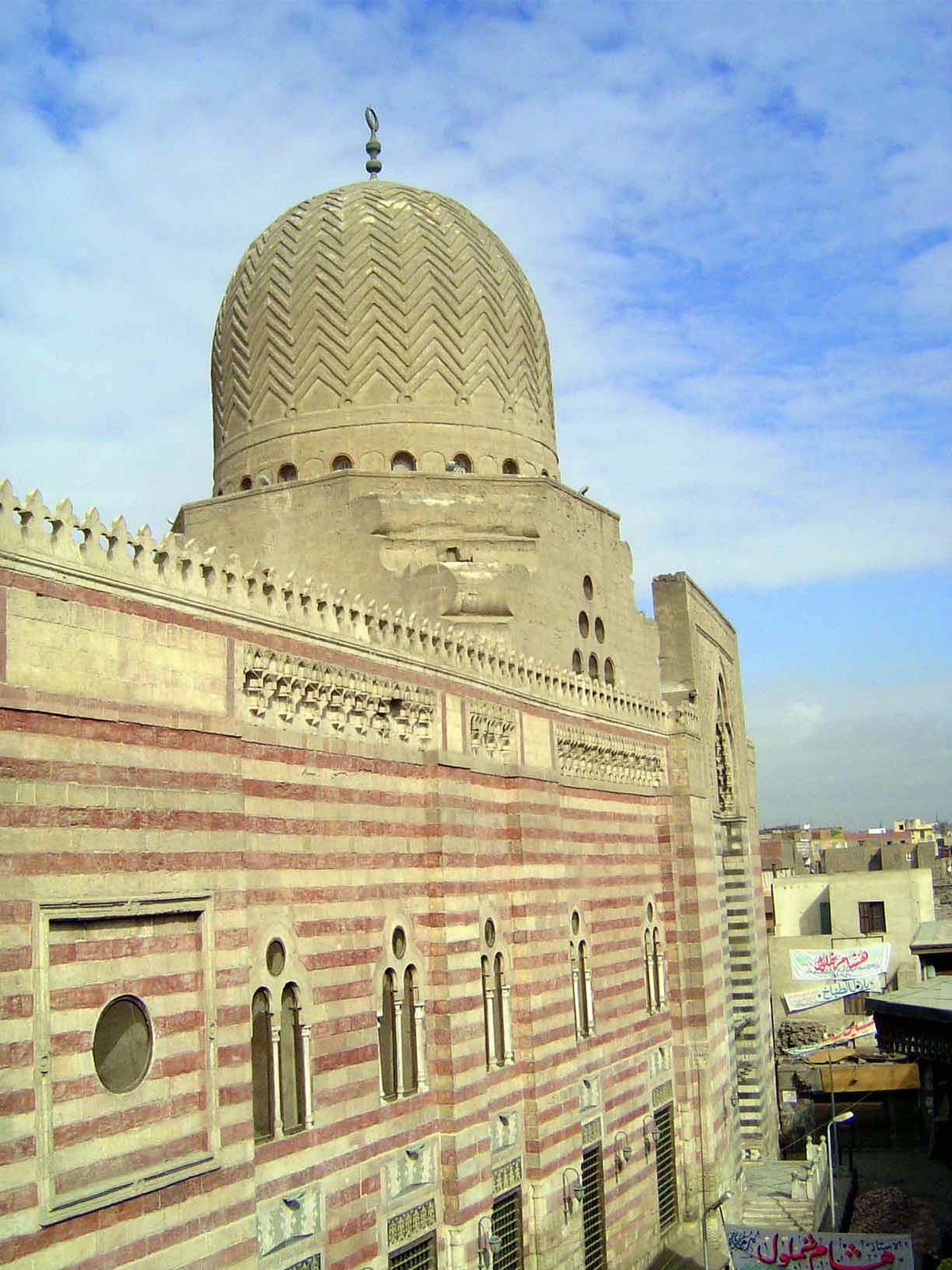
And another, showing the dome over the tomb chamber.
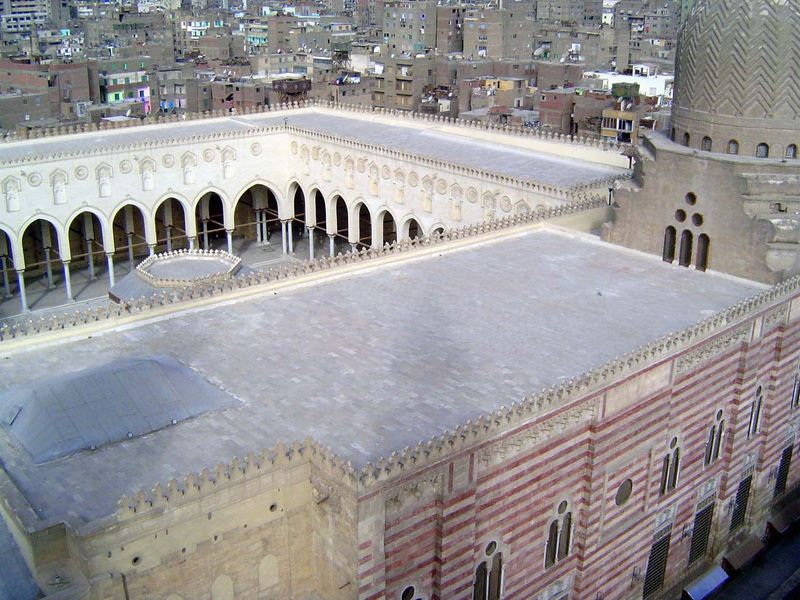
Courtyard with the later addition of an ablutions fountain. The mosque itself was closed for repairs in 2007; these pictures come from the adjoining minaret, whose shadow is visible here.
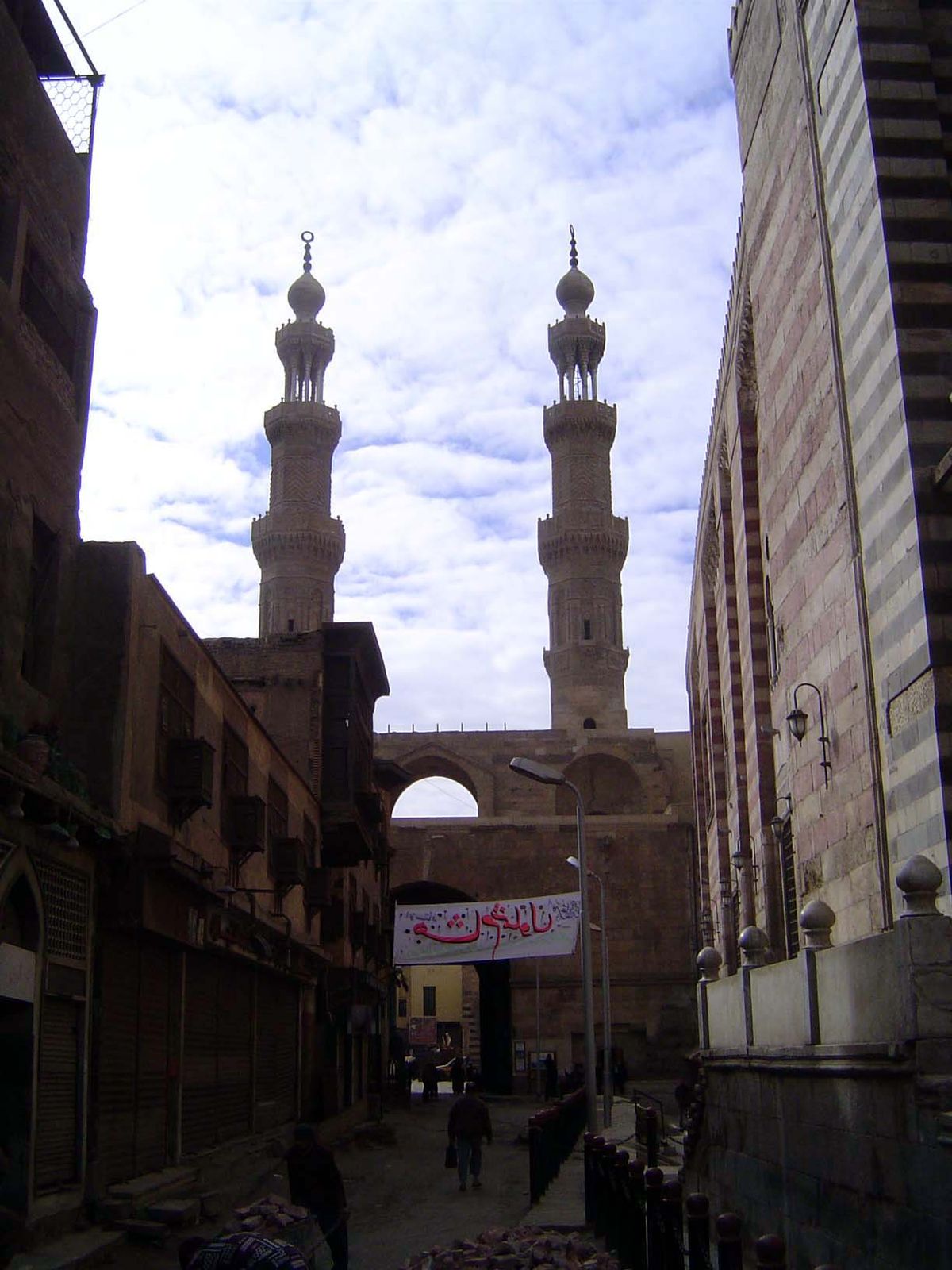
(No. 199) The mosque had three minarets. The two that survive—we were just on top on one of them—are on top of the Bab Zuwayla, the gate marking the southern boundary of the historic city.
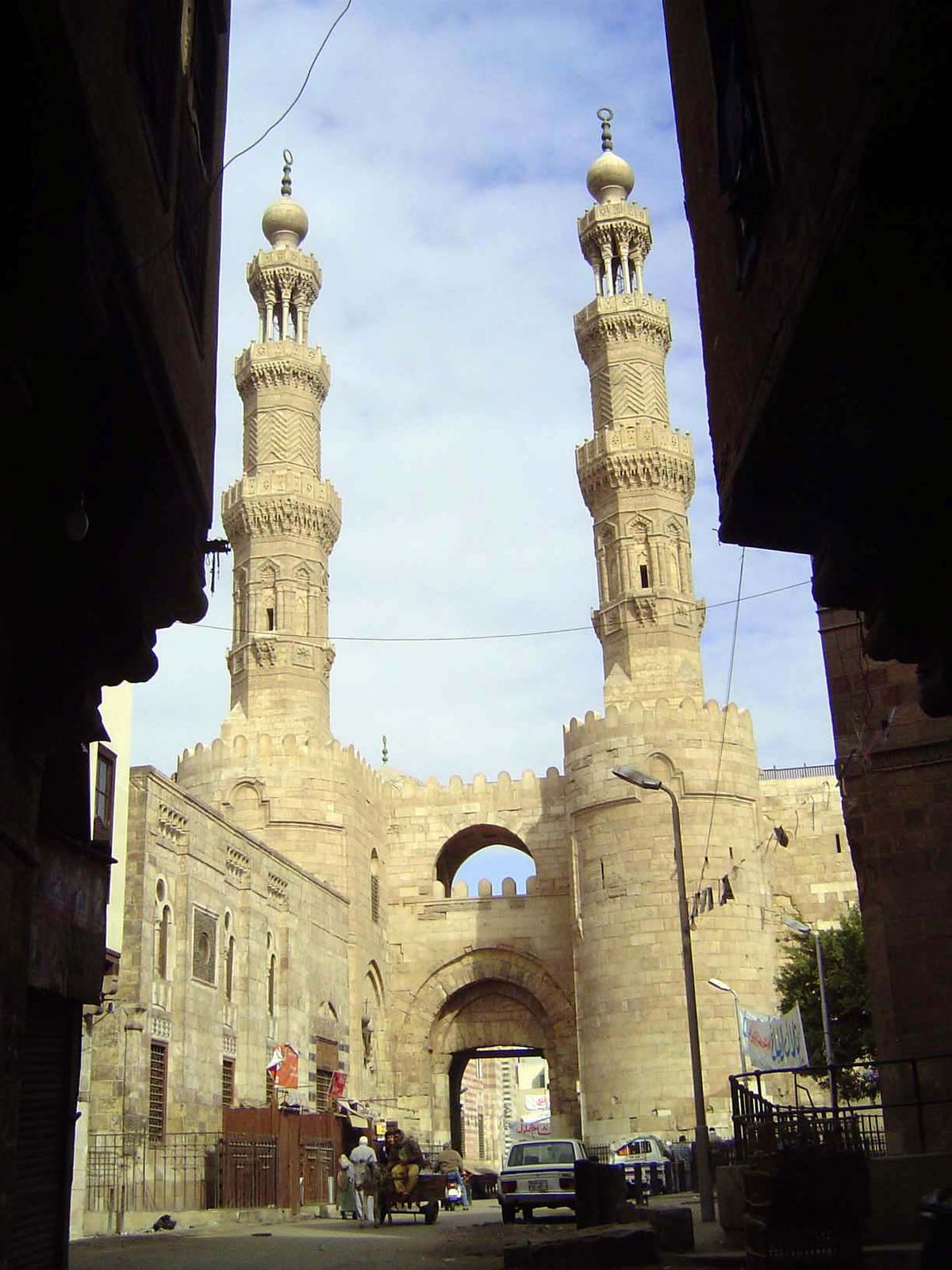
Here's the Bab Zuwayla seen from the south.
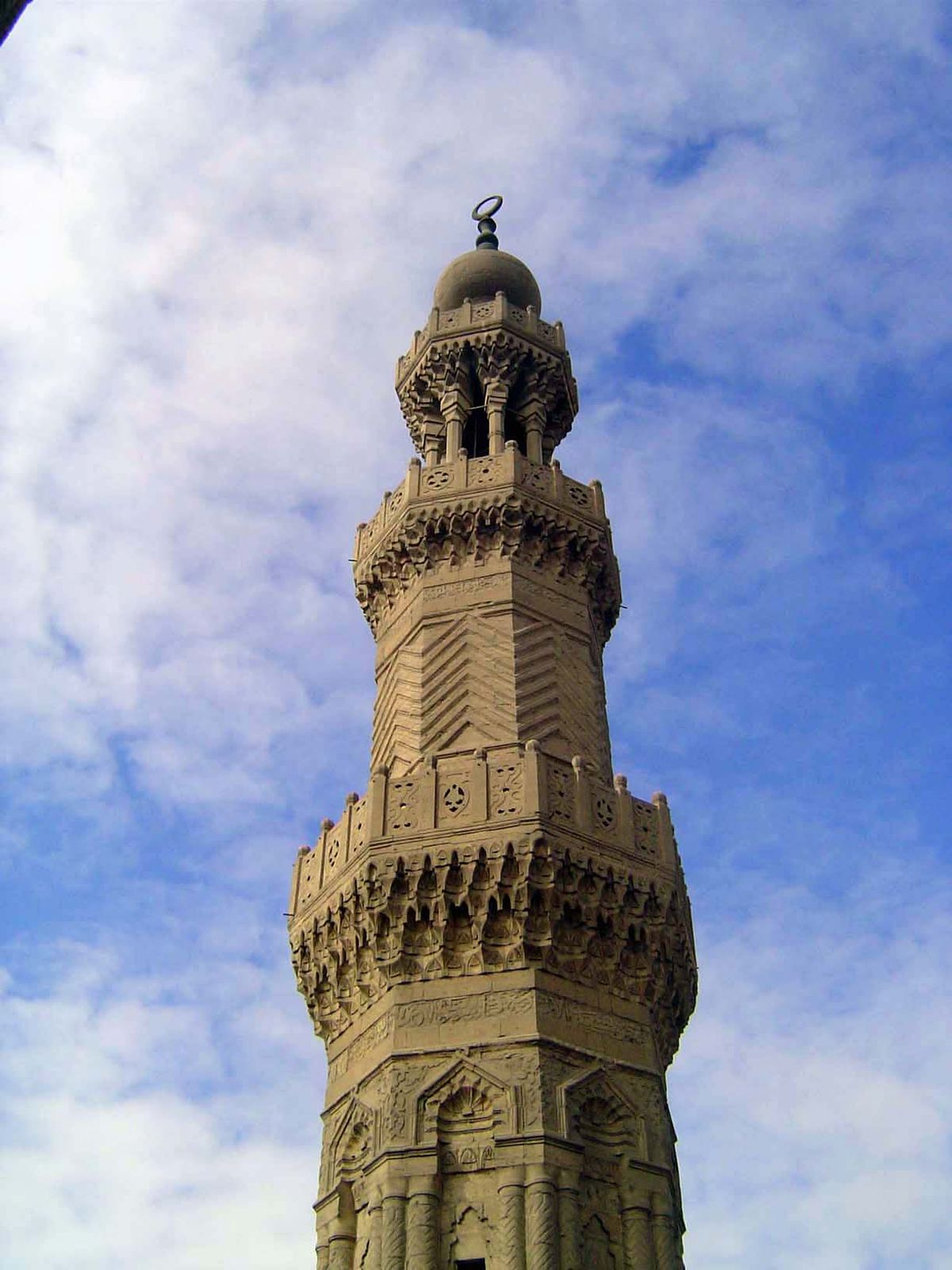
Both minarets can be climbed.
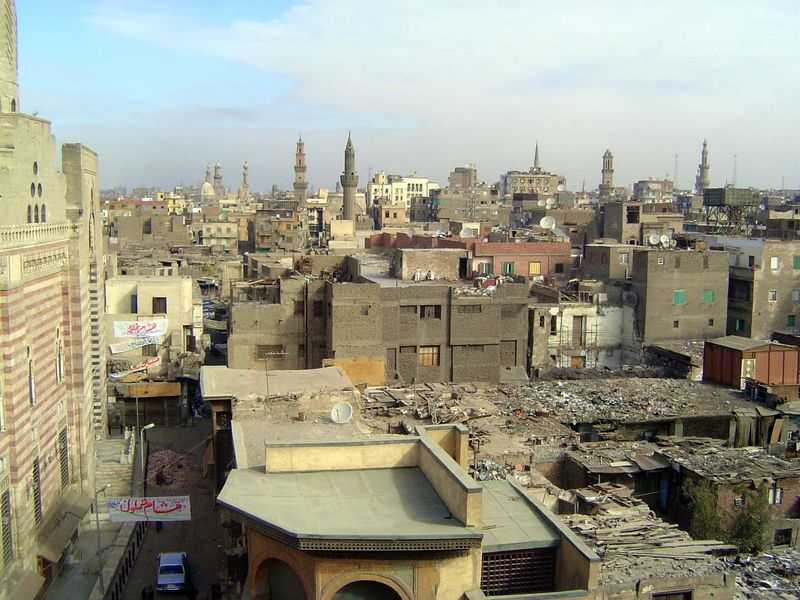
The view from the top, looking north.
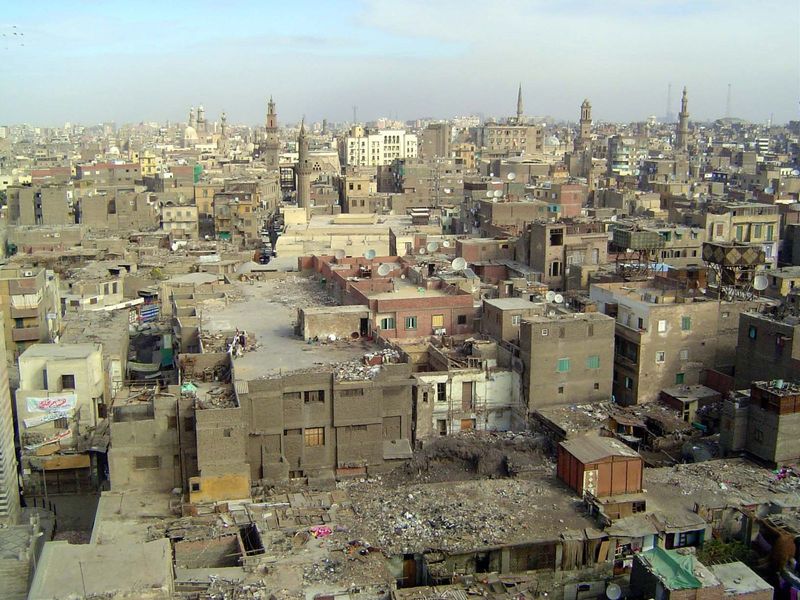
The same view, turned east a bit.
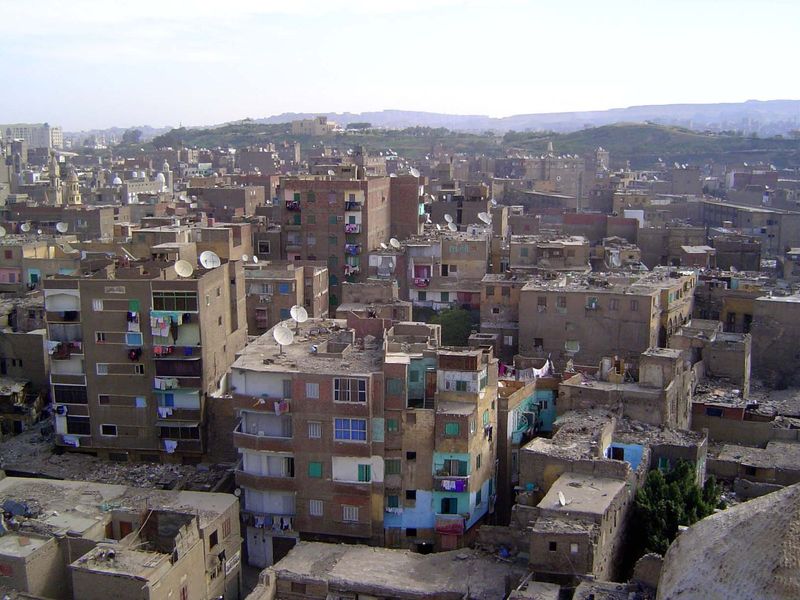
Due east.
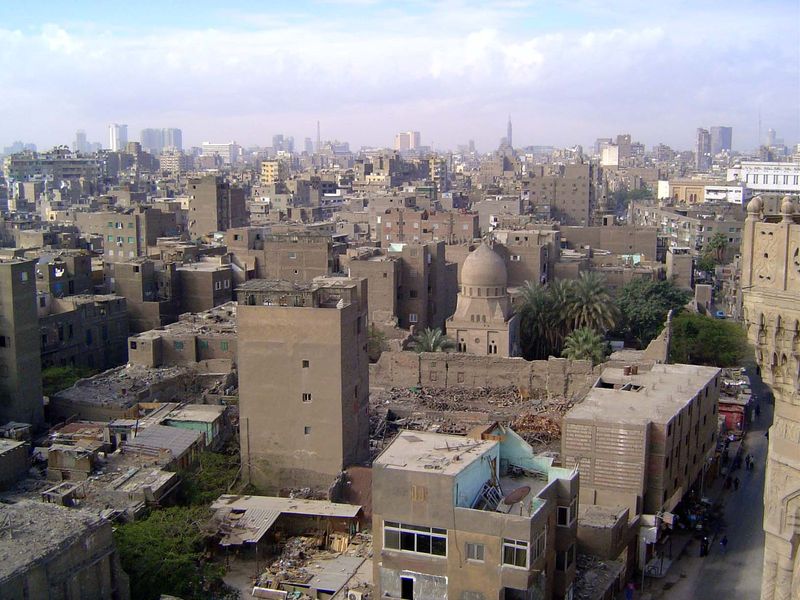
Looking west, with the high rises of modern Cairo at the horizon and along the Nile.
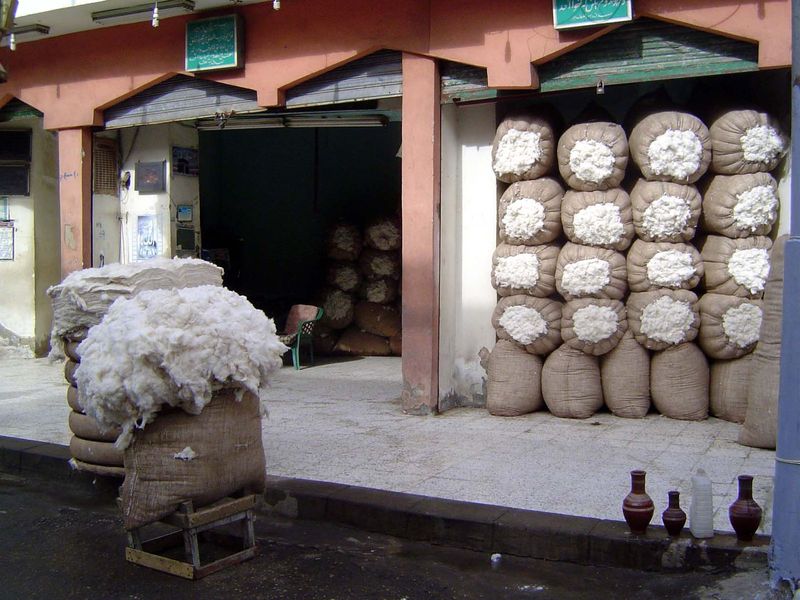
Back on the street: cotton for sale.
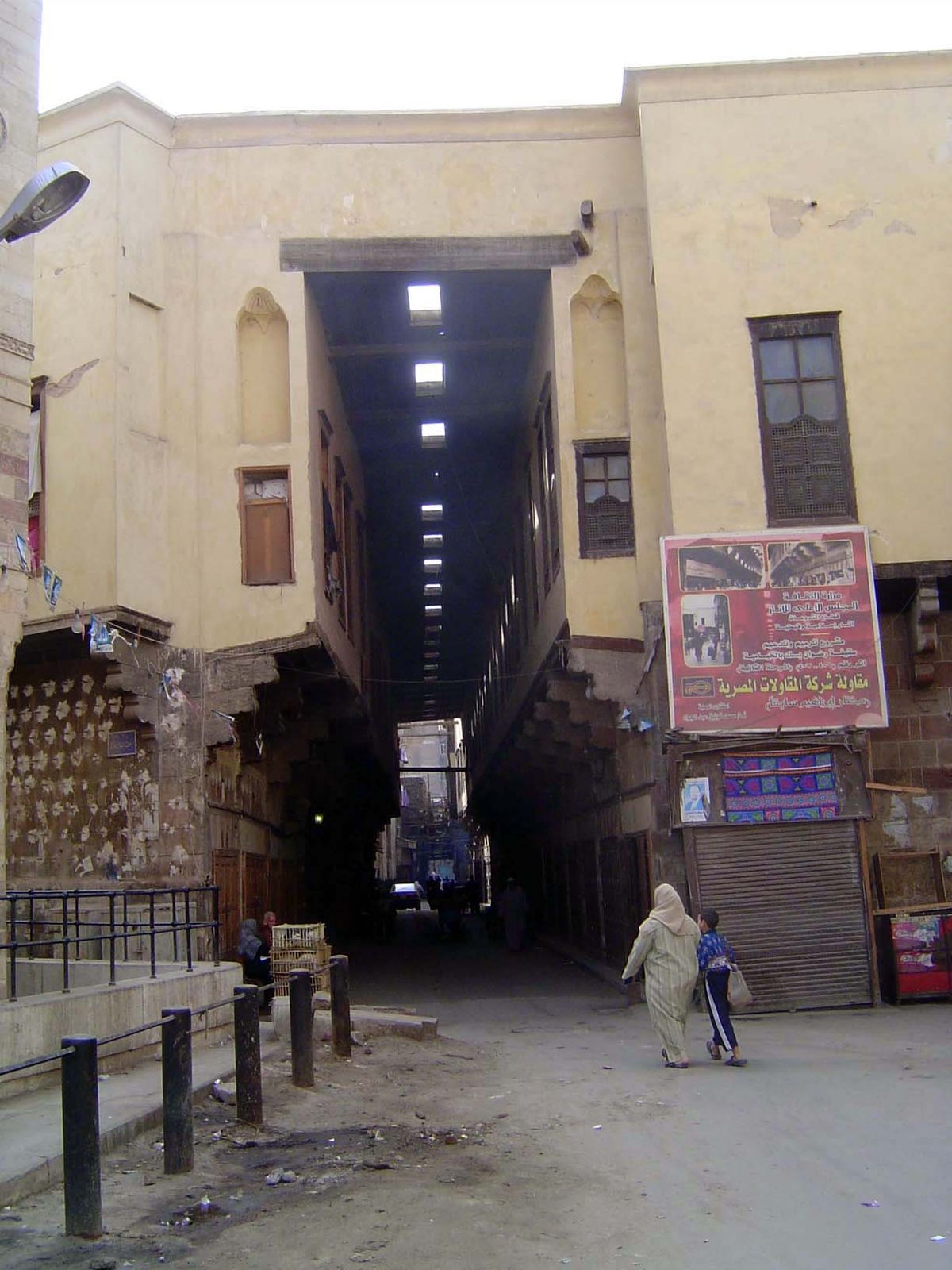
(No. 406). This is the last of Cairo's once-common covered streets. It's the Qasaba of Radwan Bey, built in the 17th century. The merchants worked down, lived up. They were outside the city wall, marked by the Bab Zuwayla, but the road continues south, as do we.
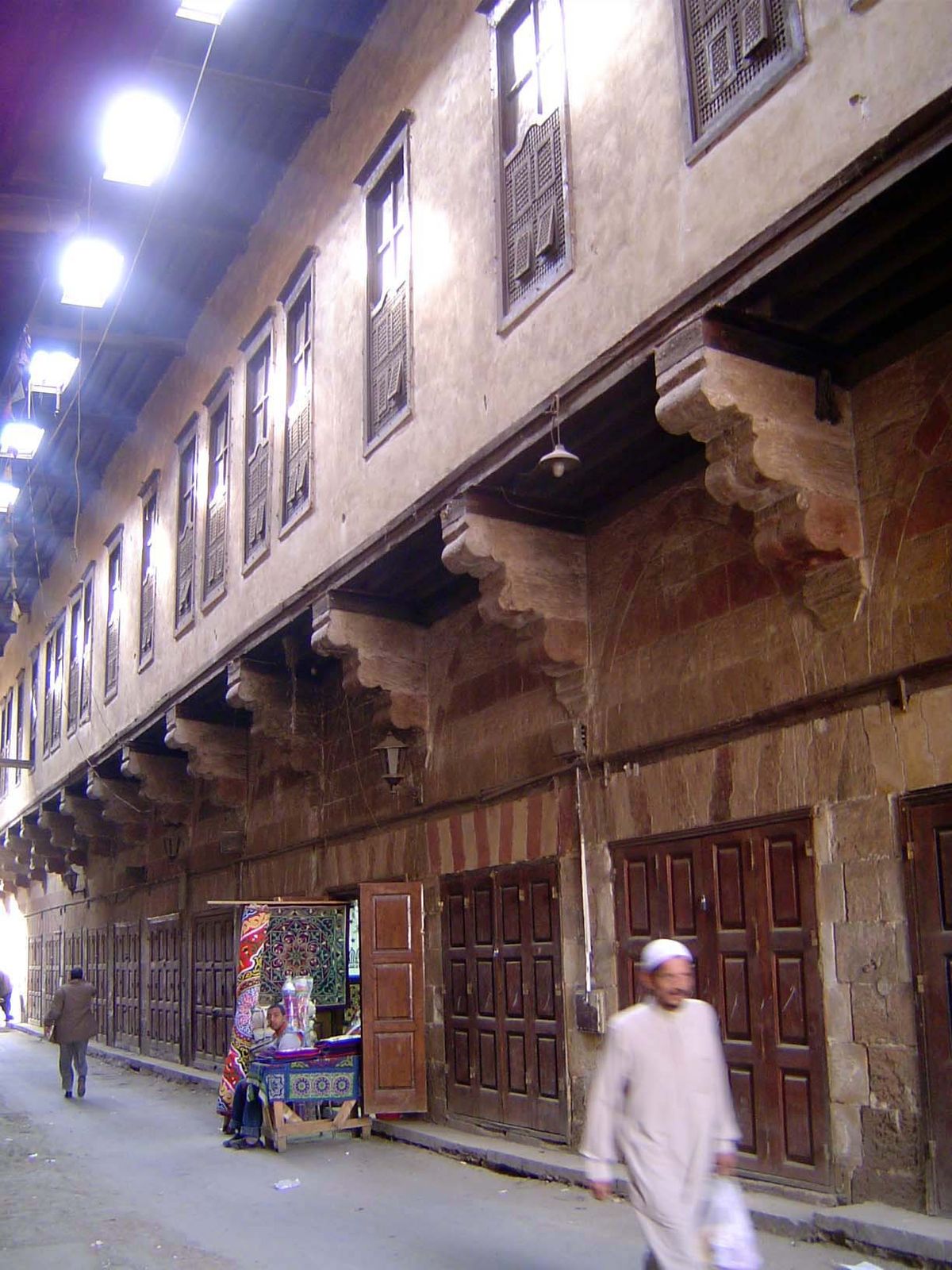
Close-up of the cantilevered apartments.
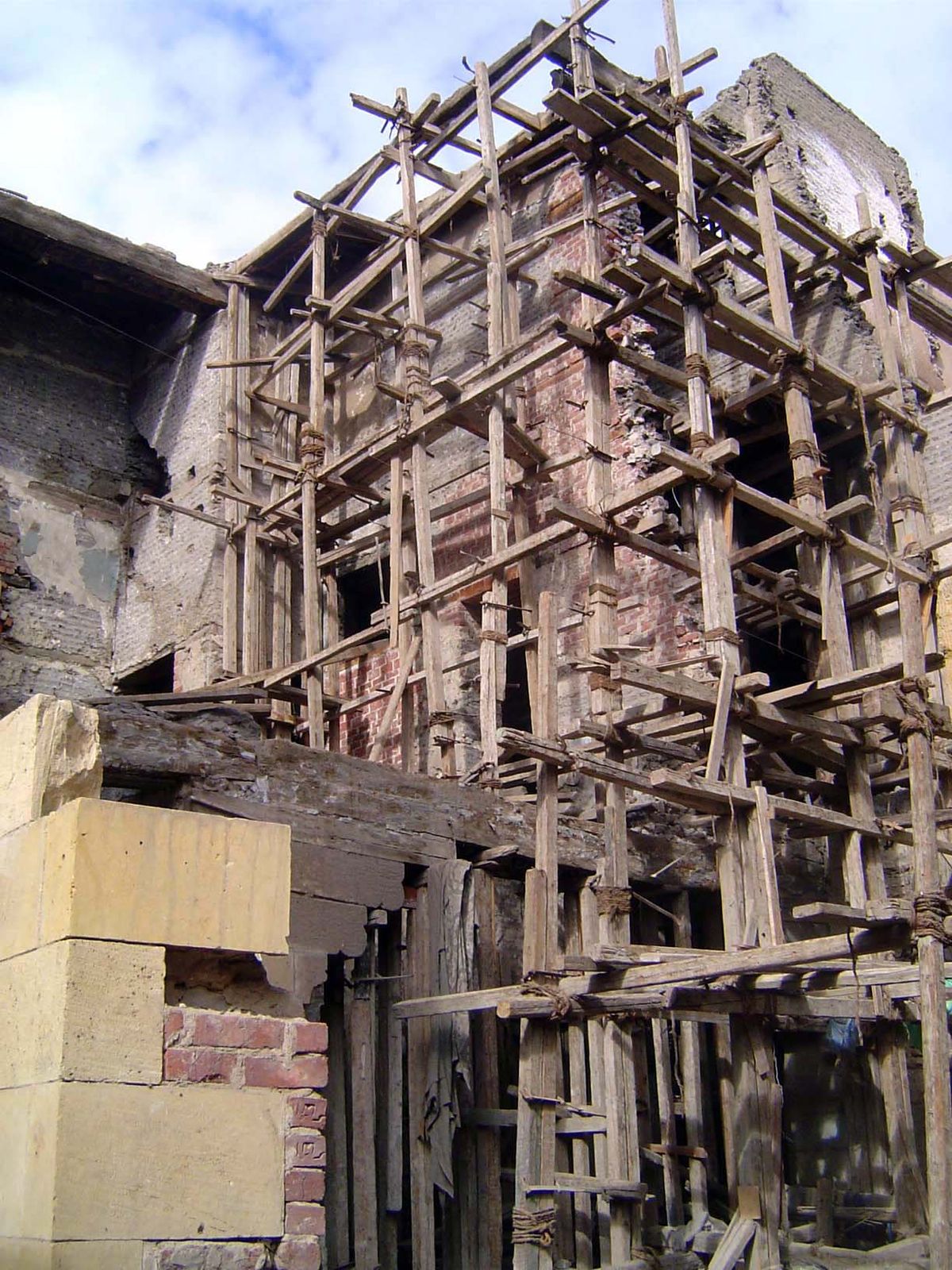
Sad to say, there's nothing up there except a reconstructed facade.
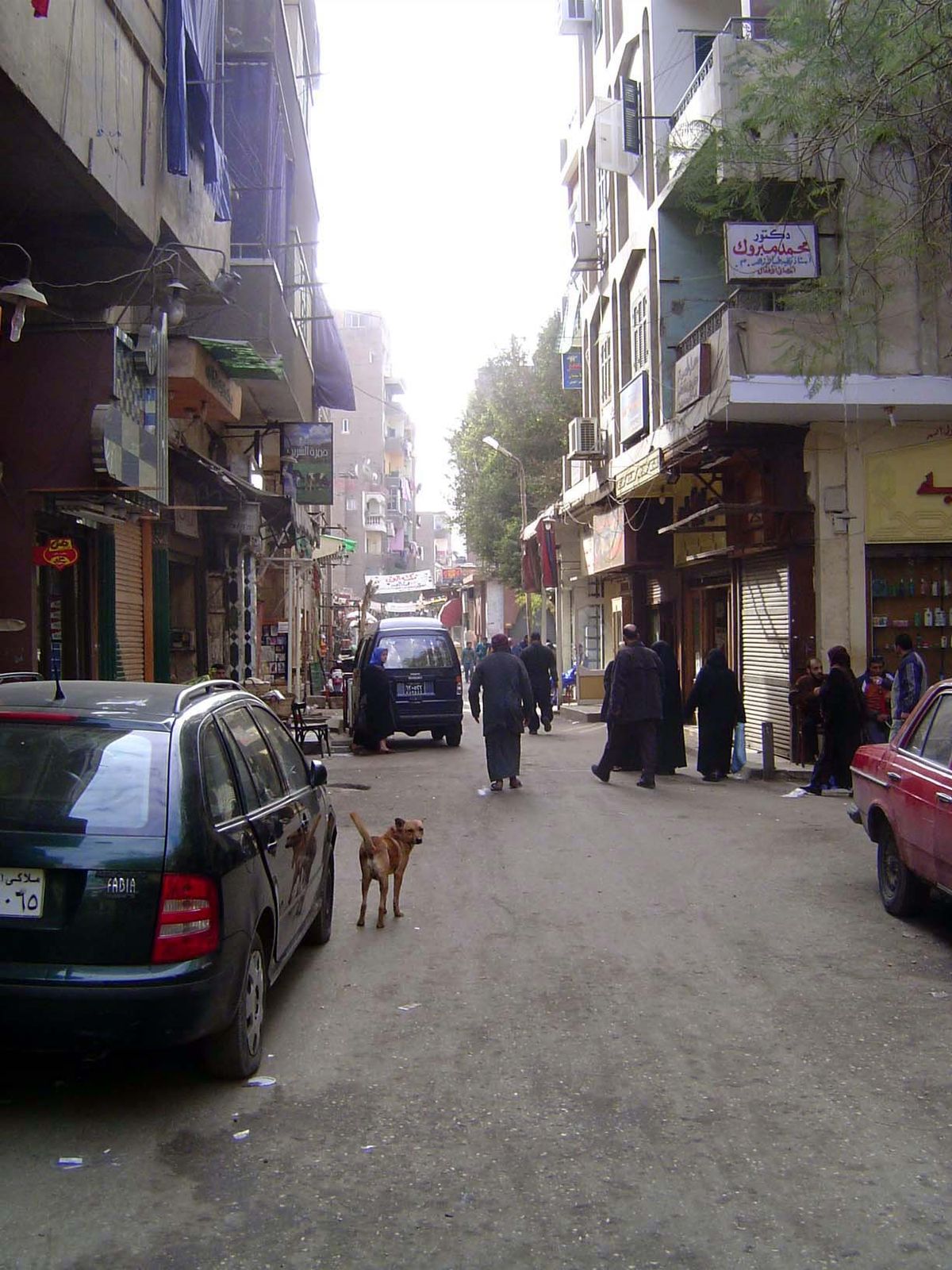
Persevering southward.
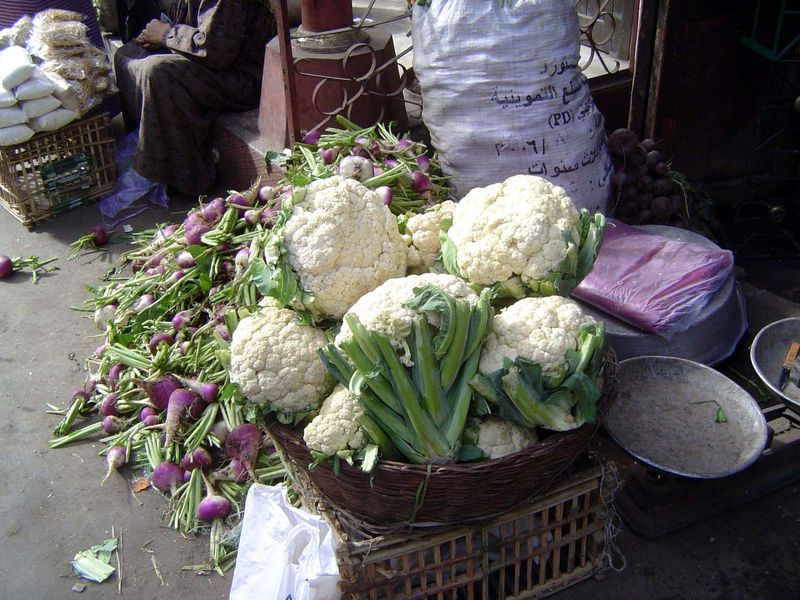
Basketball cauliflower.
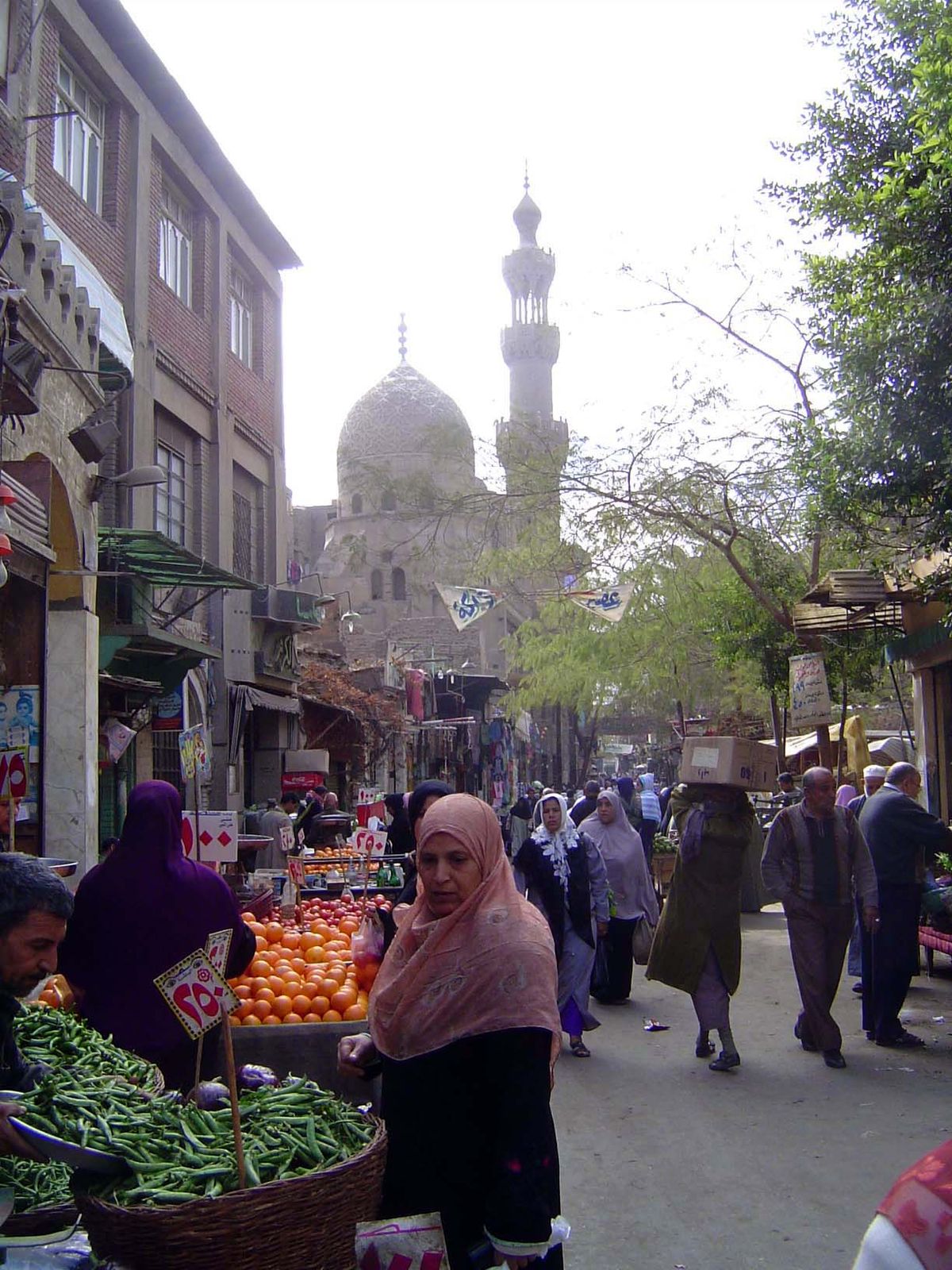
(No. 129) The workday begins. In the distance is the Mosque of Ganem al-Bahlawan, built 1478-1510. Al-Bahlawan was a brother of the chief amir of Sultan Qaytbay.
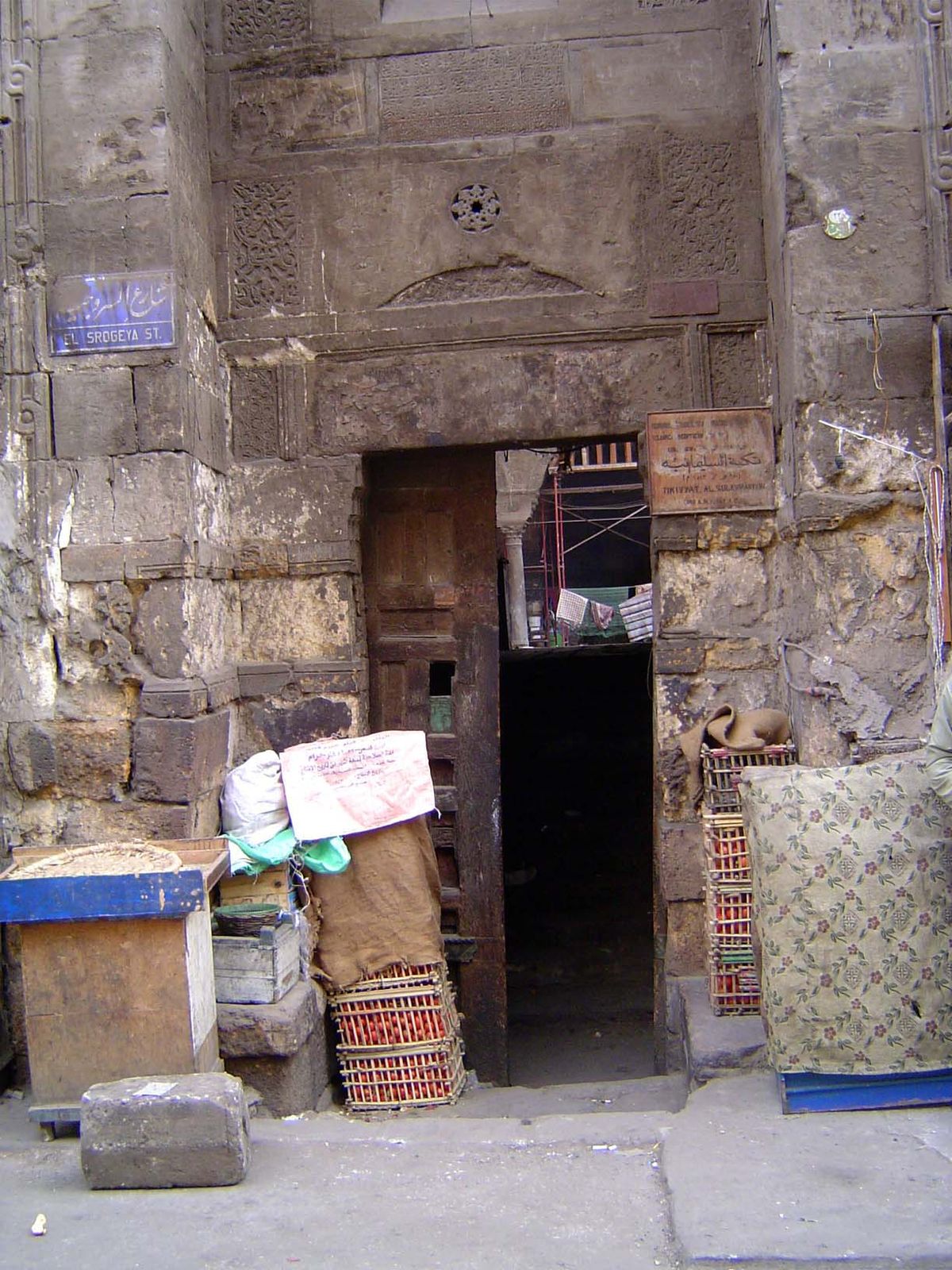
(No. 225) This is the Takiyat (living quarters for Sufis) of al-Sulaymaniya, a governor of Egypt. Built 1543.
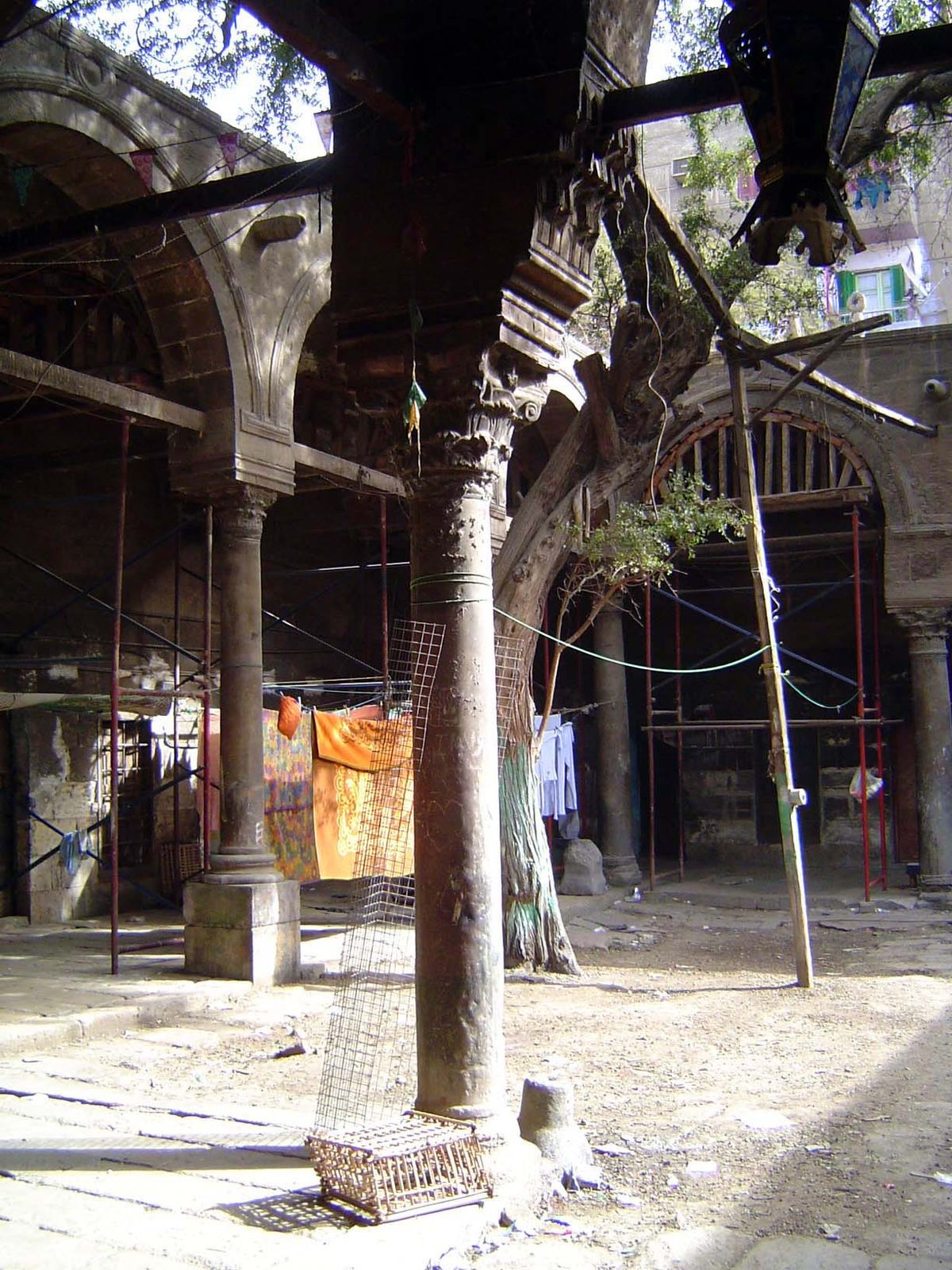
It's occupied now by squatters.
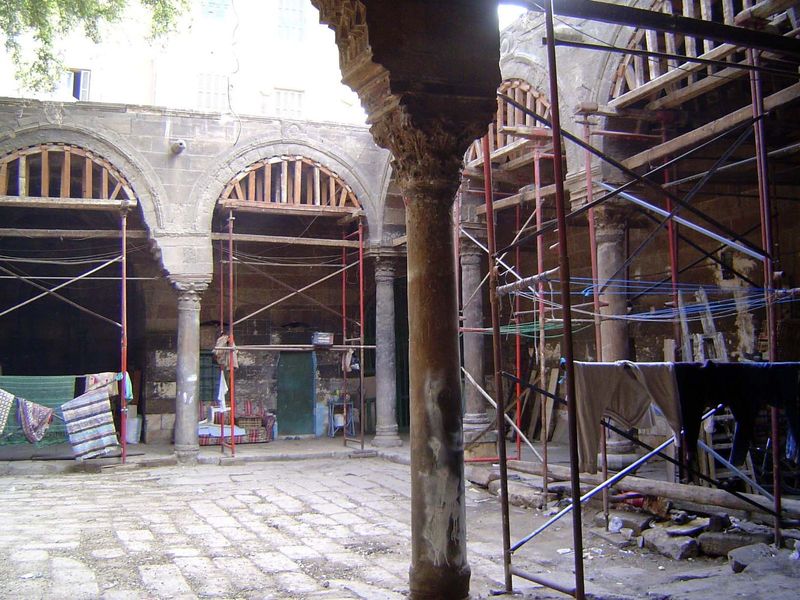
The paving is original; notice the assortment of antique columns of varying lengths.
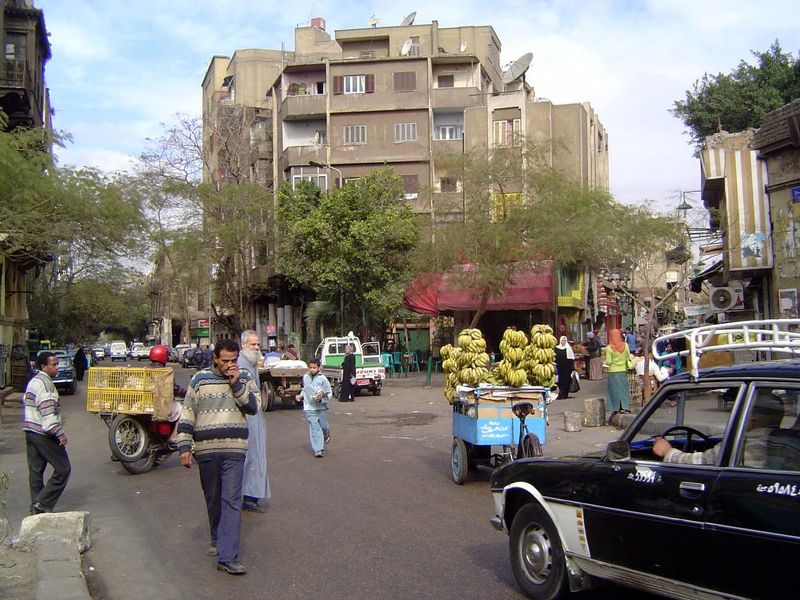
Another modern street, the first to cut across the historic city. It's the Sharia Muhammad 'Ali.
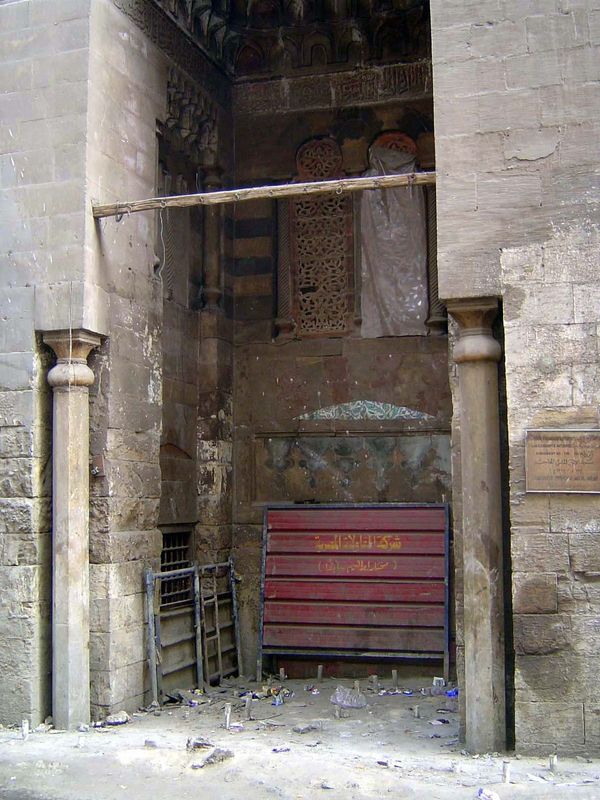
(No. 130) The main street continues south past this entrance of the Mosque of Ulmas, from 1329-30. Ulmas was an amir of Sultan al-Nasir Muhammed and became viceroy, only to be executed in 1333. The building is inaccessible and apparently flooded. You can try moving the heavy gate, but if you do a watchman will be roused.
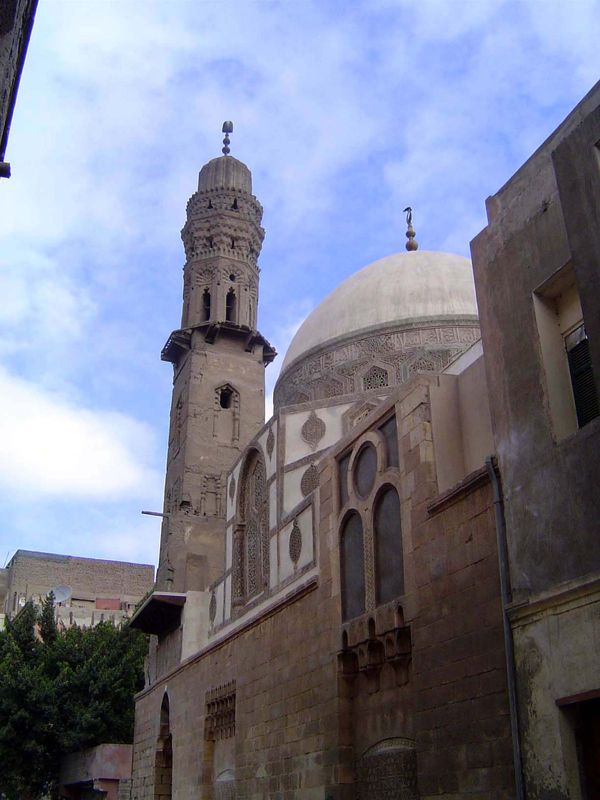
(No. 263) The Tomb of Hasan Sadaqa, built 1315-21. Sadaqa was a mamluk of al-Nasir Muhammad and built this as a madrasa for women, as well as his own tomb. In 1856 the building was taken over by Mevlevi Sufis who wanted a samakhana or hall for Sufi dancing. They symbolized the change by putting what looks like a Mevlevi hat atop the minaret.
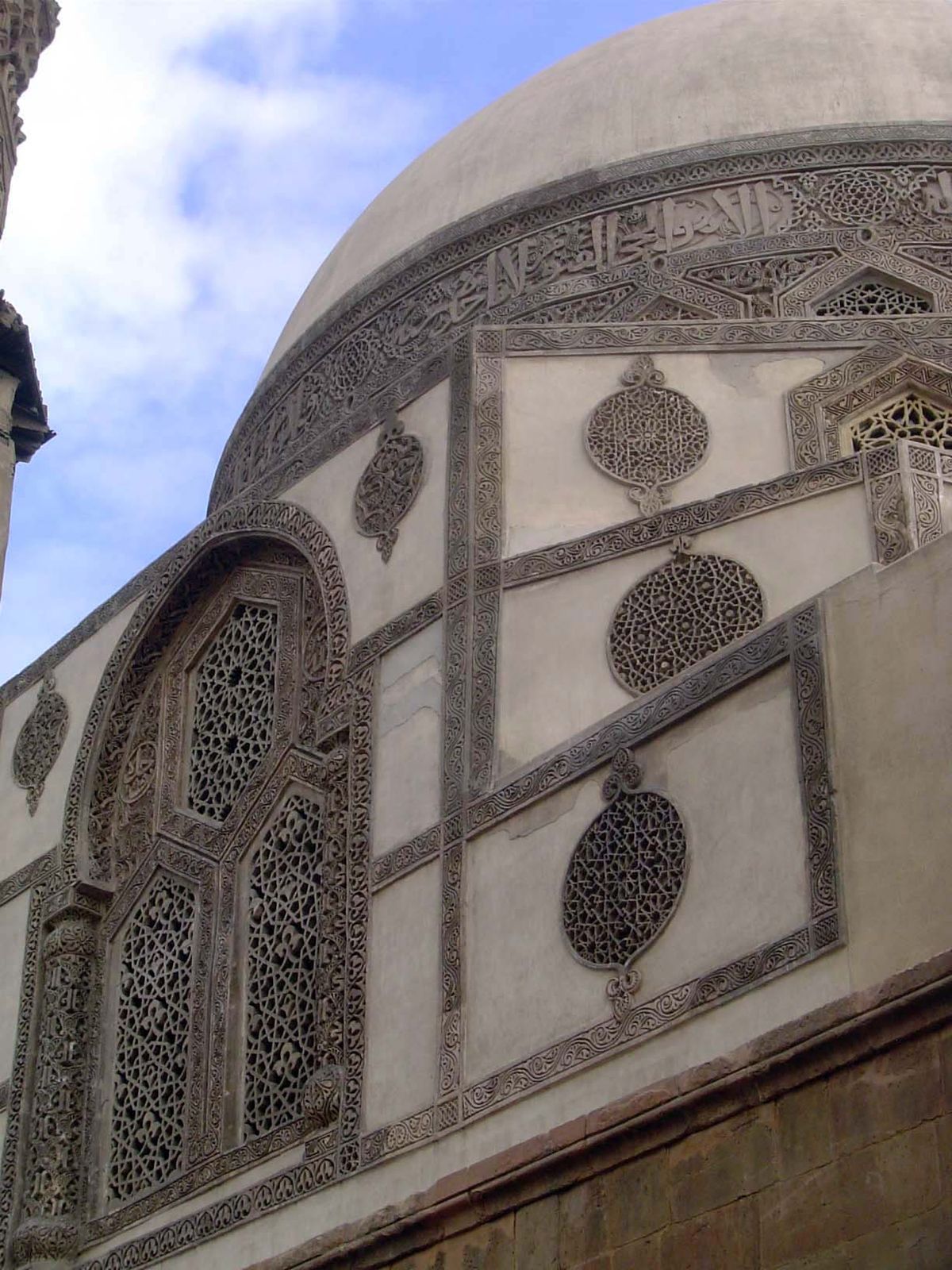
The dome of the tomb of Hasan Sadaqa and of the amir Sunqur al-Sadi.
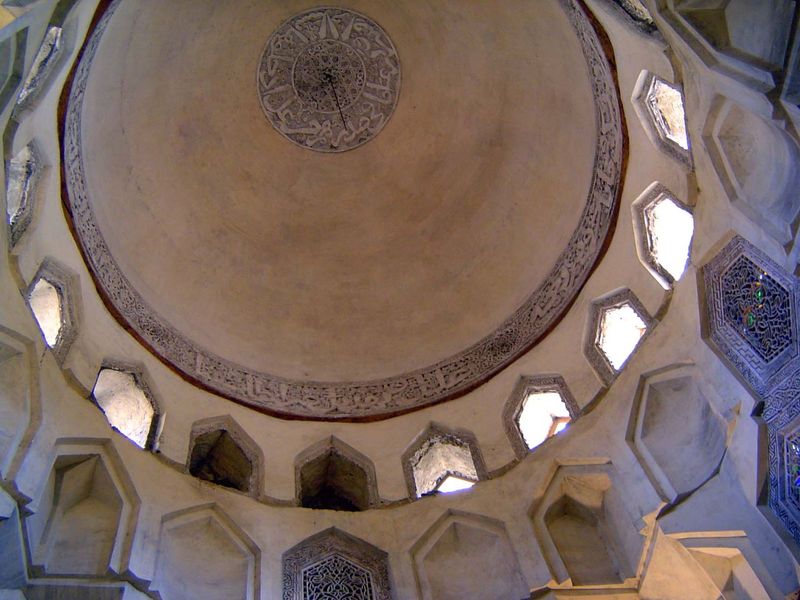
The interior has an abundance of windows under an inscription band on the base of the dome.
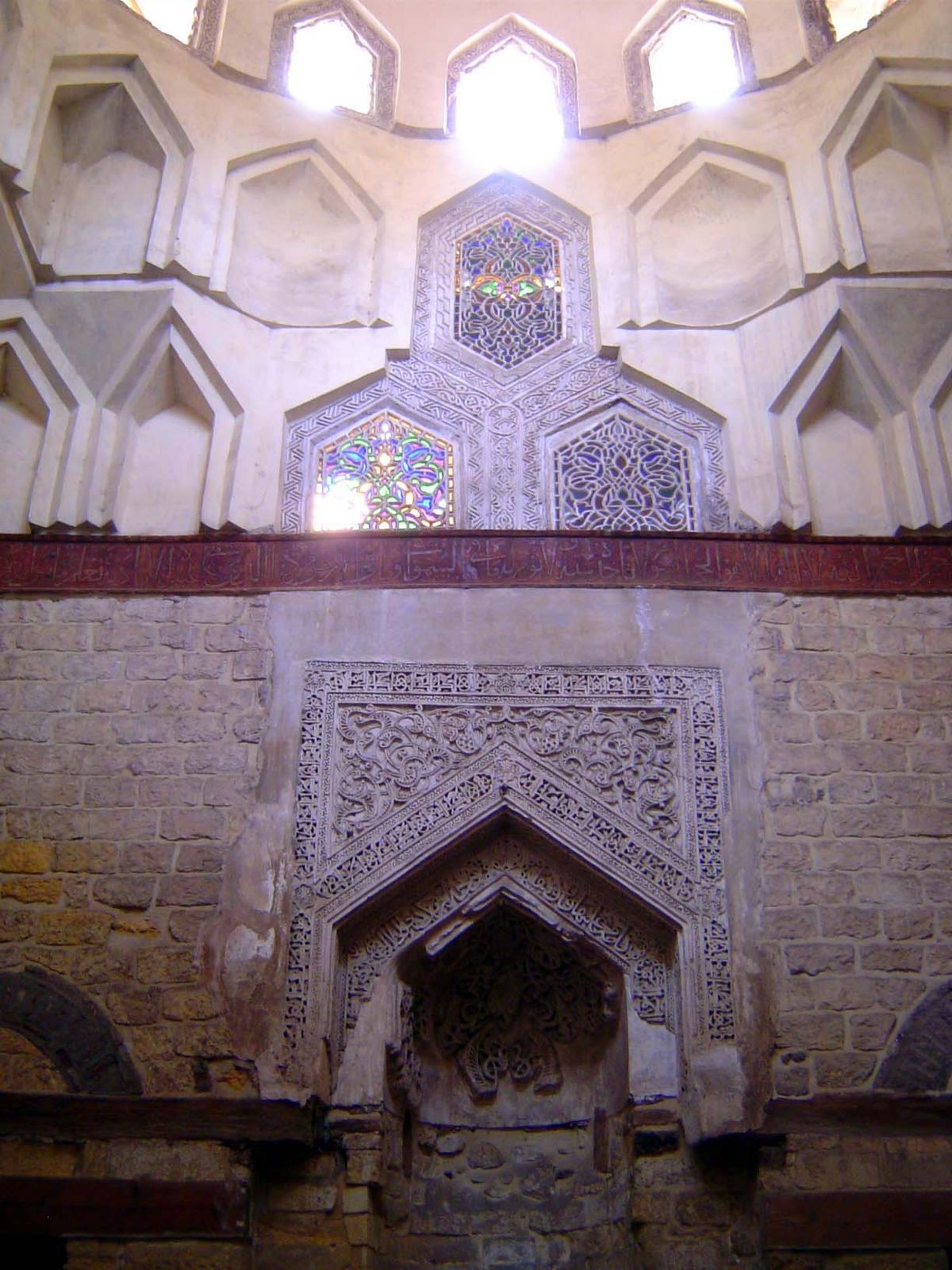
Mihrab with arabesques and inscription bands.
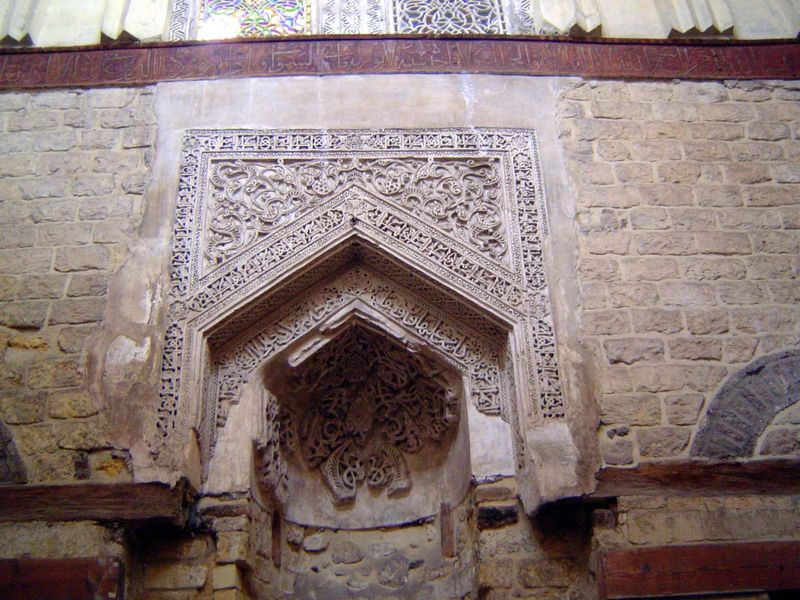
Heavy-handed restoration.
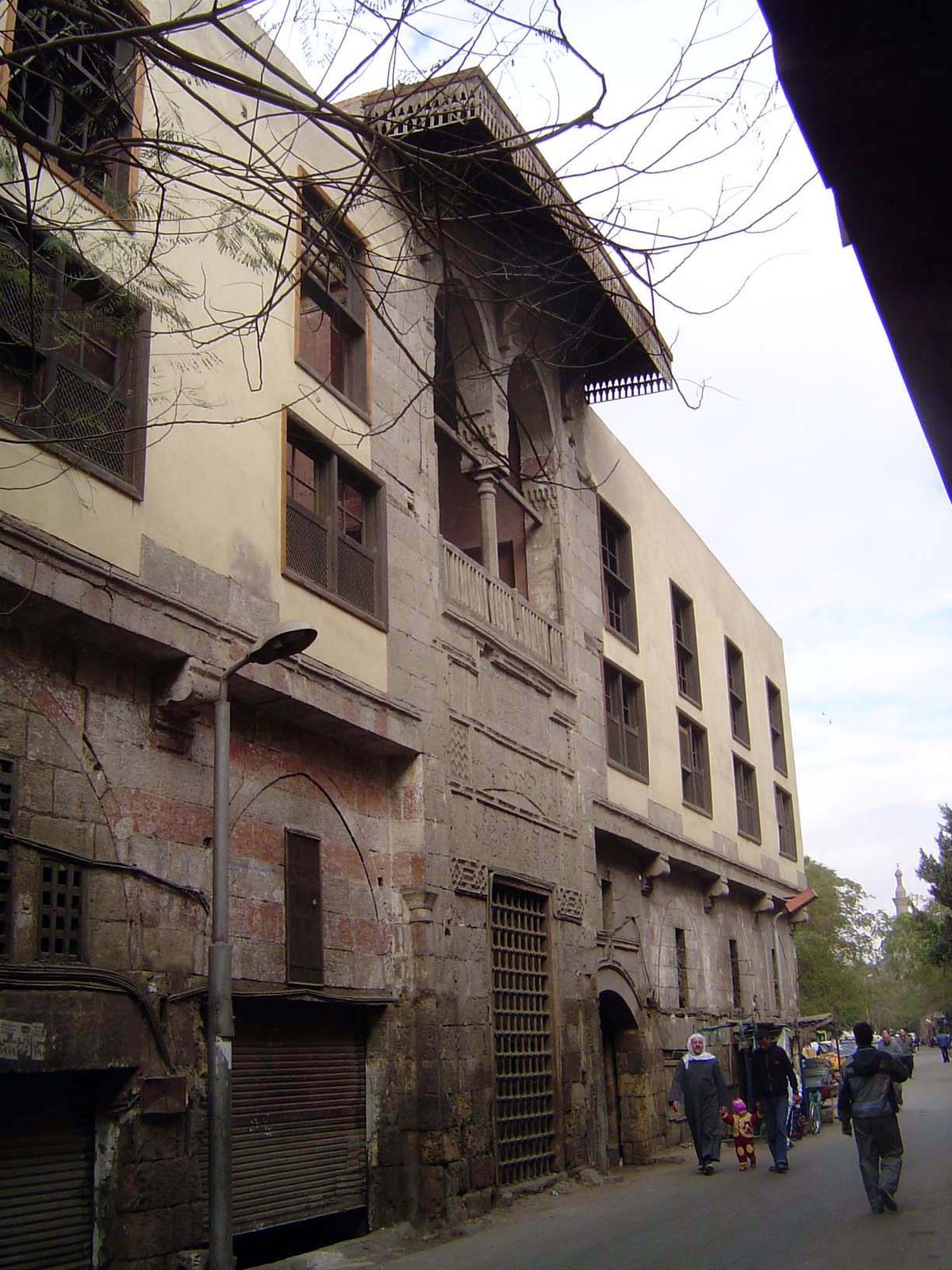
(No. 265) The Sabil-Kuttab (waterpoint and school) and Rab' (residential apartment block) of al-Qizlar, a Black eunuch. The sabil is in the center, behind the grill; the apartments are on either side. The archway led to a courtyard, now gone.
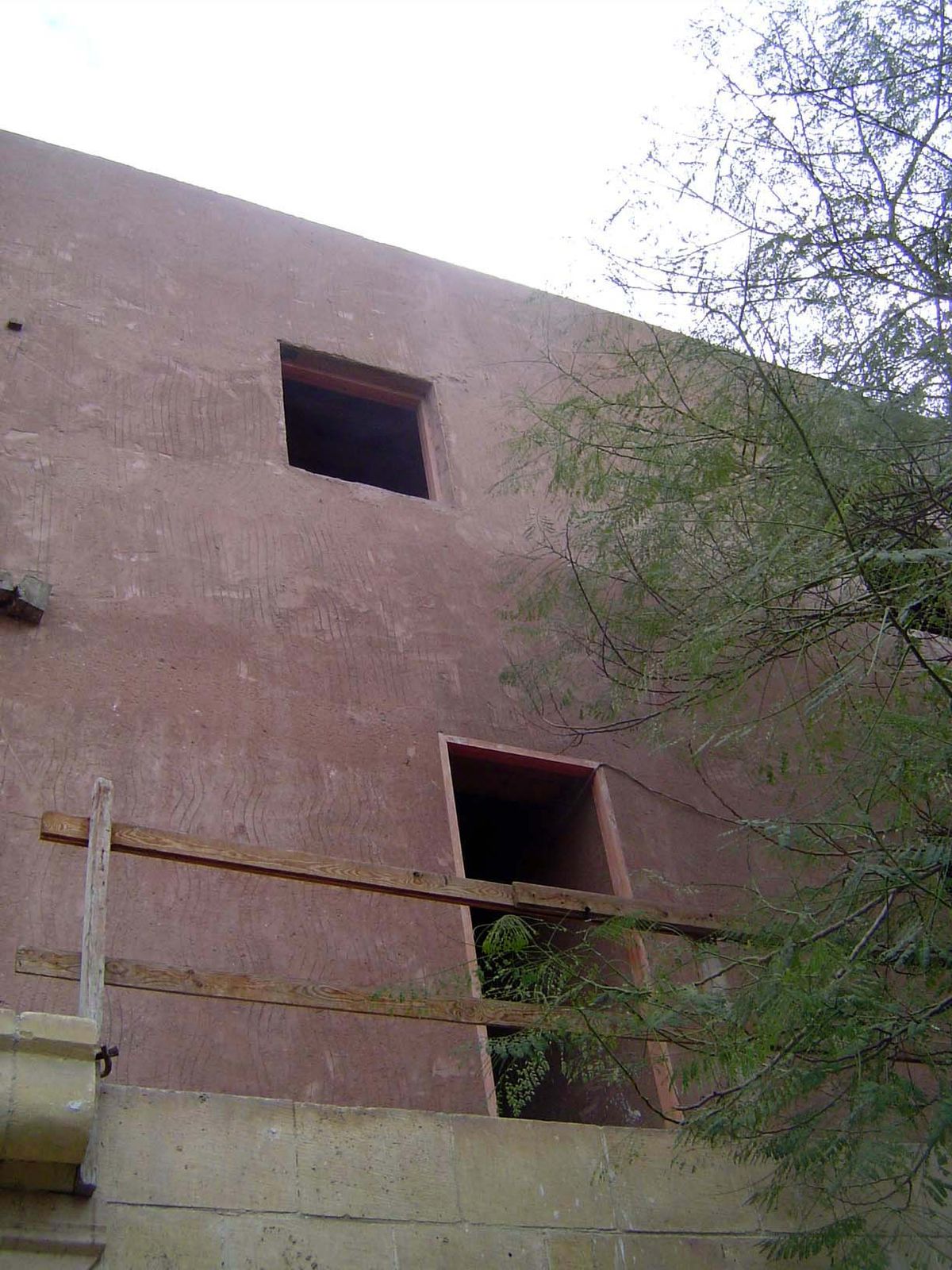
Once again, the restoration is facade deep.
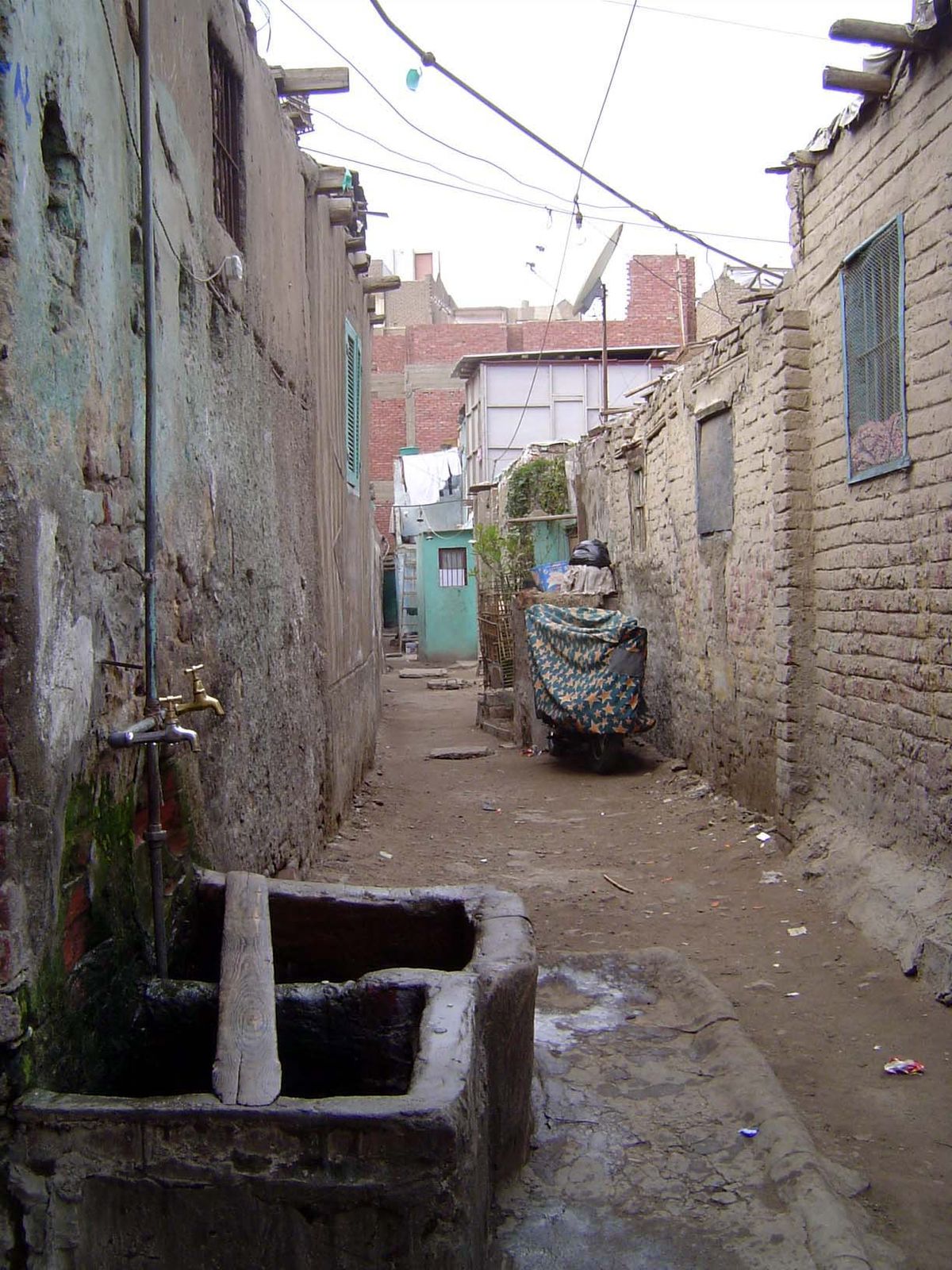
If you really want to know what's behind the facade, this is the answer—another Cairene village.
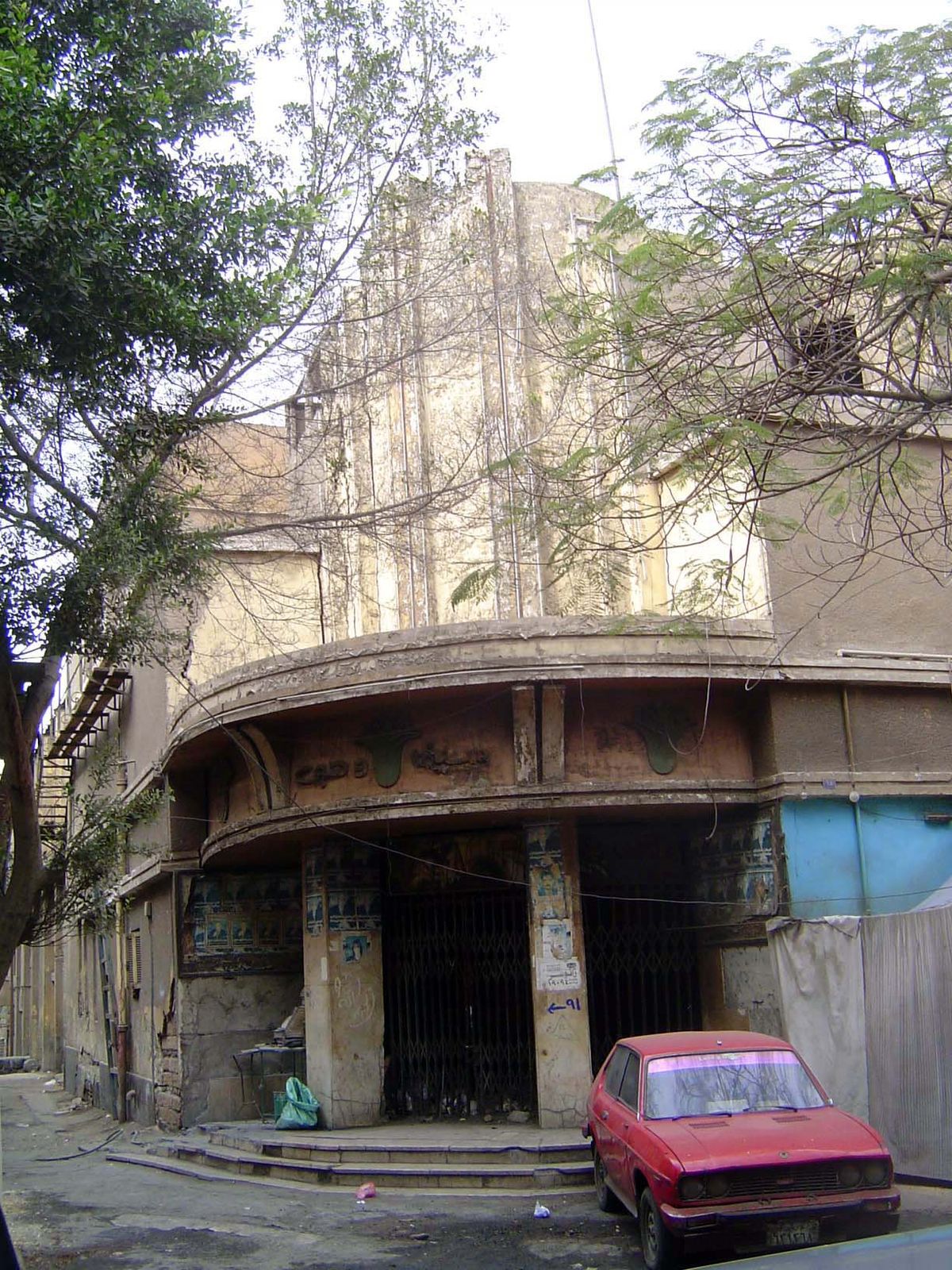
A former theater at the corner of Sharia Muhammad Karim, another modern arterial crossing the old city.
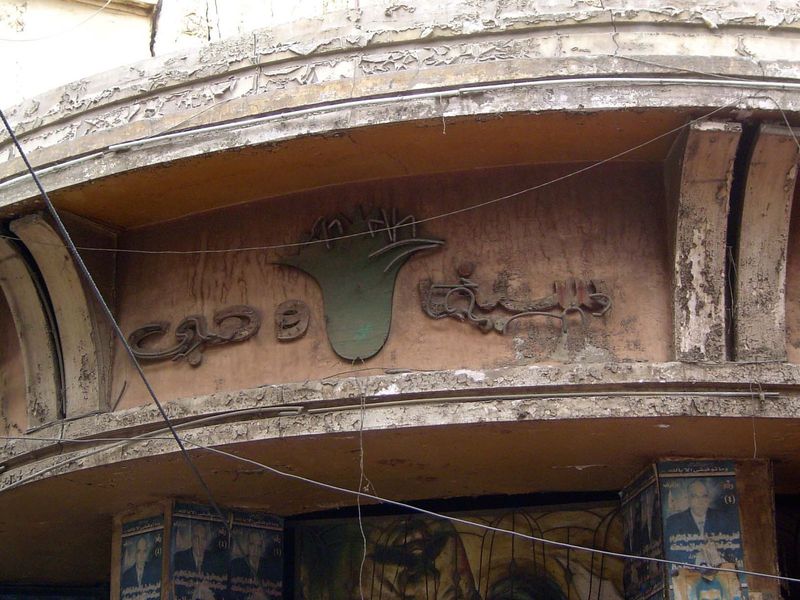
Close-up.
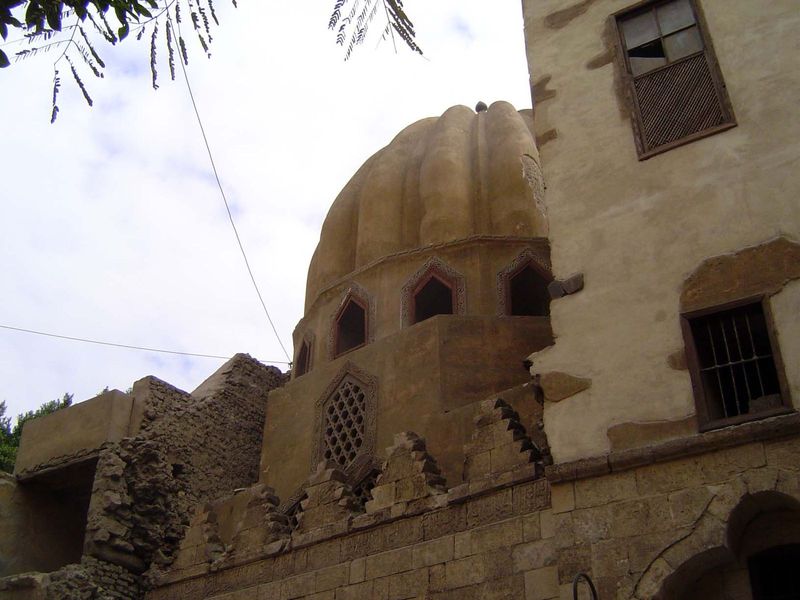
(No. 146) The Zawiyat, or prayer hall, of al-Abbar and the domed tomb of the amir Aydaken al-Bunduqdari, built 1284-5.
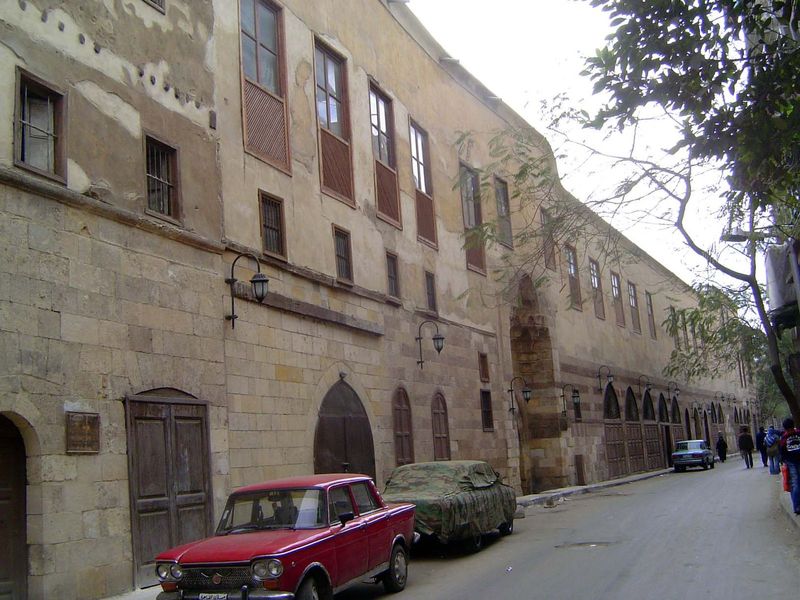
(No. 267) The palace, built in 1352, of the Amir Sayf al-Din Taz al-Nasiri, one of Sultan al-Nasir Muhammad's many sons-in law. The Khedive Ismai'l made it a girls' school. Later it became a warehouse for the Ministry of Education.
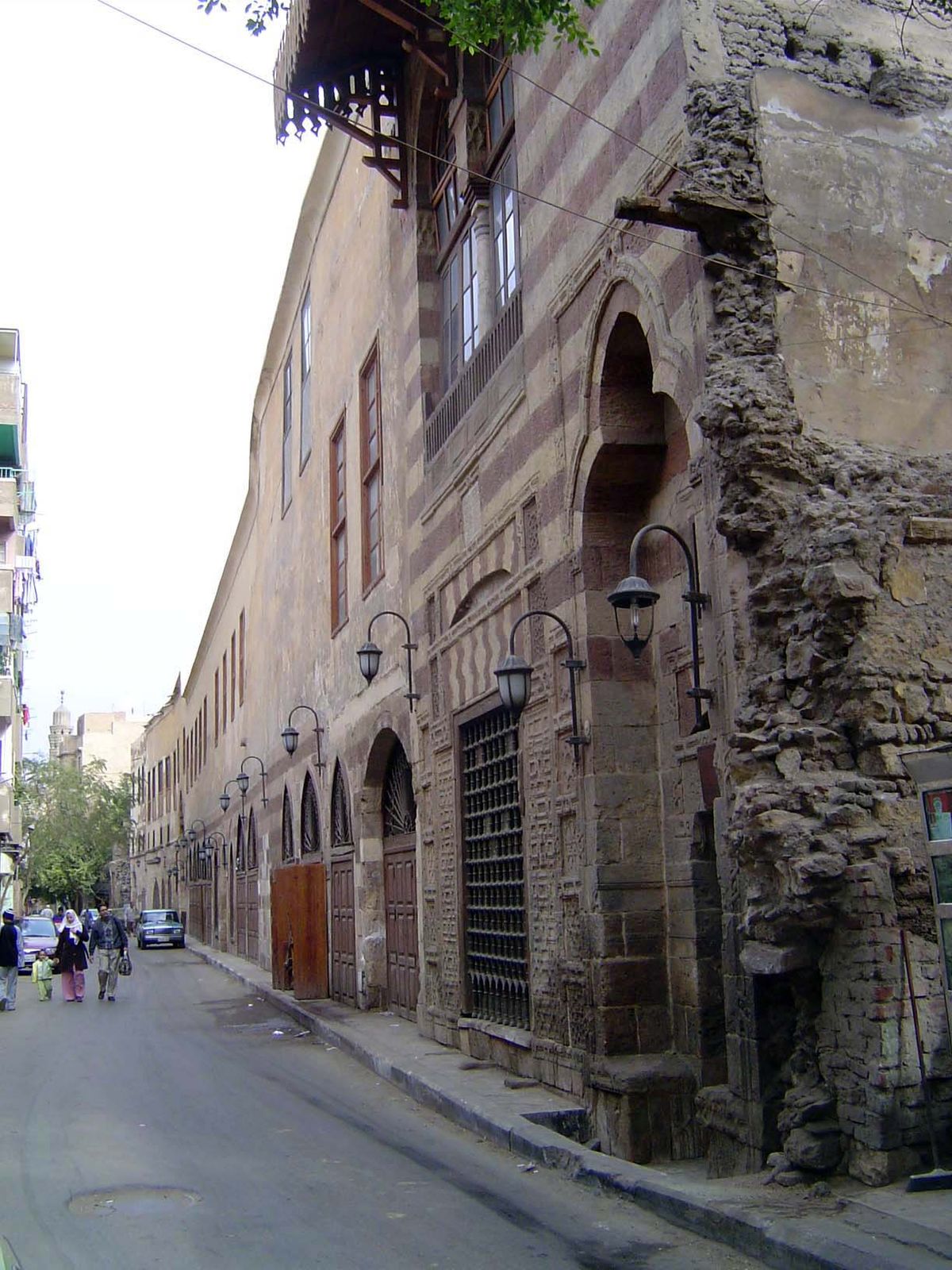
(No. 268) The Sabil-Kuttab of Ali Agha Dar al Sa'ada, built in 1677 by the chief Black eunuch at the Ottoman court.
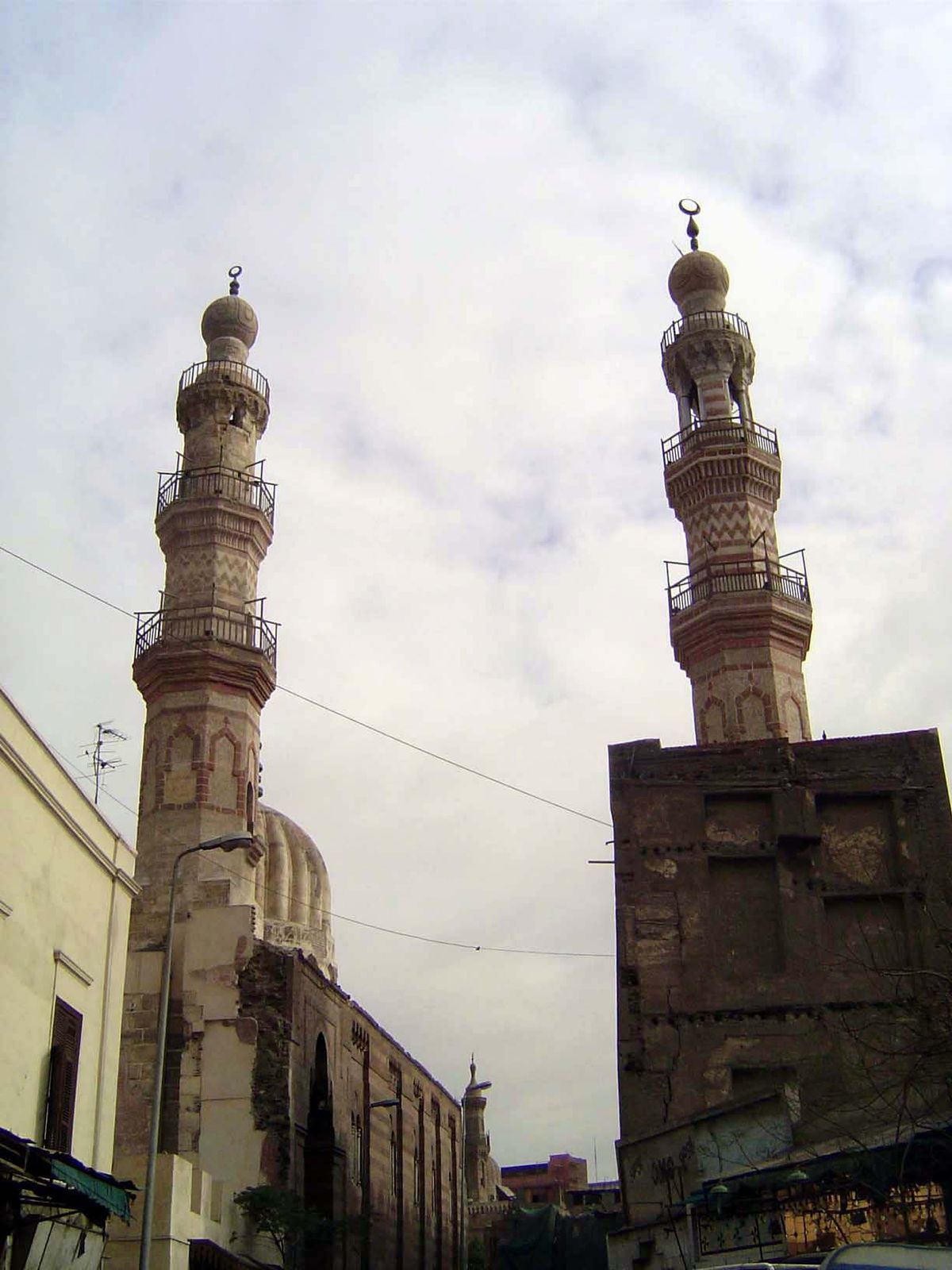
(Nos. 147 and 152) On the left, the Mosque of Shaykhu, built 1349 by a mamluk of al-Nasir Muhammad; on the right, built in 1355, is his tomb and khanqah, or Sufi communal dwelling.
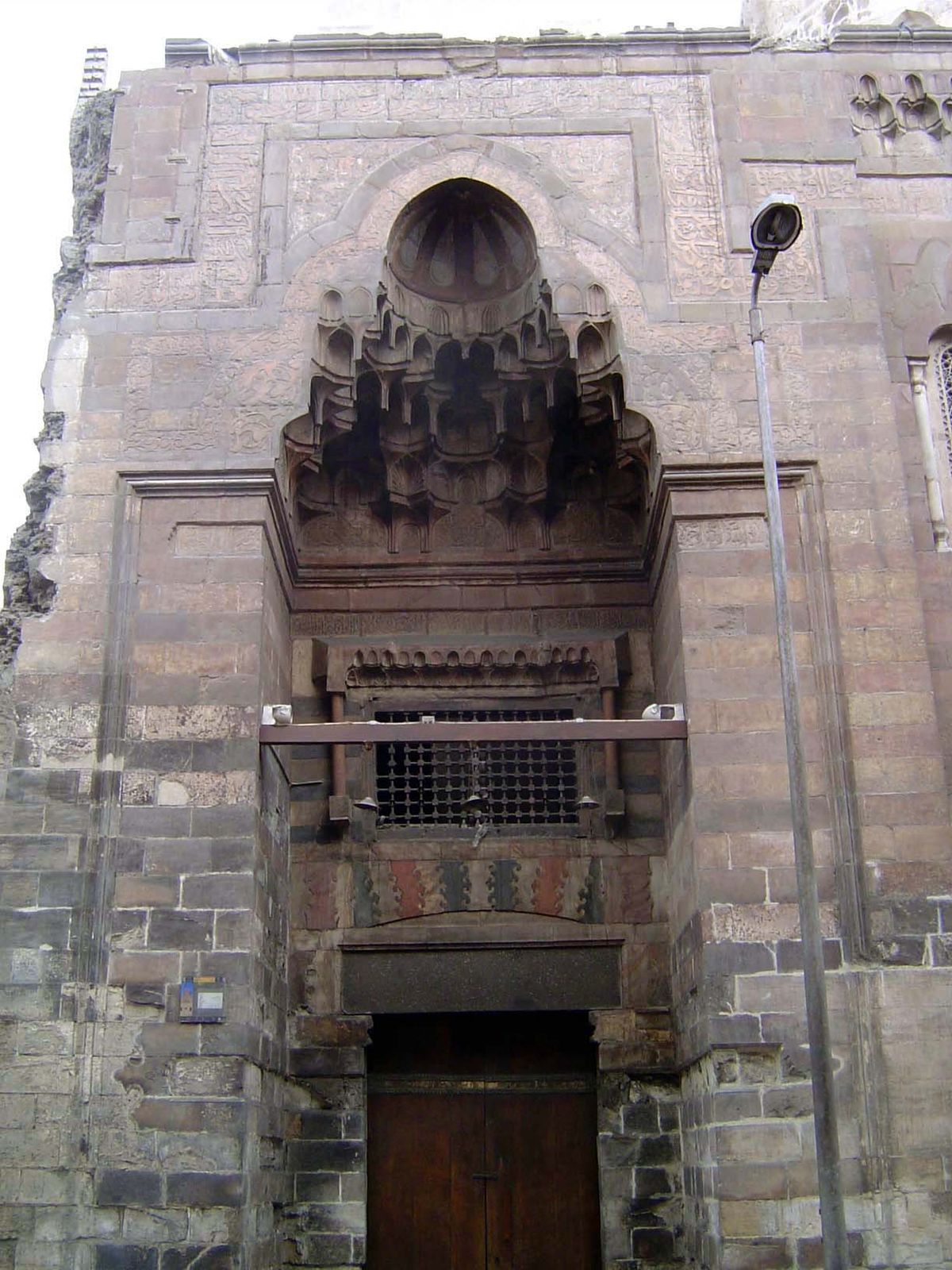
Entrance to the khanqah. Push on the door and, miraculously, it opens.
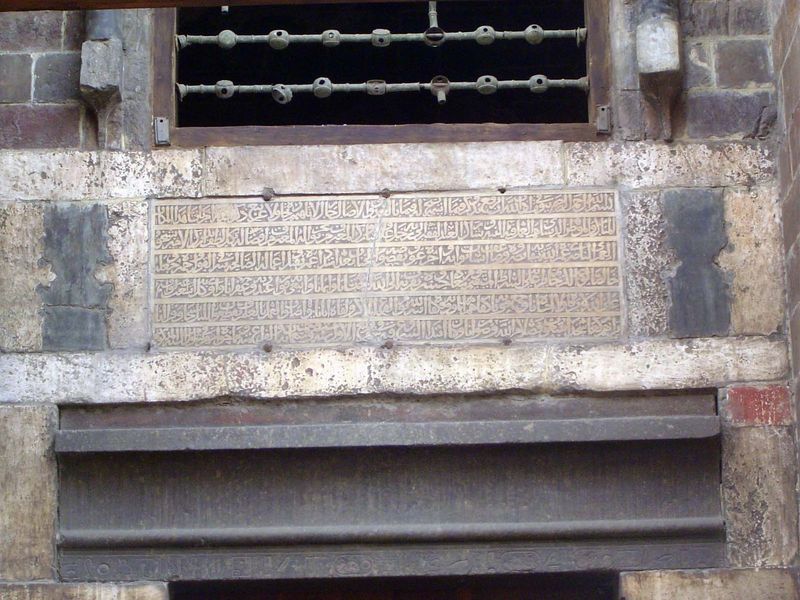
We're going to go inside, but first look at this other door. See anything odd?
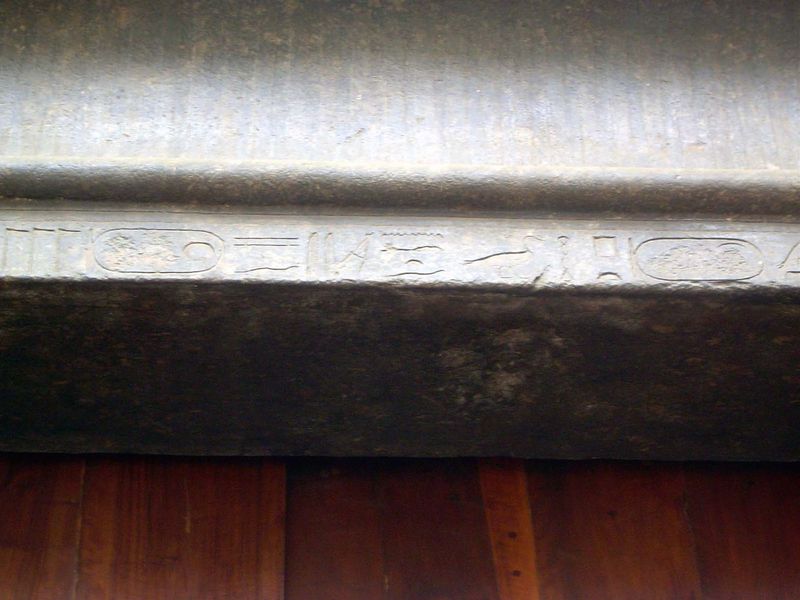
You did see it! Hieroglyphics—the lintel is what's known in the trade as pharaonic spolia.
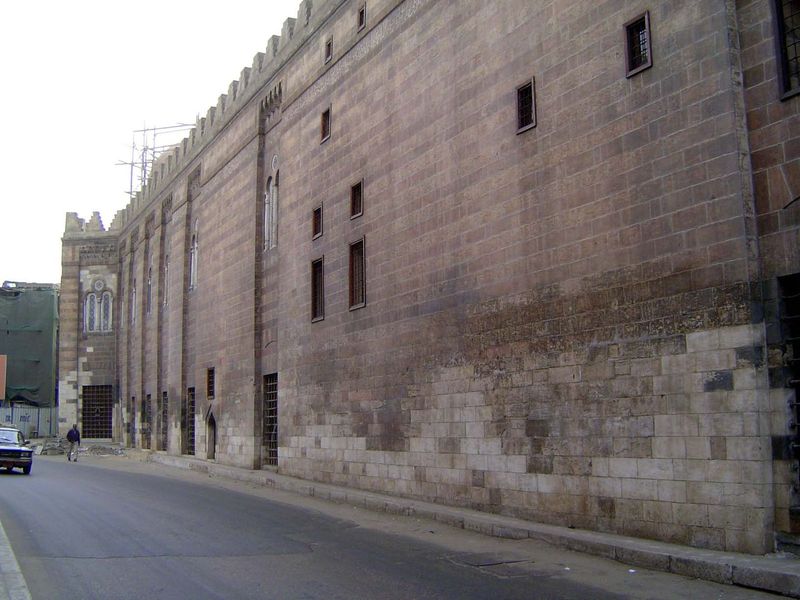
We're back to the street and ready for the open door.
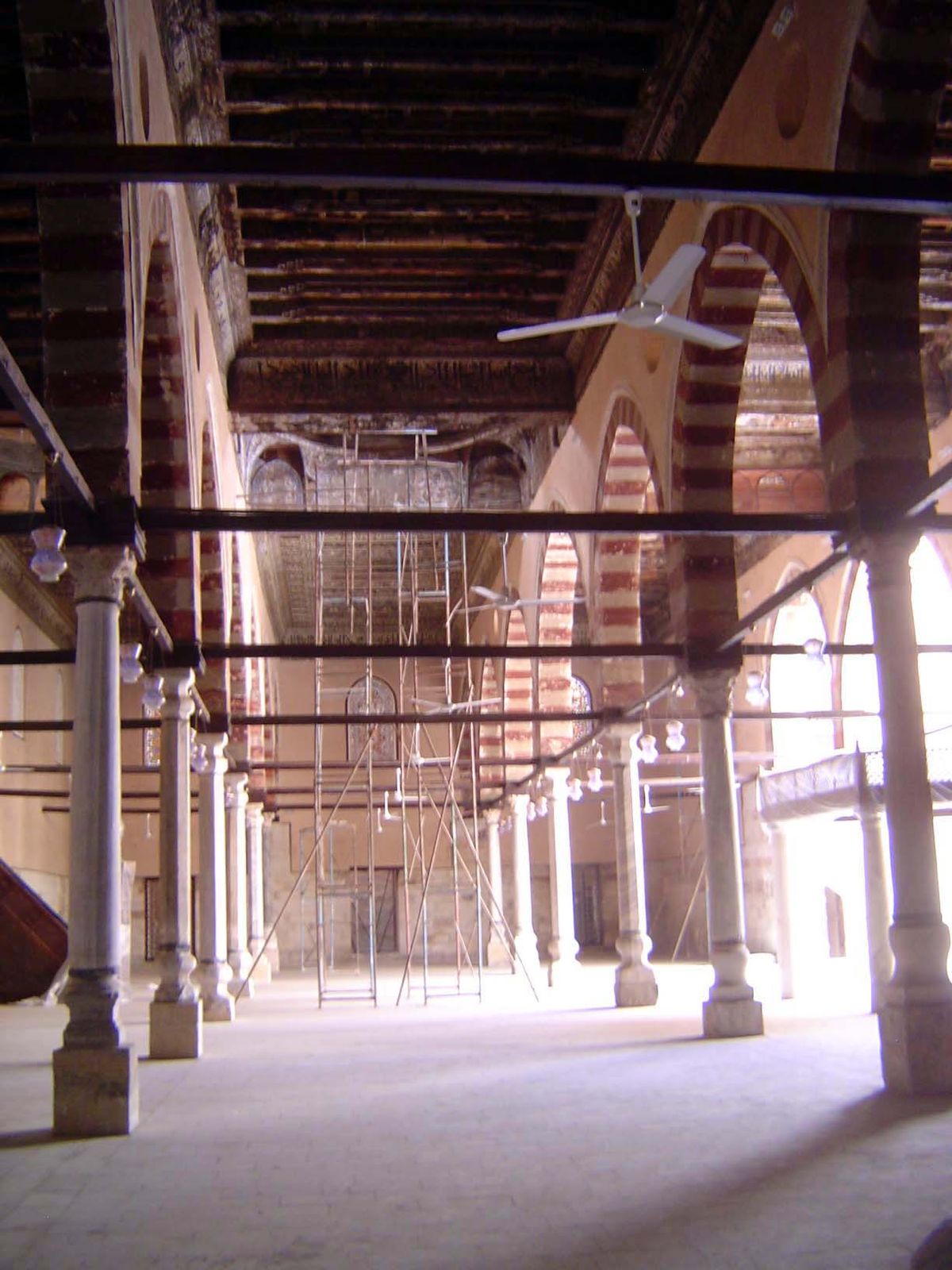
Surprised? We have a bright, bright courtyard and a set of arcades against the qibla or Mecca-facing wall to the left.
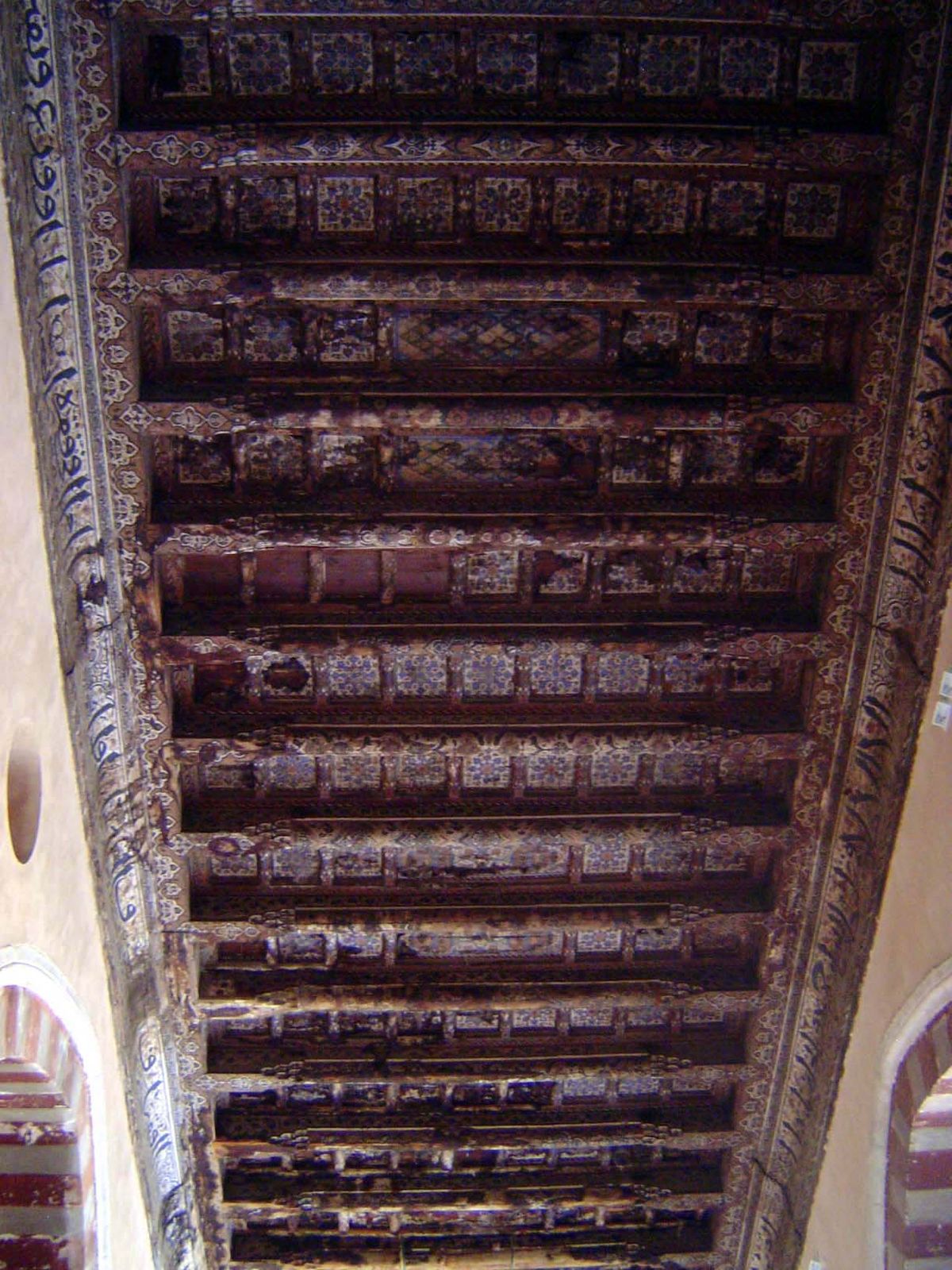
The ceilings were painted during a restoration in 1658.
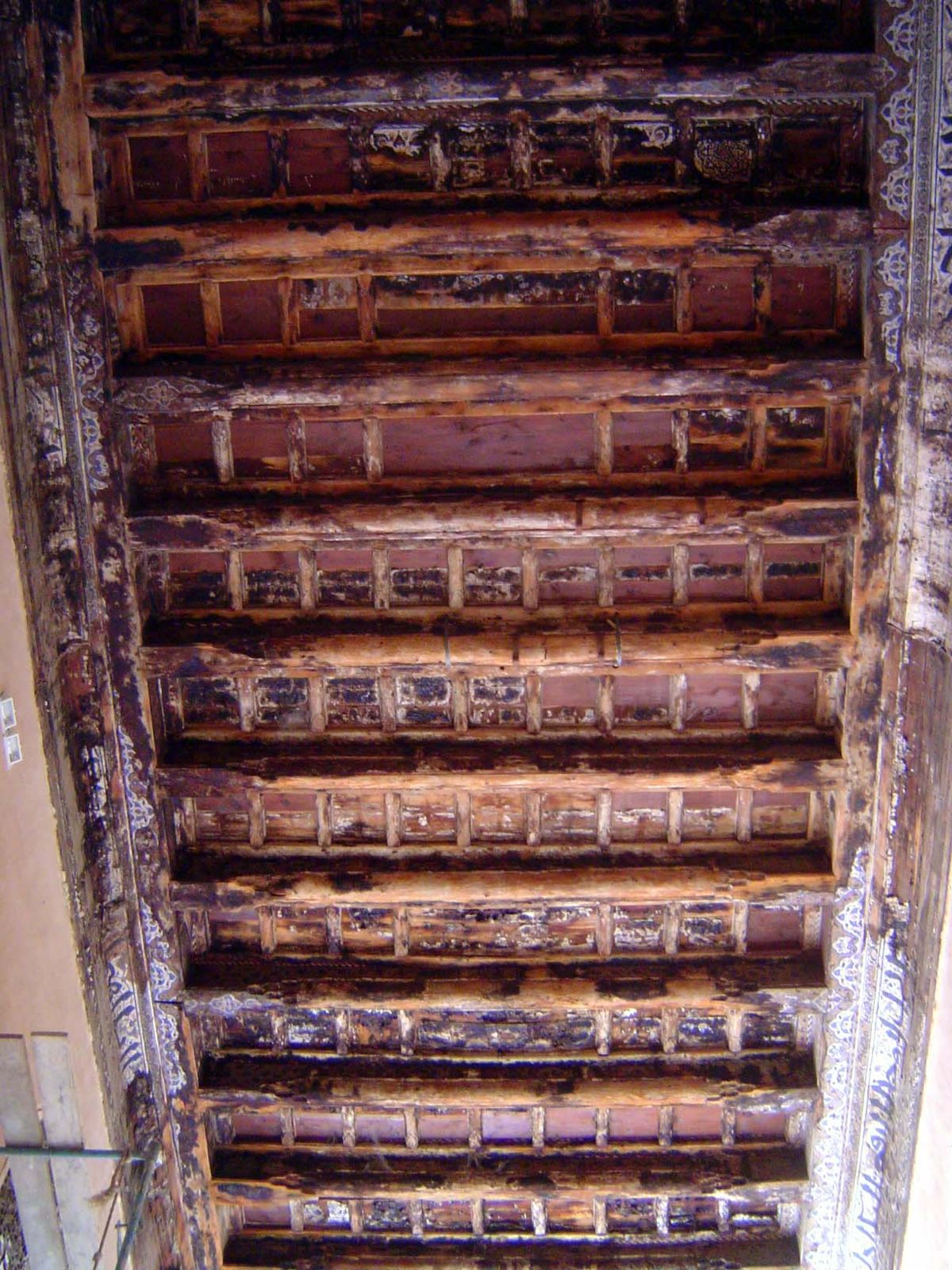
It's wearing off.
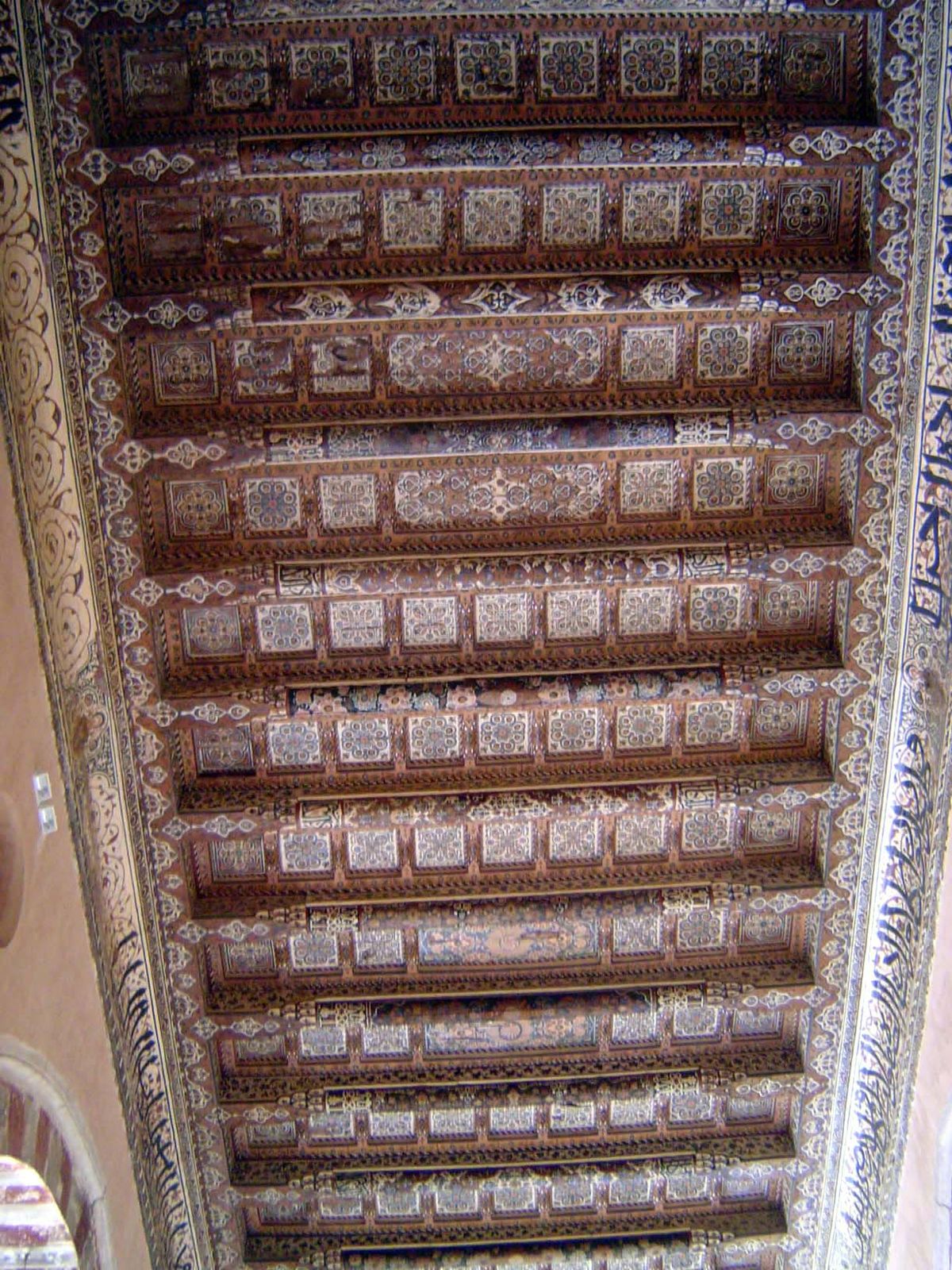
Freshly repainted.
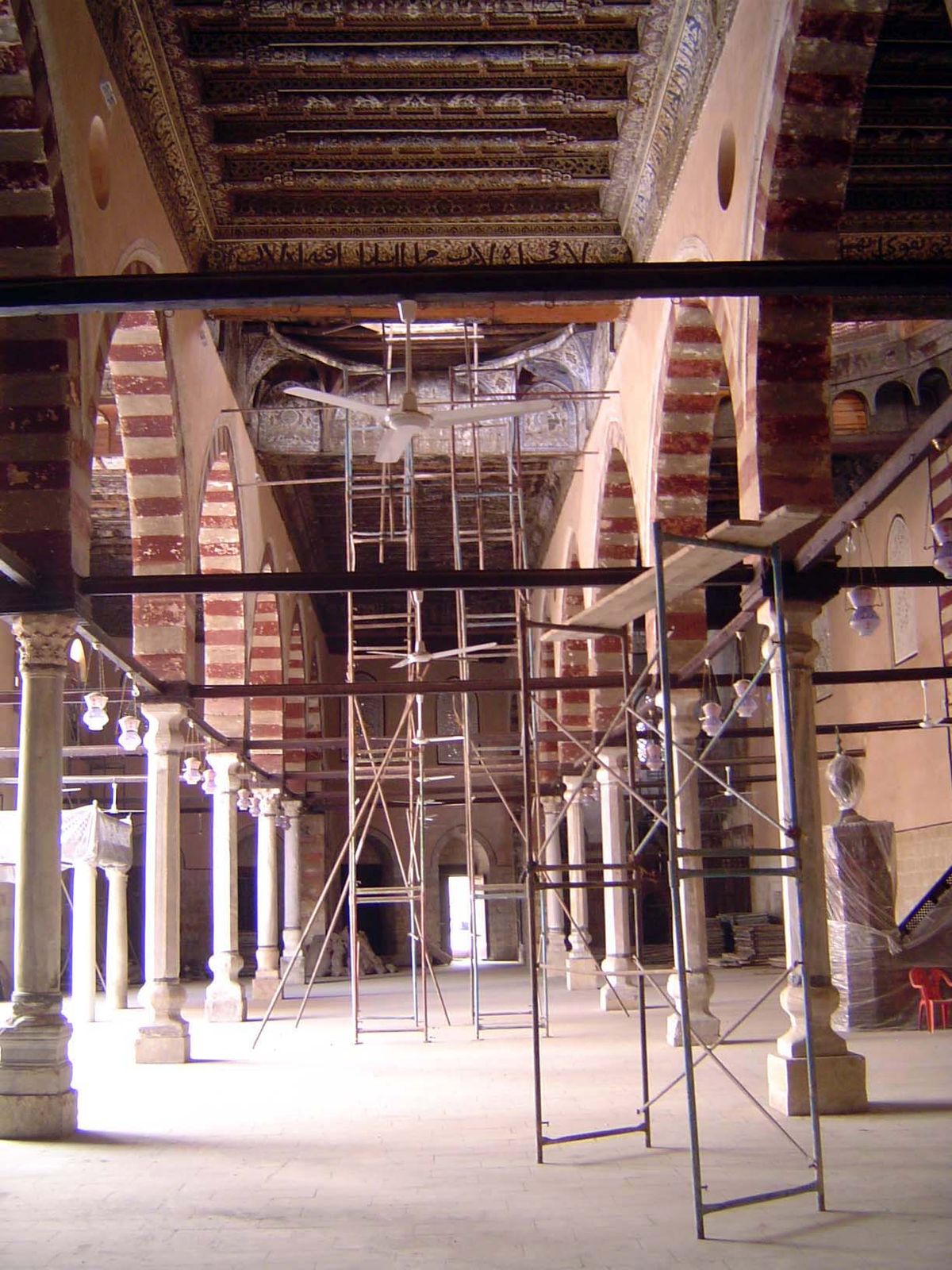
Painters' scaffolding.
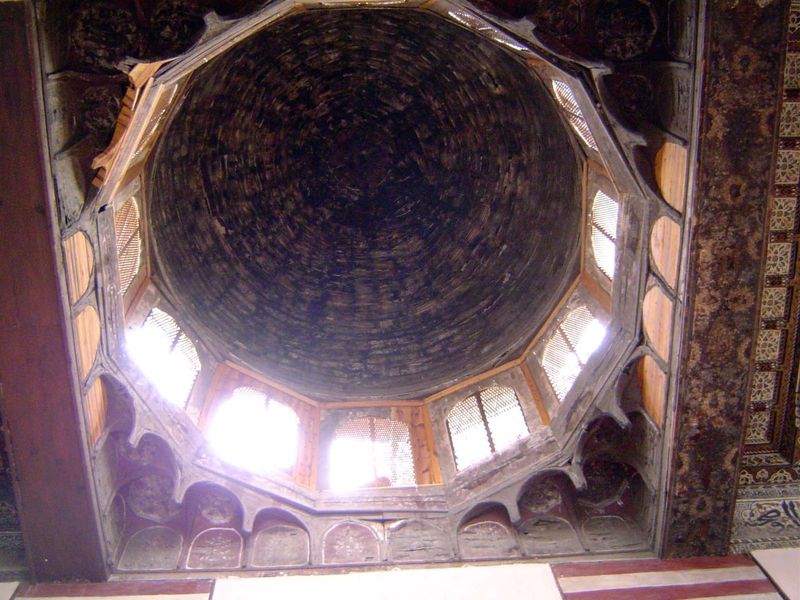
A 17th century dome of wood.
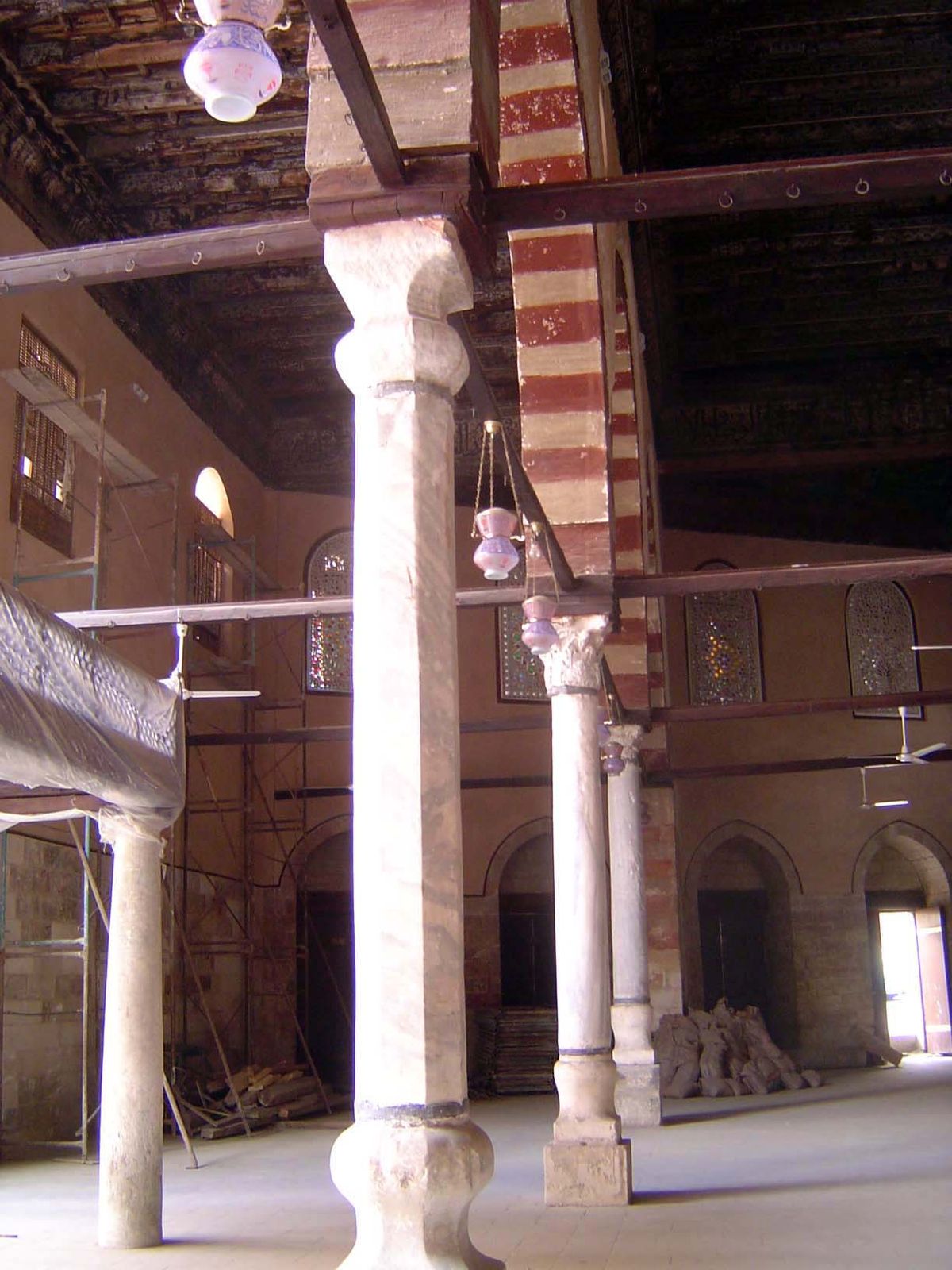
Once again, a random assortment of columns.
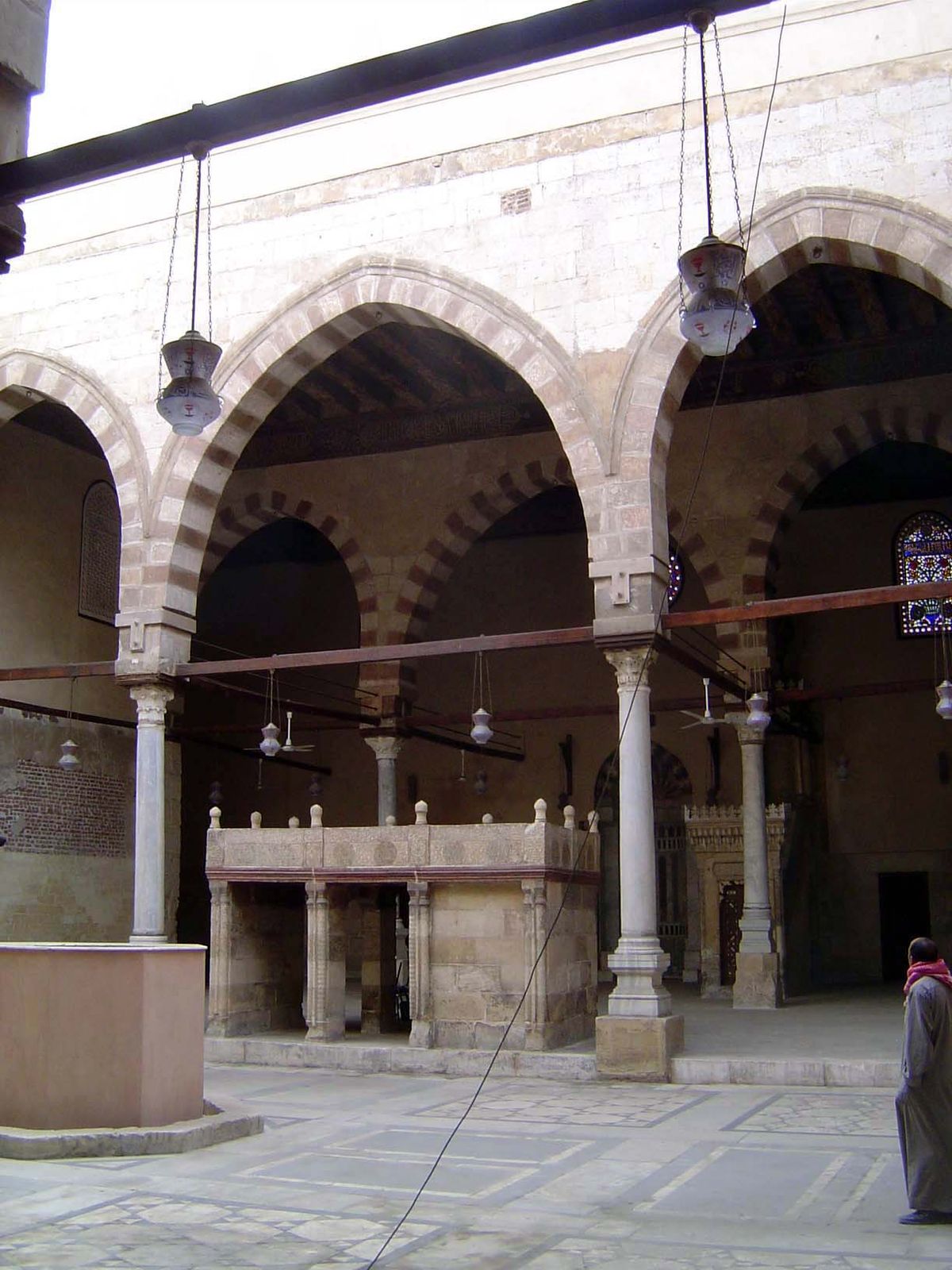
Mihrab and dikka.
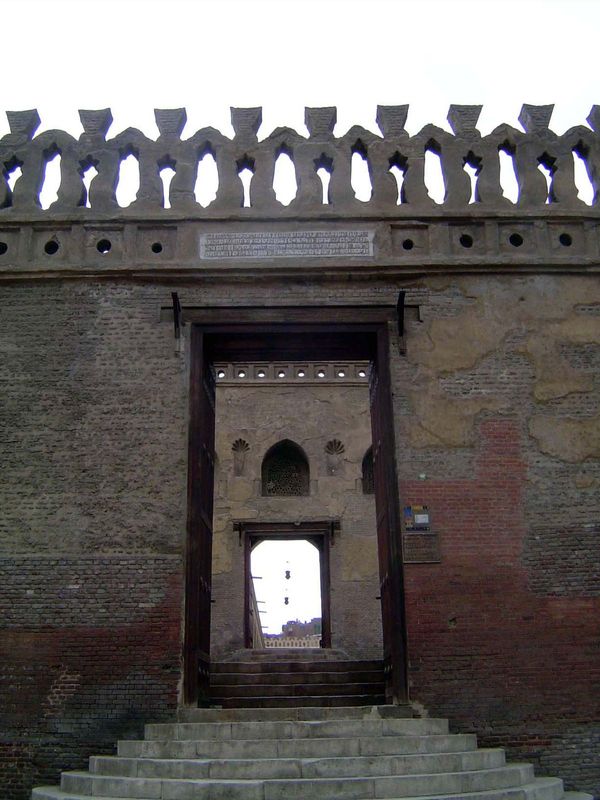
(No. 220) We've come to the end of the walk and turned onto Sharia Shaykhu, the street separating the mosque and tomb of Shaykhu. In a block or two toward the Nile we reach the Mosque of Ahmad Ibn Tulun, built in 876-79, a century before the founding of Cairo. Notice the double wall.
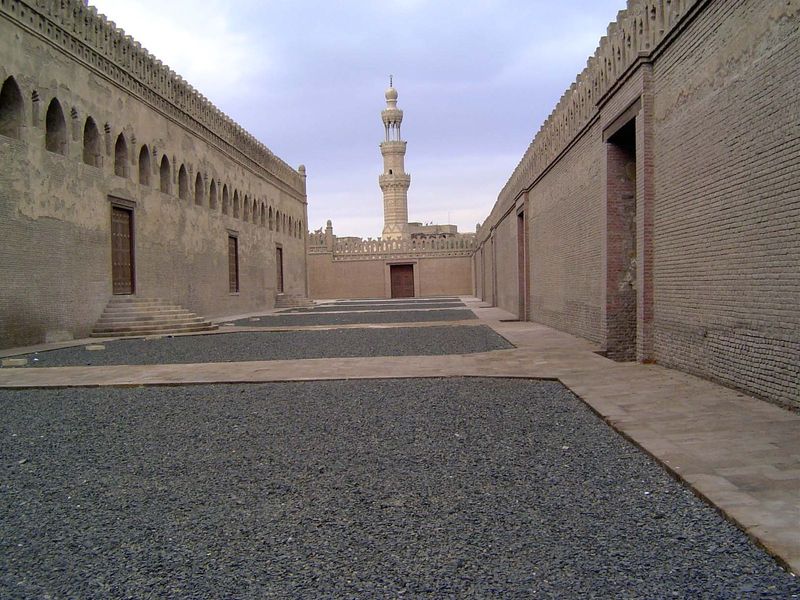
Here's the ziyada or space bedtween those walls. Old photographs show tenements pressing against the outer wall, but they've been cleared. The minaret belongs to an adjoining mosque, the Mosque of Sarghatmish, from 1356.
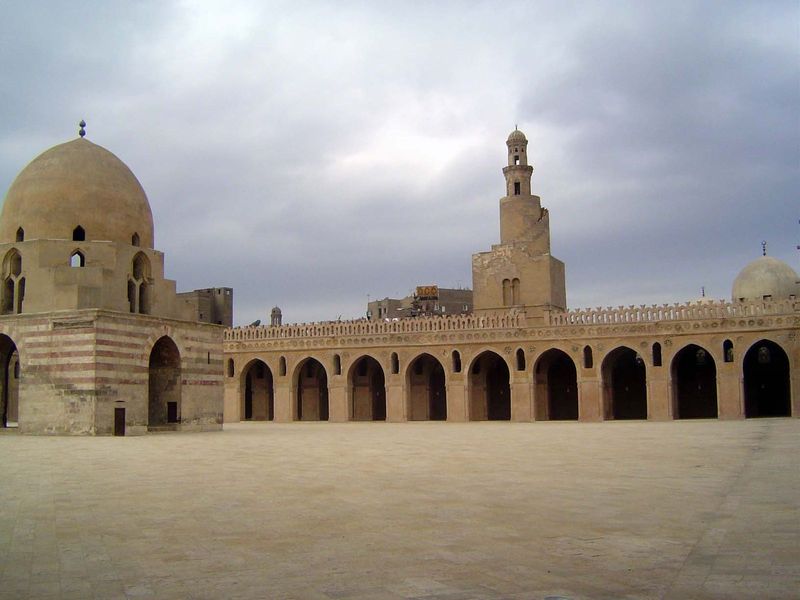
Inside, there's a courtyard based on the still earlier mosque at Samarra. The domed fountain and the mosque with its very unusual external staircase are later additions, probably from about 1300.
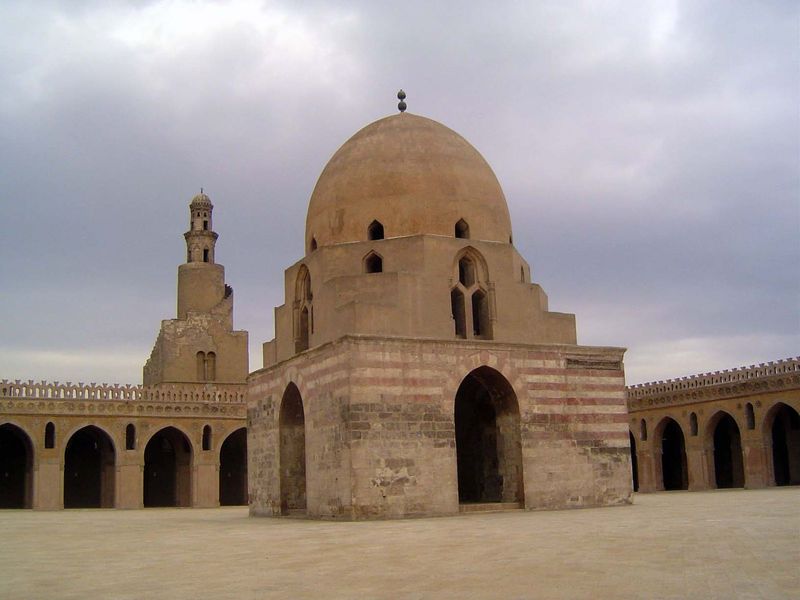
Another view. Many peripheral gates once connected the mosque to the dense housing that used to surround it.
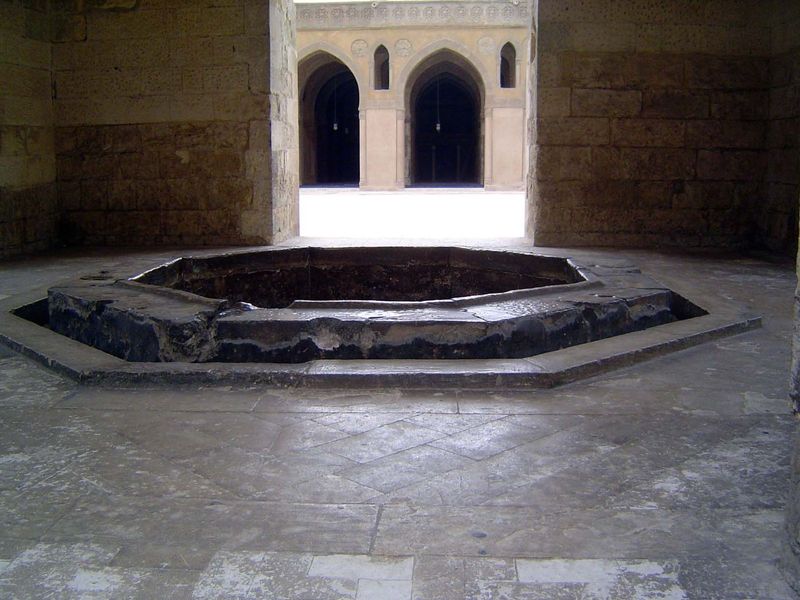
Interior of the ablutions fountain.
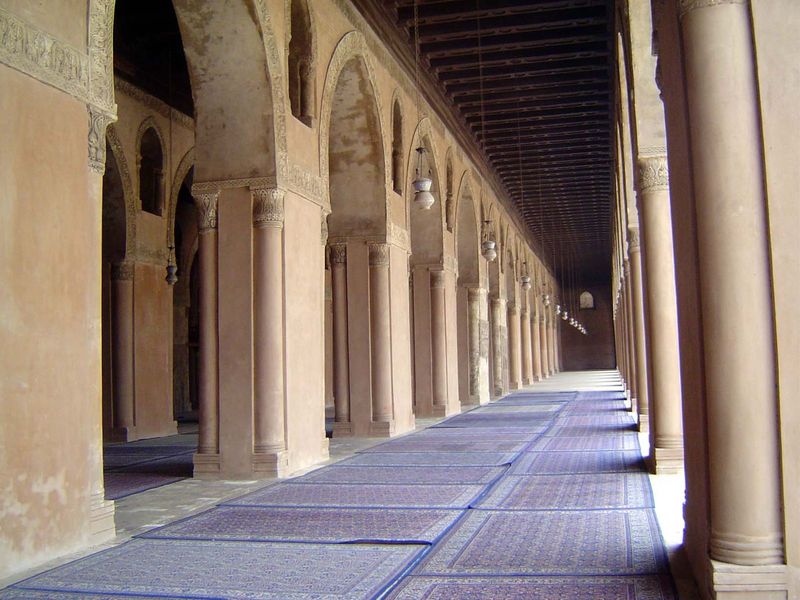
Arcades of brick piers run along the qibla side.
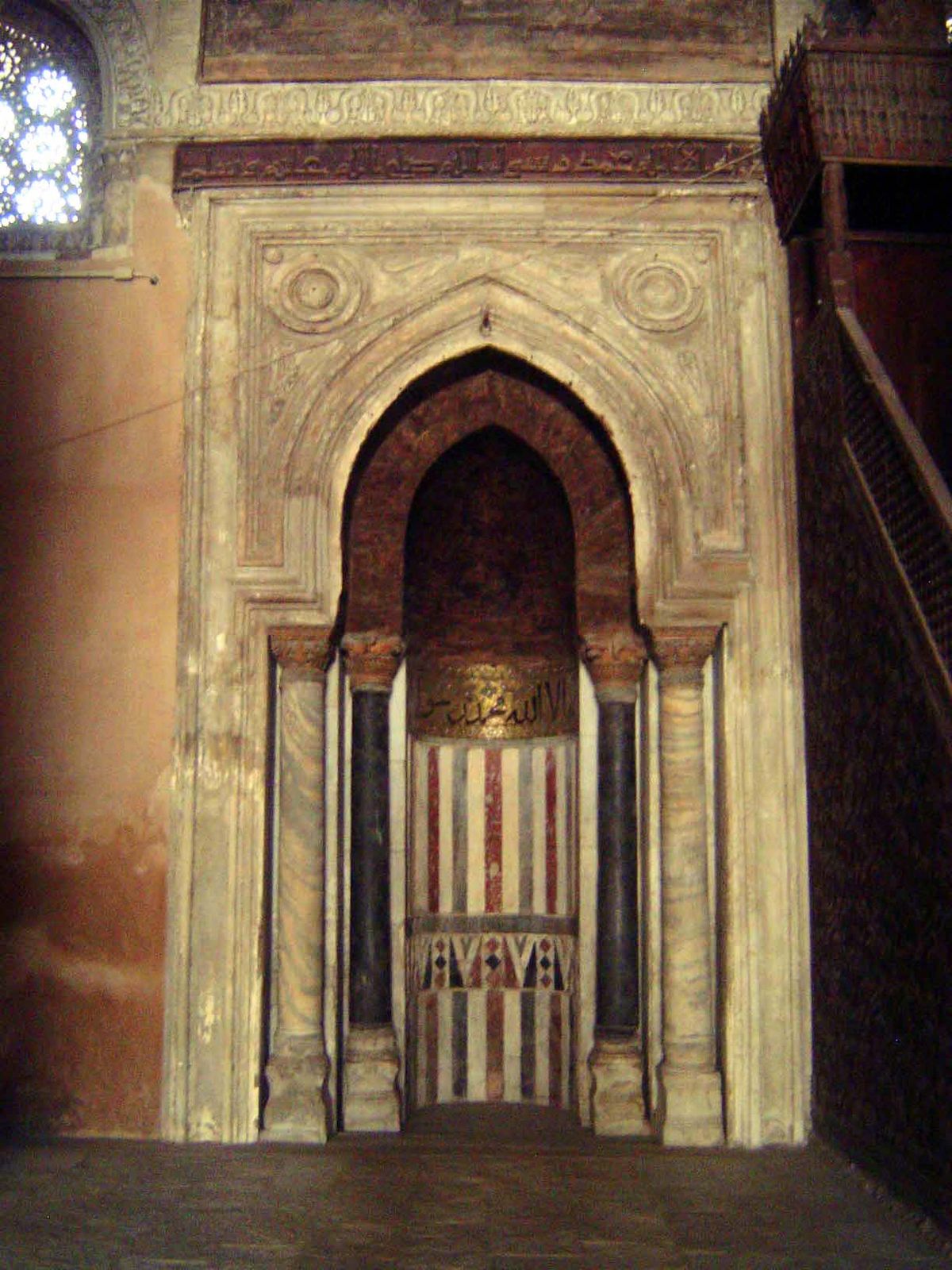
Mihrab or prayer niche.
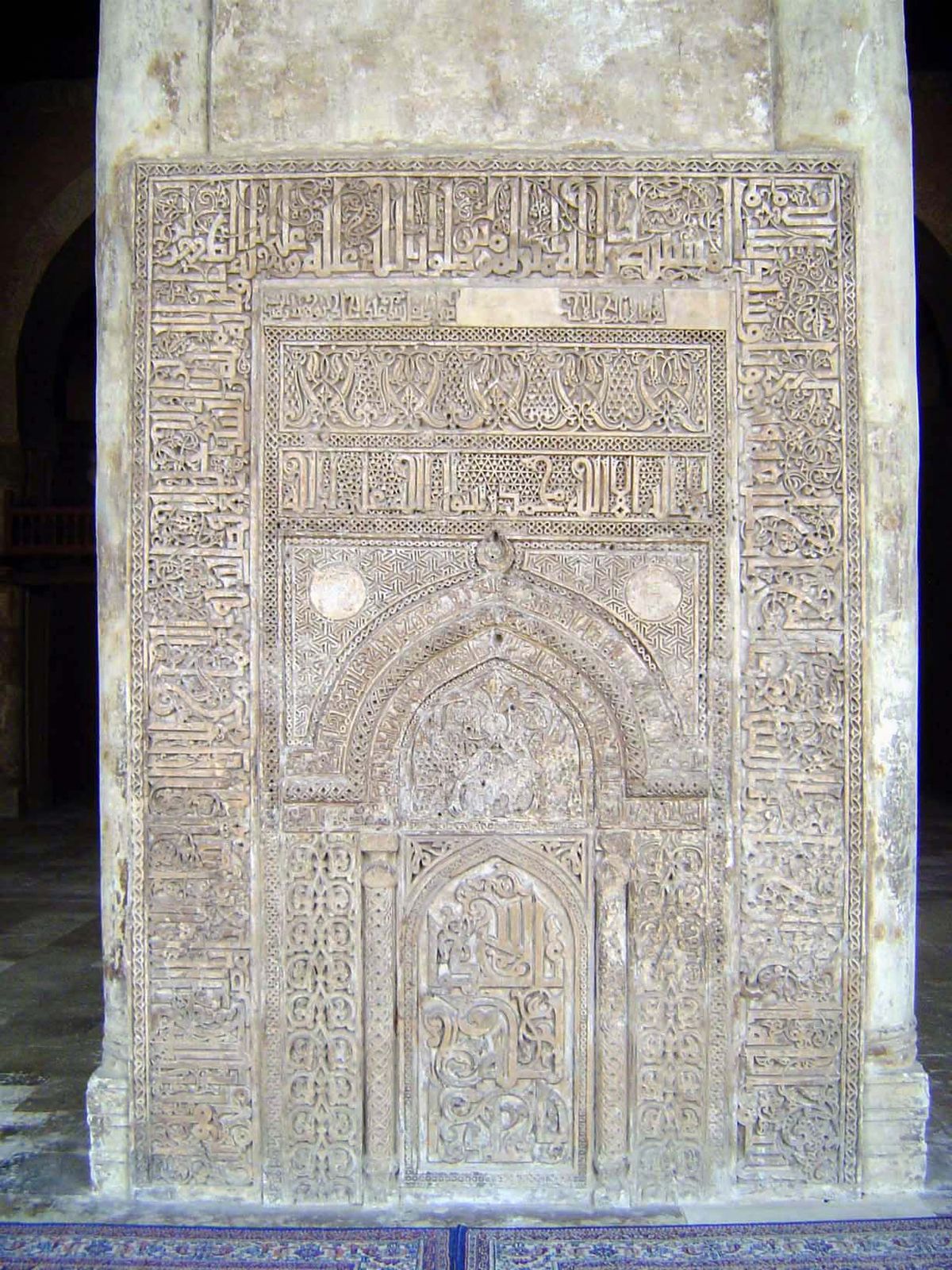
One of several stucco mihrabs attached to the piers.
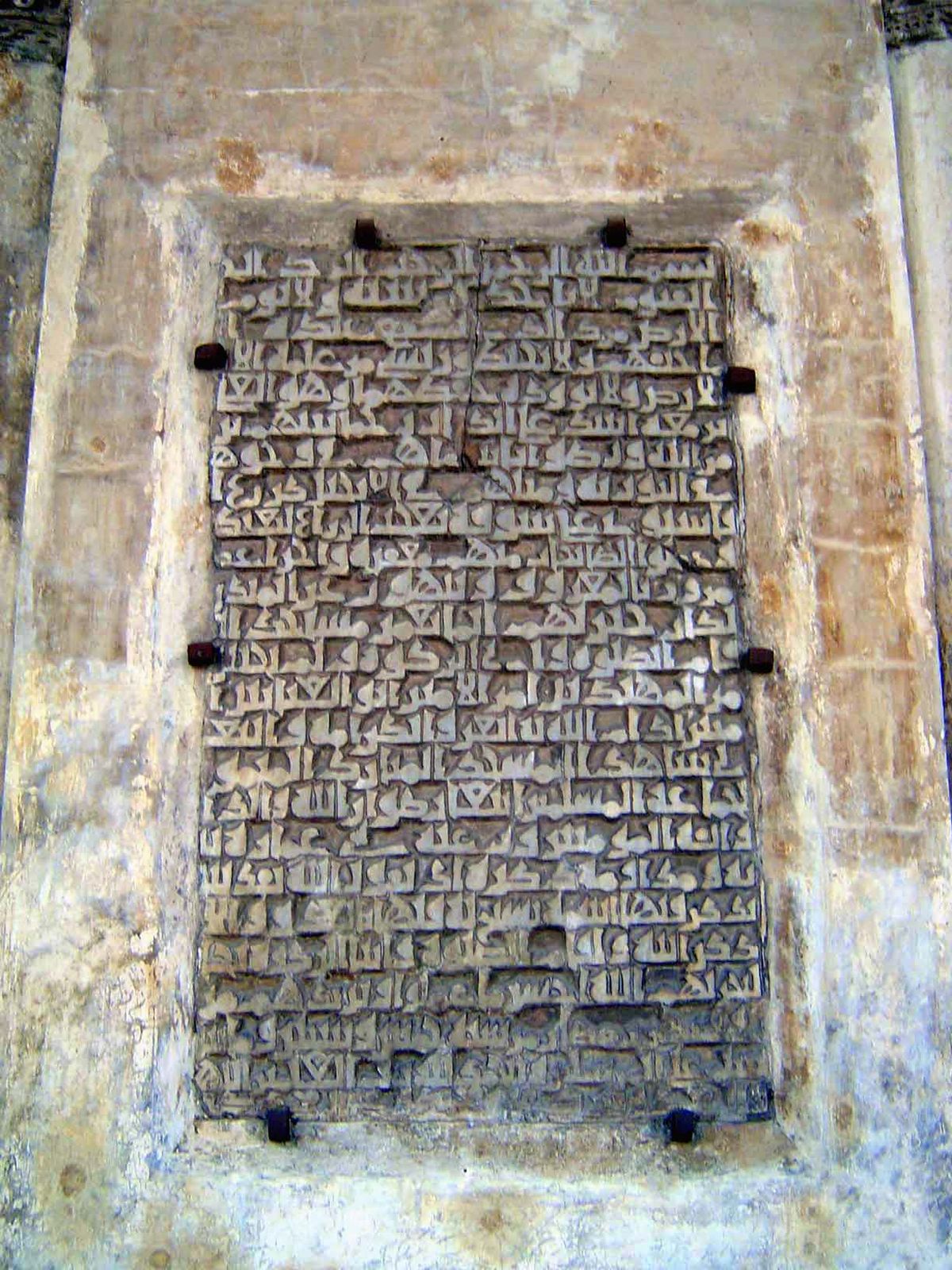
Half of the mosque's original foundation inscription.
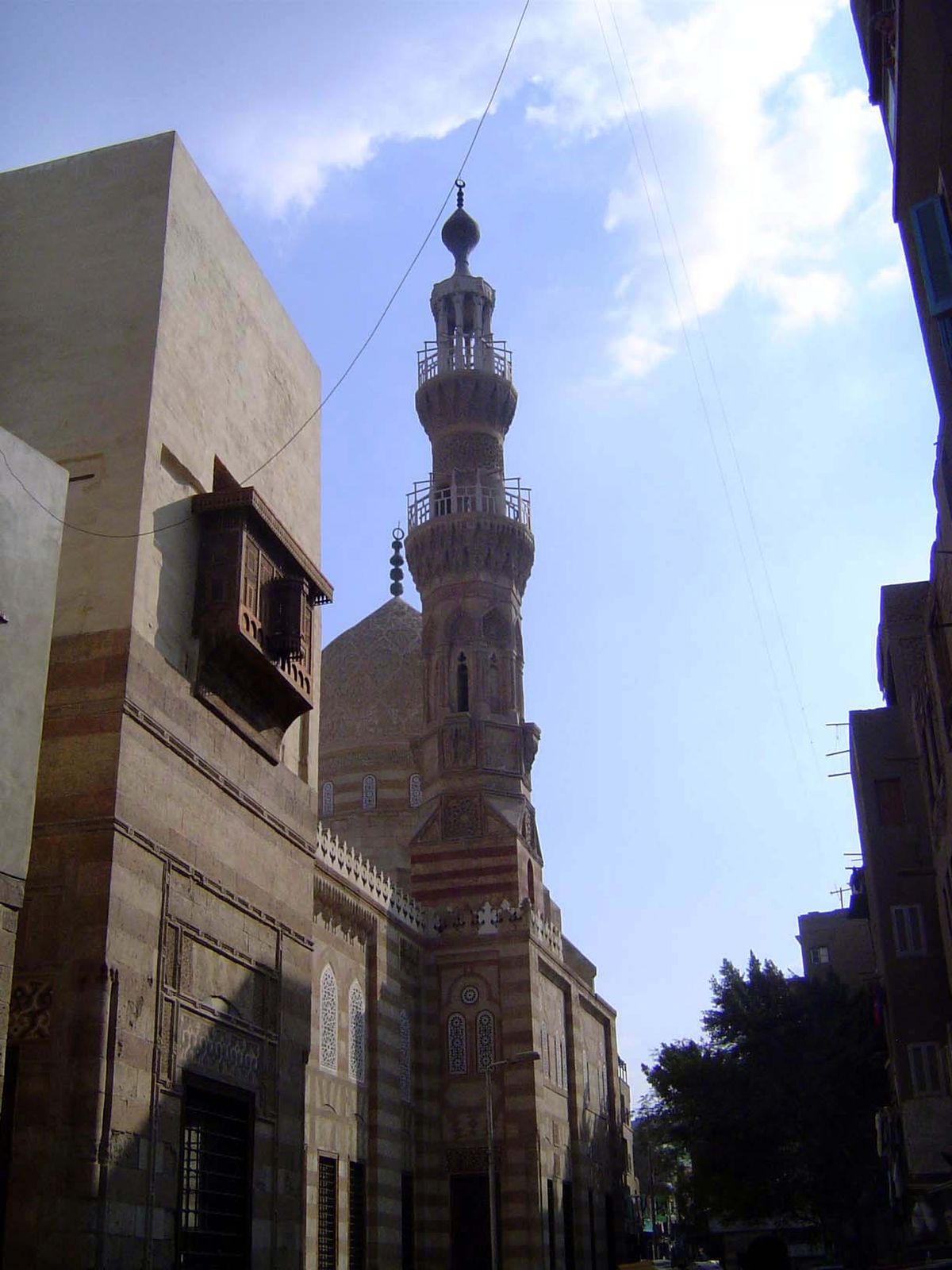
(No. 218) The Mosque of Sarghatmish, built in 1356 by an amir of al-Nasir Muhammed. This is the mosque previously seen rising about the ziyada of the adjoining Mosque of Ibn Tulun.
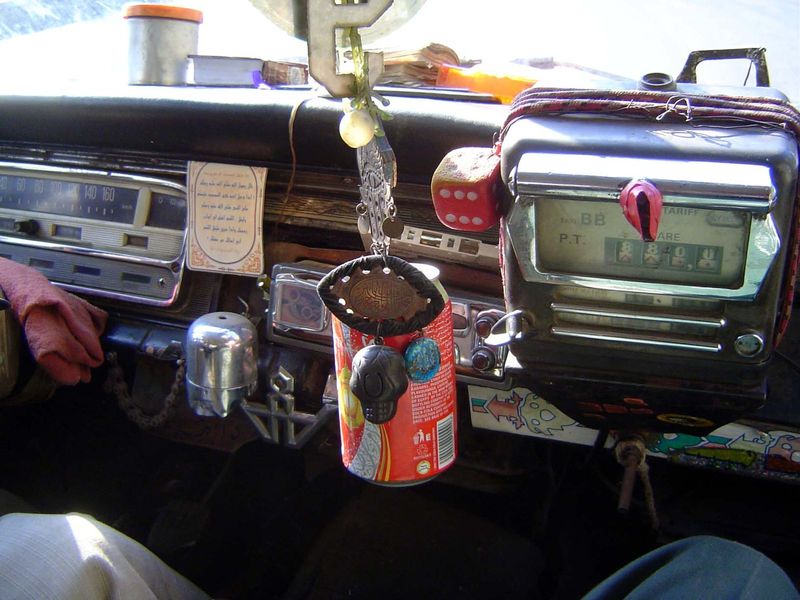
Time to grab a taxi!