Fiji 2
In 2025, while returning to the U.S. from Samoa, I transited at Fiji. Rather than catch the next flight home, I spent three nights on Fiji's main island, Viti Levu. I began with a short flight from the international airport at Nadi to the national capital, Suva. I spent two nights there, then drove a rented car 130 miles to Lautoka, center of the island's sugarcane industry. Finally I backtracked to Nadi, which might as well be called Tourist Central. Somebody on Samoa had warned me that tourists had ruined Fiji. I wouldn't go that far, but countries pay a price when 40 percent of their GDP comes from foreigners expecting paradise.
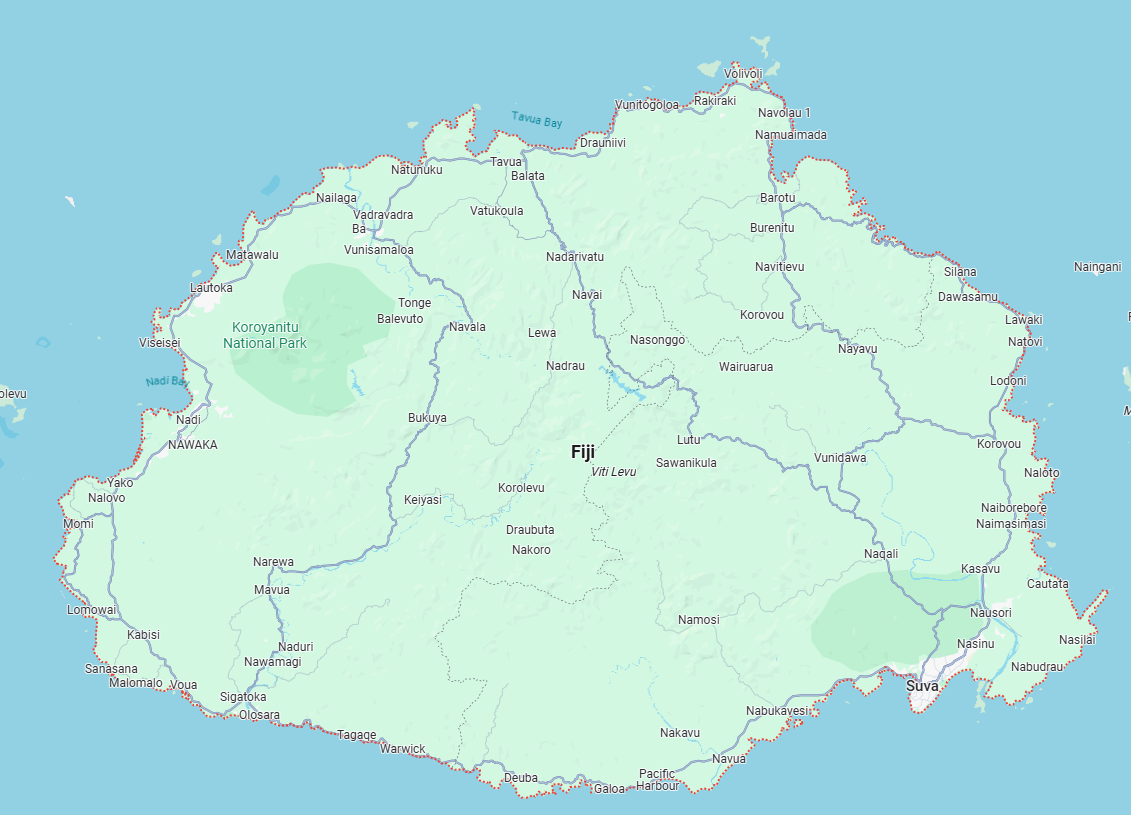
Here's Viti Levu, literally Great Fiji. East to west, it's about 90 miles across. Population: 600,000.
Ten years ago I drove from Nadi (at about 9 o'clock) to Sigatoka (at about 7). Now I was lengthening the circuit from Suva, at about 5 o'clock to Latauka at 10. Maybe in another 30 years I'll cross the island, though it's slow going on many interior roads.
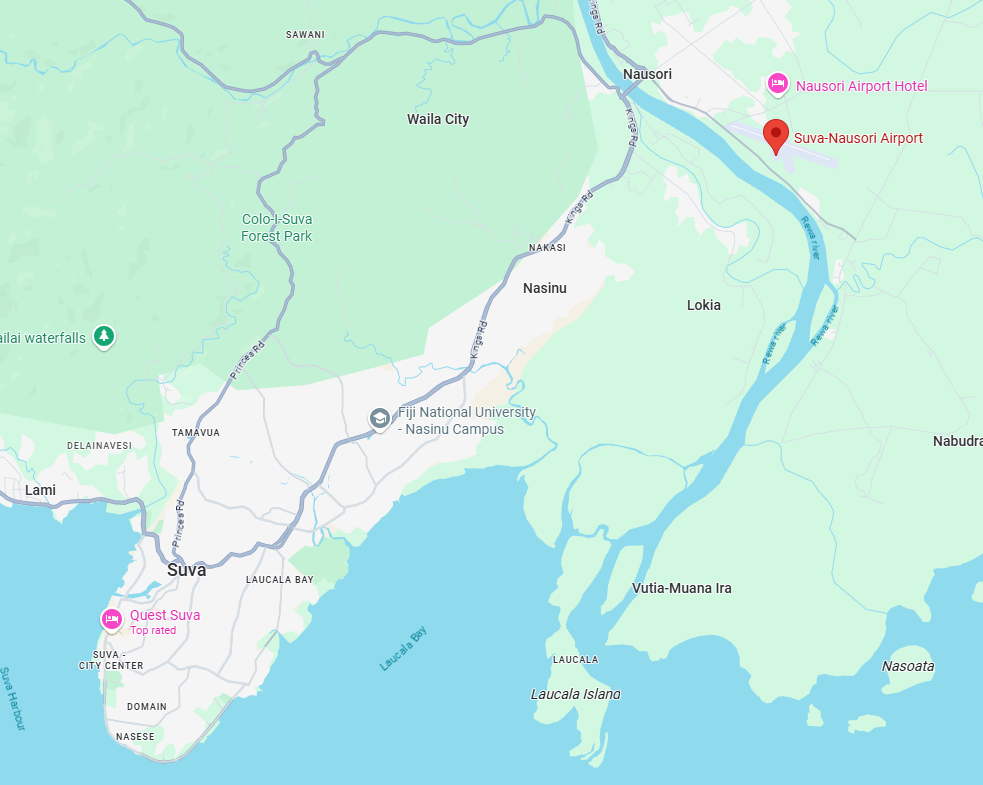
About a third of the people on Viti Levu live in or next to Suva, the capital, whose suburbs reach out to the airport.
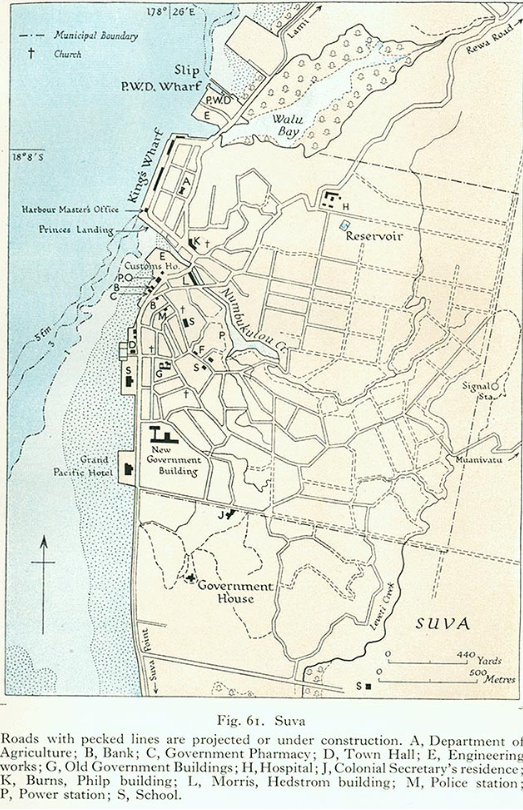
Here's the city about 1940, when Suva had about 10,000 people. Today, it has about 80,000 or twice that many if you include the suburbs. Many of the pictures shown below are within the area of this map.
(Naval Intelligence, BR 519c, Pacific Islands, vol 3, p. 213).
http://www.klimanaturali.org/2012/01/suva-geography-and-history-of-suva.html
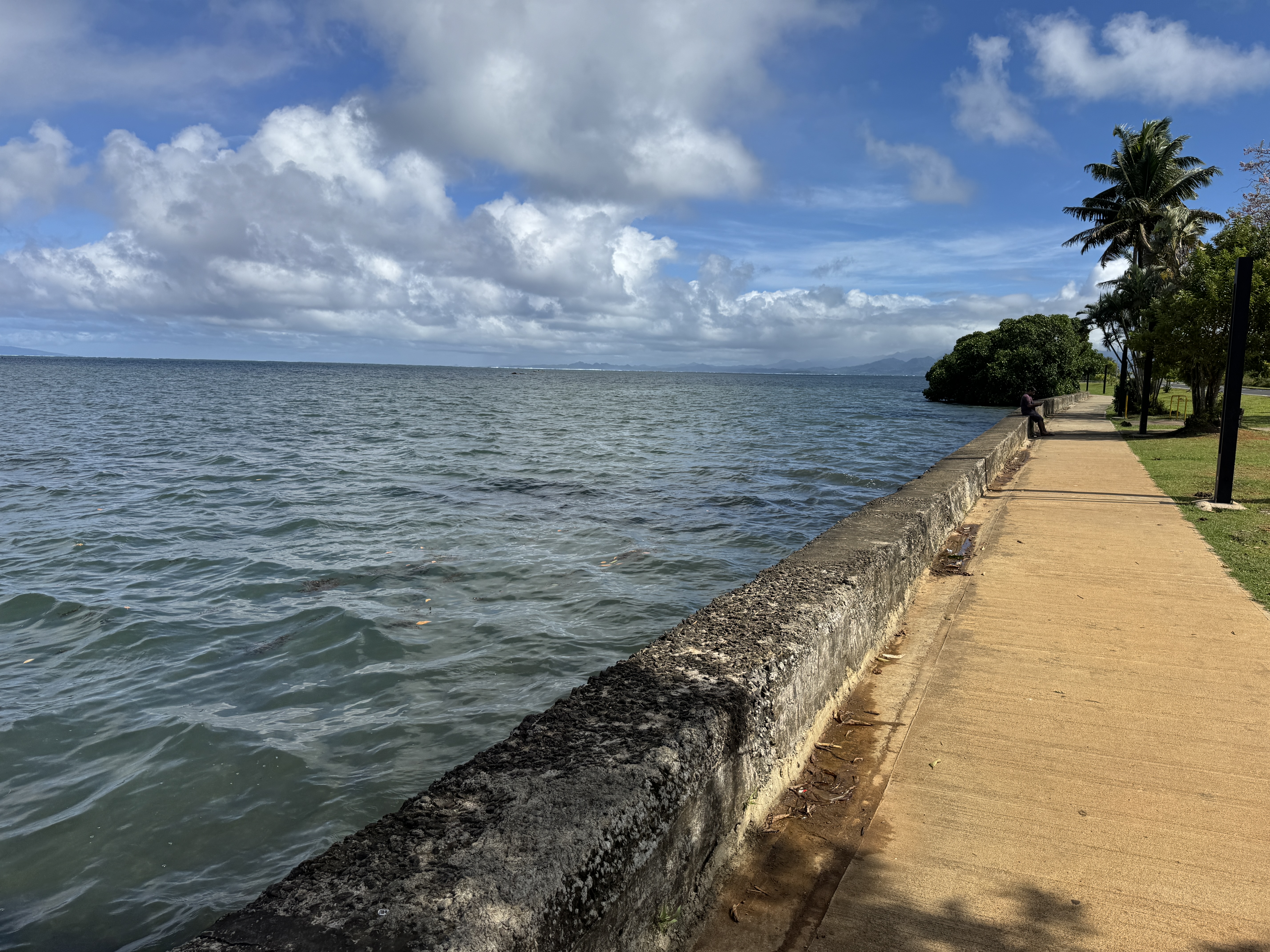
There's not a lot of public green space in Suva, but there's some at Suva Point, a mile south of the center of the city, which lurks behind that tree on the left. The coast bends inland here to form Suva Harbor. (OK, "Harbour," if I must act like a Roman.)
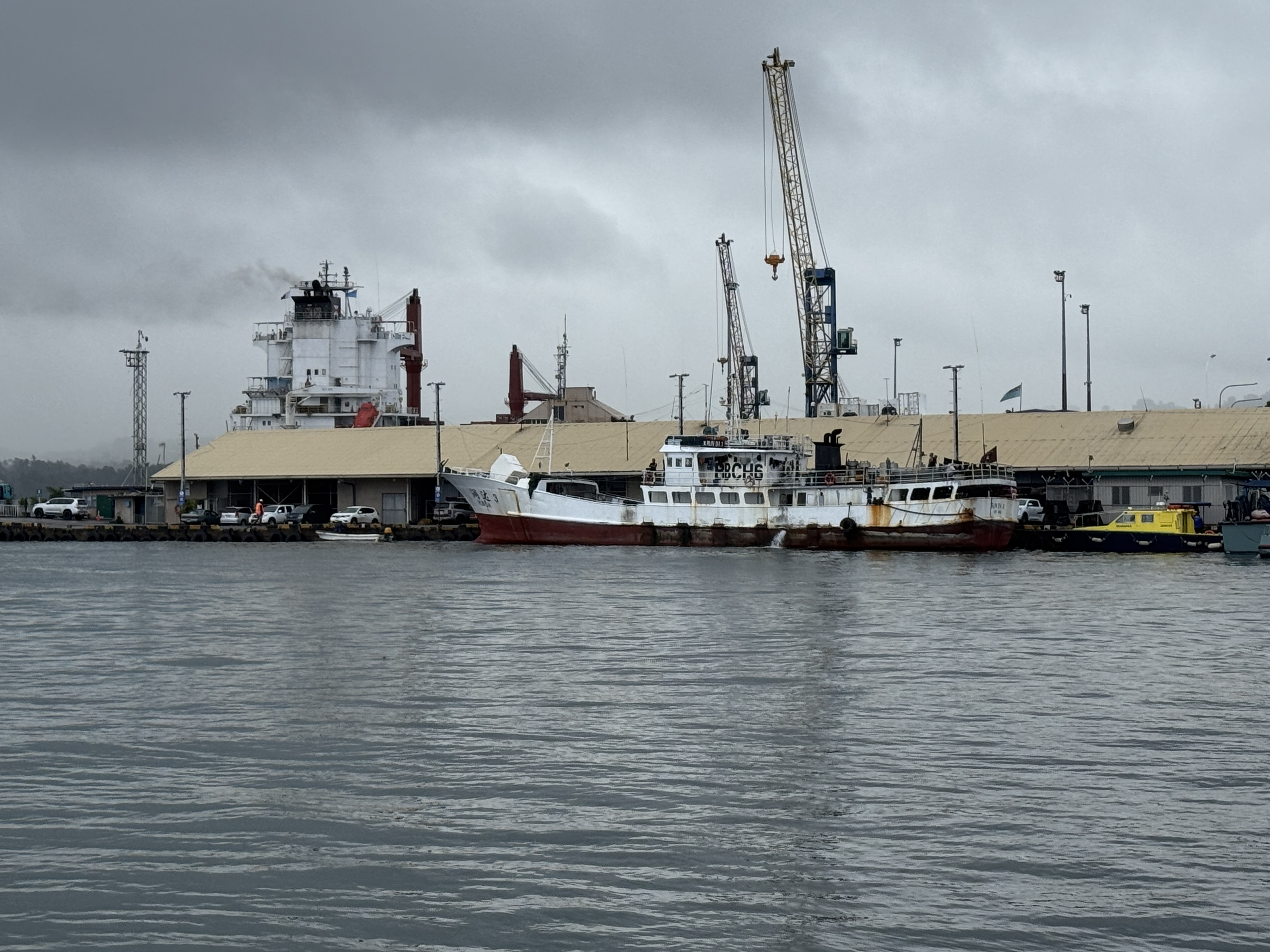
The city grew inland from Queen's Wharf, which opened in the the 1880s. It was demolished in the 1920s and replaced by King's Wharf. (Yes, it's on that 1940s map.)
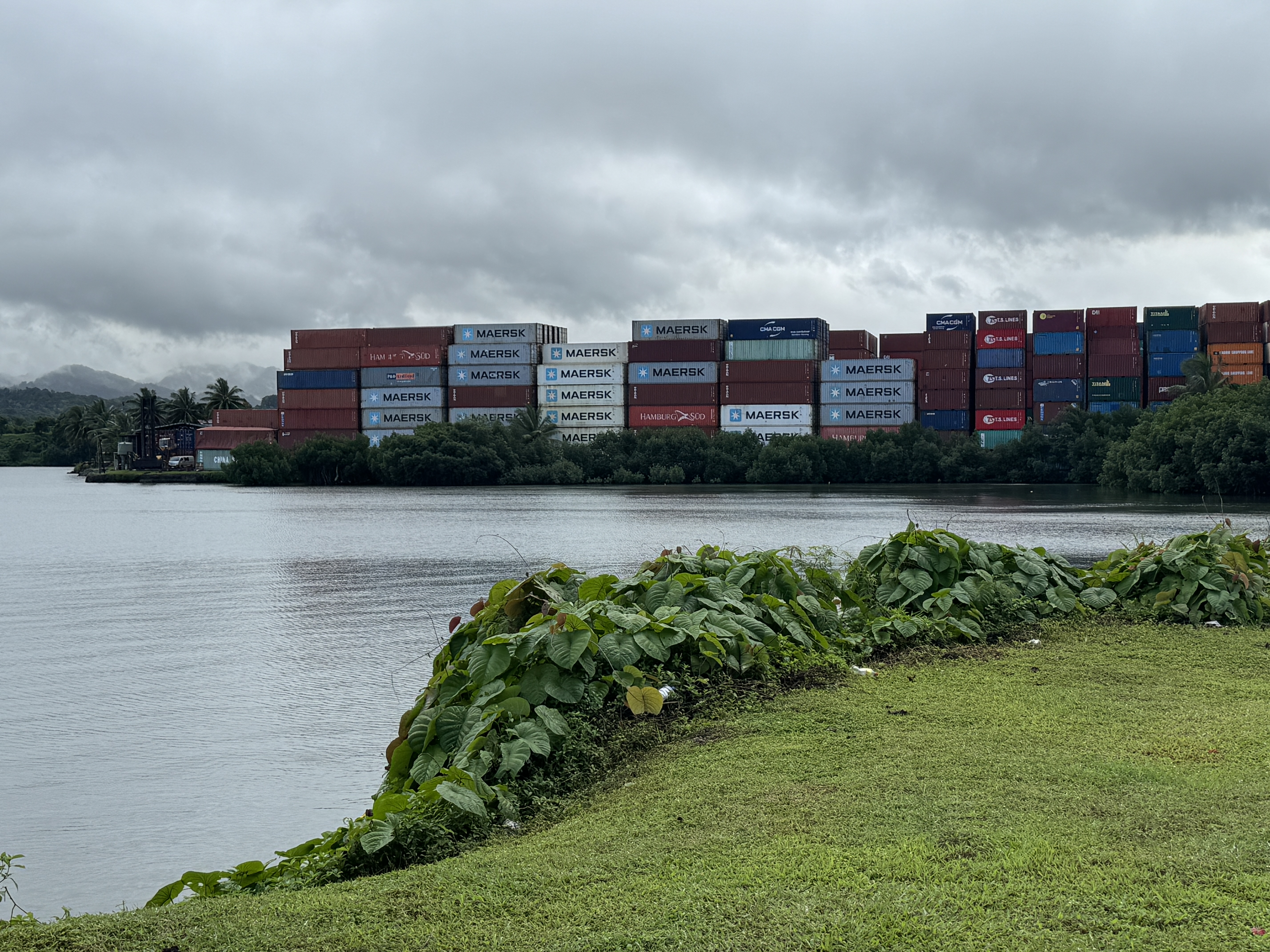
It's a small port, but even tiny ports these days are containerized. Here's United Containers Fiji, a fraction of a mile north of King's Wharf.
It's a thousand feet from King's Wharf to the Ivi Triangle. The name refers to a particular specimen of Tahitian chestnut.
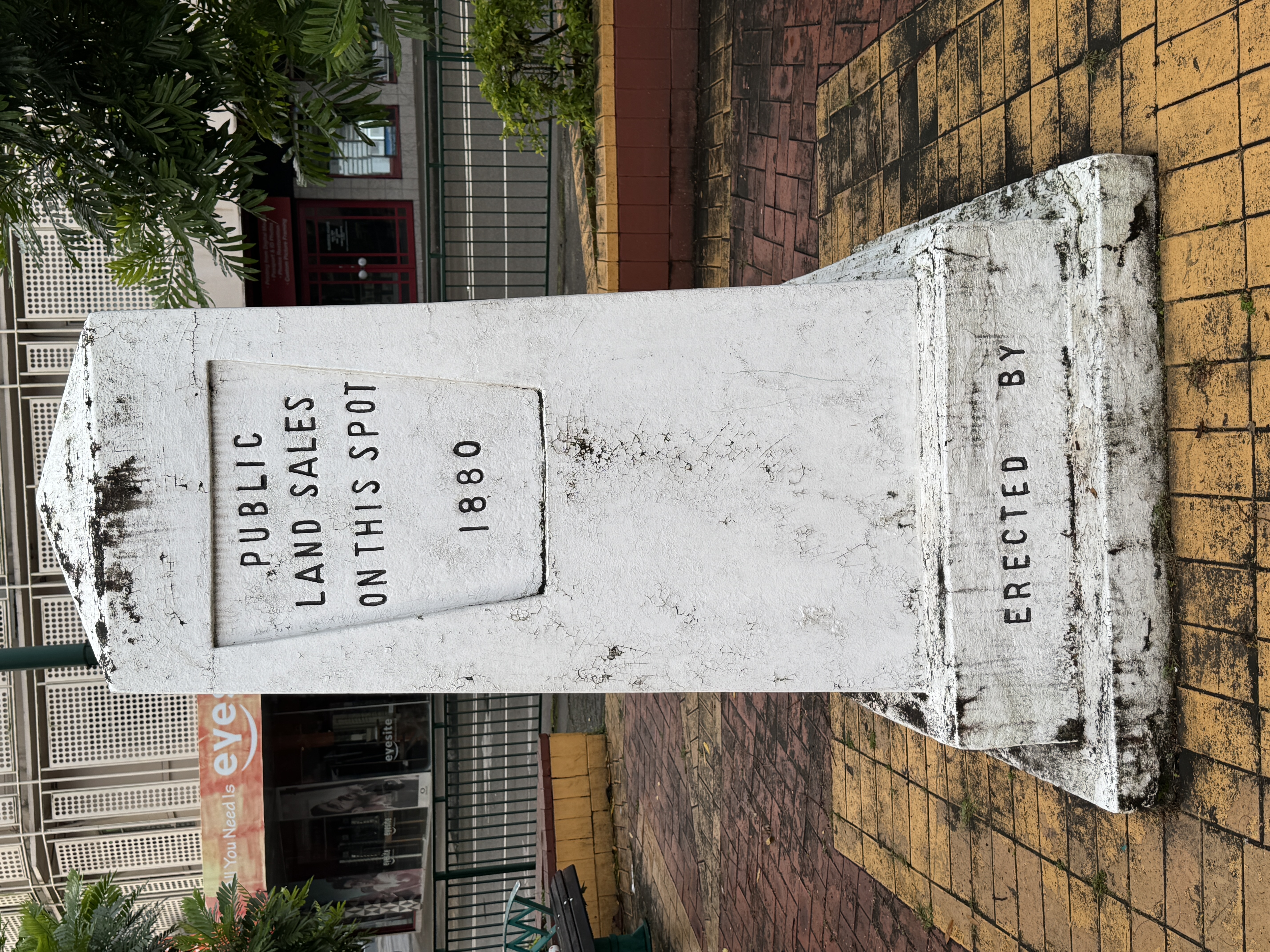
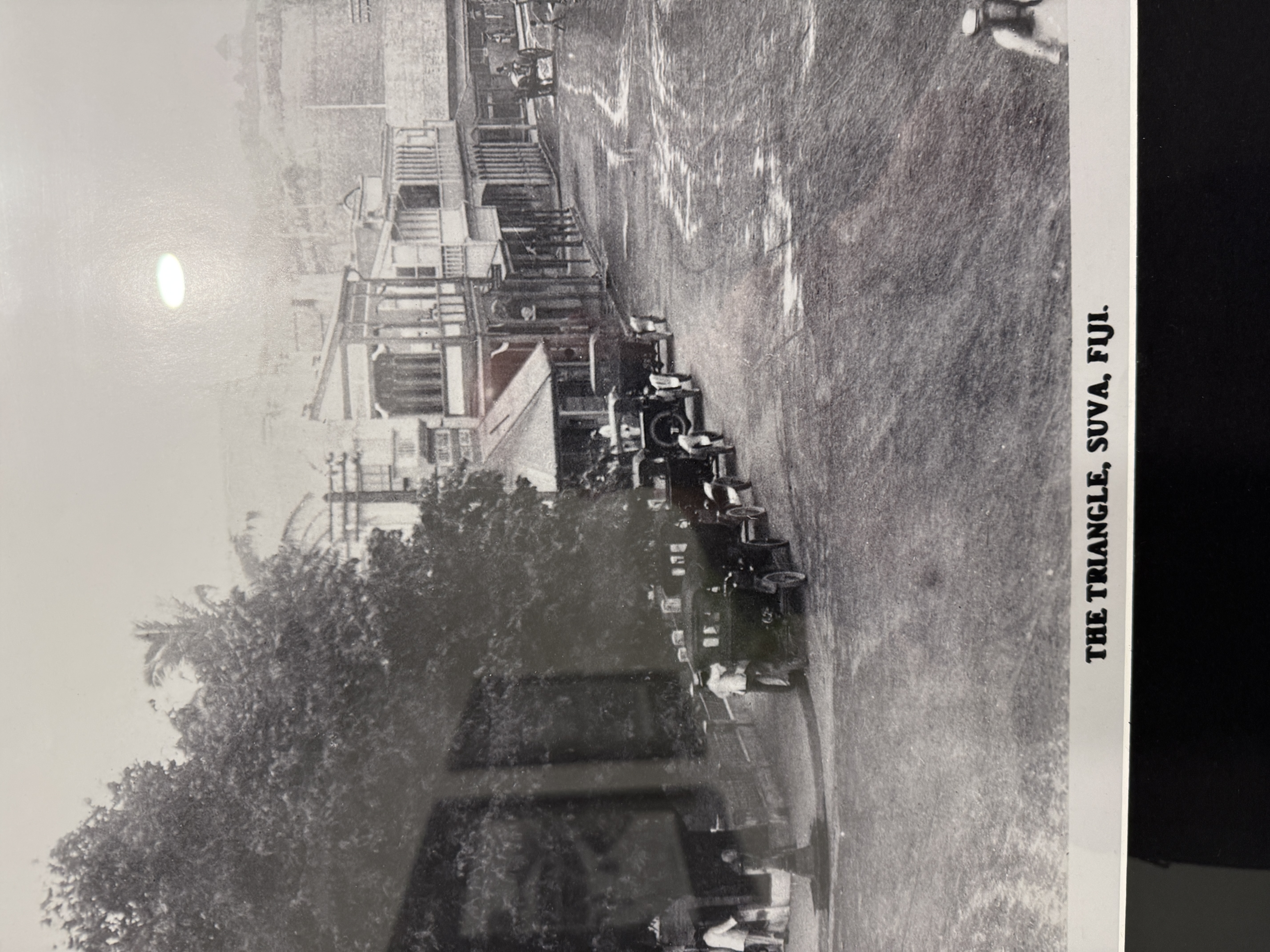
The triangle is important because this was the spot where, almost 100 years before Fiji's Independence in 1970, two Englishmen began selling city lots. How William Ker Thomson and Samuel Renwick got title to the land in the first place is a nice question, but they weren't shy. Their names survive as the names of major downtown streets. See "Historical Notes on the City of Suva," by town planner Albert Lee. https://suvacity.org/wp-content/uploads/2023/11/HISTORICAL-NOTES-ON-THE-CITY-OF-SUV1.pdf.
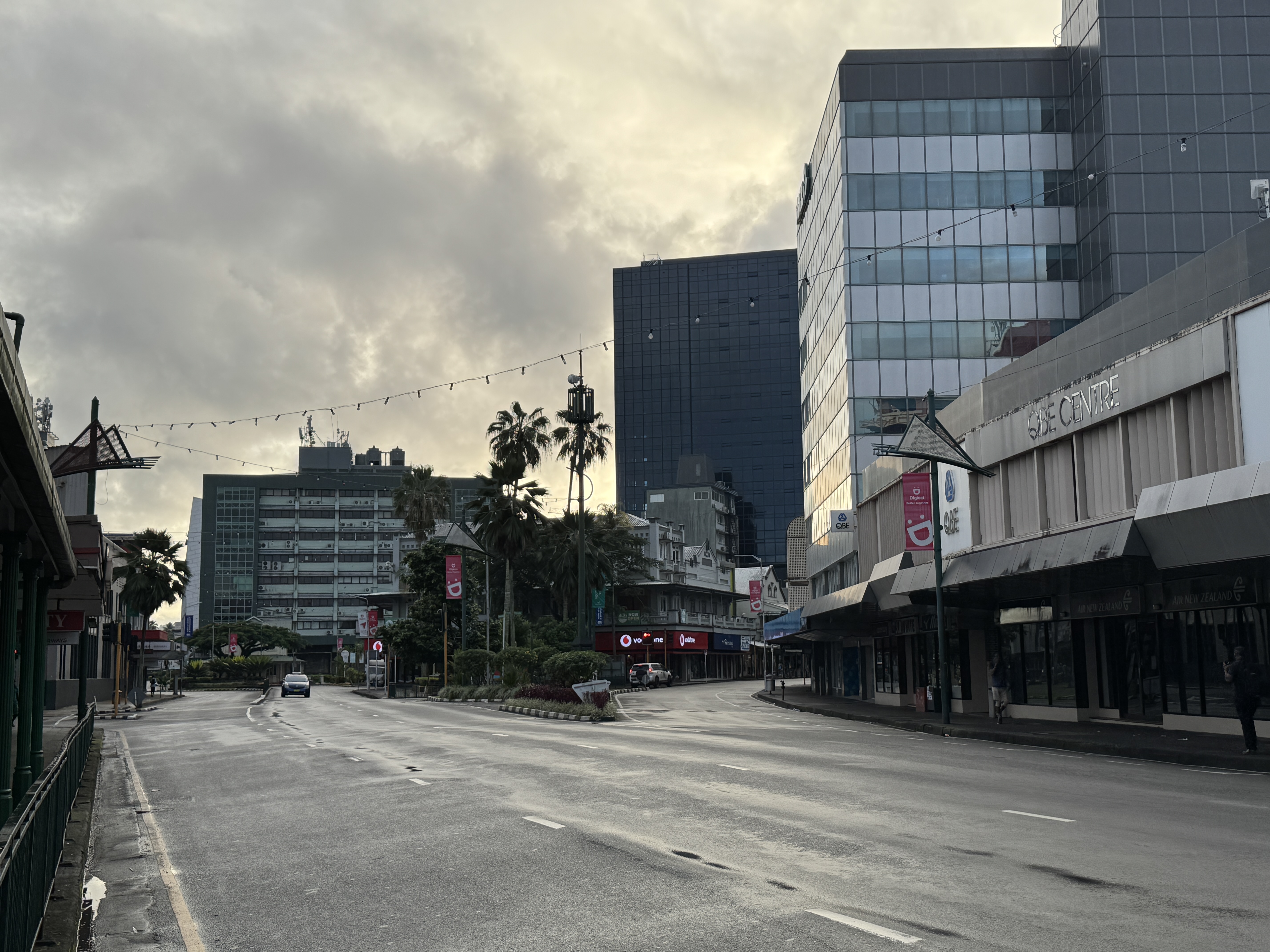
Here's the same park today, a bit more than a lifetime later. If you wonder why the streets are nearly empty, it was early on a Sunday.
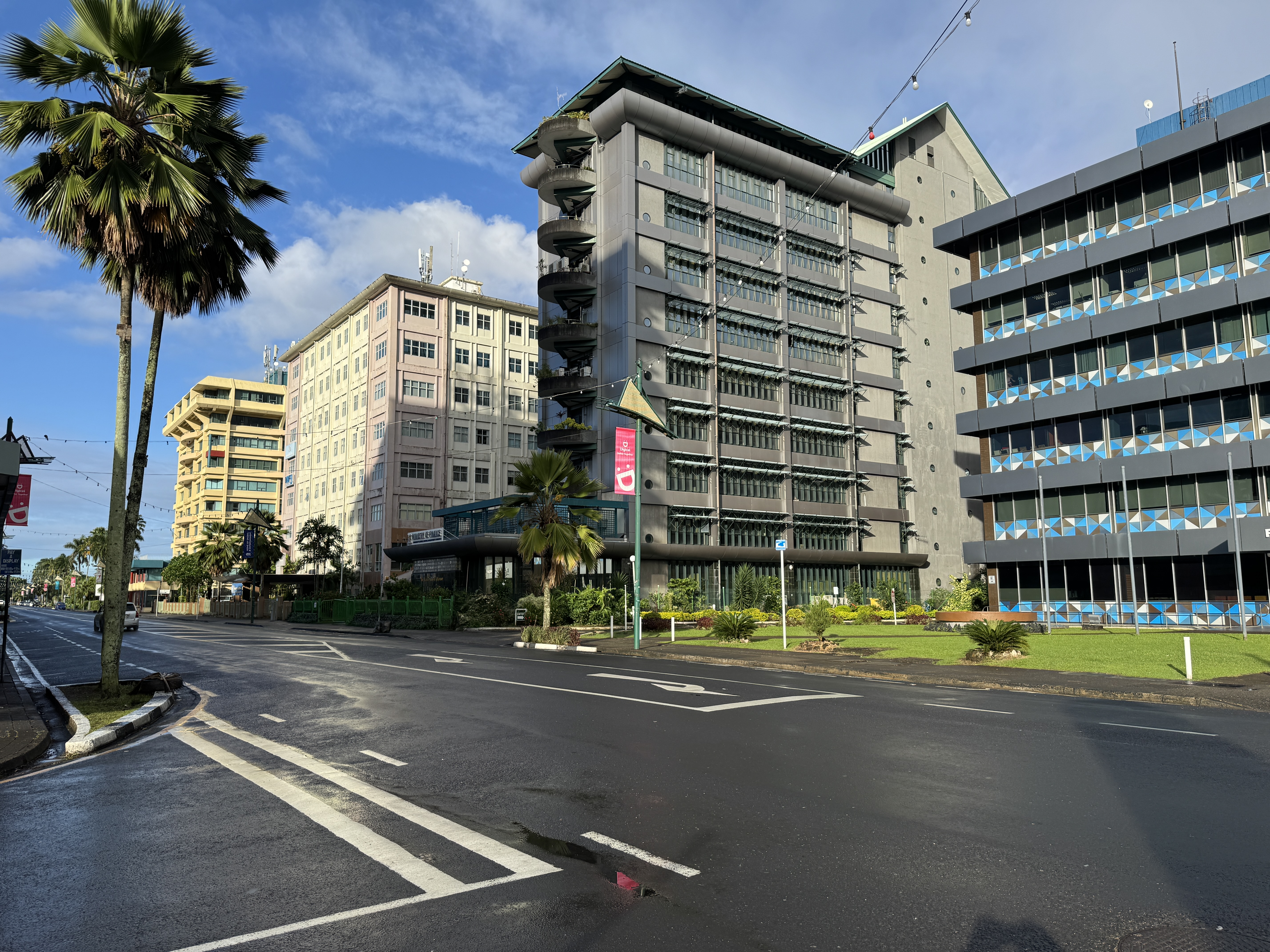
Government ministries line up to the south. Let's form our own lines. To the right if you're impressed. To the left if you're not so sure.
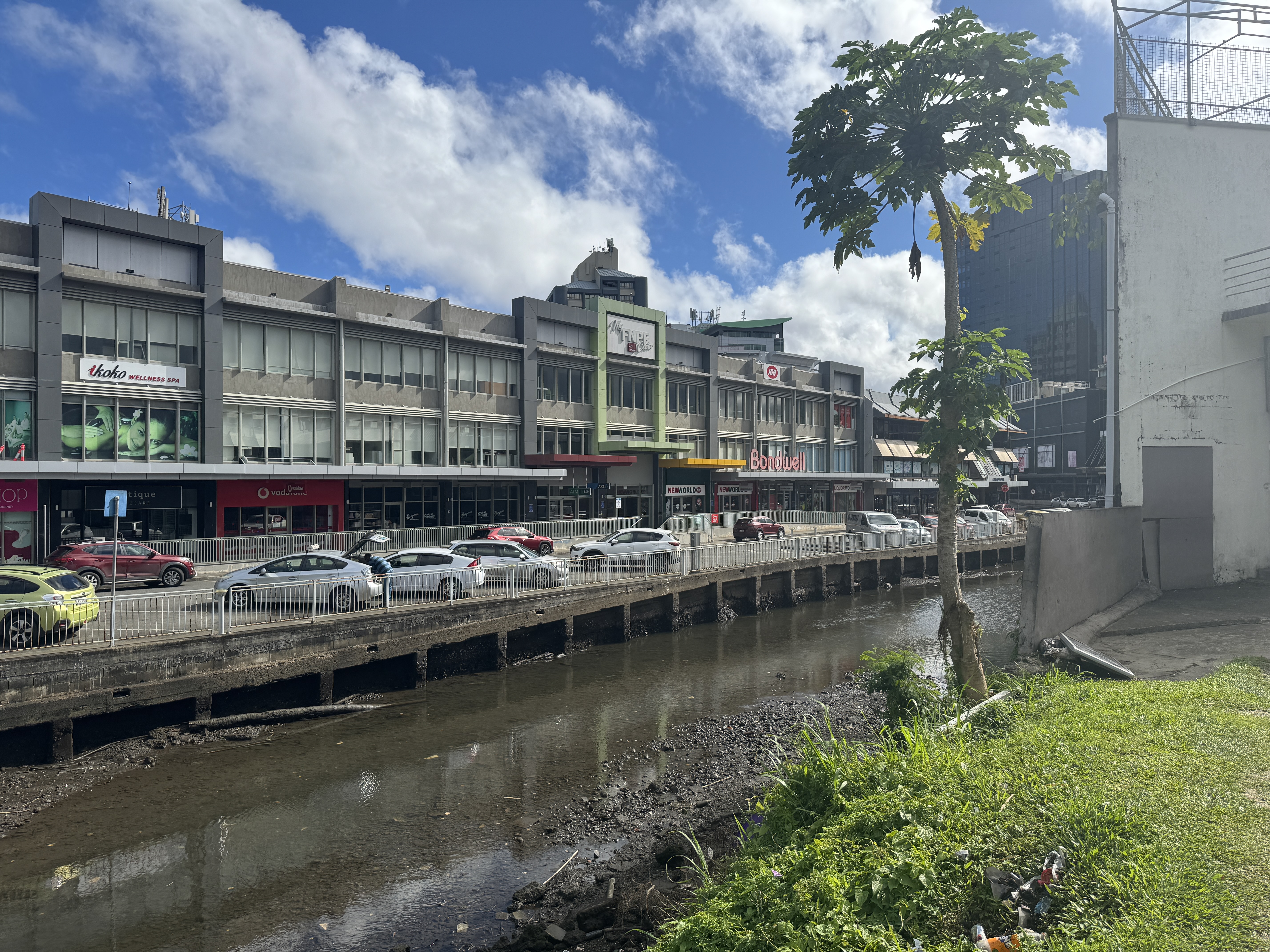
Much of the city is trying to catch up. Here we're about 100 meters north of the triangle, at Nabukalou Creek.
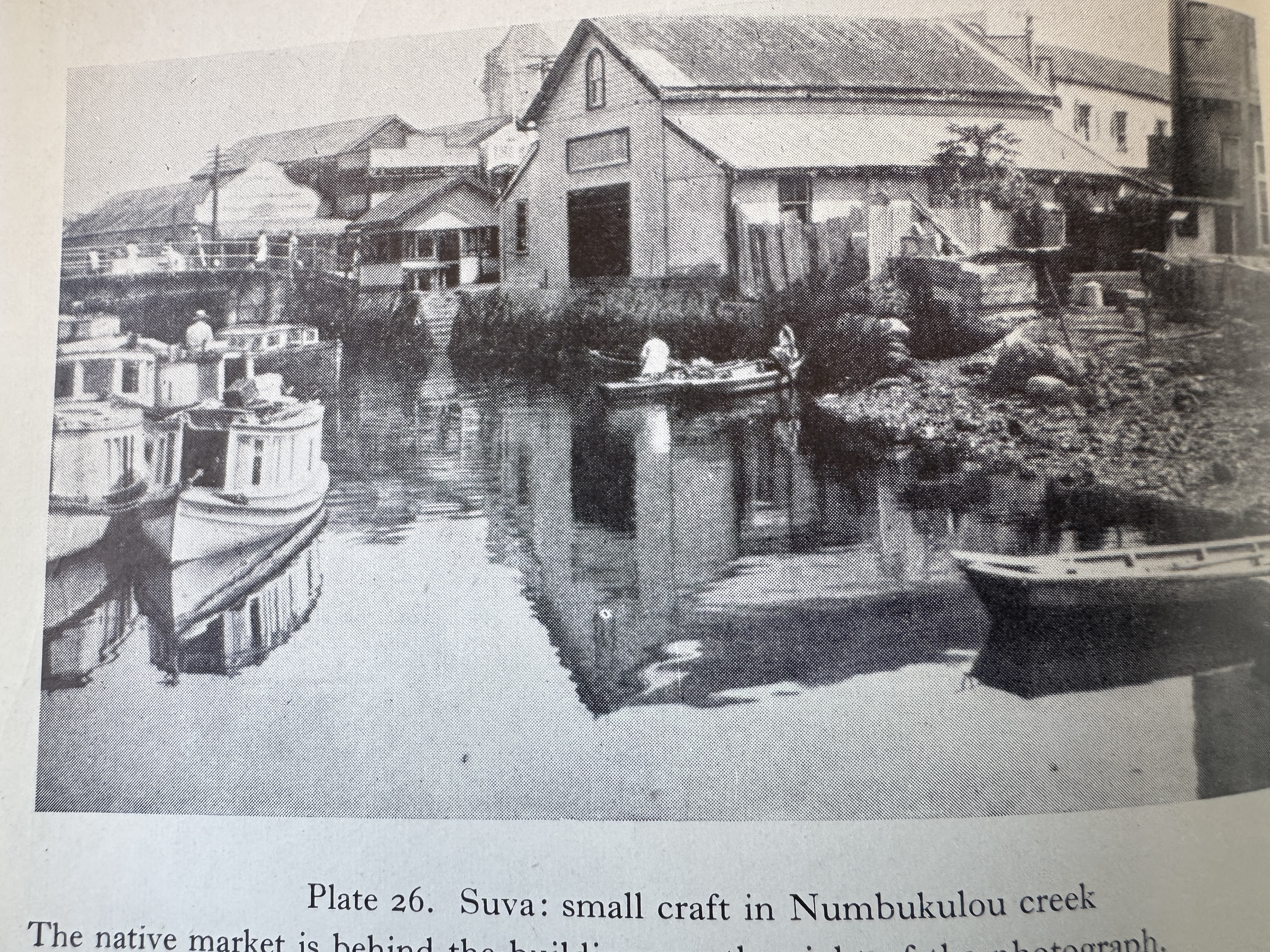
The way it was in about 1940.
(British Naval Intelligence, Geographical Handbook B.R. 519B, Pacific Islands, vol. 3, 1944, following p. 214.)
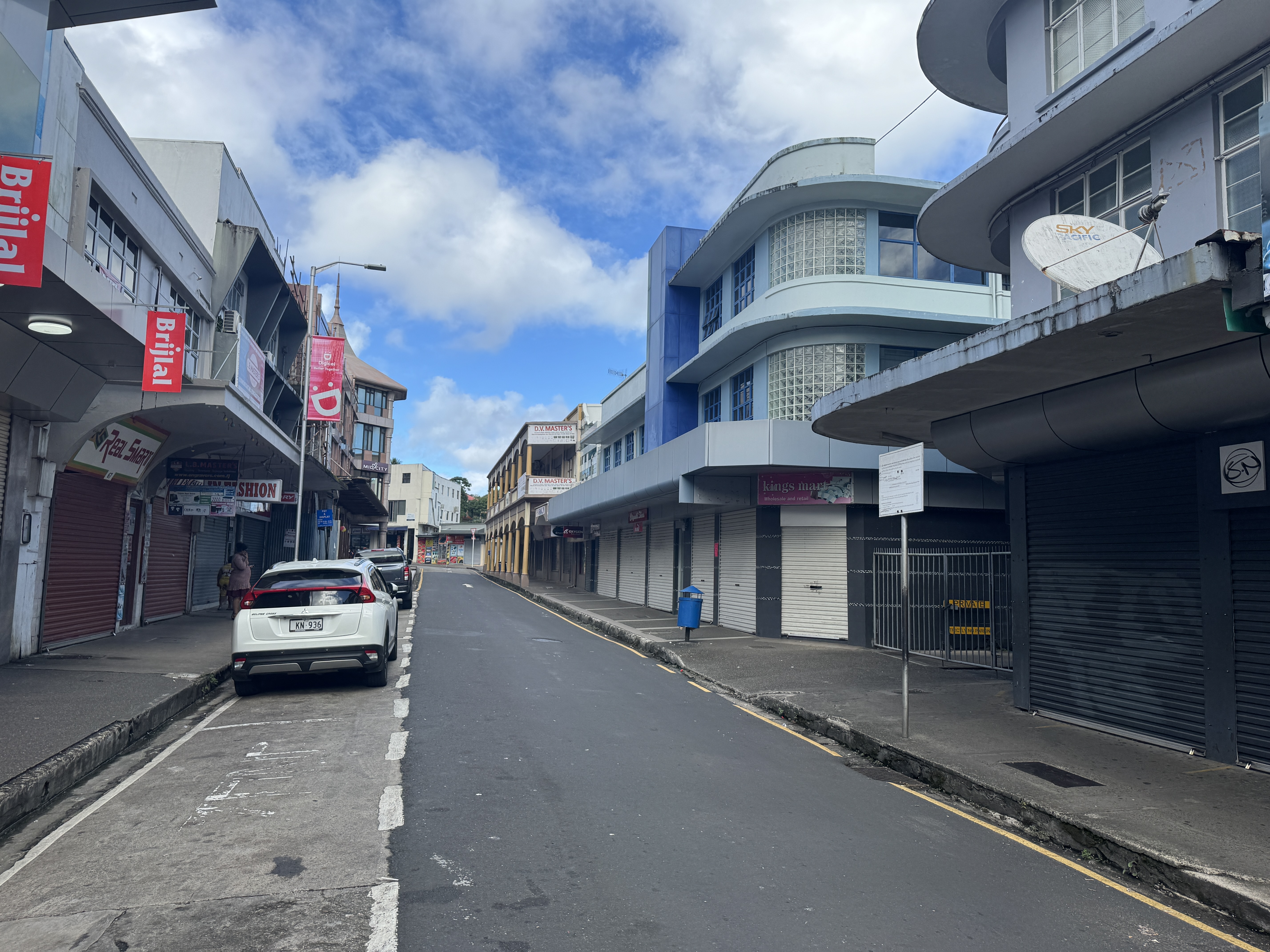
Just a block more and we meet Cumming Street, which developed after 1900 as a focal point for tourists shopping for souvenirs.
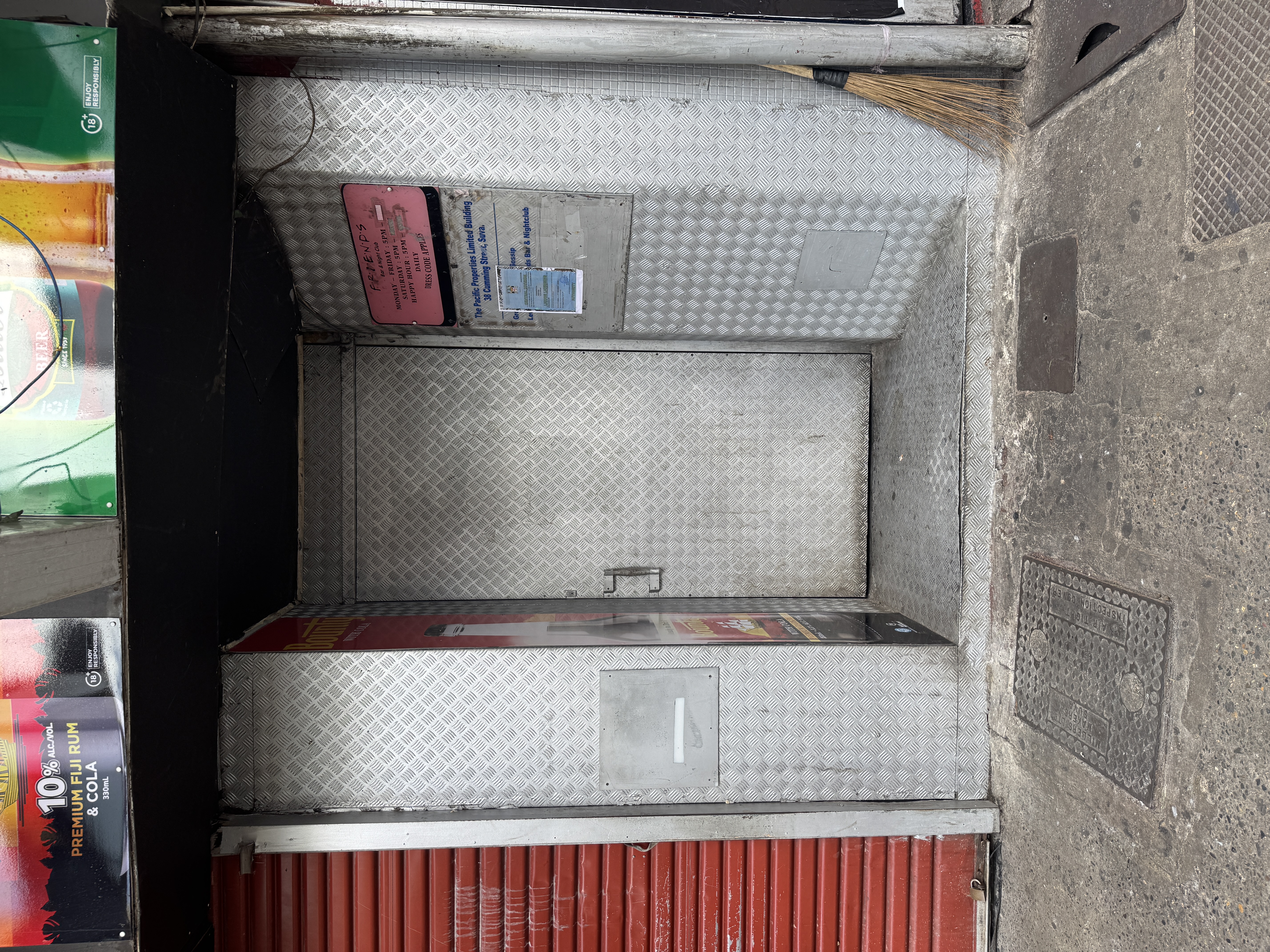
It's still busy, but mostly at night.
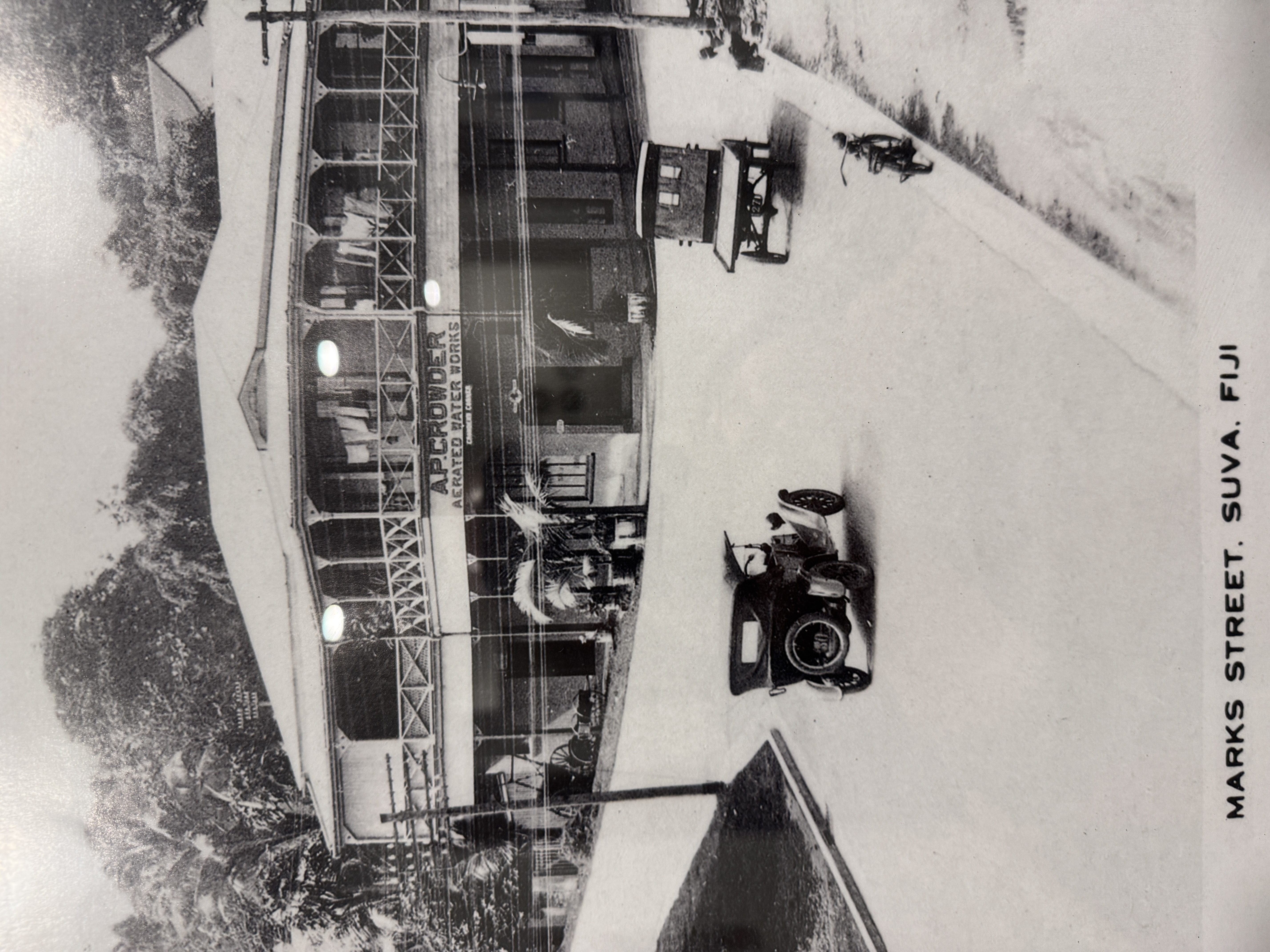
A block more and we bump into another triangle. Here as it was.
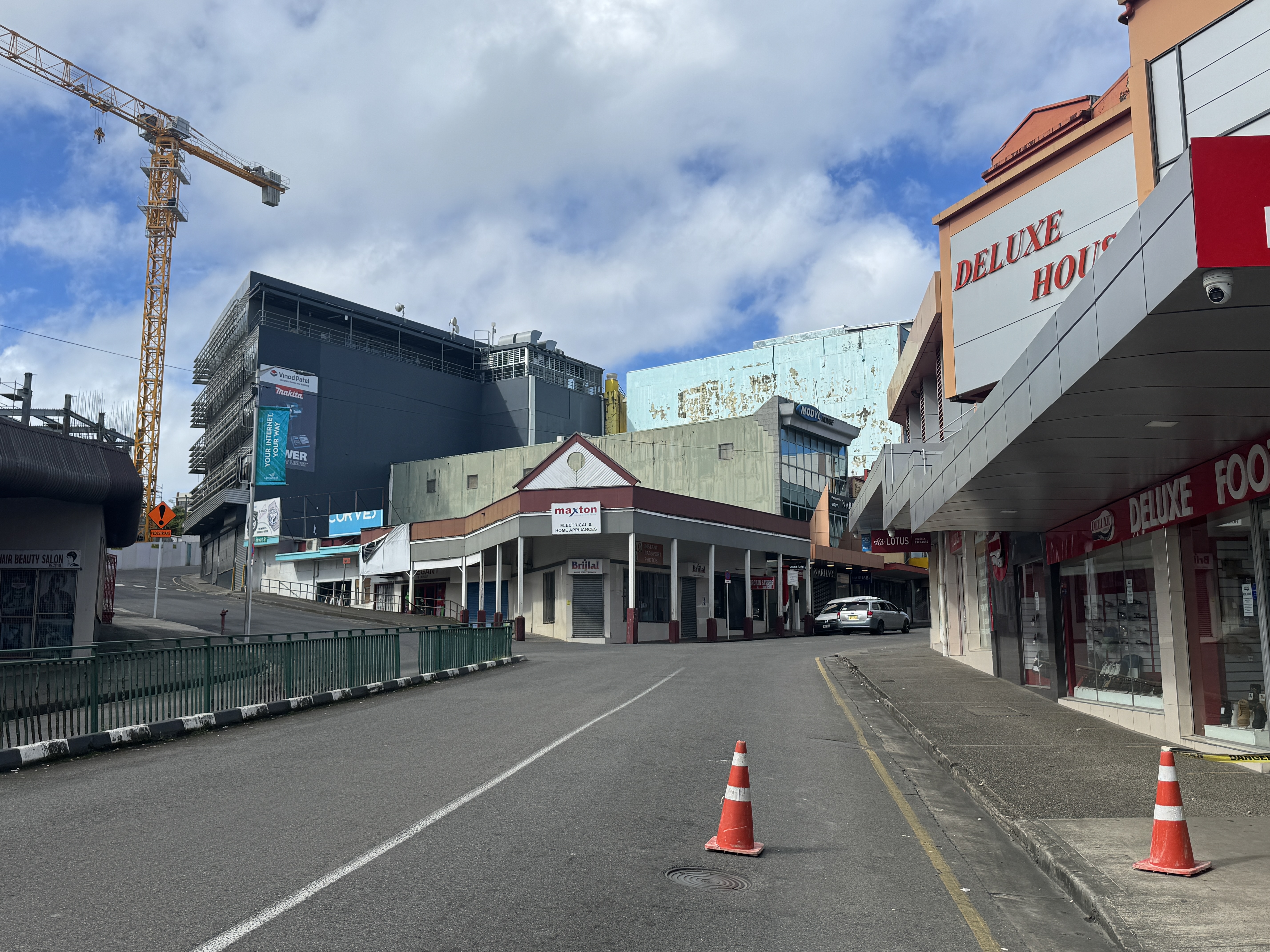
And here in 2025.
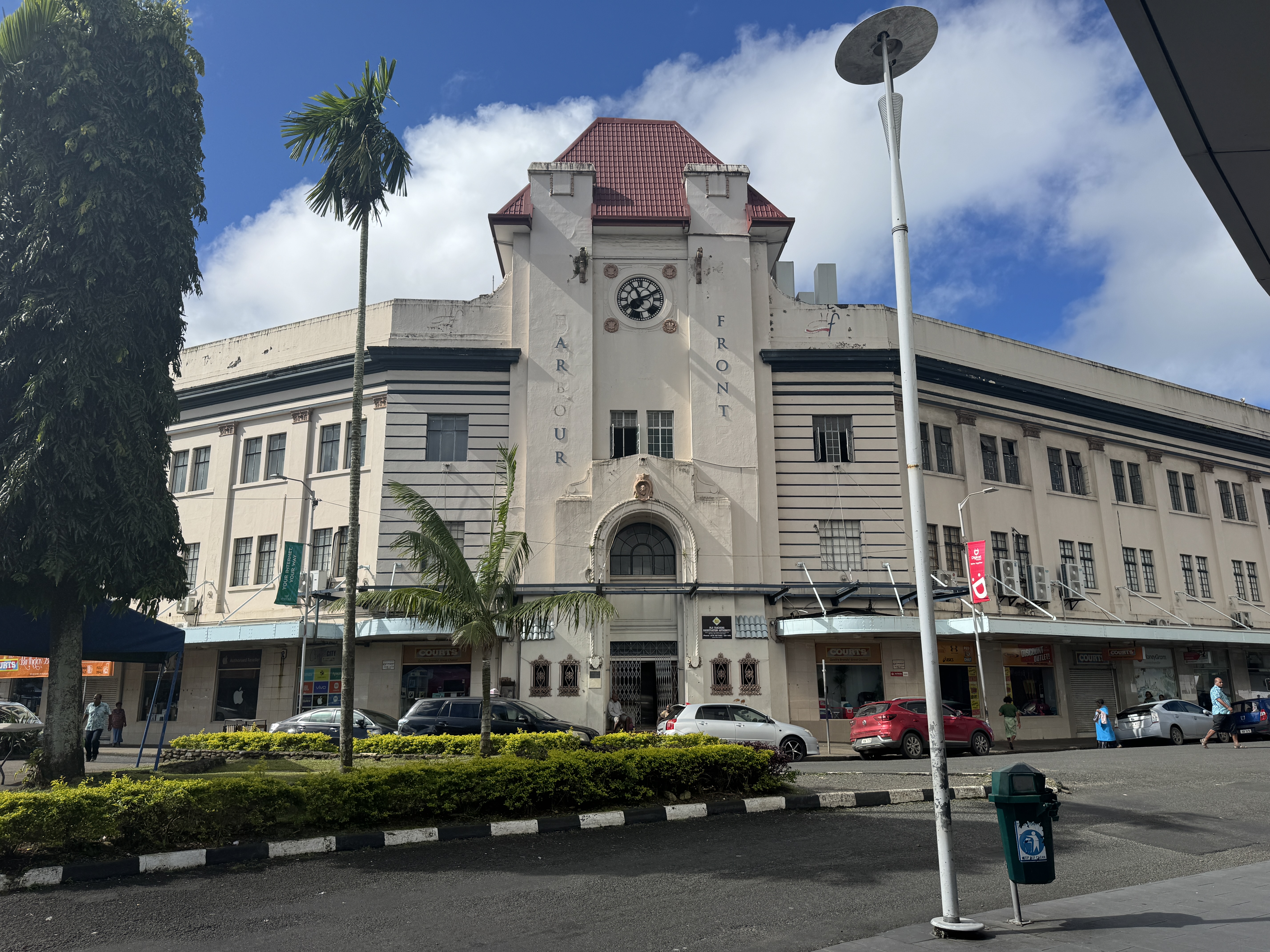
We're close now to the former Burns Philp department store, Suva's biggest by far when it opened in 1930. The building was sold in 2004 to Courts Fiji, which itself became Vision Investments in 2015. (It's on the 1940s map.)
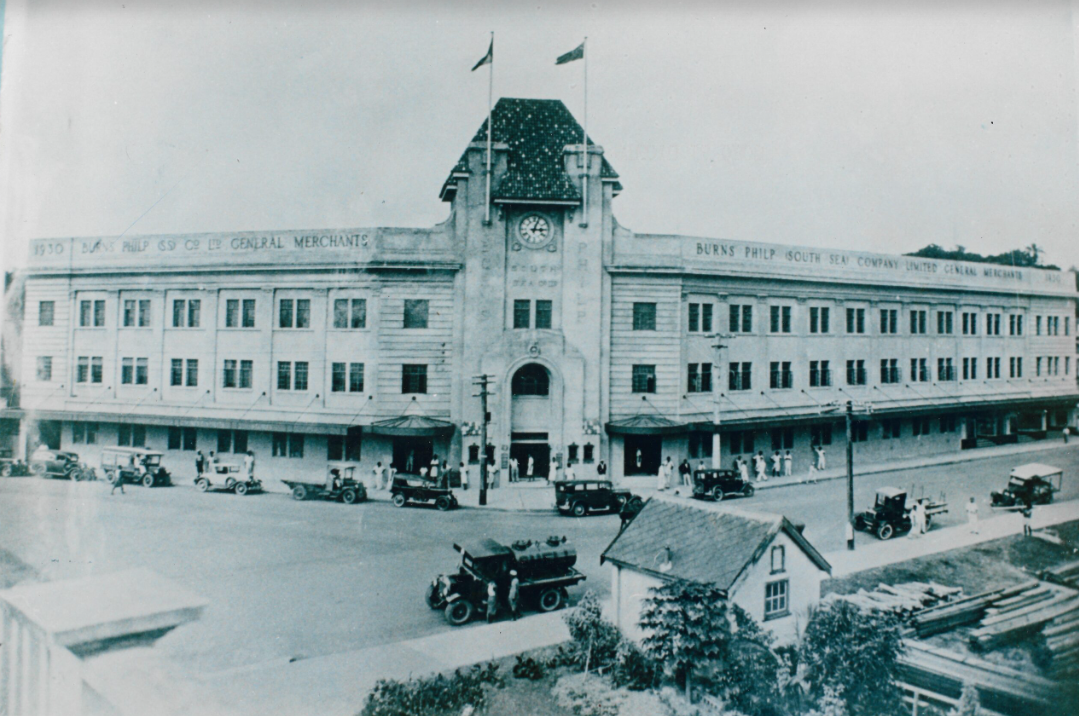
As it was.
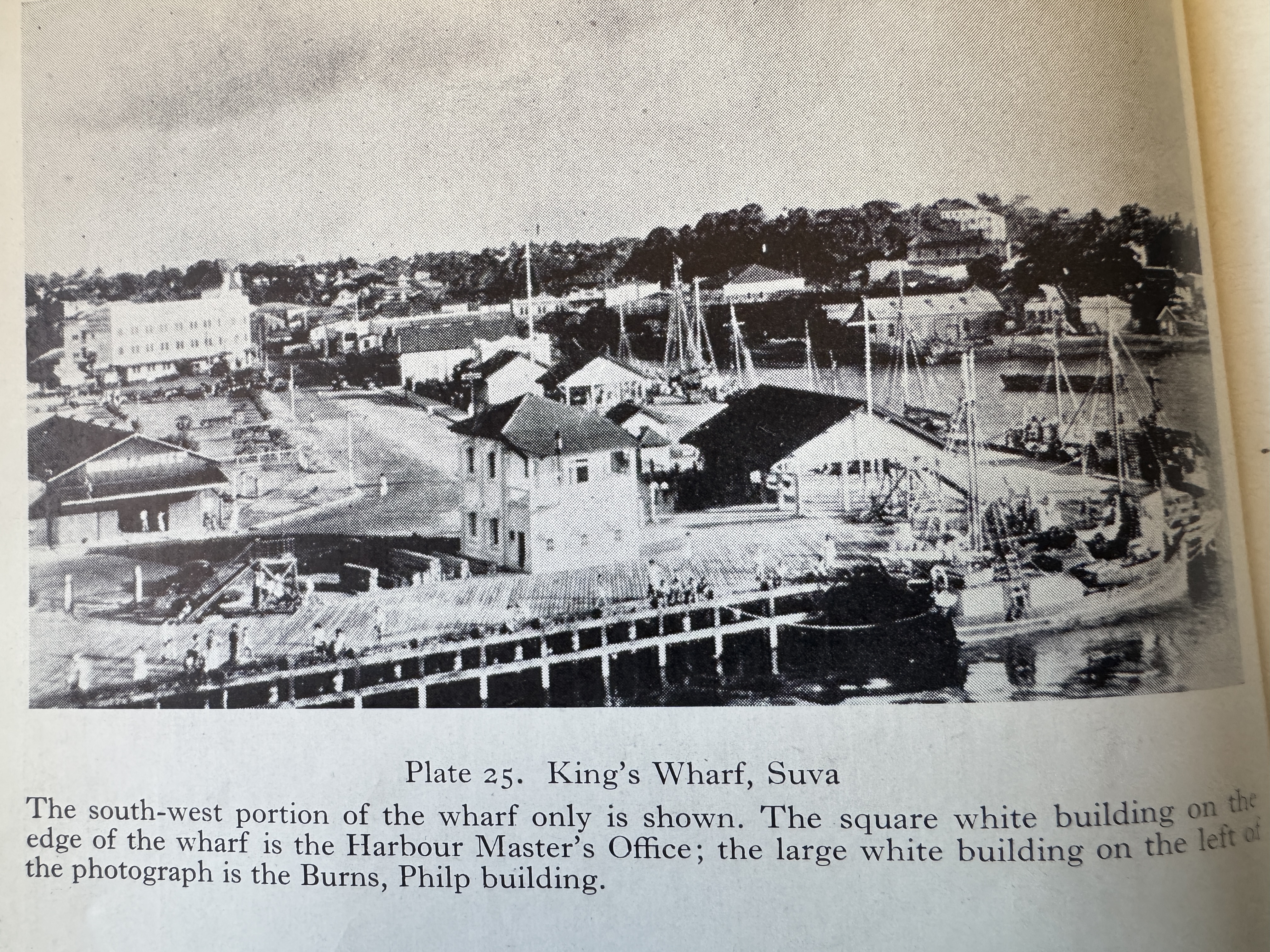
There it is, at the upper left.
(British Naval Intelligence, Geographical Handbook B.R. 519B, Pacific Islands, vol. 3, 1944, following p. 214.)
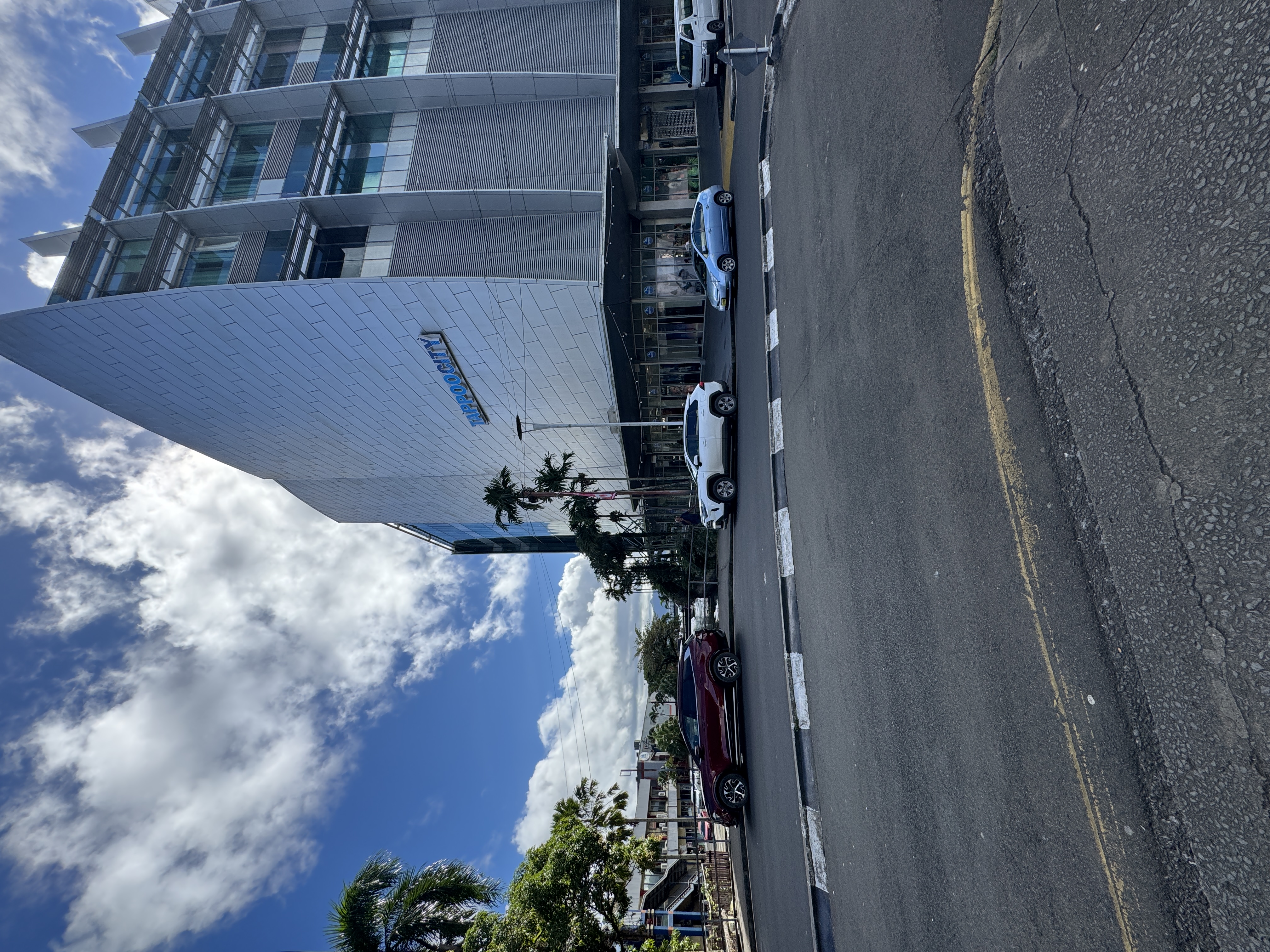
Vision Investments, the owner of Harbour Front, is Indian-owned. So is Tappoo City, which opened in 2009 and takes its name from Tappoo Kanji (1916-2010), a Gujurati immigrant who started with a store at Sigatoka.
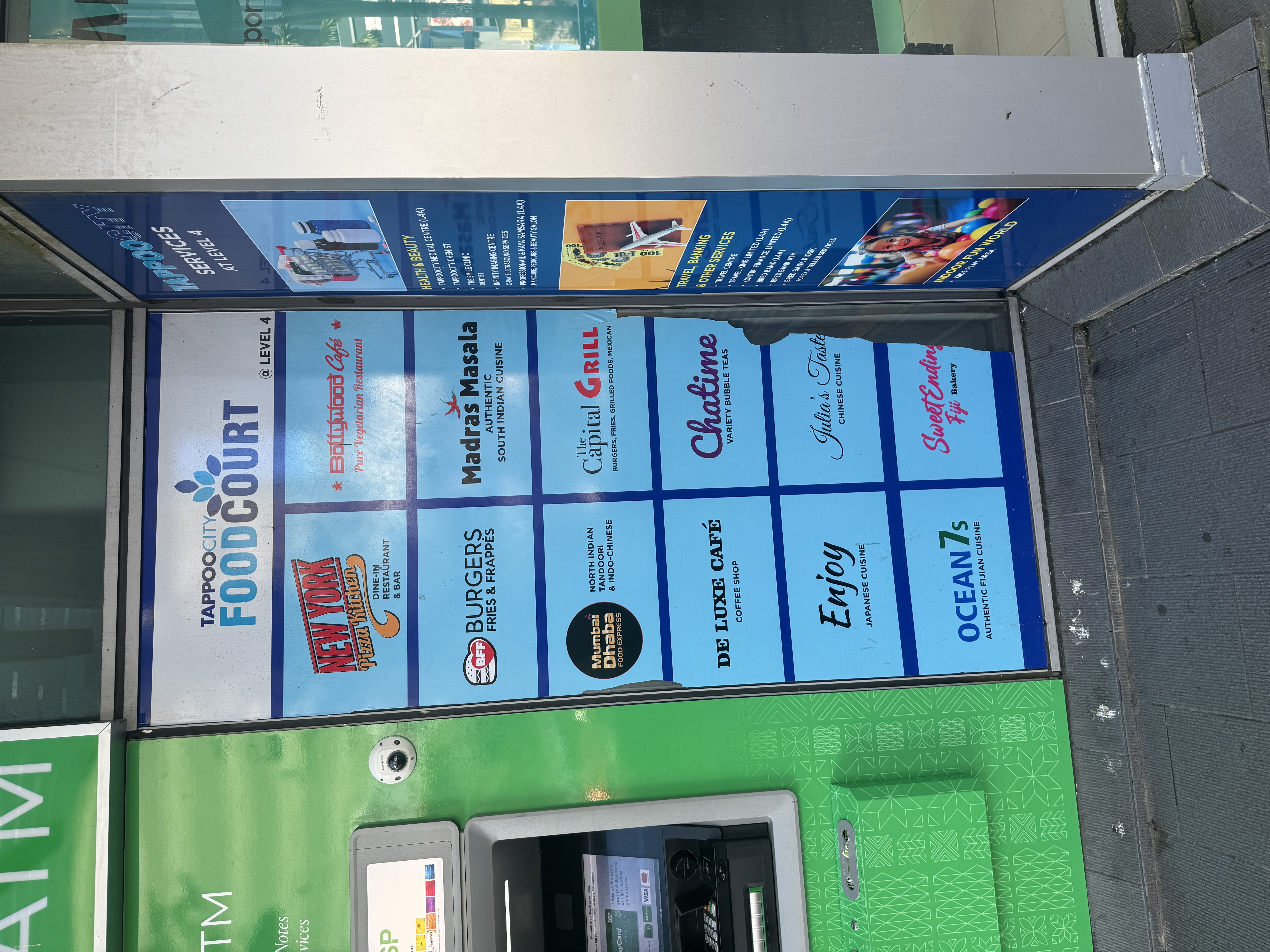
The food court at Tappoo City. See anything Fijian? Ah, yes, there's one place.
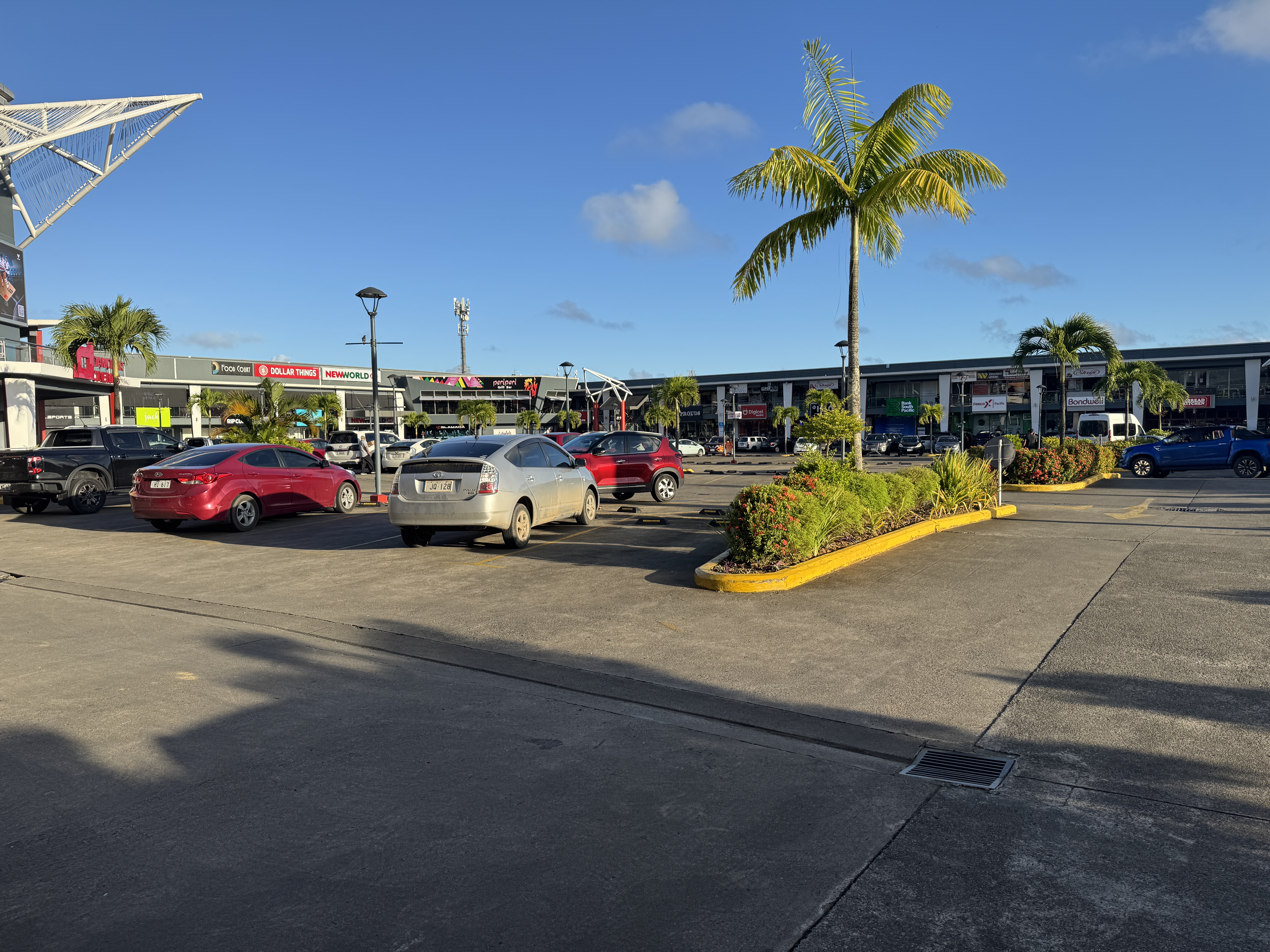
I've moved 1.5 miles southeasterly to Damodar City, an Indian-owned shopping center that opened in 2013.
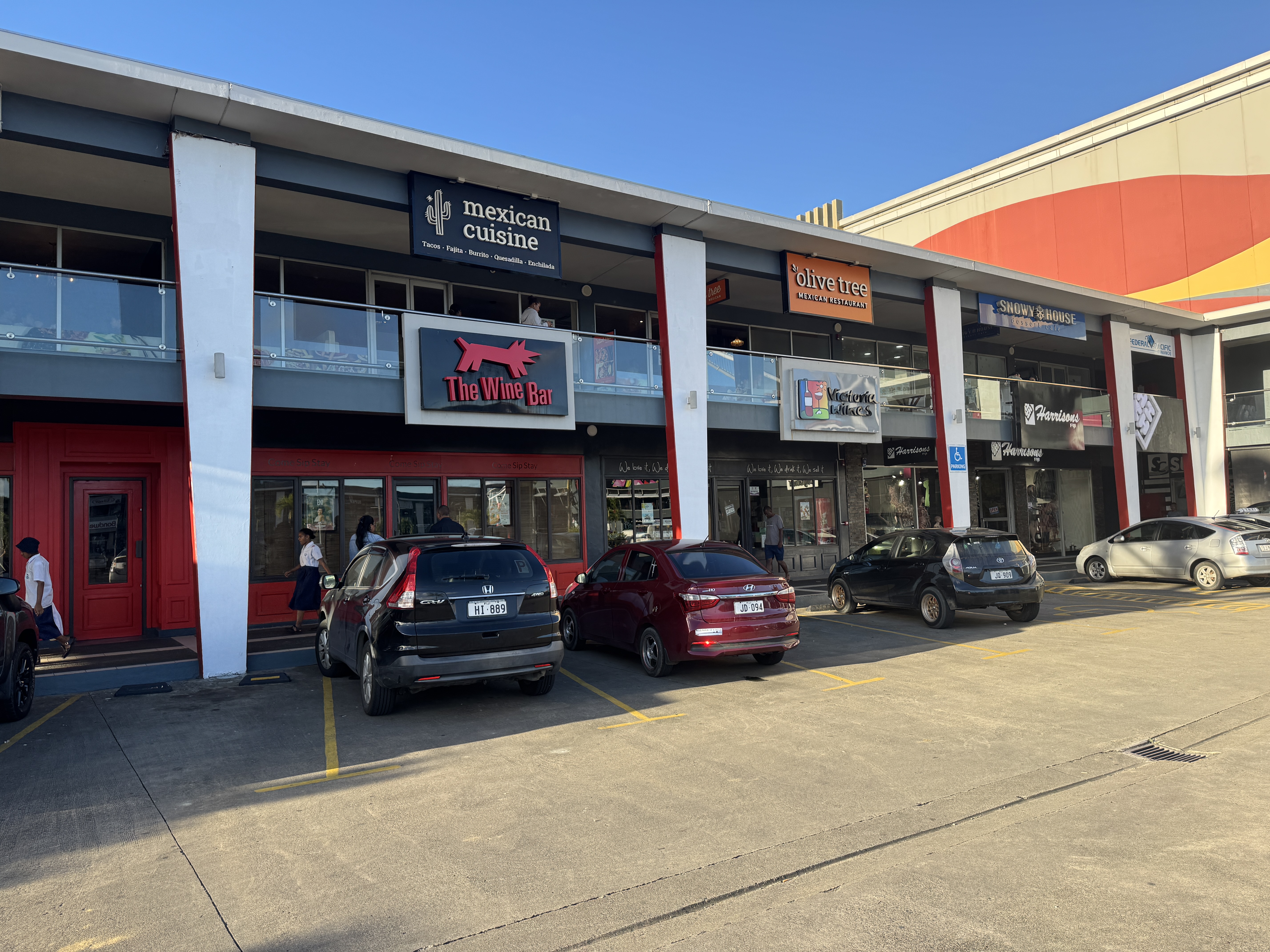
If I said we were in Singapore or Long Beach could you point to anything in this picture that would prove me wrong?
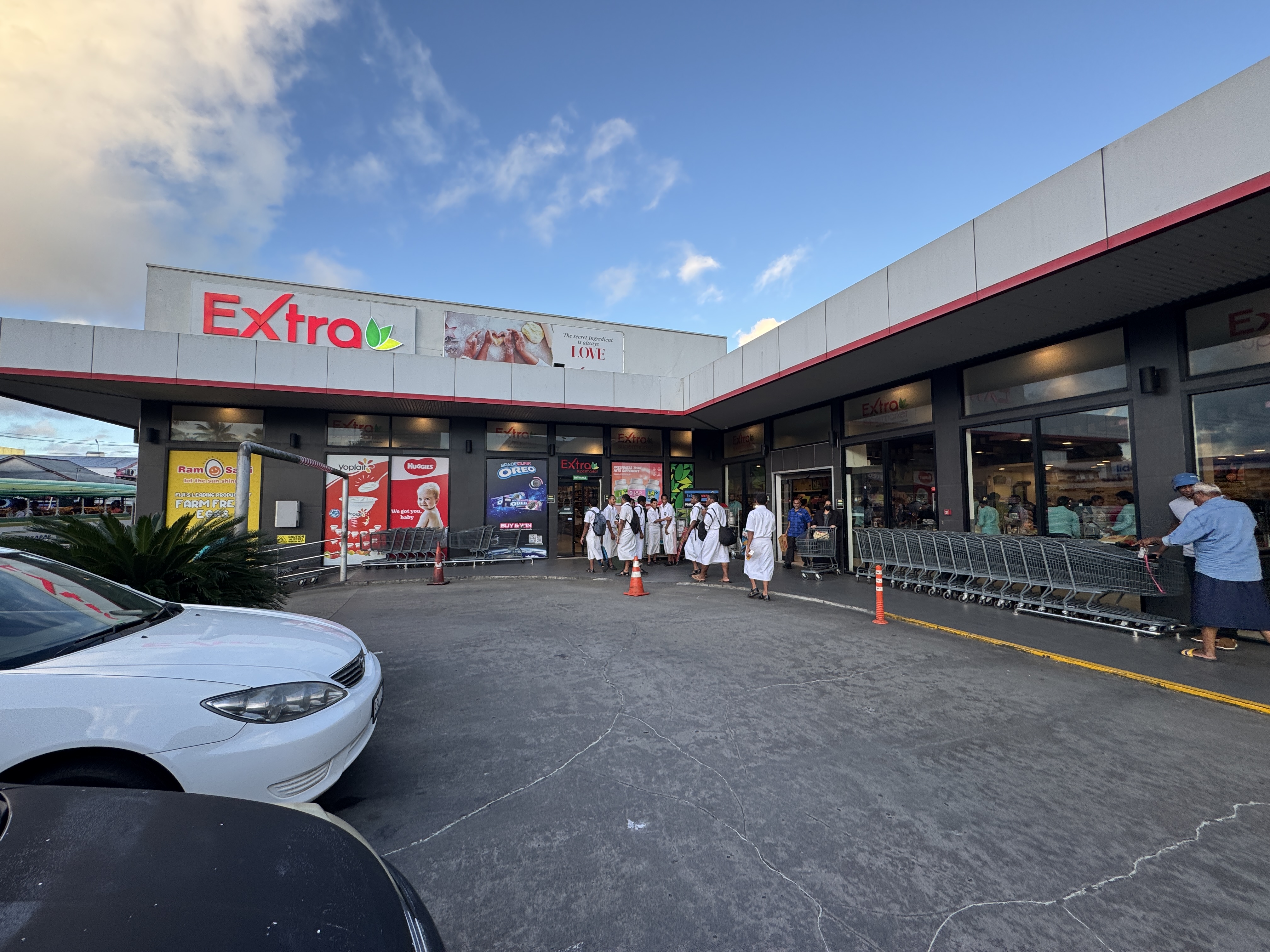
Here we are in Flagstaff City, midway between Tappoo City and Damodar City. The man on the right hints that we're in Fiji, because he's wearing a sulu, Fiji's traditional male wraparound.
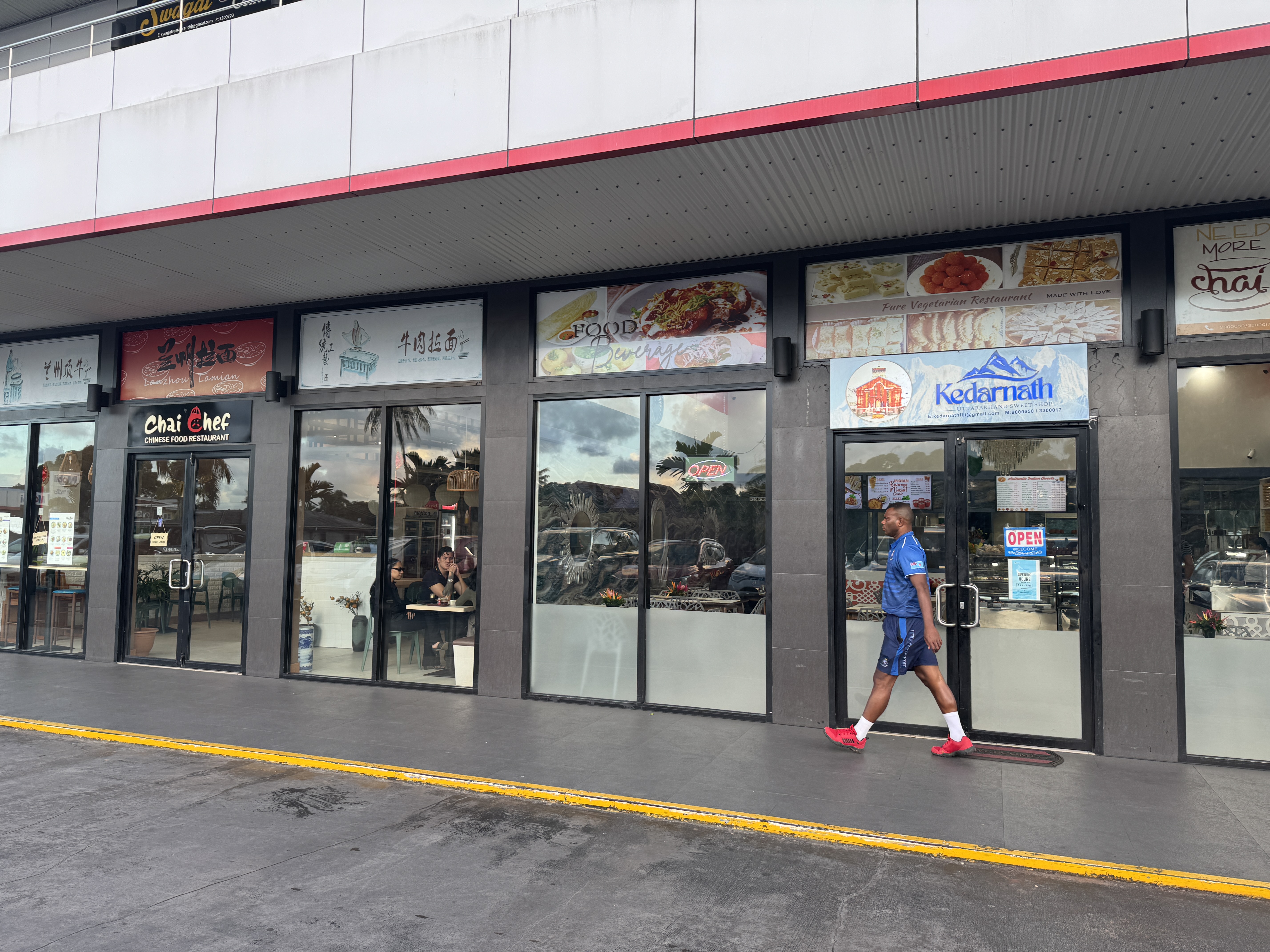
I wish I could tell you what brand of shoes he was wearing.
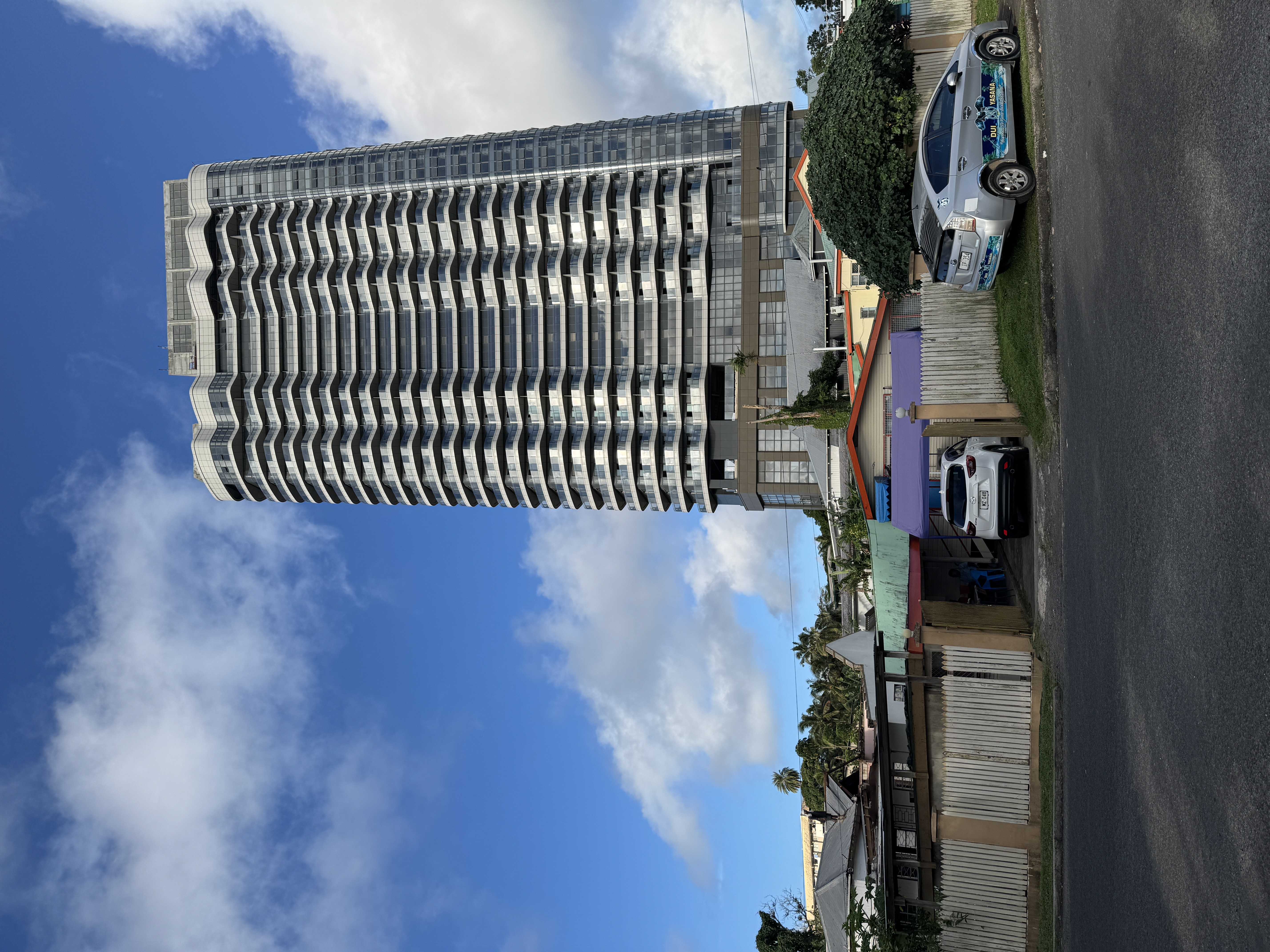
Meet the 28-story WG Friendship Plaza, Fiji's tallest building and about midway between Tappoo City and Damodar City. It was funded jointly by the governments of China and Fiji but has sat empty and unfinished for several years. Why? Shoddy construction, apparently. The Times of London, 18 August 2024, reports: "...when the wind rises in Suva, teachers at Holy Trinity Anglican School rush to bring their pupils inside. Their school sits next to the construction site. As the gusts grow, unsecured debris rains down. Metal poles have pierced the school's playing field, clouds of concrete dust coat the classroom walls and this year timber bounced off the school vicar's roof."
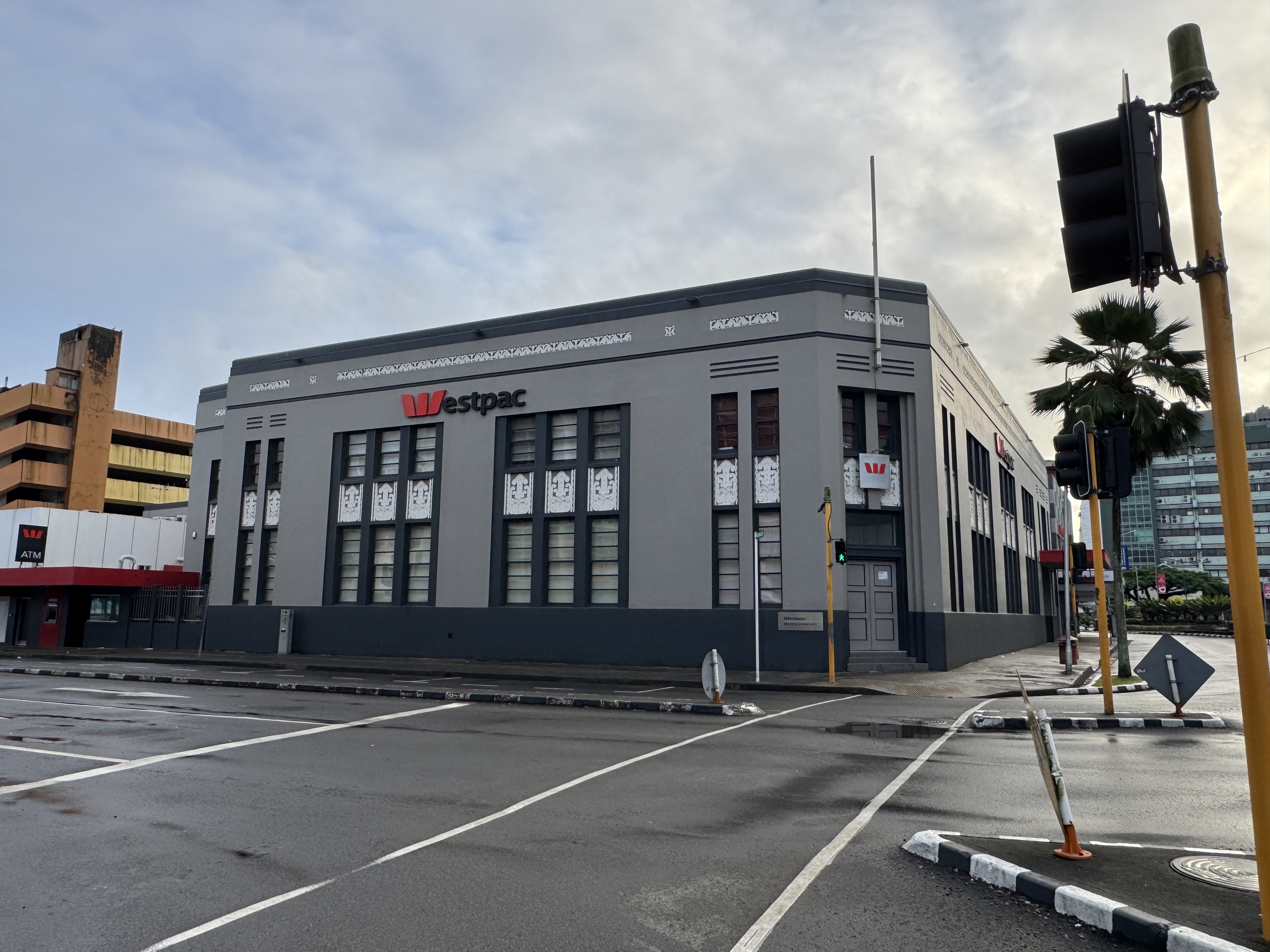
Meanwhile, there's a counter current. Banks often get involved in heritage preservation, perhaps because it suggests stability. Case in point: this Suva branch of Westpac, an ugly name for what once was the Bank of New South Wales.
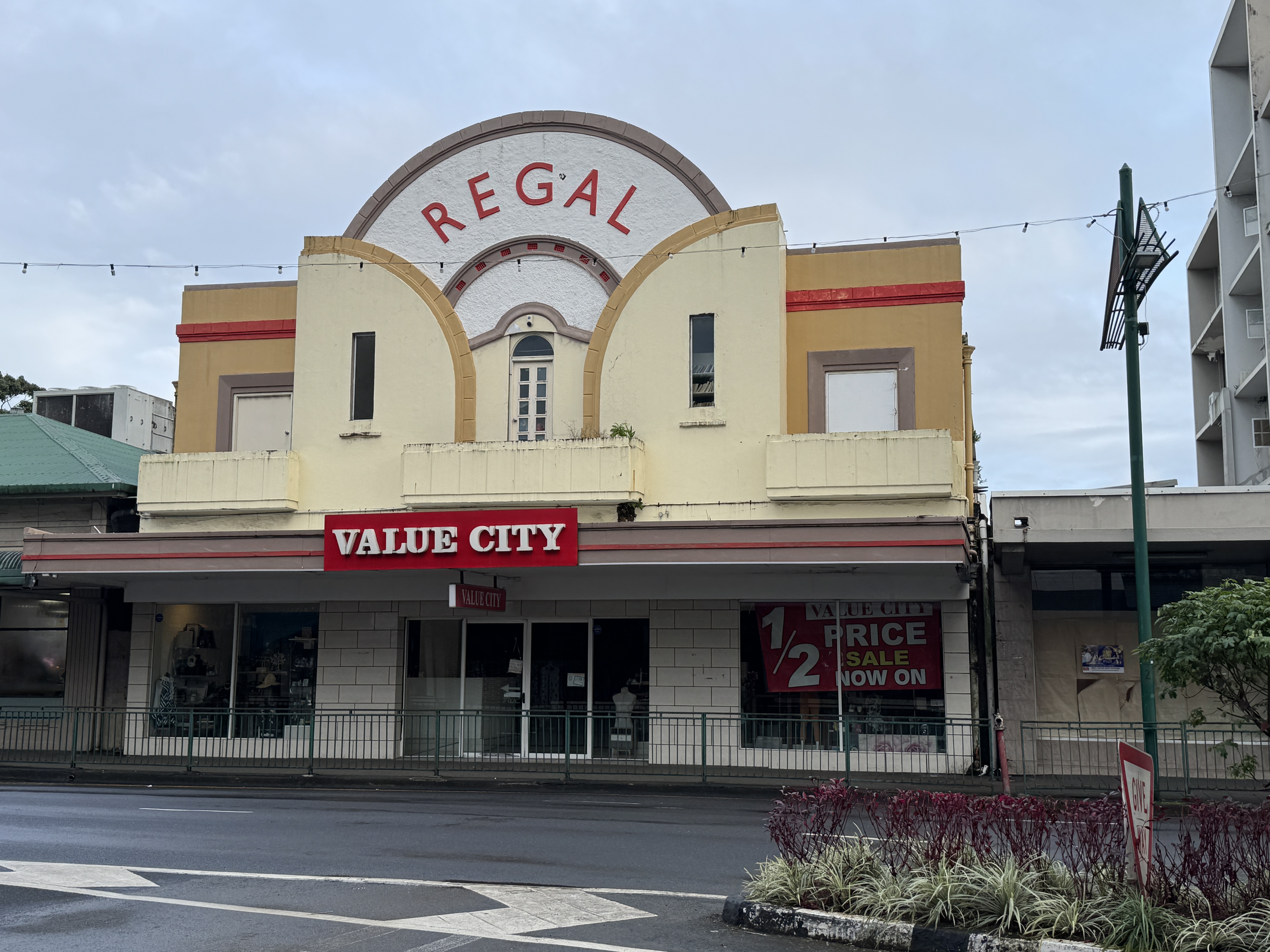
The Regal Theater opened in the late 1930s and closed in 1997, but the Deco facade is carefully maintained.
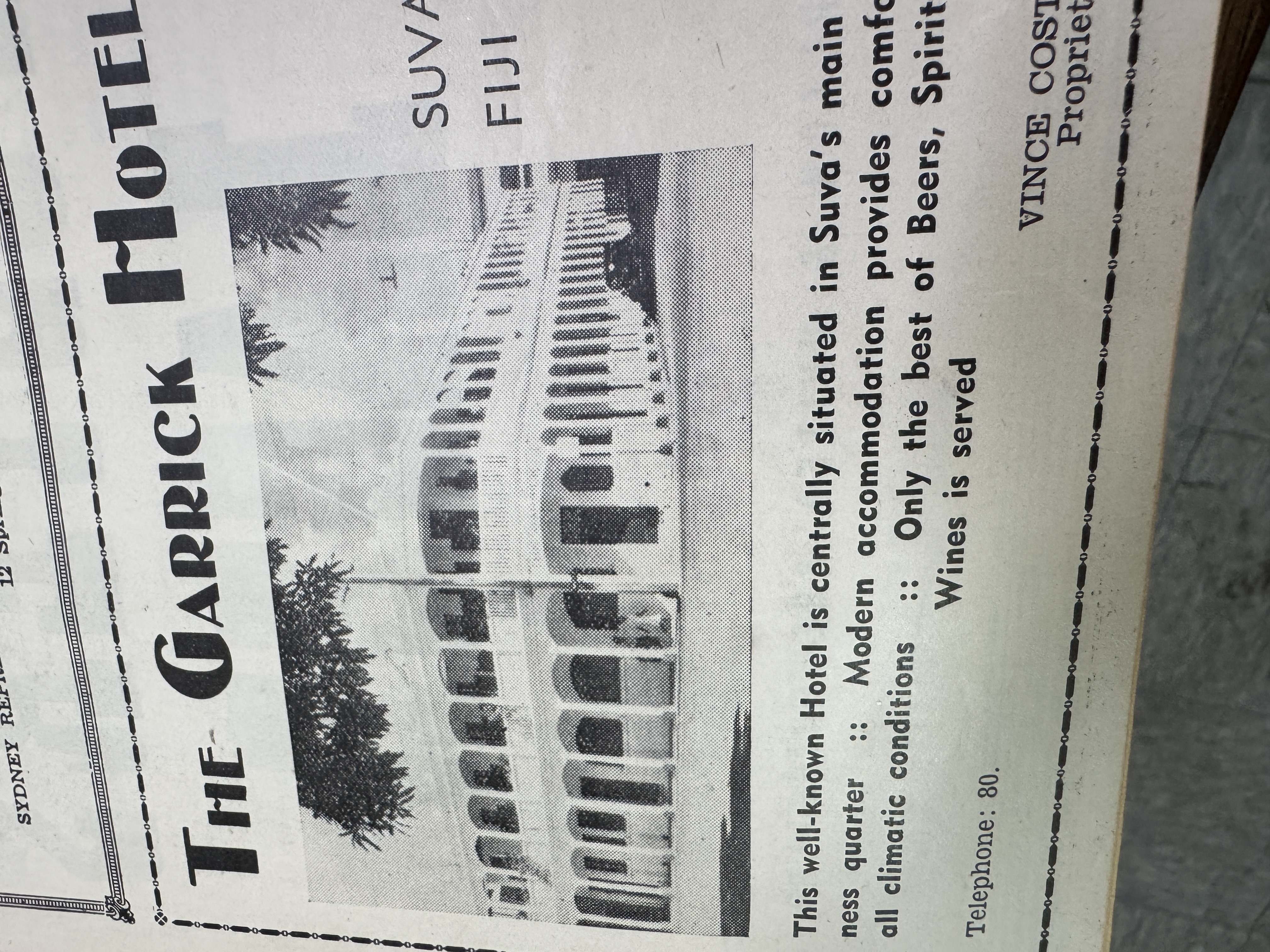
The Garrick opened in 1882 and closed in 1970. (Theadvertisement comes from the Pacific Islands Monthly, July, 1955.)
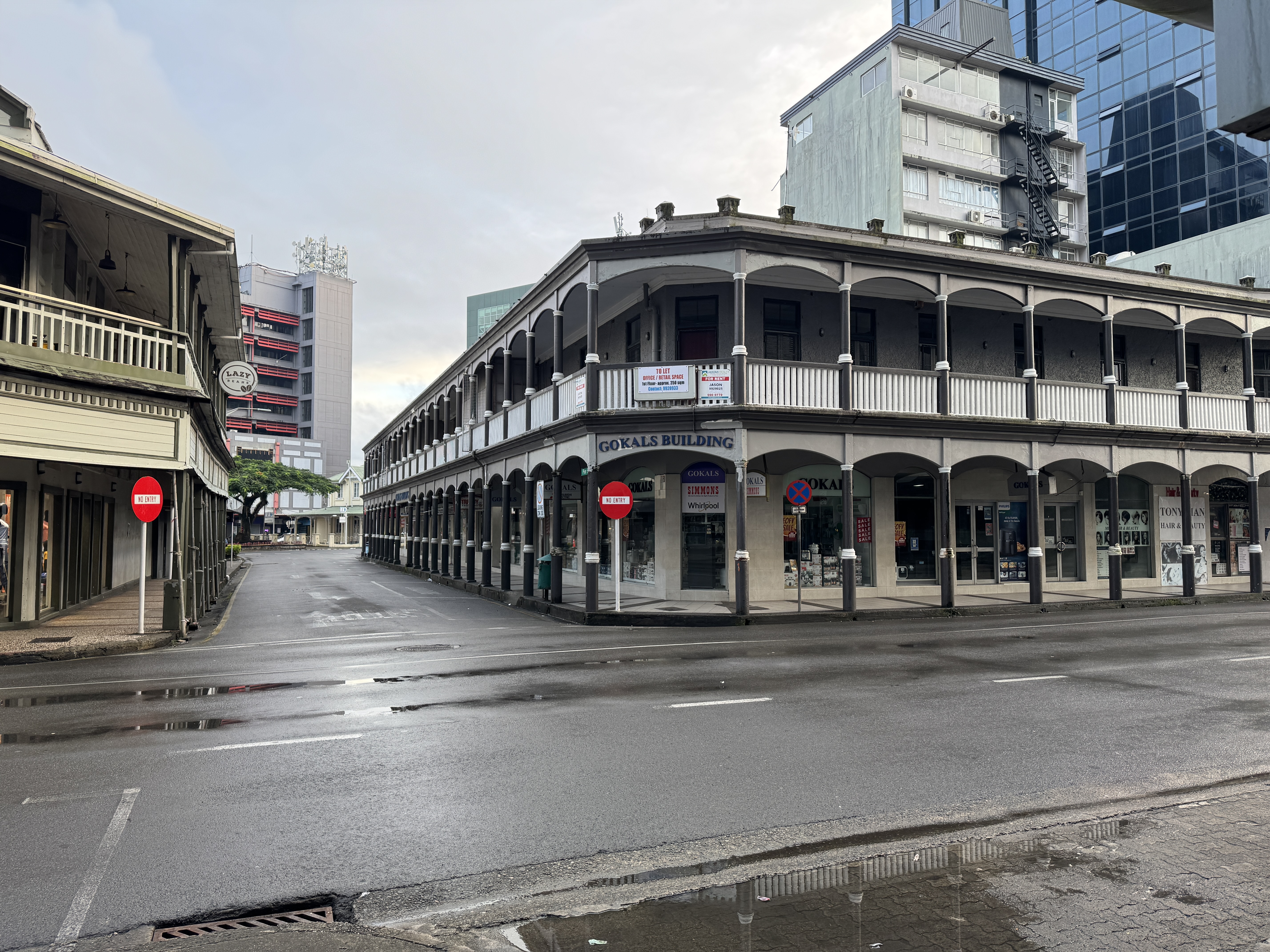
Instead of being demolished, the building now houses an electronics store downstairs and offices above.
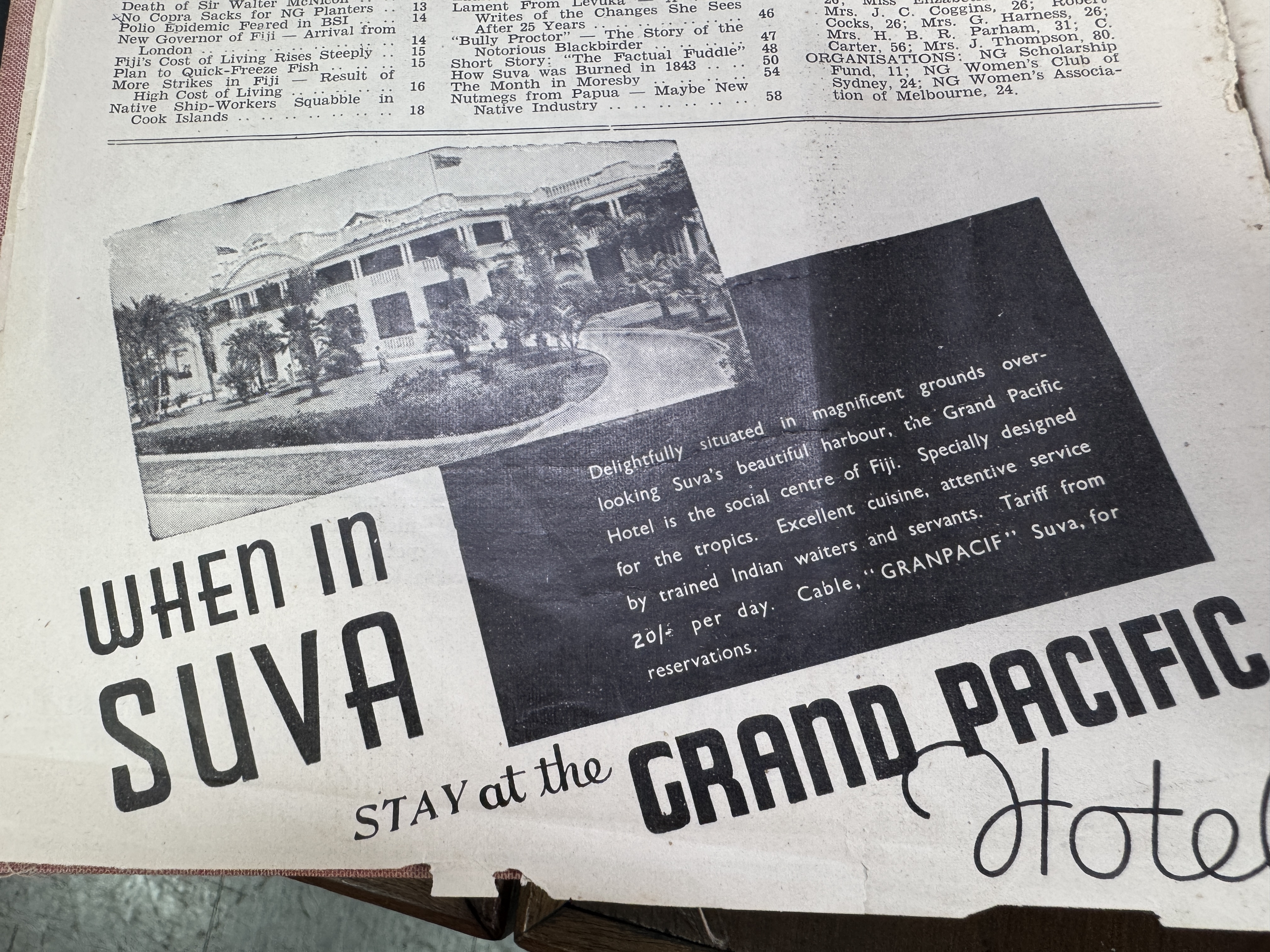
Here's another survivor.
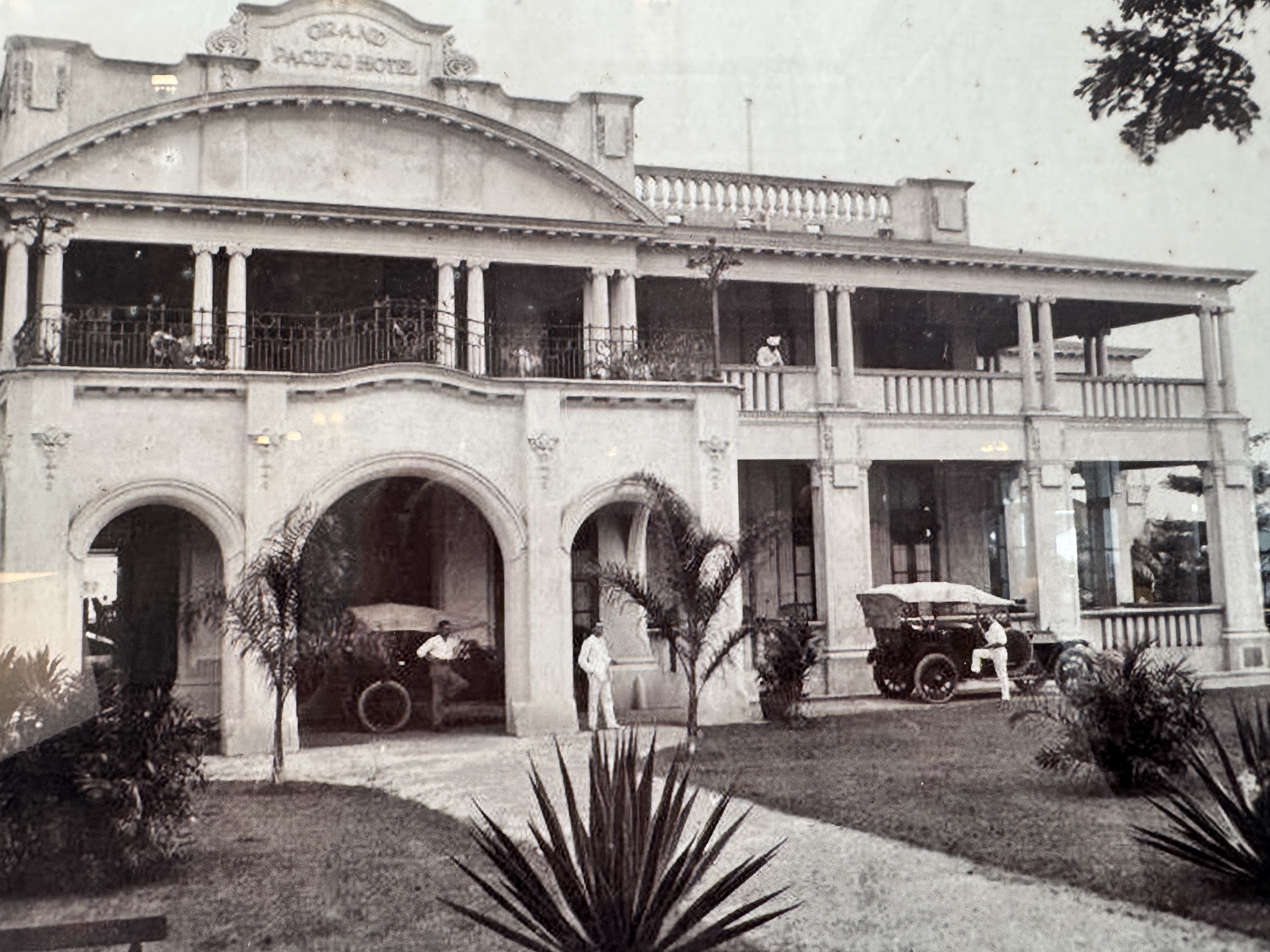
The Grand Pacific was built for the Union Steamship Company of New Zealand. Its managing director wanted to give passengers the option of a luxury stopover on their journey across the Pacific. (I'm betting that the word "luxury" is used more today than it was then.)
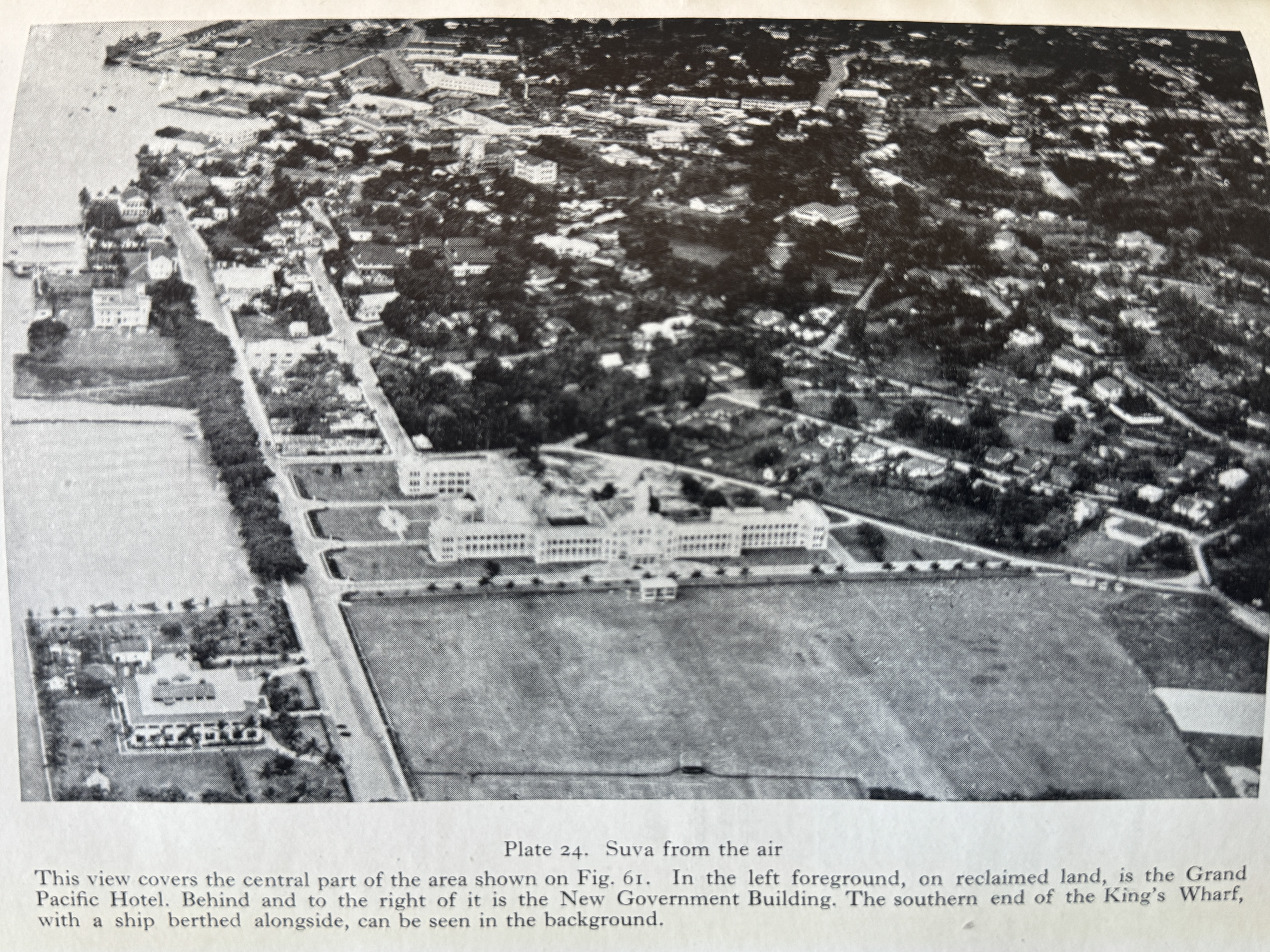
The hotel is at the bottom left, facing the rugby fields of Albert Park and kitty-corner from the then-new Government Building.
(British Naval Intelligence, Geographical Handbook B.R. 519B, Pacific Islands, vol. 3, 1944, following p. 214.)
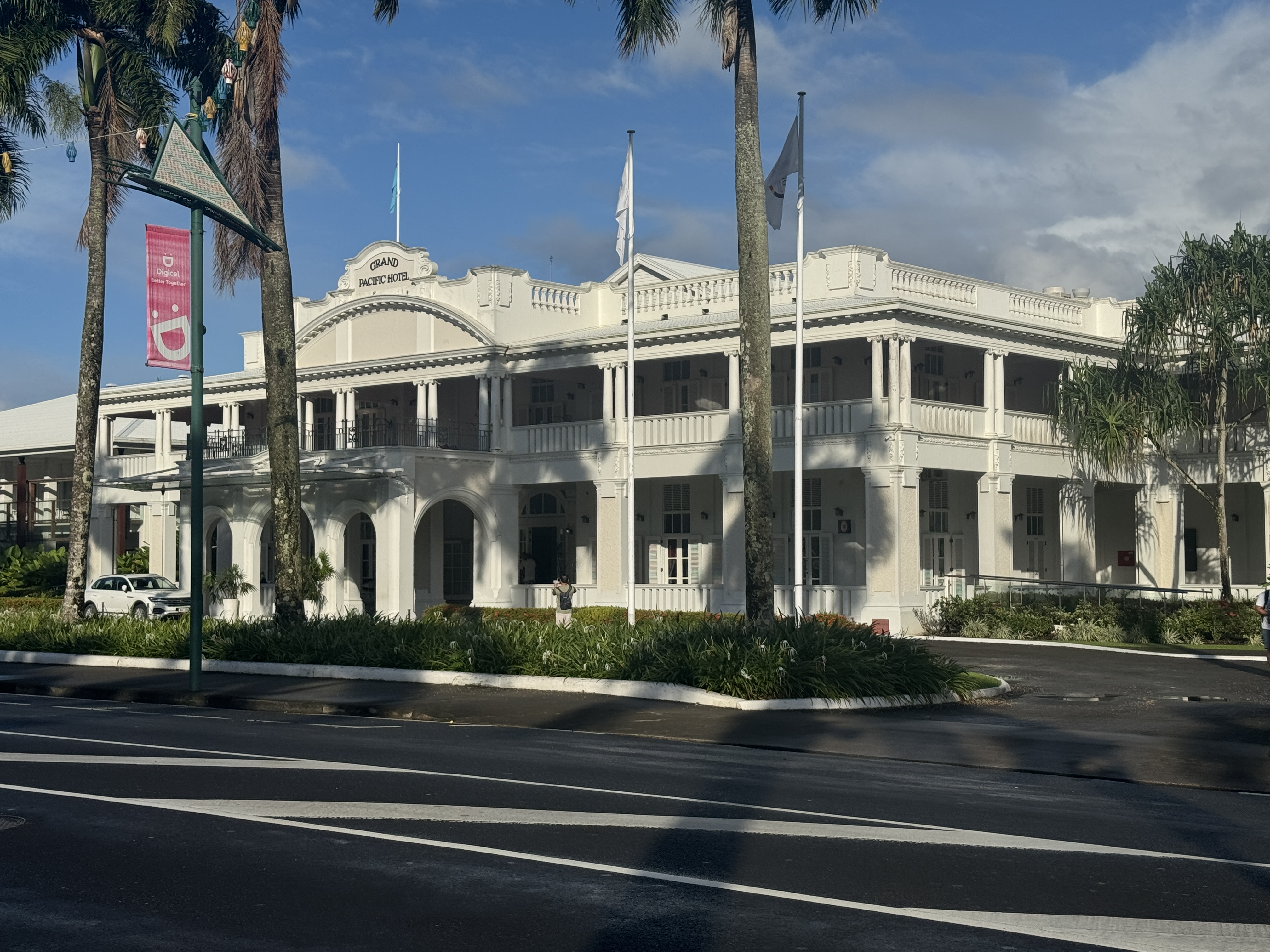
Business collapsed with the decline of passenger liners, and the hotel was closed from 1992 to 2014. Surprisingly, it wasn't demolished. Today it's managed by your friends at IHG.
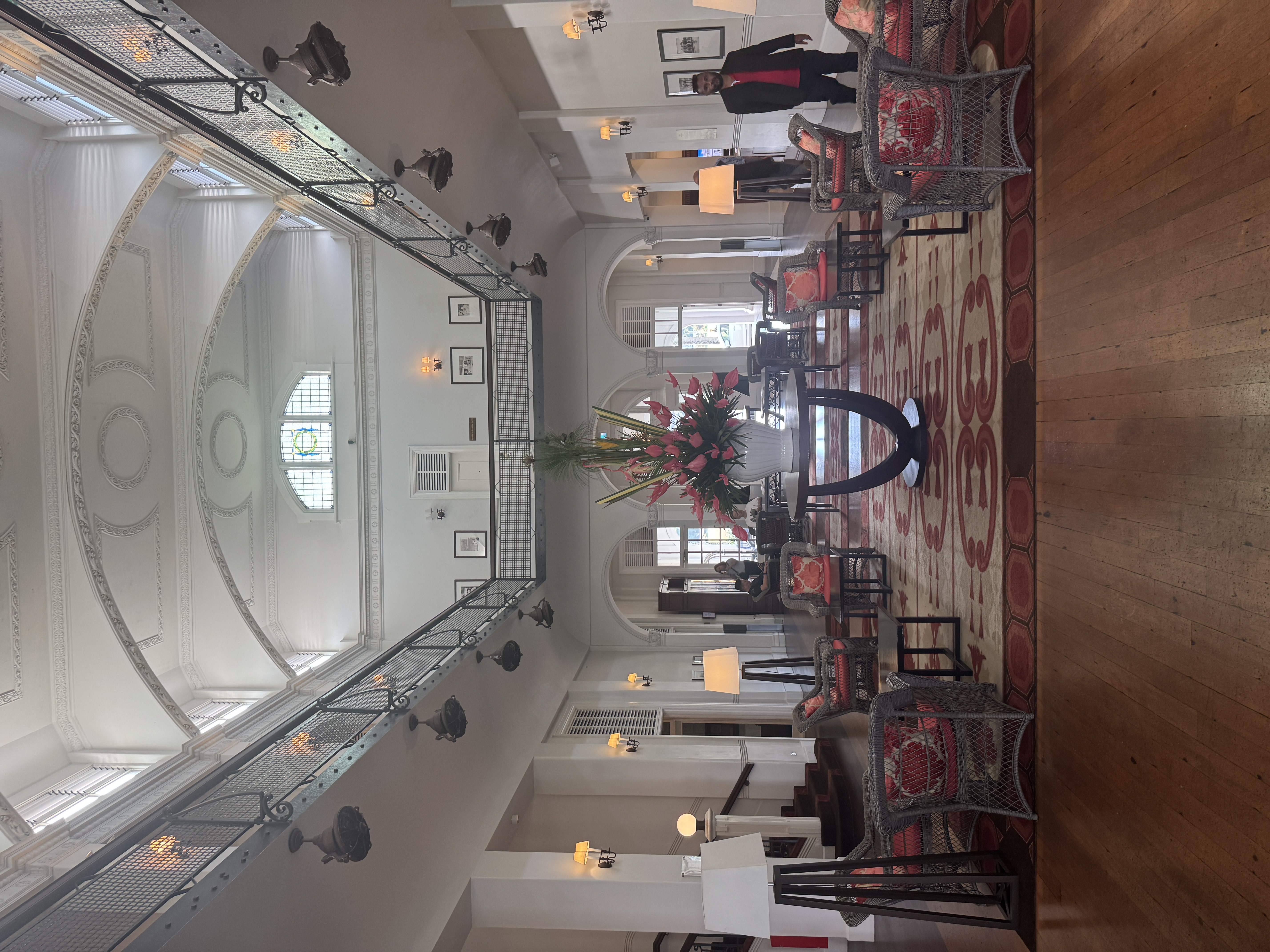
The lobby.
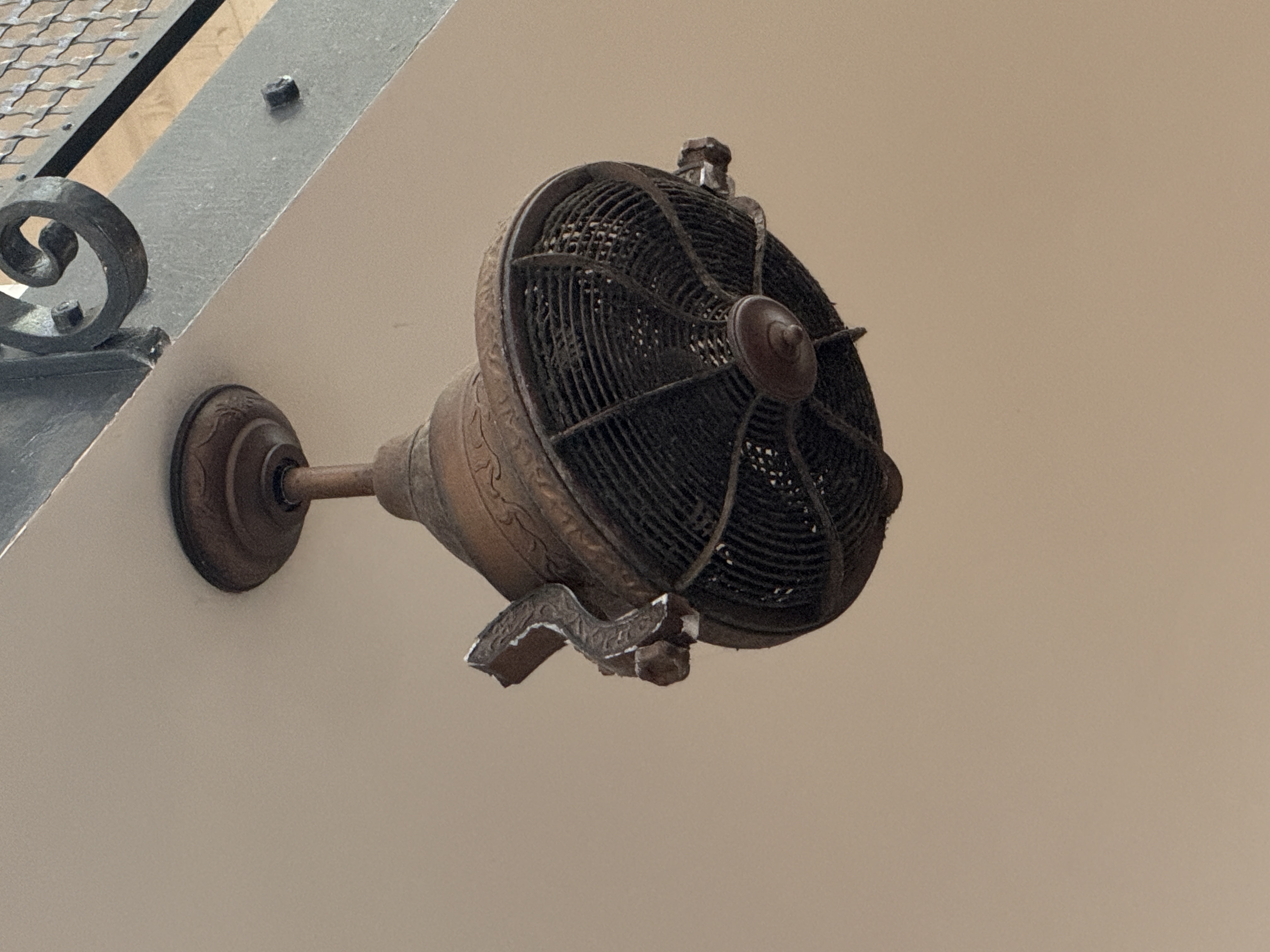
No, Virginia, it's not a death ray. It's from the old days when people used something called "fans." These fans are no longer used, but they've been saved. Heritage, my boy!
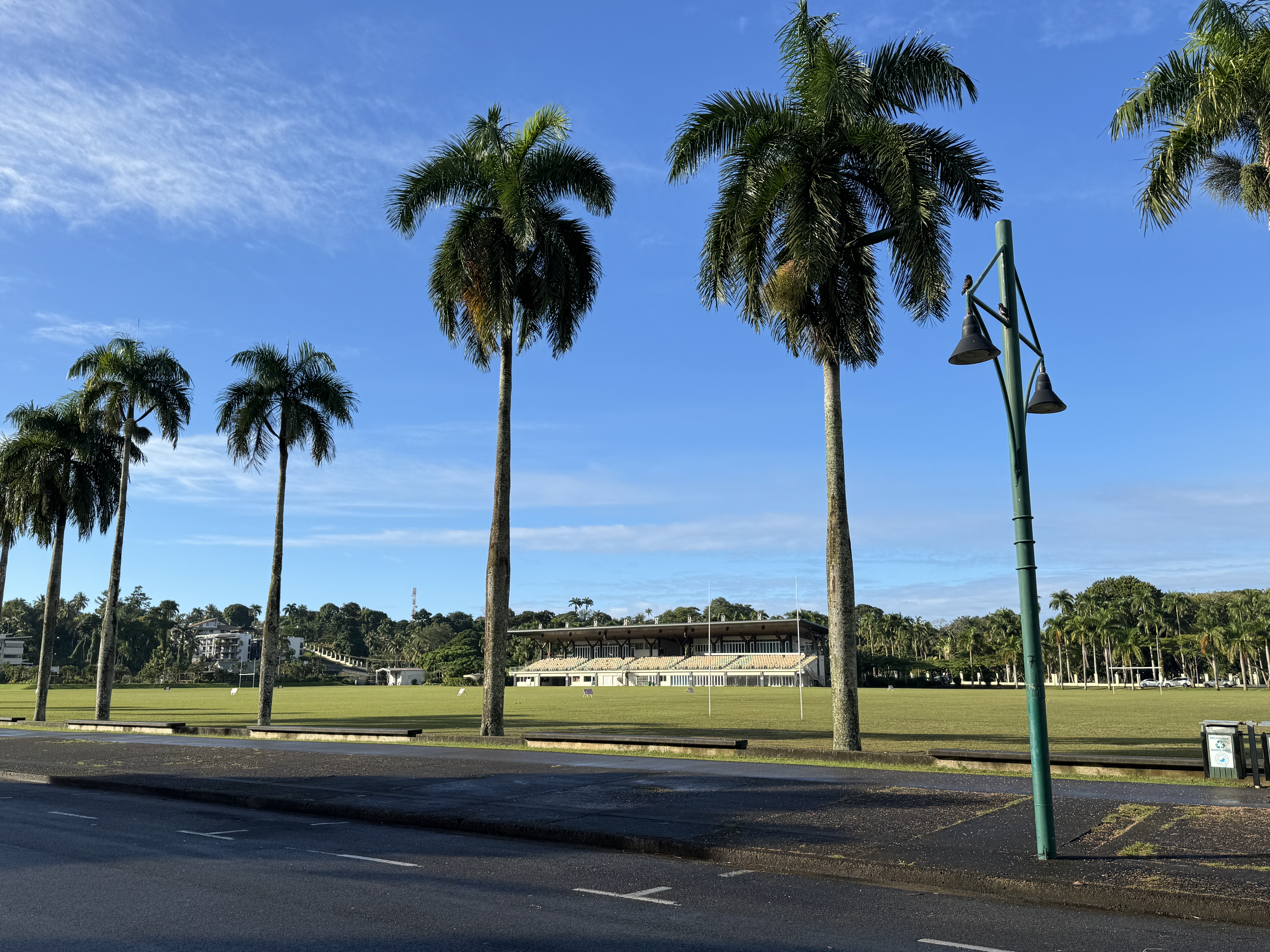
Here are those rugby fields. A little bleak, but look at the forest beyond.
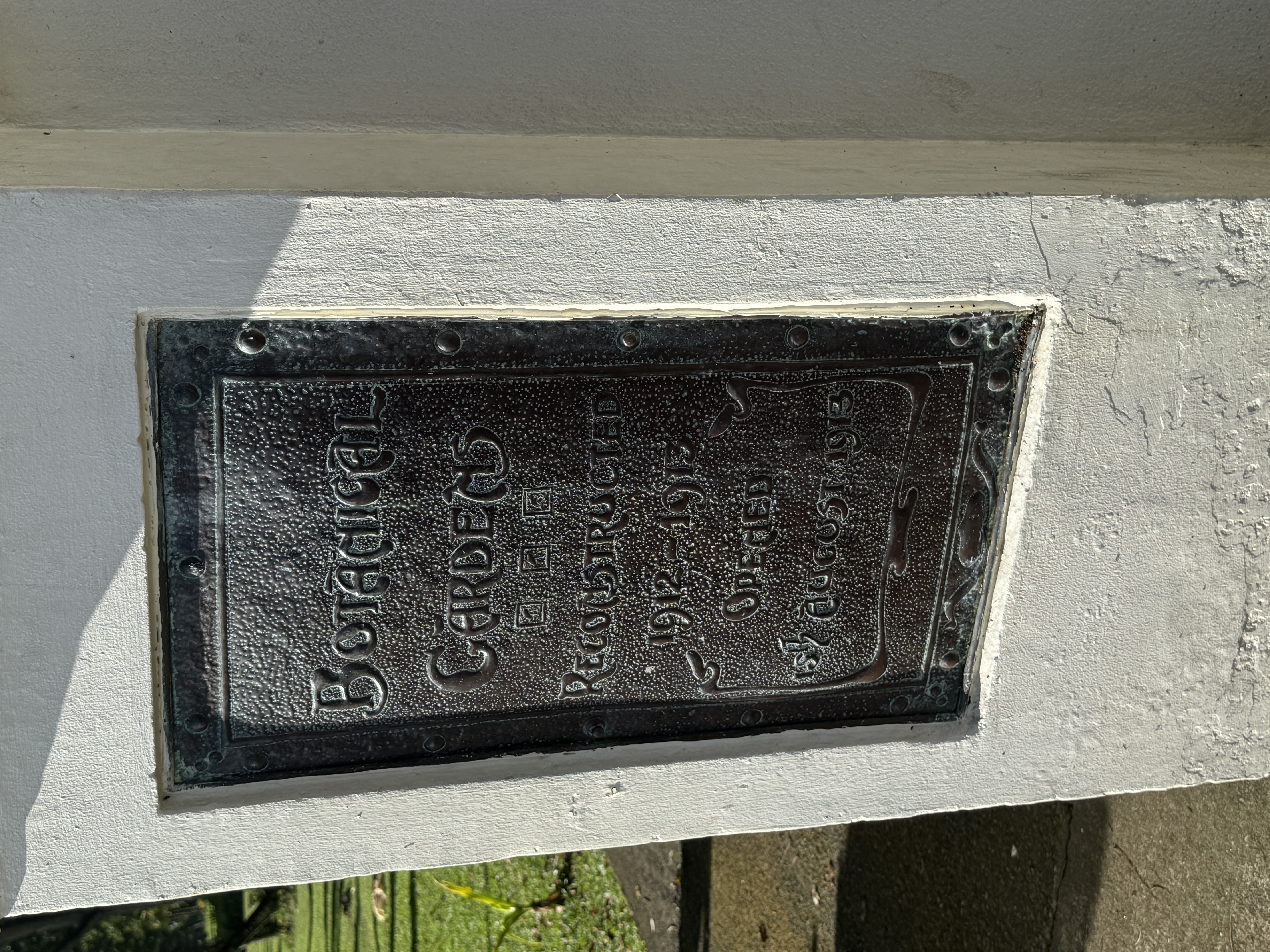
It's Suva's botanical garden, established in 1879 with advice from John Horne, a botanist in Mauritius. The gardens were rebuilt in 1913 and renamed Thurston Gardens in 1976 to recall Governor John Thurston, in office 1888-1897. Lovely font.
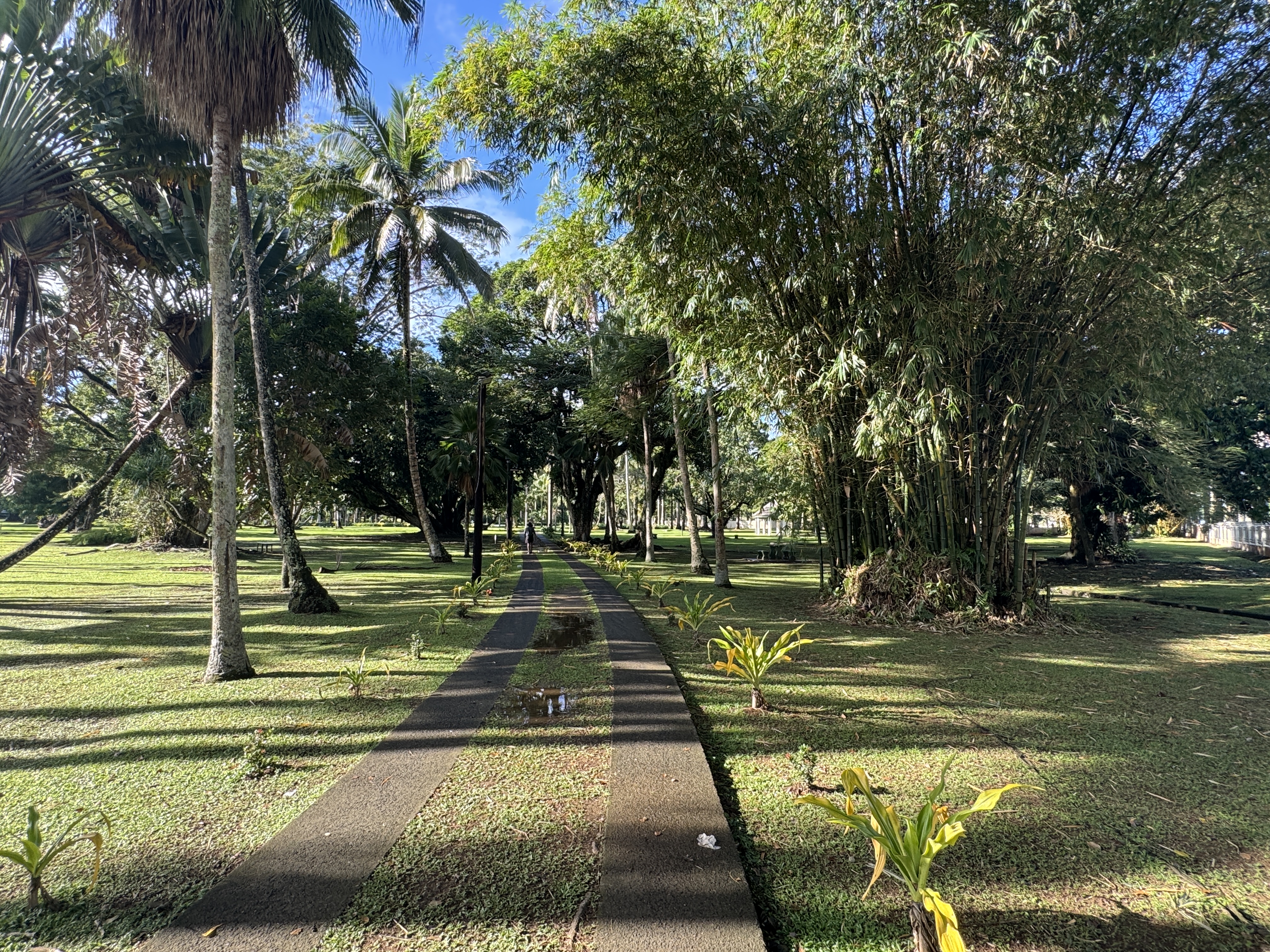
Heading inside.
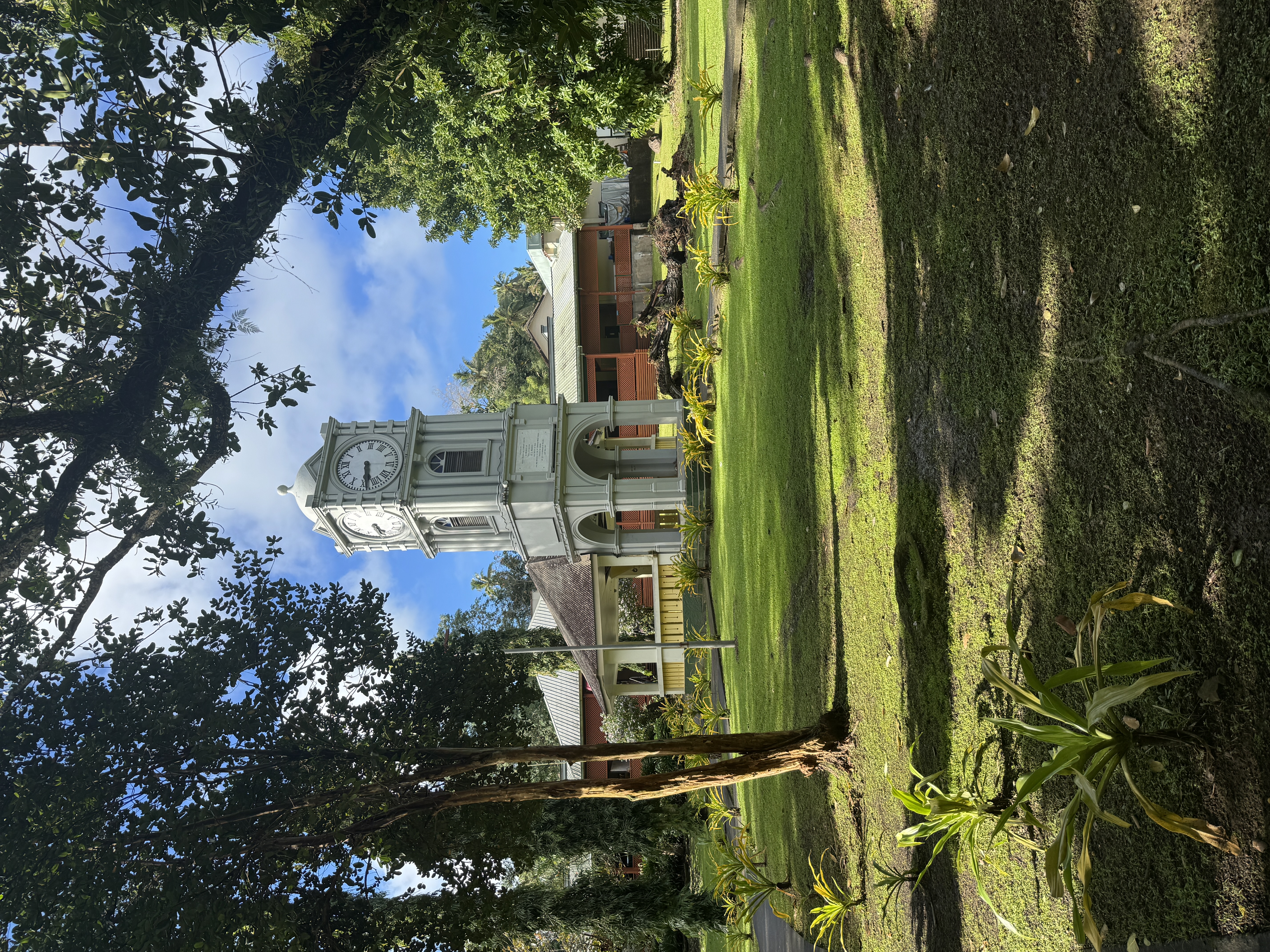
Do you think Victorians found clocktowers erotic? How else to account for their ubiquity?
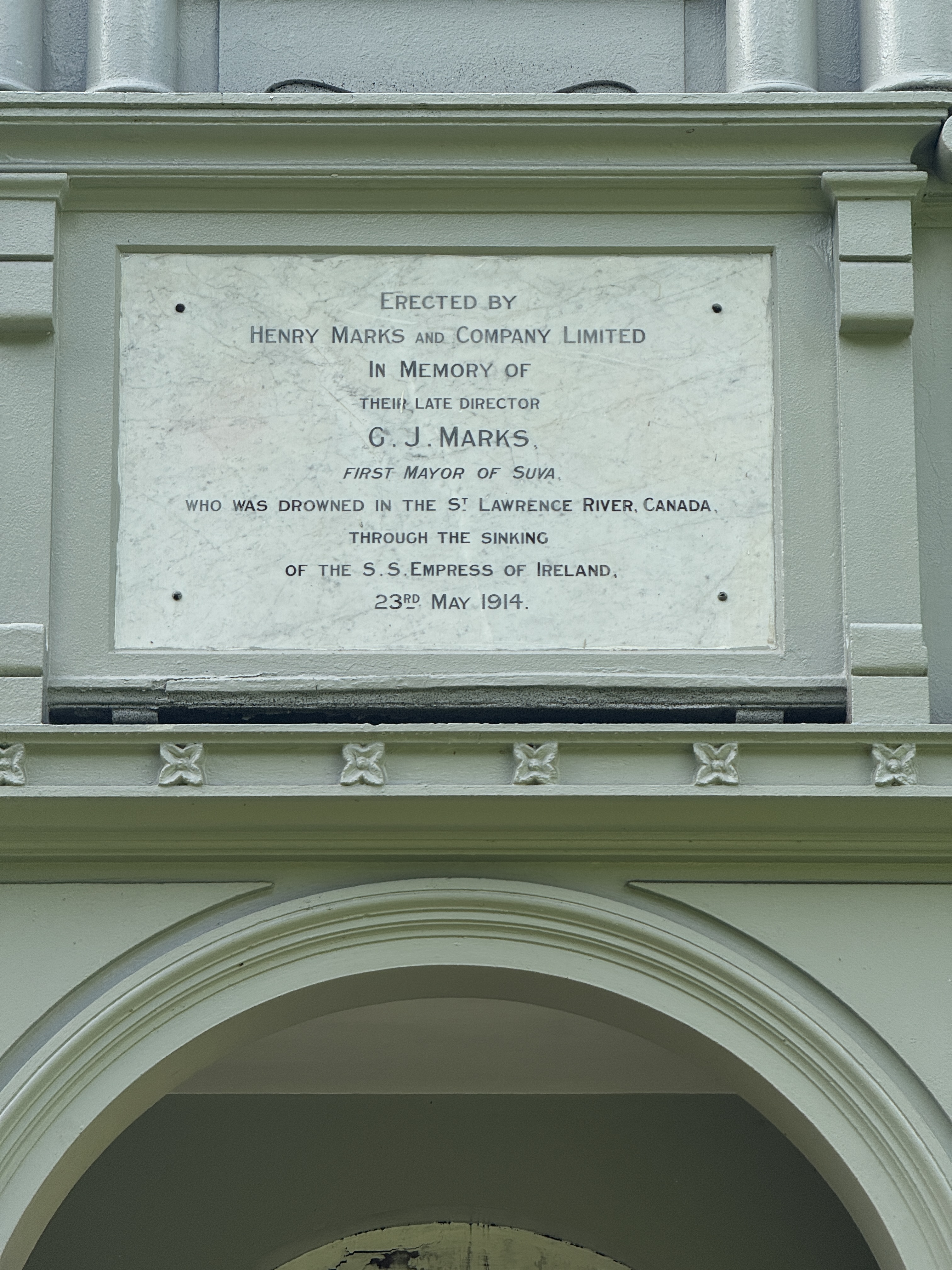
Grim plaque on the tower. G.J. was Henry's father.
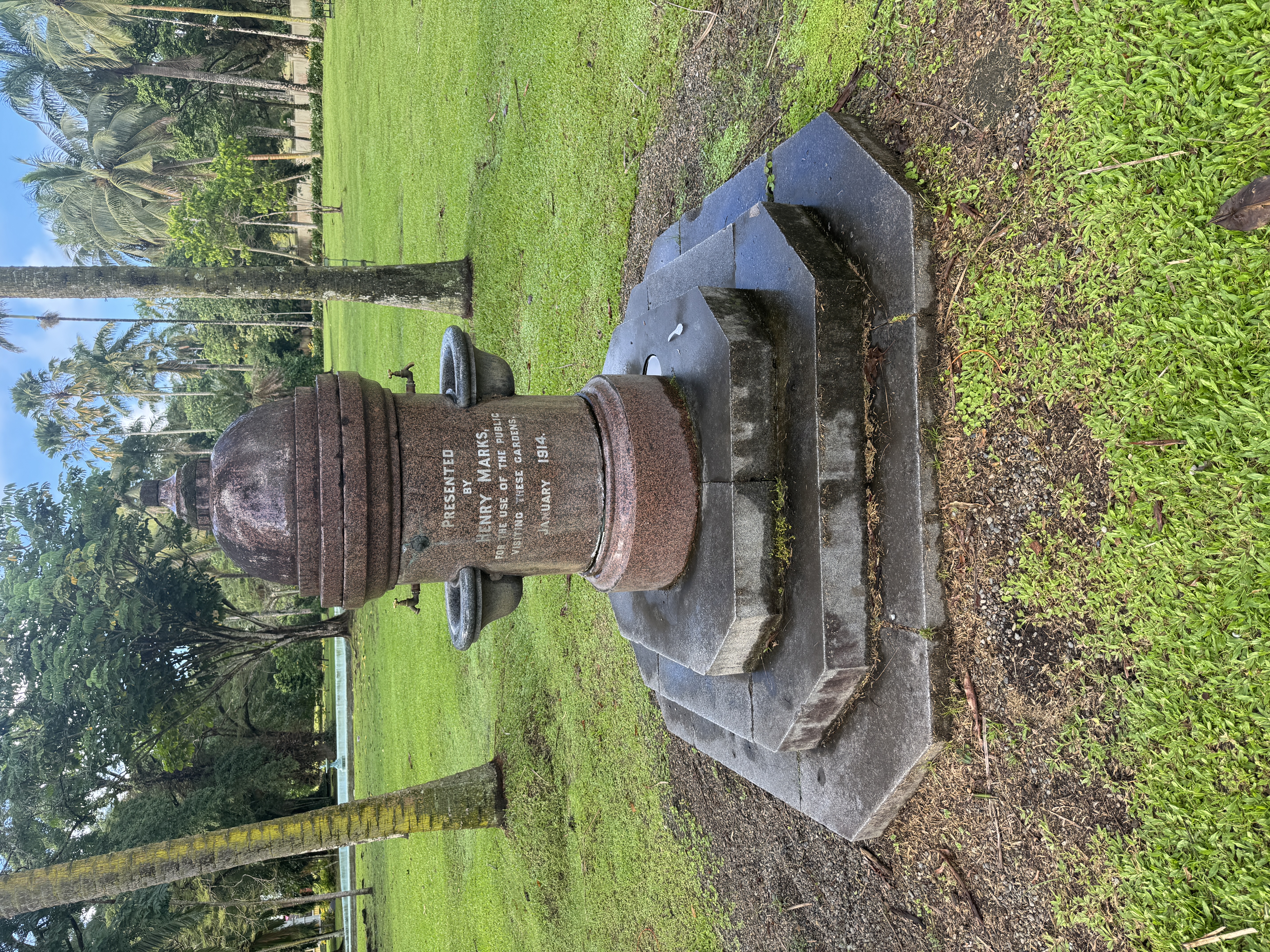
Henry Marks (1861-1938) was a longtime member of Fiji's Legislative Council and served a term as Suva's mayor.
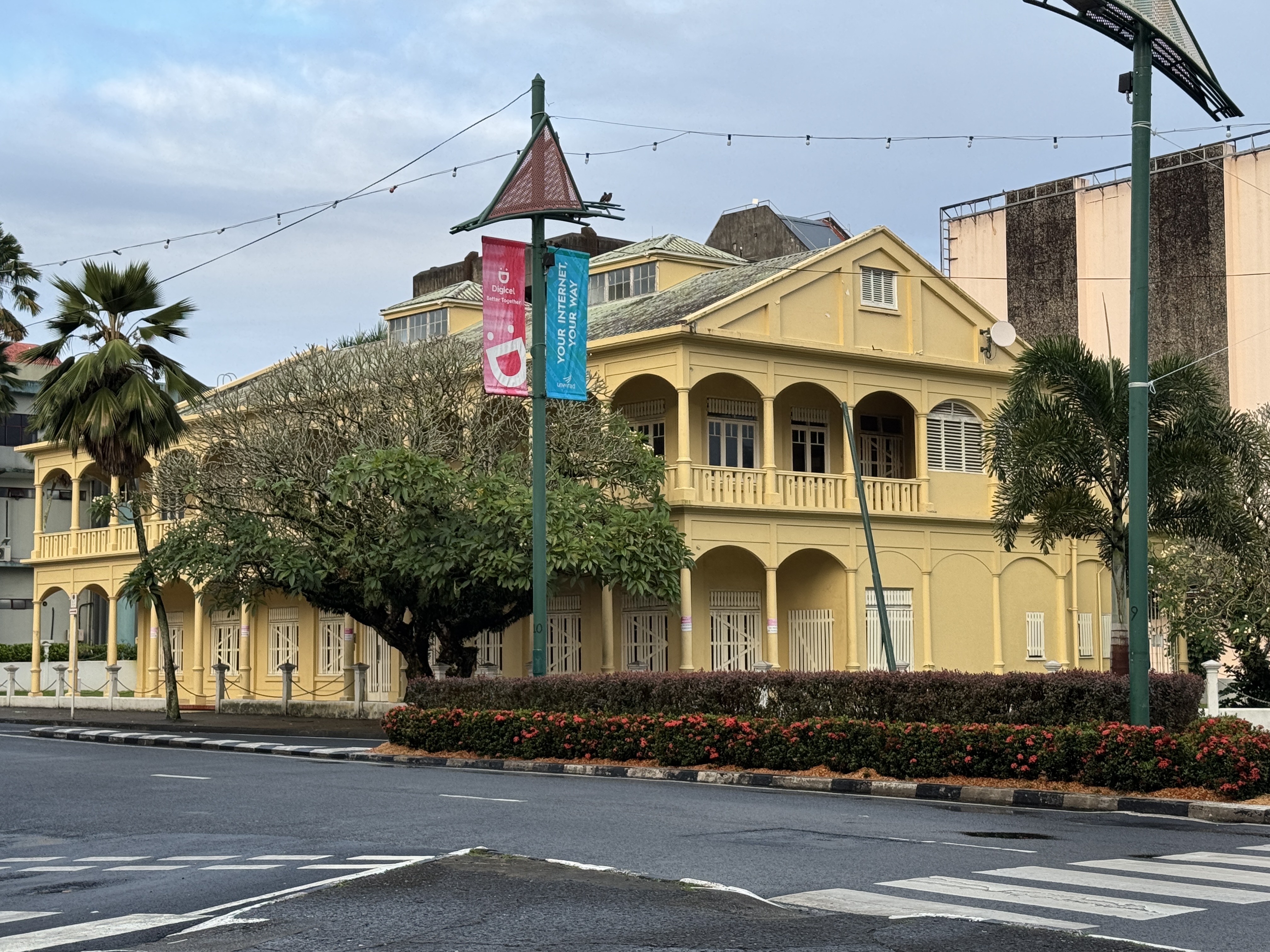
Presumably he spent a lot of time in Suva's Town Hall, built in 1905 as the Queen Victoria Memorial Hall.
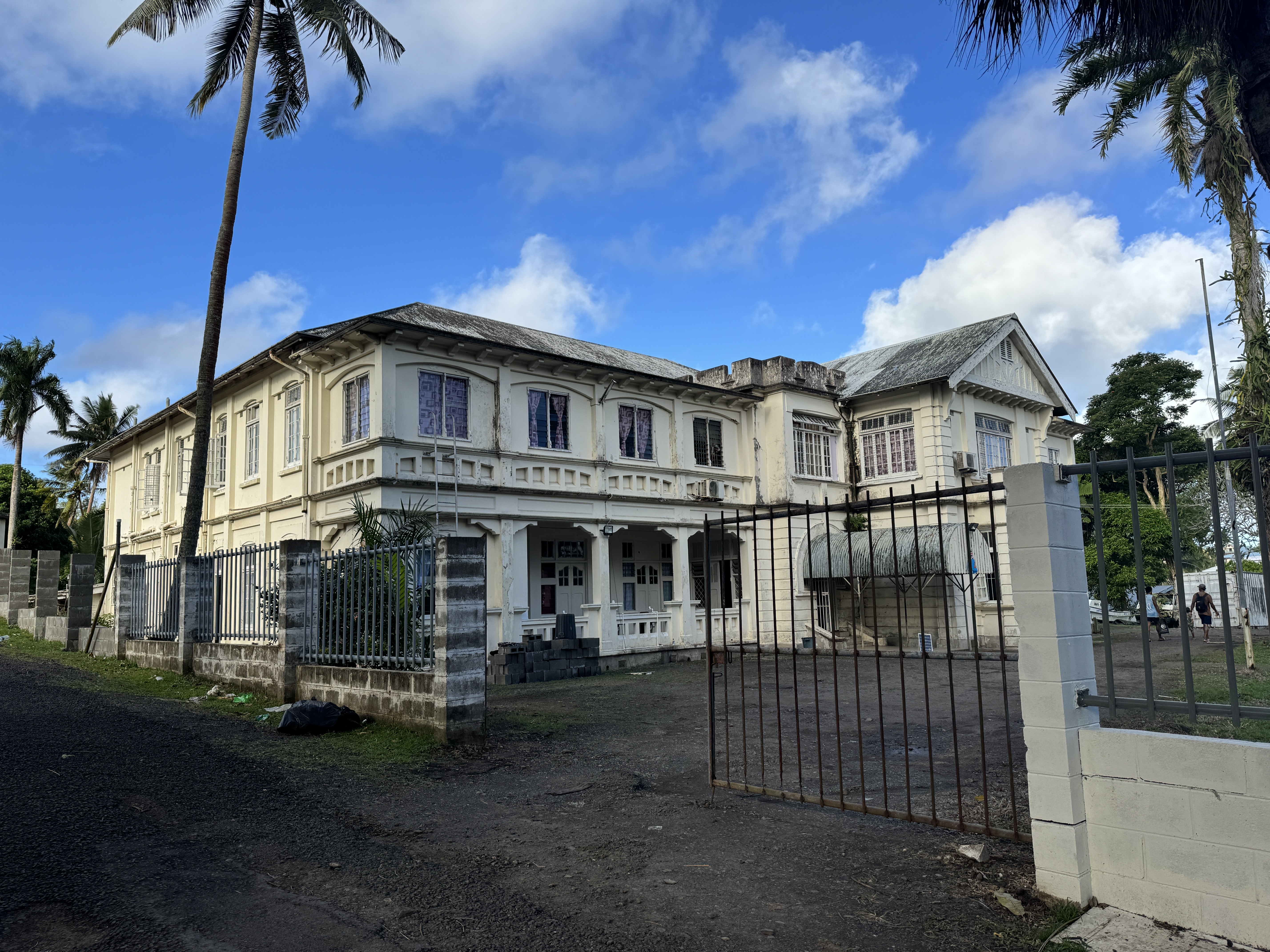
It's a few minute's walk to the Suva Public School, Selbourne Street, built 1917.
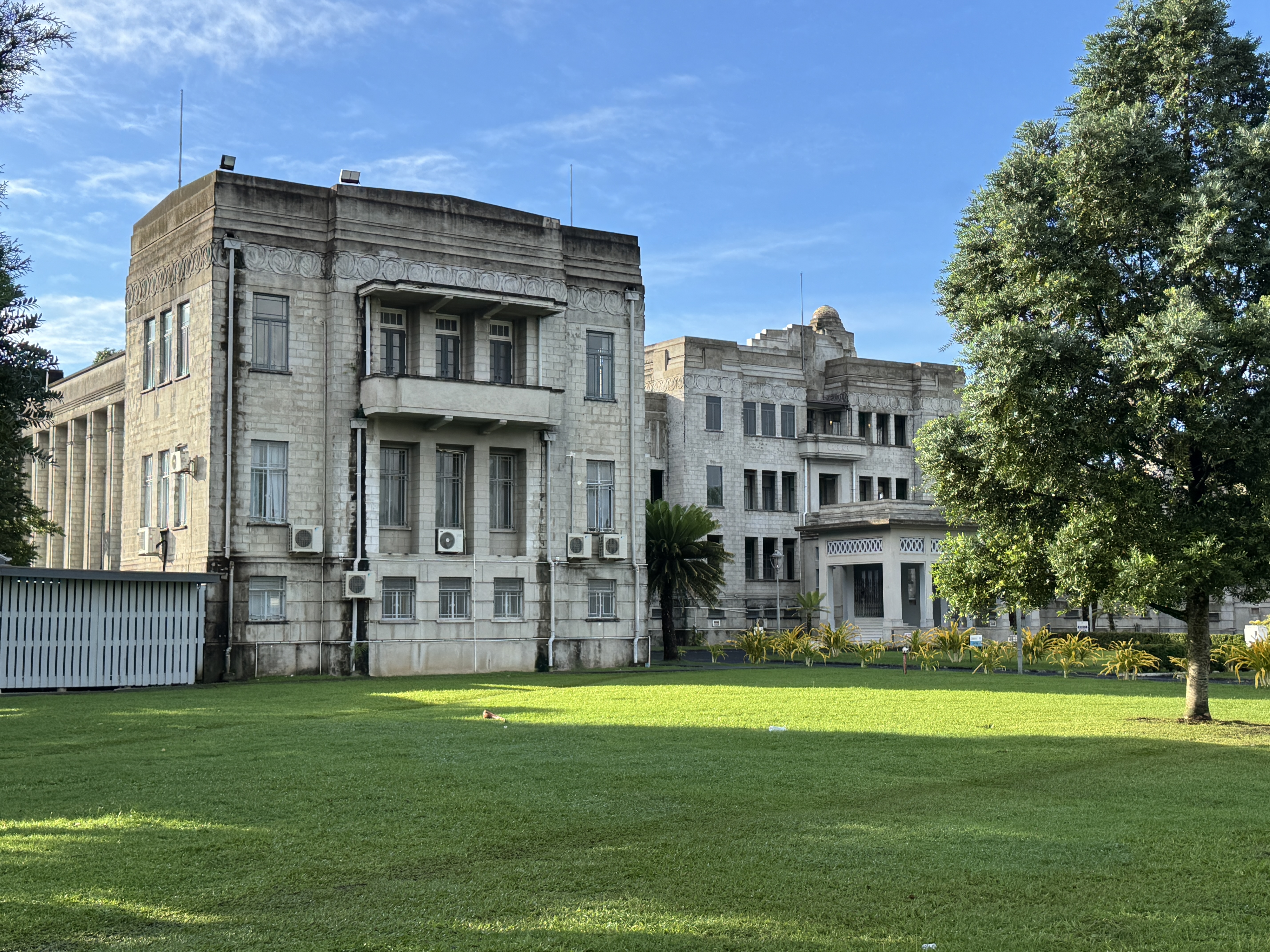
The "New Government Building" is gloomy, but so were the late 1930s, when it was built.
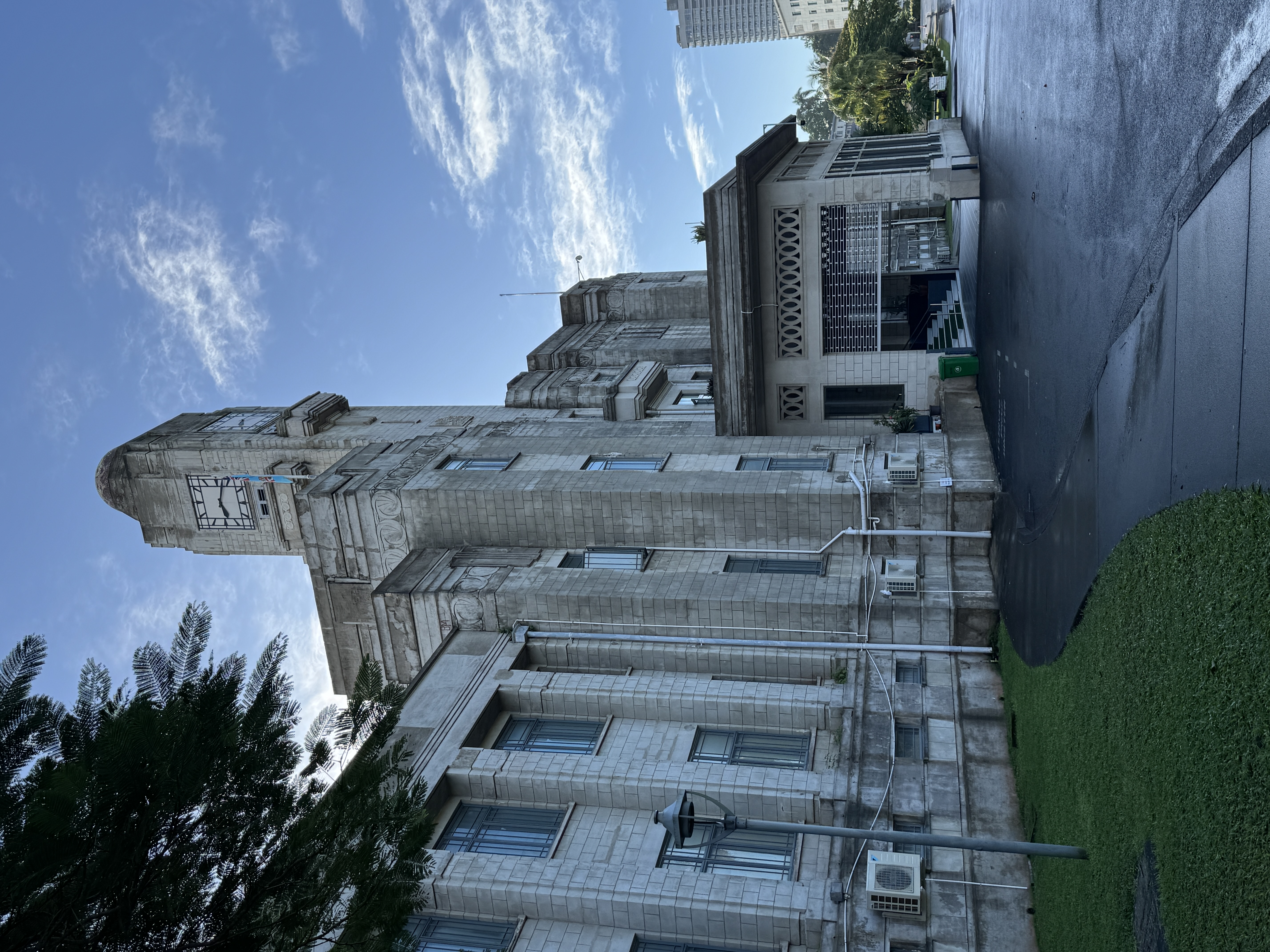
Another view.
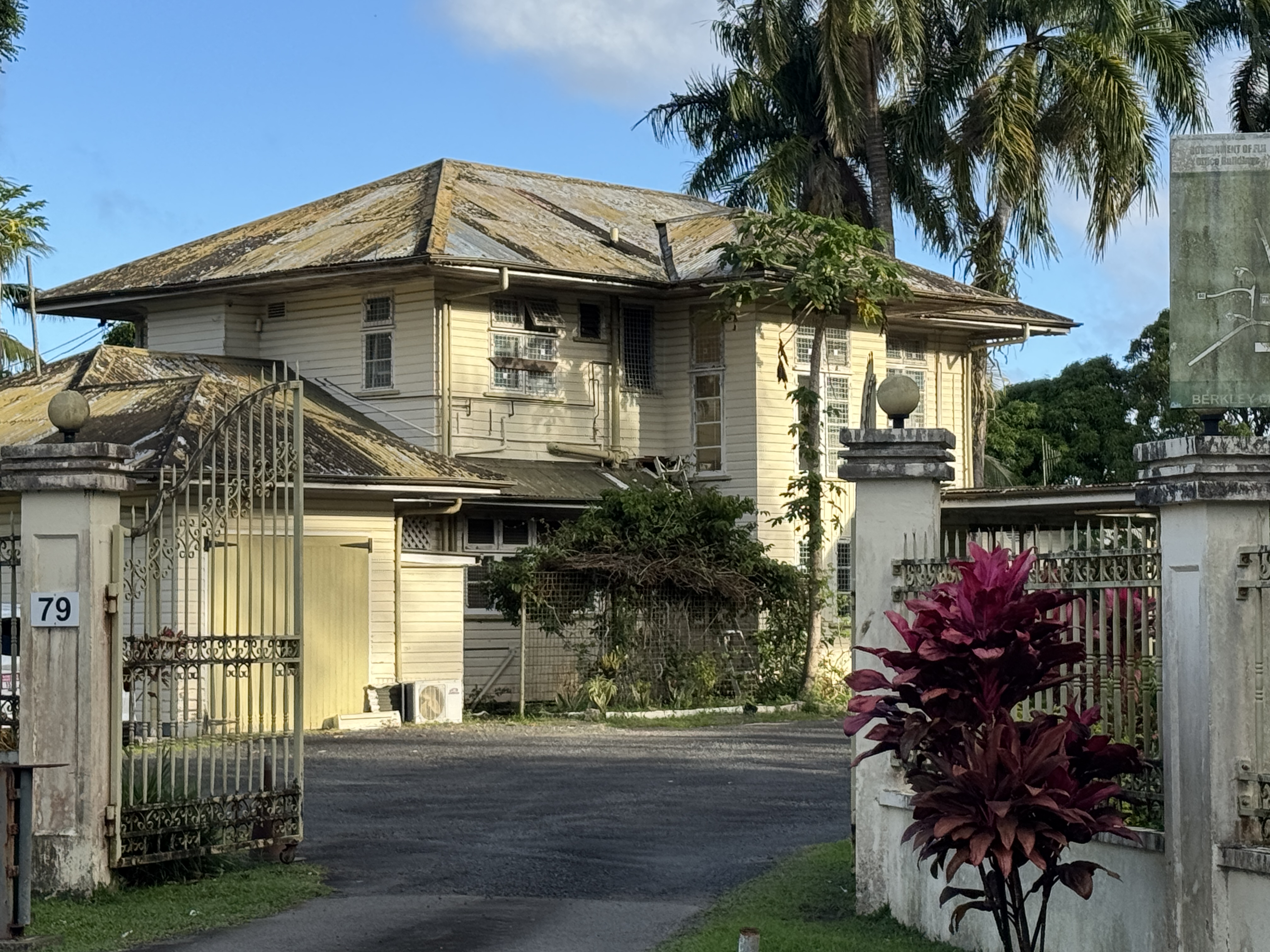
I prefer these more modest government buildings.
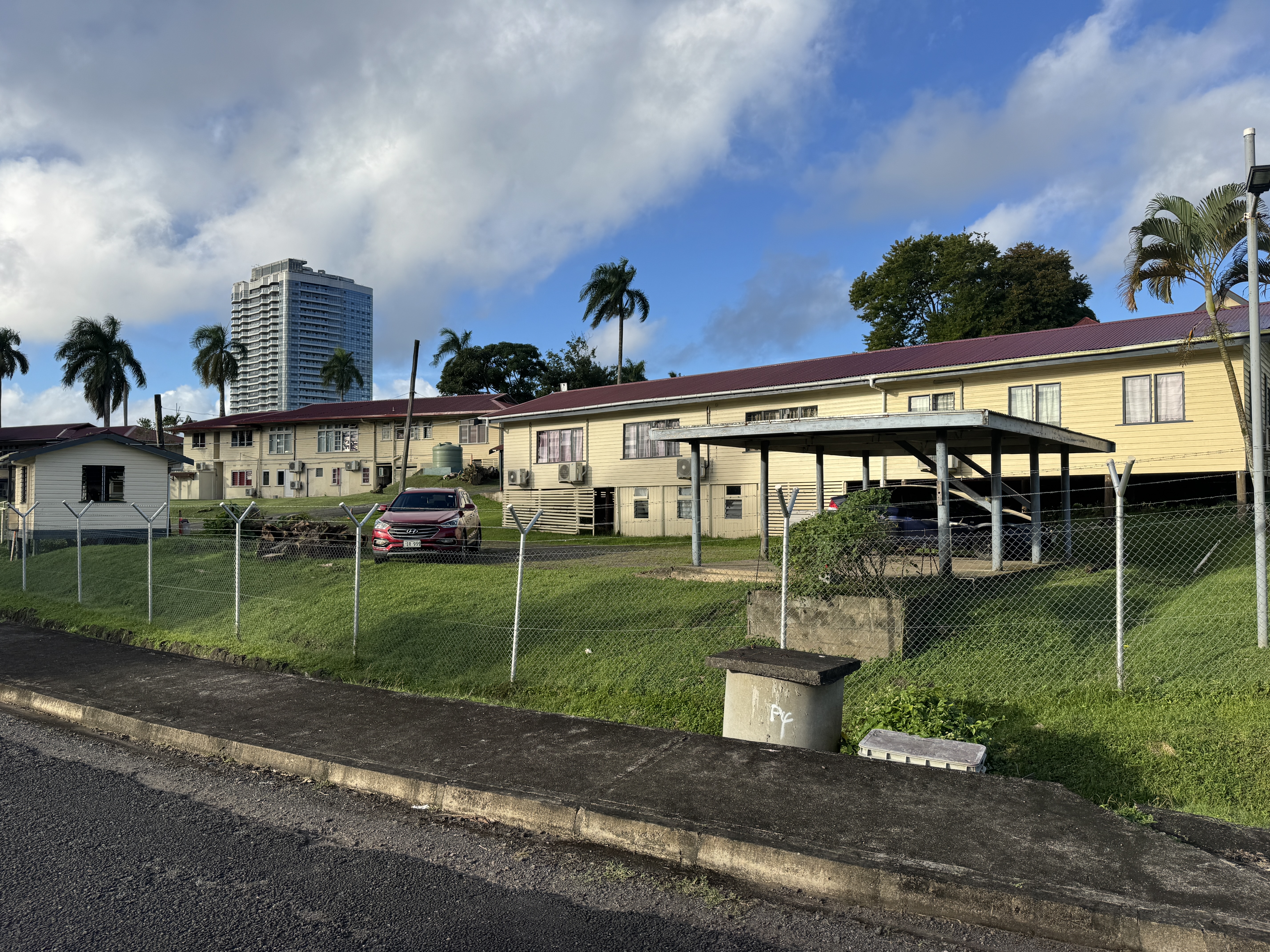
No starchitects here. I'm looking for jeeps of World War II vintage.
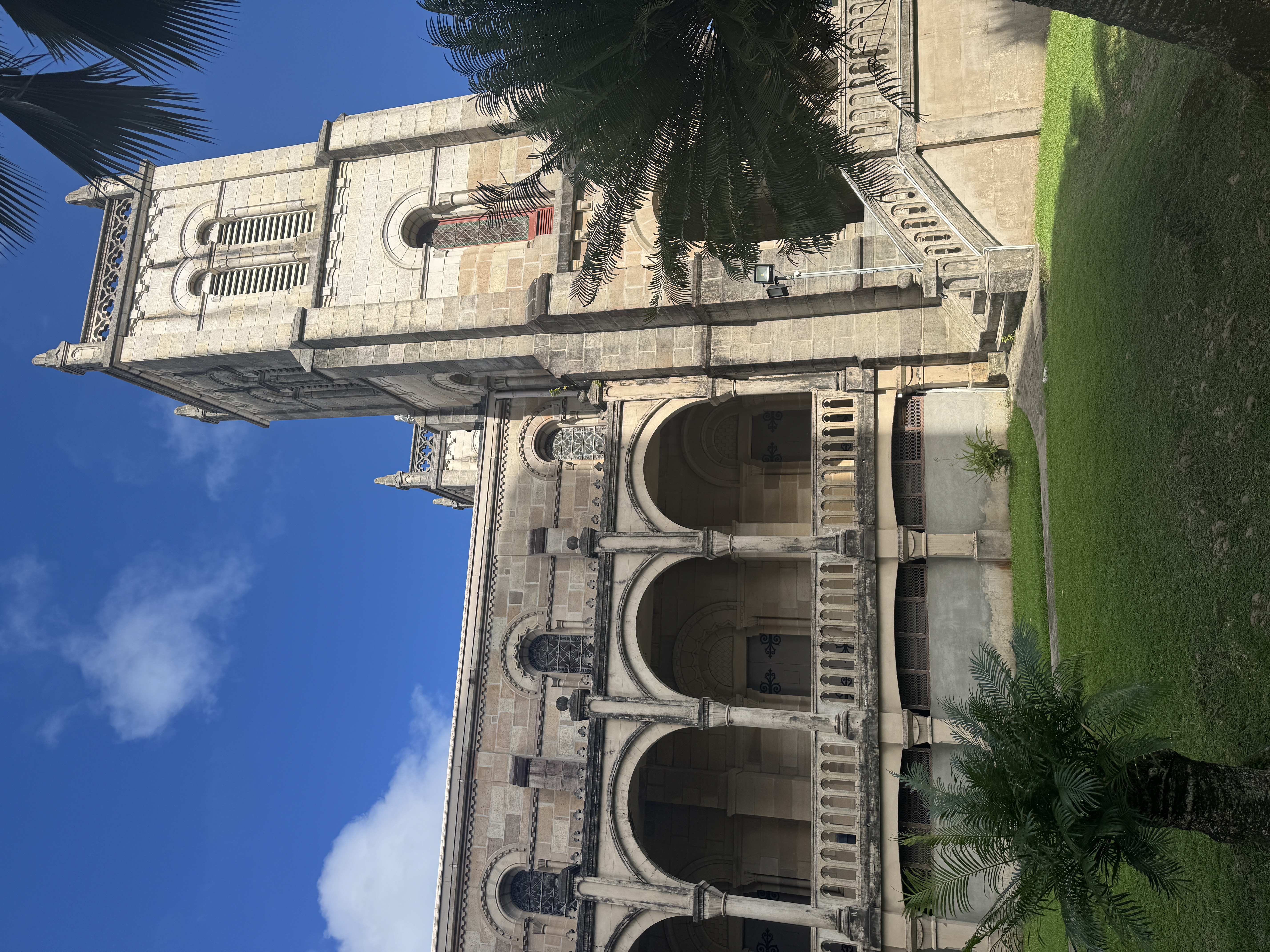
Two churches. First, Sacred Heart Cathedral, built with stone shipped from Australia. It opened in 1902.
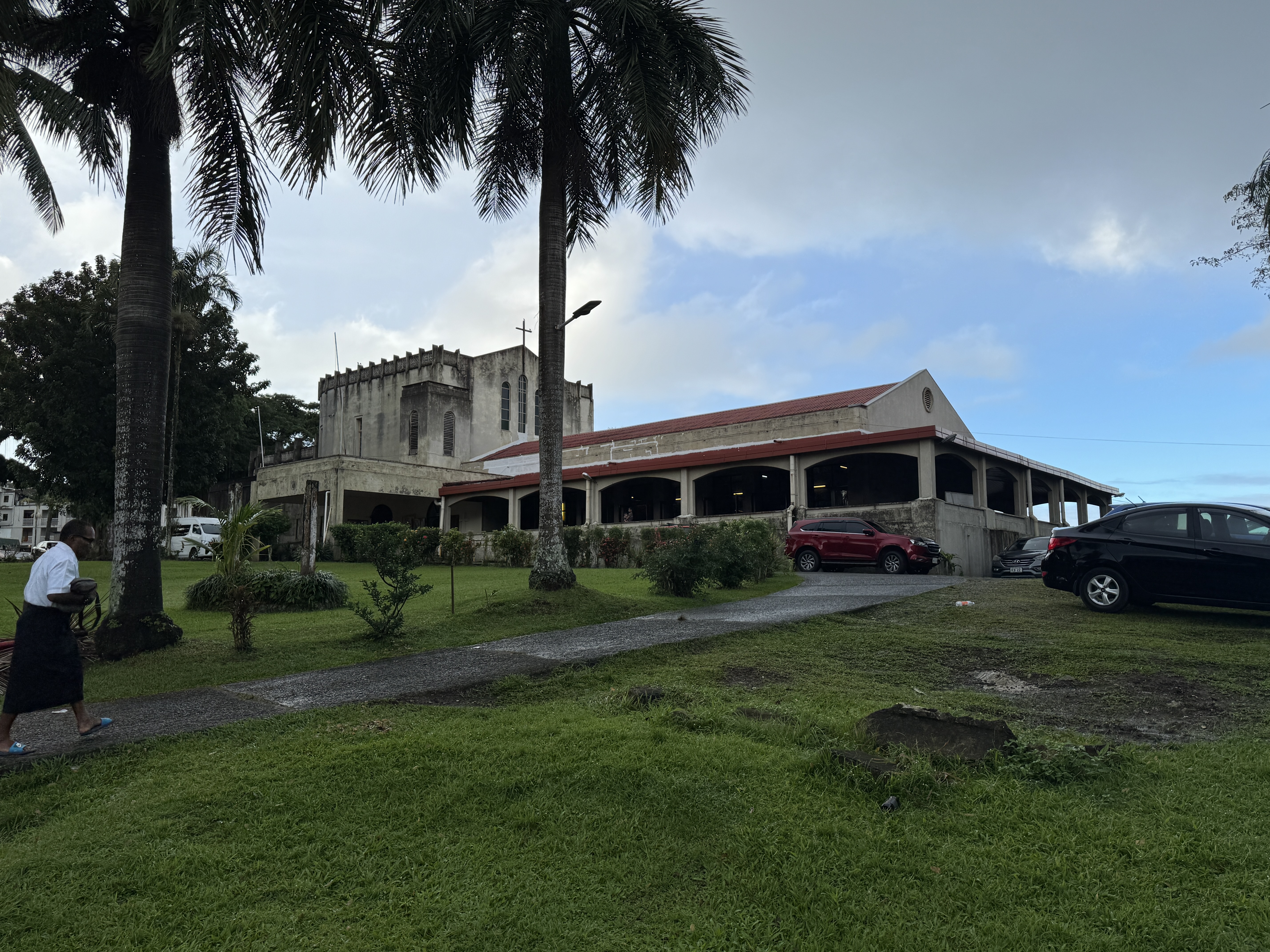
Second, the Anglican Holy Trinity Cathedral began in 1940 and consecrated in 1953. It replaced an earlier building from 1886.
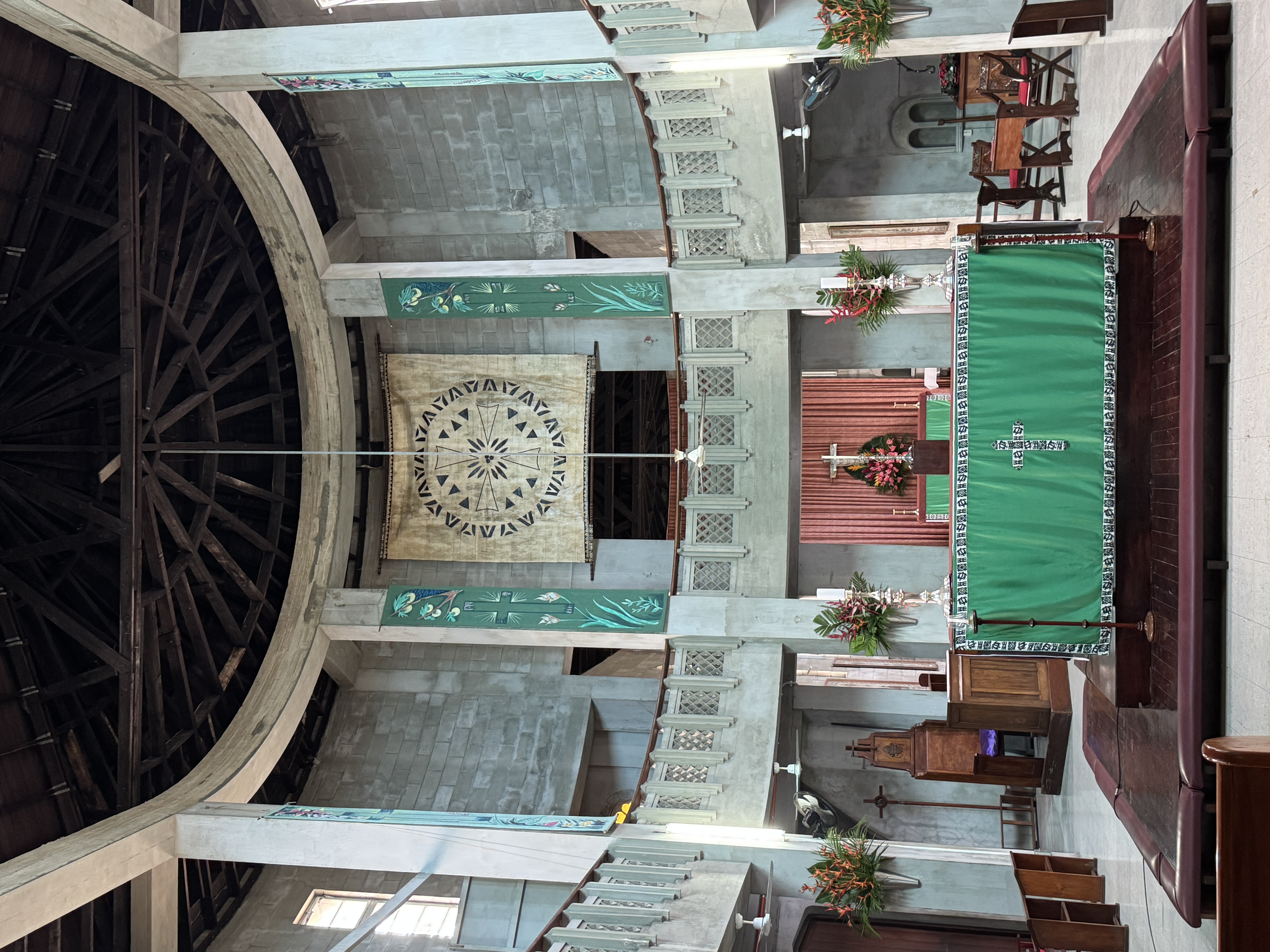
The altar.
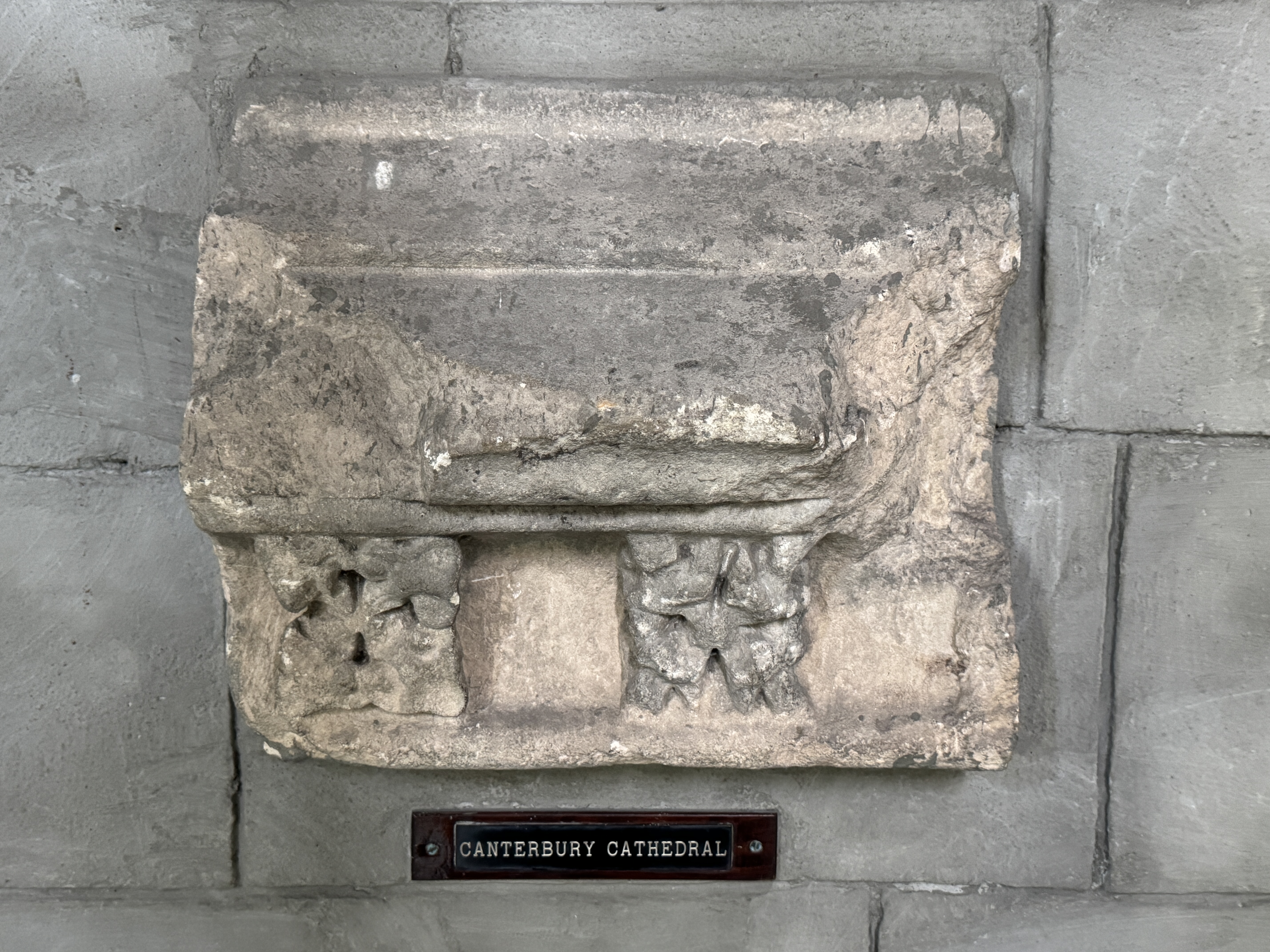
Imported bits from the home country.
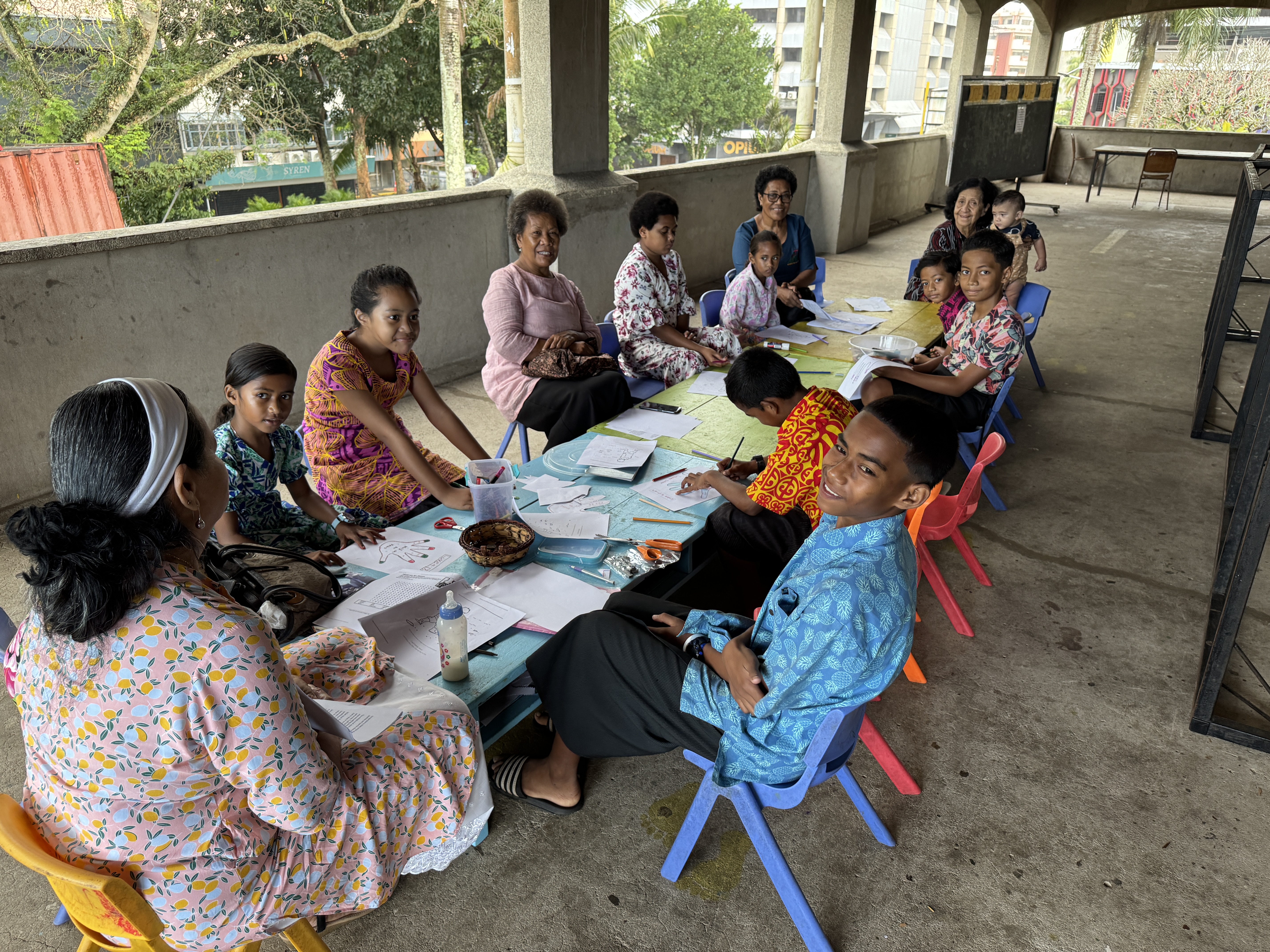
Sunday school.
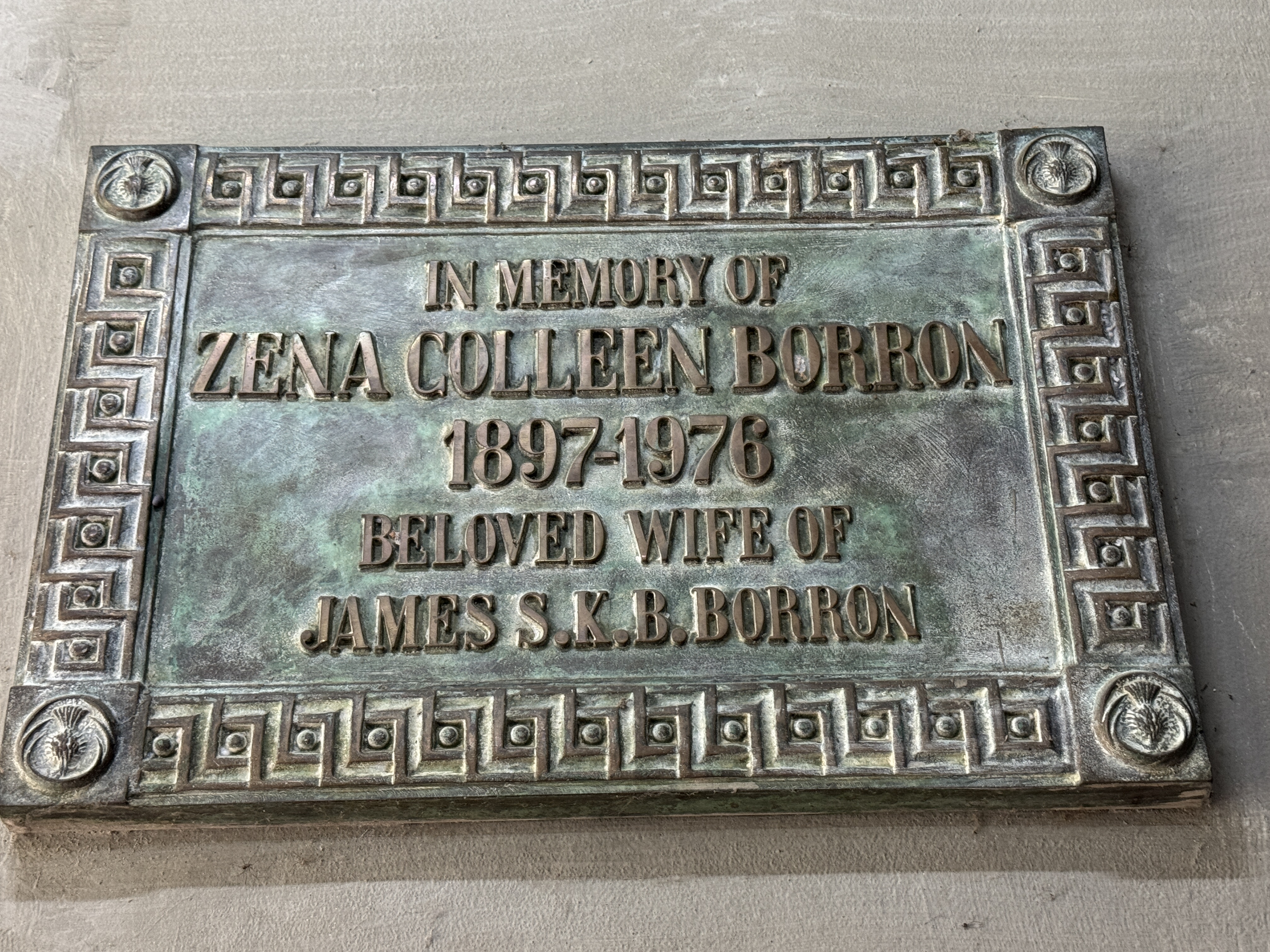
Do we know anything about the Borrons? No? Hold your horses.
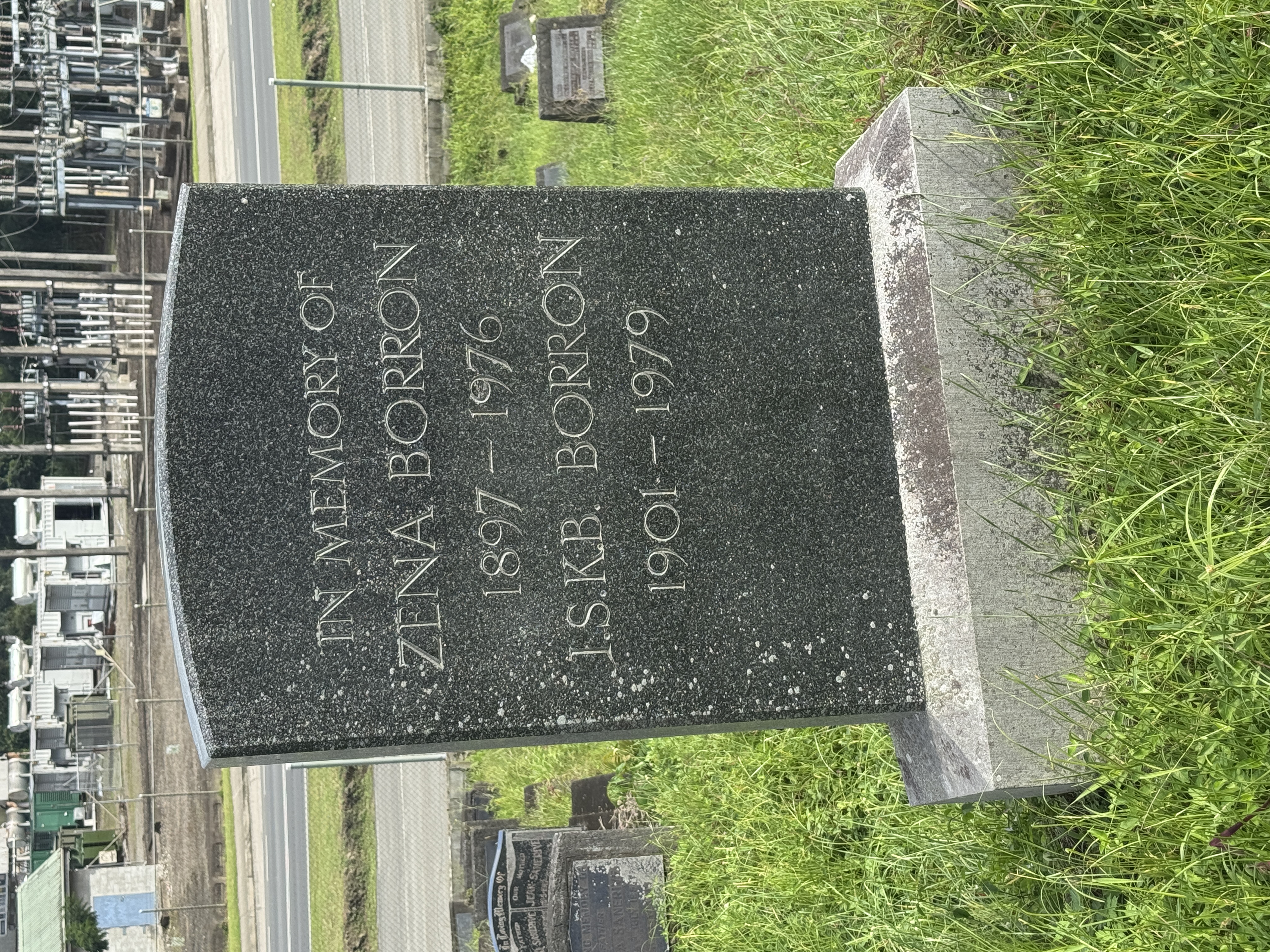
Here they are.
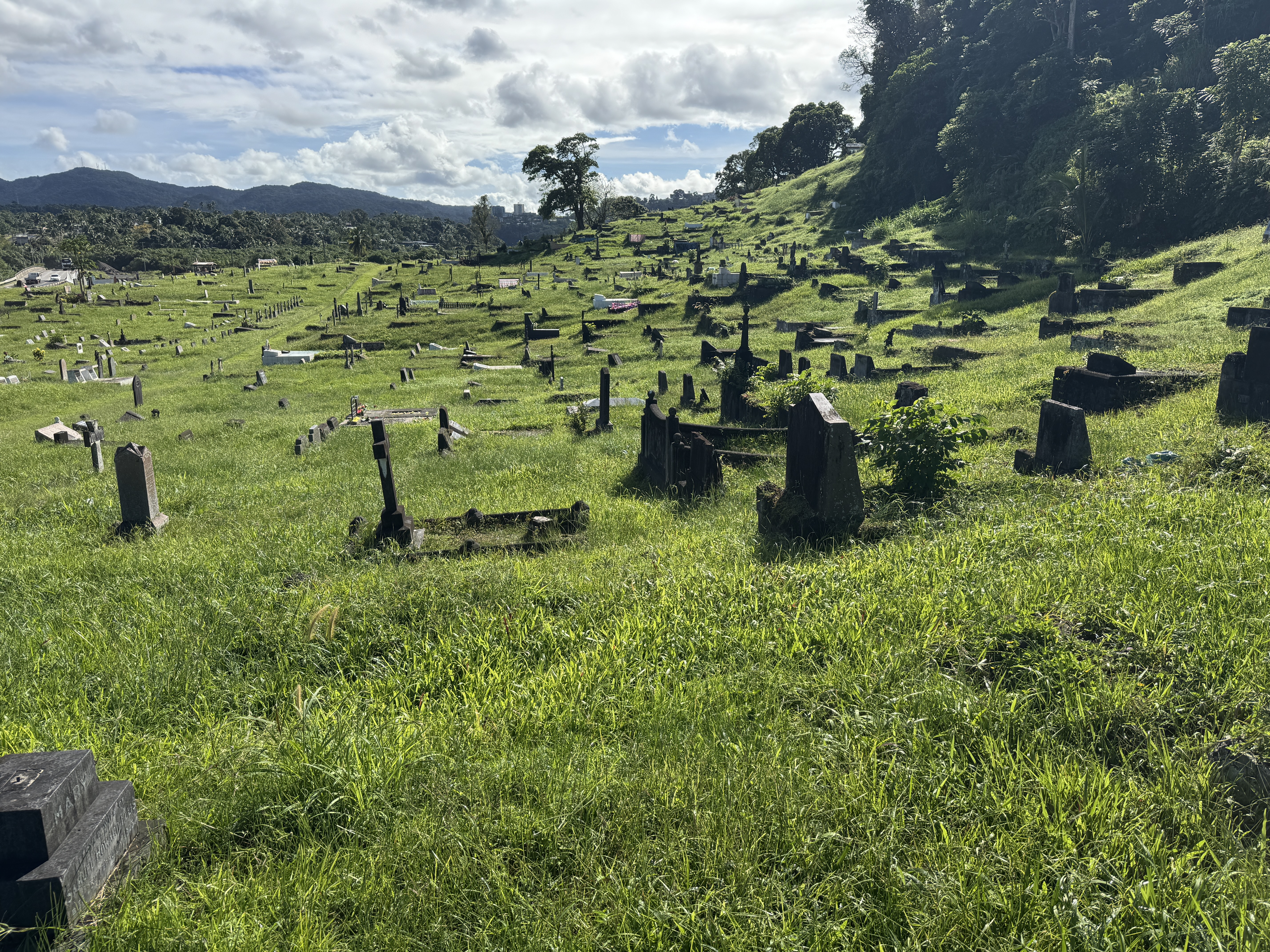
They're in this, the none-too-kempt Suva cemetery.
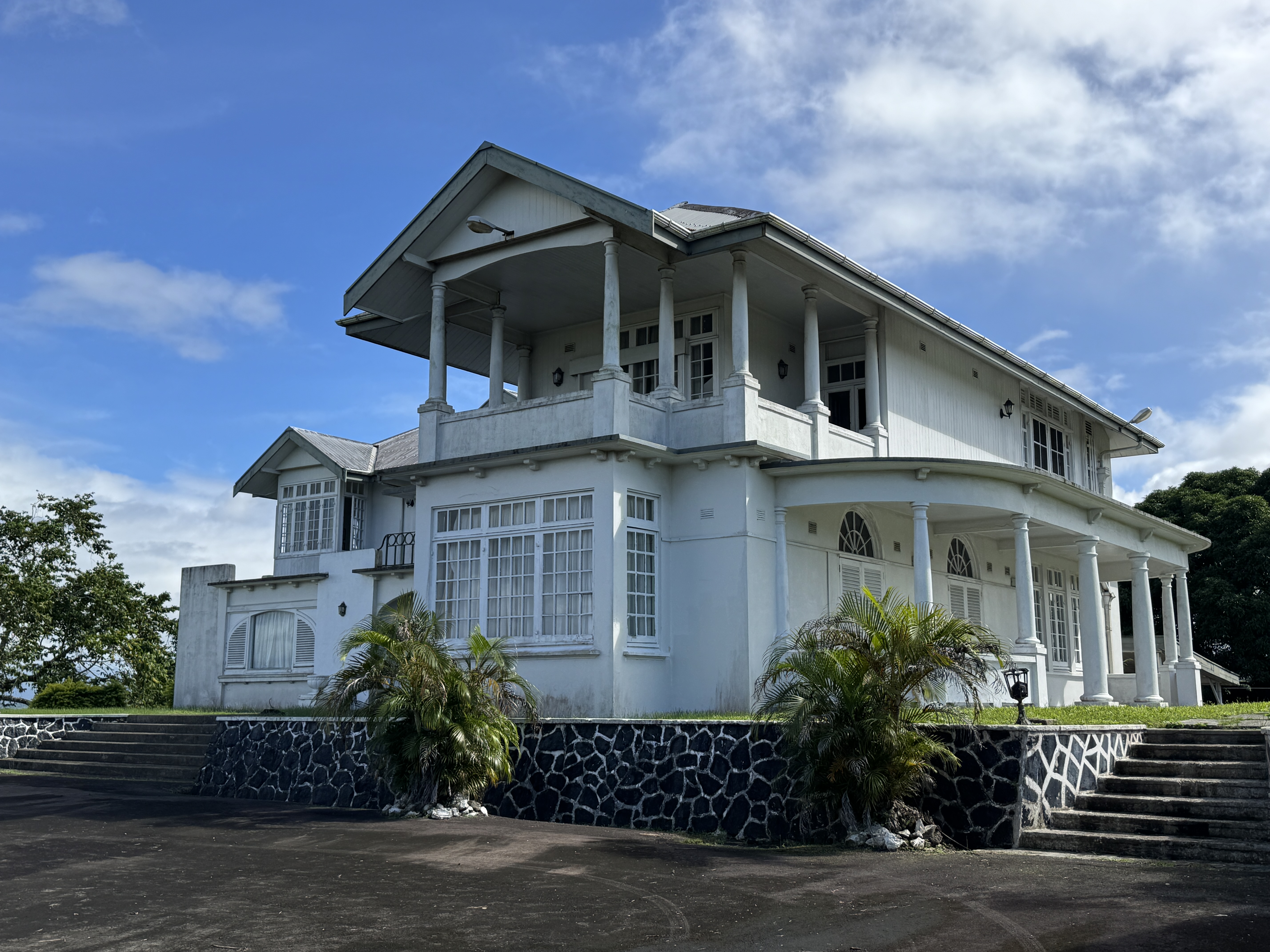
And here's where the Borron's lived. It was built in 1927 on land owned by Borron's father. It was taken during World War II by New Zealand and Amercan military forces, but Borron got a chance to live here when in 1959 he retired from his Mago Island plantation. In 1975 he willed the house to Fiji's National Trust, which has used it as a state guesthouse.
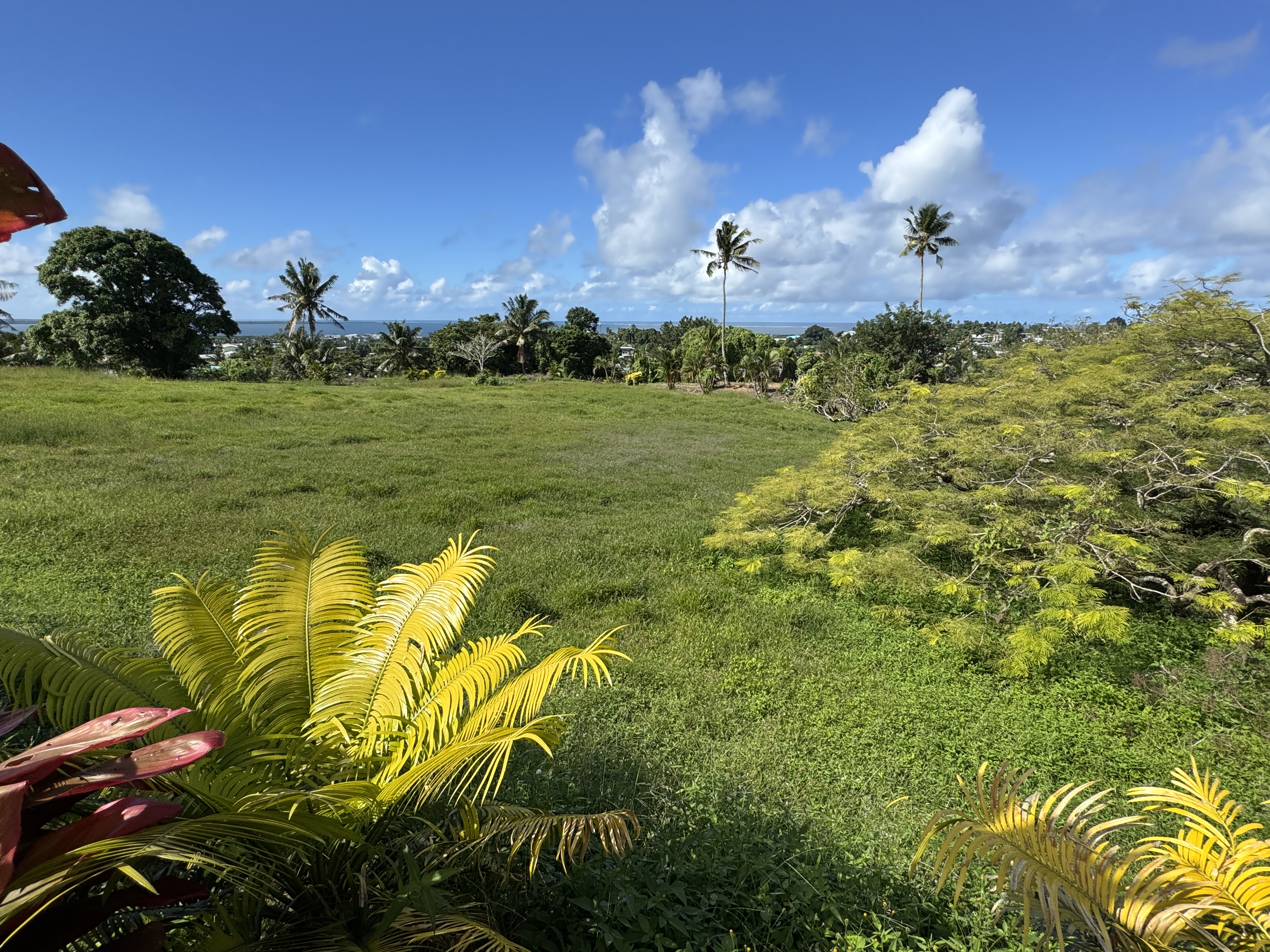
The house is just over a mile northeast of the Triangle and sits on what's left of the 90-acres purchased in 1890 by Borron's father.
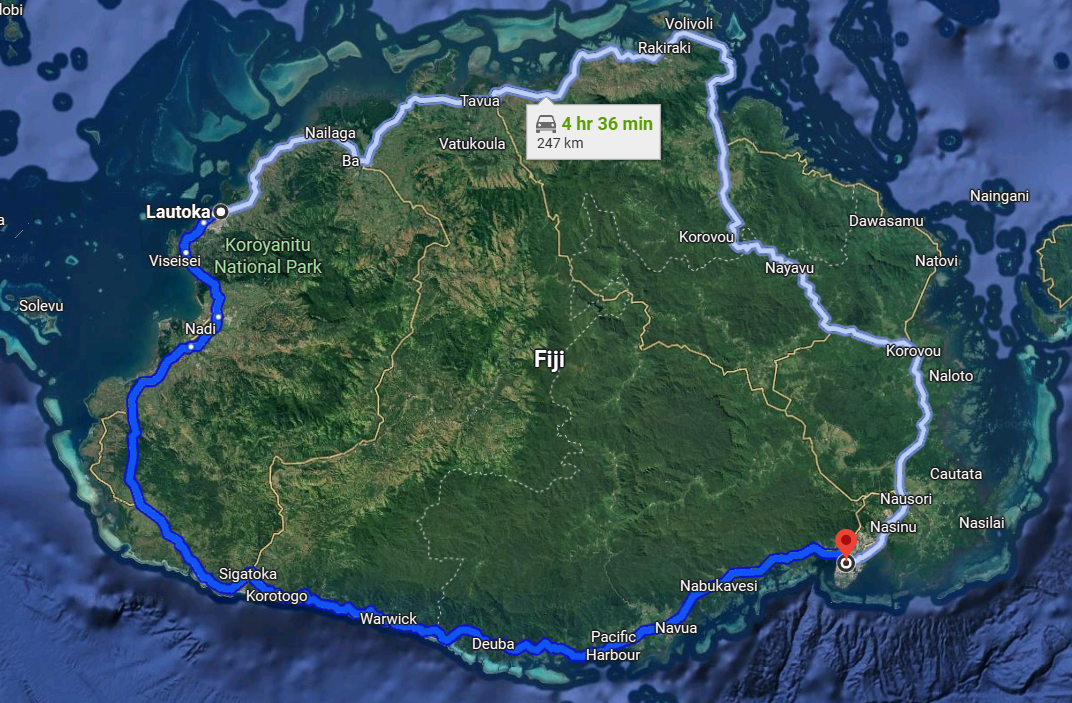
Two ways to get from Suva to Lautoka, Clockwise is about an hour shorter, assuming you believe the lady, who's a speedburner.
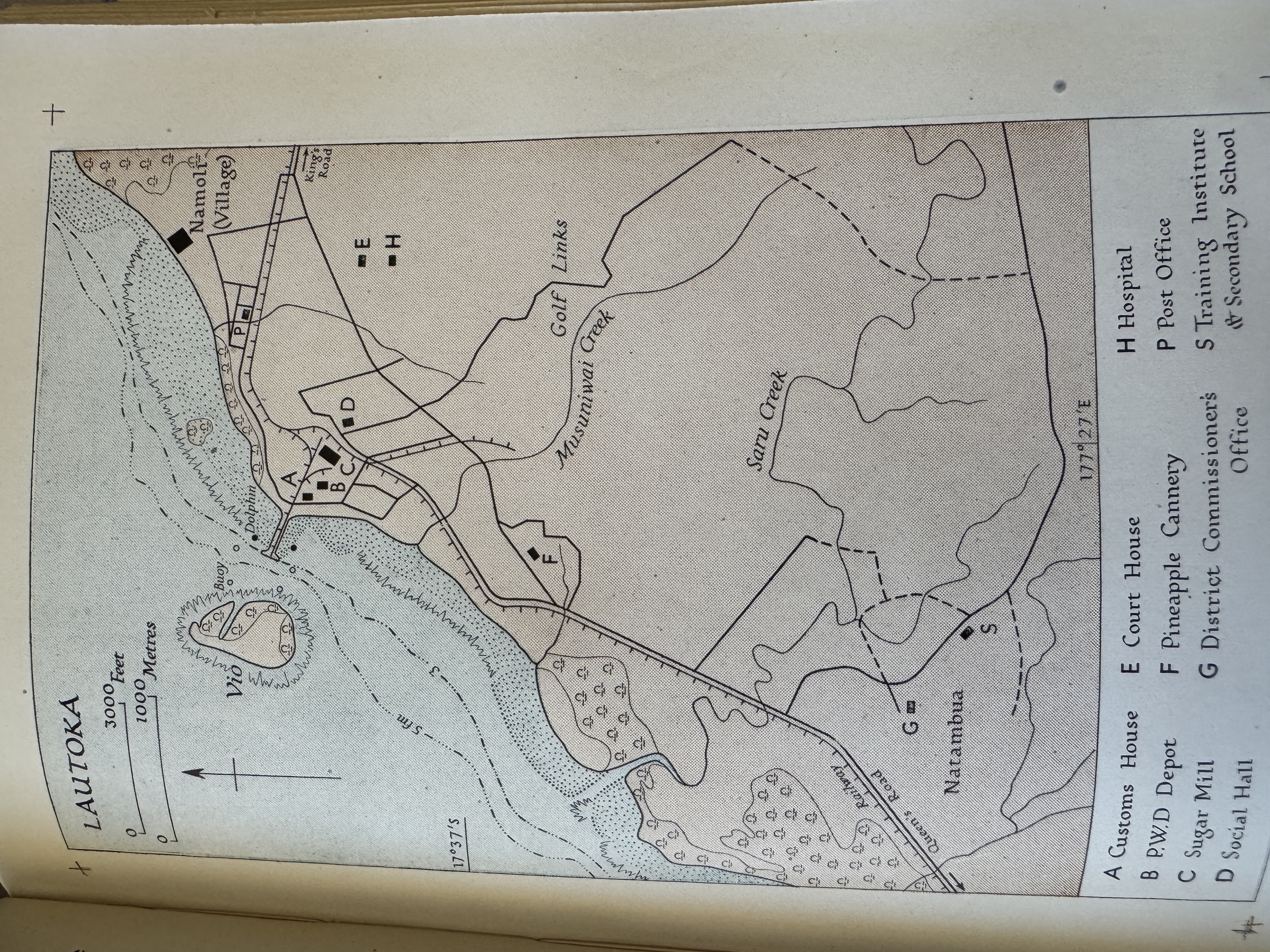
Lautoka is Fiji's center of sugar production. The mill figures prominently on this map, along with the narrow-guage railway that still brings cane into town.
(British Naval Intelligence, Geographical Handbook B.R. 519B, Pacific Islands, vol. 3, 1944, following p. 214.)
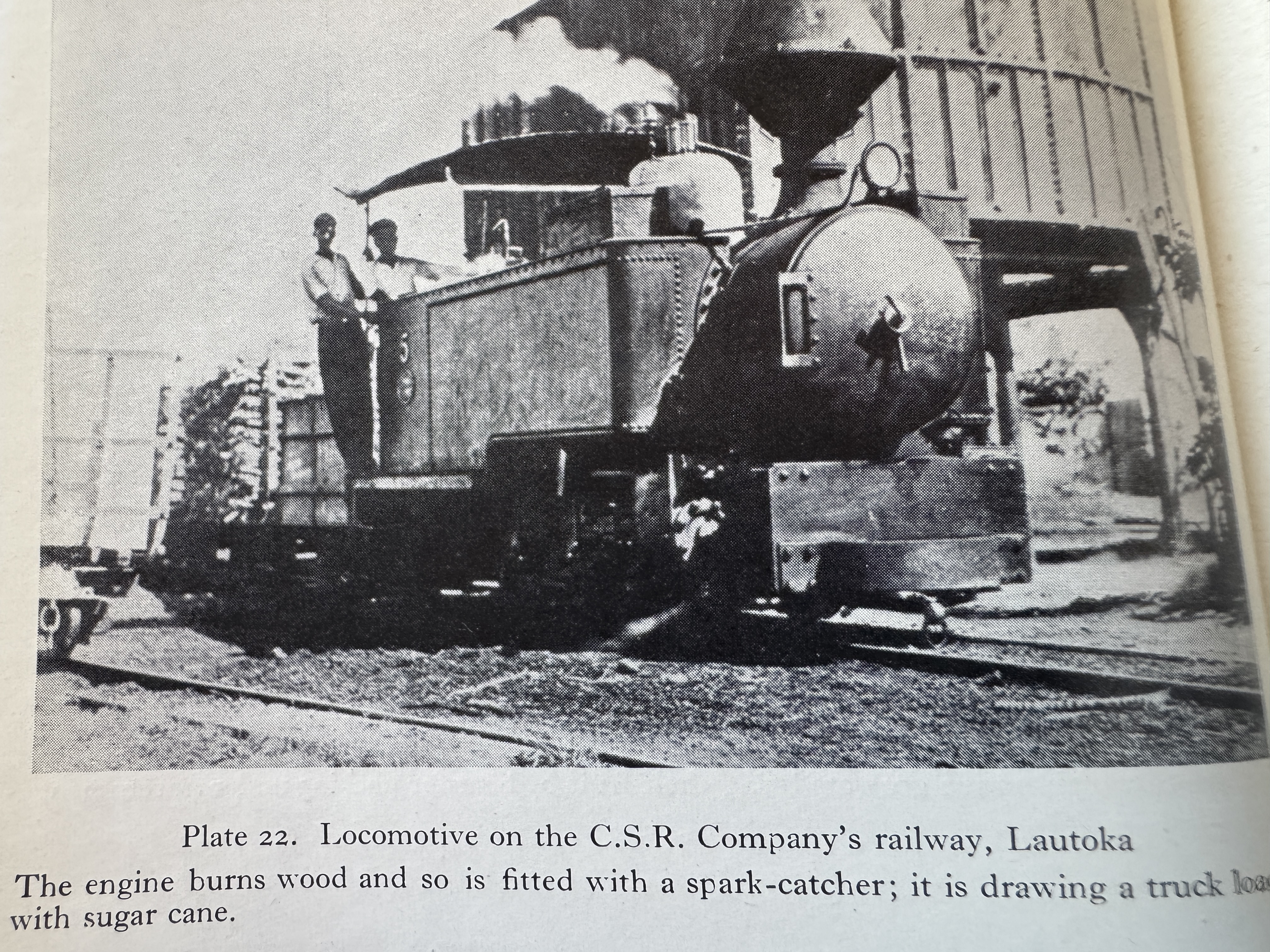
Here's the way cane used to come into town.
(British Naval Intelligence, Geographical Handbook B.R. 519B, Pacific Islands, vol. 3, 1944, following p. 194.)
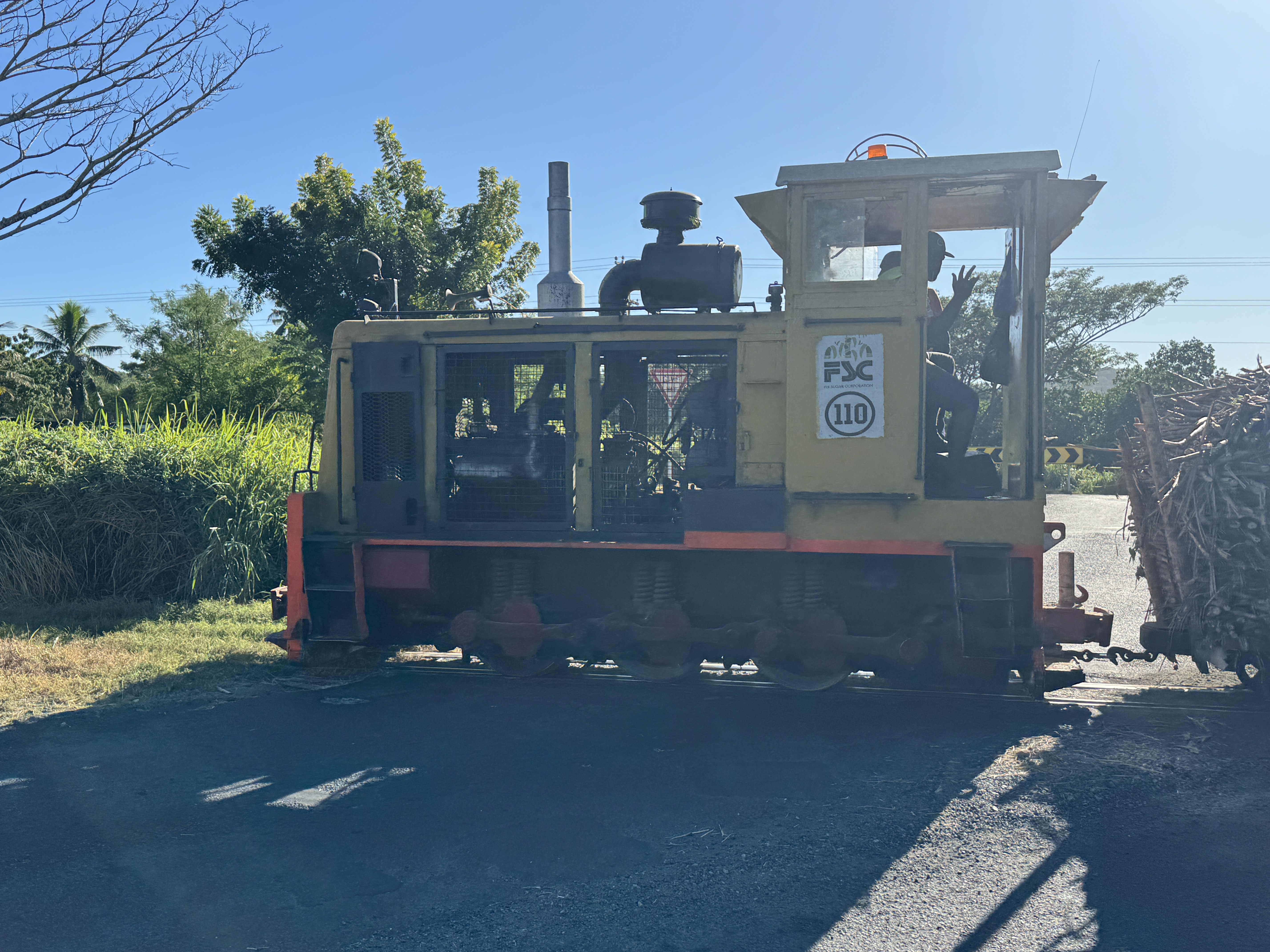
Here's how it comes today.
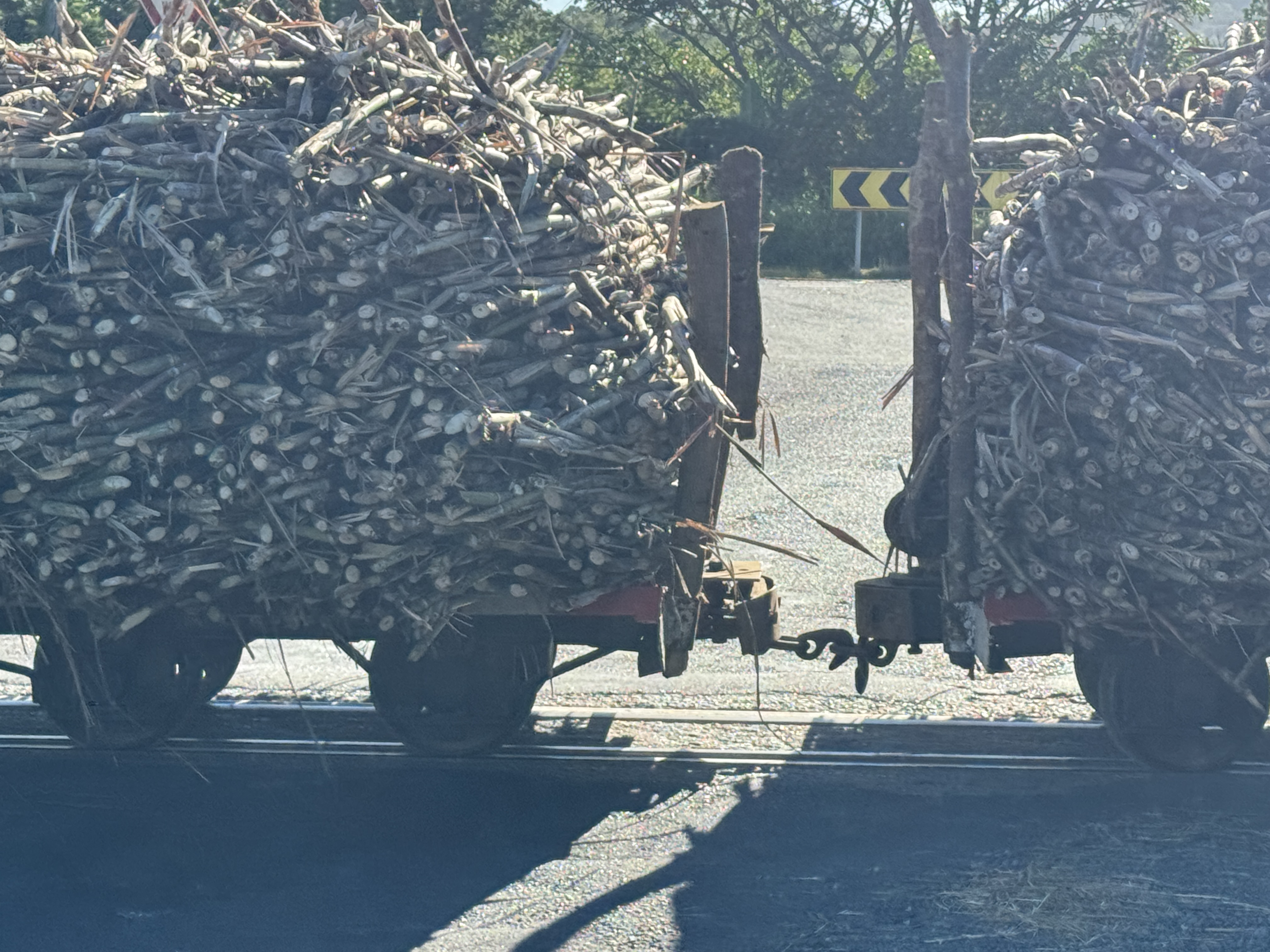
The couplings are about as simple as you can get: hook and eye.
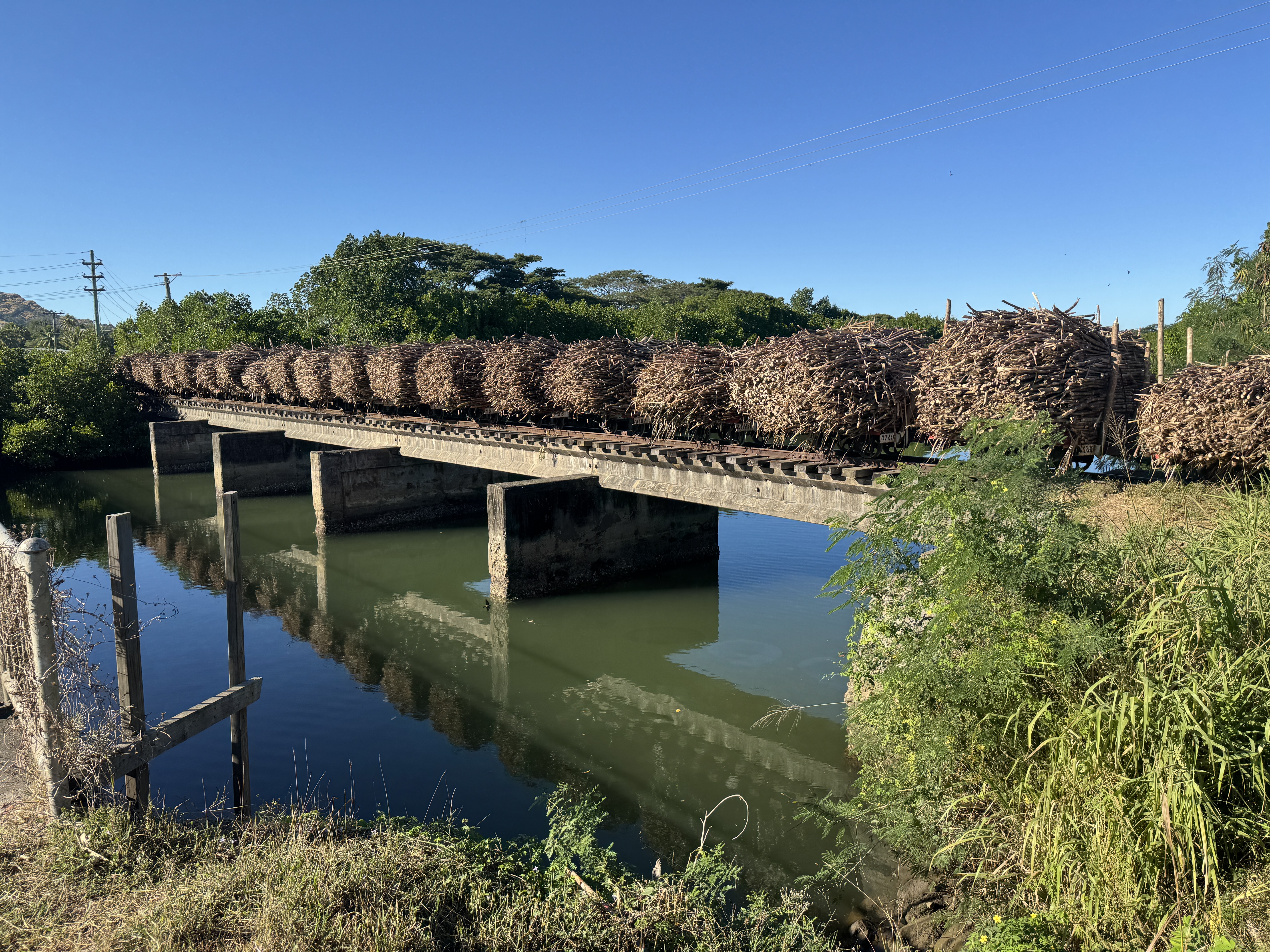
You can run faster than the train moves.
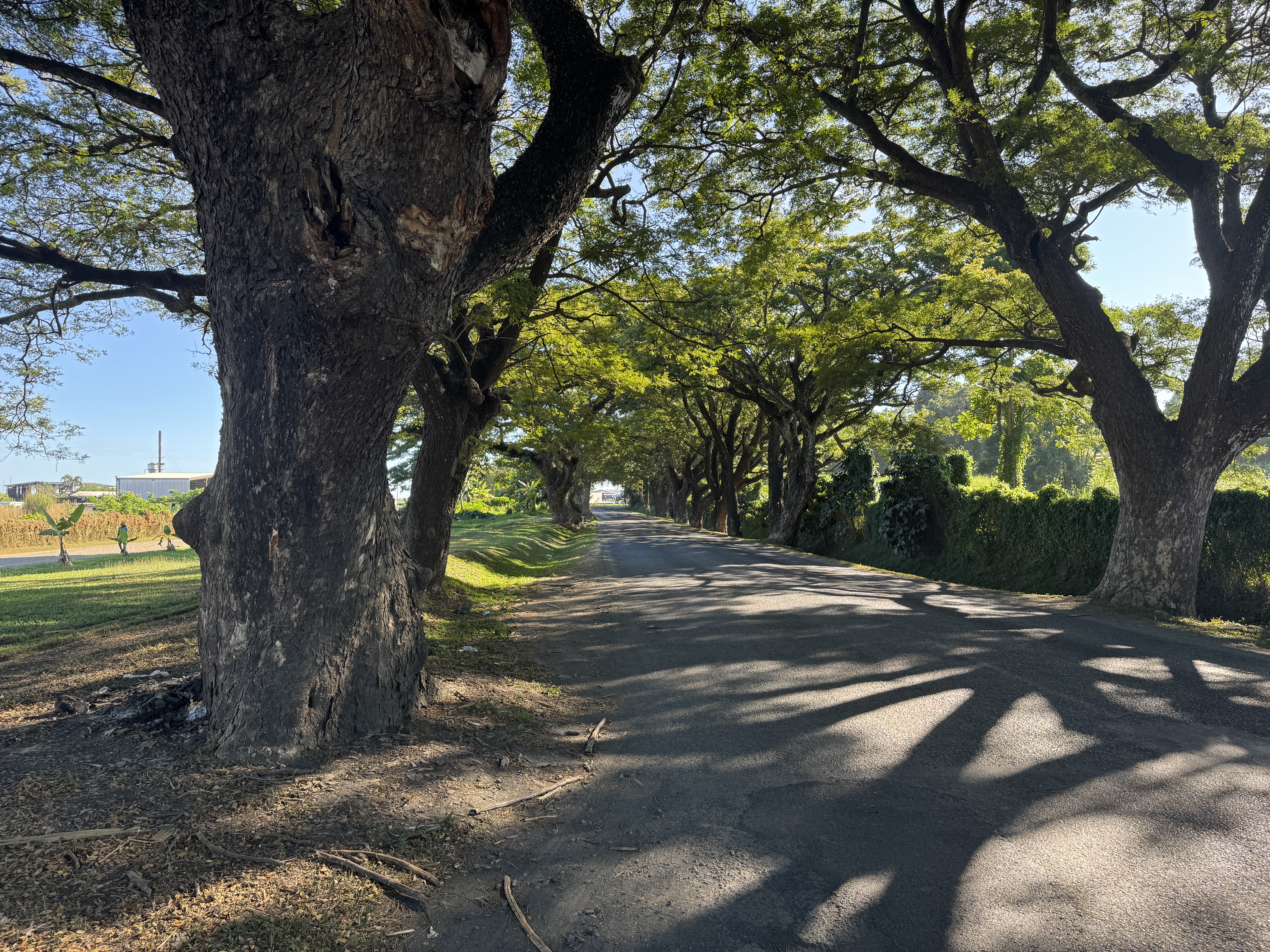
Parts of the road into town are still lined with shade trees.
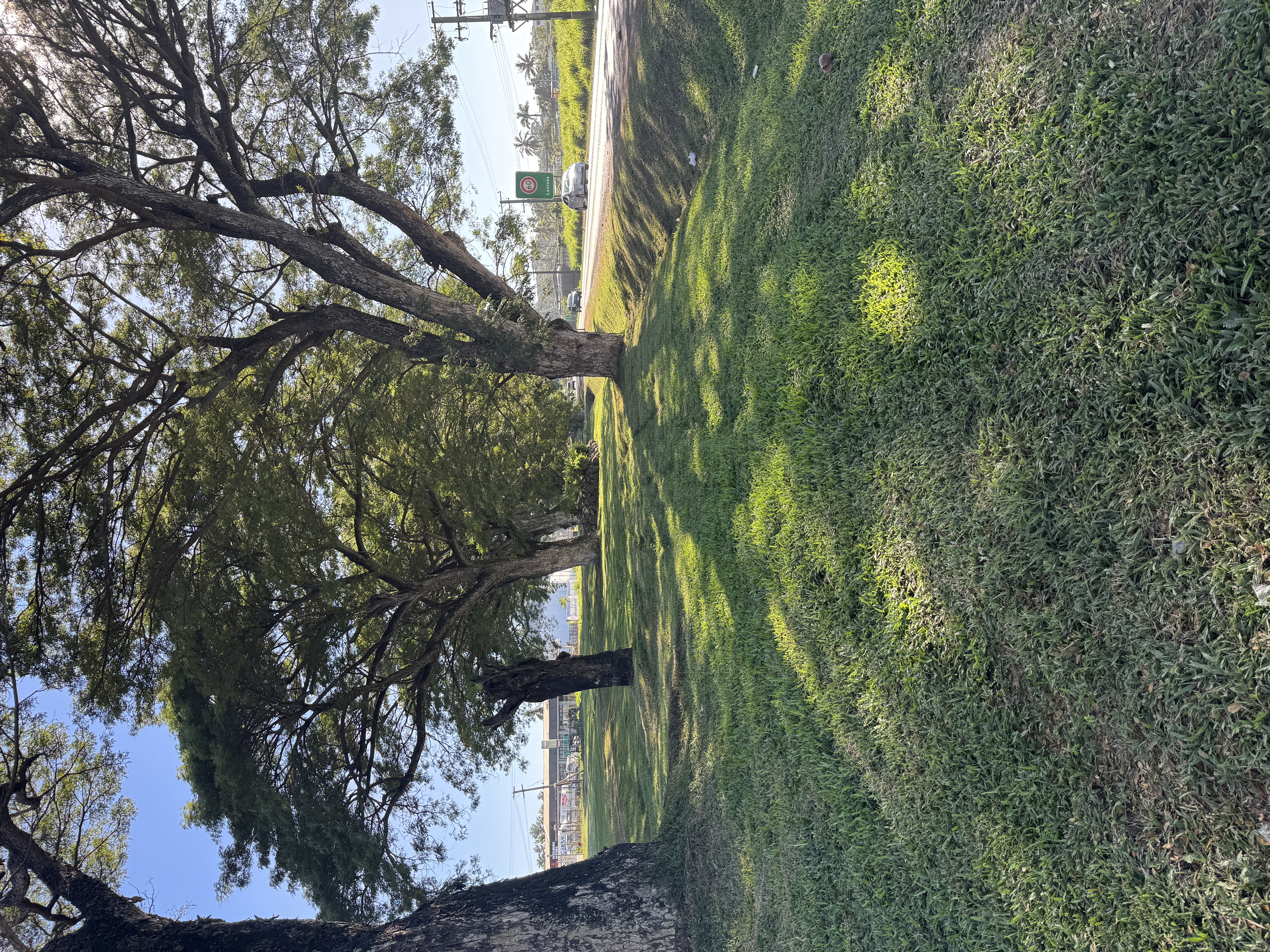
Parts aren't.
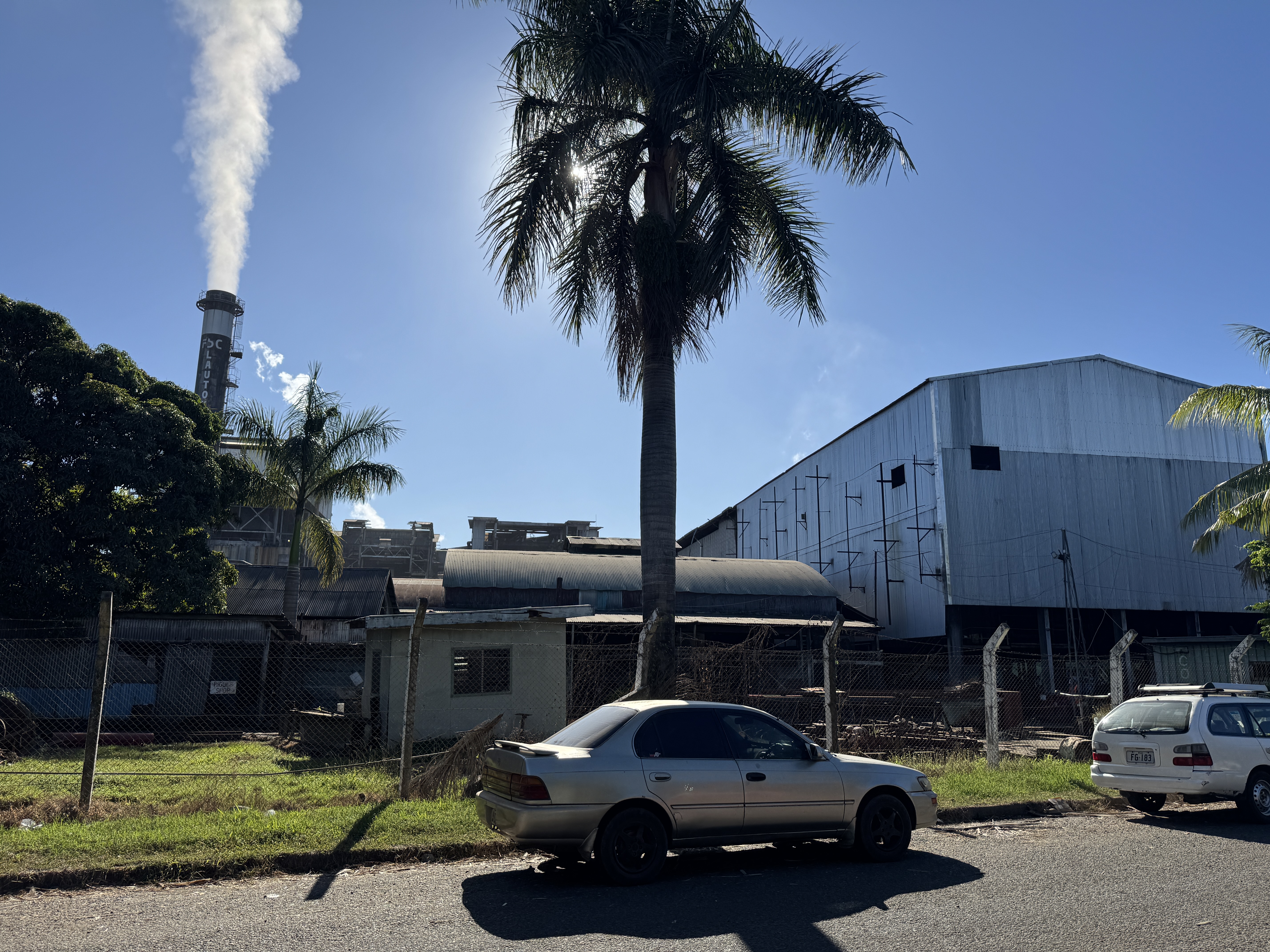
The sugar mill belongs to the Fiji Sugar Corpration, incorporated in 1972 to replace Australia's Colonial Sugar Refining Company. It had been invited to set up shop in Fiji by the same Governor John Thurston we met at the botanical garden back in Suva. The mill opened in 1903.
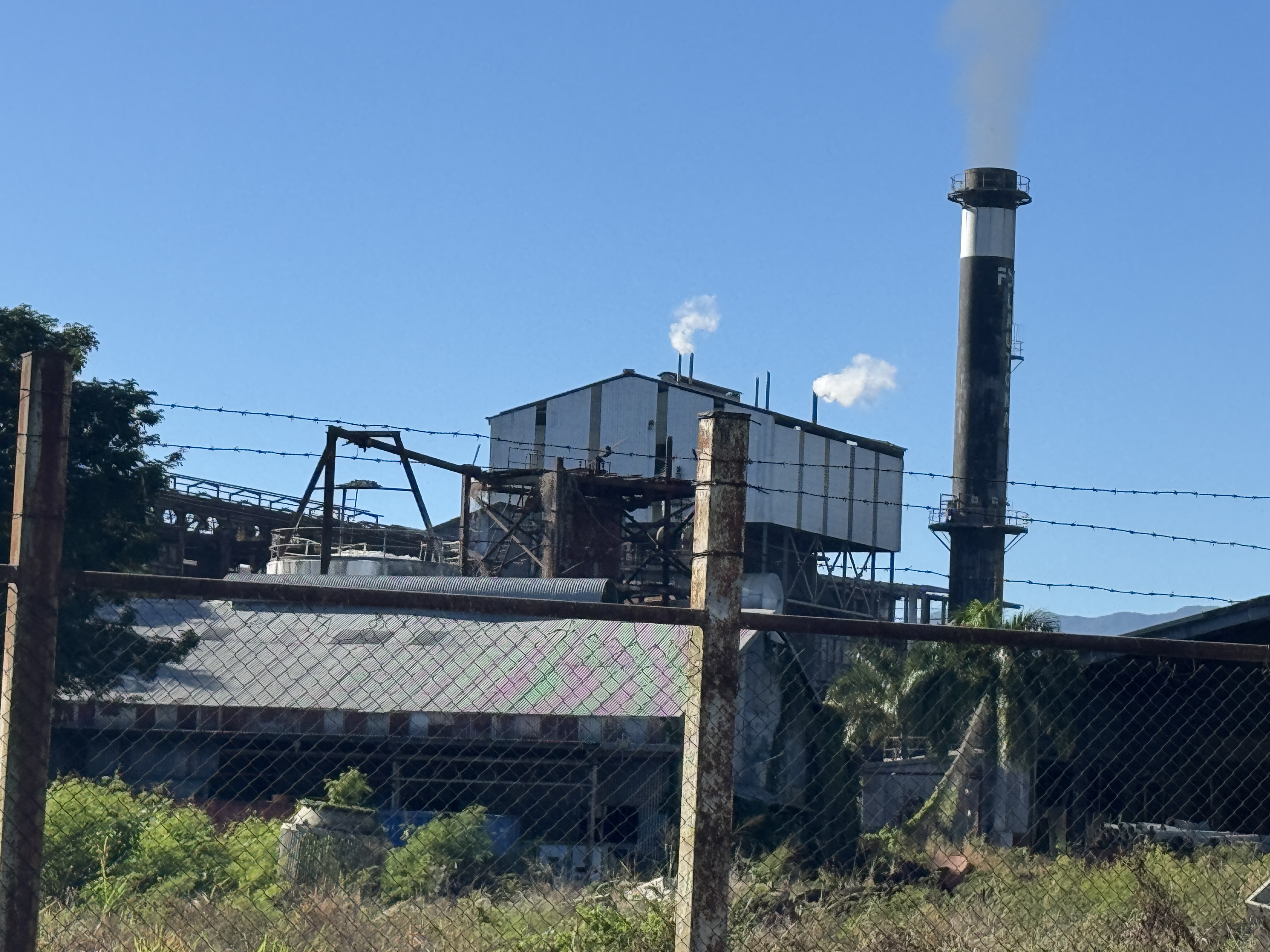
Another drive-by snap.
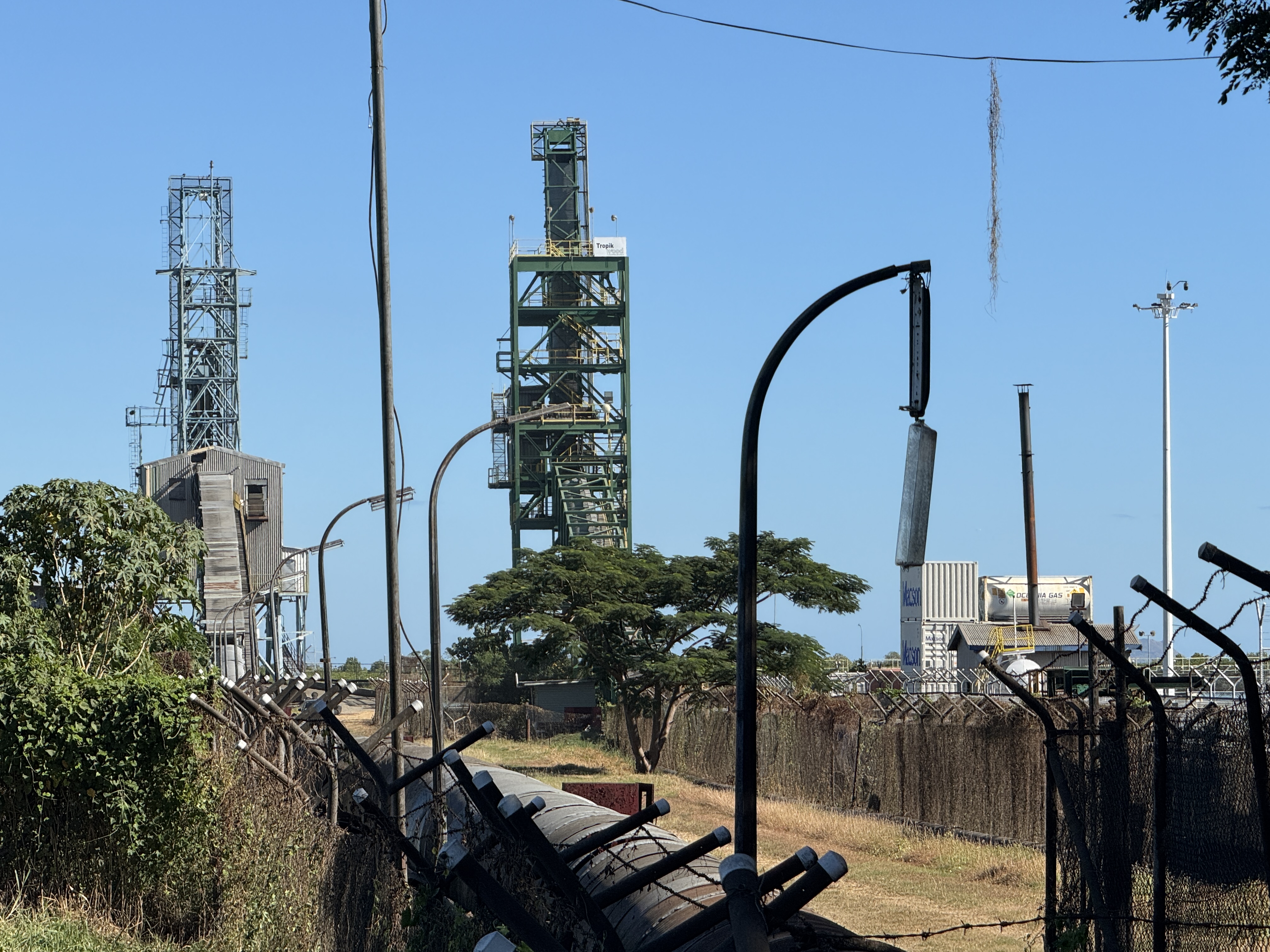
The export dock.
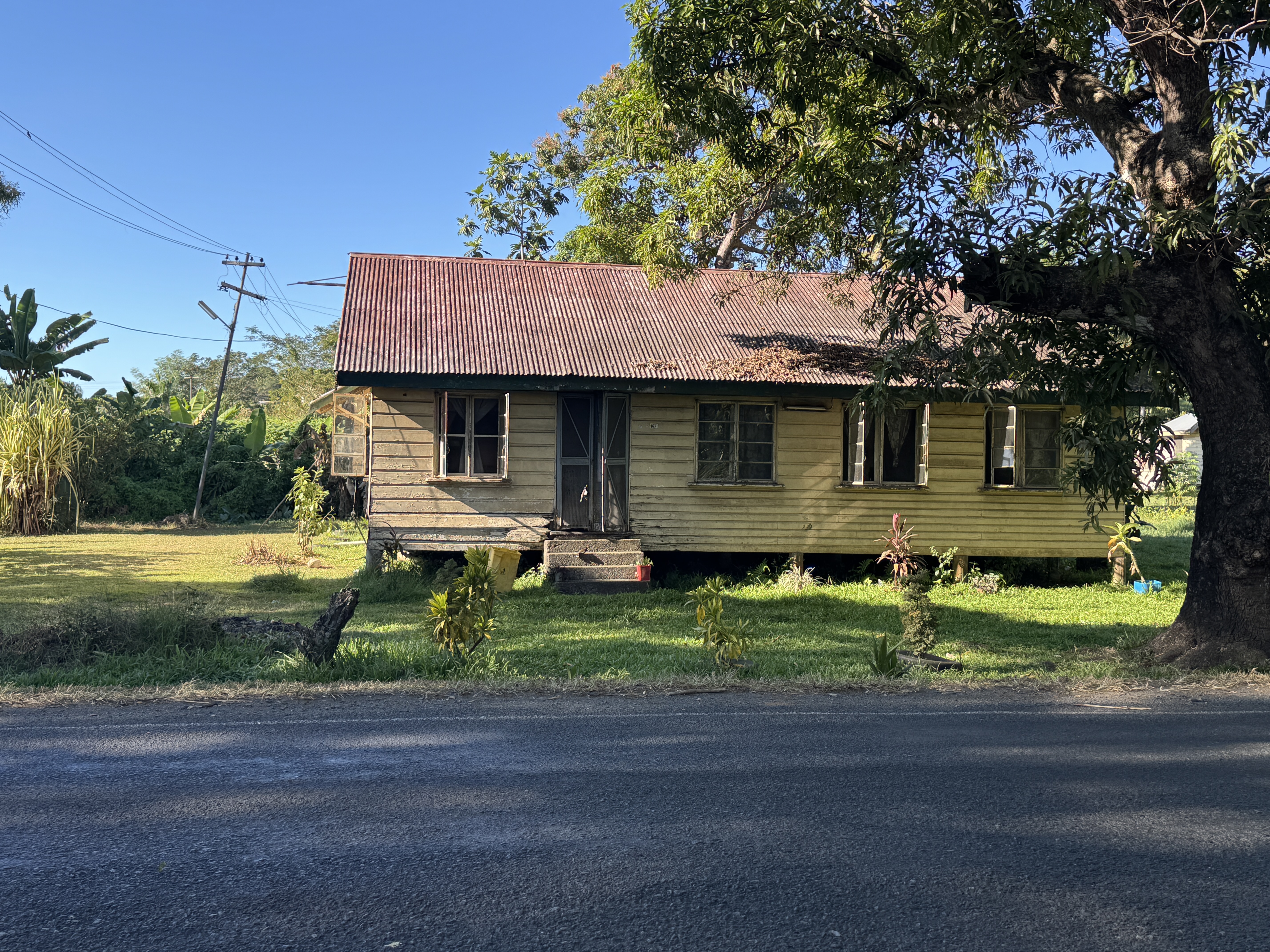
Worker housing.
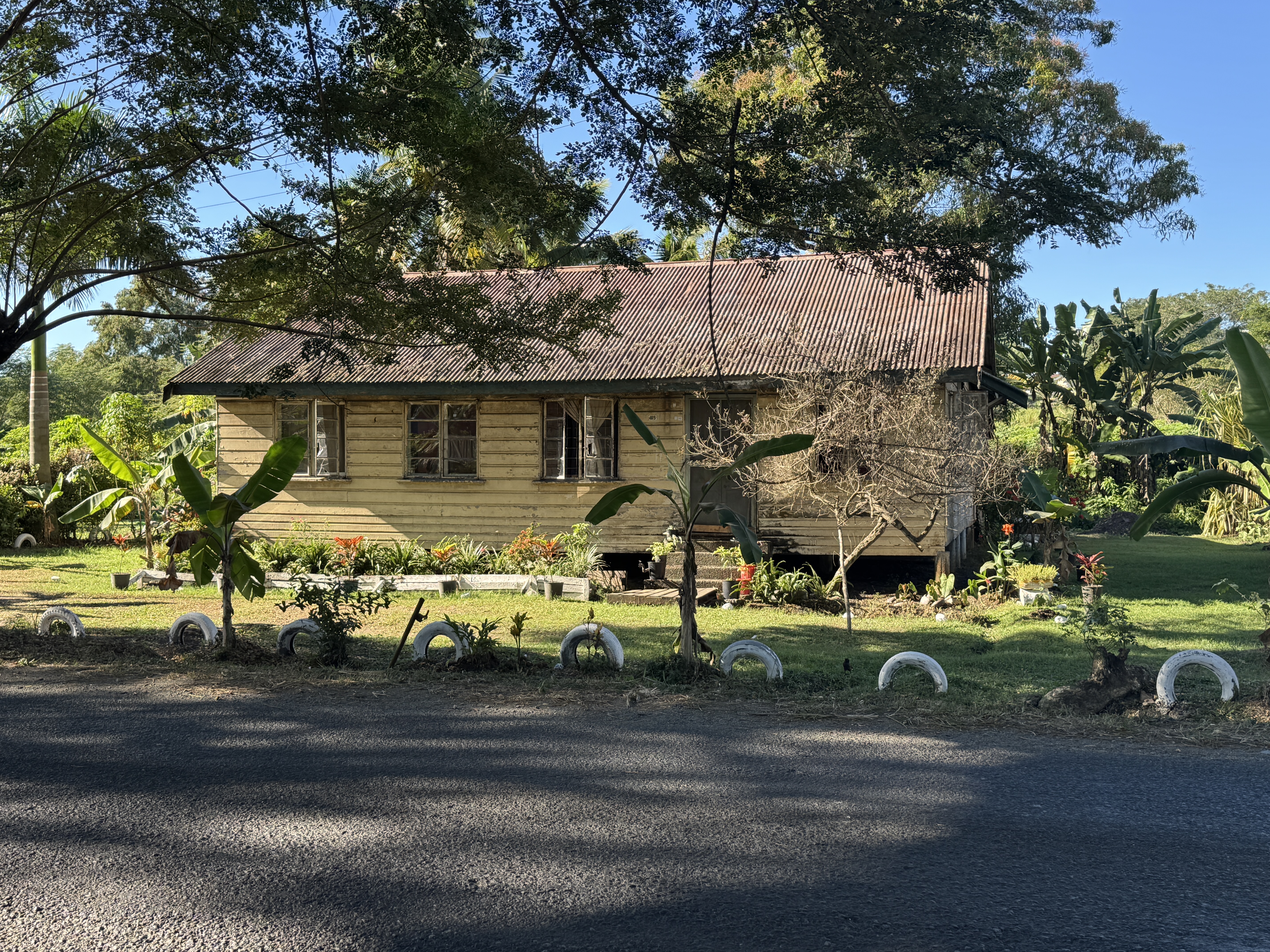
Worker housing with landscaping.
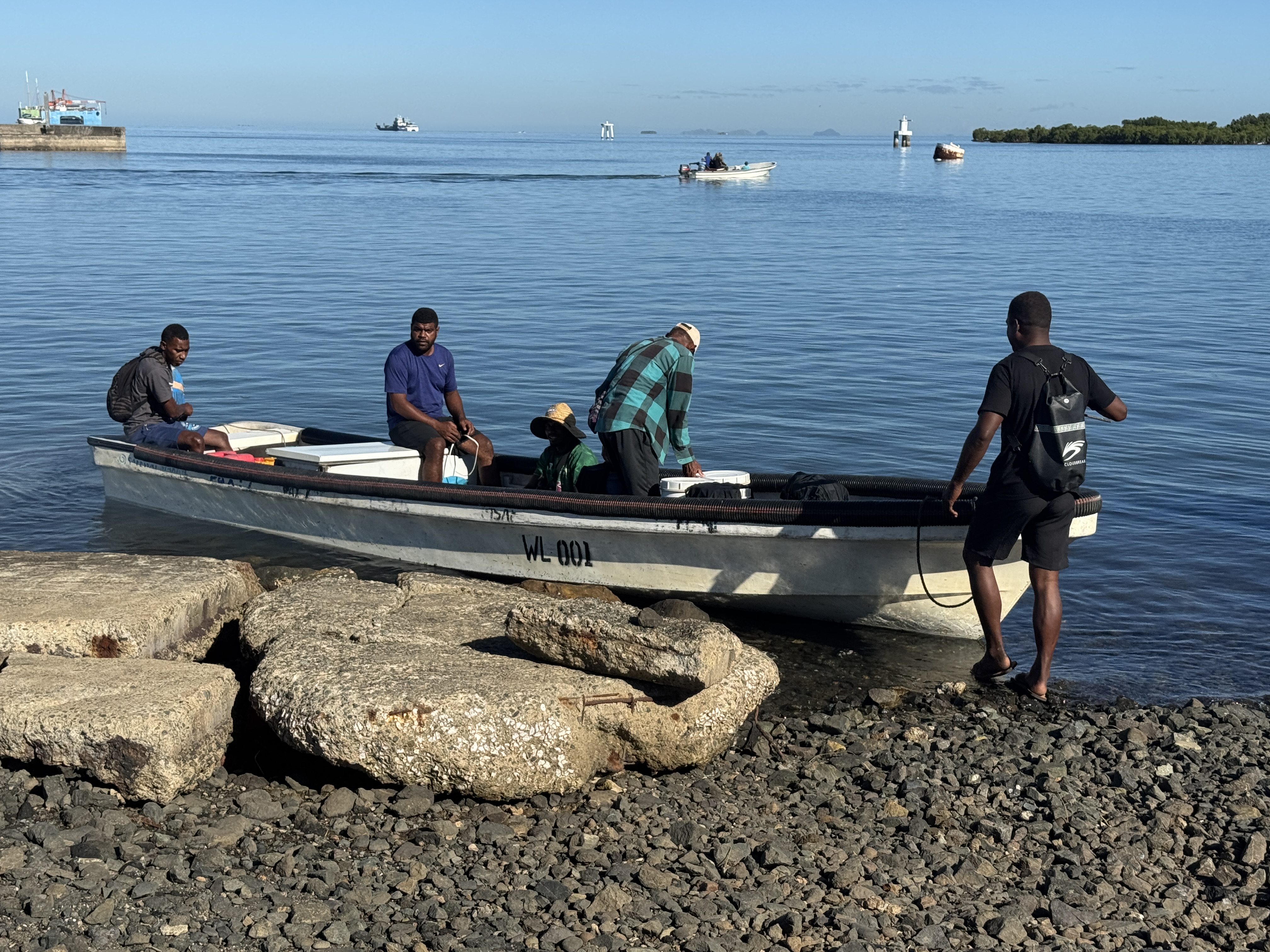
Close to the same wharf, a crew sets out to fish in shallow waters. The catch will be sold at a nearby fish market.
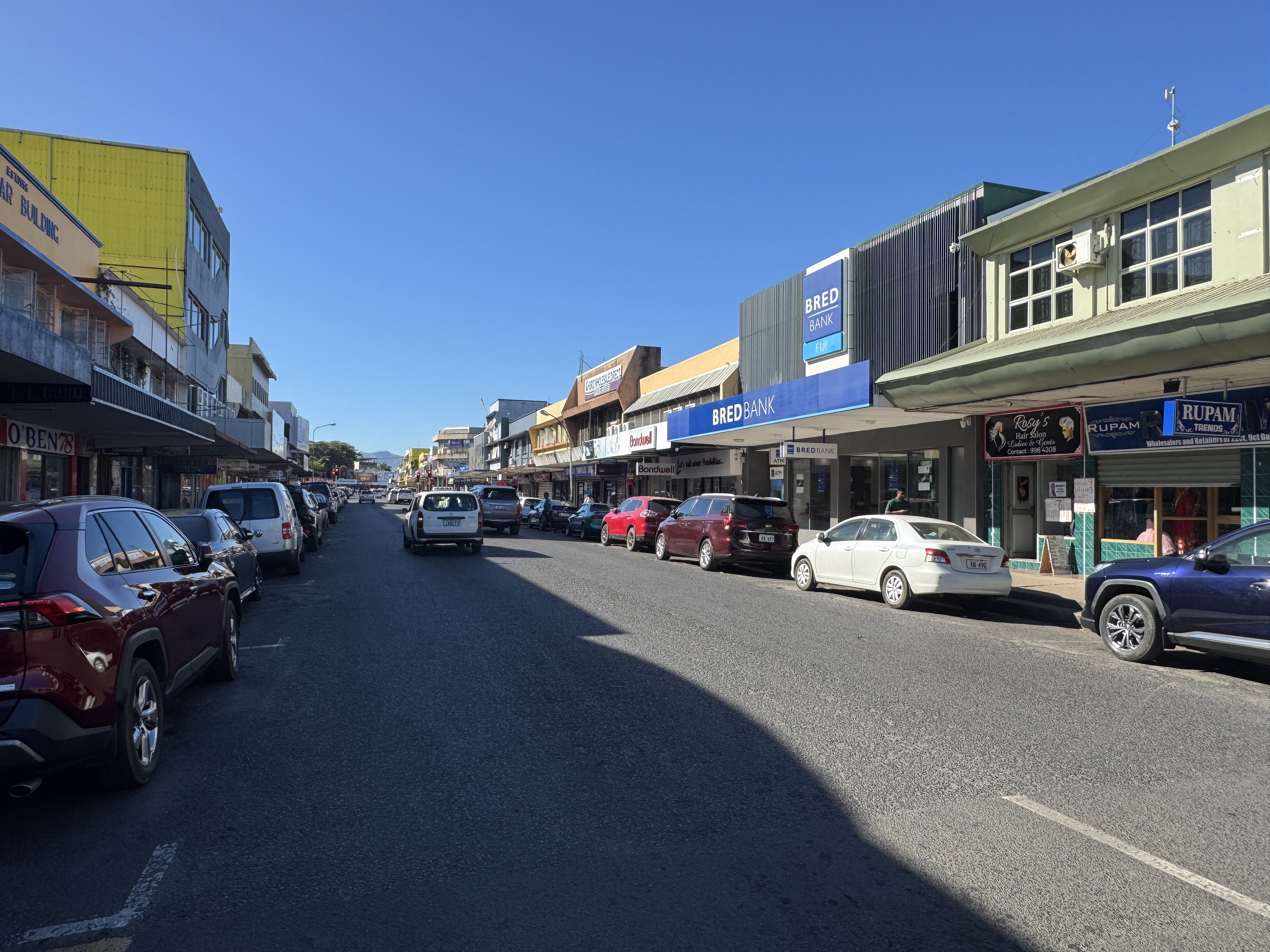
Downtown: Naviti Street.
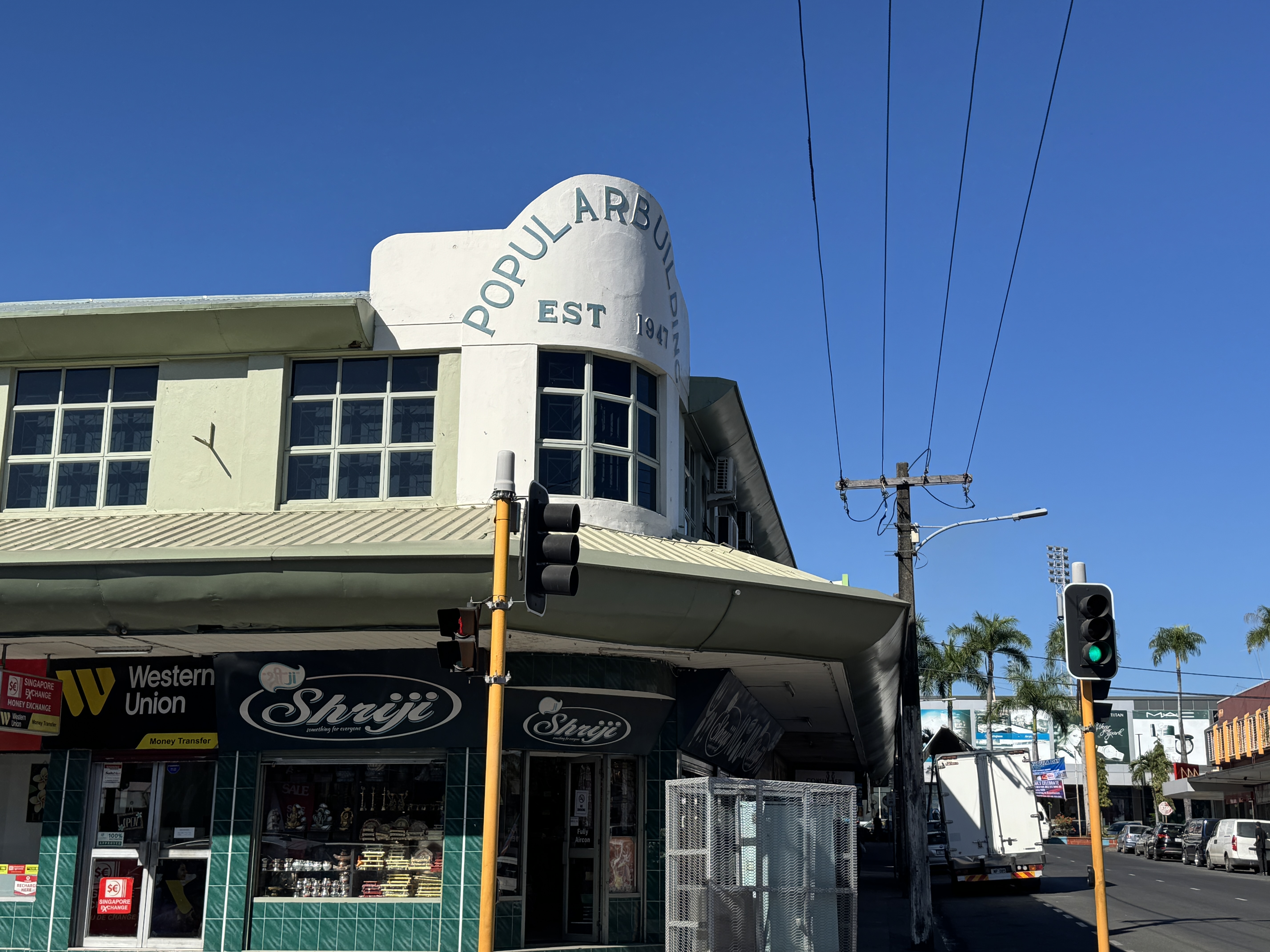
A bit of style from 1947.
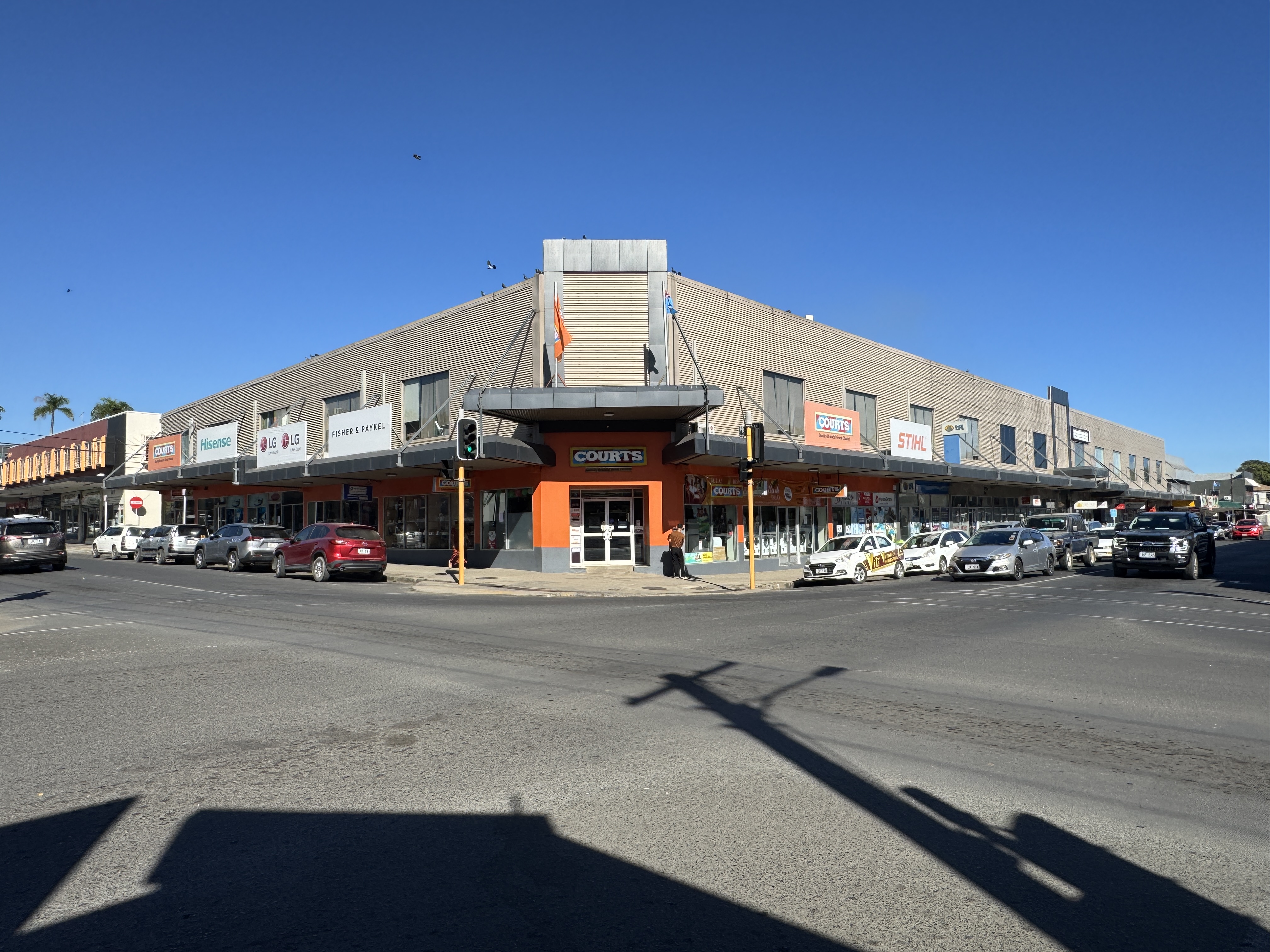
A department store belonging to the same company that owns the huge old Harbour Front in Suva.
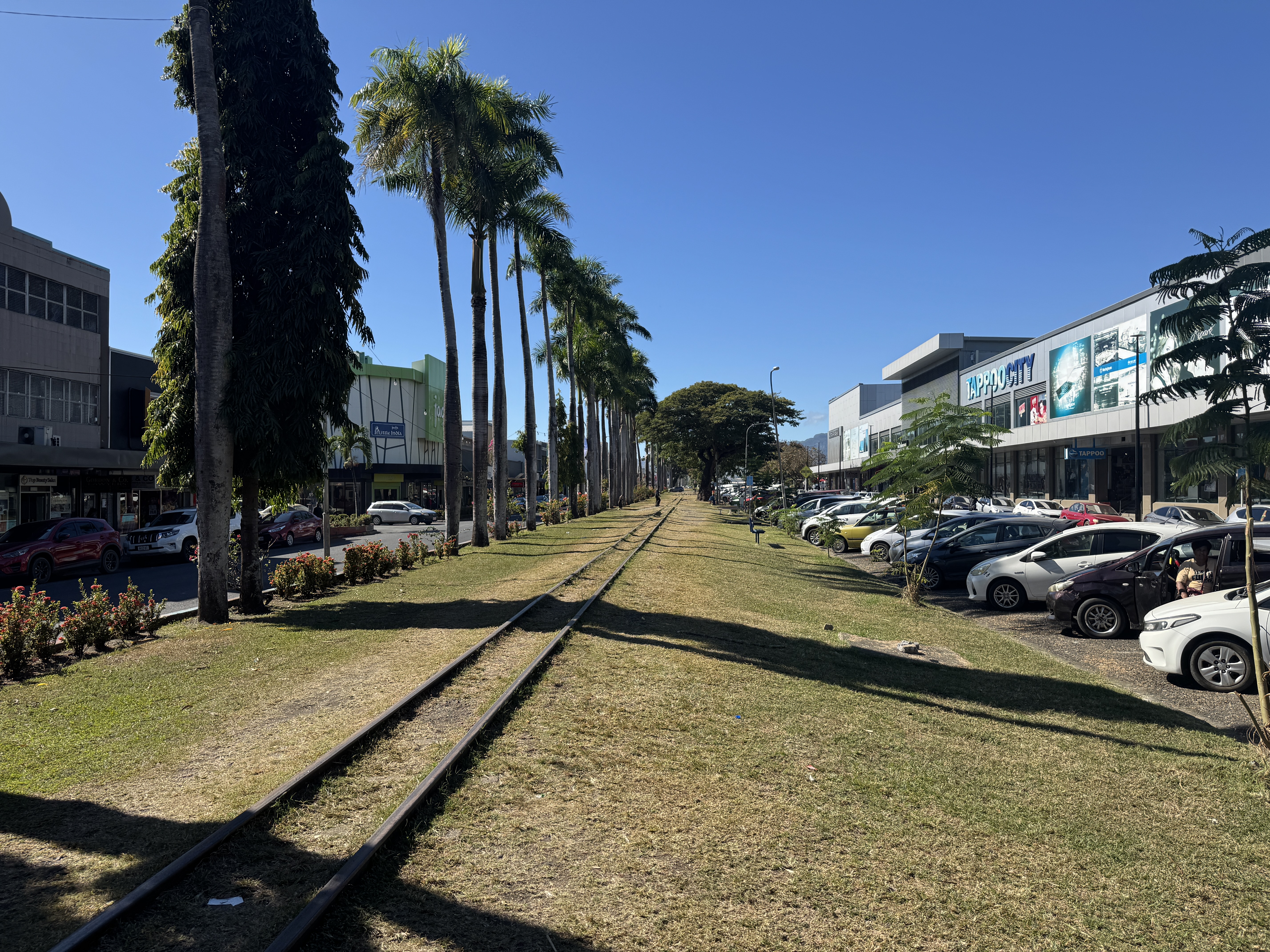
A cane-train track runs down the median of Narara Parade.
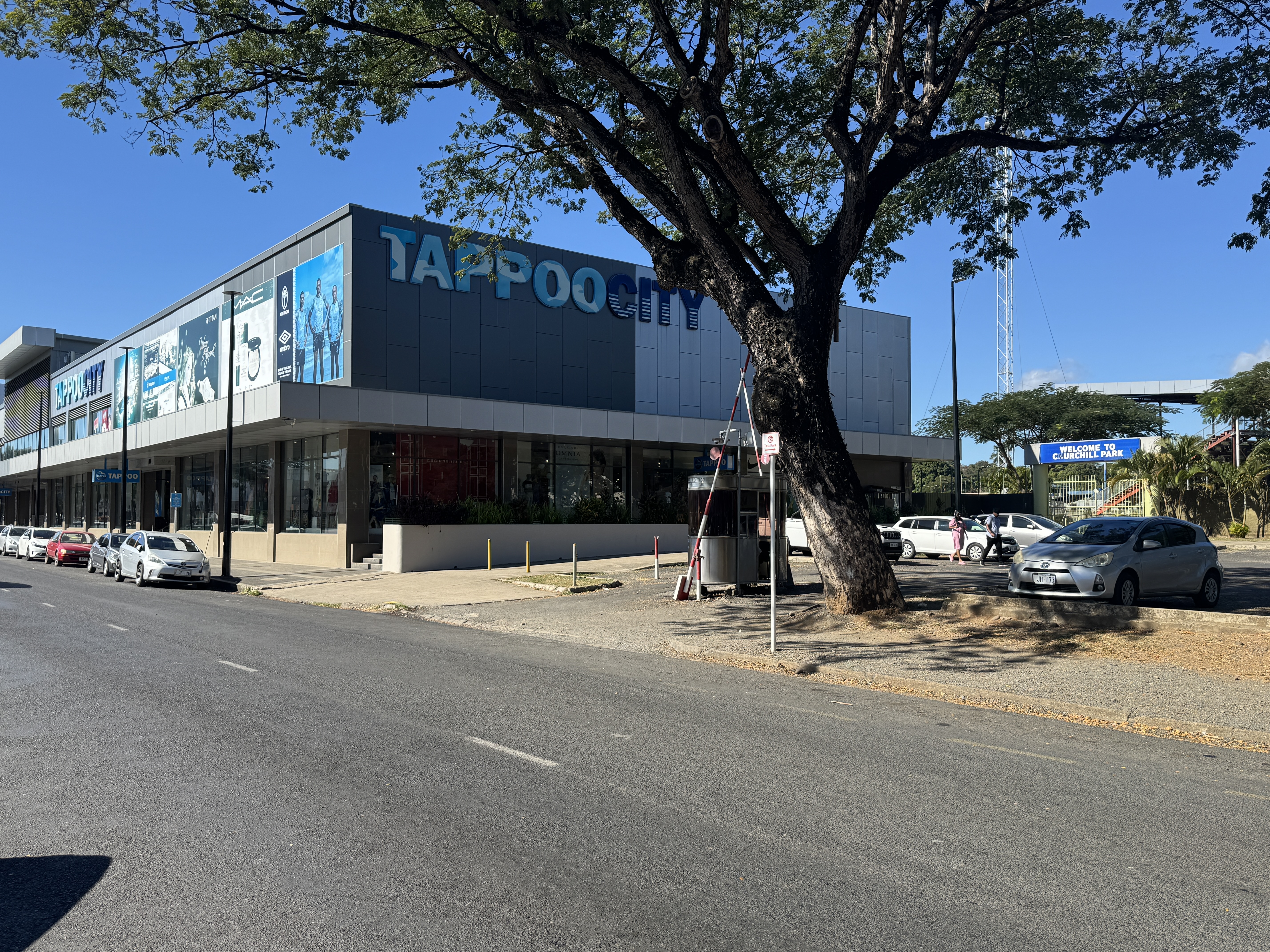
On that same street there's another Tappoo City, much smaller than the one in Suva.
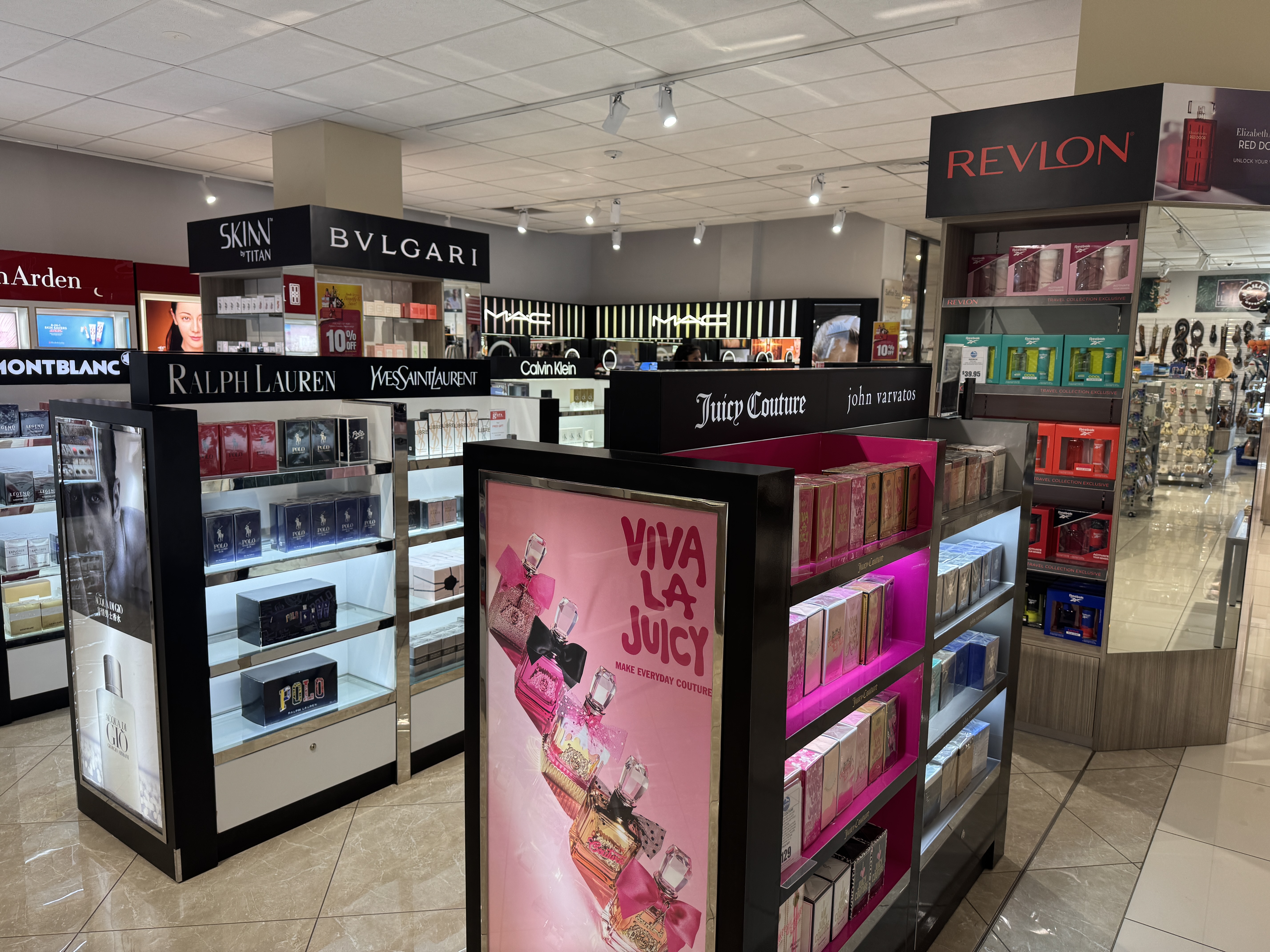
Its inventory might surprise you.
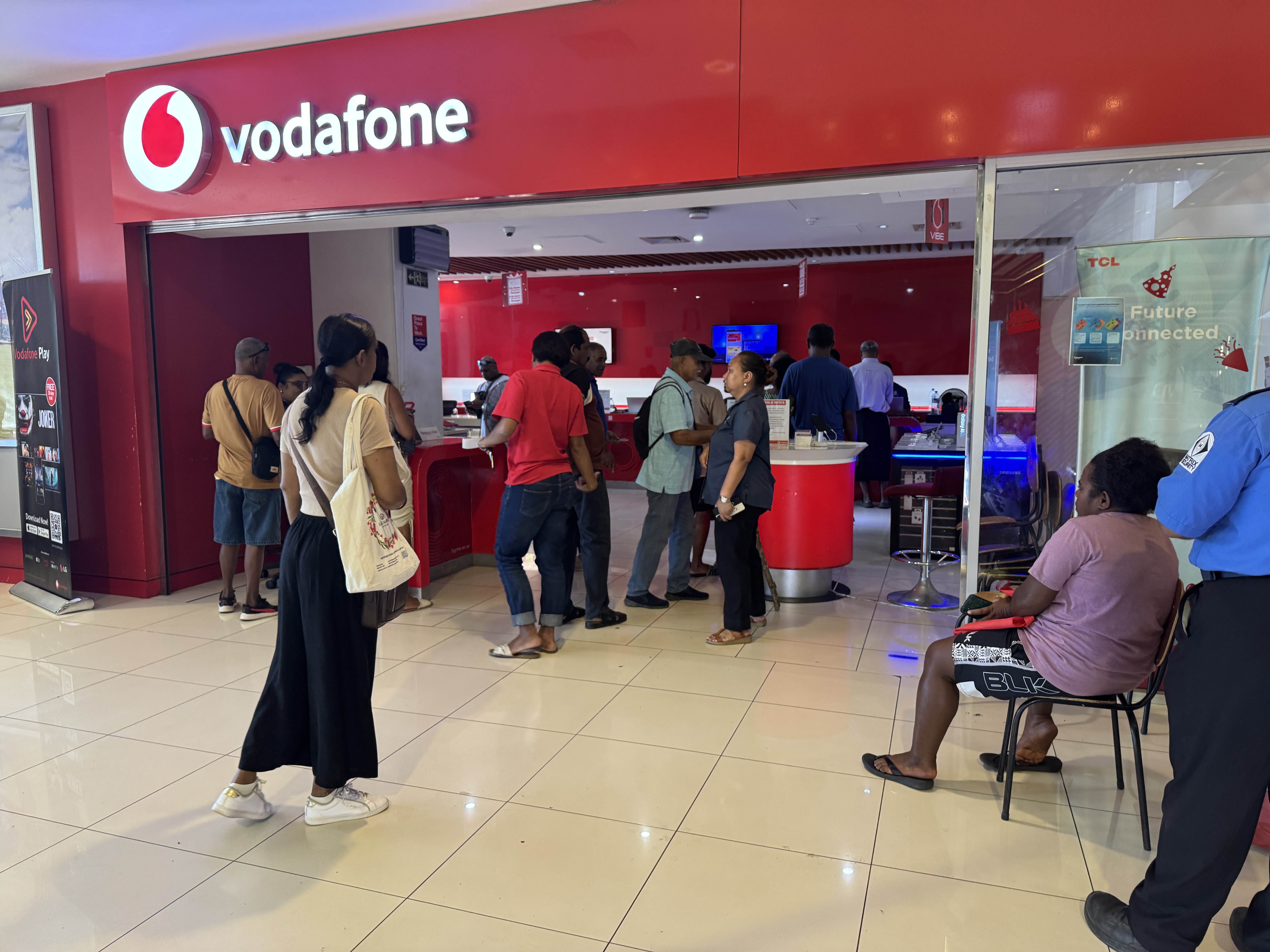
The most popular spot in the mall. People came to top up their phones.
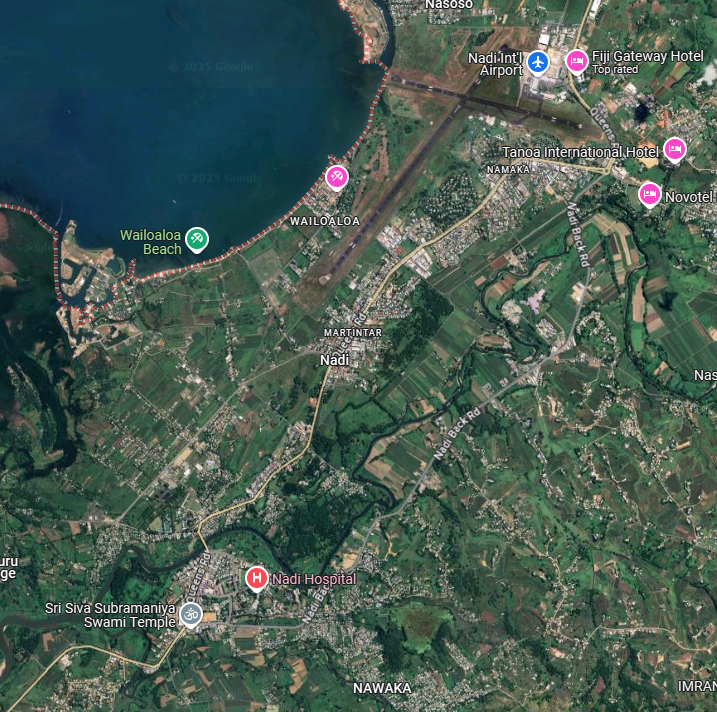
We're backtracked to Nadi, Tourist Central, thanks to the country's main airport.
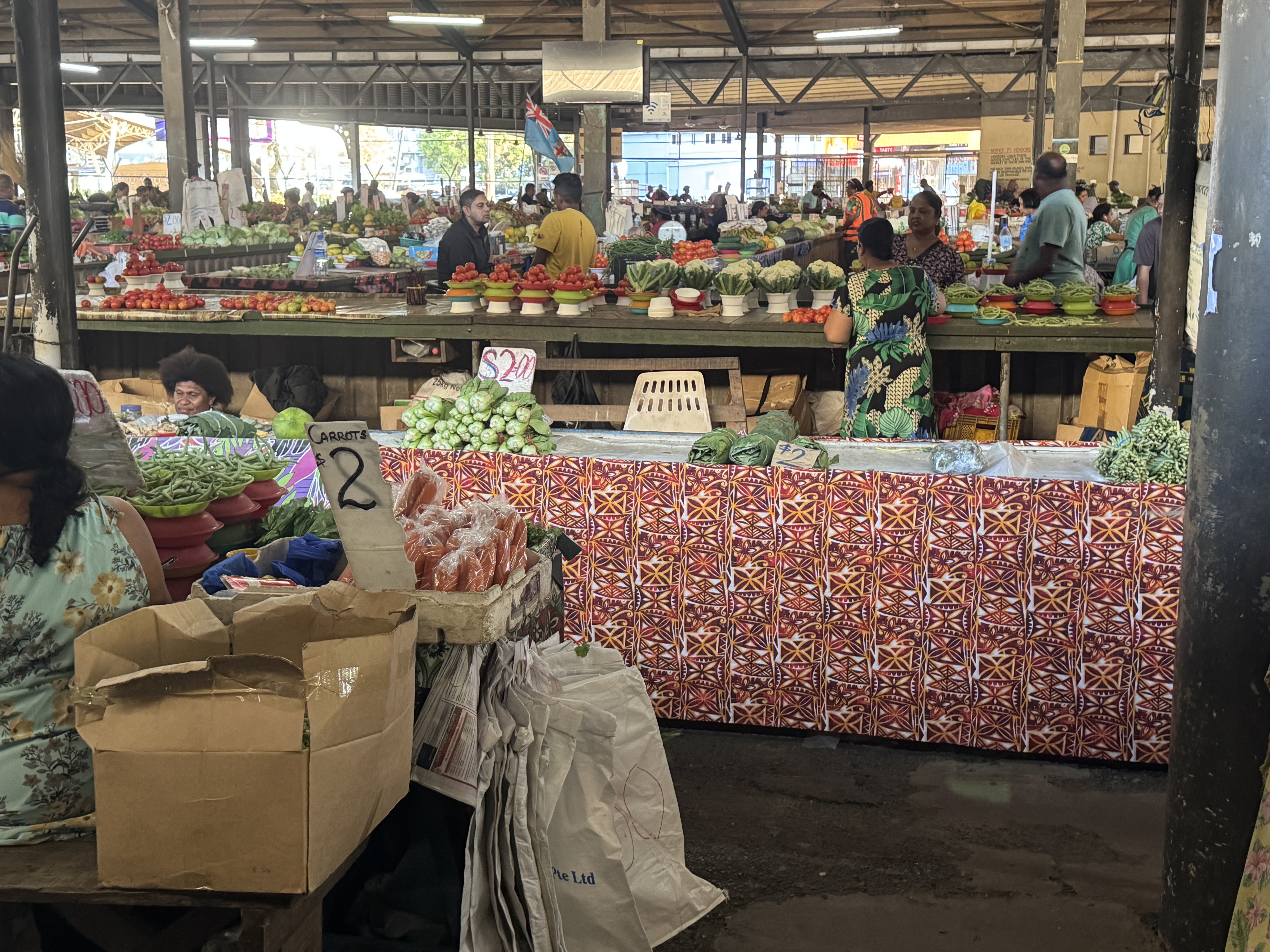
There's a real market here.
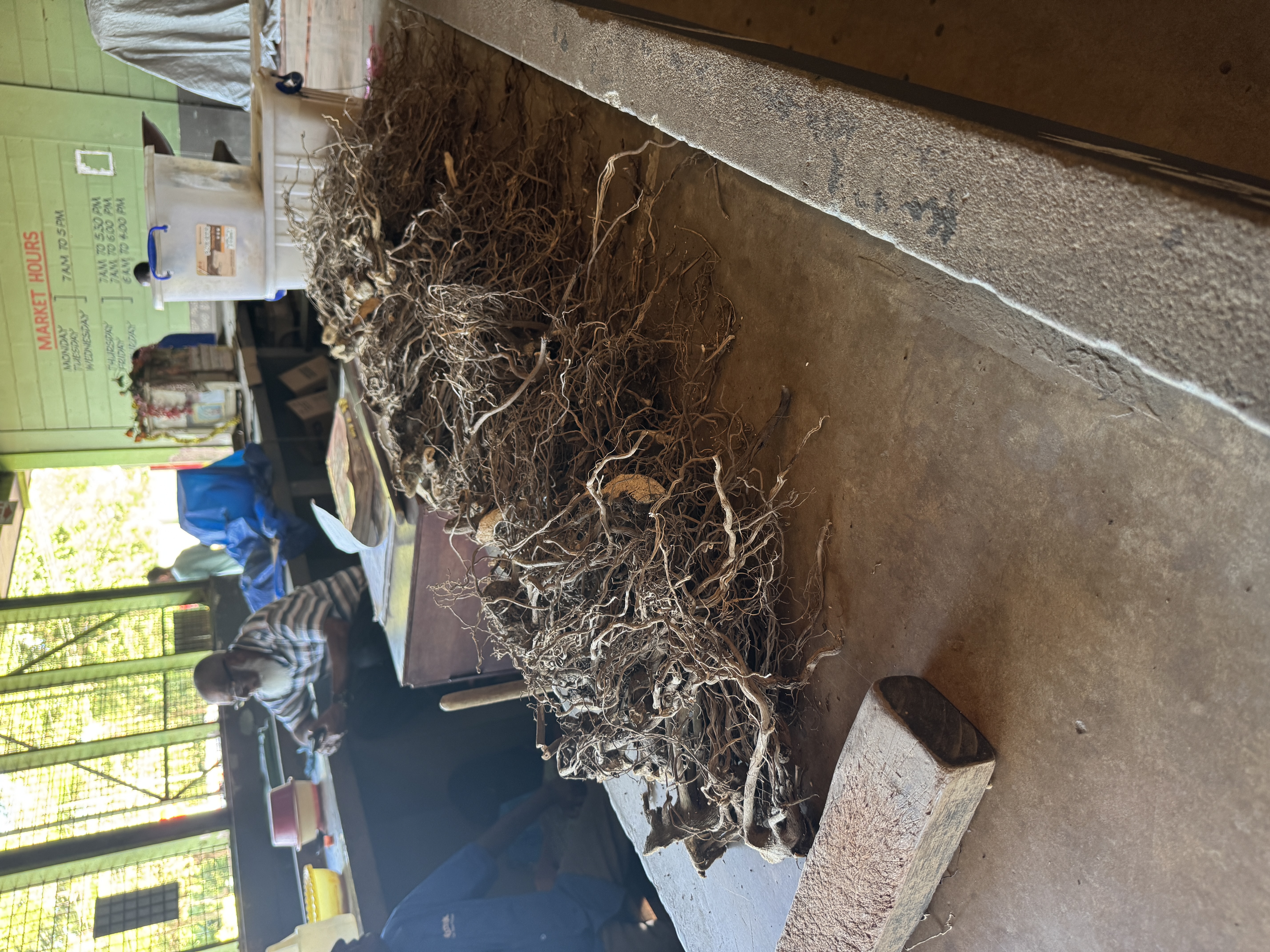
You can buy yaqona roots.
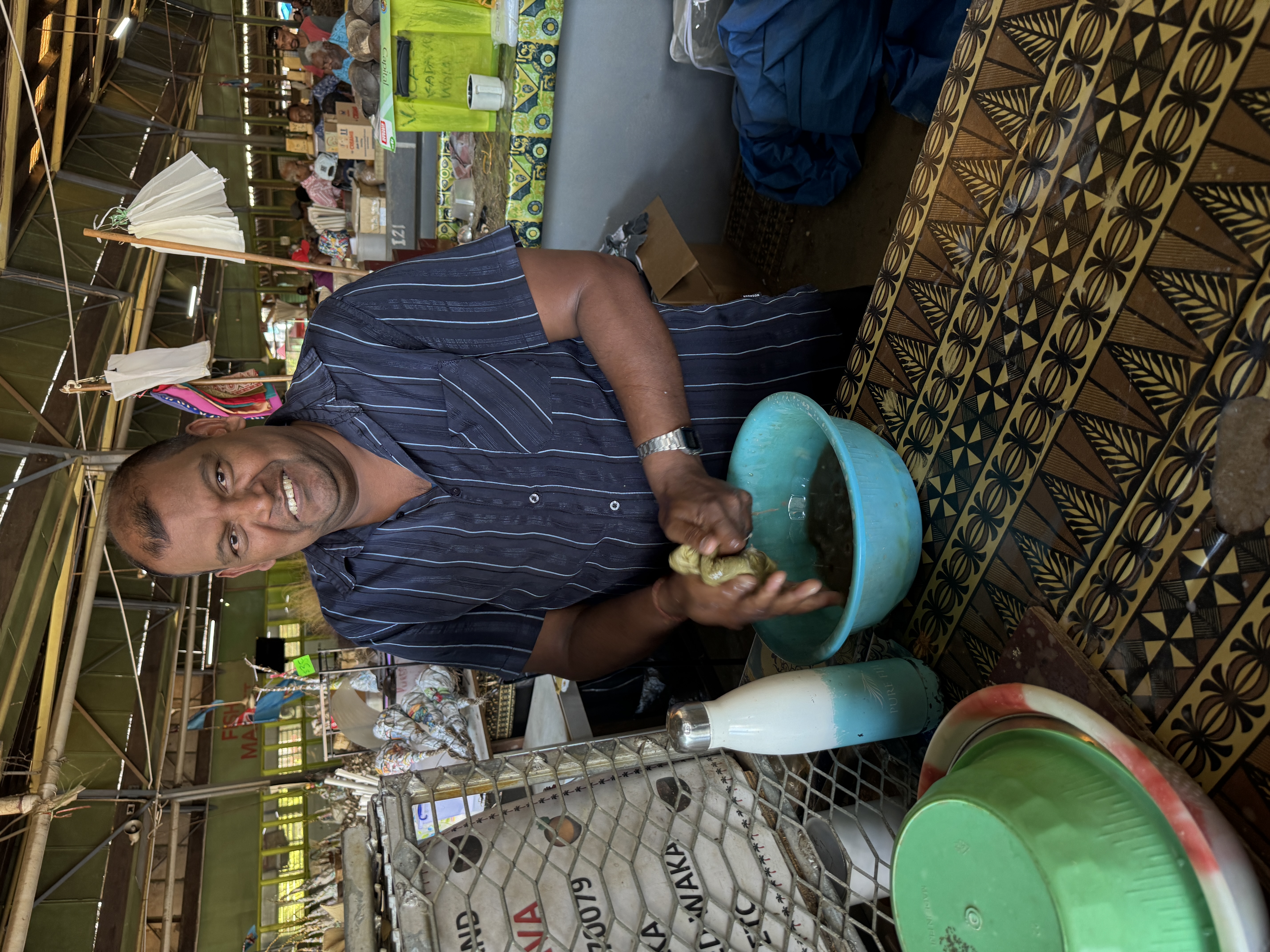
You can have somebody mix up kava, too. It's made from those roots.
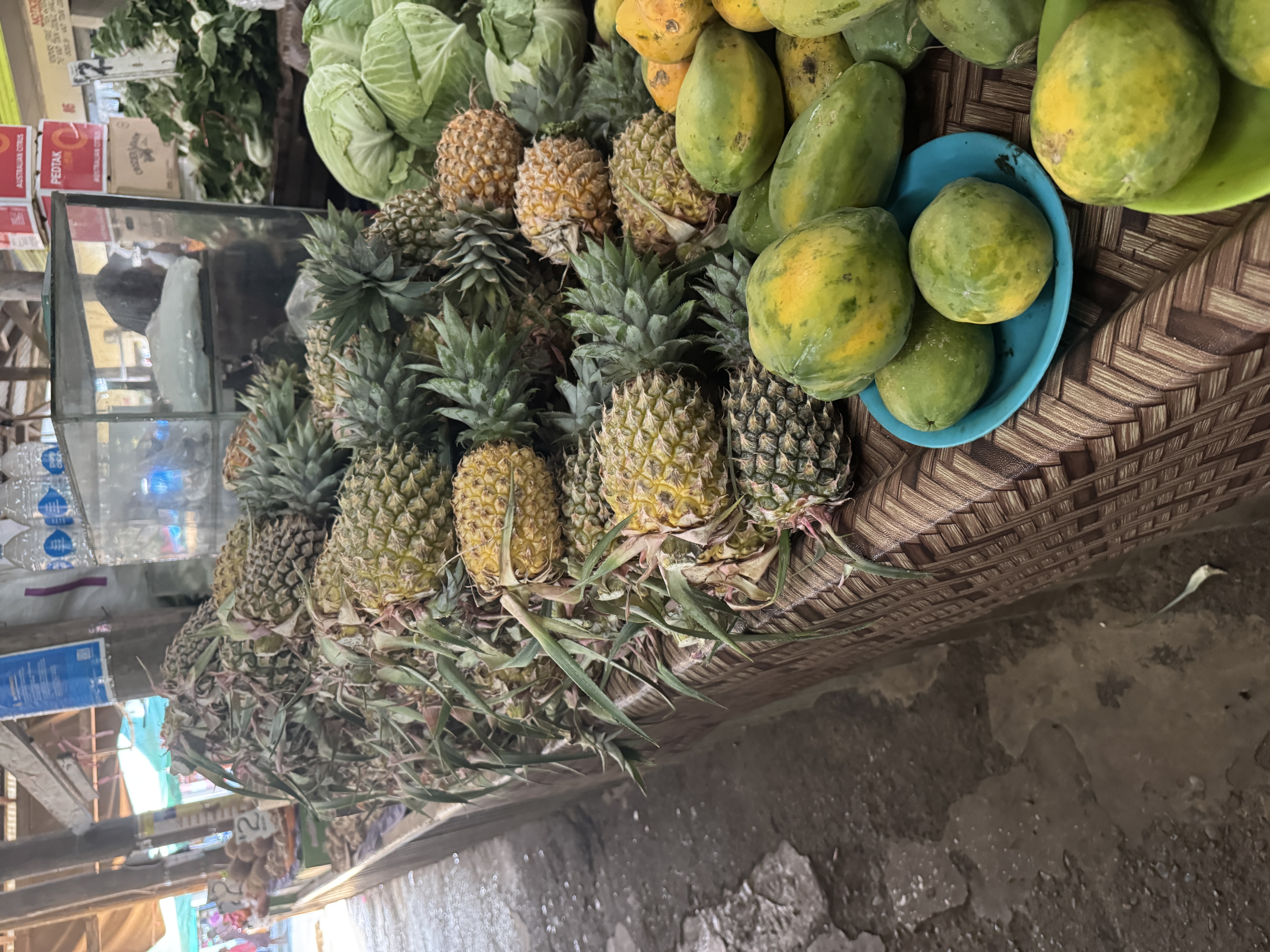
Kava is not to everybody's taste, but it's hard to say no to Fiji's pineapples.
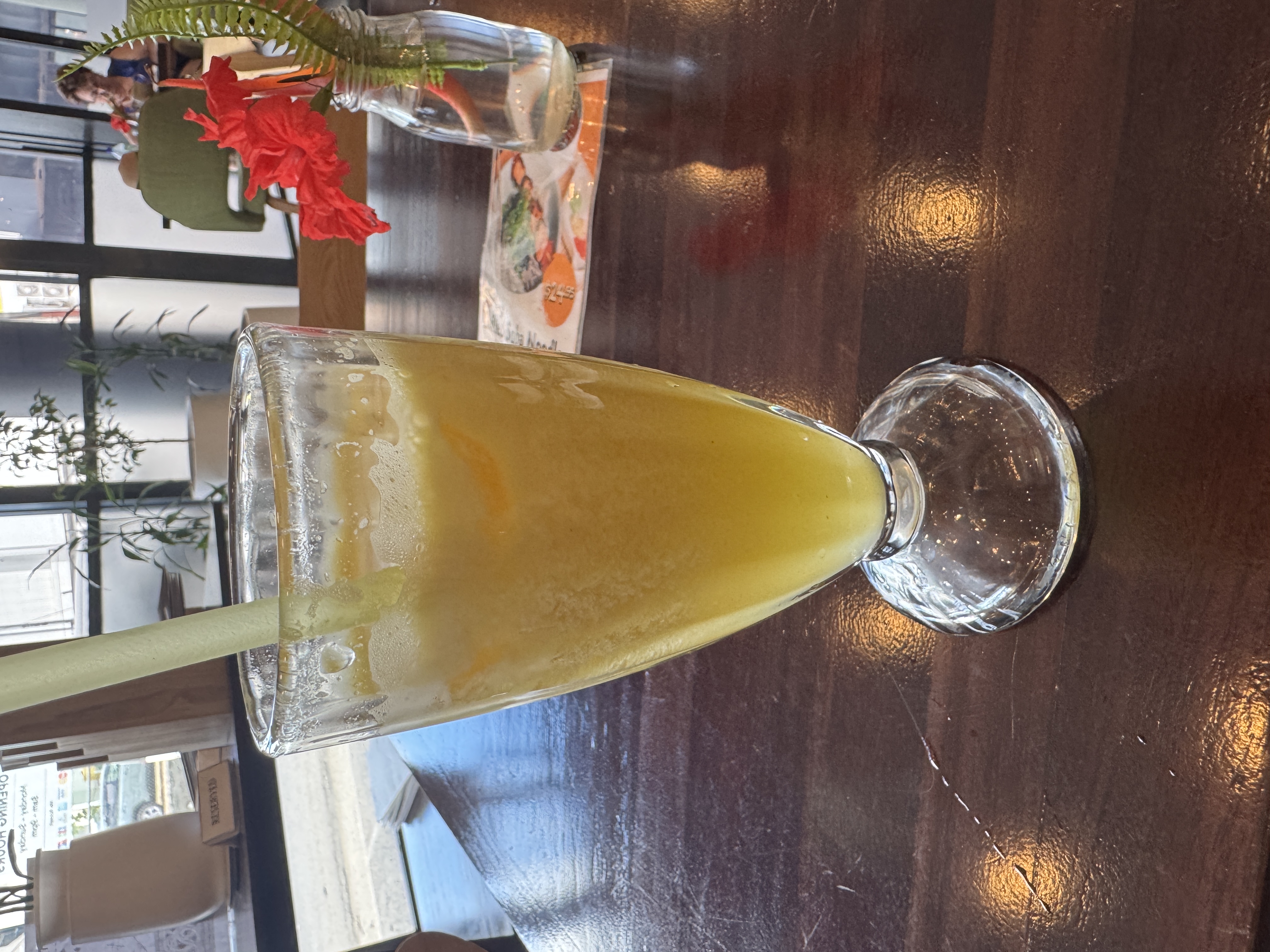
Intensely flavored juice.
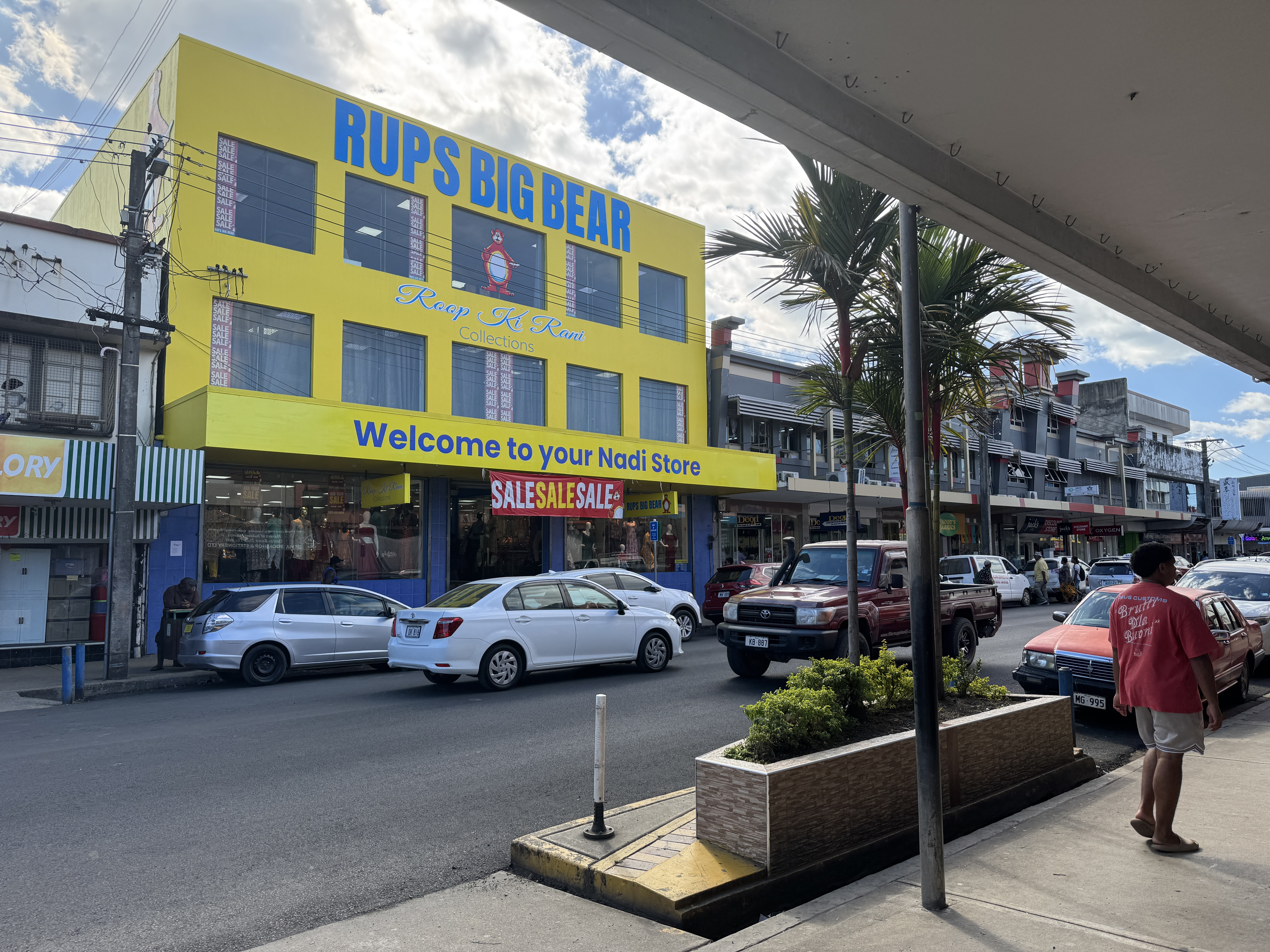
Queens Road, however, is about as generic as you can get.
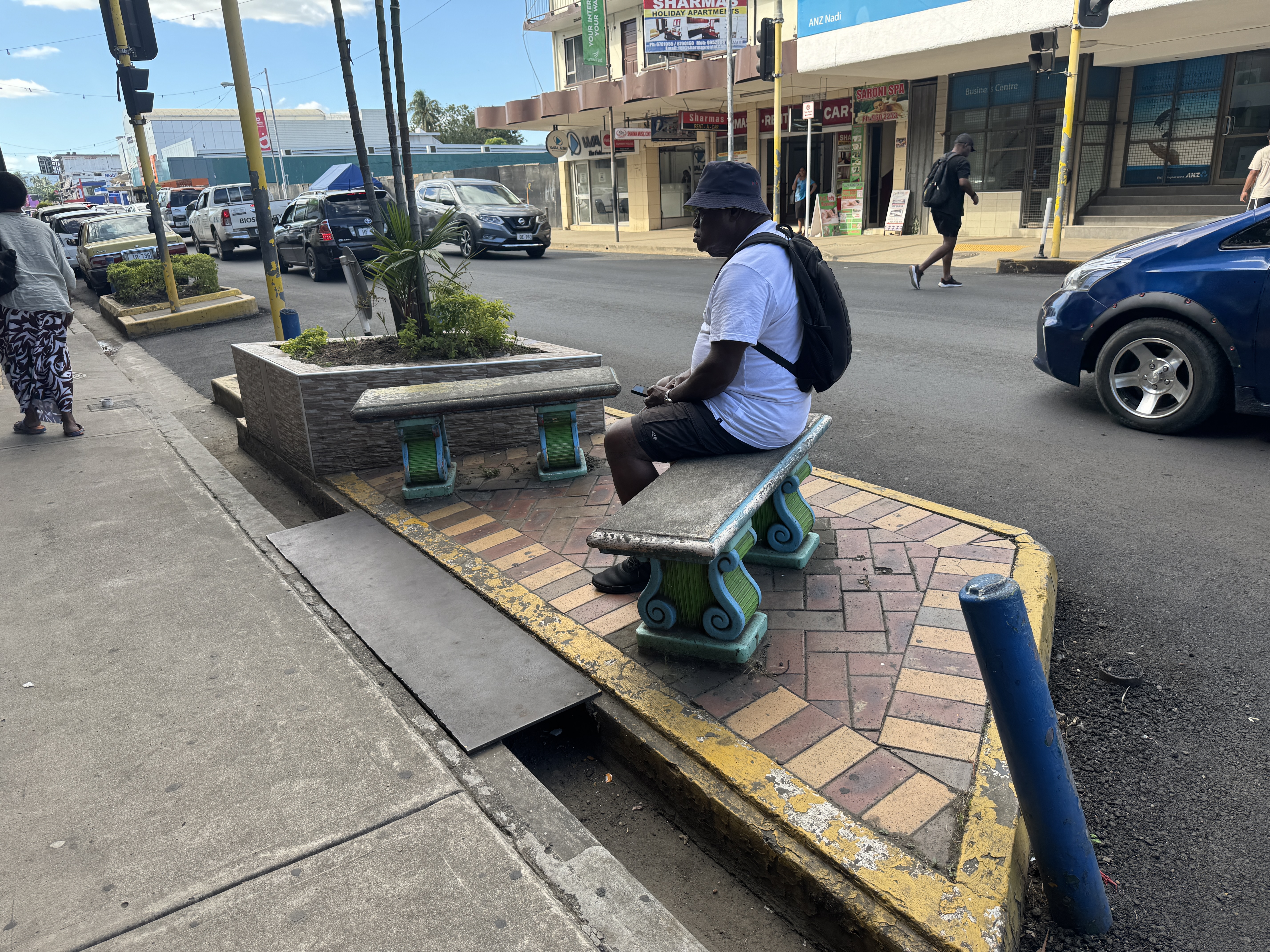
Give 'em credit for installing benches.
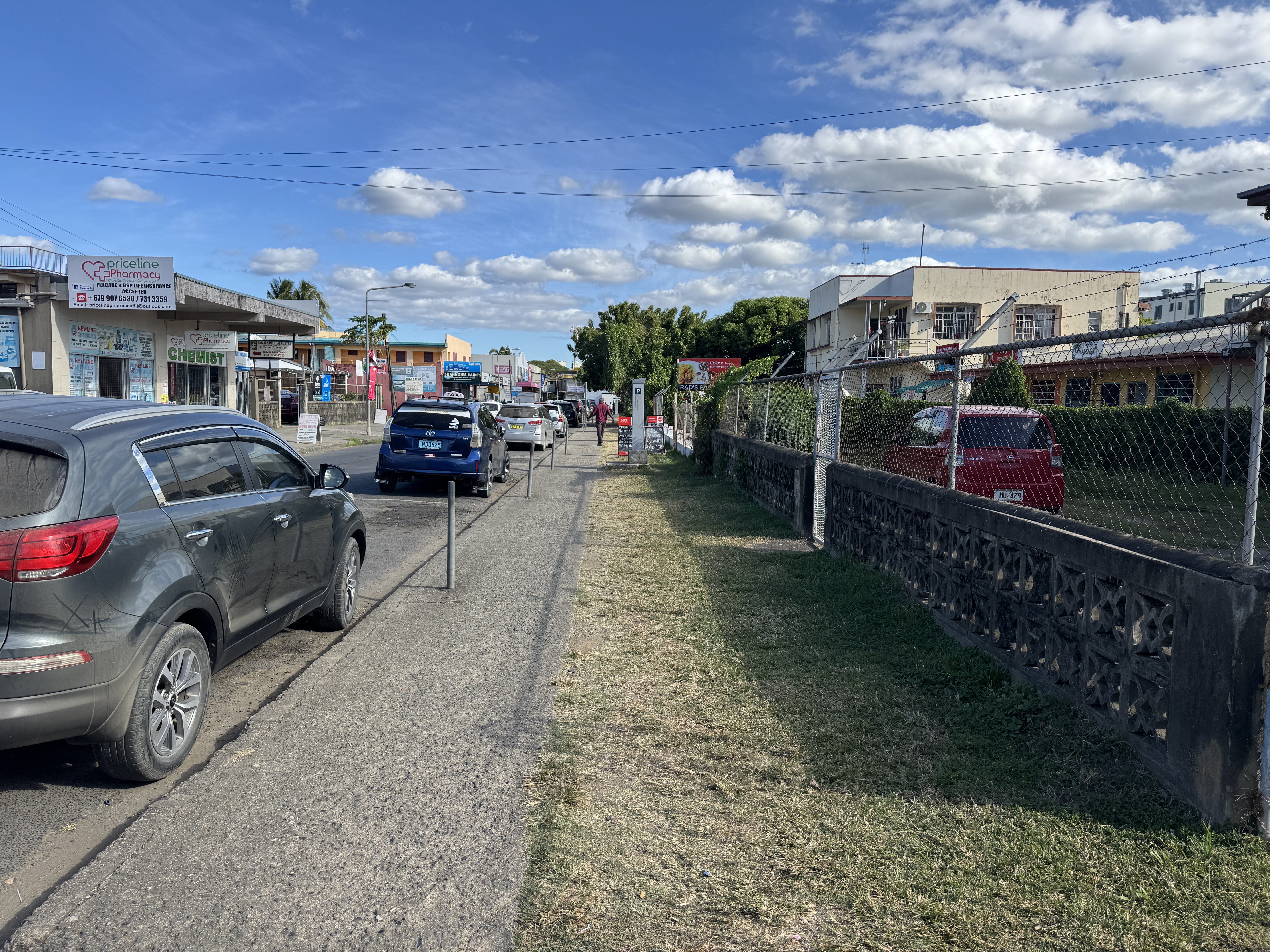
One block to the west, there's much less action.
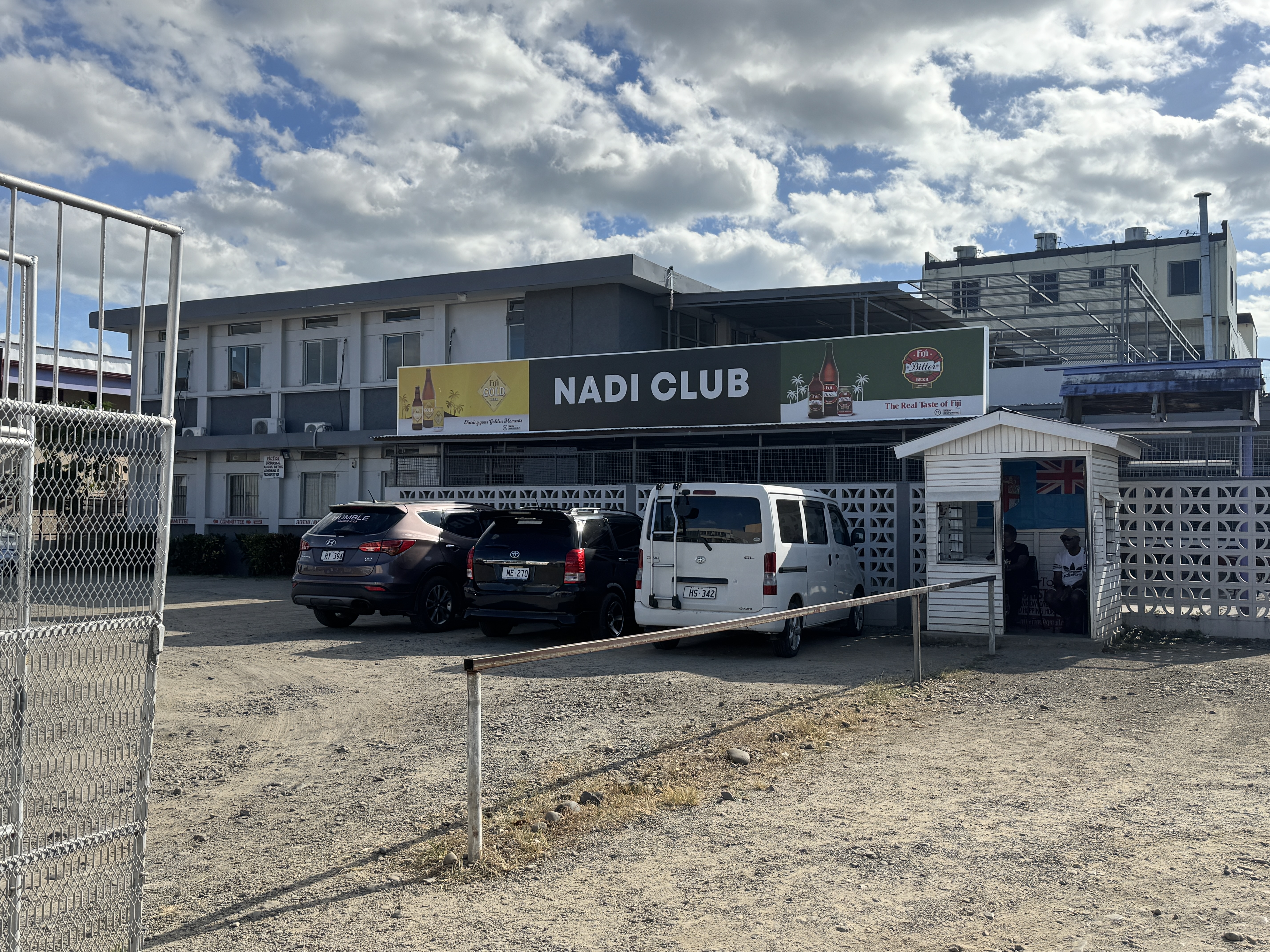
Pretty much deracinated.