Budapest Seeks the Modern
Since the Habsburgs folded up shop, what's happened?
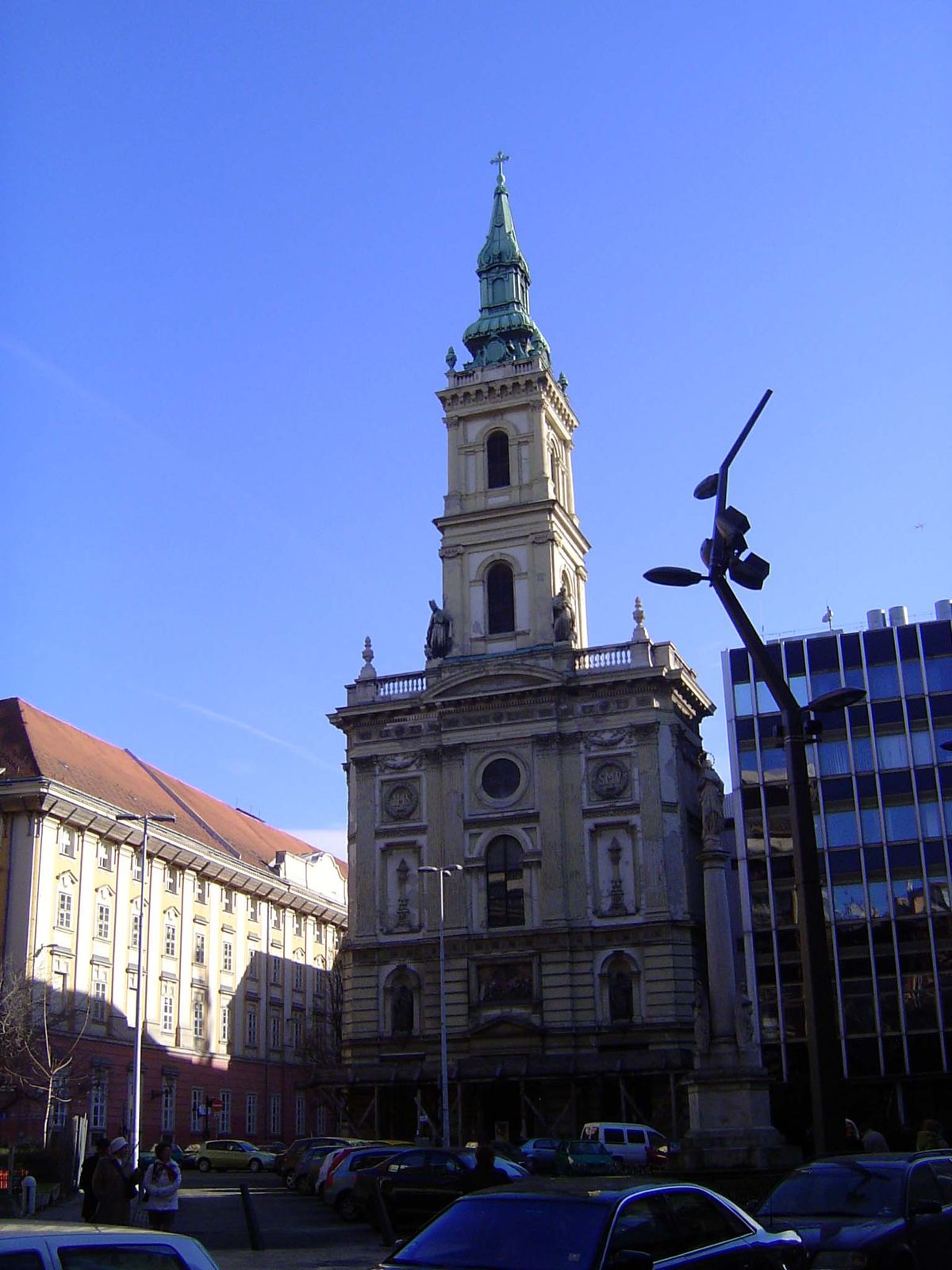
Well, this picture doesn't answer the question, but it sets the scene, because there are several innovative buildings on this, Szervita Square.
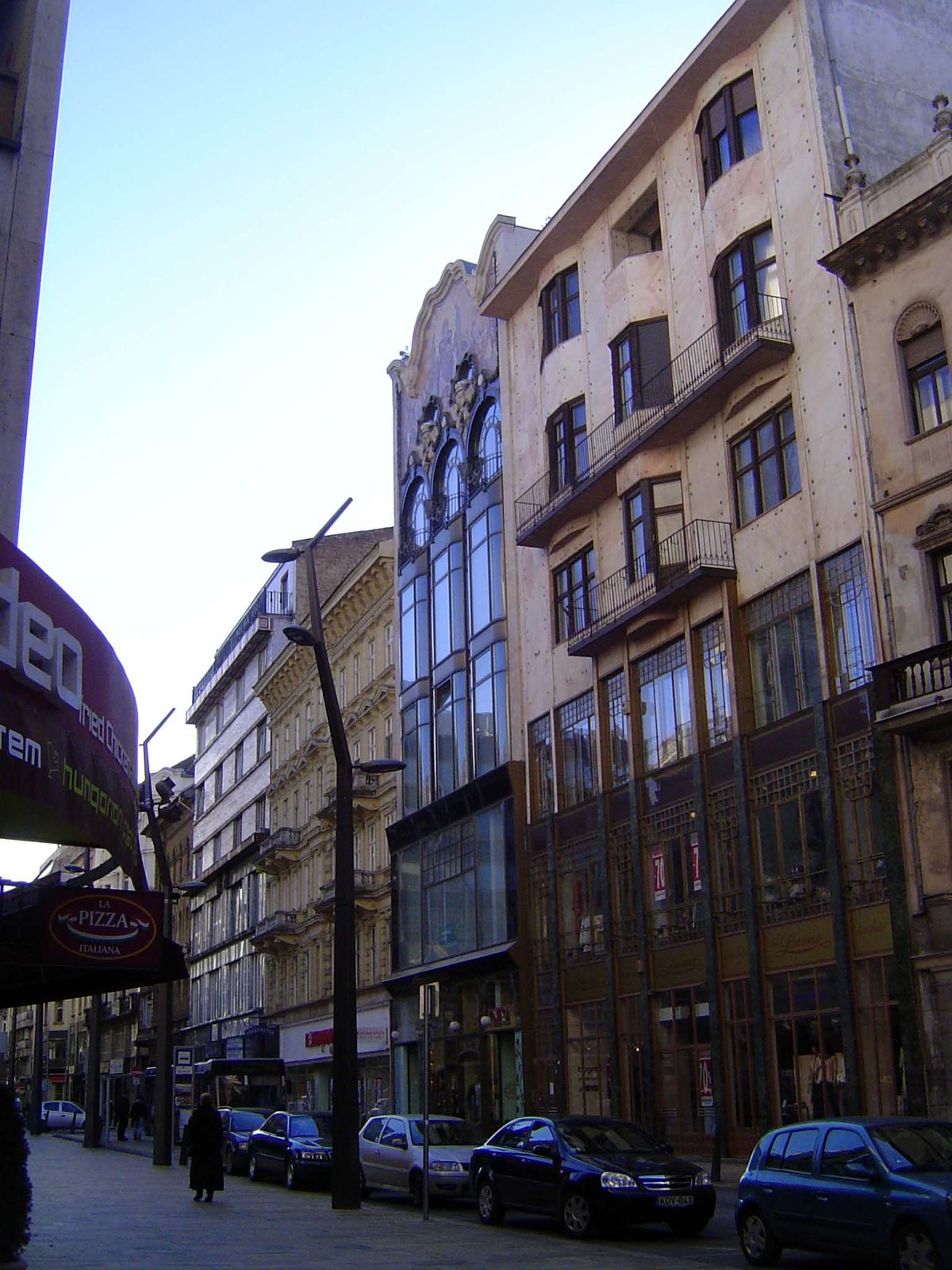
All three are visible here, but we'll begin with the curtain-walled, former Torok Bank, designed by Henrik Bohm and Armin Hegedus and completed in 1906.
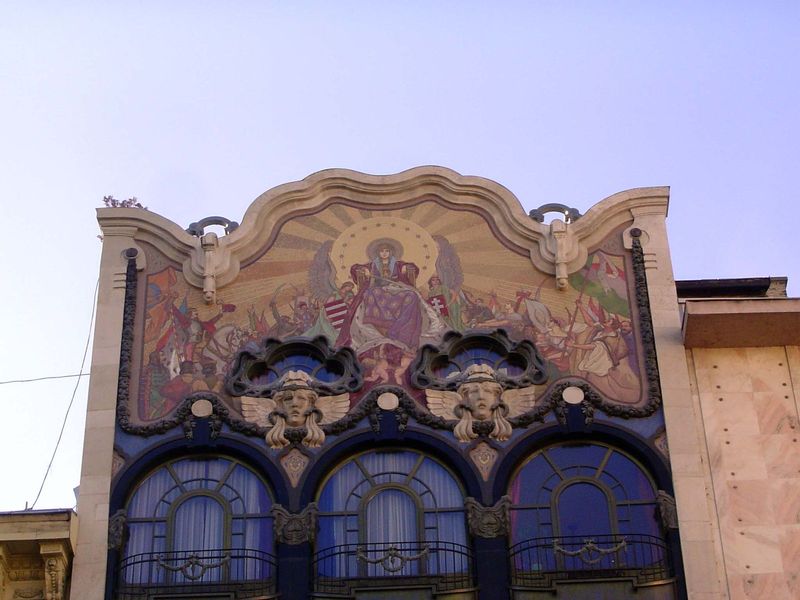
The roof is a mosaic by Miksa Roth showing The Transfiguration of Hungaria.
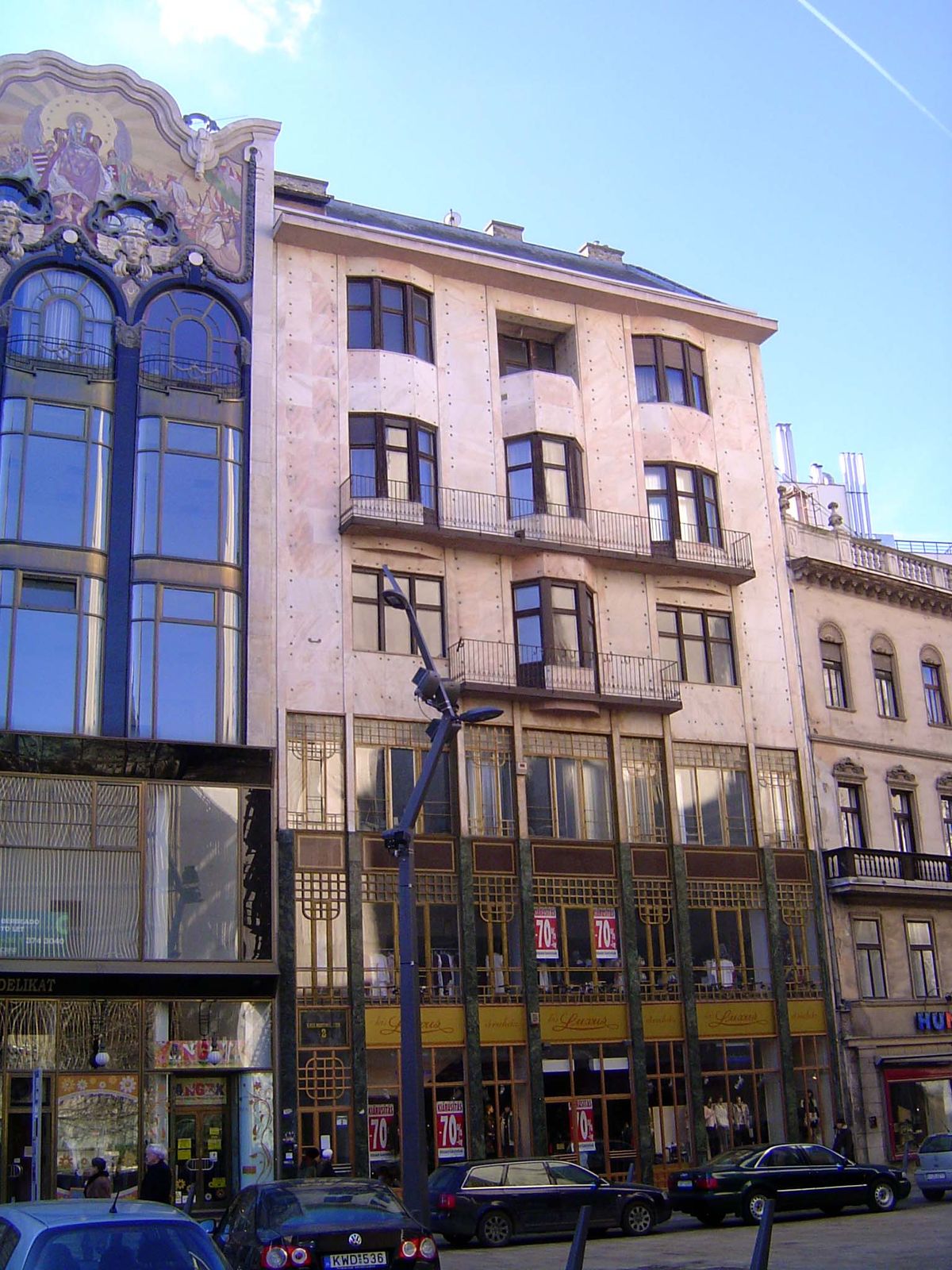
Adjoining it is the former Szenassy and Barczai store, designed by David and Zsigmond Jonas and completed in 1908. As an exercise in functionalism it's one of Budapest's first modern buildlings.
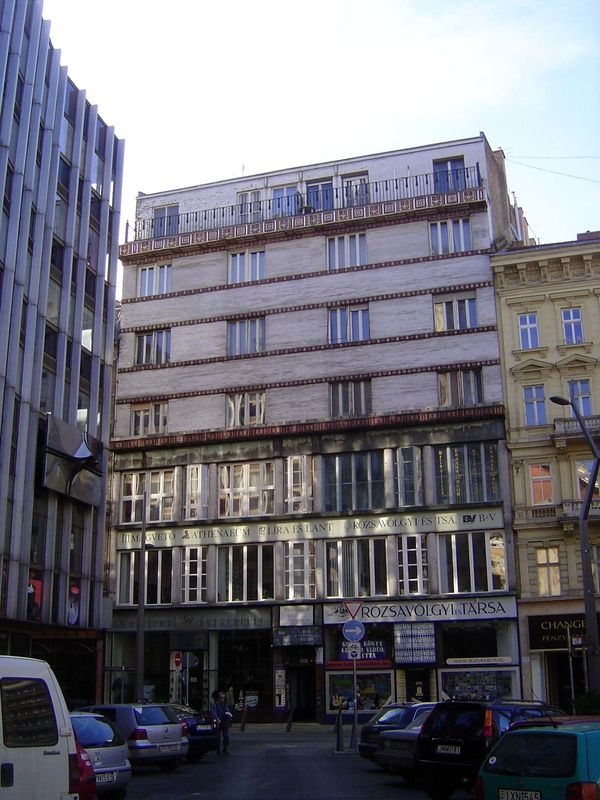
The third of the three: the Rozsavolgyi House by Bela Lajta, completed in 1911-12. Heathcote says it was "at the forefront of an emerging language of functionalism." He calls the building "one of the city's finest buildings,... a landmark in Hungarian and European architecture." Color me skeptical.
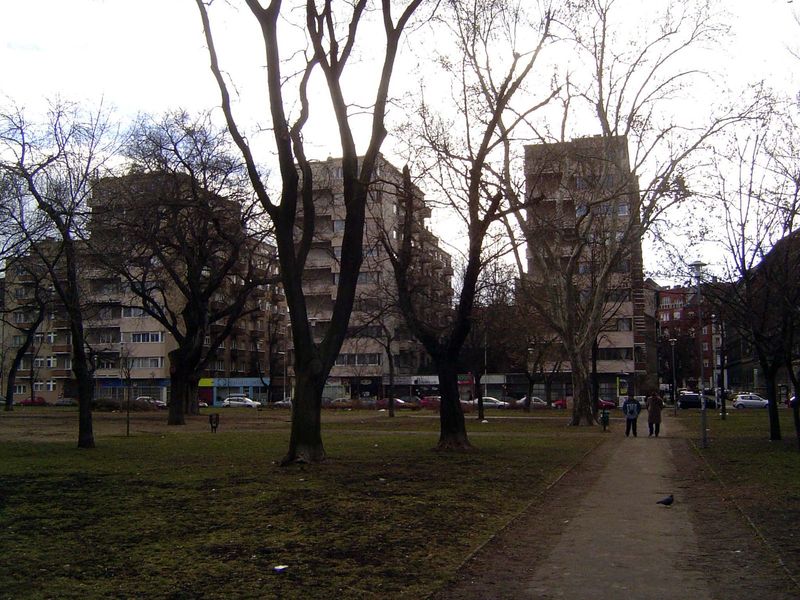
Come forward to the 1930s and here, filling one side of the Koztarsasag Square, are the three OTI apartment blocks, intended as the first of many, though the others were never built.
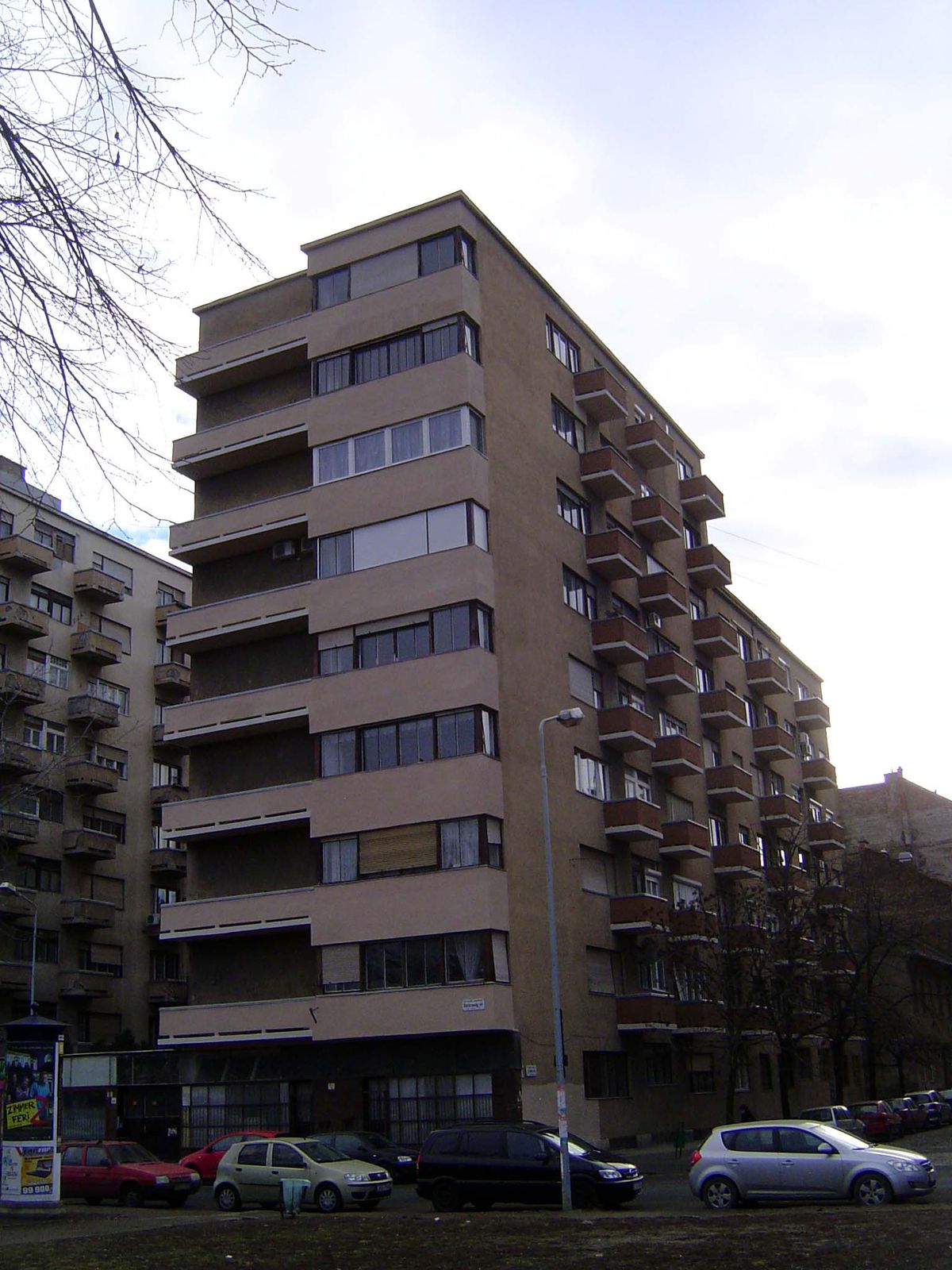
You're not impressed?
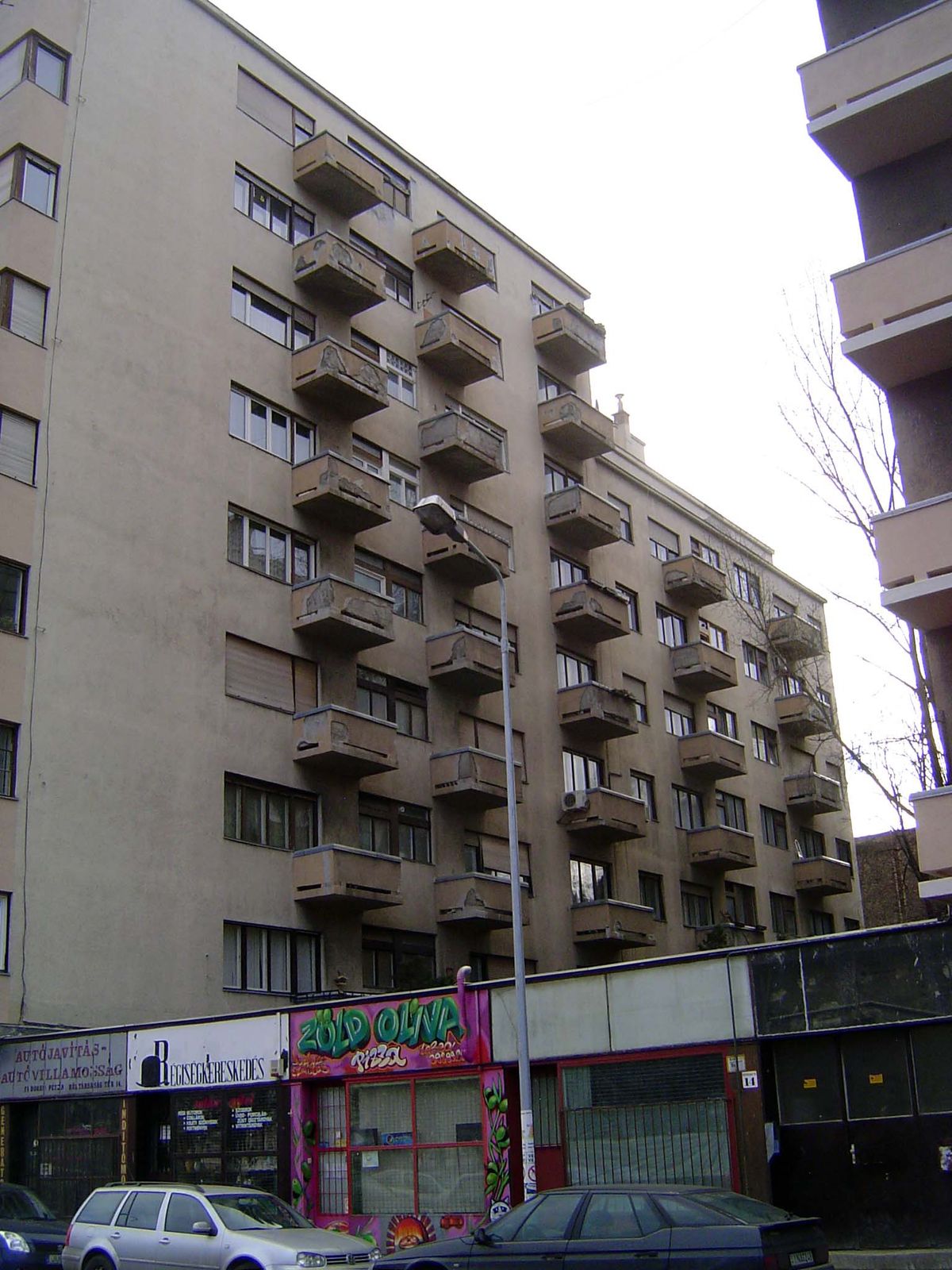
The ground-floor shops don't cut it either? Yet Heathcote calls these buildings "one of the great examples of pioneering housing in European modernism." May God have pity.
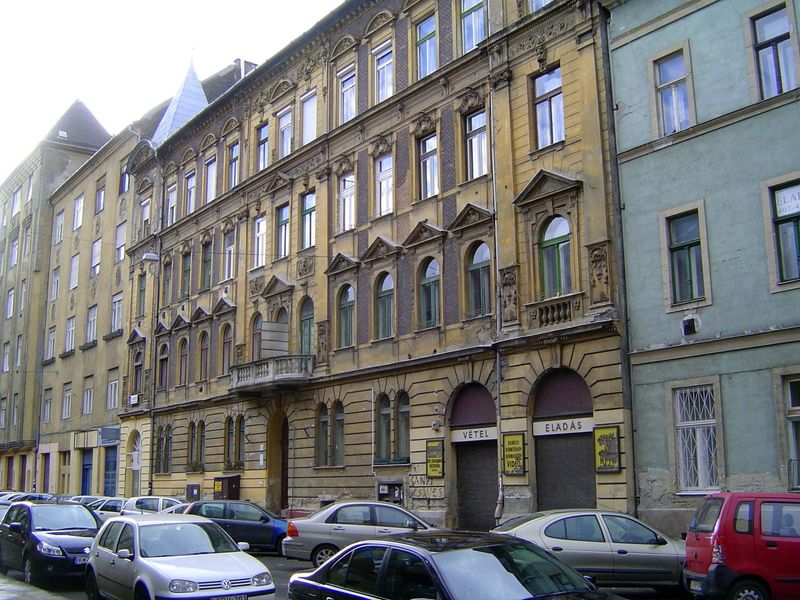
You have to remember, he says, what the designers, members of the Hungarian CIAM group, were rebelling against. The OTI blocks were a reaction to "poverty, unemployment and boredom." They did away with "fussy detailing" and of "sham palaces with their dingy courtyards where the smells of cooking and sewers lingered...." There are still lots of those buildings around, including these, around the corner from the OTI blocks.
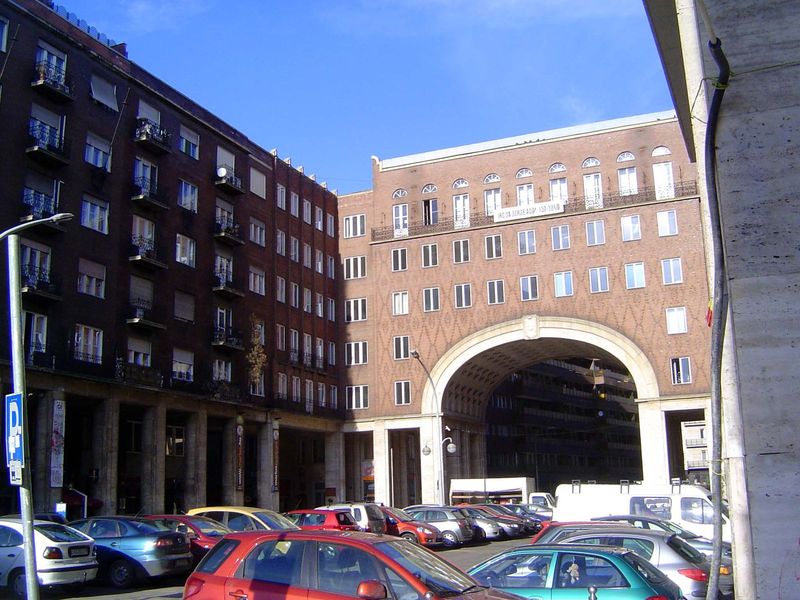
Compare the OTI blocks with this, the Madach apartments, by Gula Walder, 1938. The huge building was intended as the first stage of a new avenue to the river. Here, again, the plans were derailed. Is there an echo of Mussolini's architecture? Heathcote says that Hungary's government of the time was very sympathetic to the dictator.
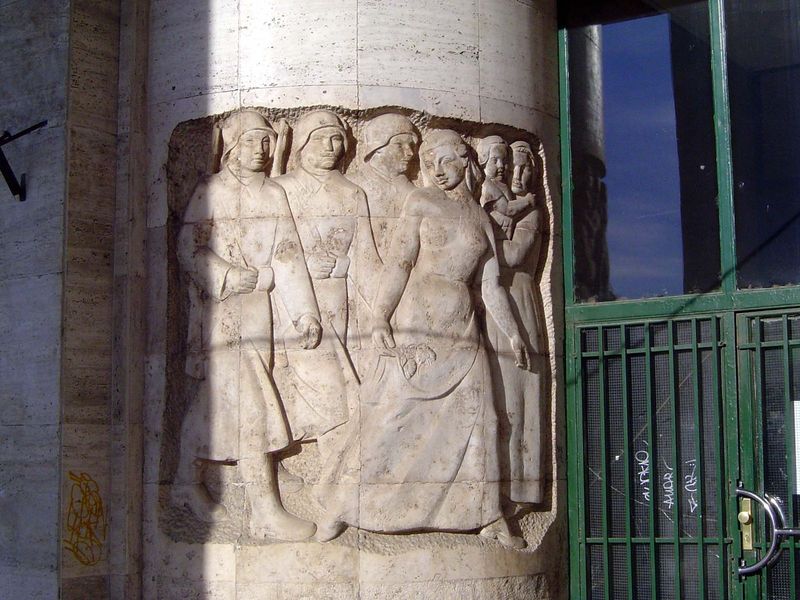
A relief on the wall of the building suggests a fondness for brute strength.
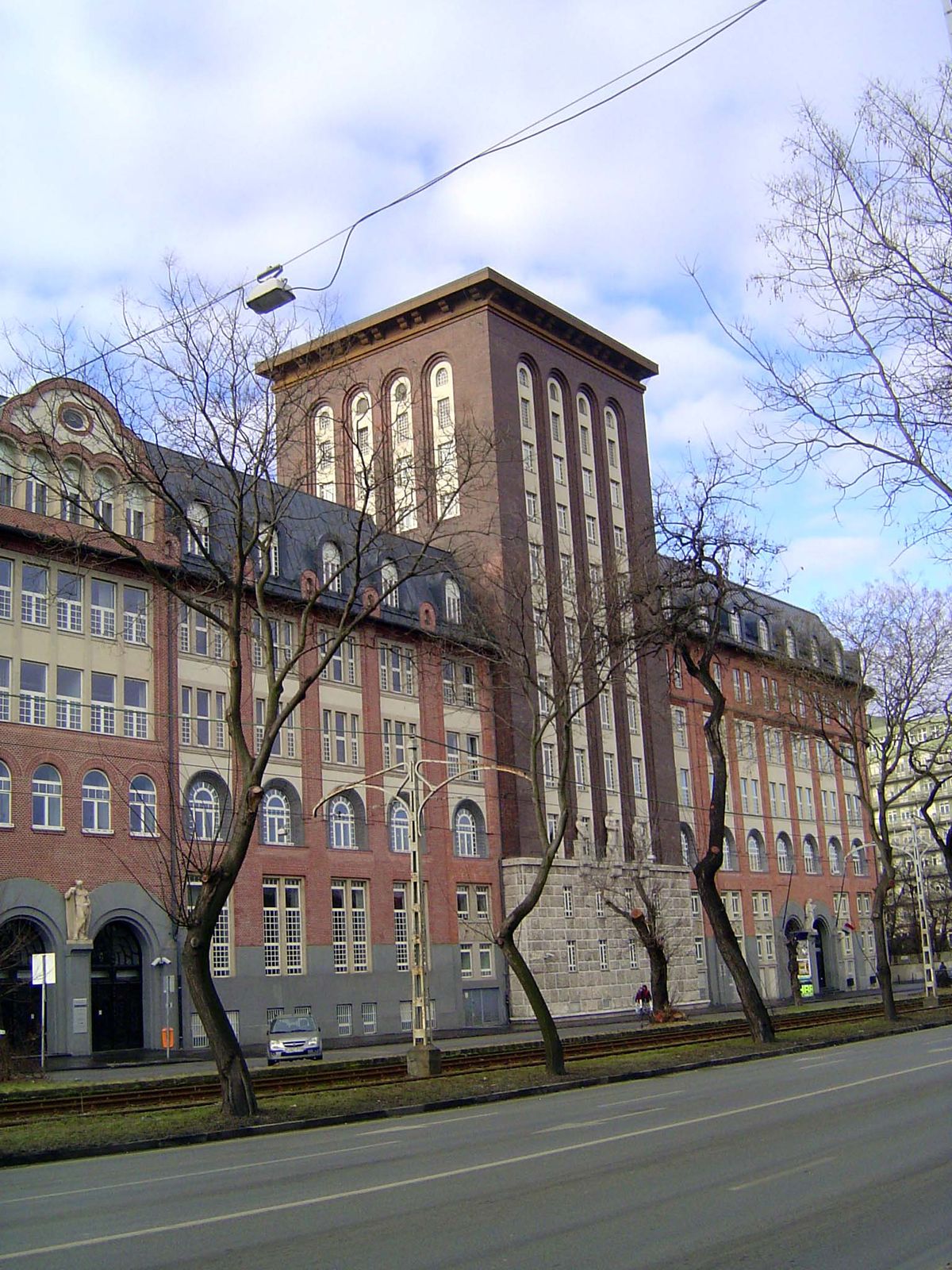
So do some details on this, the pensions building.
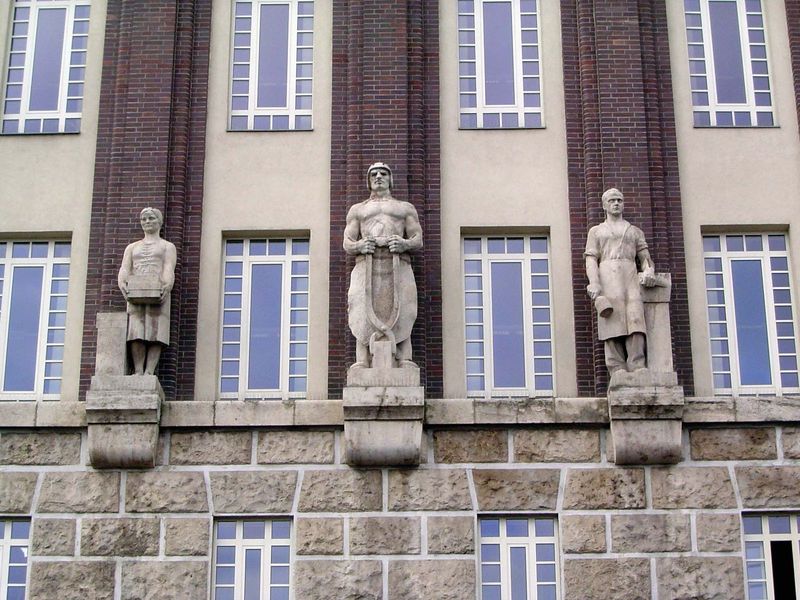
Square-jawed and helmeted, the smith could inspire artists drawing bad guys for a computer game.
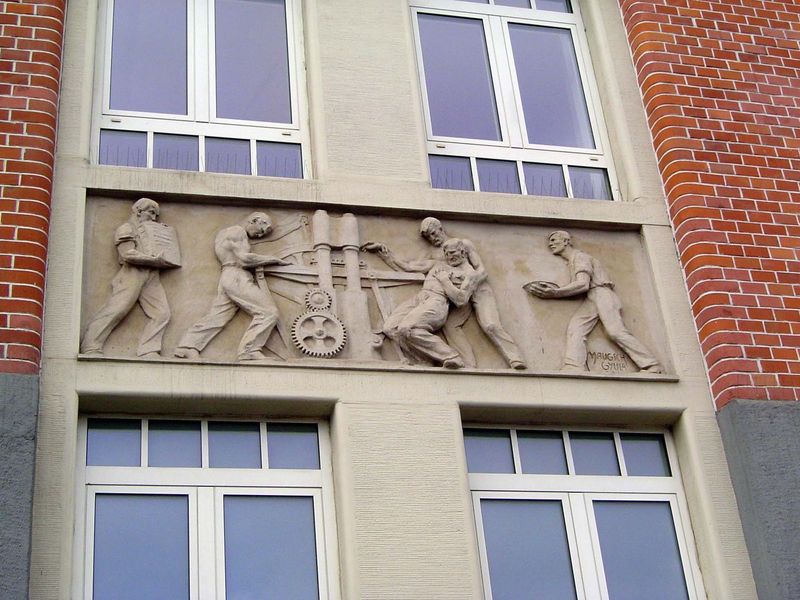
Workers who can endure no more?
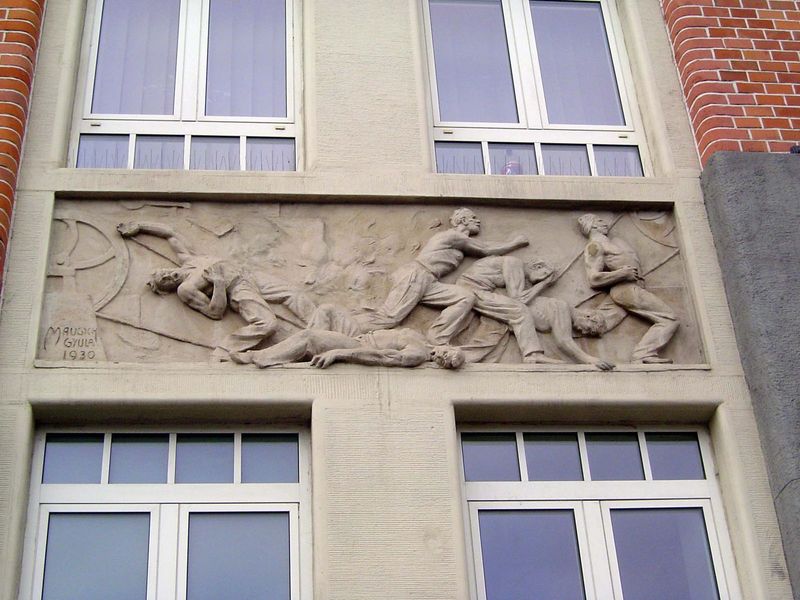
What kind of labor strife did the artist have in mind?
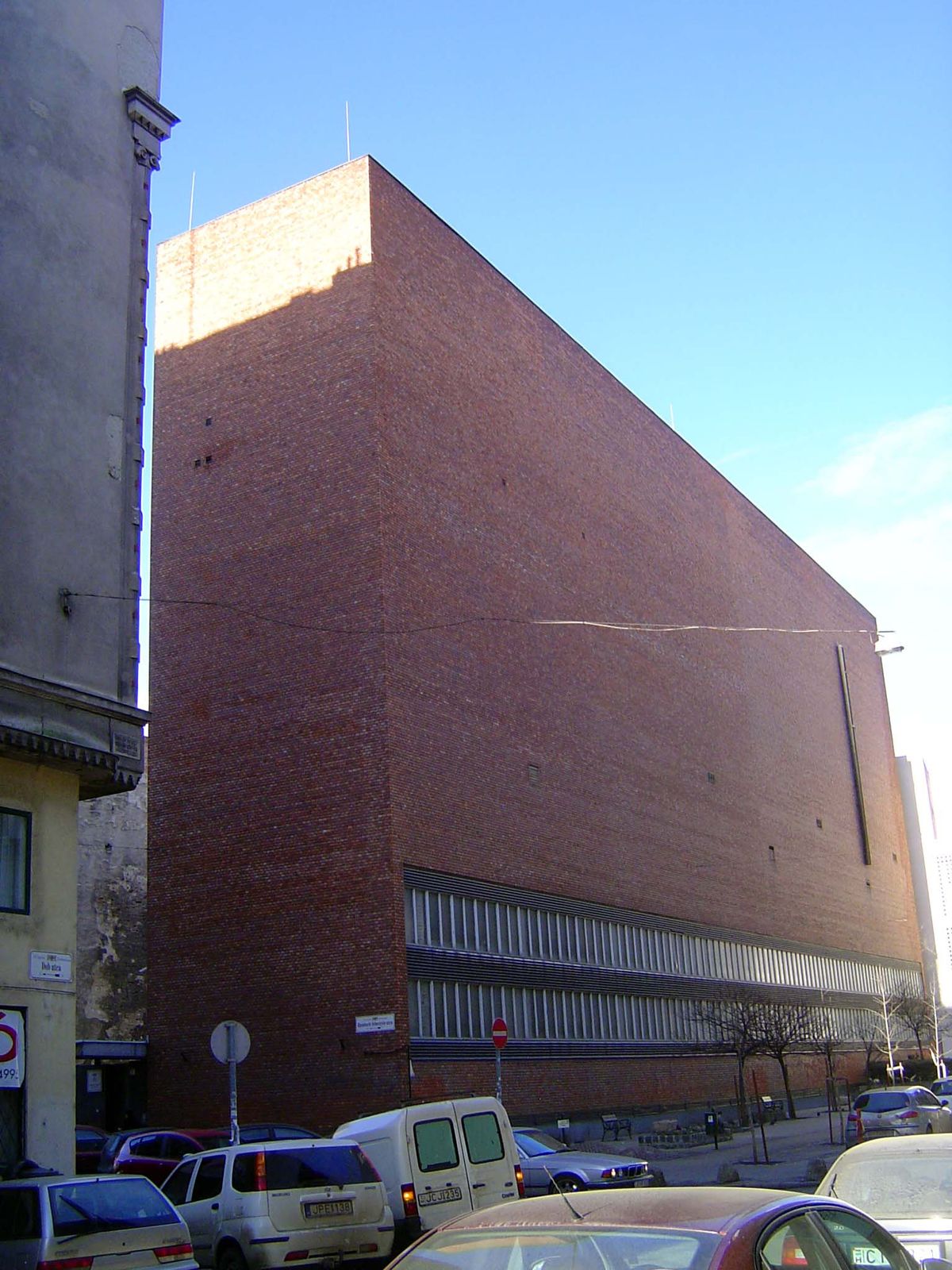
A transformer building, by Erno Lestyan, 1969. Heathcote exclaims, "What an elevation—a sheer cliff of bricks.... as honest as it can be."
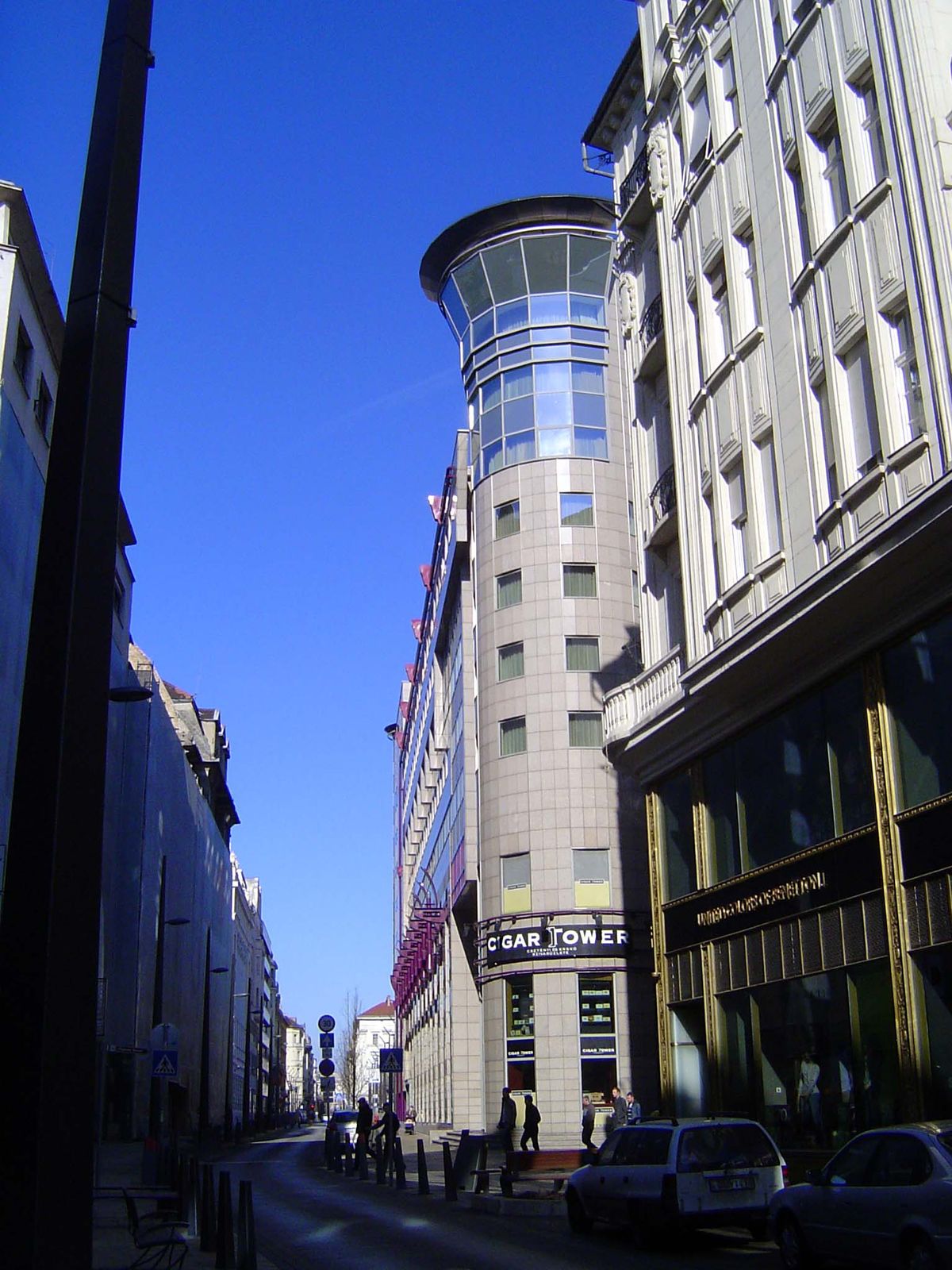
The Kempinski Hotel, completed in 1992, was one of the first hotels to arrive after the departure of the Russians. Its height observes the city's limit on building heights yet remains, as Heathcote observes, "alien to its surroundings."
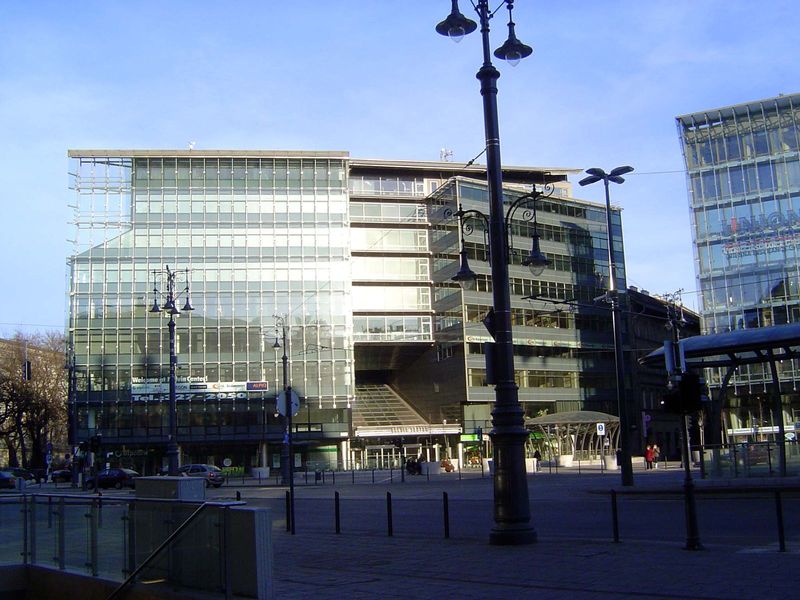
Something newer, Kalvin Towers, replacing the ponderous masonry of the Pest National First Savings Bank.
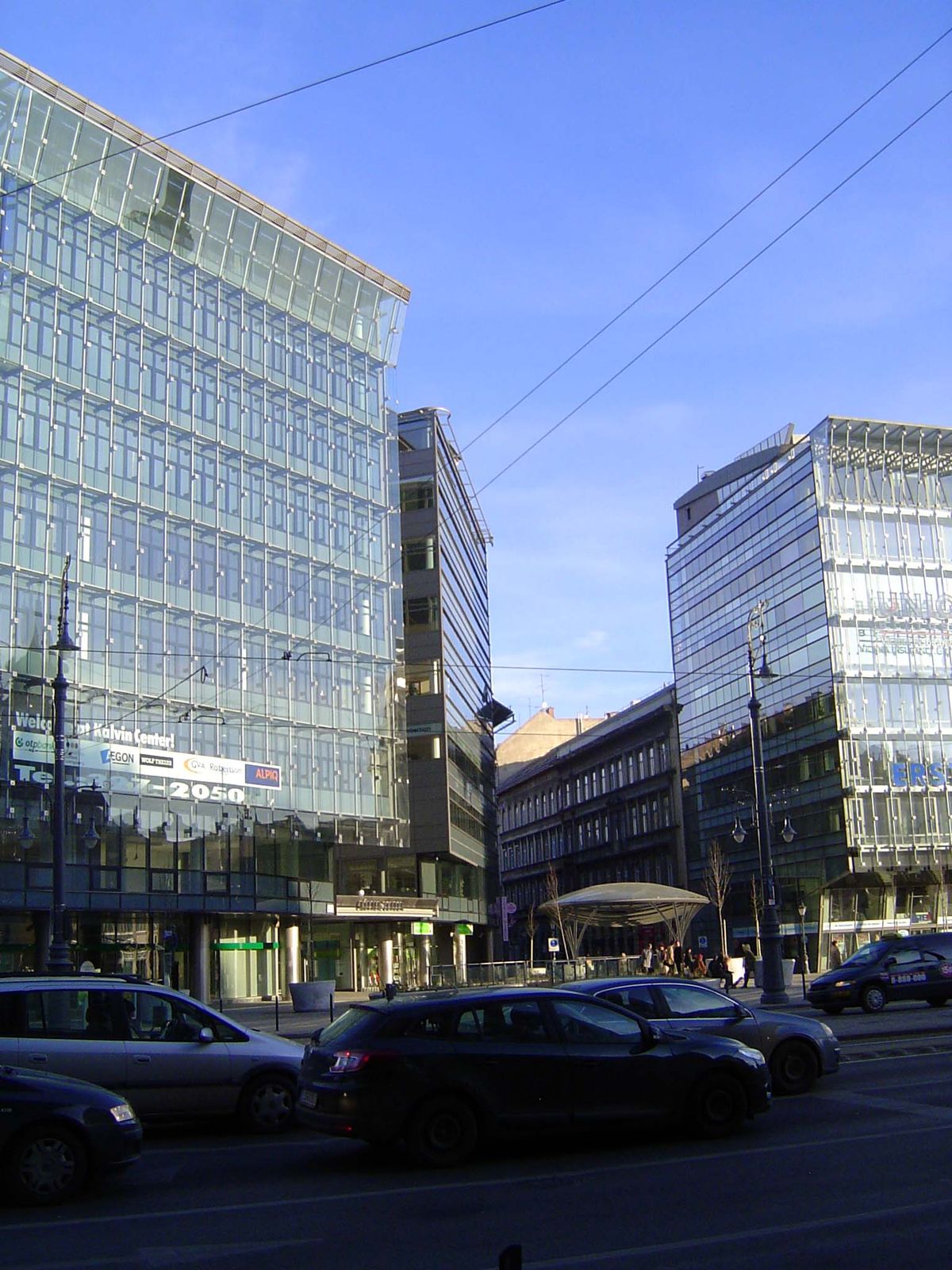
Another view.
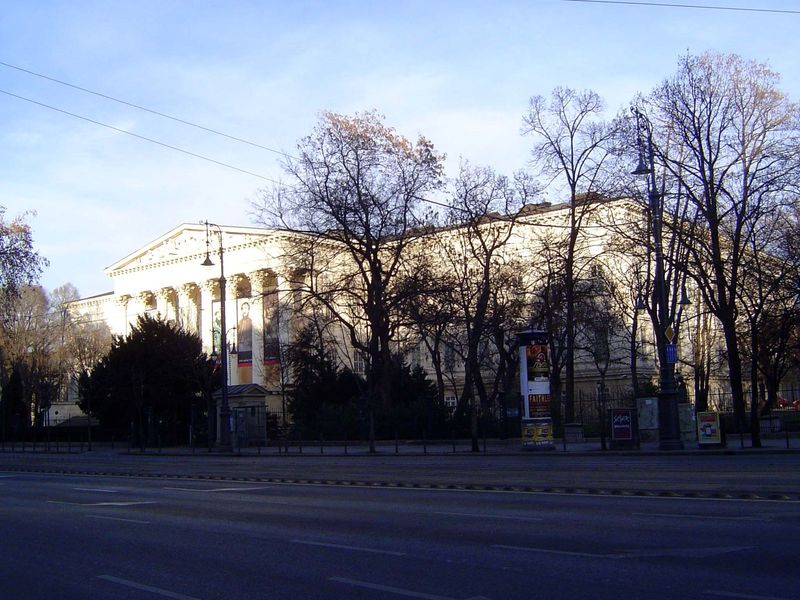
Are these glass boxes any worse than the adjoining and formulaic National Museum from 1837-1846?