Calcutta 7: 2024
These pictures come from three days and a shopping list. On it: (#1) a trip 50 miles north to see the childhood home of the author of the 1929 novel Pather Panchali. He was Bibhutibhushan Bandyopadhyay, a name simplified for English-only rejects like me as B.B. Banerji. Then (#2) a visit to Boral, about six miles south of central Calcutta and the place where Satyajit Ray in the 1950s made a movie from the book. It, too, is called Pather Panchali and--a rare thing--is as emotionally powerful as the book. Then (#3) a visit to the ancestral home in central Calcutta of the poet (and more) Rabindranath Tagore. Next, (#4) paying respects to two Englishmen whom even fervent Indian nationalists respect: James Prinsep and David McCutchion. I also went (#5) to St. Paul's, the Anglican Cathedral, which is usually crowded but wasn't this morning. Finally (#6) I dropped by the decommissioned Alipore Jail, now a museum. Why such a rush? My private jet was in the shop, and I had to fly commercial to Delhi. I tell you, it was awful. I don't know how the little people do it.
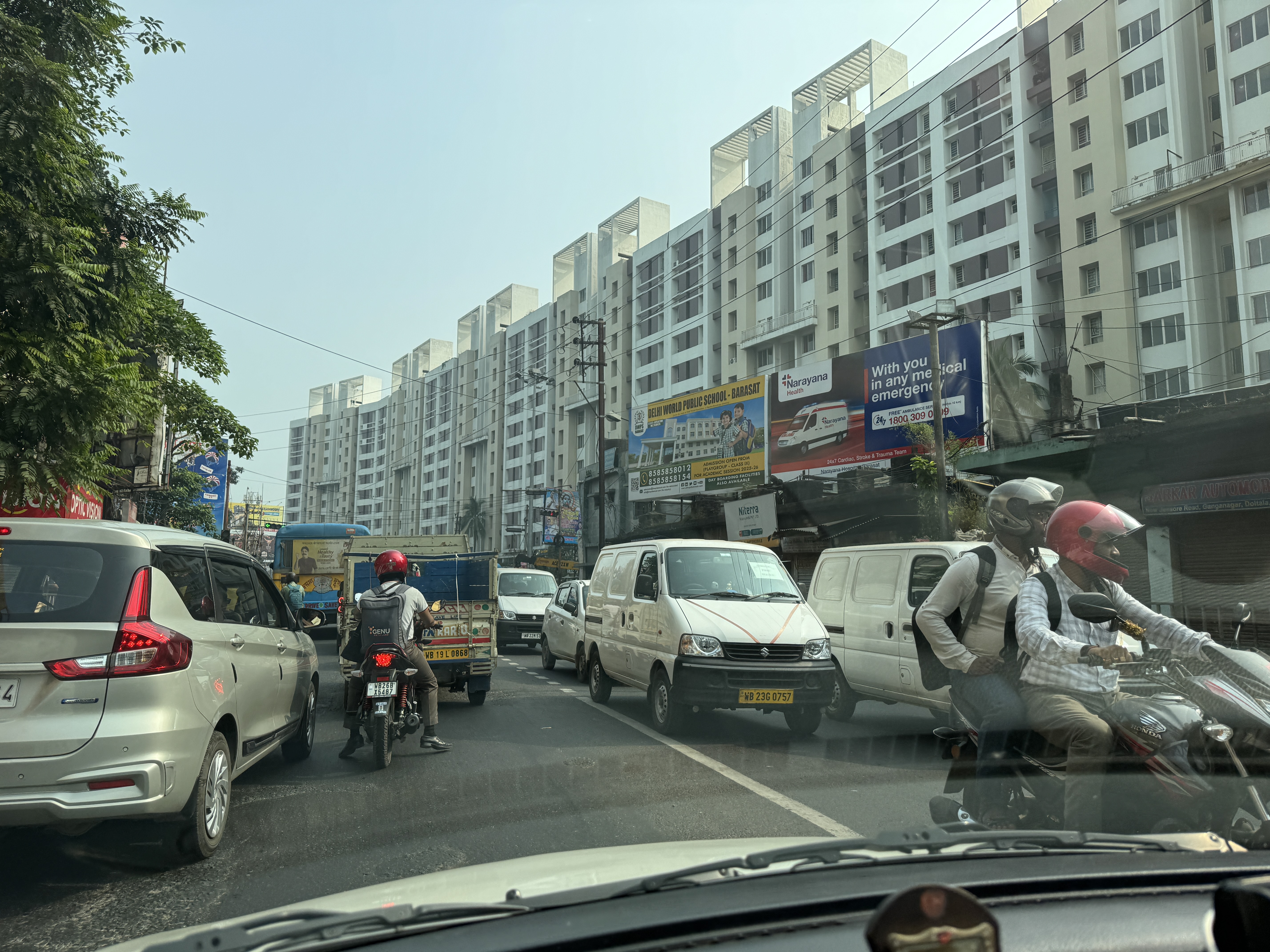
We're heading north from the airport. Slow, crowded, interminable.
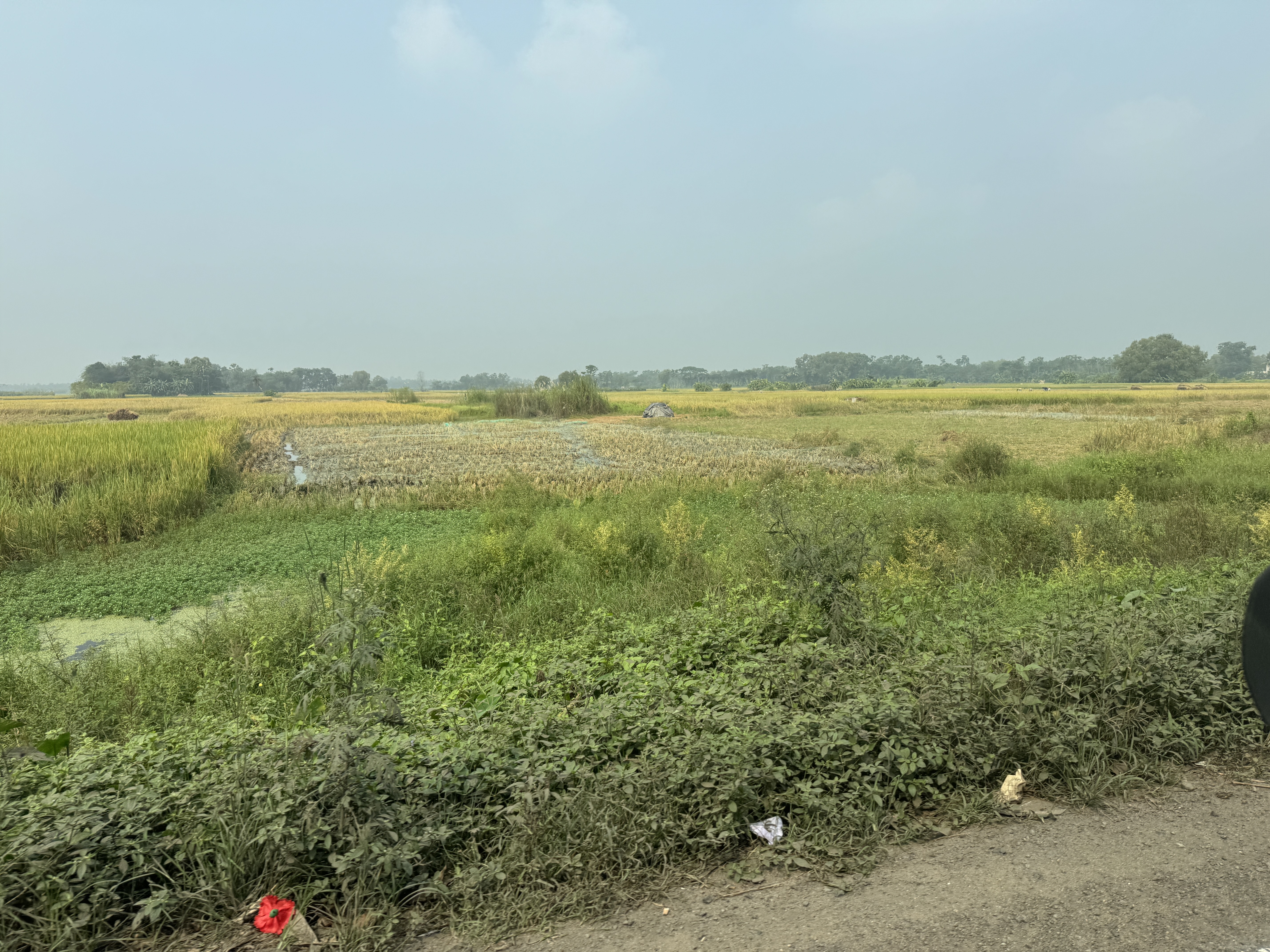
We break free of Calcutta about 15 miles north of the airport and near Uludanga.
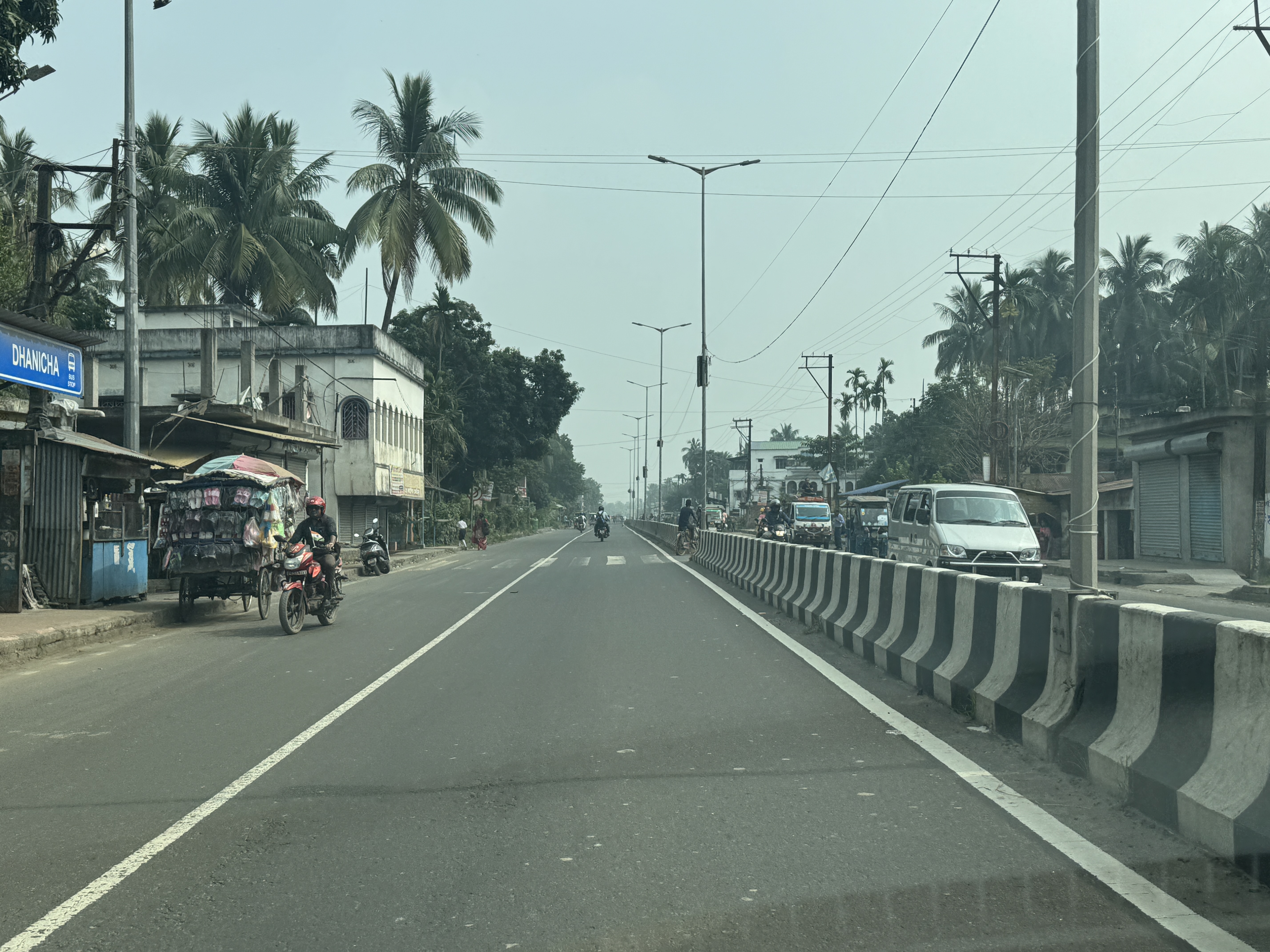
After another 15 miles of National Highway 12 we land in Chakdaha, population 100,000, and turn right onto State Highway 1. Surprised by Texas Barriers? Me too. Where's Apu? Where's Durga? They're the chief characters in Banerji's novel, which sits on my Bengali shelf alongside Nirad Chaudhuri's radically different Autobiography of an Unknown Indian.
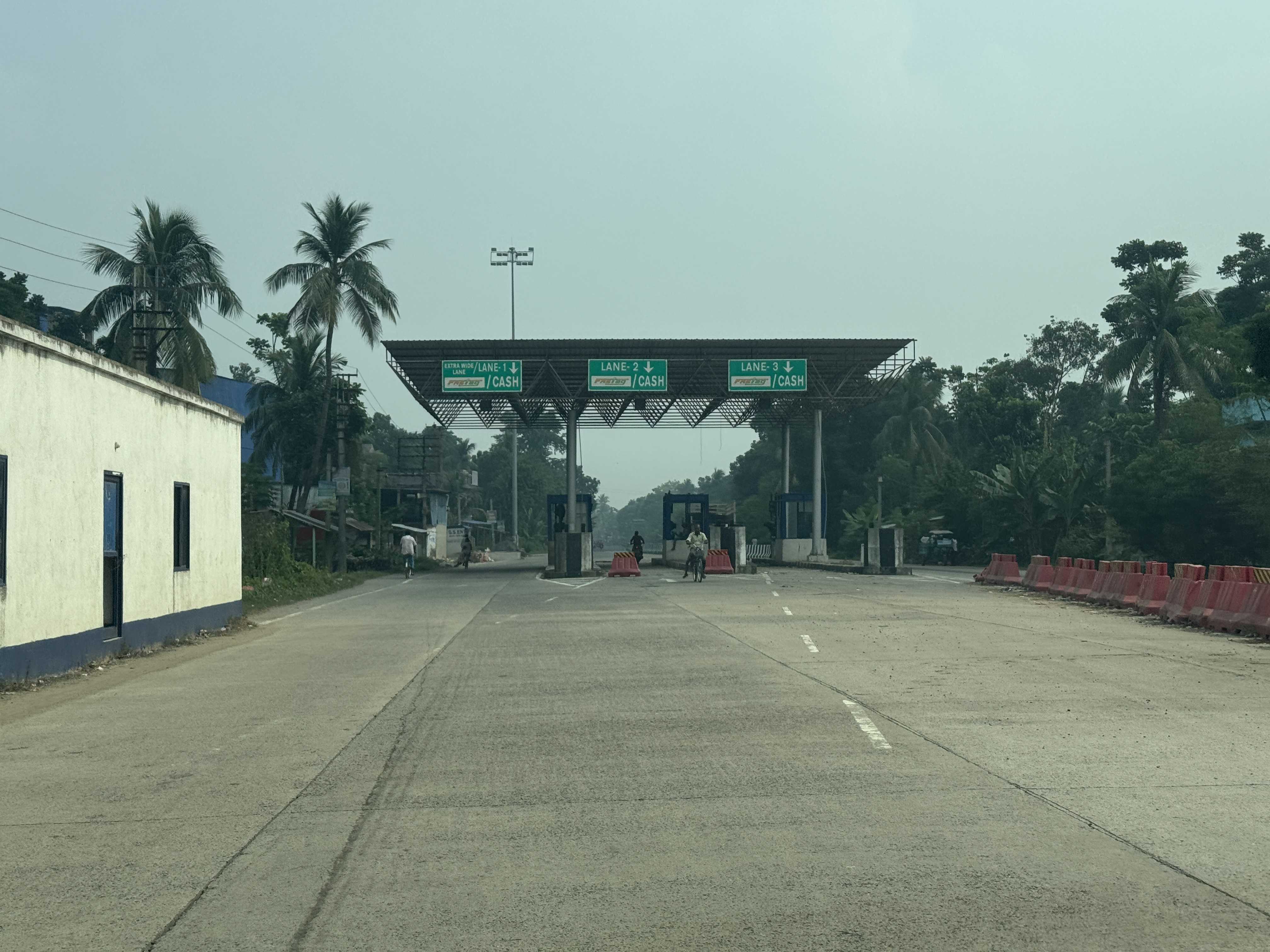
Great. A toll booth. But this is India, and it's not working. I mean the toll both. Cruise on through. (By the way, we're in an Uber with a nervous driver who speaks neither English nor Bangla.)
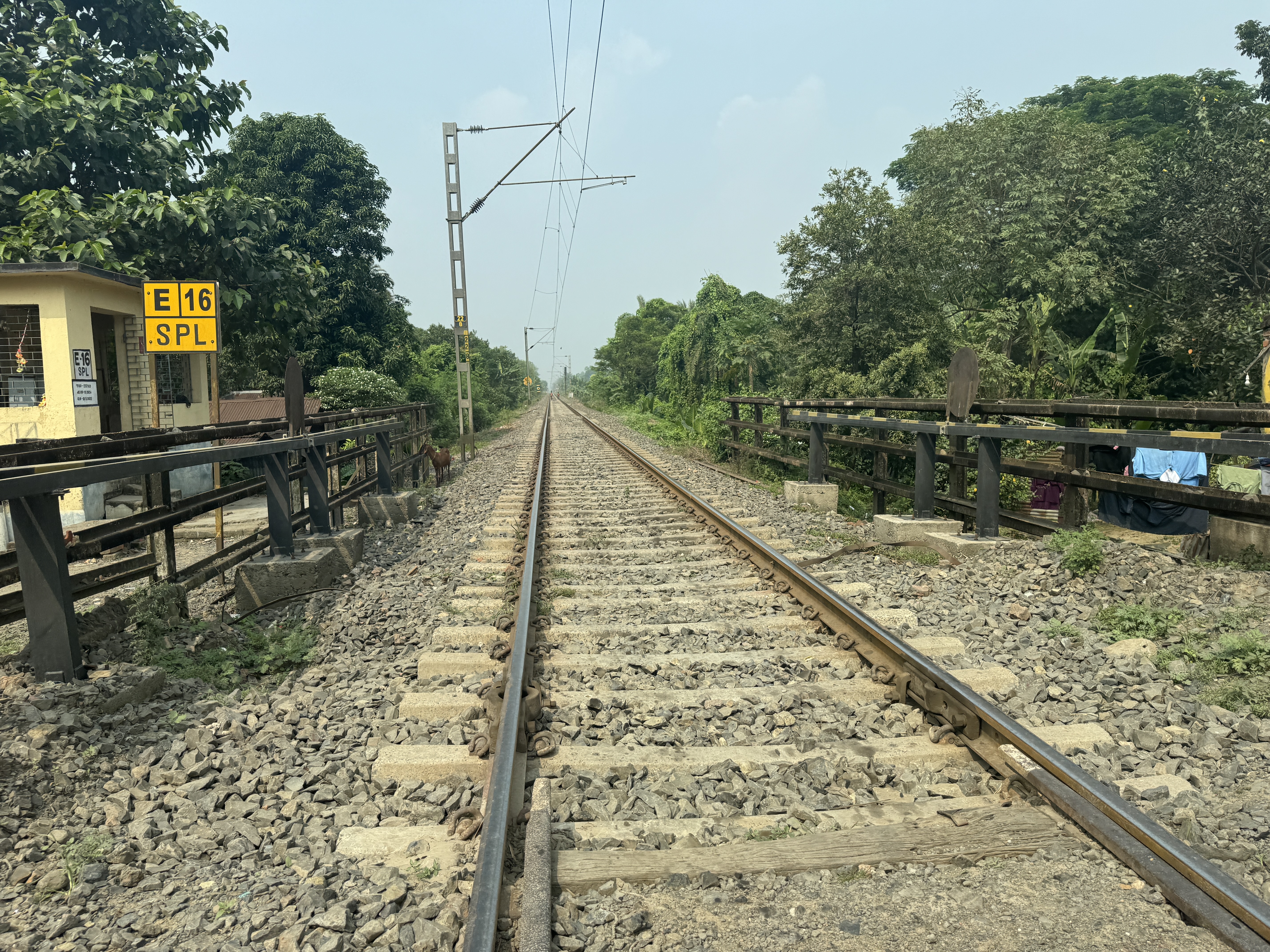
Trains are a main character in both the book and the movie, and they're almost as important now as they were in 1929. Just don't expect steam locomotives.
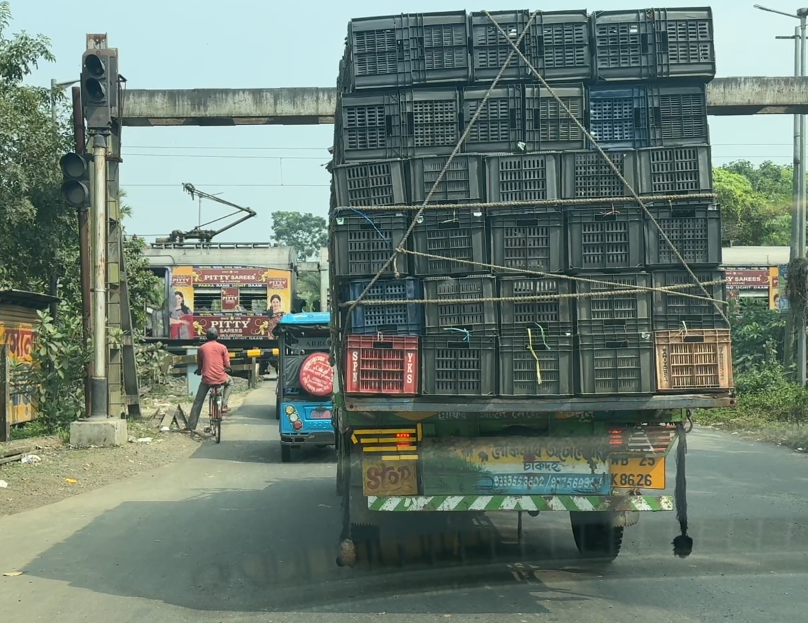
Nice pantograph, slipping by at about 40 miles an hour.
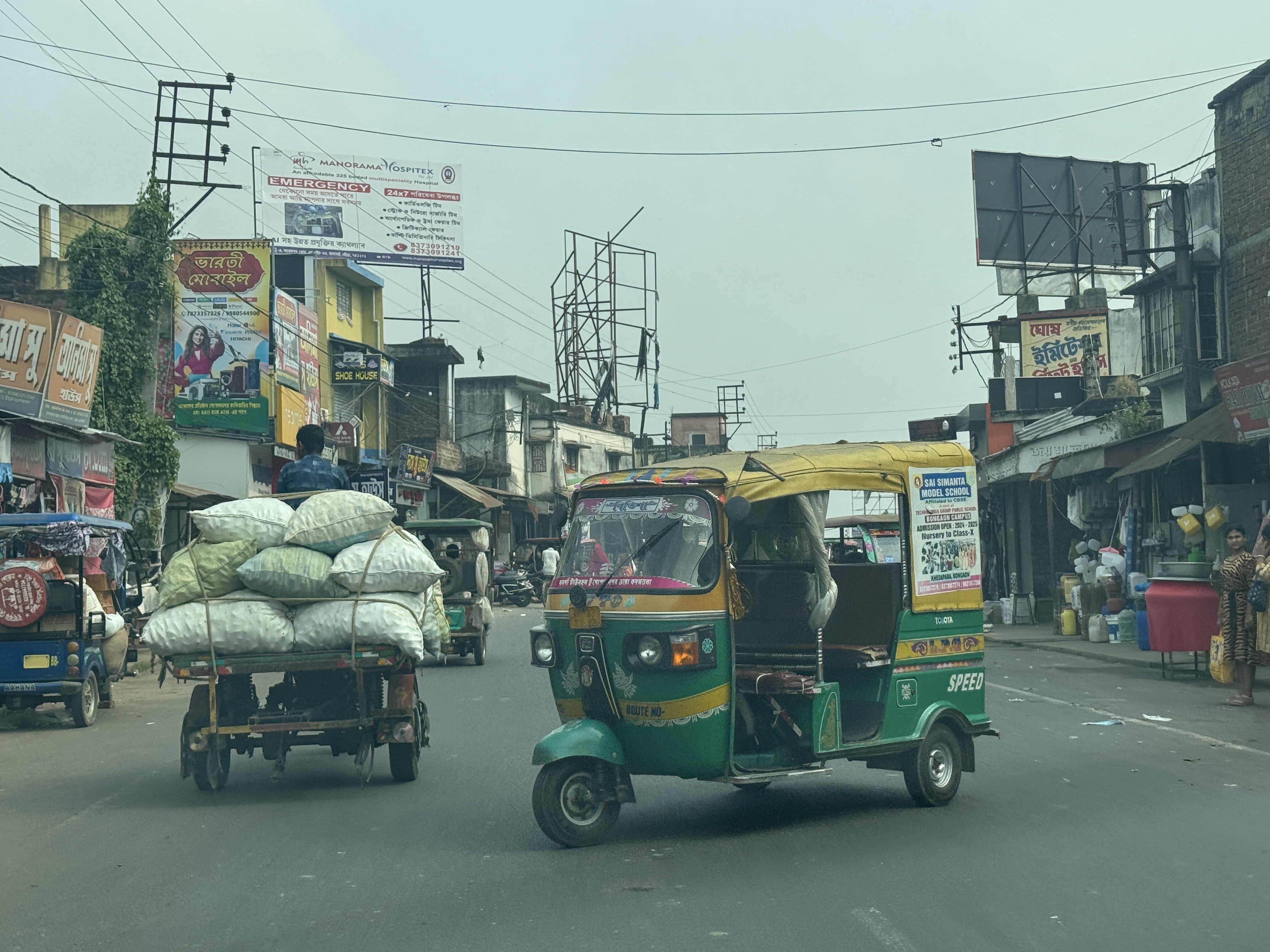
Fifteen miles from Chakdaha but still on State Highway 1, we come to Gopalnagar, a village that the Census of India says has about 2,200 people. Sure feels like more.
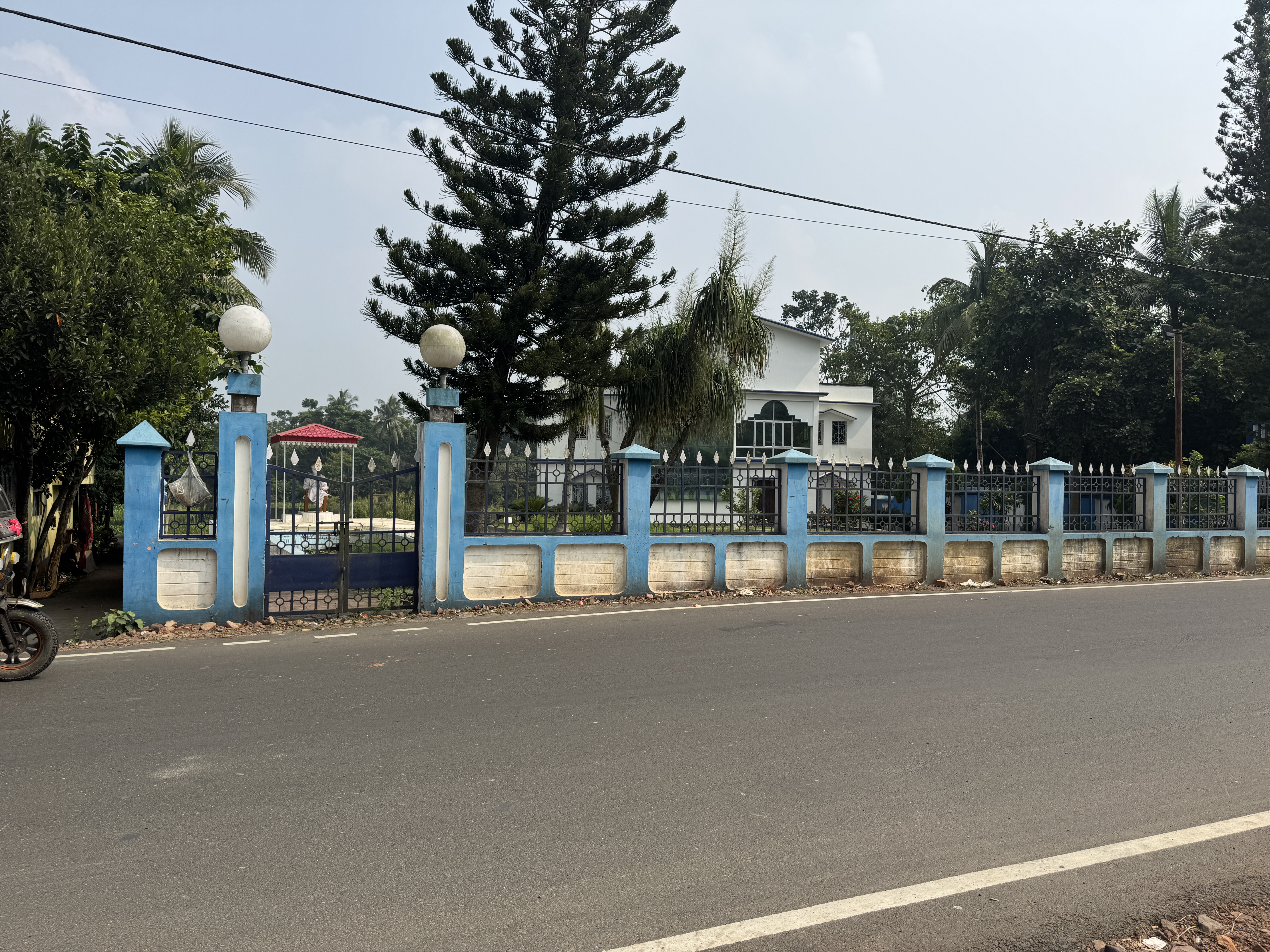
Off to the left and in less than a mile we come to the village of Barakpur and the Bibhutibhushan Memorial Park. What's there? I'll never know, because it was locked tight mid-morning on a weekday. But see that path or opening behind the motorcycle wheel?
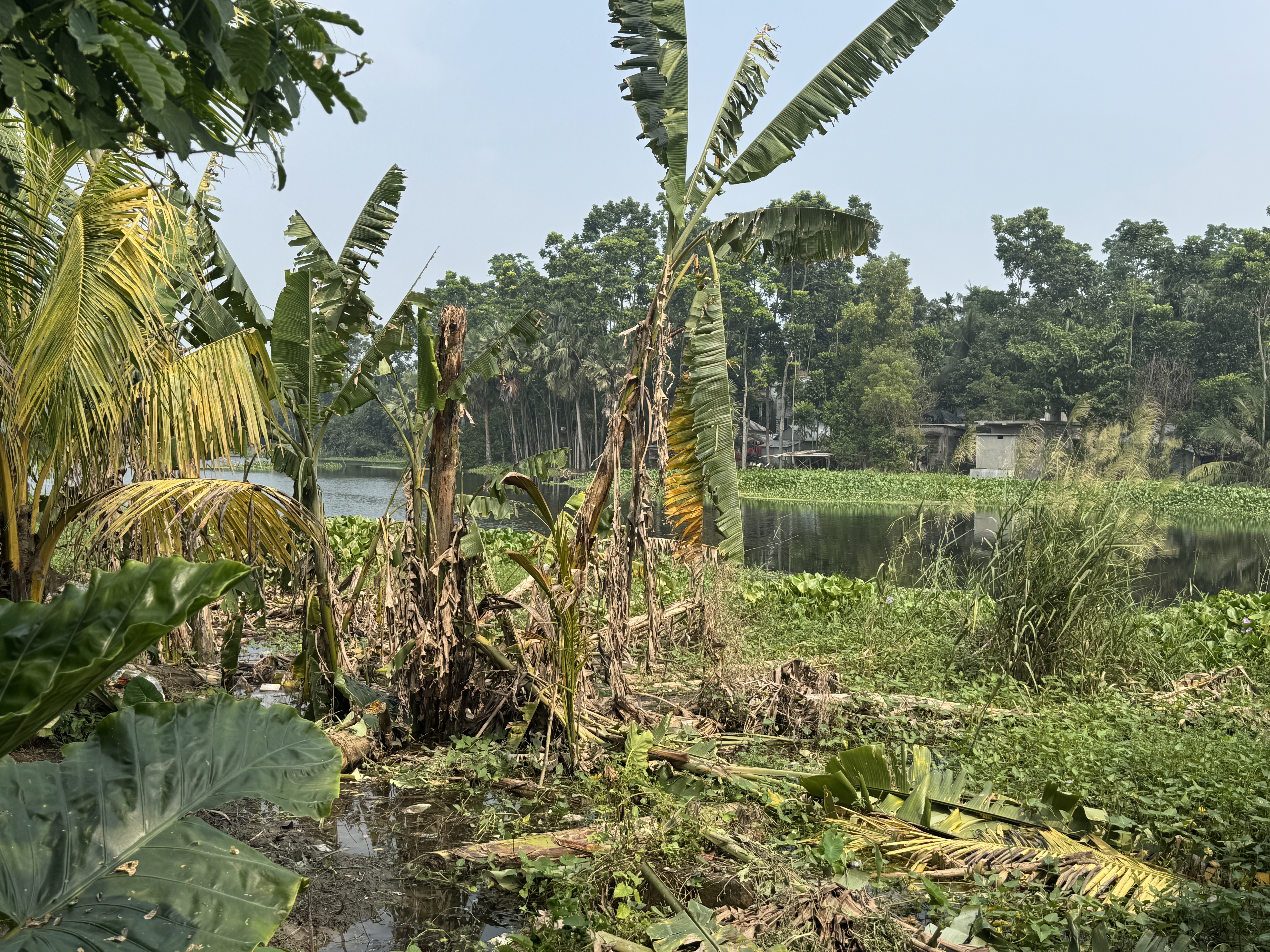
It leads to the Ichamati River and a scene, finally, that feels close to the world of the novel and movie. The Ichamati (or Ichhamati) is not a river in the sense we normally use that word. We're approaching (or, depending on your definition, we're already within) the Ganges Delta, where the main stream throws off oodles of distributaries. The Ichamati is one of them. It wanders back and forth between India and Bangladesh, which is less than 10 miles to the east of this scene. Sometimes the Ichamati even forms the border between the two countries. Relations between the two countries are strained, but the river isn't flustered. I'd like to say "it just keeps rollin' along," but there's hardly any current.
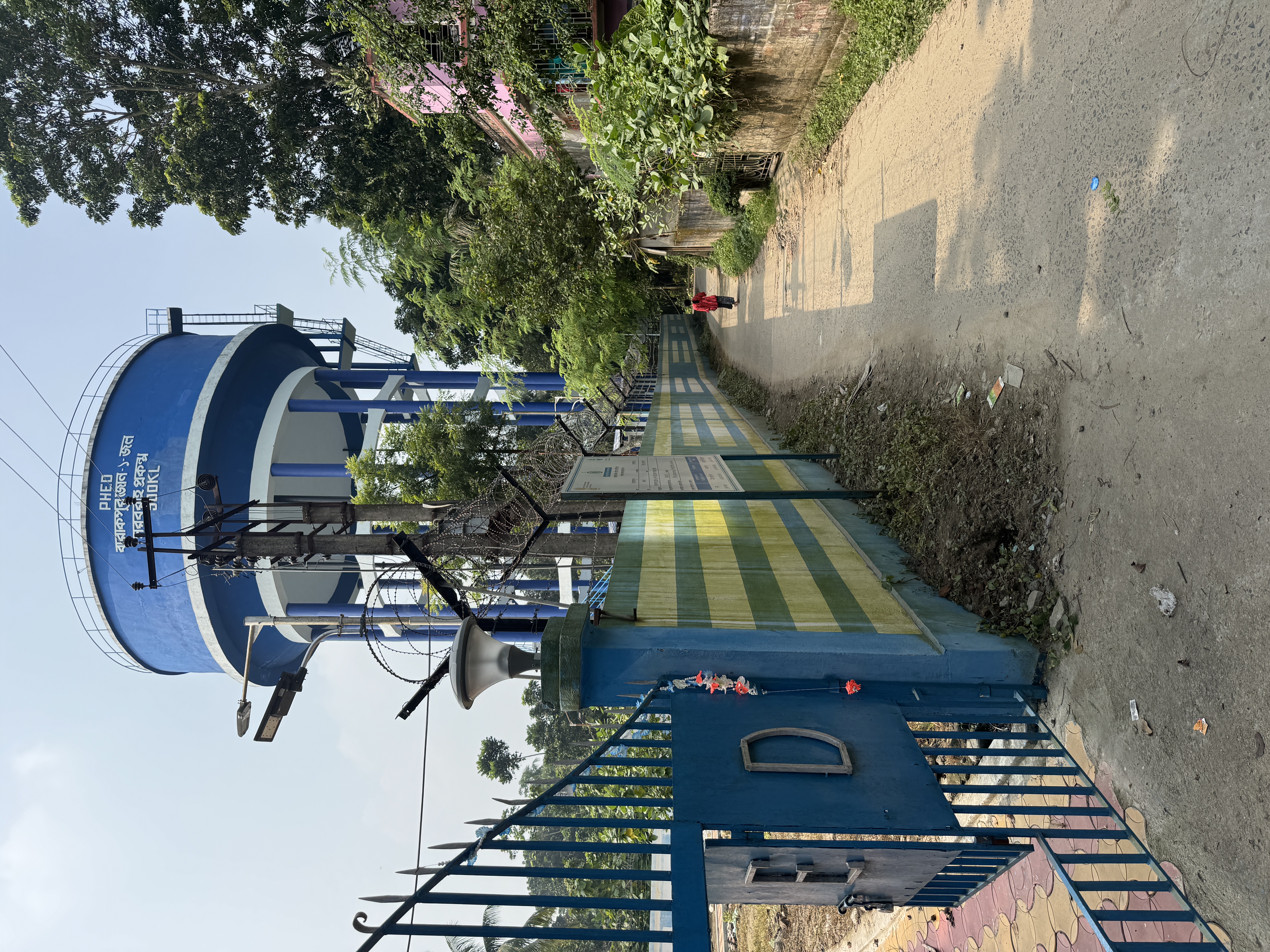
It's a five-minute walk to this water tower ("overhead reservoir" in the local parlance). Why build such a thing in a land filled with rivers? Answer: most people rely on wells, and the groundwater is rich in arsenic. Cure: a piped supply of purified water from towers like this.
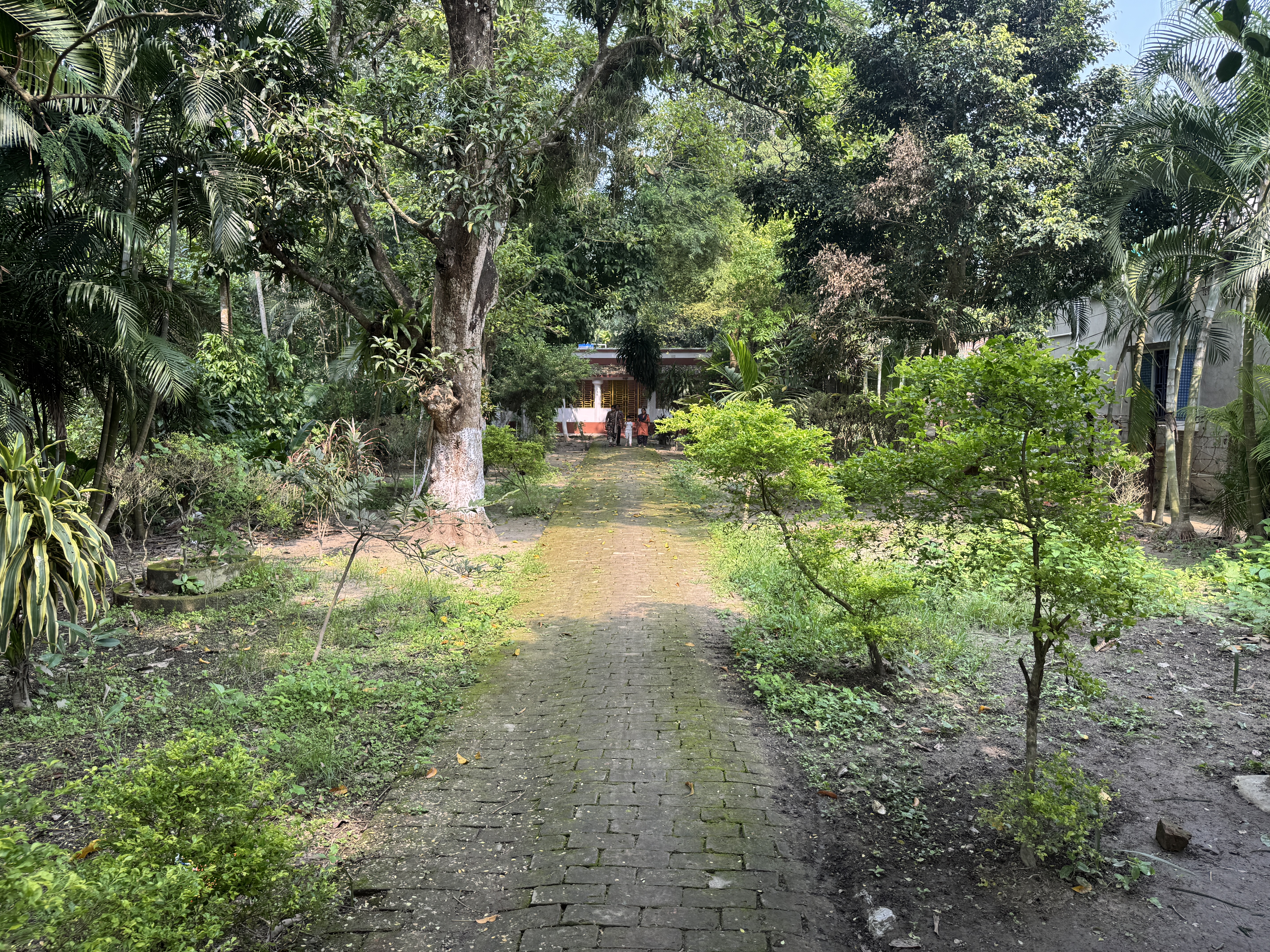
Across the street, we follow the brick road.
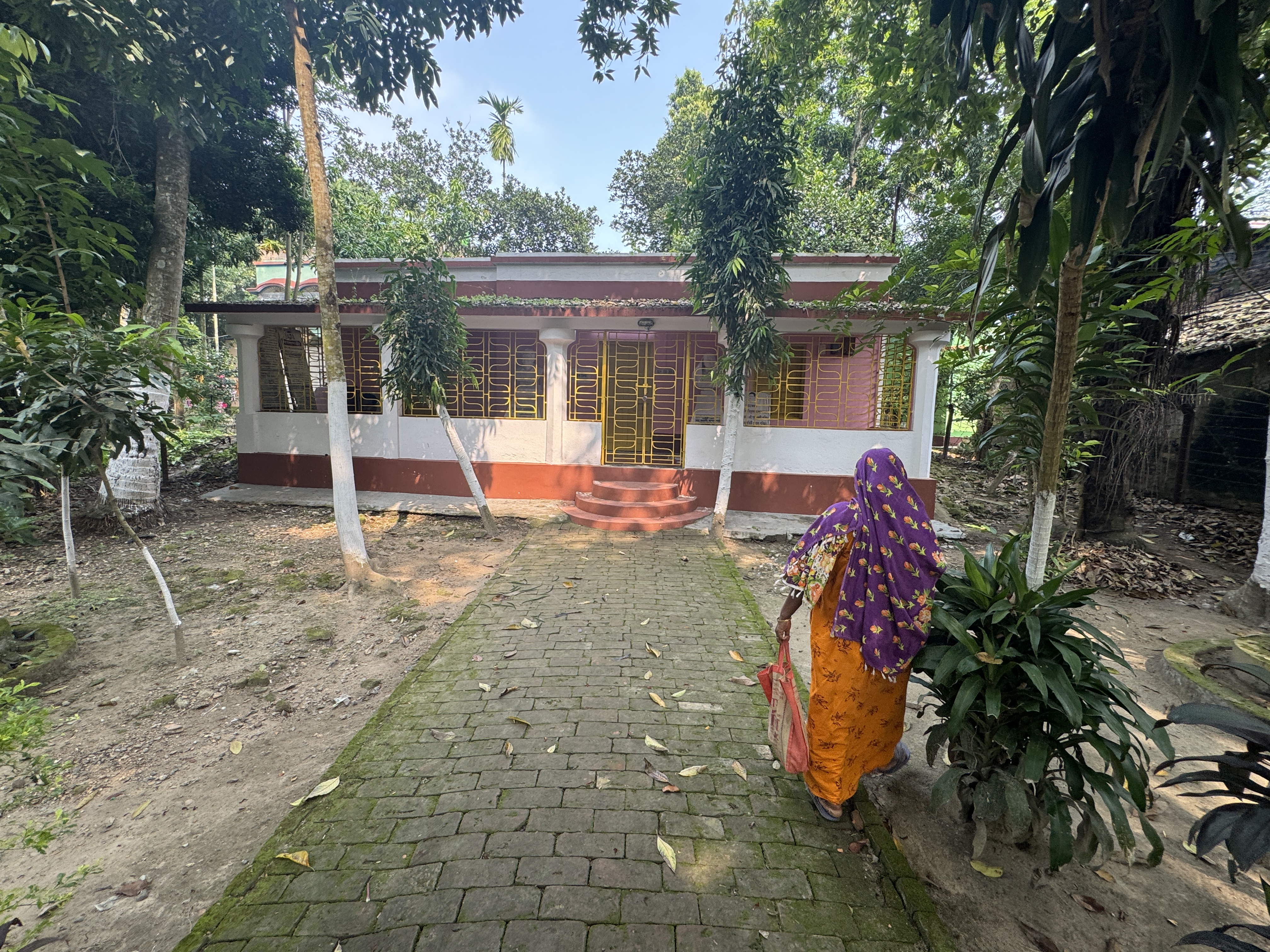
This is the the writer's childhood home. Can't say how much it's changed since Banerji (1894-1950) lived here. Humble? Yes, but also palatial, depending on your standards. Grandfather was an Ayurvedic physician.
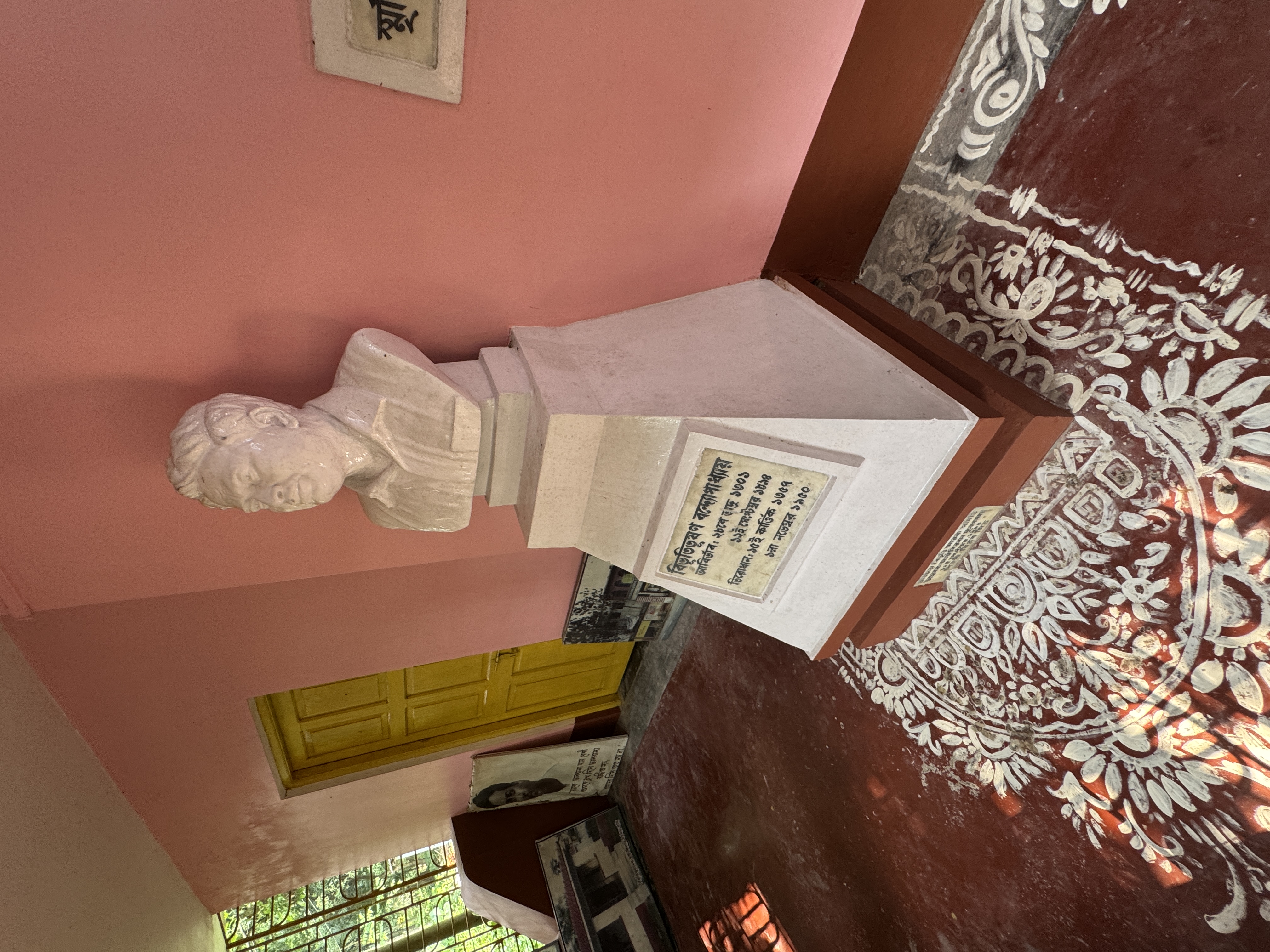
There's a bust of his grandson, who supported his family by teaching at a Gopalnagar high school still in business.
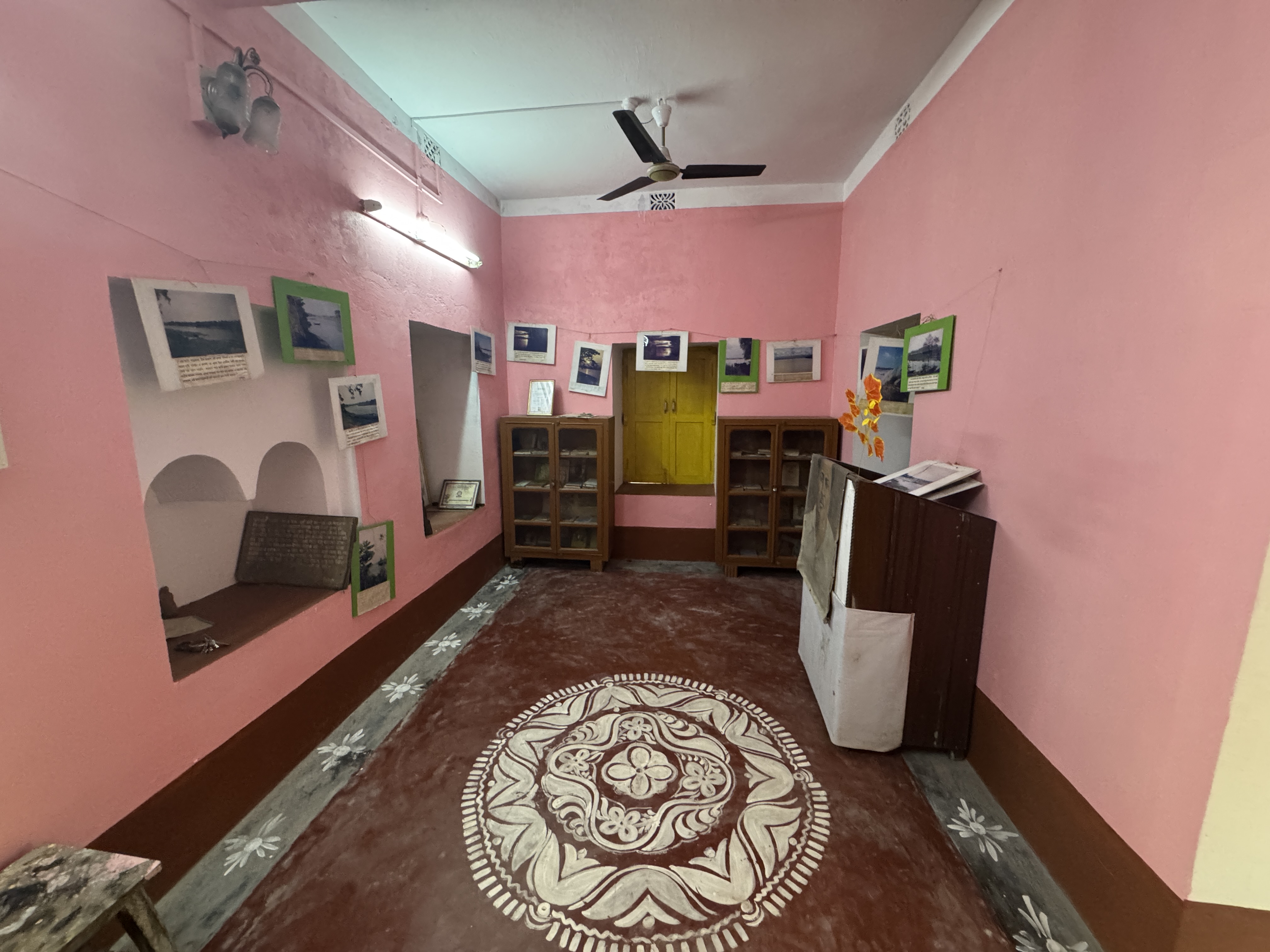
Also some photos, a top-grade fluorescent tube and, on the floor, an alpona (=Tamil kolam). Drawn with rice flour? Good question. You ask too many. Why are the walls bubble-gum pink? I have no idea. I also ask too many questions.
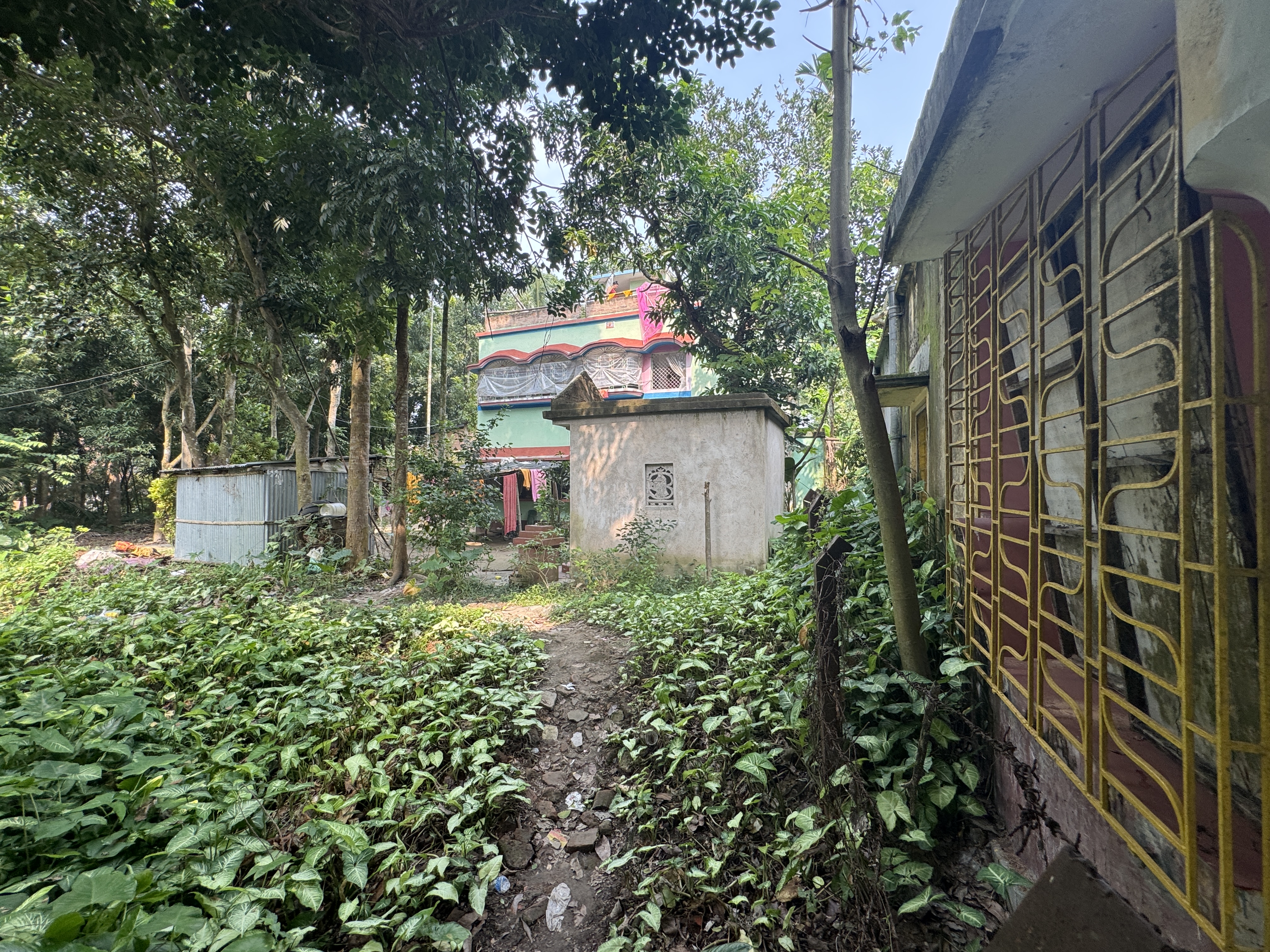
The neighborhood is filling up with bigger houses.
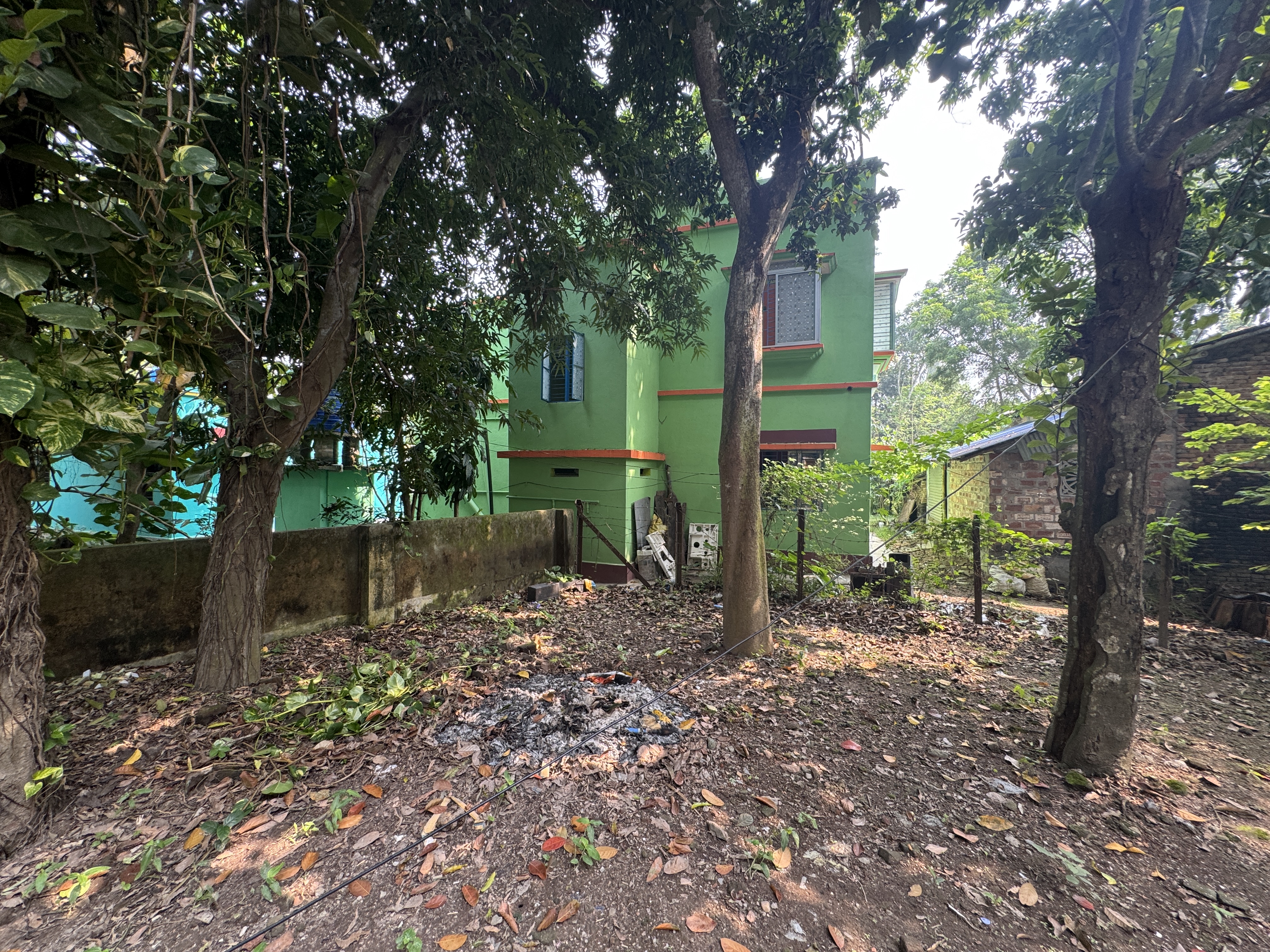
I can't call it multi-storied, but I want to, so bad.
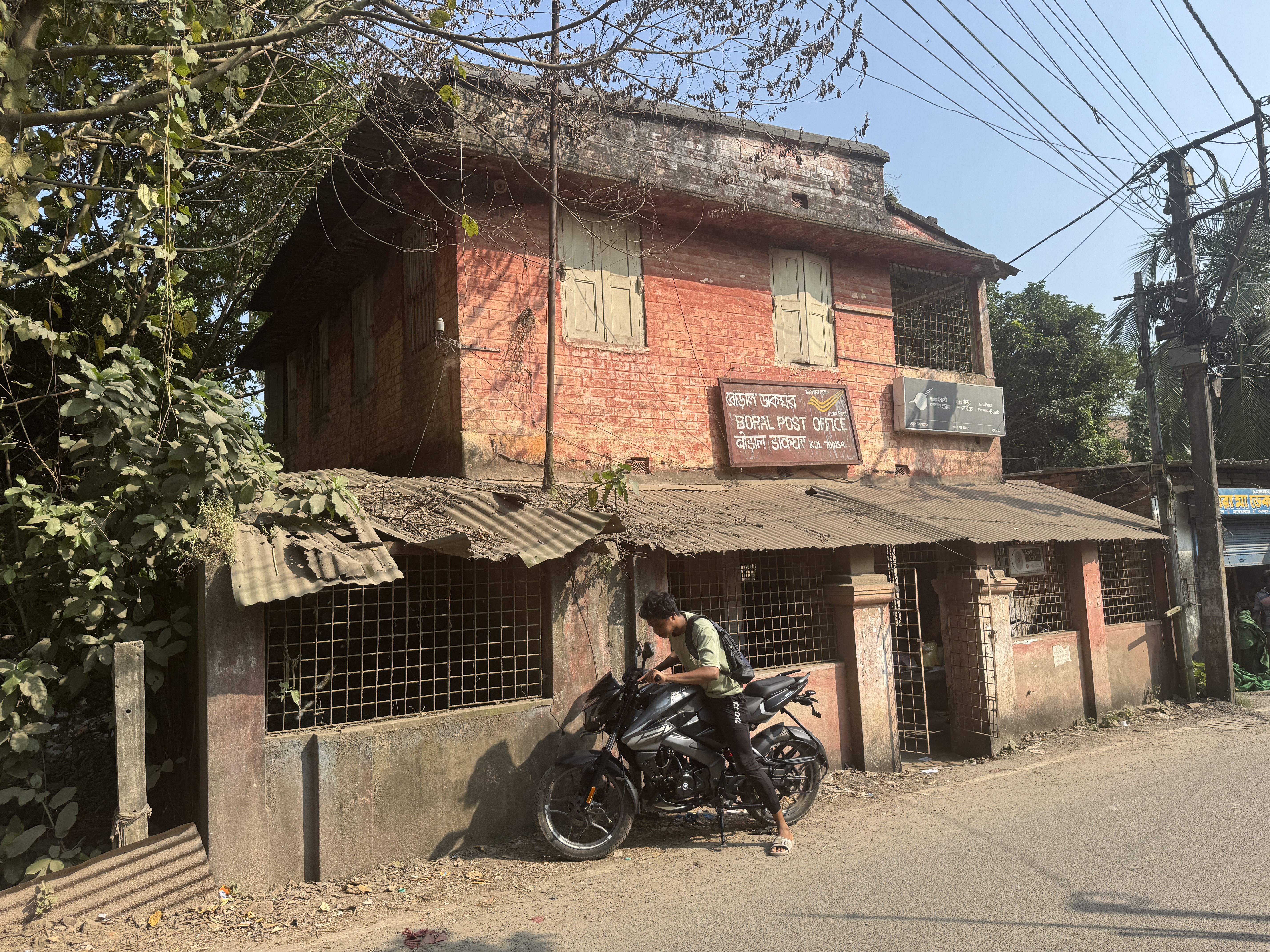
Long way to go for not much? Maybe. But we're back in Calcutta and the village of Boral. Does it look like we're 7 miles from the central city? Not to me. Is this what geographers mean when they talk about distance-decay? I think so, but I'm not that kind of geographer.
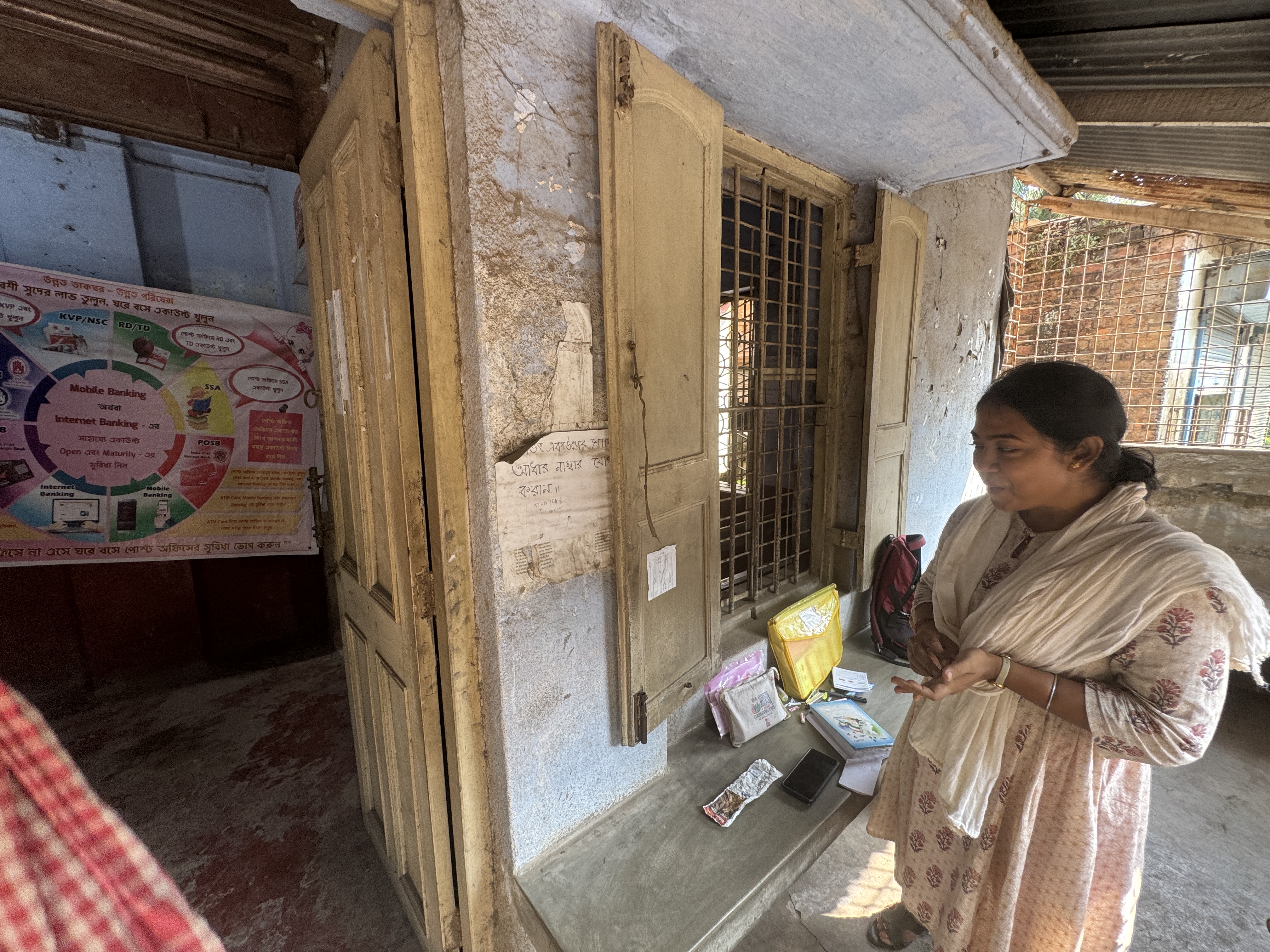
And it's not a relic: it's an operating post office.
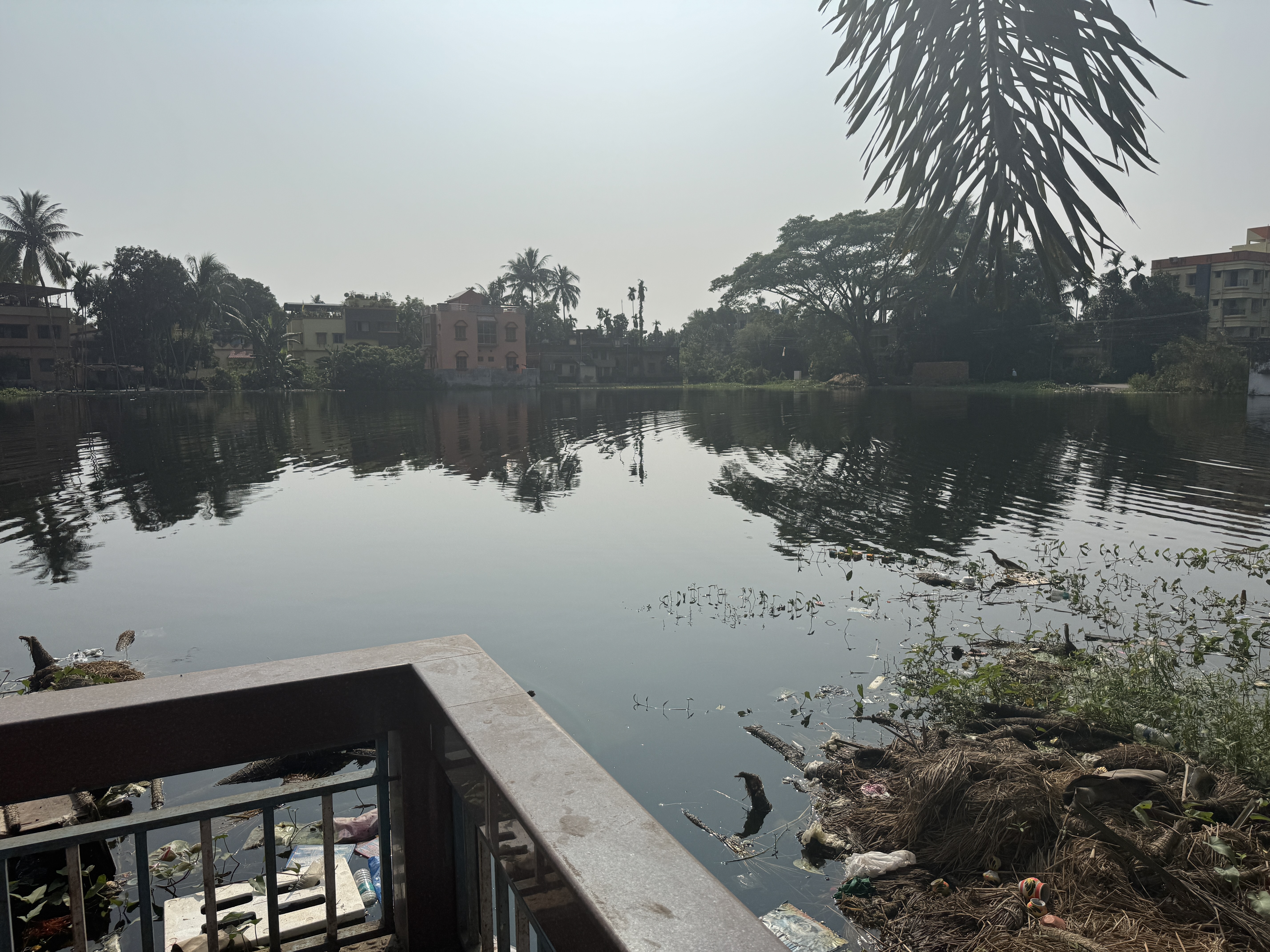
Satyajit Ray filmed Pather Panchali here over the space of several years in the early 1950s. My driver and I had trouble finding the exact location, and as we went in circles I was surprised to find the neighborhood filled with ponds. This one, the Saral Dighi, is apparently used as a swimming hole, though we saw nobody in the water. And yes, if you go back to the film you'll see ponds like this.
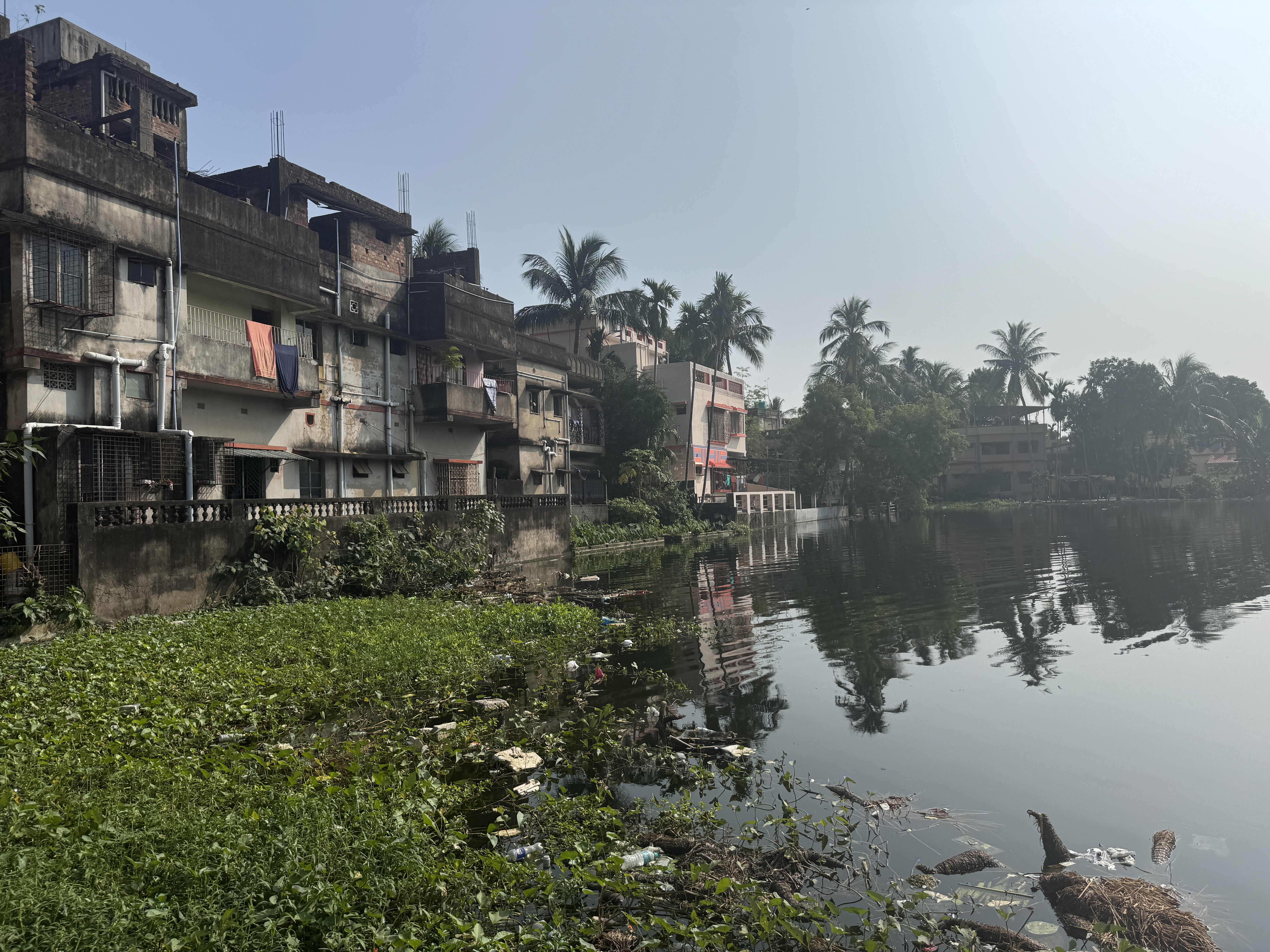
Another one.
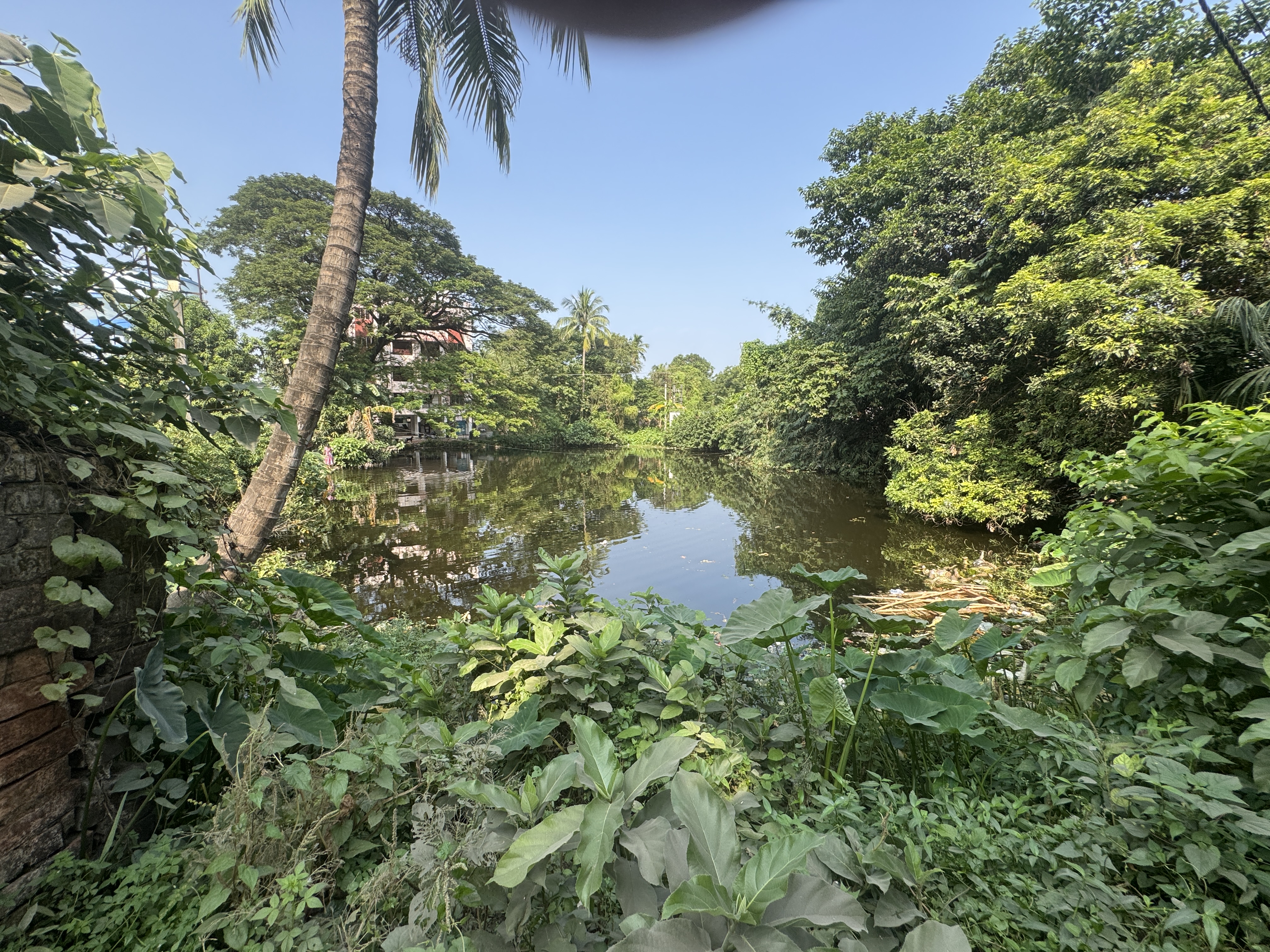
Weird, isn't it: we're less than 10 miles from the Victoria Memorial, etc.
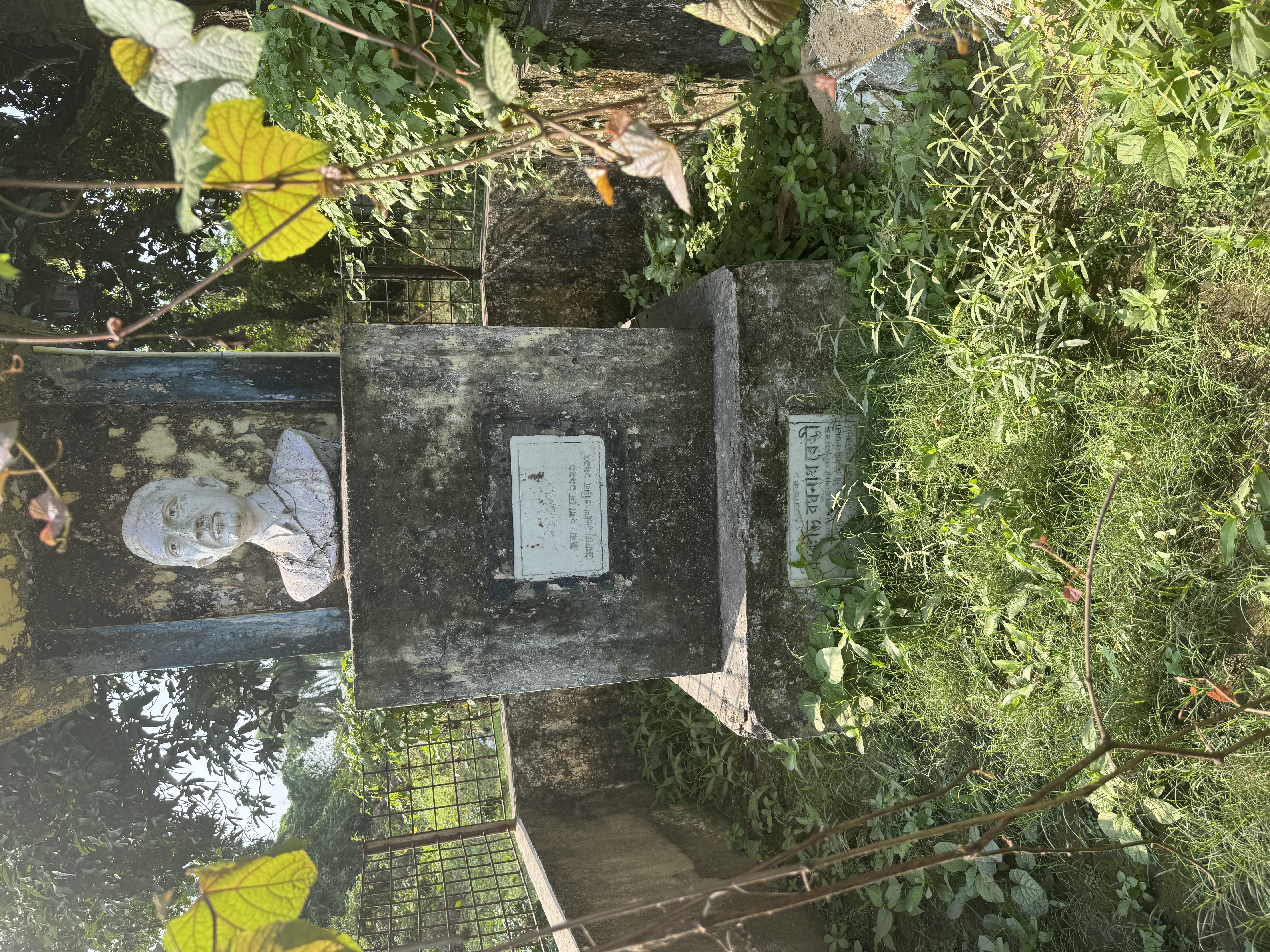
And here, bingo, is the surprisingly homely bust marking the site where Indian's most internationally acclaimed film director made his most famous movie. People in the neighborhood knew of it, but their directions weren't helpful, so we stumbled upon it. They also said that Indians outside West Bengal had no interest in the film or the book. I suspect they're right, because a few days earlier I had been chatting with an educated family from Bangalore, and they had never heard of the novel. They knew the director's name but not the movie. I told them they were cultural barbarians. I said it with a smile, and they took it well.
From the department of curious details: the book Pather Panchali did not appear in English until the late 1960s, by which time the movie had become well-known in the United States and, presumably, Europe. I wonder if it might never have been published if the movie hadn't opened the door.
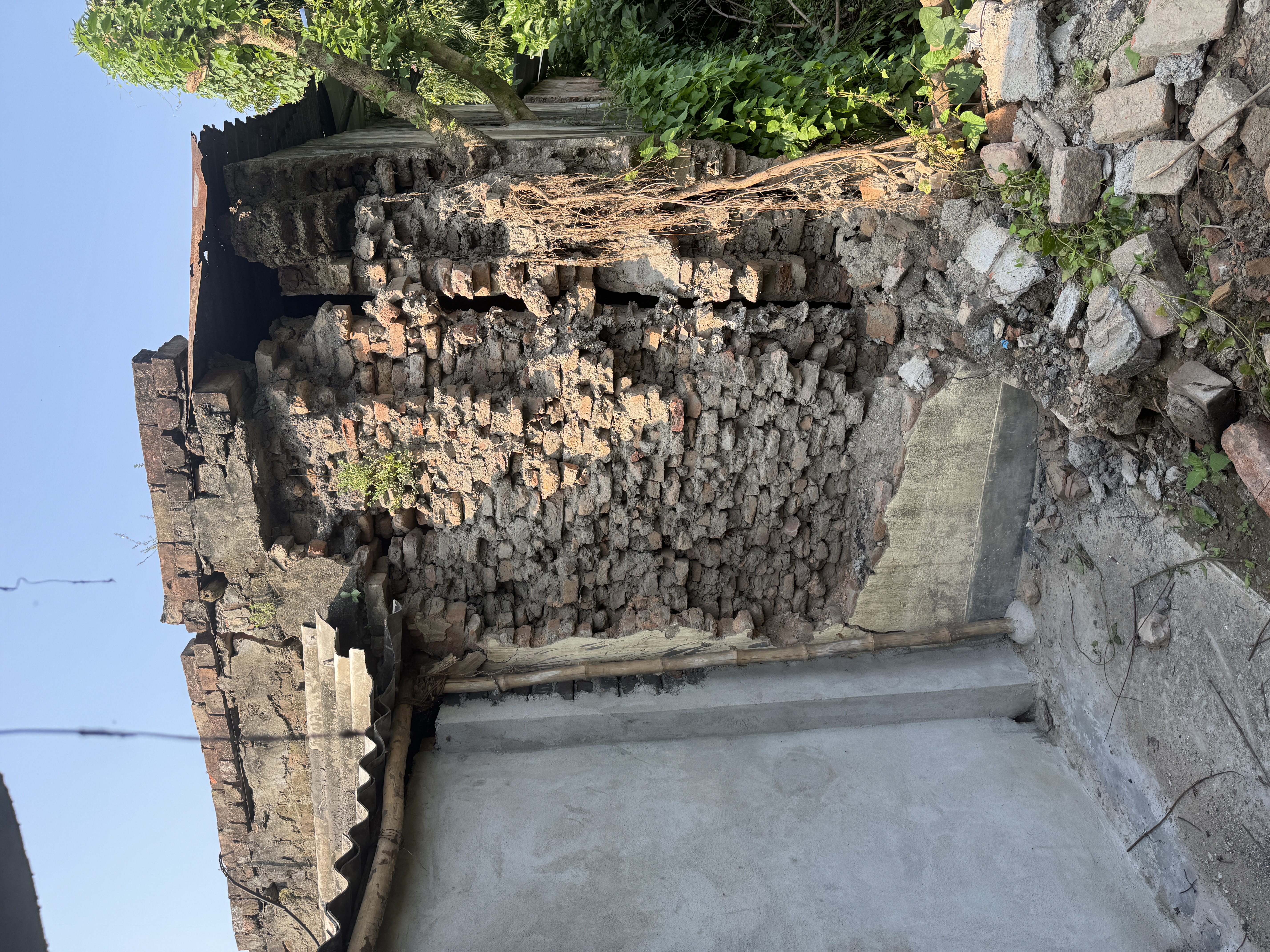
And where are the buildings used in the movie? No idea, but this one, near the bust, is my nominee. Sorry, can't get closer.
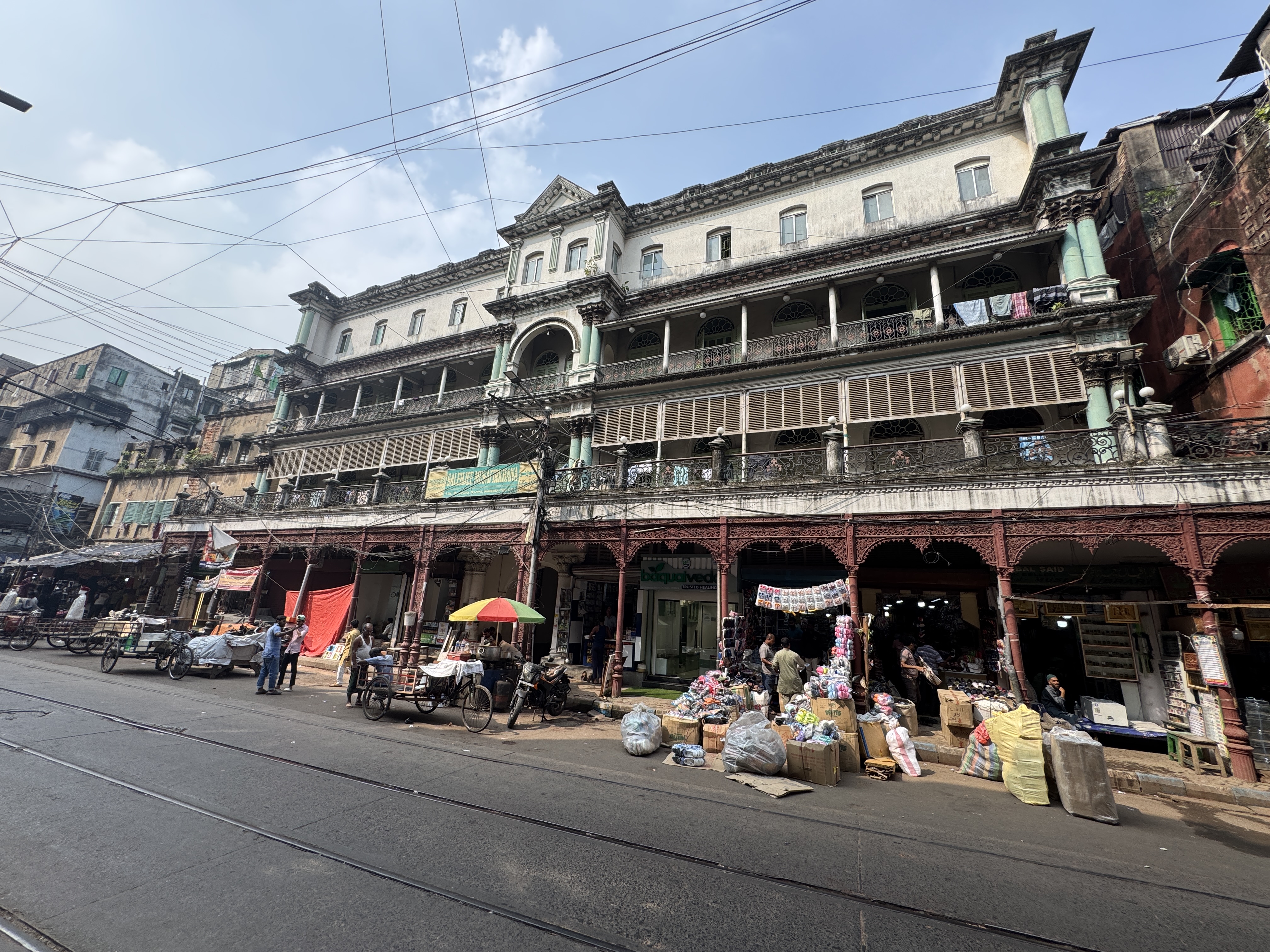
Was Boral another bust? Maybe, but we're moving on to the Tagore House. No, this isn't it! I've just stopped to admire the ironwork on this building on Rabindra Sarani, as in Rabindranath Street. The name was Chitpore Road until 1961, but when the government of India honors one of its own it goes whole hog.
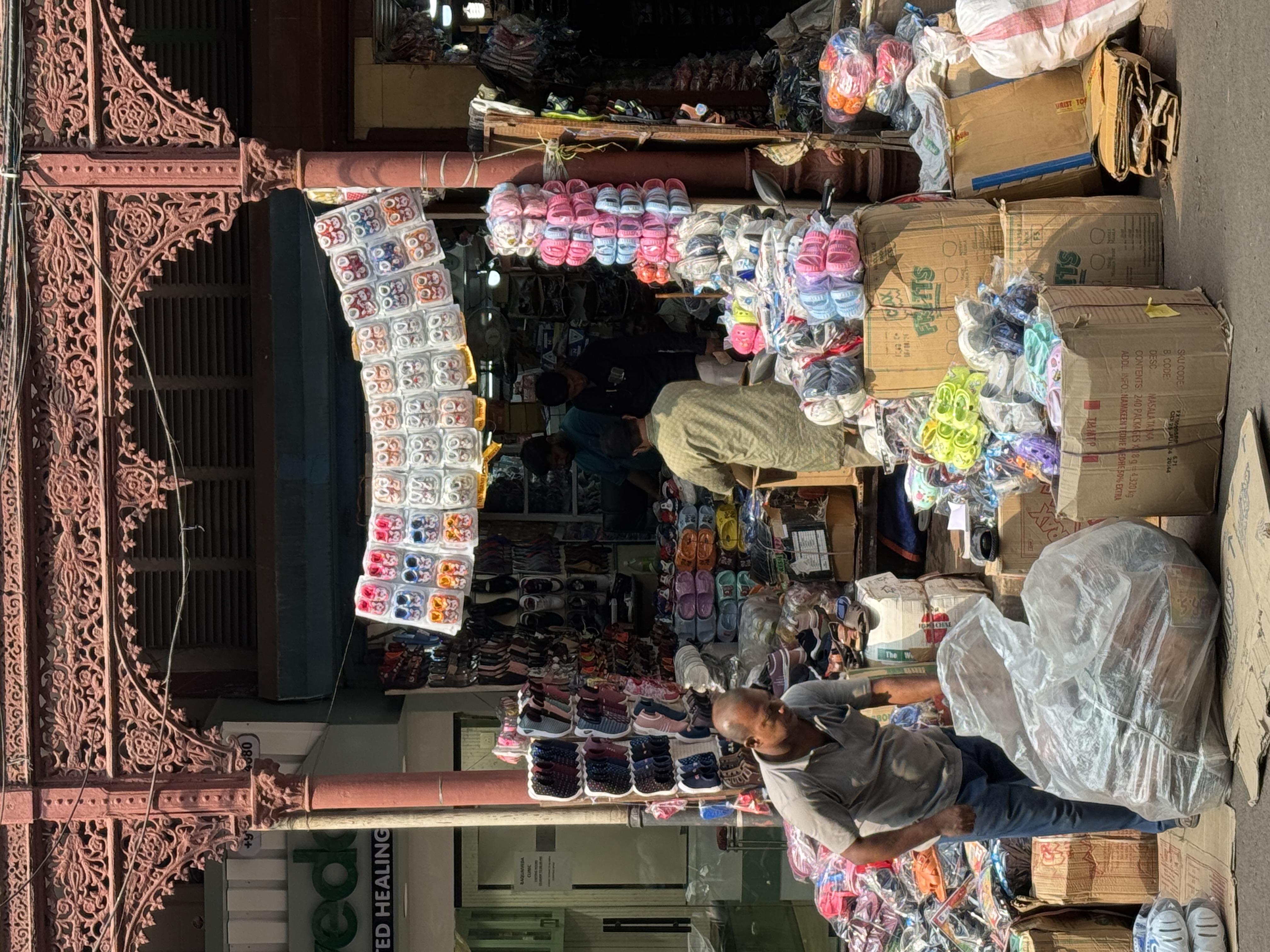
The streetmarket is even more arresting than the ironwork.
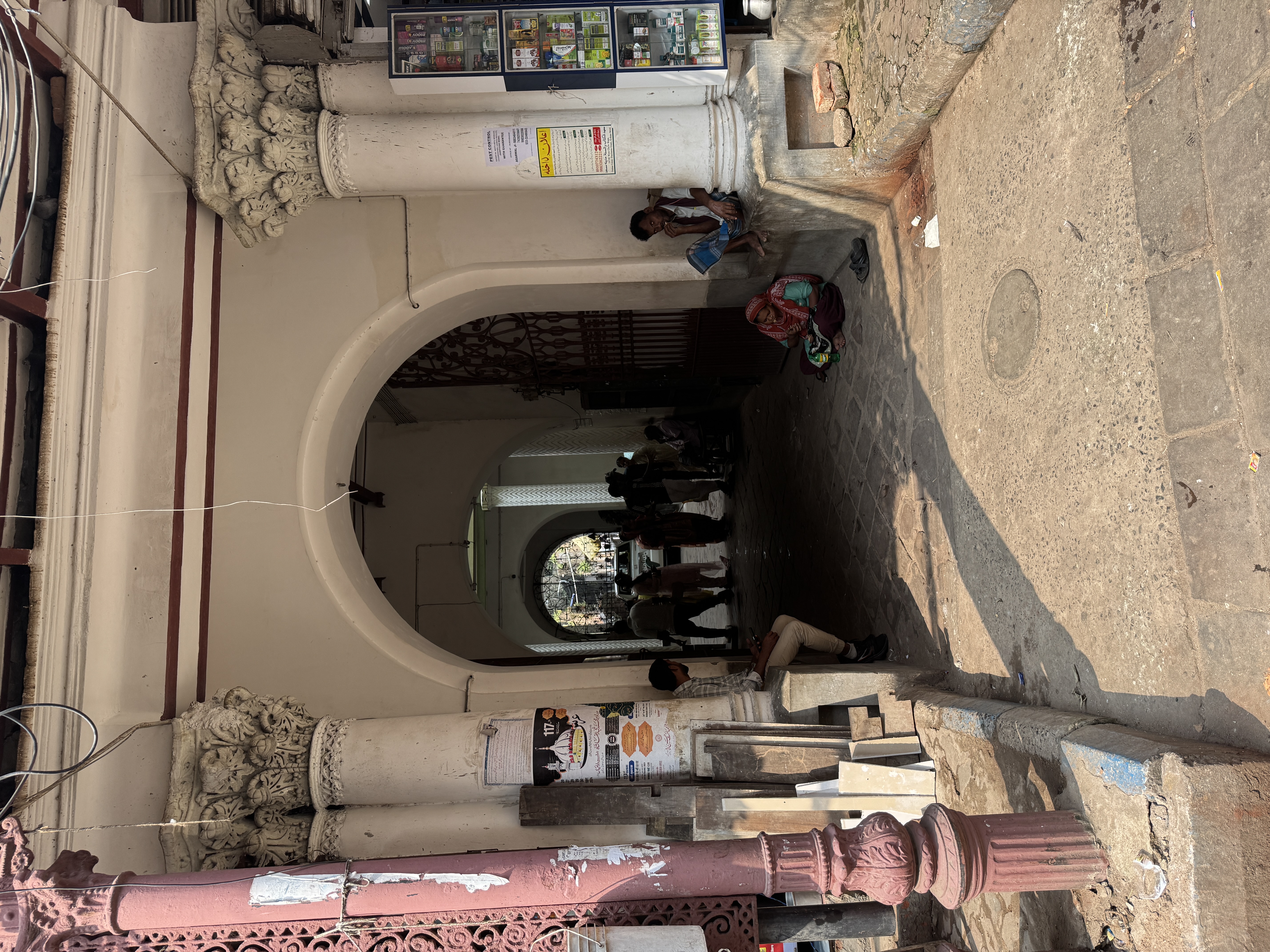
If you scrutinized the building's facade two images back, you might have noticed this entrance. It leads to the Salehjee Musafir Khana Waqf, a rest house offering free accommodation to Muslims who have come to pray across the street at the Nakhoda Masjid, Calcutta's main mosque. (Nakhoda means "mariner," and the name is applied here because this Muslim community arrived originally from Gujarat, over on the west coast.)
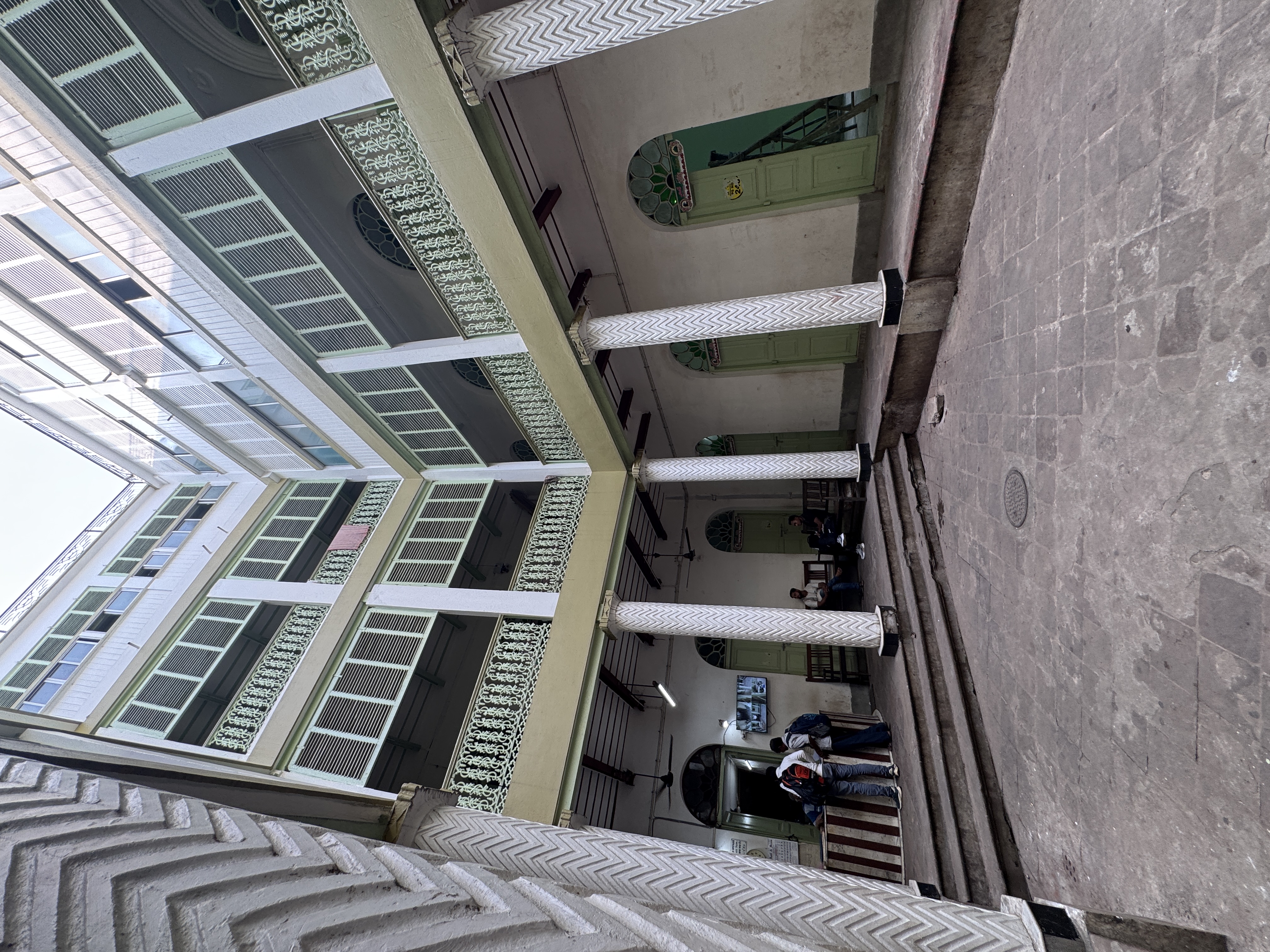
Beyond the archway lies the modernized lodge quarters. No iron filigree here.
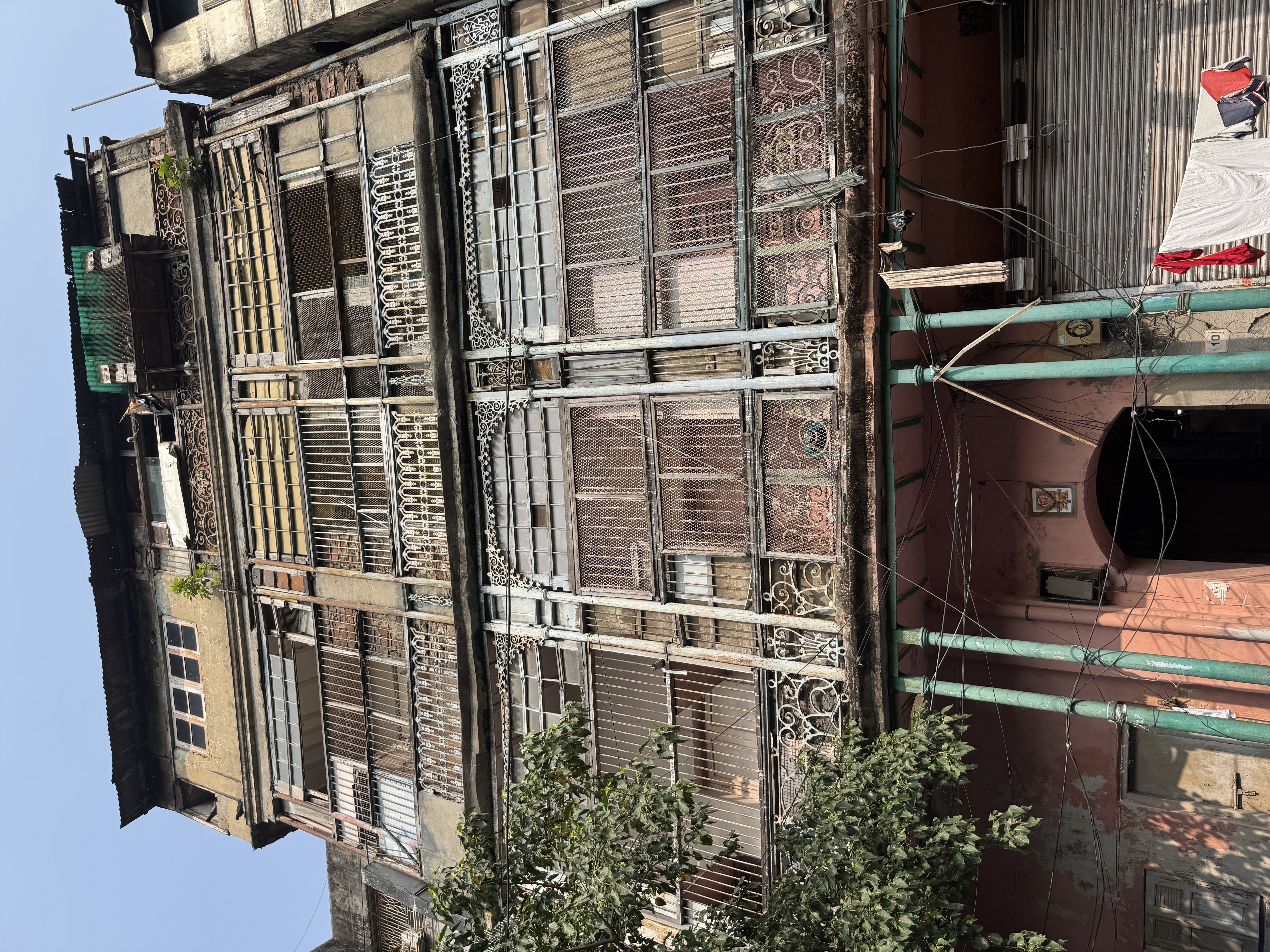
Makes you wonder what surprises lie behind the neighborhood's many such monuments to decrepitude. If only I had a cloak of invisibility.
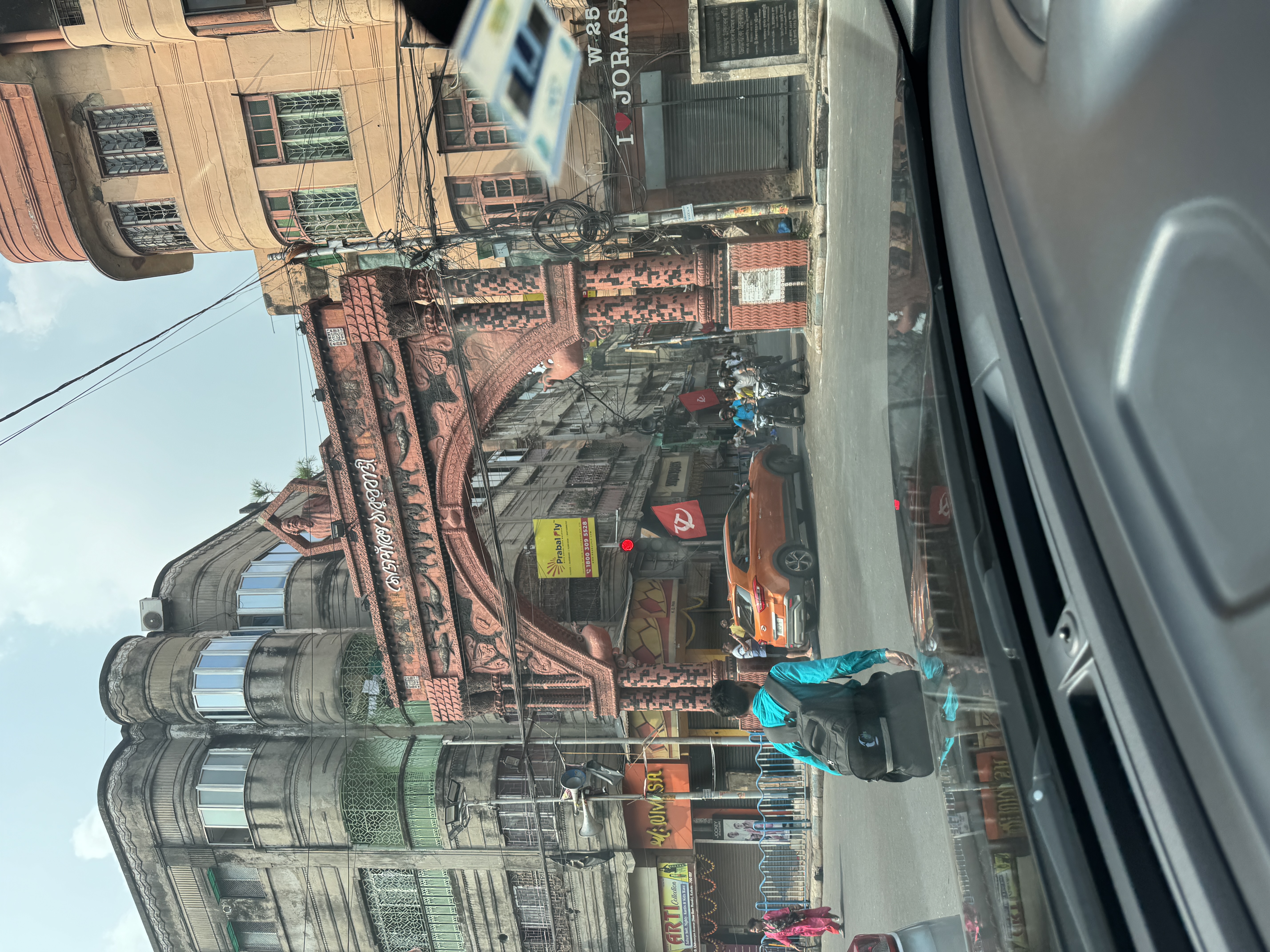
Aha, a fancy arch leads off Chittaranjan Avenue, alias Central Avenue, into Madan Chatterjee Lane. Is the arch venerable? Try 2006. It's supposed to provide a grand entrance to the Tagore House, but critics were scathing. That's Rabindranath up top. I think he's plotting his escape.
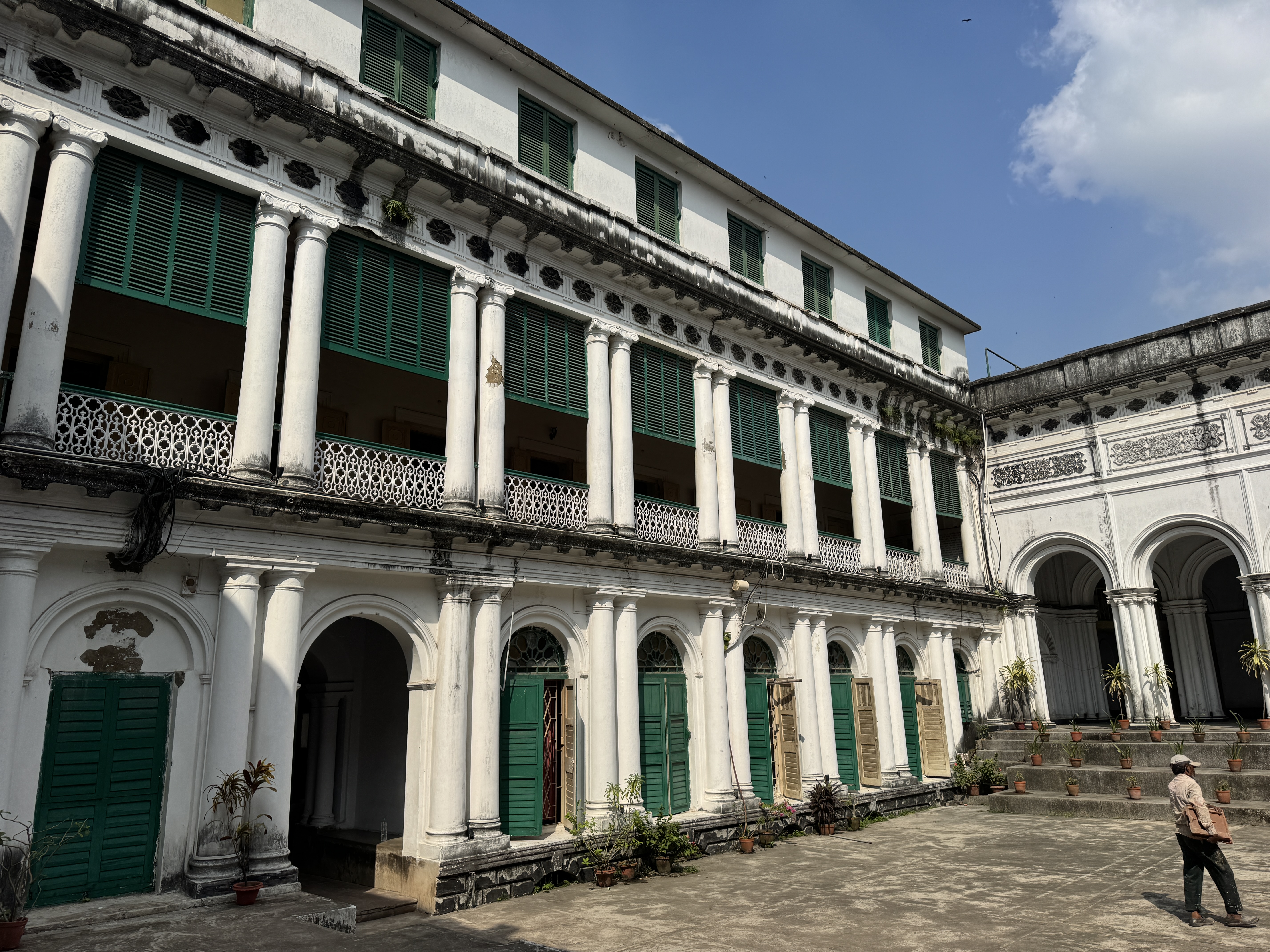
The older part of the house looks like this, with a matching facade on the other side of this courtyard. I'm betting it was more colorful once upon a time.
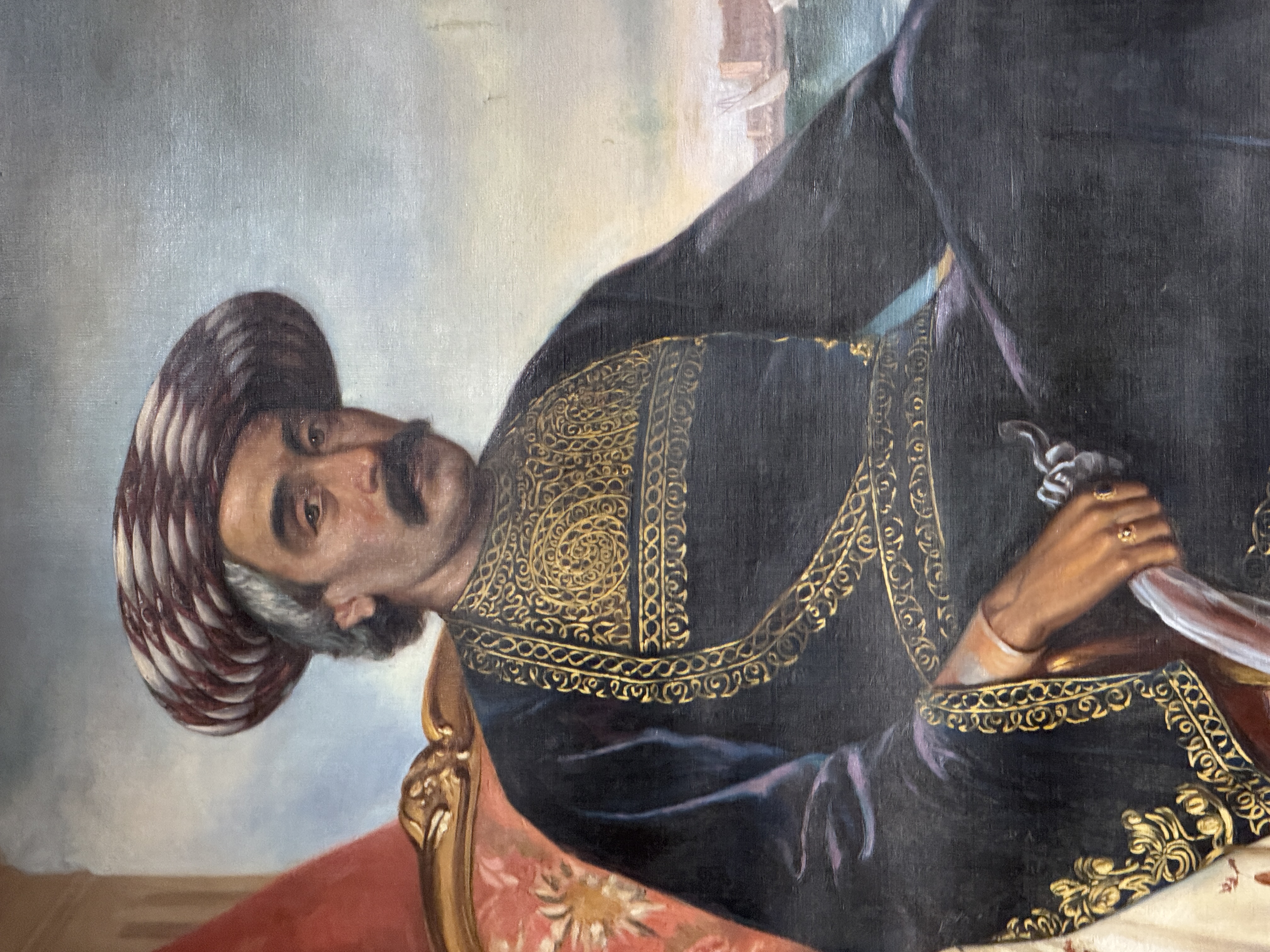
The commanding Tagore figure nowadays is Rabindranath, but don't forget grandfather Dwarkanath (1794-1846). He's the one who, inheriting wealth, greatly expanded the family fortune, some fraction of which passed through his son Debendranath to the poet grandson. Grandpa, who invested in almost everything that made money, died in London, where he entertained lavishly, moved in the highest circles, and was buried without ceremony in London's Kensal Green cemetery. A modern scholar writes that Dwarkanath met with Daniel O'Connell. "They discussed their common problems as subjects of foreign rule; but, where O'Connell saw the solution as independence, Dwarkanath looked forward to a stronger imperial union based on racial and religious equality" (Blair B. Kling, Partner in Empire, 1976, p. 233). It's a painful sentence, because the world is still not ready for Dwarkanath's solution.
This portrait, from 1902, is more analytical, probing, and aristocratic than some made during his lifetime, but it's prominently displayed in the house.
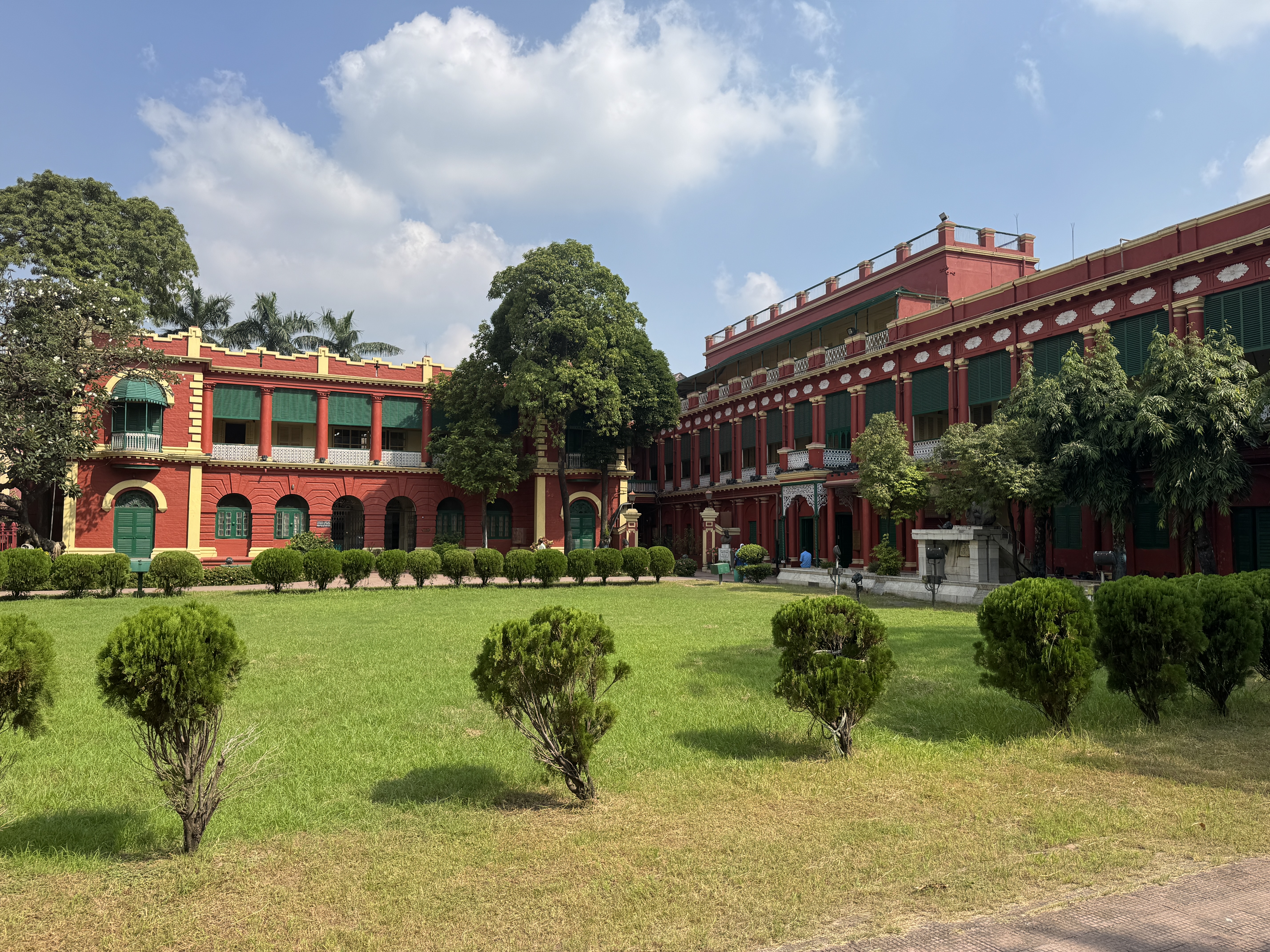
This is the newer, western side of the house. The ticket kiosk for the likes of thee and me is off to the left. The lawn may seem perfectly natural--who wouldn't like a bit of garden?--but into the 20th century it had houses for other family members.
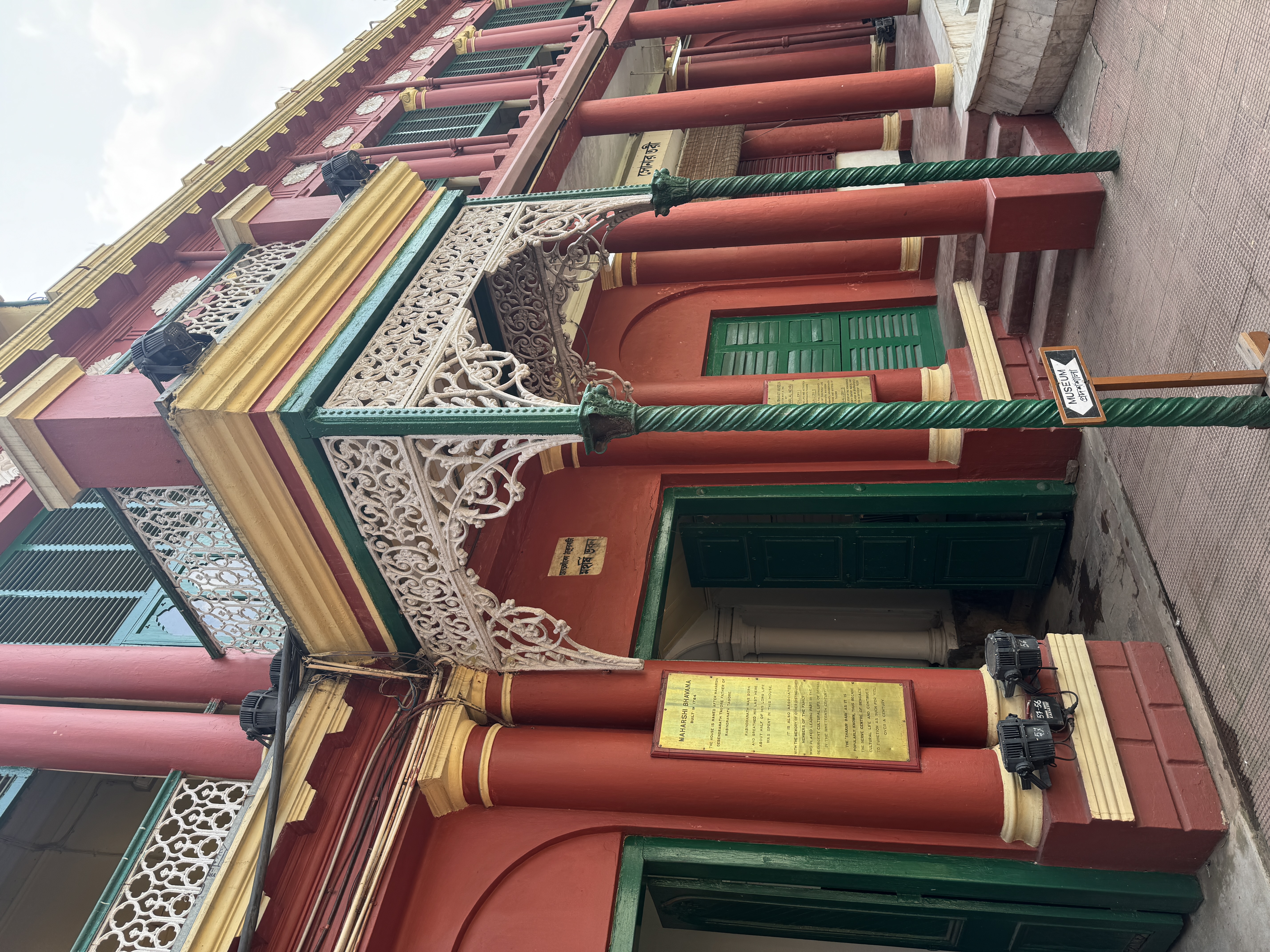
It's not an architectural triumph, but Dwarkenath had another house, the Belgachia Villa, with the full Corinthian treatment. It's about three miles to the northeast. One of these days I'll see it, maybe.
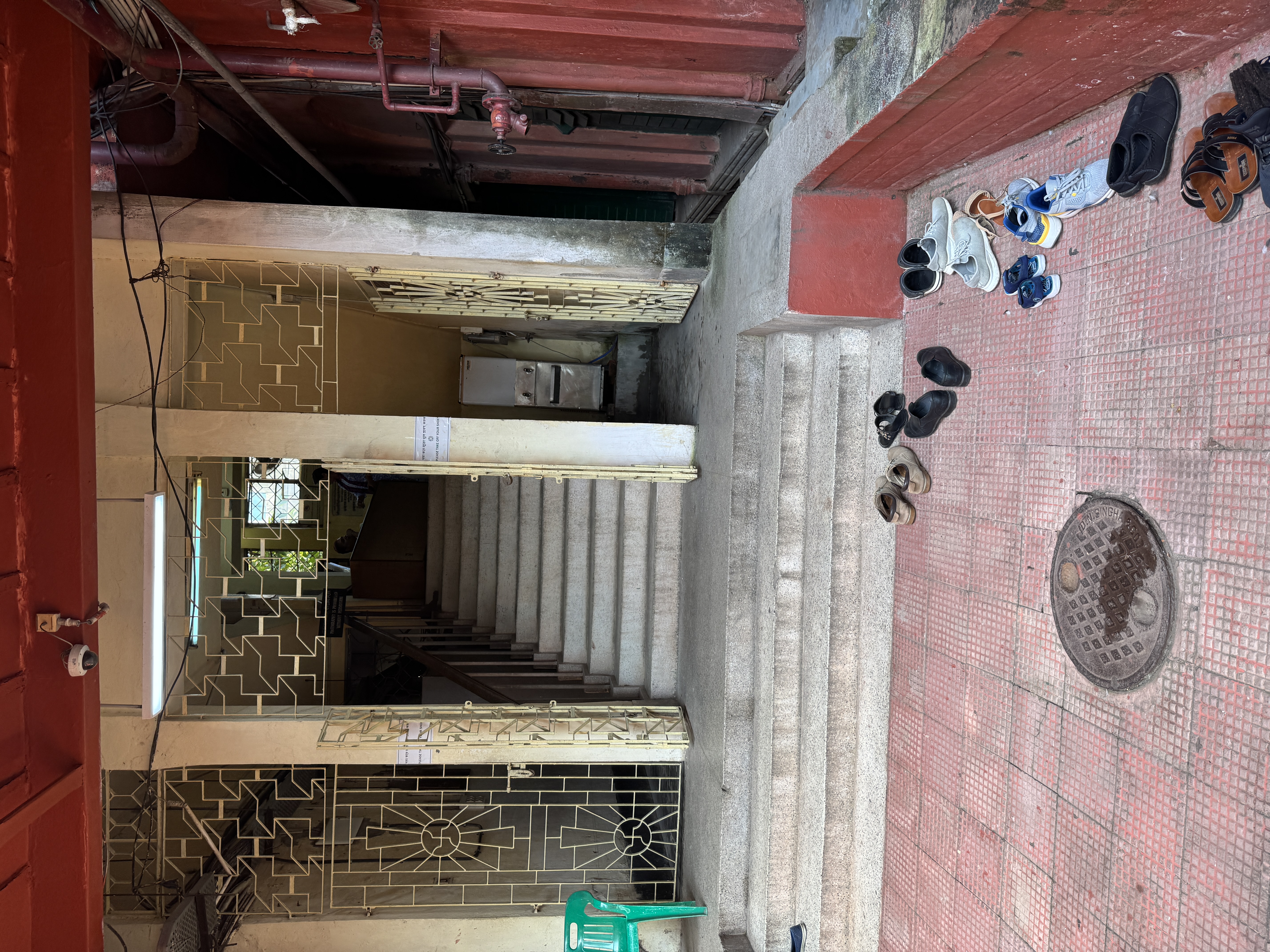
Still, this place is treated as a shrine.
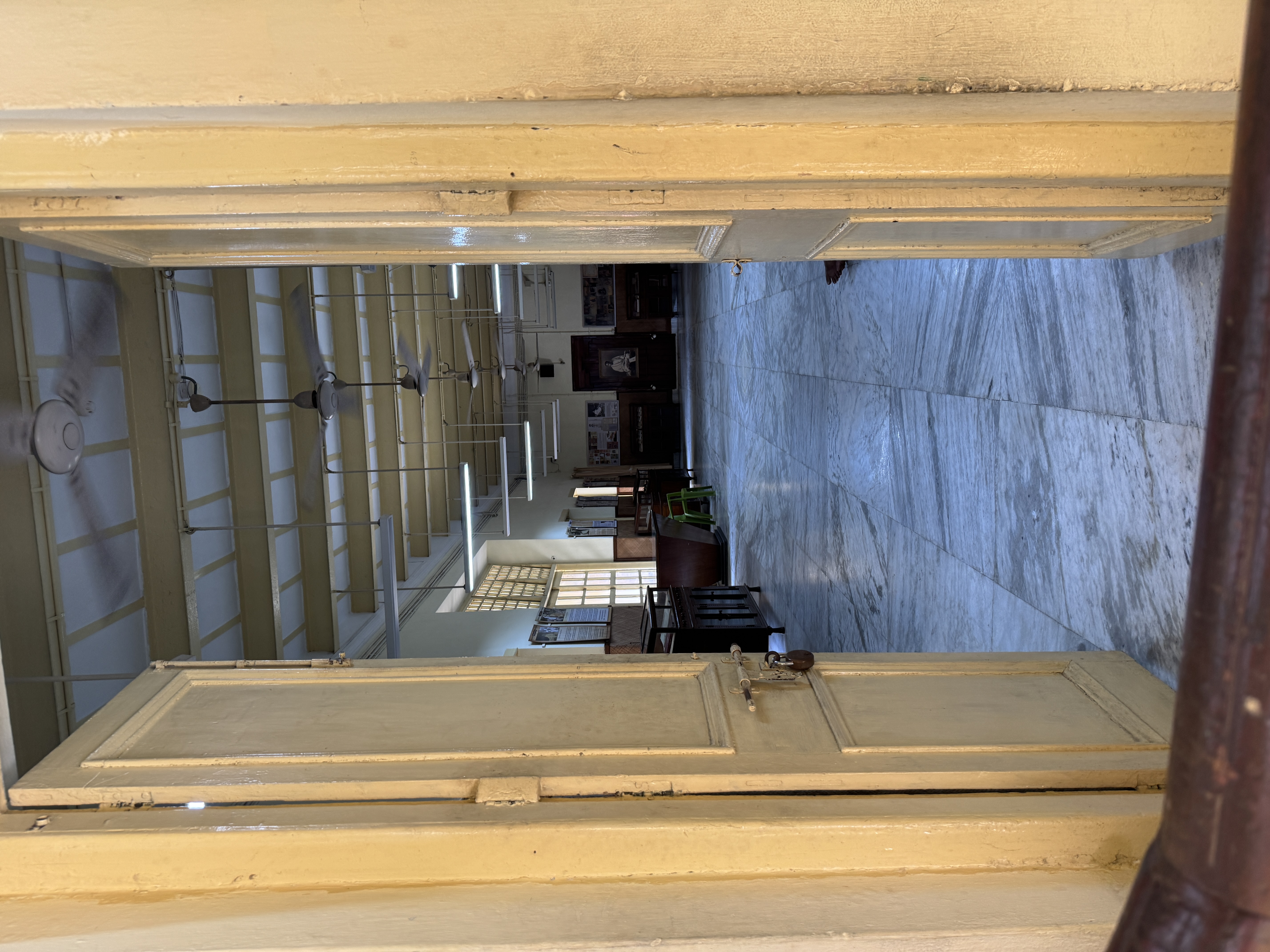
In the course of making it a museum, the government added marble floors.
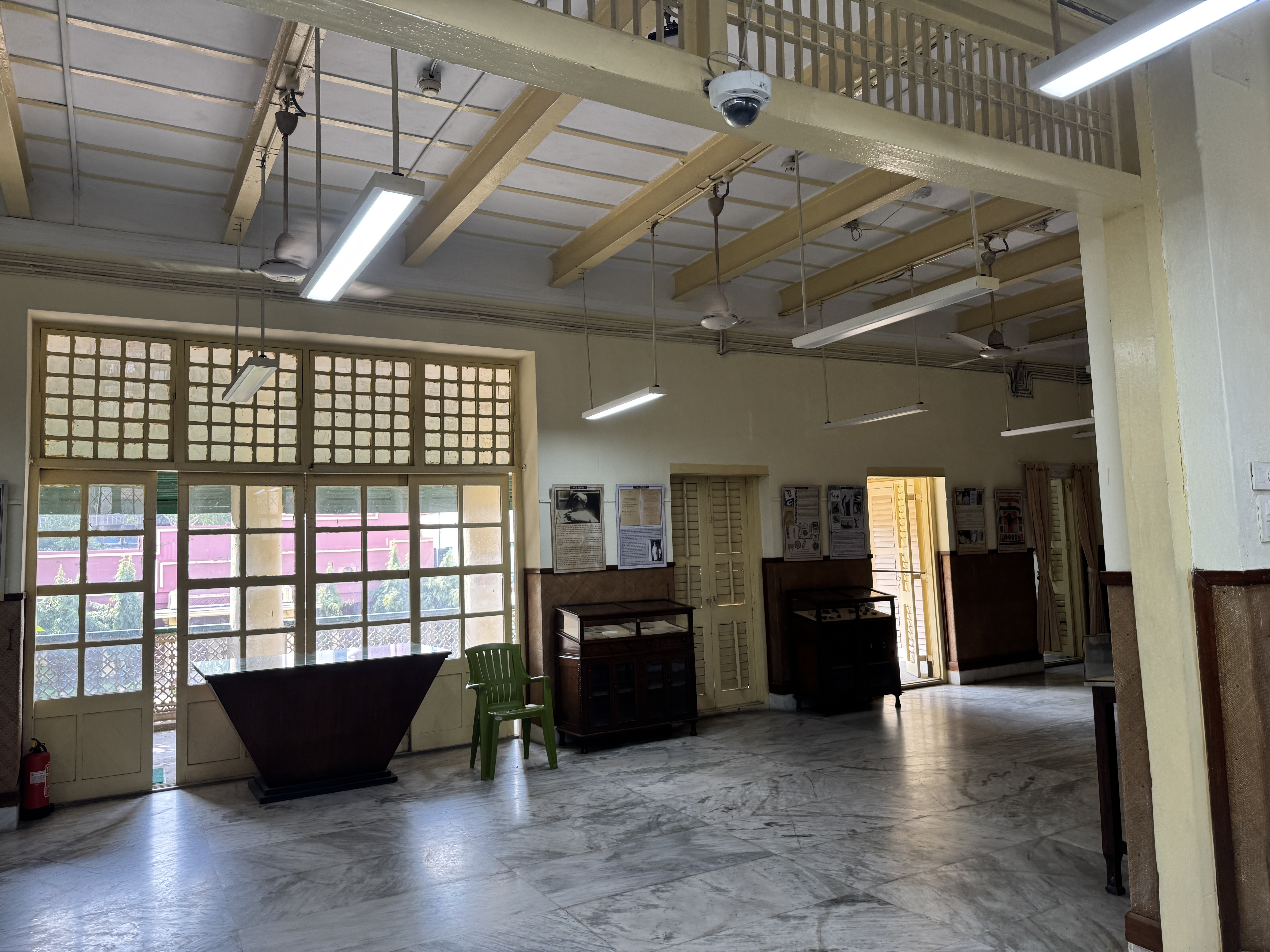
And fluorescent tubing.
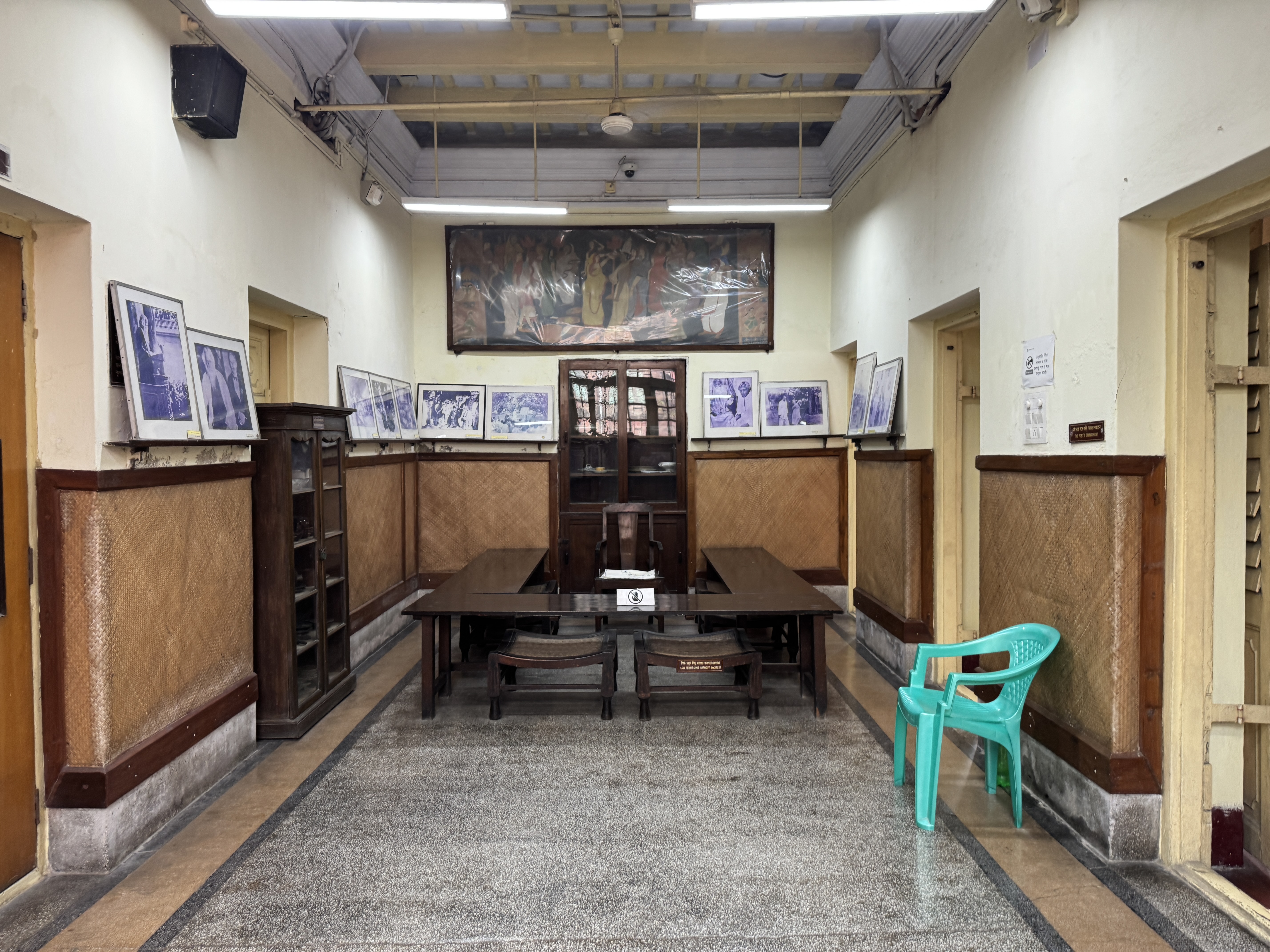
And stacking chairs. Do you think the government officers who did this work spent any time reading Tagore's poetry?
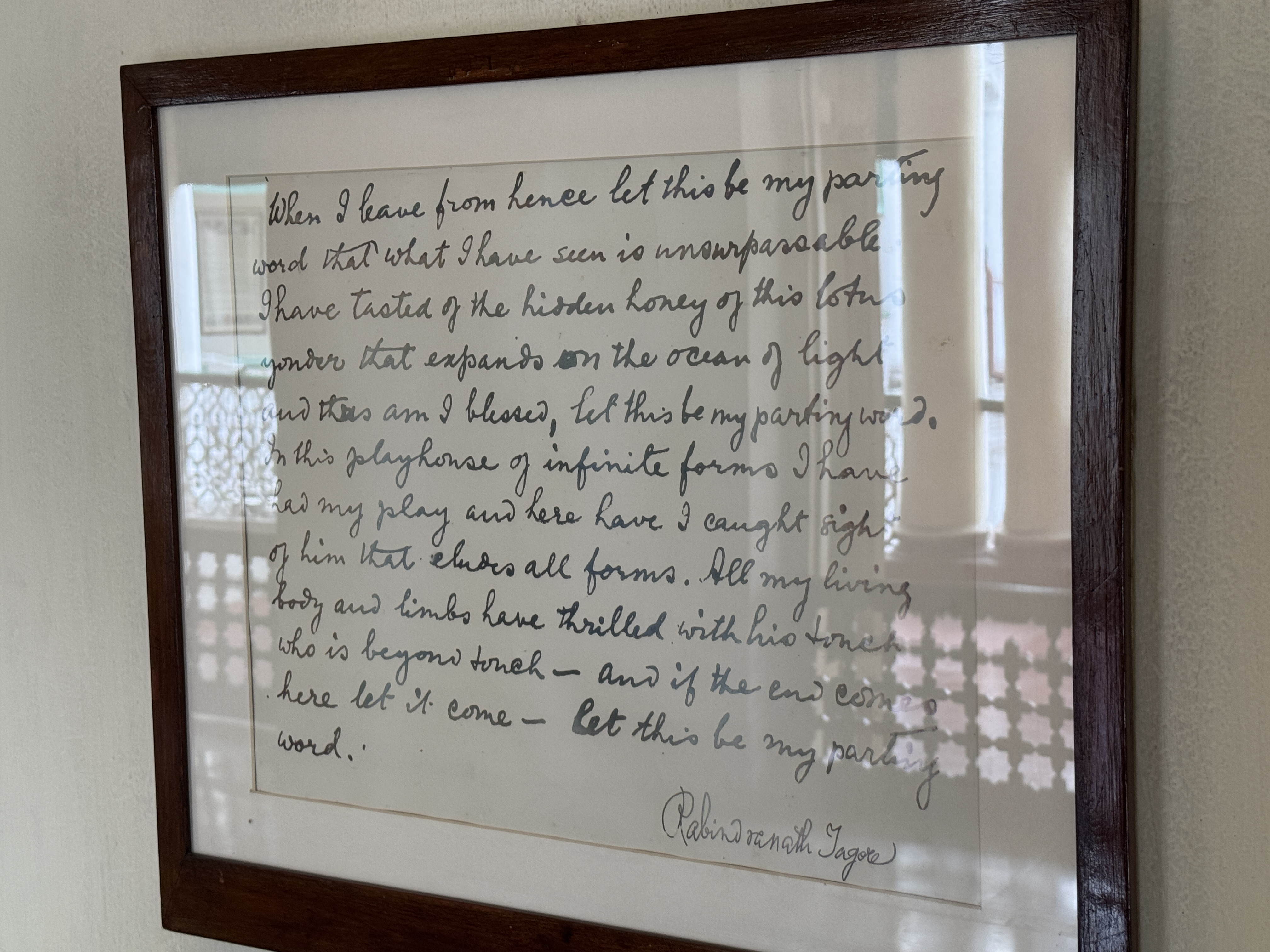
Simply on the basis of his parting words, I'd guess not.
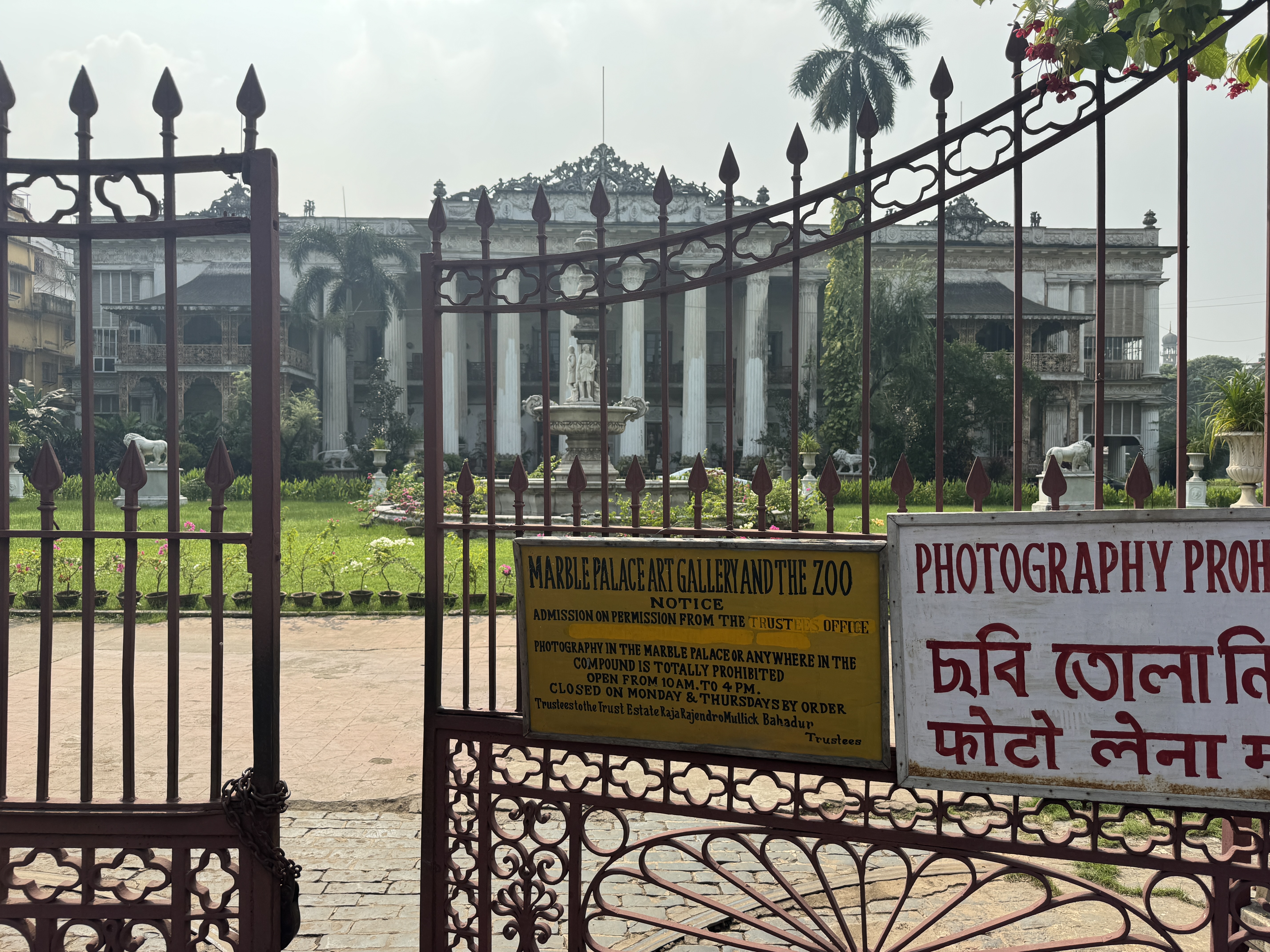
I would have liked to visit this, the nearby, so-called marble palace. Another rich Bengali family built it. They were the Mullicks, gold merchants, and the builder was Rajendra Nath Mullick, who ordered the palace's construction in 1835, when he was all of 16. One of my favorite guidebooks (The Penguin Guide to the Monuments of India, 1989, volume 2, by Philip Davies) describes it as "an enormous repository of porcelain, lustres, gewgaws and antiques chaotically displayed in mouldering profusion." Who wouldn't love to poke around? Alas, it was closed when I came by. The guard ignored me taking this picture, which is partly why I love India.
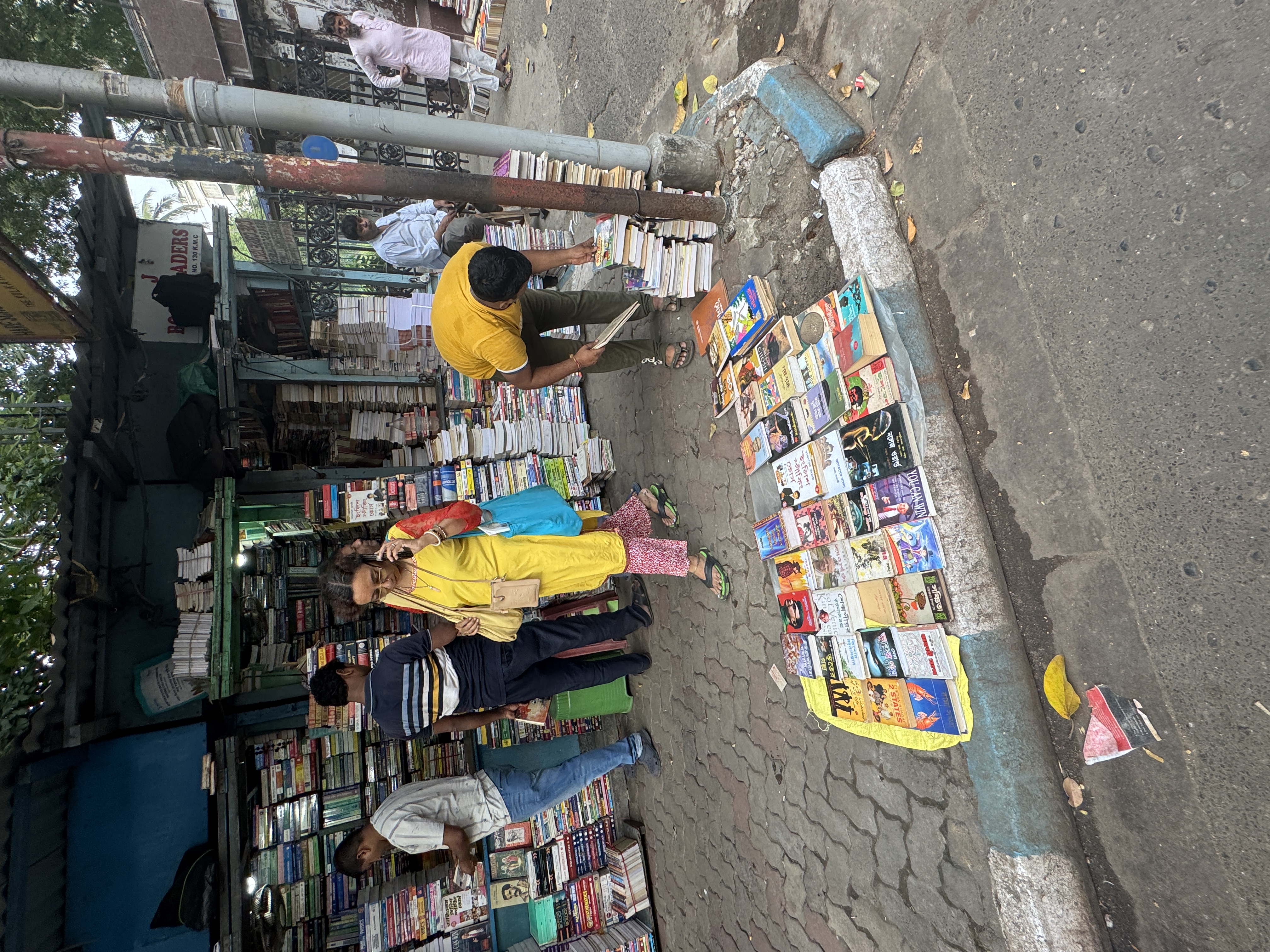
The Tagore House, not surprisingly, is near the University of Calcutta. One by-product is the bookstalls around the intersection of College Street and Bankim Chatterjee Street. That street is named for another Bengali writer. Nirad Chaudhuri, in his Autobiography of an Unknown Indian, writes that Chatterjee (1838-1894) "had the most powerful intellect and the best intellectual equipment of any Indian in the nineteenth century. Chatterjee's essay, "Confession of a Young Bengal," from 1872, is a wonderful critique of Western civilization. It's included in Amit Chaudhuri's Picador Book of Modern Indian Literature (2002).
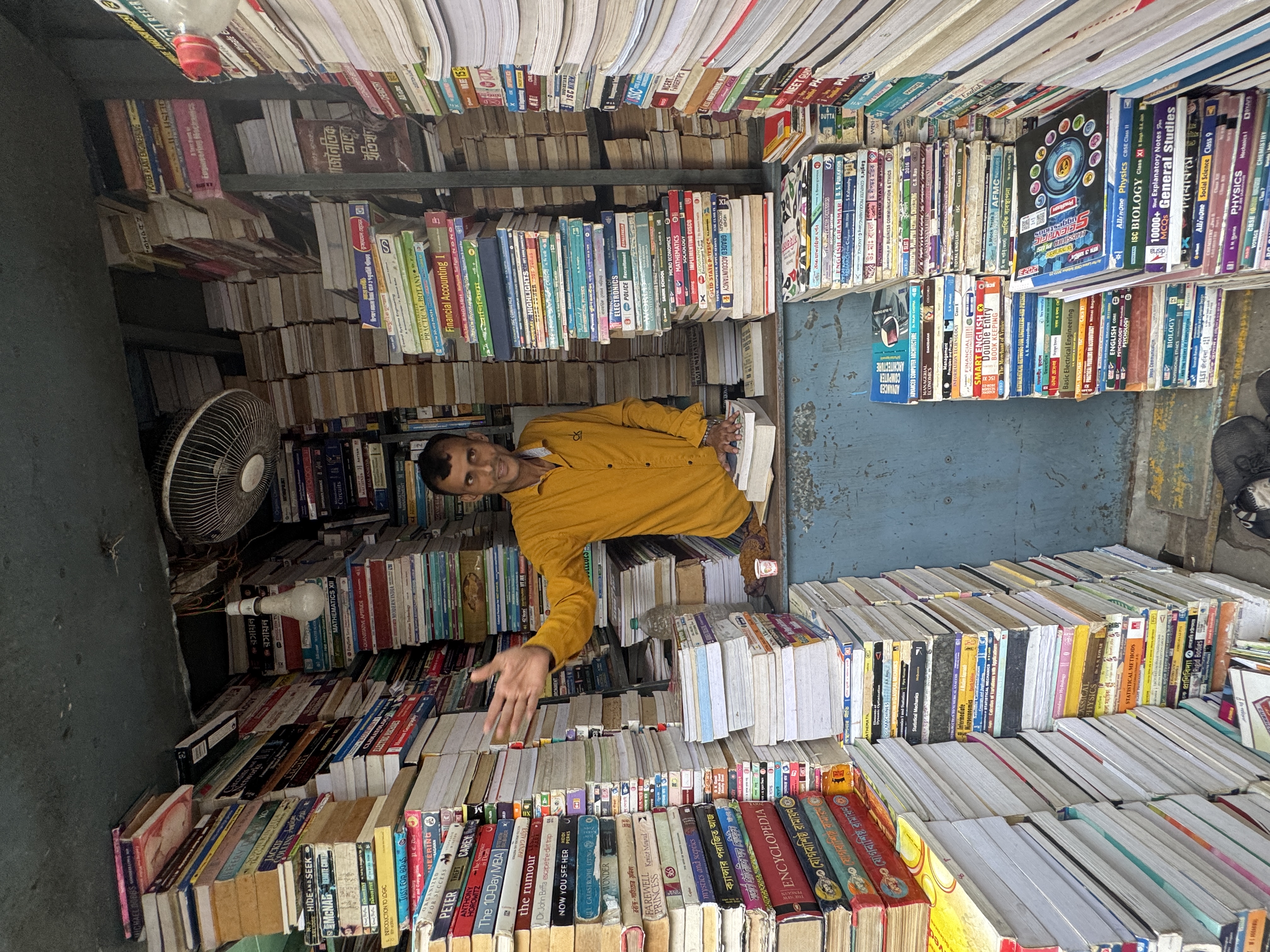
Alas, the bookstalls are overwhelmingly targeting buyers shopping for a high-velocity career.
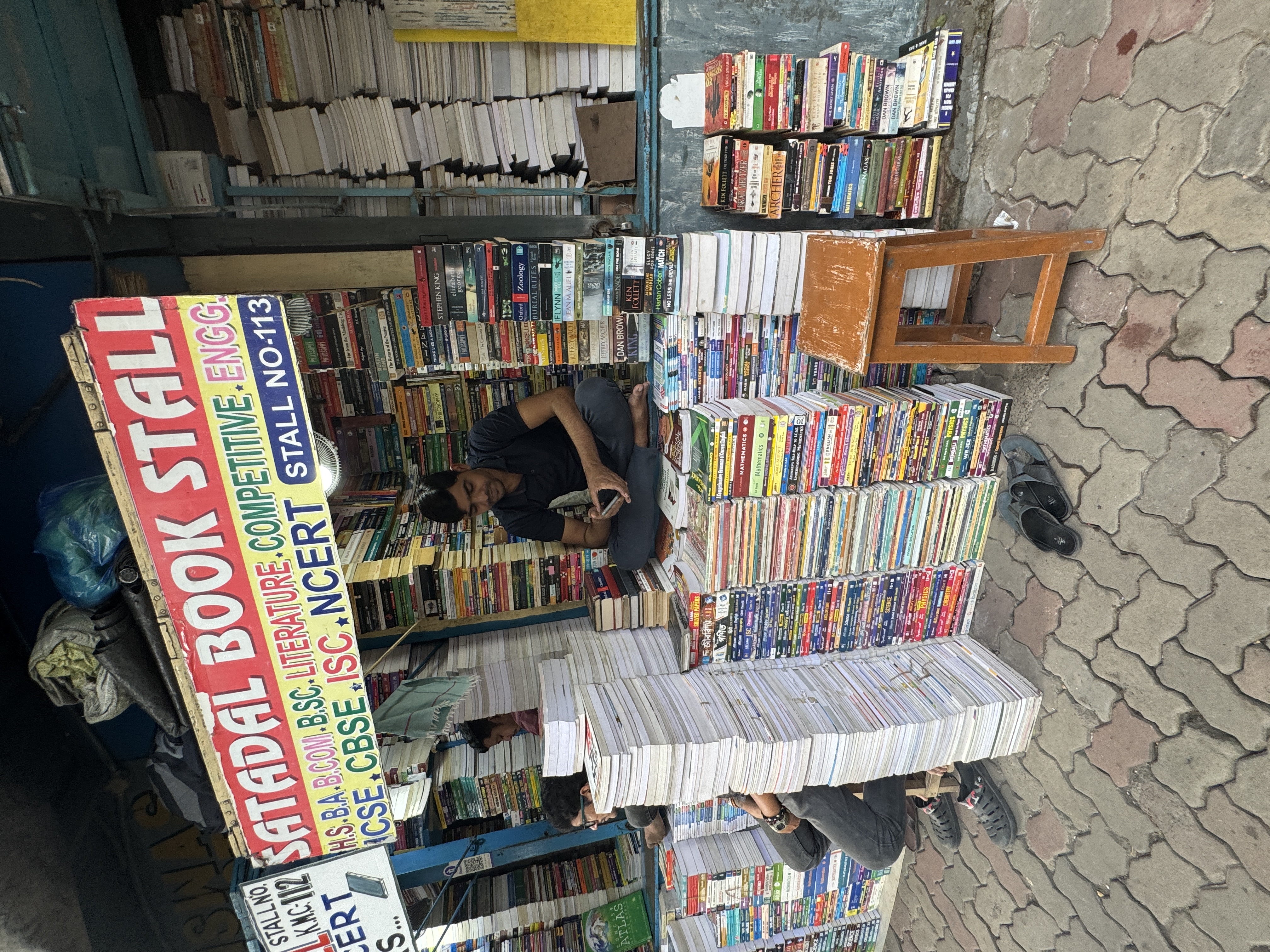
Degrees quick.
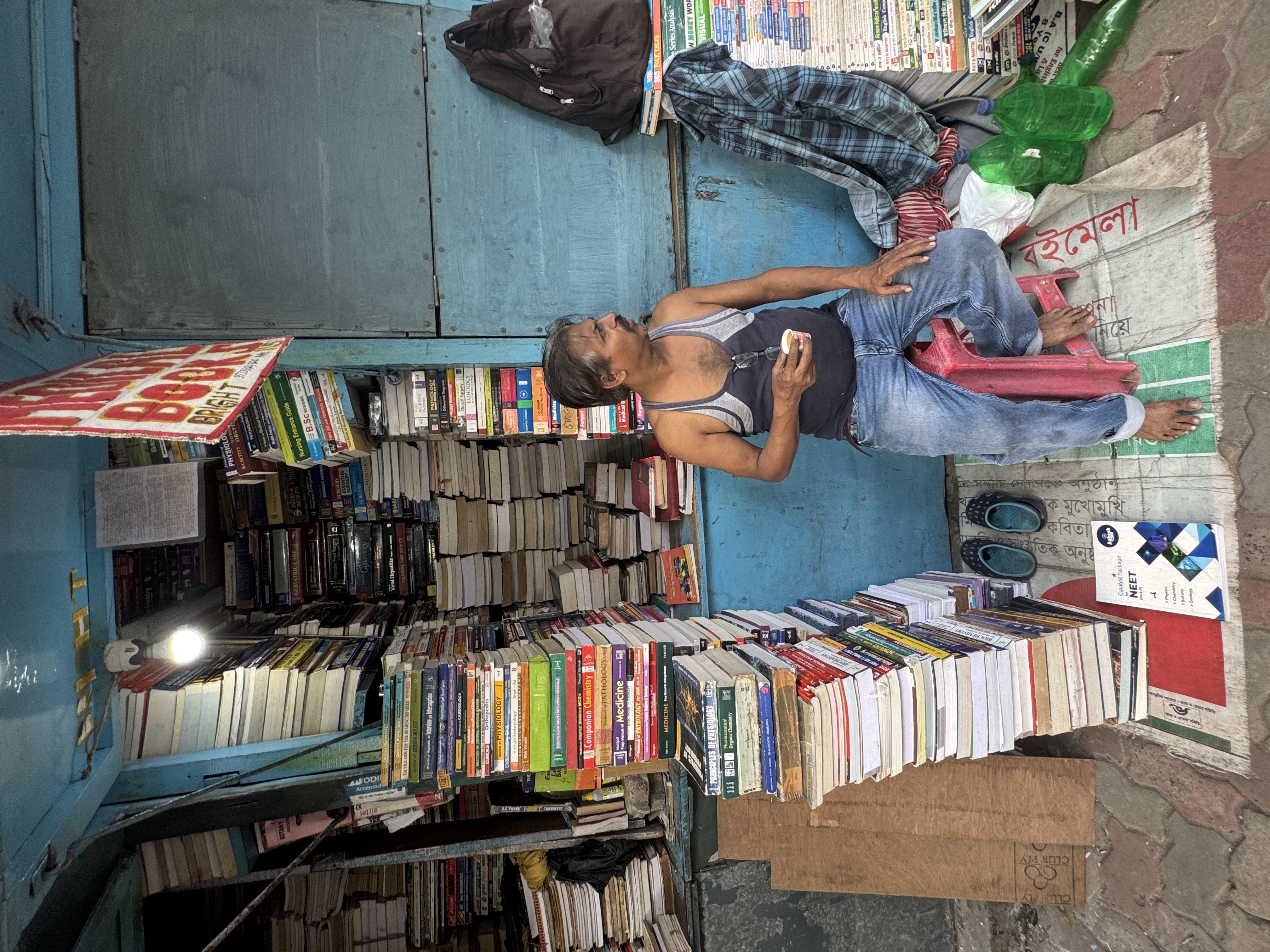
Lots to choose from.
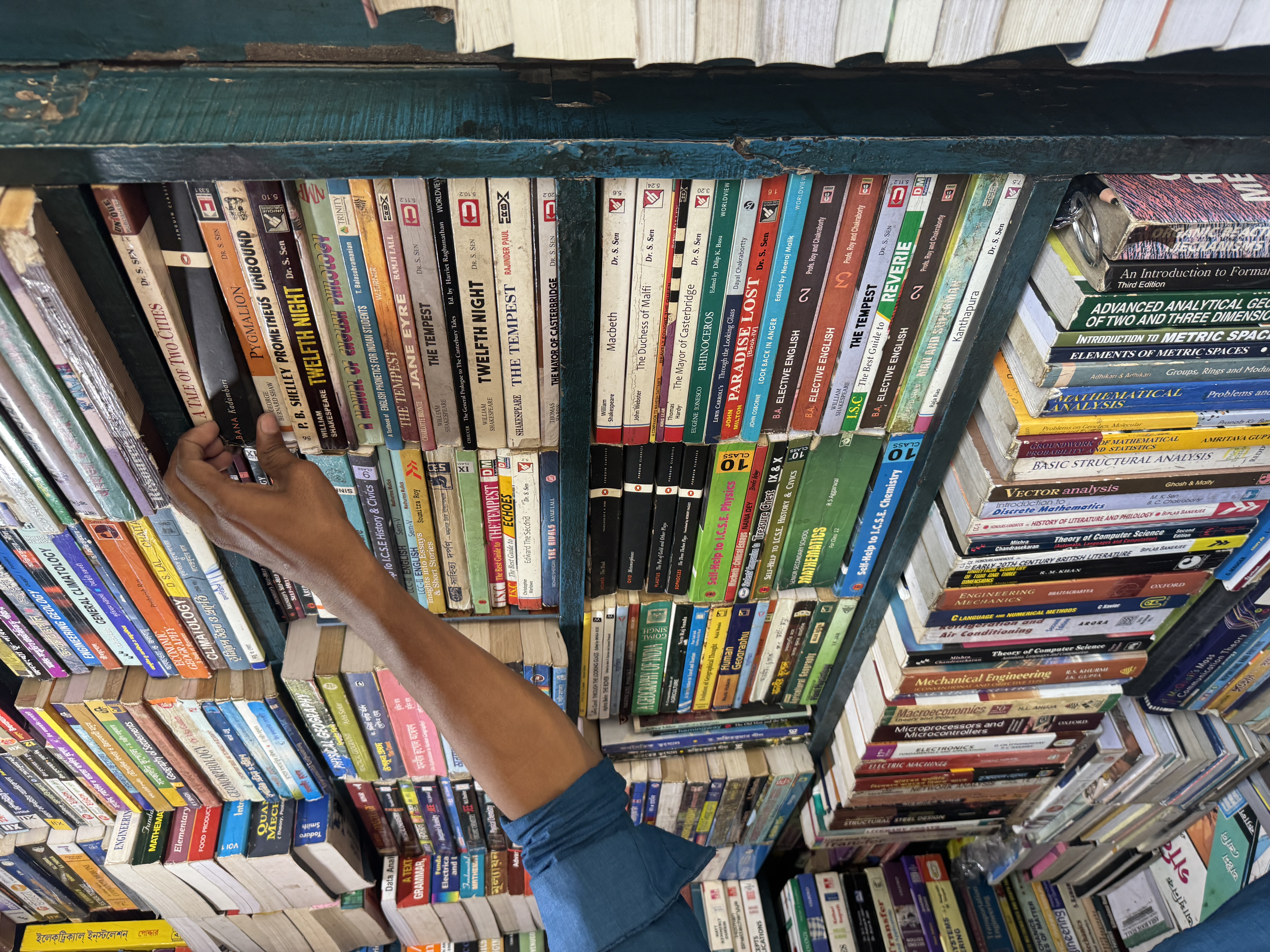
There's even something for students of English literature, although this is not the path recommended to anyone wishing an H-1B visa.
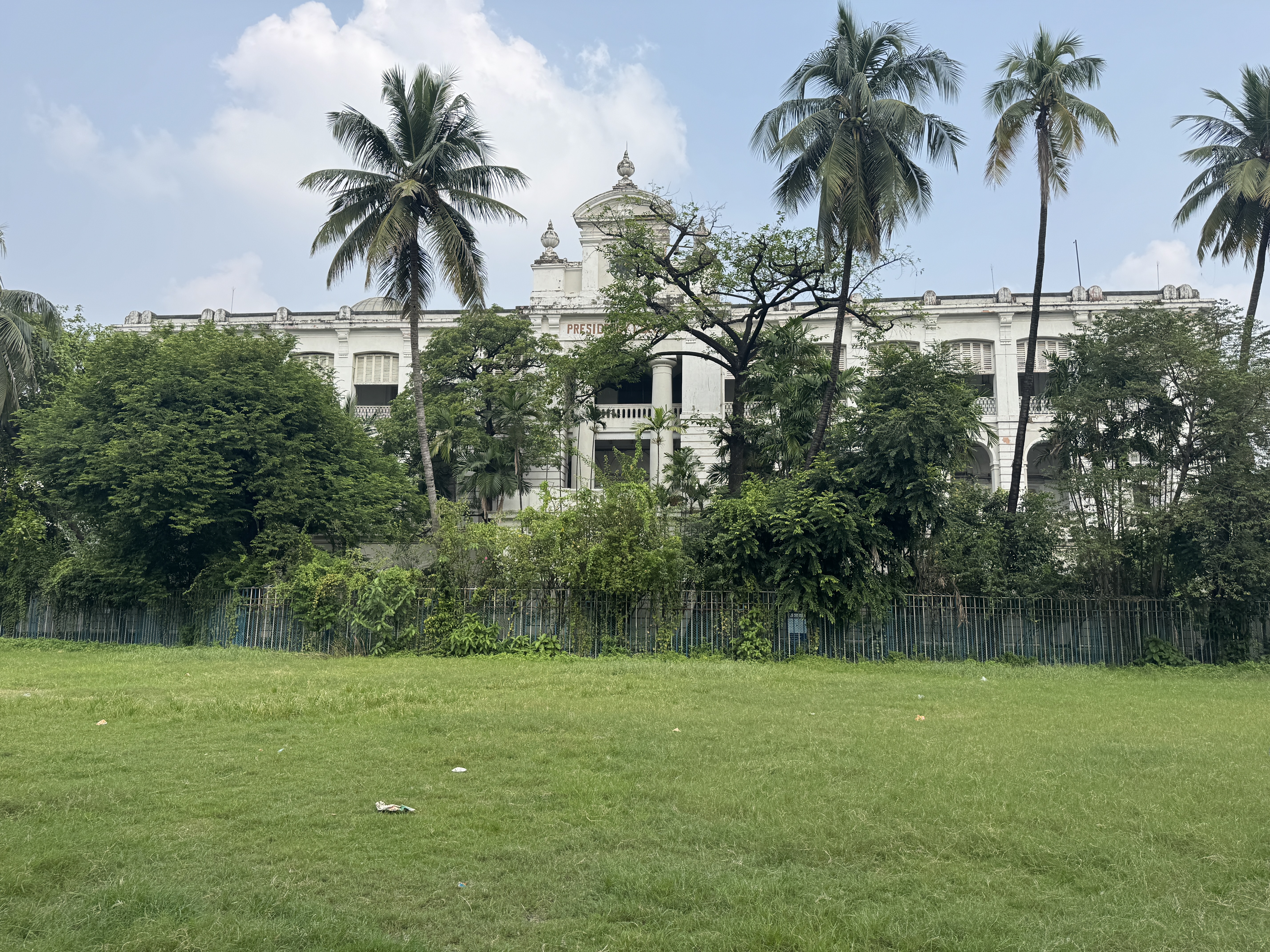
Here, just across the streeet from the bookstalls, is the 1874 building of the Presidency College (now the Presidency University and separate from the University of Calcutta). The college was established in 1817 as the Hindoo College and renamed in 1855. (The chowkidar over there wouldn't let me in, so you'll have to settle for this) And if you're wondering about that word "presidency," Bengal long ago was the Presidency of Fort William in Bengal. You may wonder why British nomenclature survives, but then again the University of Calcutta is not the University of Kolkata.
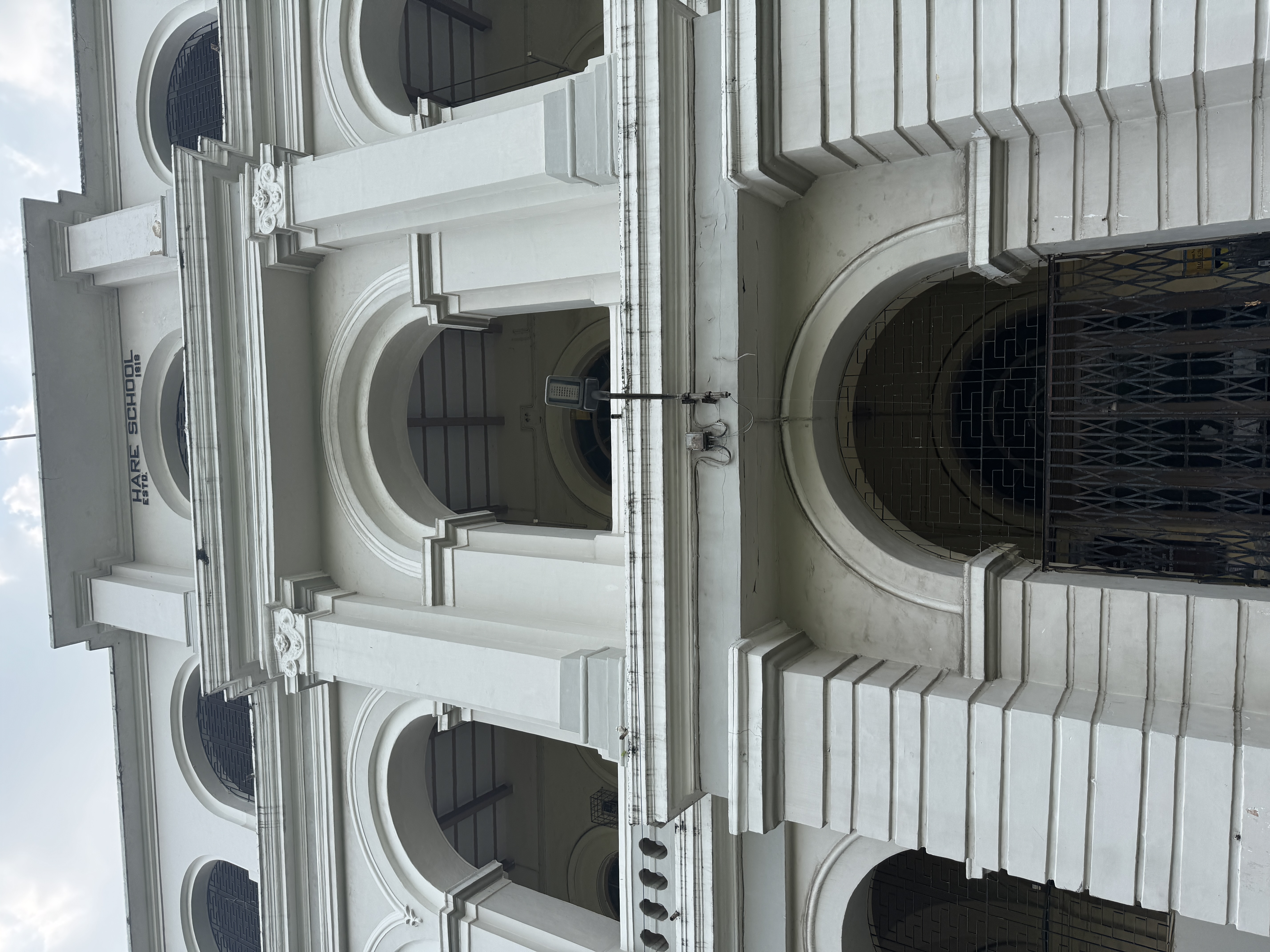
Right behind me is the Hare School, built about the same time and similarly established much earlier, in its case in 1818 as the Arpuli Pathshala (that is, the School at Arpuli). The founder was David Hare, and the school, offering grades 1-12, has been named for him since 1867.
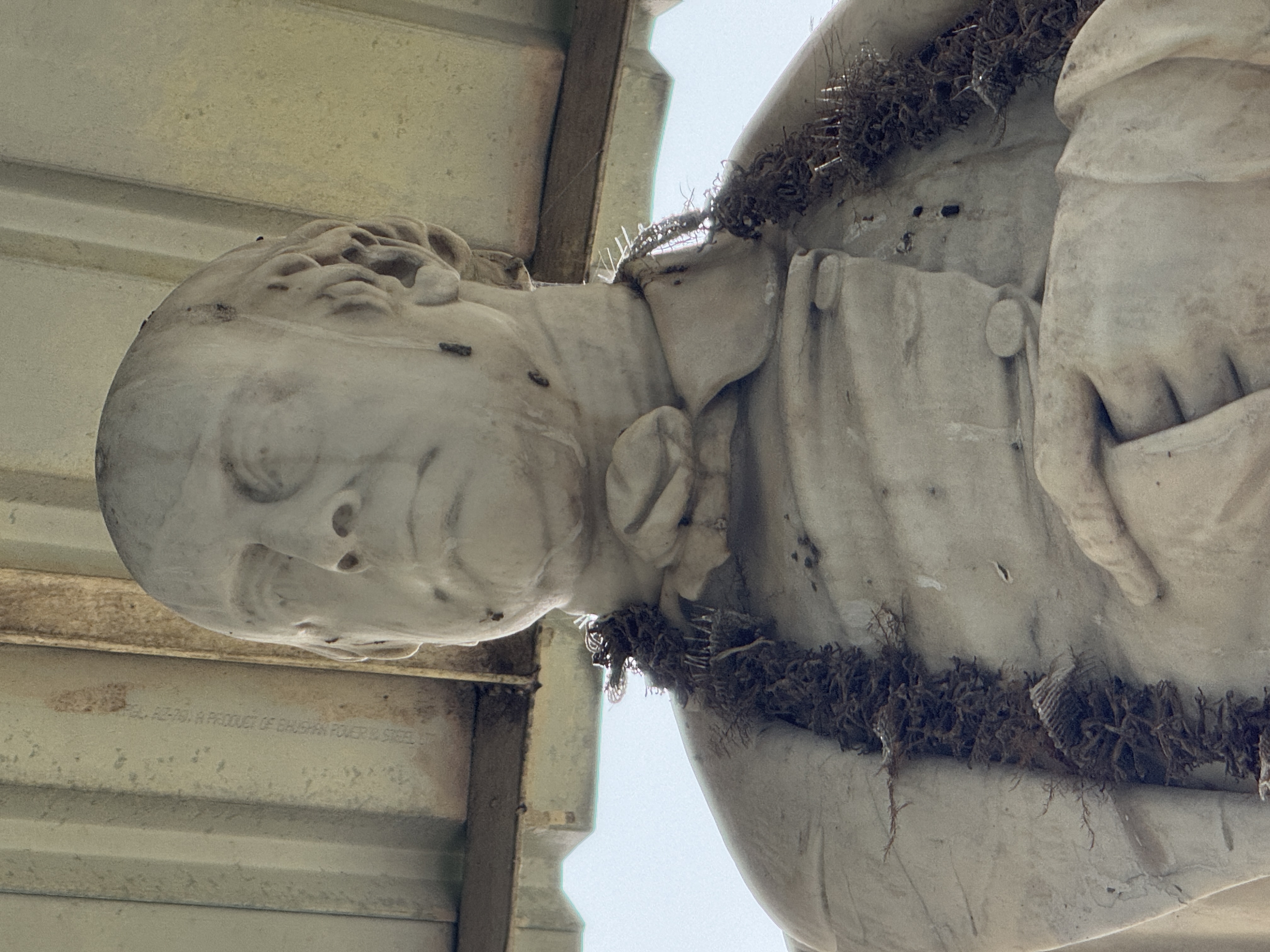
Hare (1775-1842) was a watchmaker turned educational philanthropist. The statue, from 1845, is by the eminent E. H. Baily, who among many other works did the statue of Nelson atop Nelson's Column.
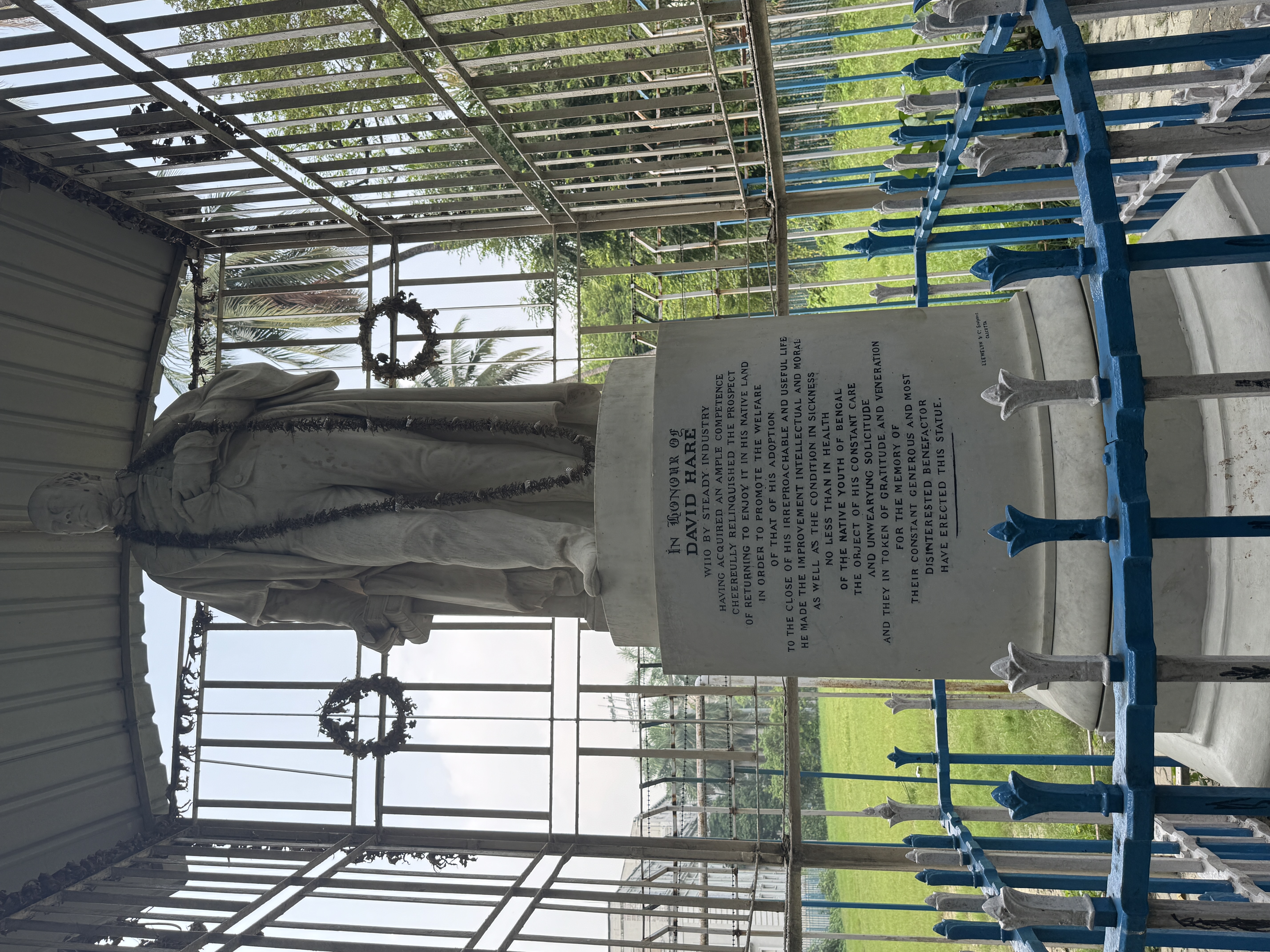
Apparently Hare needs protection, even though he's right here, between the Hare School and the Presidency College or University or whatever.
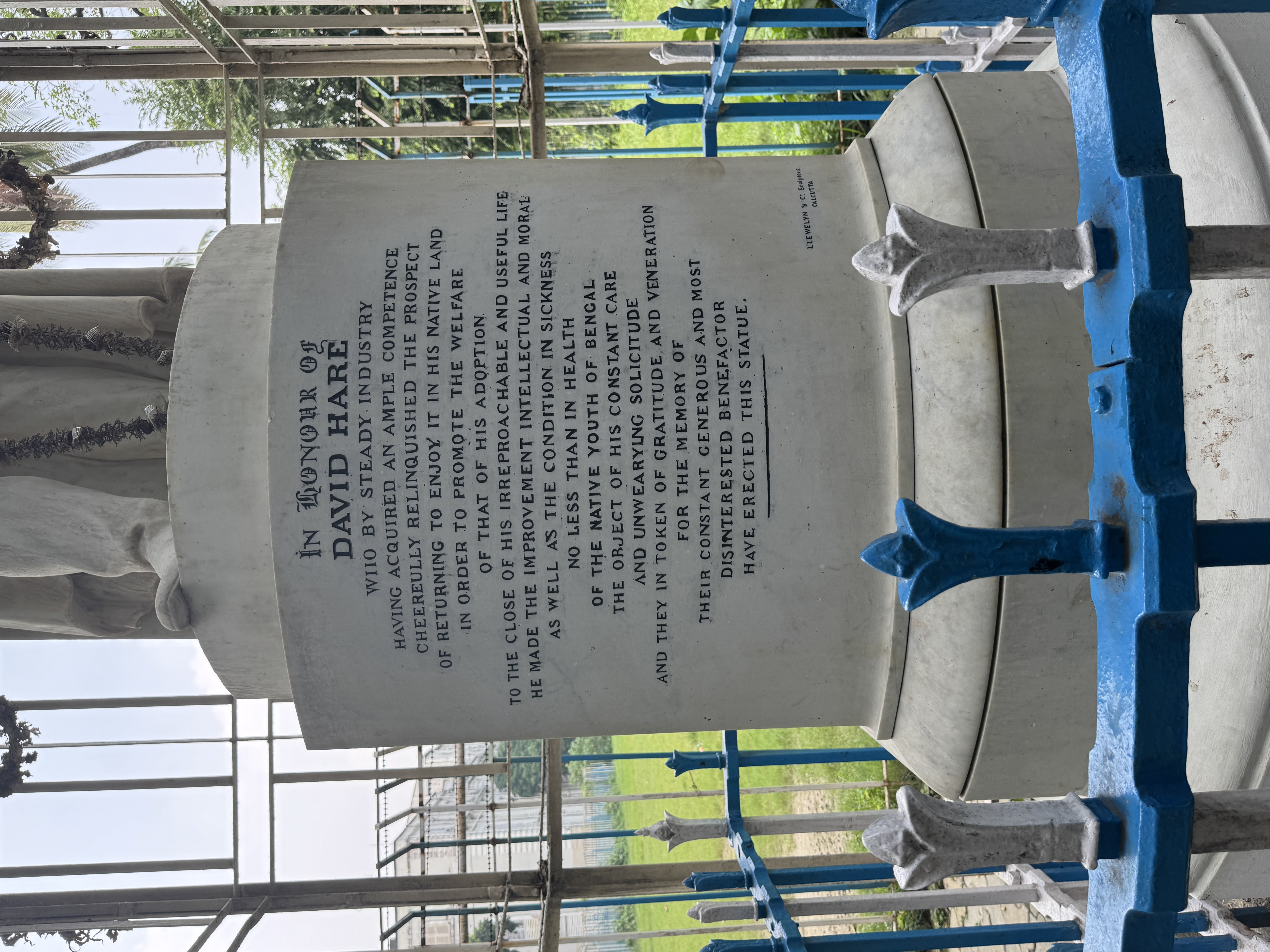
Caption on the pedestal.
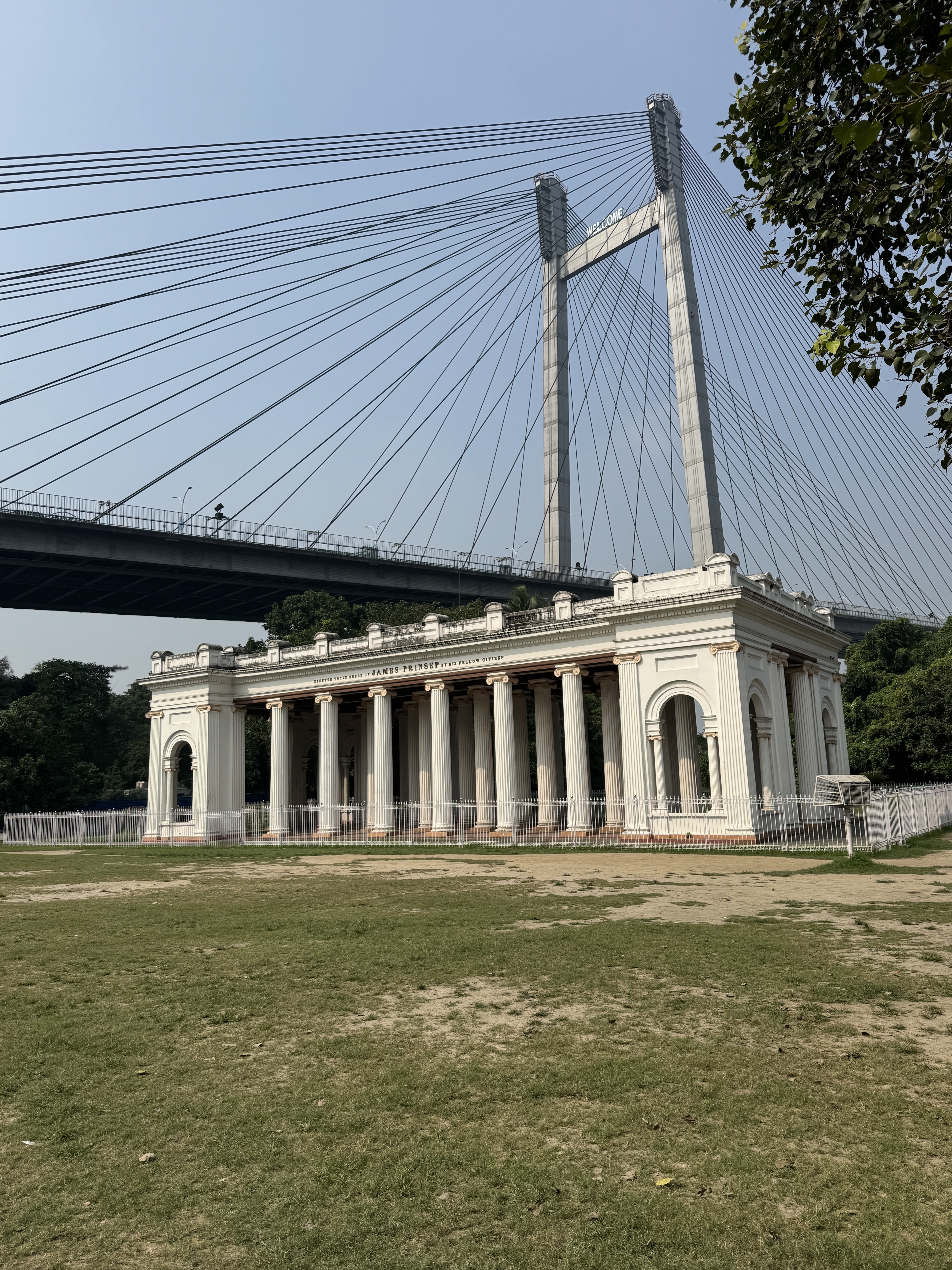
The English not only exported their culture to India but explored Indian culture. Here, for example, is the James Prinsep Memorial, on the banks of the Hooghly River and now overpowered by the Second Hooghly Bridge, from 1992. Prinsep (1799-1840) worked in the Calcutta mint but was a polymath best known today for deciphering the Brahmi script, which had been forgotten by the 4th century. Prinsep's work made India's Ashoka Columns intelligible after a lapse of about 1,500 years. With it came the rediscovery of the Mauryan Dynasty. Prinsep, by the way, had an older brother, William (1794-1874), who was a businessman with many interests including a partnership with Dwarkenath Tagore. Small world.
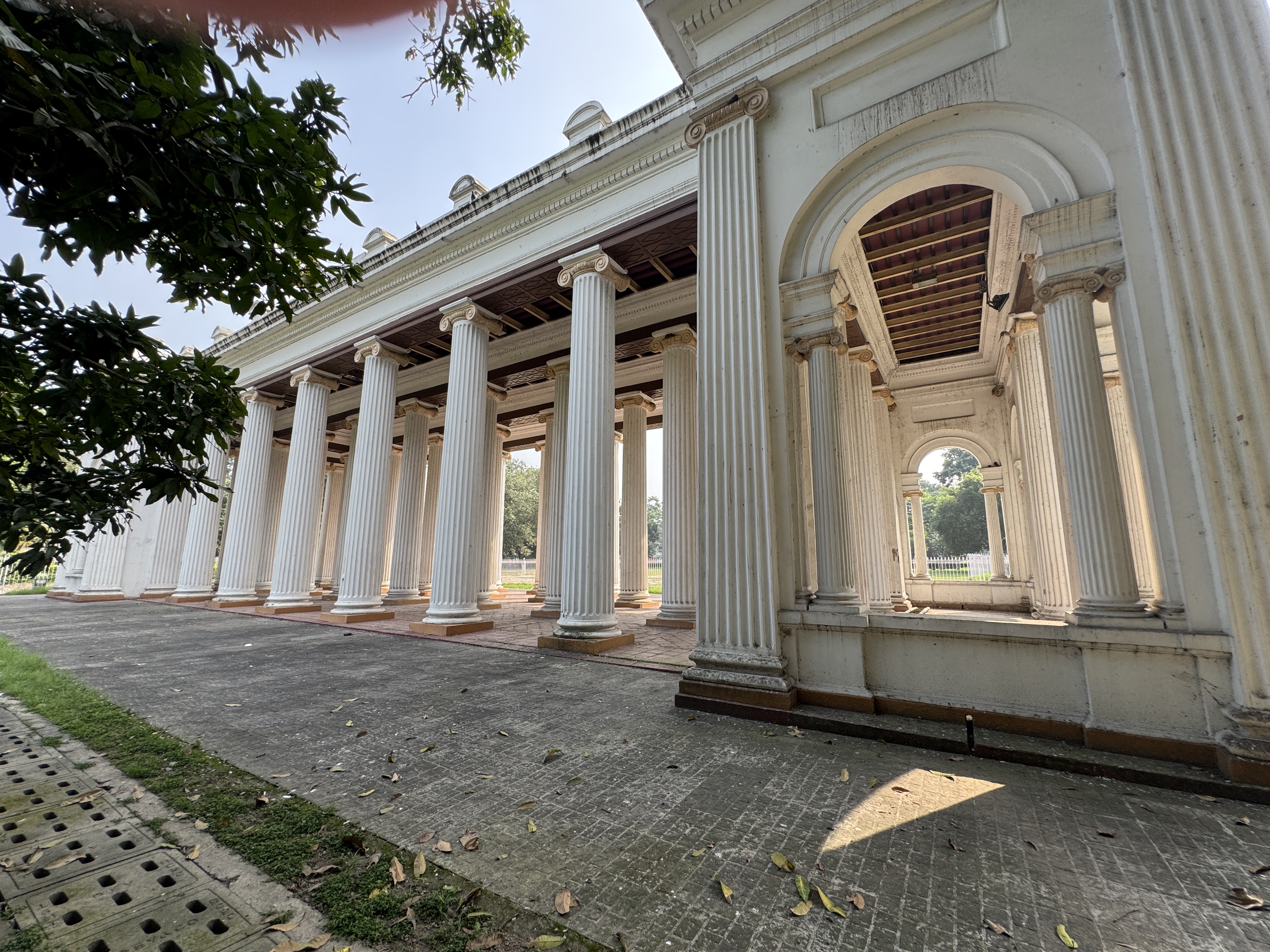
The monument itself is fenced but appears from this distance (through a gap in the fence) to have no inscriptions.
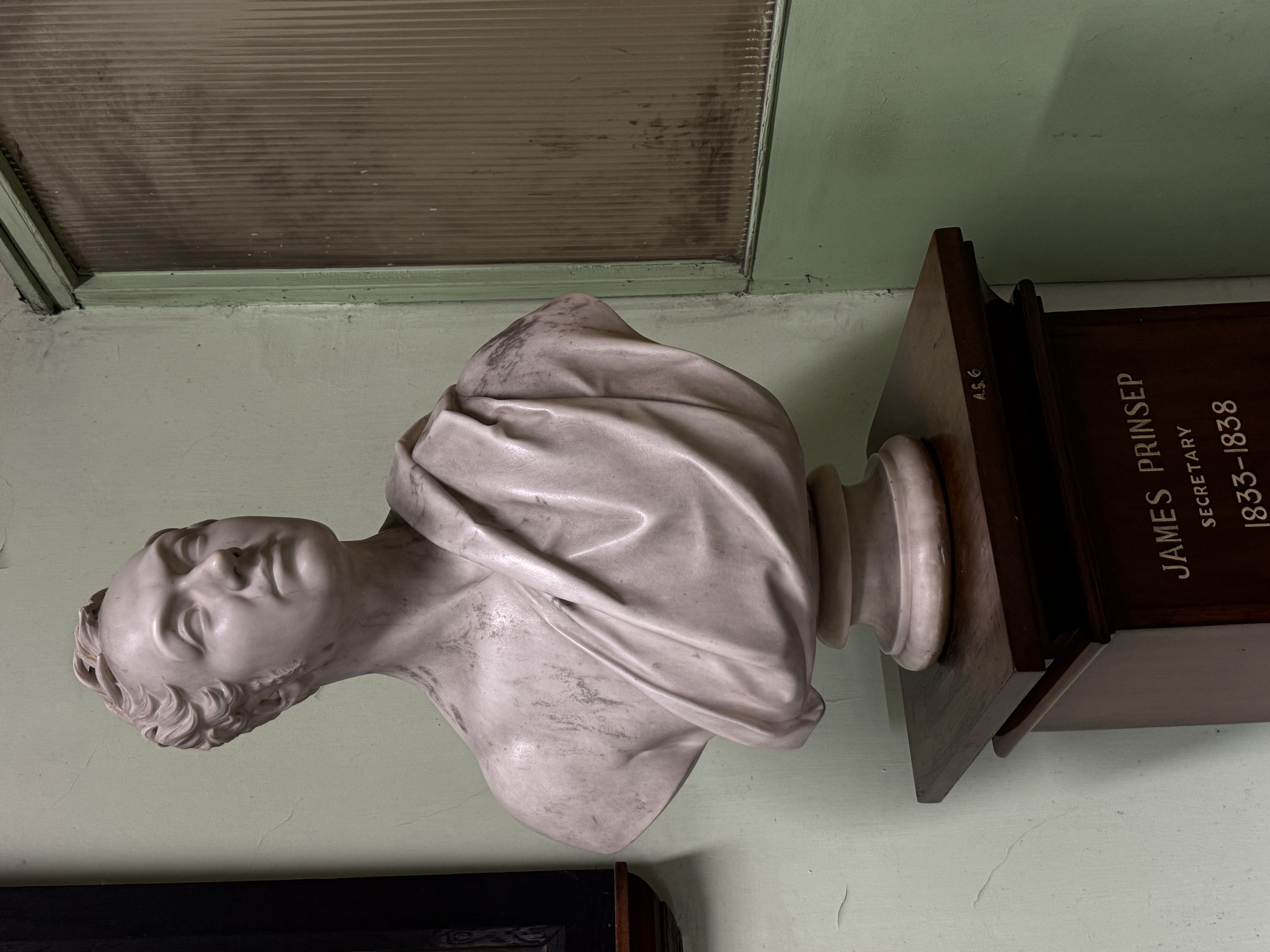
A bust of Prinsep is held by the Asiatic Society of Bengal, whose learned journal he was the first to edit. There's a much sweeter likeness, a drawing made by his sister, but to see it, you'll have to leave this website and wander in digital pastures.
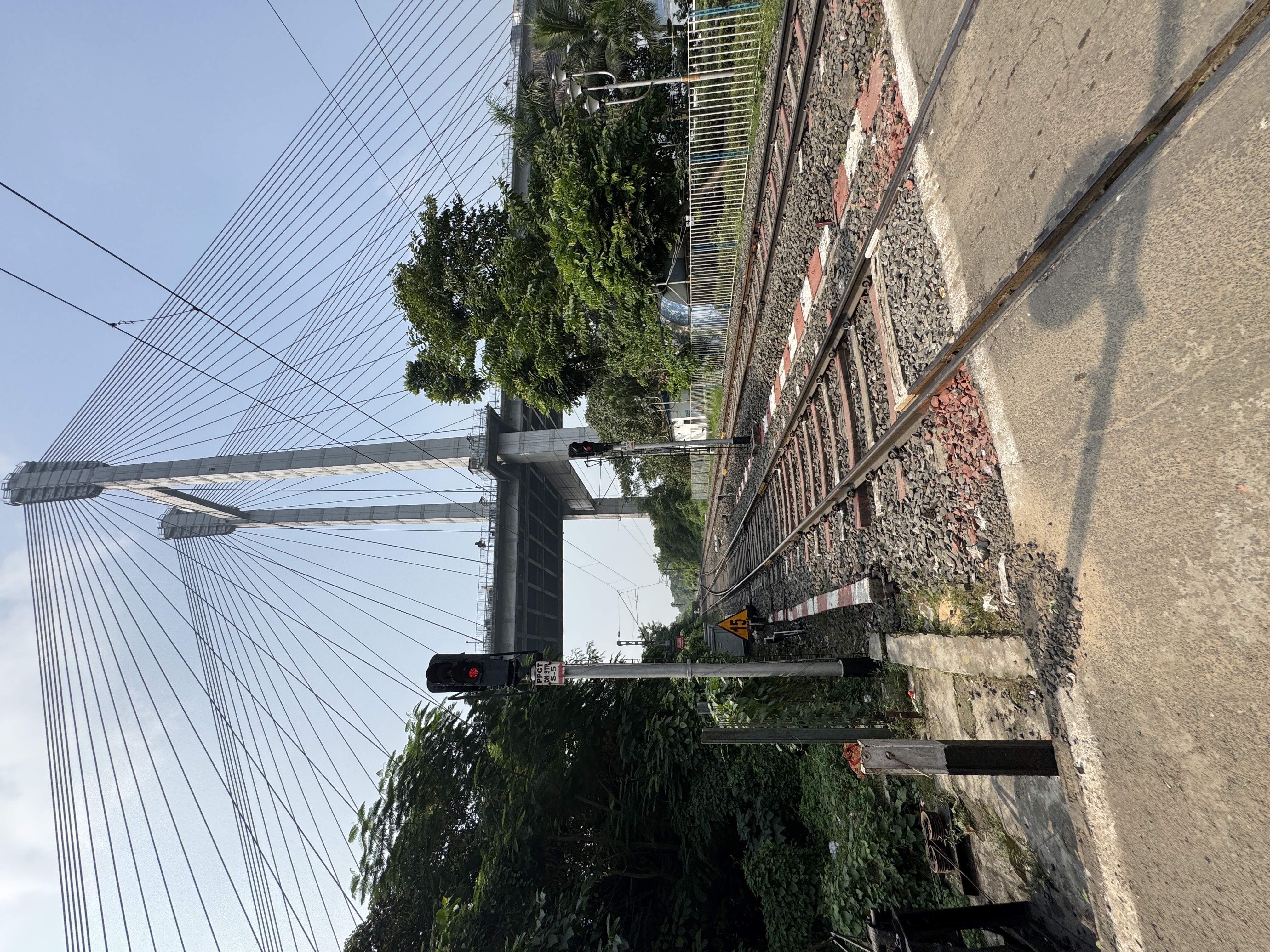
The Prinsep Monument is very close to the Hooghly River but is separated from it by the Calcutta Circular Railway, originally a line along the river for about five miles from Chitpur downstream to the Kidderpore docks.
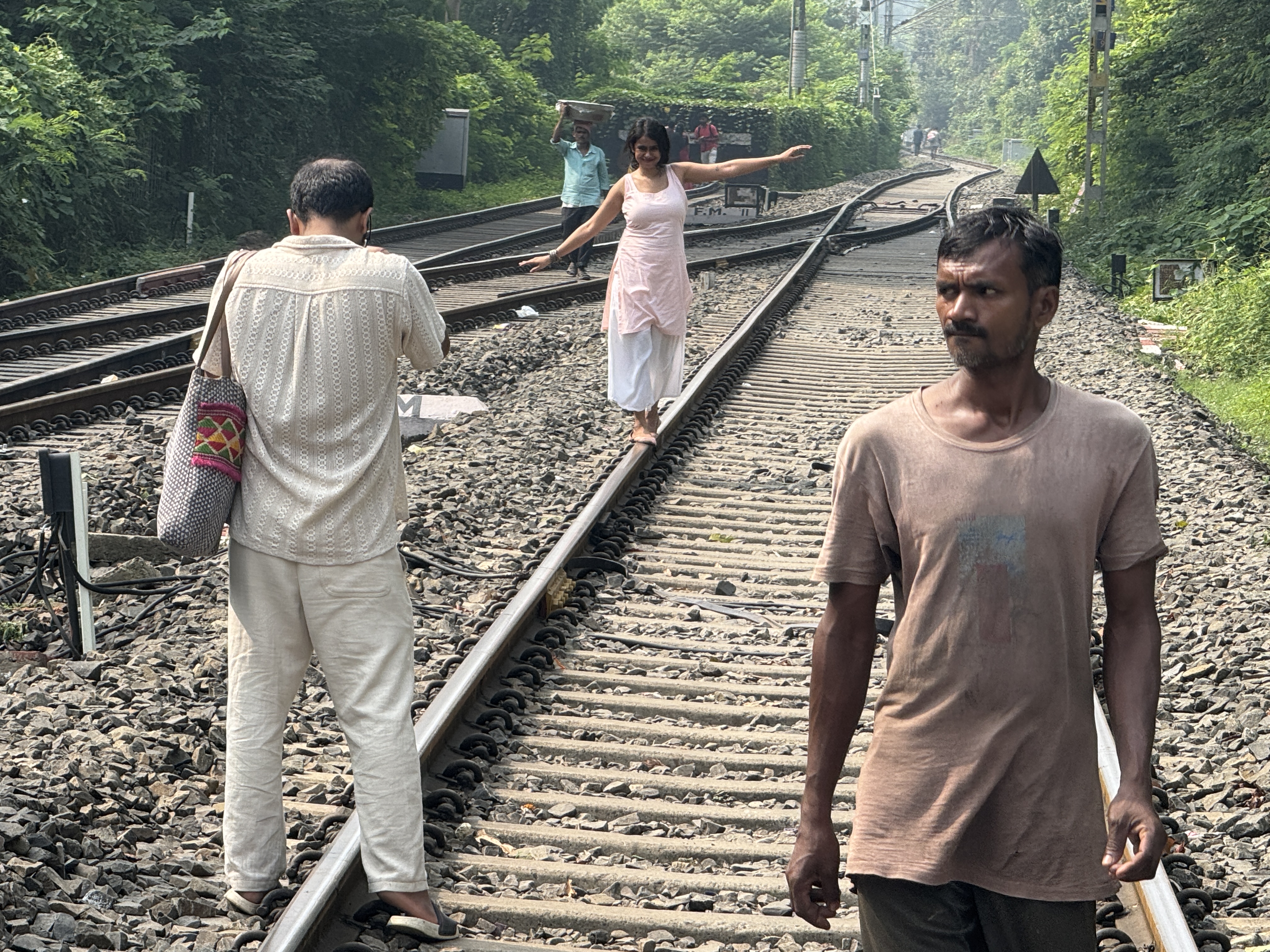
Good thing it's not a high-speed line.
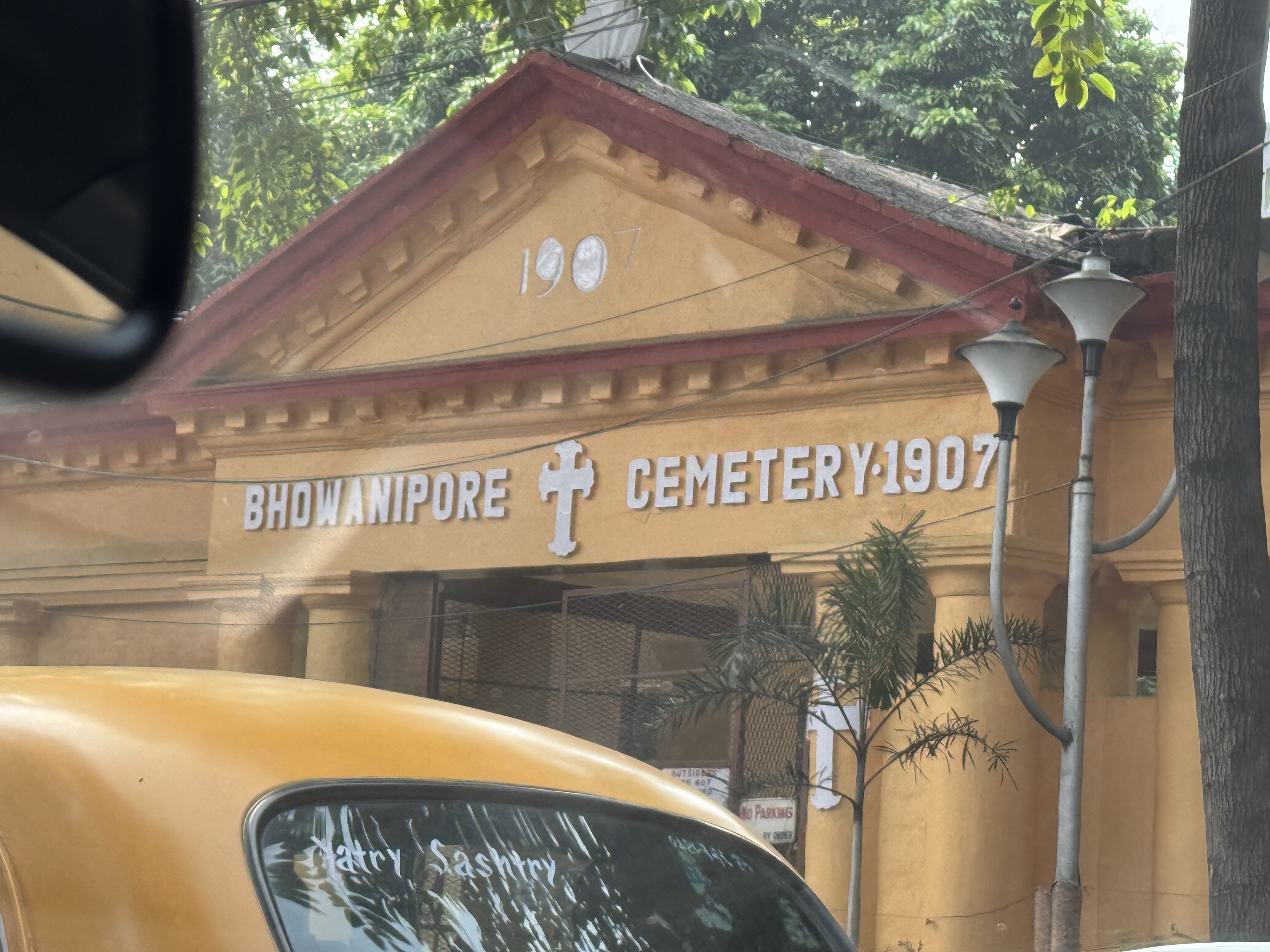
About a mile to the east there is a cemetery established in... oh, wait. I don't have to tell you.
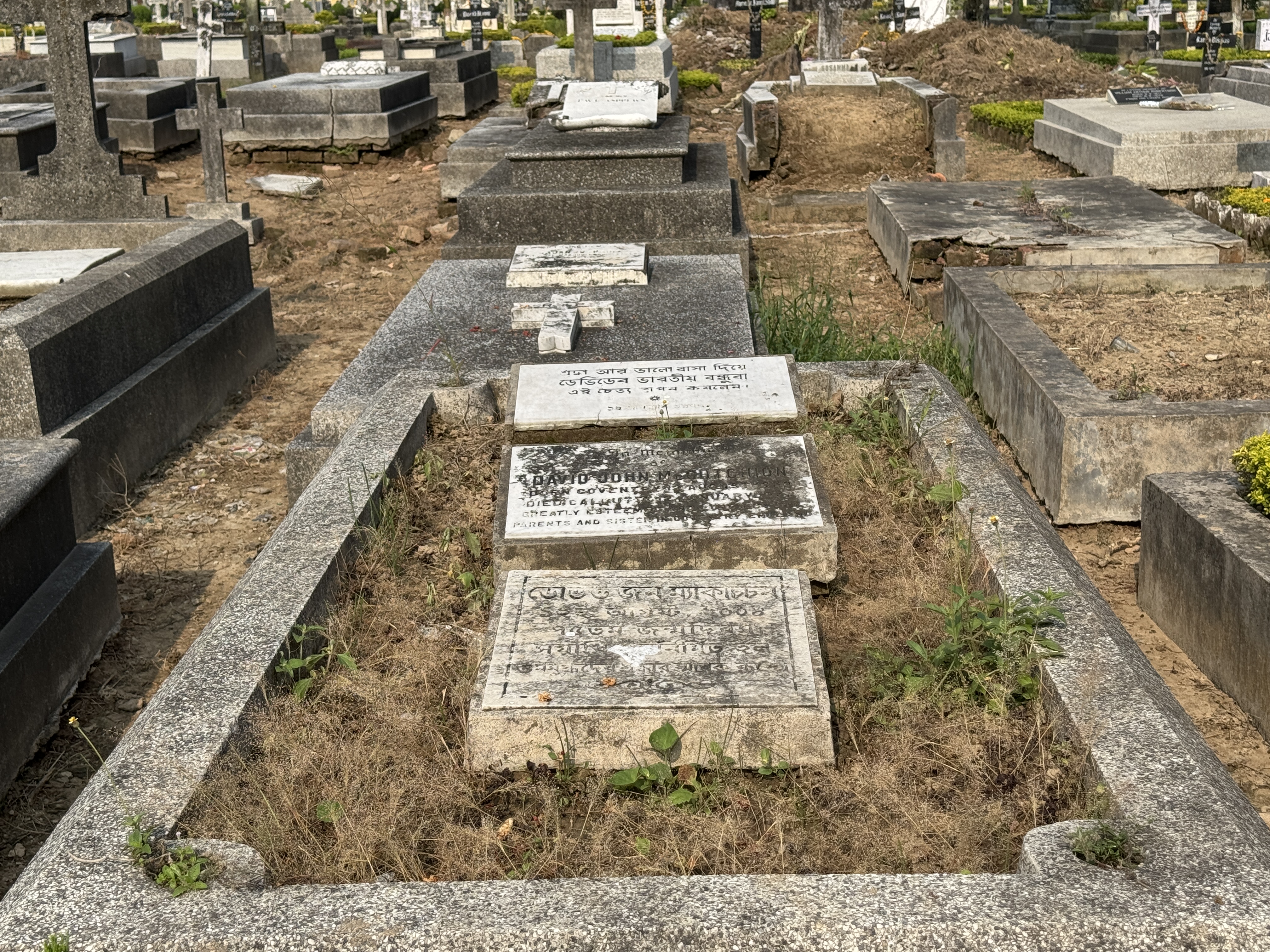
A great many stones are illegible, but I've come for the middle one of this trio.
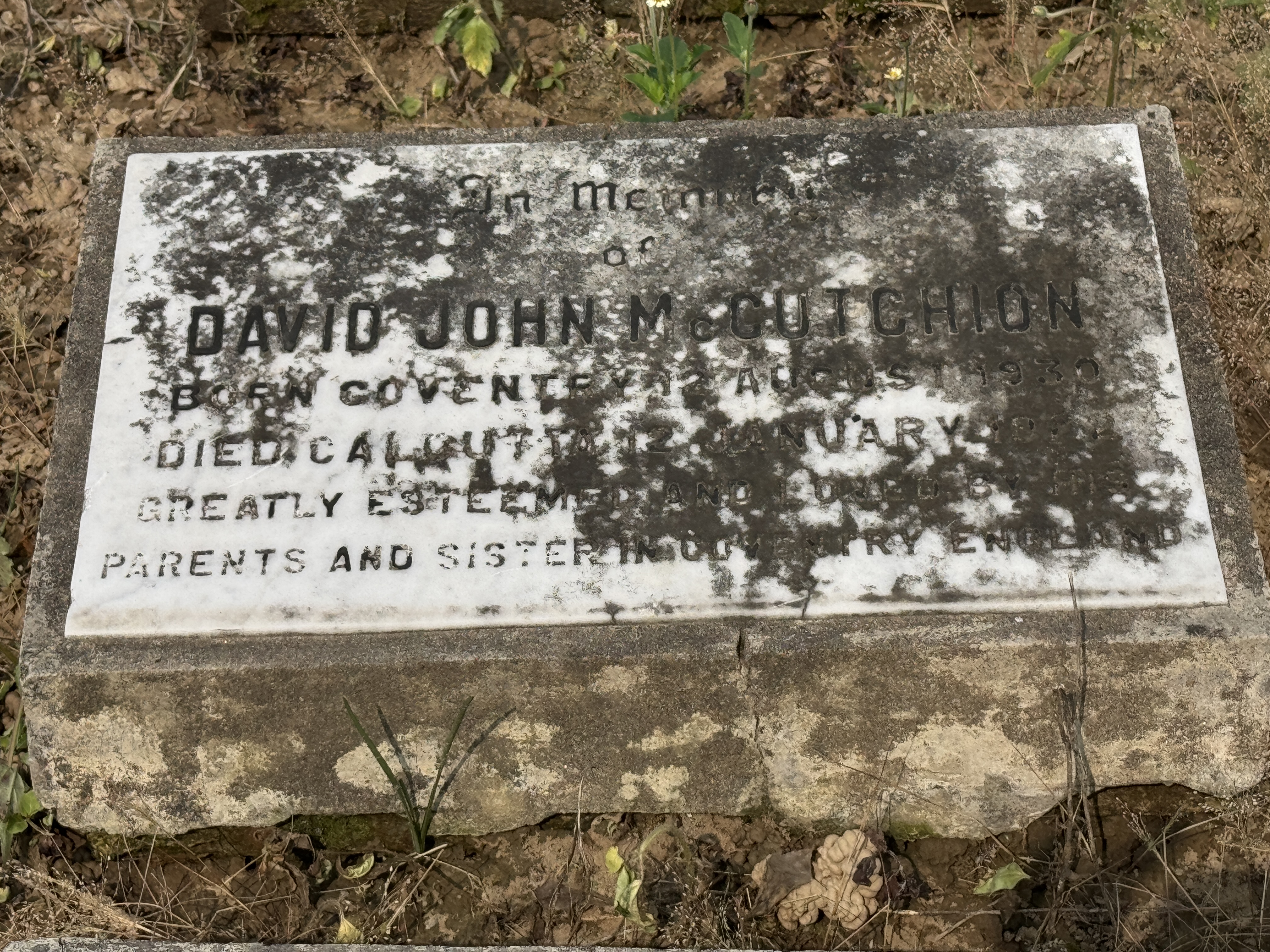
David John McCutchion, 1930-1972. I knew of him from Brick Temples of Bengal, 1984, edited by George Michell and presenting McCutchion's pioneer work photographing and classifying Bengal's temples. (See the Bishnupur chapter if you want to get into the weeds.) McCutchion would die of polio contracted in India, but years earlier, while at Cambridge, he had joined the Tagore Society. He came to India to teach at the university established by Tagore at Santiniketan (100 miles NNW of Calcutta). Then he met Satyajit Ray and began working with him on the film Abhijan (1962). It was on location there that McCutchion first began paying attention to these brick temples. Small world again.
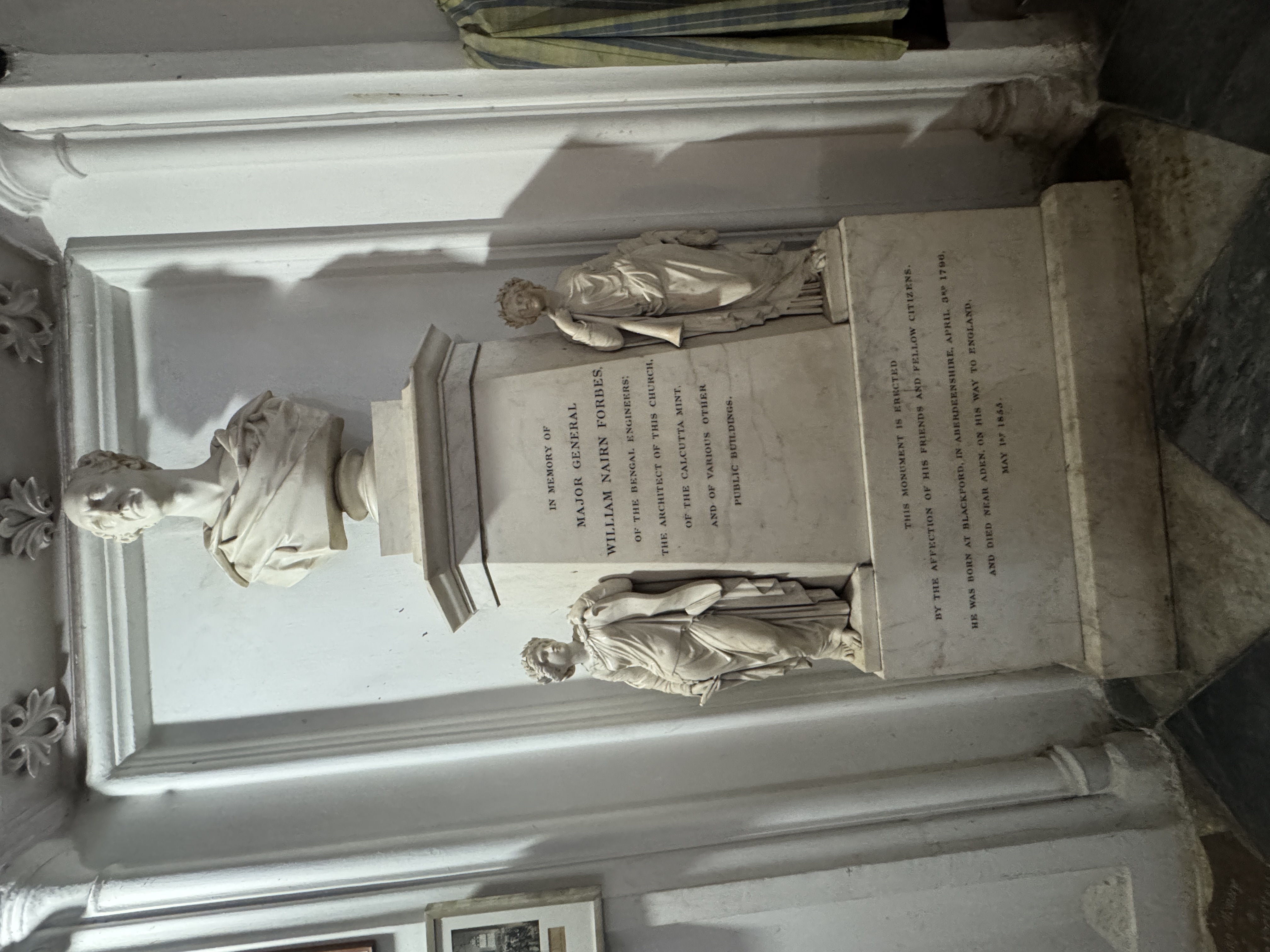
Most of the British in India were less interested in learning from the place than in making careers for themselves. Here's William Nairn Forbes, 1796-1855.
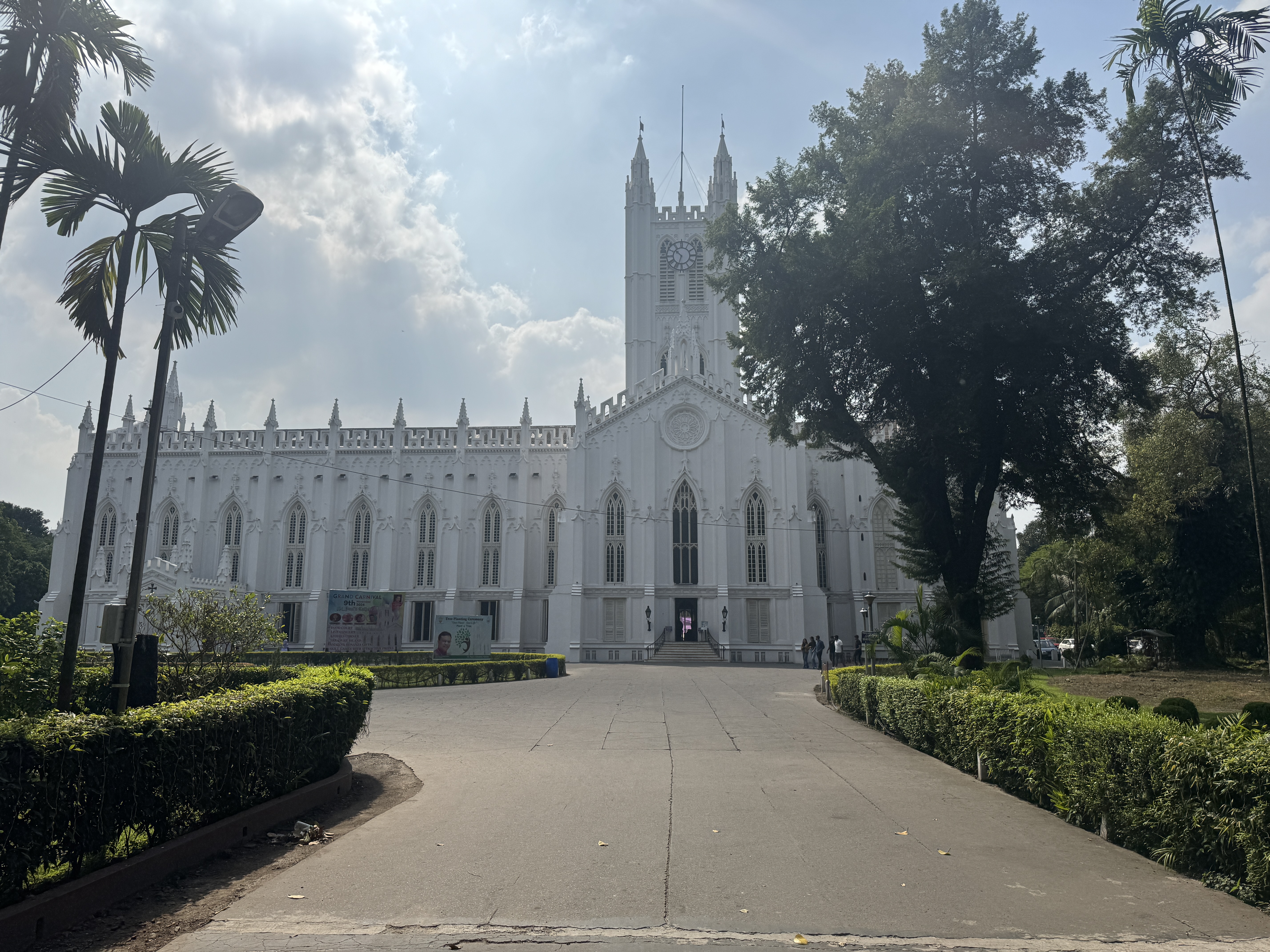
I introduce you to him because this is one of his projects, St. Paul's Anglican Church, now a cathedral. The tower is at least the third on the site; two earlier ones collapsed in earthquakes.
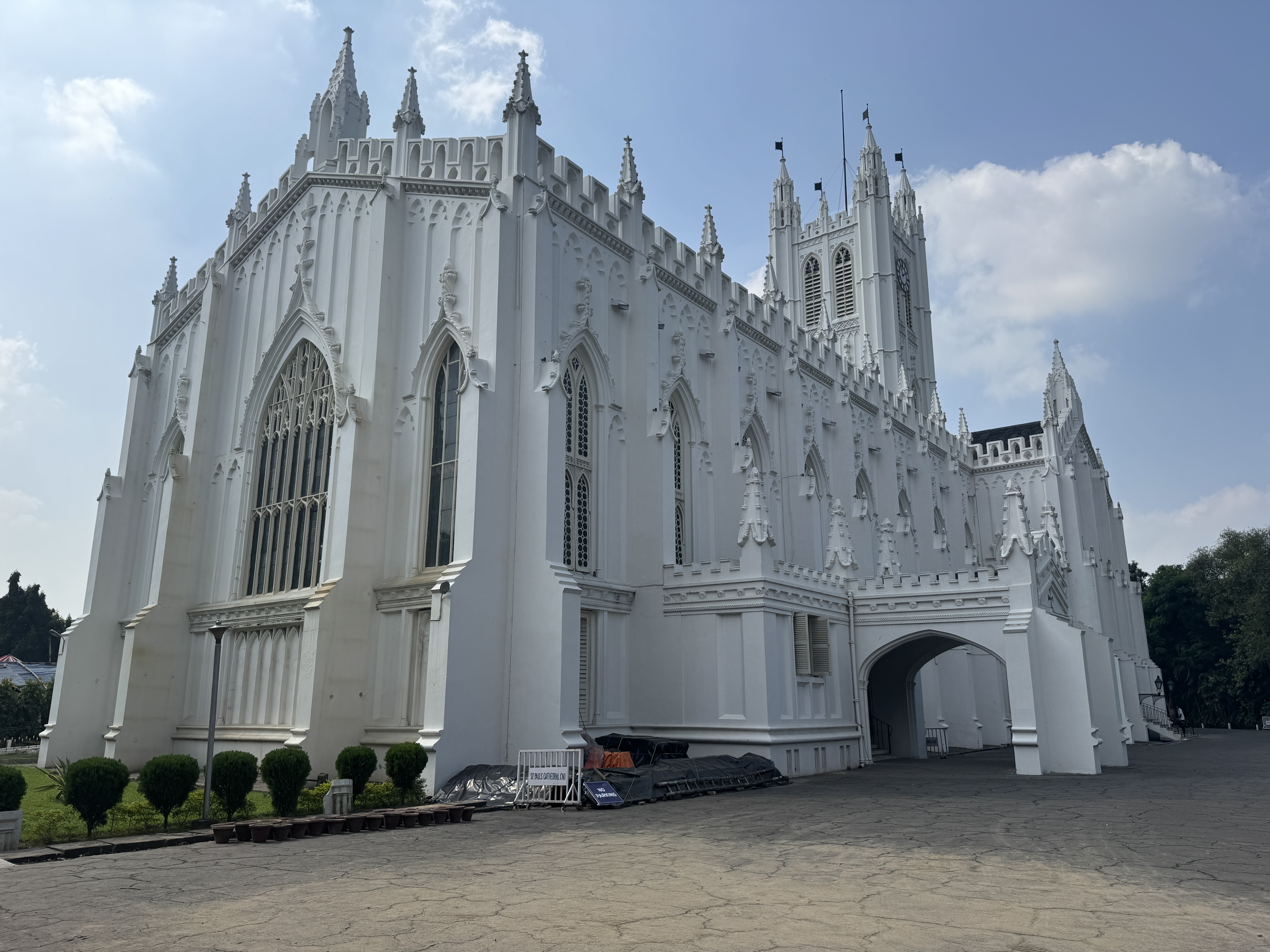
It's a bit like the U.S. military putting up Burger Kings in Iraq.
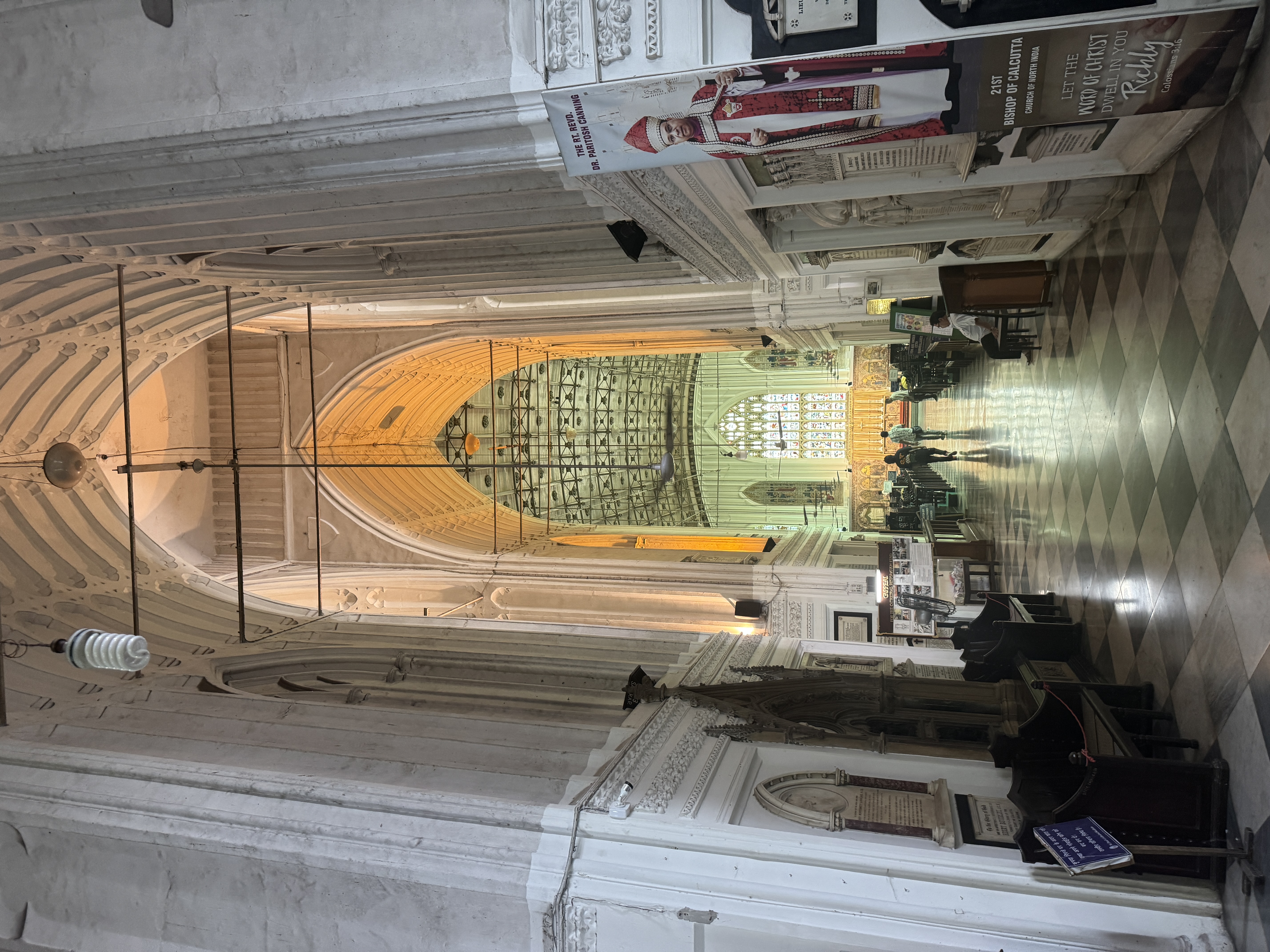
Feels like home?
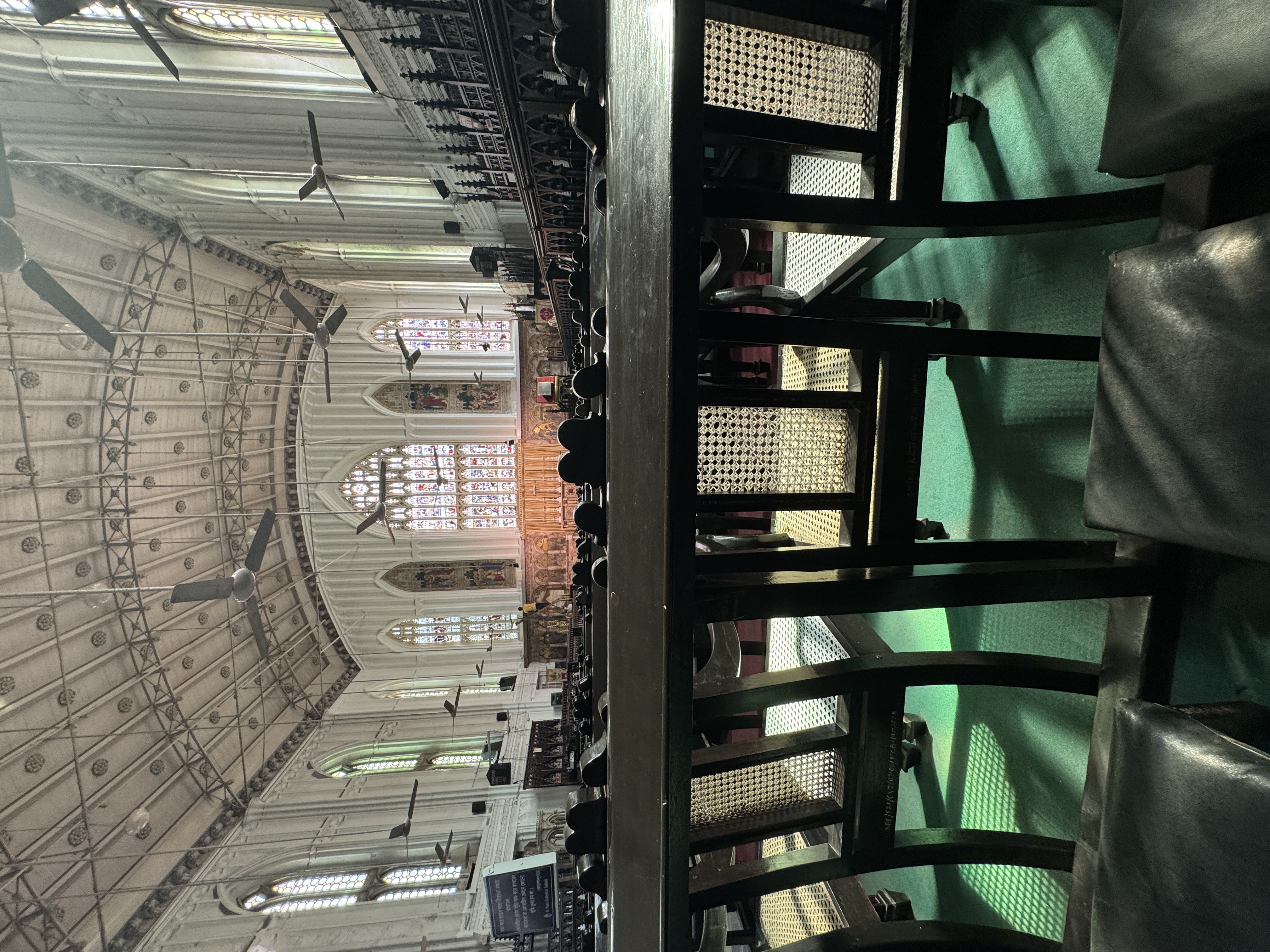
Not so much when you see that the interior is a kind of quonset hut. In its defence, this probably helps cool the place.
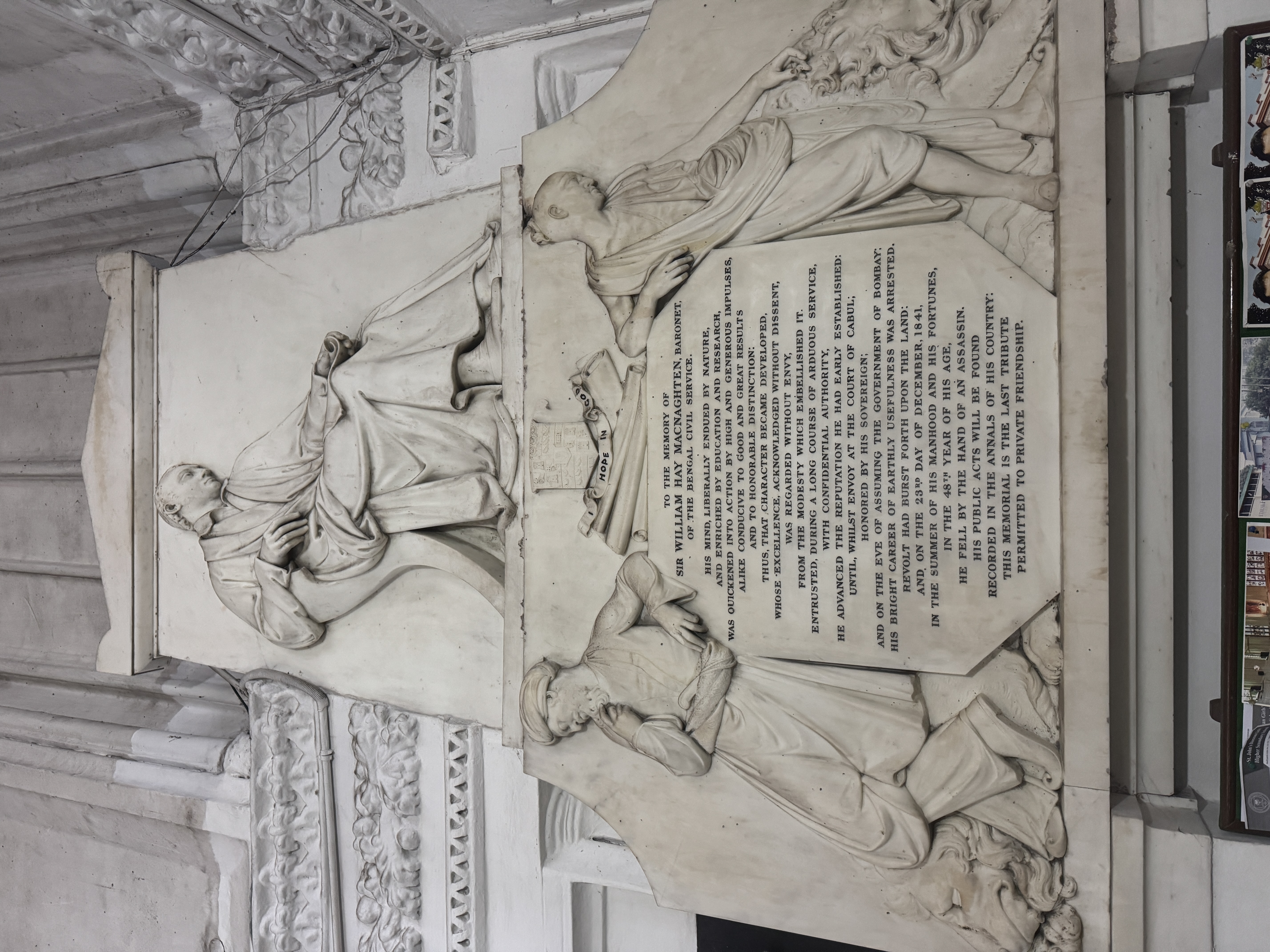
I said that the British were mostly here making careers for themselves. Take this memorial, in the same church, to William Hay MacNaghten, a legal scholar of distinction and a man "high and generous impulses alike conducive to good and great results and to honorable distinction." The famously waspish Emily Eden, sister of India's Governor-General, had her own view: MacNaghten was "clever and pleasant, speaks Persian rather more fluently than English; Arabic better than Persian; but, for familiar conversation, rather prefers Sanscrit" (Up the Country, letter of Oct 23, 1837).
Worse lay ahead. MacNaghten was sent to Afghanistan in 1841. Katherine Prior in the Dictionary of National Biography writes that "on arrival they were seized and carried into the city to their deaths. Akbar Khan himself shot MacNaghten with a pistol given to him by the envoy the day before, whereupon angry city residents hacked his body to pieces and paraded his head and limbs in triumph. Days later, the entire garrison met a similar fate: retreating to Jalalabad, some 4000 soldiers and numerous camp followers were wiped out by freezing weather and snipers."
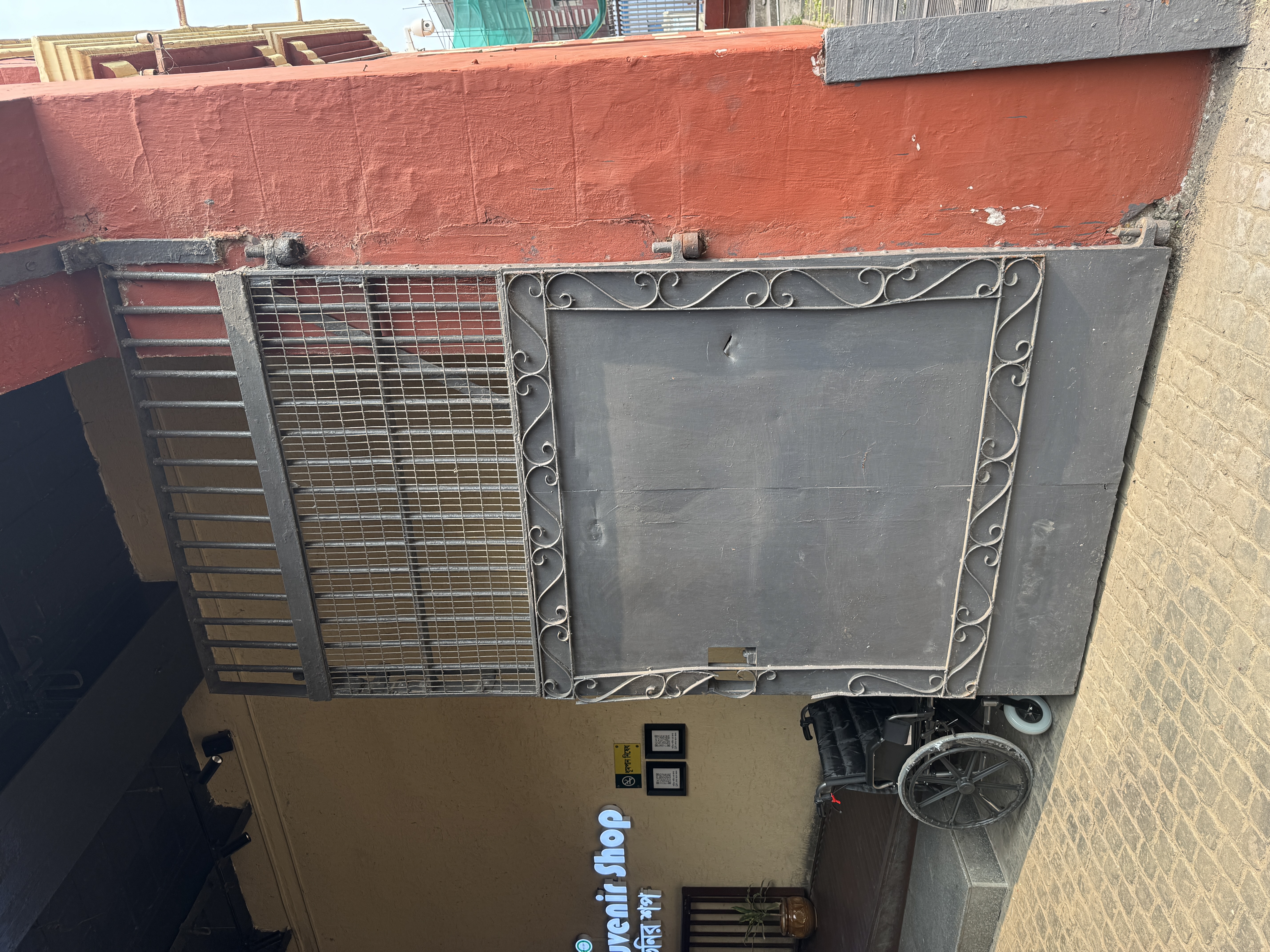
The British weren't the only ones with occasionally bad luck. Here's the entrance to the Alipore Jail, a mile and a bit south of the church.
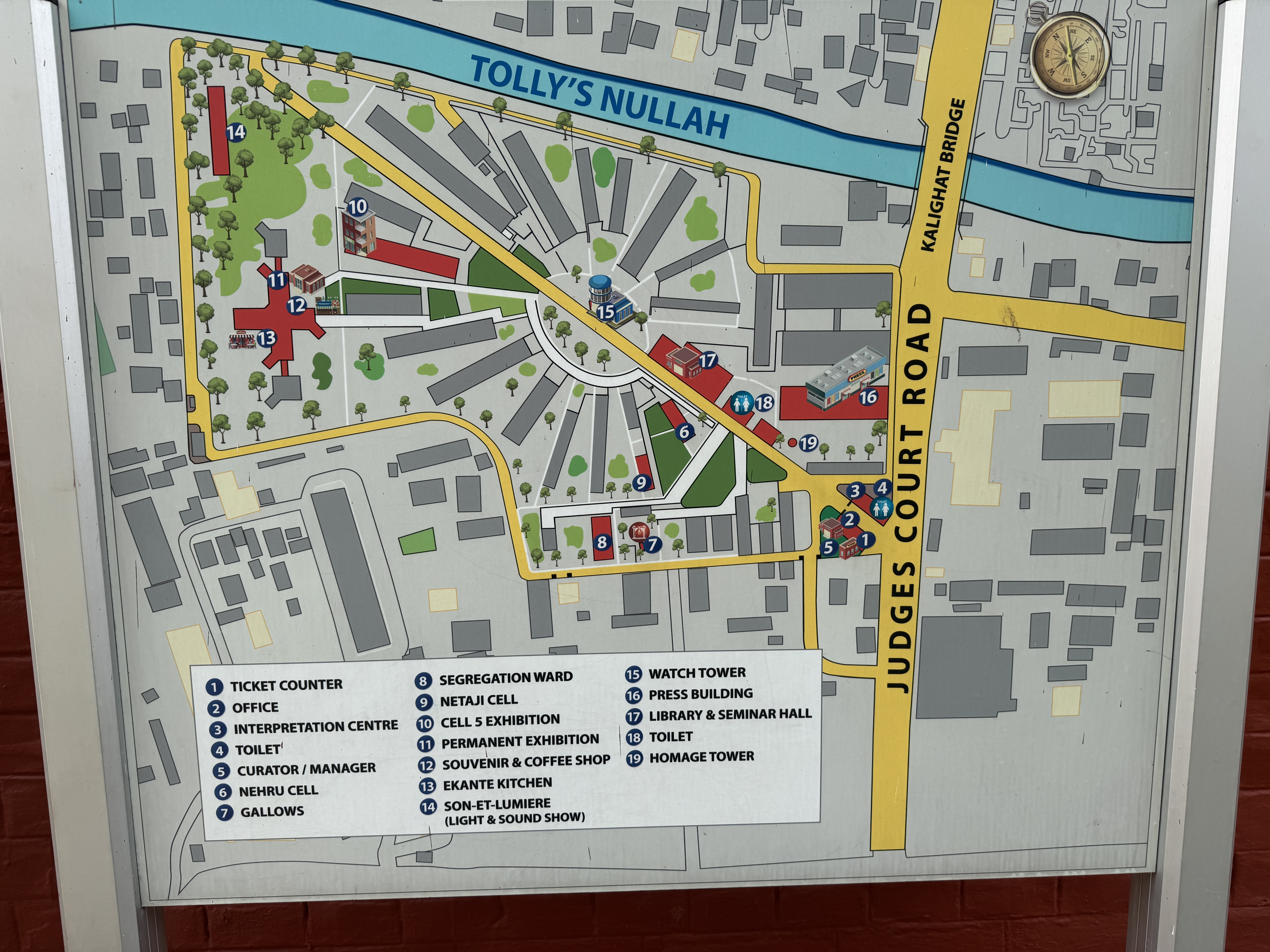
A map shows a layout designed on the principle of Jeremy Bentham's Panopticon, where a single guard can keep an eye on cell blocks arranged in a circle around him.
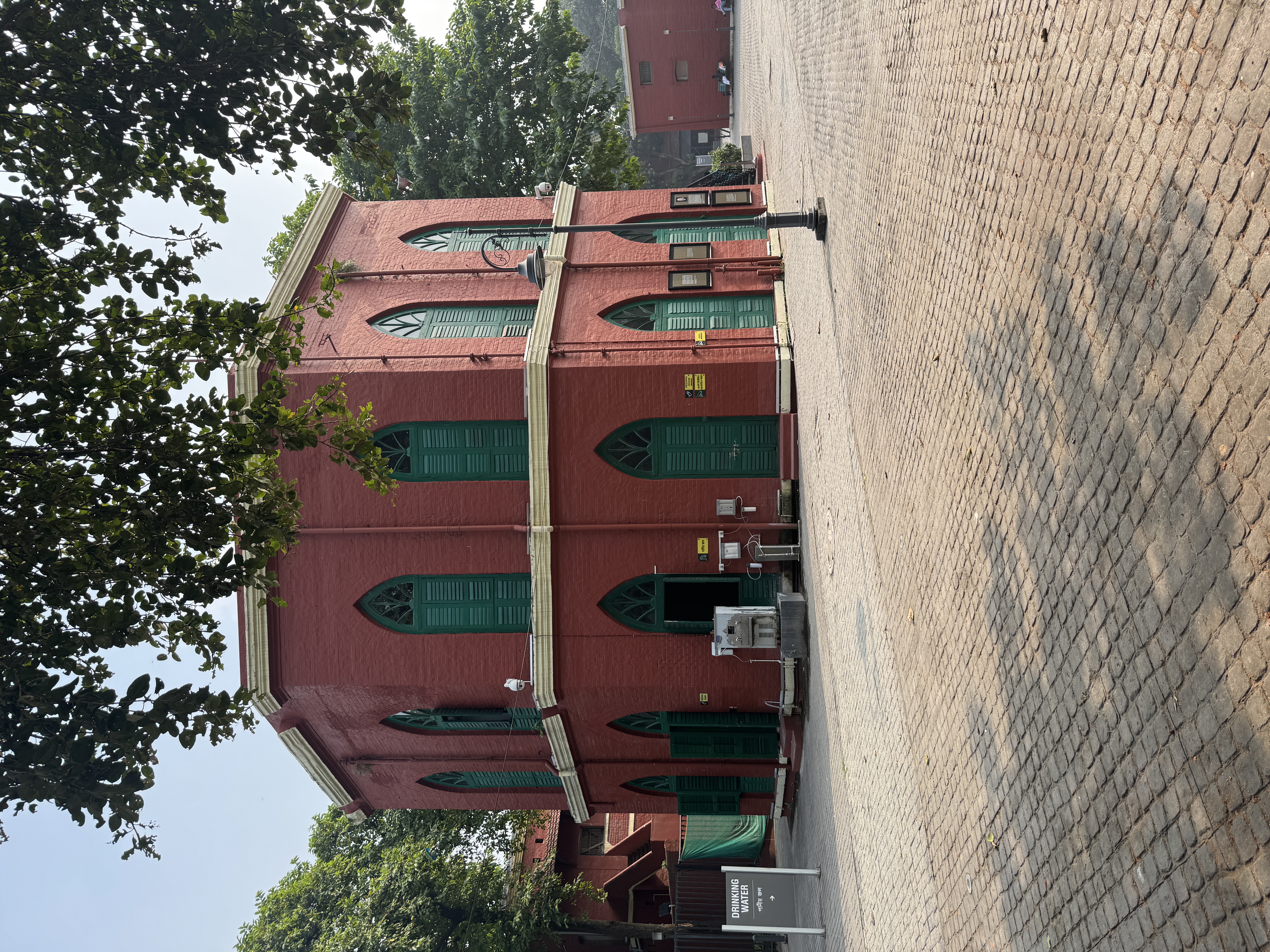
The prison opened about 1906 and closed in 2019. It's now a museum. Here is the now-modified central observation tower.
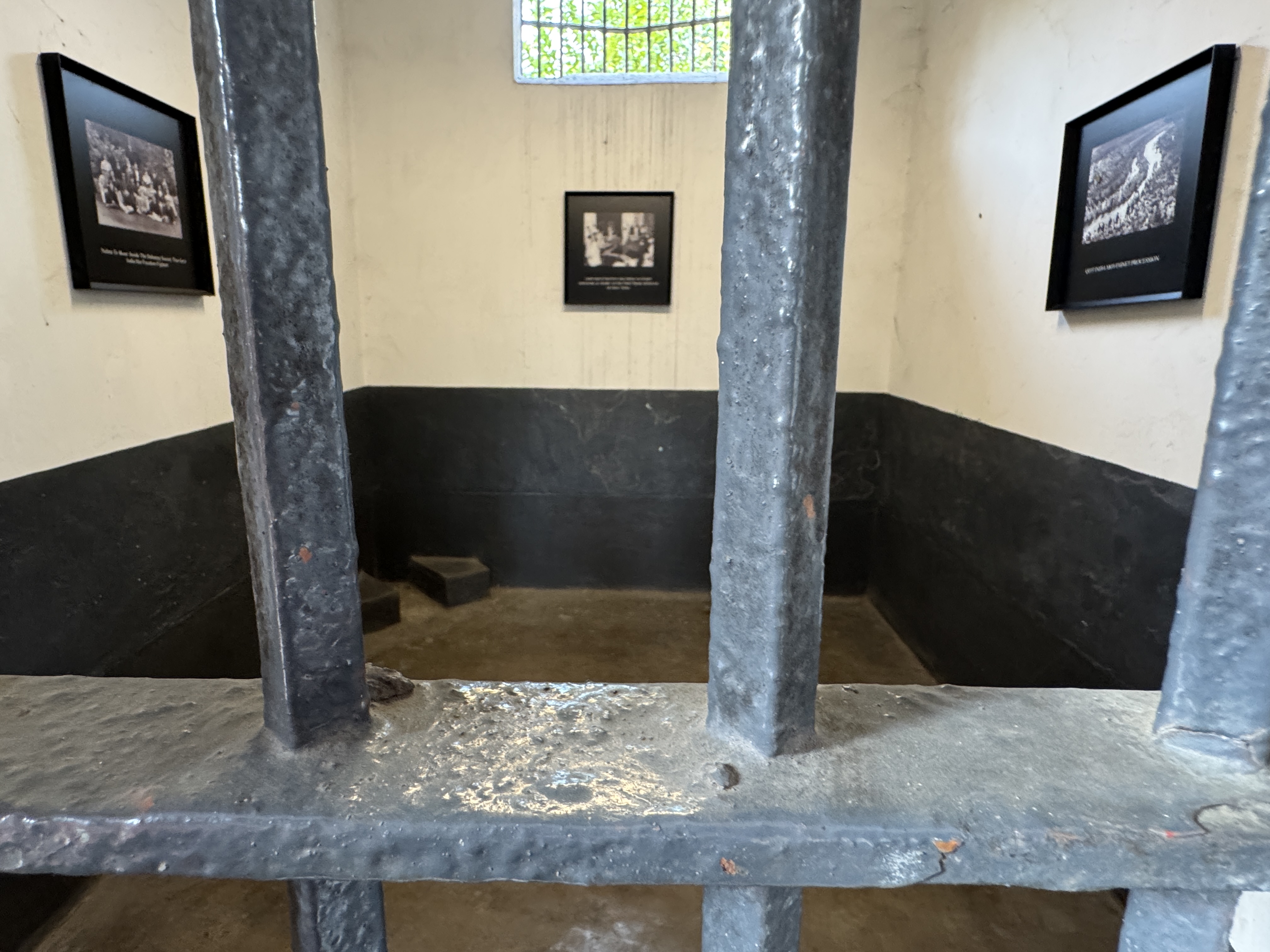
Important political prisoners enjoyed (choose another word if you wish) private accommodation (ditto).
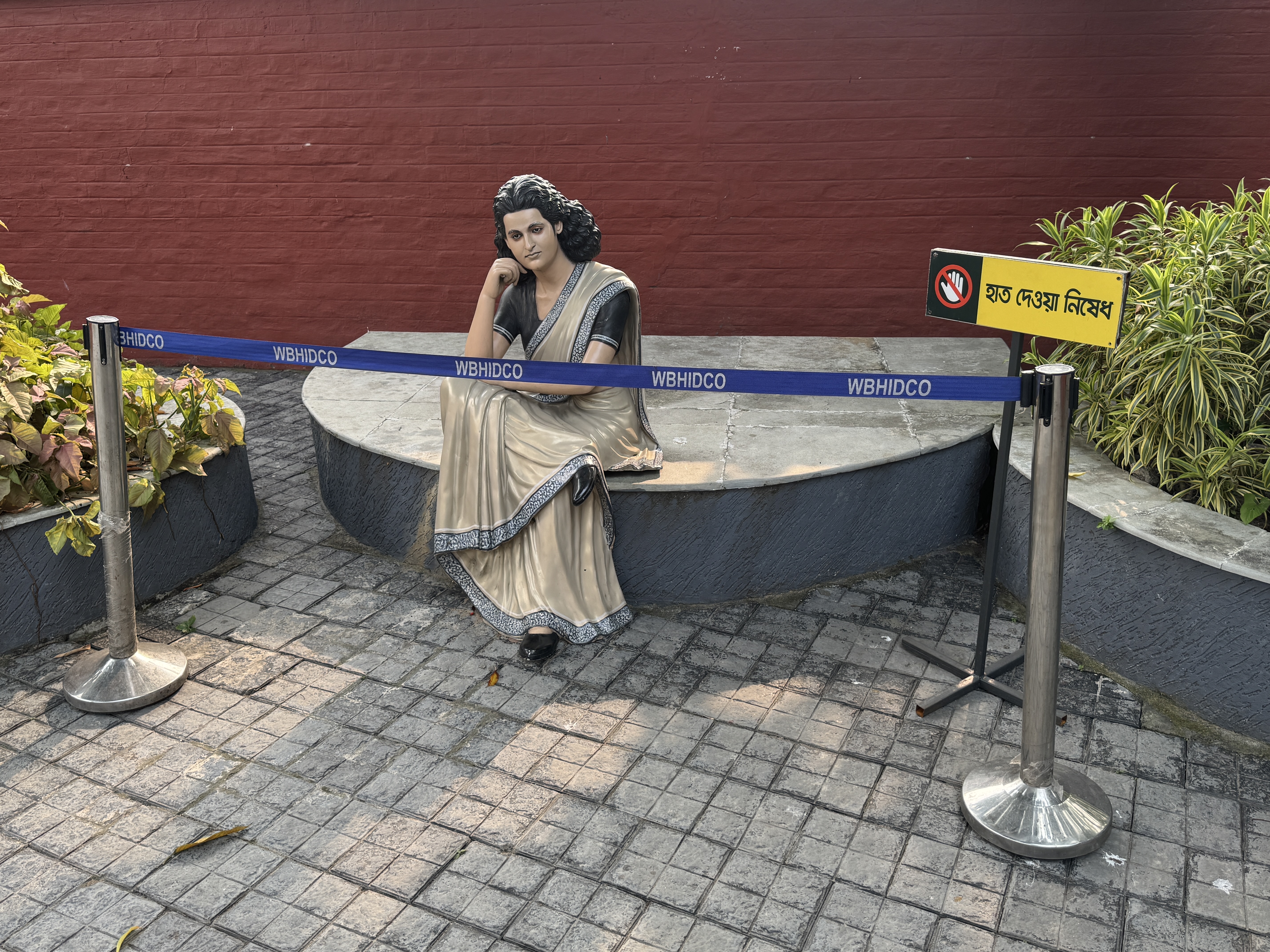
Quick double take. Yes, it's a young Indira Gandhi waiting for one of her fortnightly meetings with her imprisoned father, Jawaharlal Nehru.
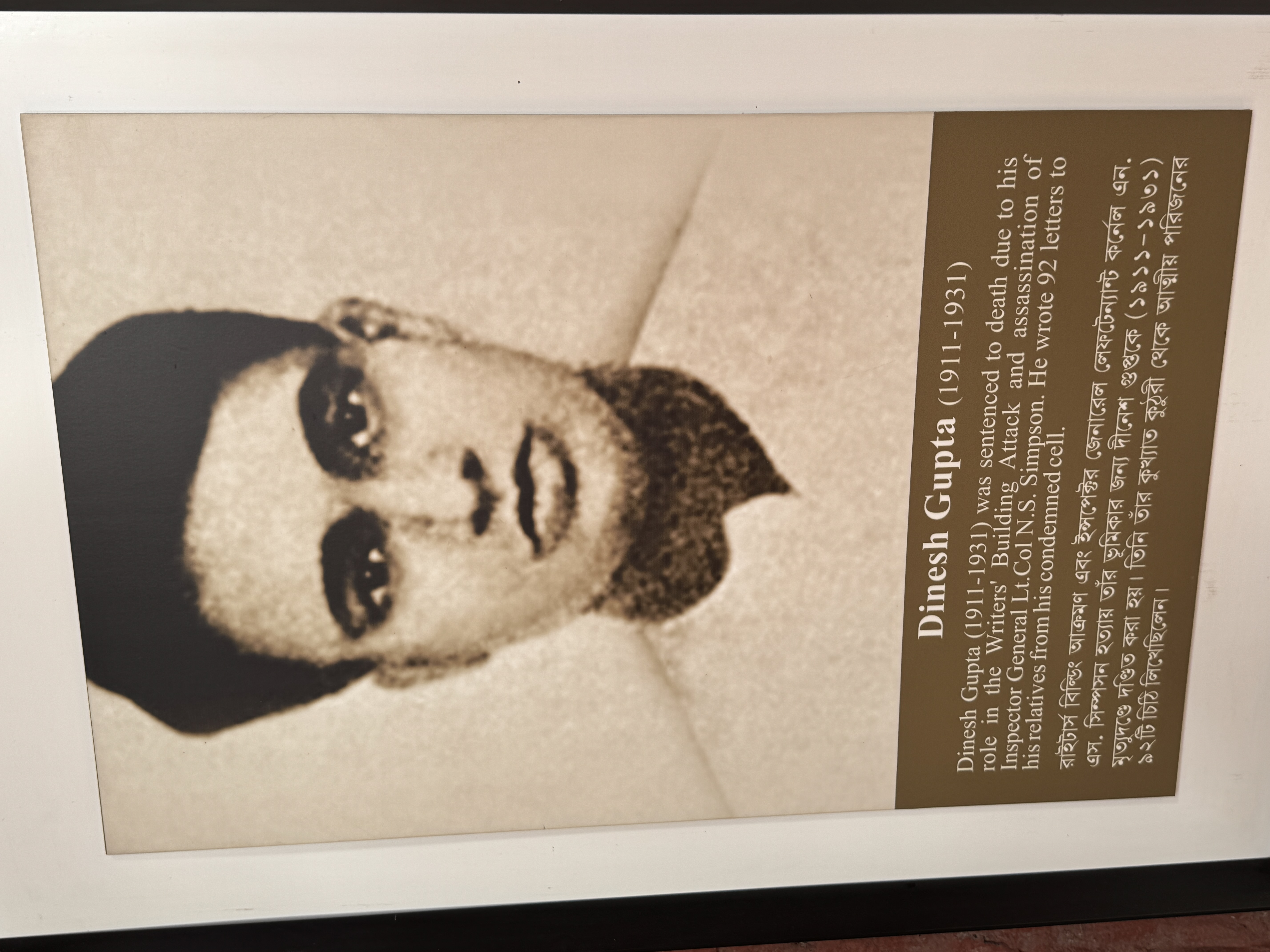
Dinesh Gupta was hanged in this prison for his role in the 1931 assassination of Norman Simpson, Bengal's Inspector-General of Prisons. Wikipedia says that Simpson was "infamous for his mistreatment of the prisoners." Wikipedia is presumptively infallible, but Simpson's predecessor, W. G. Hamilton, wrote that Simpson "was a humane man and held enlightened and very progressive views on the treatment of prisoners." (See the Spectator Archive for 9 January 1931.)
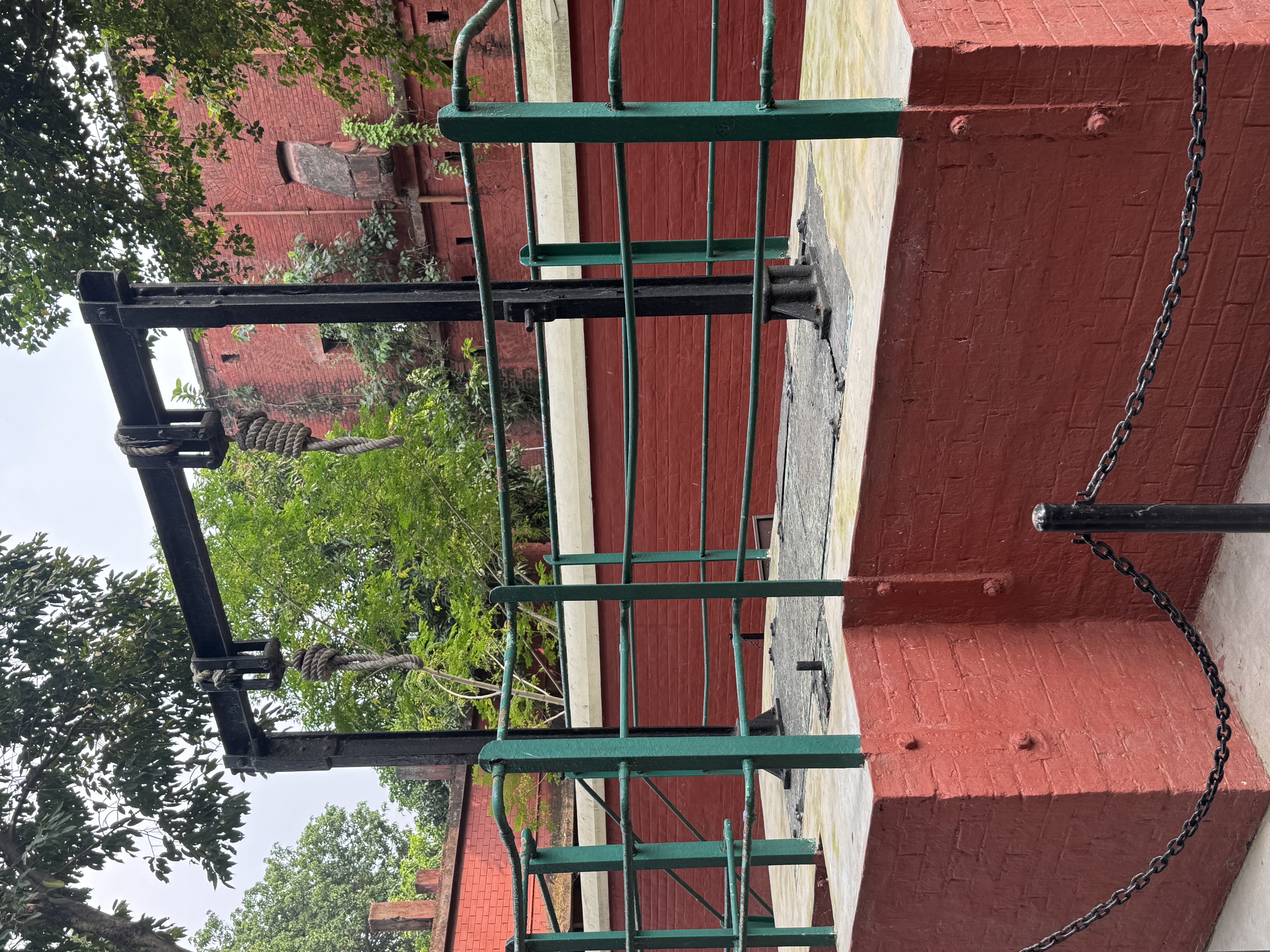
The gallows.
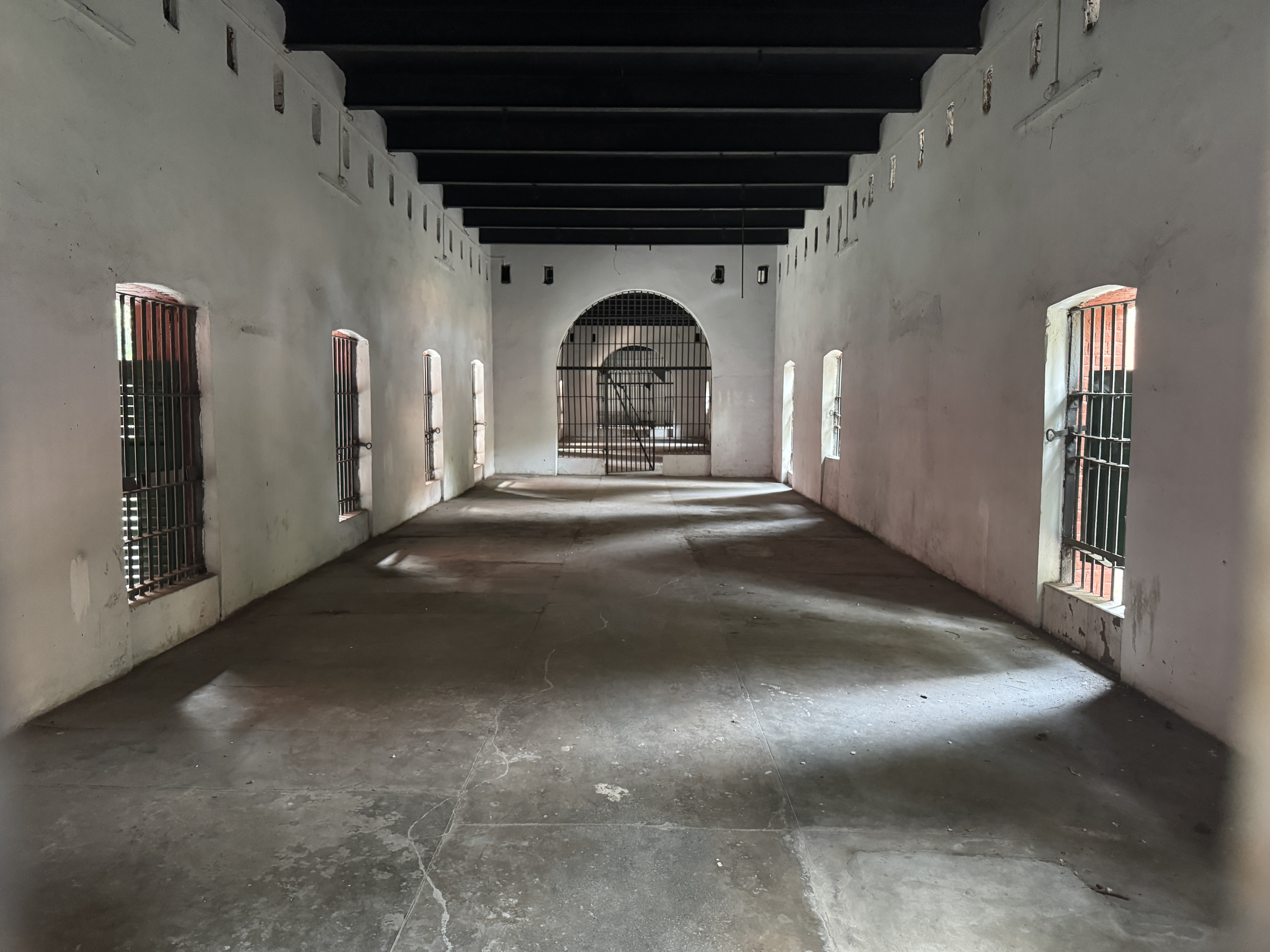
A holding pen.
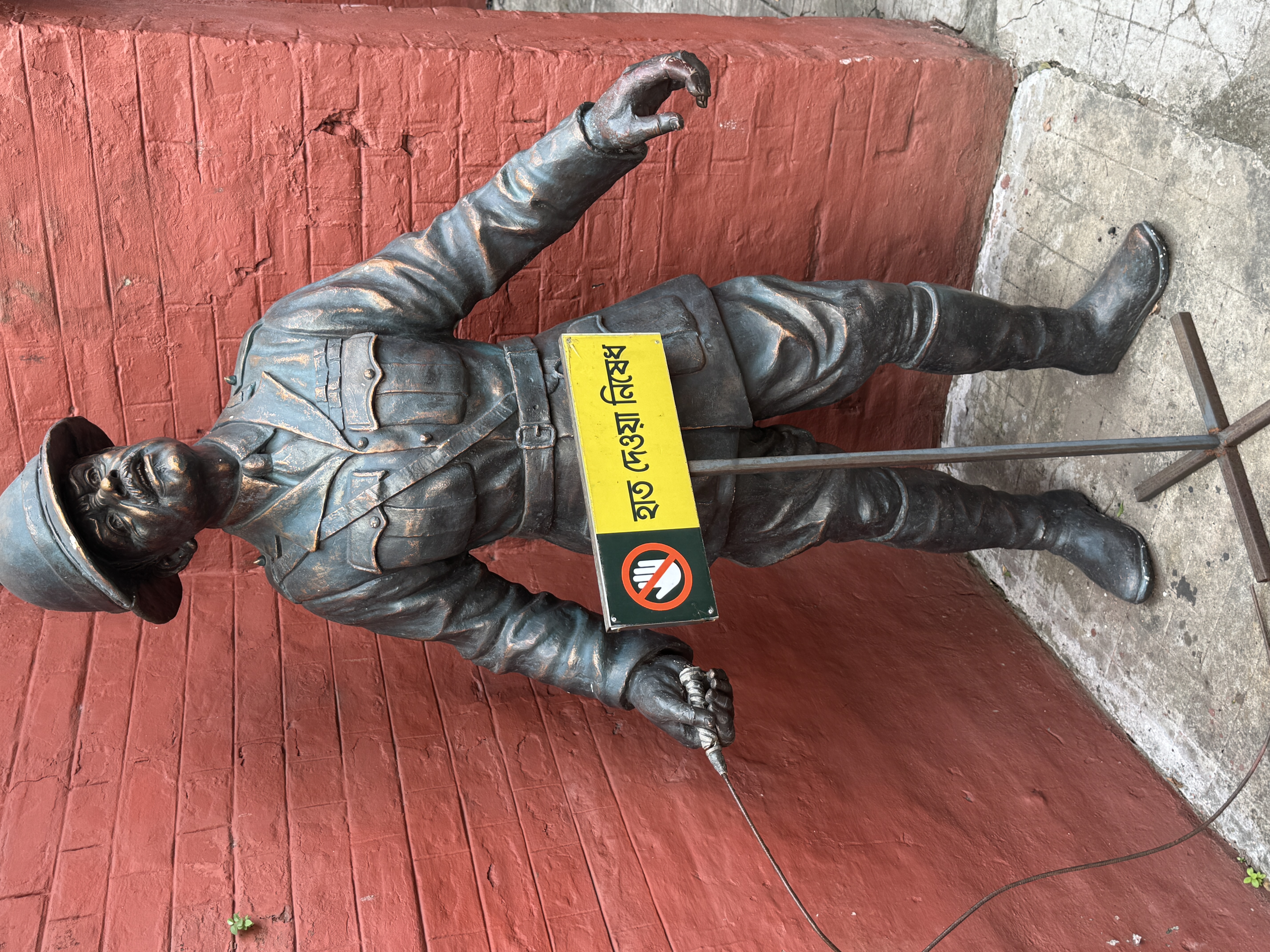
The museum planners have chosen to portray the prison guards as Wikipedia implies, rather than as having "enlightened and very progressive views on the treatment of prisoners."