Delhi 14: 2024
Thirty-six hours in Delhi. Where to go? Well, the air's terrible, but we might as well revisit the Red Fort and Qutb Minar. Yes, you'd choose less popular places. Too bad. It's my website.
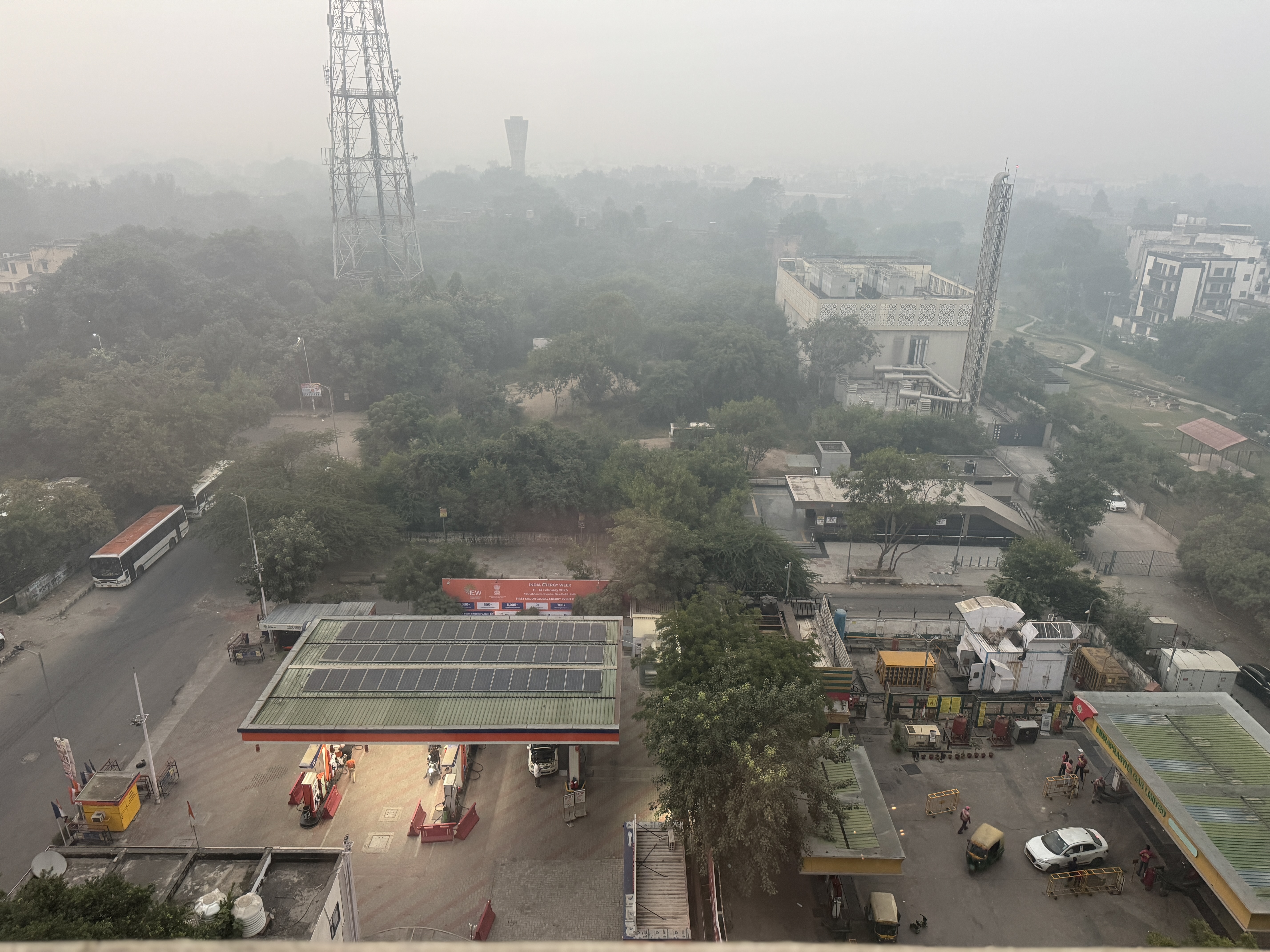
No, it's not fog. The air-quality index is a bit over 300 today.
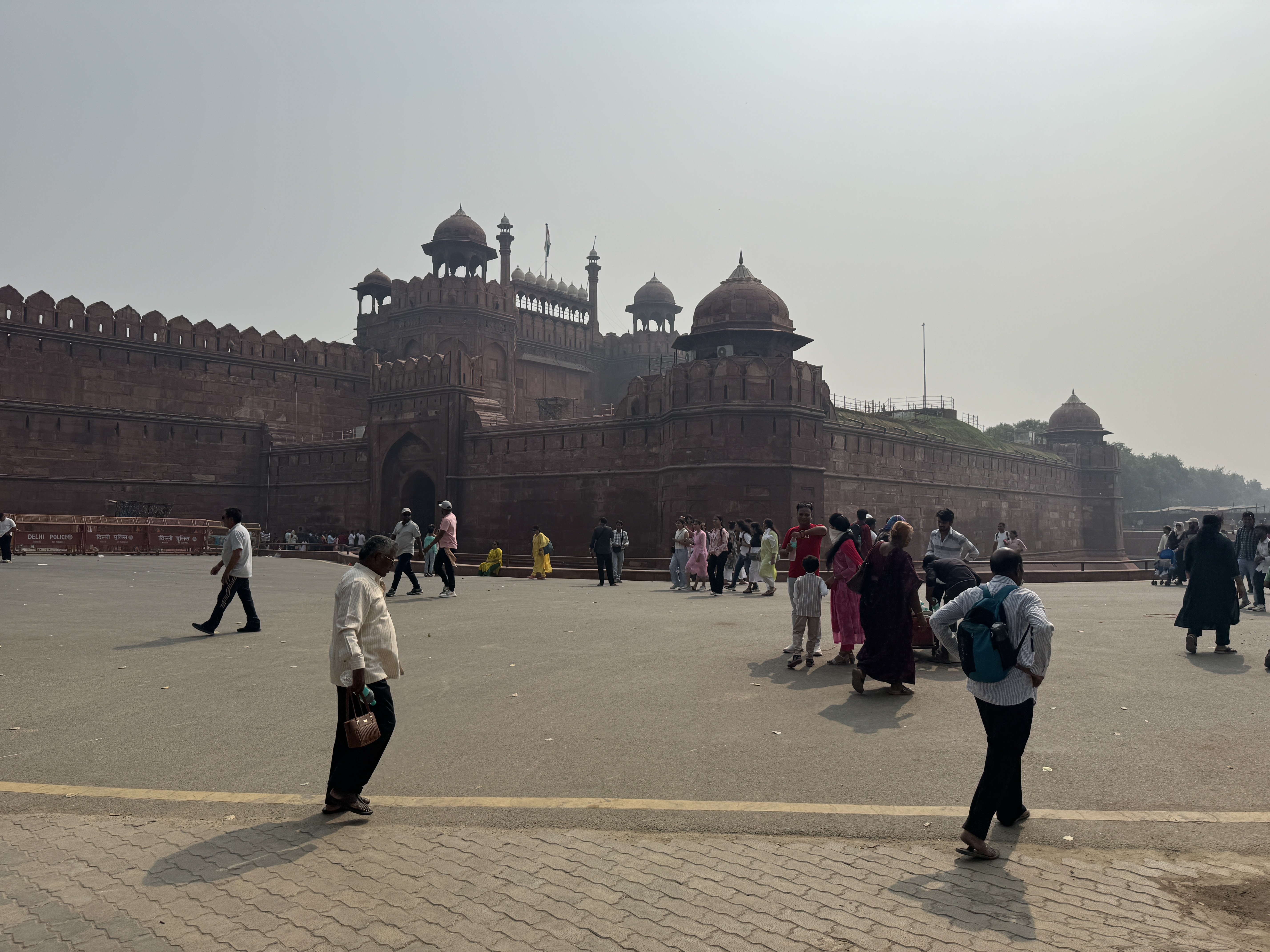
I've drifted down to the Red Ford, alias Lal Qila. Could there have been such an open space in front of the fort in the old days?
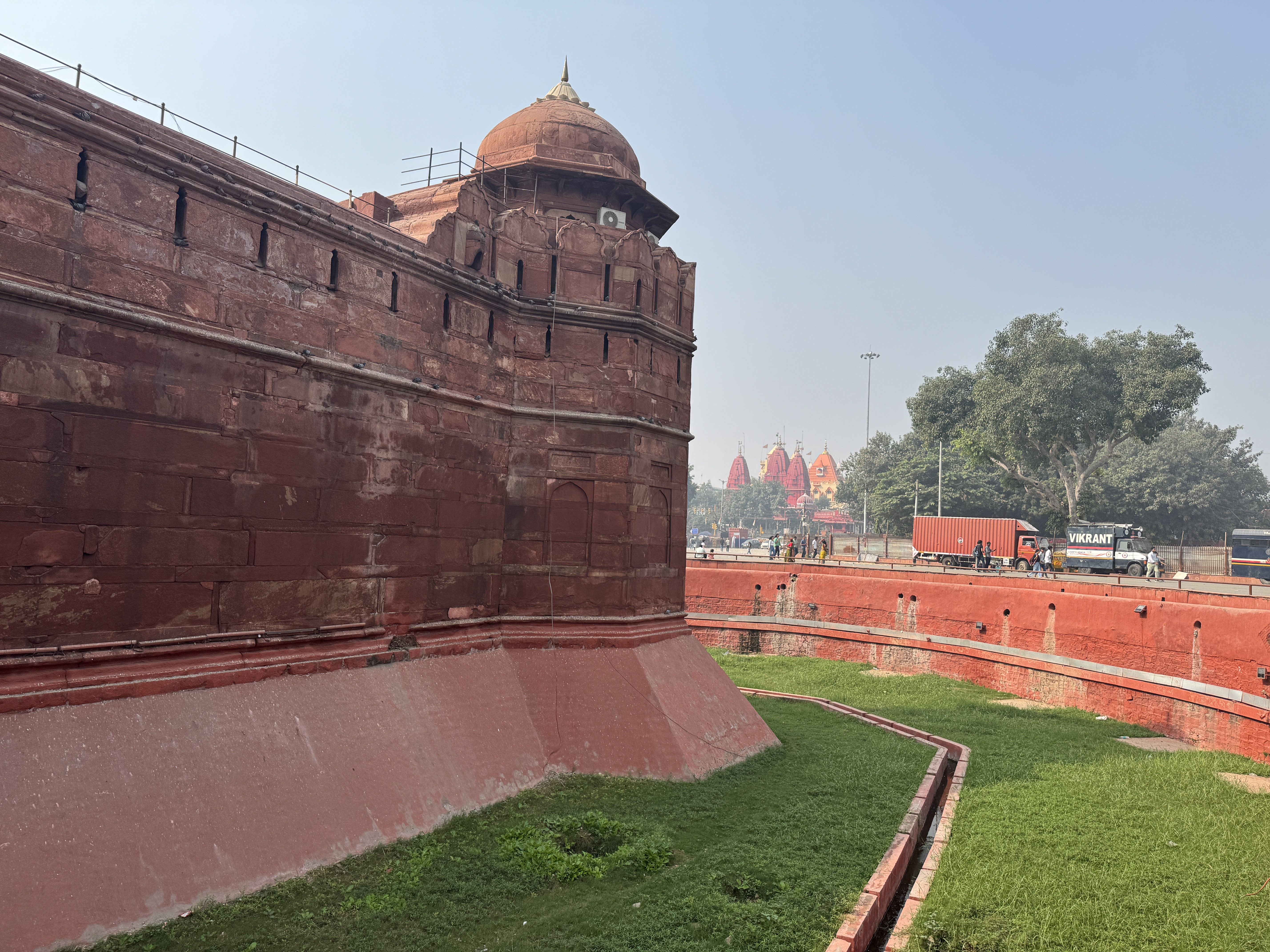
The moat was flooded until the 1857 Rebellion (or Mutiny, depending on who's talking). The last Mughal, Bahadur Shah Zafar, was exiled to Rangoon and died there. The British moved in and drained the moat, presumably because they thought it was obsolete, but I don't know. The structure in the distance is Delhi's first Jain temple, the Sri Digambar Jain Lal Mandir.
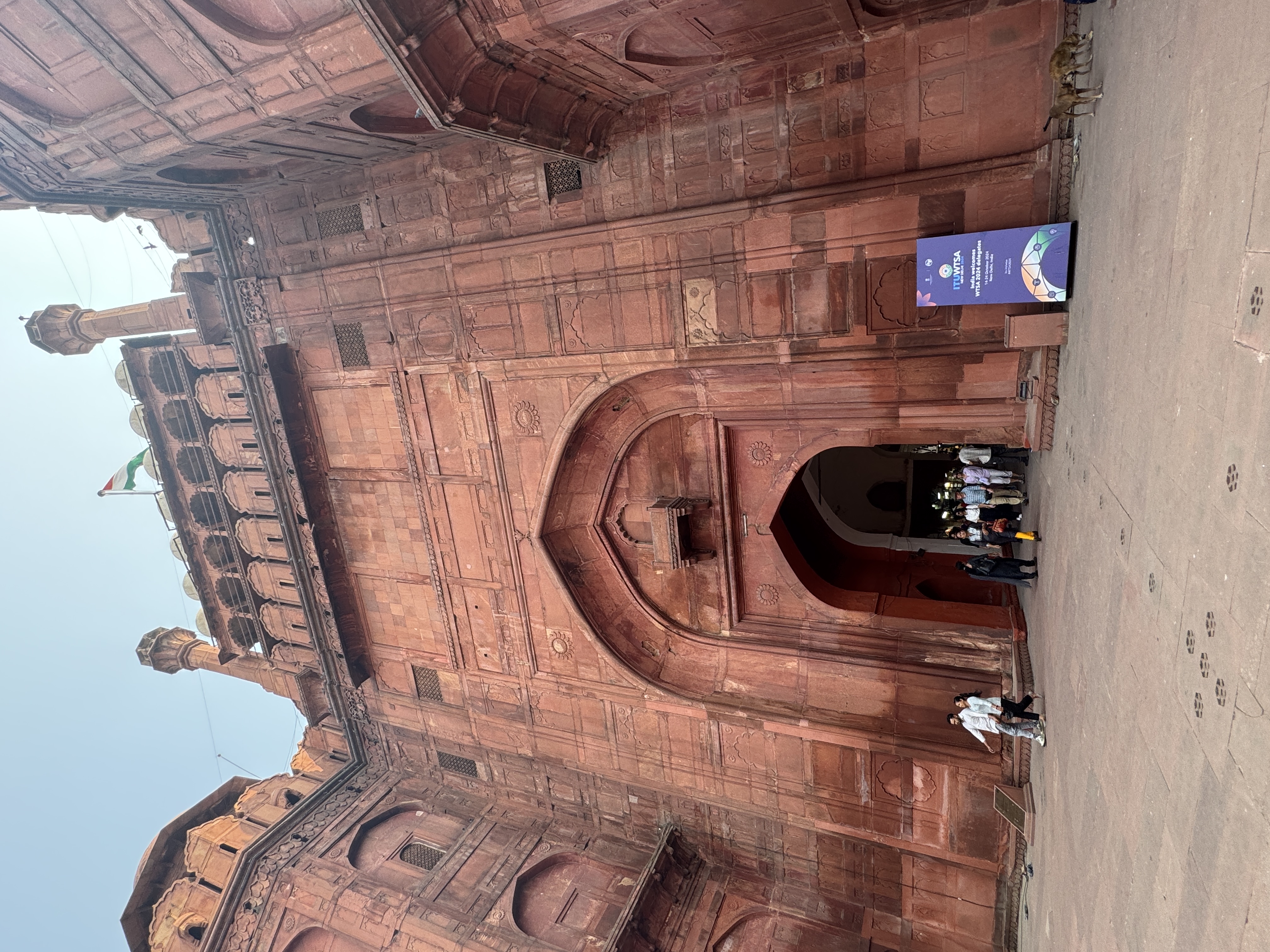
The west or Lahore Gate, built by Shah Jahan and seen here from within the enclosing barbican added by Aurangzeb. I didn't like it or dislike it. I was being a good visitor and not thinking much at all, except that it's very big.
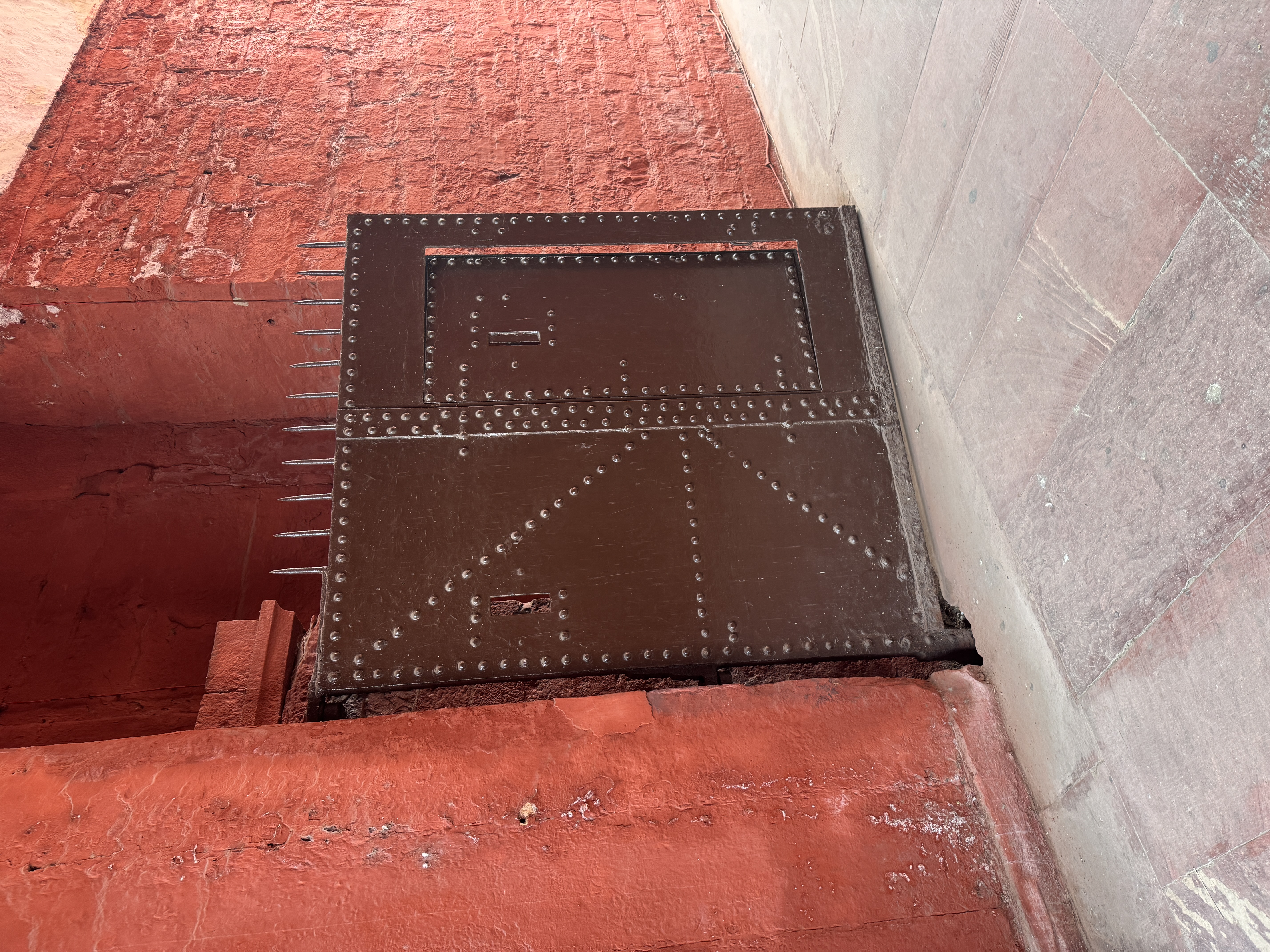
Are these gates also Aurangzeb's or are they a British addition? I bet British, but I don't know.
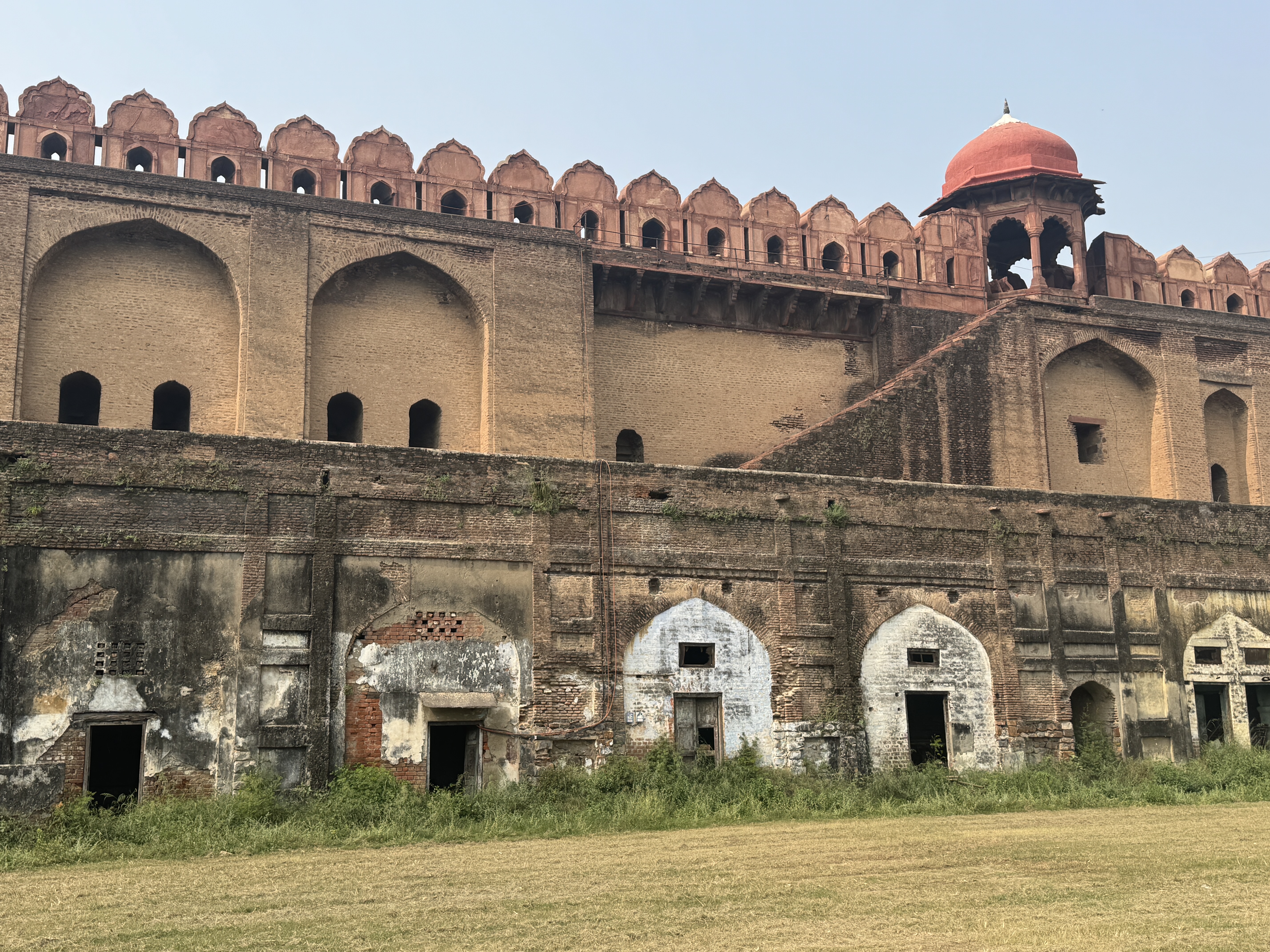
I understand wanting to impress people outside the fort, but many were allowed in. Shouldn't Delhi's rulers have wanted to impress them too? It's a puzzle, leaving the walls like a movie set, designed to be seen from only one side.
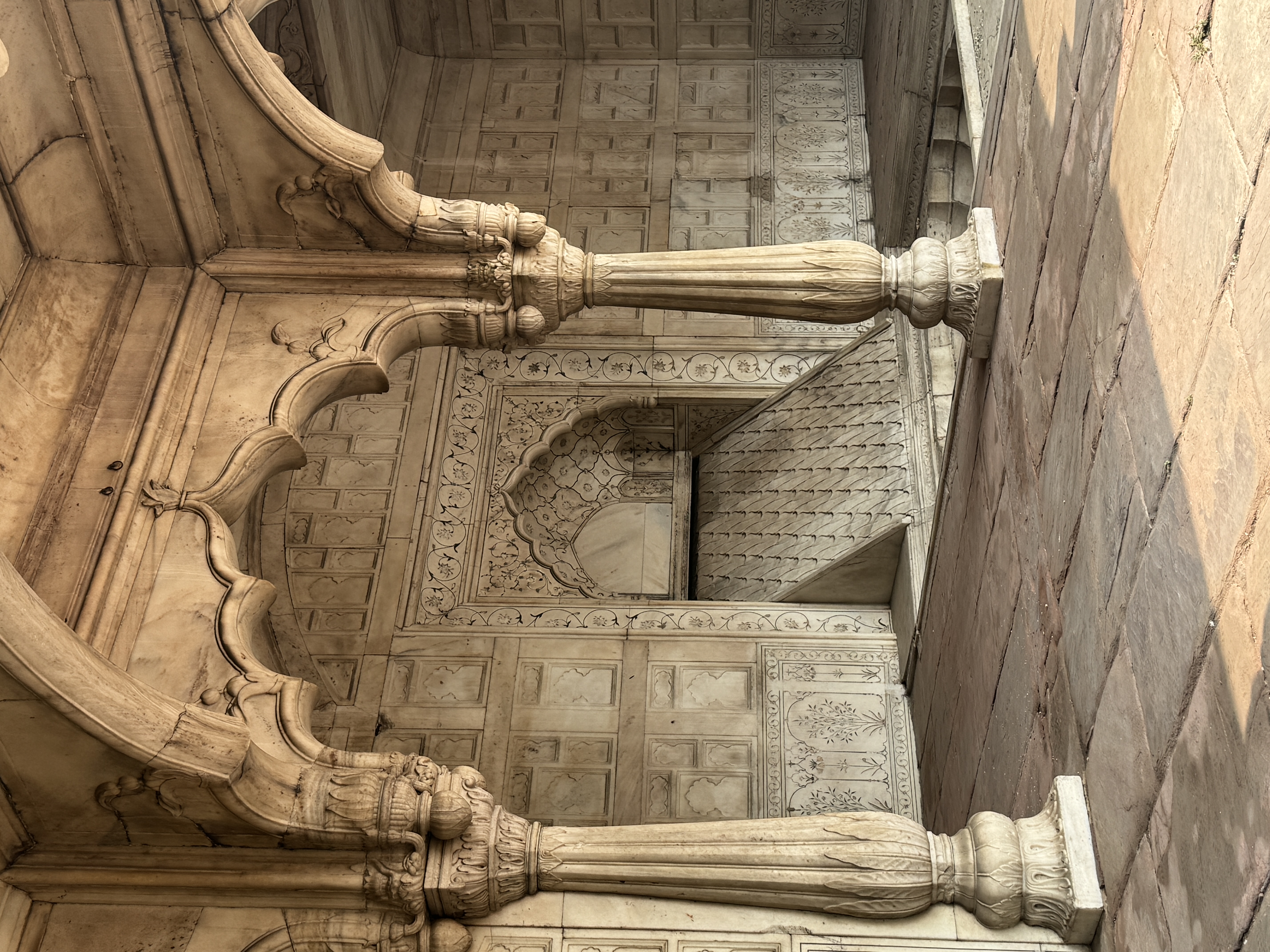
To my ignorance let's add grumpiness. I want water restored to this salsabil, or fountain. I'd even settle for recirculating.
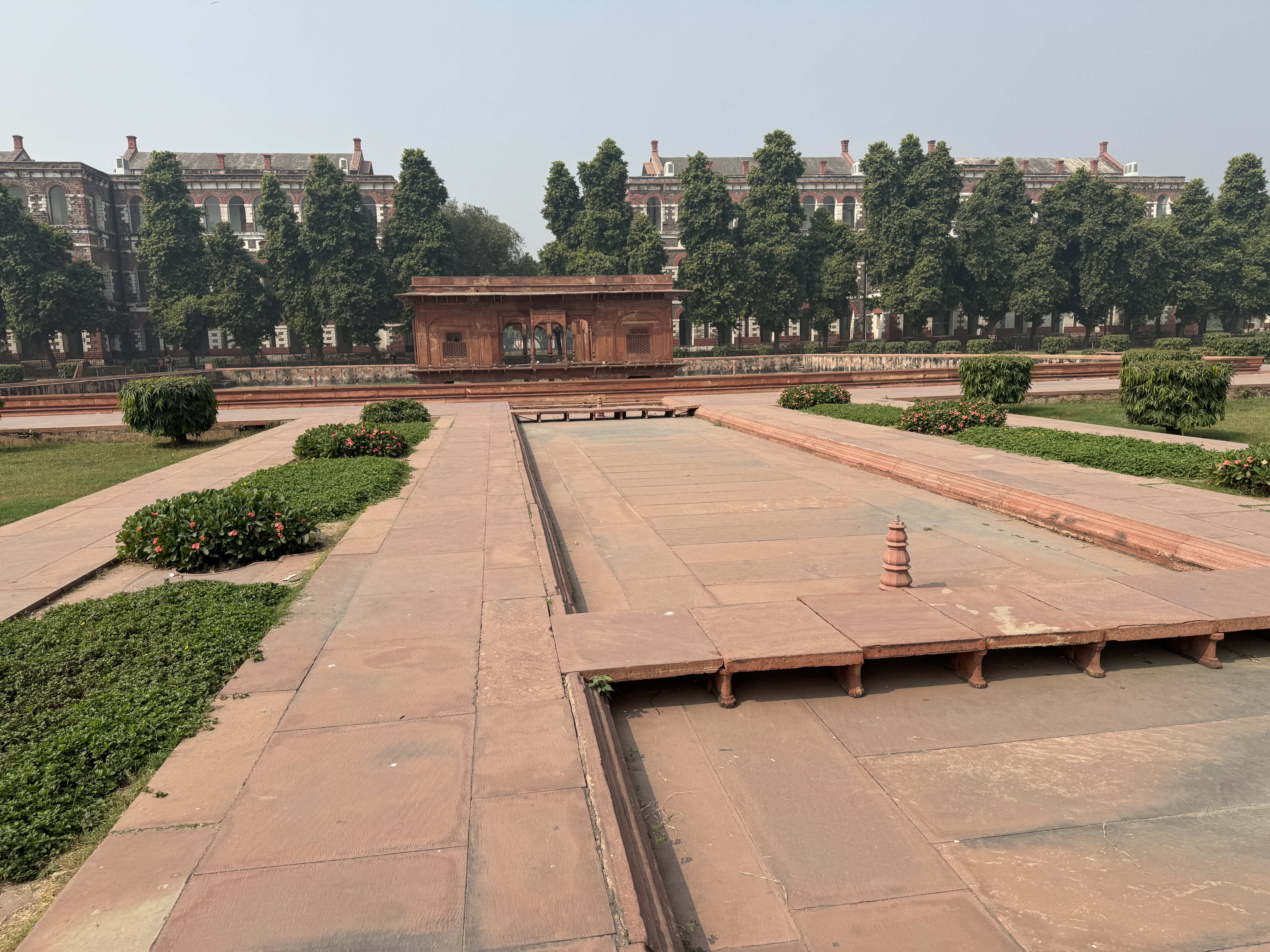
I want water in these pools, too. How long have they been dry? You ask too many questions.
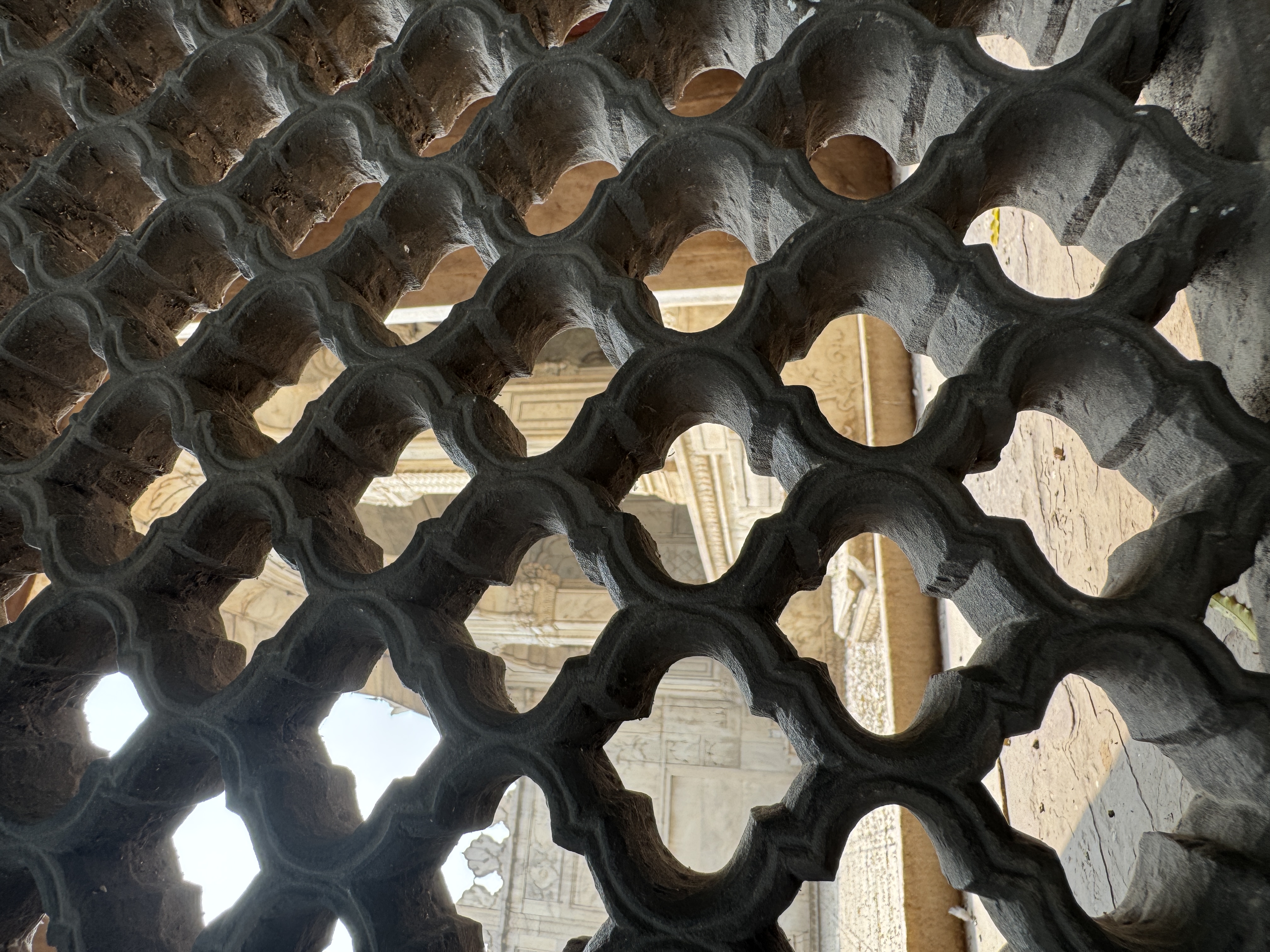
Since I'm asking for the moon, I want the door opened to the Moti Masjid, or Pearl Mosque, also built by Aurangzeb. (As if Aurangzeb ever picked up a tool.)
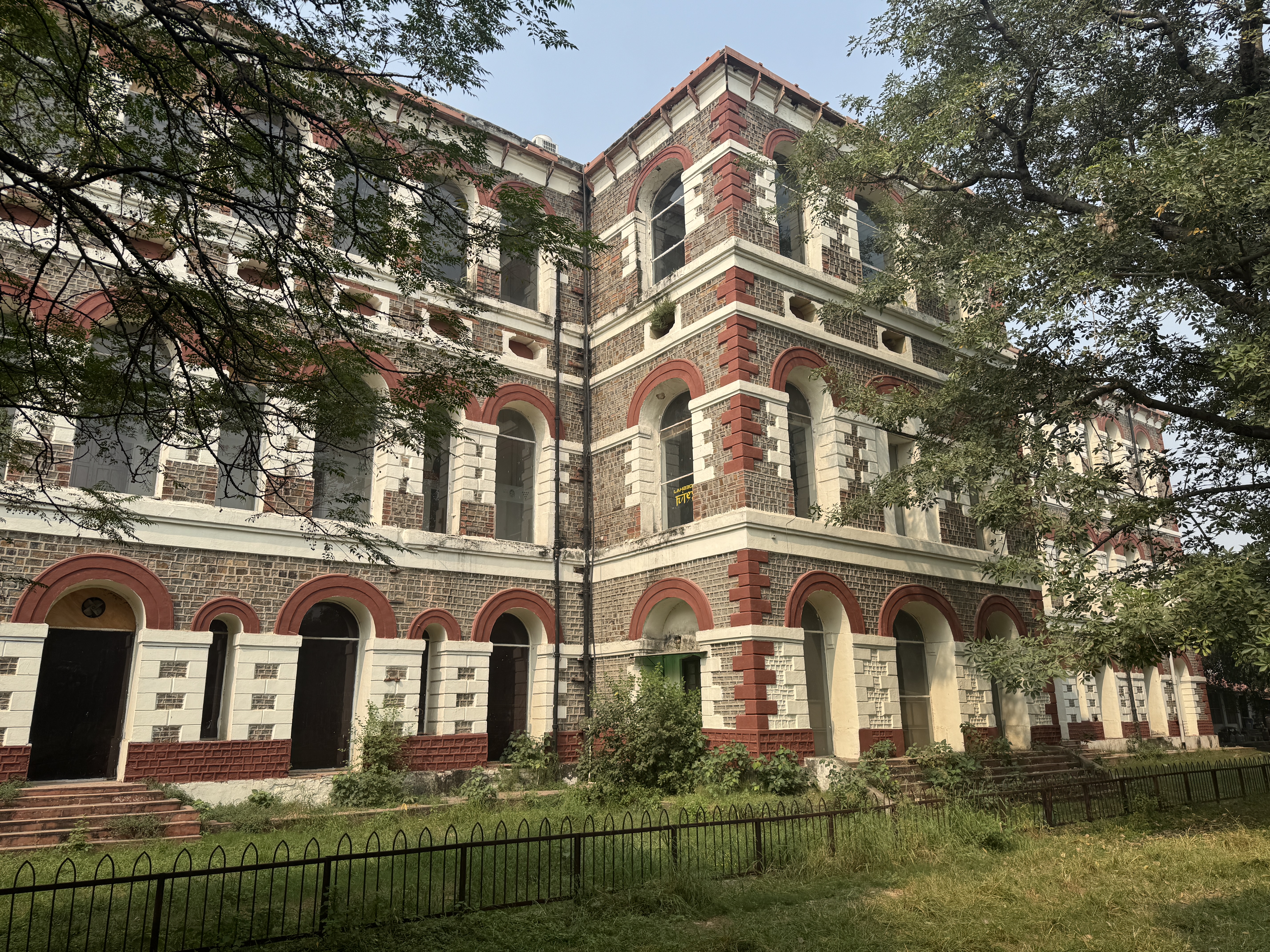
Think you can find much about these barracks added by the British? Good luck. Are they, as William Dalrymple wrote in City of Djinns, "some of the most crushingly ugly buildings ever thrown up by the British Empire"? James Fergusson might have agreed. He called them "hideous" and in a footnote to the text of his History of Indian and Eastern Architecture wrote that "the engineers, it would seem, perceived that by gutting the palace they could provide at no trouble or expense a wall round their barrack-yard, and for this or some such wretched motive of economy the palace was sacrificed!" On the other hand, Fergusson wasn't in India in 1857, and the British who survived the events of that year were not in a mood to be cross-culturally sensitive. War does that to people. See, for example, Life and Letters of Edward Byles Cowell (1906). His fury comes as a shock if you know him only as a atranslator of Buddhist literature.
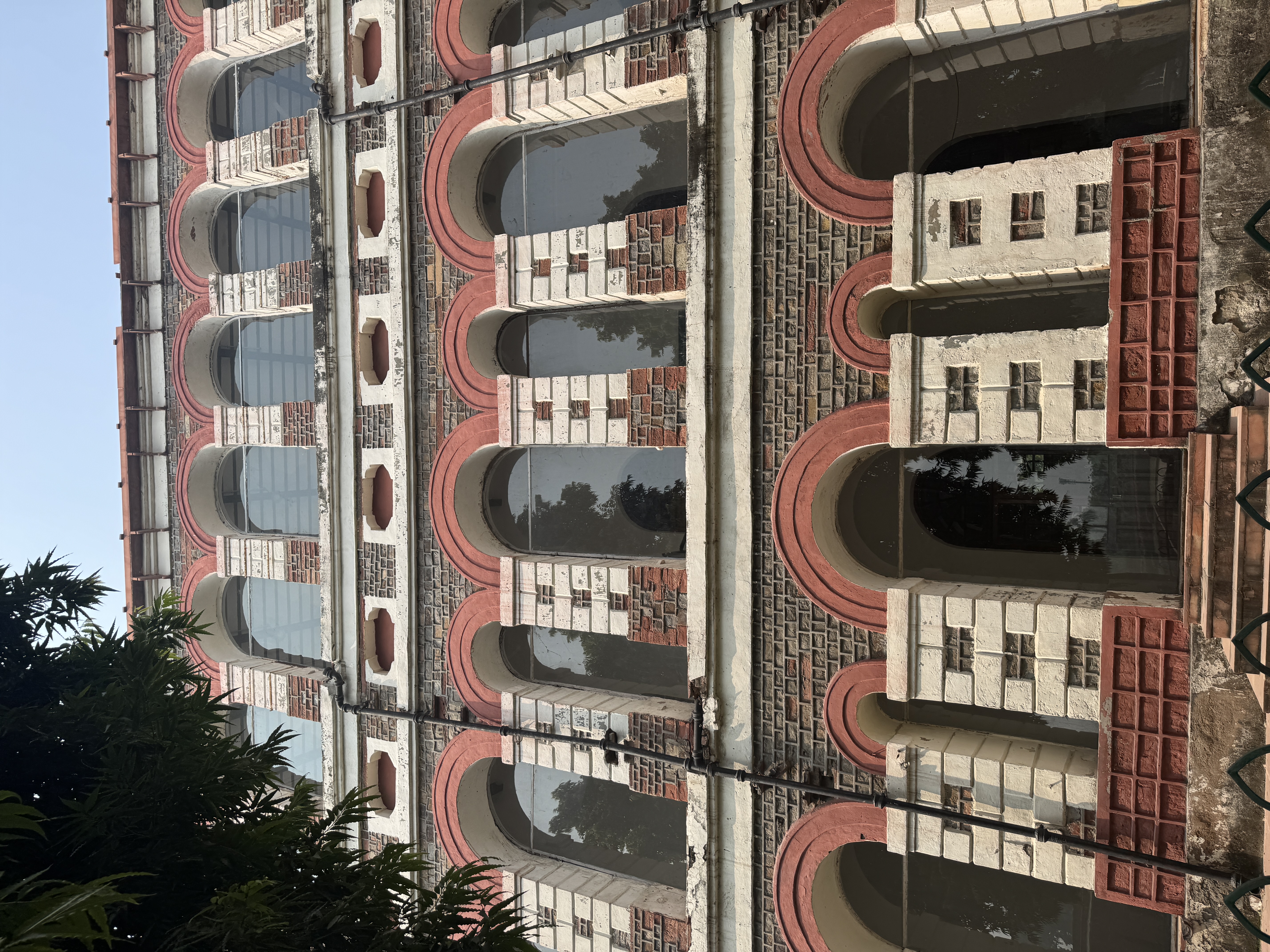
Lately the barracks have been renovated and put to civilian use. Witness the glass. (If you want to see the major attractions of the Red Fort, which I've skipped here--they were too crowded--see Delhi 1.)
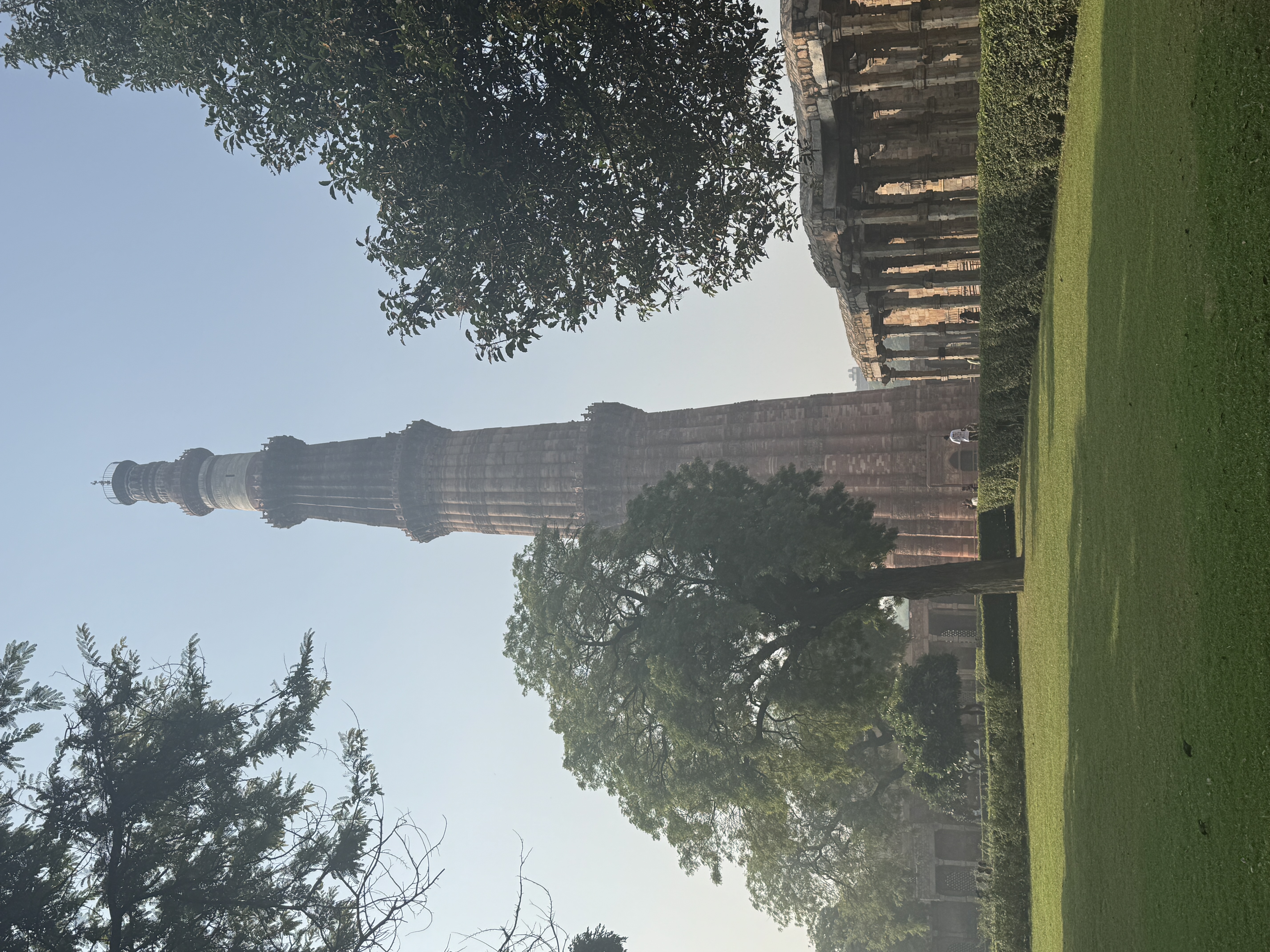
Yes, we've fought traffic for 10 miles to get to the Qutb Minar, the Victory Tower, begun in 1199 to celebrate the conquest of most of Northern India by a Muslim army. The word Qutb comes not from the victory itself but from Qutb ud-Din Aibak (1150-1210), the general who led the invasion and began construction of the tower.
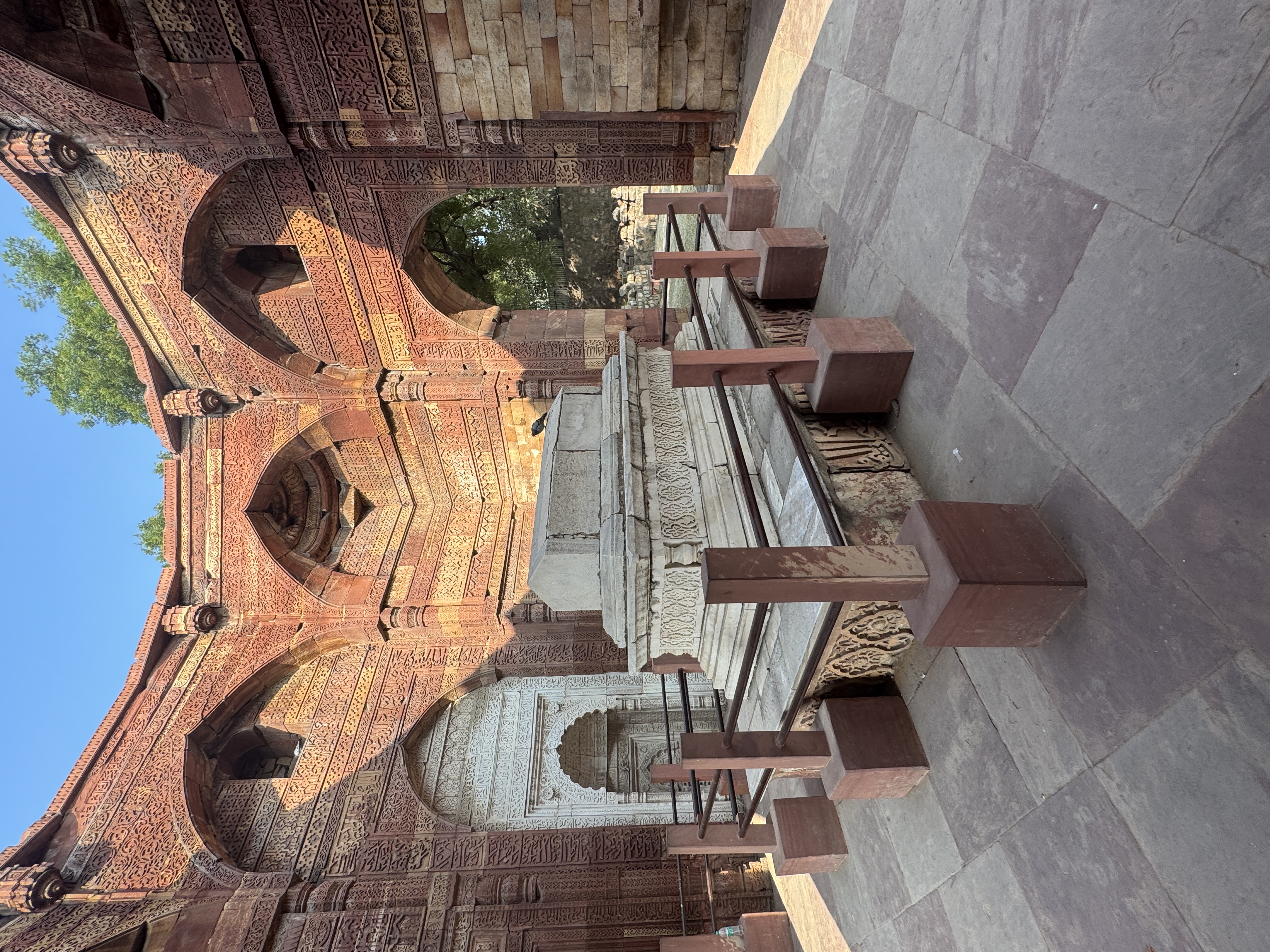
Aibak's tomb is in Lahore, but his successor, Iltutmish (1192-1236), is buried here. The recently added railing shows that post-Imperial India has suffered not the slightest decline in taste or craftsmanship.
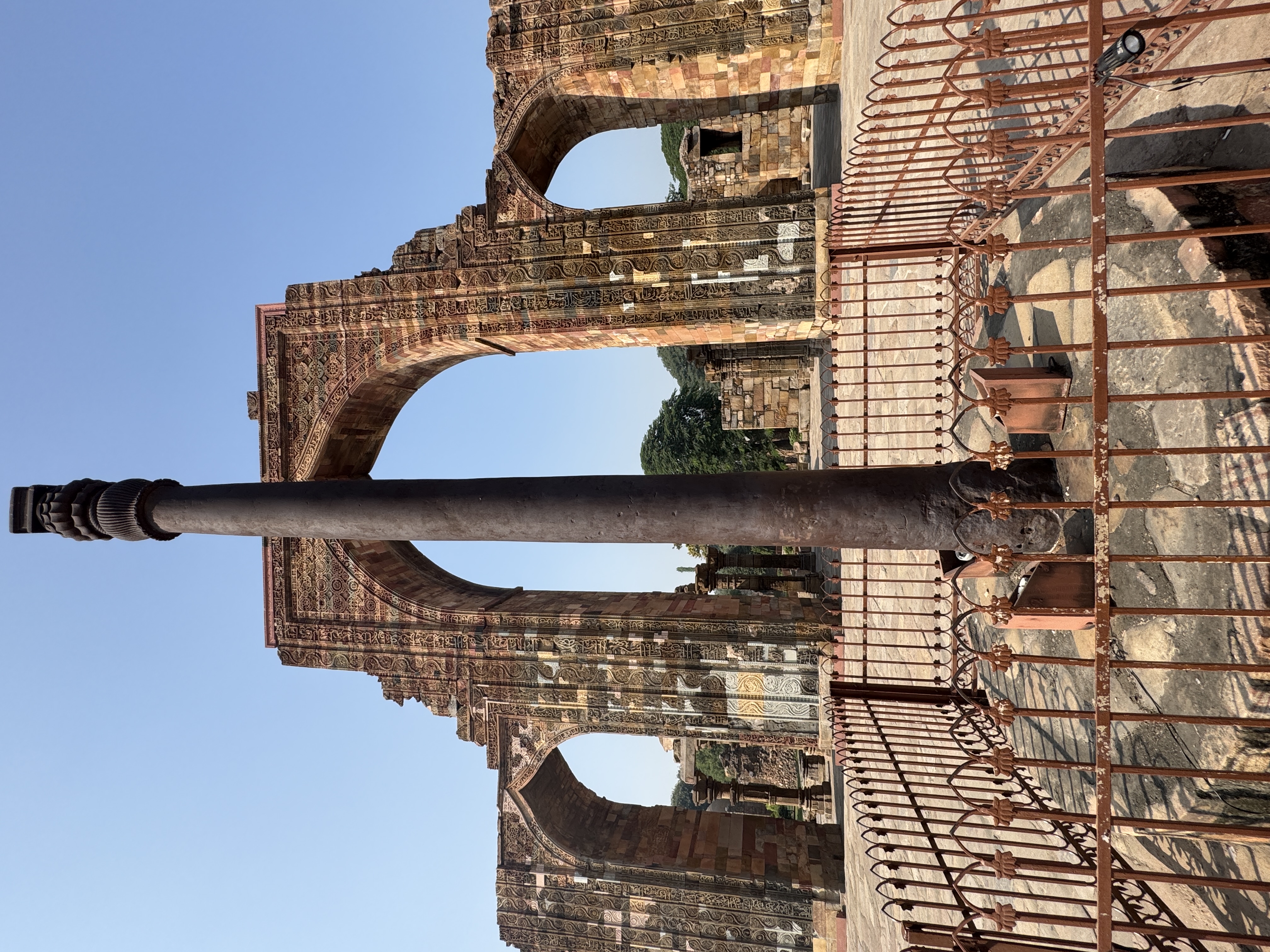
The famous iron pillar dates from a 4th century Hindu kingdom, where it probably belonged to a Vishnu temple. It is almost always described as a marvel of metallurgy for having resisted rust for so many years, but another question is why Muslims celebrating the triumph of Islam would choose to put it at the center of the open-air Might of Islam Mosque.
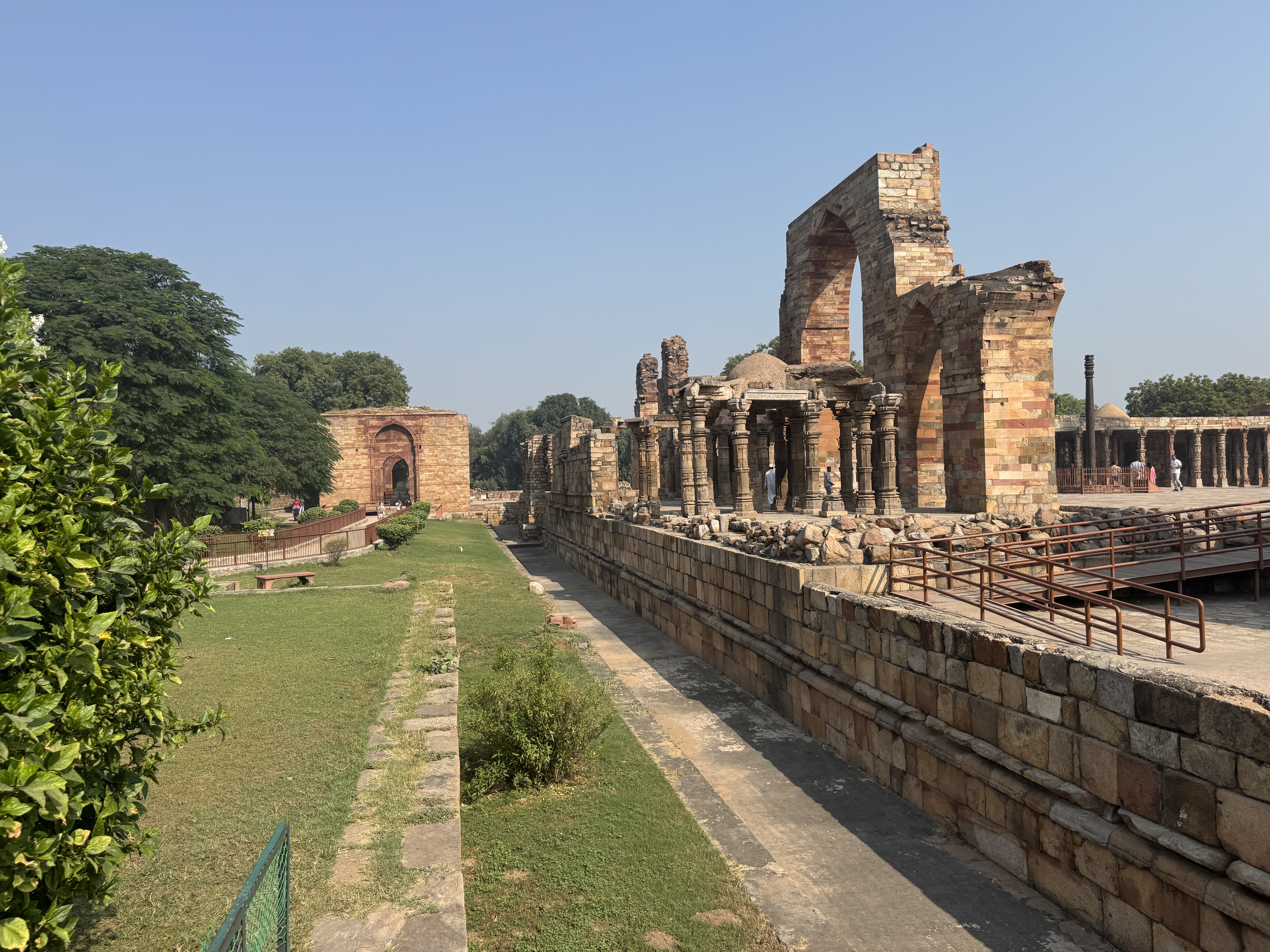
The iron pillar is there on the right; the huge arch is part of the southern entrance to the mosque.
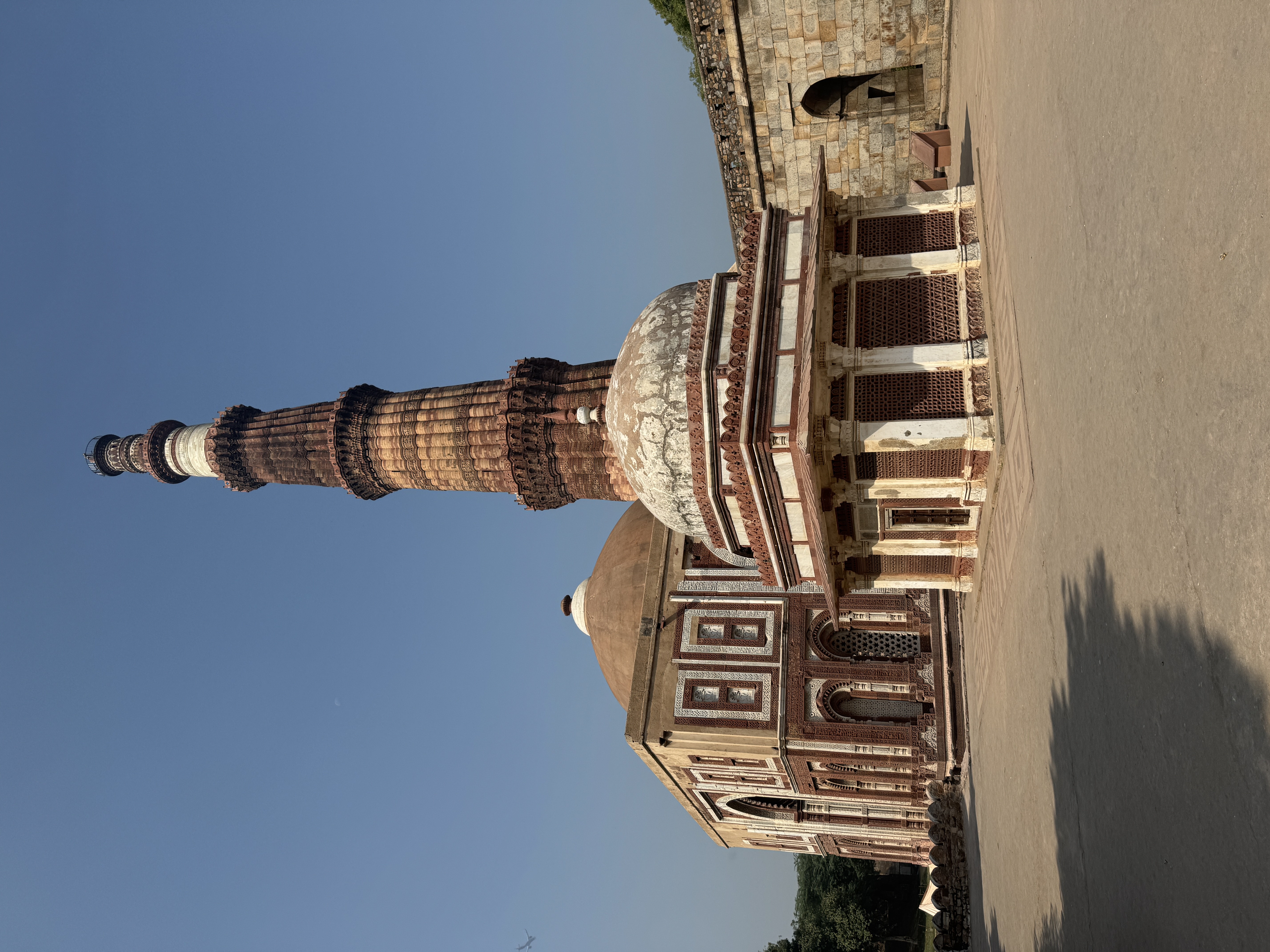
Here's a closer view of the southern entrance, the Ala'i Darwaza . Once there were four such entrances, but this is the only survivor. I'm interested in what's behind me here.
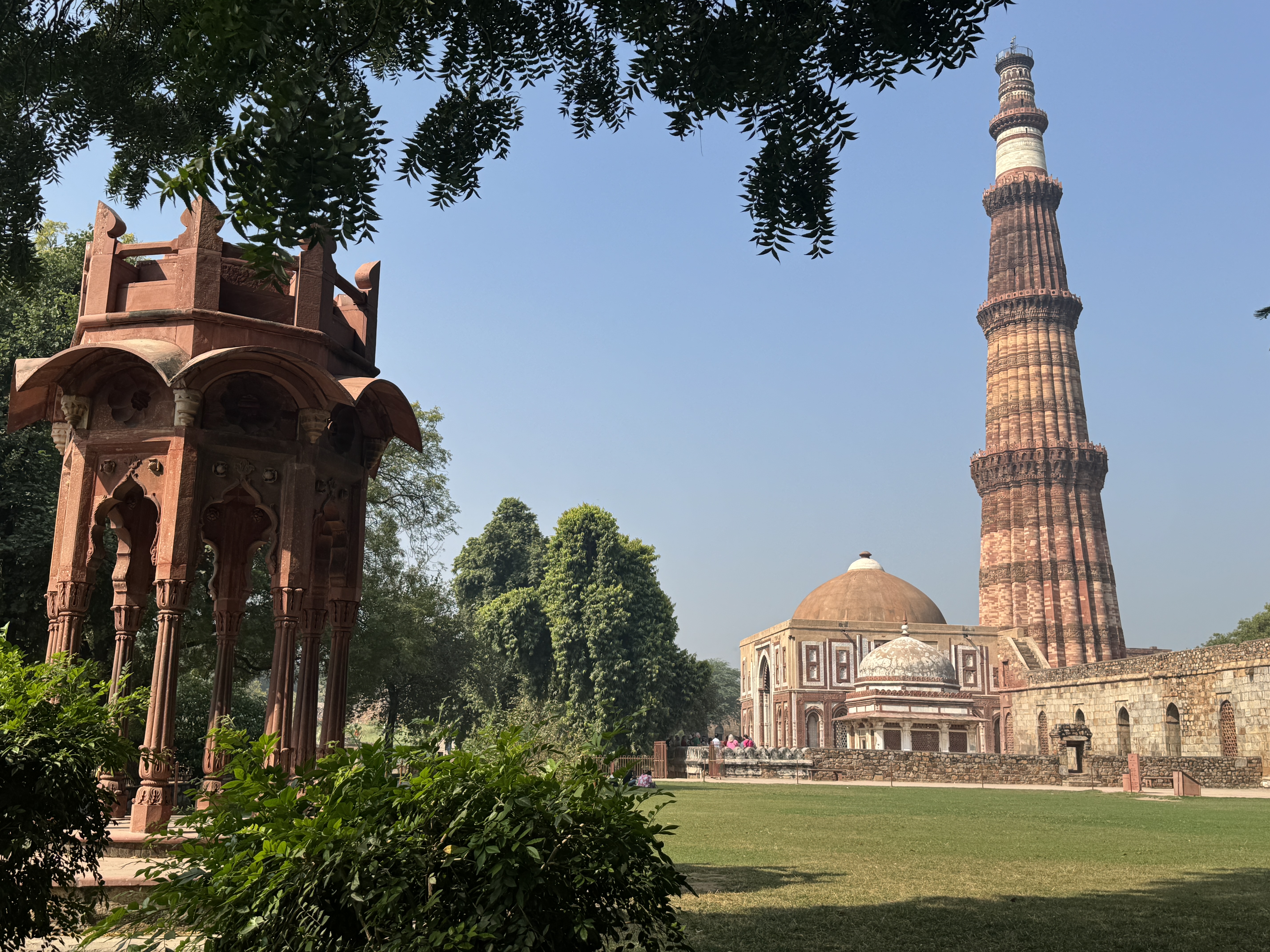
I've stepped back to see this curious gazebo or pavilion. You could look at it all day and not figure out that it used to be on the top of the Qutb Minar.
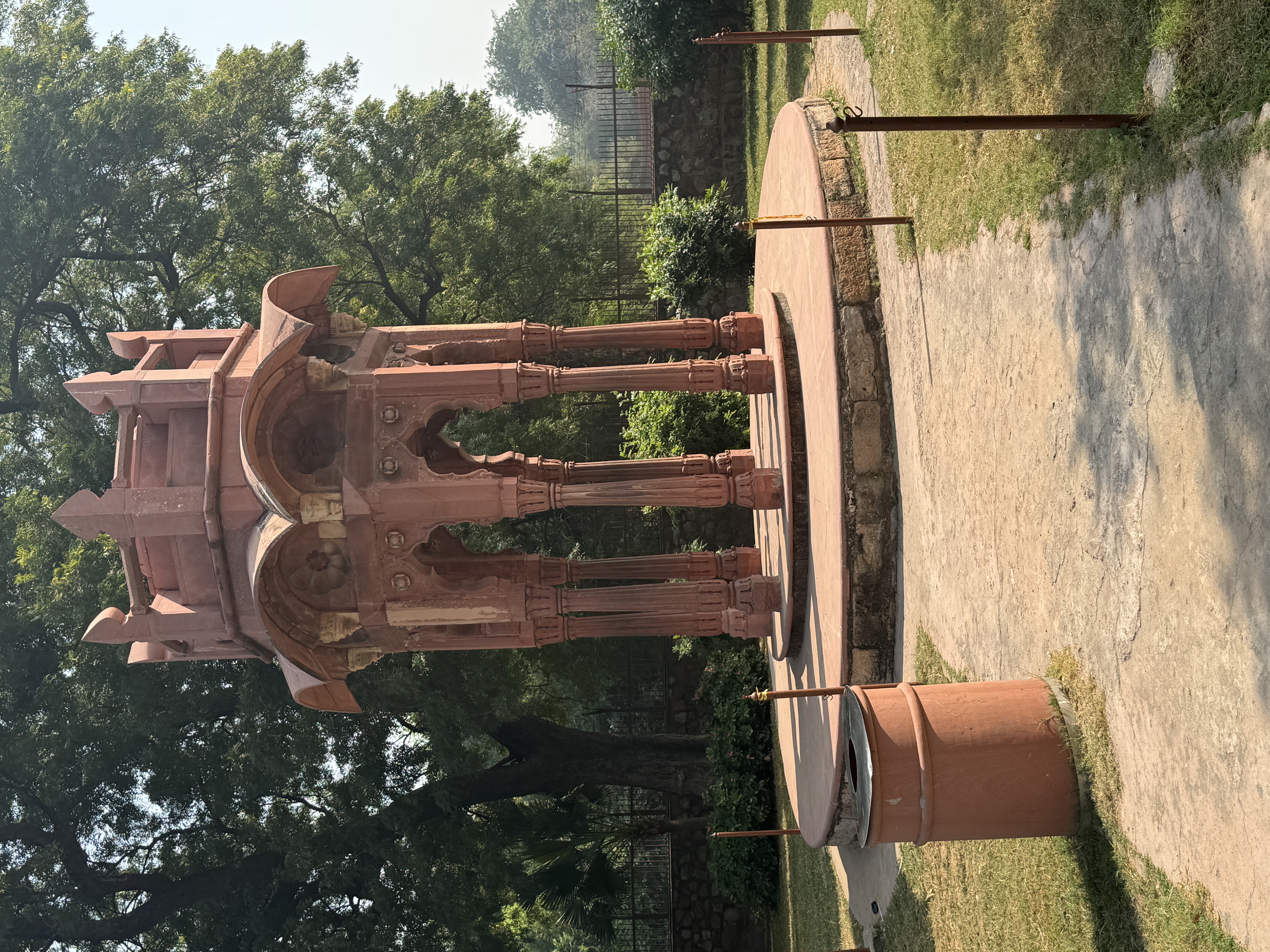
It was put up in 1828 to replace a cap destroyed in an earthquake of 1803. The designer was a British engineer named Robert Smith, who also designed Delhi's St. James Church (for which, see Delhi 7). It was removed in 1848. Why? If you want to think about it for a minute, go ahead; otherwise move on.
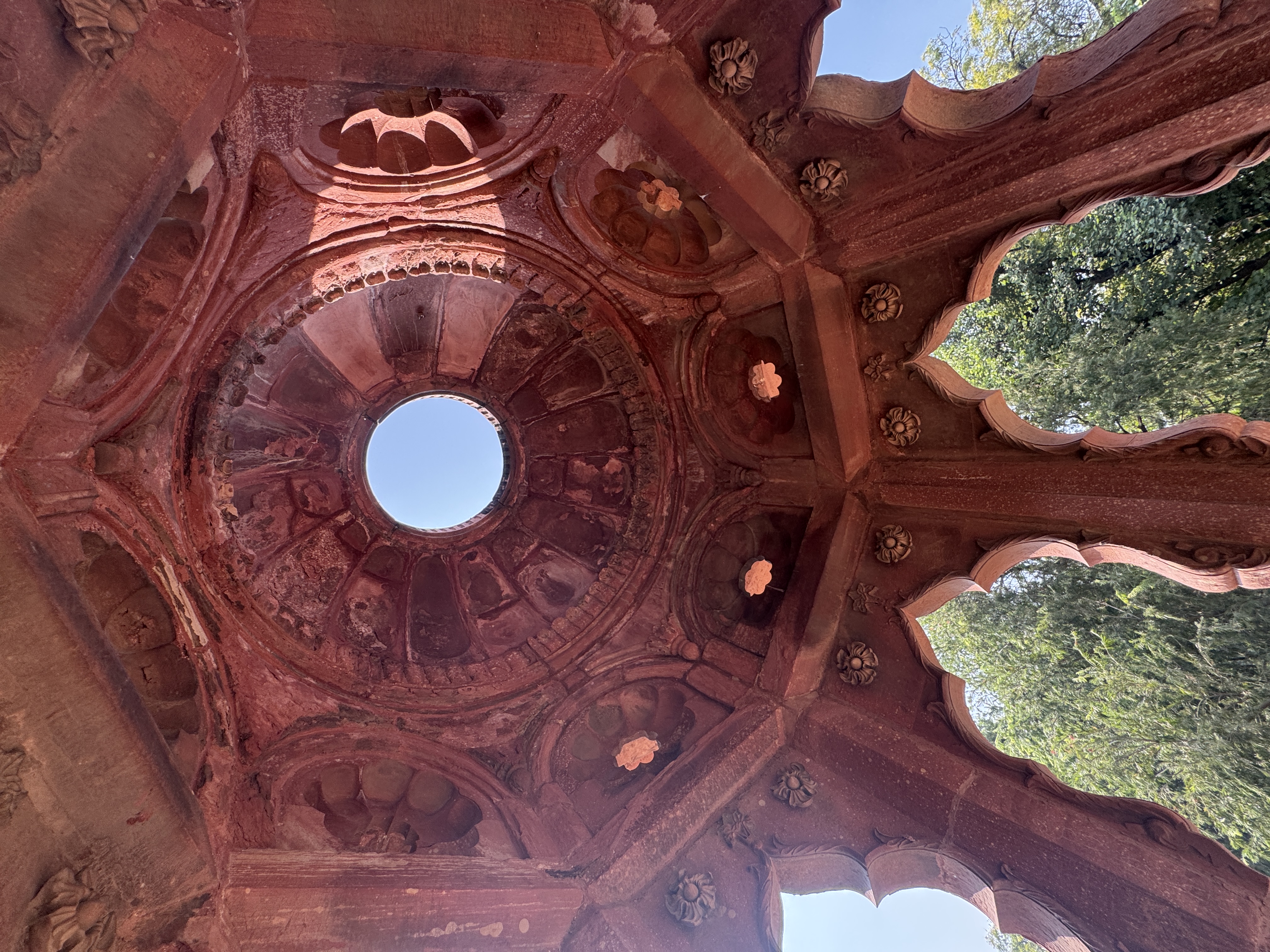
It was removed because it was designed in a Bengali idiom, which is to say in a Hindu idiom and was therefore deemed mismatched with the Qutb Minar. I never would have thought that the British were such stylistic puritans. Ironically, the tower itself was built from the stones of dismantled Hindu temples (and sits on the site of a Hindu temple).
The poor little thing is called Smith's Folly, but you could as well argue that it was folly to take it down. All the more so as India today is stridently Hindu. (One nice touch: the structure was rehabilitated in 2022, when its joints were filled with a traditional mixture of gum, jaggary (crude brown sugar), and belgiri (the fruit of the Bengal quince or wood apple.)
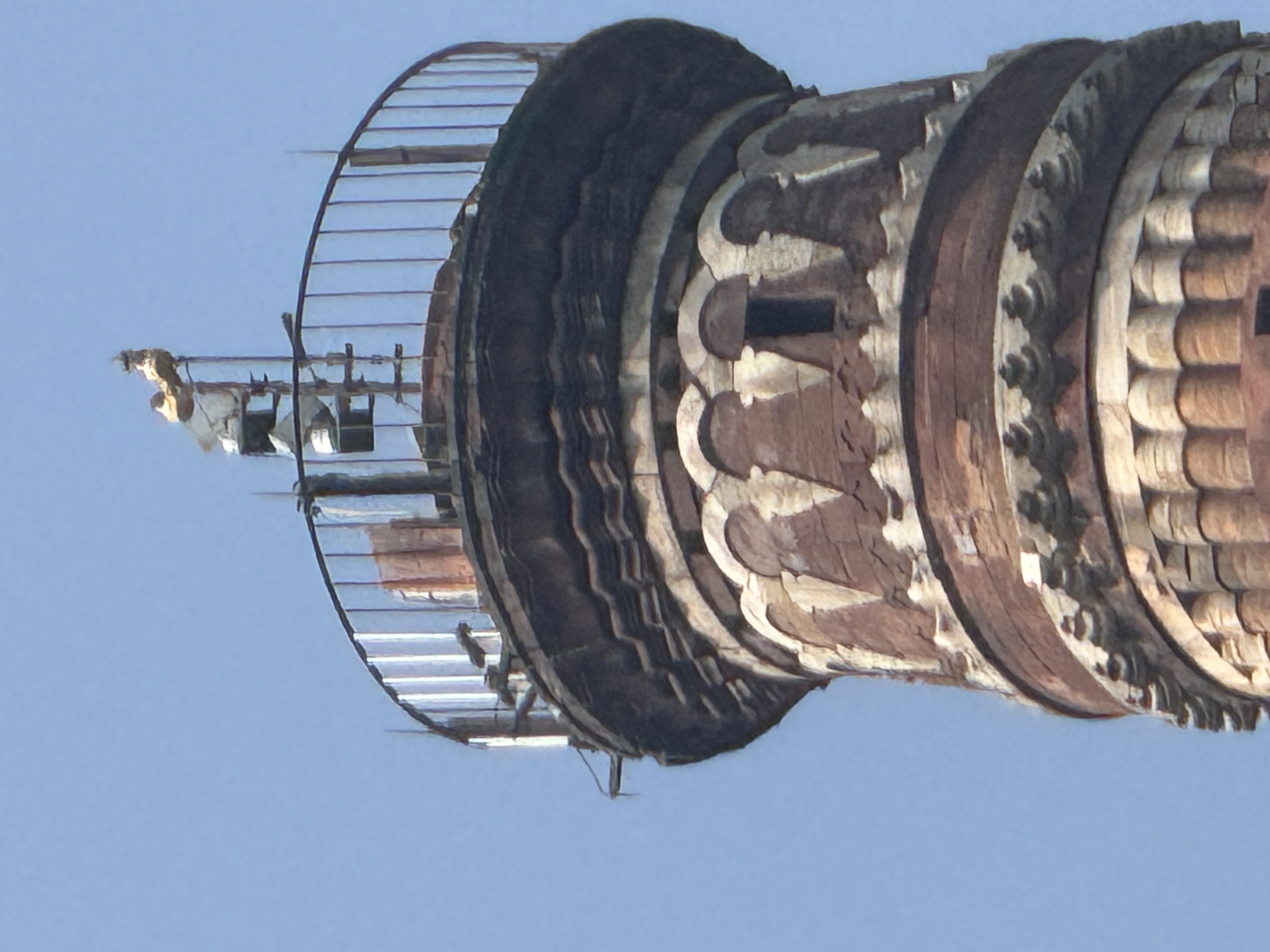
The top of the tower, meanwhile, is given over to instruments, perhaps meteorological. And, no, you haven't been able to climb to the top (379 steps) since the 1950s and not even to the first balcony since a stampede in 1981 killed 45 people panicked on the spiral staircase.