Buddhist Andhra
These photos, taken Jan/Feb 2024, are arranged to accompany a podcast episode that can be found under the title The Places Where We Belong, by Bret Wallach.
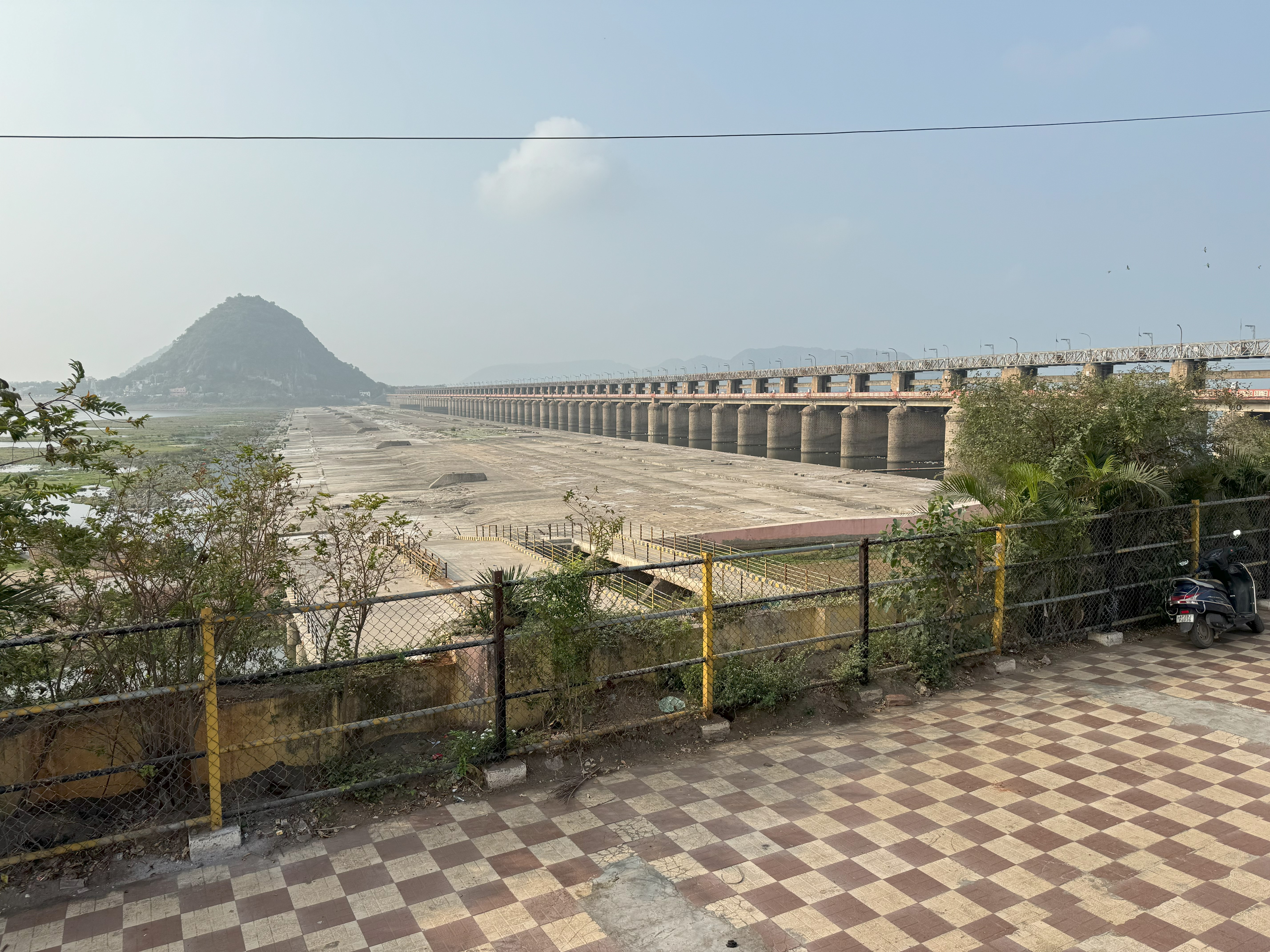
We're at the head of the Krishna River's delta and looking at the Prakasam Barrage, a modern replacement of a low dam built by the British in the 19th century to feed irrigation canals through the delta.
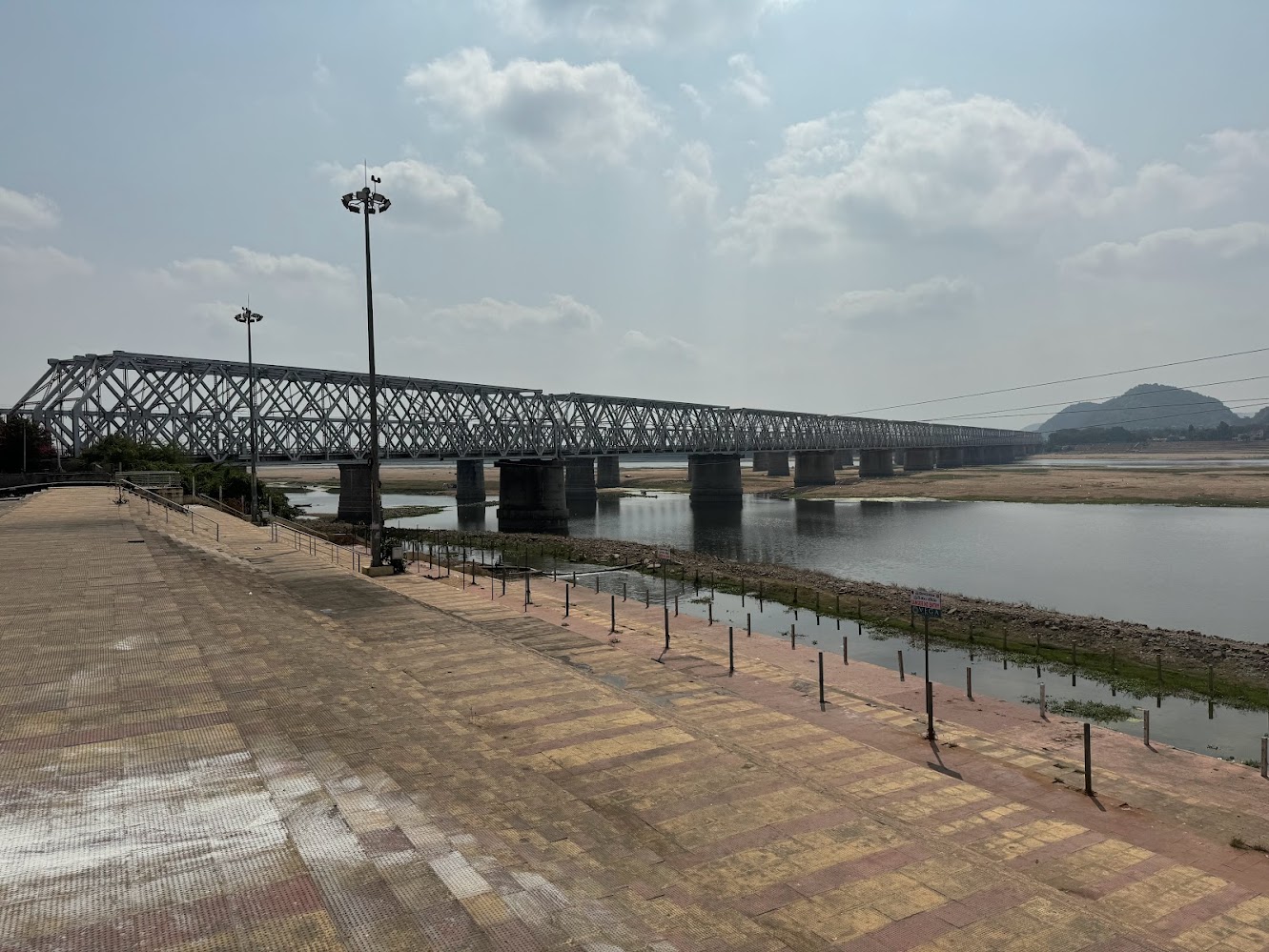
Just downstream from the dam there's a pair of railroad bridges forming part of the connection between Kolkata and Chennai.
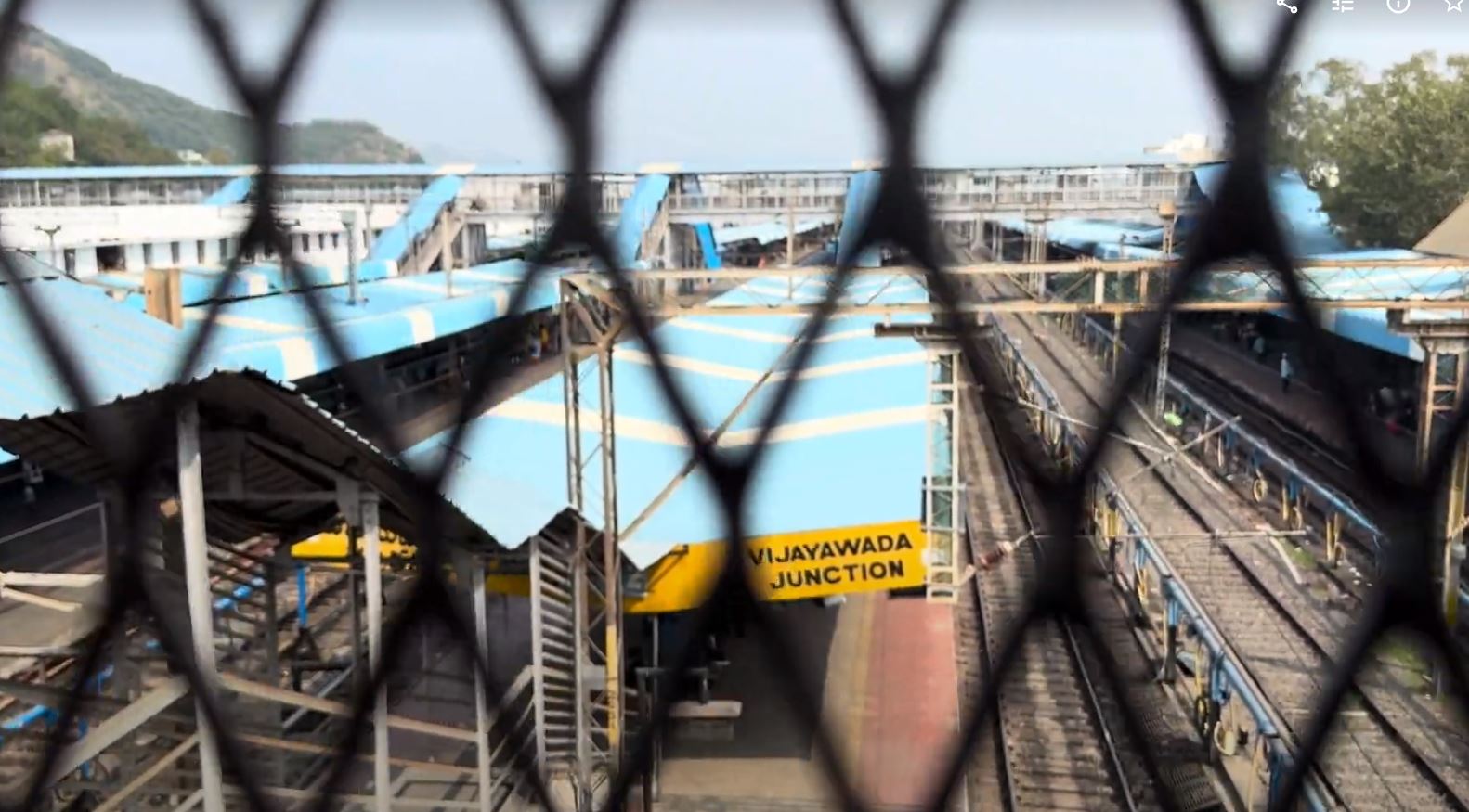
Over 300 trains daily pass through the station at the north end of the bridge.
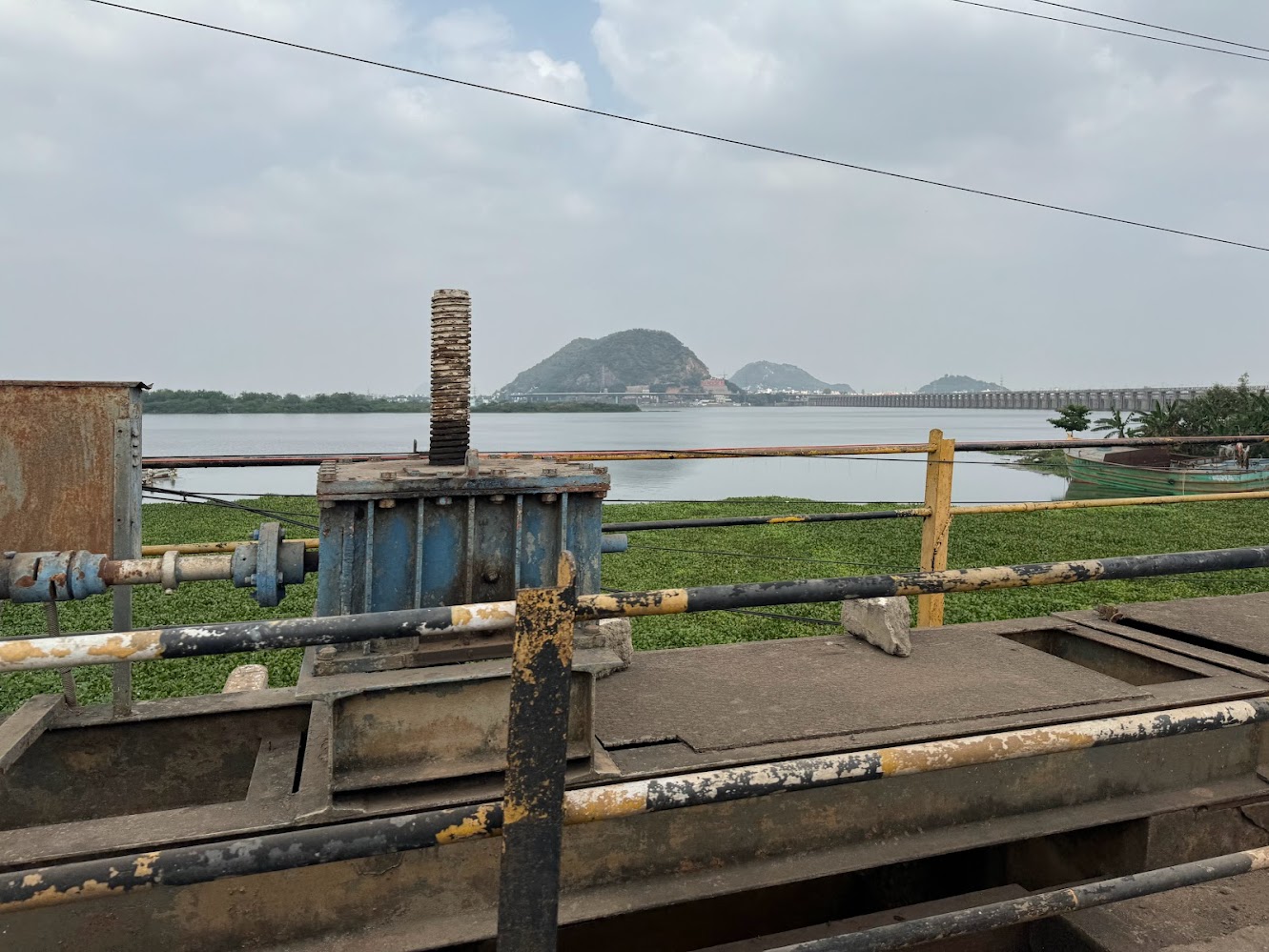
Meanwhile, canals begin diverting water. This diversion begins on the right bank just above the dam.
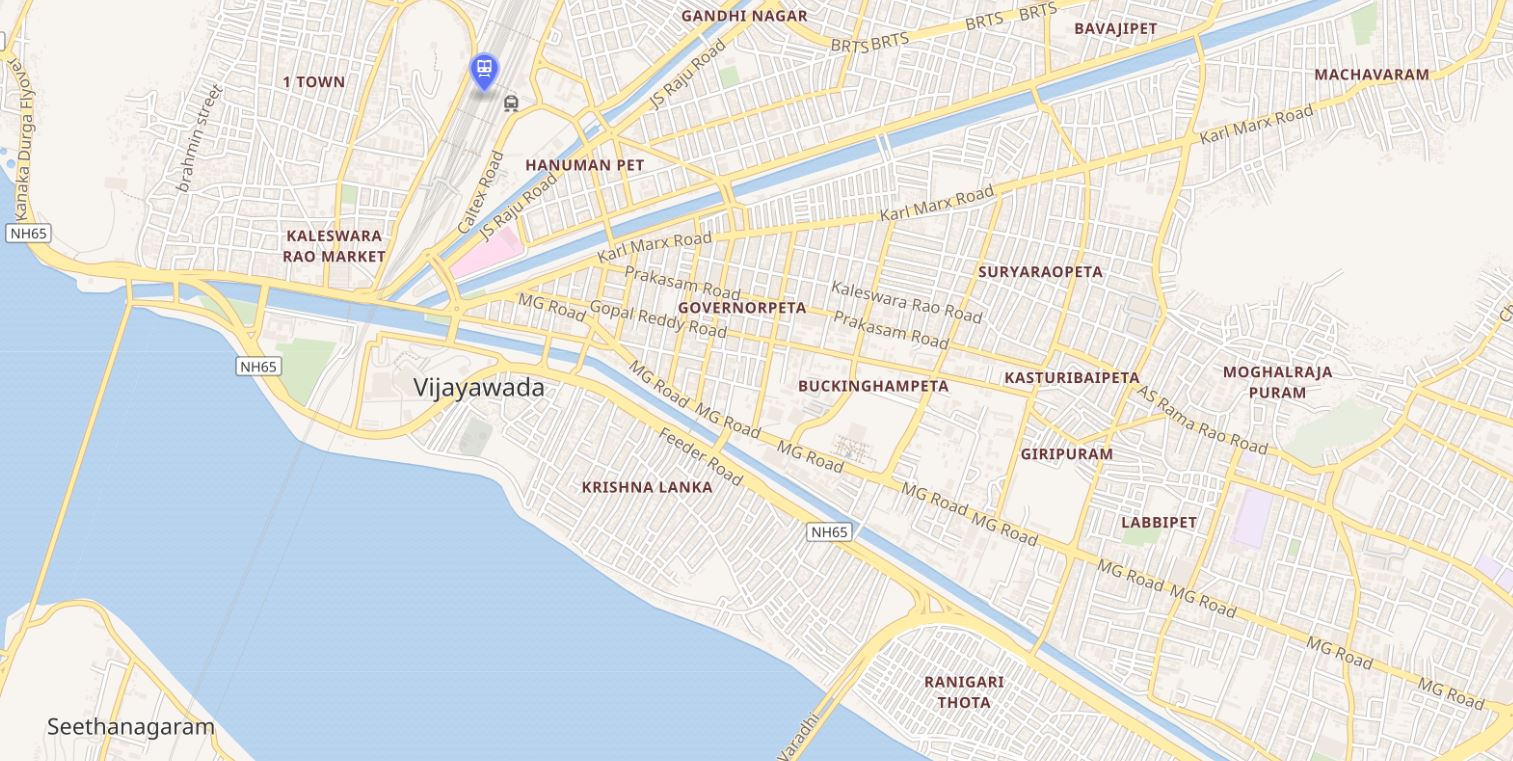
And here three canals start on the left bank just below the dam. They are the Eluru, Ryves, and Bandar or Machilipatnam canals.
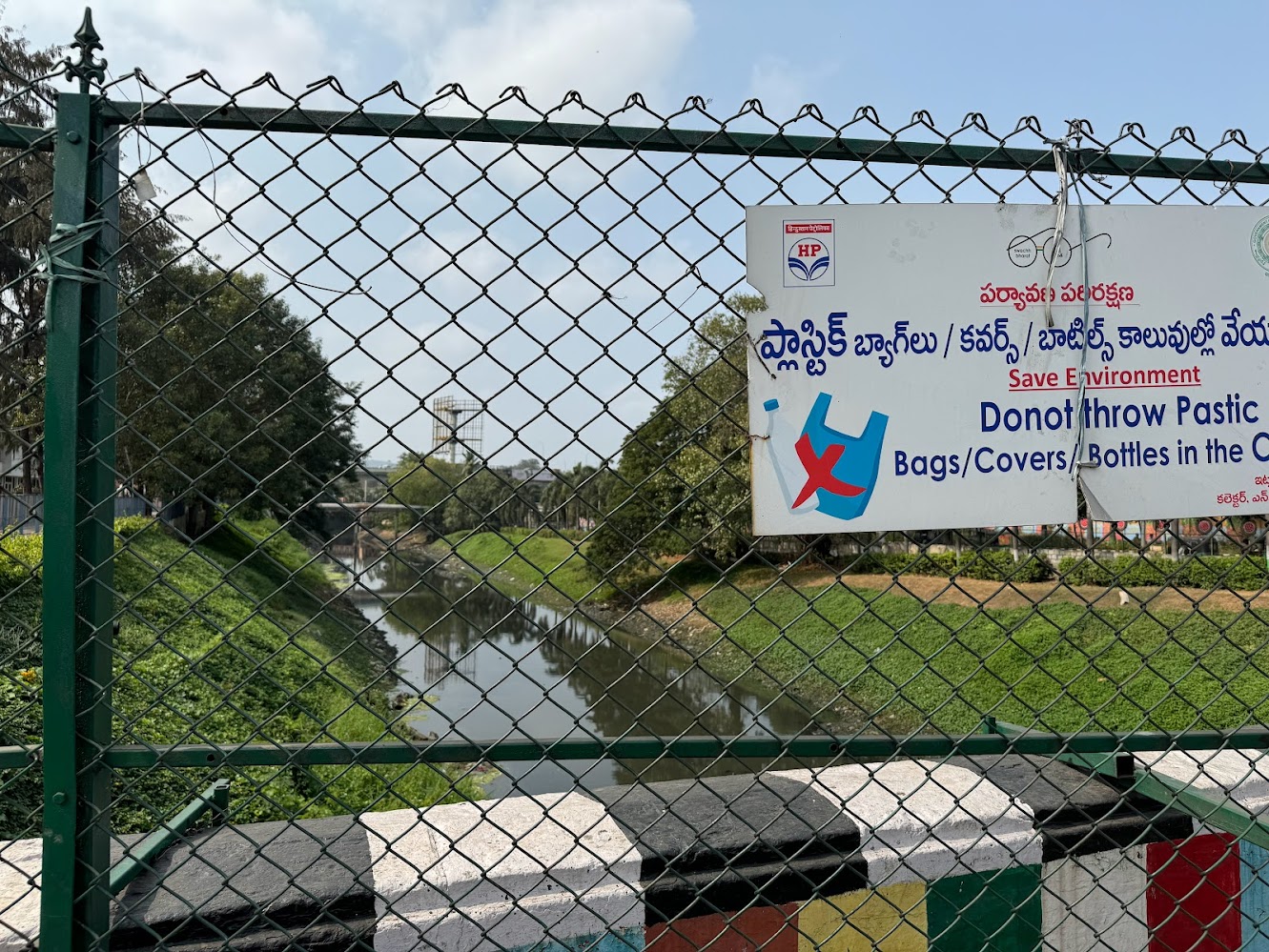
Fences help keep the canals clean.
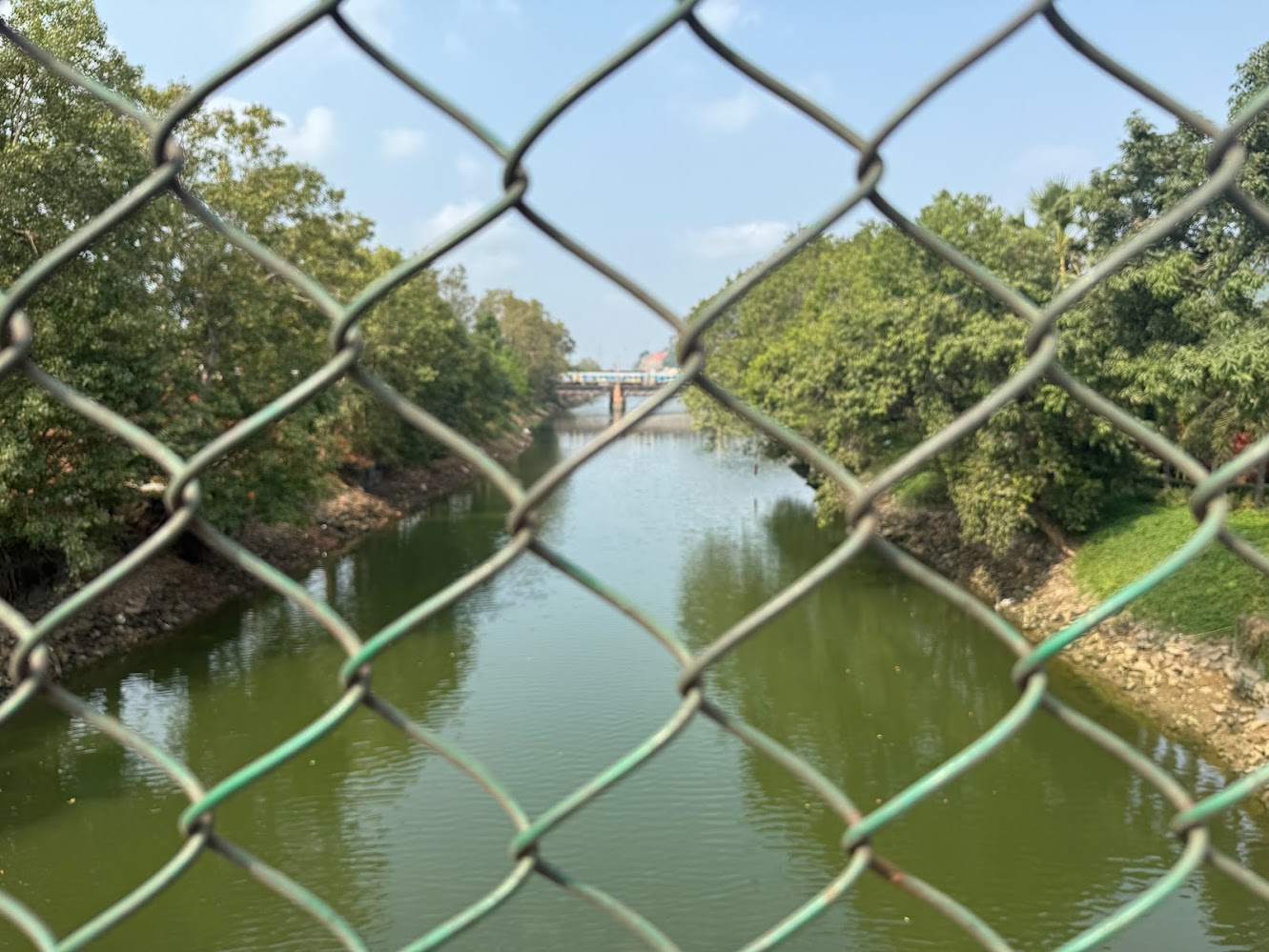
Ever think you'd appreciate chain-link fences?
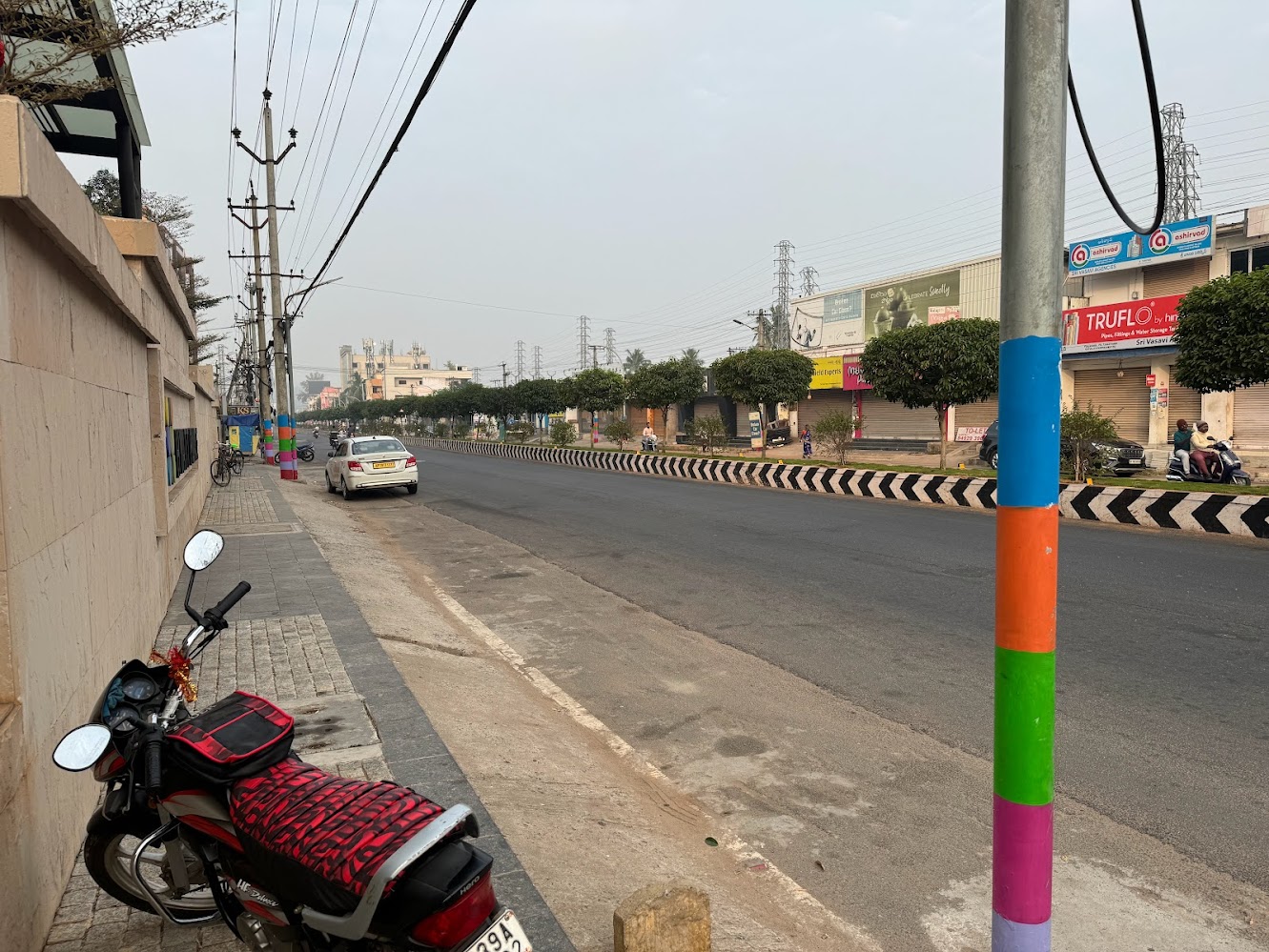
Main roads often parallel the canals. Here, about three miles from the center of town, is Karl Marx Road, a main thoroughfare paralleling the Ryves Canal, which is about 100 meters behind the buildings on the right. Pedestrian alleys run between the road and the canal.
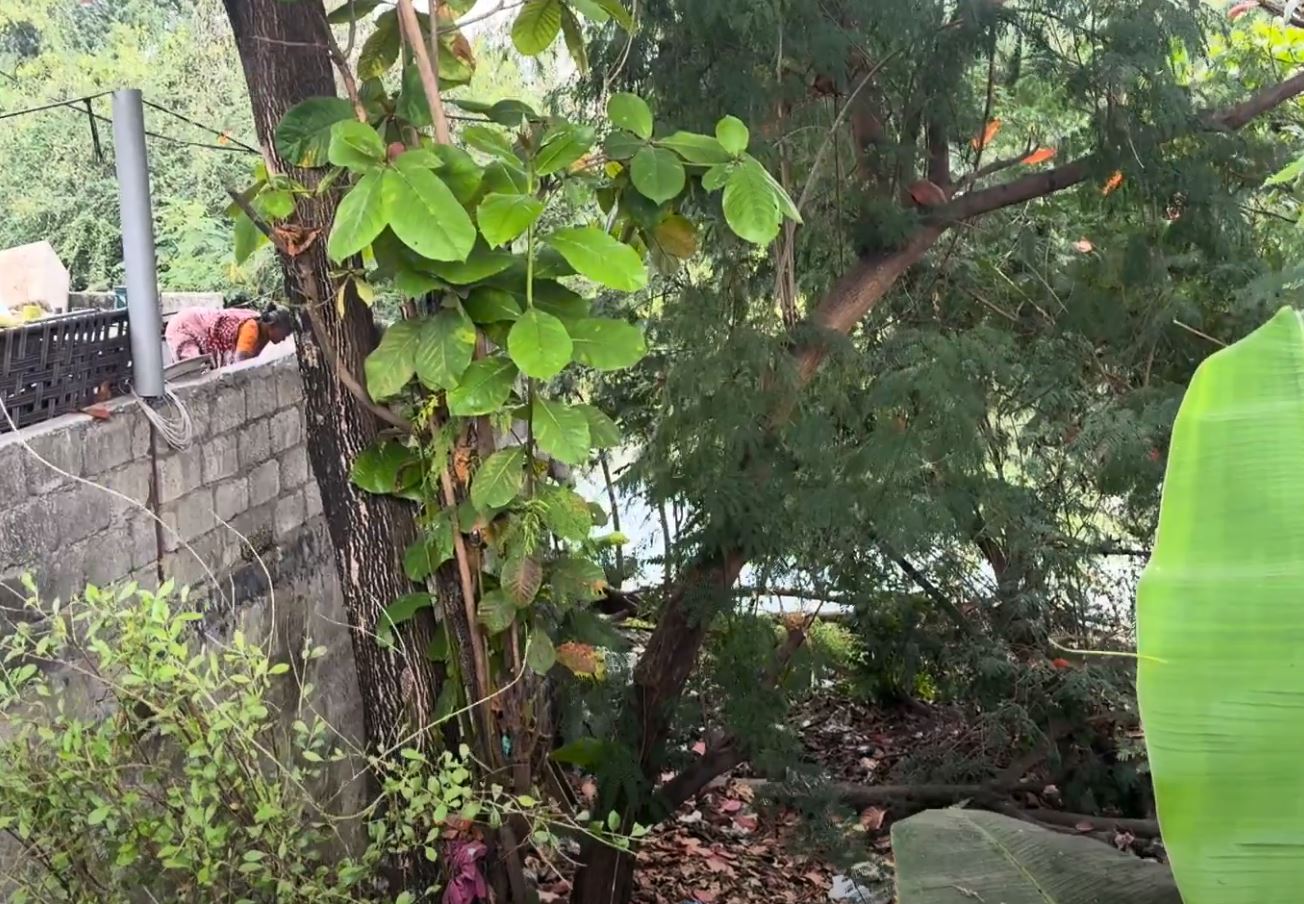
Go down one of those alleys, and you can find yourself in a very modest residential neighborhood where some people are lucky enough to front on the water.
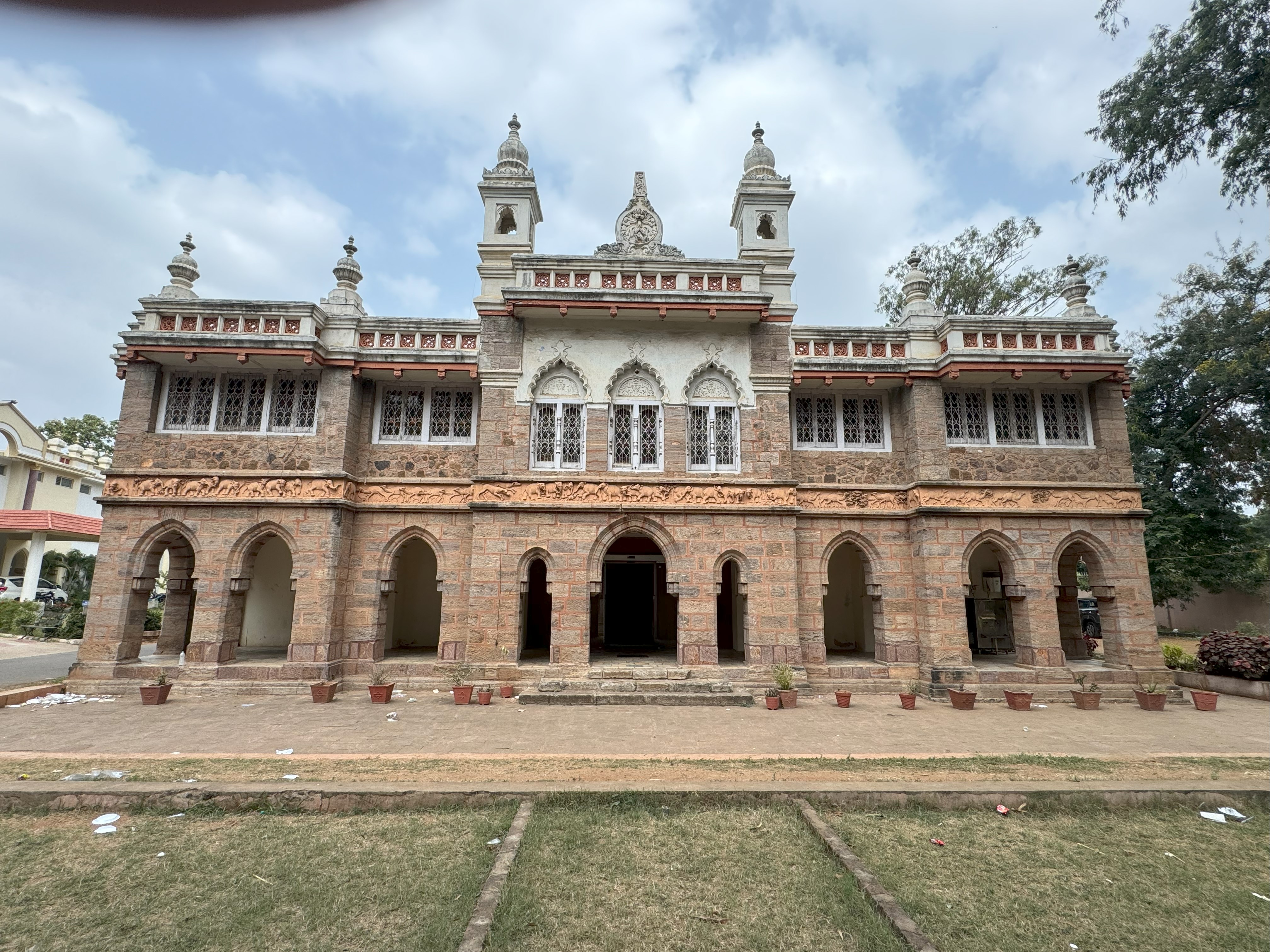
The British built more than infrastructure: here's Victoria Hall, begun in 1887 by Robert Sewell, a district administrator involved with salvaging remnants of the Amaravati stupa.
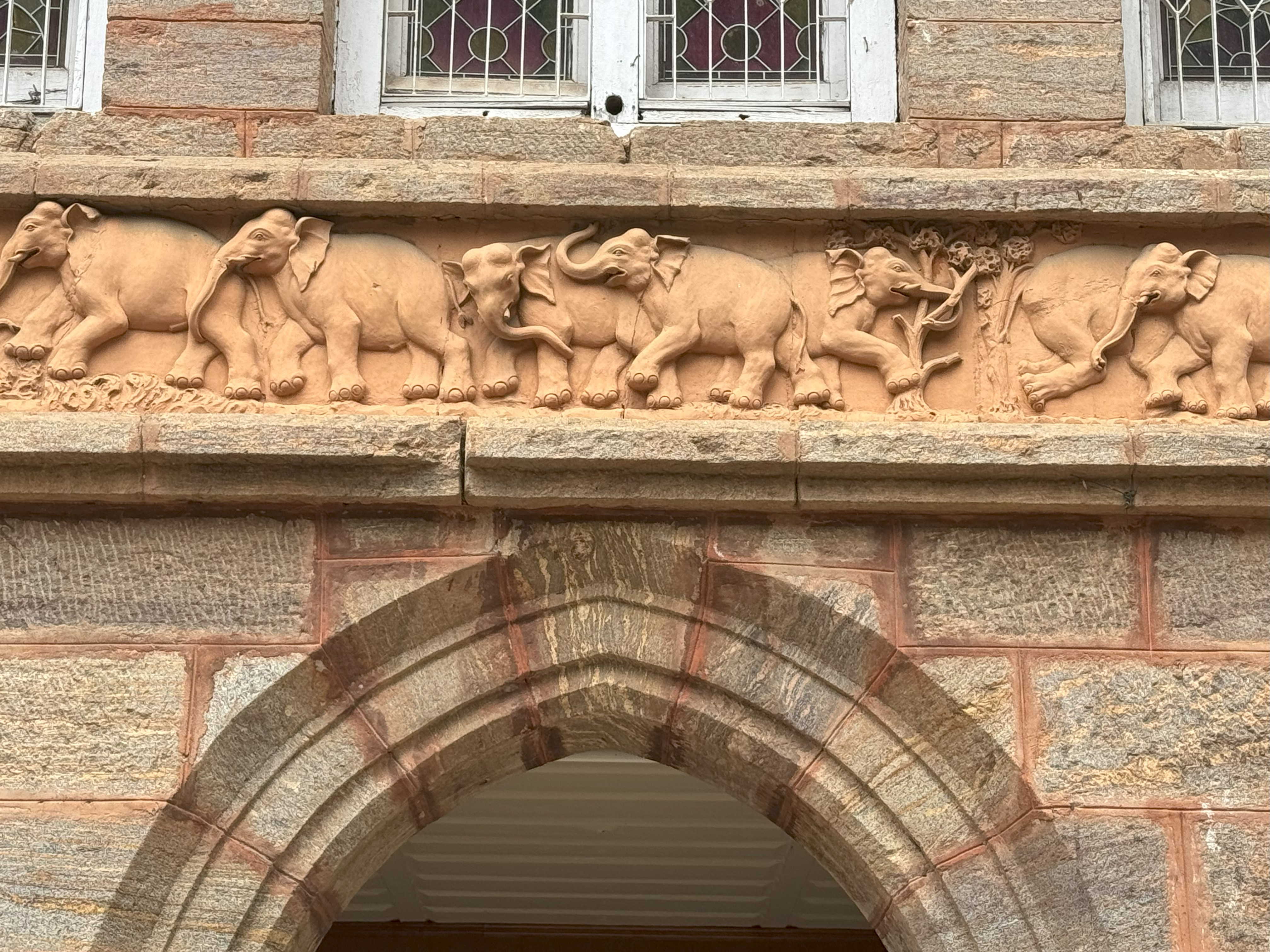
Who did the frieze? I nominate John Lockwood Kipling, but that's a wild guess.
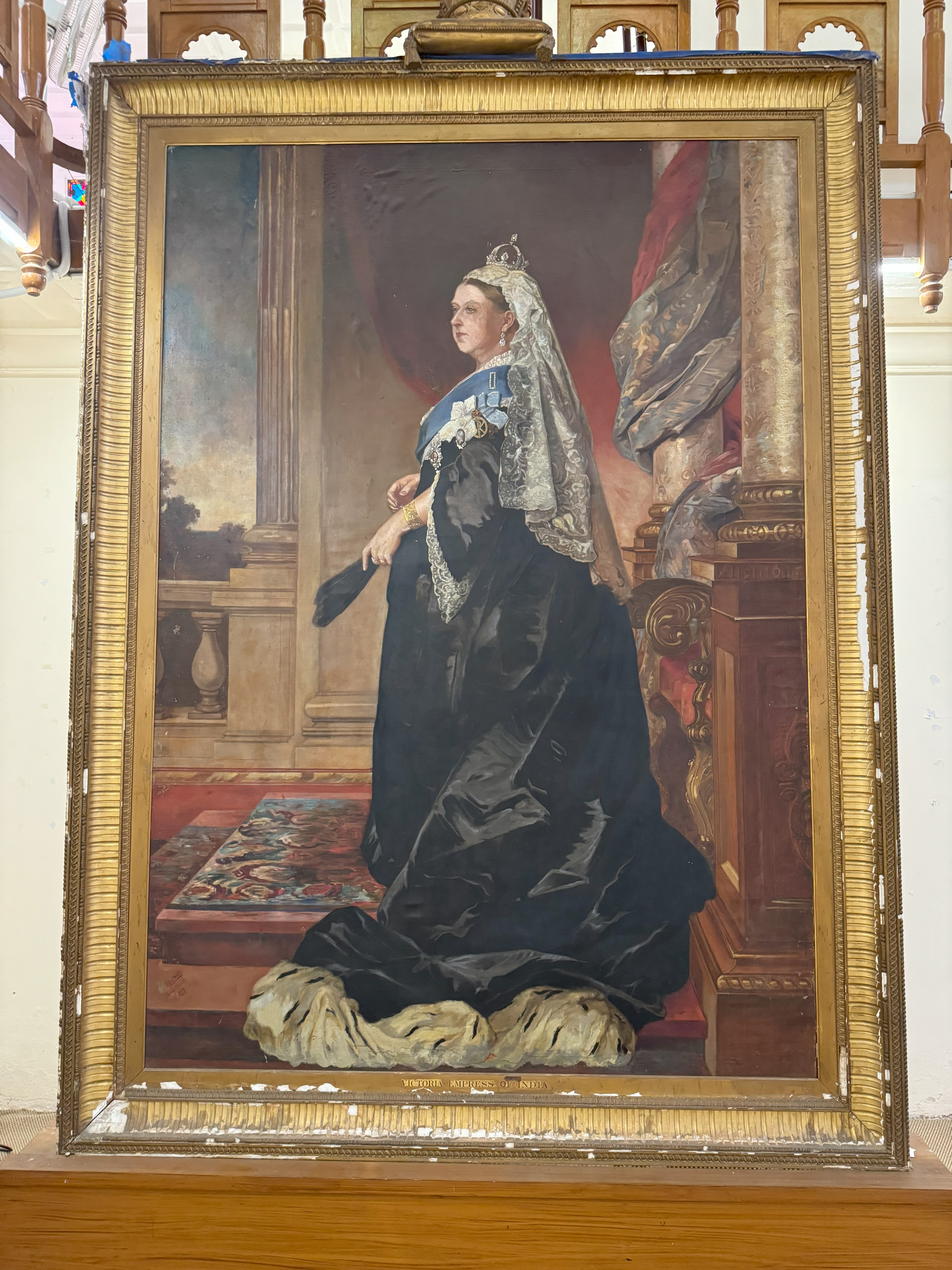
Look who's inside.
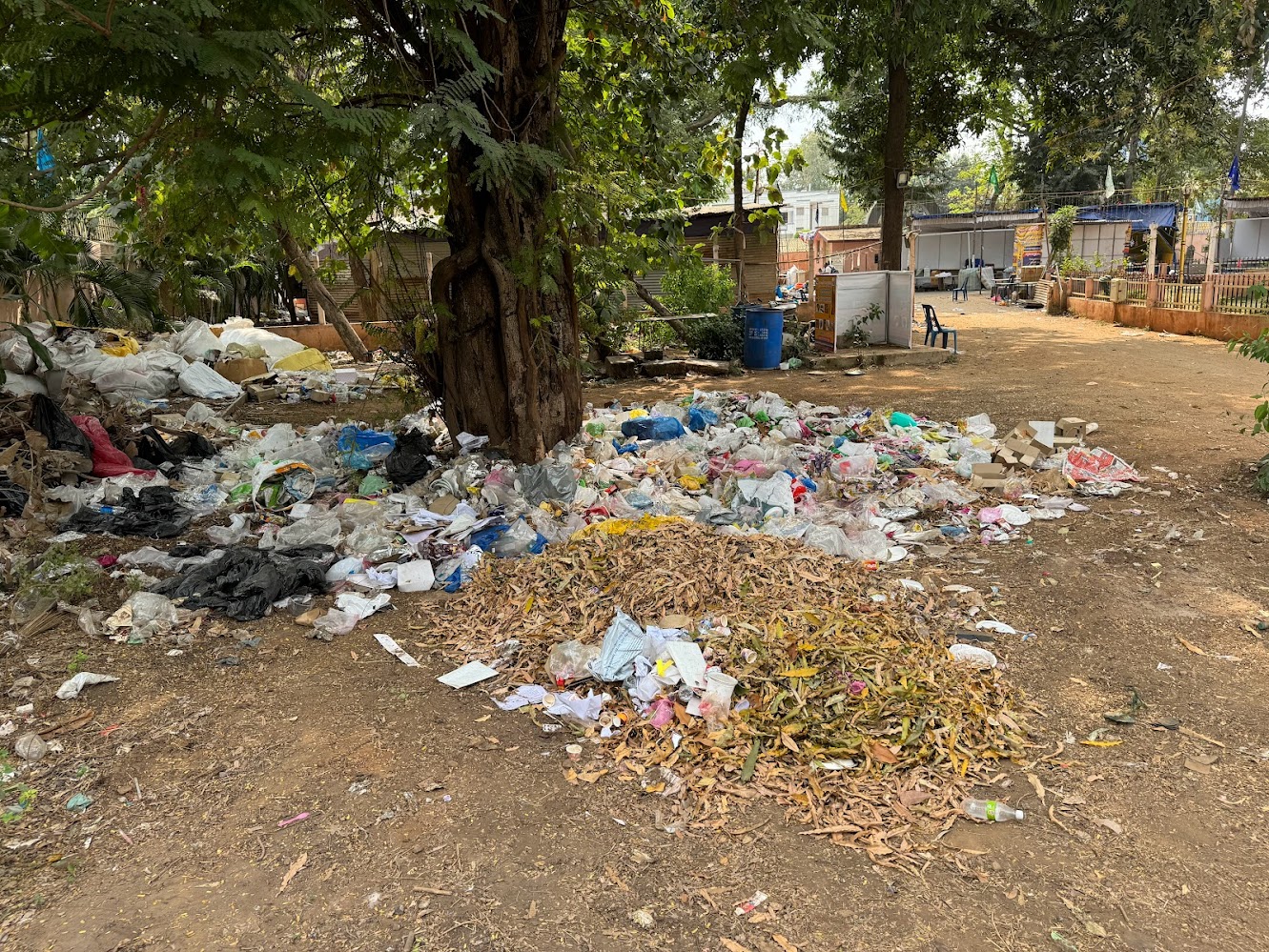
Look what's outside.
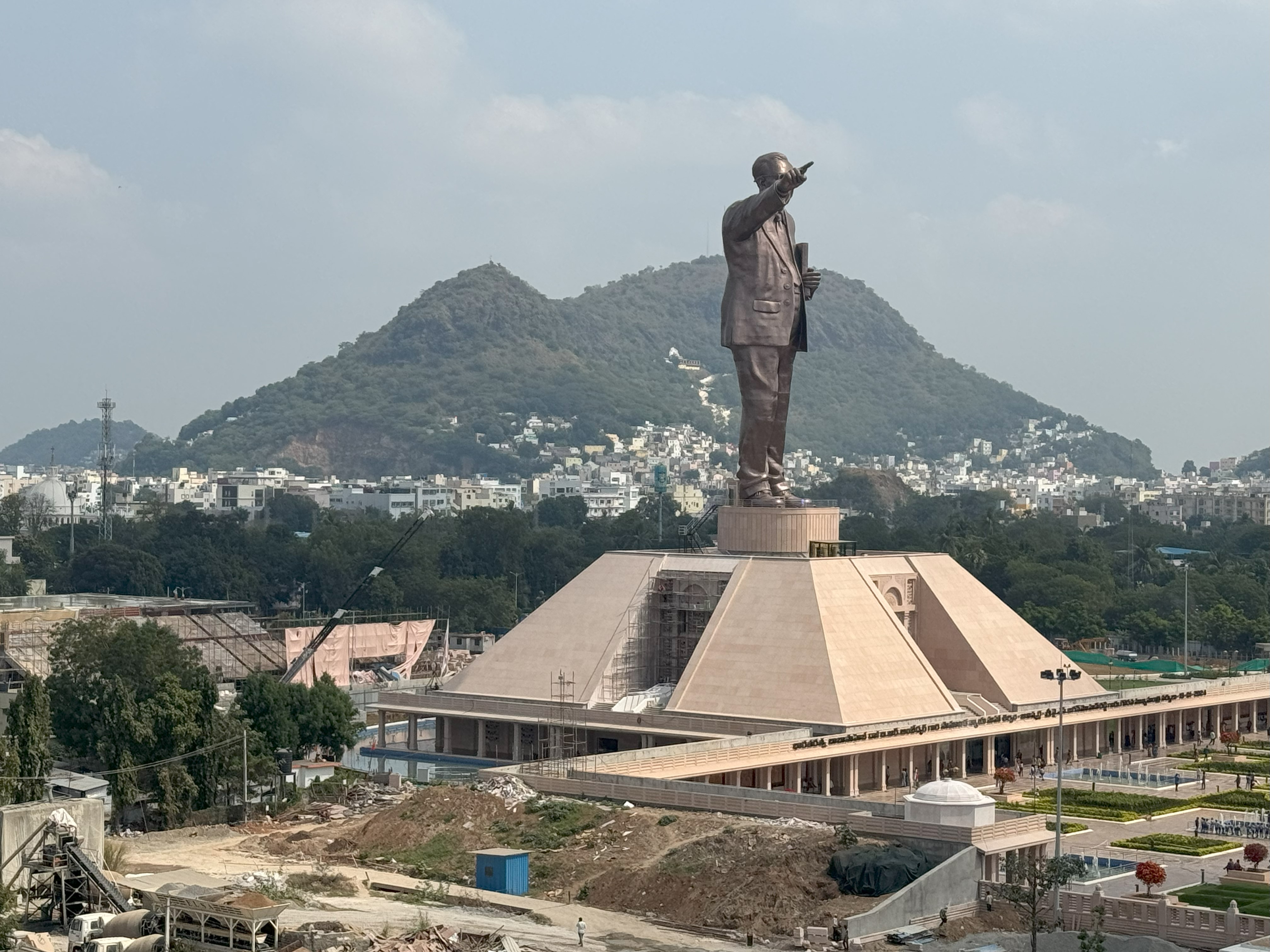
And look who's just up MG Road. If you don't know who it is, you've never been to India. And if you can't figure out who MG Road is named after, remember where Martin Luther King picked up non-violence.
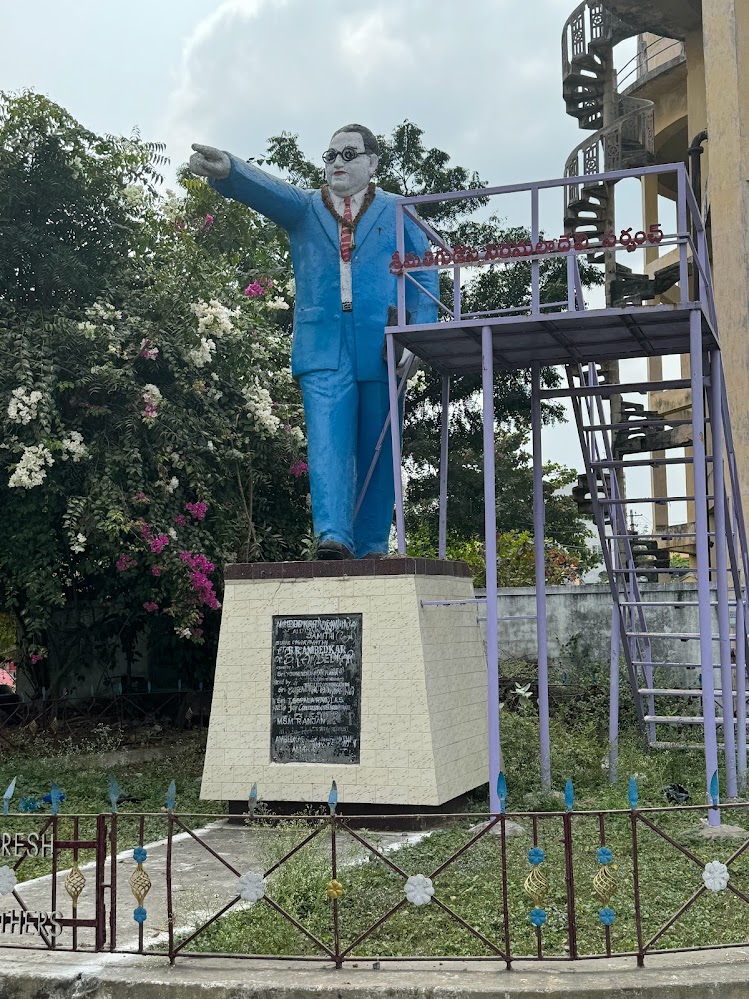
He's Dr. Ambedkar, shown about 20 miles upstream and here very close to the Amaravati stupa. It could be a deliberate juxtaposition, given his conversion to Buddhism, but I'm betting it wasn't. He is ubiquitous.
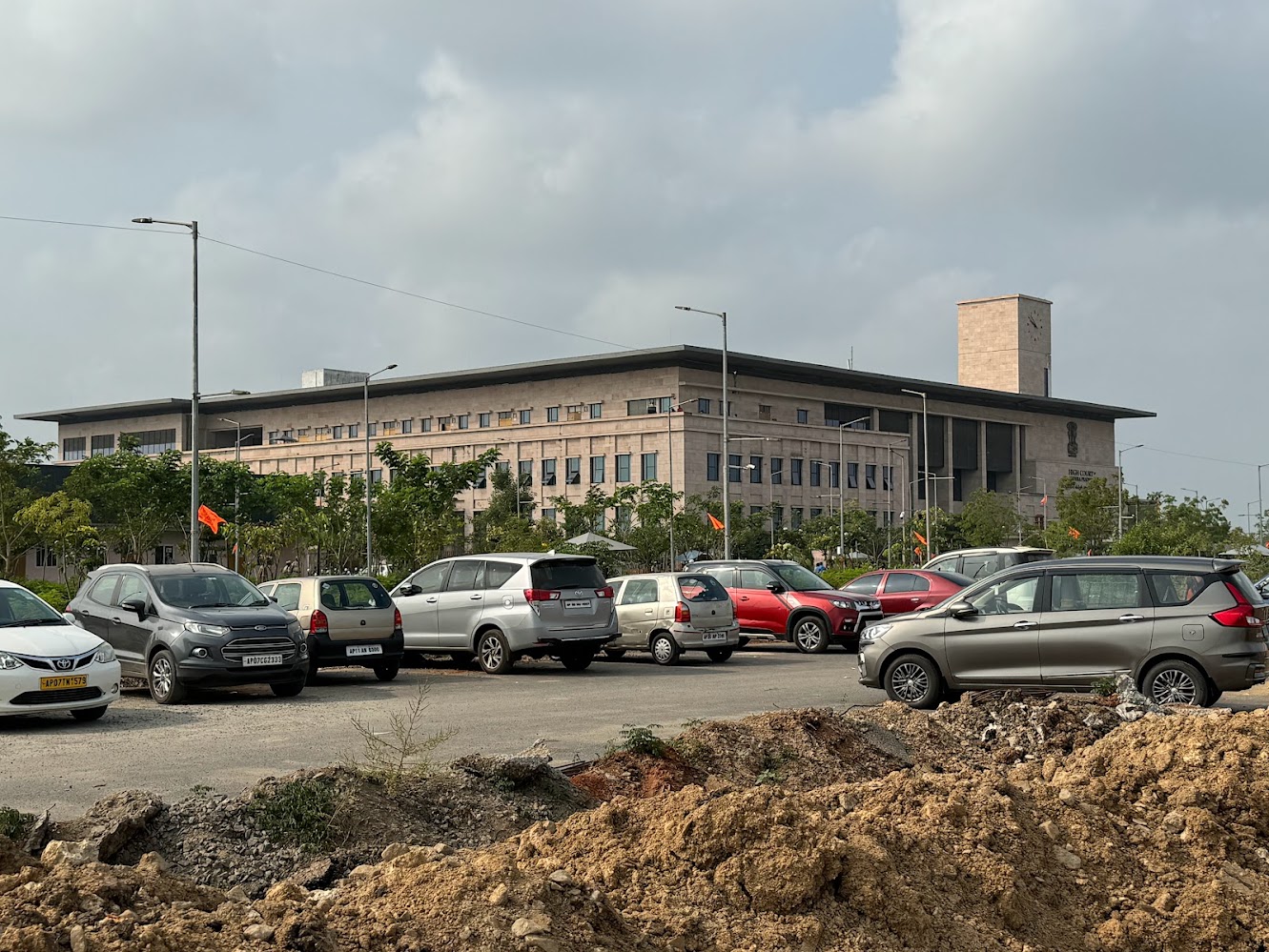
Between Vijayawada and Amaravati there's a new state capital for Andhra Pradesh. It's also called Amaravati. Here's one of the very few completed buildings, the high court.
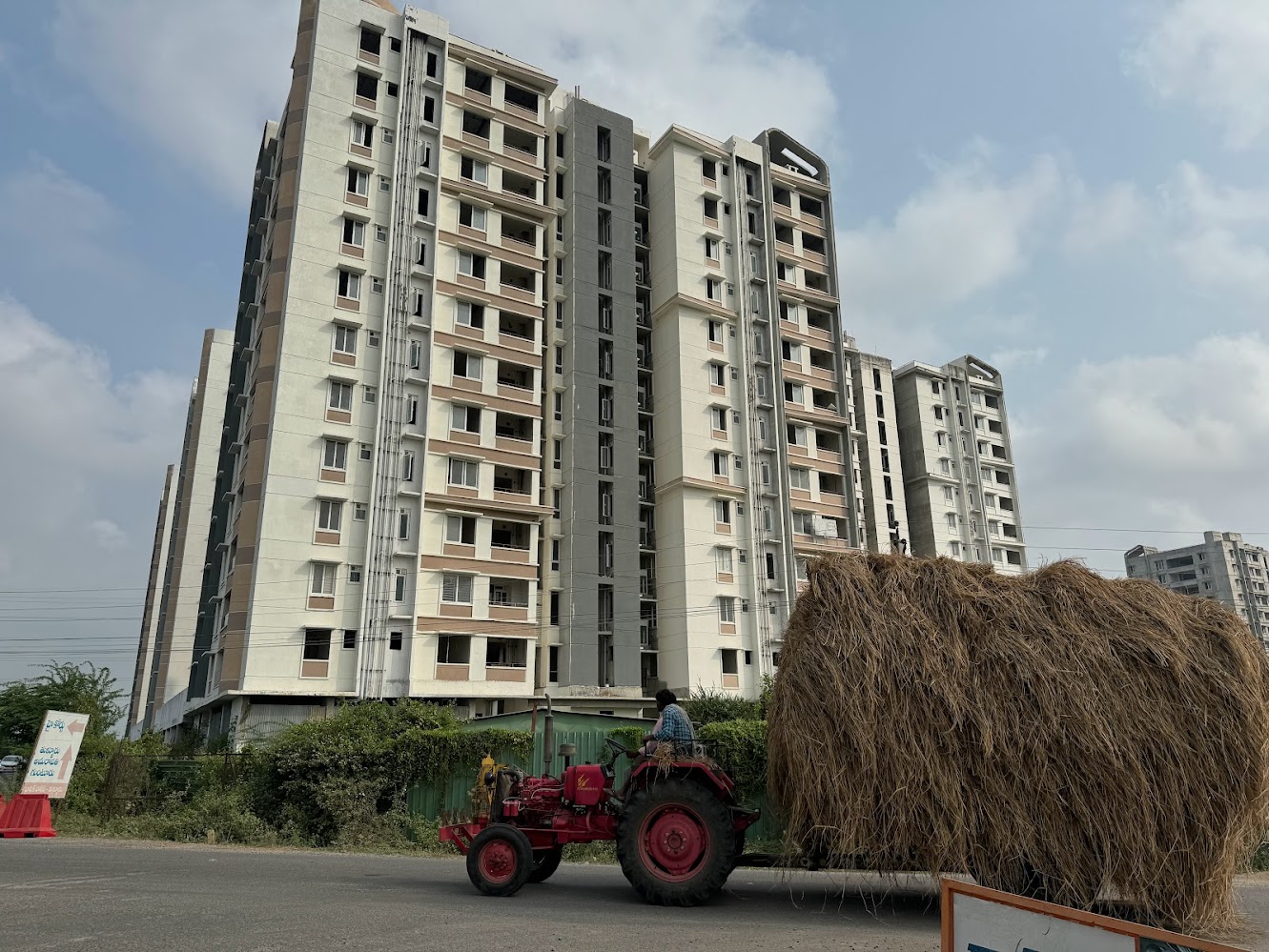
Here's an abandoned residential highrise, intended for civil servants.
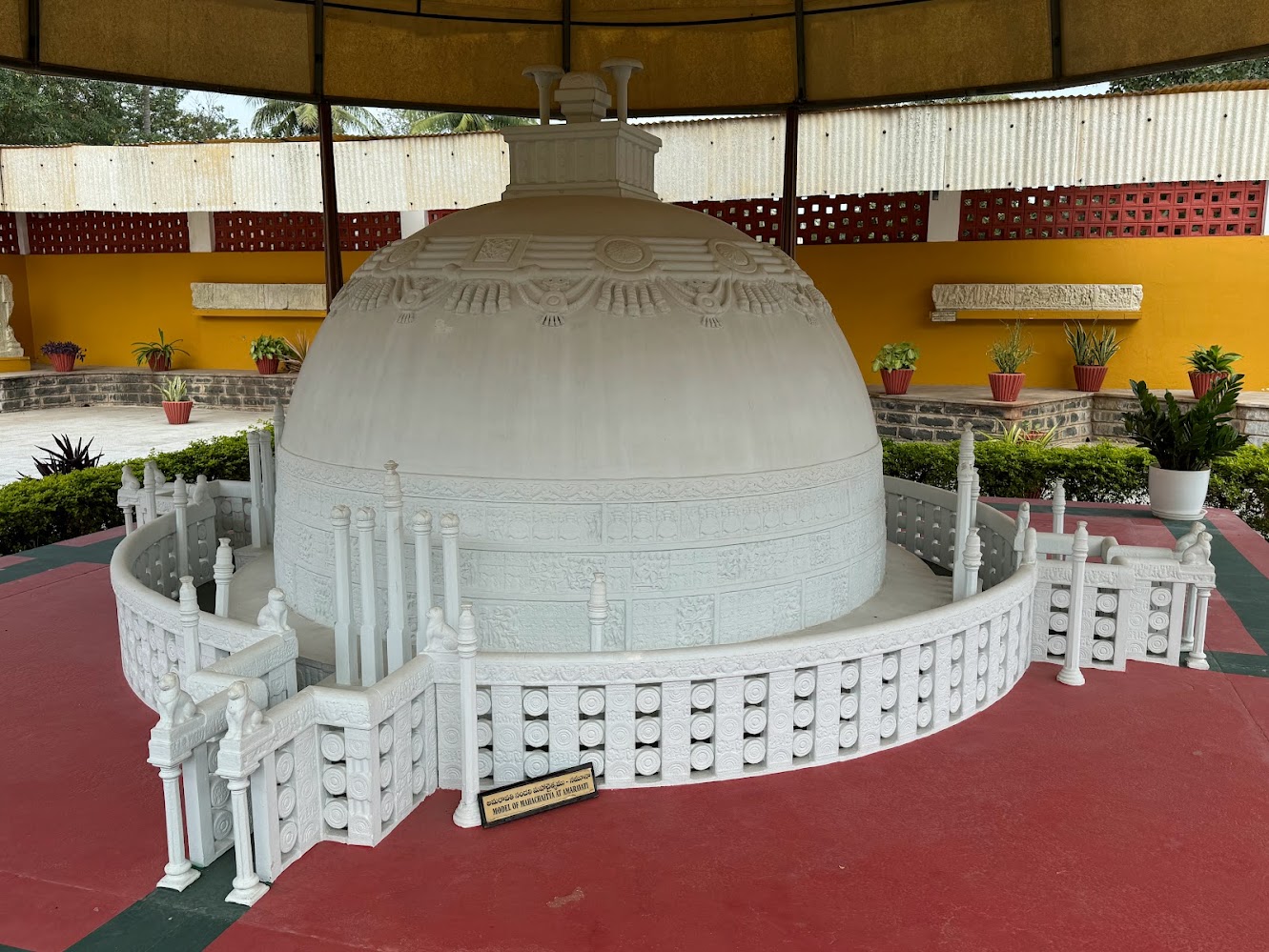
And at the real Amaravati here's the famous stupa, modelled in the back yard of the site museum. No pictures inside the museum: streng verboten!
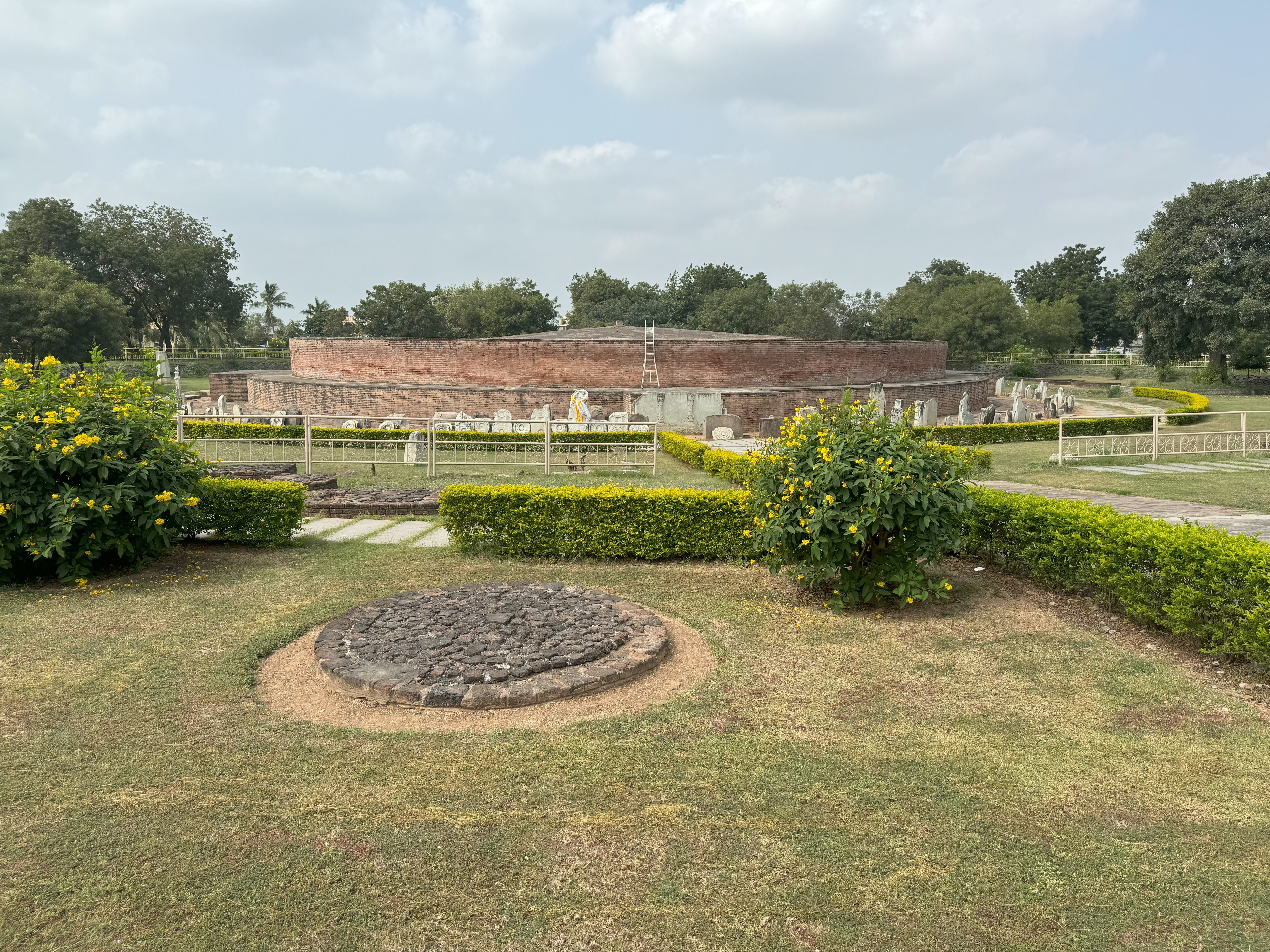
Here's what's left of the real deal, most of whose hundreds of carved stones are either in the British Museum or the Government Museum in Chennai.
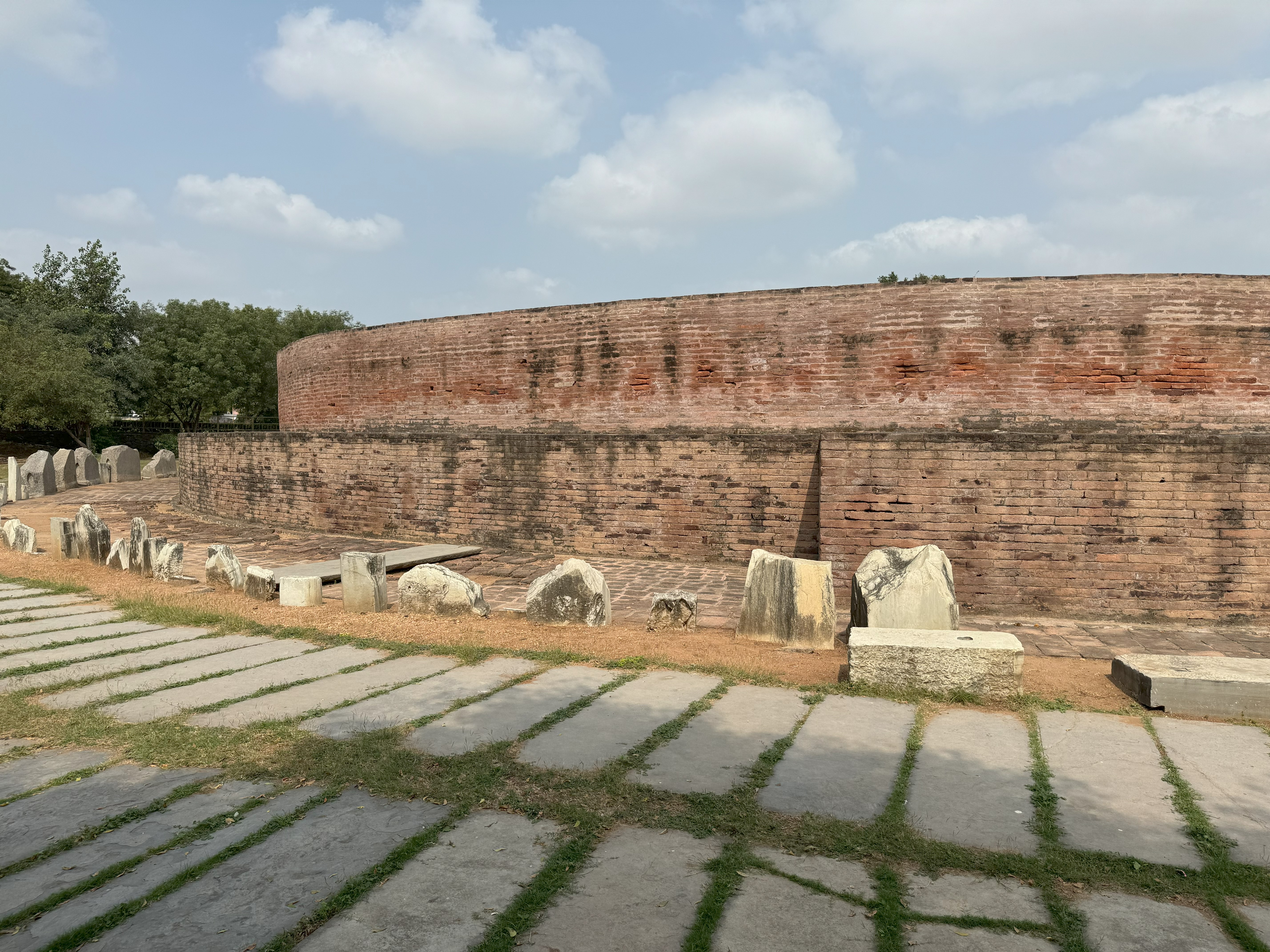
A few scraps are left on the site, along with brickwork tidied up for a visit by the Dalai Lama in 2006.
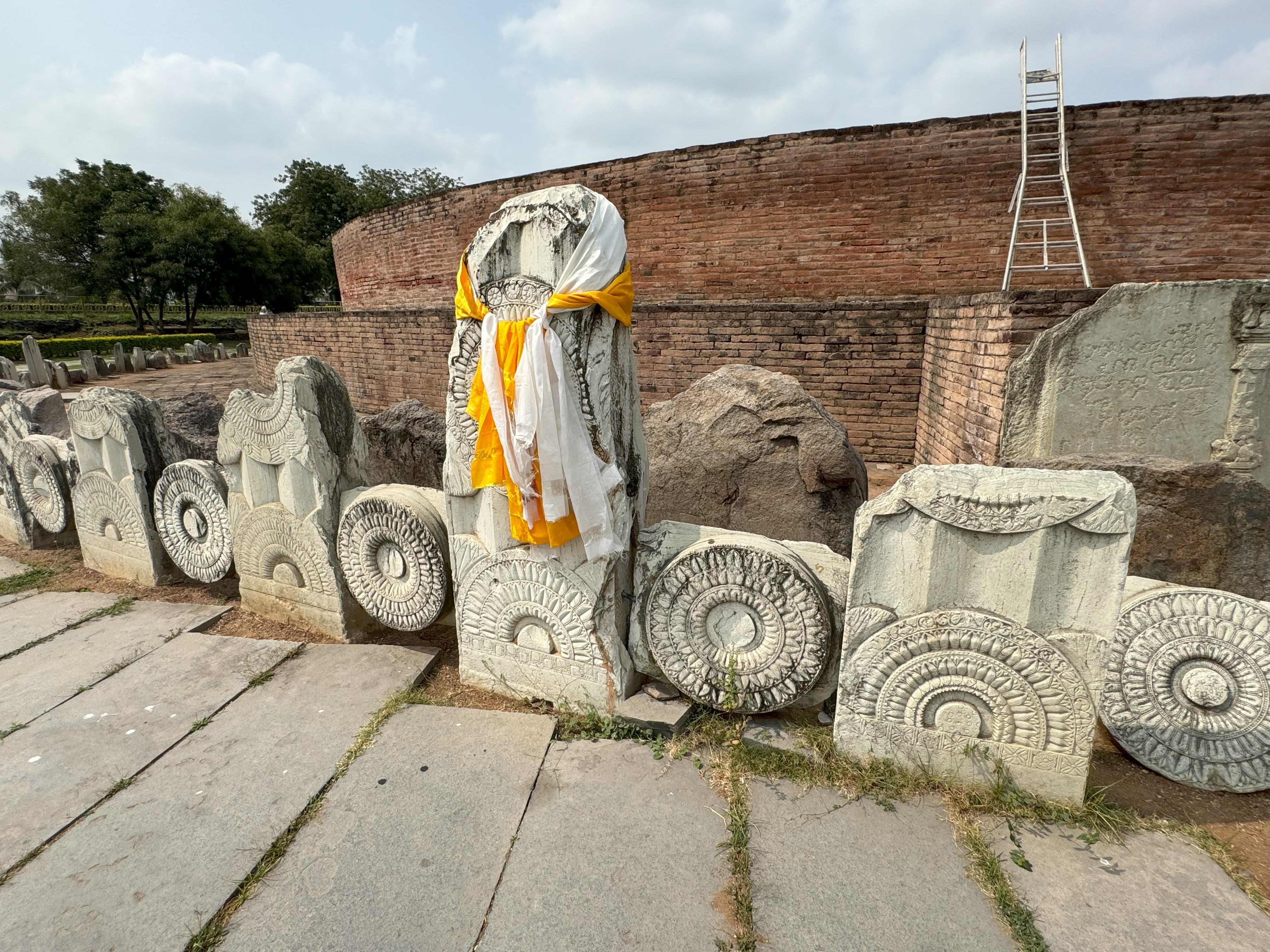
These lotus medallions were originally on the fencing that encircled the stupa.
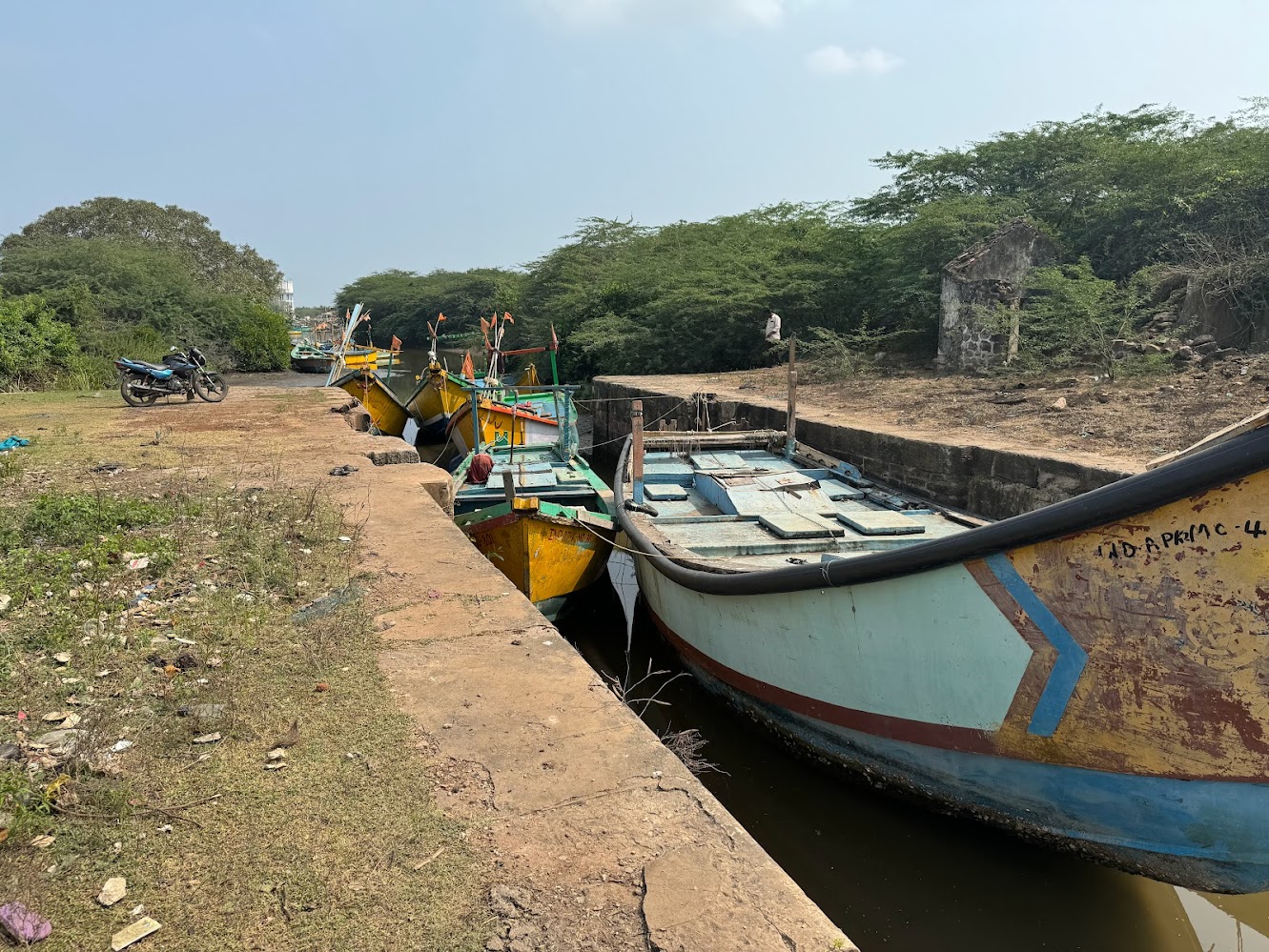
We're deep in the delta, where boats are still in use on the canals near Bandar Port, a name that can join the Sierra Mountains, Sahara Desert, and Nyasa Lake as duplicative redundancies. As can "duplicative redundancies."
"
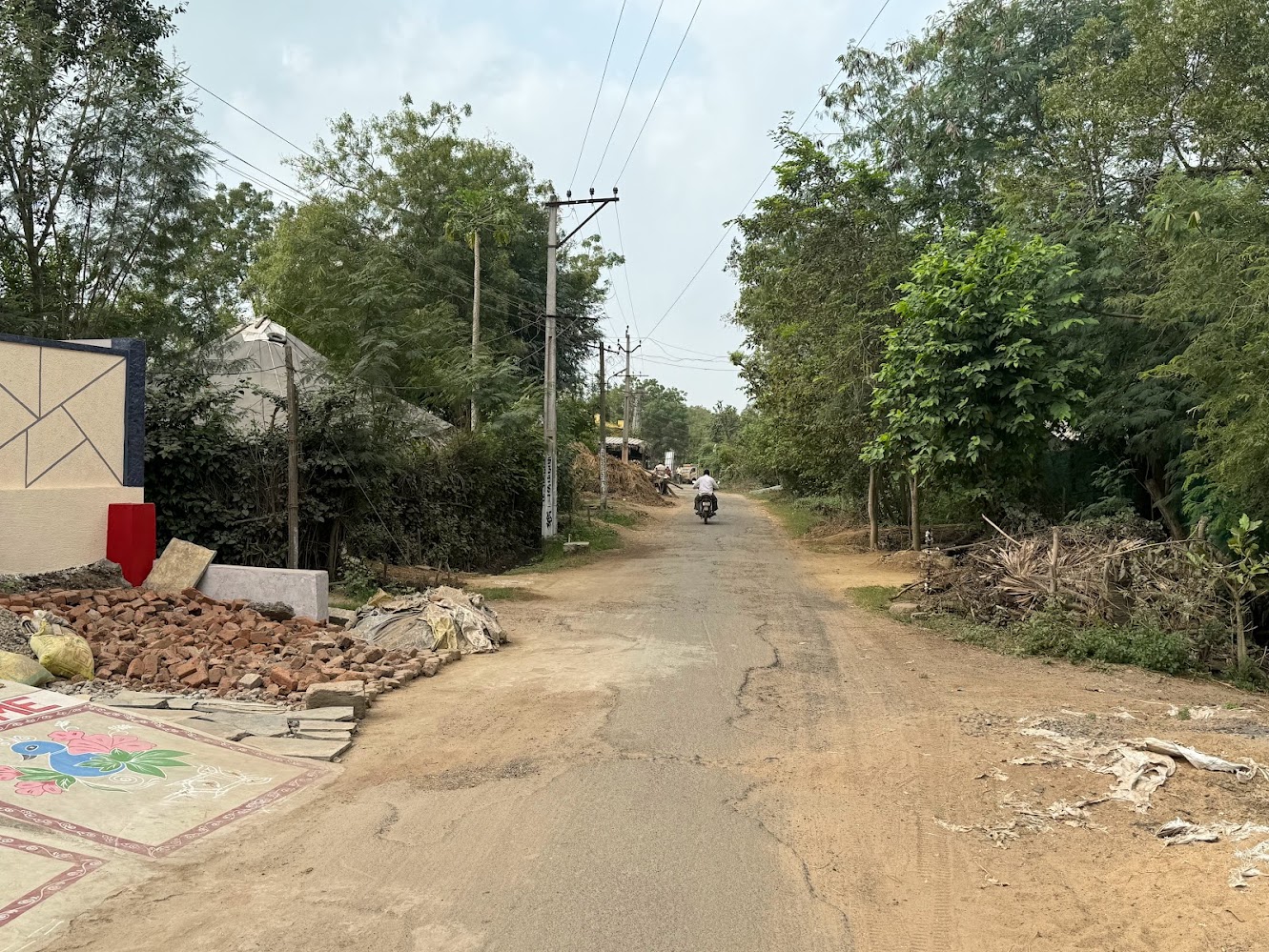
The British built the canals on the assumption that they would be the primary mode of transport more or less forever. Not so. Here, a secondary road.
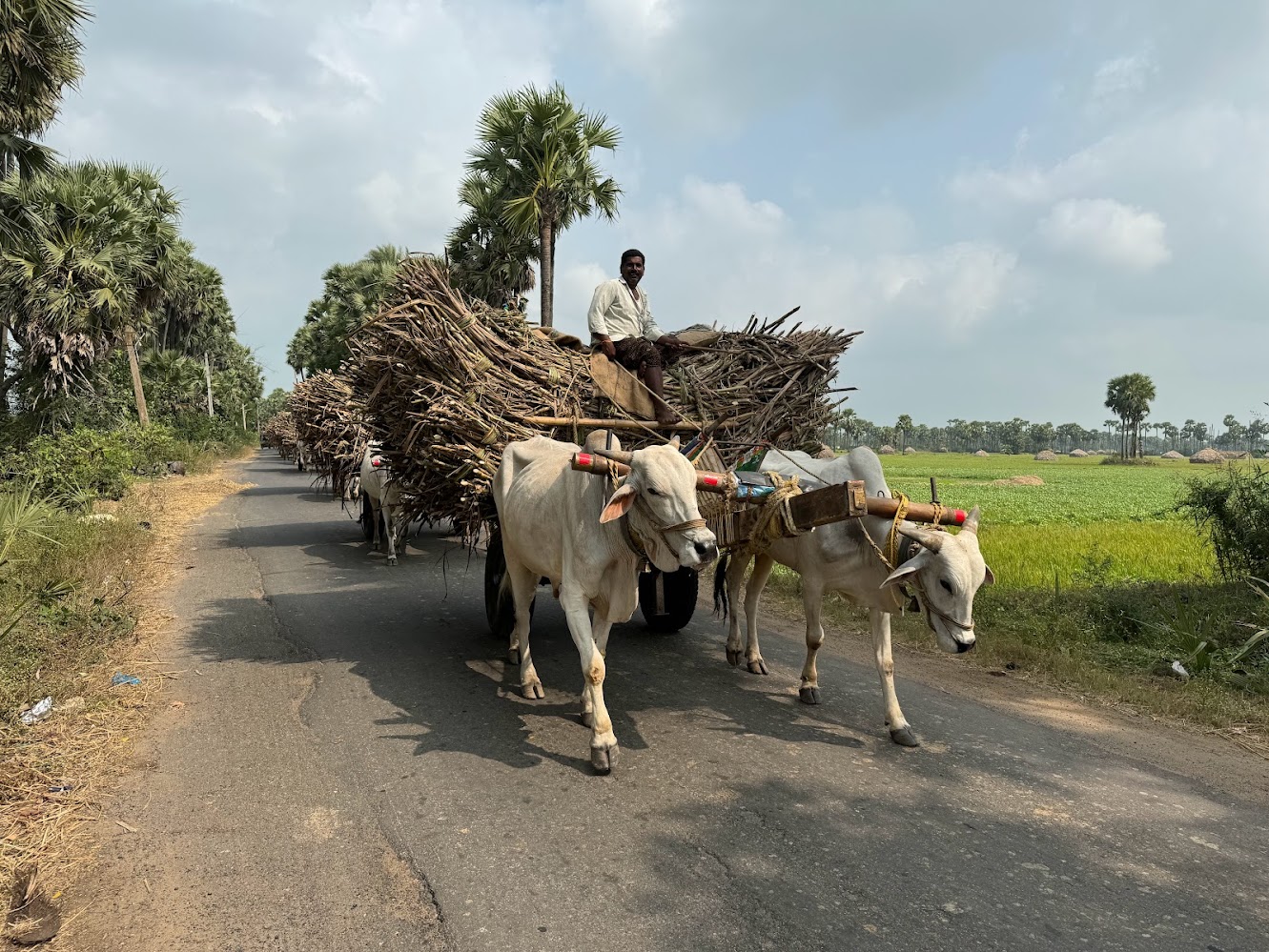
A cane train, so to speak.
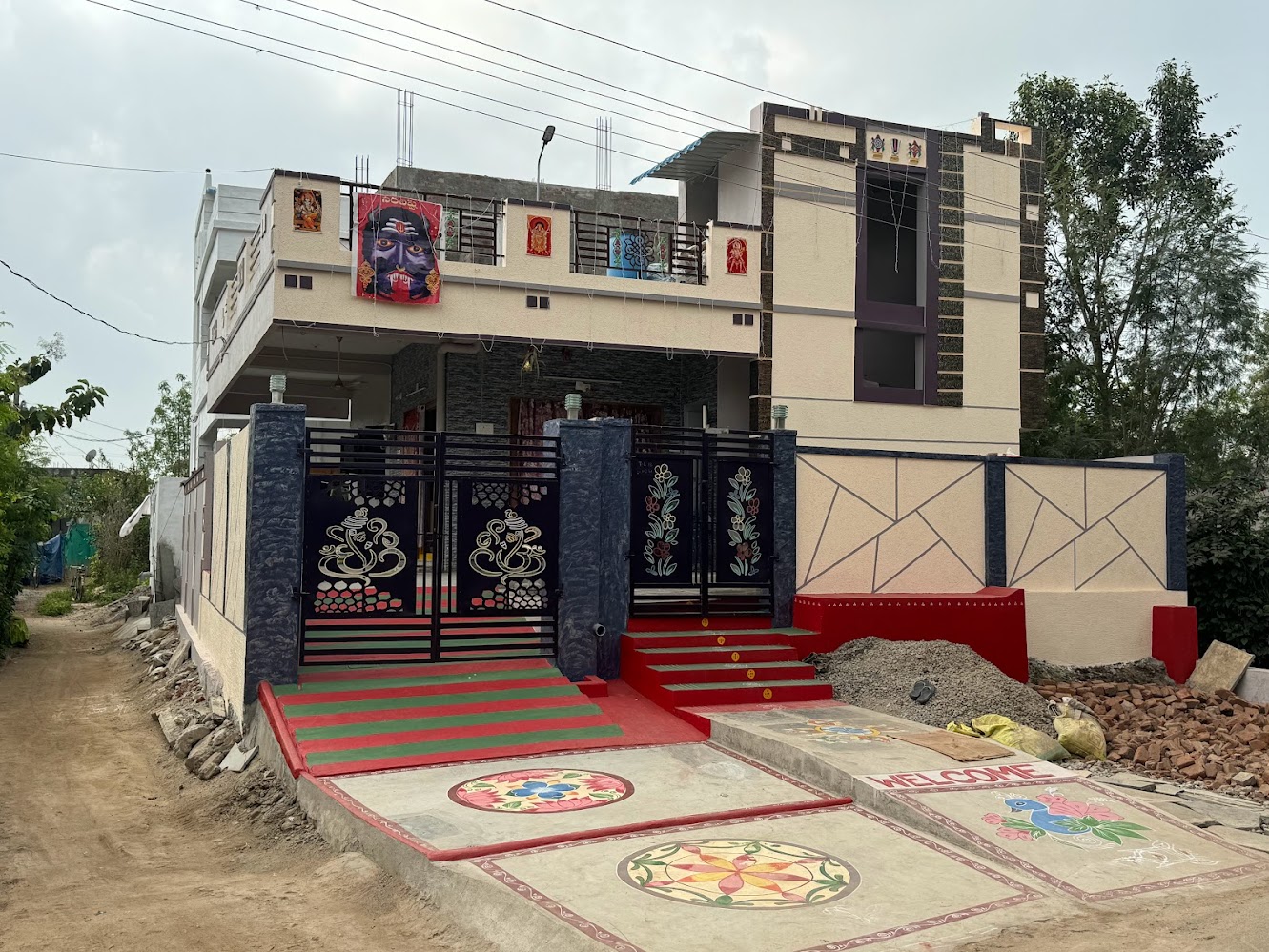
Money comes to the village.
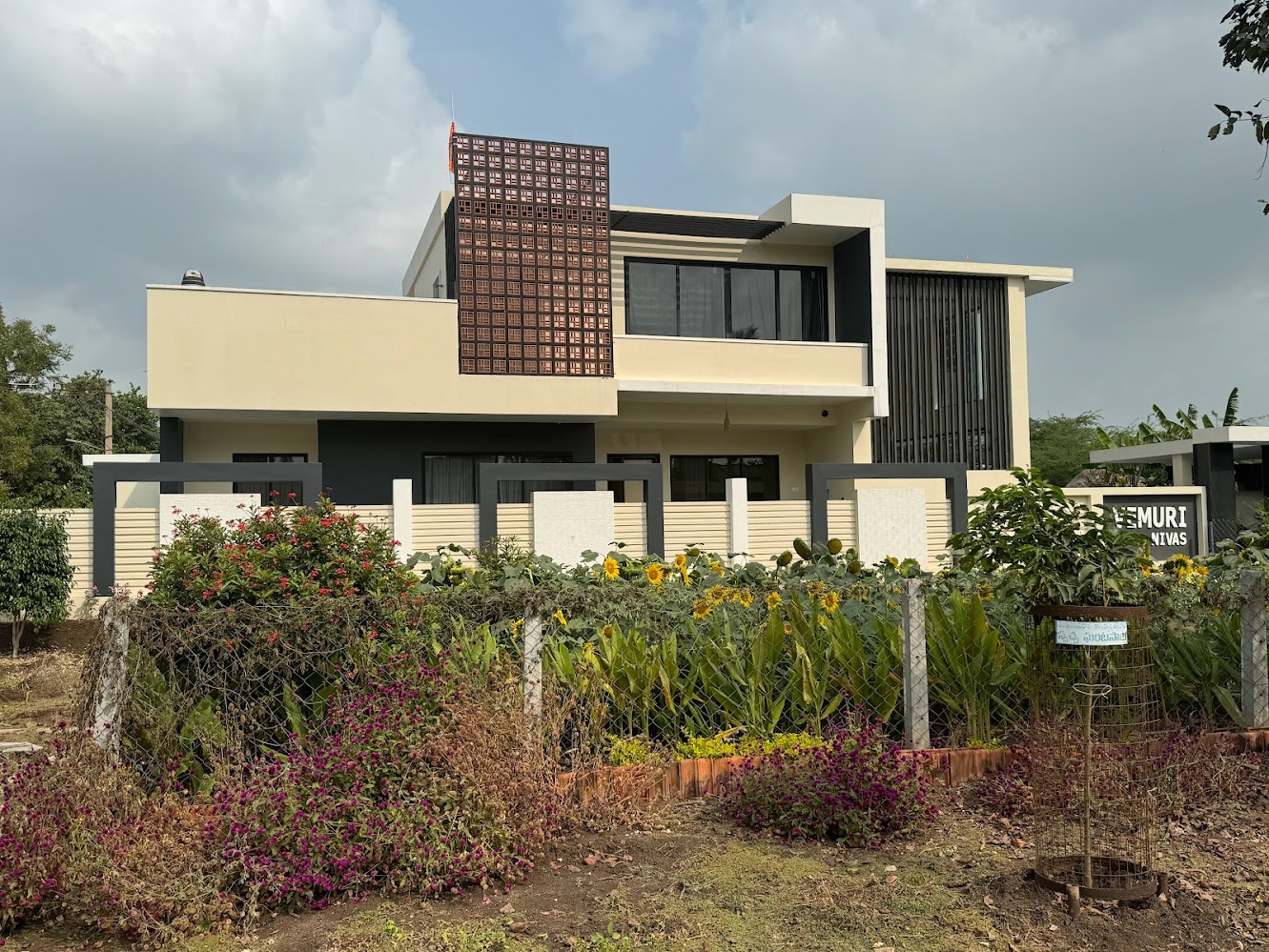
Not bad, eh?
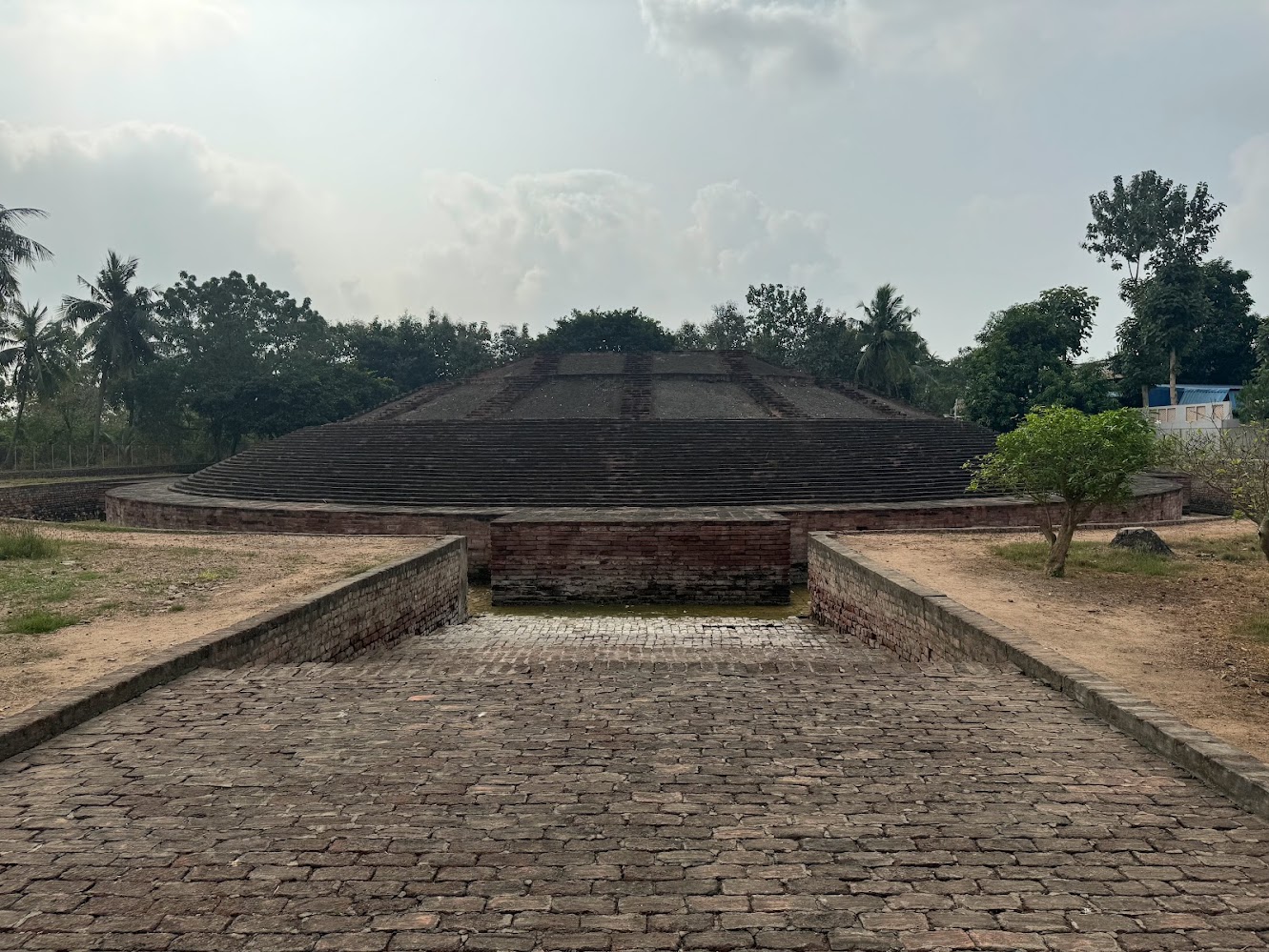
But we came for this, the Ghantasala Stupa, once again cleaned out, then cleaned up, by various interlopers, some wanton, others professional.
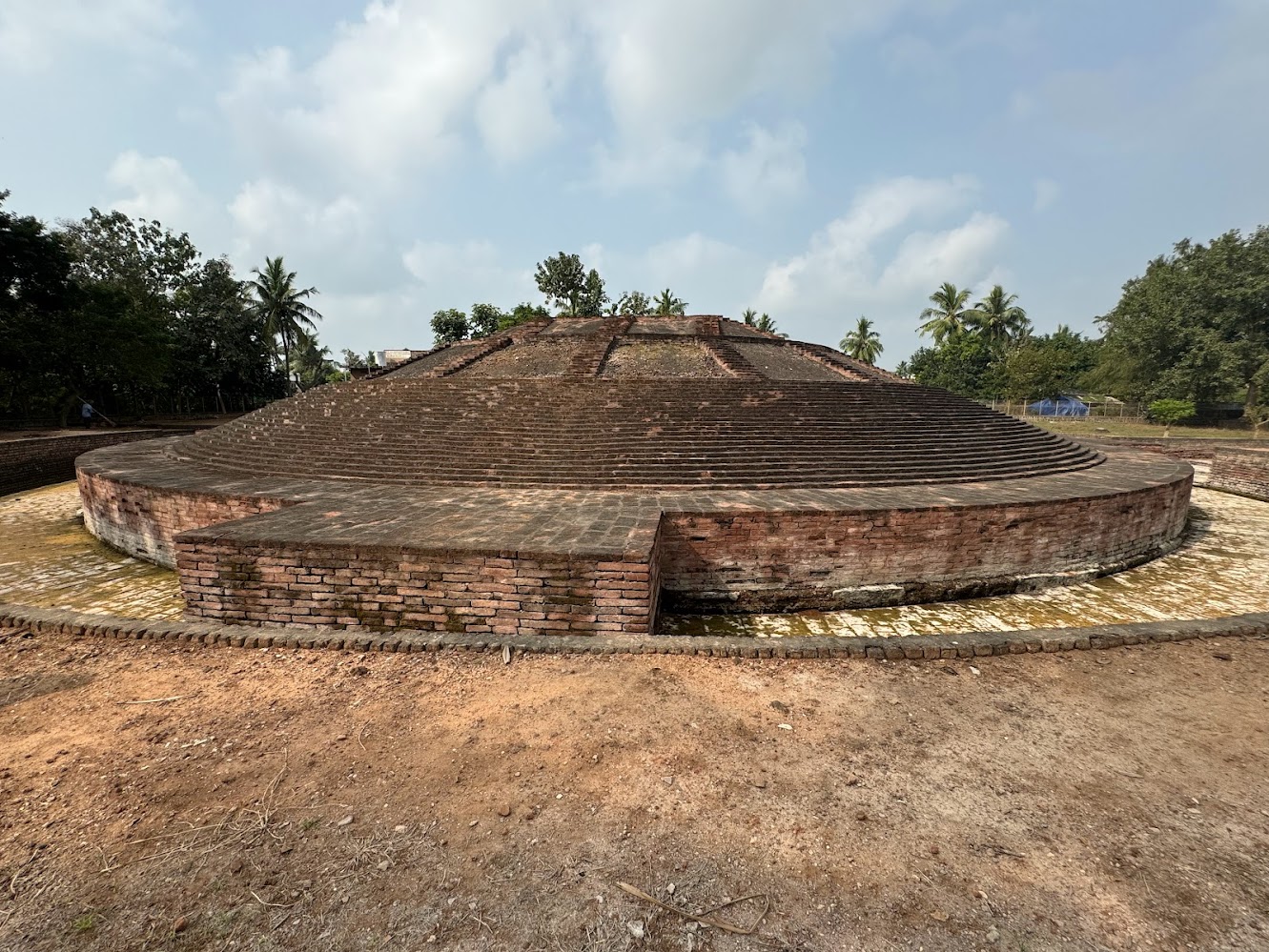
Not a lot to see. An early digger was Alexander Rea. See his South Indian Buddhist Antiquities (1894), pp. 32-42. An extract: "The Ghantasala stupa has a cube of solid brickwork in the center, measuring 10 feet square. Enclosing it is a hollow chamber, measuring 19 feet square, with walls 3 feet 4 inches thick. ... Outside it, is a circular wall 3 feet 6 inches thick and 55 feet 10 inches in exterior diameter.... beyond, and concentric with this inner cicle, at a distance from it, of 11 feet 7 inches, is a massive circular wall measuring 18 feet 3 inches thick.... A few of the large numbers of marbles, which must have adorned the building, had been preserved in this and adjoining villages. ...The remainder have probably been gradually removed by the villages when lime was required for buiding."
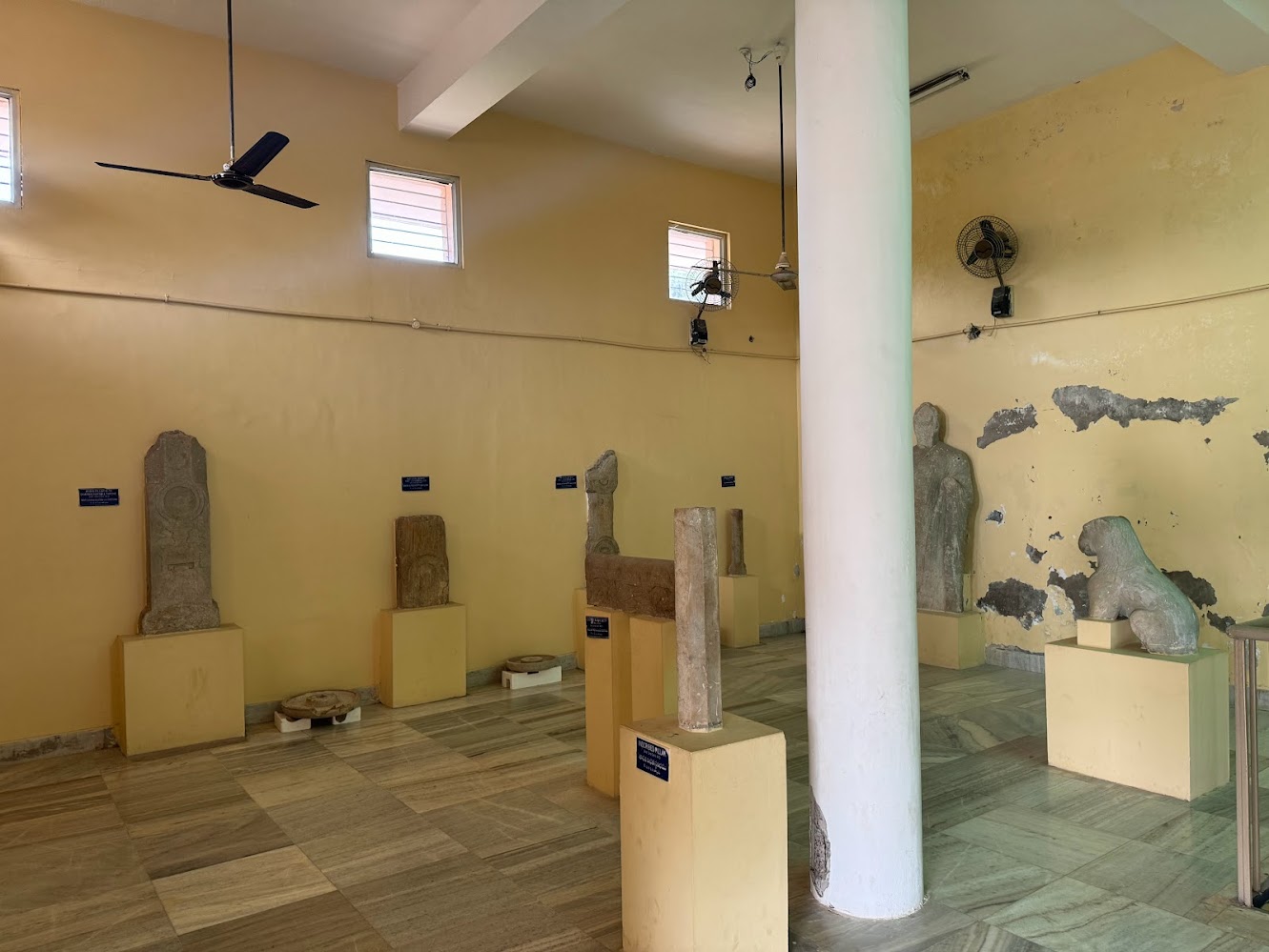
There's a museum across the street. Quick: the guard's coming. He's on high alert for anyone taking pictures.
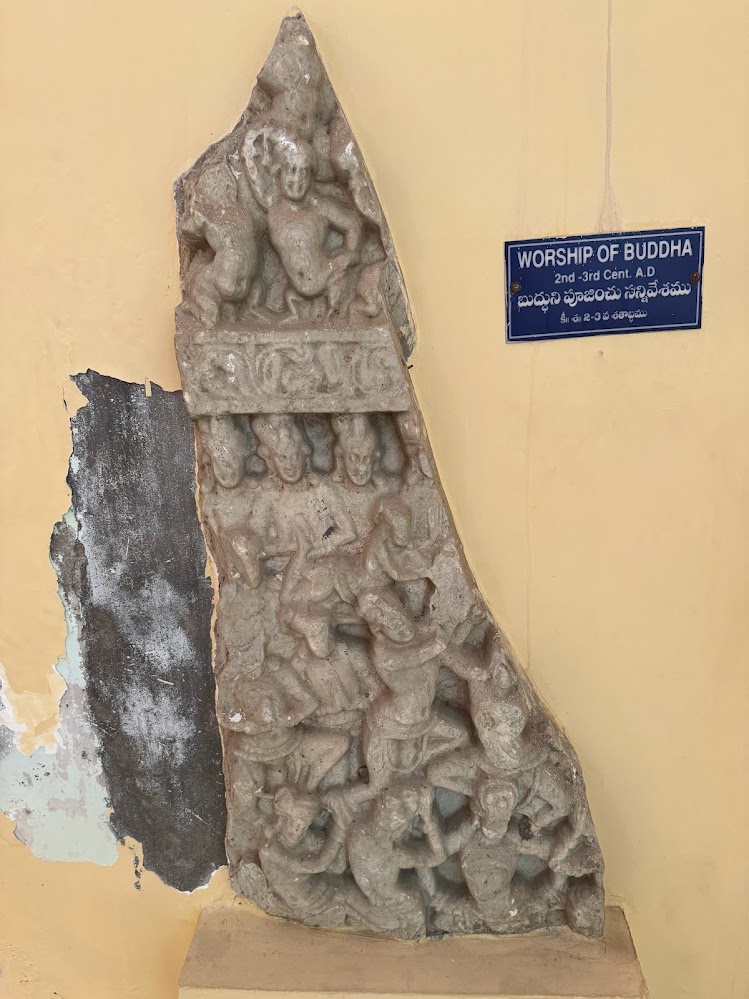
It does make you wish you could see the stupa as built.
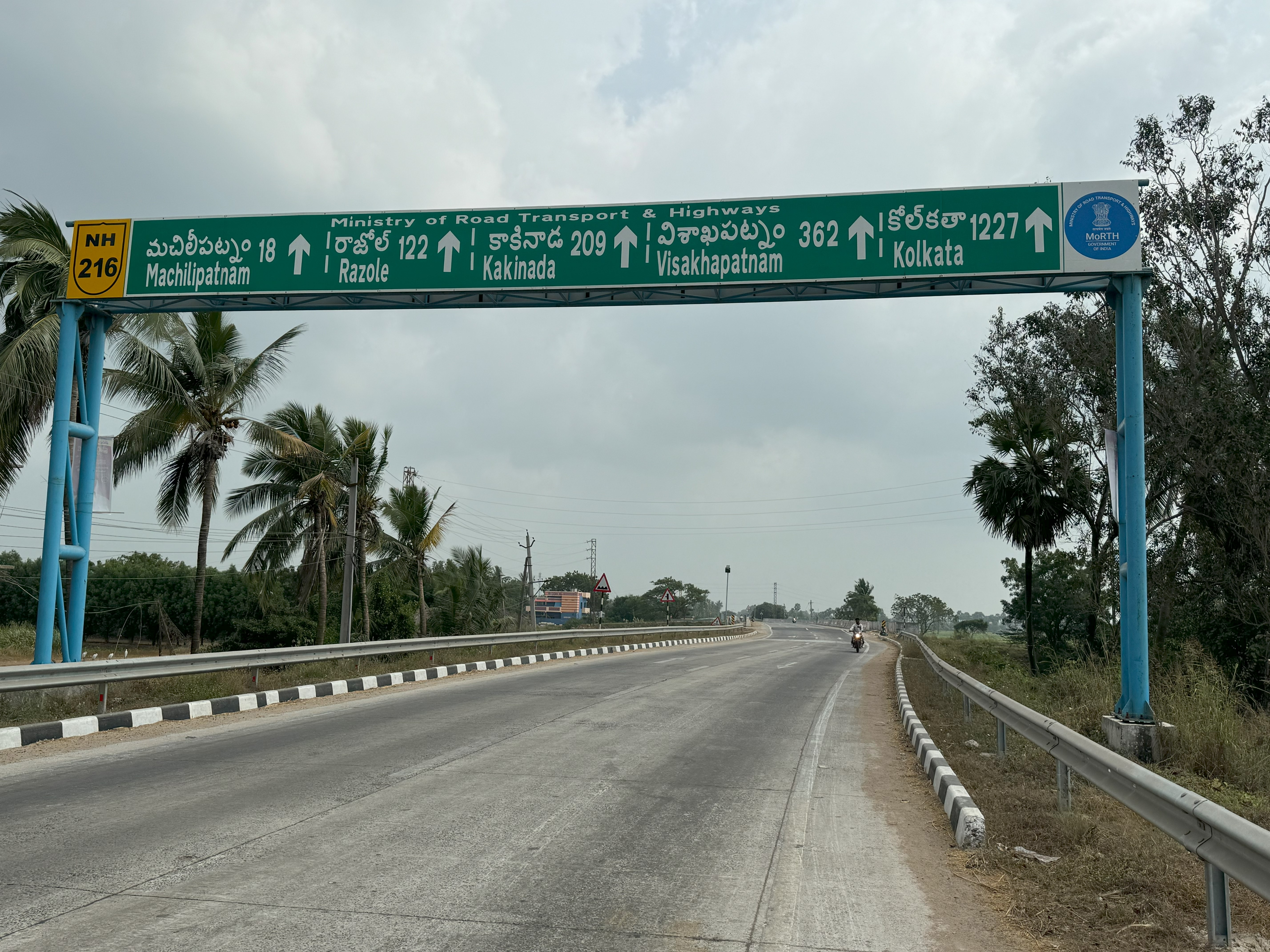
The Ghantasala stupa is just a few miles from a main highway linking Kolkata and Chennai.
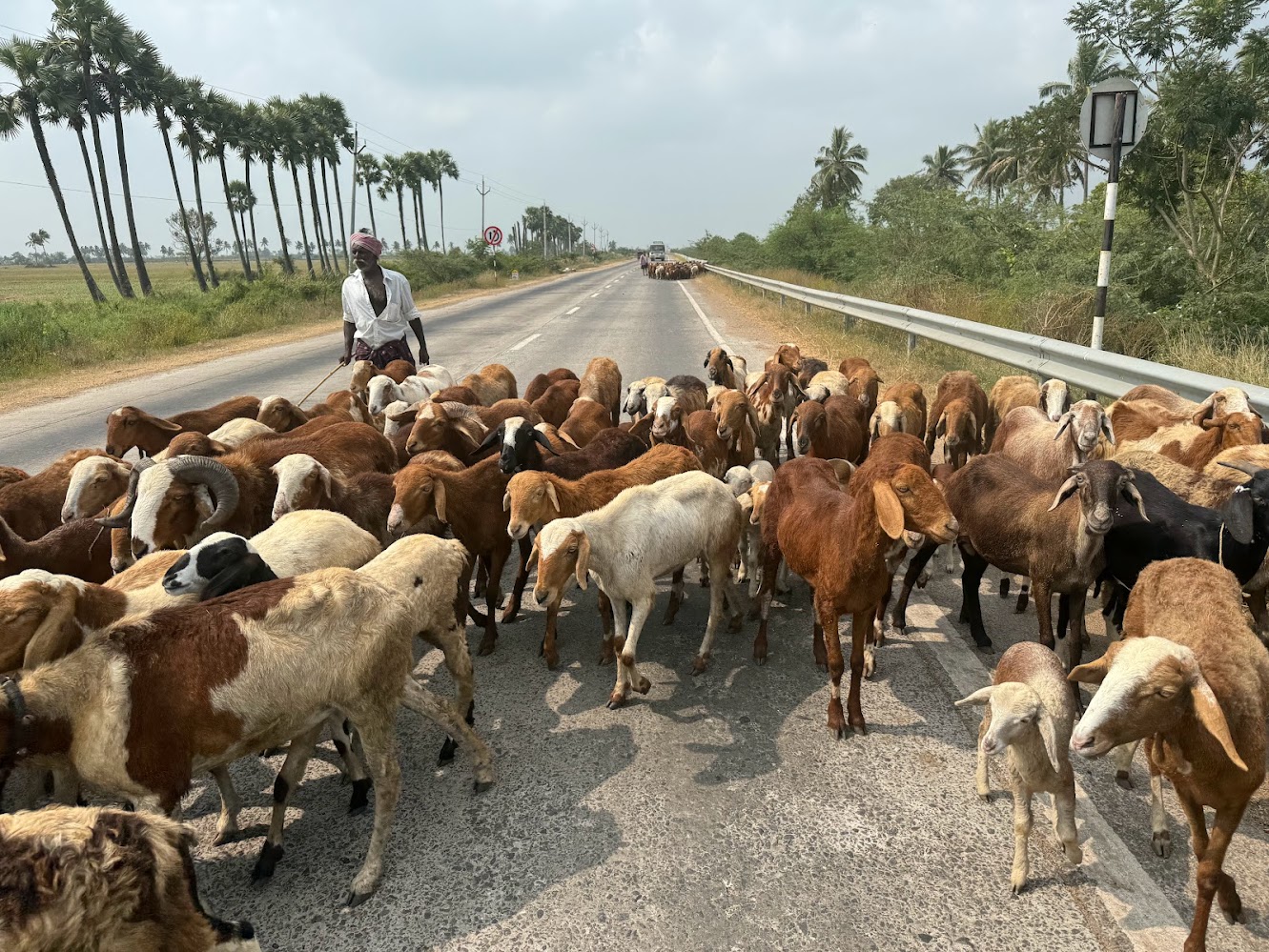
More fun than the Interstates back home.
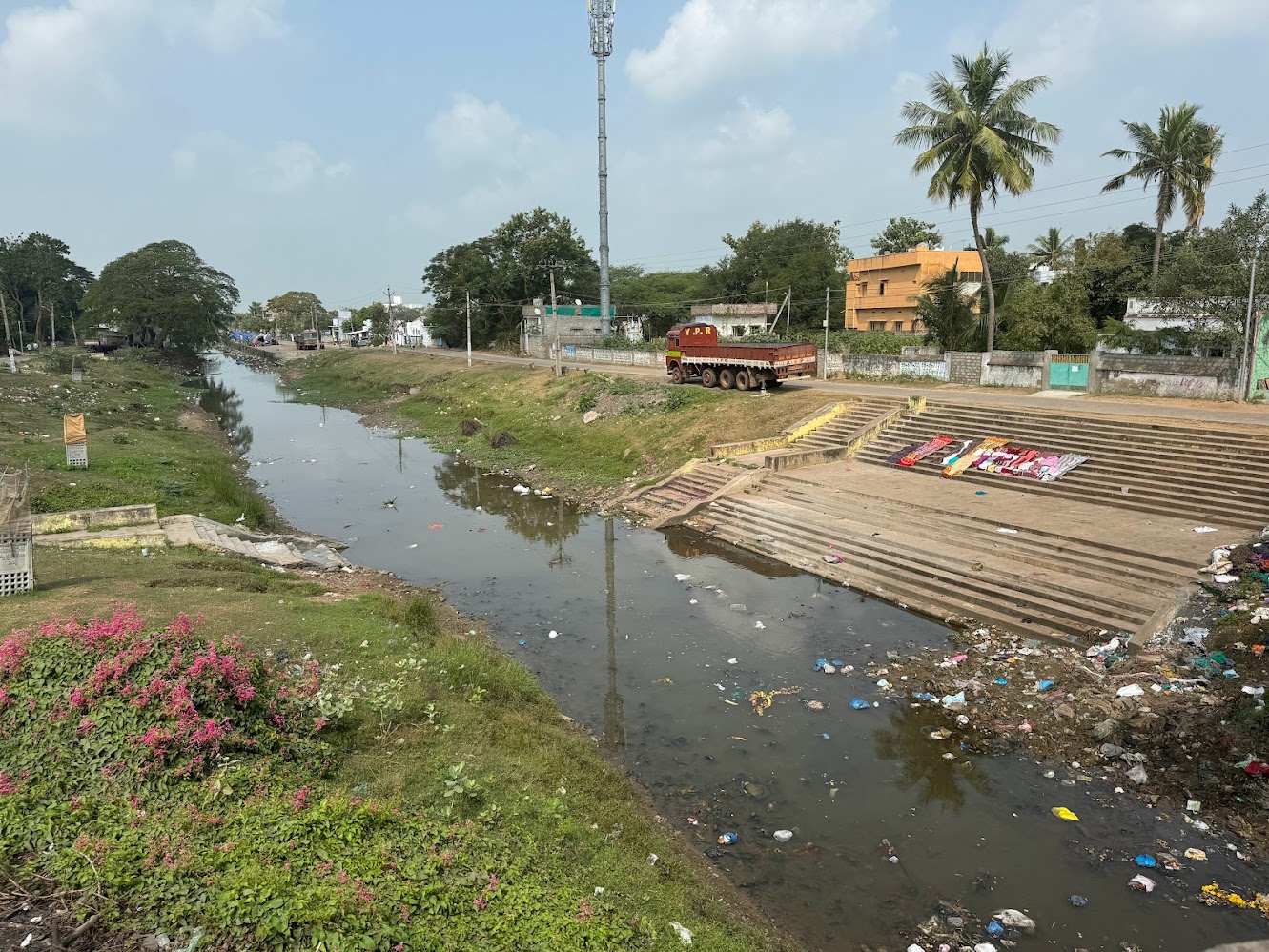
We're at the edge of Machilipatnam, formerly Masulipatnam. No fencing.
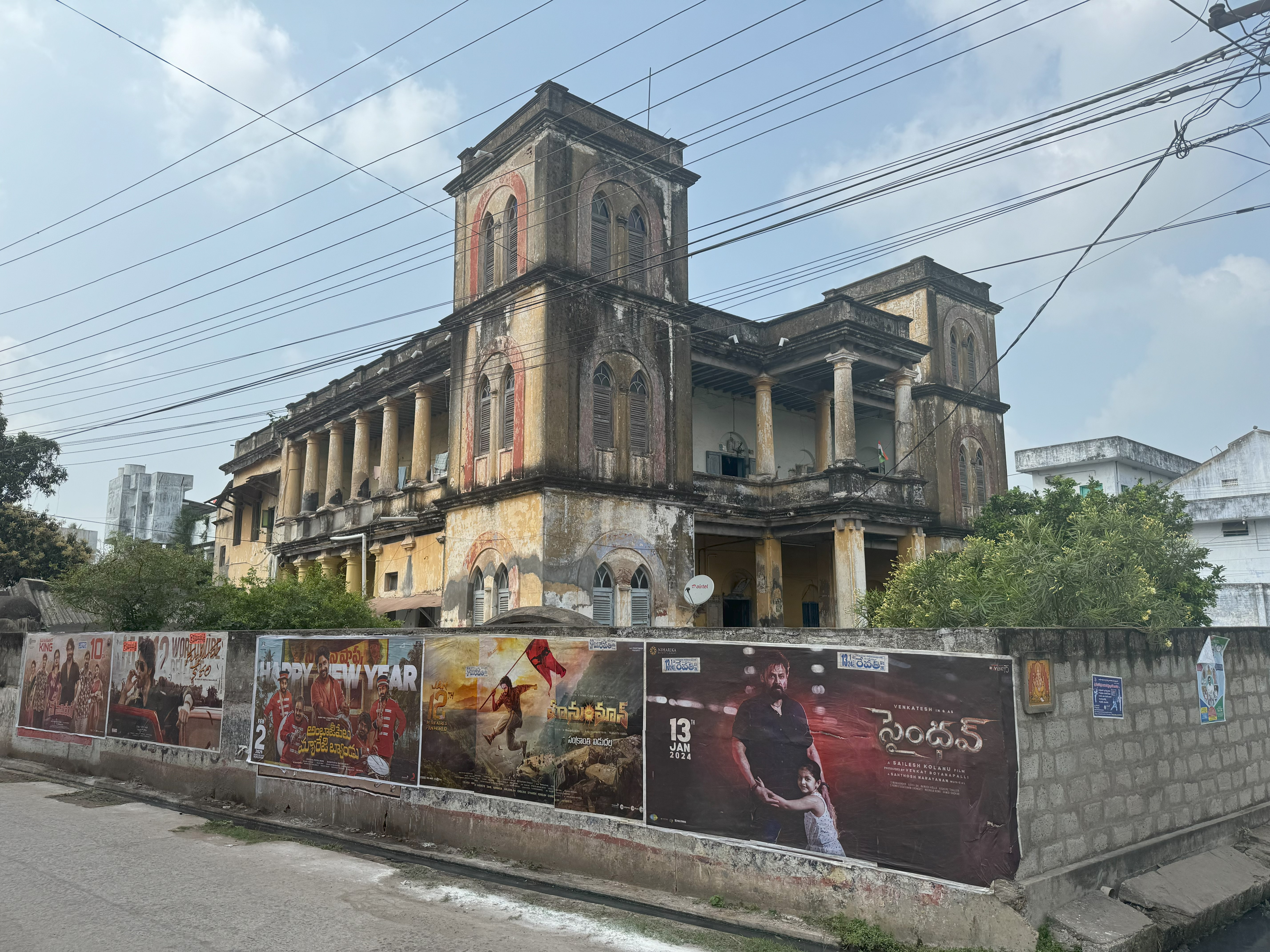
A spectacular mansion, now a squat. If memory serves, I was here in about 1990 and took an interior shot, filed here under India-Themes, Brick, Plaster, Stone, Wood.
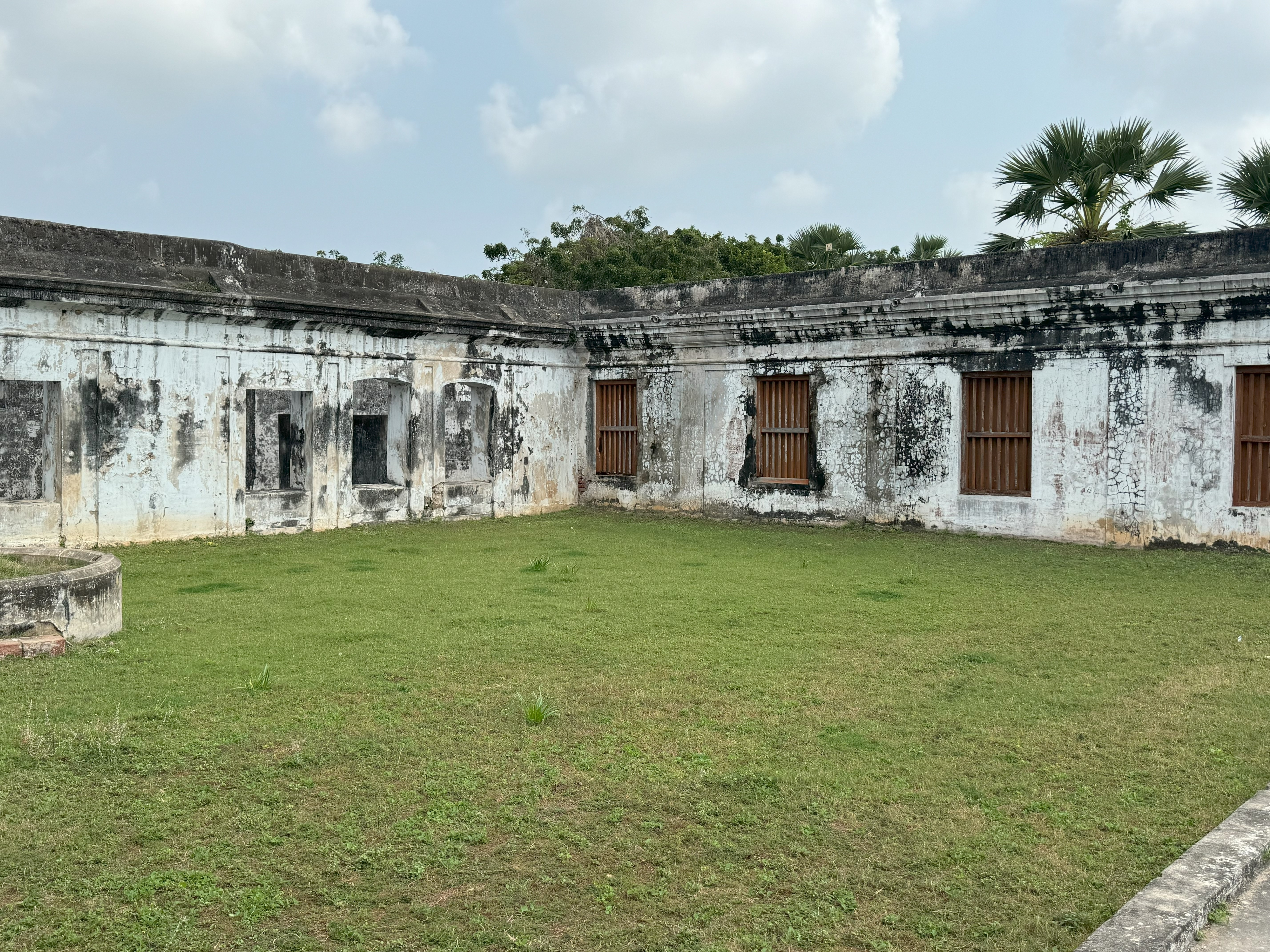
The British mostly stayed at Bandar Fort, a couple of miles from town. The walls survive but not the roofs.
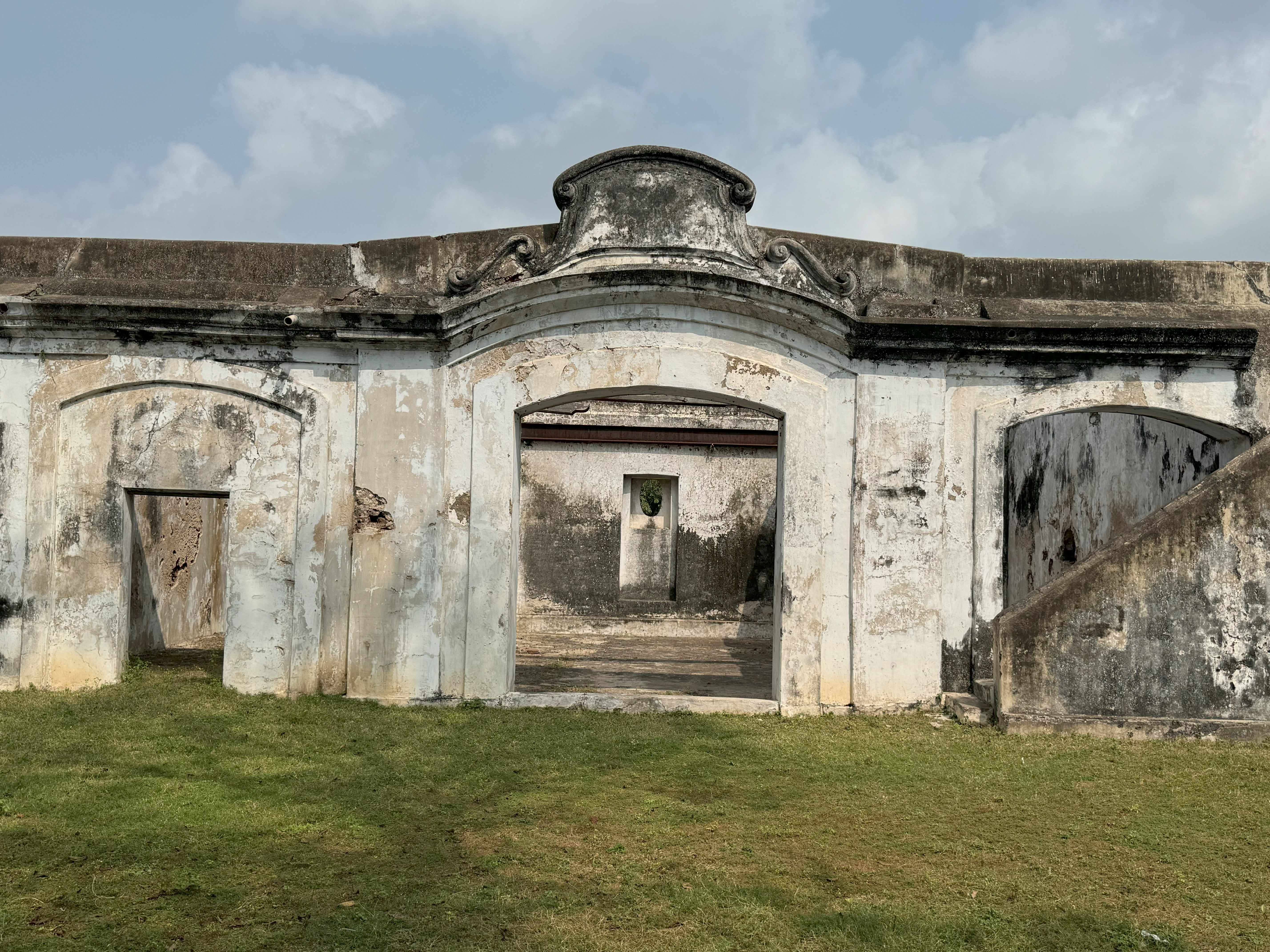
Guess who started the fort. Full marks if noticing the scrolls you say, "the Dutch, of course."
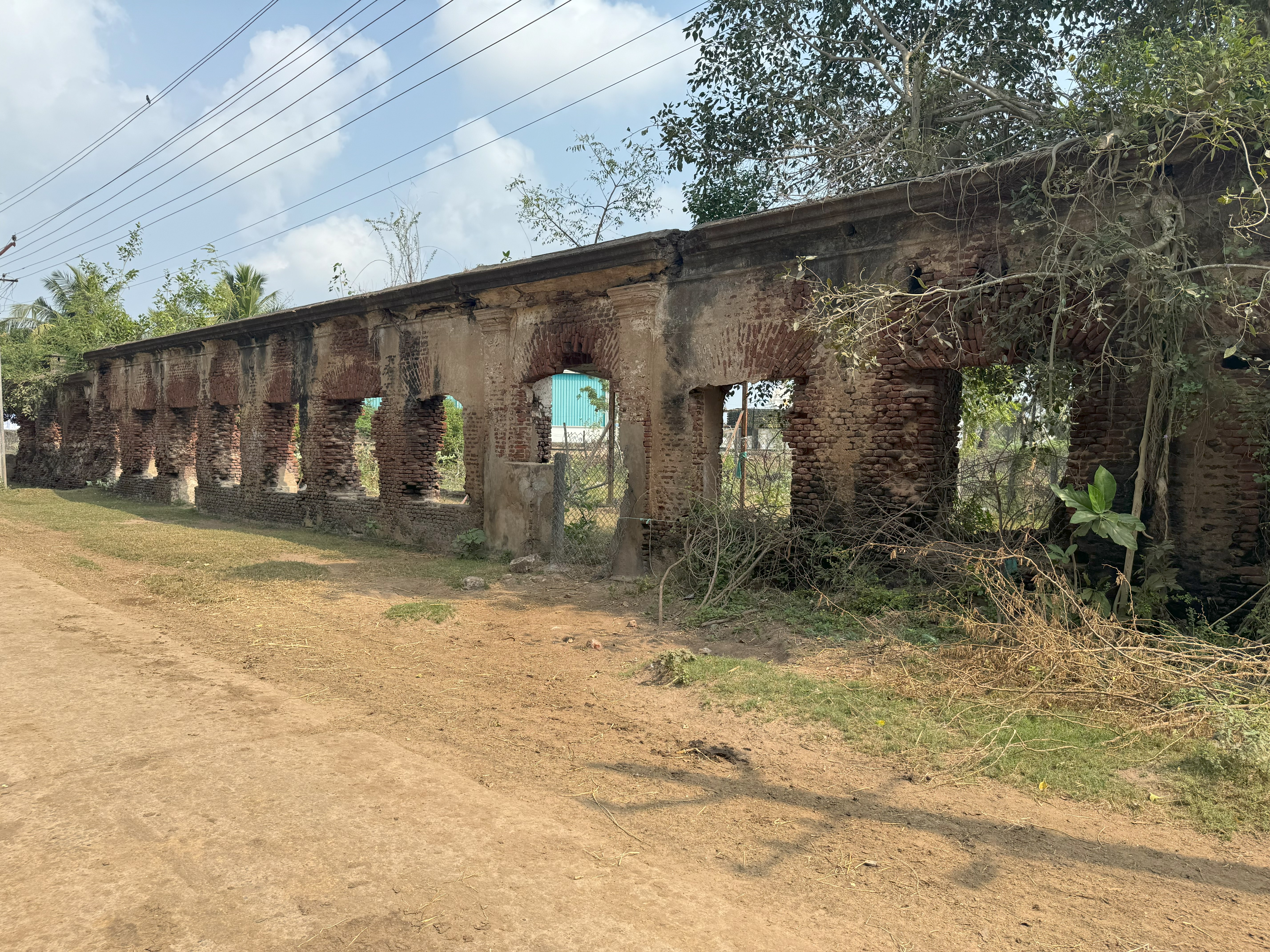
The Brits added an adjacent hospital.
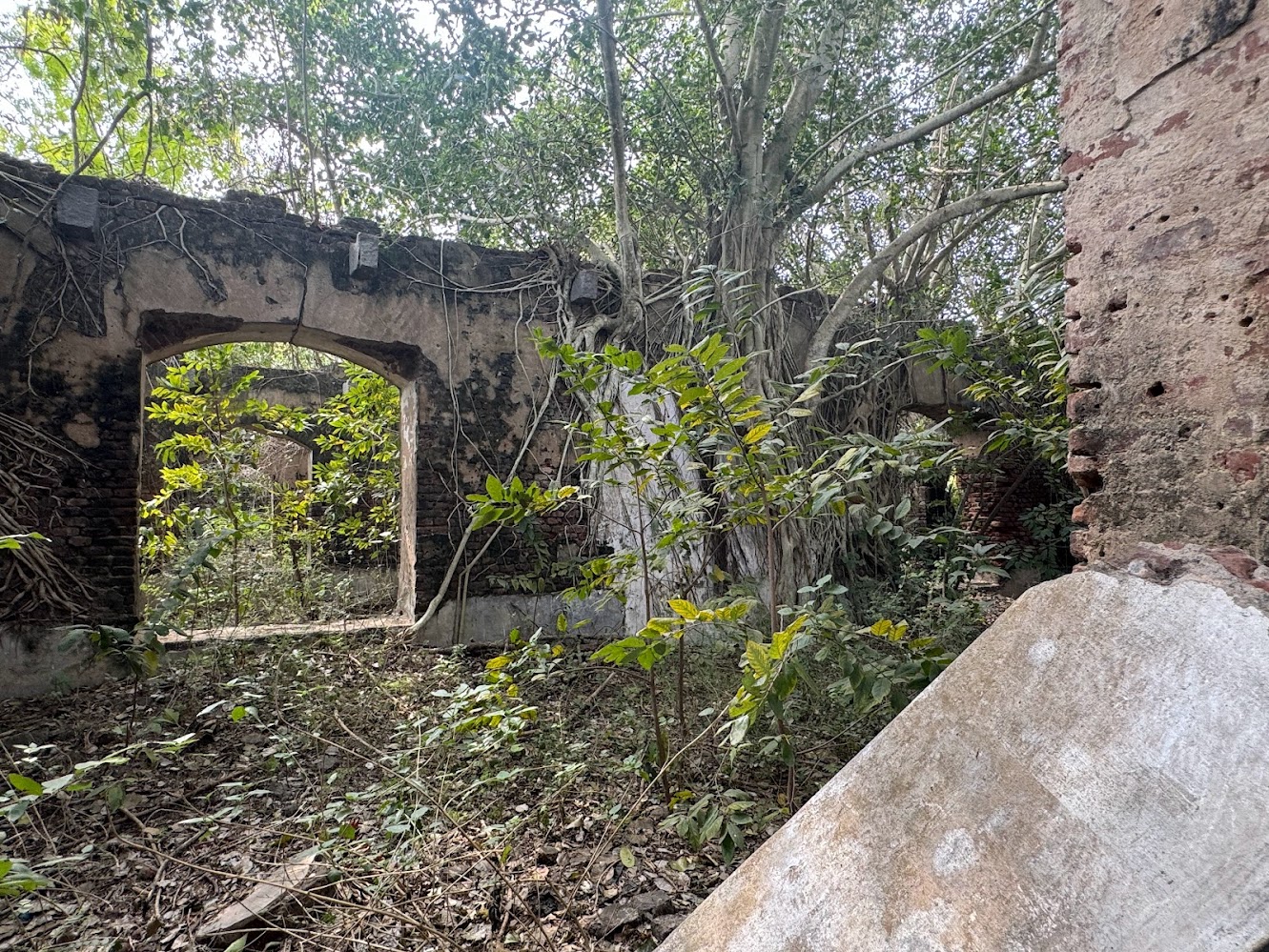
And a jail.
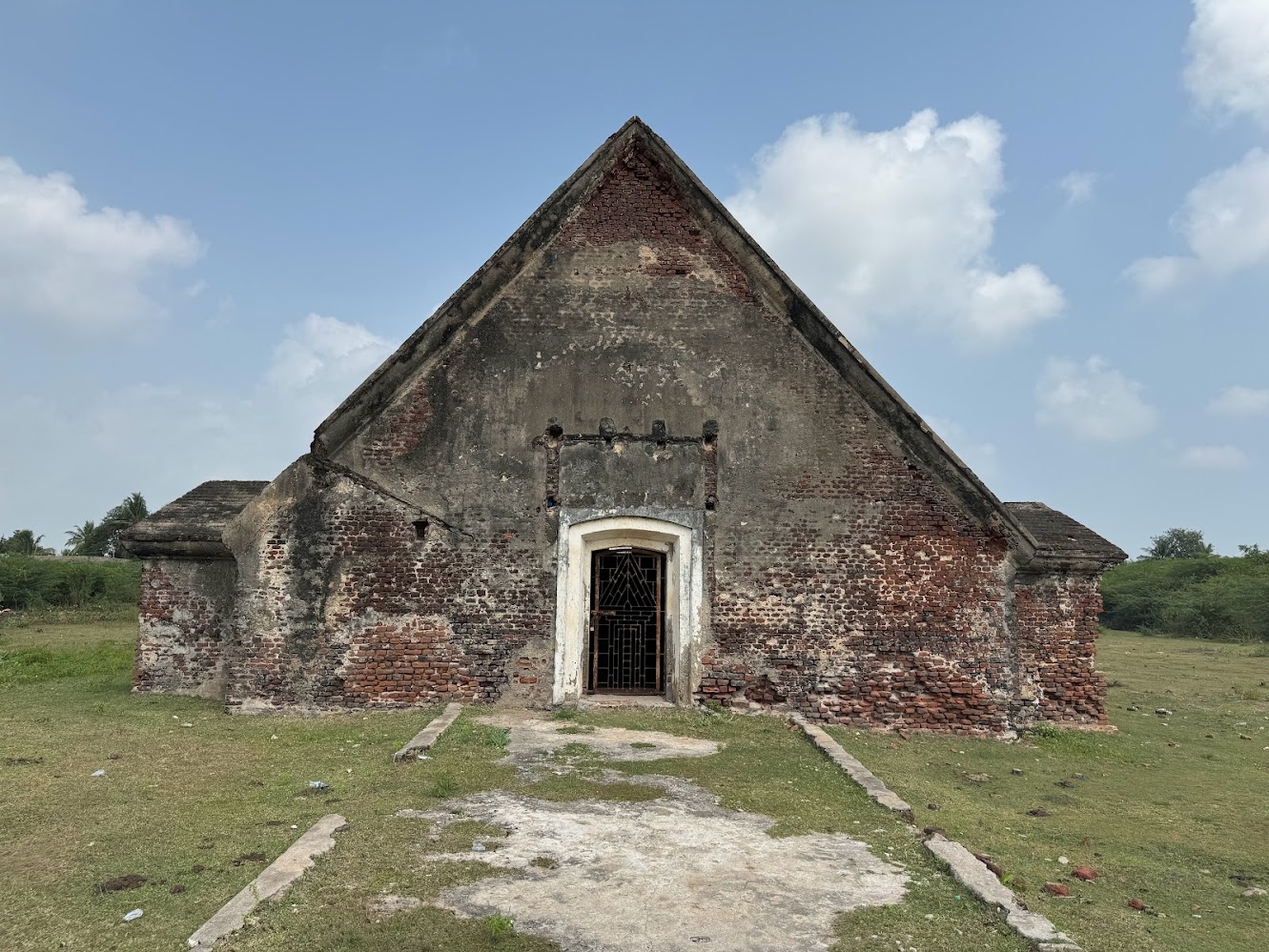
And what looks like a church, which is how Google Maps labels it.
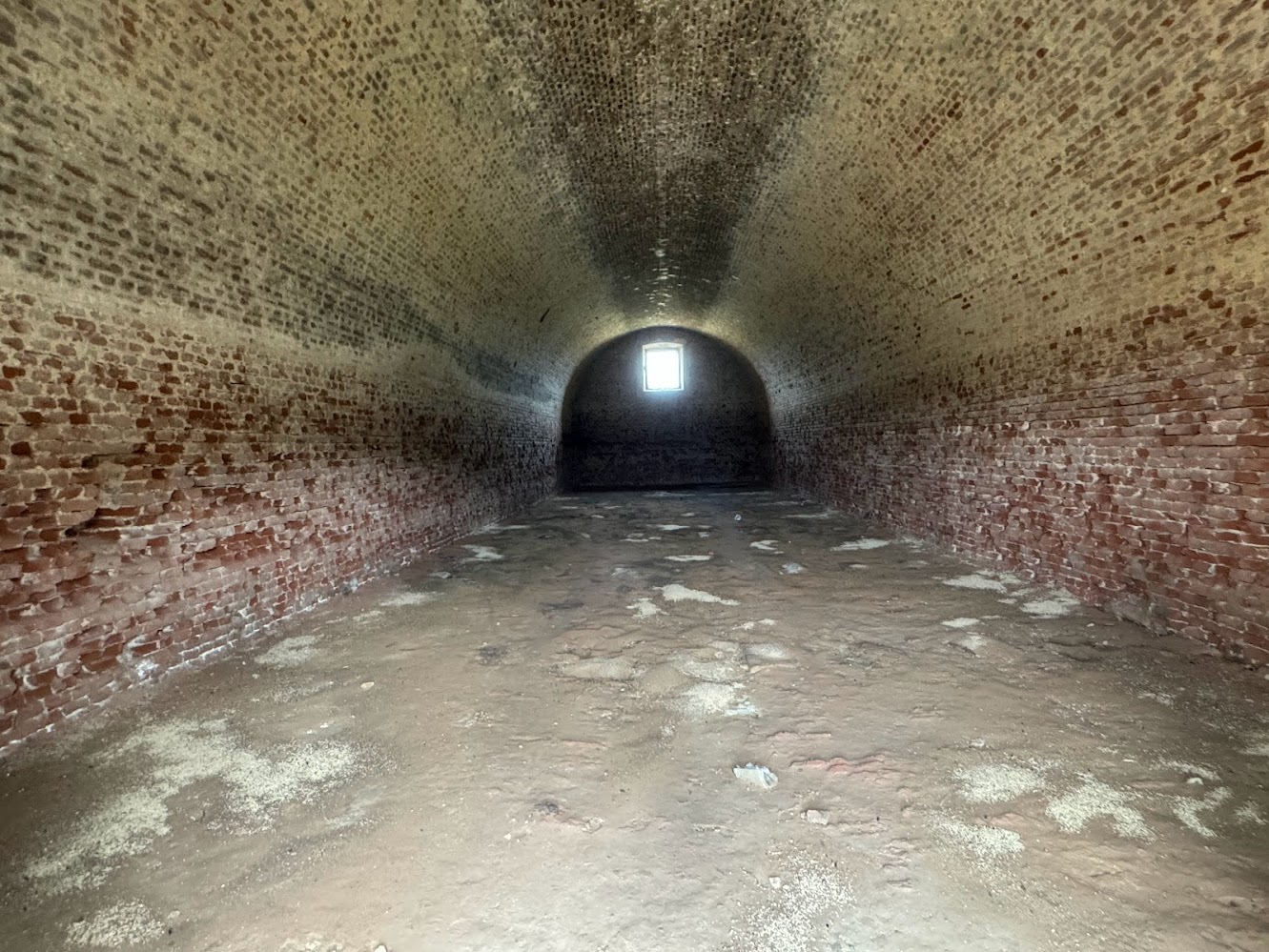
But here's the inside. Two possibilities: (1) it was a church but was converted to an armory or (2) it was built as an armory from the start.
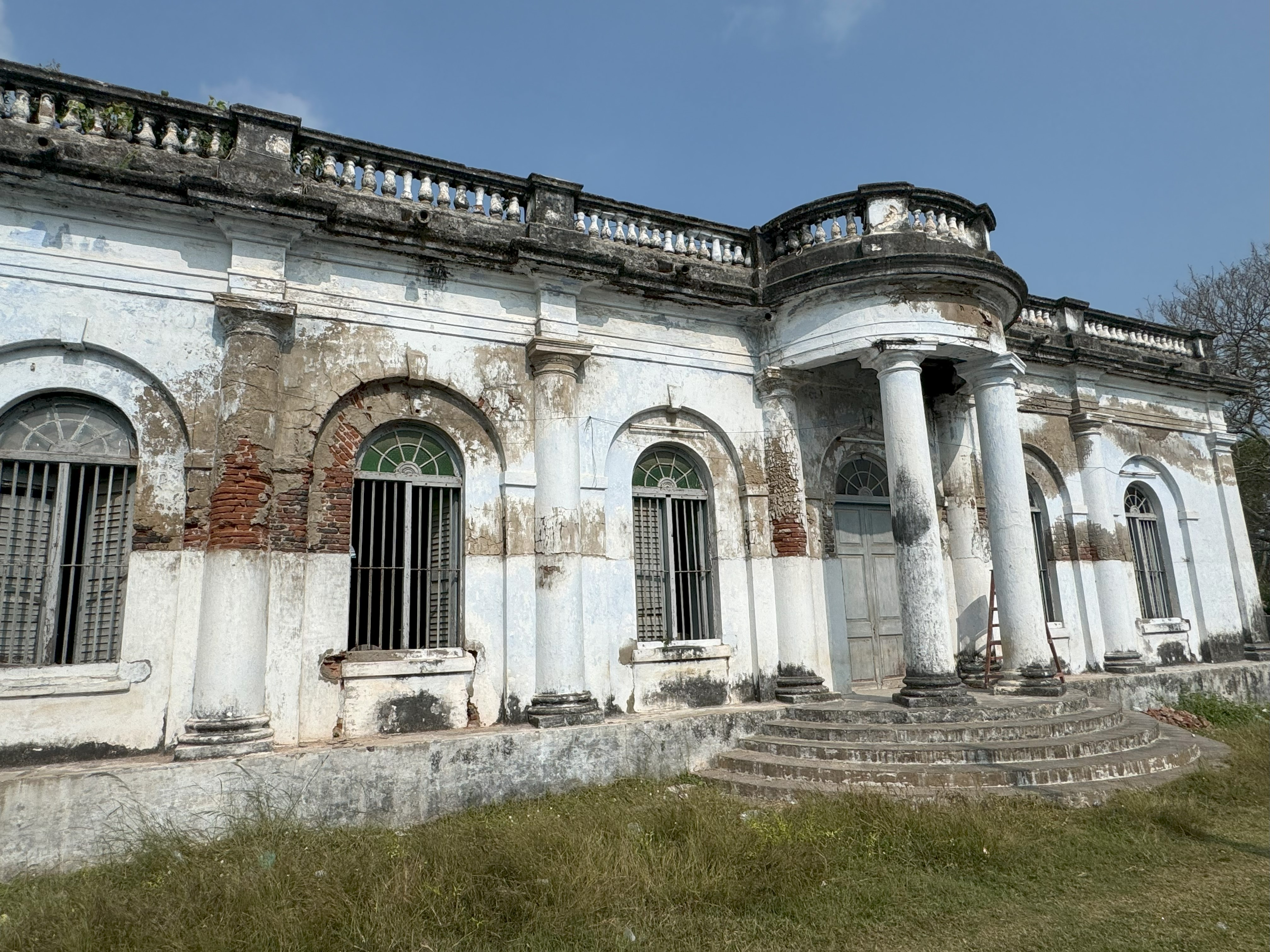
St. Mary's Church, in Machilipatnam. Locked up; no caretaker on premises.
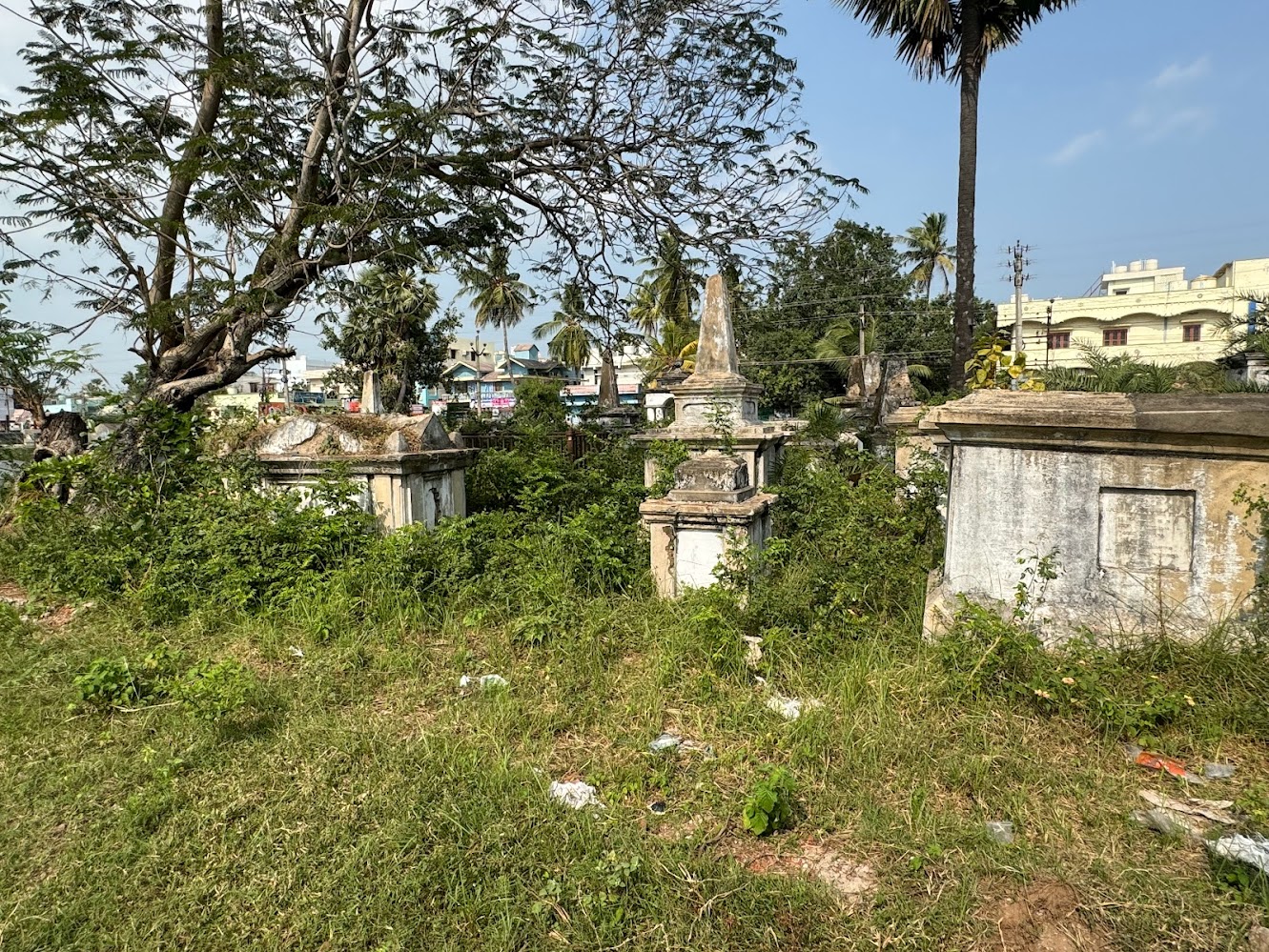
Adjoining graveyard.
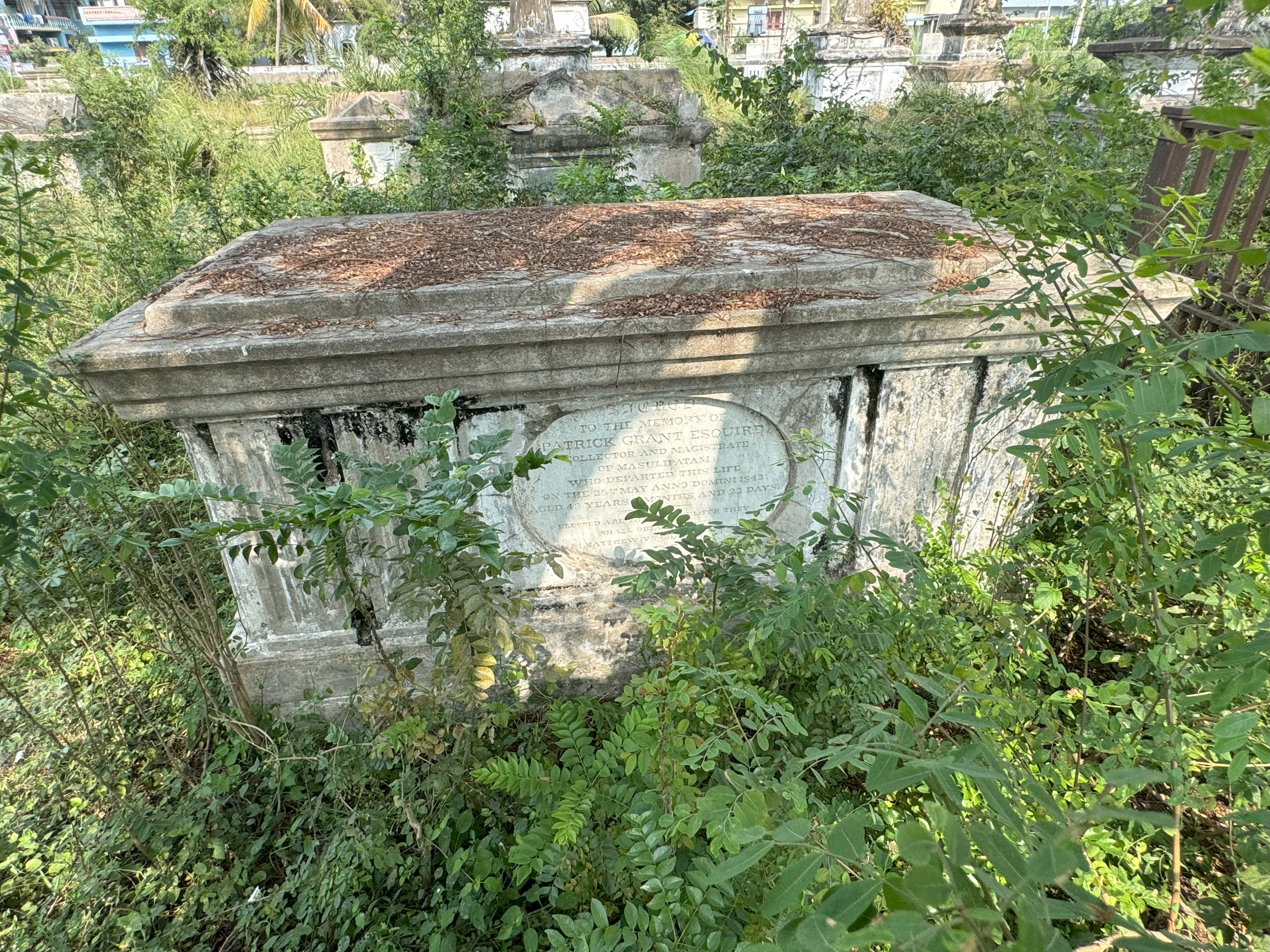
One accessible and legible stone.
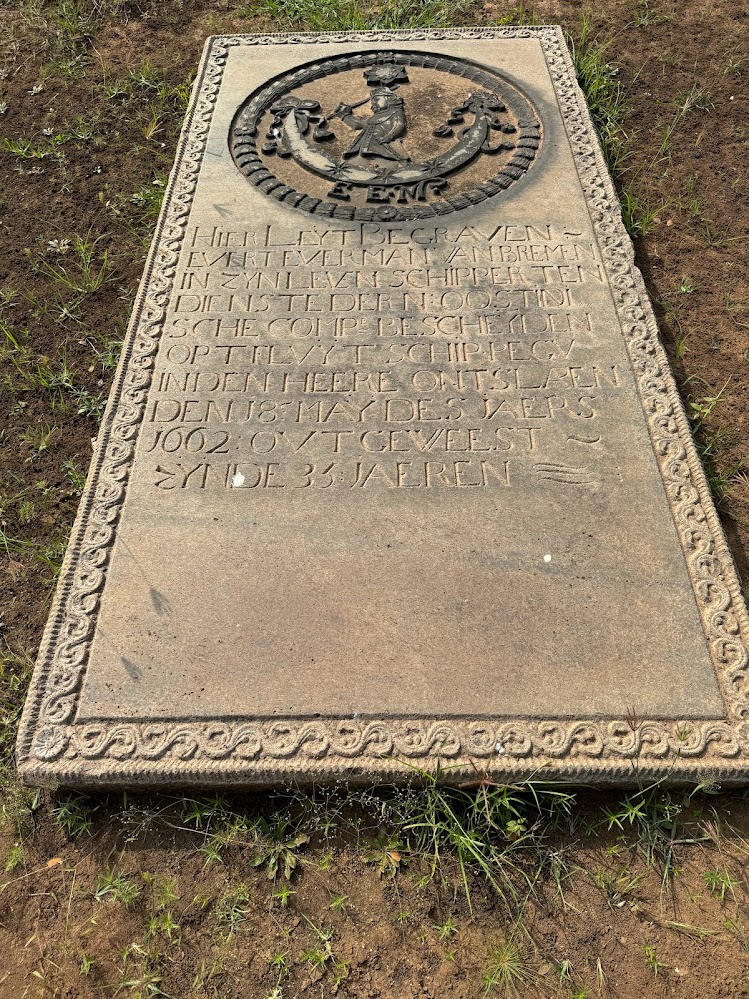
One of the many elegant stones in the nearby Dutch graveyard.
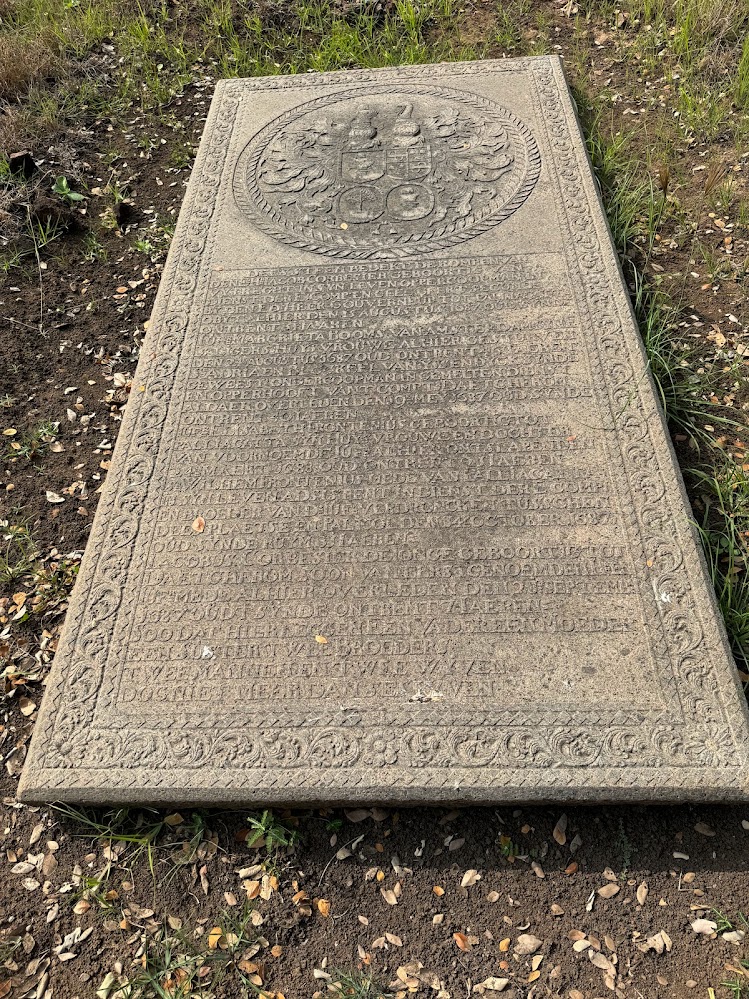
Another.
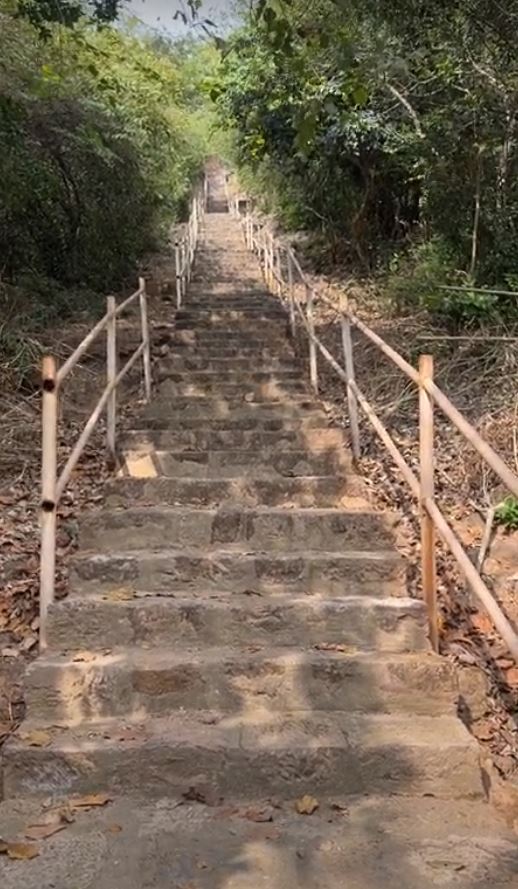
We've driven north from Vijayawada to Eluru (or Ellore), then on secondary roads to Guntupalli, where stairs lead to caves near the top of a ridge.
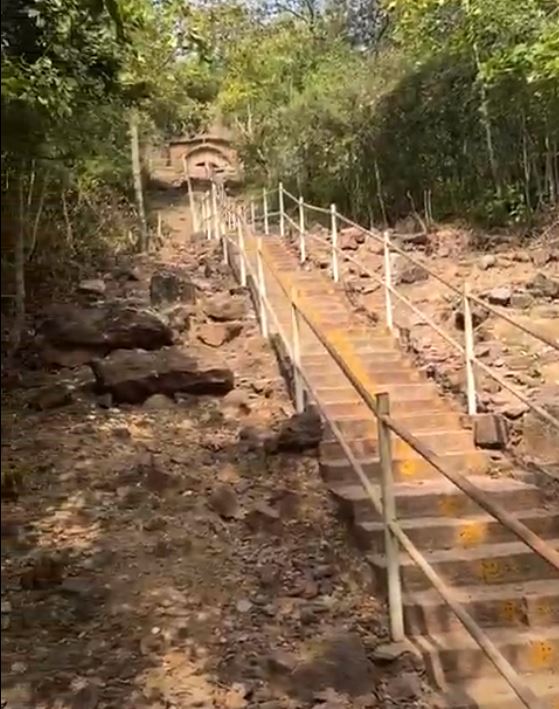
Lots of stairs, but you can see there's something up there.
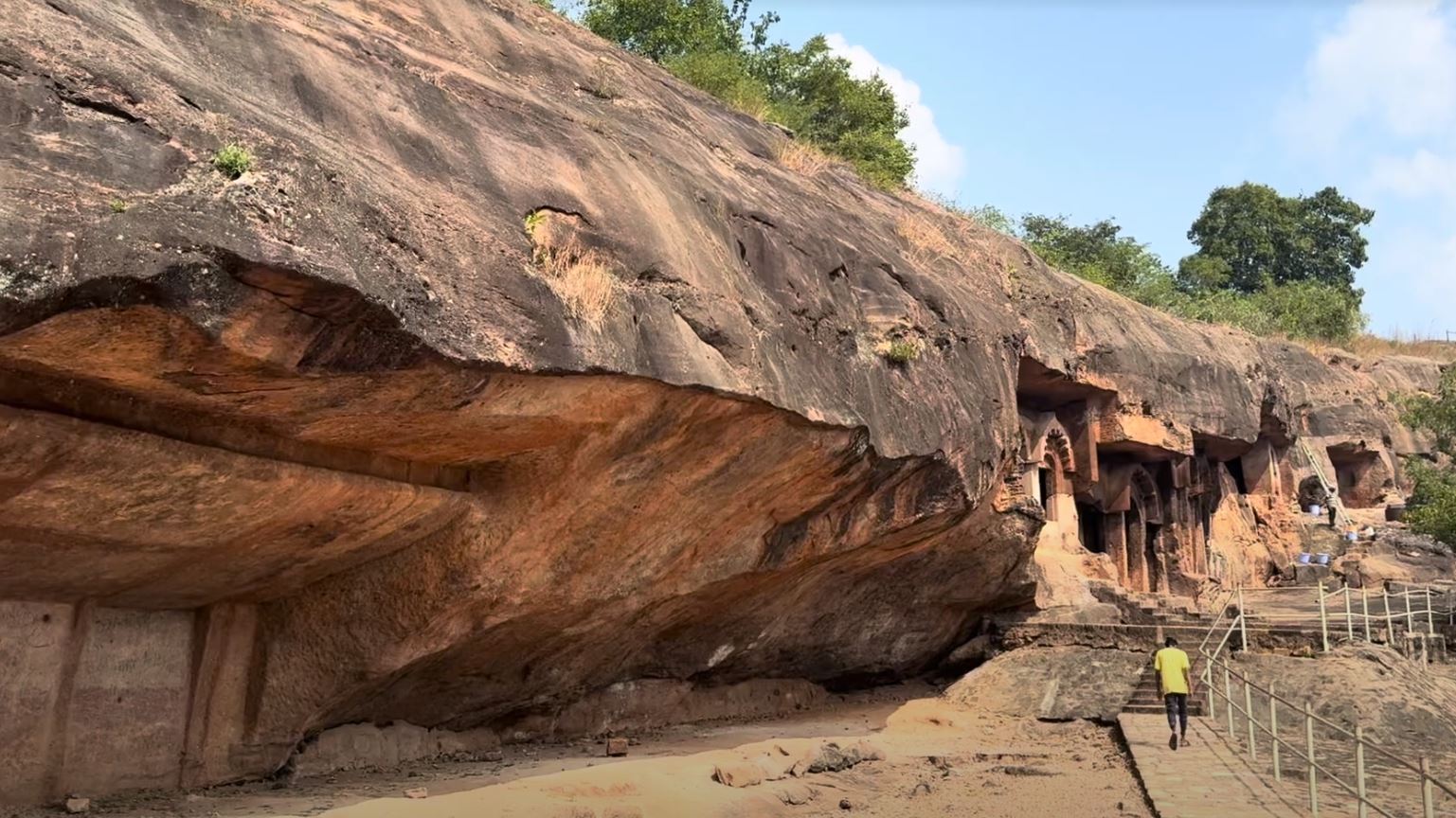
Here's a bit of what's up top.
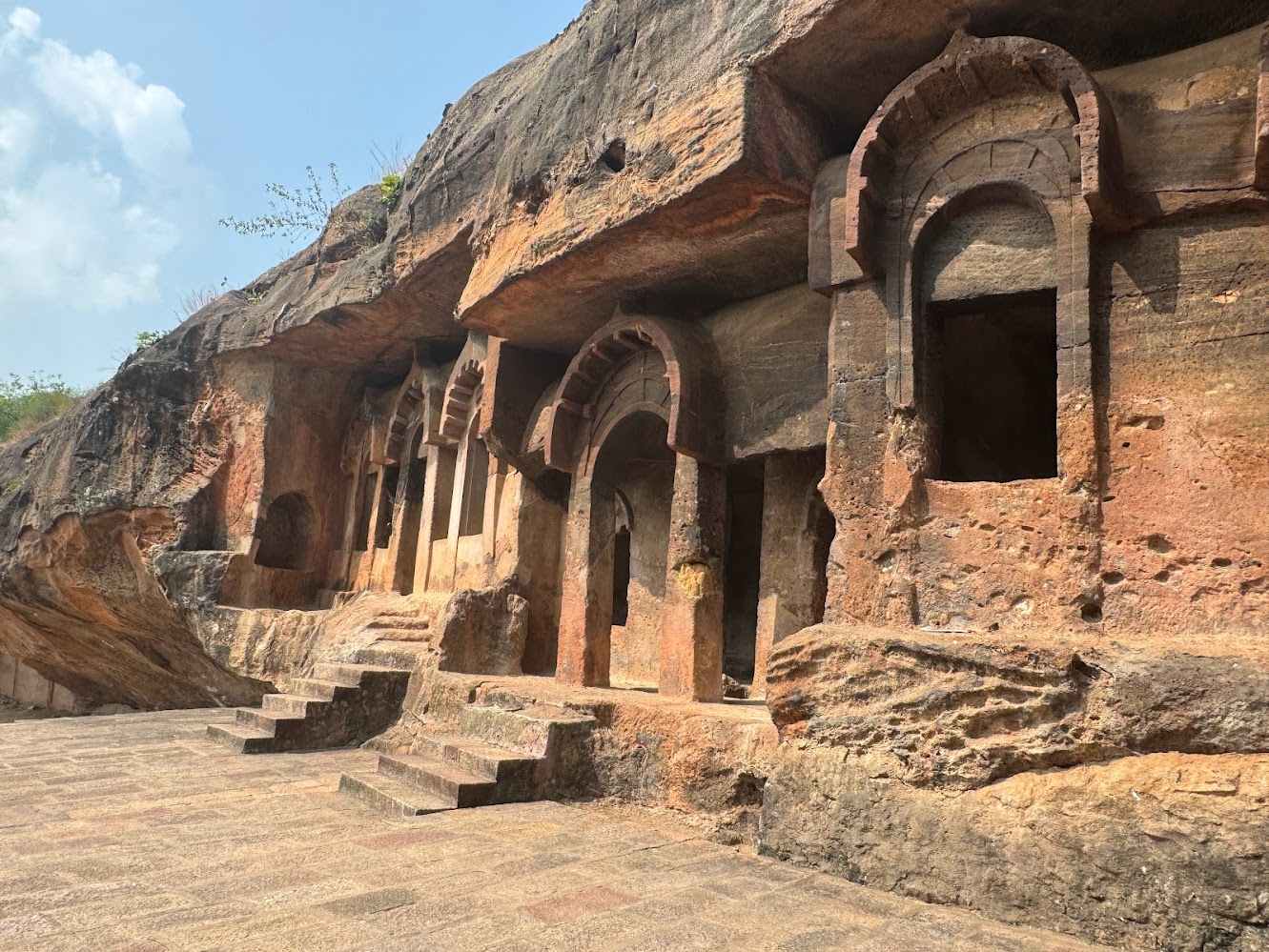
Not a serious rival to Ajanta, but as interesting as the word "interesting." Shall we give it a 3 out of 10? 5?
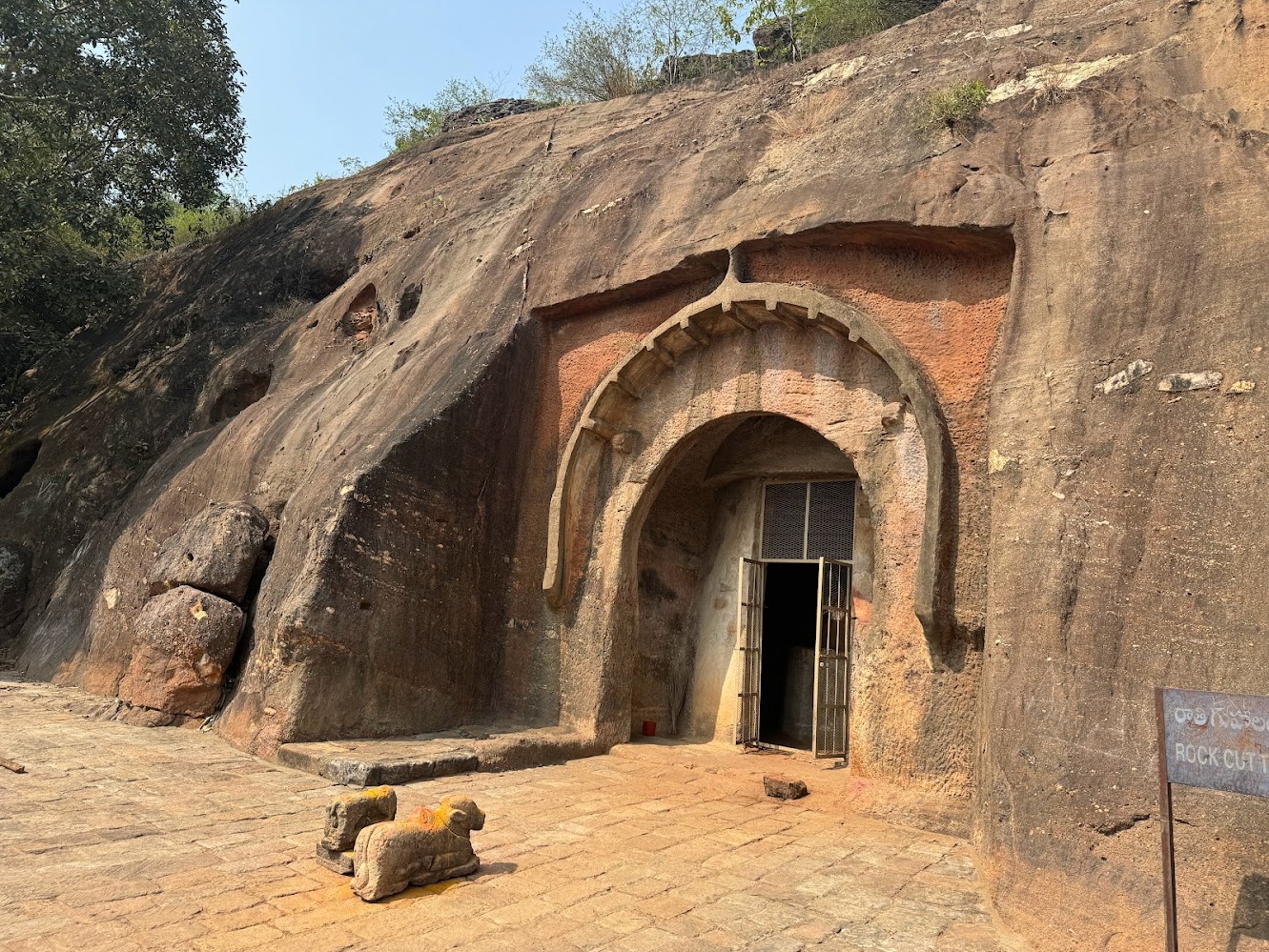
Here's the most interesting cave, the Dharmalinga Cave, which found a second life as a Hindu temple, as its name suggests.
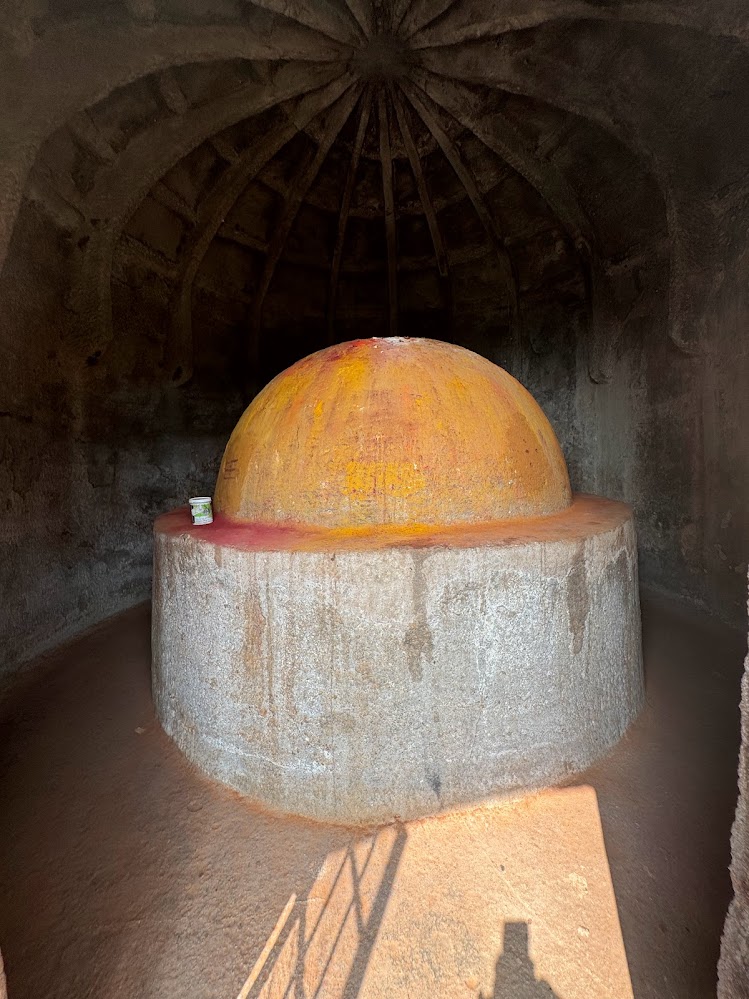
Inside, there's a stupa, apparently taken now as a lingam.
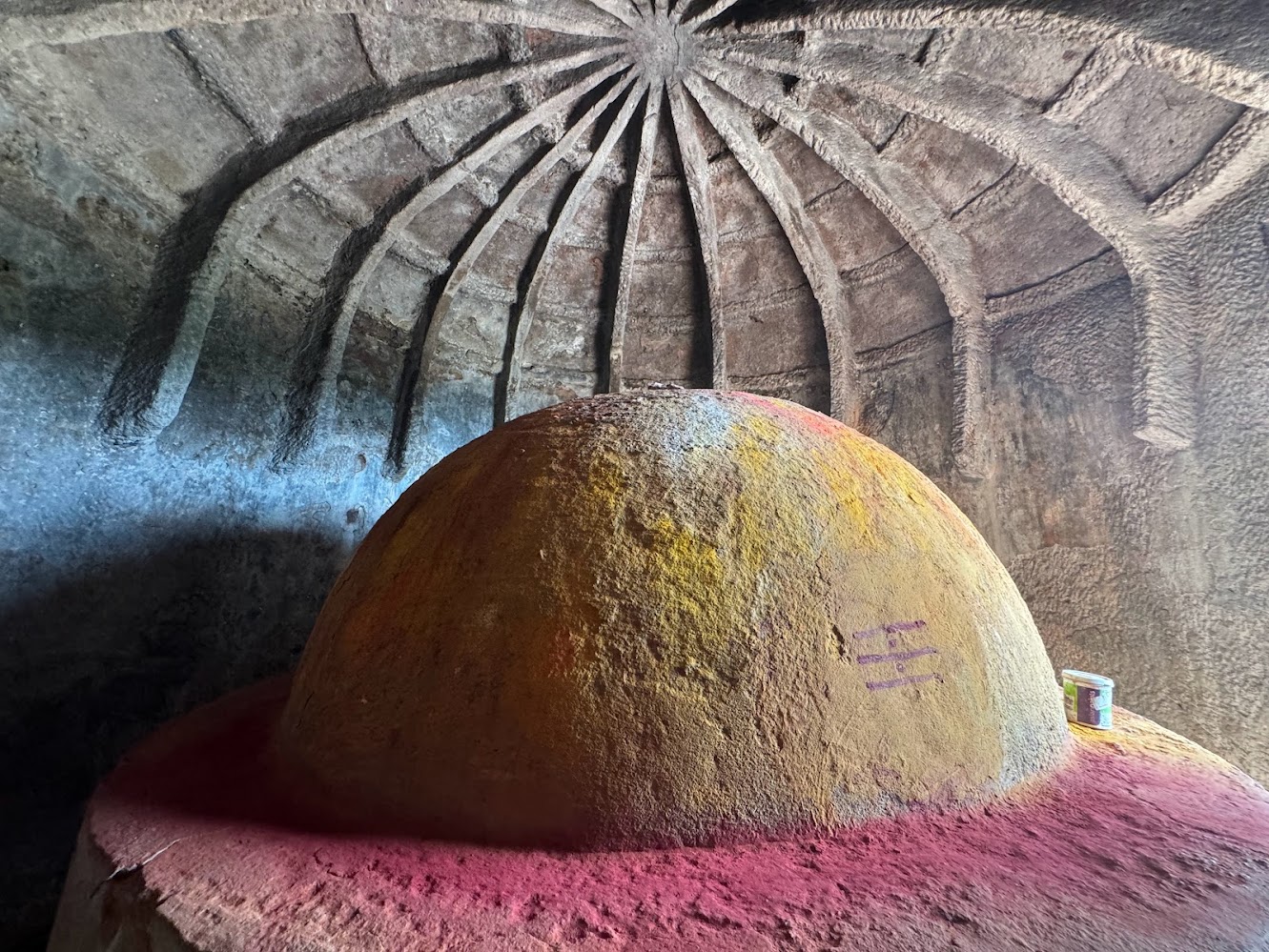
As at Ajanta, there are carved ribs, as if the cave was built of wood and had a roof resting on rafters. Think of a Houston suburb and a home trimmed with columns and pediment.
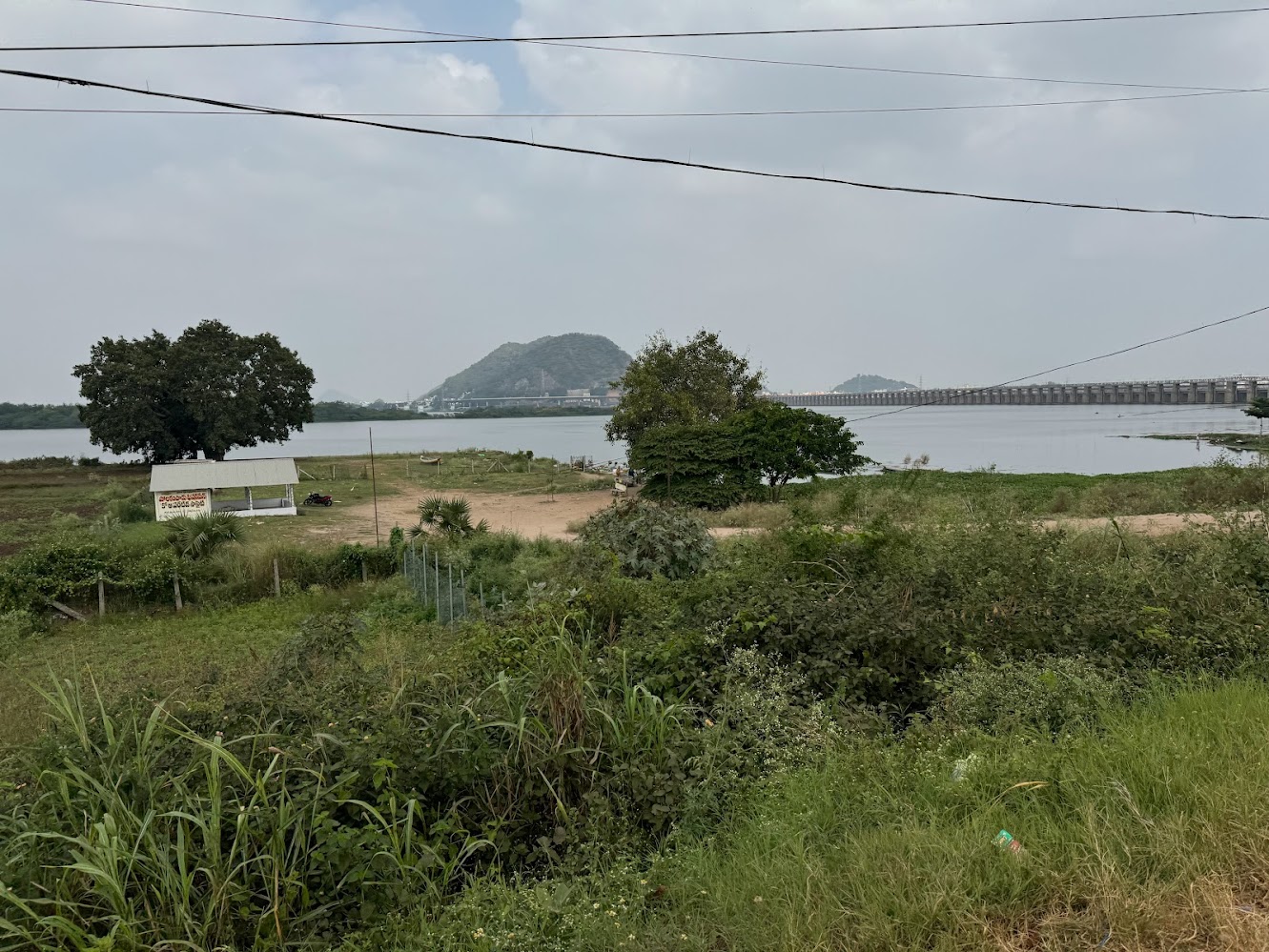
We're back above the low dam at the head of the delta.
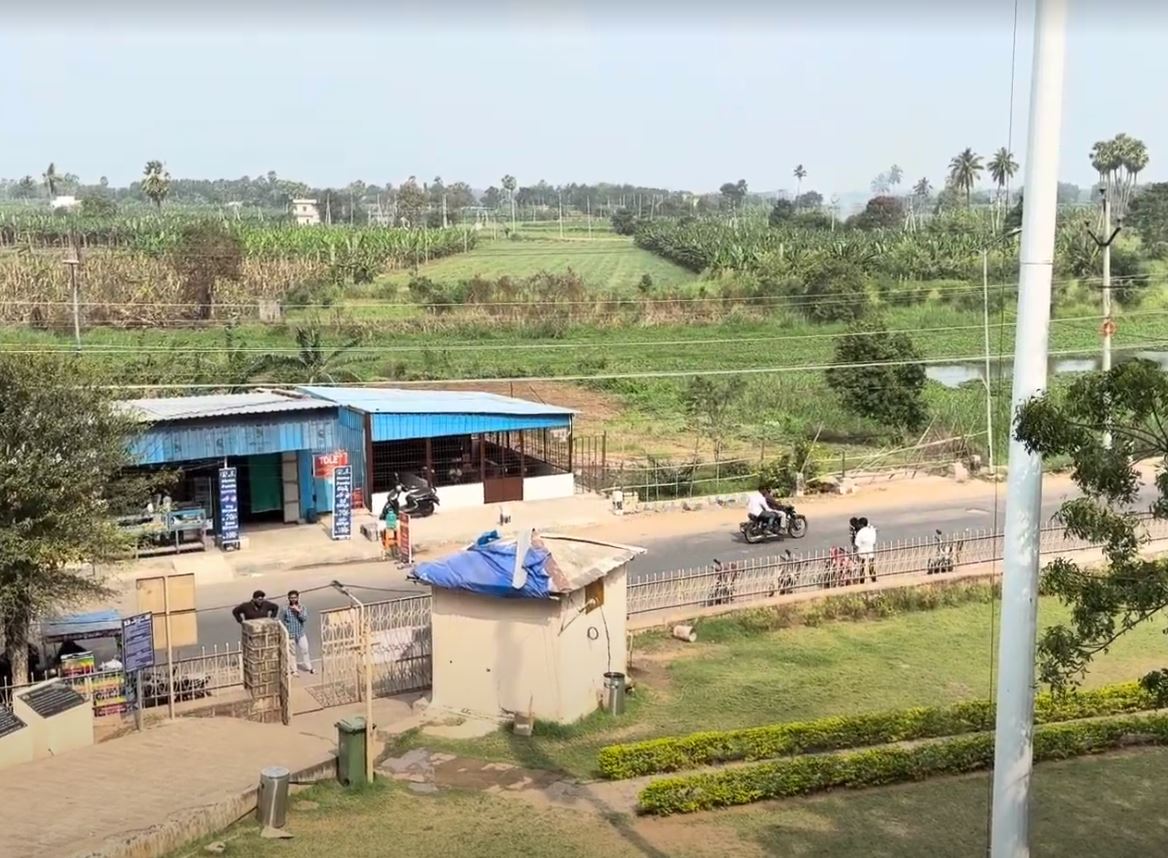
Another mile upstream. You're not impressed. But turn around.
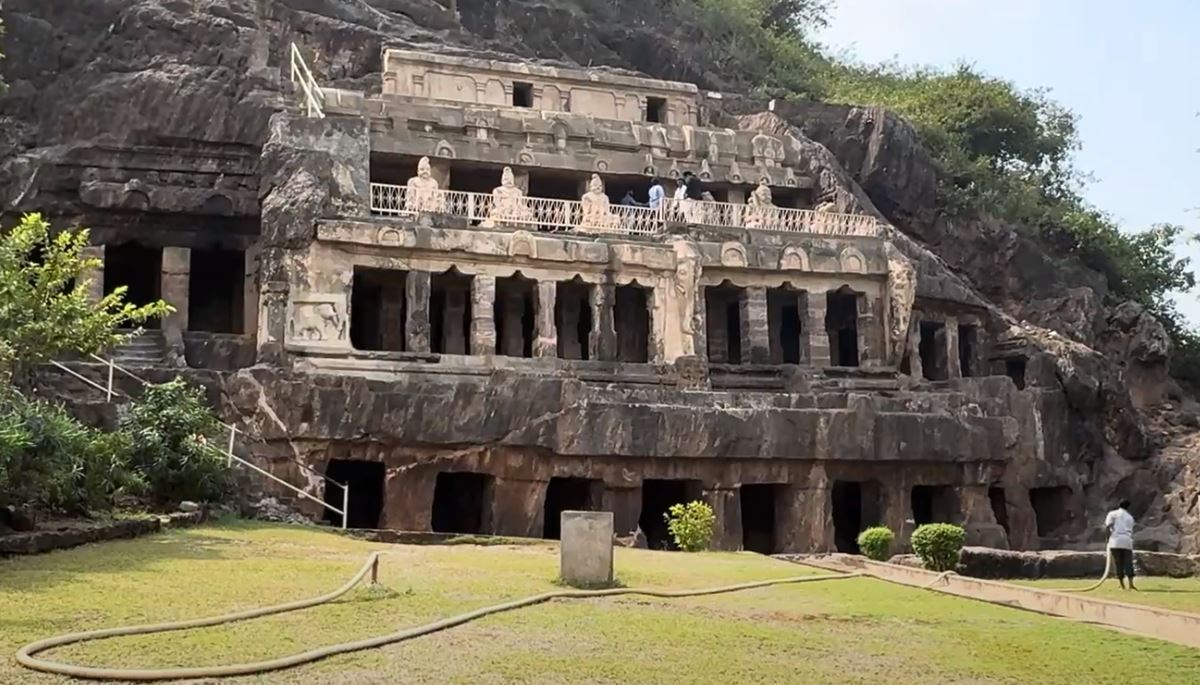
It's the Undavalli Cave Temple, Buddhist turned Hindu. The ASI is busy maintaining its usual lawn.
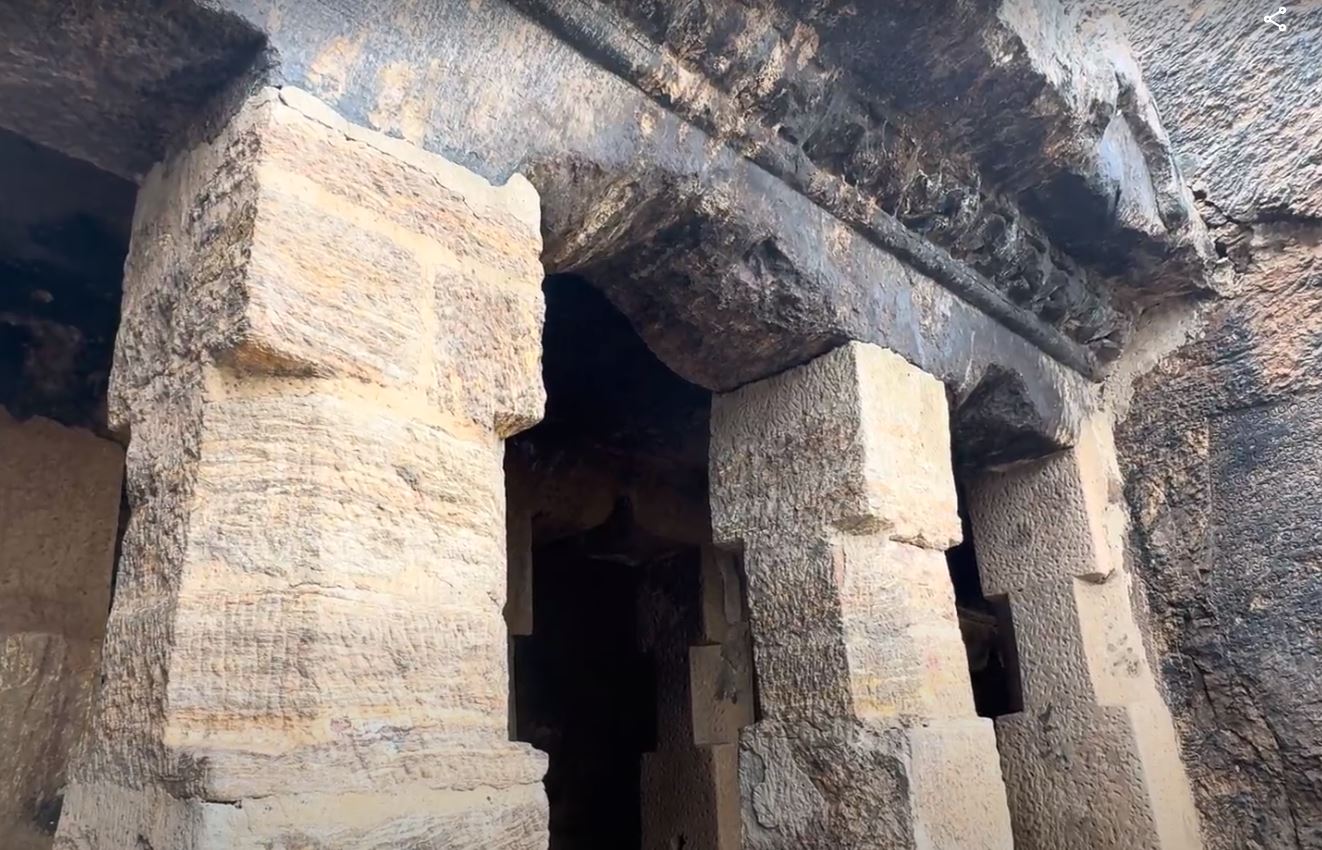
The cave is a combination of excavated and built.
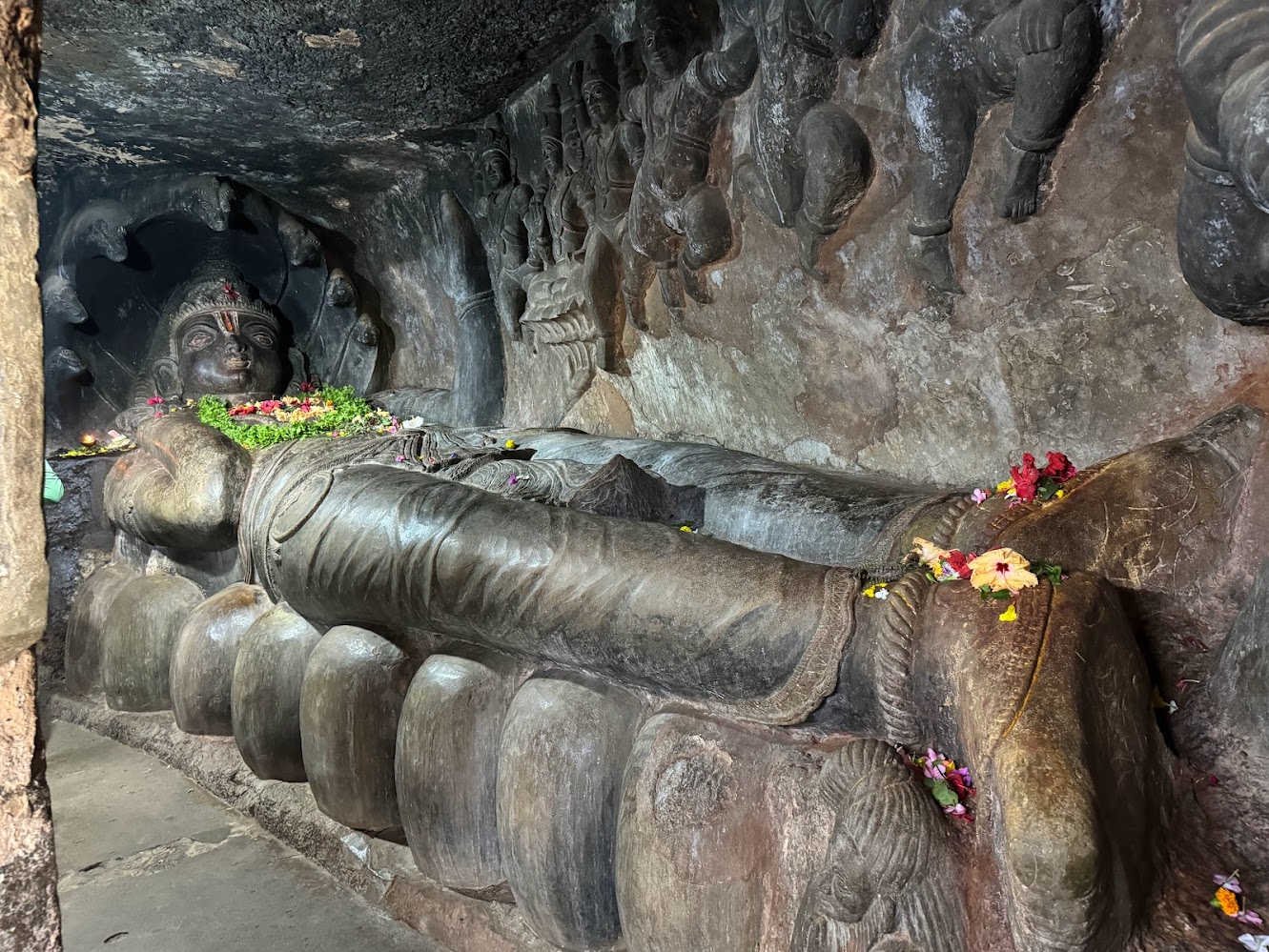
Here's an excavated Vishnu. I'm still puzzled by his feet. Seems painful.
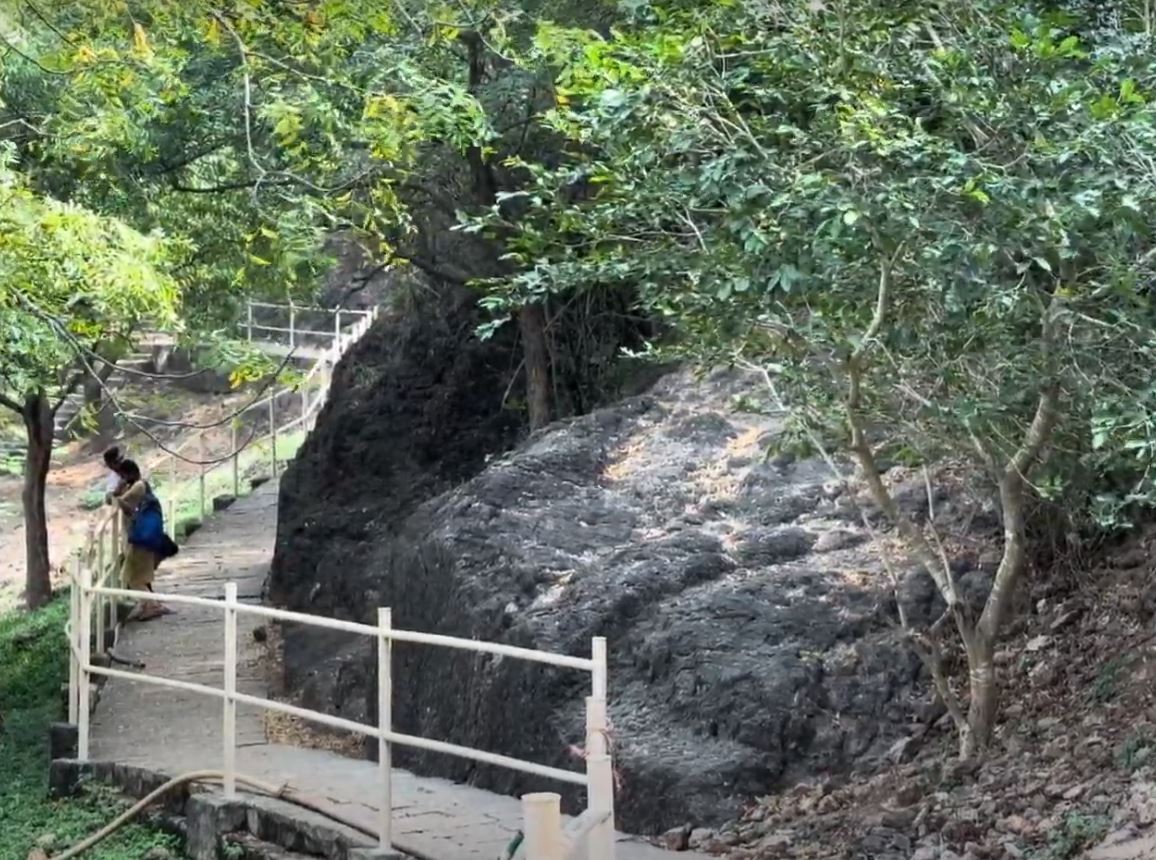
And if you're underwhelmed, come up this path.
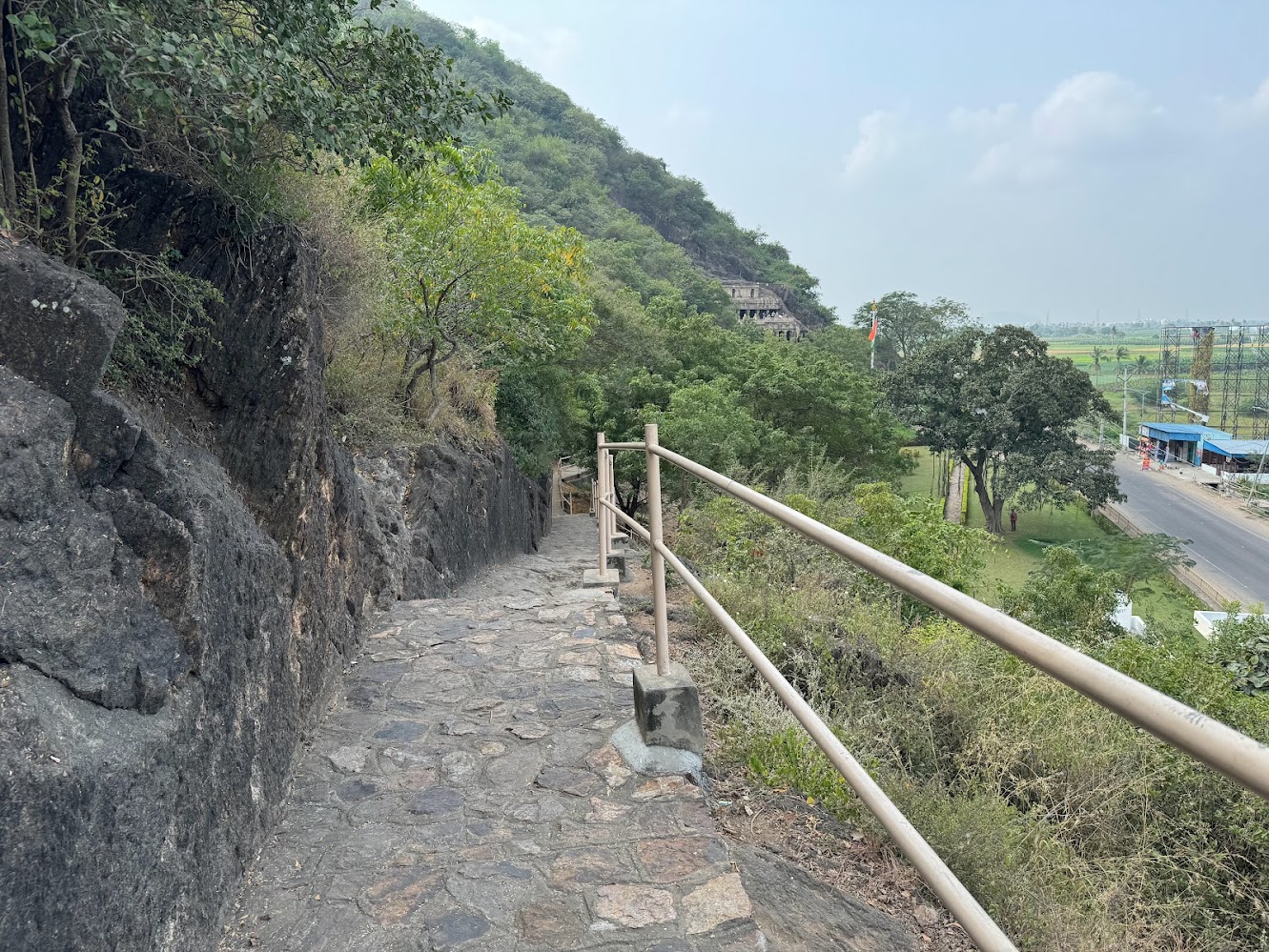
it winds along the cliff face.
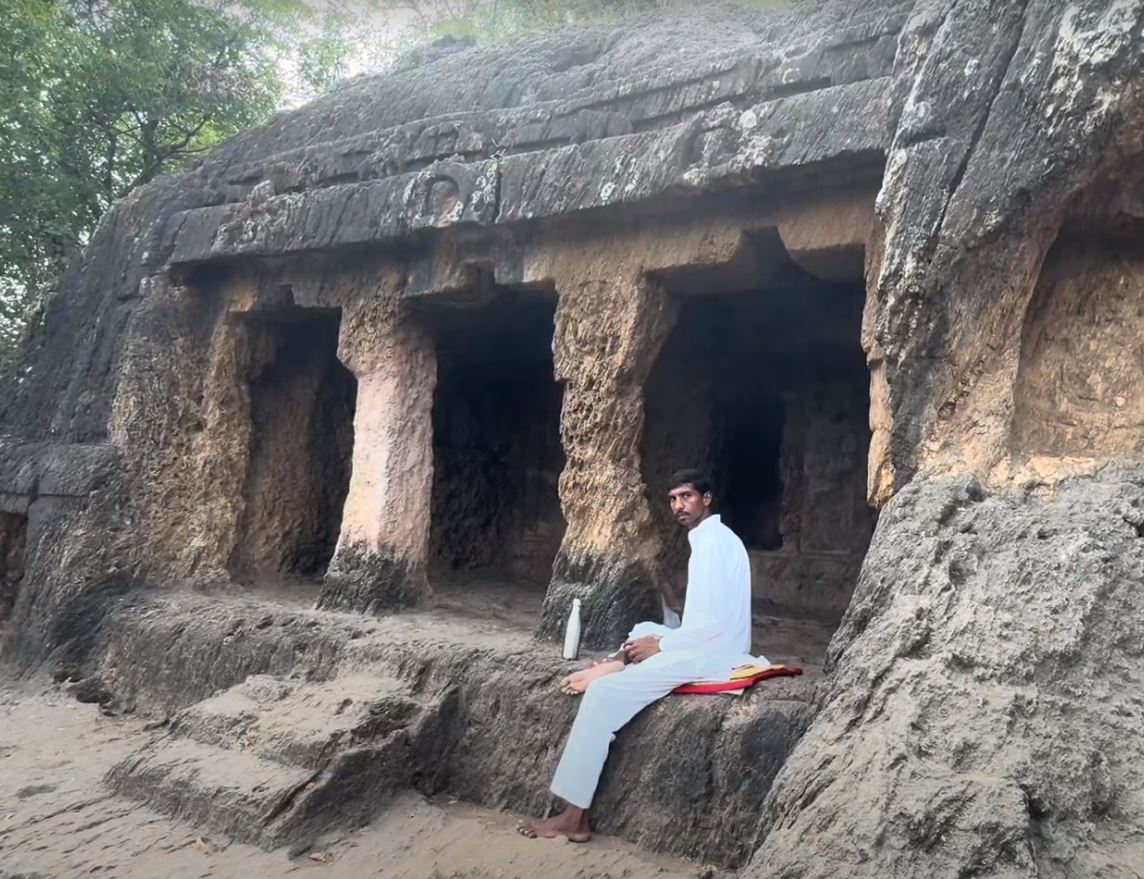
It passes other caves offering a degree of peace and quiet.
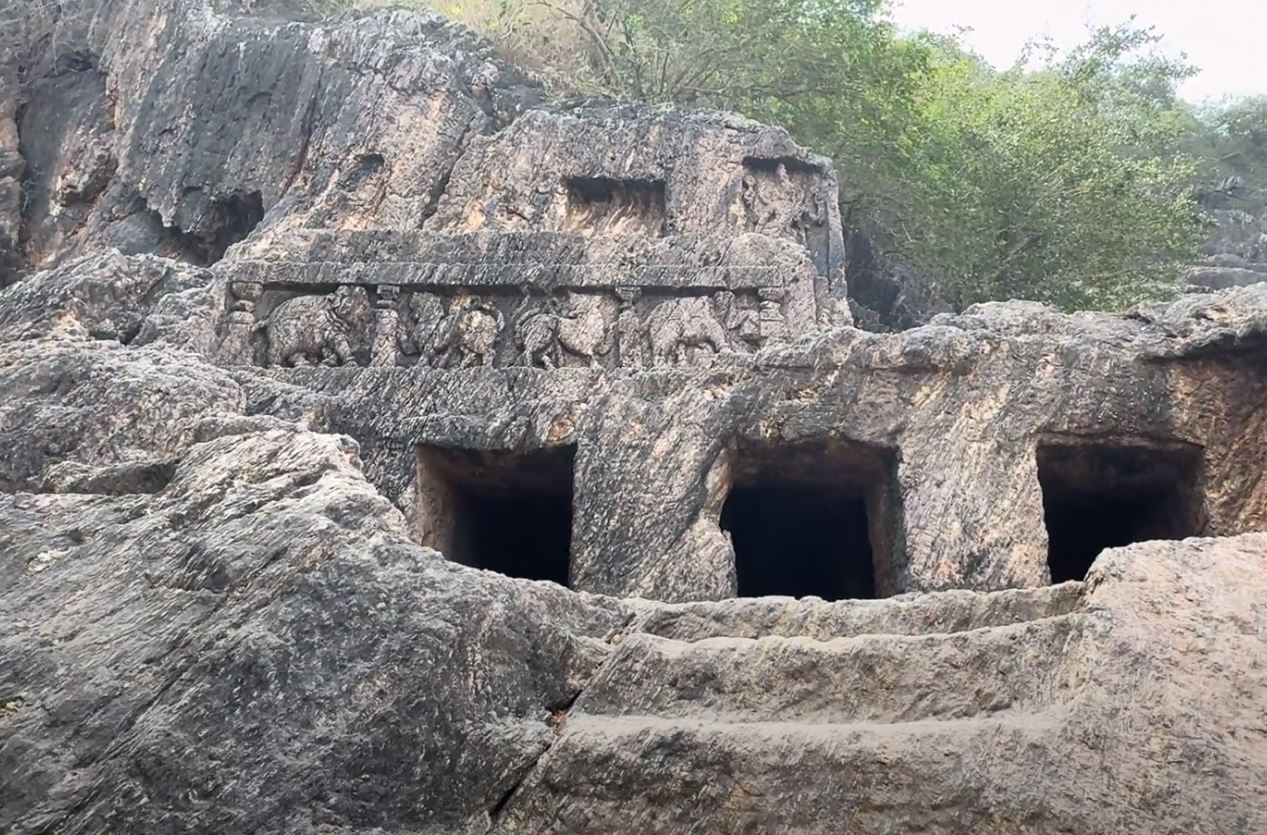
But here's what I liked: the animals above these caves. You're not impressed? They don't make you happy? Oh, I see. You're busy getting snacks together for the game. No problem. Sic transit gloria mundi. Tuesday, too.
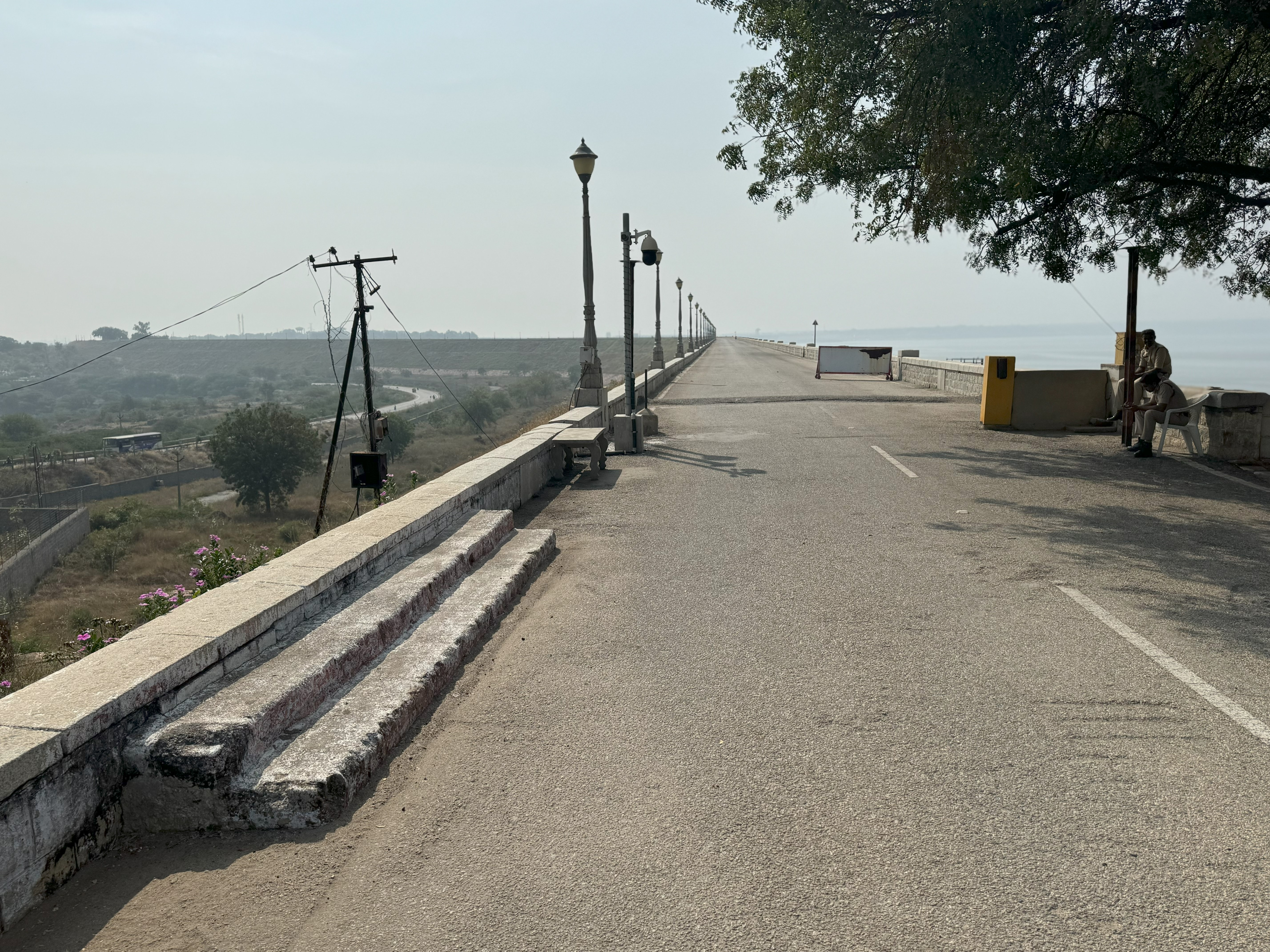
Serious business: it's the north end of the embankment that extends from the north end of the Nagarjuna Sagar Dam. Last time I was here, in the 1980s, you could drive across. The world has changed. Now you have to make a crazy detour to take a bridge downstream.
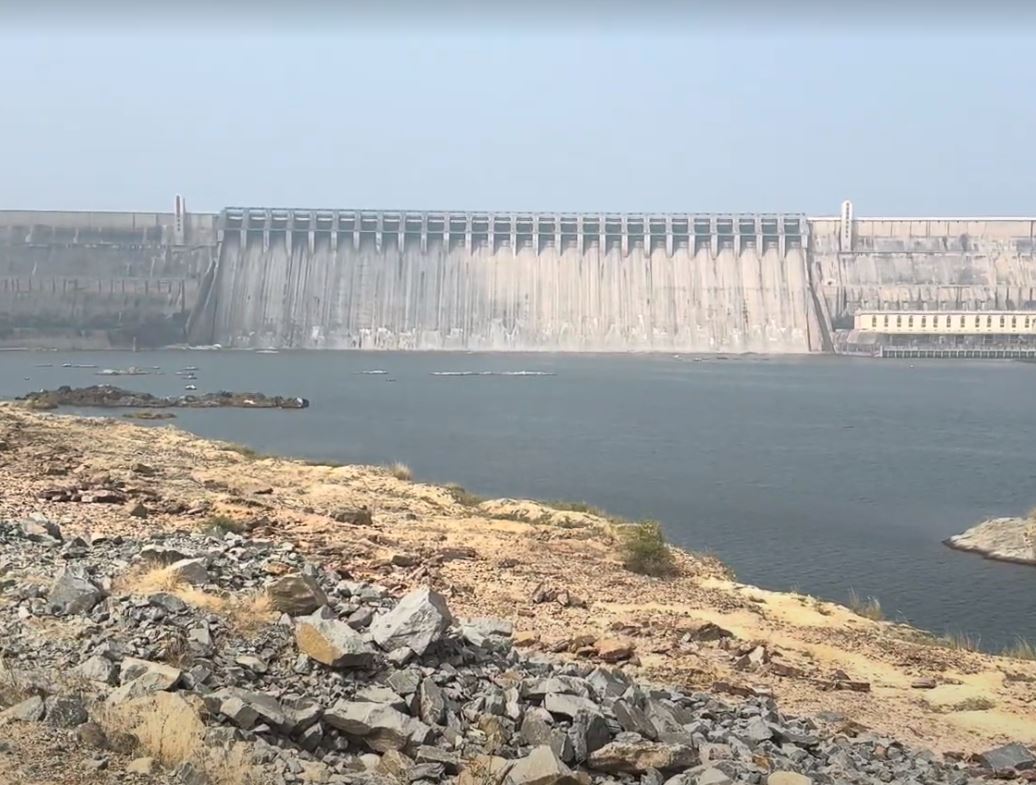
Here's the business side of the dam.
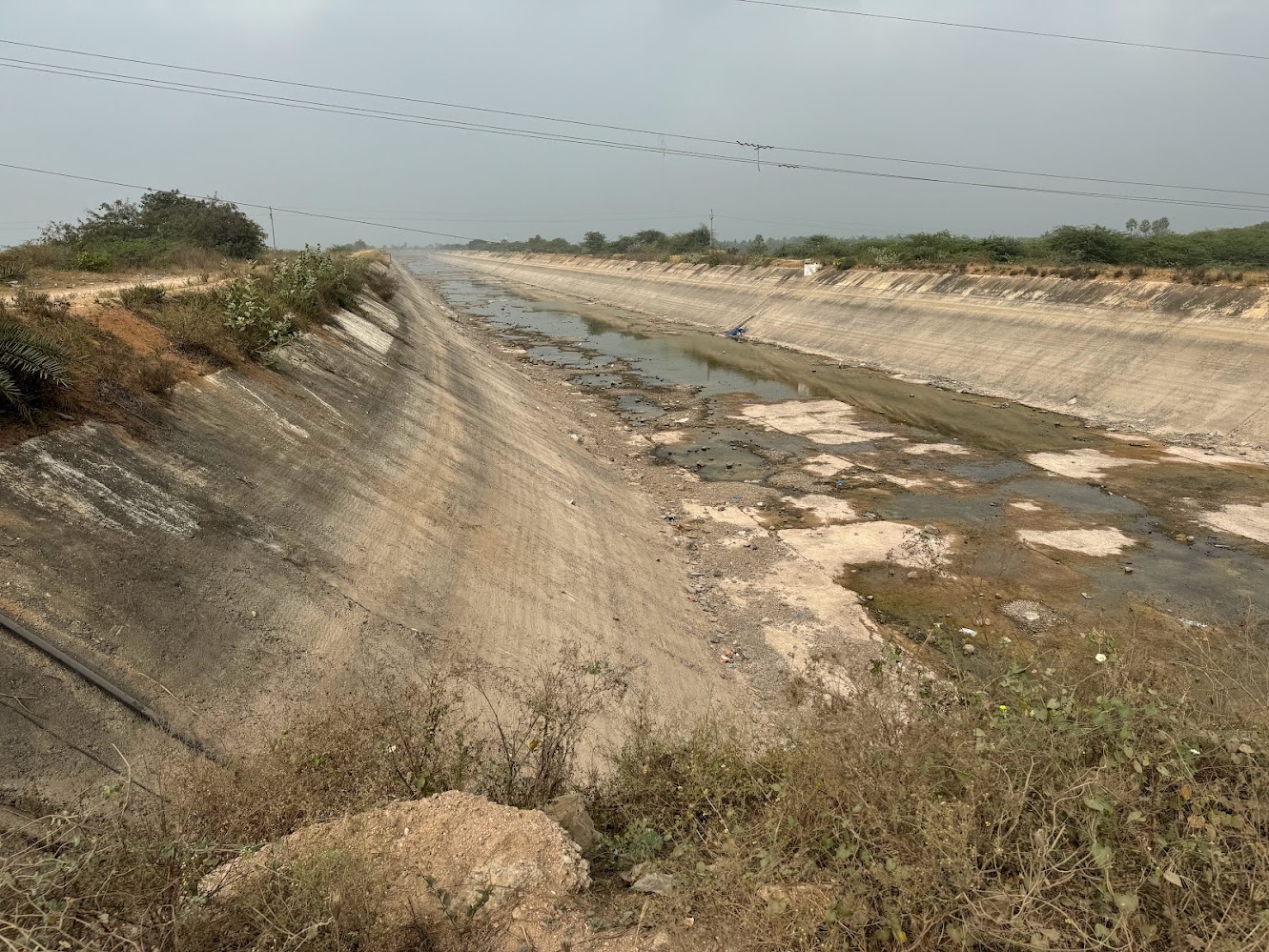
Way downstream, here's the left-bank irrigation canal, which in season irrigates a bit over a million acres.
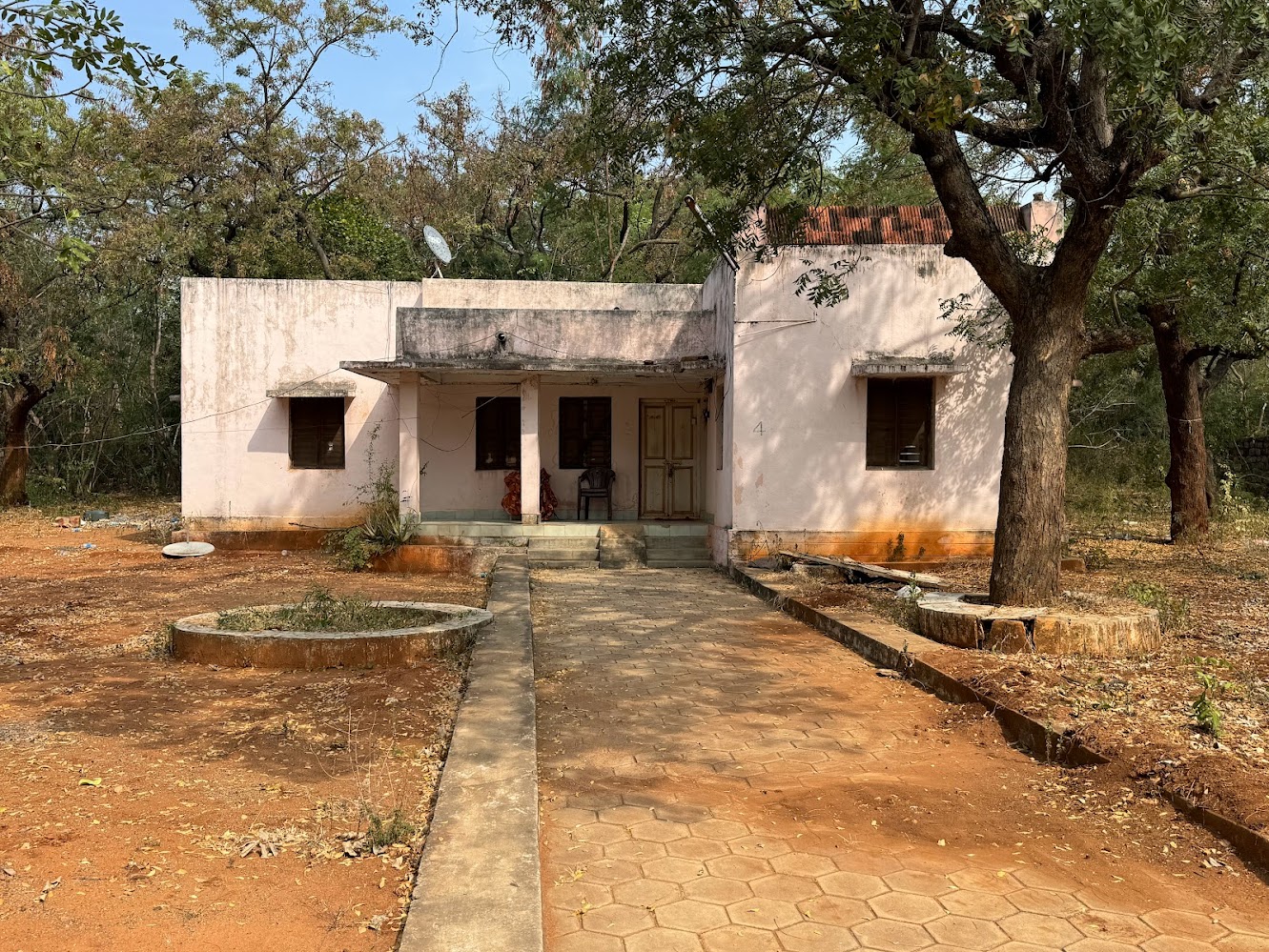
Employee housing near the Nagarjuna Sagar Dam.
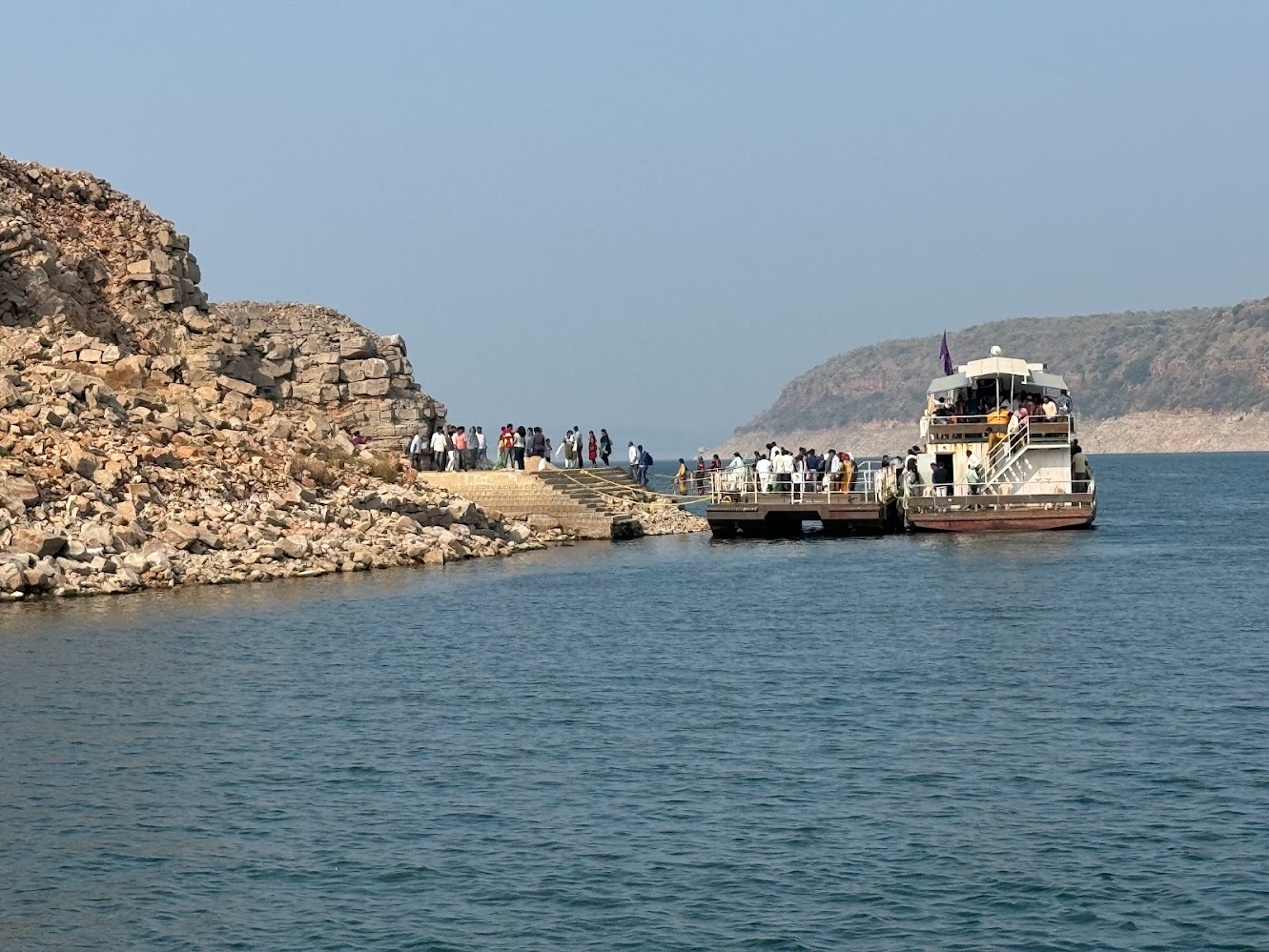
One of two docks at Nagarjunakonda. Passengers are heading for very short visits to the ruins of Vijayapuri, an ancient city discovered in 1926 and partially moved to this hill-turned-island when the reservoir flooded the site.
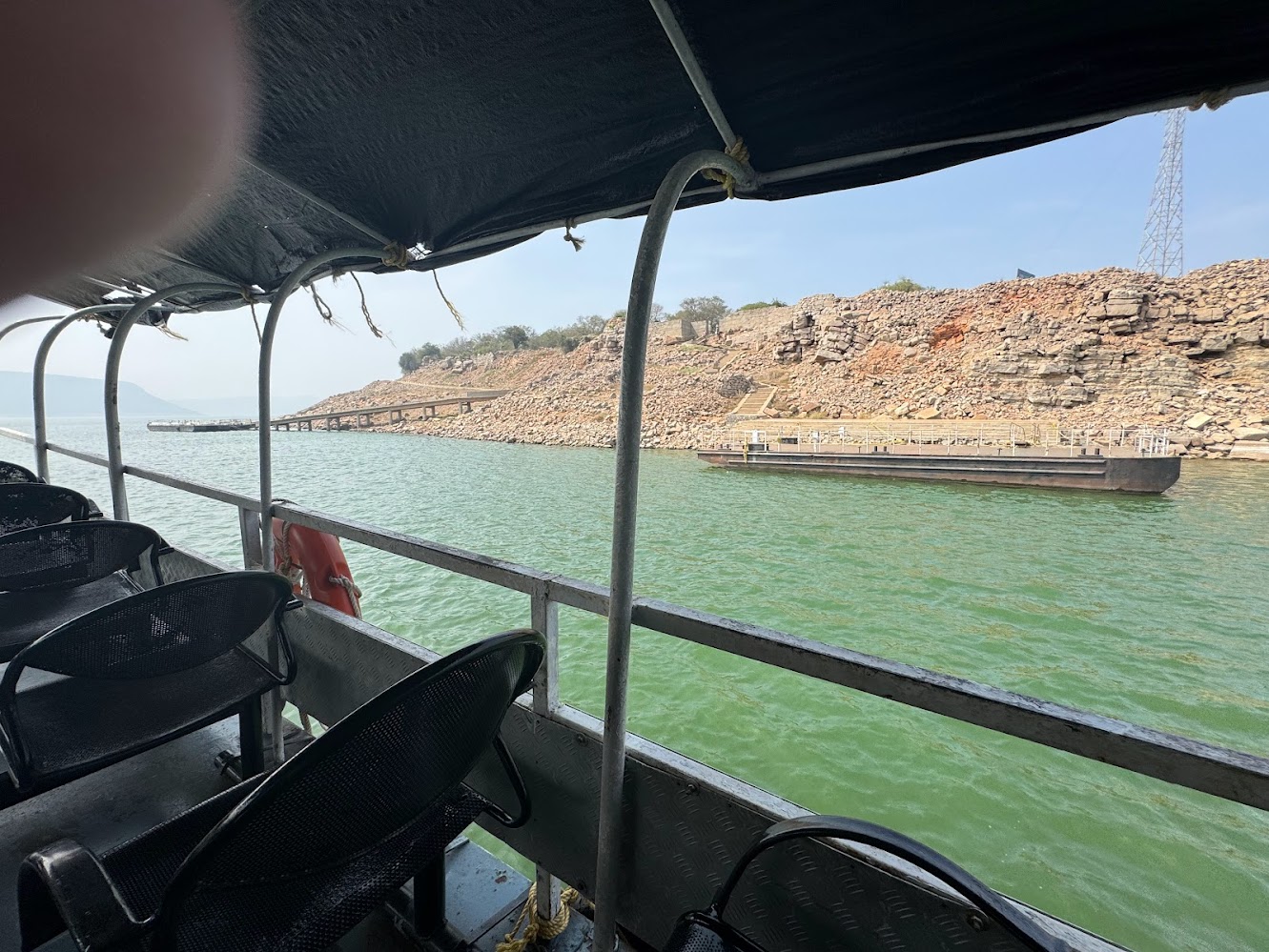
Both docks, seen on a day without visitors.
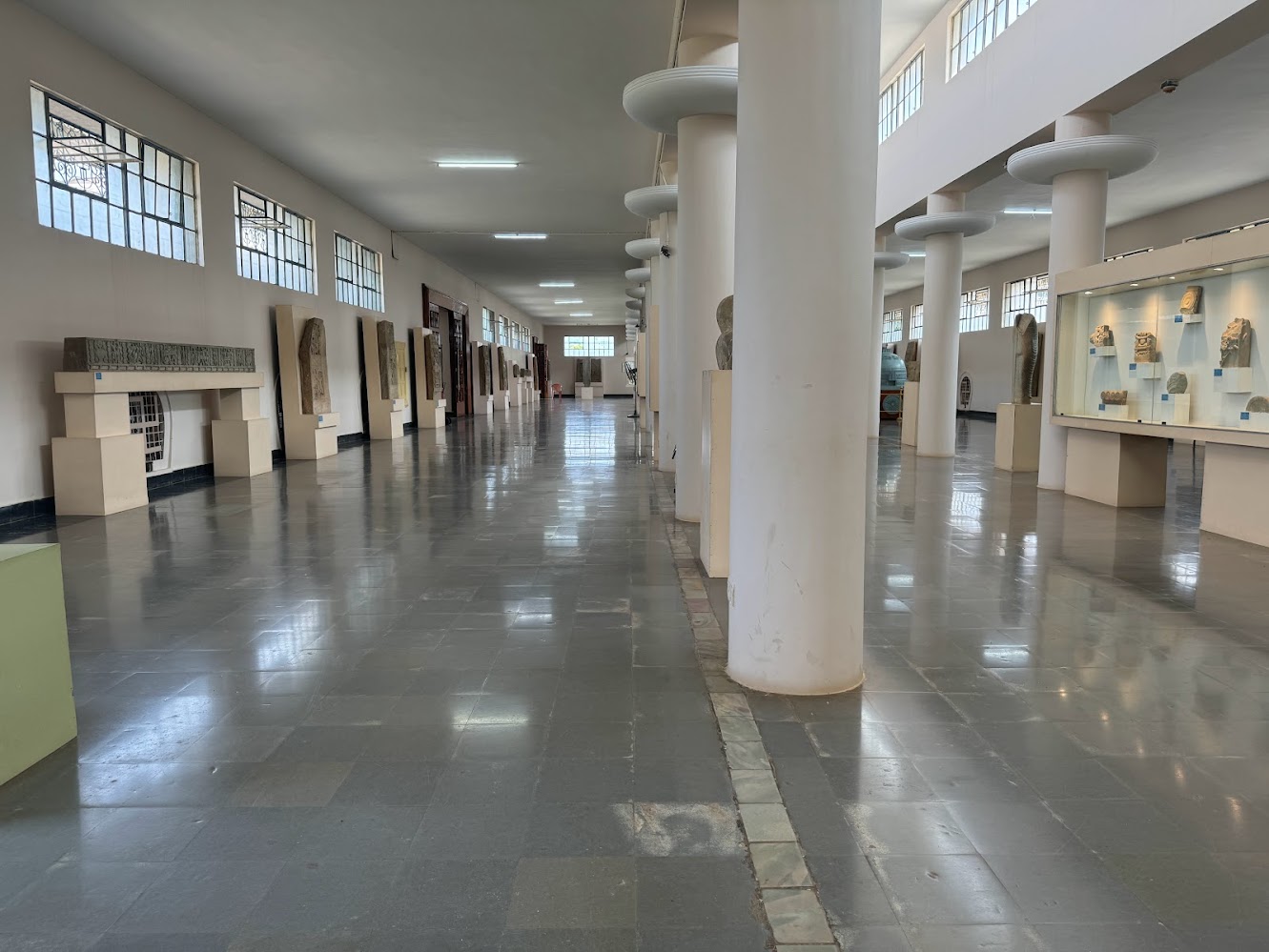
The island's museum on that day.
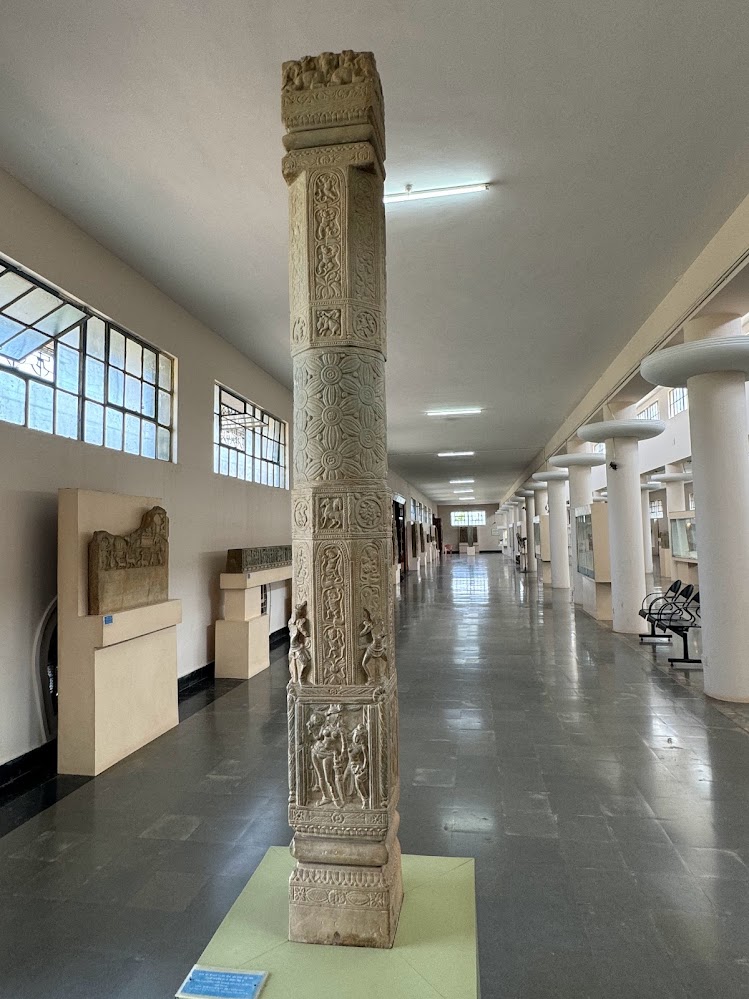
An ayaka column?
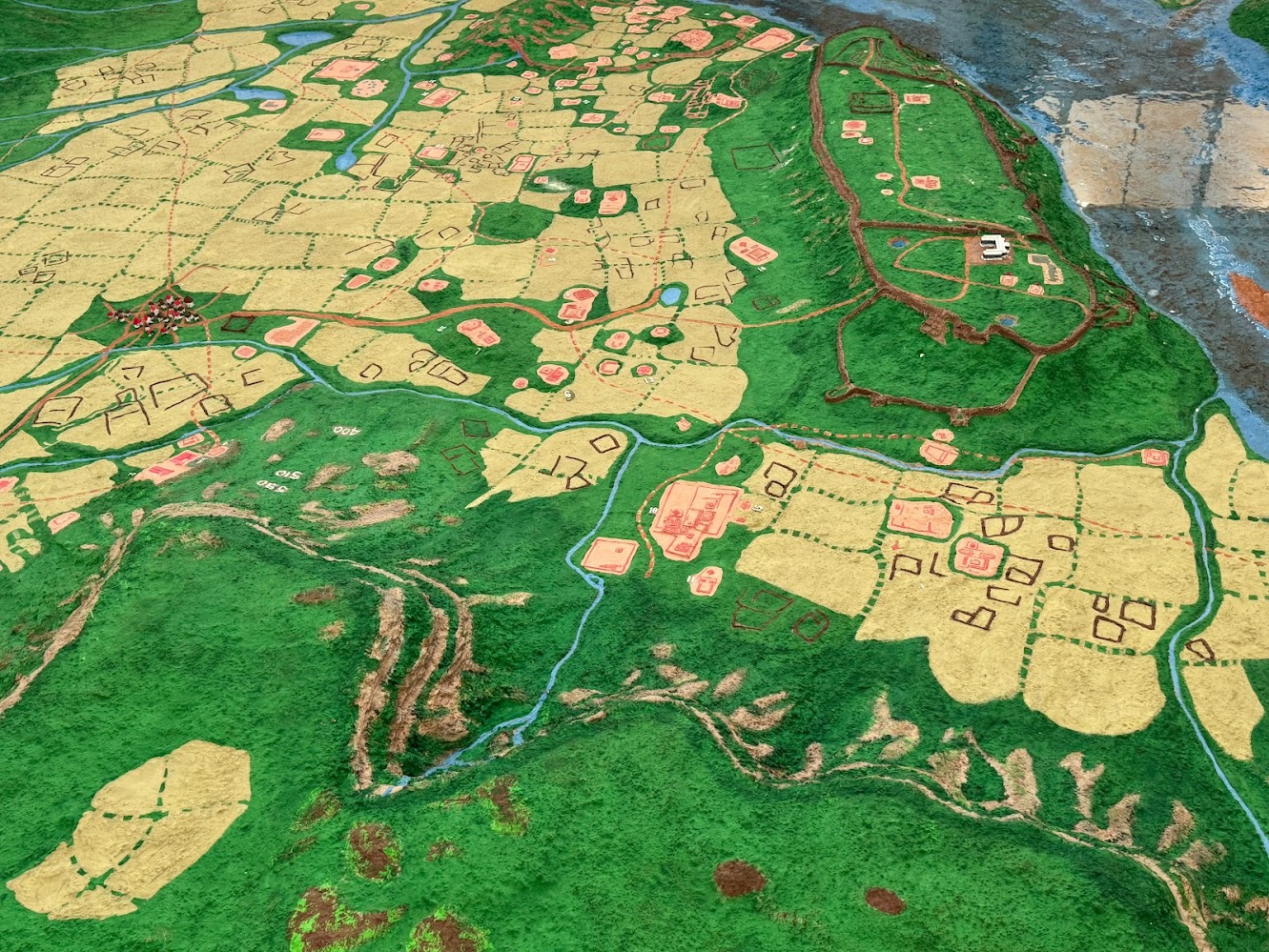
A model in the museum. The canoe-shaped hill at the right is Nagarjunakonda proper. (The museum is the U-shaped building.) The flooded ruins of Vijayapuri lie below, except for the monuments that have been reconstructed on the hill. The ferry docks are approximately at the location shown as a yellow path up to the hill. The hill is rimmed and truncated by a medieval wall much later than the monuments of Vijayapuri.
For a description of the site before its flooding, see The Buddhist Antiquities of Nagarjunakonda, Madras Presidency, by A.H. Longhurst, 1938, and The Art of Nagarjunikonda [sic] by P.R. Ramachandra Rao, 1956.
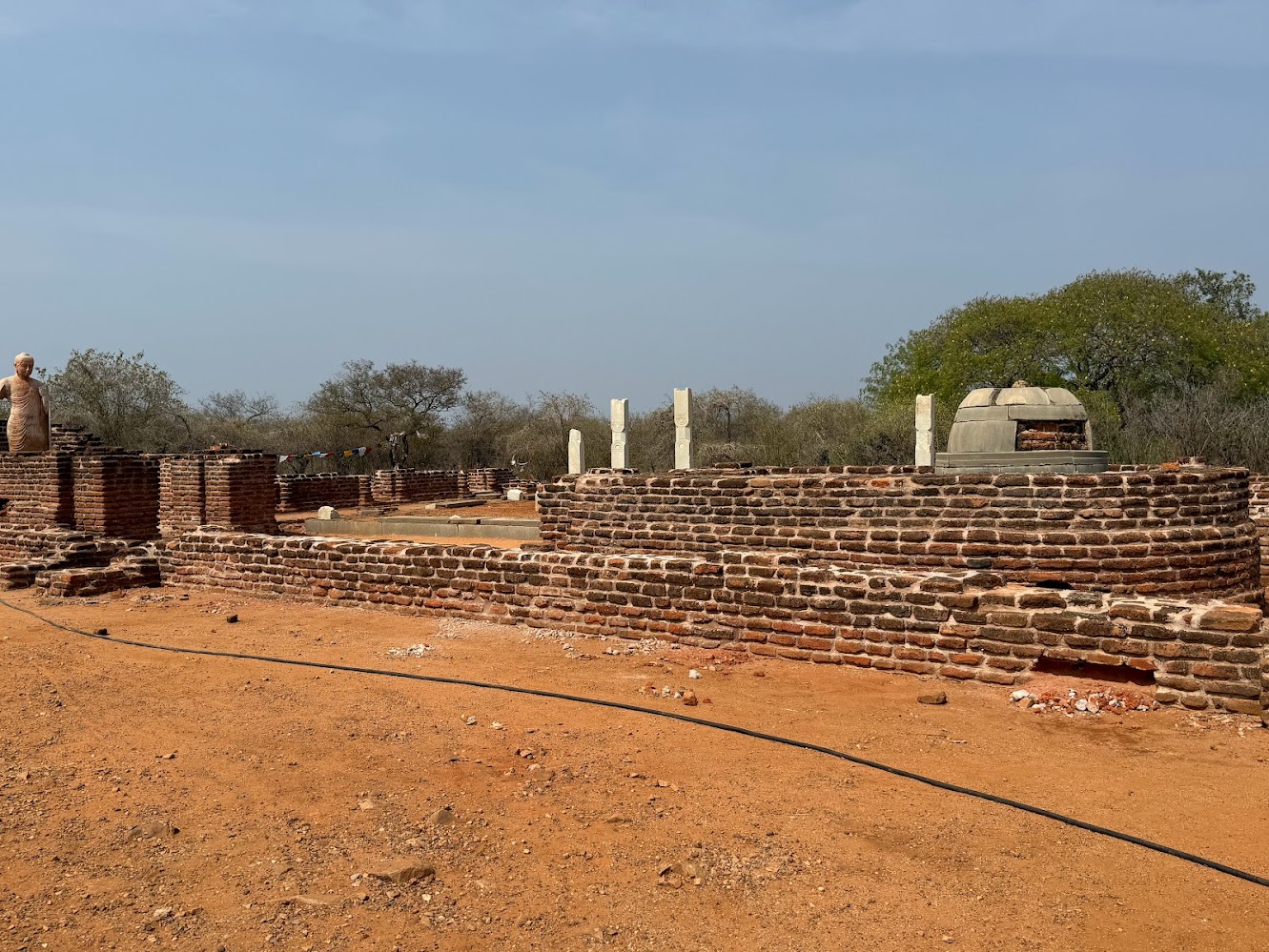
The pillars once held up the roof of a monastery. Nearer to the camera are two prayer halls, one with a statue of the Buddha (it's a replica); the other, with a stupa.
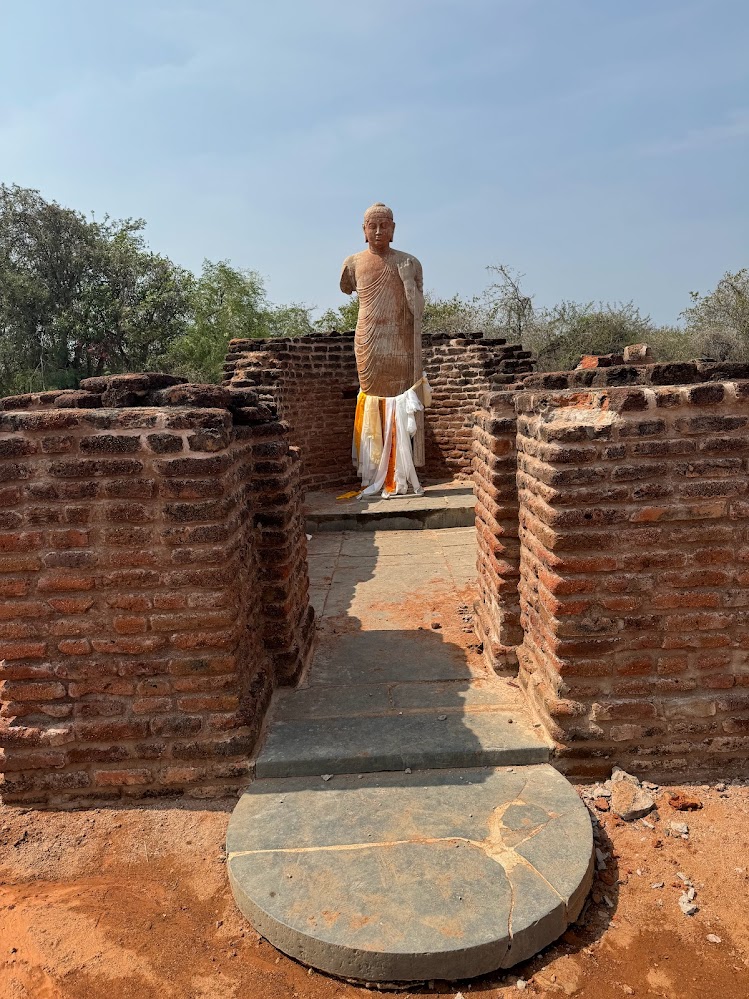
In short, a Mahayana prayer hall. The moonstone is a sorry example of the genre.
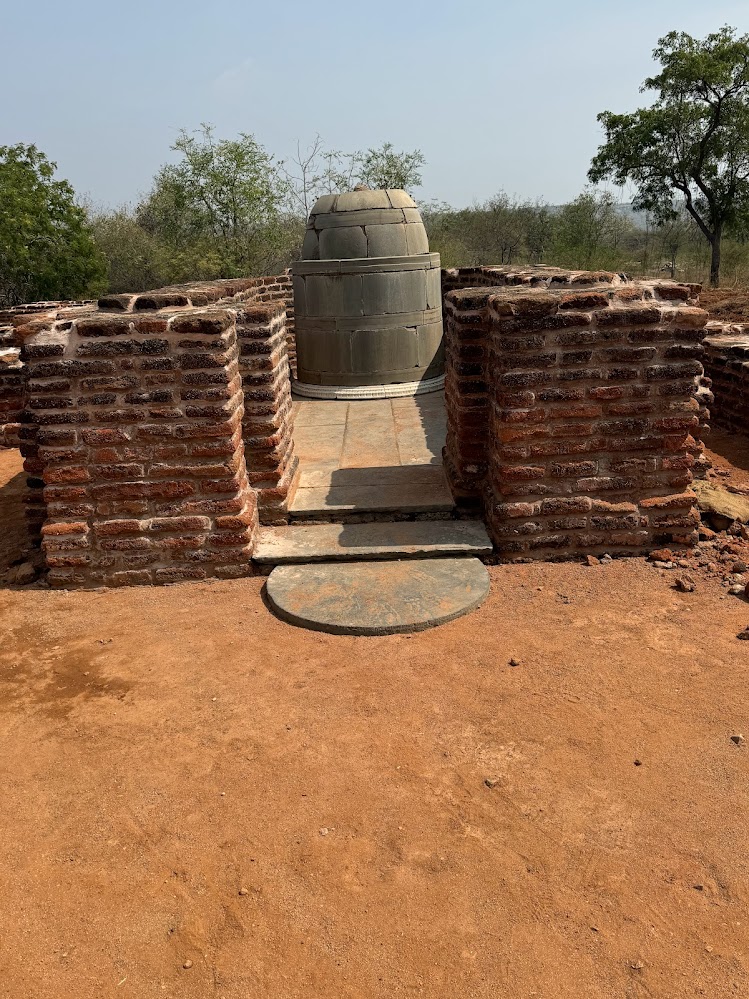
The Theravada hall.
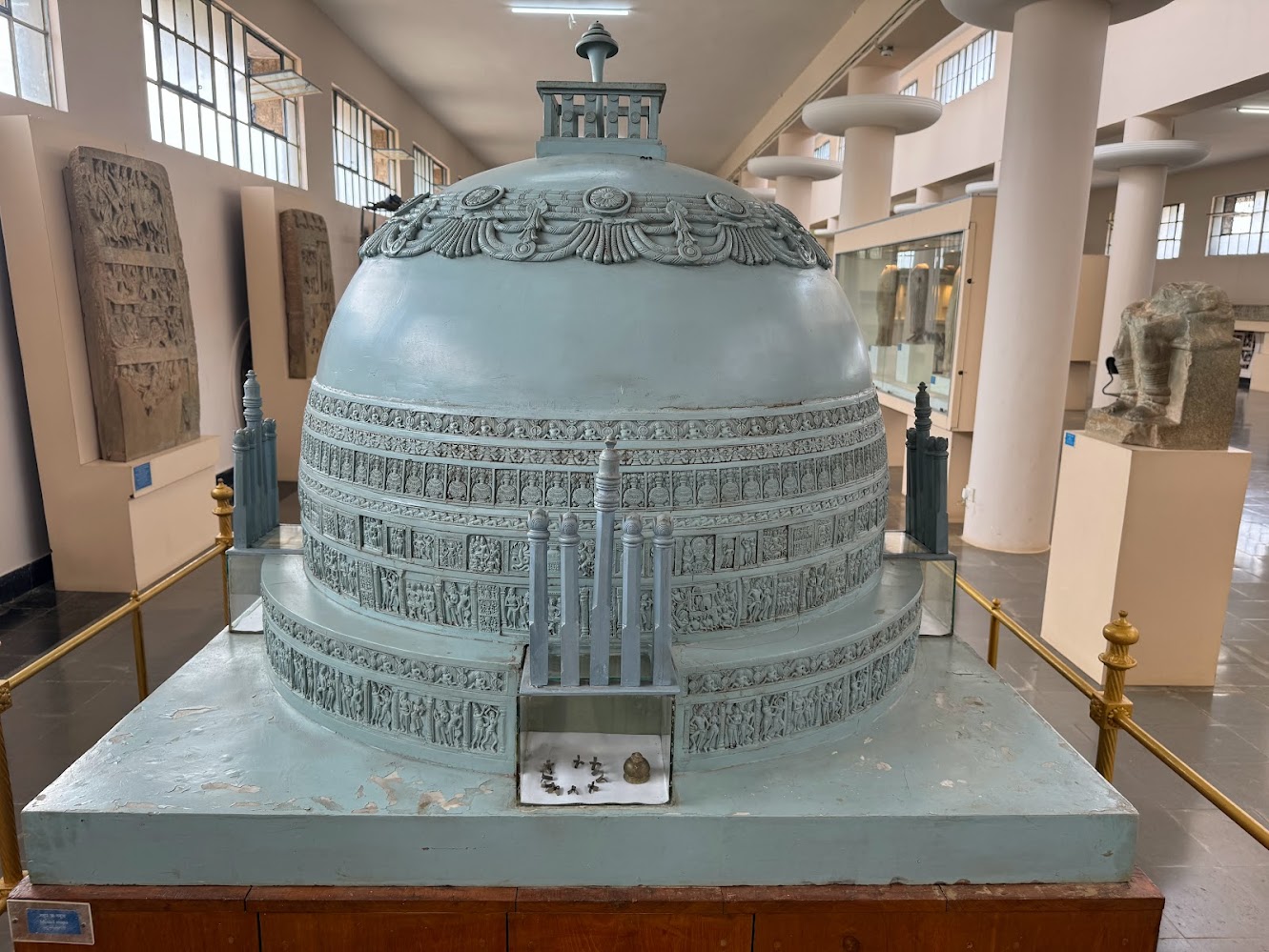
We're going to look at the great stupa that was partly reconstructed by Albert Longhurst about 1930. Here's the museum's model. There's no railing (Longhurst insisted there had never been one), but there are magnificent Ayaka pillars at each of the cardinal points.
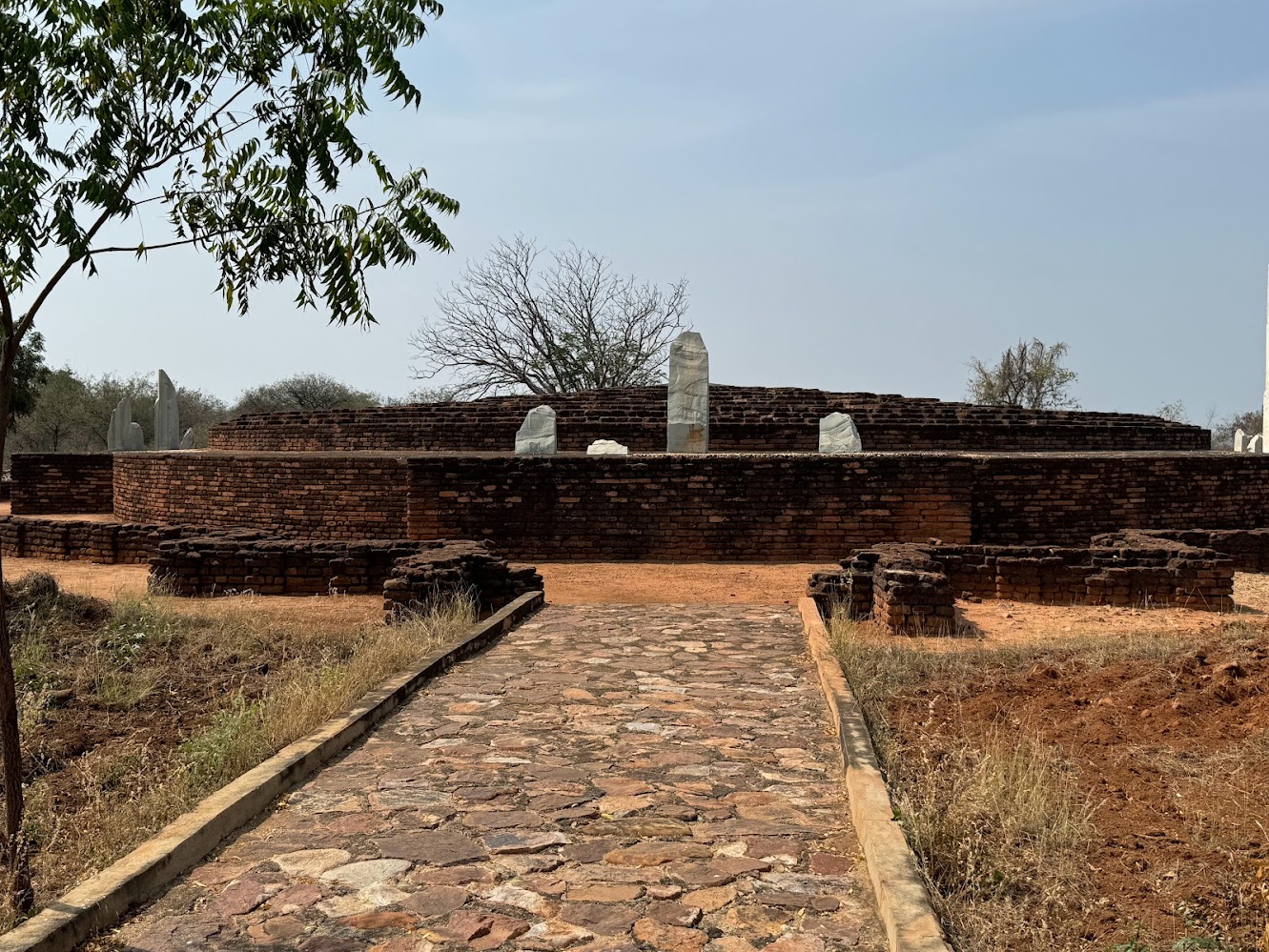
Here's the rebuilt version.
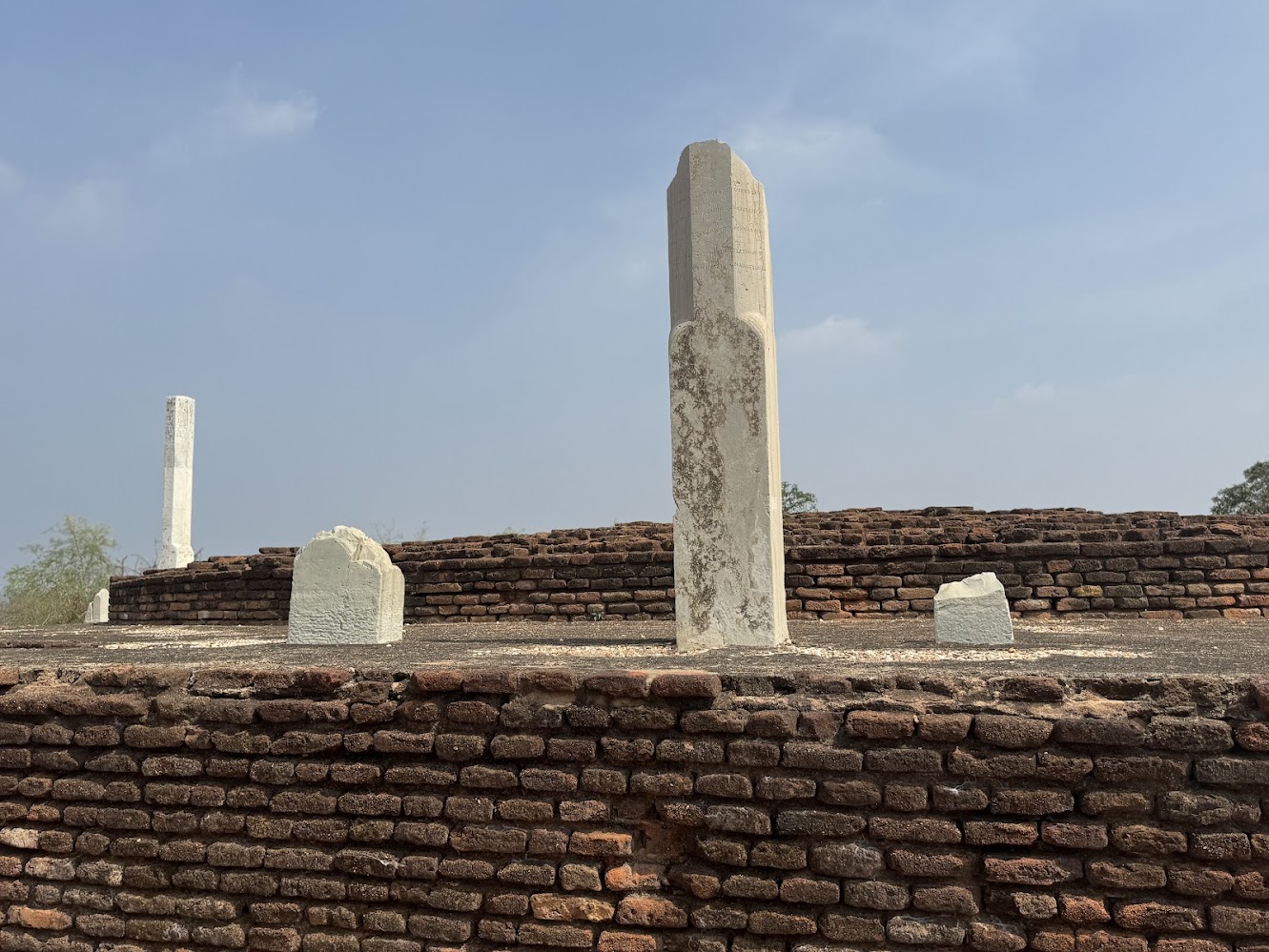
I know; you don't have to say anything.
Here's something more interesting. It's a bathing ghat.
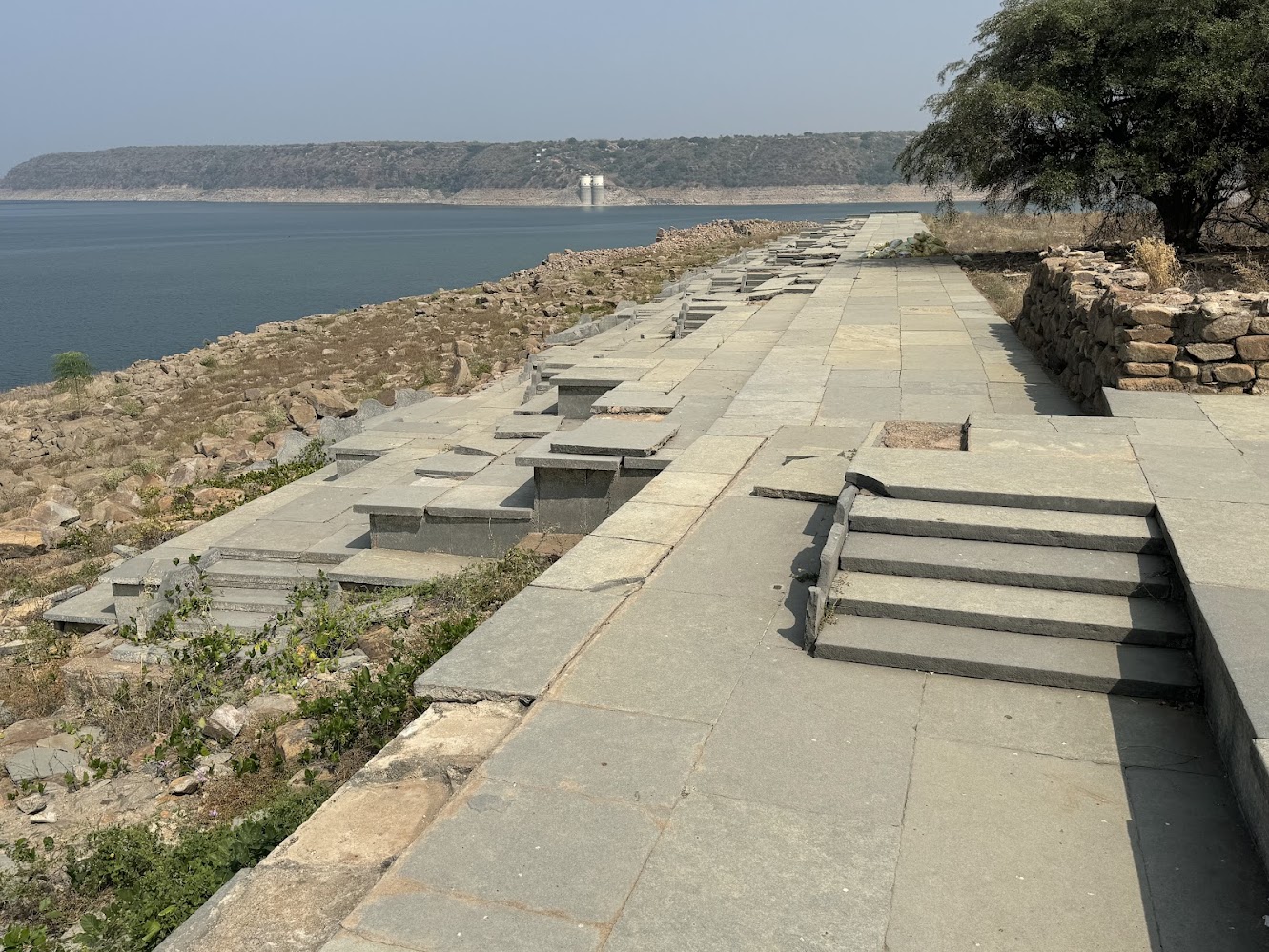
Another view. Question: at high water does the reservoir touch the stones?
Barefoot, anyone?
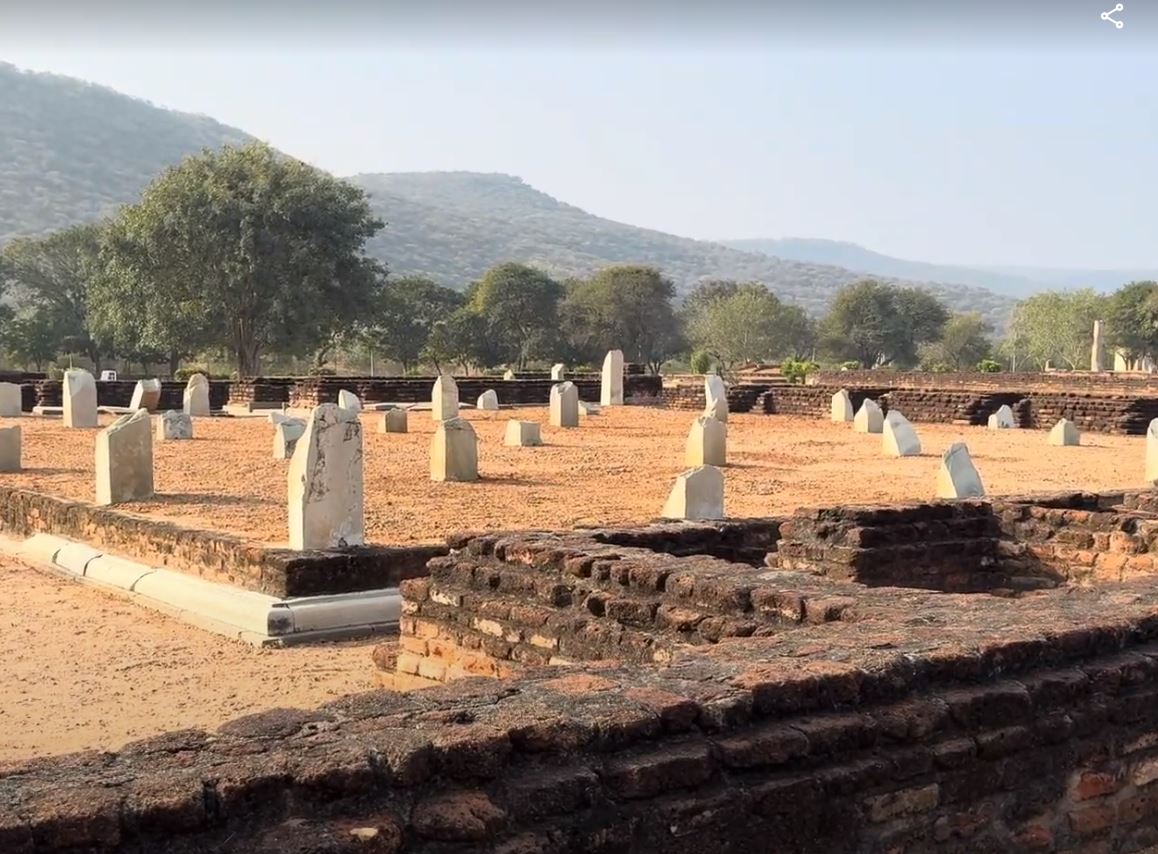
Another pillared-hall, or what's left of it. But this one has been rebuilt not on the island but a couple of miles away at Anupu, on the mainland, so to speak.
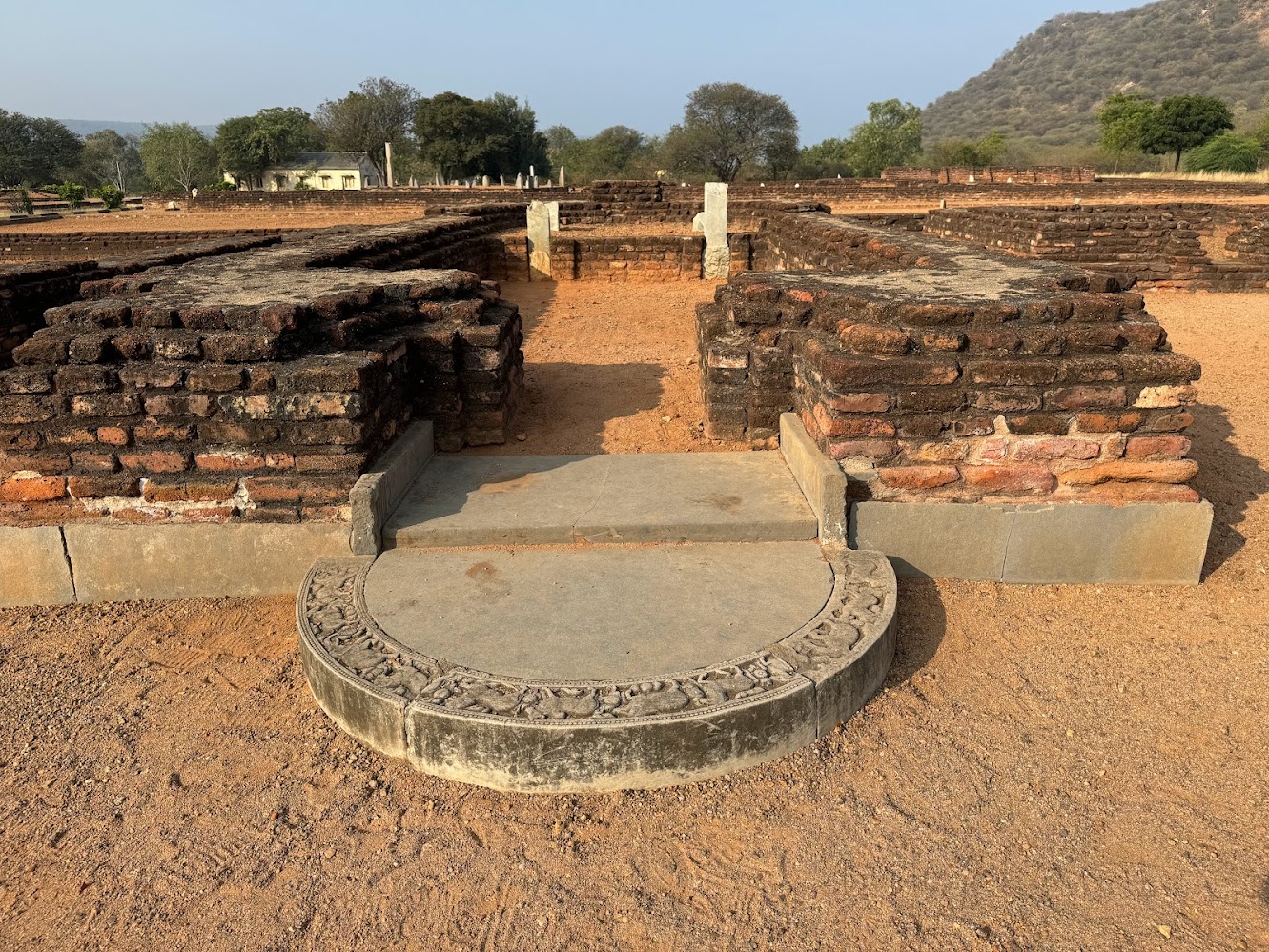
And here, in front of another prayer hall, is a moonstone closer to what moonstones can be.
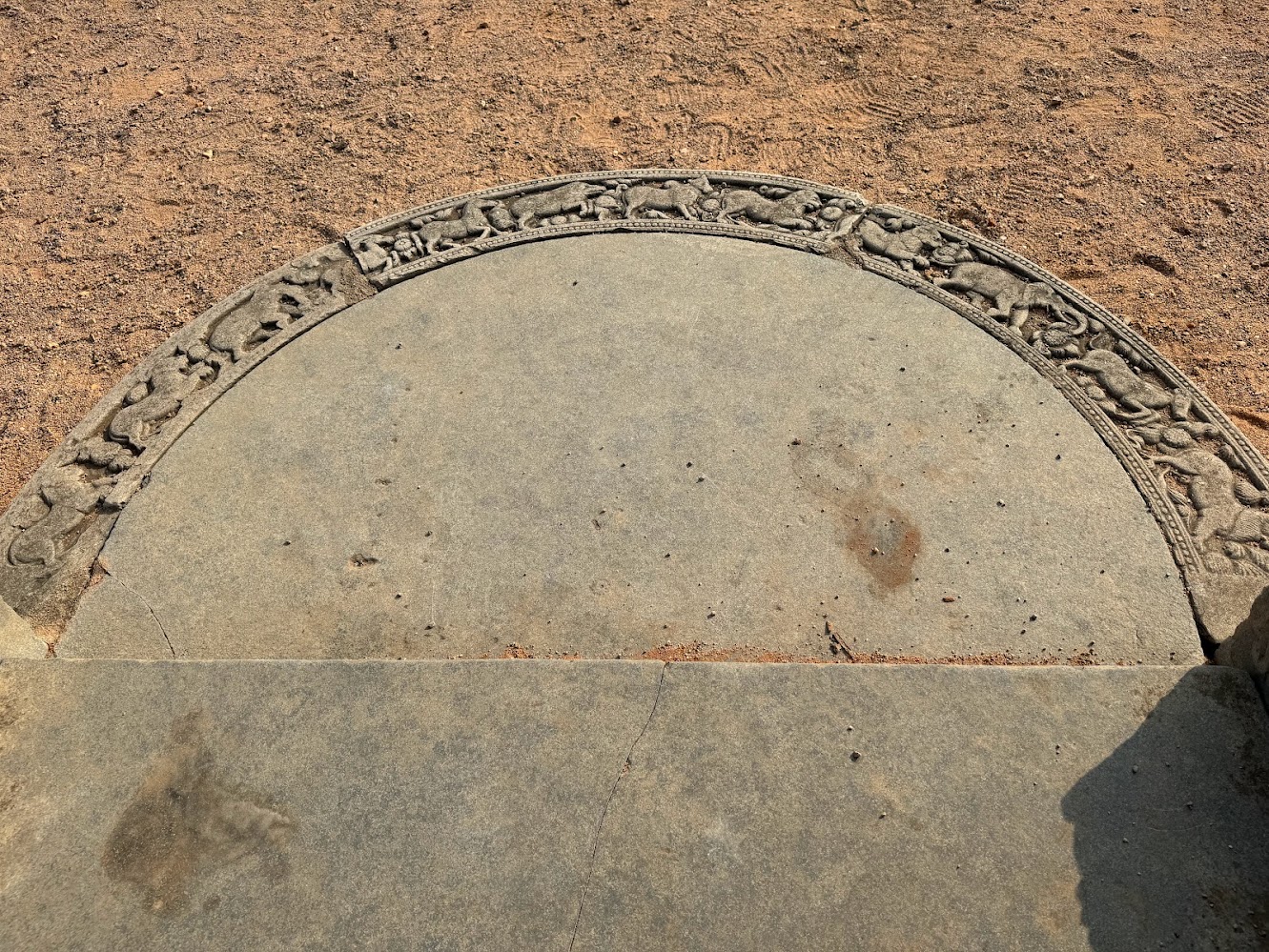
Compare this with the stones at Anuradhapura, Sri Lanka. Better yet, don't, because this one will look so poor. But still, you get the idea of passing from the sacred to the secular.
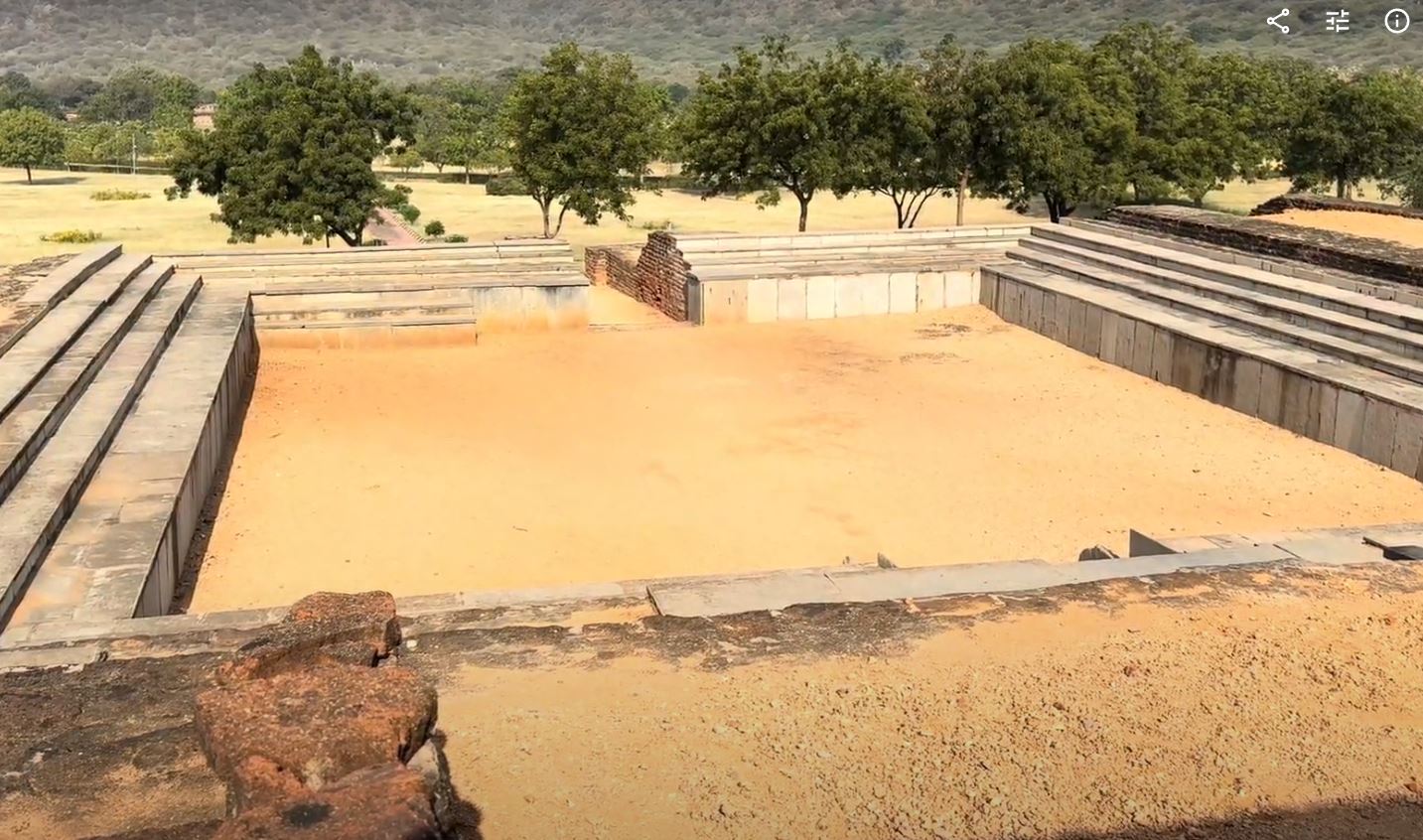
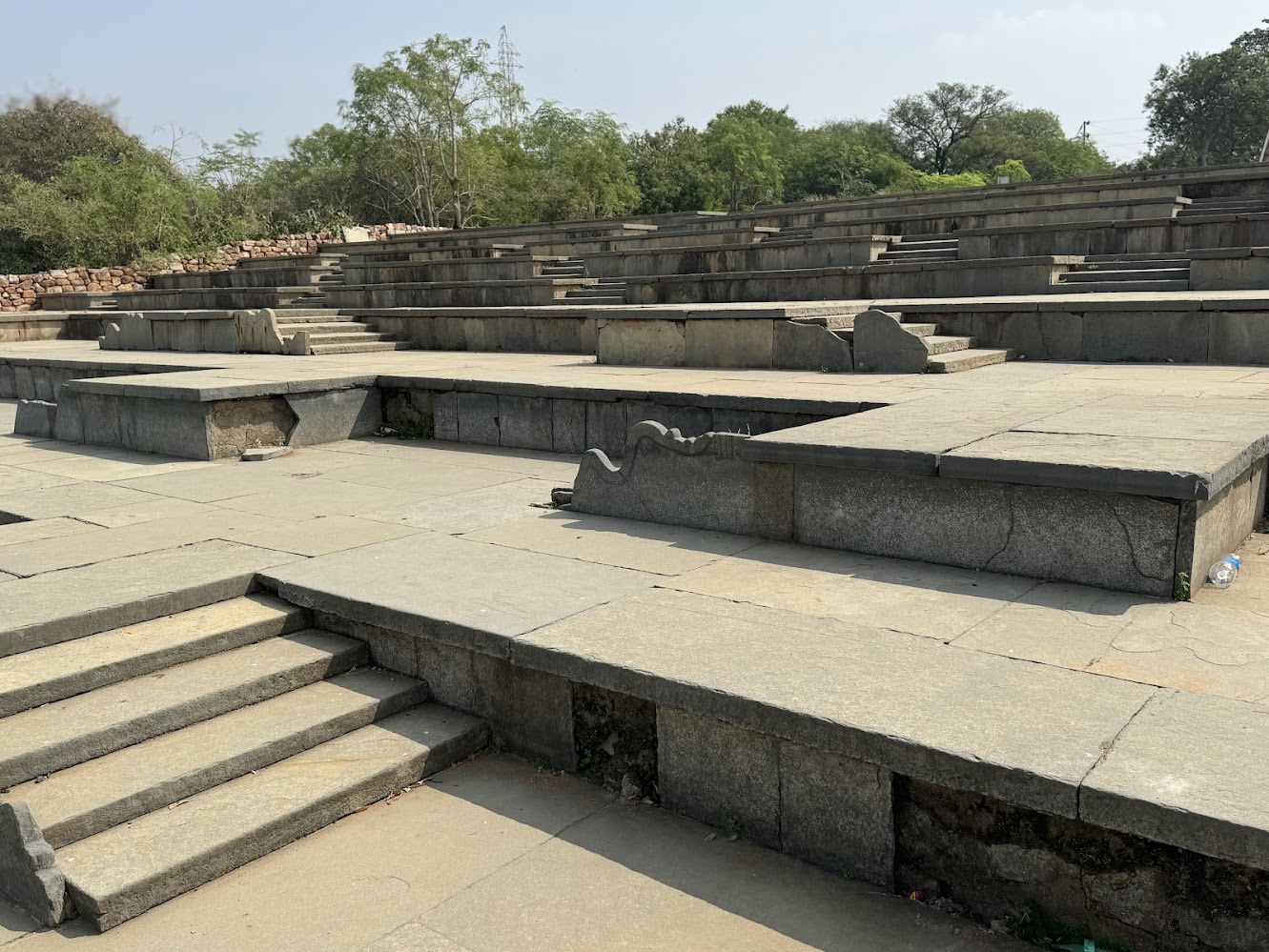
Here's the nearby anomalous amphitheater, apparently unique in India and built for an unknown purpose.
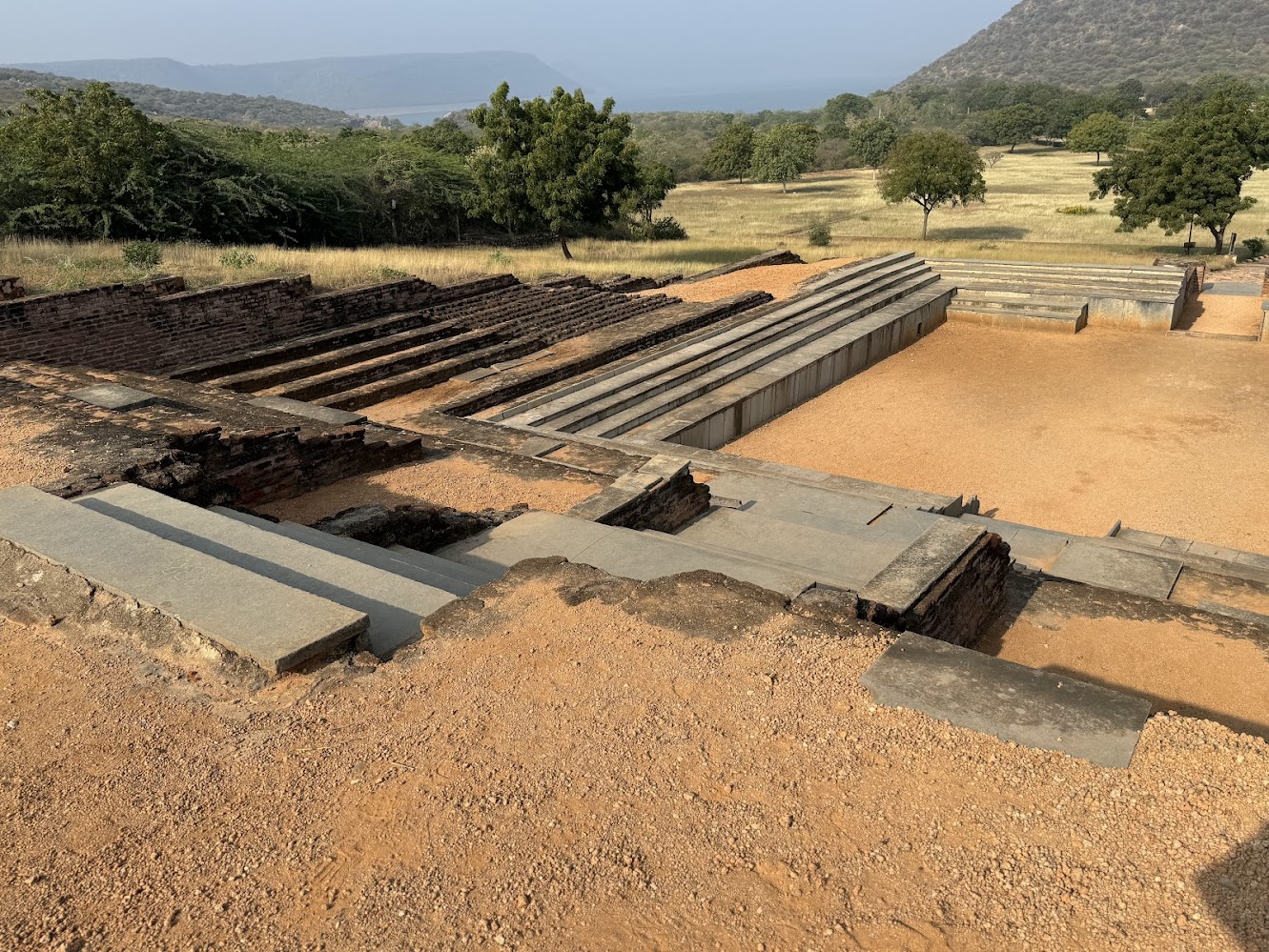
Another view, with the reservoir in the distance.
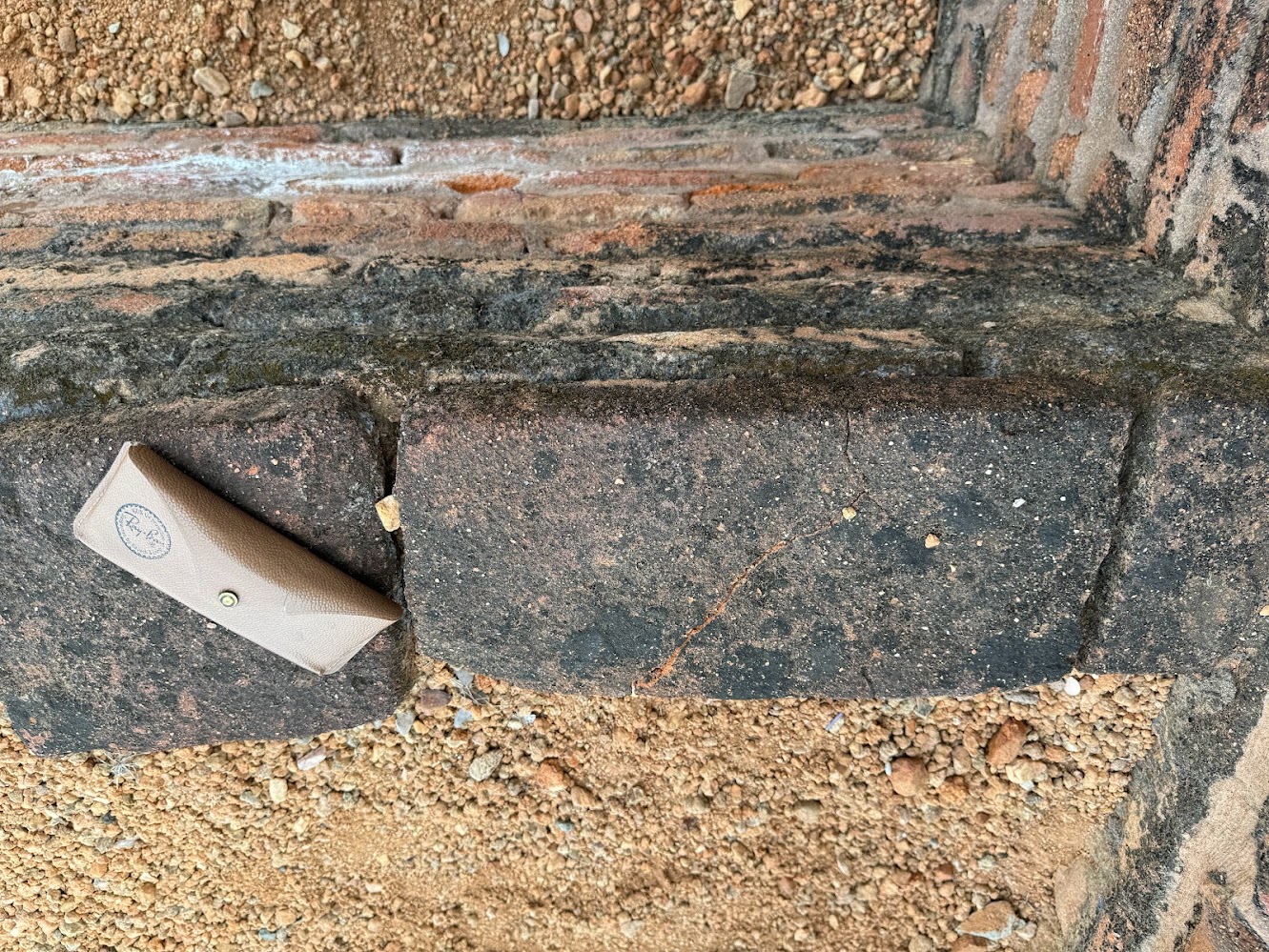
Note the heft of the standardized bricks.
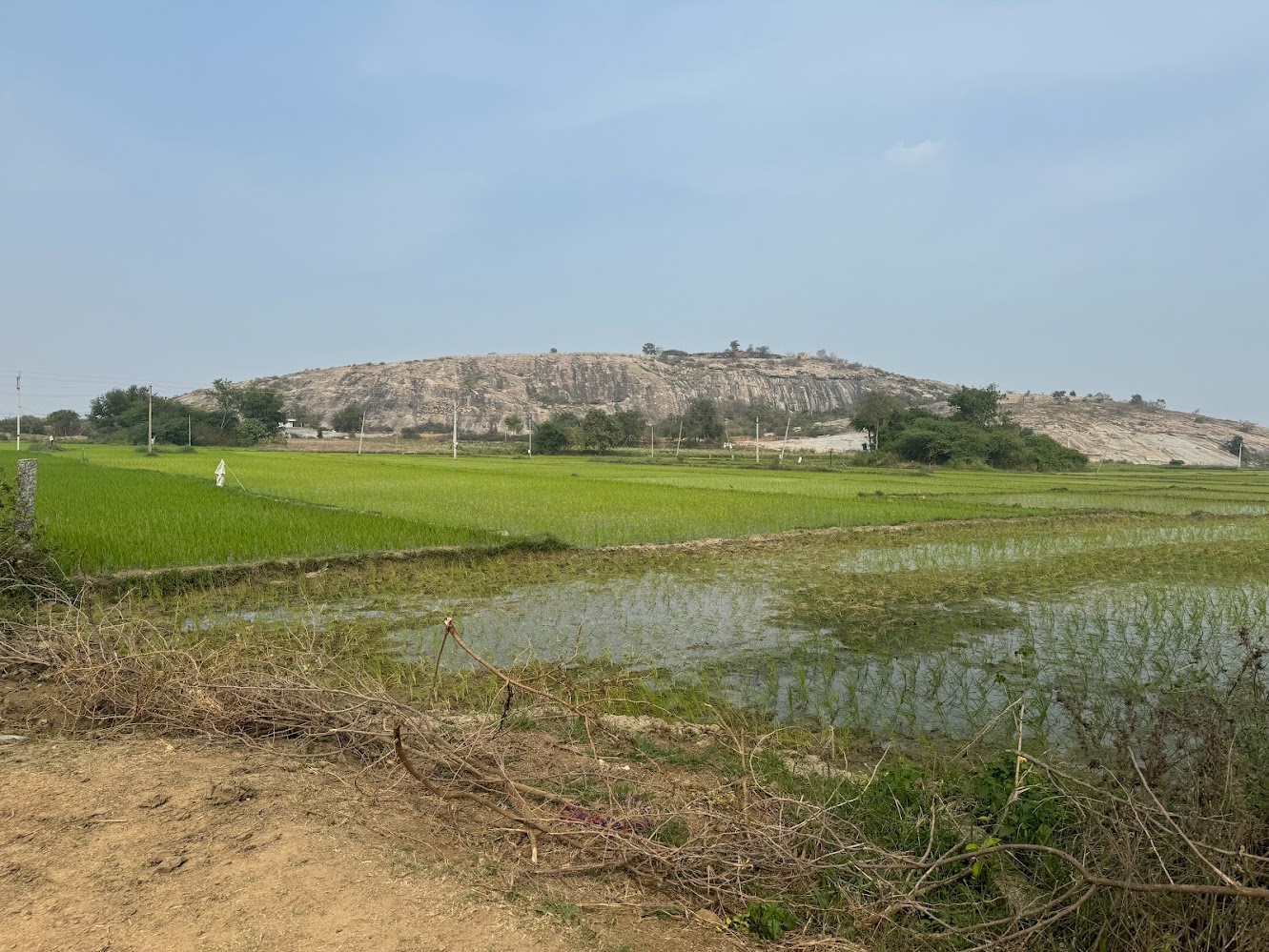
We've move to Panigiri (or Phanigiri), once a monastery atop a granite dome Surrounded by rice paddies.
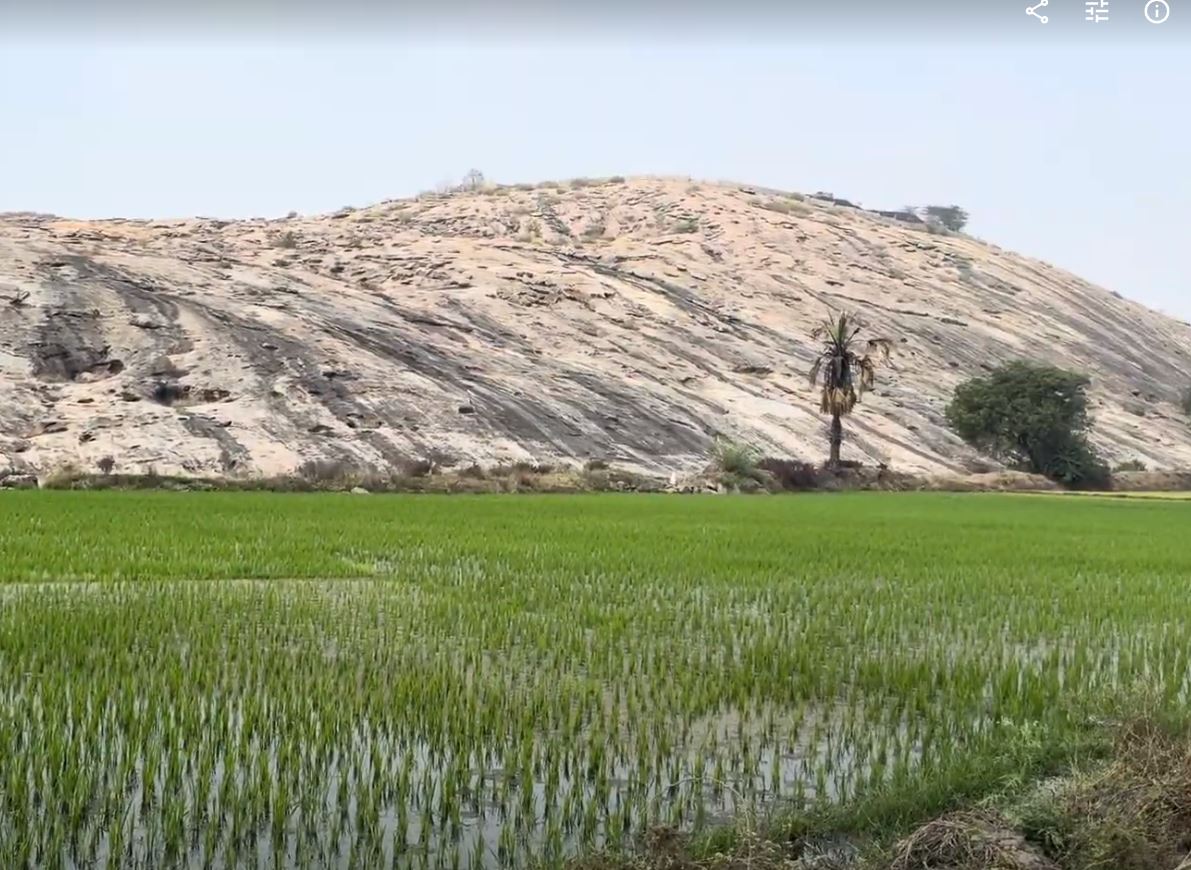
Dramatic, no?
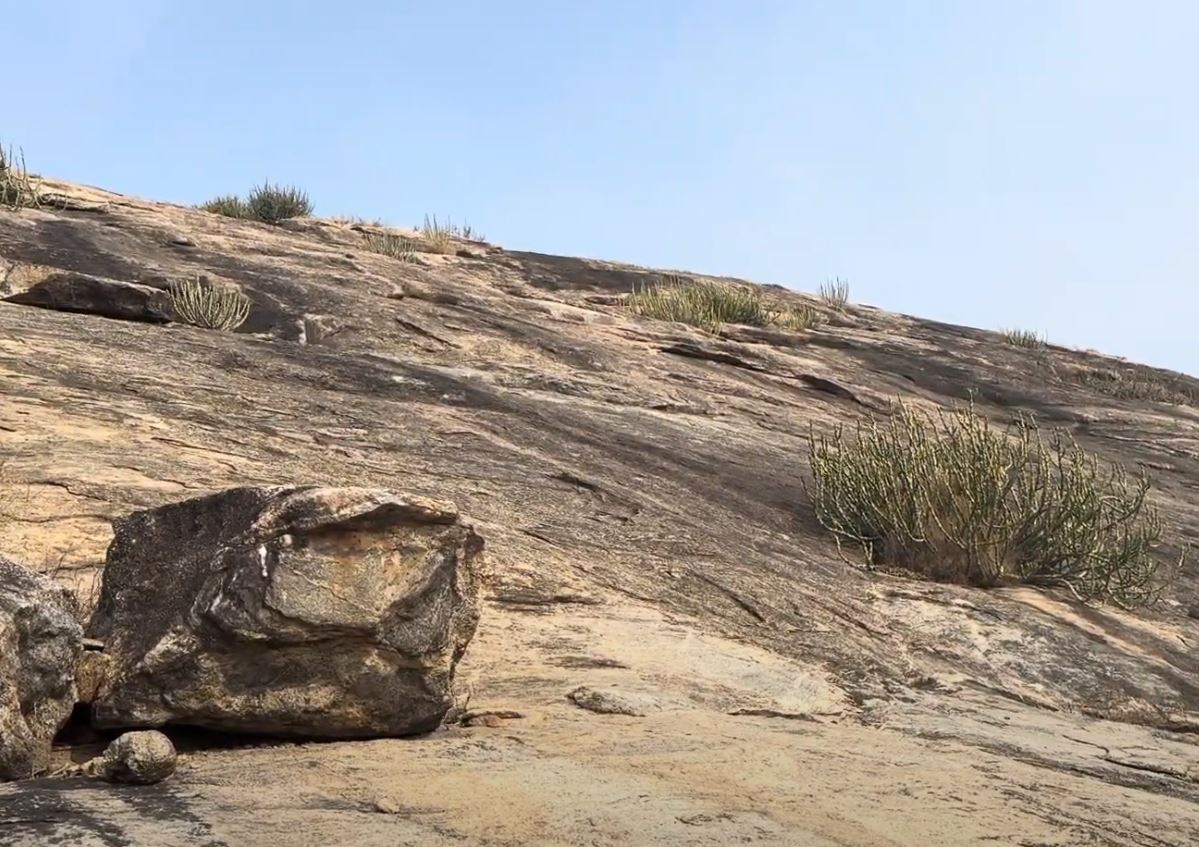
Halfway up the wrong side. Leave it to Google Maps to think that this is the way up.
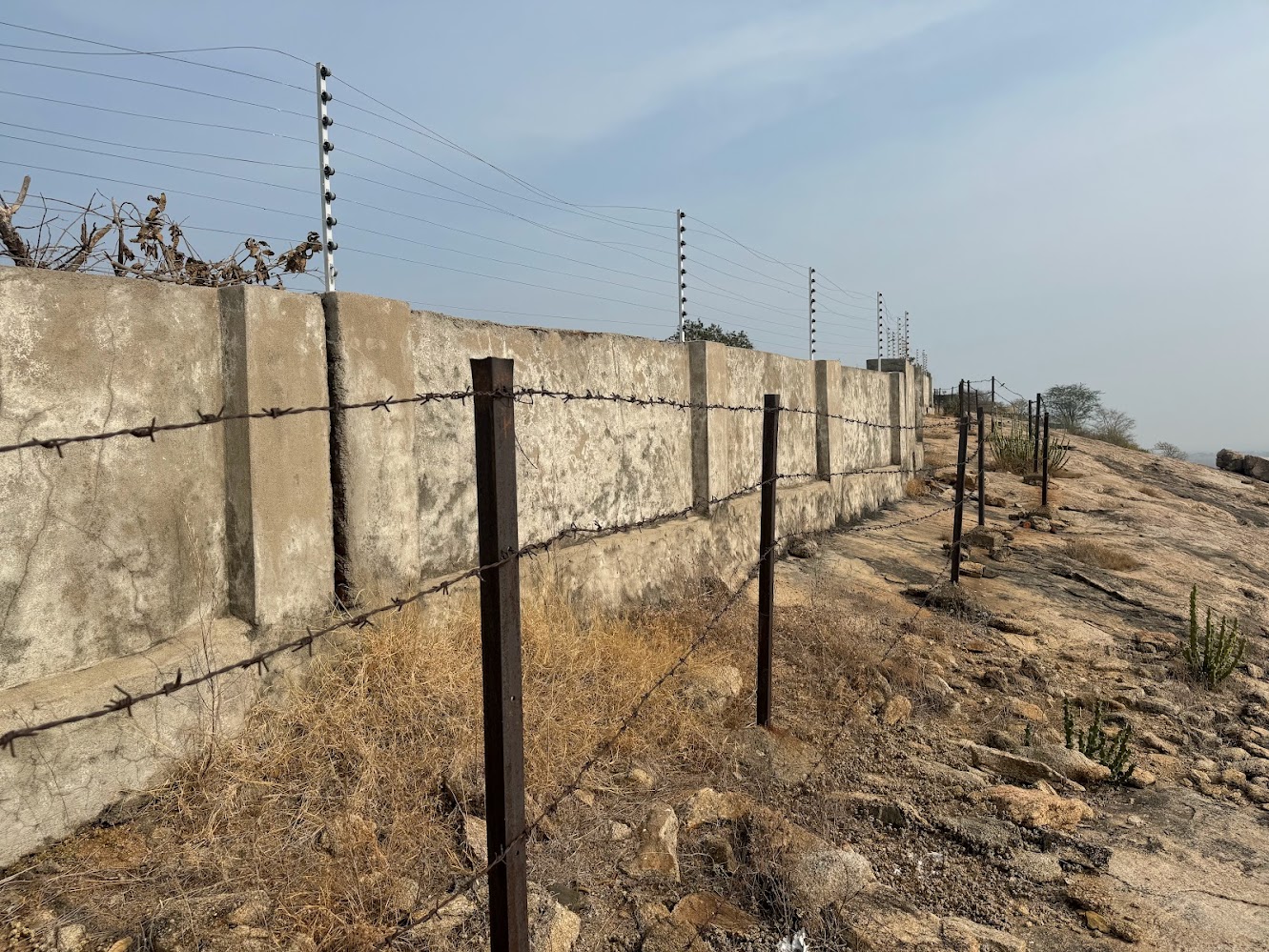
Triumph and failure: a fence at the top.
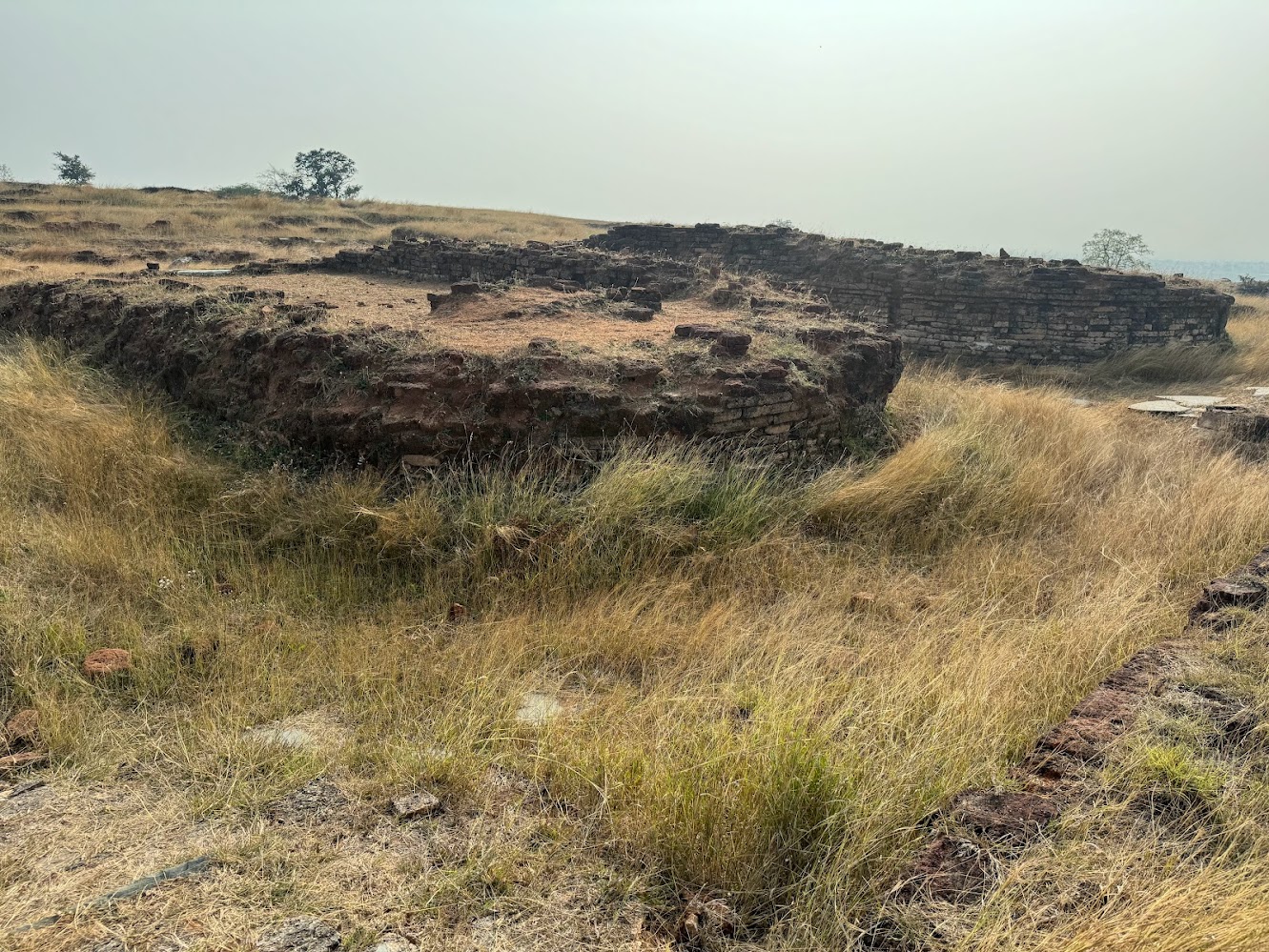
But yes, there was a gate and it leads to the foundations of these two apsidal prayer halls.
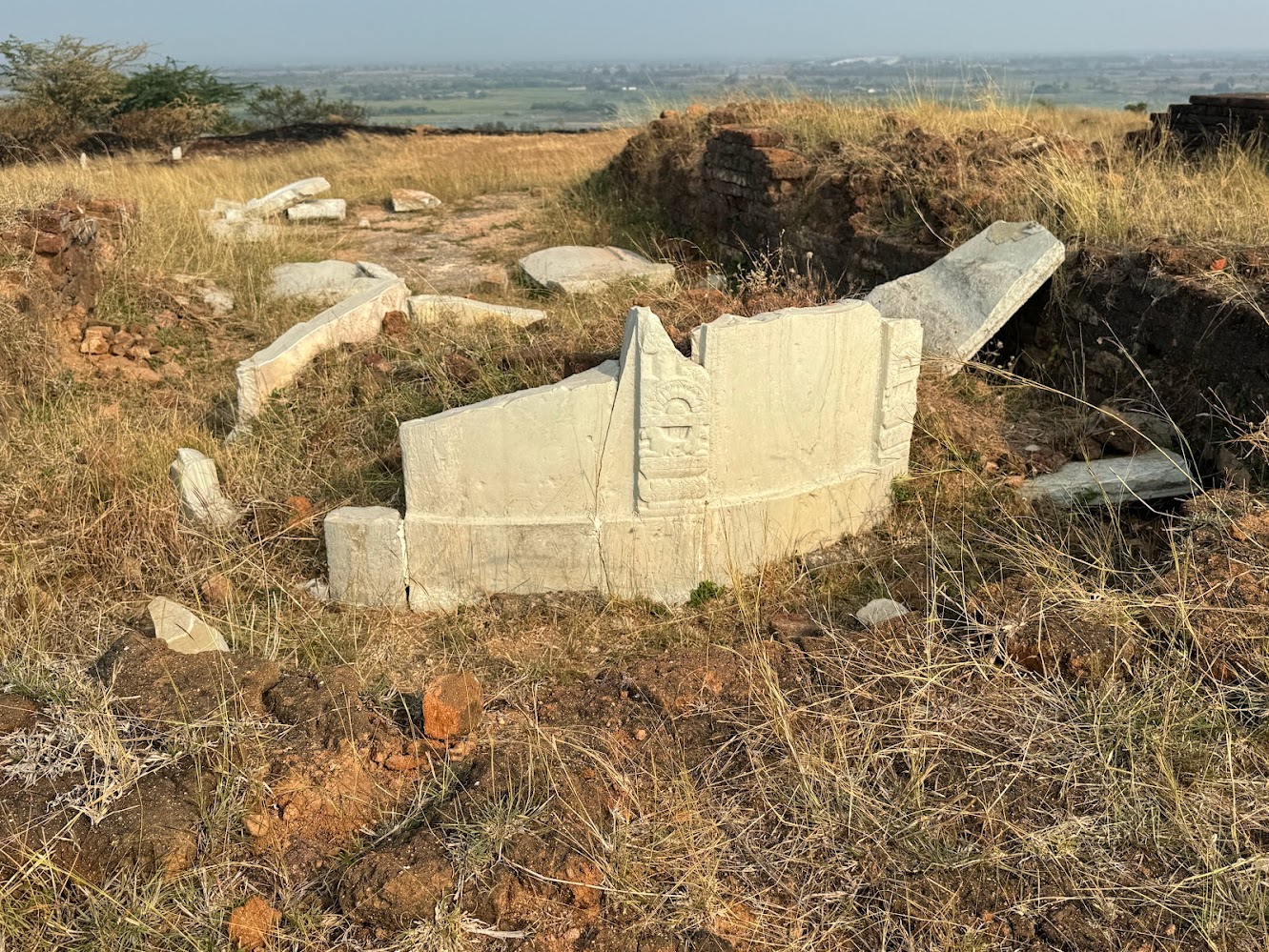
Here's another, with a bit more than the foundation.
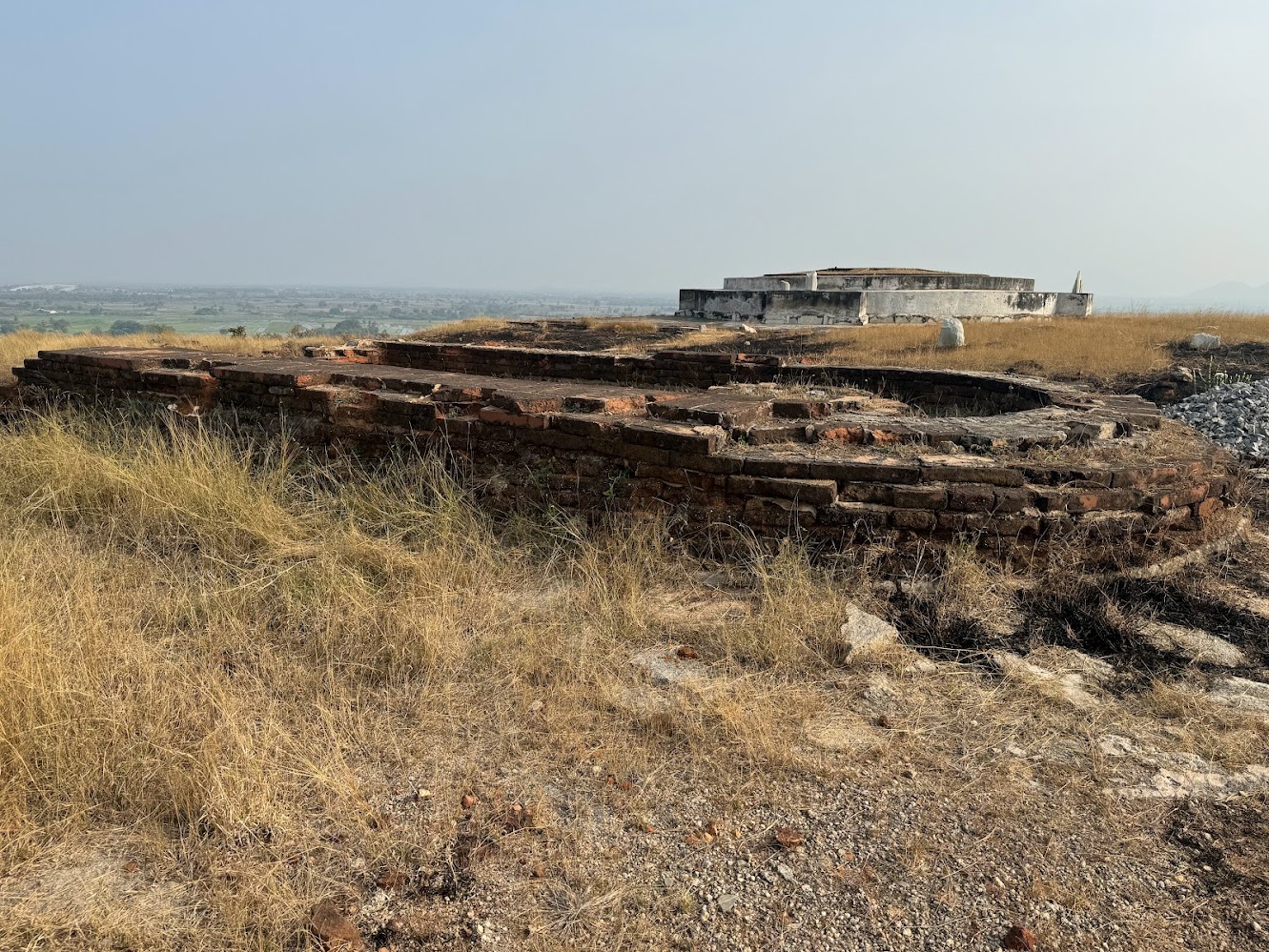
Another, plus the site's major stupa, or at least its base.
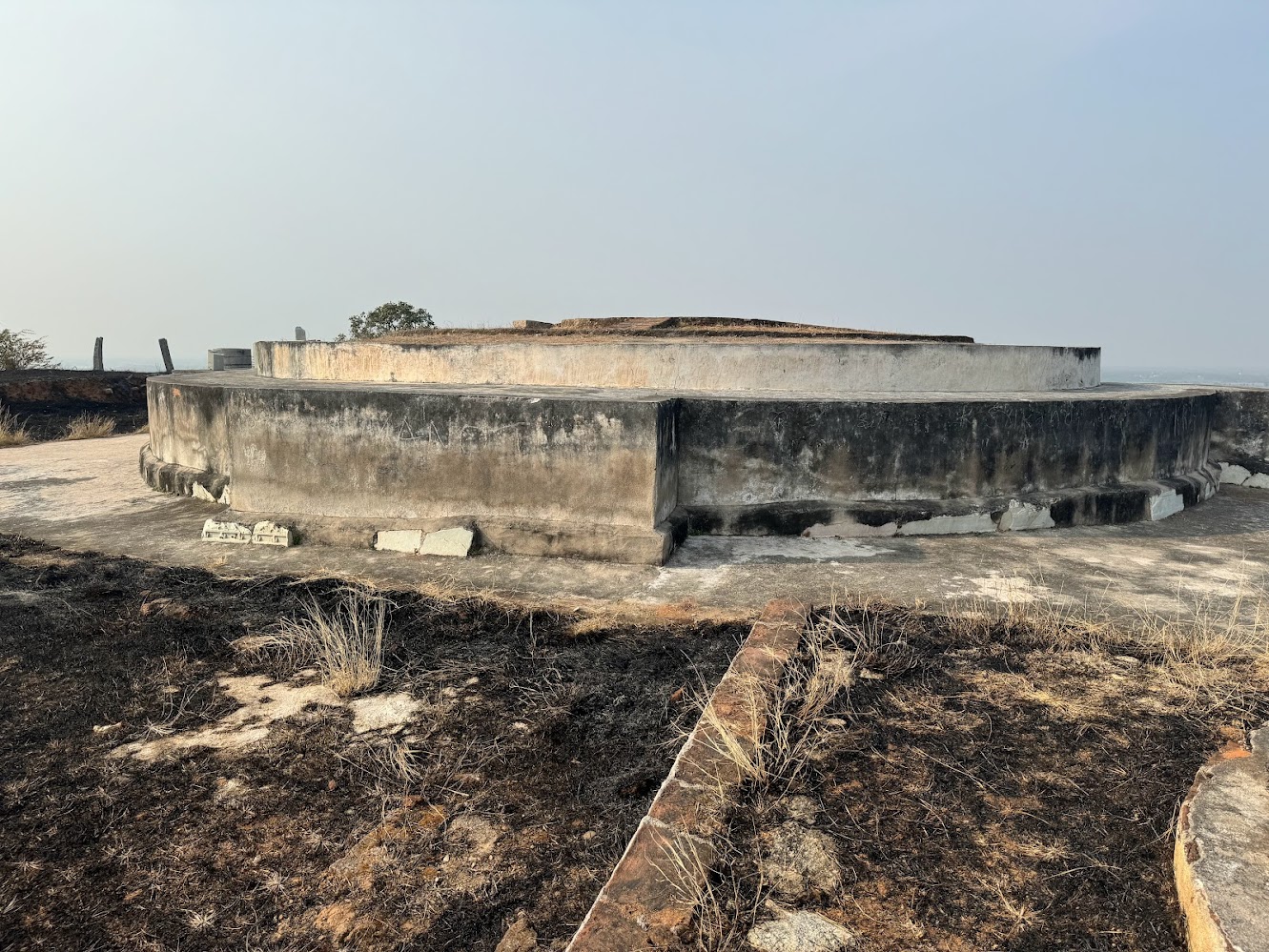
Closer, with an ayaka platform.
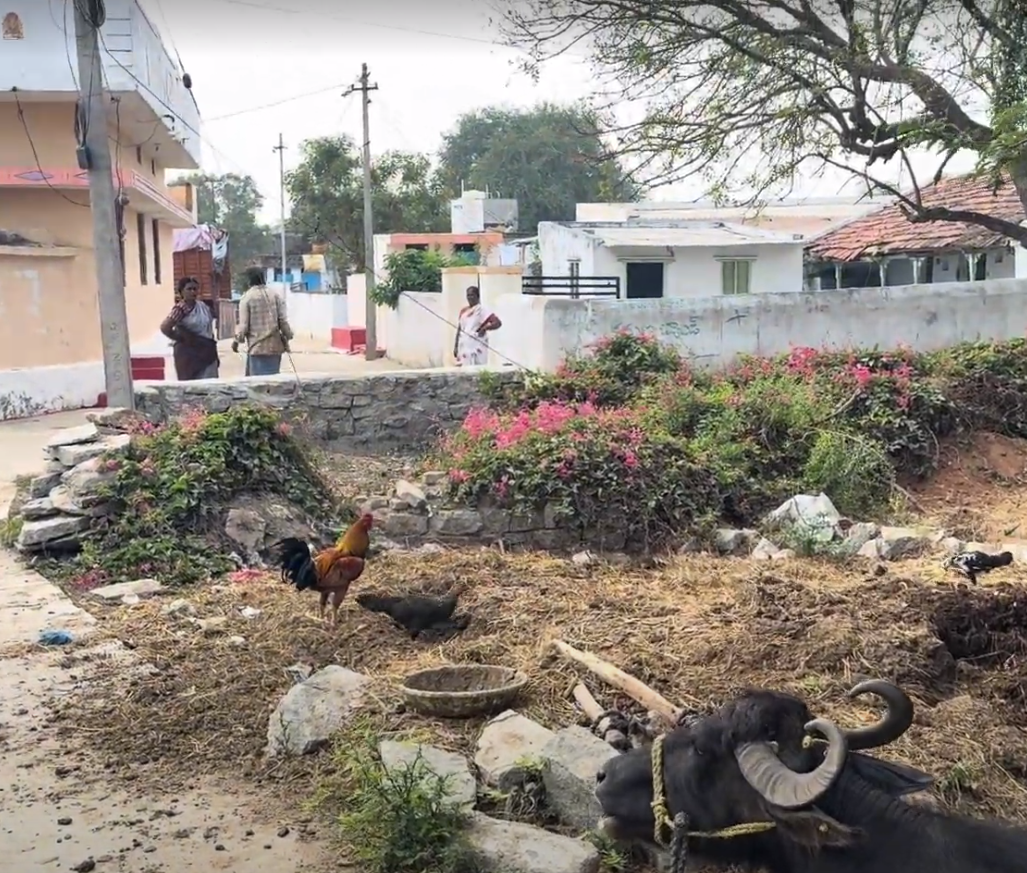
We're down at the south foot of the dome and at the village called Panigiri.
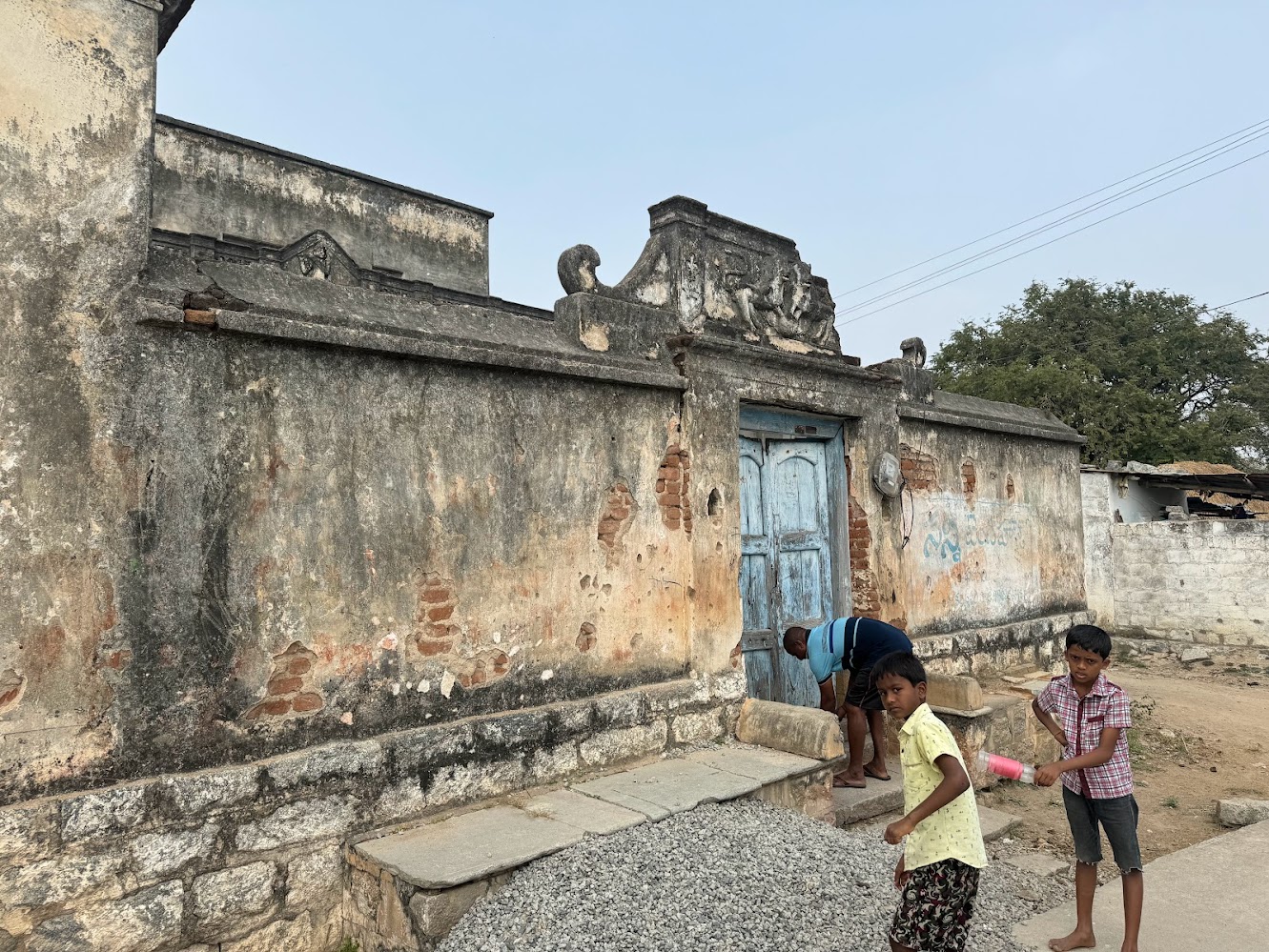
Here's a house where the archaeological treasures found up top are stored.
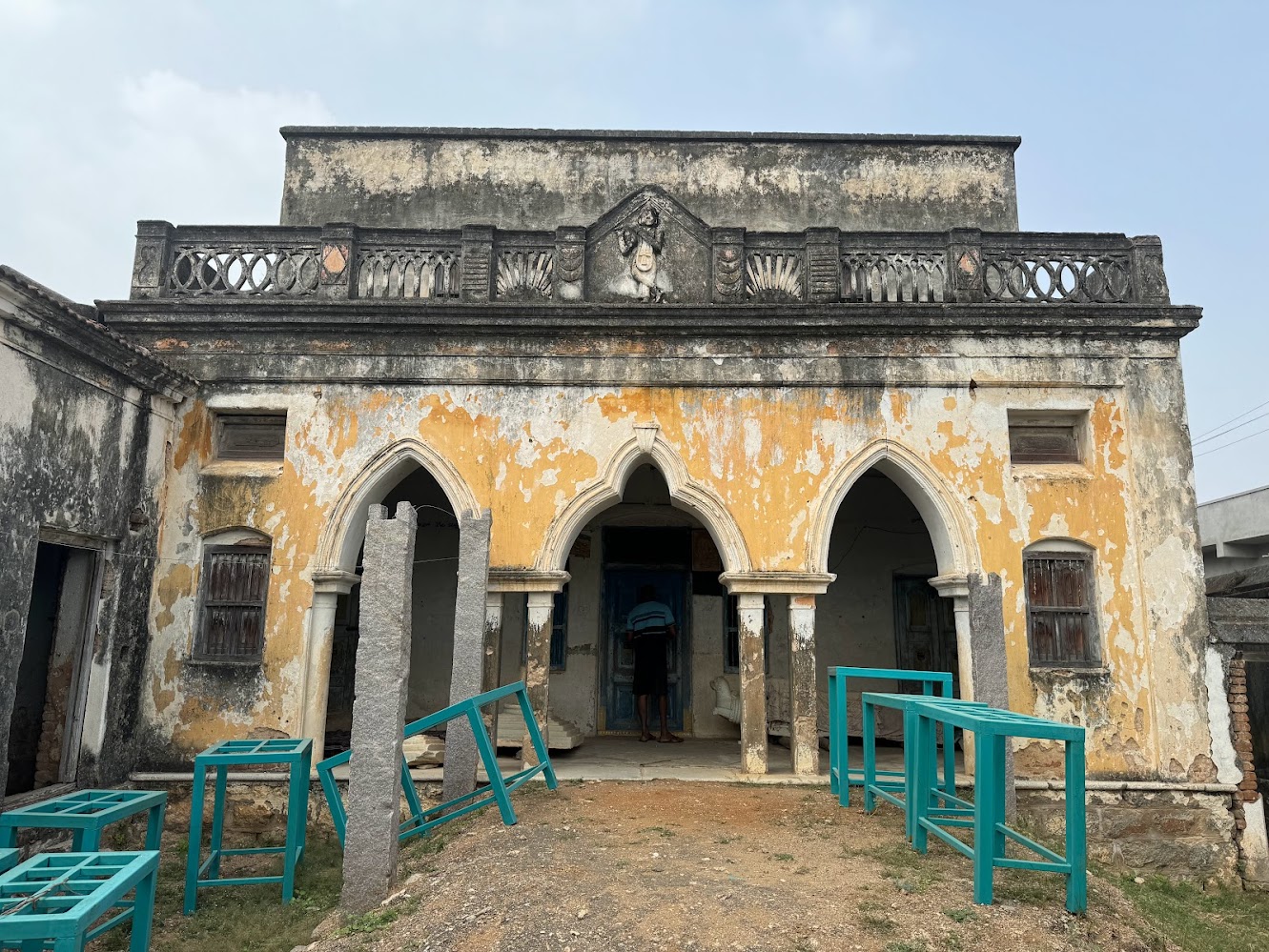
No signs or indication that it's a museum, I suppose because it's just a temporary home.
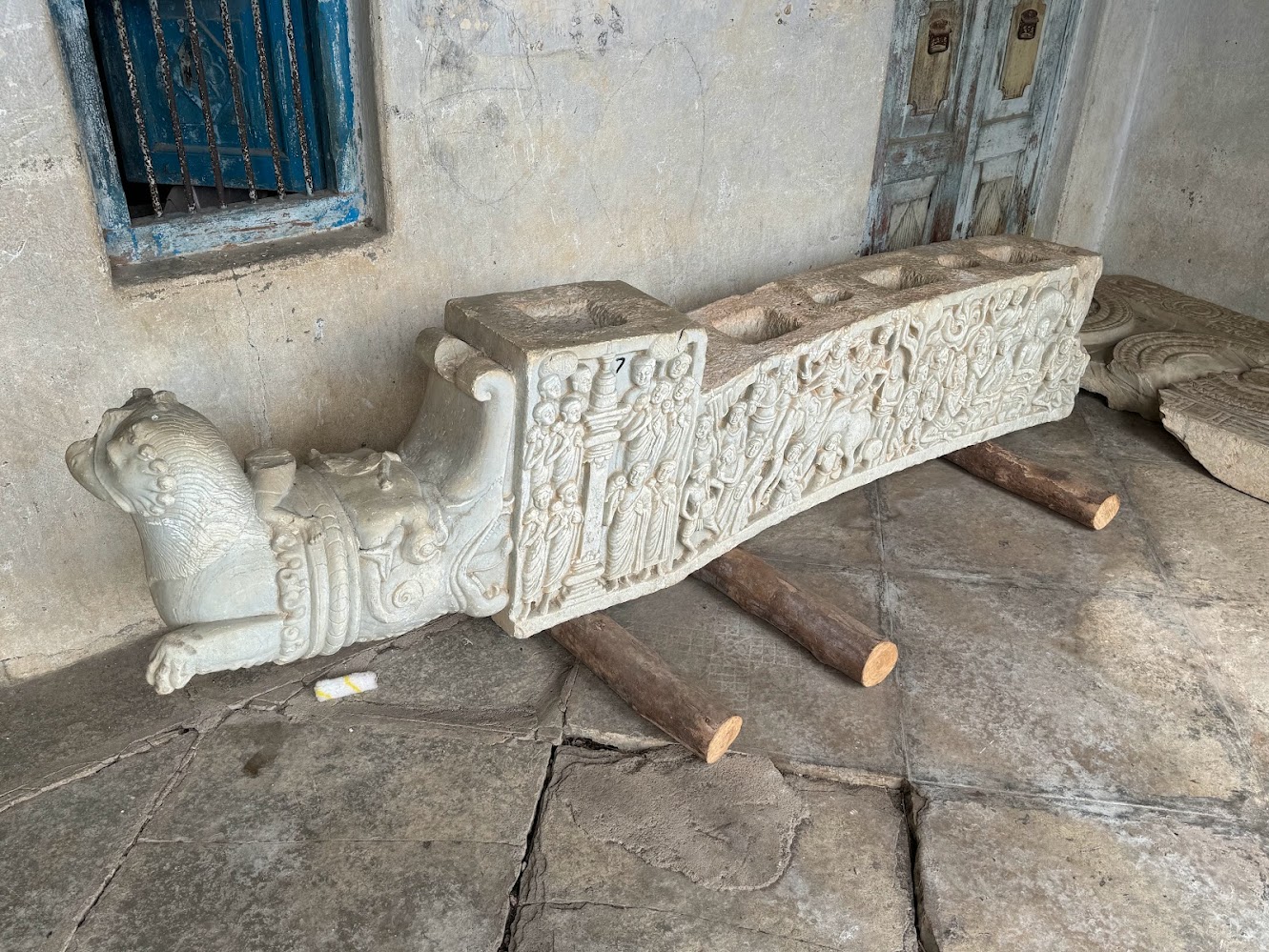
Yikes! It's a broken cross piece from a torana gateway of the sort reconstructed at Sanchi and unknown elsewhere in South India.
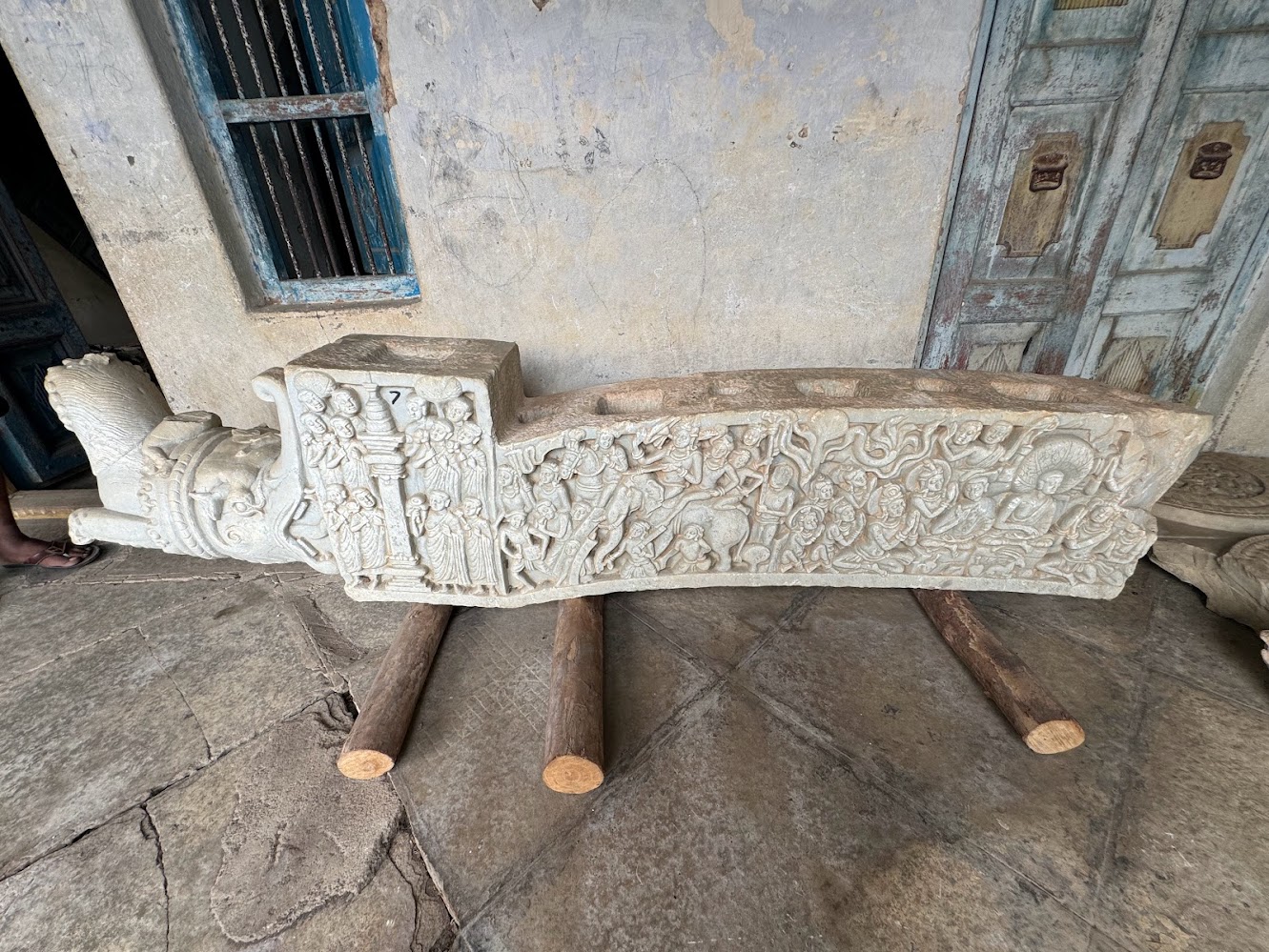
Phanigiri: Interpreting an Ancient Buddhist Site in Telangana, edited by Naman Ahuja (Marg, 2021), has two chapters (by N. R. Visalatchy and Parul Pandya Dhar) offering different readings of the sculptures on this piece.
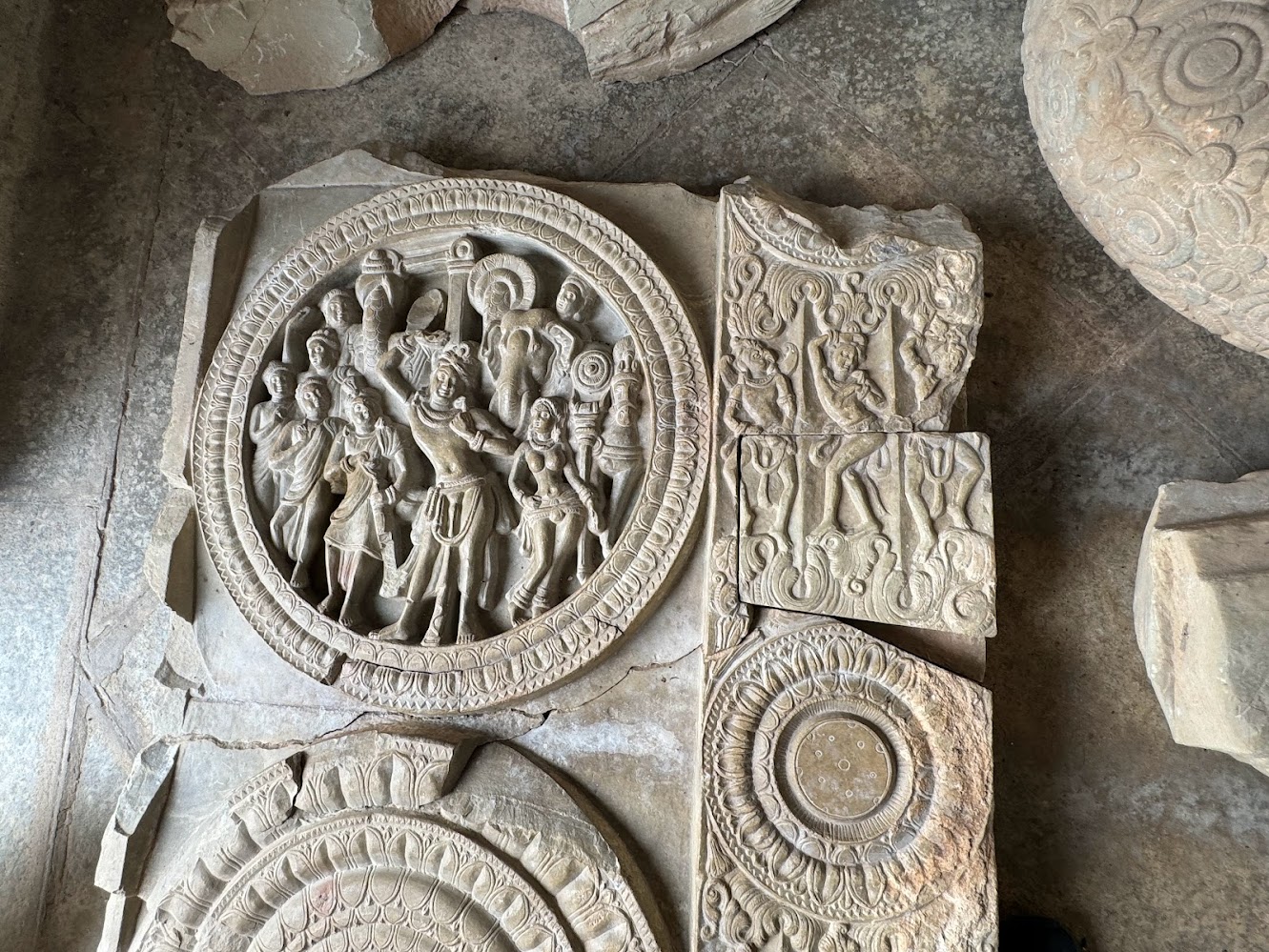
John Guy, writing in the same volume, says that the central figure's position (left fist against chest; right arm upright) is the standard indicator of a chakravartin or idealized ruler. Other details confirm this identification, including the wheel of the law, the elephant, horse, gem, queen, and defence and finance ministers--together, the "seven treasures."
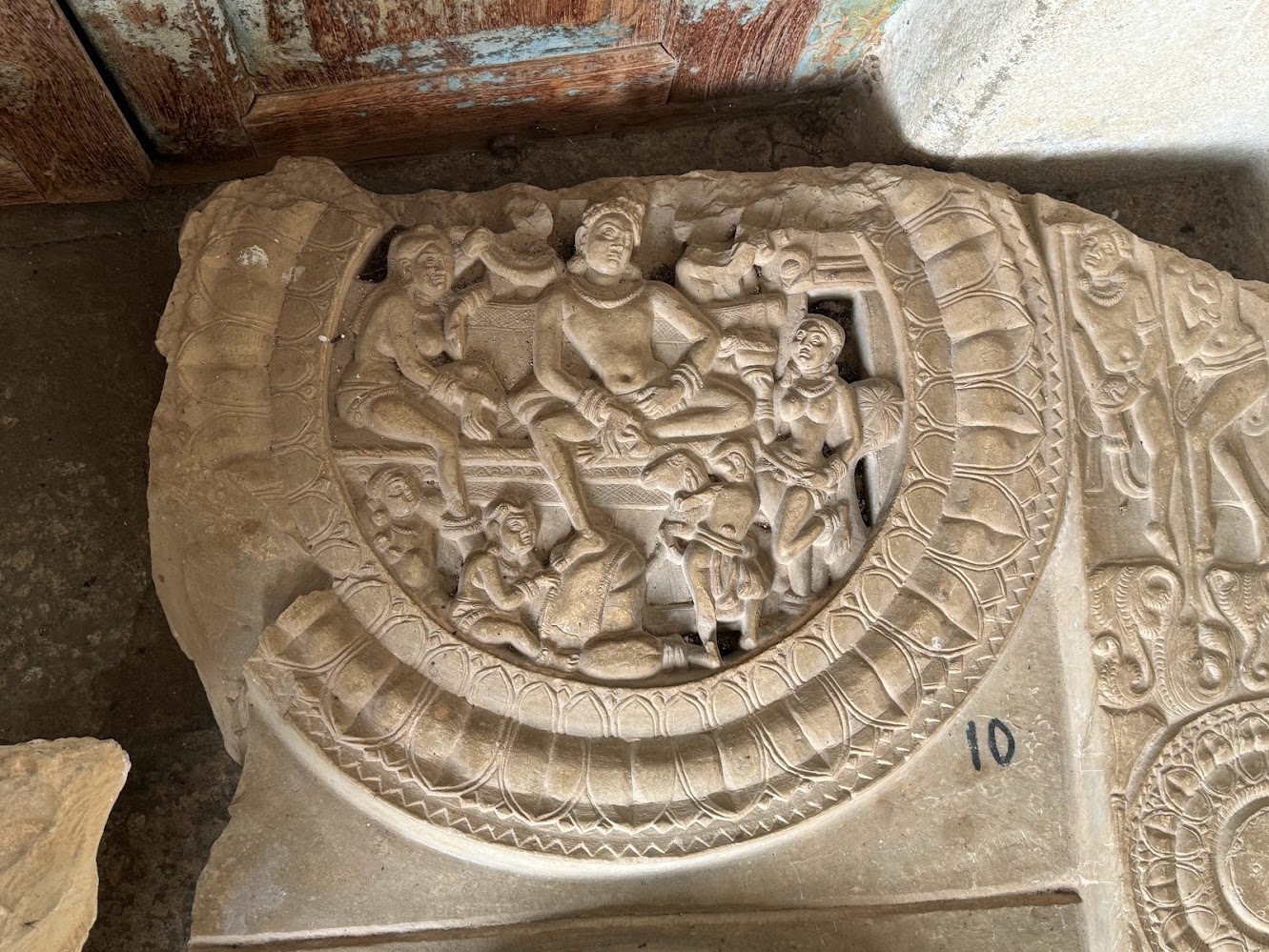
Guy in the same chapter identifies this medallion as coming from the Matakabhatta Jataka. The evidence is the goat being presented for sacrifice. The goat explains that he was once a priest who sacrificed goats, for which he wqas condemned to 500 rebirths as a sacrificial goat. The priest decides to put his knife back in its sheath.
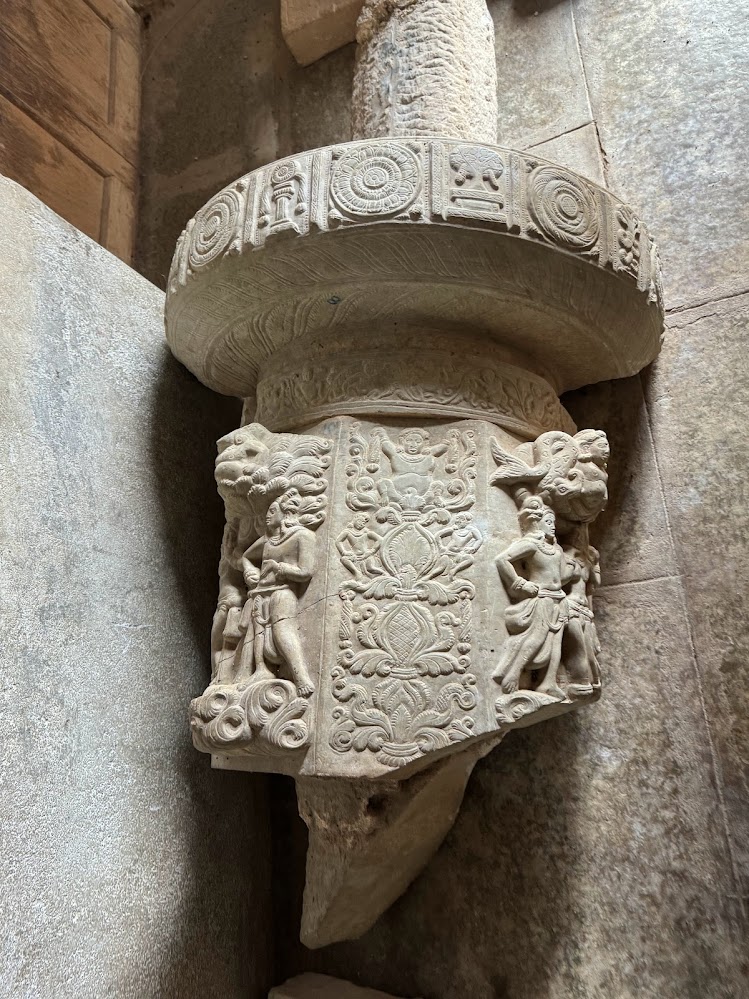
\
Here's a fragment of a yashti pillar symbolizing the cosmic axis and originally placed atop the stupa.
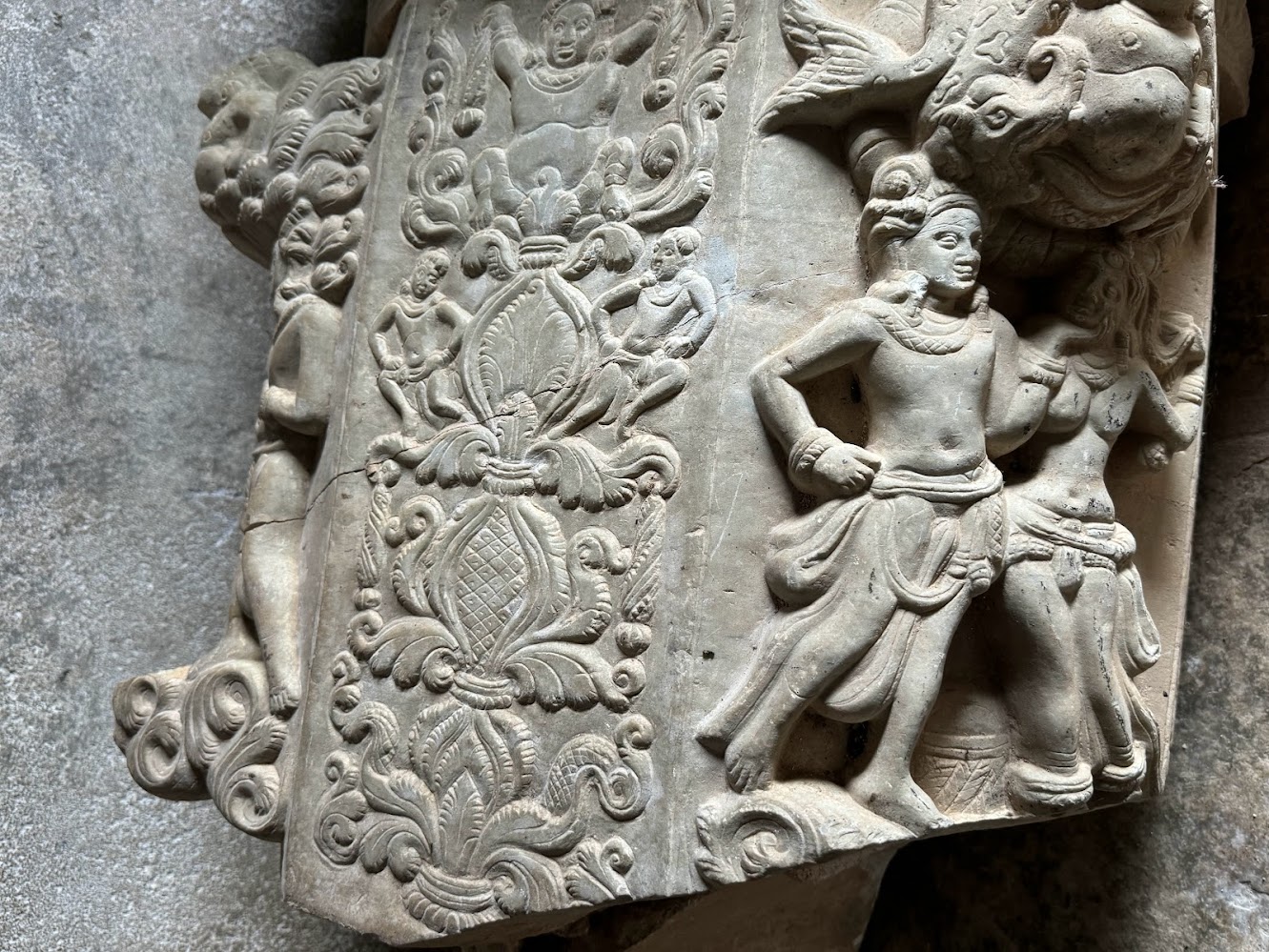
A closer view of the pillar showng a loving couple (a mithuna) under a (unfortunately truncated) merman.
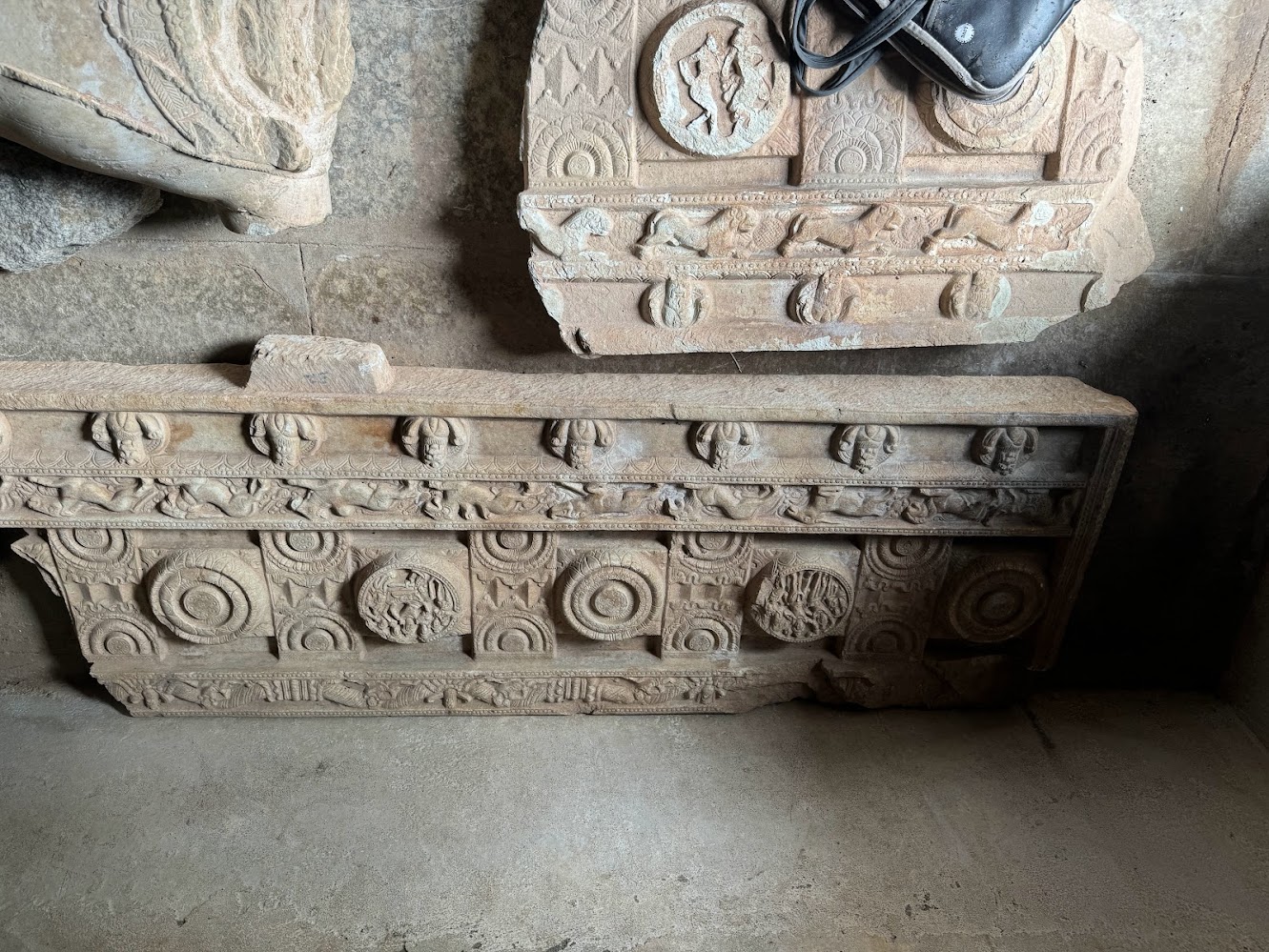
Here's a bit of the trim that once wrapped one of the ayaka platforms on the mahastupa.
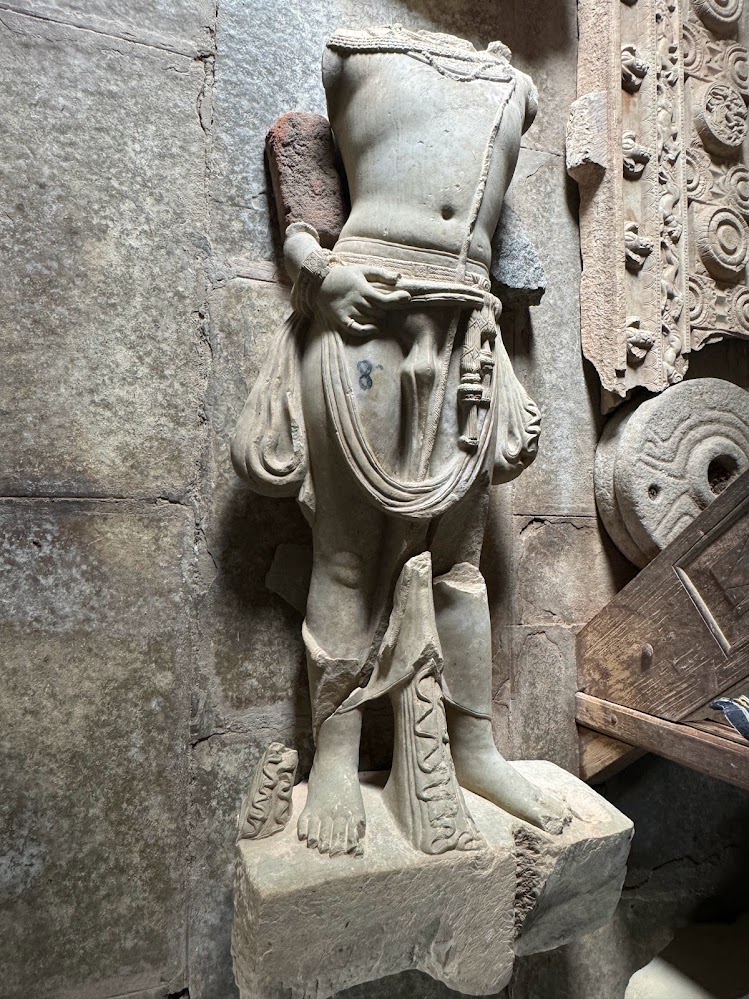
Unidentified figure. Guy suggests that he was possibly a yaksha, a nature spirit.
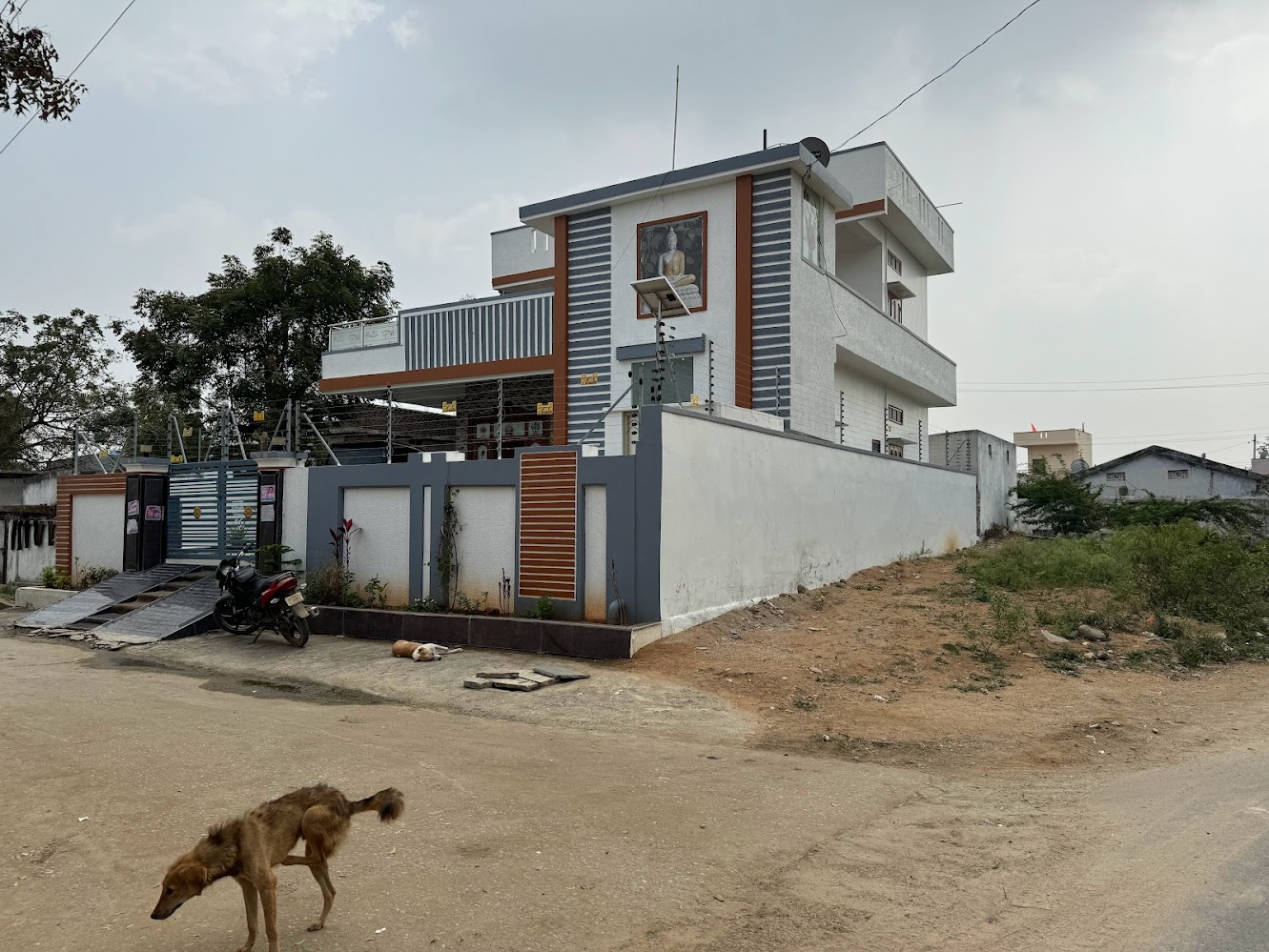
One of the flashier houses in the village. Plenty of signs of the Buddha, along with electric fencing and a starving dog.
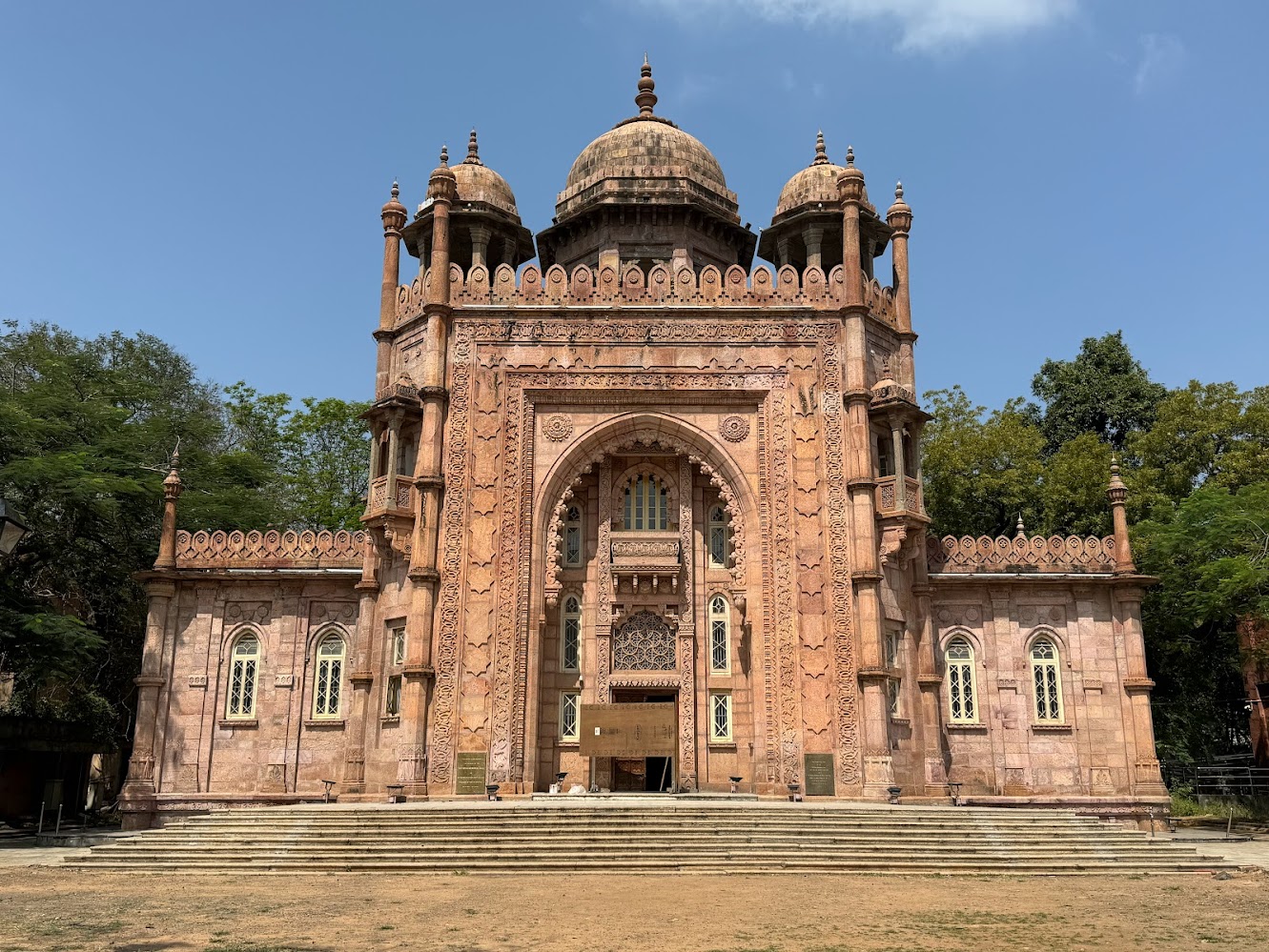
We're come down to Chennai to take a look at the Amaravati stones there. This is the museum's most atmospheric building.
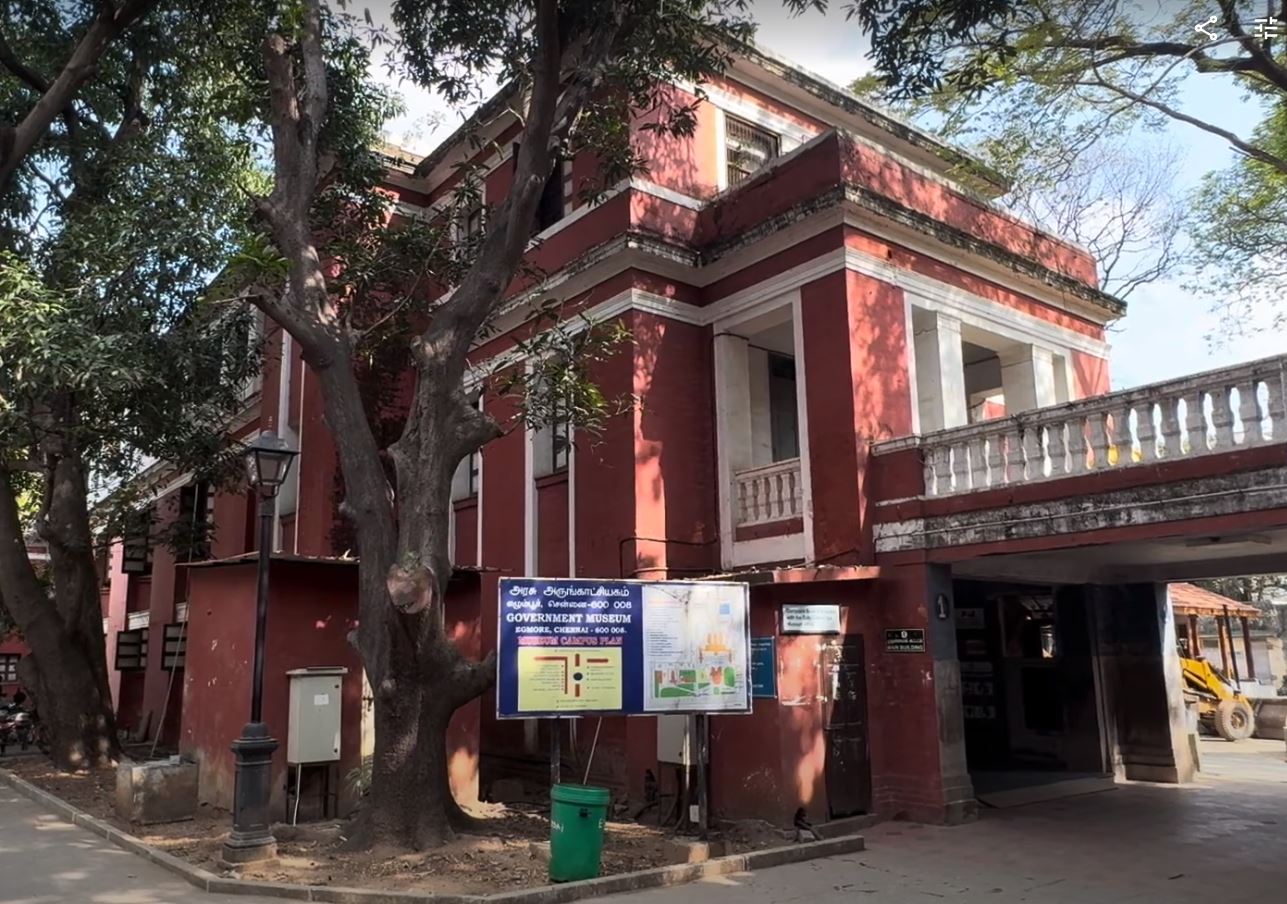
And this is the building that has the stuff we want to see.
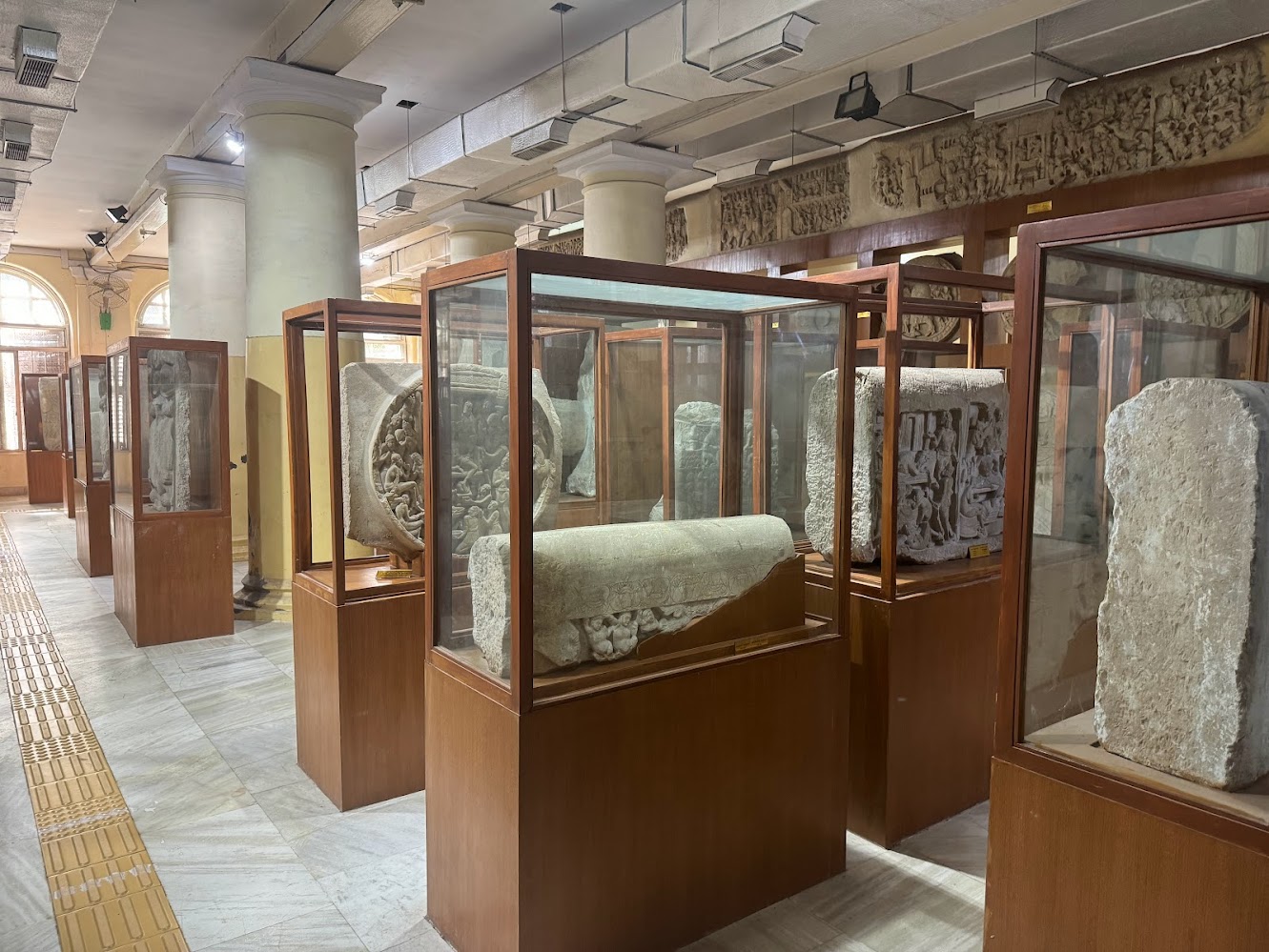
About a hundred pieces, or a third of the museum's collection, are on display.
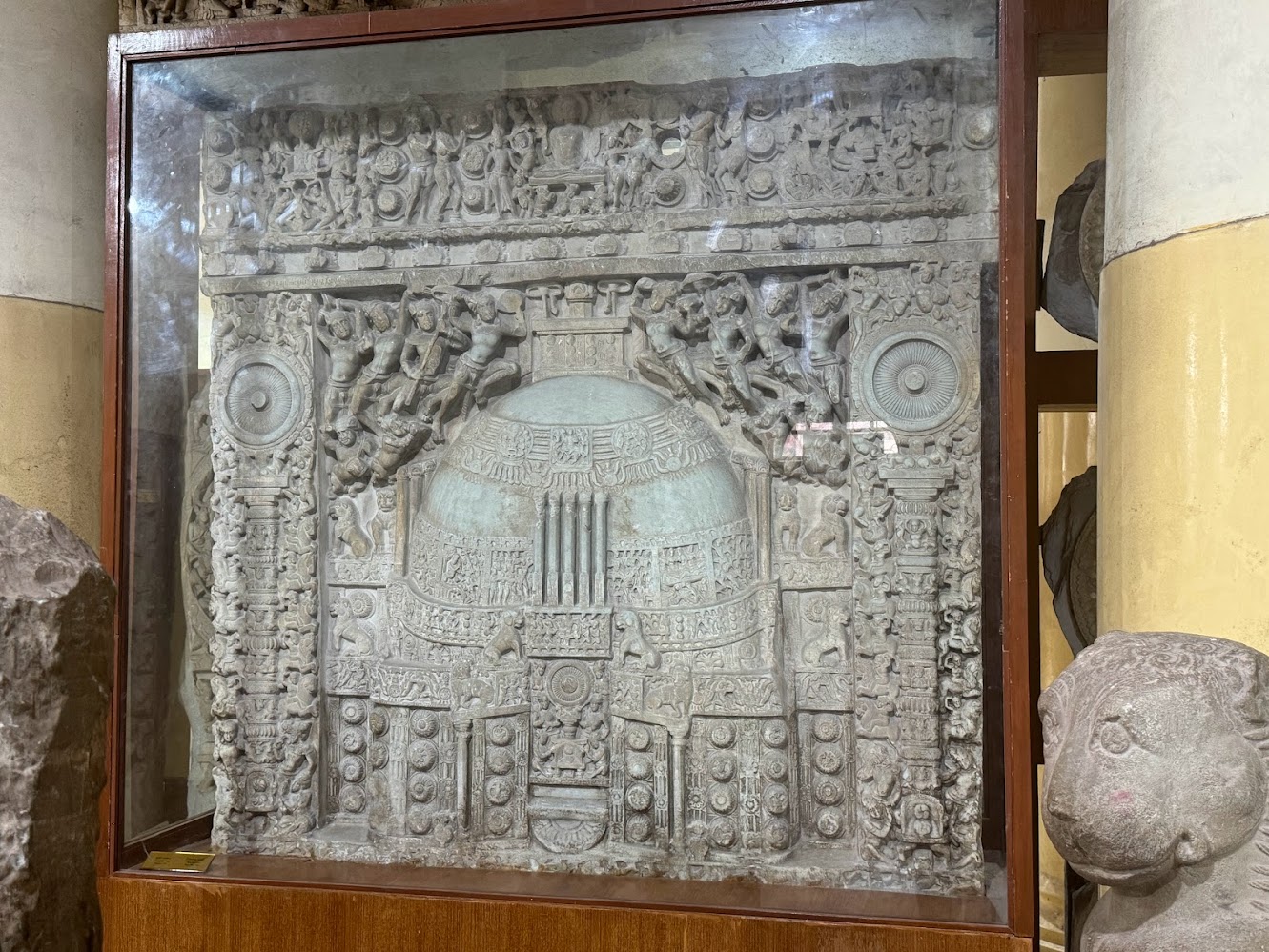
Accession No. 221, the museum's pride and joy, measures about two meters on a side and portrays the stupa worshipped by devas, framed by columns topped by the Wheels of the Law, and under a frieze with images from the life of the Buddha.
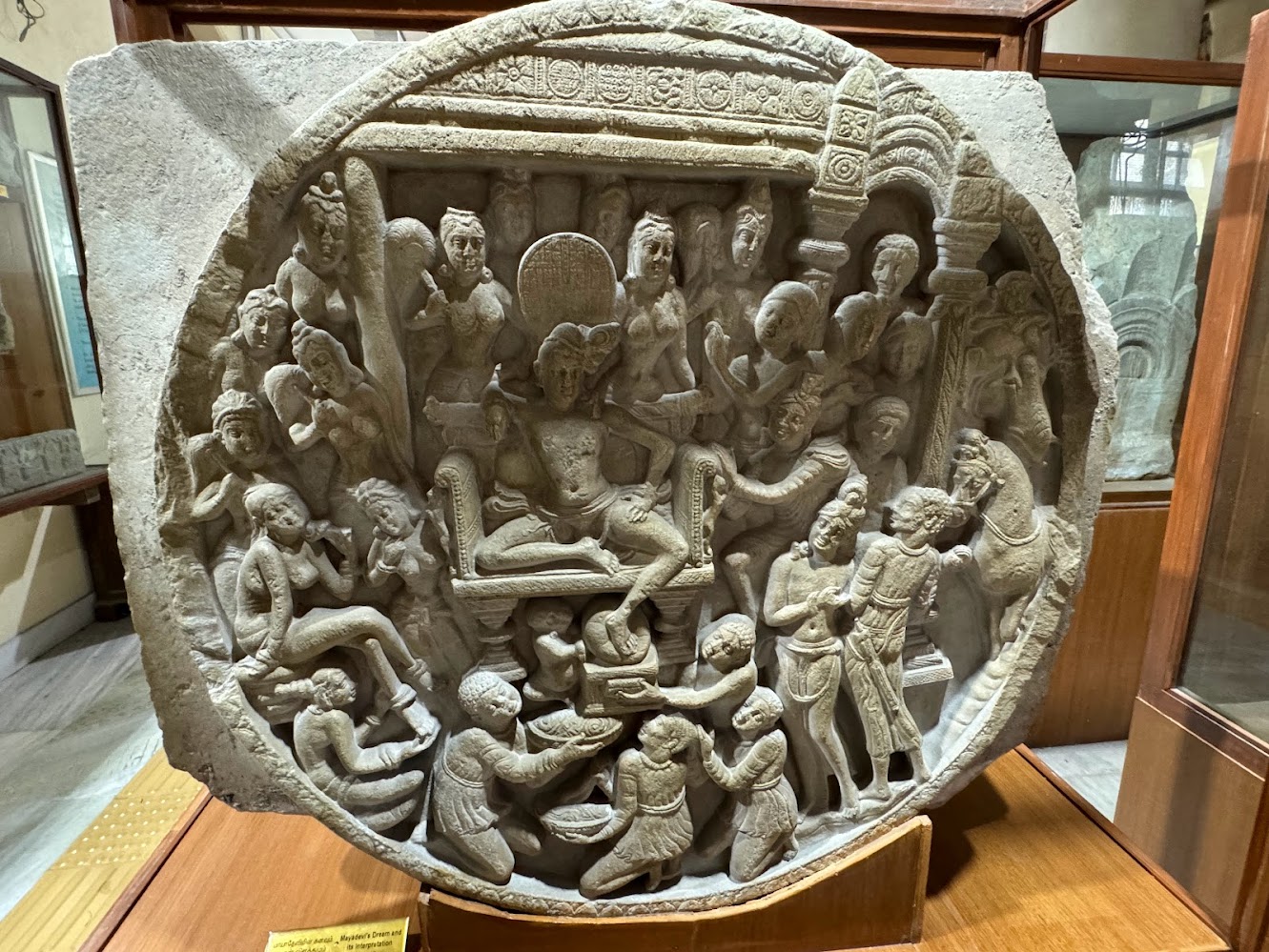
Accession 17, shows King Bandhuma seated with his two daughters (one seated at the far left, the other standing) at his right hand. It's a story about the rewards of generosity: the elder daughter, because she is generous, is reborn as the mother of the Buddha. For an interpretation, see Compilation on Amaravati Sculptures and Conservation and Reorganisation of the Amaravati Gallery in the Government Museum, Chennai), edited by R. Kanna, 2014.
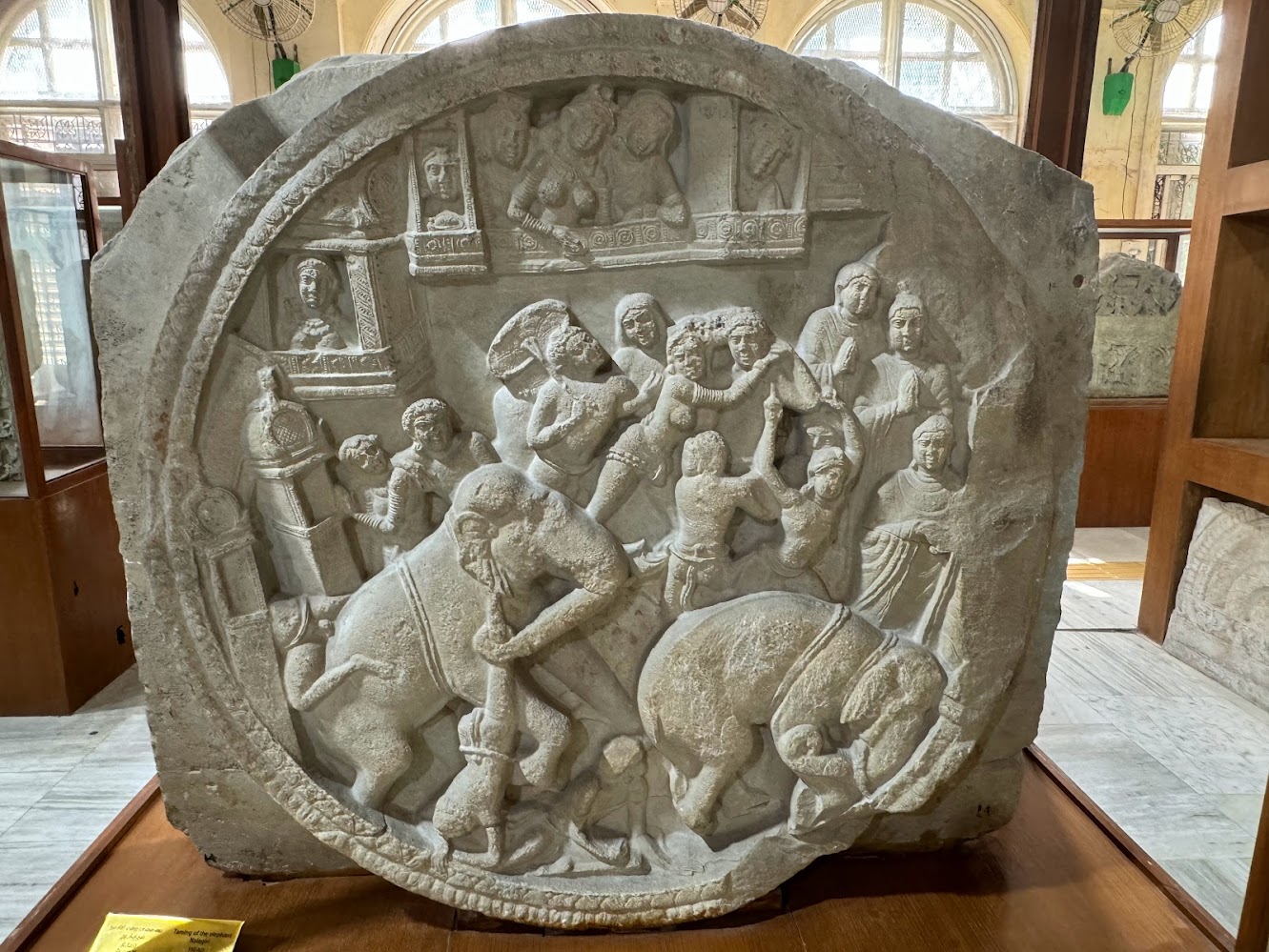
Accession 14. showing on the left a wild and destructive elephant, Nalagiri, who approaches the Buddha and instantly crouches in humility.
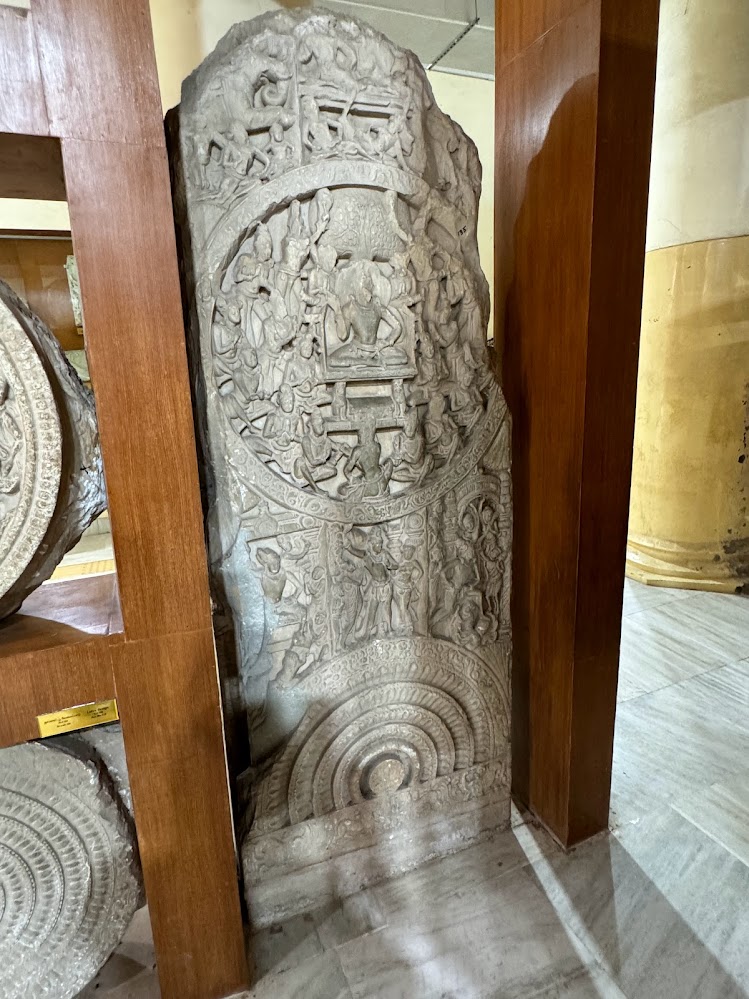
Accession 135, a pillar with the story of Mandhata, a univeral monarch who obtains the seven jewels of an emperor and rules over the entire world. Attempting to rule the city of the gods, he falls to earth. Lesson learned.
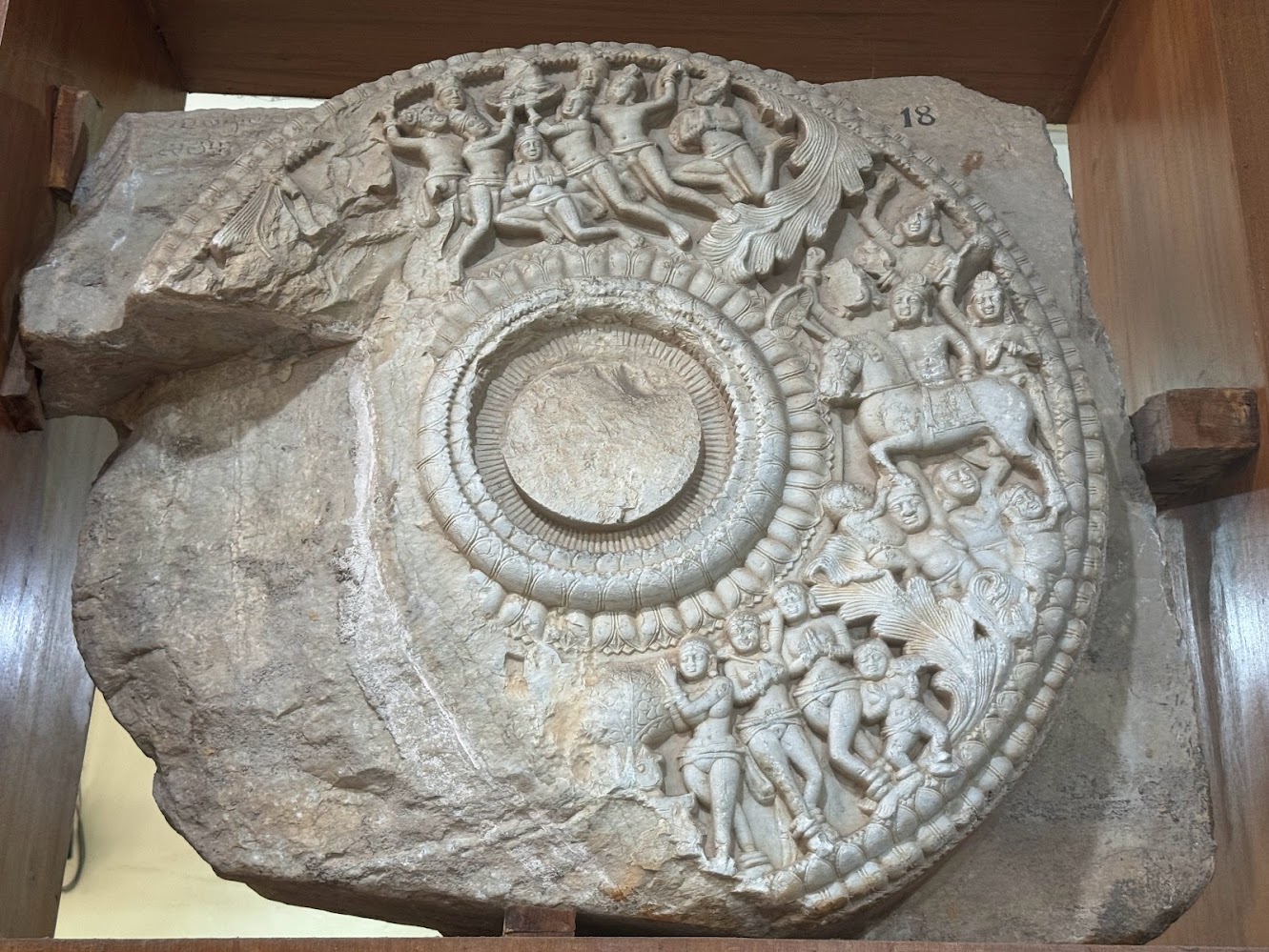
Accession 155, a medallian with three stories: at the top, goddesses carry the Buddha represented by a stupa; on the right the horse Kanthaka leaves Kapilavastu as the Buddha-to-be's renounces his regal life, and, at the bottom., woman worshipping the Buddha in the form of the Bodhi tree.
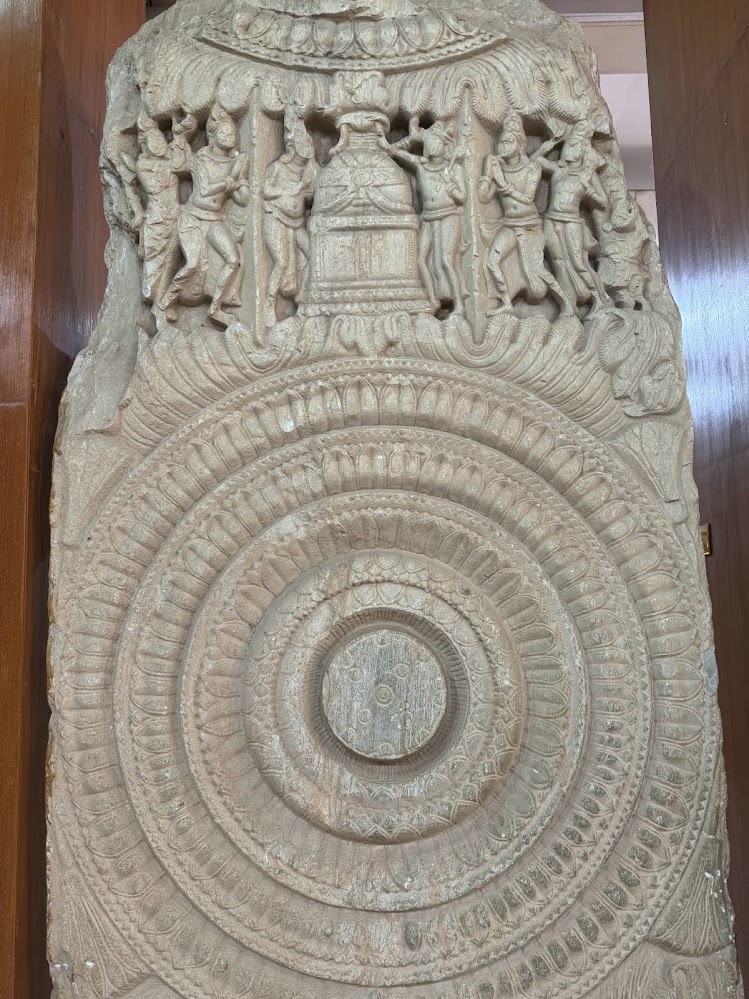
An unidentified stone with lotus medallian and worshipful figures.
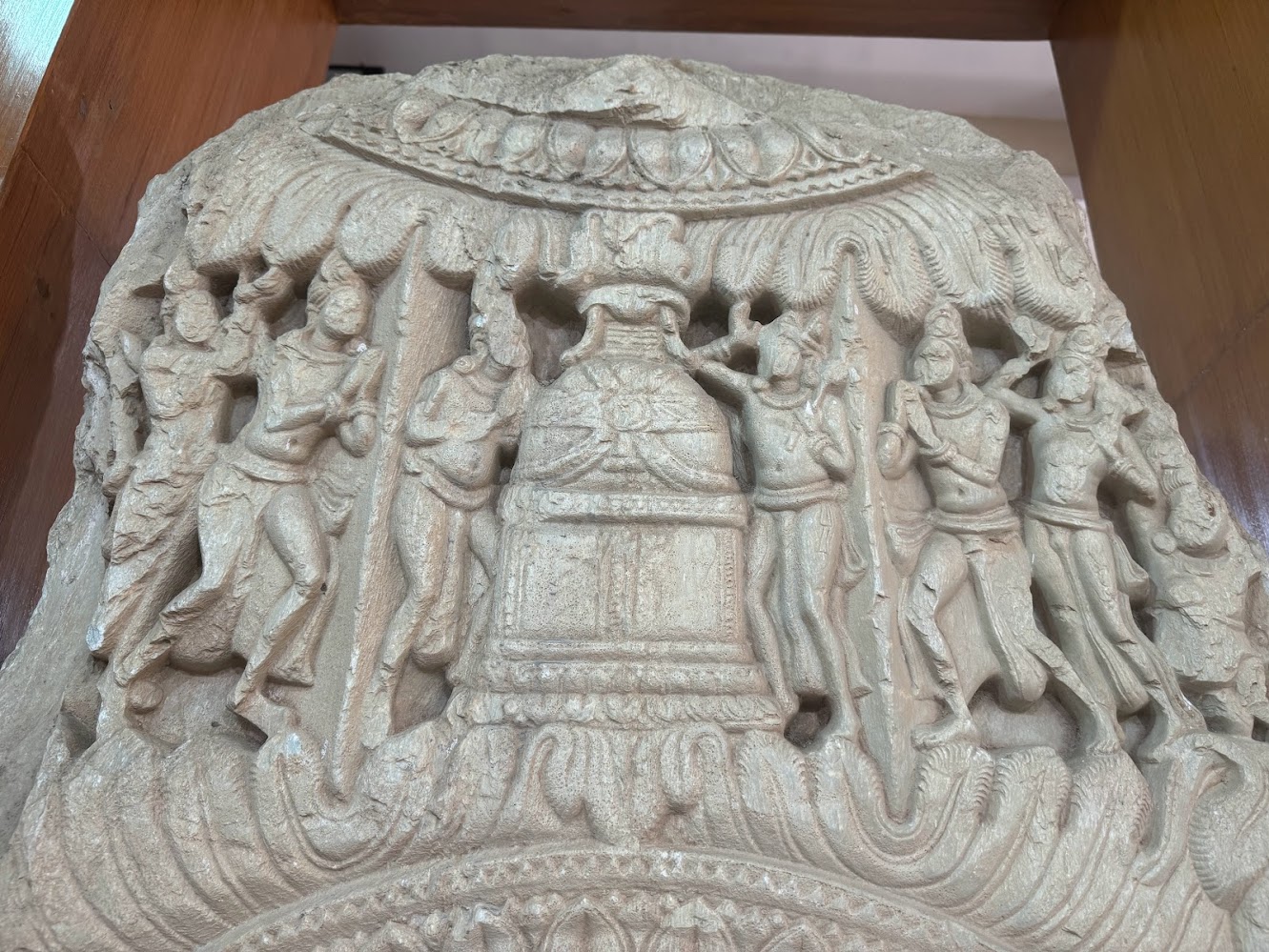
Close-up. Accession number unknown.
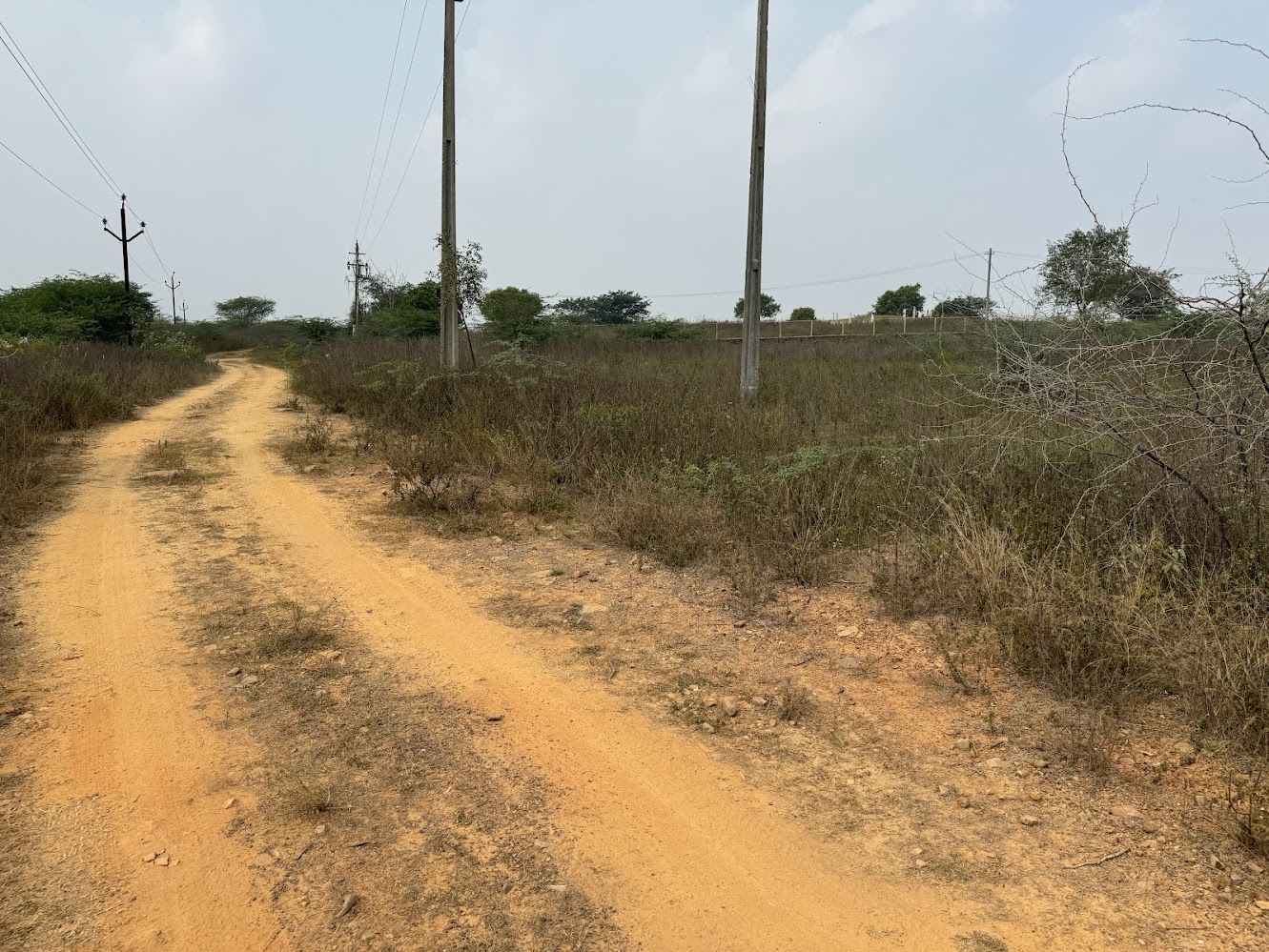
Yep, it's the main approach to Jaggayyapet.
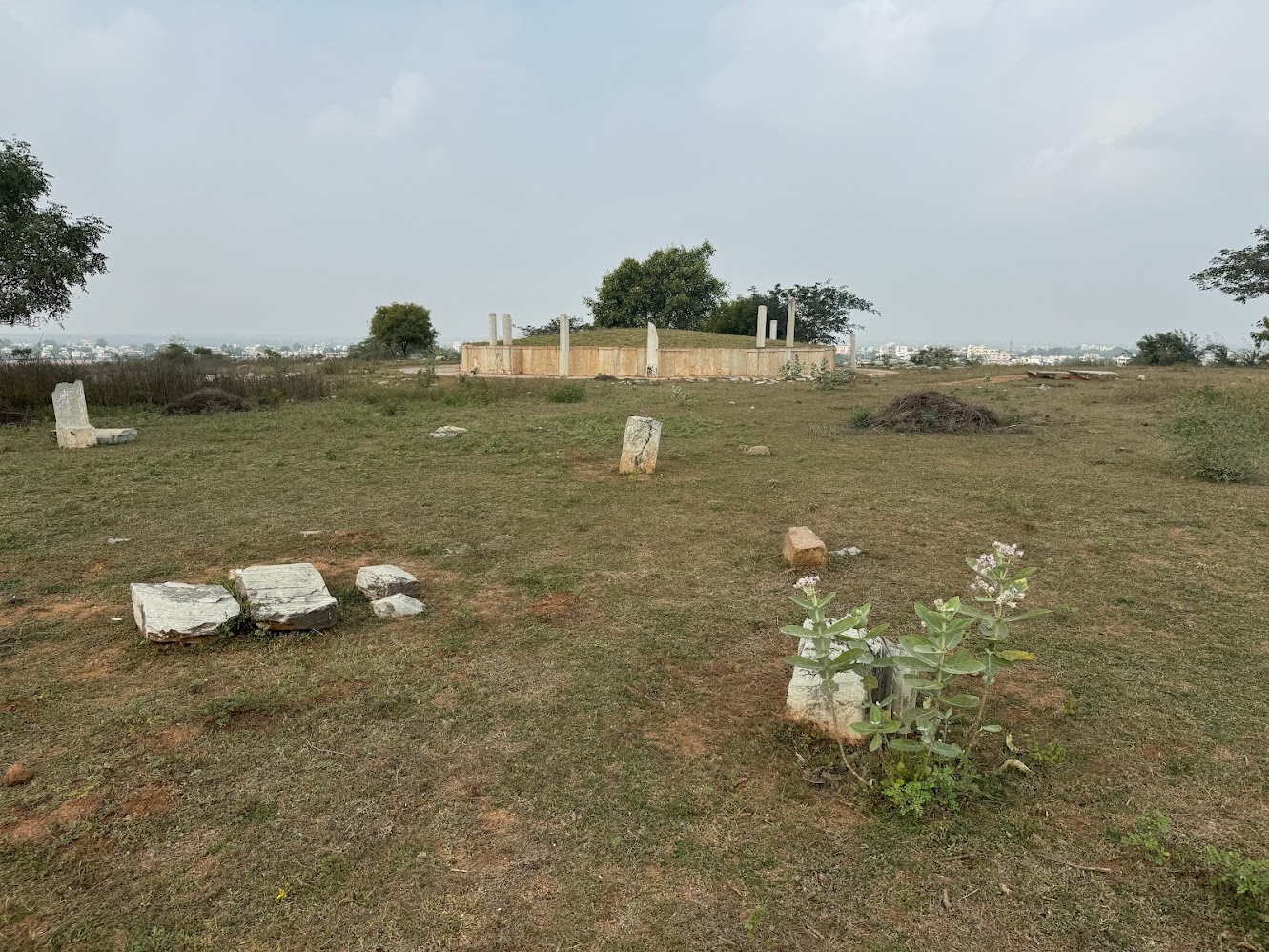
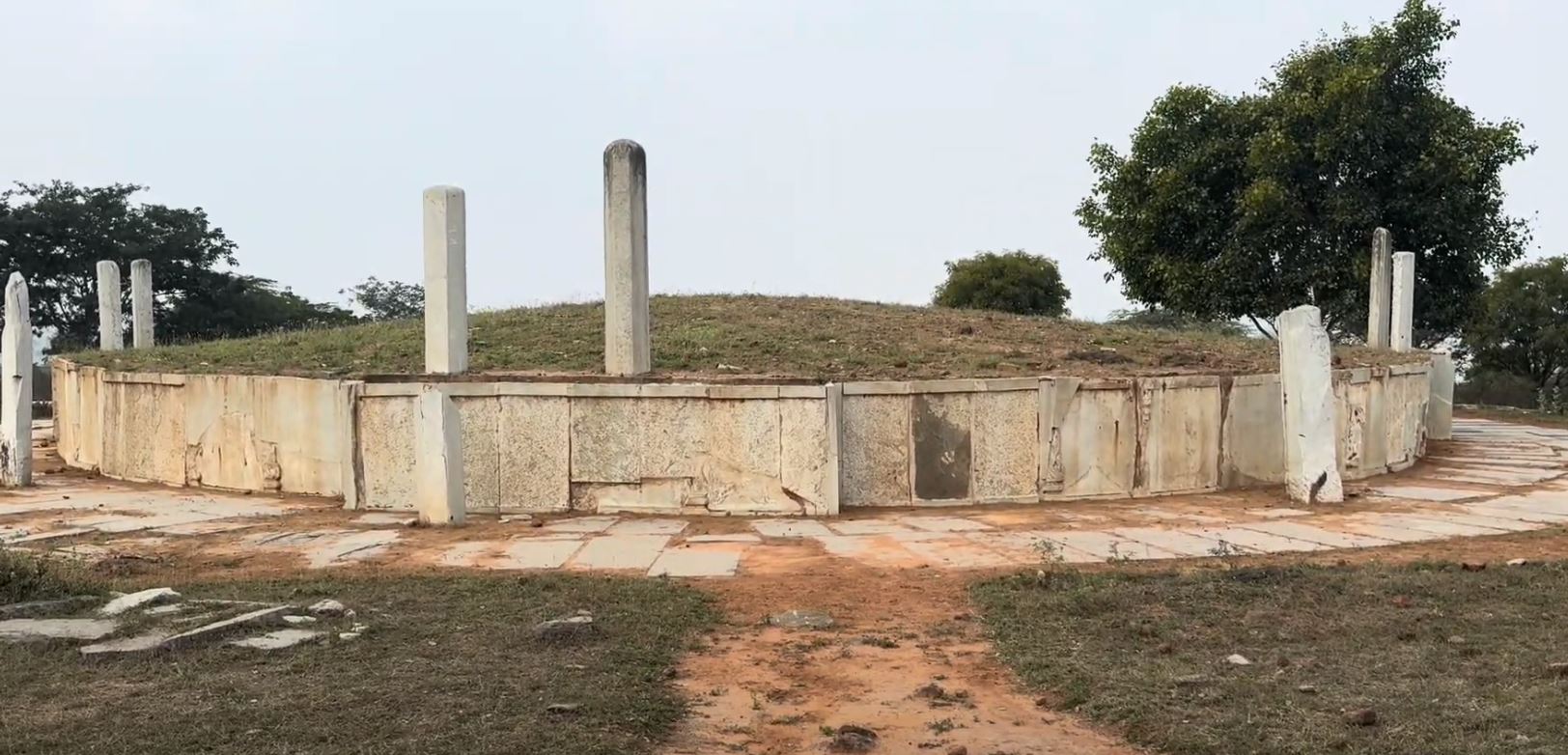
Here she be. See Jas. Burgess, The Buddhist Stupas of Amaravati and Jaggayyapeta, 1887, and Alexr. Rea, South Indian Buddhist Antiquities... 1897.
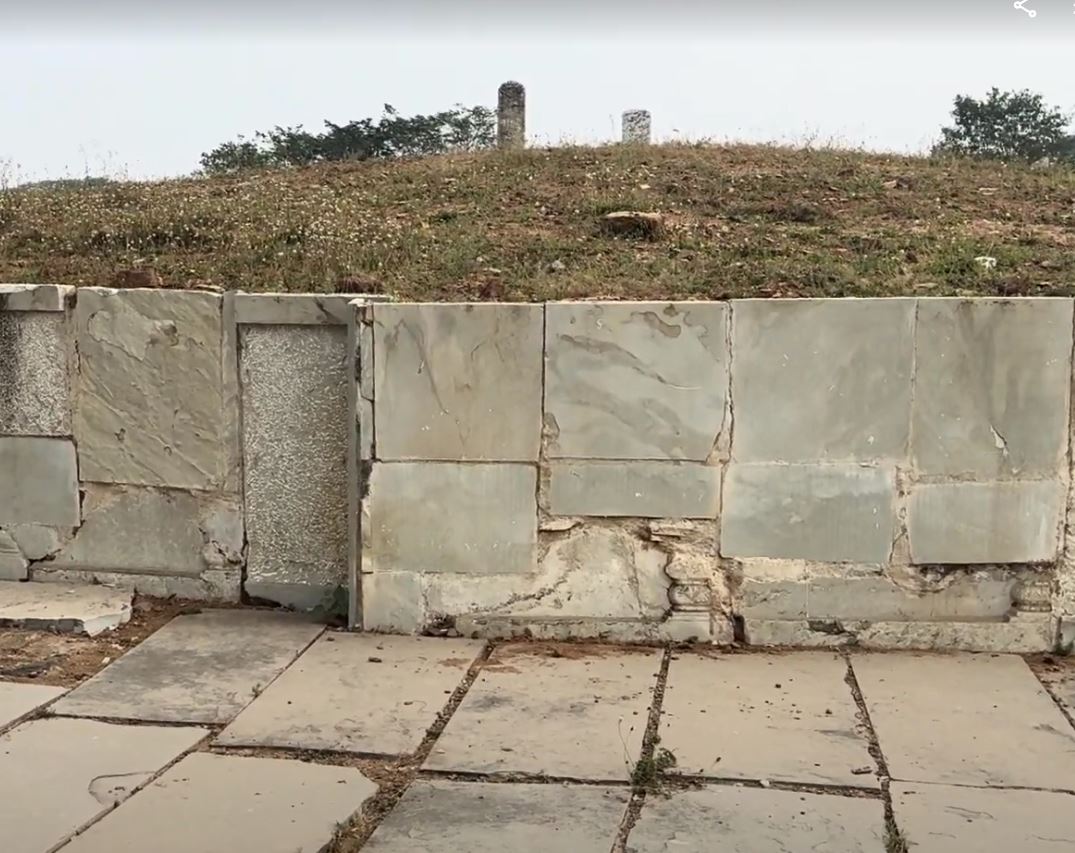
The reconstruction is none too elegant.
Notice the small figure two stones to the right of the dark stone.
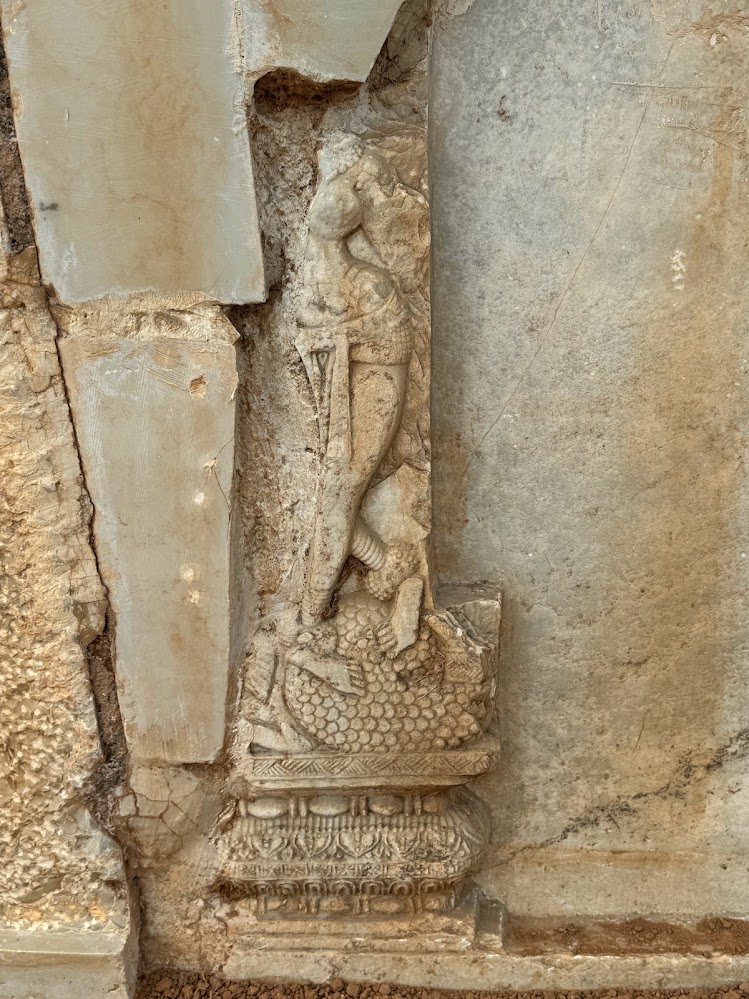
Here she is. There are a few other comparable images around the stupa.
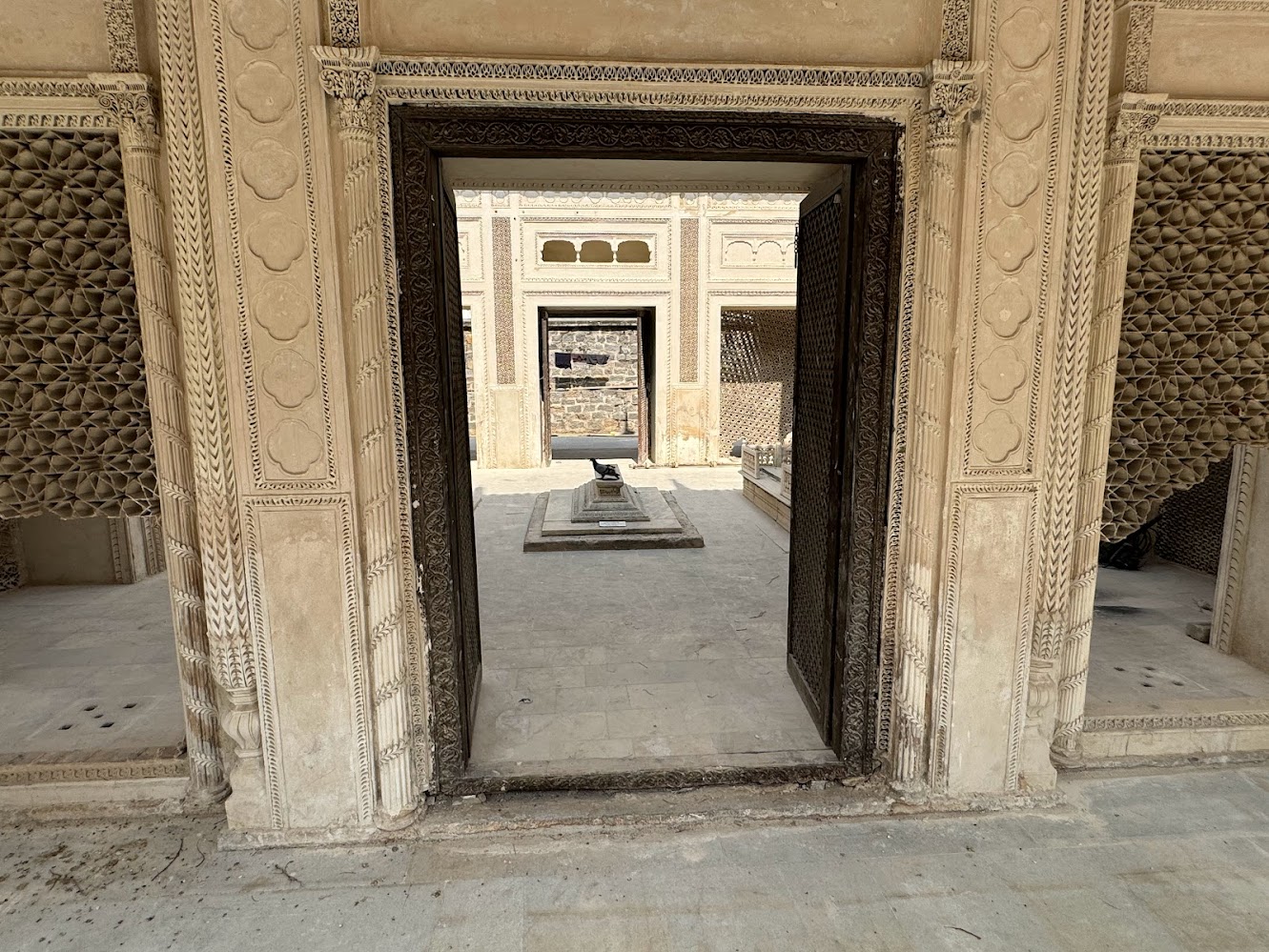
The podcast ends with a stop in Hyderabad and a visit to the Paigah Tombs. One is shown here.
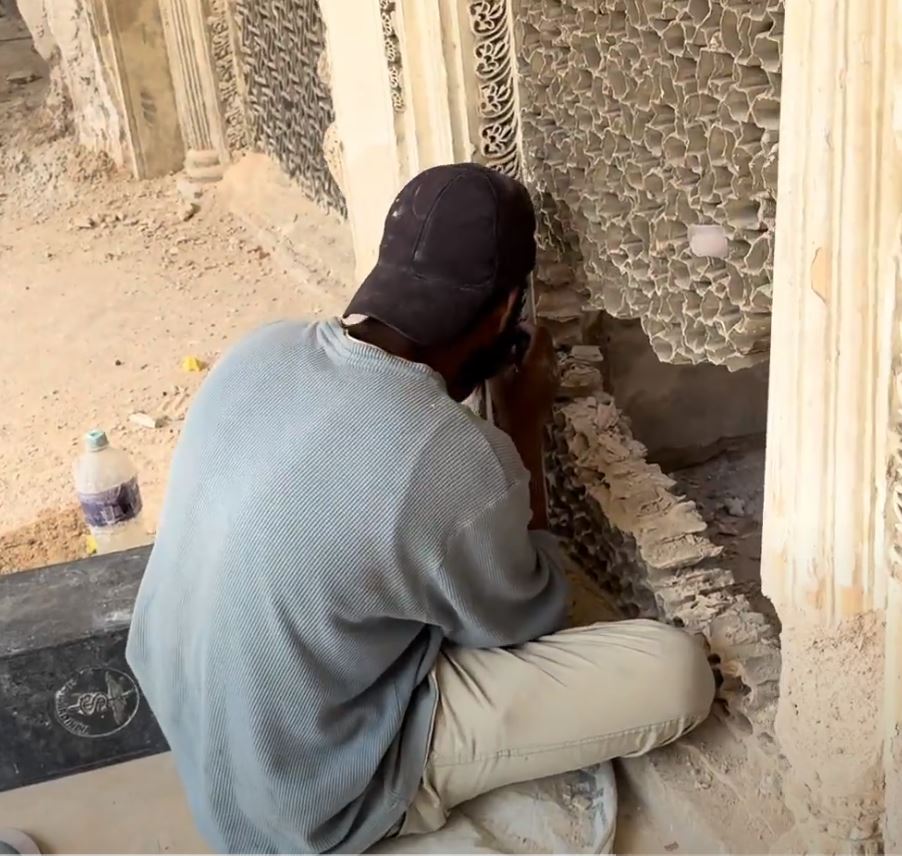
Repair work.
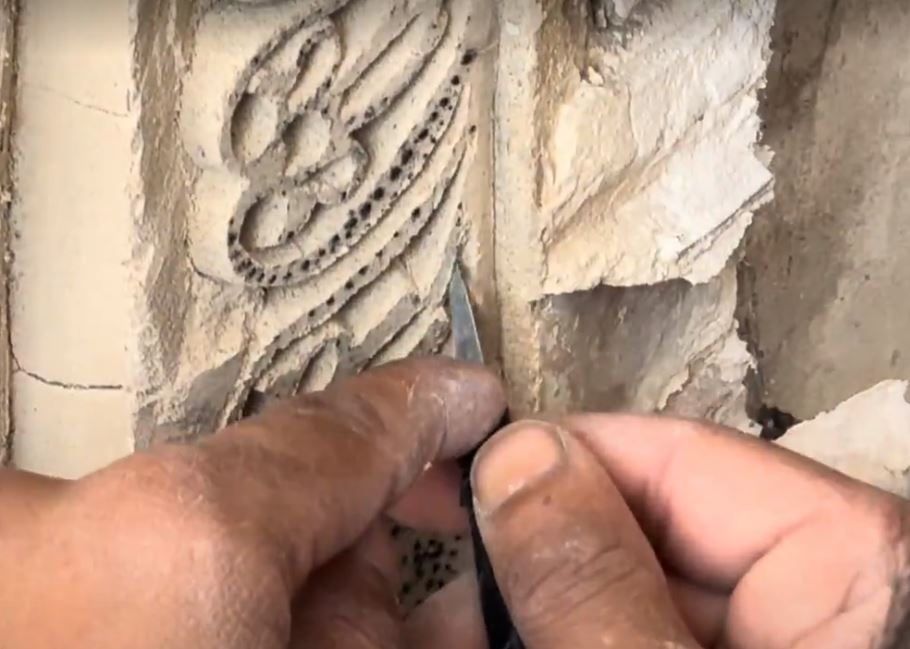
Minutiae.
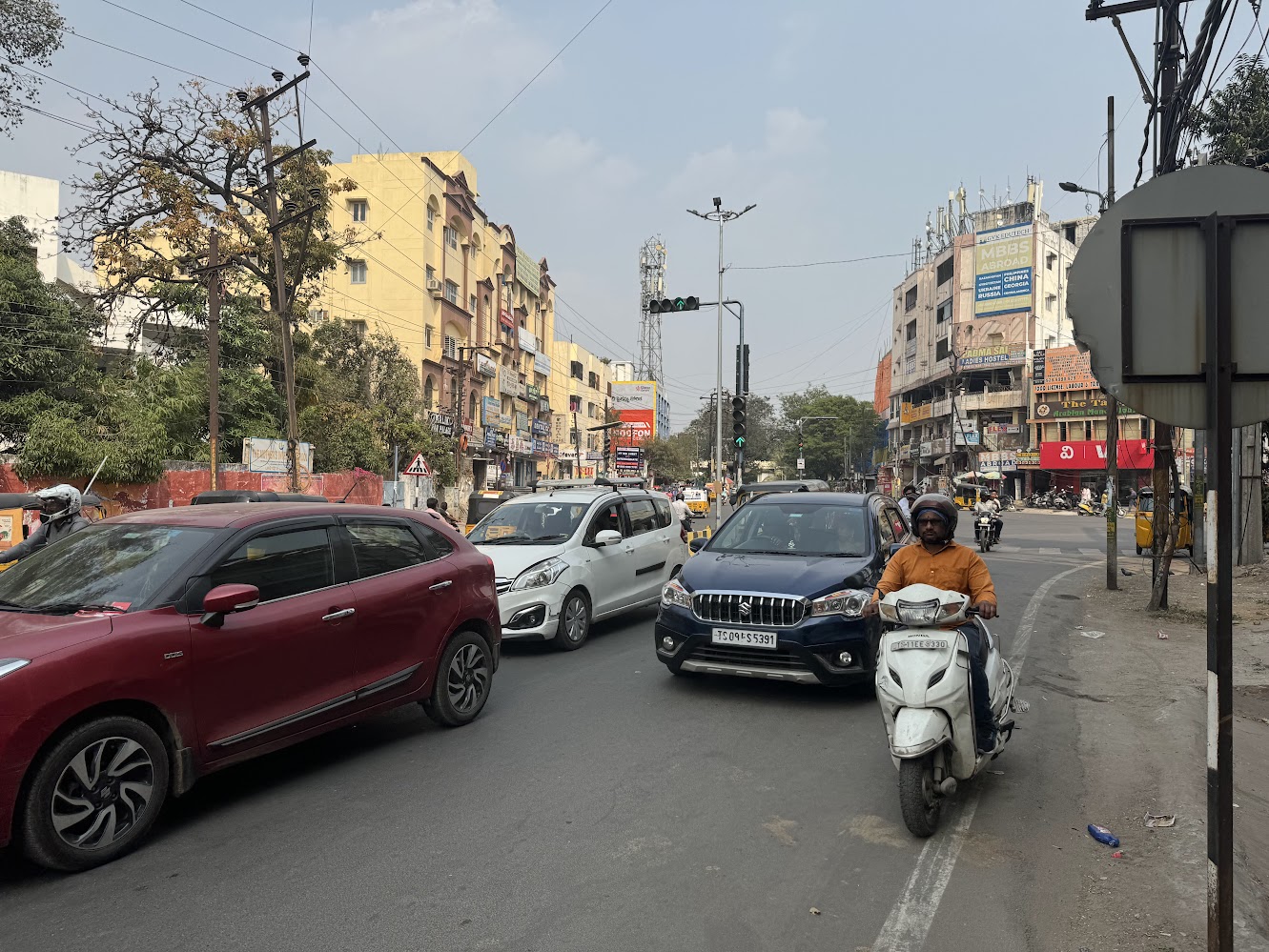
That world is gone, for better and for worse.
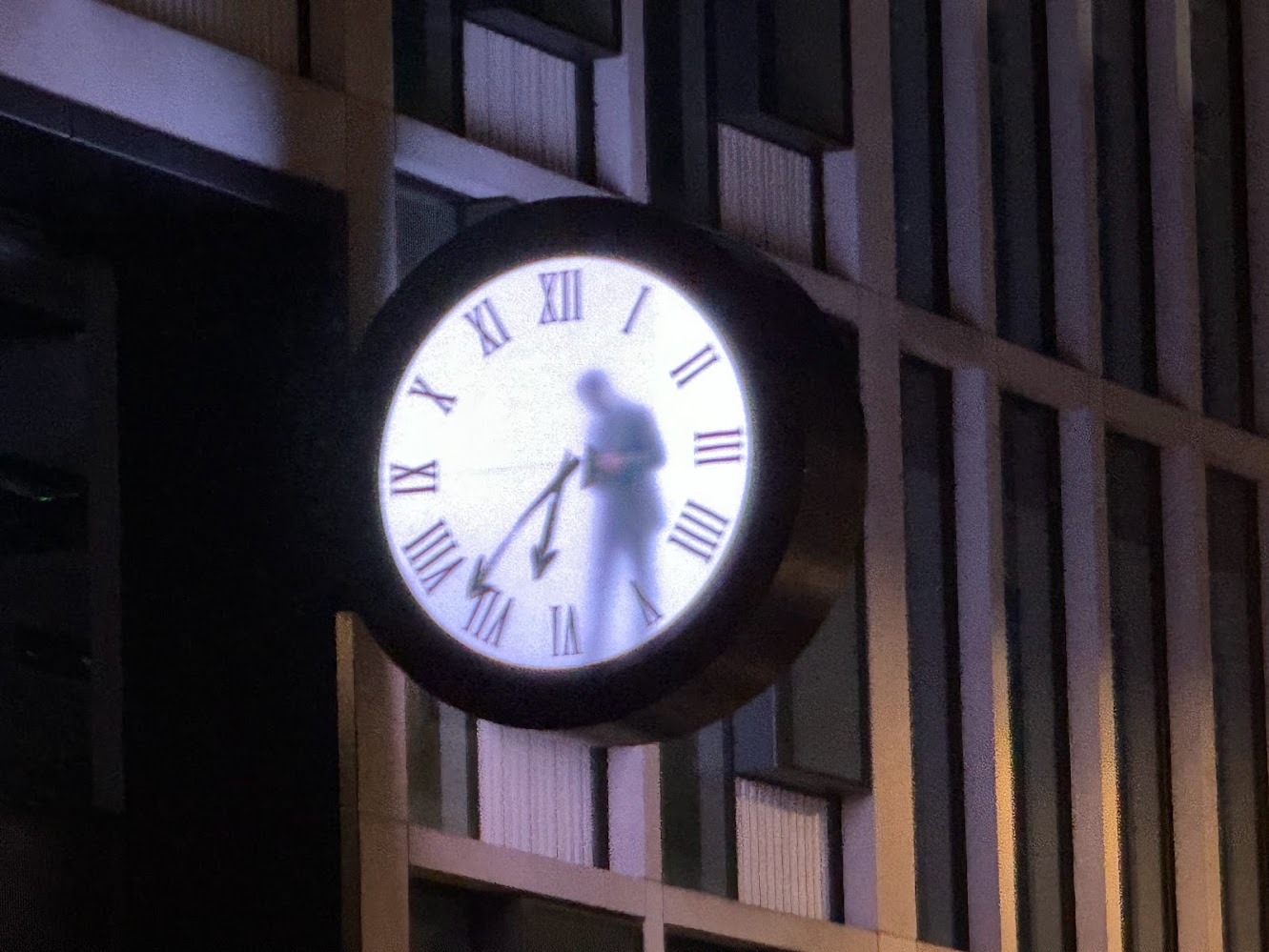
The podcast was accompanied by a photo taken very early one morning outside Paddington Station, where inside this clock by Maarten Baas an actor appears to set the time manually.