Cauvery Temples 2. Jambukeshwara
<p><img src="https://wtbl.nyc3.cdn.digitaloceanspaces.com/fecdbe82b1689b1f81e94b2bae290c60#orig=/sha256/fecdbe82b1689b1f81e94b2bae290c60ac850a84dfd7c20112c62947917b9946"> </p> <p>We're less than a mile from the larger (for my taste too large) Ranganatha Temple. We parked at the west entrance to this temple, the Jambukeshwara, and have already walked through one gopuram and are approaching the second. When we were two or three years old, we necessarily looked up to adults. We never really outgrow that habit of being impressed by big things as, for example, in this case or standing before a gopuram symbolizing the home of the gods. That home is atop Mt. Kailash, which is a real mountain about 300 miles northeast of Delhi. Intereresting hike, but you'd have to get past the main wall of the Himalaya, with Nanda Devi smack in front you. </p> <p><img src="https://wtbl.nyc3.cdn.digitaloceanspaces.com/738f7ef22d4e09ec309d5b38feebb6db#orig=/sha256/738f7ef22d4e09ec309d5b38feebb6db5cc06c9ab3a9747572a88004915a868a"></p> <p>Through that gopuram, we've come into a hall with these four extraordinary piers. Ever seen anything like them?</p> <p><img src="https://wtbl.nyc3.cdn.digitaloceanspaces.com/219a250043e039bd56dff9137e236103#orig=/sha256/219a250043e039bd56dff9137e236103a38061641ff433e0a42f830503d983e2"> </p> <p>I'm thinking baobab.</p> <p> <img src="https://wtbl.nyc3.cdn.digitaloceanspaces.com/b47ae72616caa058ea9b407541c17826#orig=/sha256/b47ae72616caa058ea9b407541c1782620976d1d61b45d22be1e163c0bf2691d"> </p> <p>We're in the anteroom to the temple shrine. Not sure when the temple managers adopted zigzag or serpentine queueing--or where they got the idea. I'm thinking Disneyland.</p> <p> <img src="https://wtbl.nyc3.cdn.digitaloceanspaces.com/a655eba17a37bbb3e94f7cae3e89f5ff#orig=/sha256/a655eba17a37bbb3e94f7cae3e89f5ffe479cf8e439b7551d79aa5c30e60d2b2"></p> <p>Here's the outside of the shrine whose Shiva lingam the people in that anteroom were waiting to see. </p> <p> <img src="https://wtbl.nyc3.cdn.digitaloceanspaces.com/ab134a333e60028342e9817f4ee73aba#orig=/sha256/ab134a333e60028342e9817f4ee73aba459bb30958de71b7d77bec5d5167ebdd"></p> <p>What are the bars guarding against? Answer: a specimen of a White Jambuka tree, <em>Syzygium cumini, </em>sustained by the temple's perpetual springs. Hence the temple's name, Jambukeshwarar.</p> <p> <img src="https://wtbl.nyc3.cdn.digitaloceanspaces.com/b78f9159a1ba08c018fba7a5af0d1862#orig=/sha256/b78f9159a1ba08c018fba7a5af0d1862aa1e2c131e4467cc378c1143aca153b2"></p> <p>Here's a Shiva lingam in a peripheral shrine or, to use the Sanskrit name, the <em>garbha griya, </em>literally womb house. Please do not criticize the 5,000-degree LED light placed for your convenience. </p> <p> <img src="https://wtbl.nyc3.cdn.digitaloceanspaces.com/f49c4d10c95c2fb721f260d0e010226d#orig=/sha256/f49c4d10c95c2fb721f260d0e010226dc907ac4f23b2327a5e3f7549e6de28a5"></p> <p>Or this superbly painted roll-up door. </p> <p> <img src="https://wtbl.nyc3.cdn.digitaloceanspaces.com/60dc5f51bbce74c092e0af2ed2e4124a#orig=/sha256/60dc5f51bbce74c092e0af2ed2e4124a889b8f9a6208628ce6630bb0449371a6"></p> <p>Here's the same gopuram we saw earlier, but notice now the handsome loudspeaker horns on the pole at the top. </p> <p> <img src="https://wtbl.nyc3.cdn.digitaloceanspaces.com/a41c3ed85171d2eb367638f3ebae658b#orig=/sha256/a41c3ed85171d2eb367638f3ebae658b3e8e77de746787f51534e92100e25012"></p> <p>We can get away from that stuff. There are several pools on the grounds.</p> <p><img src="https://wtbl.nyc3.cdn.digitaloceanspaces.com/2b055d7ee2098be78350ba30816826f4#orig=/sha256/2b055d7ee2098be78350ba30816826f477112bab32573379310290252ce7229b"></p> <p>Wet from one of those pools.</p> <p><img src="https://wtbl.nyc3.cdn.digitaloceanspaces.com/bf4f2ddcad3070288c57d54c69d028f5#orig=/sha256/bf4f2ddcad3070288c57d54c69d028f55efcb64b05d24bc6287162739cd43628"> </p> <p>Wooden flap gates are long gone from the east gopuram, handsomely barred.</p> <p> <img src="https://wtbl.nyc3.cdn.digitaloceanspaces.com/613314427192d2be1fbb21fadd65cf46#orig=/sha256/613314427192d2be1fbb21fadd65cf46566acc6e8aca63d959cb6ca478d65c61"></p> <p>Notice the flat surface of the most distant column. It's one of four jambs placed as anchors when construction of the gopuram began. We'll see some of these posts standing alone in a moment.</p> <p><img src="https://wtbl.nyc3.cdn.digitaloceanspaces.com/745cb970dd6689a7ddeddb8f8a27630f#orig=/sha256/745cb970dd6689a7ddeddb8f8a27630f19d33d01f765fb9226a853206dc28a8e"> </p> <p>A half-dozen pavilions on the inside face of the gopuram. The paving is unfortunate, but nobody asked our opinion.</p> <p> </p> <p><img src="https://wtbl.nyc3.cdn.digitaloceanspaces.com/312a319616f218d13a2b1768590d4125#orig=/sha256/312a319616f218d13a2b1768590d4125f5466abba0718947bdbd9e7e31be53cd"></p> <p>Tripura Sundari Devi defeats Bhanasura. Little rusty? Try the Brahmanda Purana, which includes the Lalita Narrative. The goddess is considered by some to be equivalent to Parvati and Durga and Kali and more. In any case, she's thrashing this divine but evil king. Other accounts have him defeated by Krishna.</p> <p><img src="https://wtbl.nyc3.cdn.digitaloceanspaces.com/afbc7e20ed5d30ced60cd3051cb2afda#orig=/sha256/afbc7e20ed5d30ced60cd3051cb2afda4ac15e8d08f9fdaa8c969d0d488ed897"></p> <p>Second tier of the base.</p> <p> <img src="https://wtbl.nyc3.cdn.digitaloceanspaces.com/c496a32f5c1c9e229f01accae4d25877#orig=/sha256/c496a32f5c1c9e229f01accae4d25877e446ecbf65ed5c0250ae421dbdc4633f"></p> <p>Shiva and Parvati</p> <p><img src="https://wtbl.nyc3.cdn.digitaloceanspaces.com/d885718f73a5e8fd8b4320a289dca3f0#orig=/sha256/d885718f73a5e8fd8b4320a289dca3f0b6334643a0fe7375068001373ca9626a"></p> <p>Vishnu (Varadaraja) sitting on Garuda’s shoulder.</p> <p><img src="https://wtbl.nyc3.cdn.digitaloceanspaces.com/251b0ee9faed0f30325a676a912b4b4c#orig=/sha256/251b0ee9faed0f30325a676a912b4b4c8285f4d74258231de323cf63584ed5c3"> </p> <p>West into the temple grounds.</p> <p> <img src="https://wtbl.nyc3.cdn.digitaloceanspaces.com/7571244e04adb64f400b41557f28ff47#orig=/sha256/7571244e04adb64f400b41557f28ff4705e51d80a9d393df6a720d00d3eedf7f"> </p> <p>Another pond or tank.</p> <p> <img src="https://wtbl.nyc3.cdn.digitaloceanspaces.com/63a3963b47add3835c275305709b31b9#orig=/sha256/63a3963b47add3835c275305709b31b98d52769ee746a40044fa7ec891d12fbd"></p> <p>Two platforms: one of stone, the other of concrete and steel. Which is better? It depends on your criteria. The stone is more attractive, but the stone required a hundred times as many man-hours to quarry, transport, shape, and erect. Is that labor justified by the result? Or, conversely, is the ugliness of the corrugated metal justified by the minimal effort required to make the materials and assemble them? This is too complex a question for one miserable caption.</p> <p> <img src="https://wtbl.nyc3.cdn.digitaloceanspaces.com/1d951a60d0bab313a236253c72e423b4#orig=/sha256/1d951a60d0bab313a236253c72e423b4ed2717404ba97198d45ed9cfff93ec11"> </p> <p>The gopuram in the background (it's the same one we saw a moment ago) prompts the same question. And there's another issue: are we looking at works of art or at demonstrations of mimicry? This is not an original thought. T.A. Goginatha Rao, an archaeologist with the Archaeological Survey of India, wrote in his seminal <em>Elements of Hindu Iconograph</em>y (four parts published in two volumes, Madras, 1914) that "Not much scope could be given to the display of the genius of the artist, under any circumstances...." Indian artists were "injuriously affected.. [by] the hard and fast rules laid down ... for the making of images...." Rao, who died in 1919, went on to say, "Freedom for the display of thought and feeling through art constitutes the very life of all art....[but] the Hindu... will not easily tolerate any glaring departure from the rules laid down authoritatively in his <em>Sastras </em>[religious treatises]." (Madras, 1914, voll 1, part 1, pp. 30-32) For perhaps the best known example of a sastra or shastra governing the construction of temples, see<em> Silpa Prakasa: Medieval Orissan Sanskrit Text on Temple Architecture</em> by Ramacandra Kaulacara, translated and annotated by Alice Boner and Sadasiva Rath Sarma, Leiden, 1966.</p> <p> <img src="https://wtbl.nyc3.cdn.digitaloceanspaces.com/f764e323ed5b33f04470fa96c9fef42a#orig=/sha256/f764e323ed5b33f04470fa96c9fef42aeca7e681421f83ab3f19f84f51119ad6"> </p> <p>Just outside that gopuram these jambs have been waiting for several centuries for work to begin around them. Somebody should tell them that the construction has timed-out permanently.</p> <p> <img src="https://wtbl.nyc3.cdn.digitaloceanspaces.com/0ac5c0f05f353a97b4f24ae80a93a1bc#orig=/sha256/0ac5c0f05f353a97b4f24ae80a93a1bc450192a35699dde4d3baf4521f1a3bbd"> </p> <p>Only a few feet of the base had been built when work stopped, presumably with the arrival of Europeans. </p> <p> <img src="https://wtbl.nyc3.cdn.digitaloceanspaces.com/b360944cb1d77ef688e38d8ca641cfe3#orig=/_sha256/b360944cb1d77ef688e38d8ca641cfe3928de9ec0dc20d4883233cde48bd67a4"></p> <p>Would this ornamentation by visible if the rest of the temple was built? Maybe; maybe not. If not, would the sculptor be upset? I'm guessing not.</p>
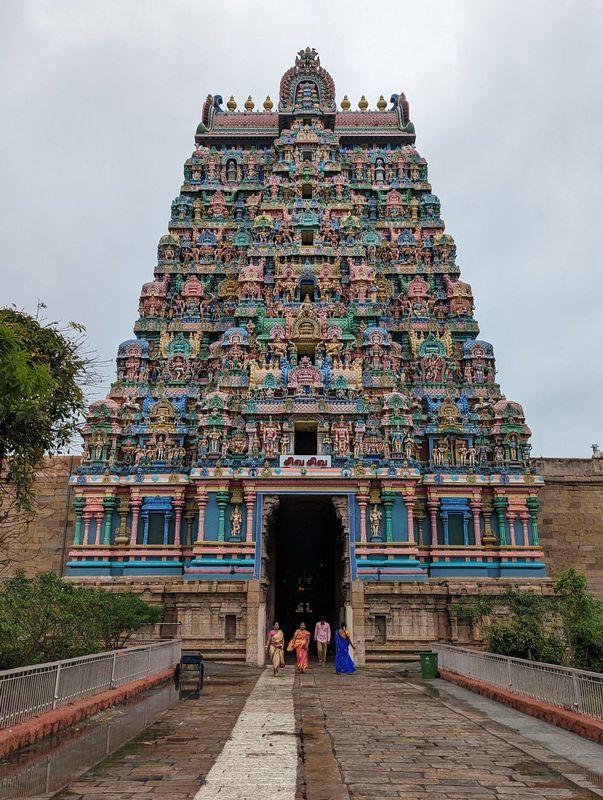
We're less than a mile from the larger (for my taste too large) Ranganatha Temple. We parked at the west entrance to this temple, the Jambukeshwara, and have already walked through one gopuram and are approaching the second. When we were two or three years old, we necessarily looked up to adults. We never really outgrow that habit of being impressed by big things as, for example, standing before a gopuram symbolizing the home of the gods. That home is atop Mt. Kailash, which is a real mountain about 300 miles northeast of Delhi. Intereresting hike, but you'd have to get past the main wall of the Himalaya, with Nanda Devi smack in front you.
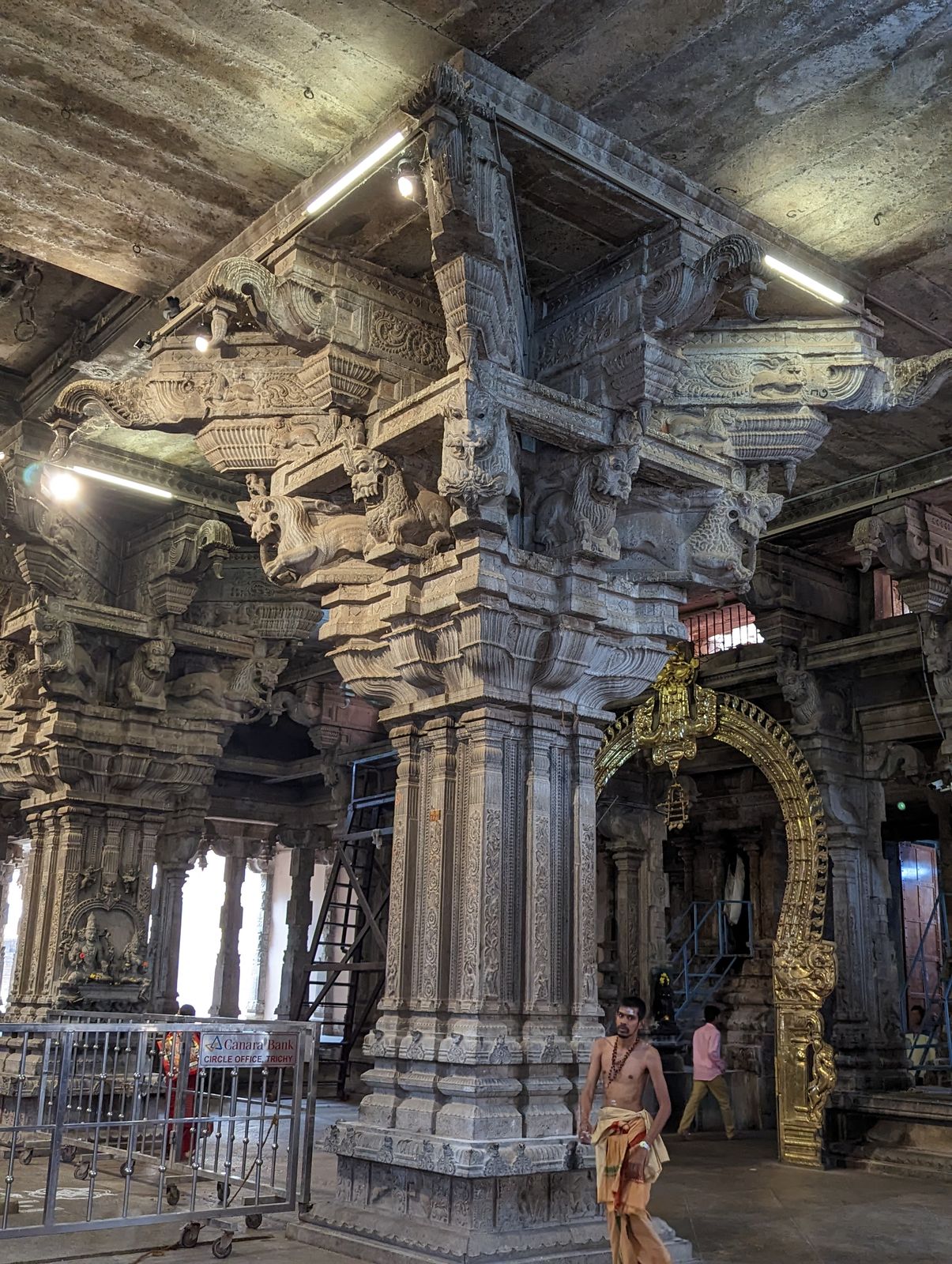
Through that gopuram, we've come into a hall with these four extraordinary piers. Ever seen anything like them?
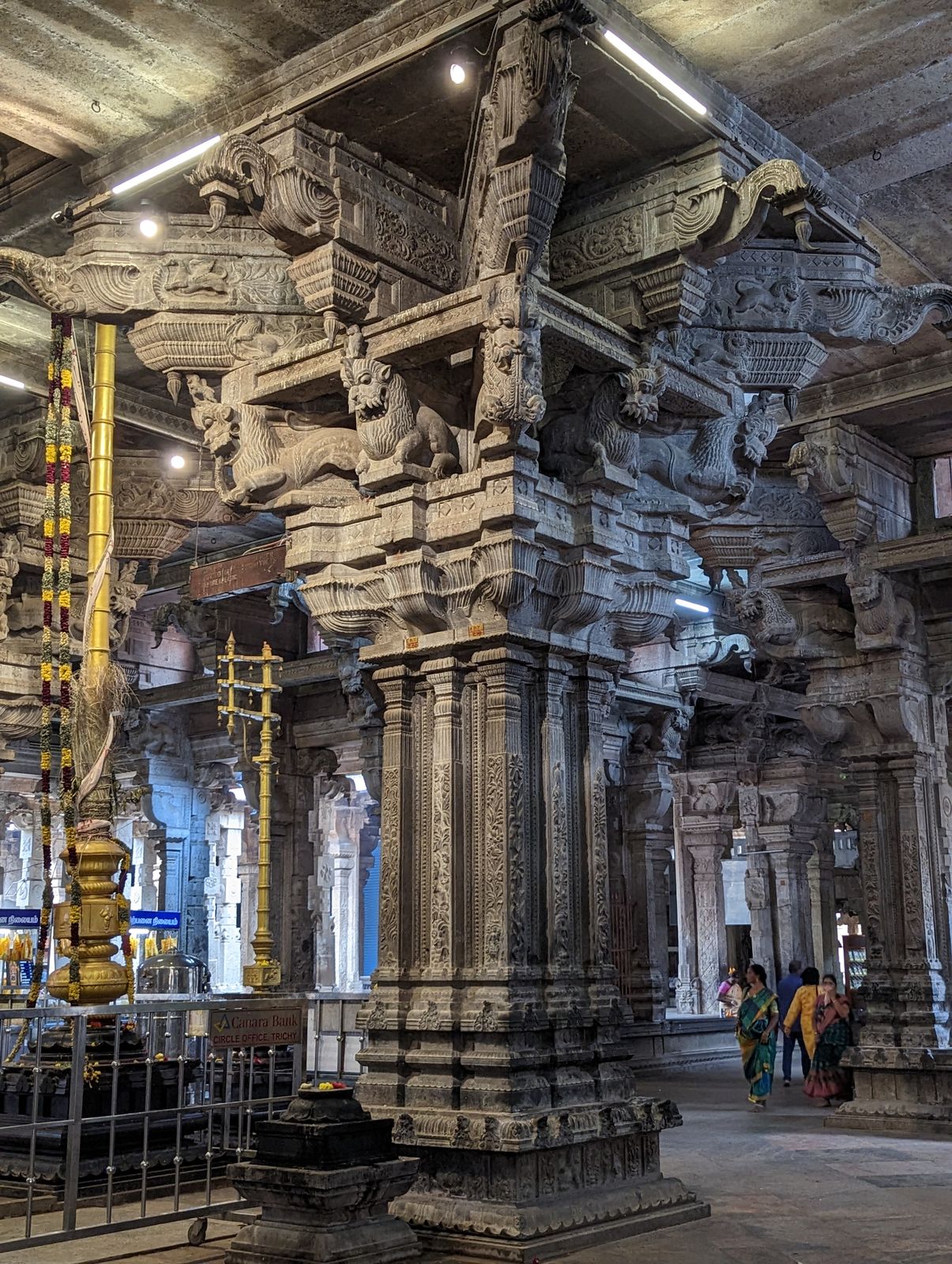
I'm thinking baobab.
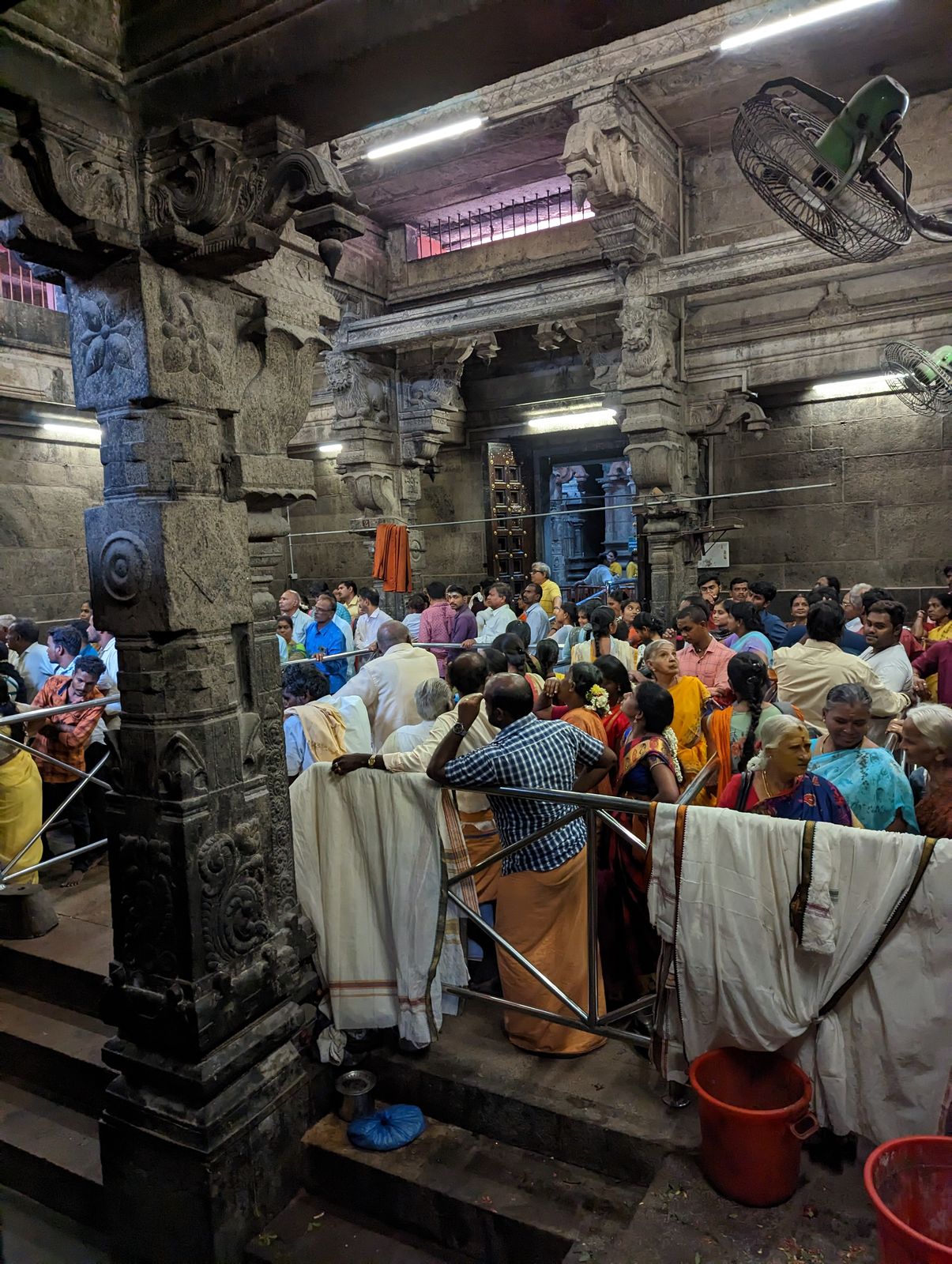
We're in the anteroom to the temple shrine. Not sure when the temple managers adopted zigzag or serpentine queueing--or where they got the idea. Maybe Disneyland.
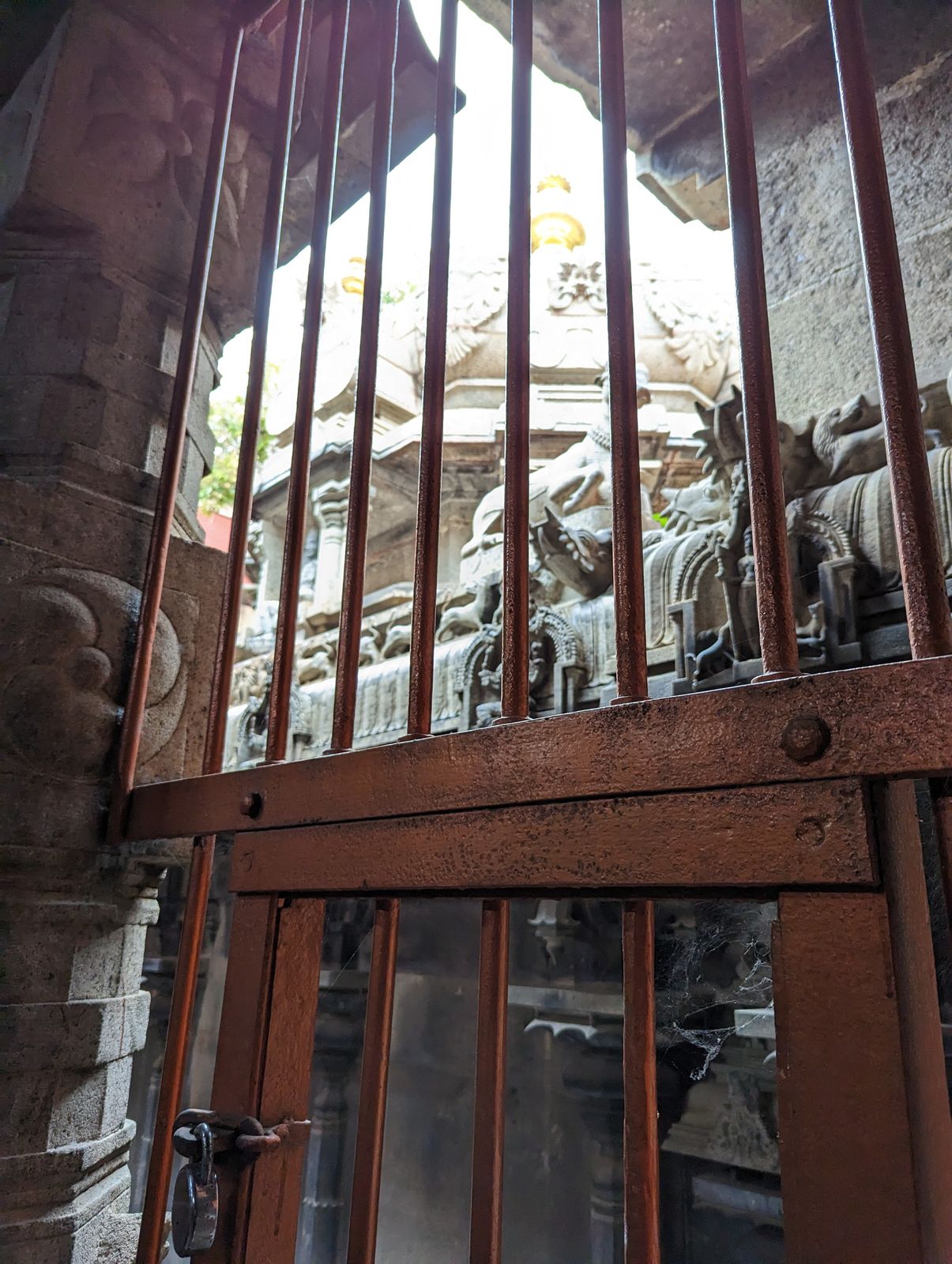
Here's the outside of the shrine whose Shiva lingam the people in that anteroom were waiting to see.
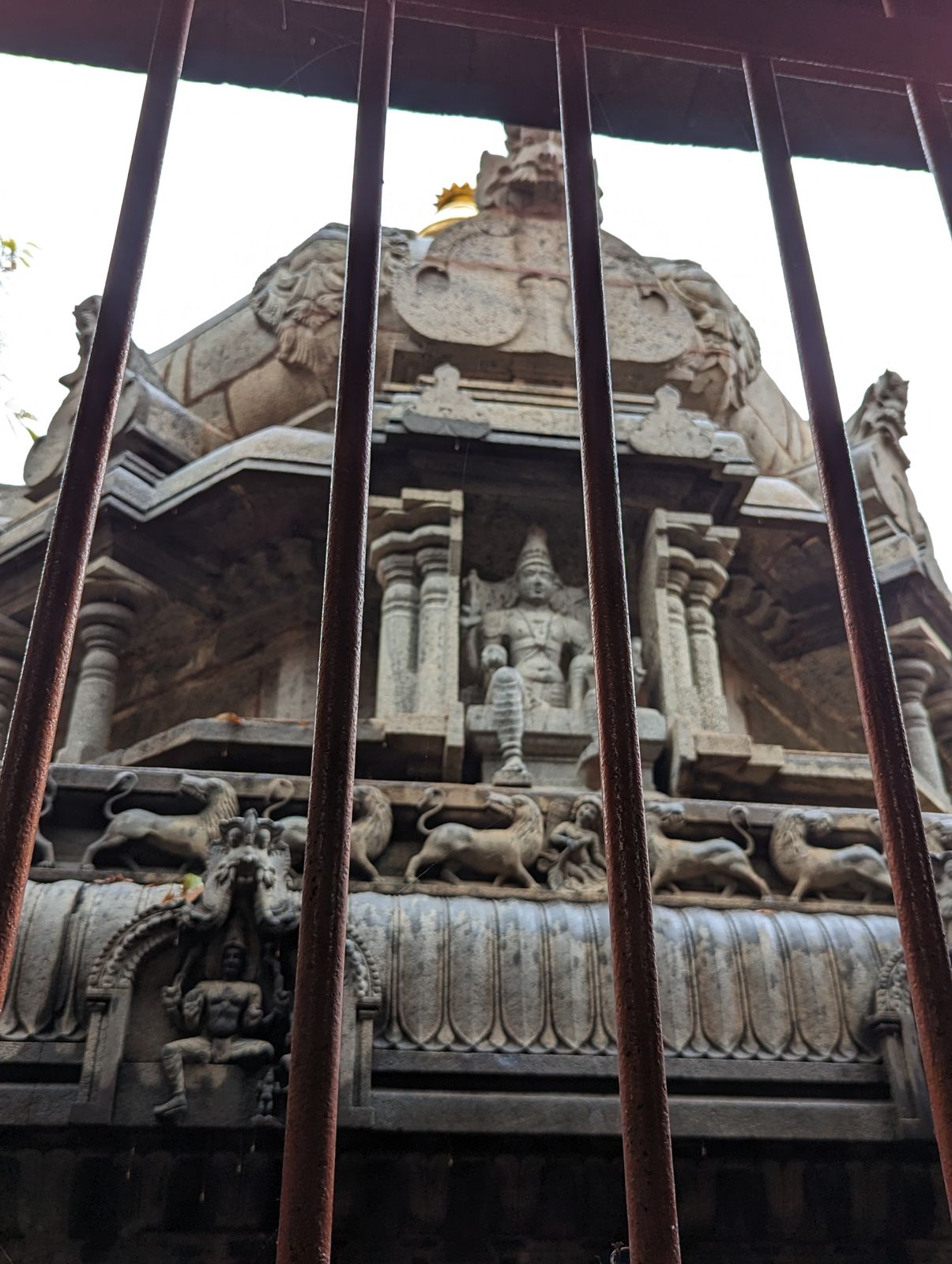
What are the bars guarding against? Answer: a specimen of a White Jambuka tree, Syzygium cumini, sustained by the temple's perpetual springs. Hence the temple's name, Jambukeshwarar.
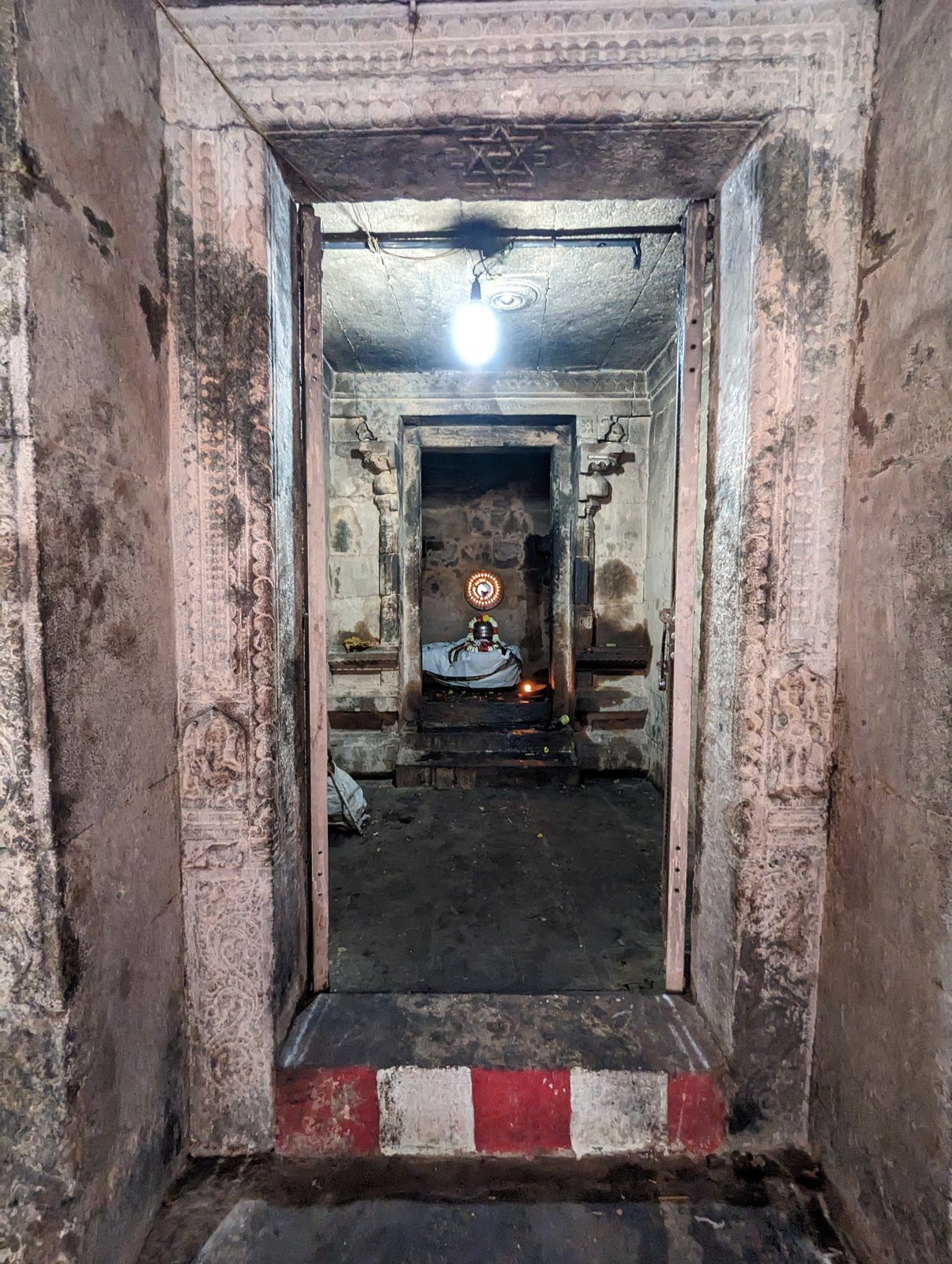
Here's a Shiva lingam in a peripheral shrine or, to use the Sanskrit name, the garbhagriya, literally womb house. Please do not criticize the 5,000-degree LED light. It's there for your convenience.
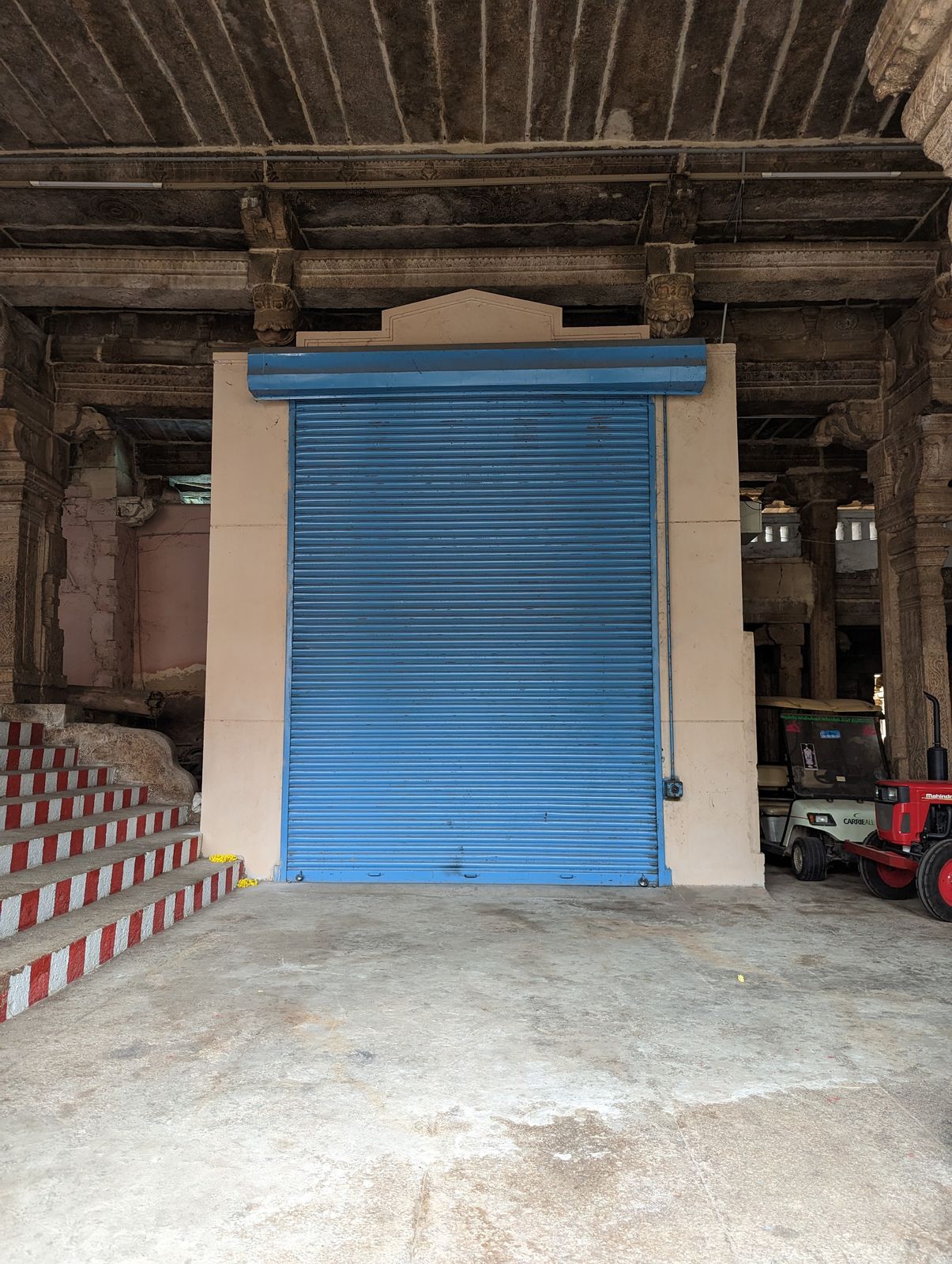
Or this superbly painted roll-up door.
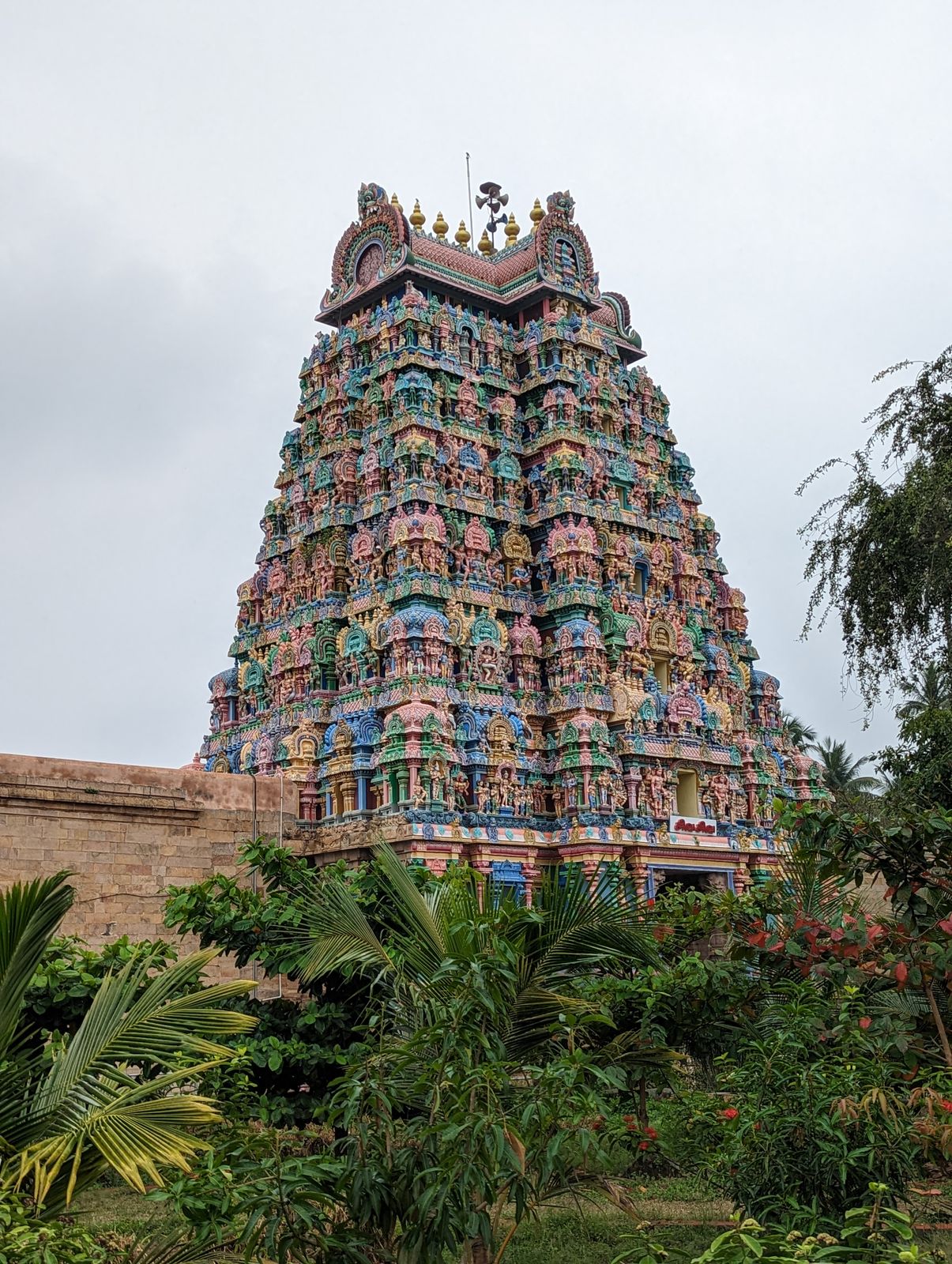
Here's the same gopuram we saw earlier, but notice now the handsome loudspeaker horns on the pole at the top.
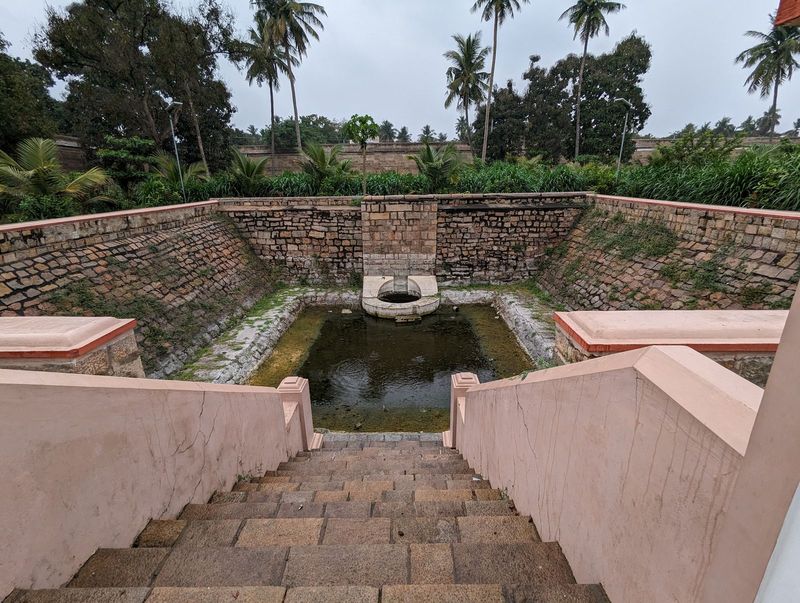
We can get away from that stuff. There are several pools on the grounds.
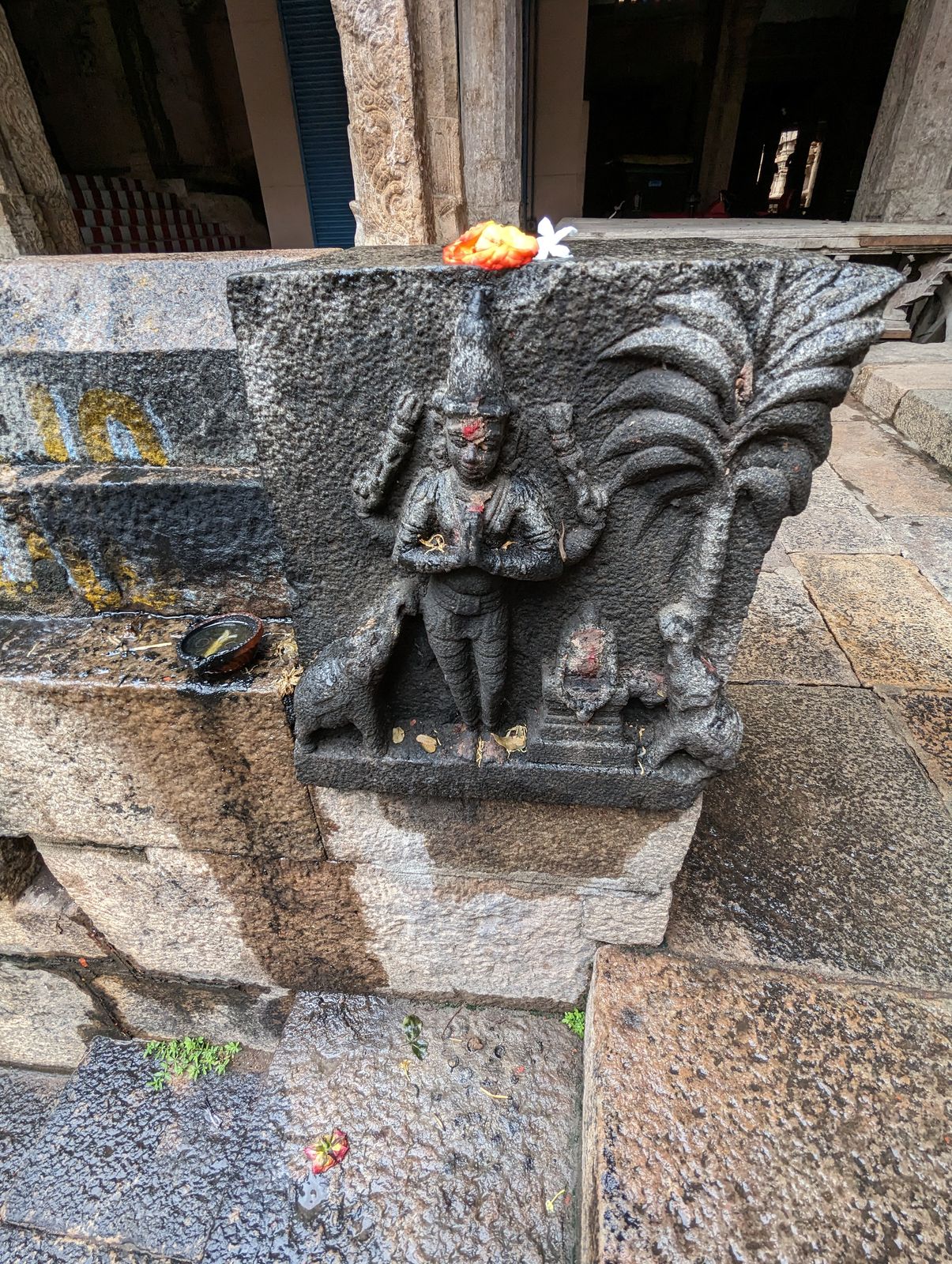
Wet from one of those pools.
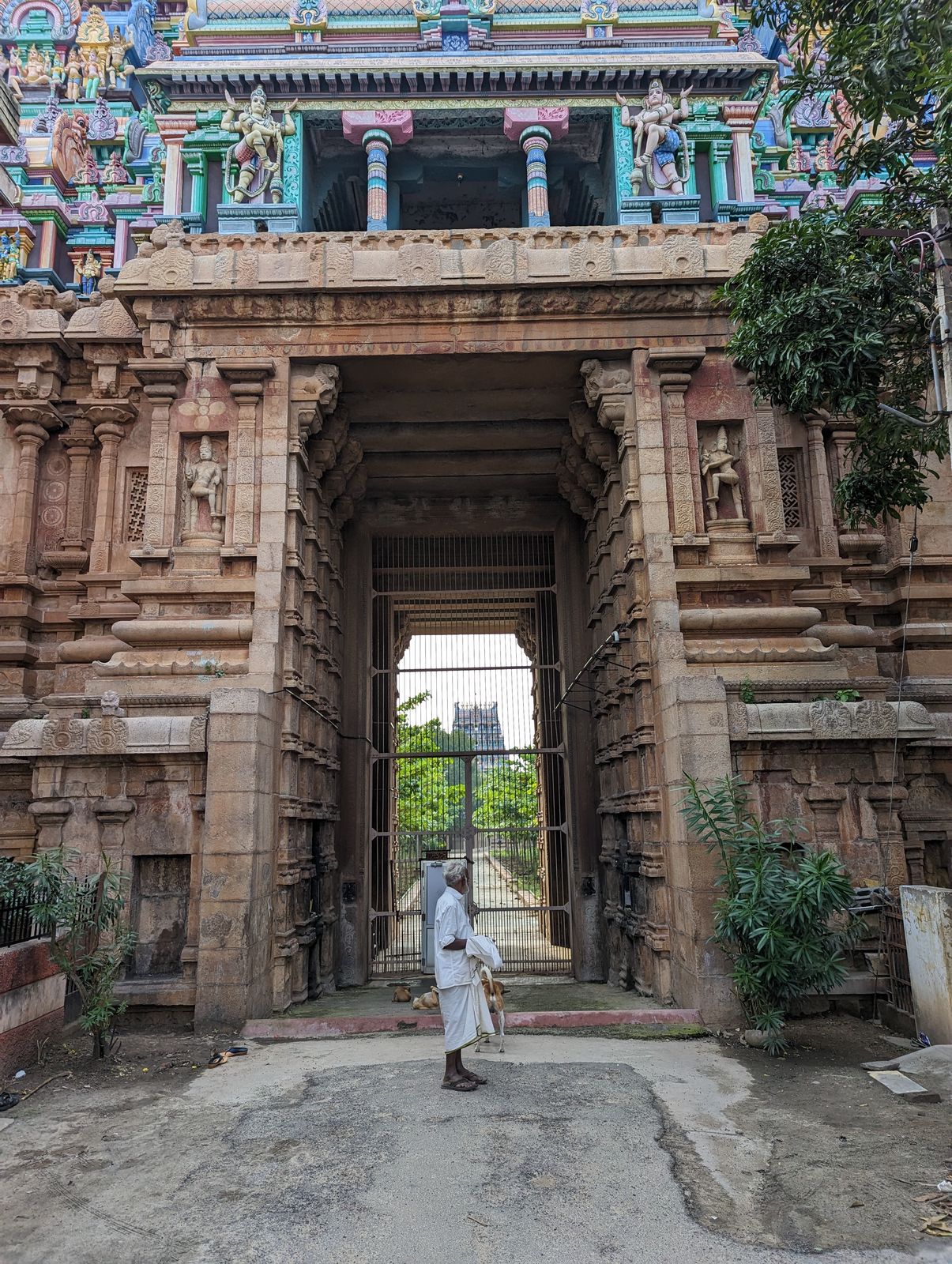
Wooden flap gates are long gone from the east gopuram, now barred.
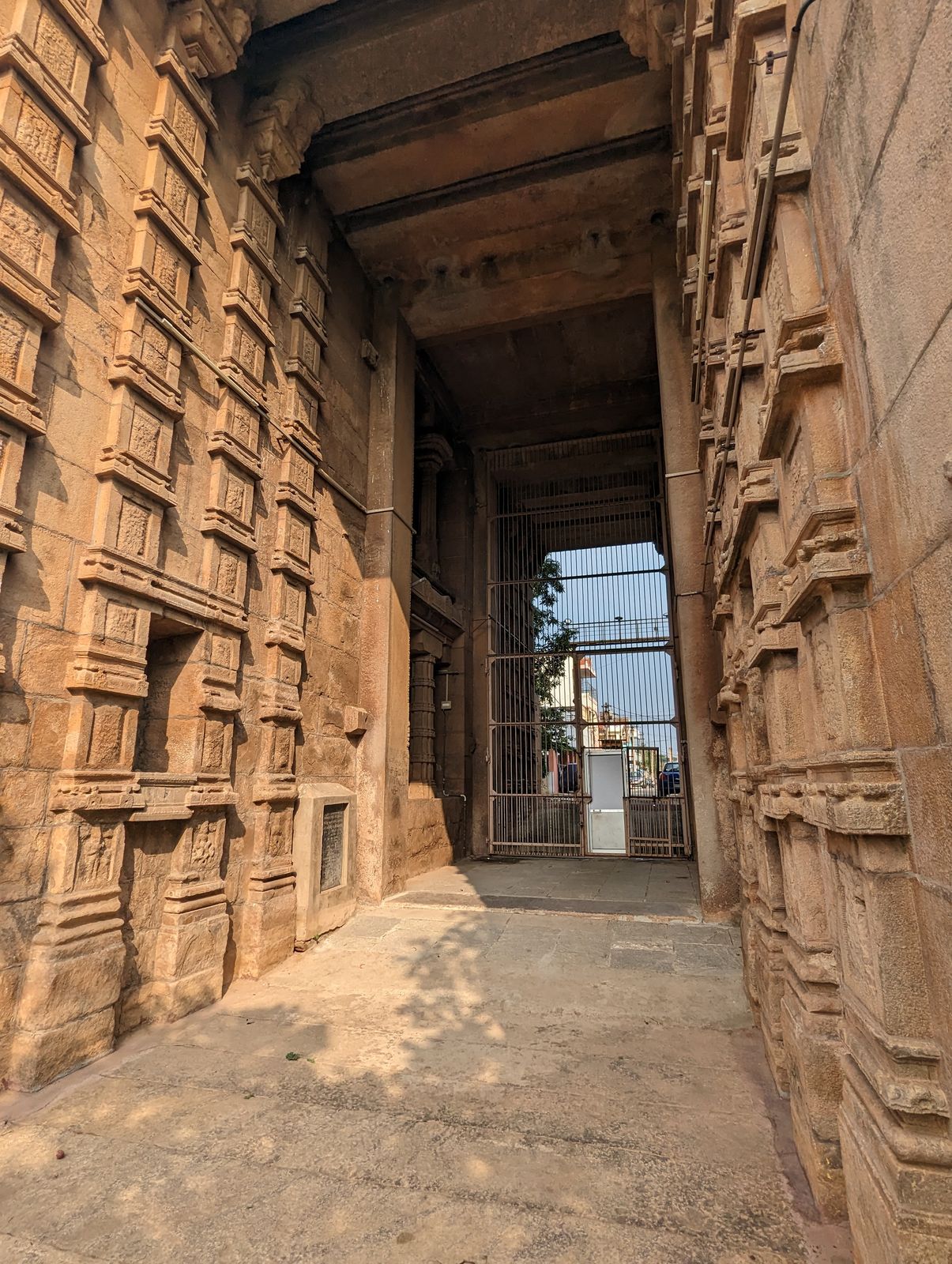
Notice the flat surface of the most distant column. It's one of four jambs placed as anchors when construction of a gopuram begins. We'll see some of these posts in a moment.
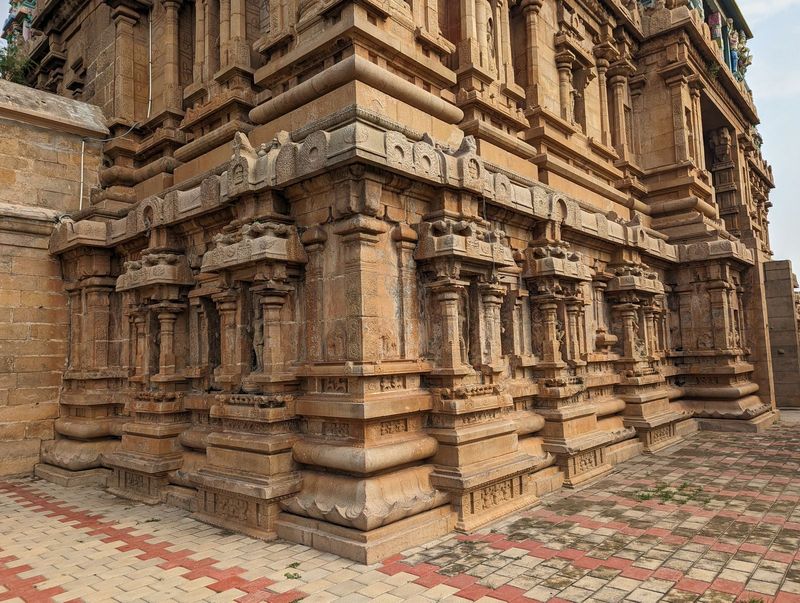
A half-dozen pavilions on the inside face of the gopuram. The paving is unfortunate, but it's true, nobody asked my opinion. On the other hand, it's my website.
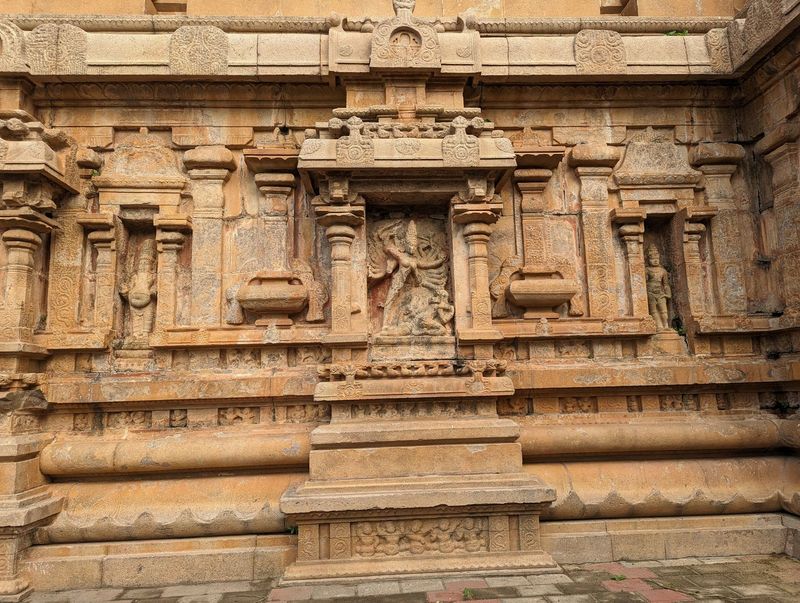
Tripura Sundari Devi defeats Bhanasura. Little rusty? Try the Brahmanda Purana, which includes the Lalita Narrative. The goddess is considered by some to be equivalent to Parvati and Durga and Kali and more. In any case, she's thrashing this divine but evil king. Other accounts have him defeated by Krishna.
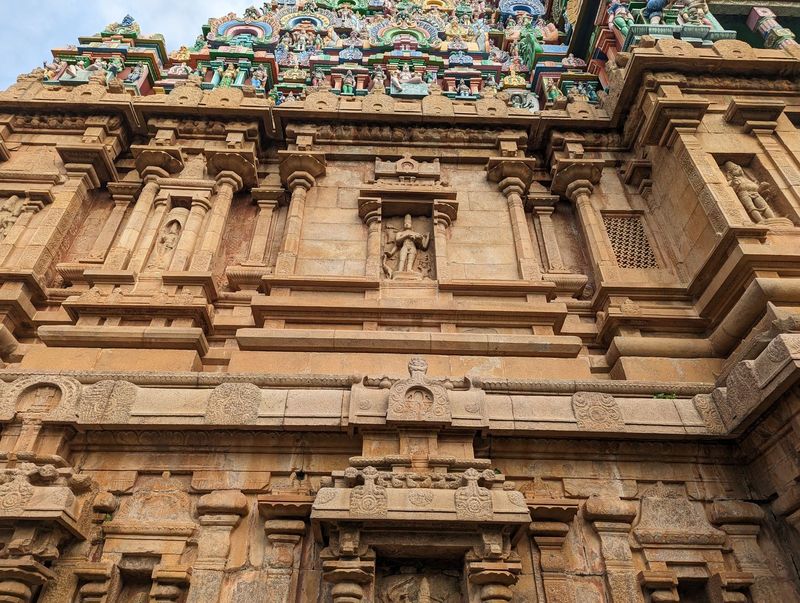
Second tier of the base.
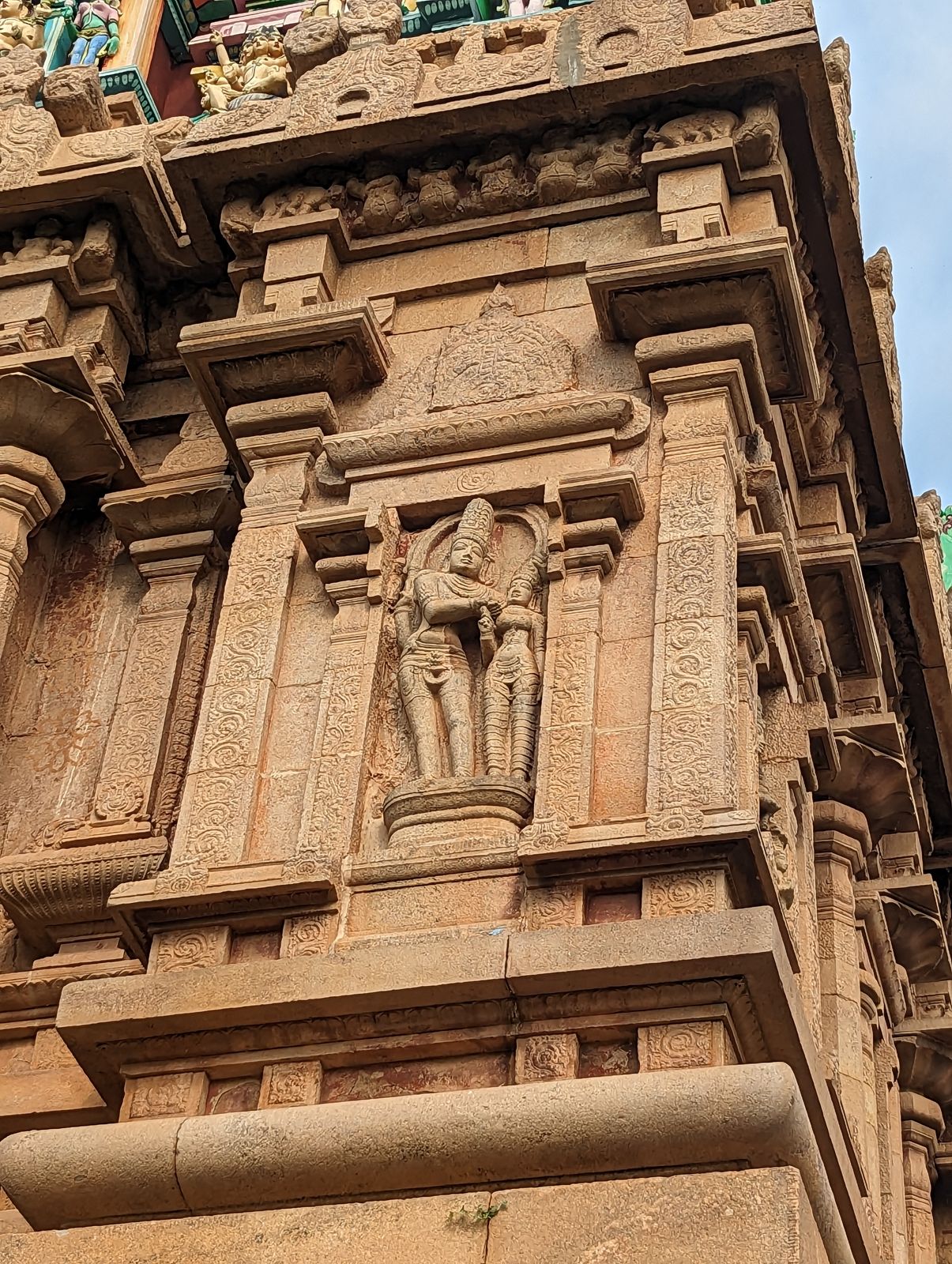
Shiva and Parvati
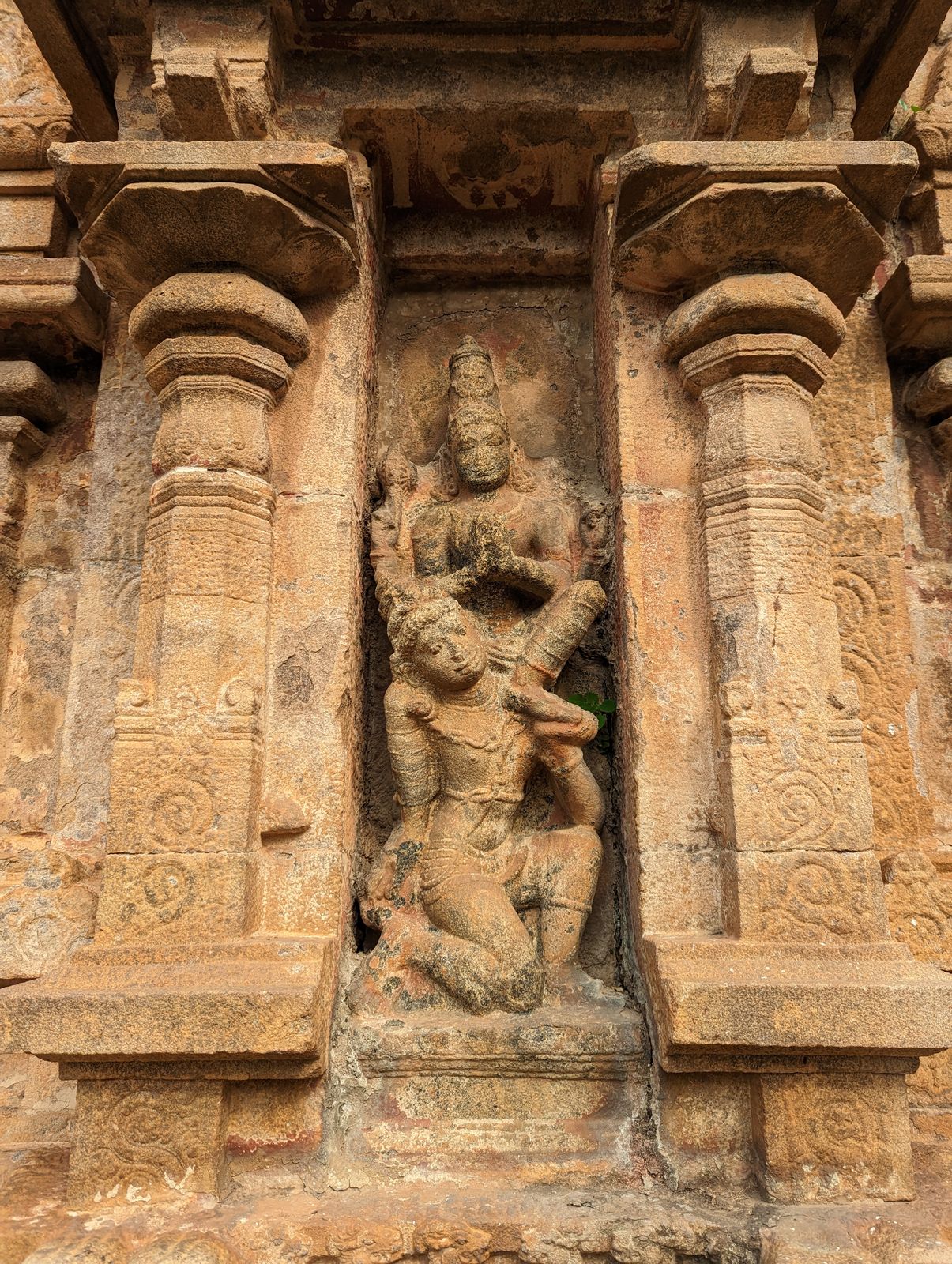
Vishnu (Varadaraja) sitting on Garuda's shoulder.
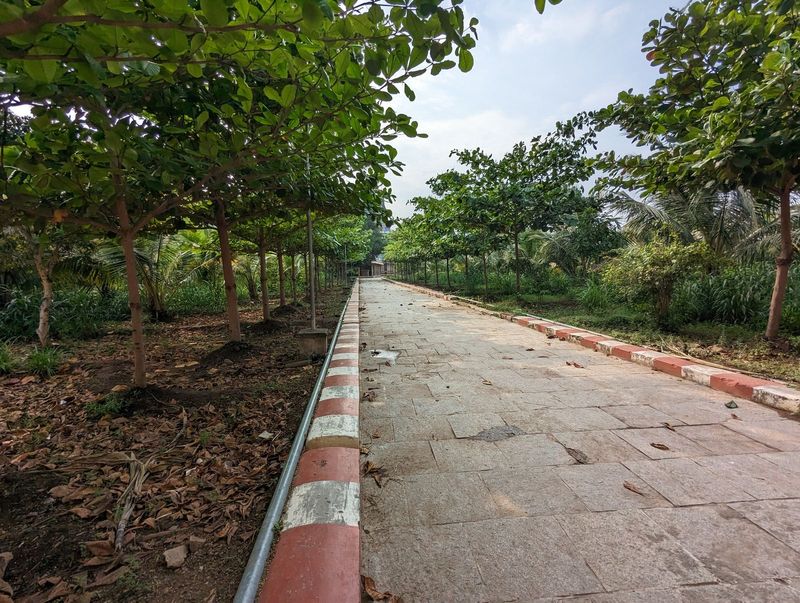
West into the temple grounds.
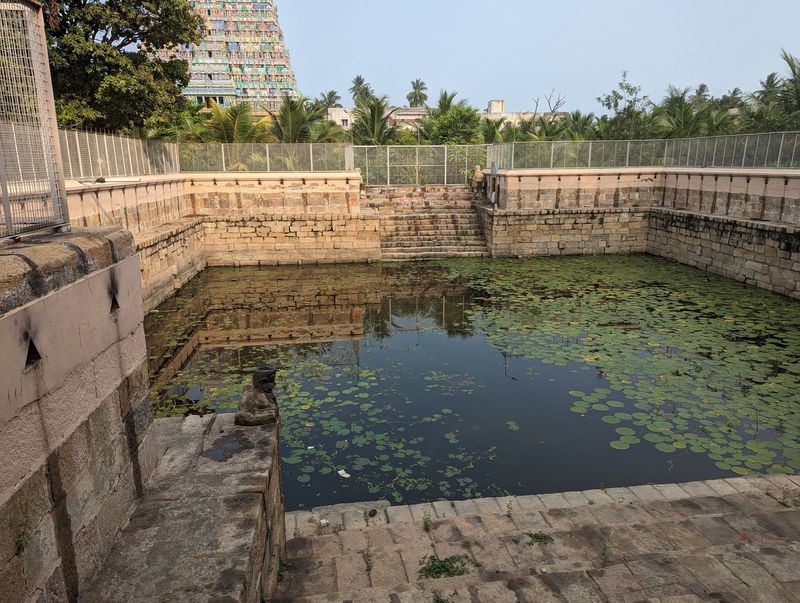
Another pond or tank.
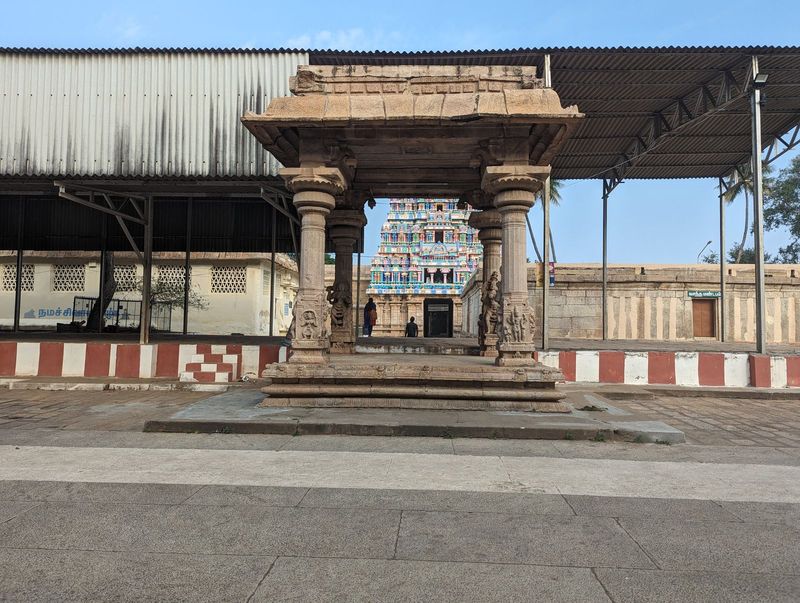
Two platforms: one of stone, the other of concrete and steel. Which is better? It depends on your criteria. The stone is more attractive, but the stone required a hundred times as many man-hours to quarry, transport, shape, and erect. Is that labor justified by the result? Or, conversely, is the ugliness of the corrugated metal justified by the minimal effort required to make the materials and assemble them? This is too complex a question for one miserable caption.
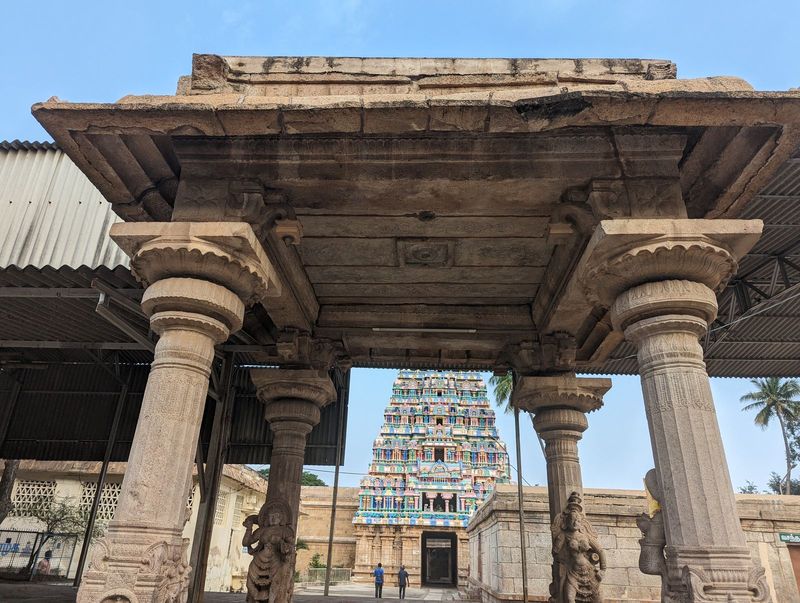
The gopuram in the background (it's the same one we saw a moment ago) prompts the same question. And there's another issue: are we looking at works of art or at demonstrations of mimicry? This is not an original thought. T.A. Goginatha Rao, an archaeologist with the Archaeological Survey of India, wrote in his seminal Elements of Hindu Iconography (four parts published in two volumes, Madras, 1914) that "Not much scope could be given to the display of the genius of the artist, under any circumstances...." Indian artists were "injuriously affected.. [by] the hard and fast rules laid down ... for the making of images...." Rao, who died in 1919, went on to say, "Freedom for the display of thought and feeling through art constitutes the very life of all art....[but] the Hindu... will not easily tolerate any glaring departure from the rules laid down authoritatively in his Sastras [religious treatises]." (vol1, part 1, pp. 30-32) For perhaps the best known example of a sastra or shastra governing the construction of temples, see Silpa Prakasa: Medieval Orissan Sanskrit Text on Temple Architecture by Ramacandra Kaulacara, translated and annotated by Alice Boner and Sadasiva Rath Sarma, Leiden, 1966.
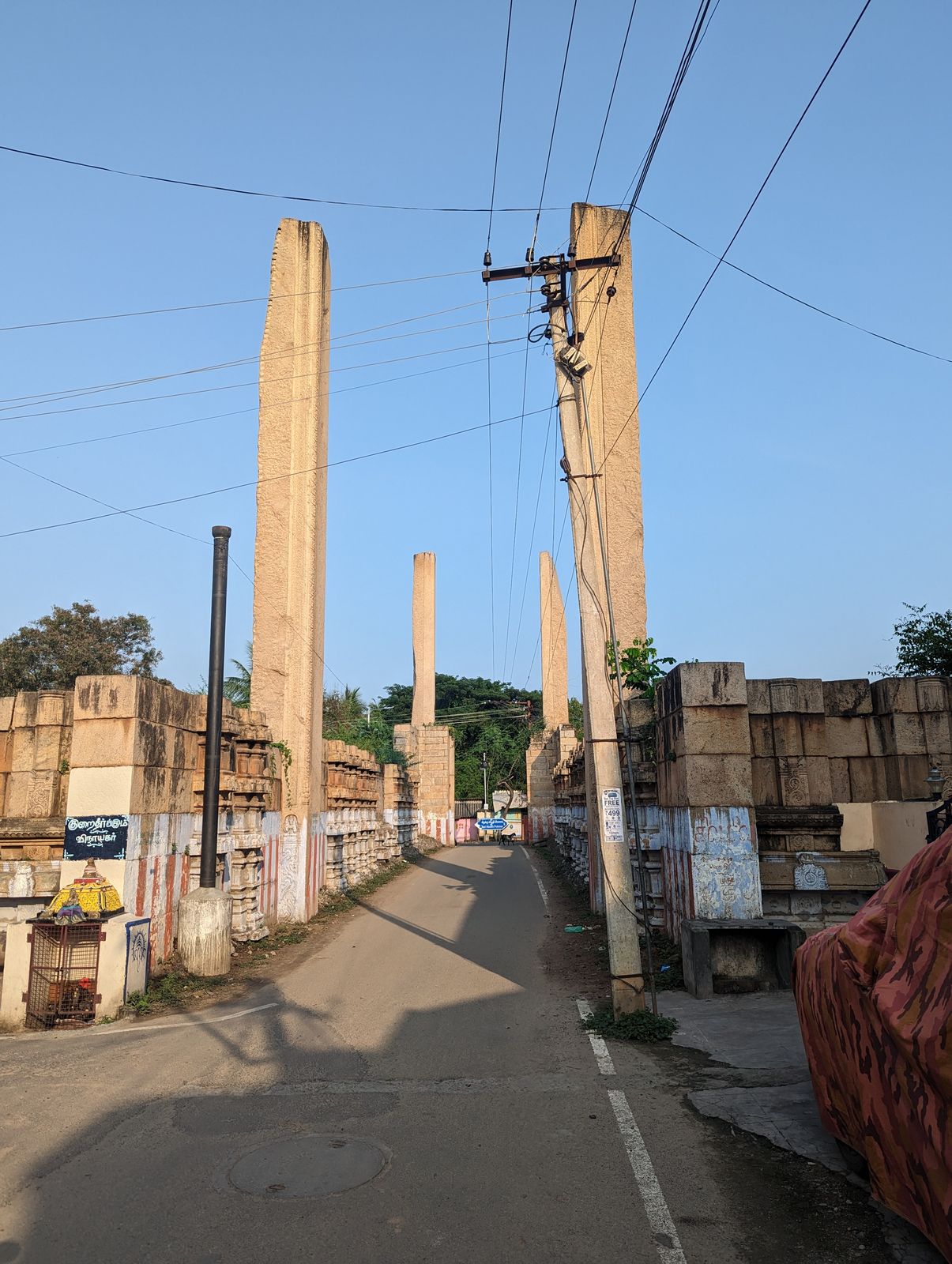
Just outside that gopuram these jambs have been waiting for several centuries for work to begin around them. Somebody should tell them that the construction crew has timed-out.
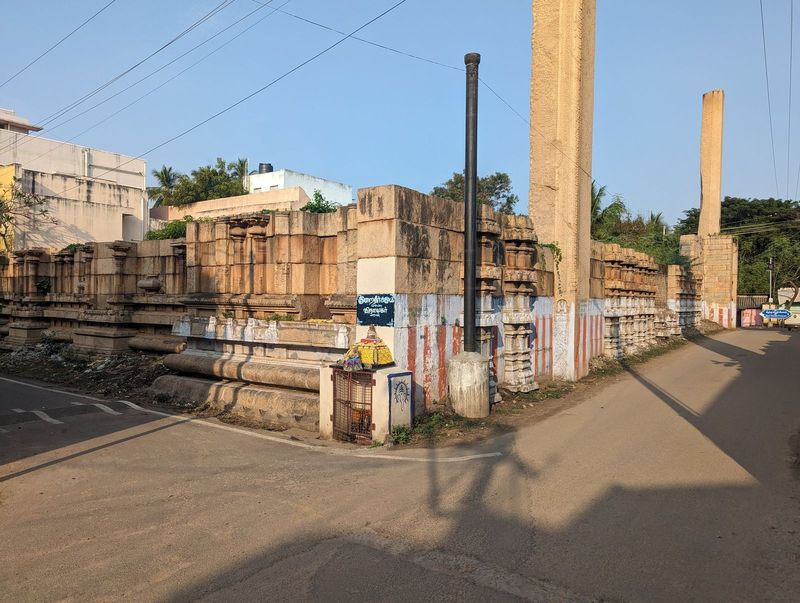
Only a few feet of the base had been built when work stopped, presumably with the arrival of Europeans.
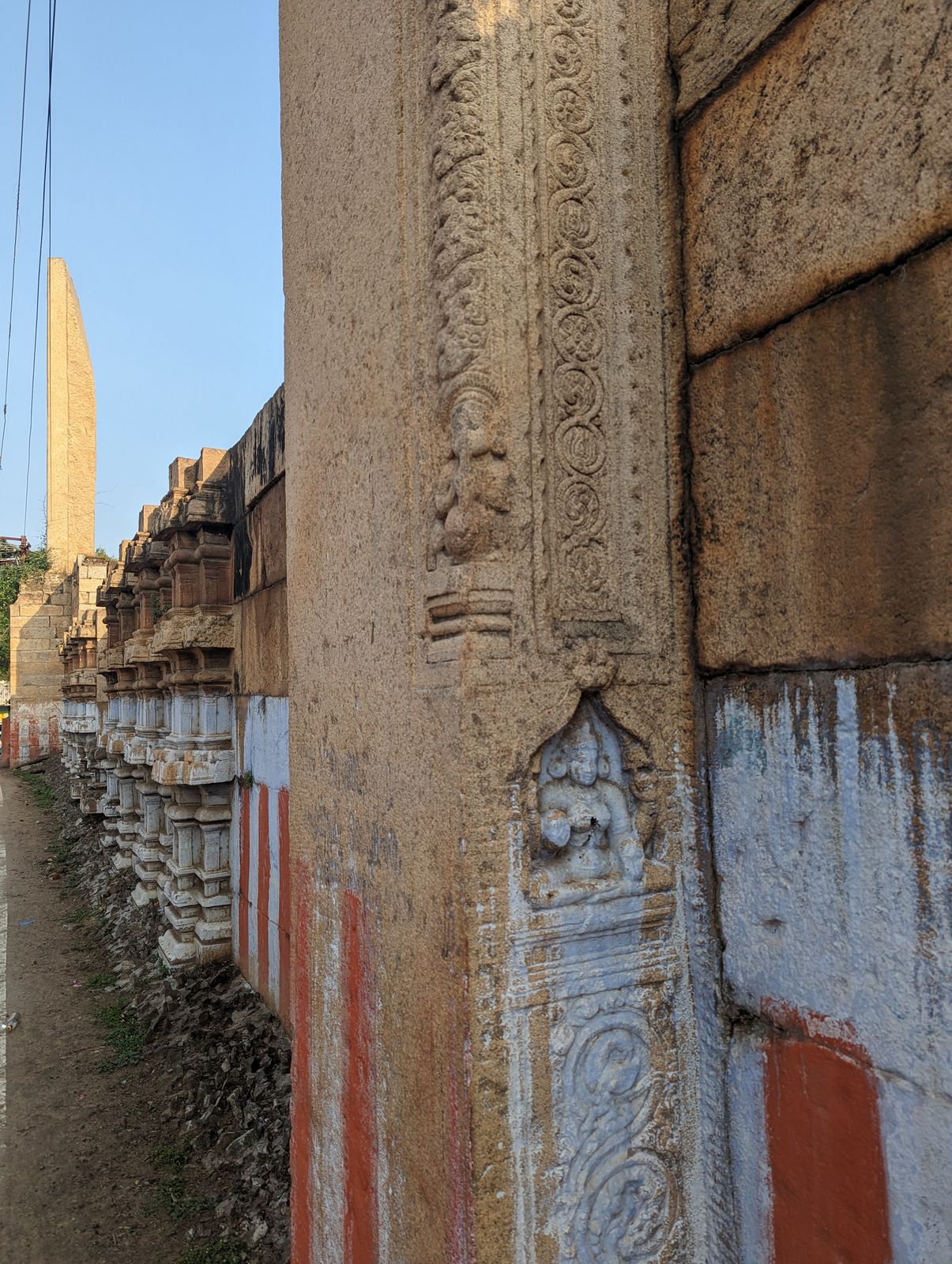
Would this ornamentation by visible if the rest of the temple was built? Maybe; maybe not. If not, would the sculptor be upset? I'm guessing not.