Cauvery Temples 6. Chidambaram
<p><img src="https://wtbl.nyc3.cdn.digitaloceanspaces.com/86001df690eaa5c3e600488ca2d54ff7#orig=/sha256/5a21b311c965734a2a1bcb1c77d29b4a8eedd2a4e5774cd5582763fd16b3bbf9"></p> <p>The old road from Kumbakonam to Chidambaram.</p> <p> <img src="https://wtbl.nyc3.cdn.digitaloceanspaces.com/f608d0b494973200ef6d71e02437dca6#orig=/sha256/c8ba47c0f96485baf6c765e36cd7e84364e1670562f20f1cfb00810f0c630a33"></p> <p>The new road, partly open in 2023.</p> <p> <img src="https://wtbl.nyc3.cdn.digitaloceanspaces.com/1028df1bfe525a44ebb9b6baae38837d#orig=/sha256/6e15dadcff2af30718f3e8901ce189ca6261423ad238ec763cf4dd3d4a4802bf"></p> <p>North gopuram, built by the Vijayanagar emperor Krishnadevaraya (r.1509-1529). The three other gopurams are three centuries older. The shrine they protect was older still. The paint here is recent; a photo in <em>Temple Towns of Tamil Nadu</em> (1993) shows the gopuram is much more muted colors.</p> <p><img src="https://wtbl.nyc3.cdn.digitaloceanspaces.com/7ef50184c681dddca5f486a861093782#orig=/sha256/30e9a7fb342b213d515dd9a7e4743d86b7139fb0d34a6950263ef35eb29d4a4e"></p> <p>Passage through that gopuram.</p> <p><img src="https://wtbl.nyc3.cdn.digitaloceanspaces.com/d2c5a0ea1340d7a8eeb5cd2fae4762ff#orig=/sha256/82824b6bd8d9b97190256471e6b82bde9d7d07fd1b18518ef6935c7f5b7fd2df"></p> <p>Ornamented pillars in the passage.</p> <p><img src="https://wtbl.nyc3.cdn.digitaloceanspaces.com/768e09de637dd535bfeab8f038de5b97#orig=/sha256/620396c99f0ead8f833a966dbb304482182c968509564b18ab16745a2da09d04"></p> <p>Door to the stairway up into the tower. Nice paint job.</p> <p><img src="https://wtbl.nyc3.cdn.digitaloceanspaces.com/3318f41ba62513adc4144a5a1a20f612#orig=/sha256/c5fda7445fd7f55c4cd997177c266d4c52c56001c2cdc0e4b8d3f5f9dff3f1ac"></p> <p>One of the quadrilateral courtyards separating the temple's nested rectangles.</p> <p><img src="https://wtbl.nyc3.cdn.digitaloceanspaces.com/3b662648b52f1925d8b07e89981d6940#orig=/sha256/567bd794c6c3f09d9a0933d782cfc604e501d96086e2593f57a5db440eca8b12"> </p> <p>The roof of the Nataraja Temple's <em>chit sabha,</em> the shrine around which everything else depends. It was first gilt by the Chola kings. It contains two objects of worship, one the familiar image of Shiva dancing as the lord of the dance or Nataraja. The other is the much less familiar <em>akasha,</em> an invisible lingam representing space itself. This is not just the space of telescopes and rockets. This is the space referred to in this passage from the Chandogya Upanishad: "As far verily, as this world-space (akasa) extends, so far extends the space within the heart. Within it, indeed, are contained both heaven and earth, both fire and wind, both sun and moon, lightning and the stars, both what one possesses here and what one does not possess; everything here is contained within it." (Quoted in David Smith, <em>The Dance of Siva</em>, Cambridge, 1996, p. 81)</p> <p>Neither can be seen by worshippers. Cameras are forbidden inside within this wall, and even without a camera worshippers can only see the anteroom where priests perform ceremonies daily. Surprisingly, perhaps, the roofs of both the anteroom and the<em> chit sabha</em> are supported by thick columns of sandalwood, not stone. P.S. In a sealed room within this enclosure, Rajaraja I is said to have discovered the long-lost <em>Tevaram</em>, sacred hymns of the 7th and 8th centuries, still very much alive today in Tamil Nadu. </p> <p> </p> <p><img src="https://wtbl.nyc3.cdn.digitaloceanspaces.com/0ffedb4ccc4850358003752864b4b607#orig=/sha256/5746c8d6ac81265cc9d025f7d10fa6f8bff1b5c5857b9601b5a1323866ad2028"></p> <p>The Shivaganga tank and north gopuram, supposedly rebuilt by a king cured of leprosy in its water.</p> <p><img src="https://wtbl.nyc3.cdn.digitaloceanspaces.com/cabd90ae3e9b42067c0a2bf93fa60570#orig=/sha256/de8cf305fb6cebf3d640286355dac38c483567b29b01aa51f86523da02e1bd5a"></p> <p>The western gopuram.</p> <p><img src="https://wtbl.nyc3.cdn.digitaloceanspaces.com/4a278d84f337acf02d959a90b6c78fea#orig=/sha256/b15e97c734e16fd9dd3e16d418dc90e78b813088b051ba824e6f267fde151eb6"></p> <p>Two subsidiary shrines are probably tthe oldest and most attractive parts of the complex. Here, for example, is a stairway that is part of the Shivakumasundari Temple, </p> <p> <img src="https://wtbl.nyc3.cdn.digitaloceanspaces.com/5c643c6d00a79cbeaa6aafae0901f45e#orig=/sha256/16c46ed53ecd186c018511c38c528d4af8e0d270537e30db3a76659c70cad23c"></p> <p>Courtyard to the Subrahmanya Temple, fenced off.</p> <p> </p> <p> <img src="https://wtbl.nyc3.cdn.digitaloceanspaces.com/25a4ebc38aff14e312adceb9bb1d2815#orig=/_sha256/3f05ce39dd0583b6bcfde2bccb4895676f0d9a3e37db27808af17a9b6dfc9079"> </p> <p>Dance poses on a pillar in the passageway through one of the gopurams.</p> <p> </p>
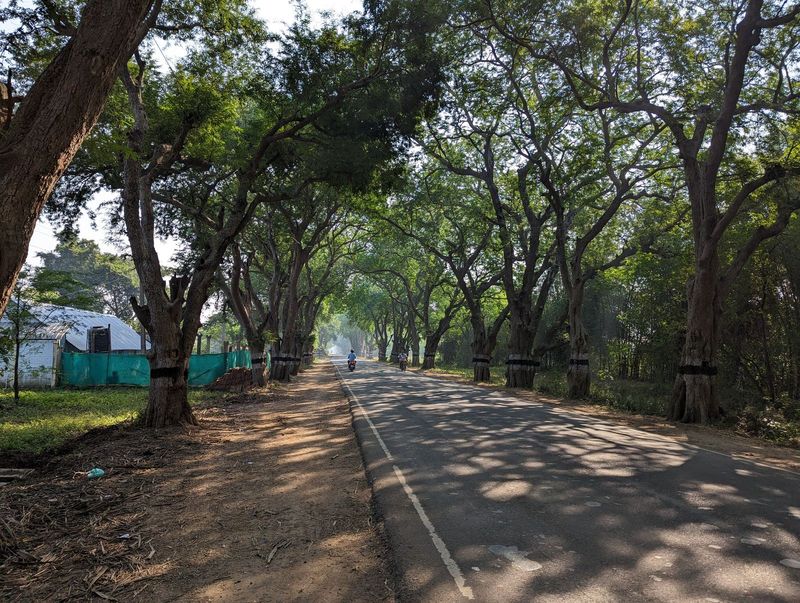
The old road from Kumbakonam to Chidambaram.
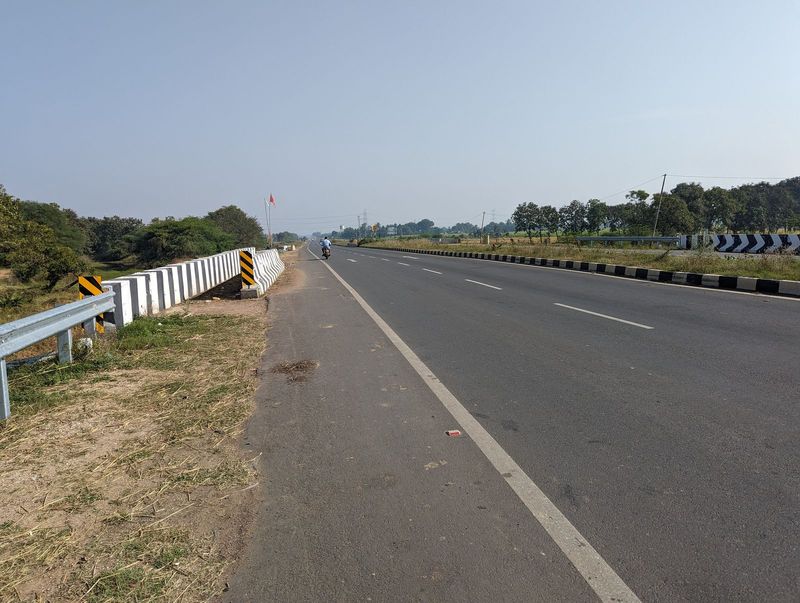
The new road, partly open in 2023.
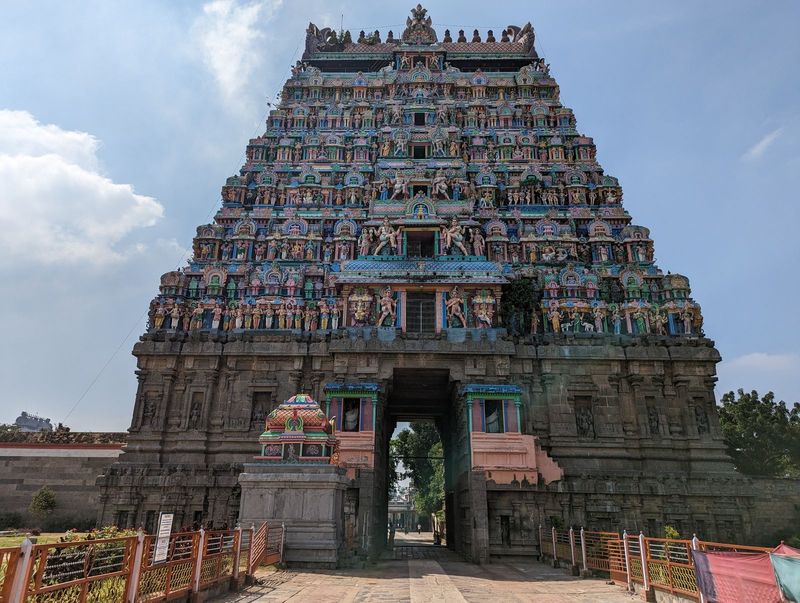
The temple's north gopuram is late, built by the Vijayanagar emperor Krishnadevaraya (r.1509-1529). The three other gopurams are three centuries older, and the shrine they protect is older still. The paint here is recent; a photo in Temple Towns of Tamil Nadu (1993) shows the gopuram in much more muted colors.
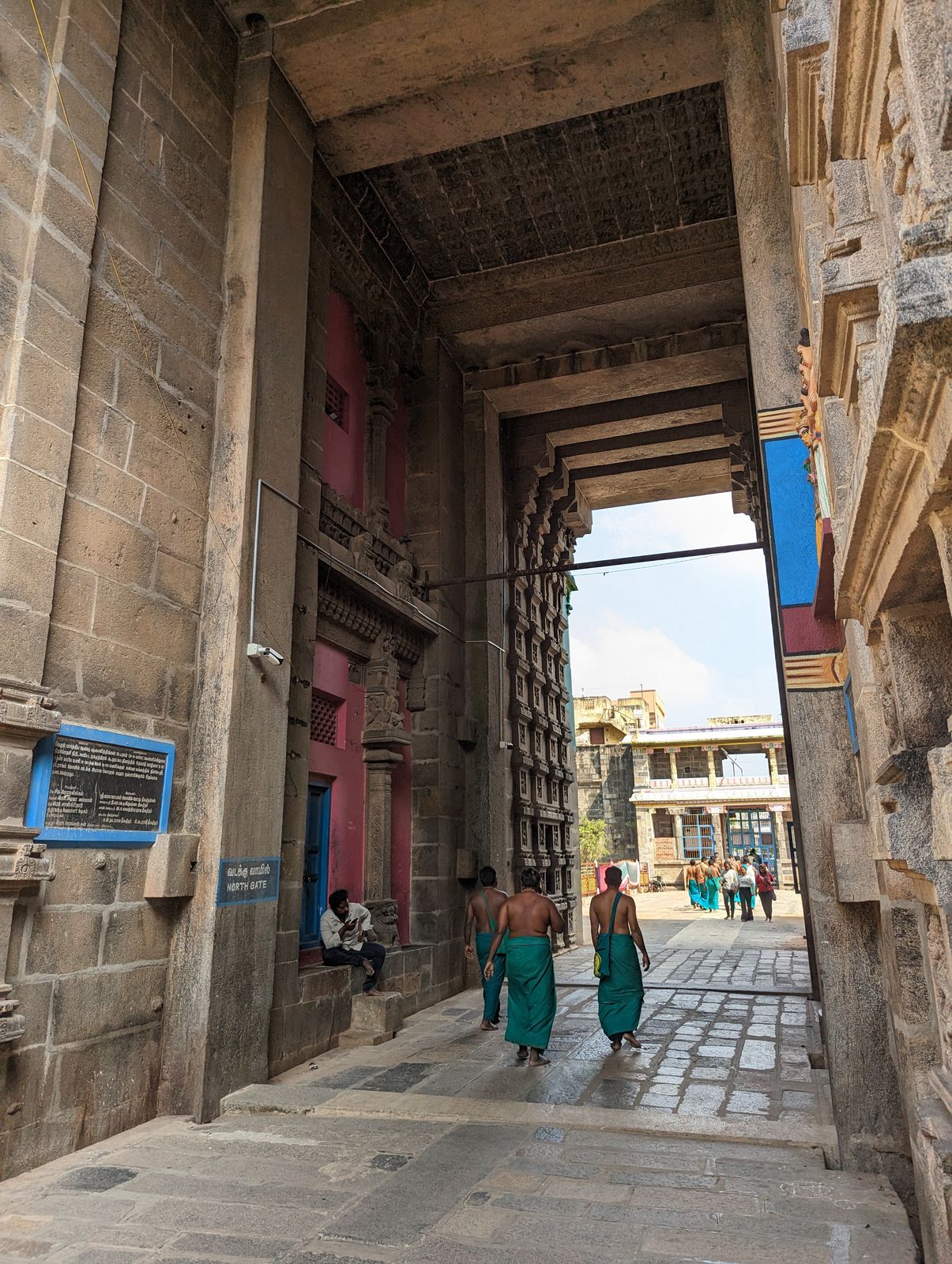
Passage through that gopuram.
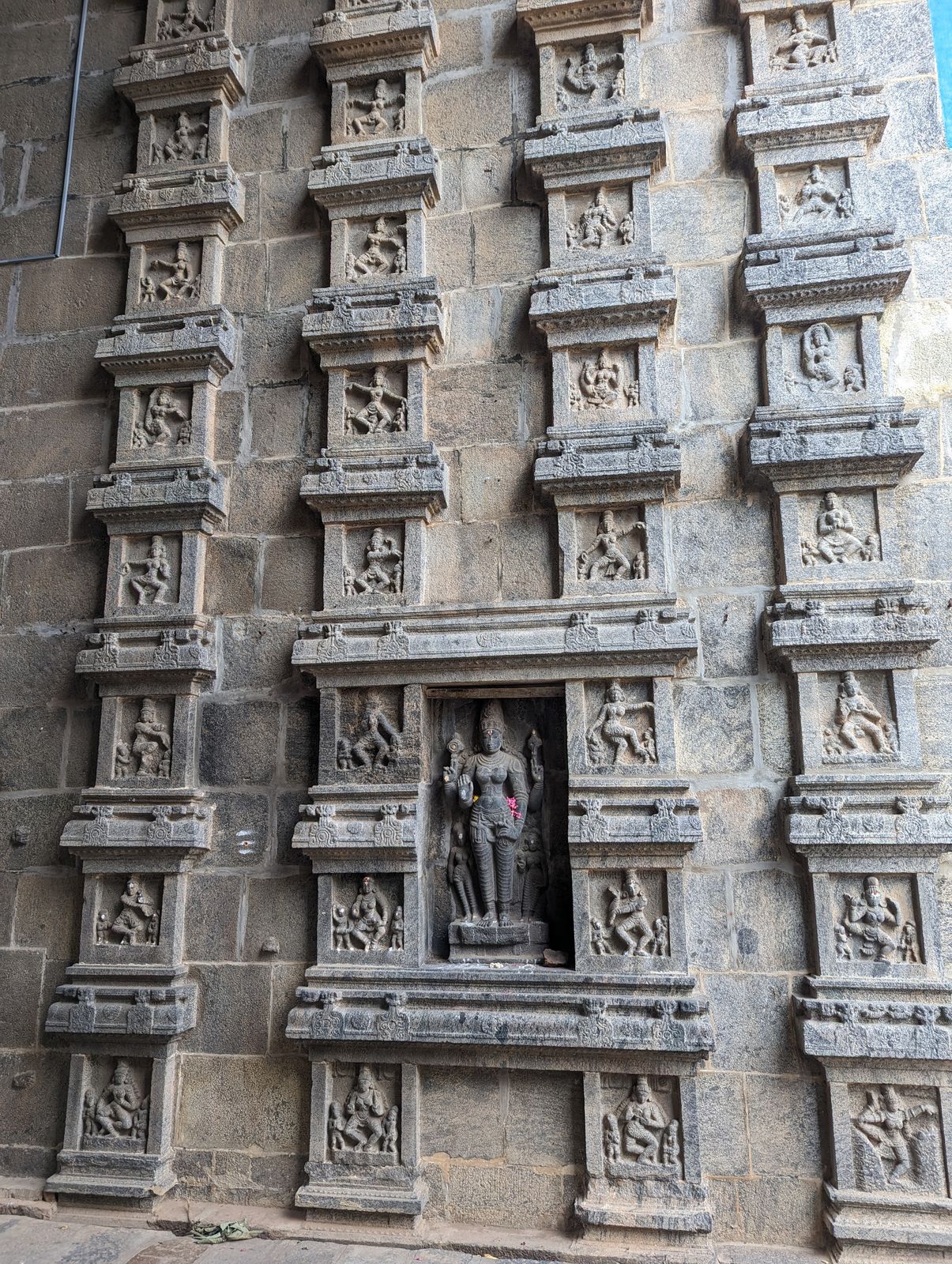
Ornamented pillars in the passage. This temple celebrates Nataraja, or Shiva as the Lord of the Dance.
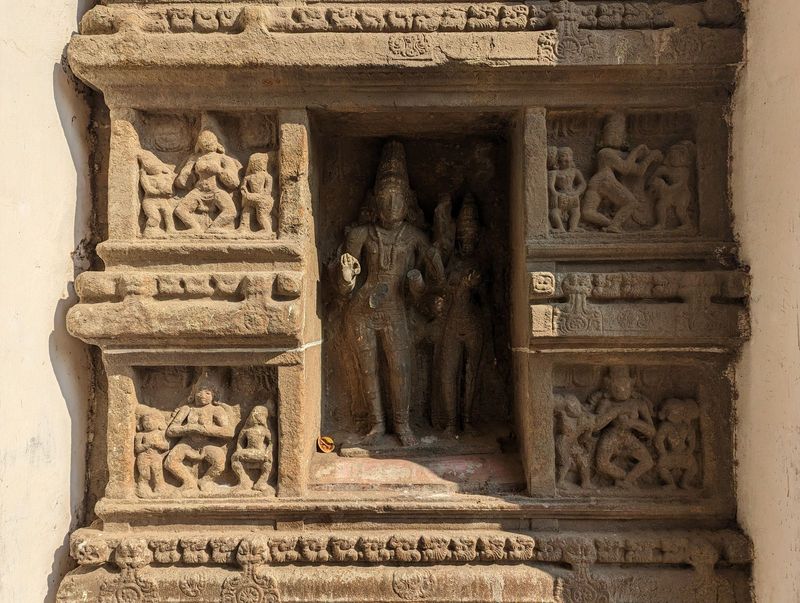
Closeup.
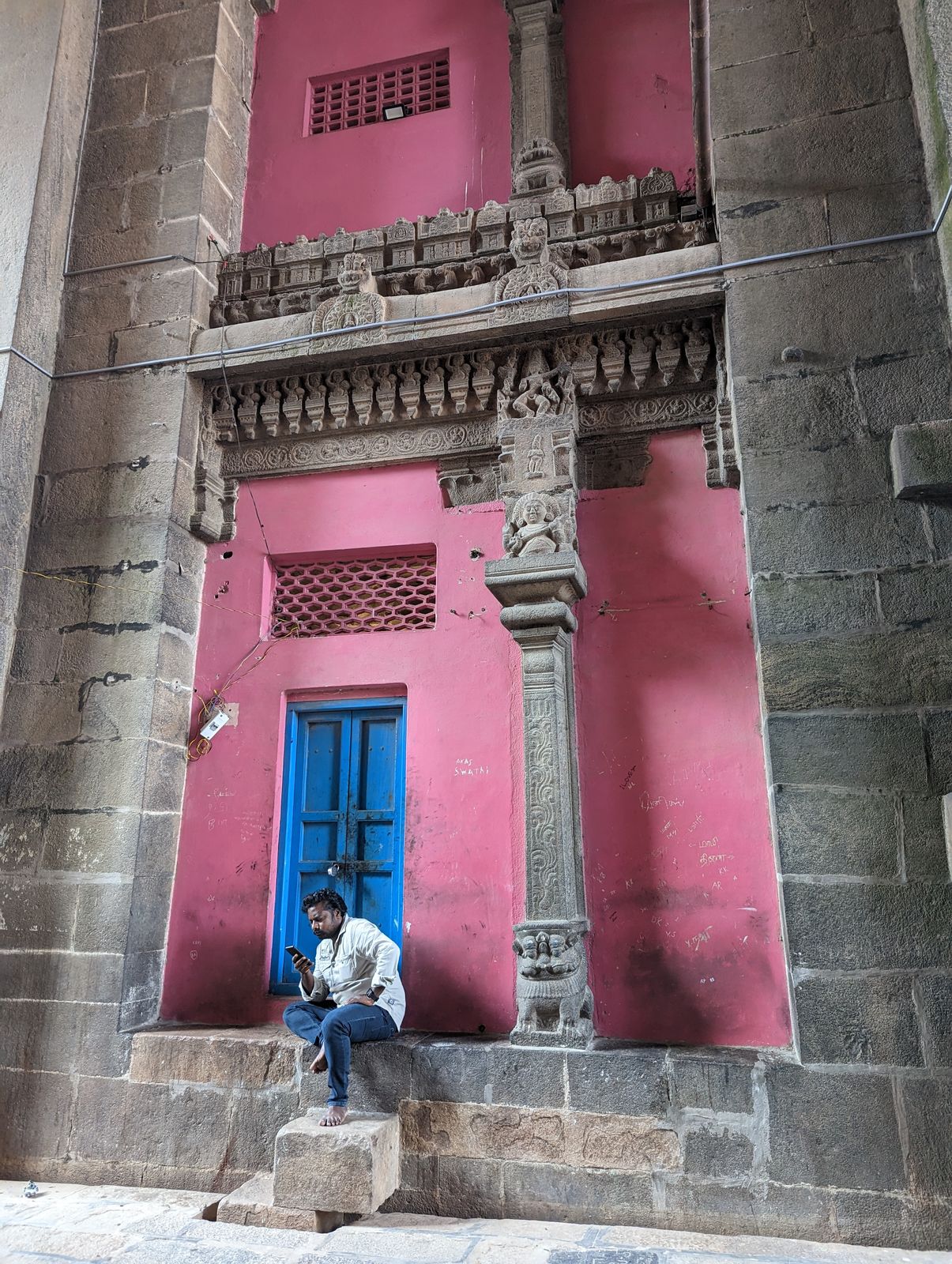
Door to the stairway up into the tower. Nice paint job.
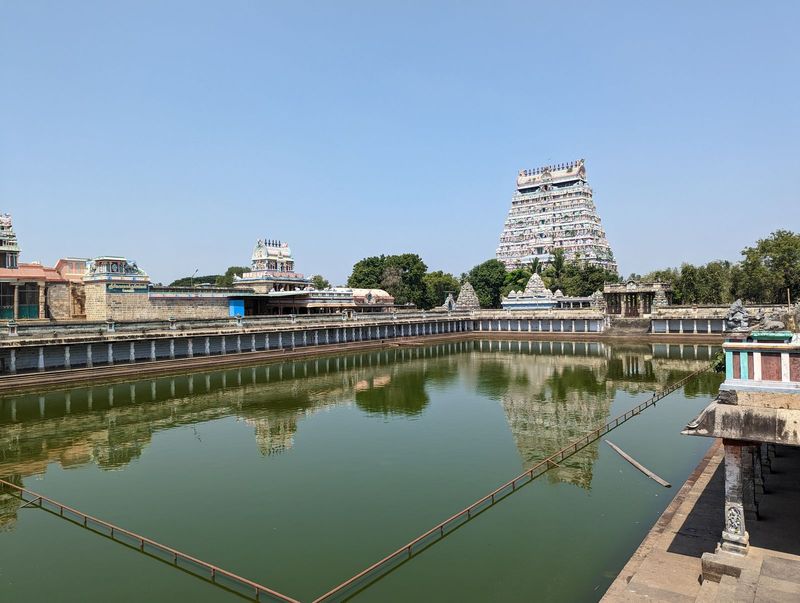
The north gopuram and the Shivaganga tank, supposedly rebuilt by a king cured by its water of leprosy.
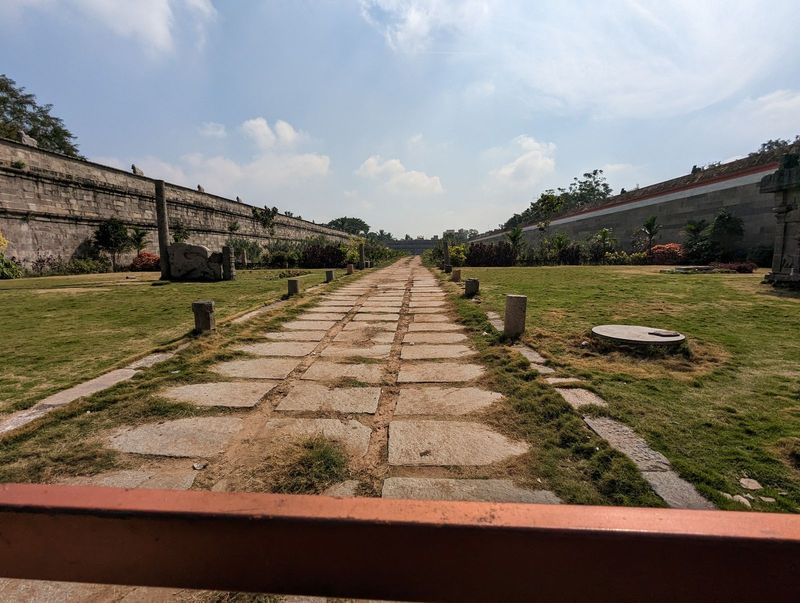
One of the quadrilateral courtyards separating the temple's nested rectangles. Hell on bare feet.
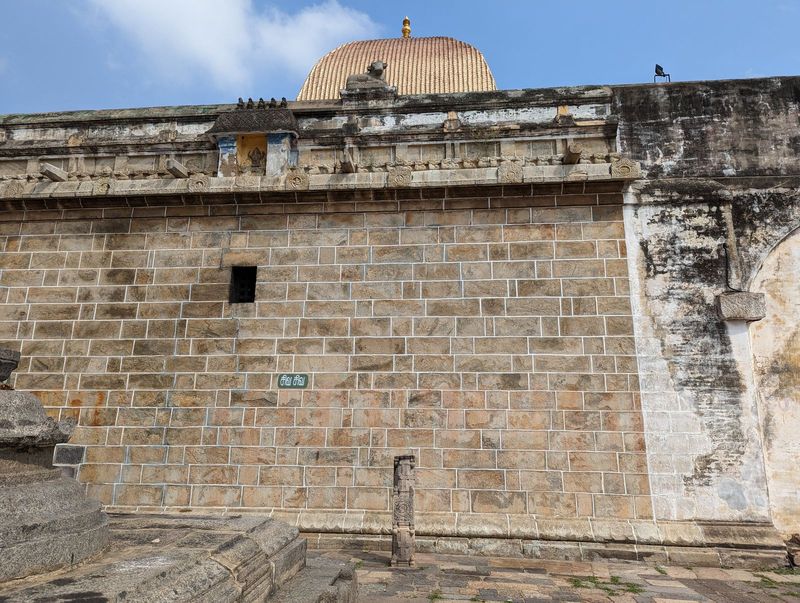
Here's the golden roof of the chit sabha, the shrine at the center of the temple. It contains two objects of worship. One is Shiva dancing as the lord of the dance or Nataraja. What kind of dancer is he? Ananda Coomaraswamy answer this question with a quote: "Our Lord is the dancer, who, like the heat latent in firewood, diffuses His power in mind and matter, and makes them dance in their turn." Coomaraswamy continues in his own words: "Siva is a destroyer and loves the burning ground. But what does he destroy? Not merely the heavens and earth at the close of a world-cycle, but the fetters that bind each separate soul. Where and what is the burning ground? It is not the place where our earthly bodies are cremated, but the hearts of his lovers, laid waste and desolate. The place where the ego is destroyed signifies the state where illusion and deeds are burnt away: that is the crematorium, the burning-ground where Sri Nataraja dances...." (Ananda Coomaraswamy, The Dance of Siva: Fourteen Indian Essays, New York, 1918, p. 59 and 61)
The other object in the shrine is the much less familiar akasha, an invisible lingam representing space itself. This is not simply the "space" where rockets travel. It is something more than that. As the Chandogya Upanashad says: "As far verily, as this world-space (akasa) extends, so far extends the space within the heart. Within it, indeed, are contained both heaven and earth, both fire and wind, both sun and moon, lightning and the stars, both what one possesses here and what one does not possess; everything here is contained within it." (Quoted in David Smith, The Dance of Siva, Cambridge, 1996, p. 81.)
Cameras are forbidden within this wall, and even without a camera worshippers can only see the anteroom where priests perform ceremonies daily. Surprisingly, perhaps, the roofs of both the chit sabha and the anteroom are supported by columns of wood, not stone. P.S. In a sealed room within this enclosure, Rajaraja I is said to have discovered the long-lost Tevaram, the sacred hymns of the 7th and 8th centuries that are still very much alive today in Tamil Nadu.
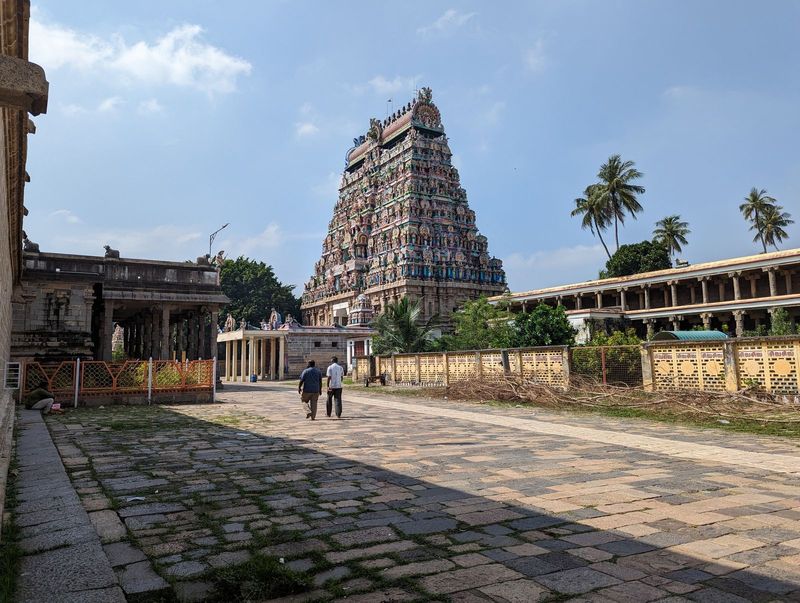
The western gopuram.
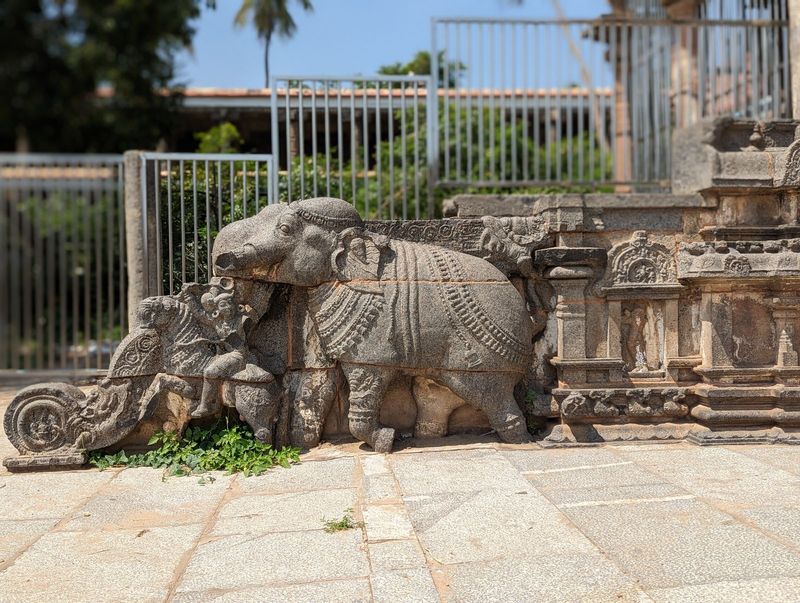
Two subsidiary shrines at the northwest corner of the complex are probably tthe oldest and most attractive bits of all. Here, for example, is a stairway that is part of the Shivakumasundari Temple,
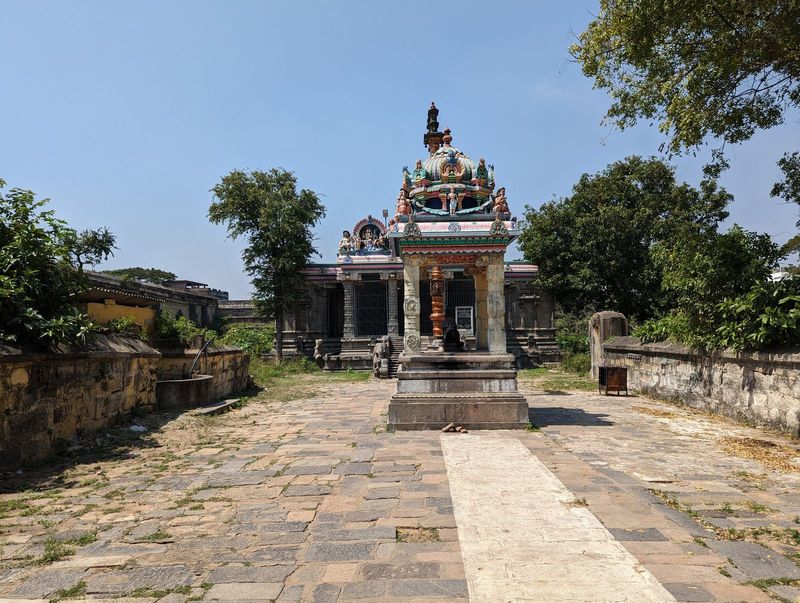
Wish I could look around the Subrahmanya Temple, but it's fenced off and apparently abandoned.