Pagan 3. The Neighborhood
The settlements near Pagan are dependent on tourists, even though the number of tourists is tiny compared to the hordes at Angkor and Borobudur.
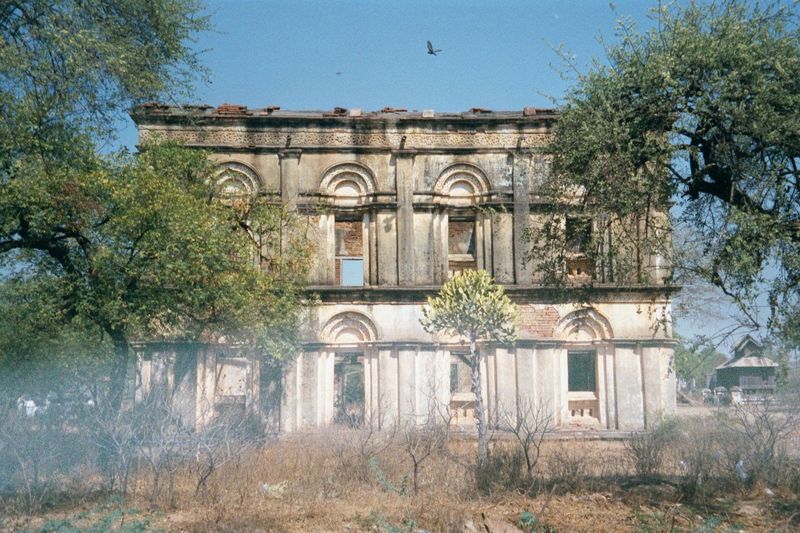
Just outside the city wall, there is this ruin of a colonial building. Could it be the museum constructed by order of George Curzon, the Indian viceroy who visited Pagan in 1901? (A monster museum was recently opened within the old perimeter.)
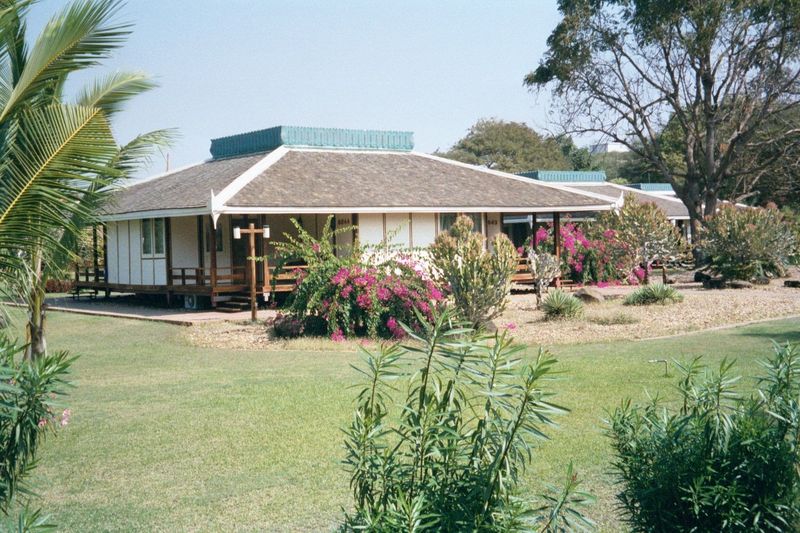
To the south of the old city: Pagan's best hotel, almost austere by the current standards of Asia's international hotels.
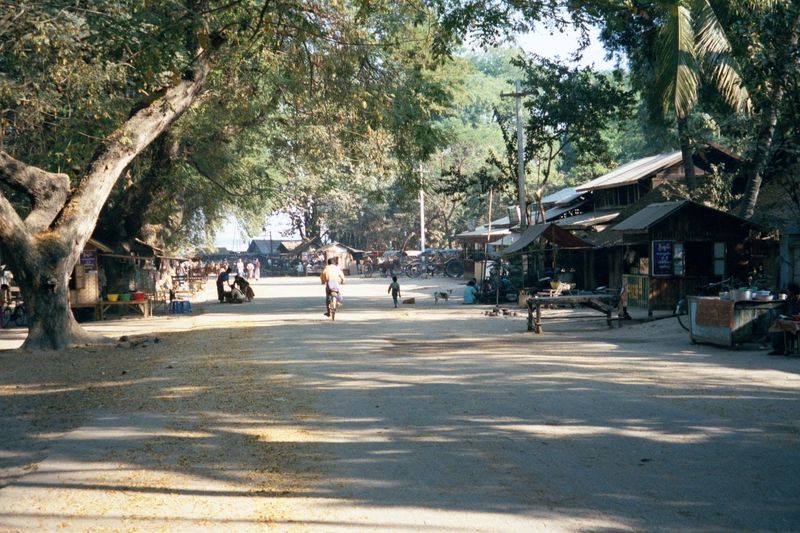
There isn't any large town in the vicinity: the biggest place is Nyaung-U. This is its main street, near the very informal boat landing and a couple of miles from the airport.
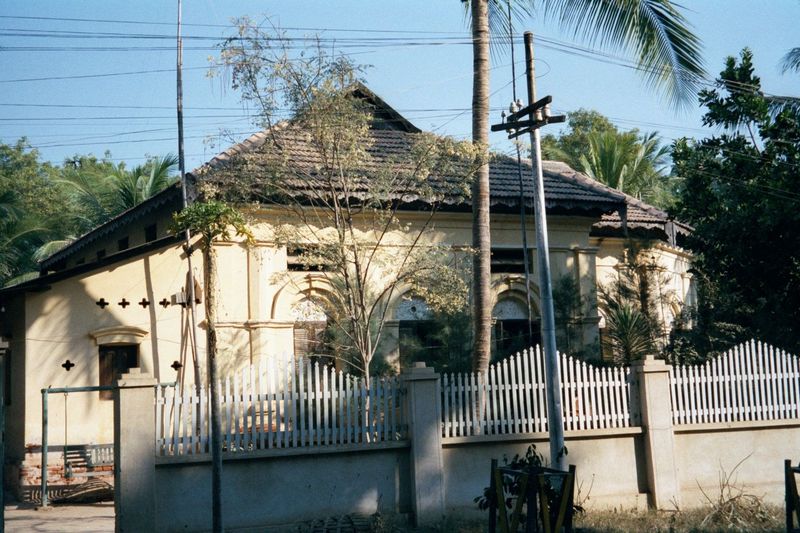
Nyaung-U's been the main center of Pagan since the colonial era, when this was the post office.

The interior: teak and tile.
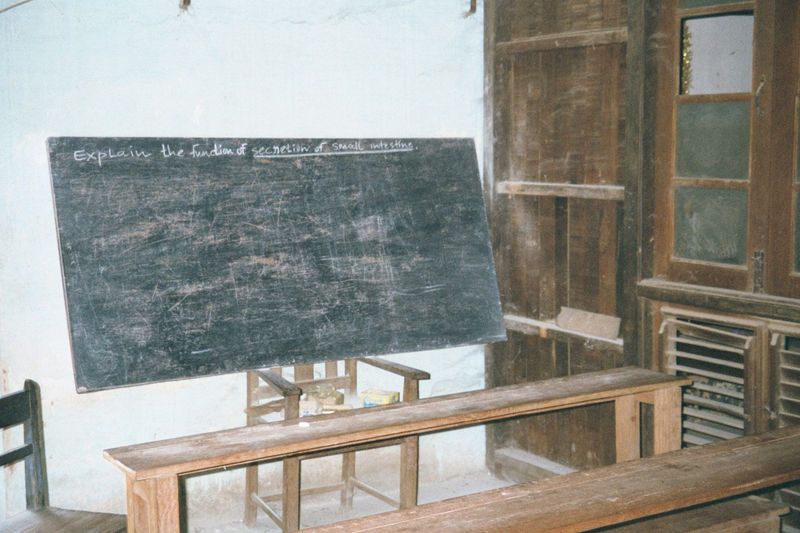
It's presently a private school, here with a fragment of a science class, taught in English.

A shop that is about as close as Nyaung-U gets to the outside world.

Craft production for tourists is important: here, lacquerware is prepared at Myinkaba Village, south of the old city.

In the interstices, agriculture continues. In the dry season, the ground is swept to collect cherry-like tree fruits.