Lima
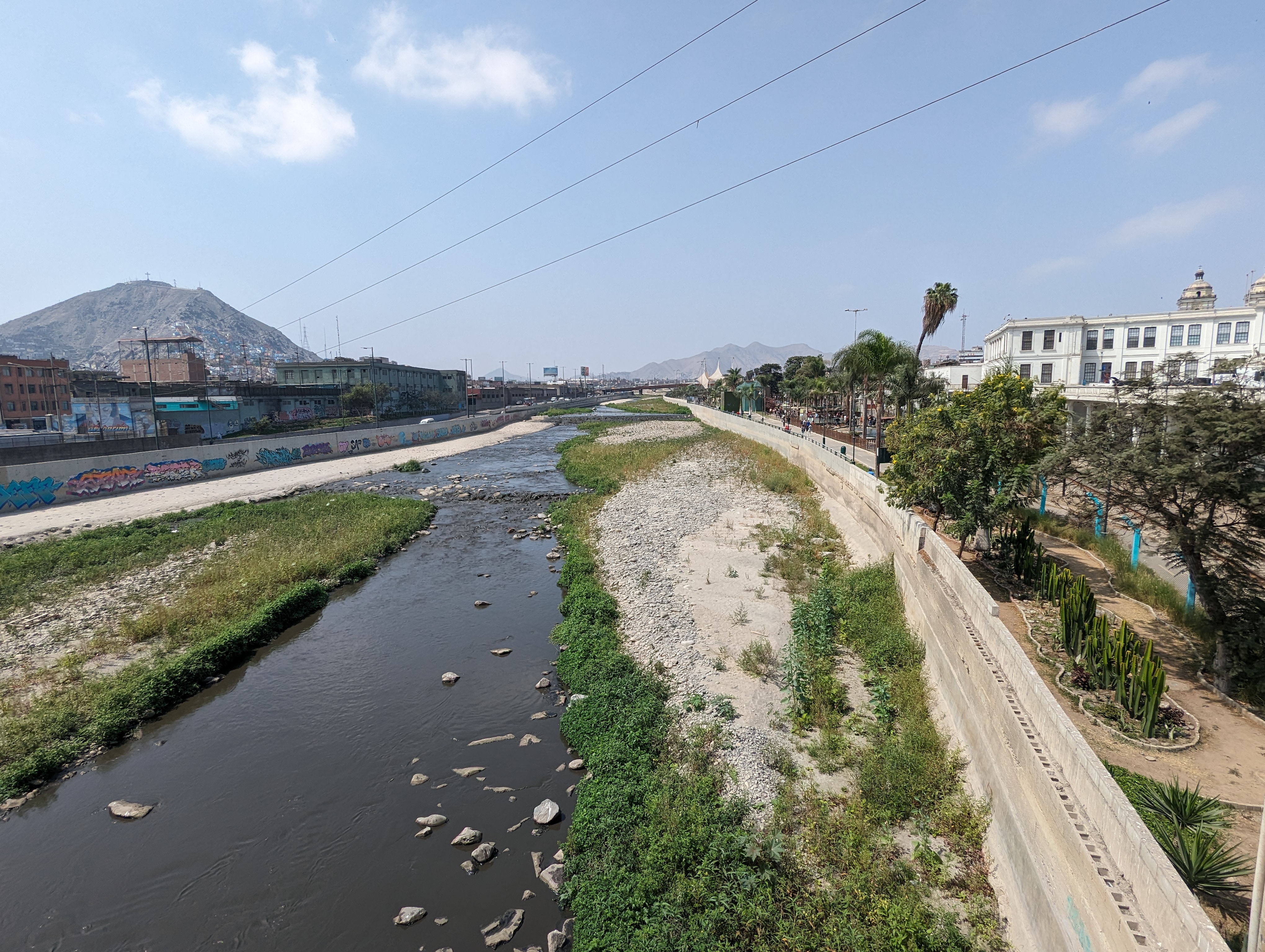
Rio Rimac, 500 feet north of Peru's presidential palace.
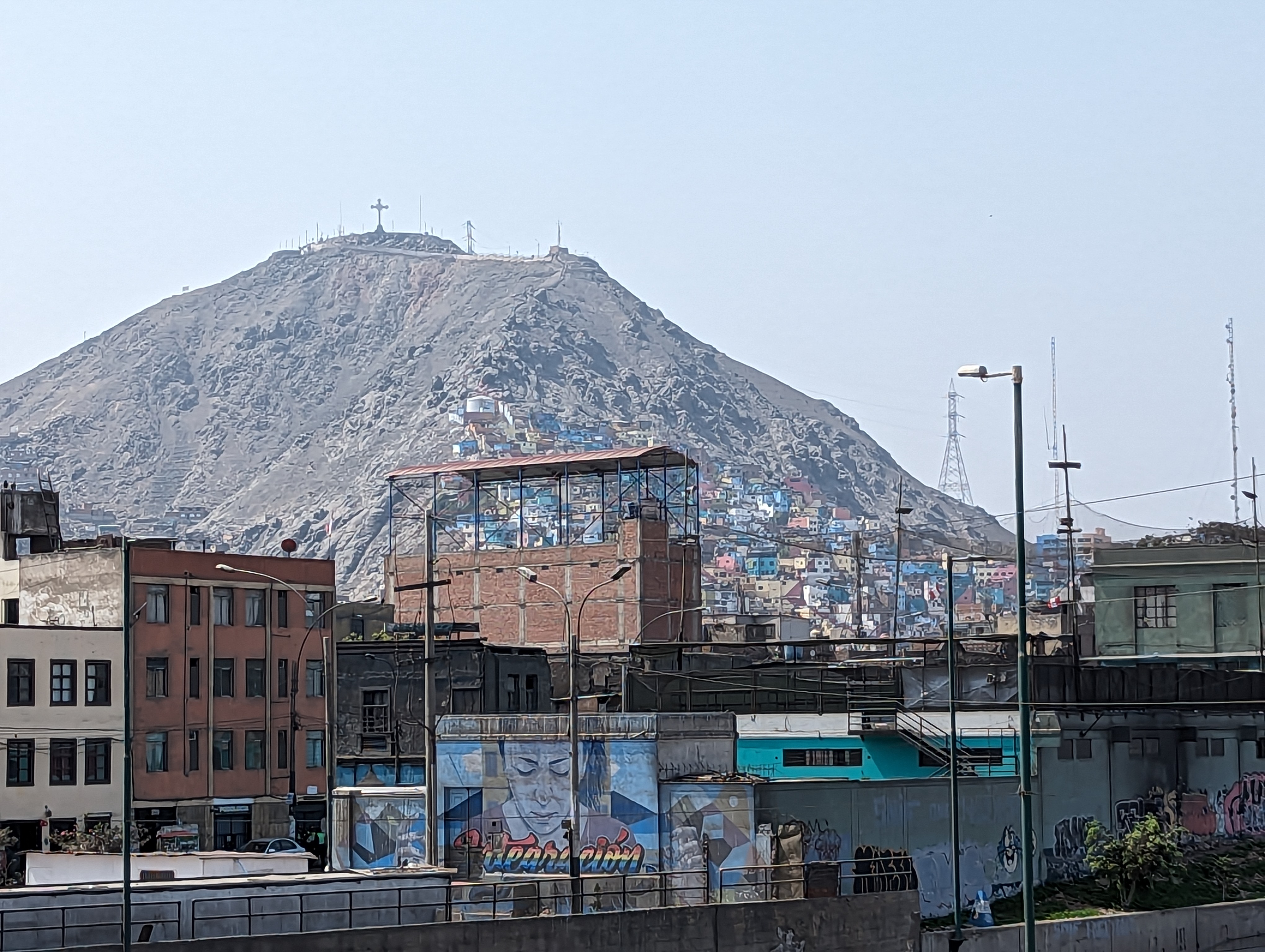
This mountain north of the river, Cerro San Cristobal, introduces Lima's steep-slope housing. For more of this, see the Chimbote page.
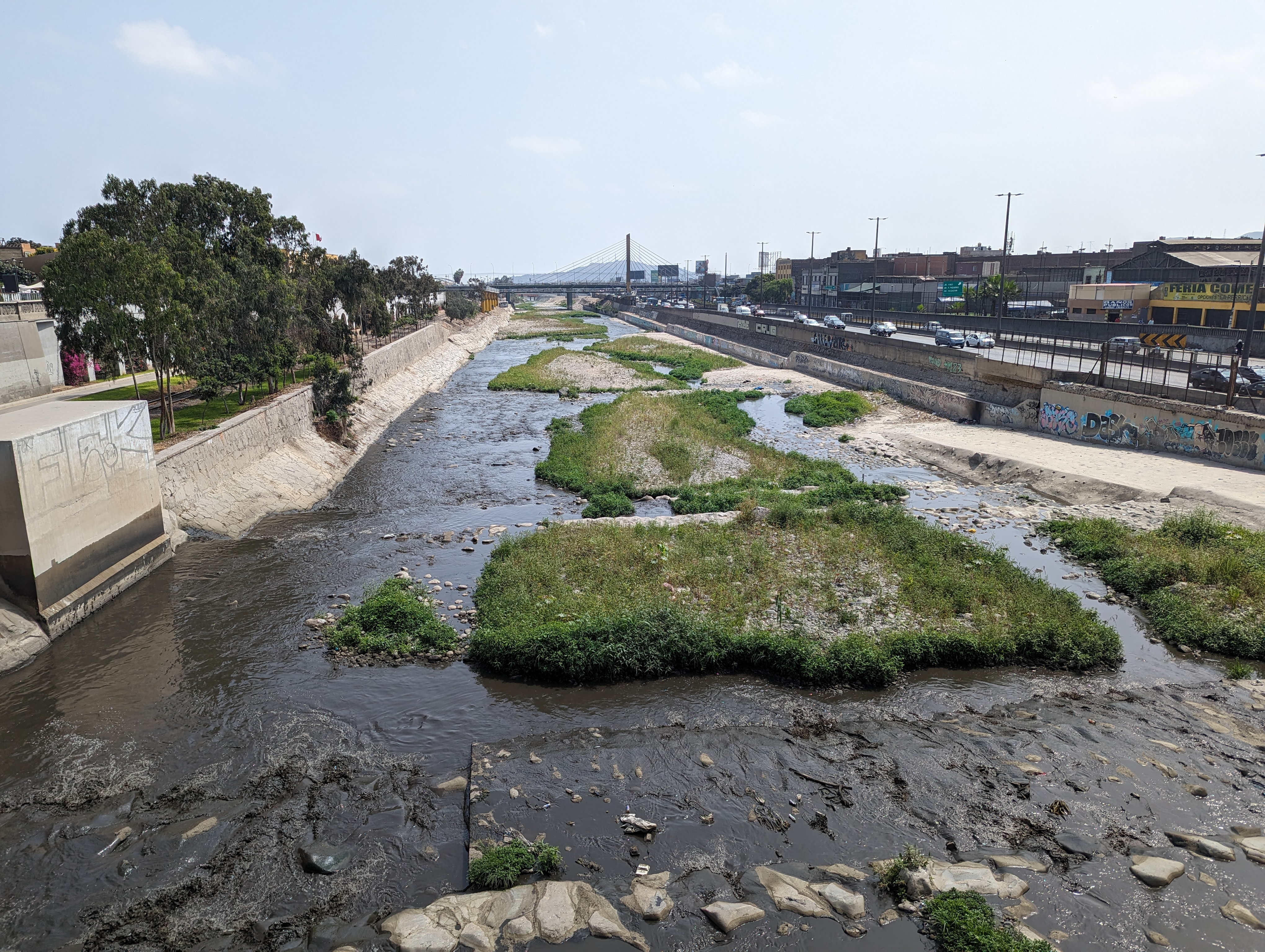
Back to the river, seen again from the Puente de Piedra but looking downstream. Fishing? Wading? How about just sitting on the banks to admire?
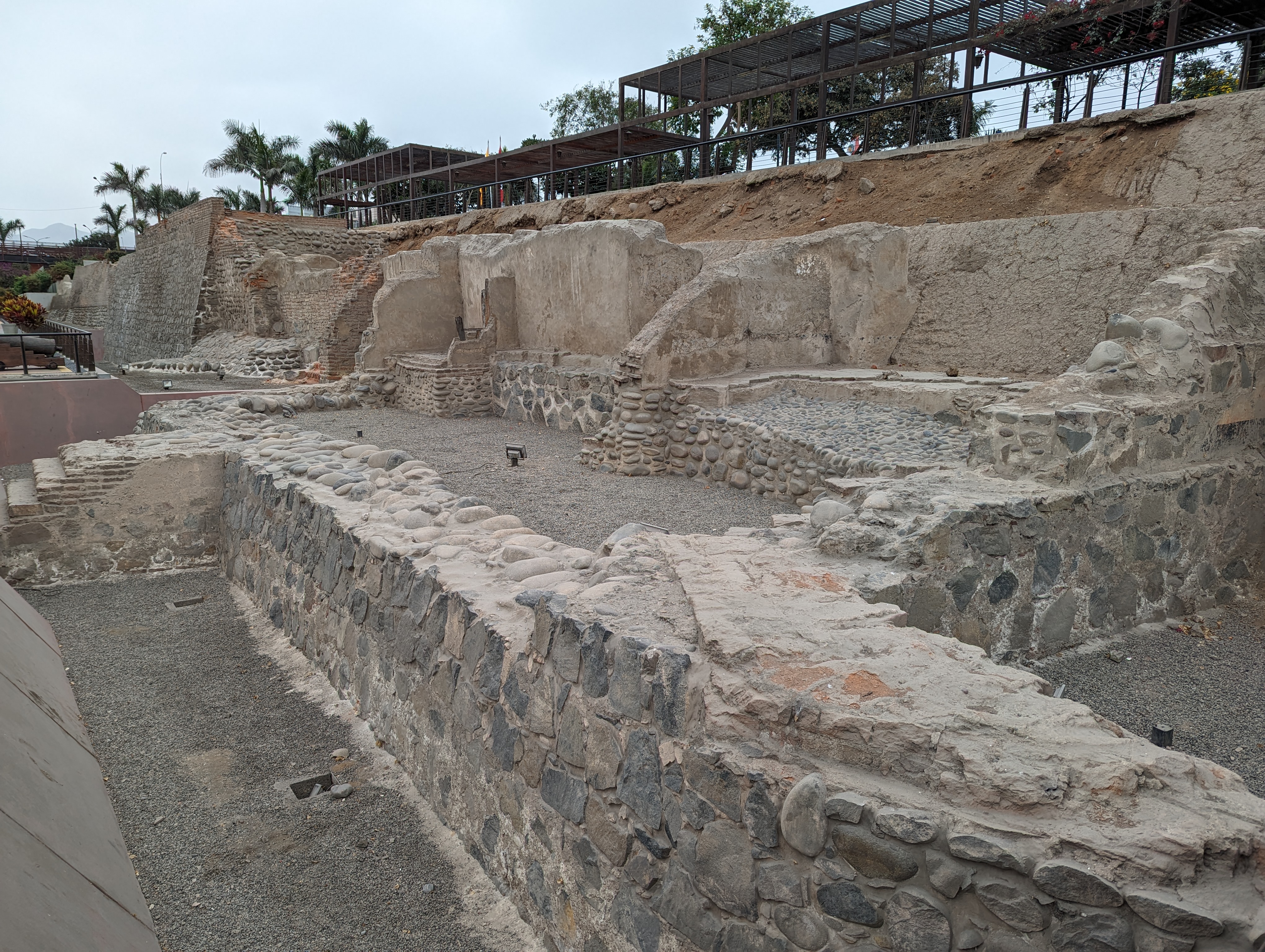
Remnants of the city's colonial wall survive on the side facing the river.
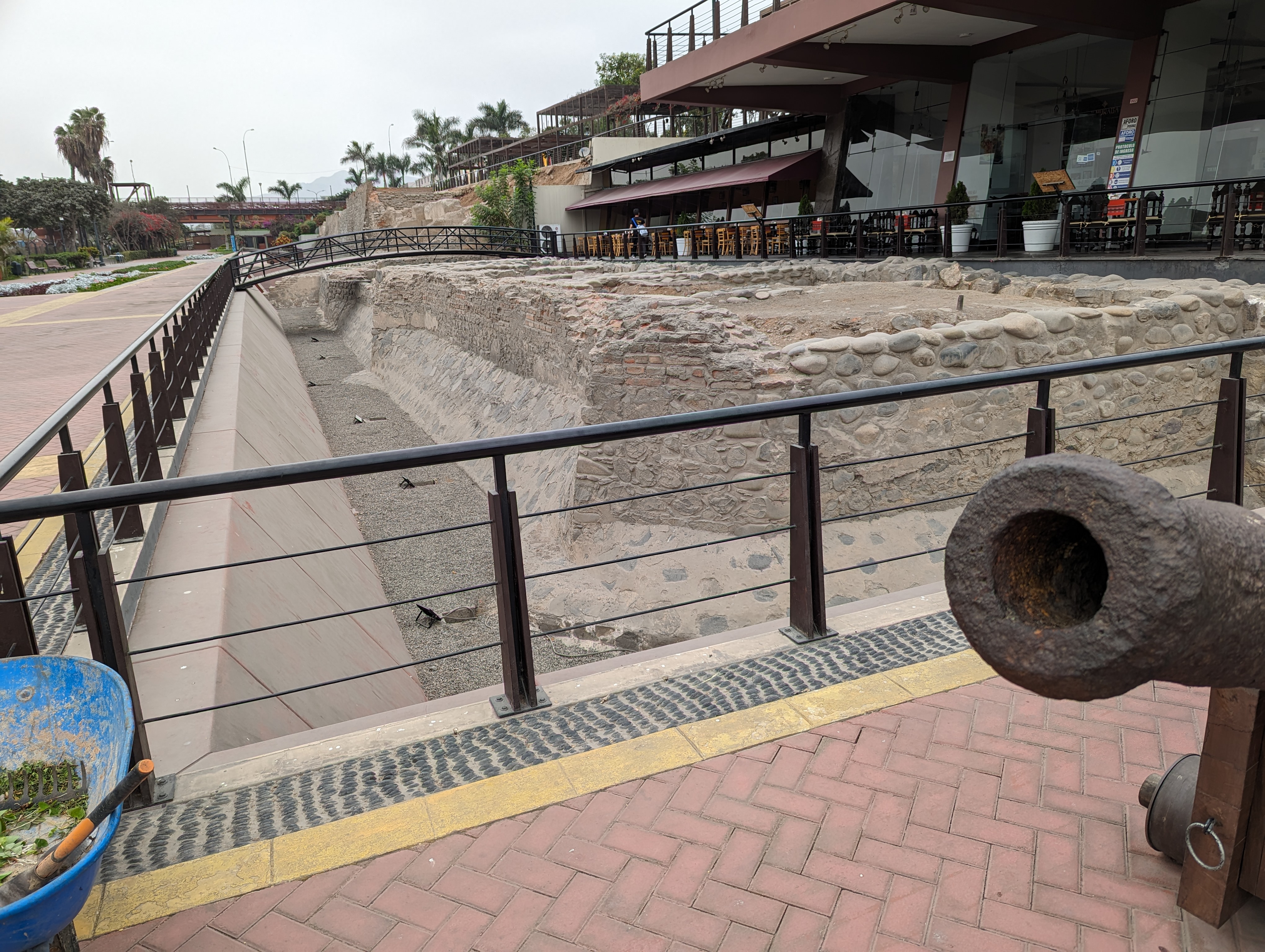
Parts of the wall survive in the Parque La Muralla.
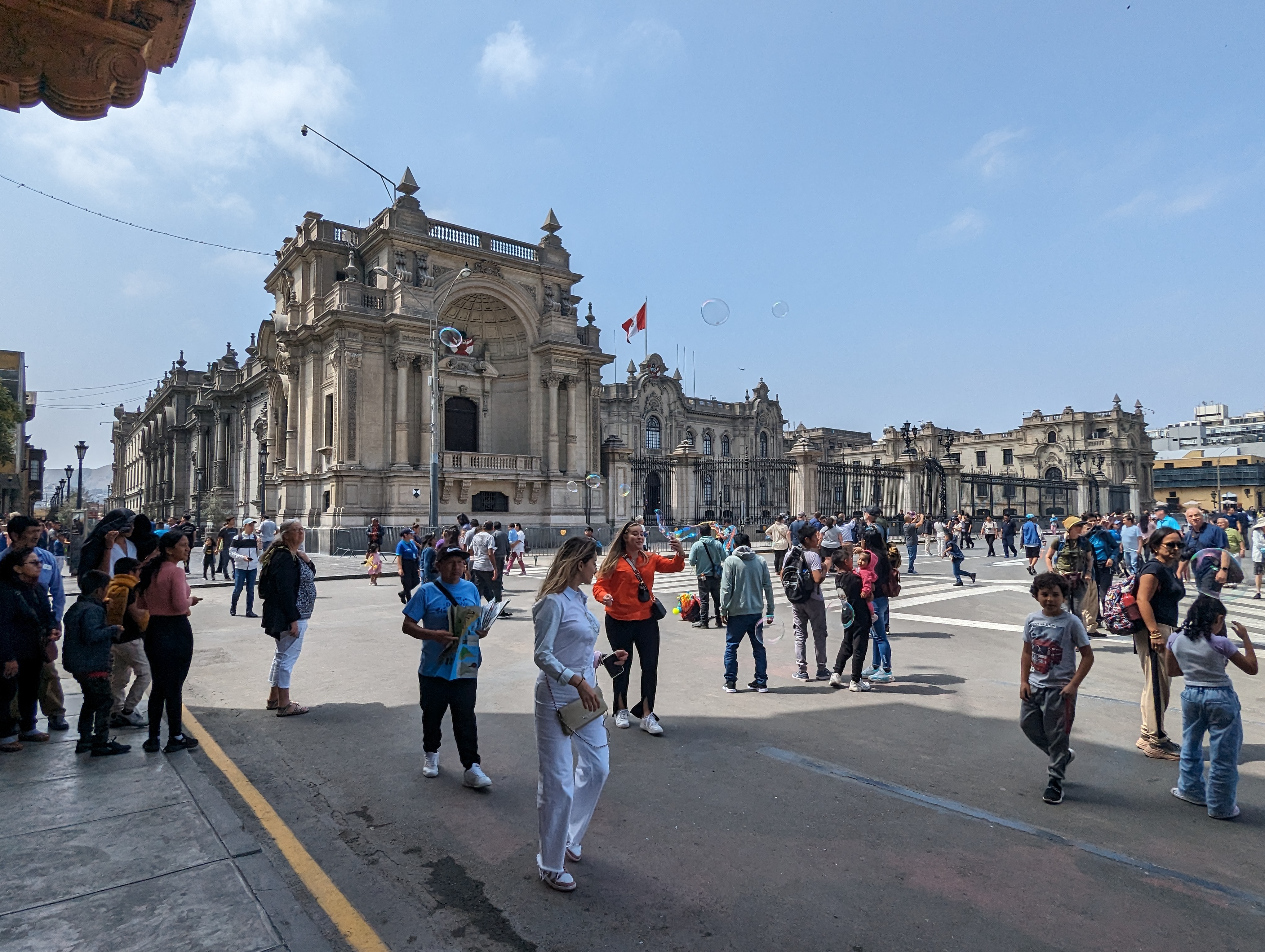
The presidential palace fronts both on the Plaza Mayor (or Plaza de Armas) and (on the other side) the none-too-scenic river. Crowds? It's a weekend.
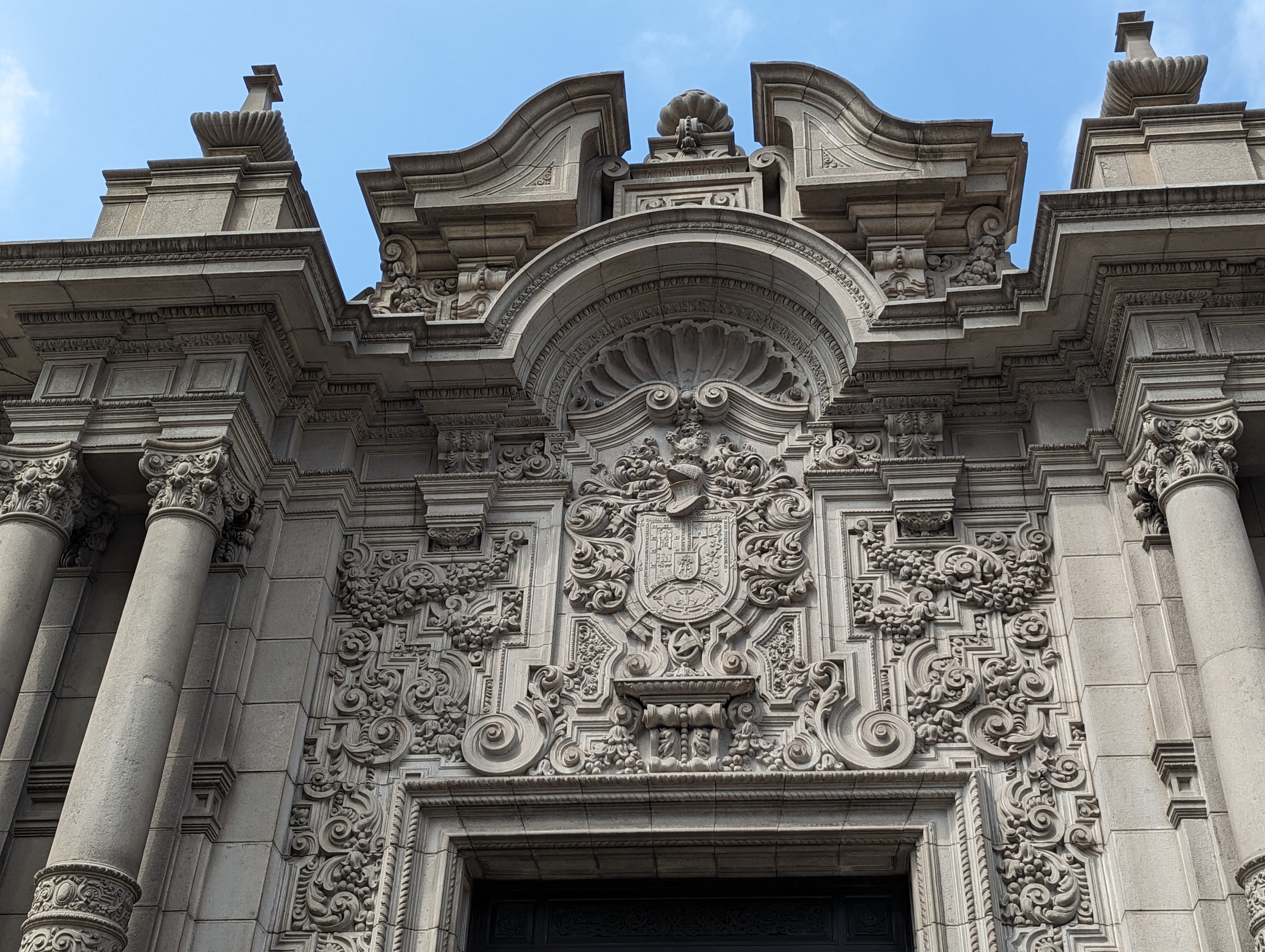
Ornamented door on the south side of the palace, fronting on the Jir n de la Uni n.
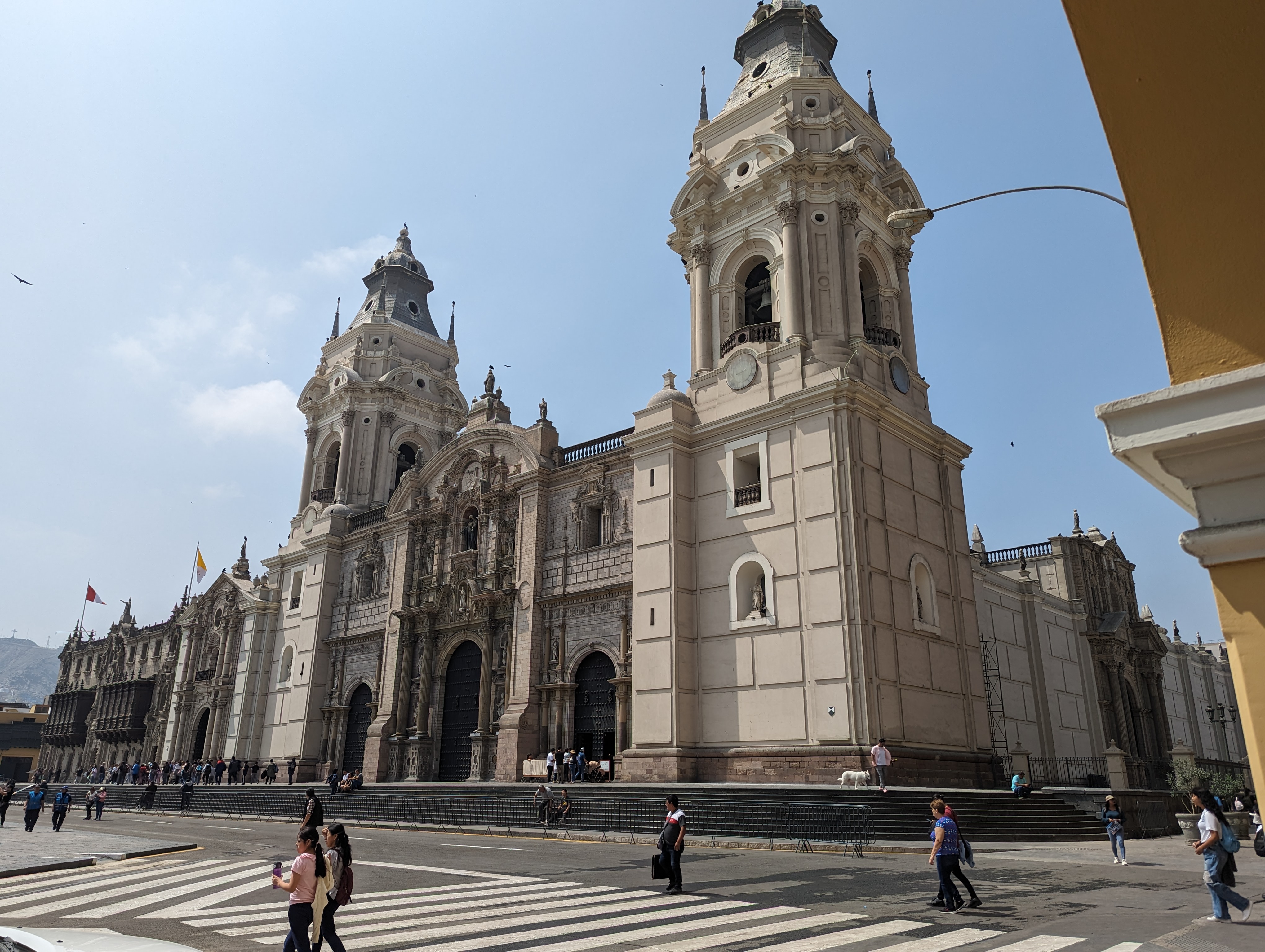
Kitty-corner from the presidential palace but also facing the Plaza Mayor: Lima's cathedral, built (you'd never guess) in the 20th century.
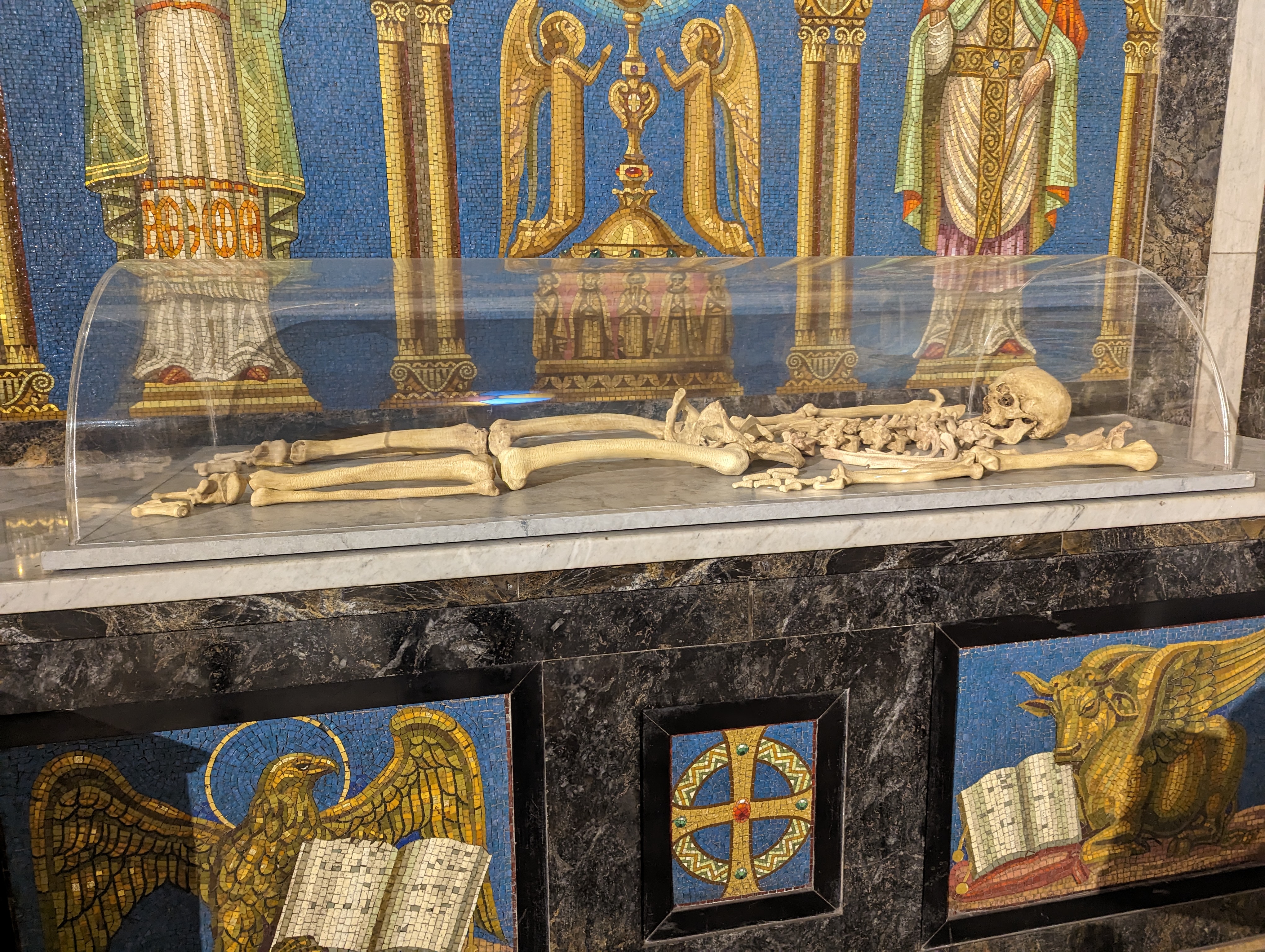
The church displays the bones of Francisco Pizarro, weighing in at 5' 9".
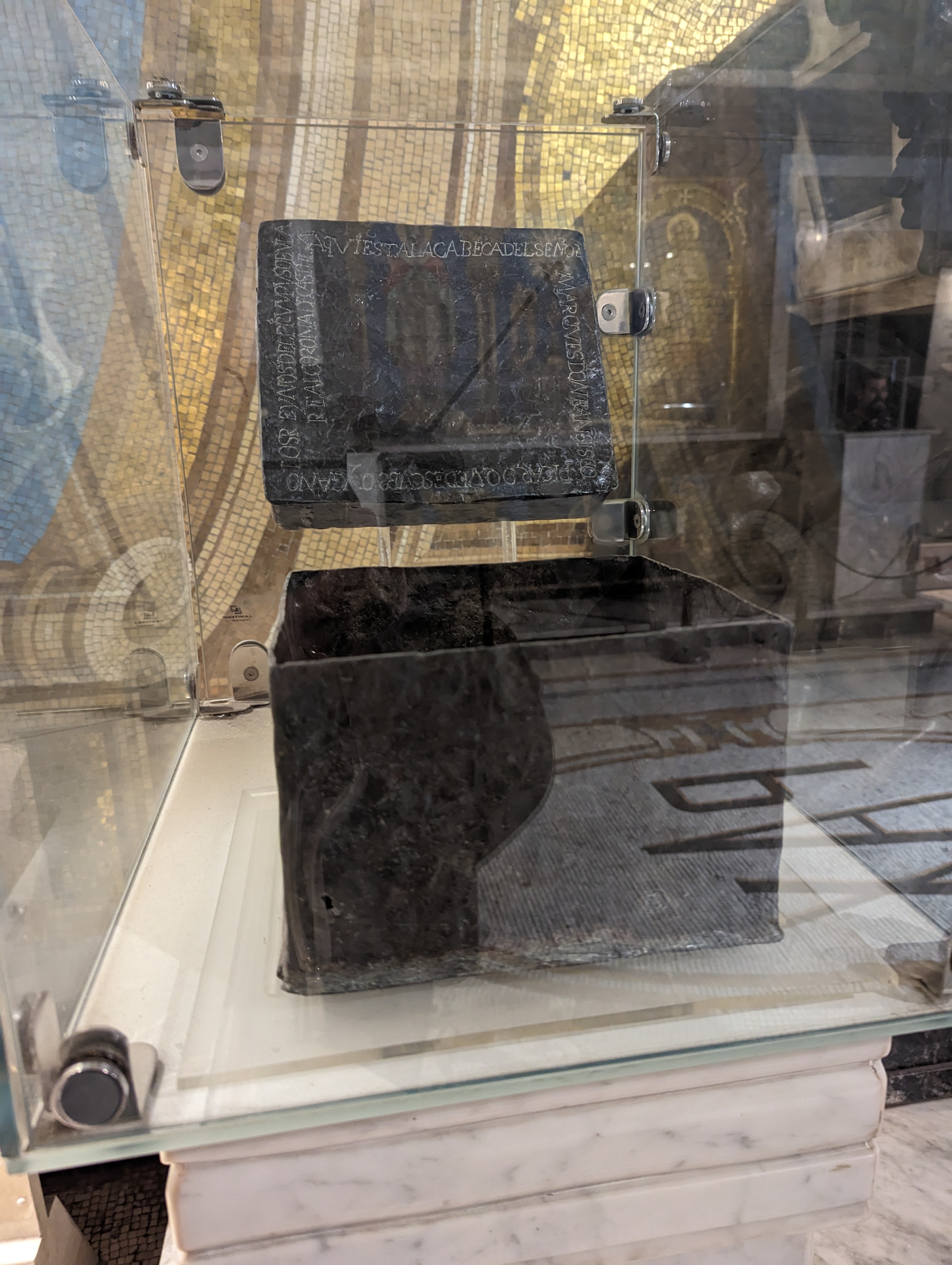
Also on display, the lead box that held Pizarro's skull until 1977.
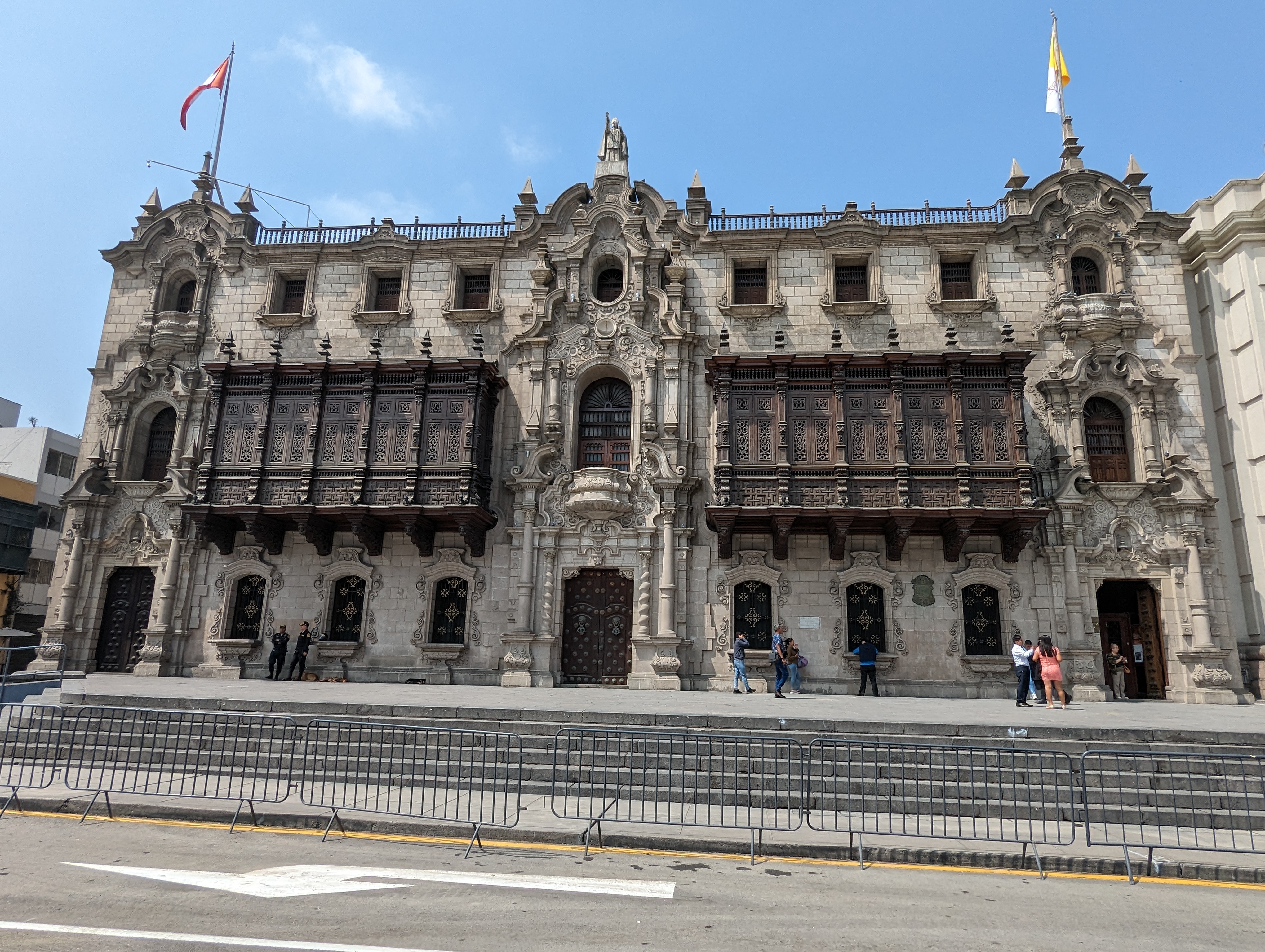
The adjoining archbishop's palace, built in a backward-looking 20th century.
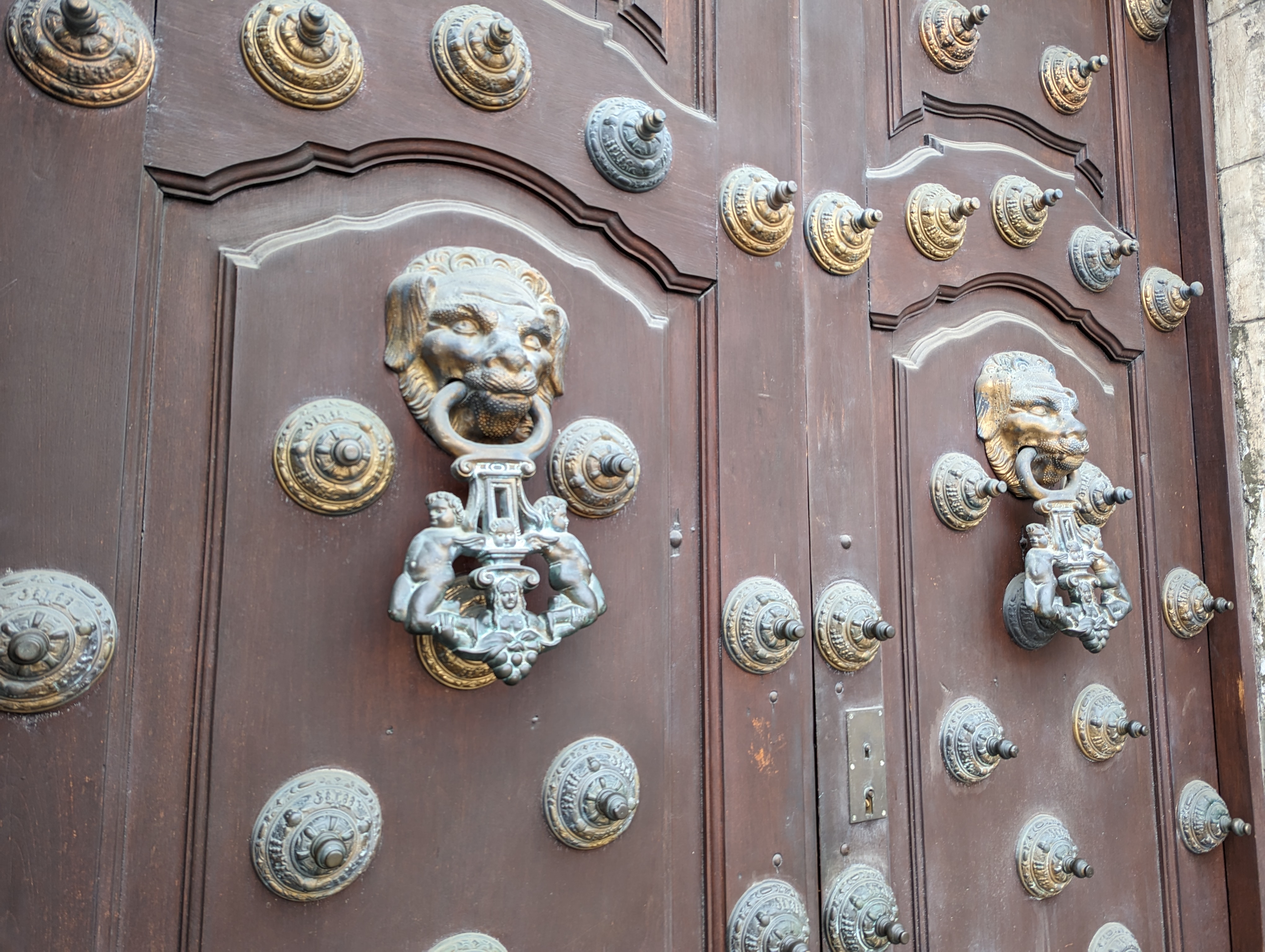
The none too inviting front door.
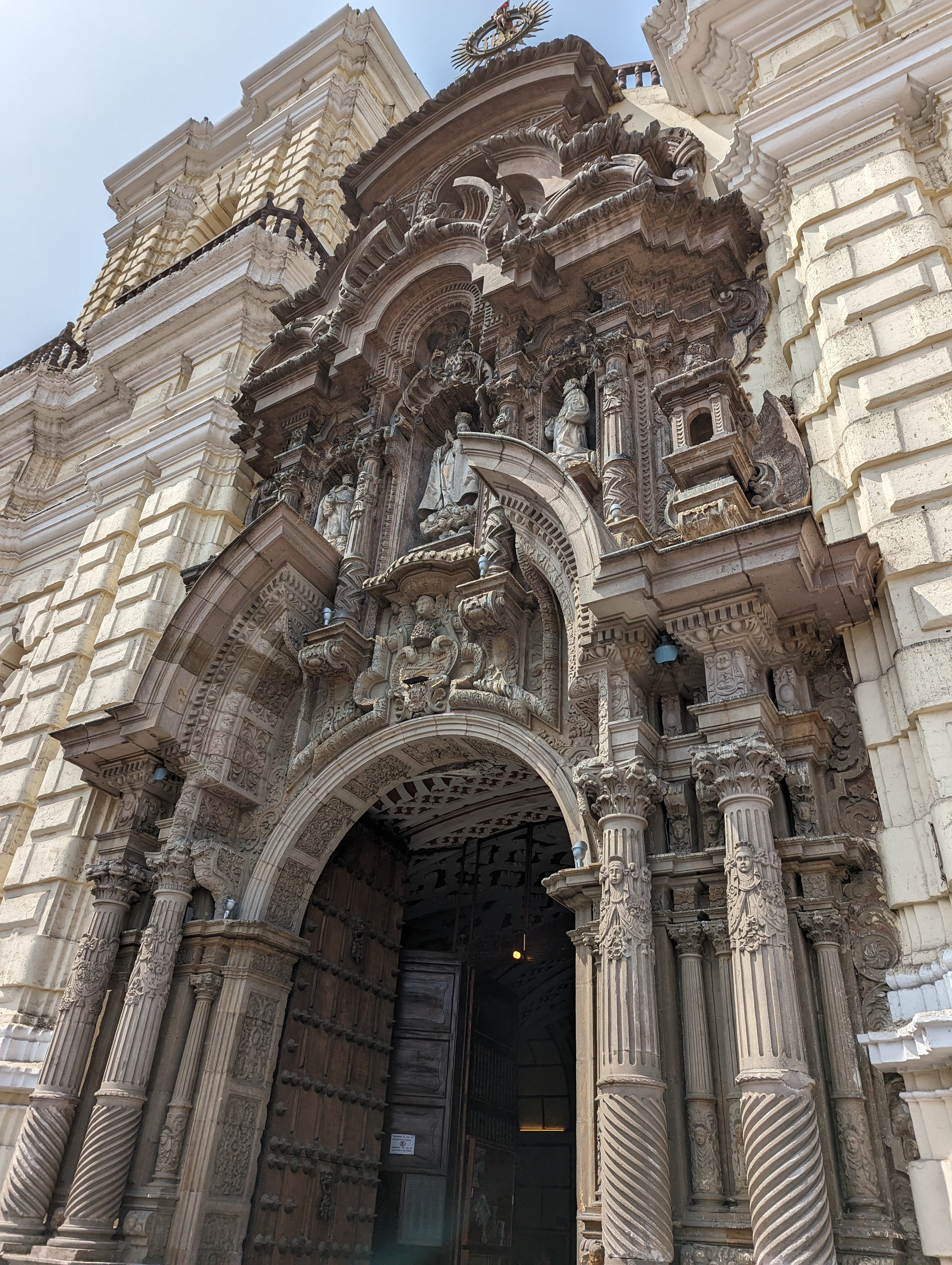
A few minutes' walk to the northeast, the grand entrance to the Church of San Francisco, built after a quake in 1655 brought down the previous church.
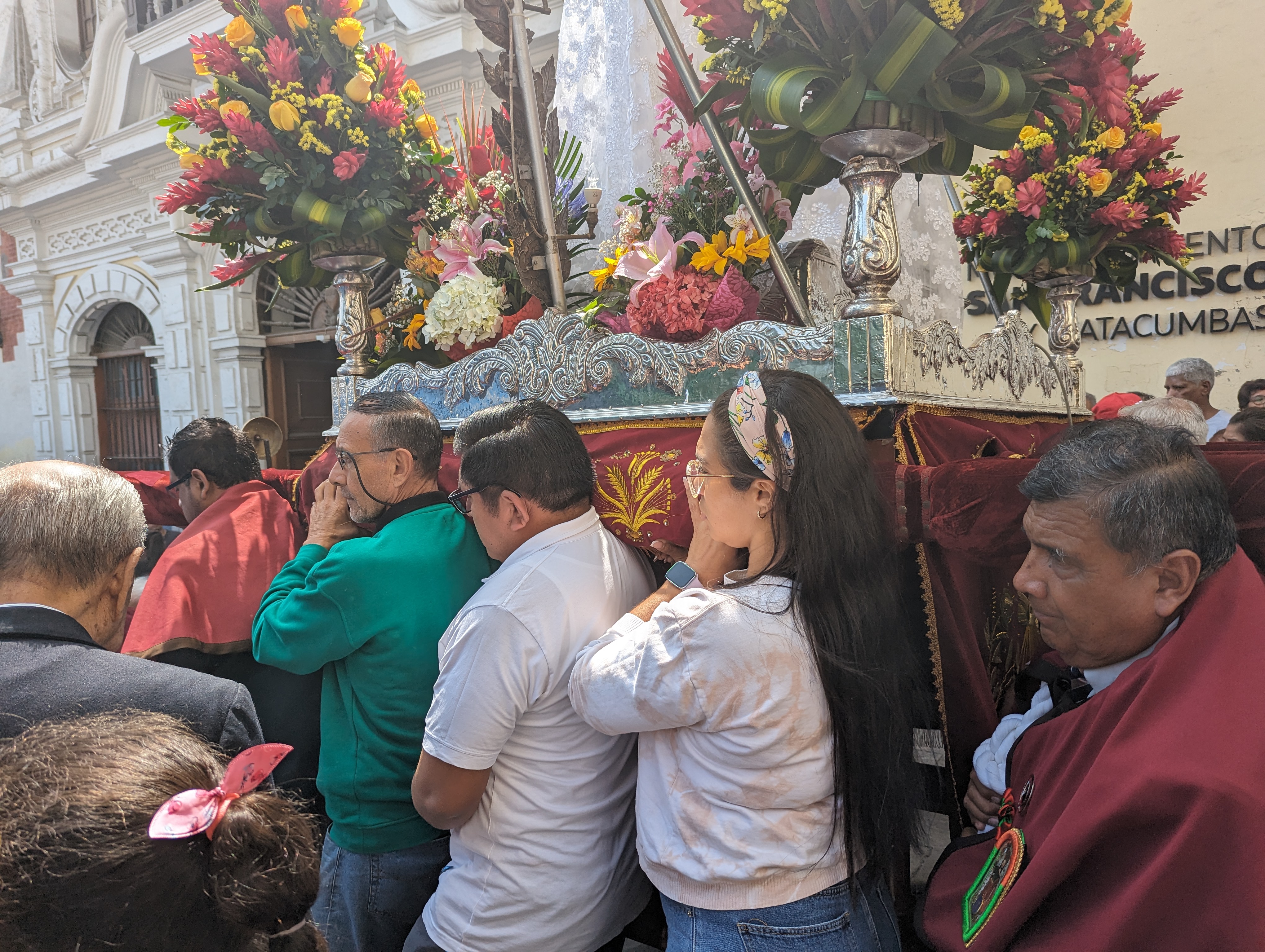
A lugubrious brass band, kept in line by a powerful bass drum, sets the pace for a cortege leaving the church.
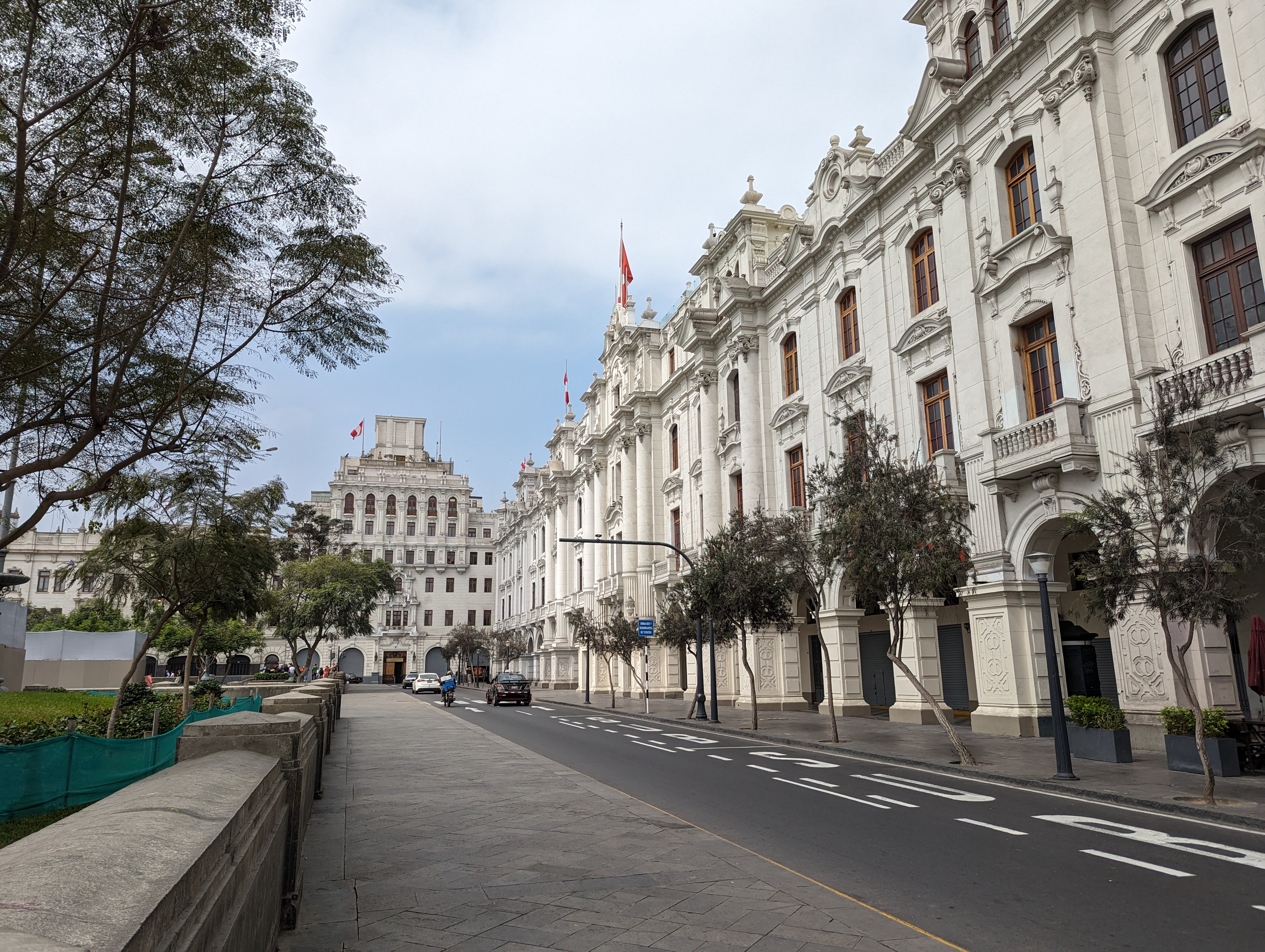
Six blocks southwesterly from the Plaza Mayor, and at the far end of the original townsite, there is another plaza, this one named for the Protector of Peru when it became independent in 1822: Jos San Mart n.
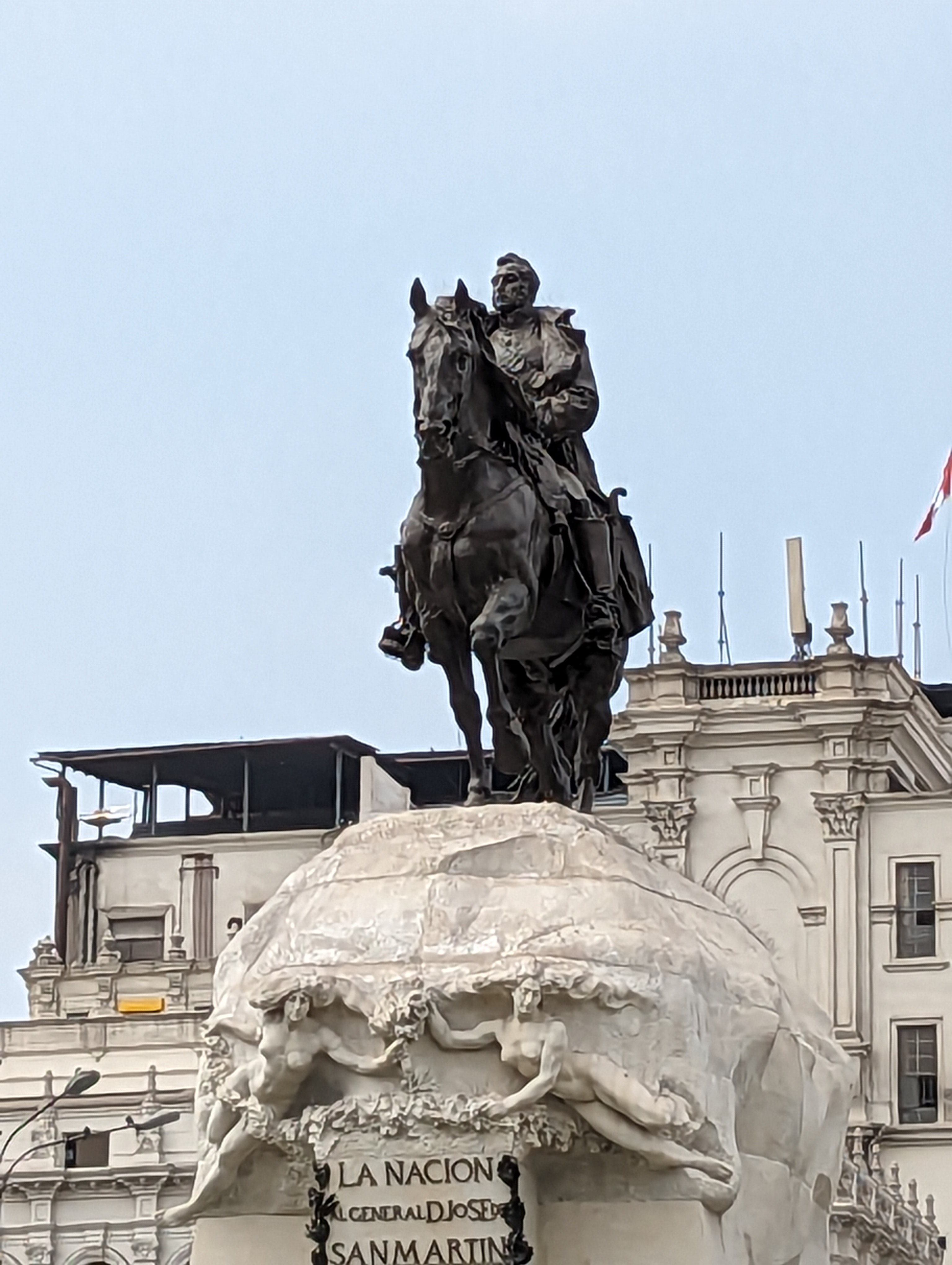
Here he is in the center of the plaza. If you're hungry, there's a Pardo's Chicken just behind him. A Pizza Hut, too.
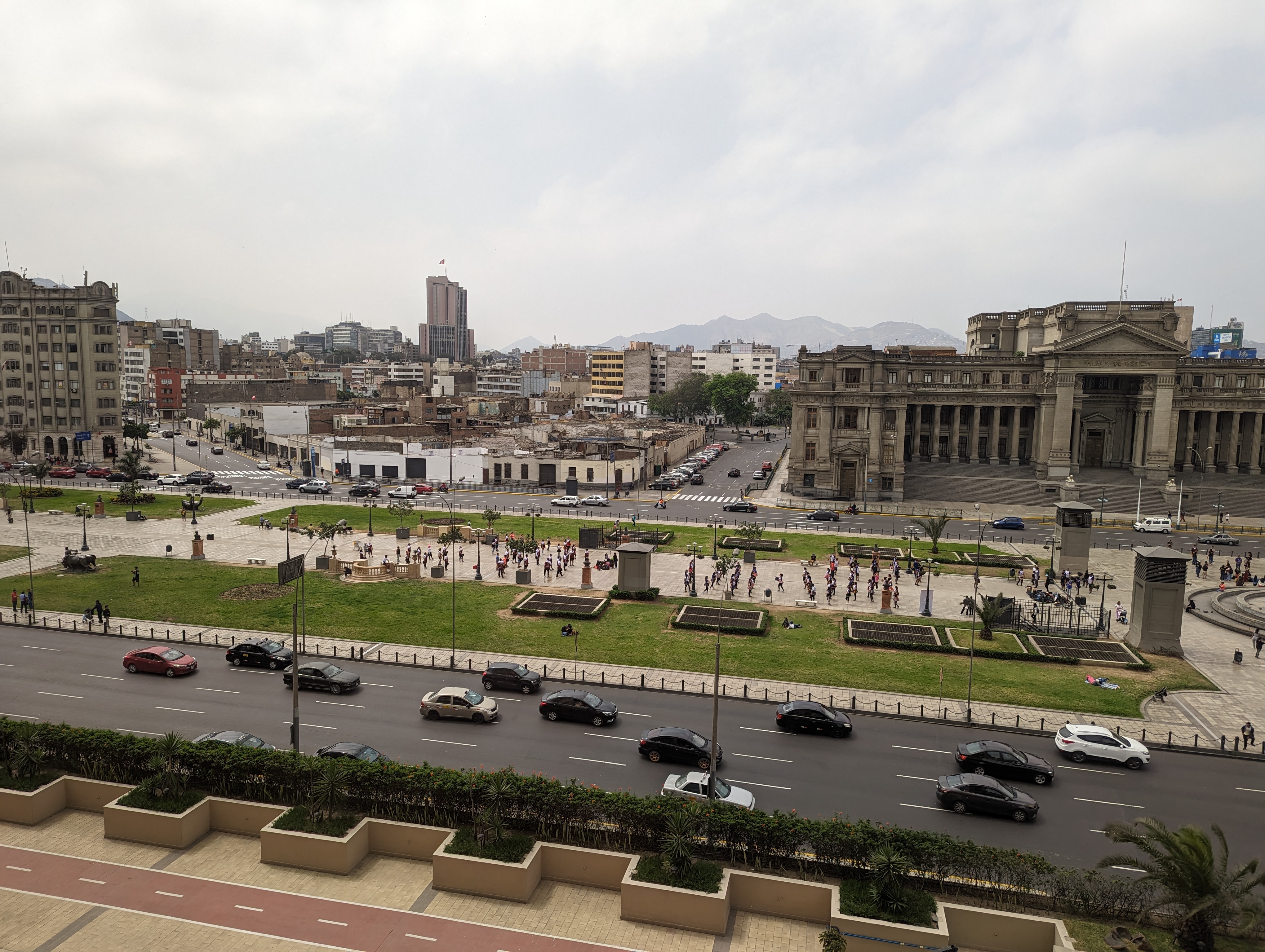
Another four blocks south, the Paseo of Naval Heroes is busy each night with dance classes. At the far right, the Palace of Justice, another building newer than it looks (1929-38).
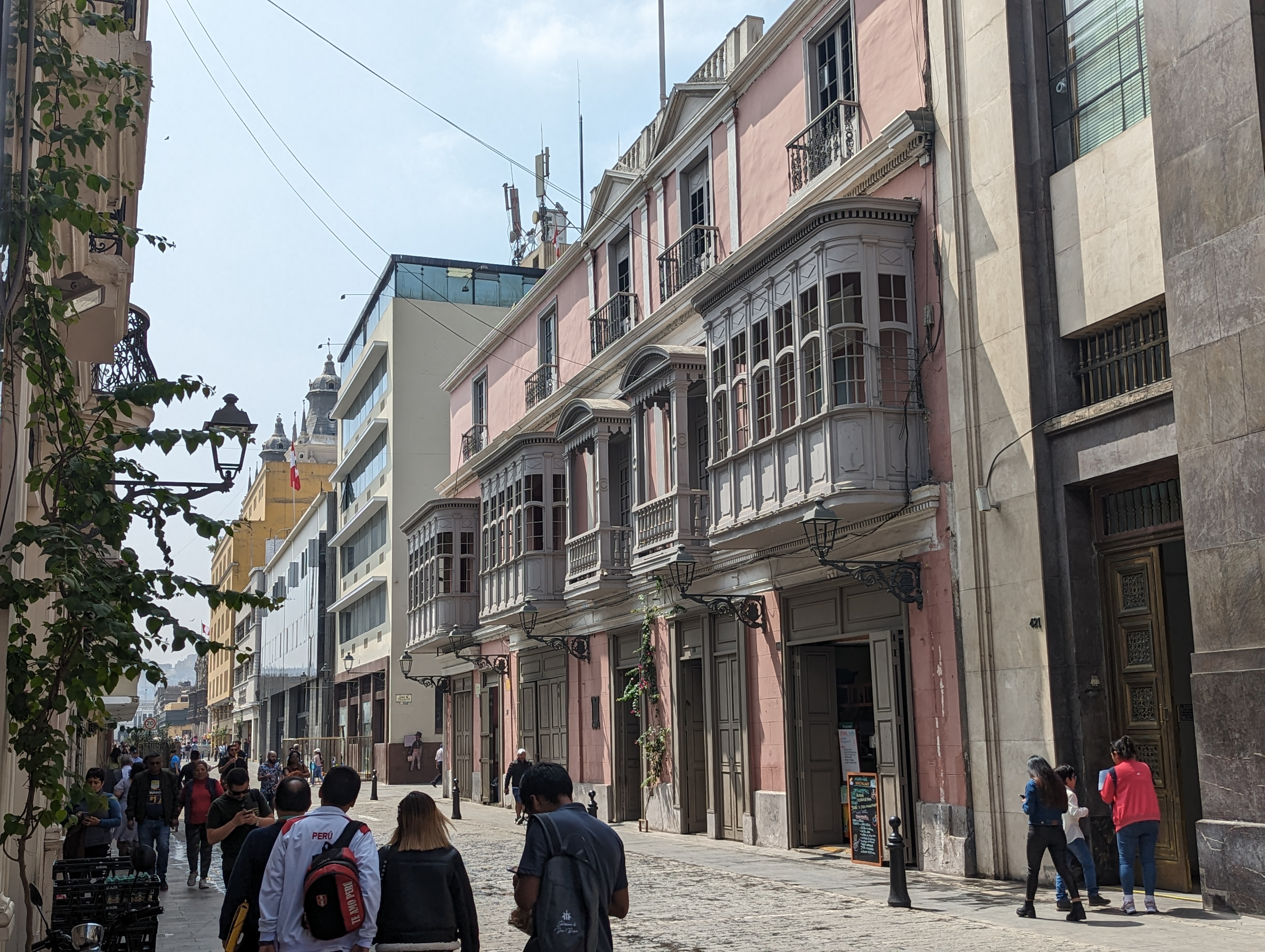
Many of the streets in the historic center are pedestrianized. The most distinctive element is probably the protruding balconies from old houses.
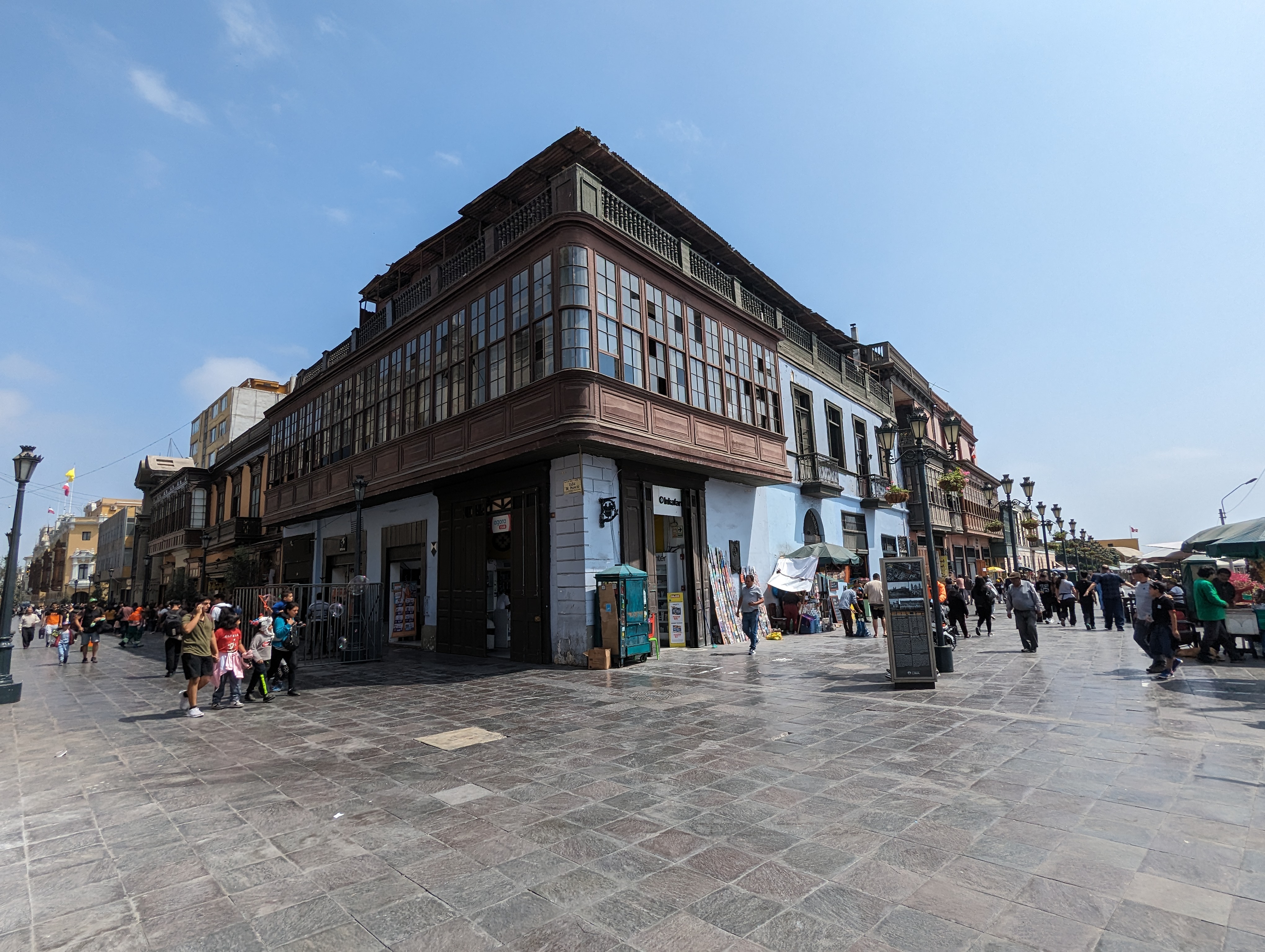
The most famous example is the Casa de Aliaga, on the river immediately downstream from the presidential palace.
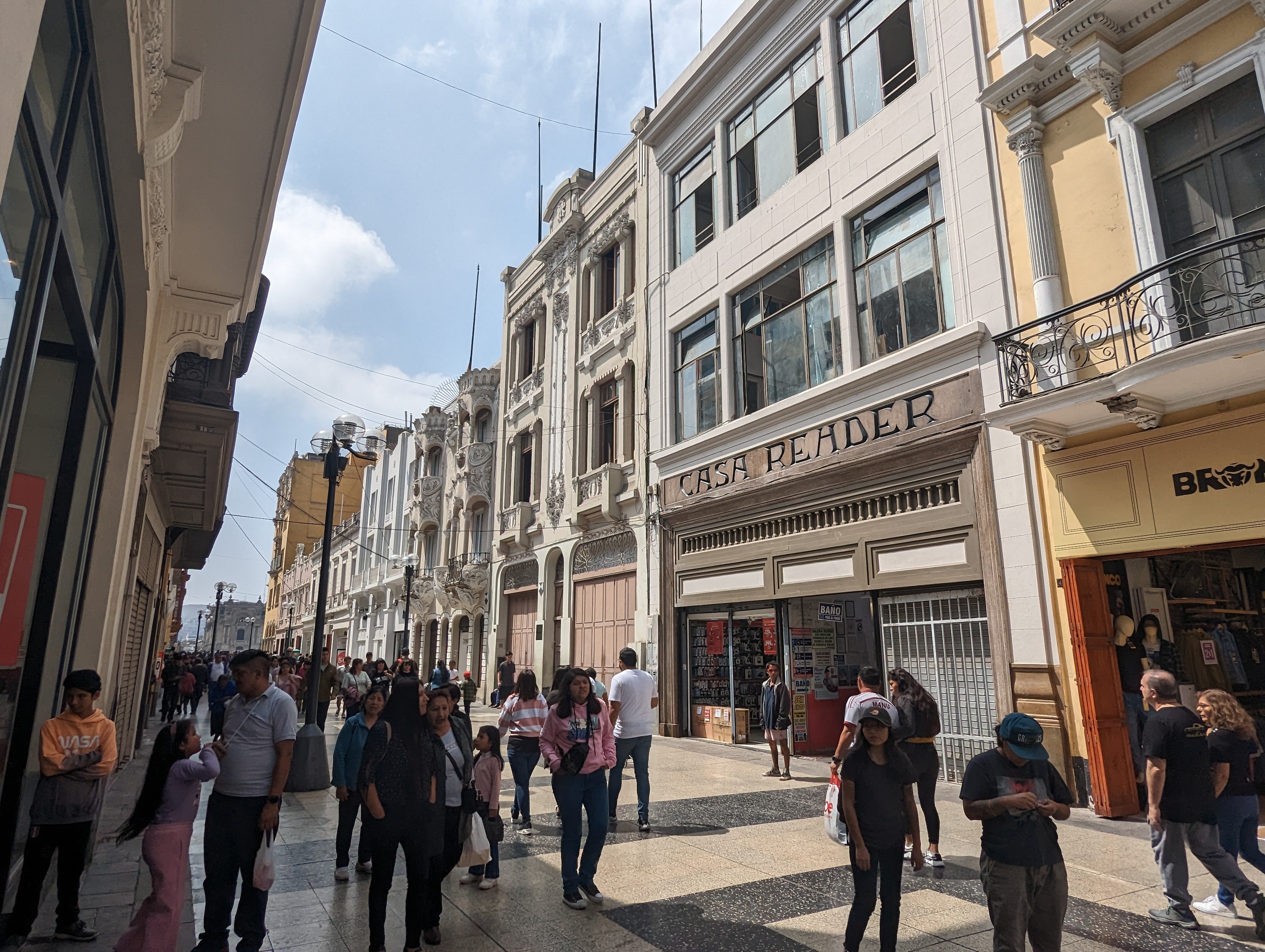
The 19th century was hard on the old Spanish atmosphere.
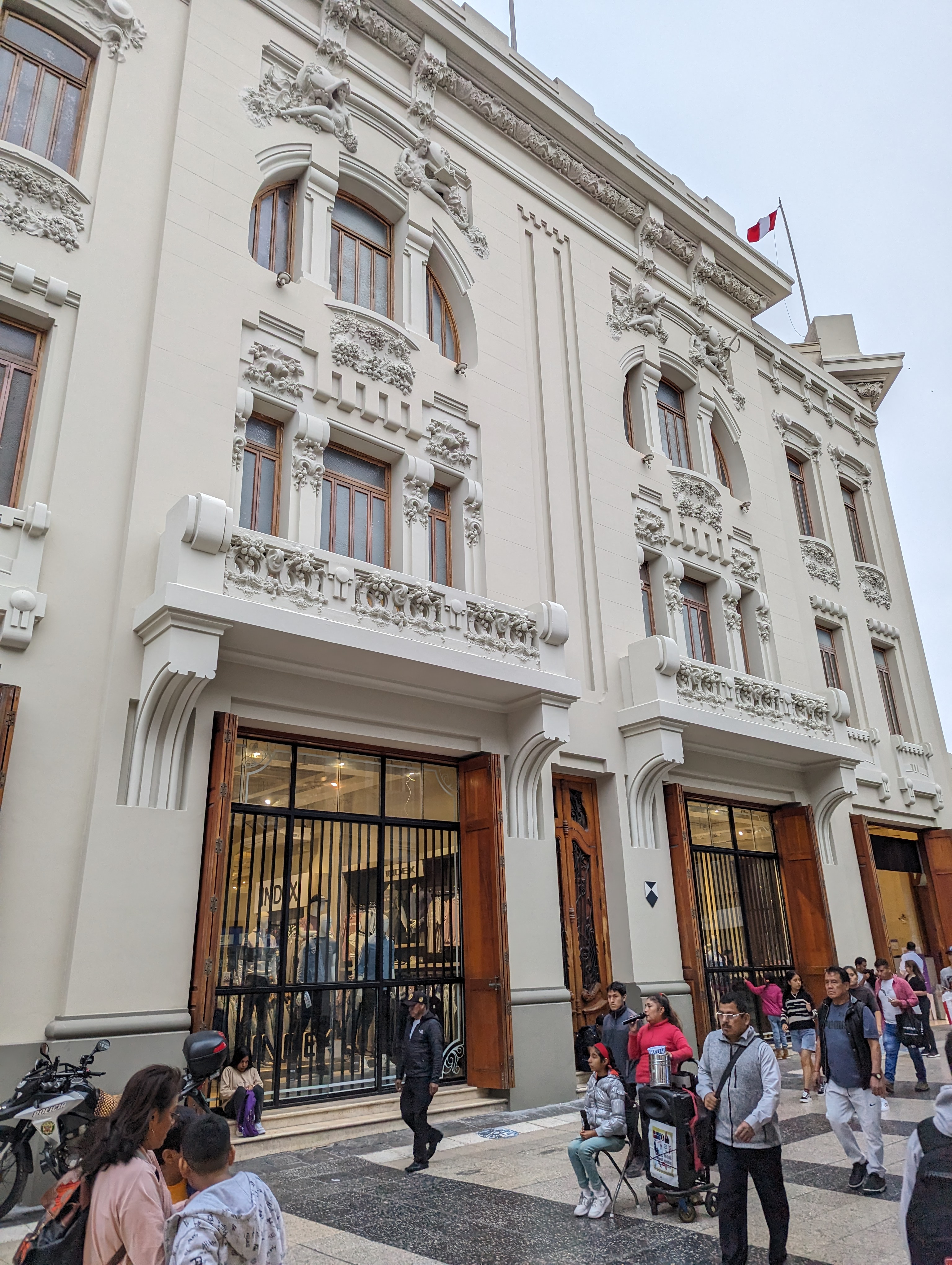
A Chilean department store, Ripley, on the same Jir n de la Uni n.
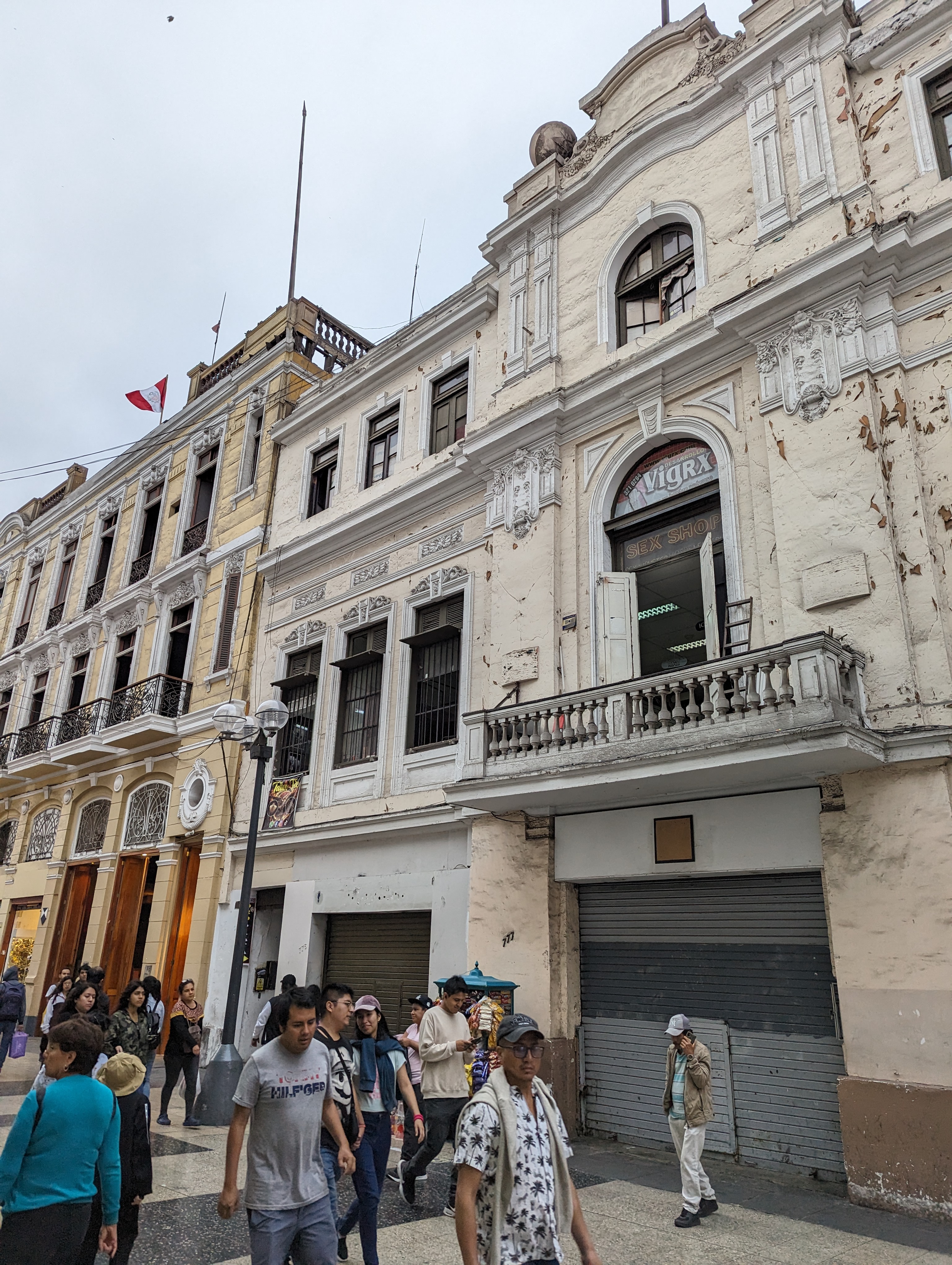
One more. Same street.
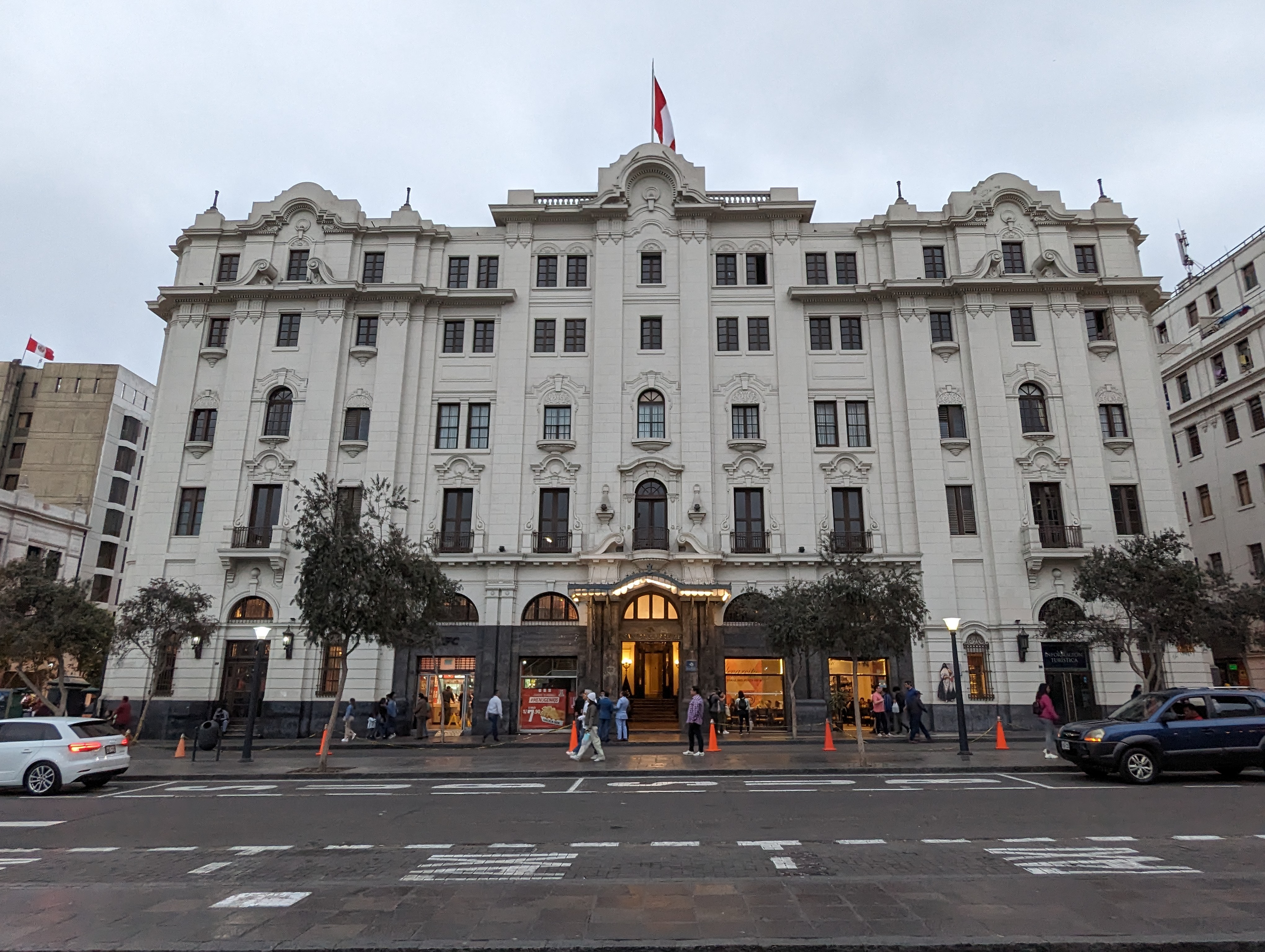
The statue of San Mart n faces the Gran Hotel Bolivar, opened in 1924.
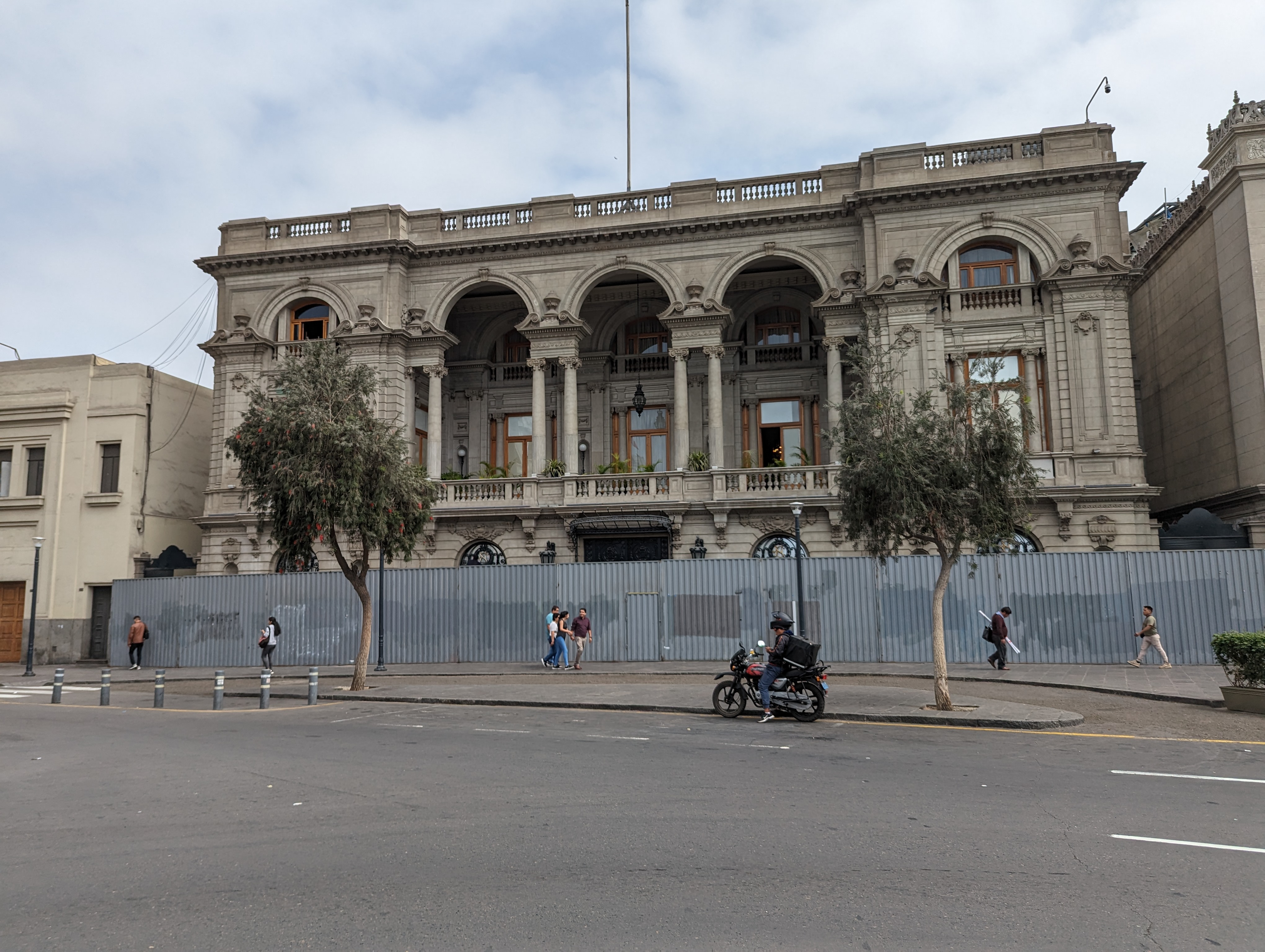
Next to the hotel, the National Club, 1855. Wikipedia says that the club "has been the meeting place for the Peruvian aristocracy throughout the 19th and 20th centuries, as its members are members of the most distinguished and wealthy families in the country." Good thing it's closed: they'd never have let me in.
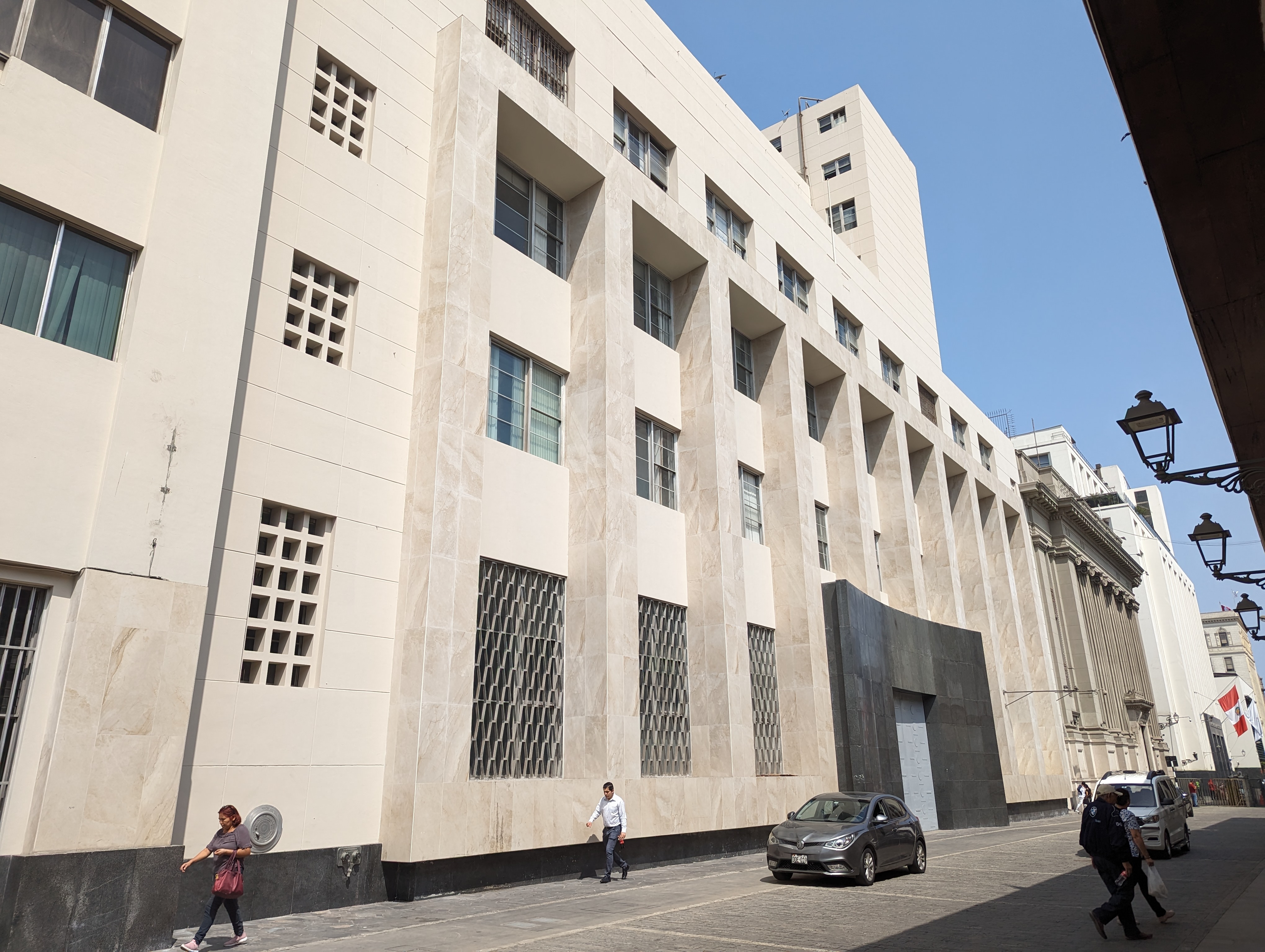
In 1988, UNESCO "inscribed" the old city as a world heritage site, but the Banco de Credito del Peru got in under the wire.