Trujillo
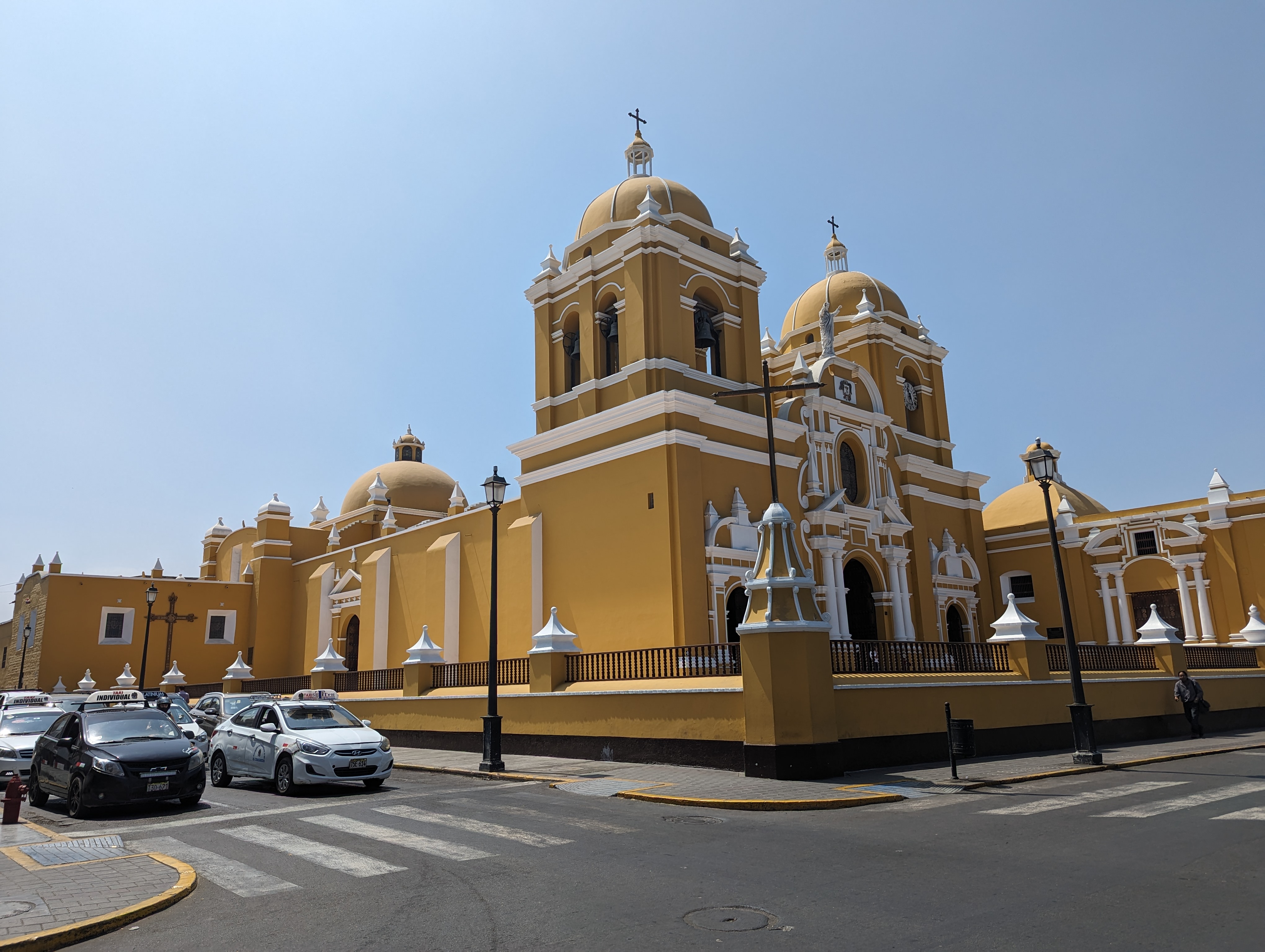
The cathedral.
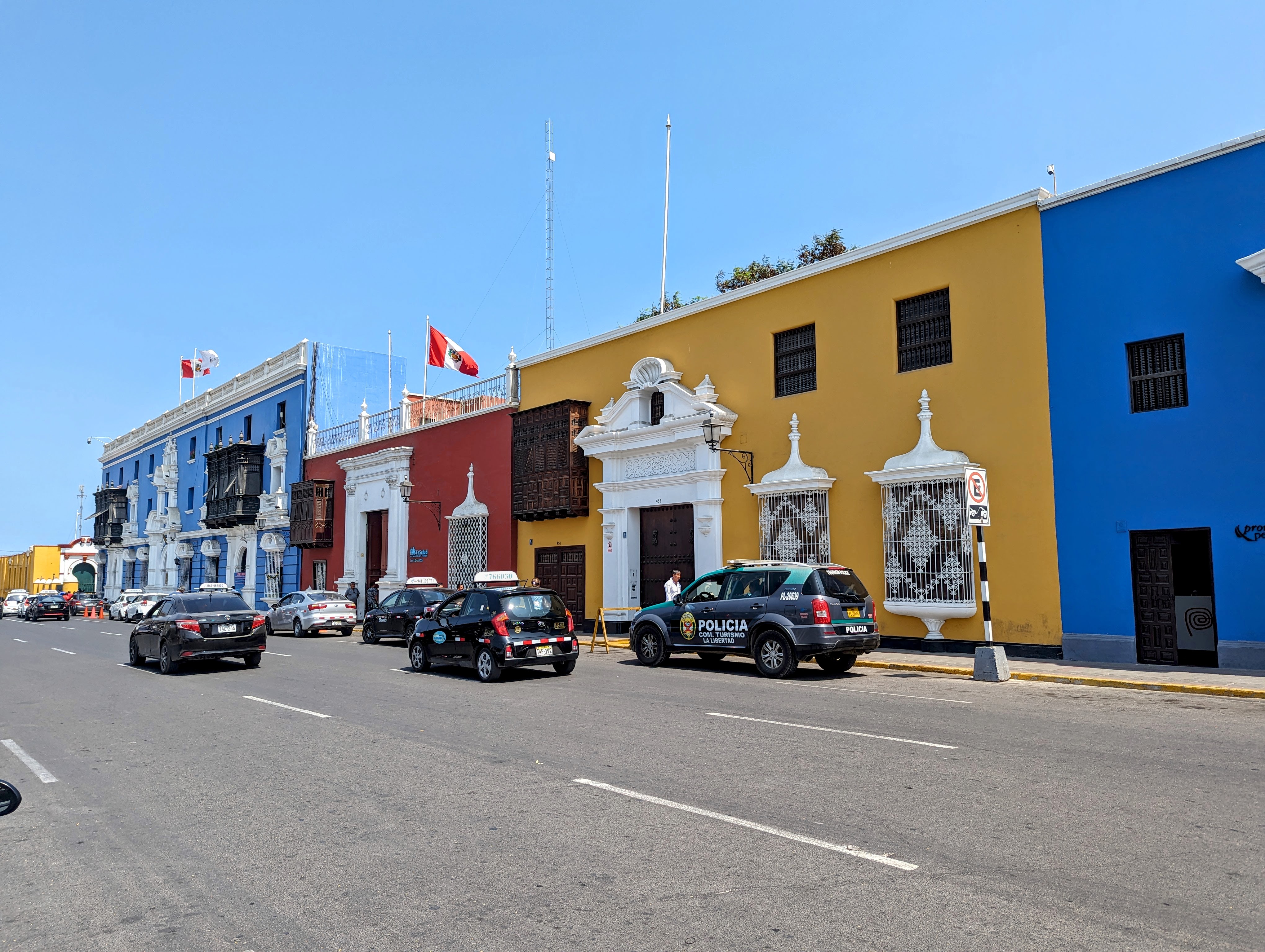
Somebody's got the heritage bug.
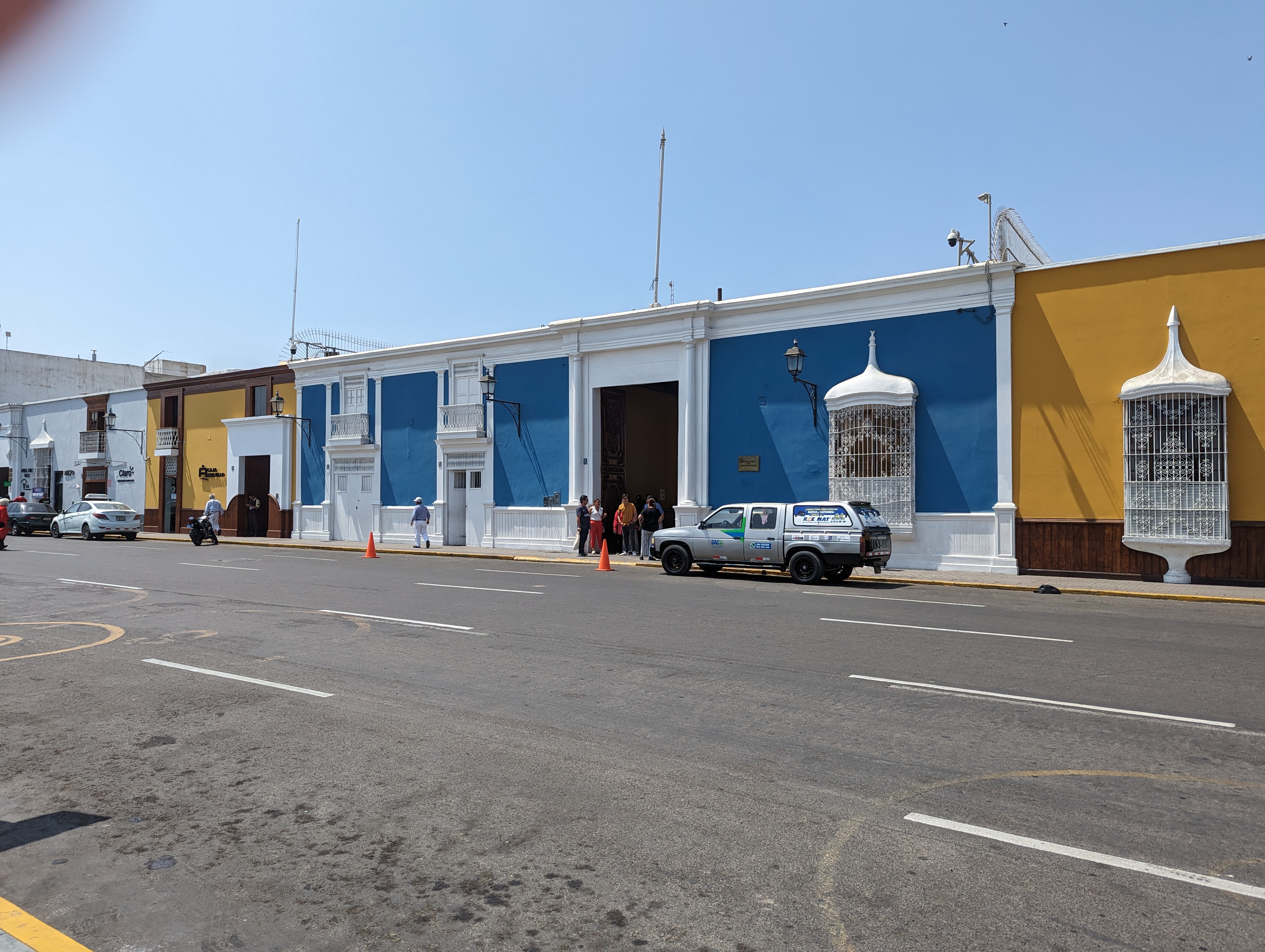
The Casa Urquiaga.
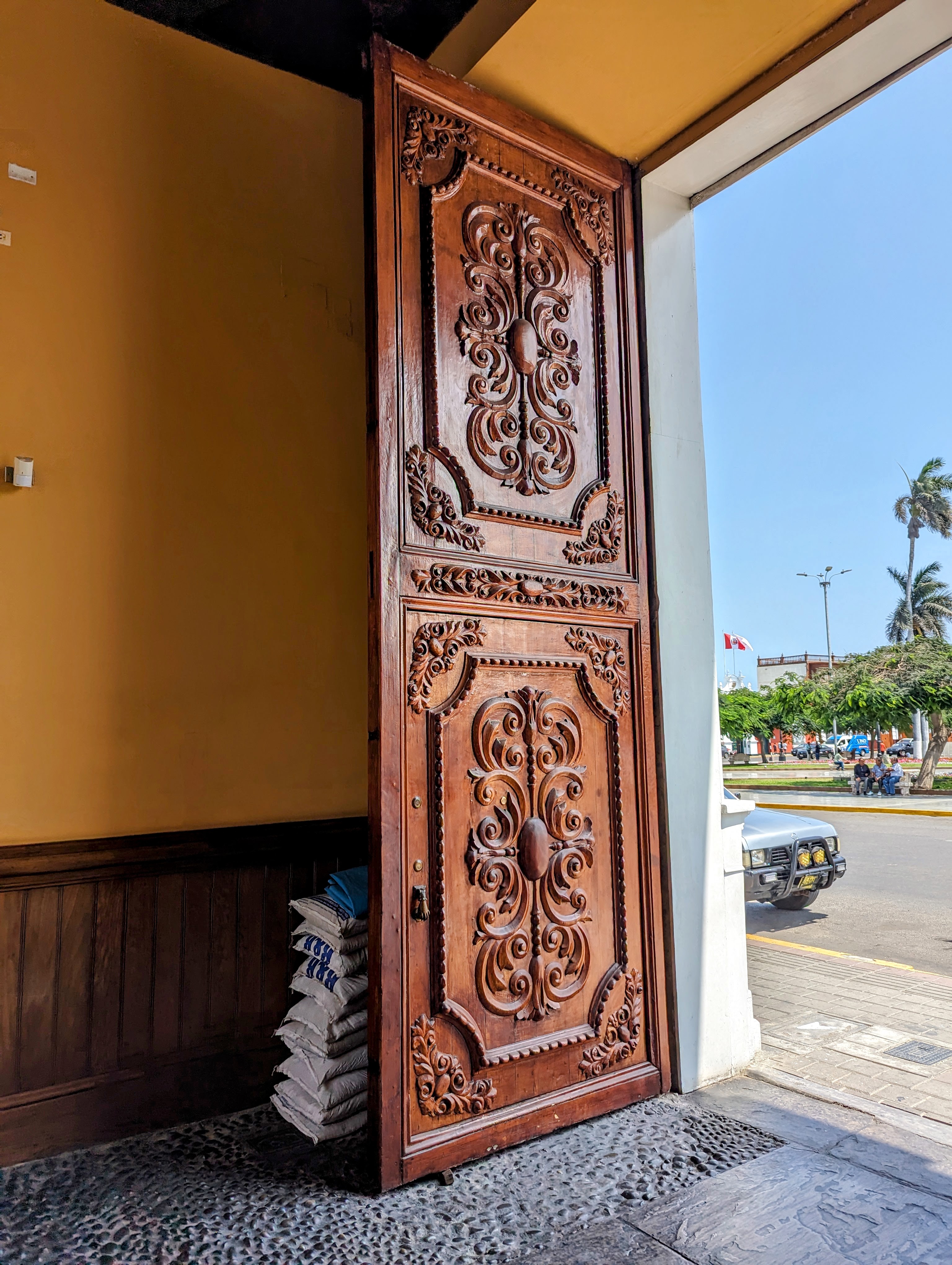
Show this picture to a clerk at Home Depot and say this is the door you want to buy.
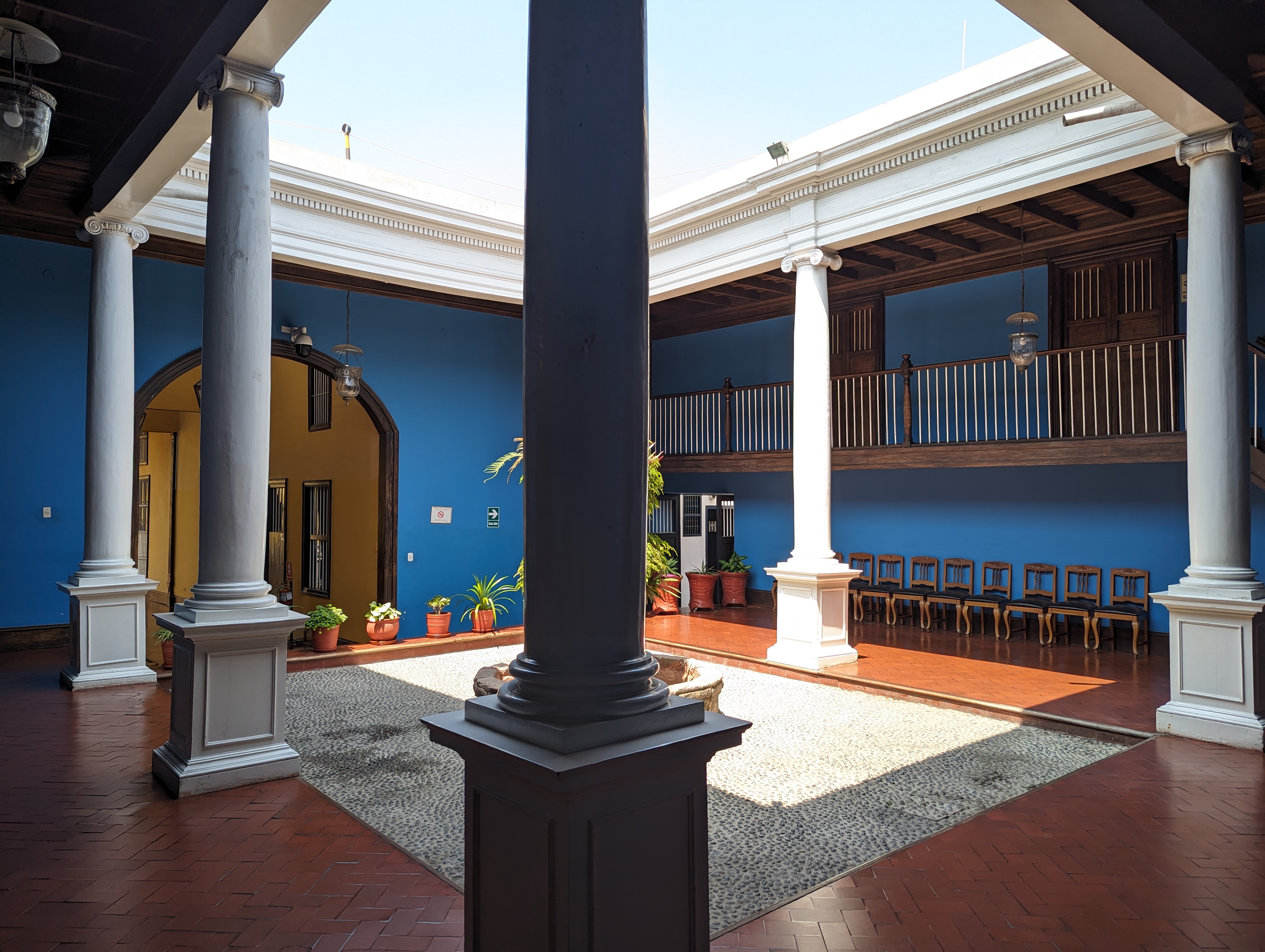
One of several courtyards in a line.
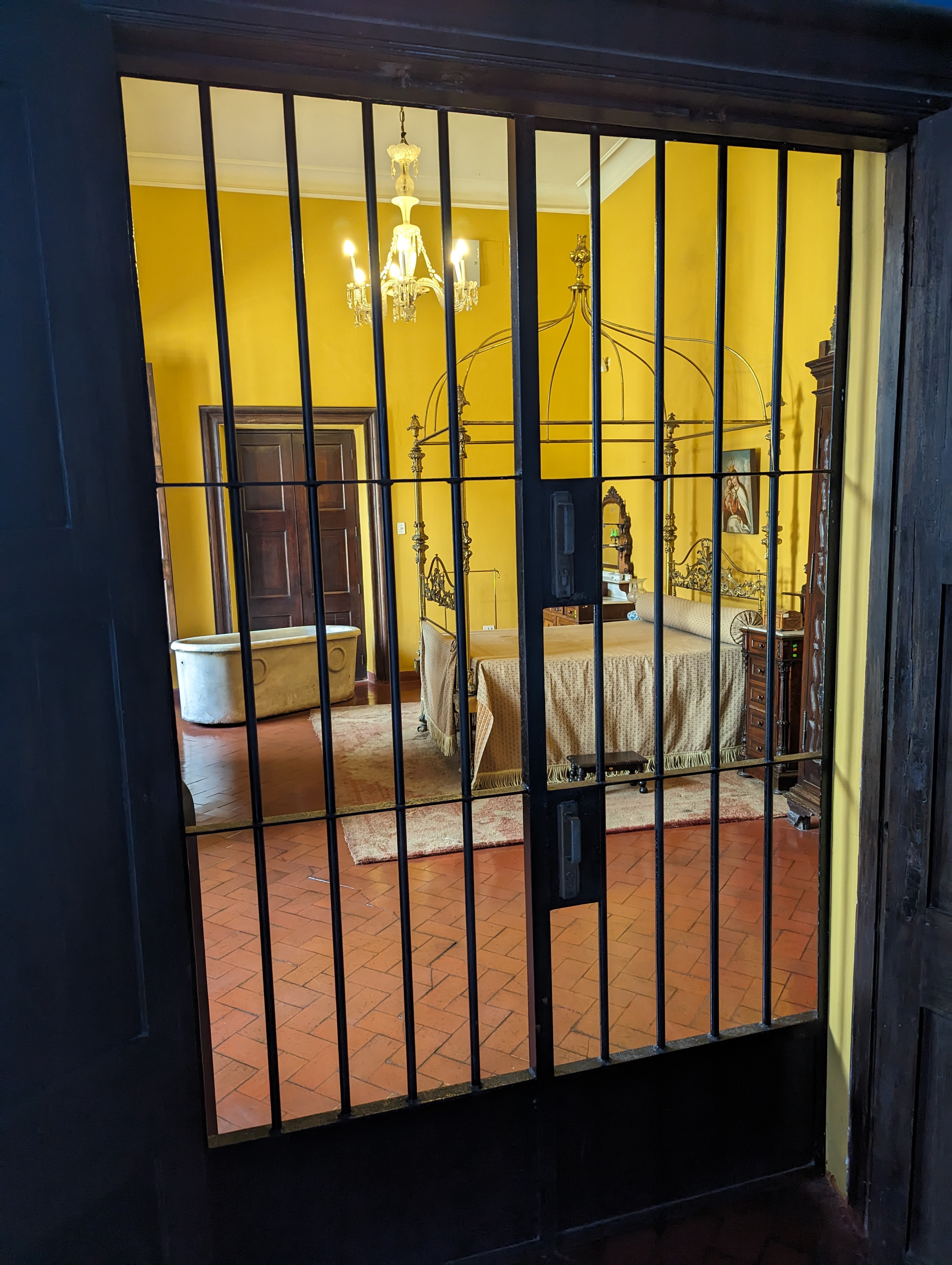
The rooms are barred.
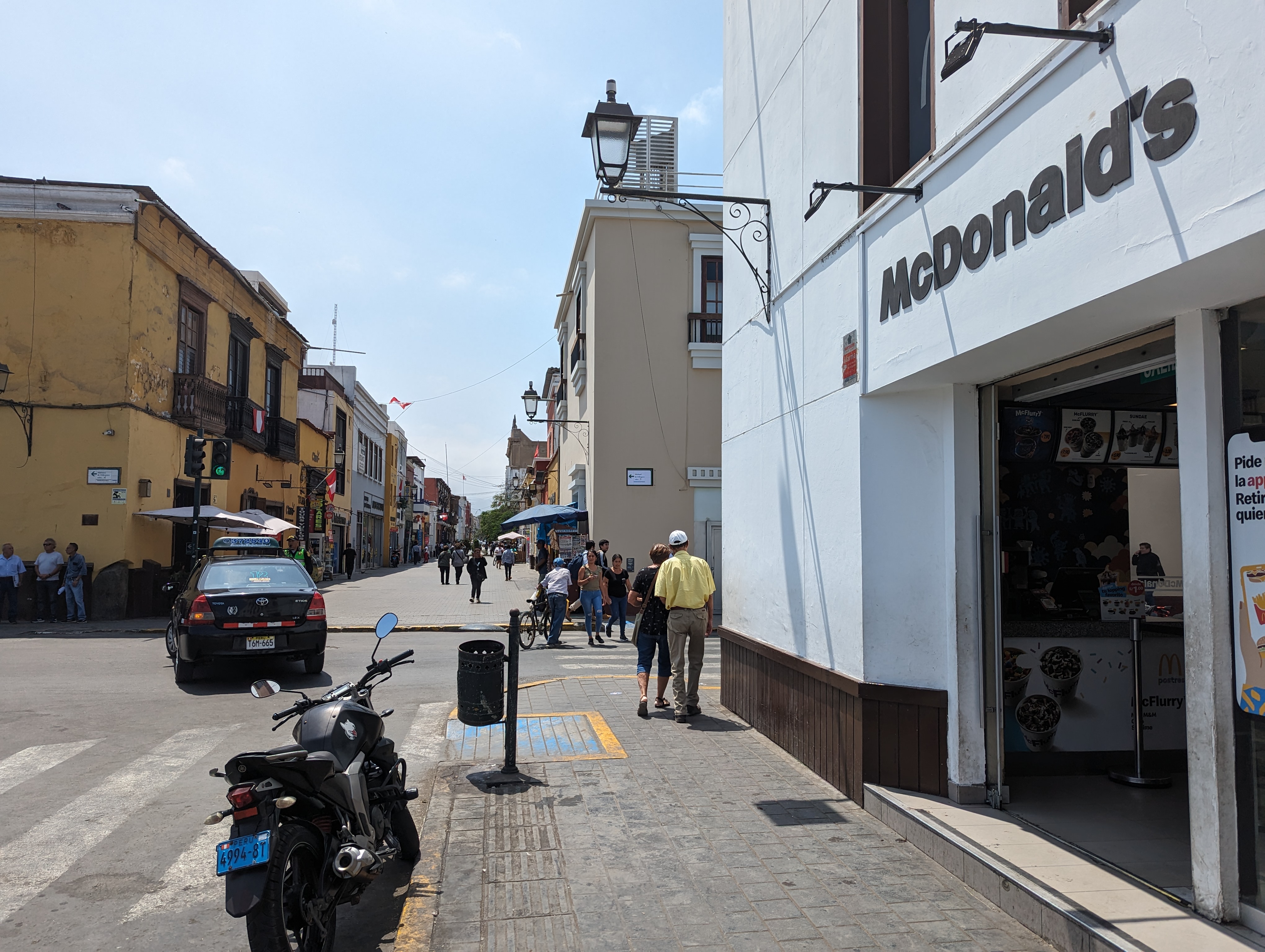
Meeting the needs of visitors.
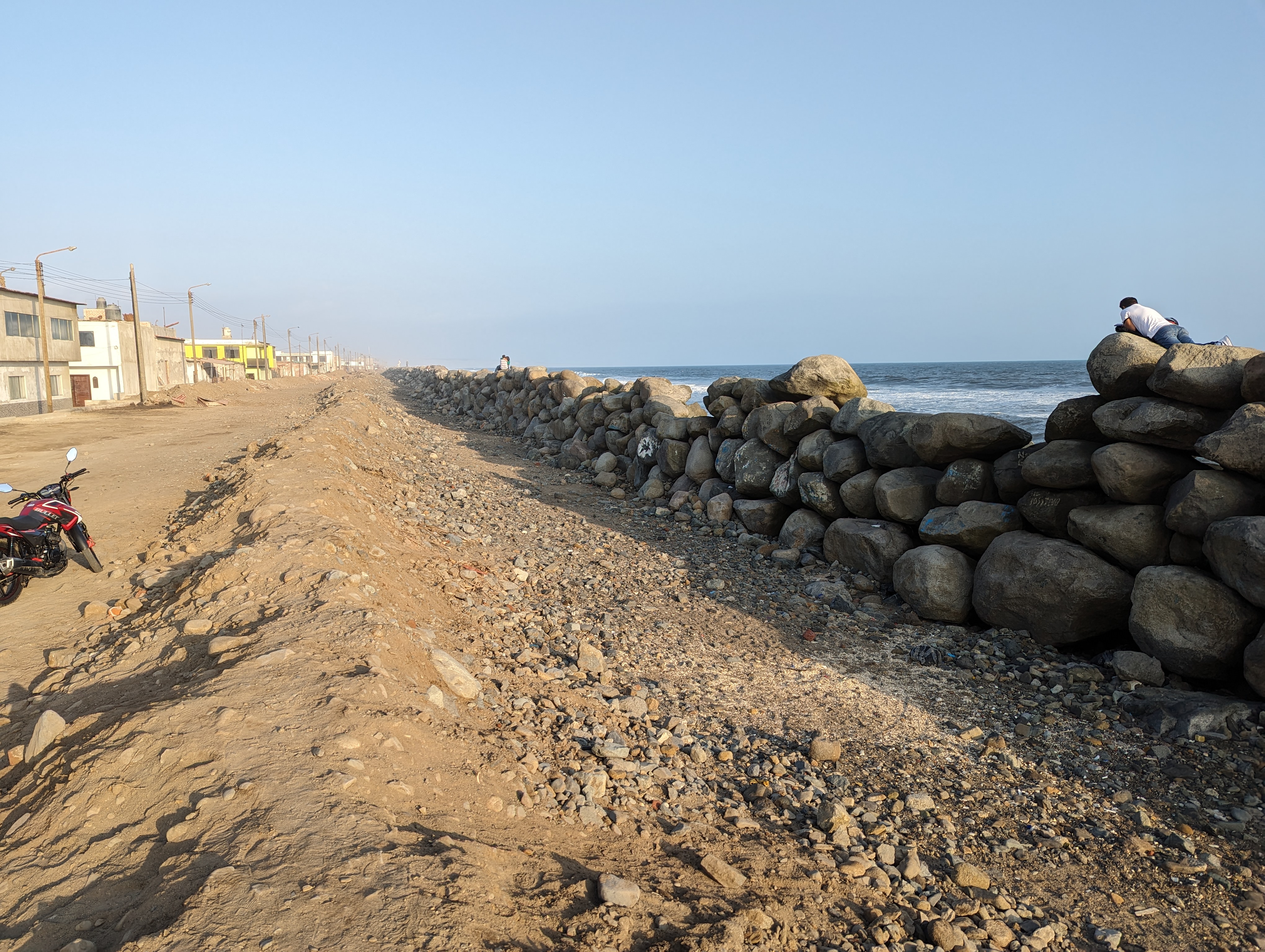
The city has now spread out several miles to the ocean, where the beach is now armored.
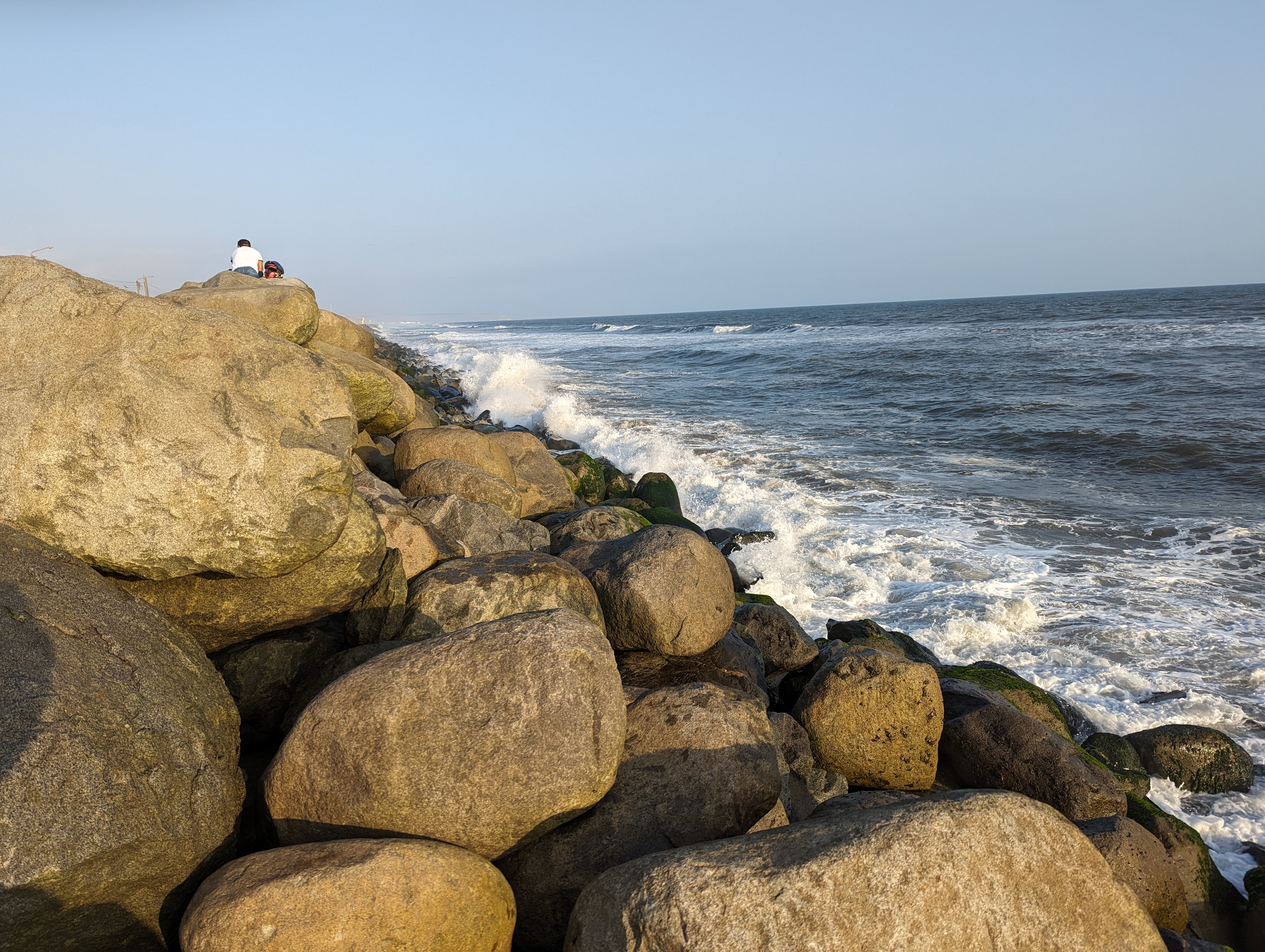
Who will win?
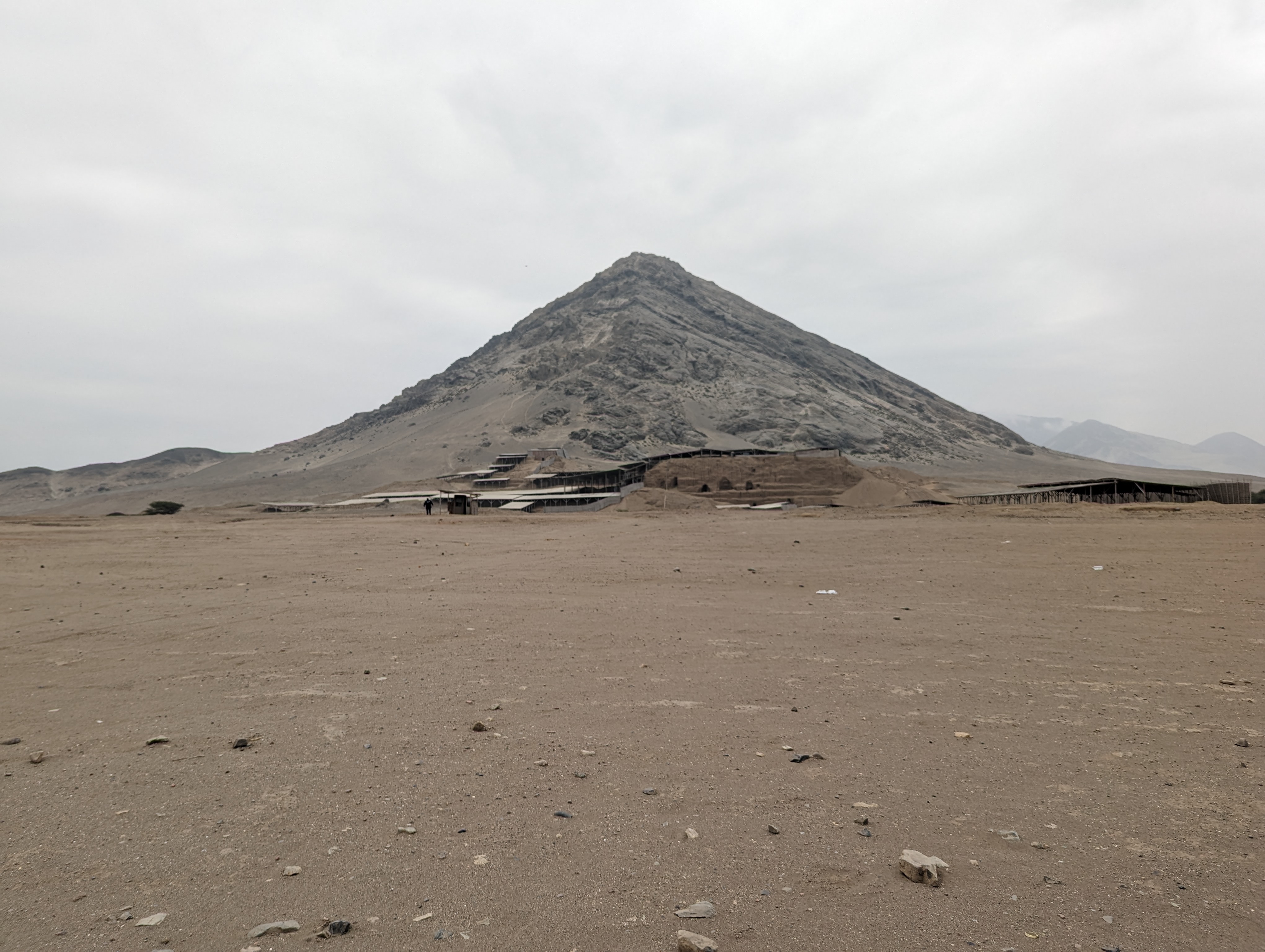
On the south, the city is bordered by the Moche River. At the foot of the Cerro Blanco are the ruins of the Huaca de la Luna; the flats here were a city in the first millennium.
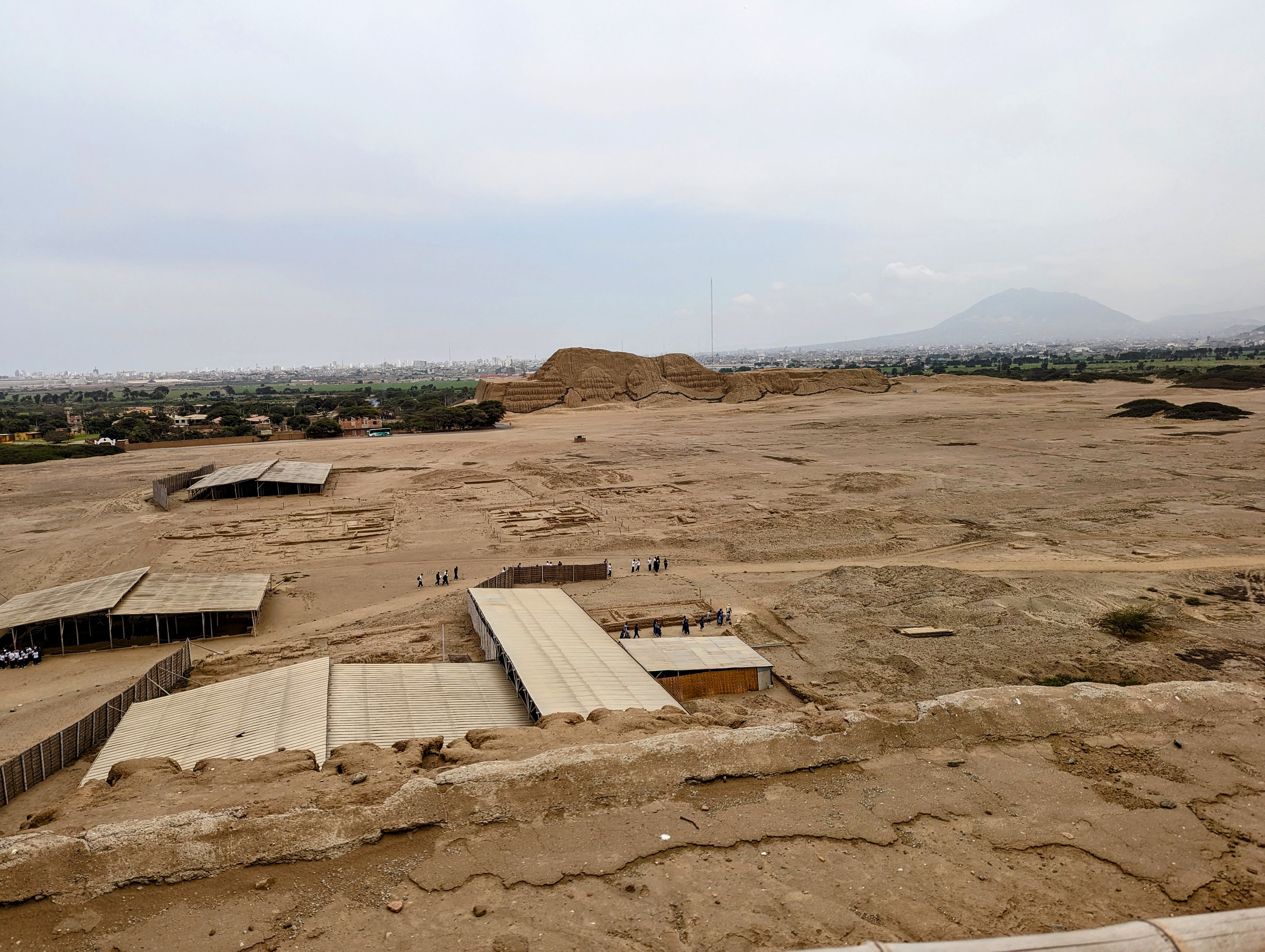
The same Huaca de la Luna, with the urban flats and, in the distance, the largely demolished Huaca del Sol.
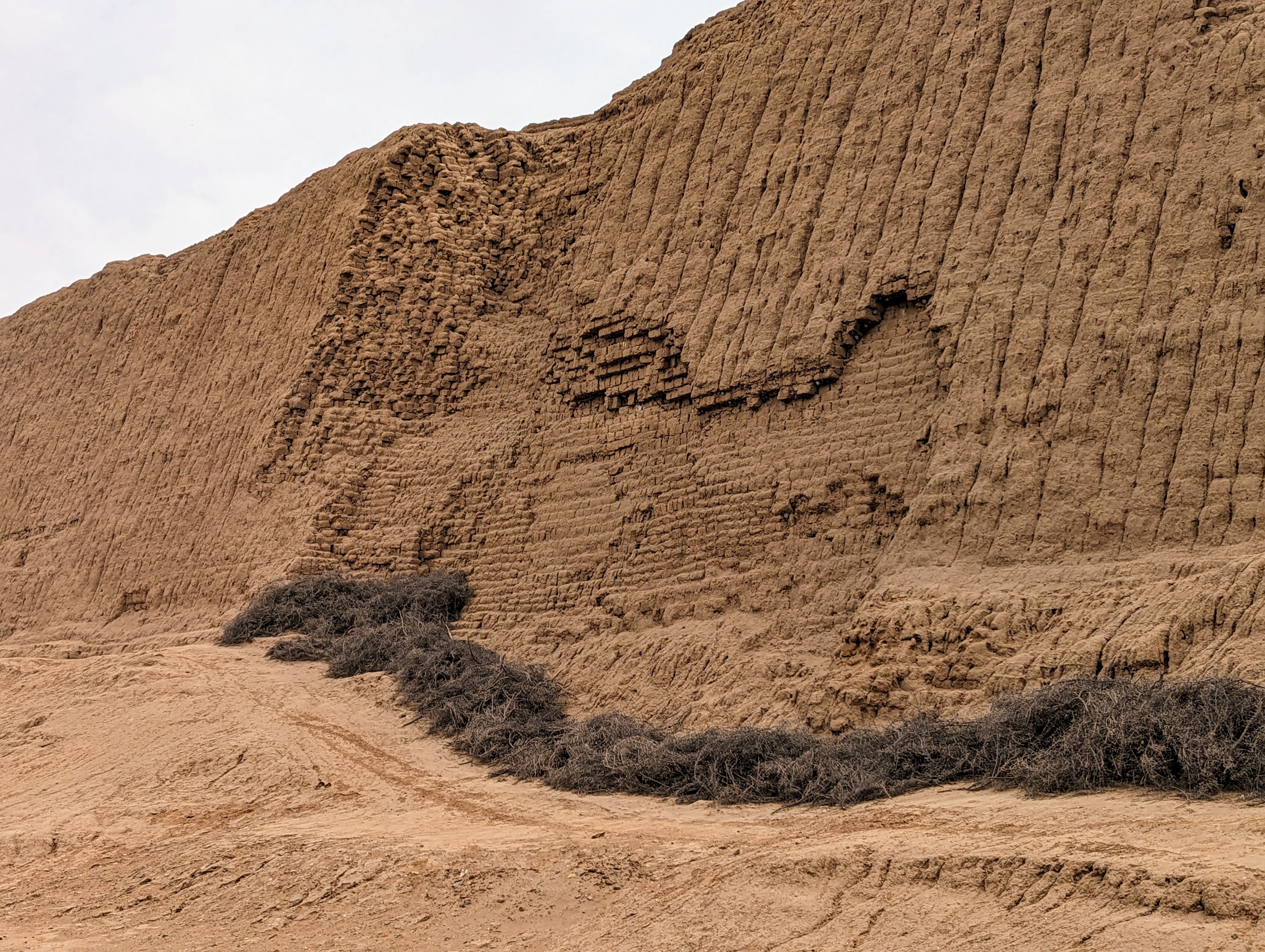
The accessible south side of the Huaca del Sol.
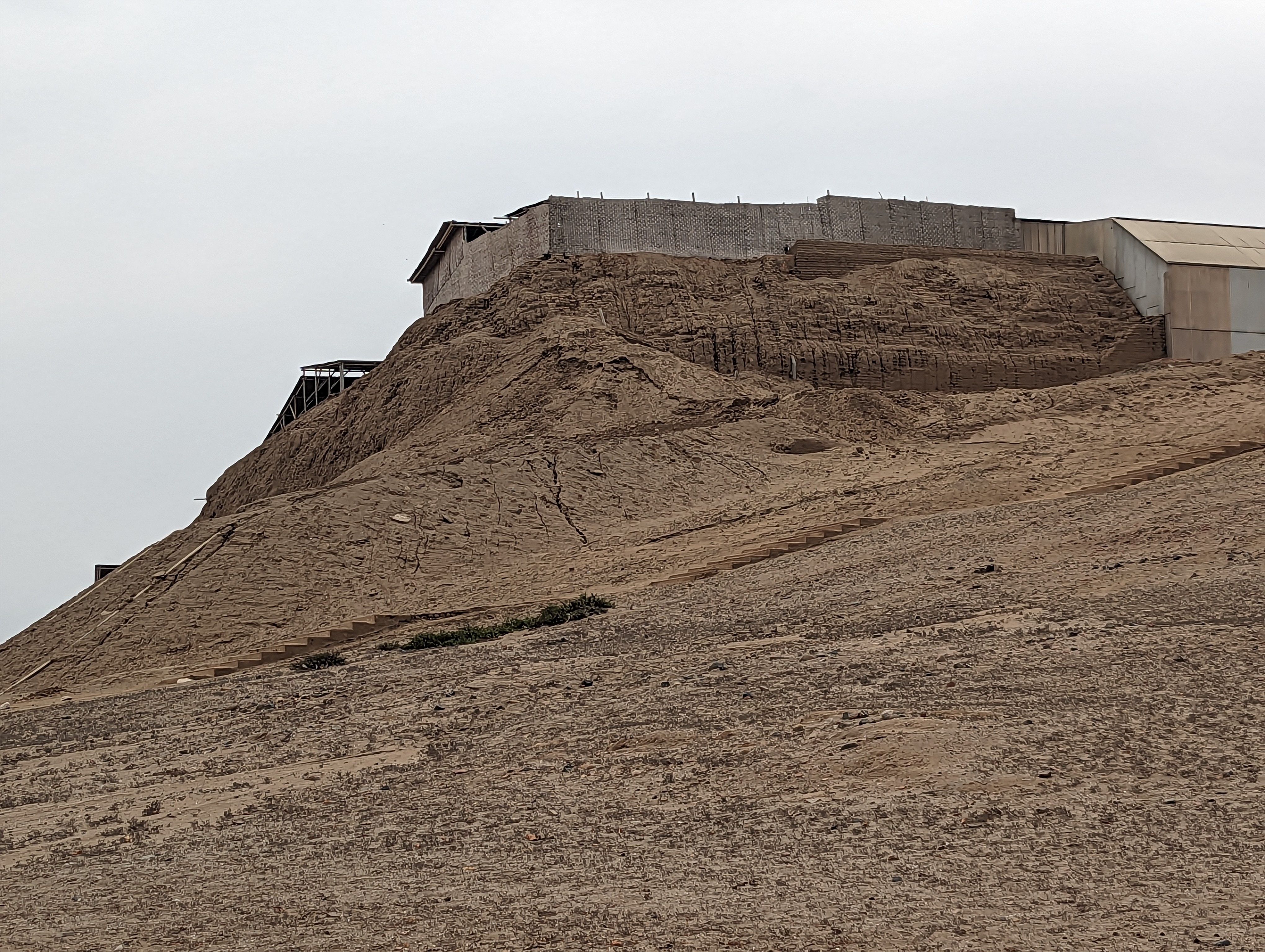
The Huaca de la Luna.
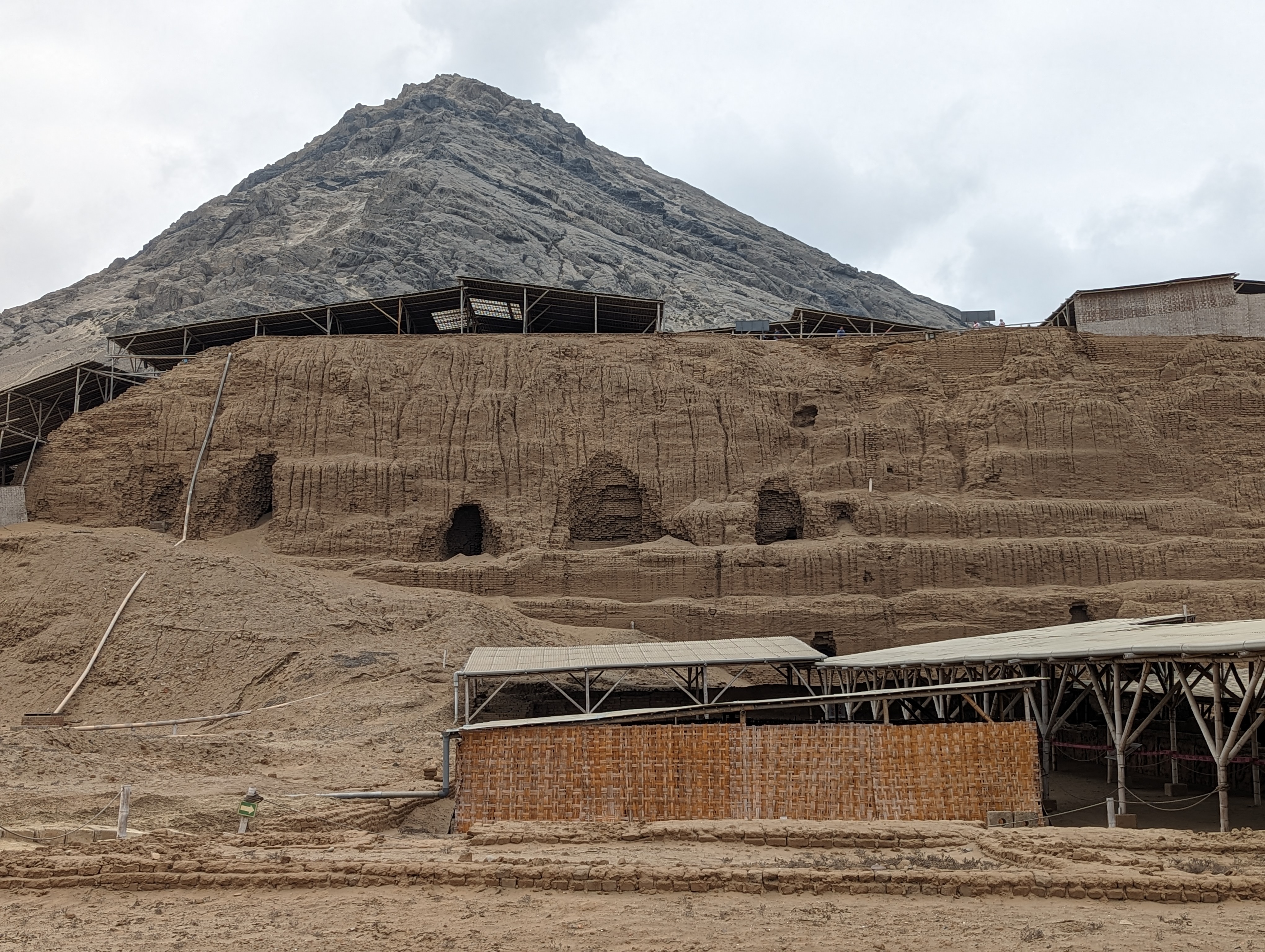
We can walk around it, if we consent to joining a guided tour.
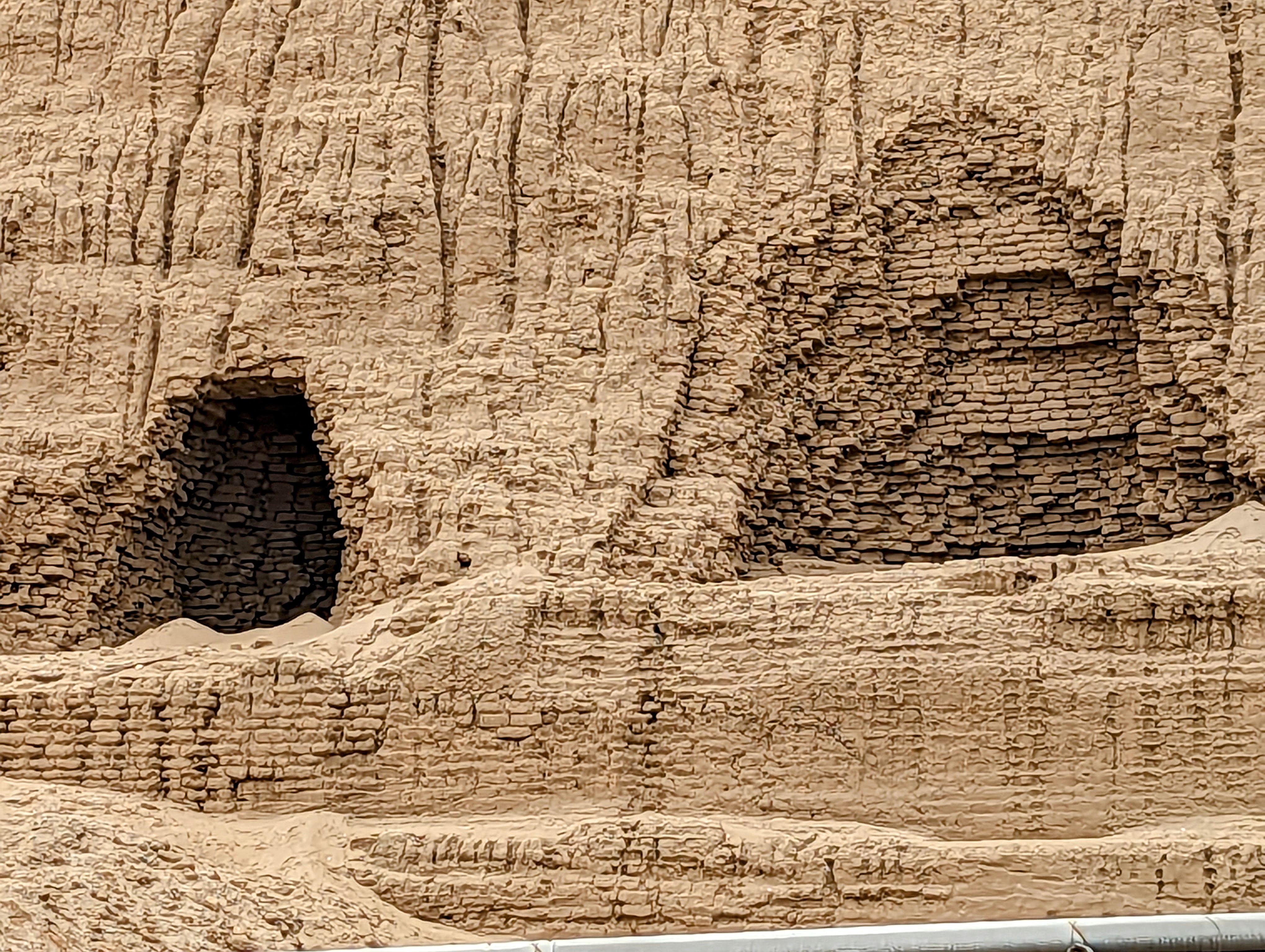
More adobe bricks, but only about 50 million of them in this pyramid. That's about a third of bricks originally in the Huaca del Sol.
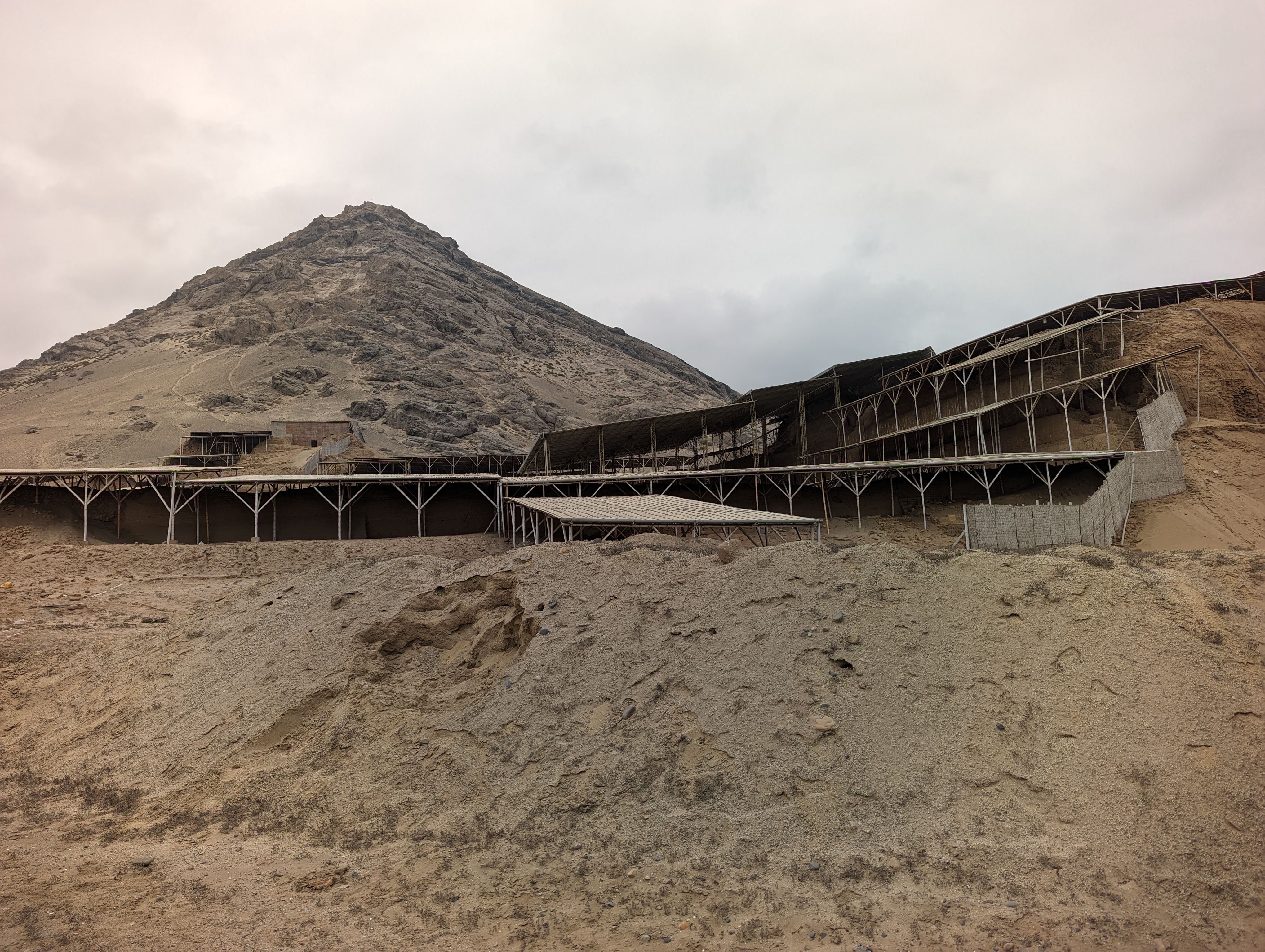
There's a courtyard over here, if we can find it.
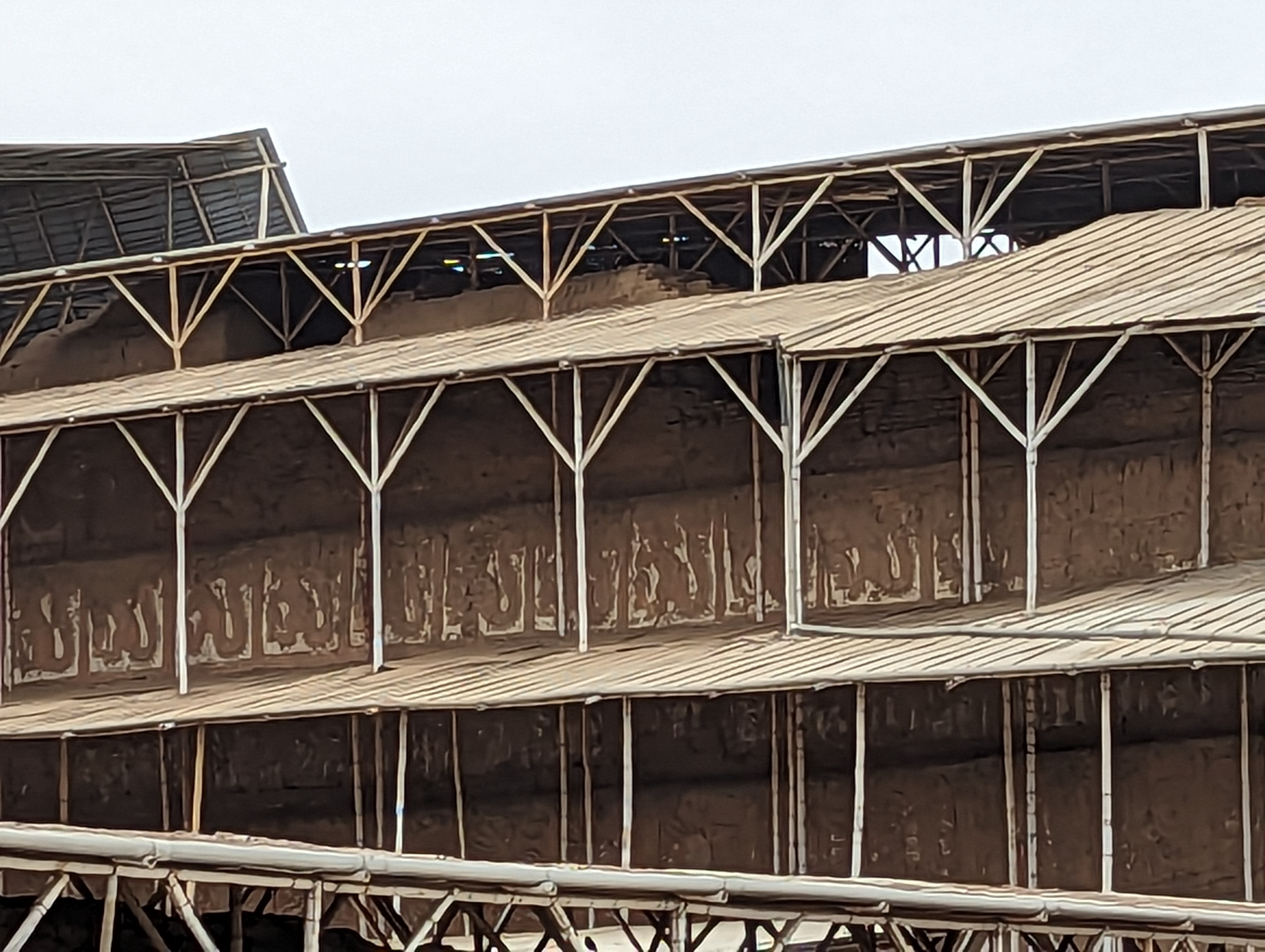
There it is, with the first of several friezes.
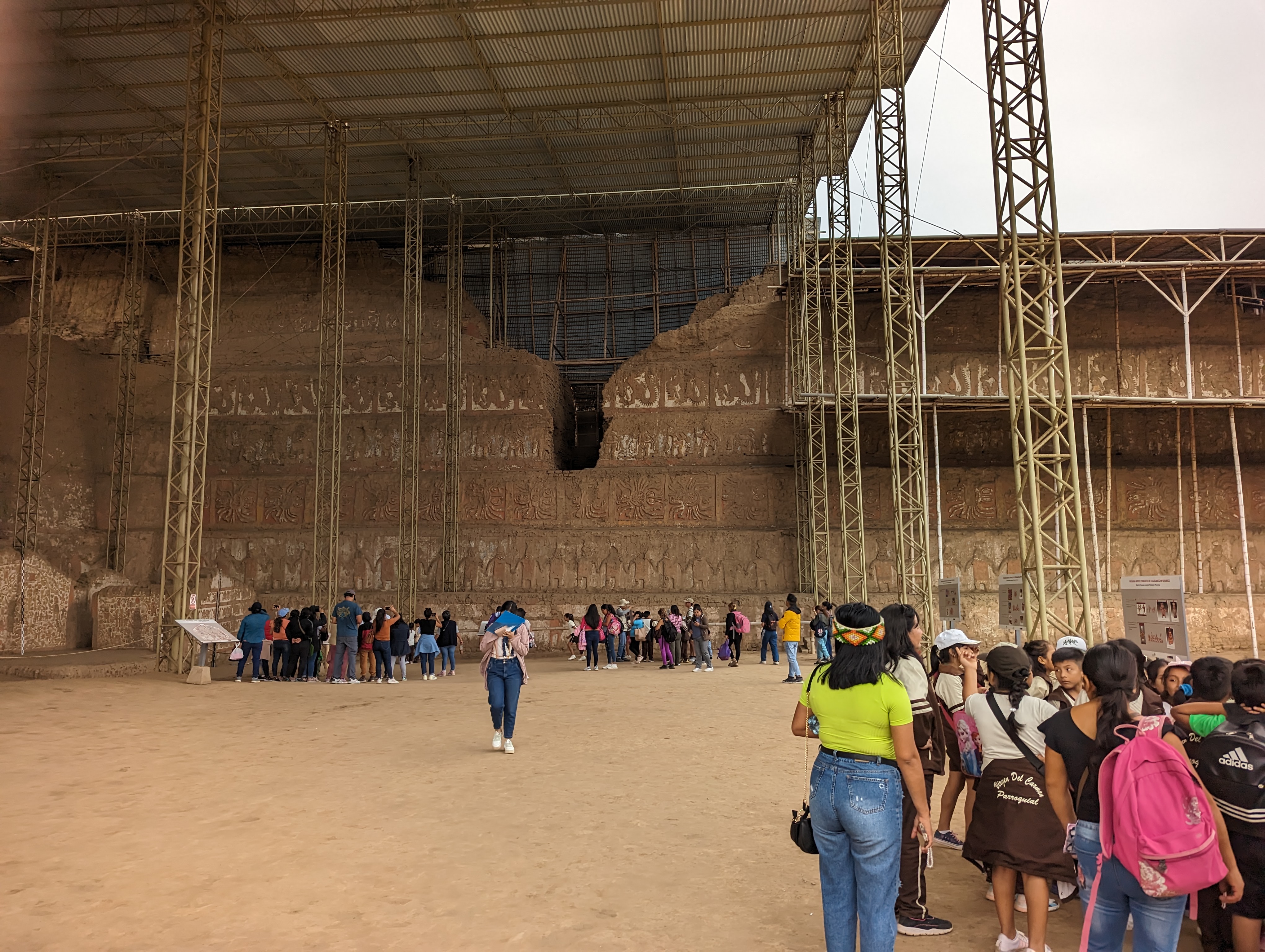
Sorry for the crowds.
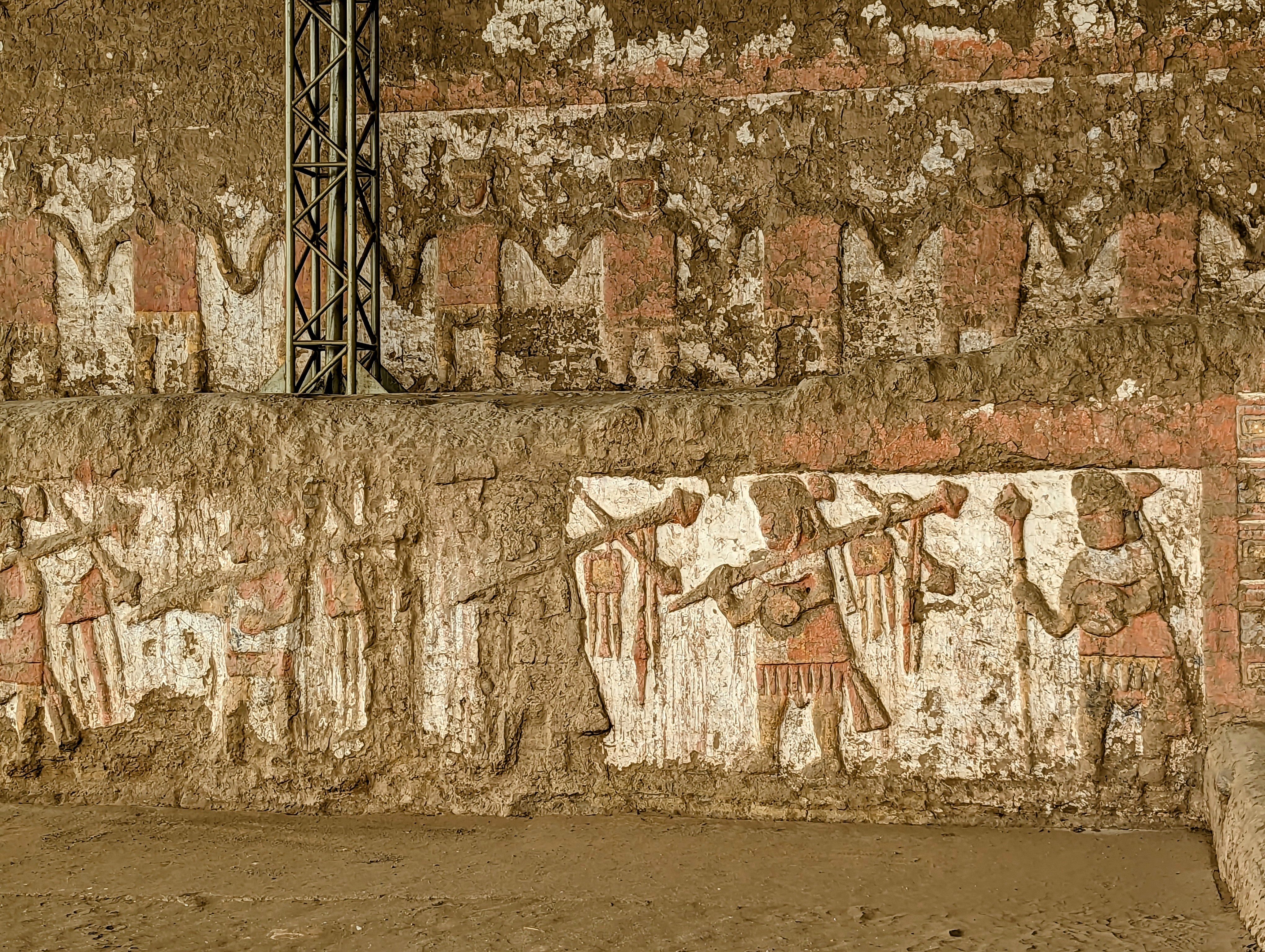
Call them priests or warriors or priest-warriors or warrior-priests or guys with heavy clubs.
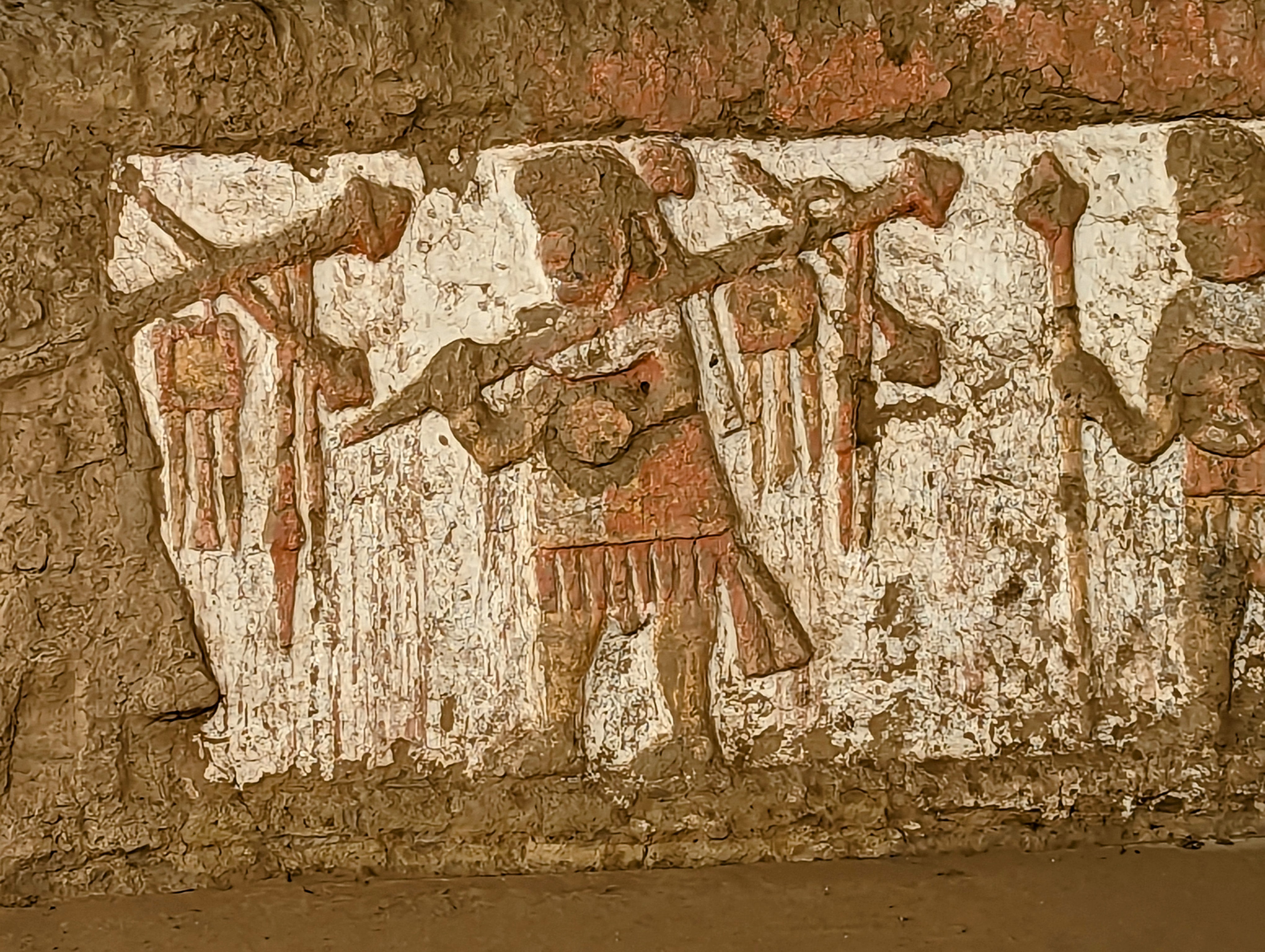
Close-up.
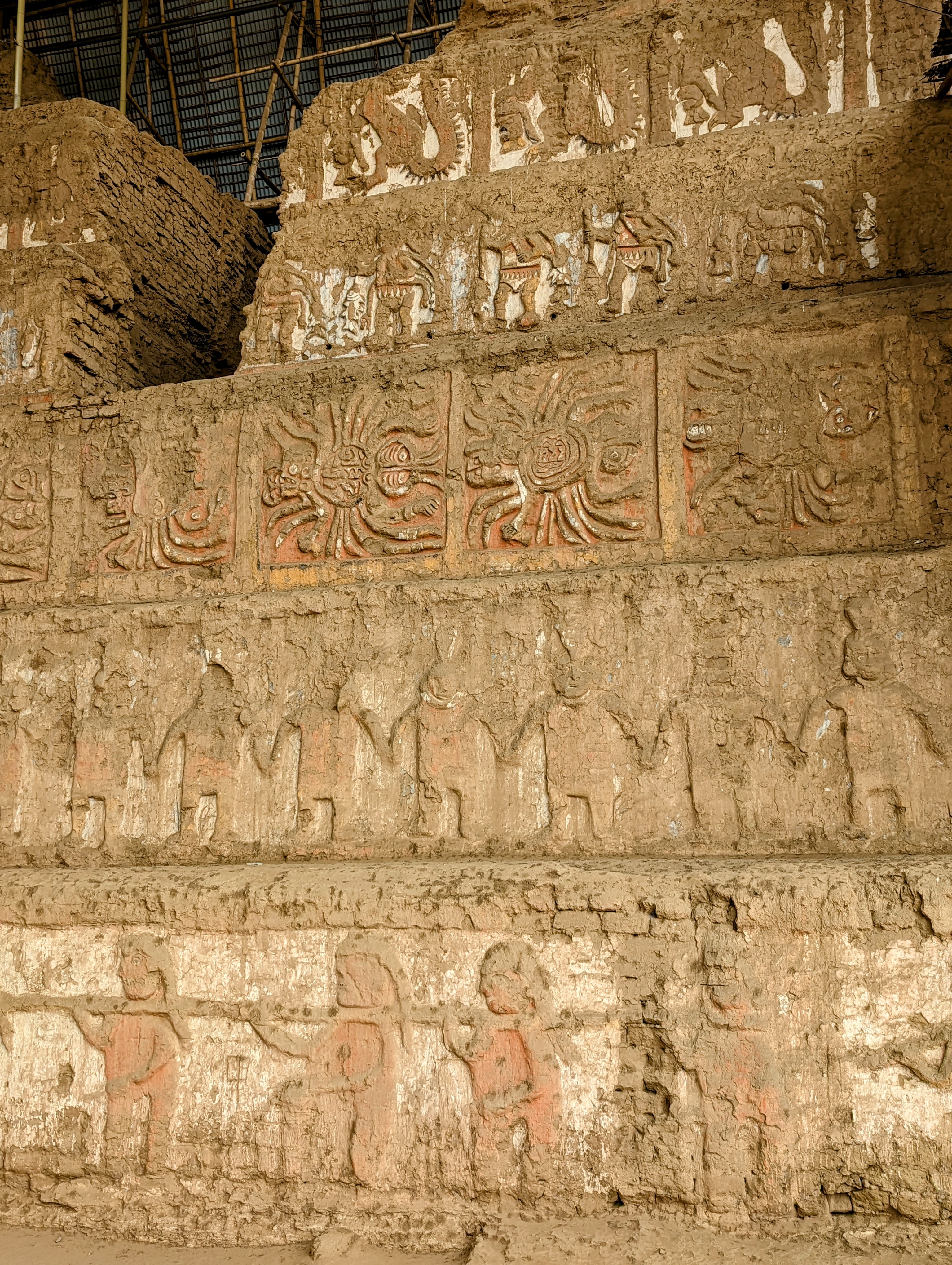
The figures in the lower row, tied together at the neck, are prisoners about to be sacrificed.
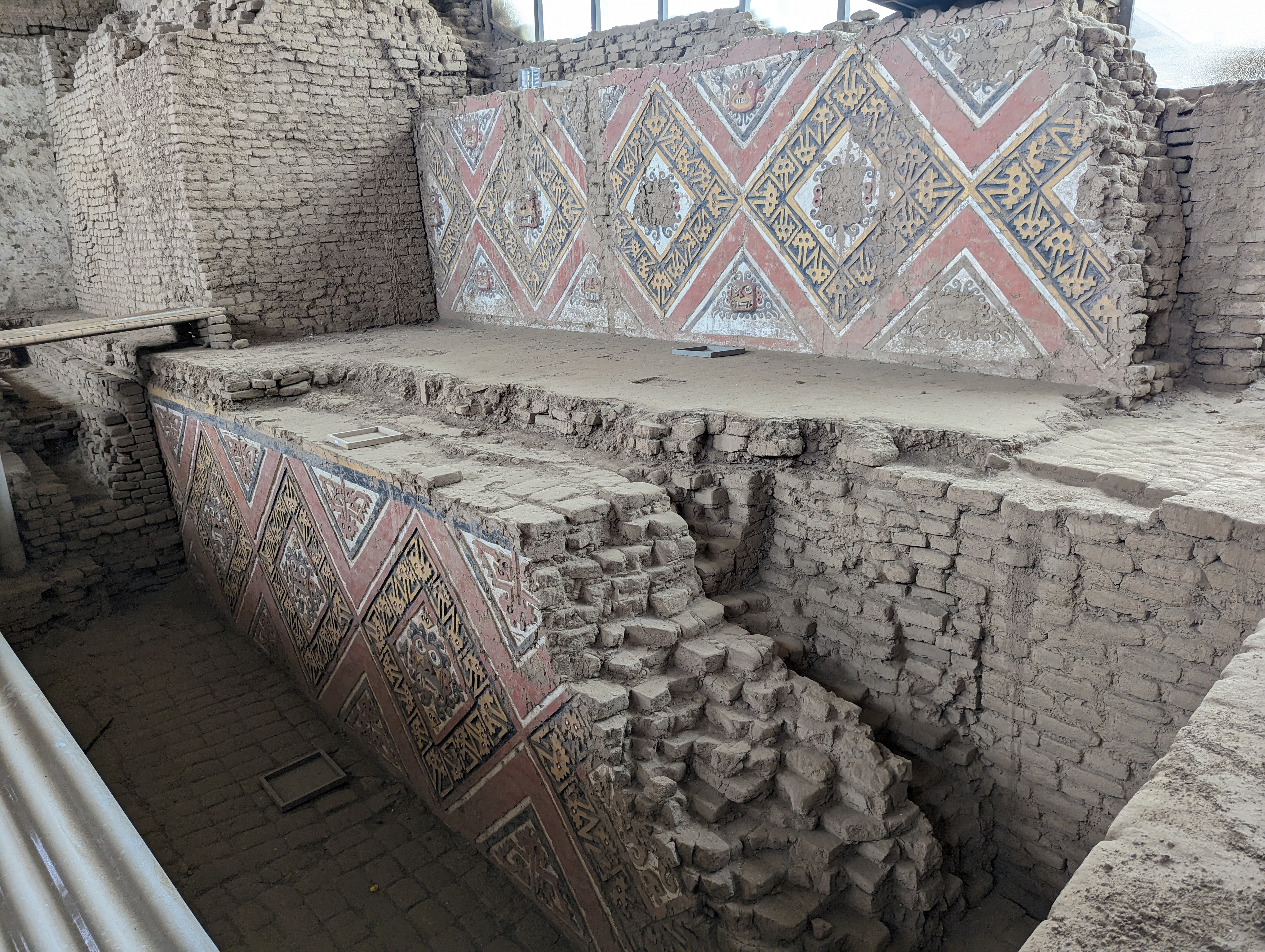
Higher up the pyramid, walls are covered with geometric figures at the center of which is an image of... Guess!
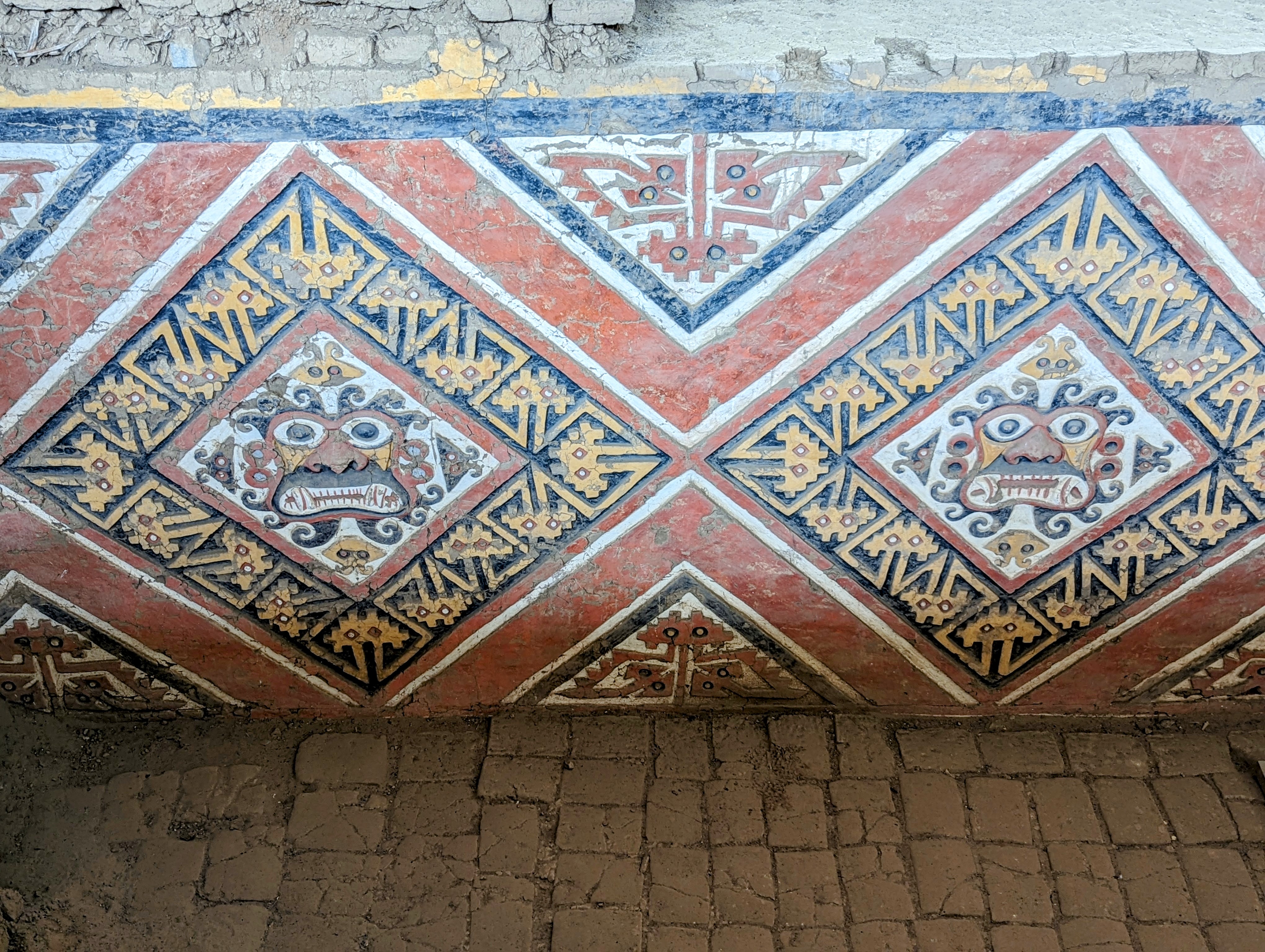
Not your loving god.
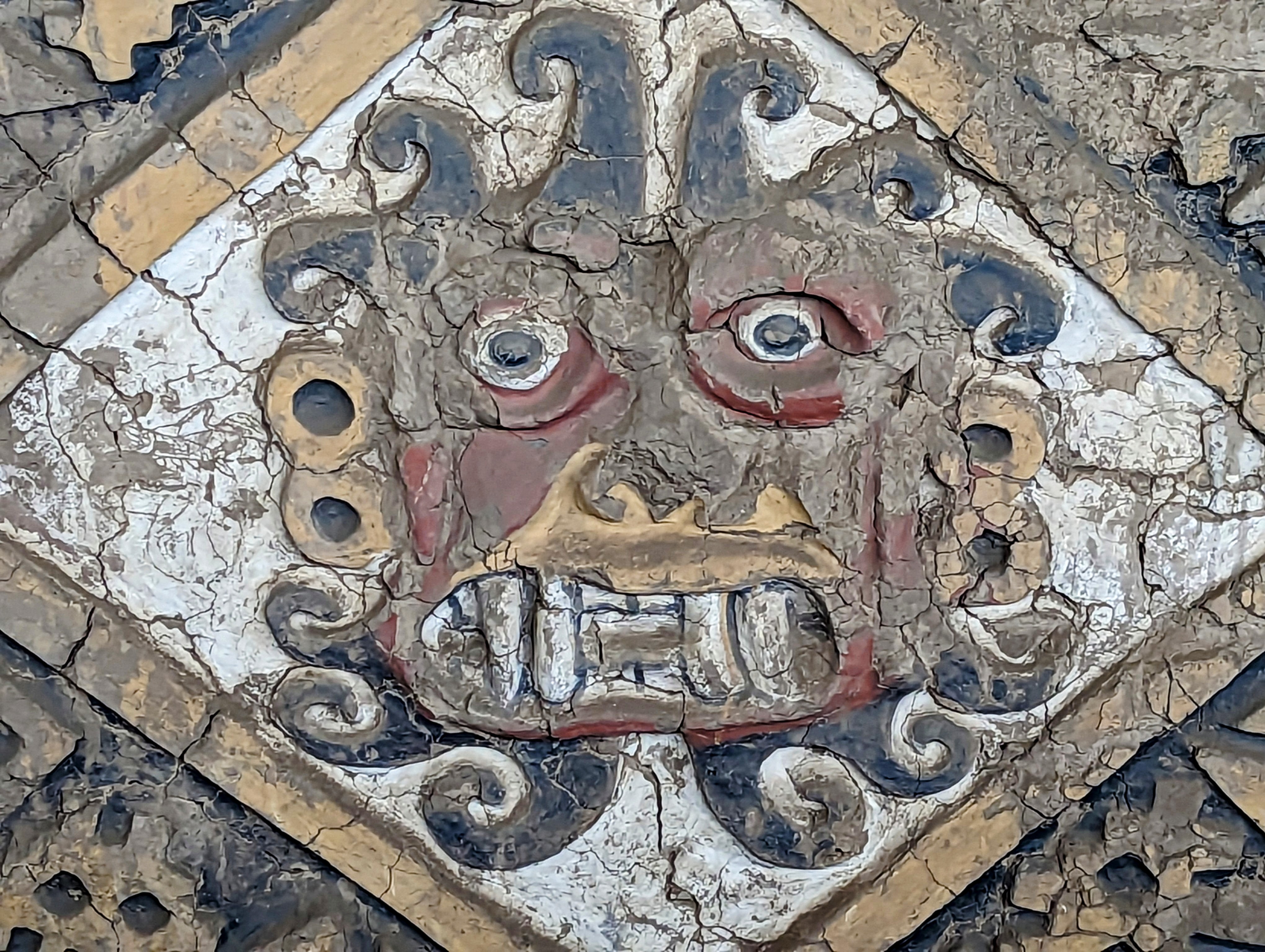
Throatcutter by name, befitting the site of human sacrifices.
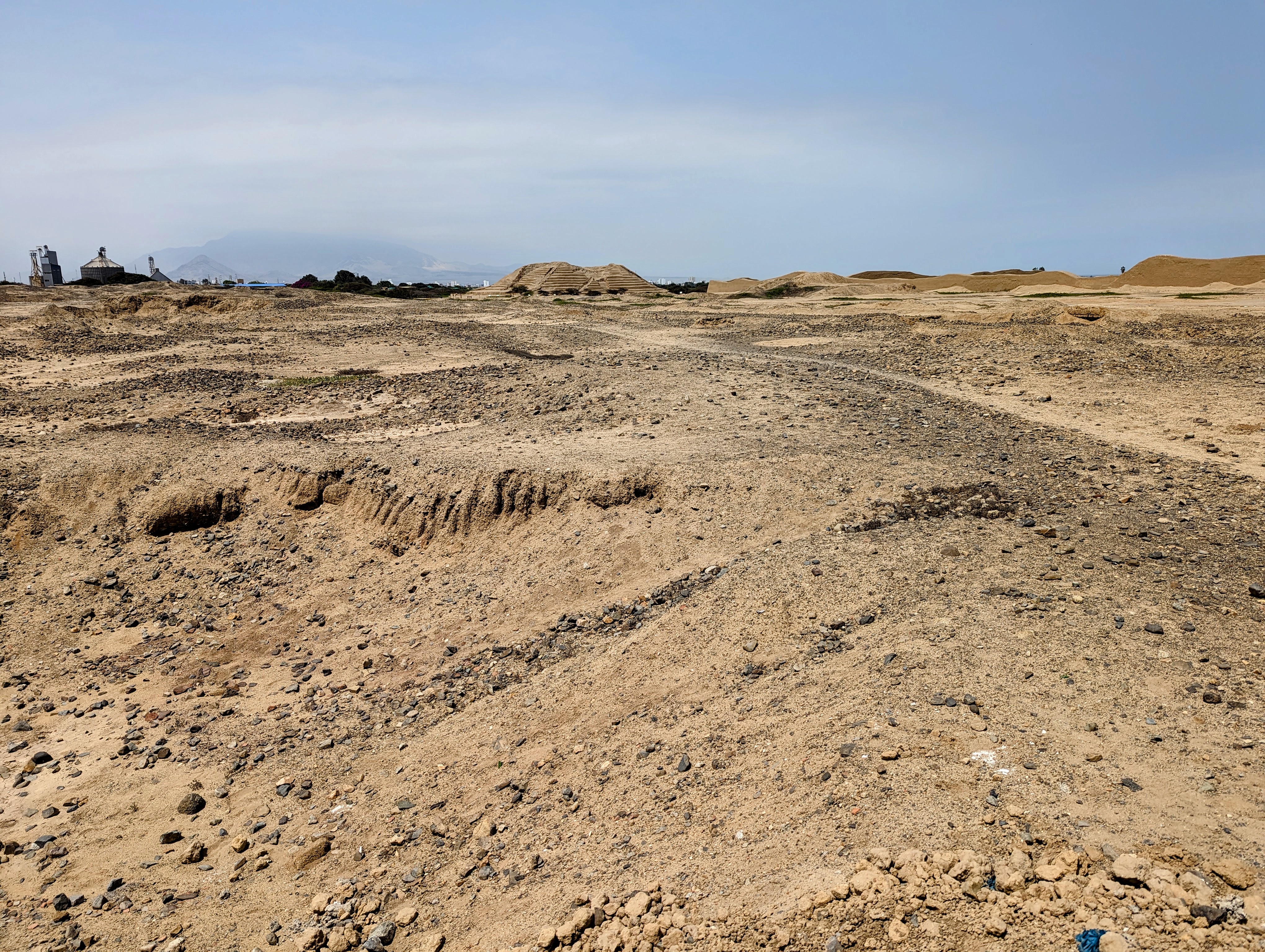
We're going to find him over at the Huaca de la Cao Viejo, about 25 miles up the coast, but before we get there, we'll stop momentarily at Chan Chan, on the north side of Trujillo.
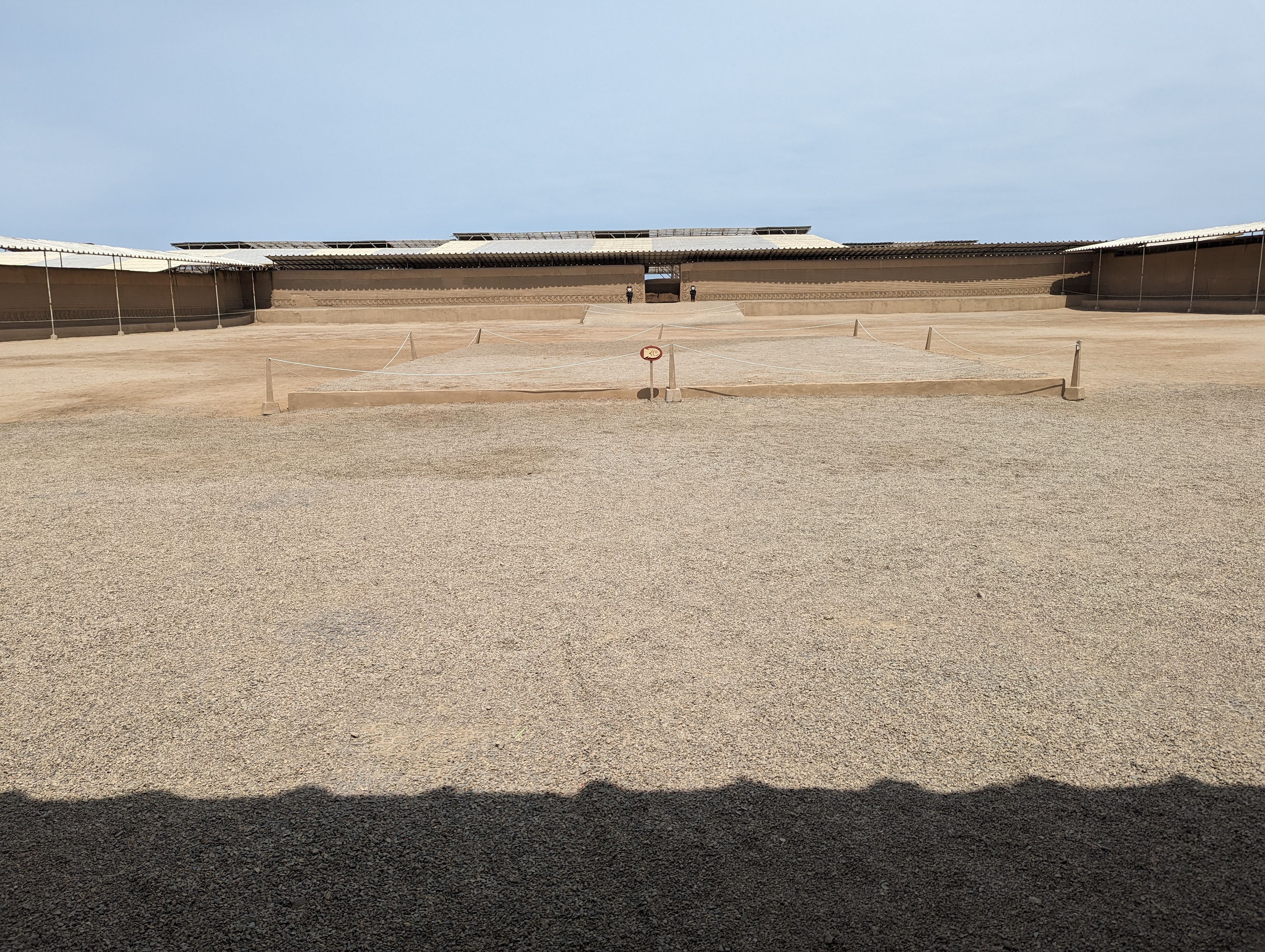
A heavily restored courtyard, one of the few bits of Chan Chan ready for visitors.
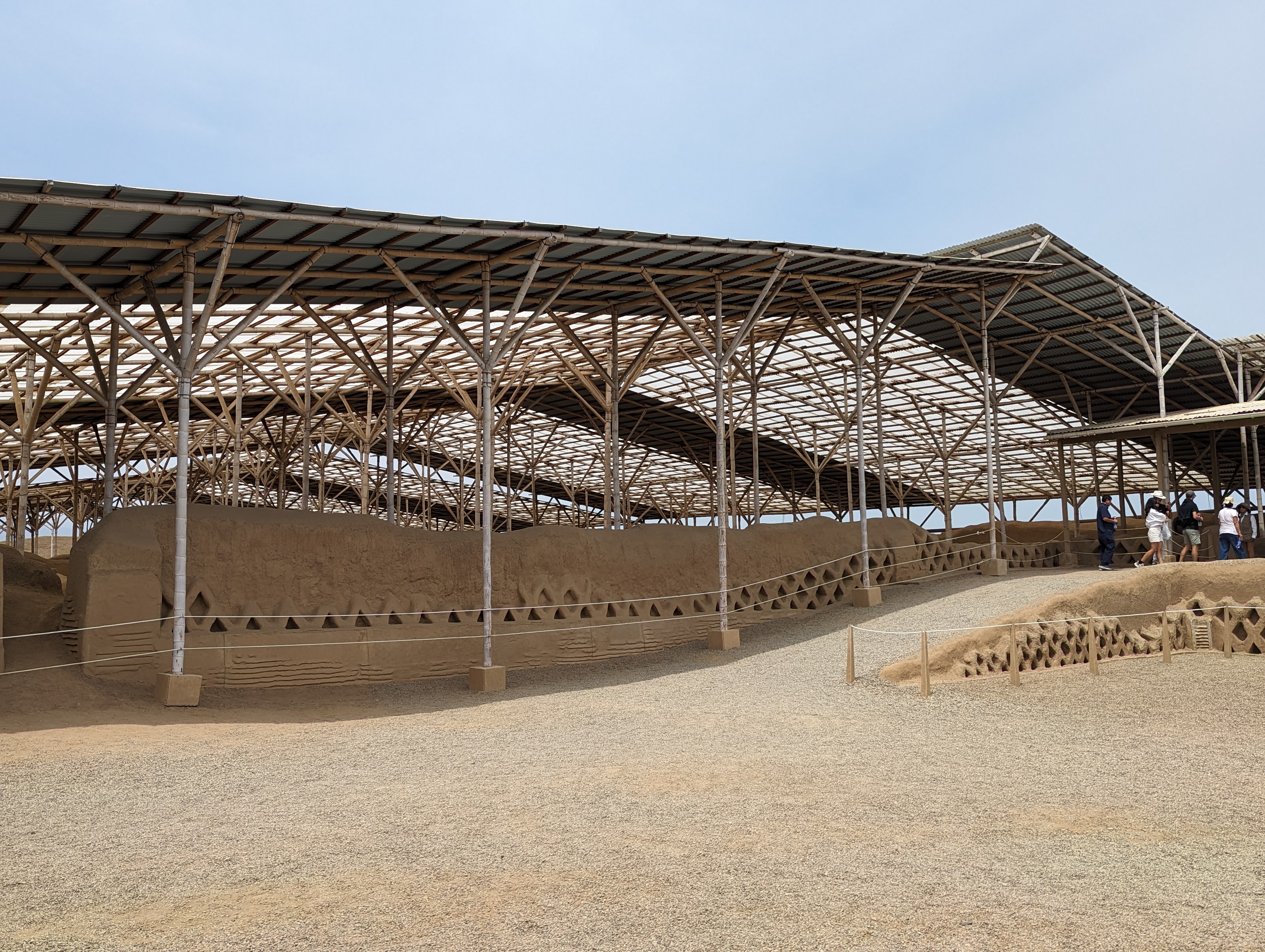
Another shed roof.
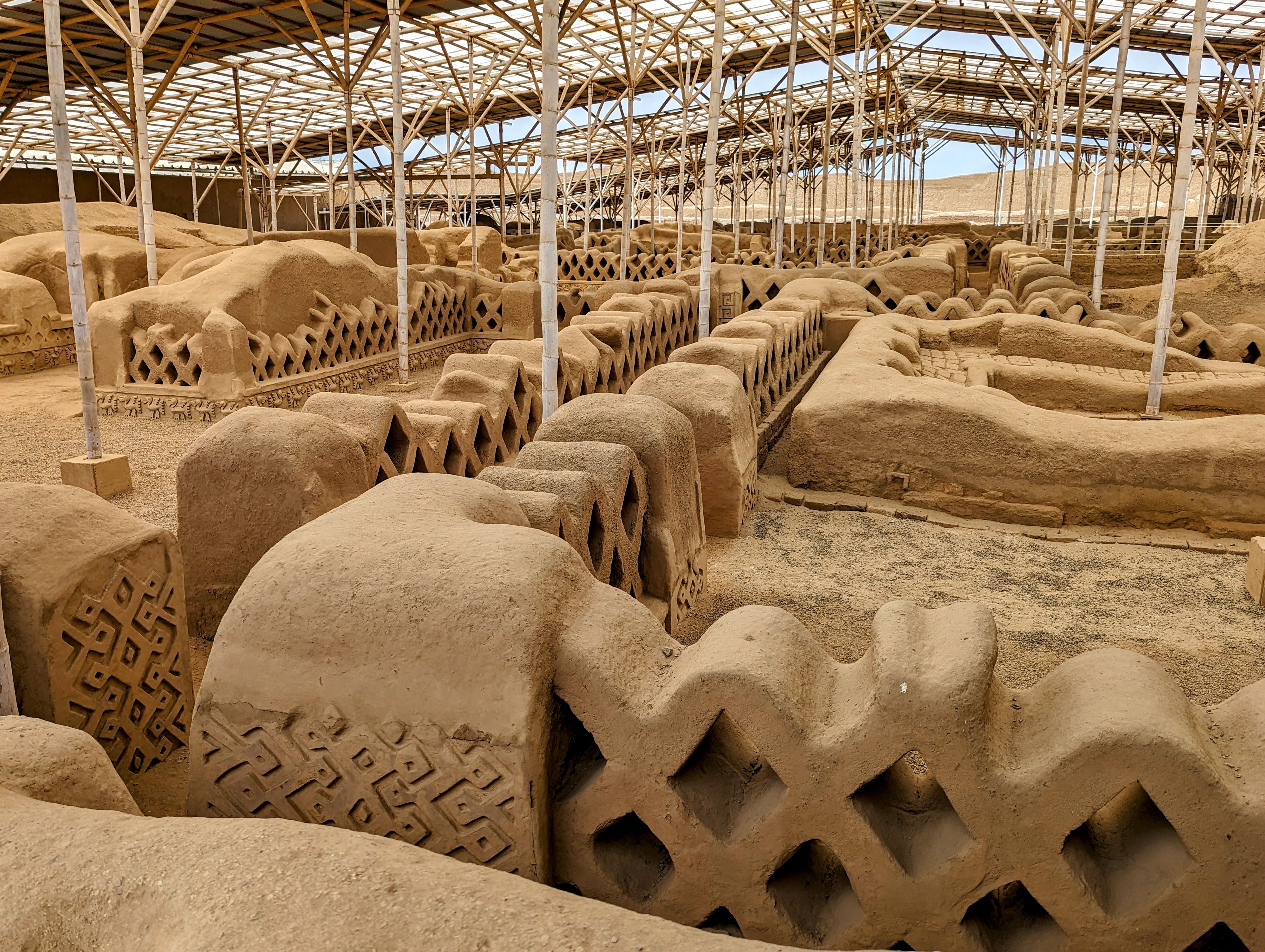
Patterned walls.
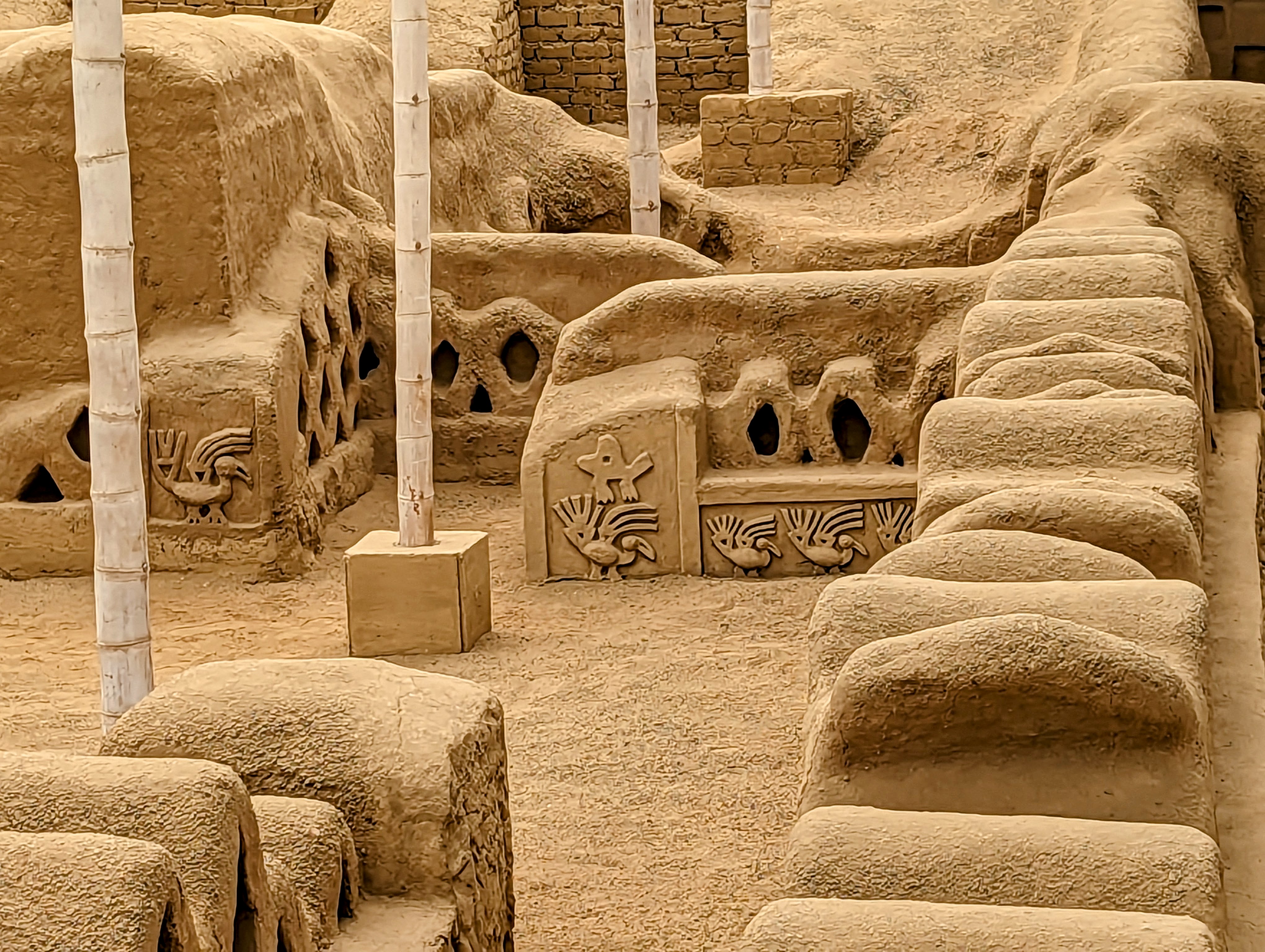
Figures drawn from life.
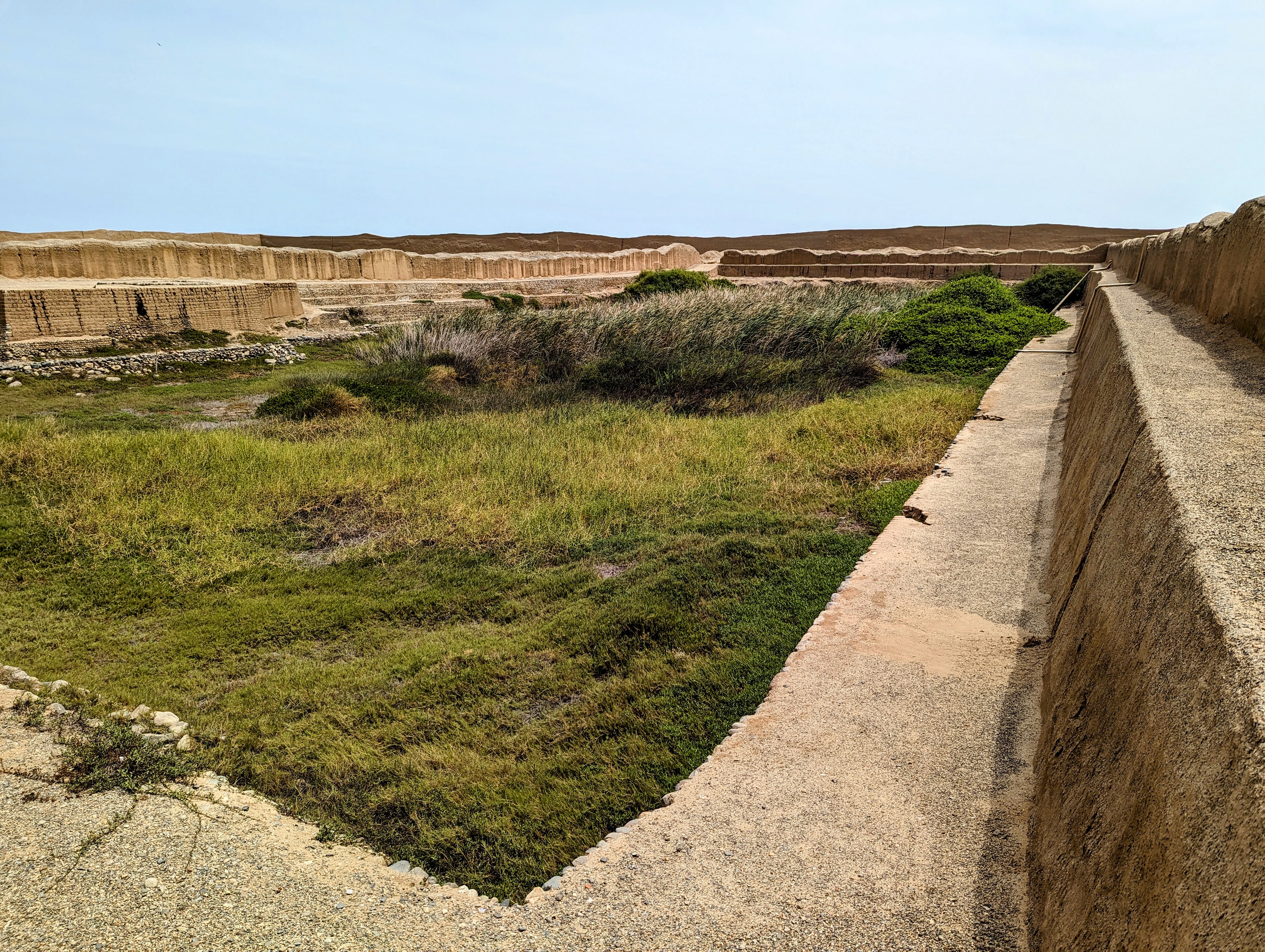
An old tank, still a bit wetter than the surrounding countryside.
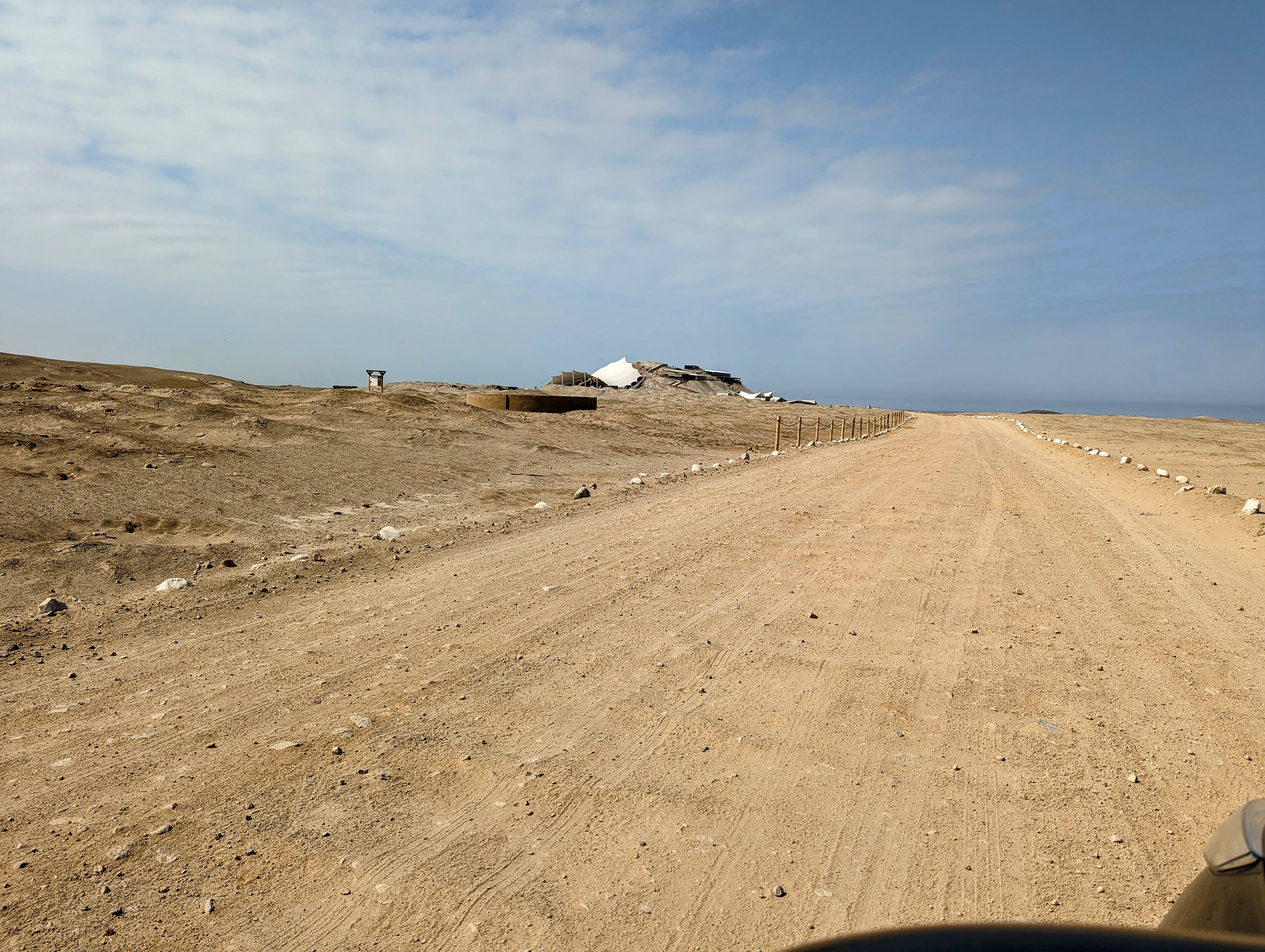
And here's the Huaca de la Cao Viejo, also known as El Brujo.
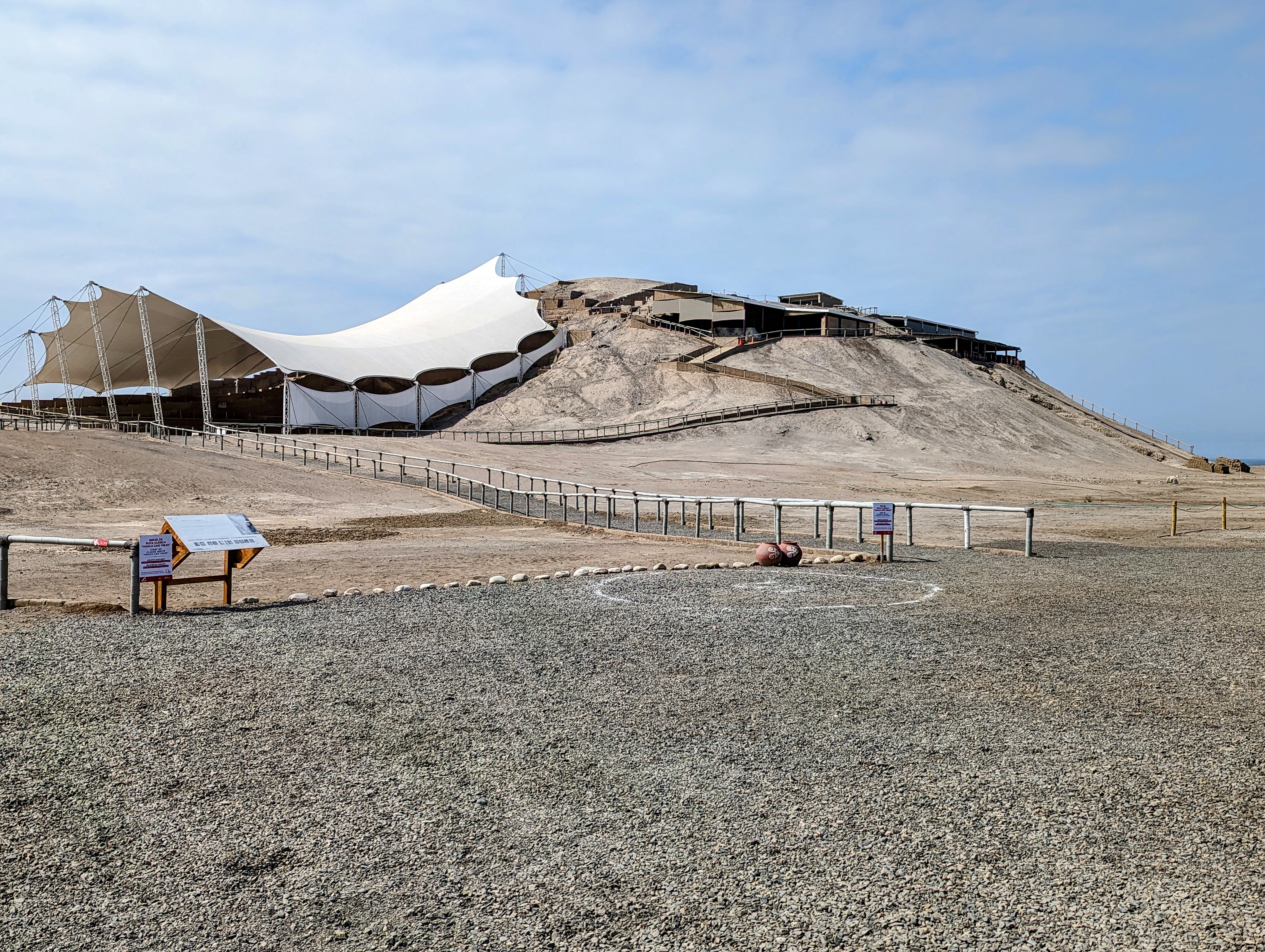
We'll look under the awning, then go up top.
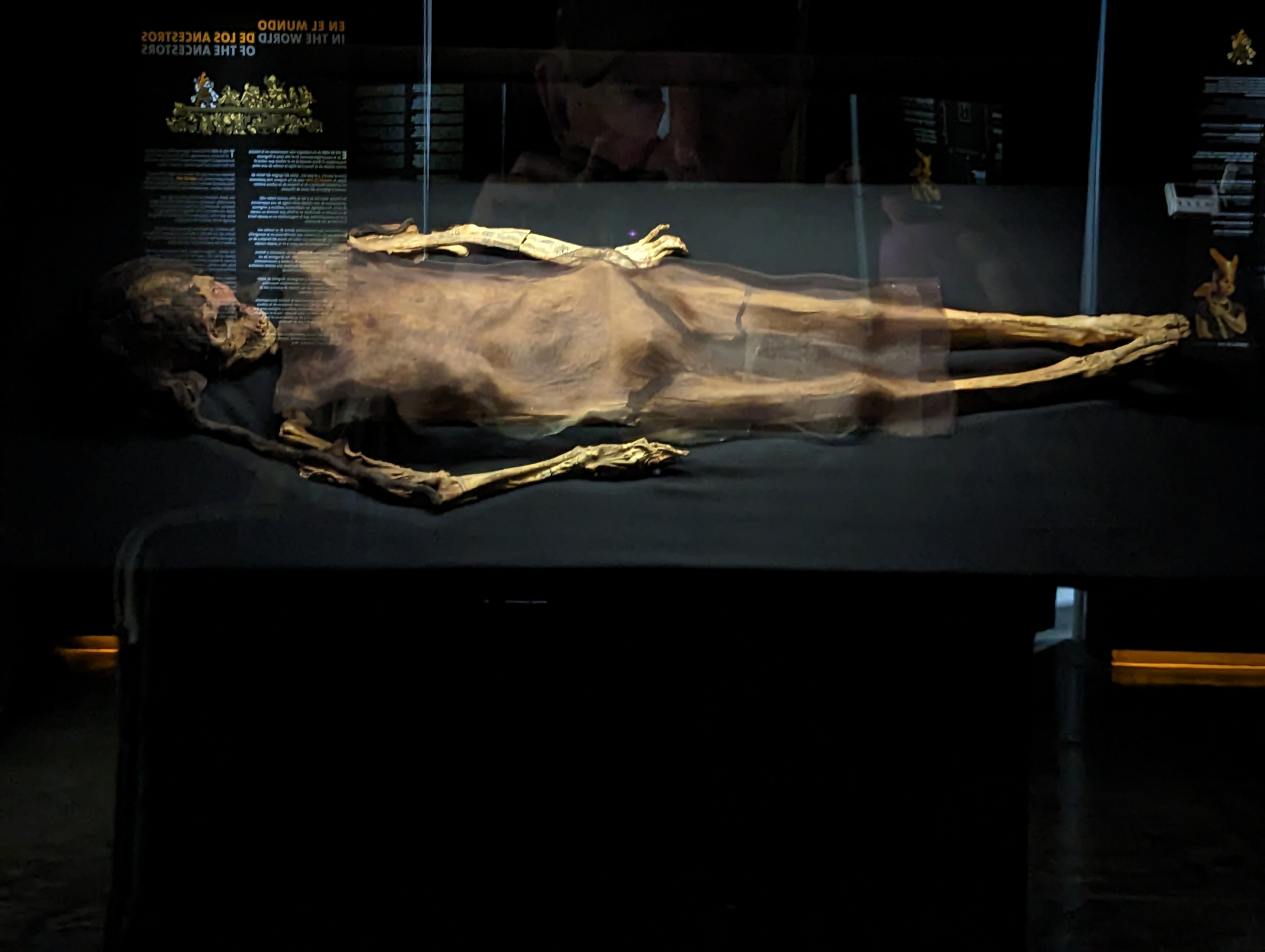
First, in the museum at the base, is the Cao Viejo, the Old Lady of Cao. Disrespectful language for a queen.
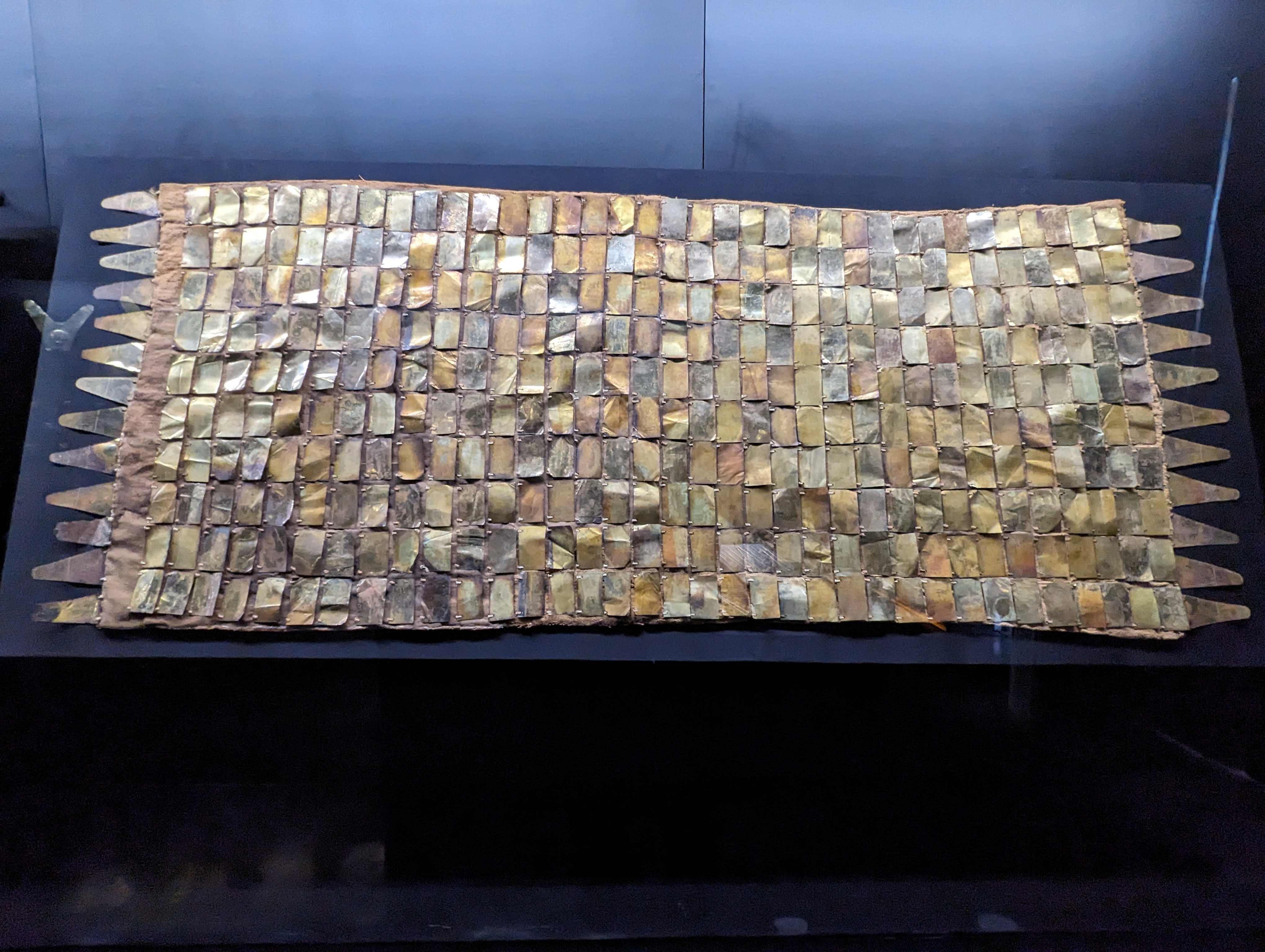
We know her status from the stuff found in her grave, like these gilt adornments. Each piece is about the size of your cell phone.
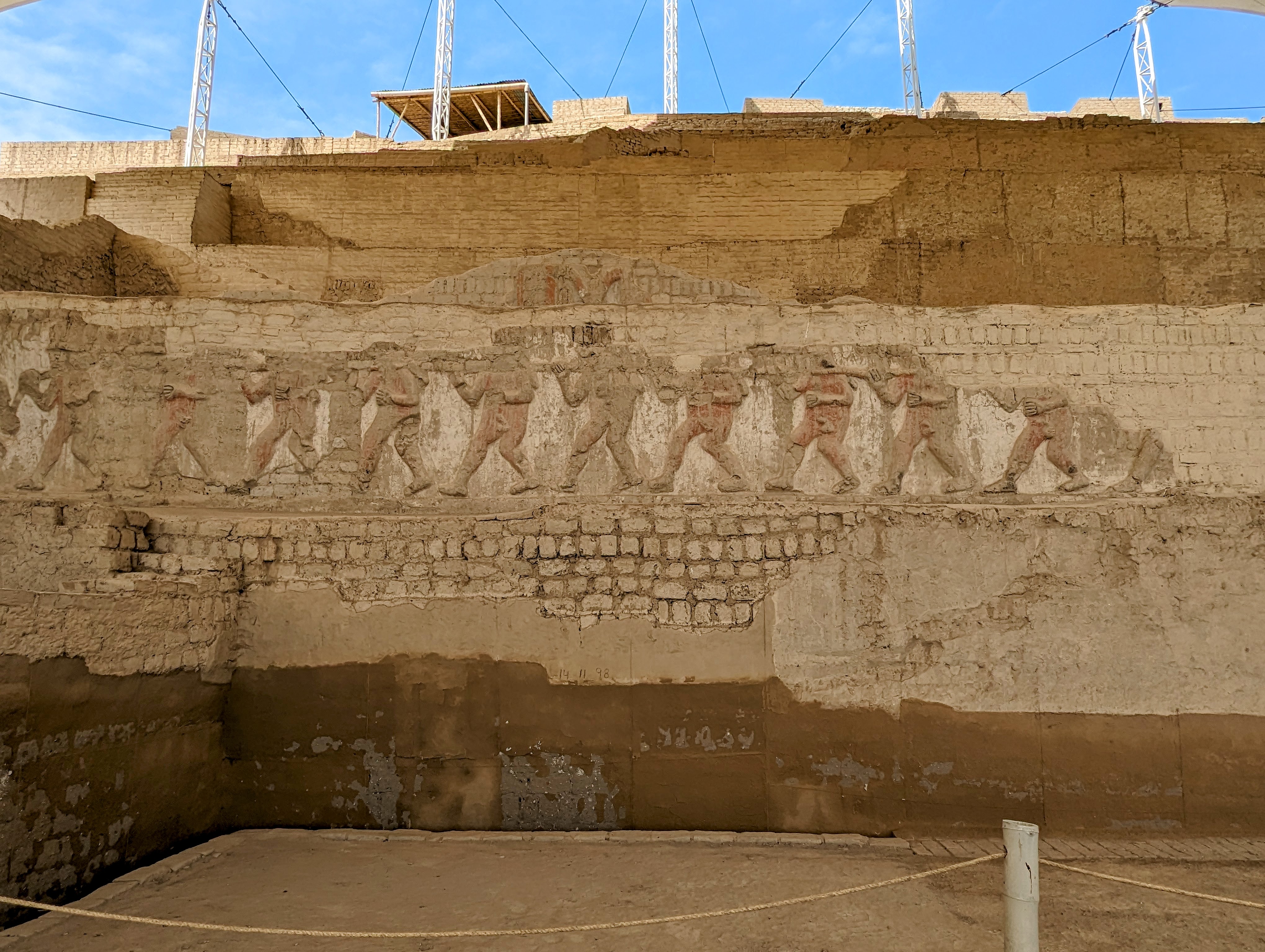
Under the white sail: another line of prisoners.
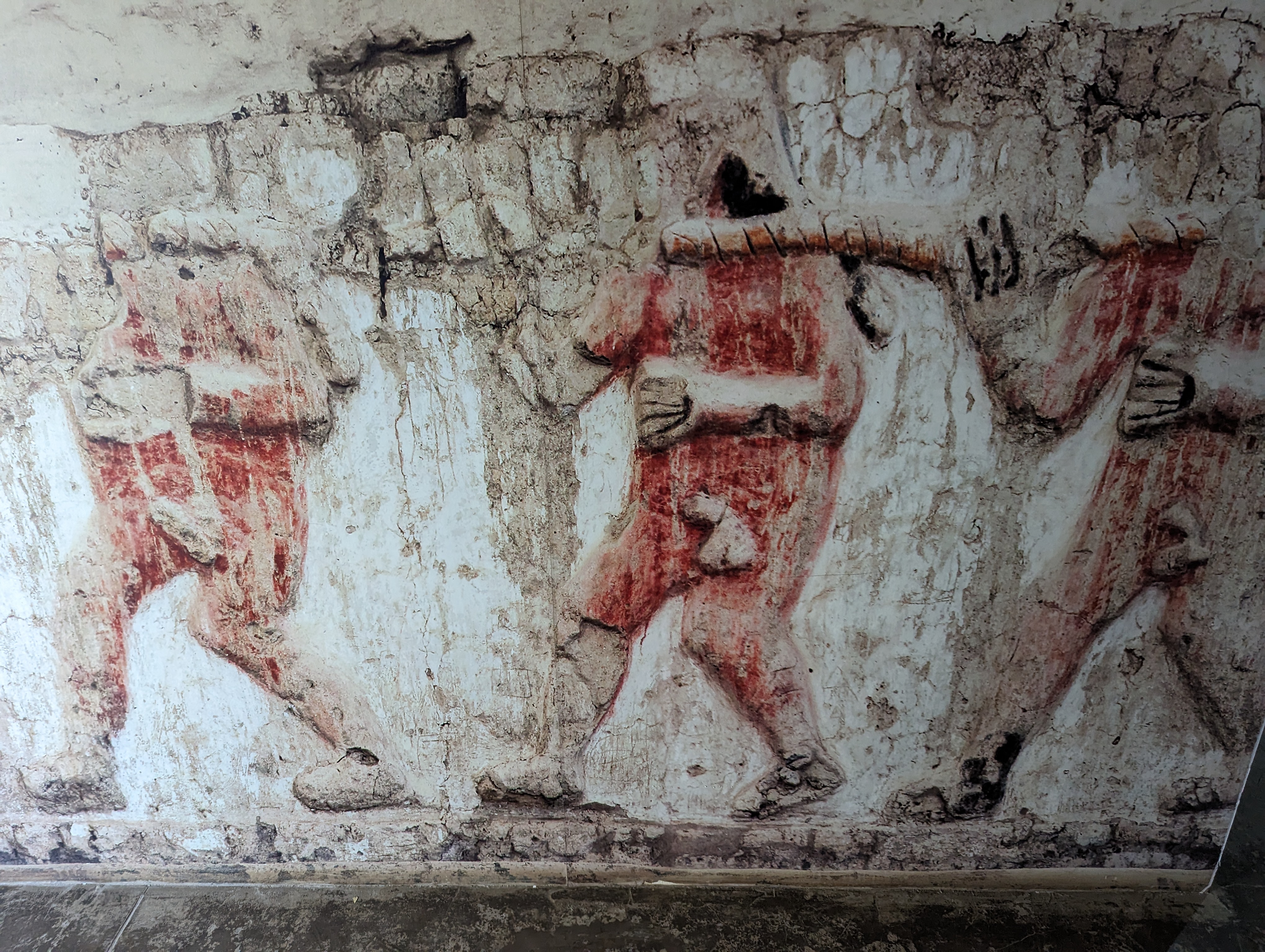
Close-up.
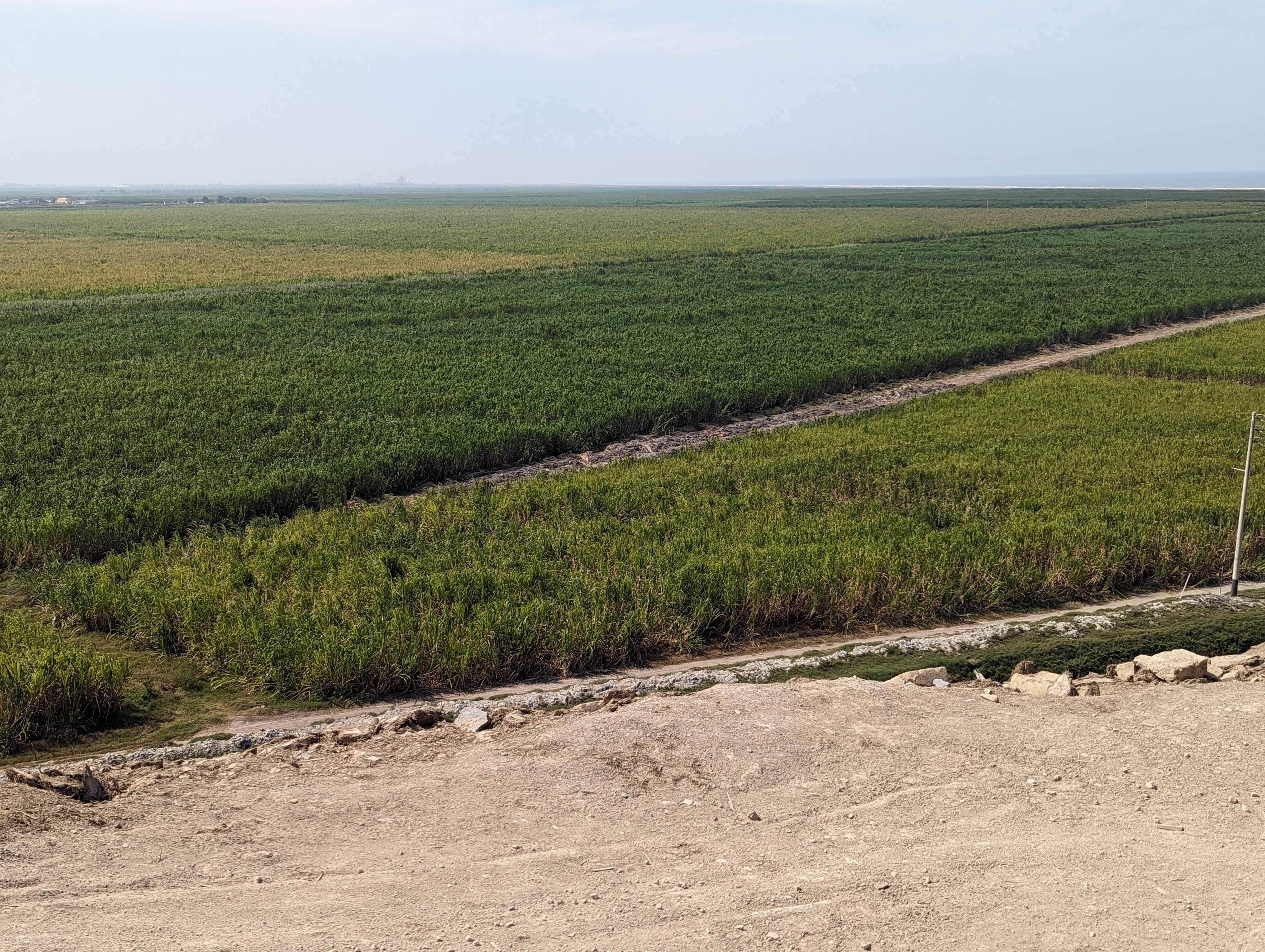
The view from the summit: sugarcane is the specialty of the Chicama Delta.
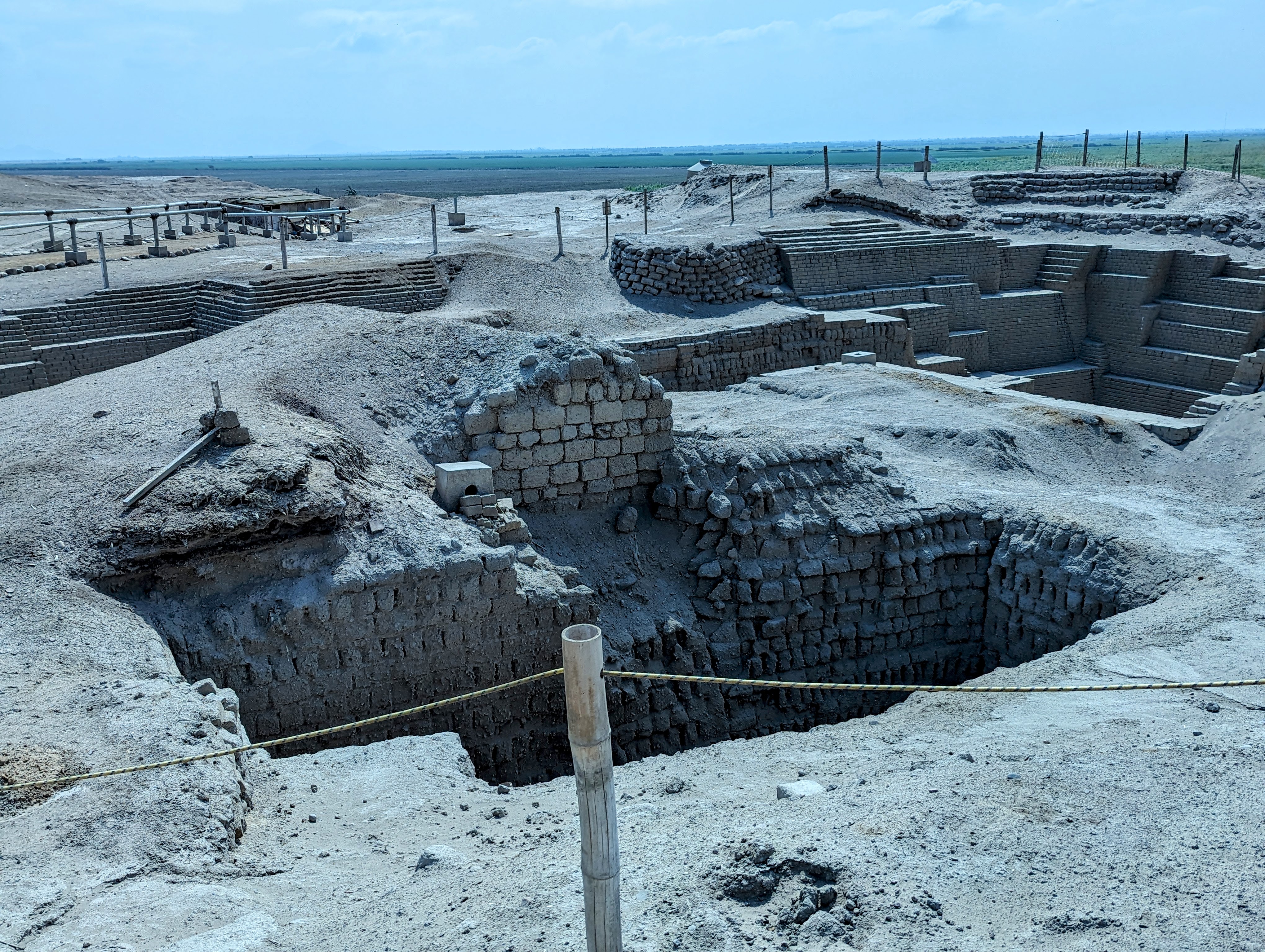
Also on the summit: excavated graves.
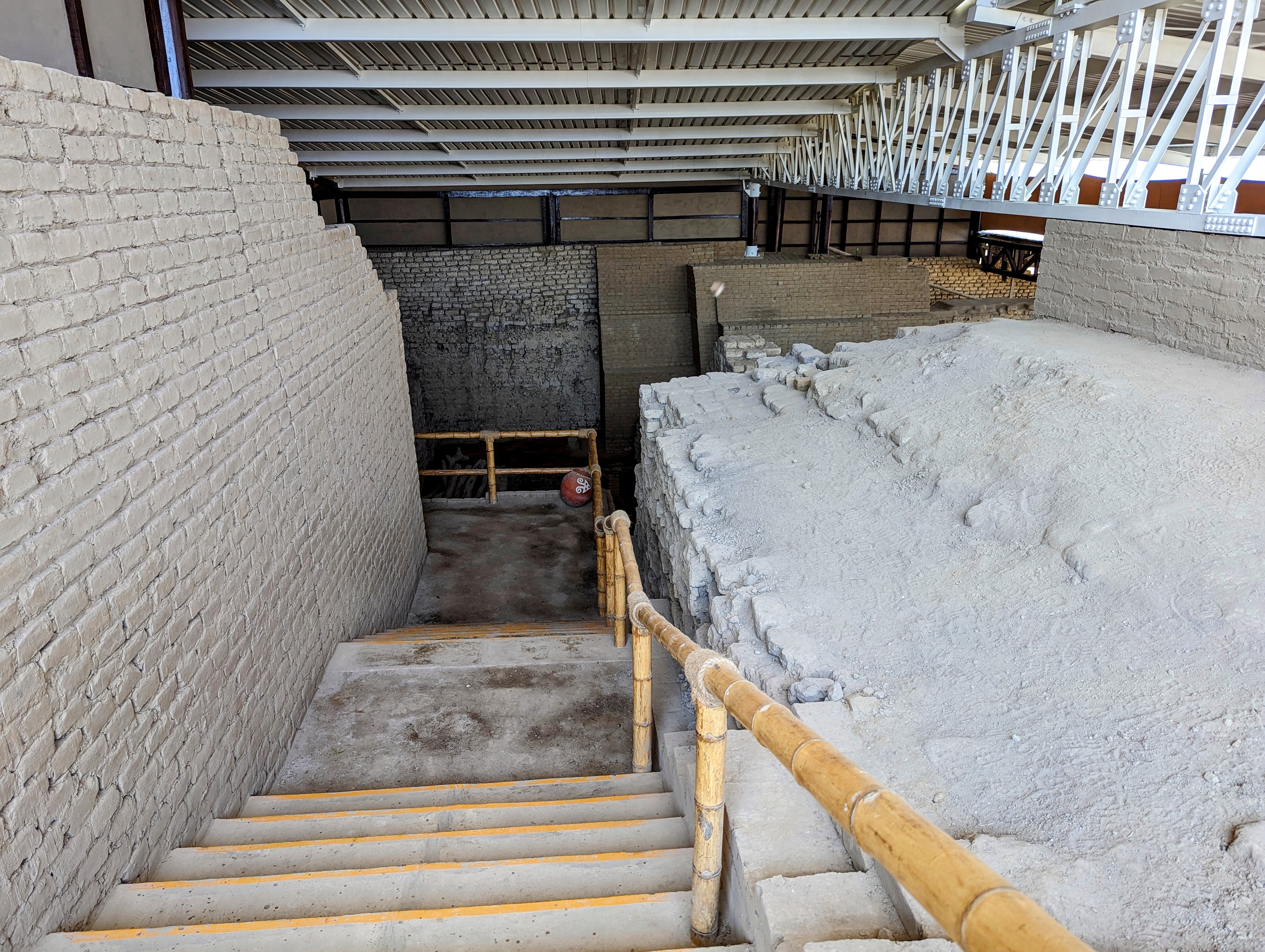
Down into the body of the mound.
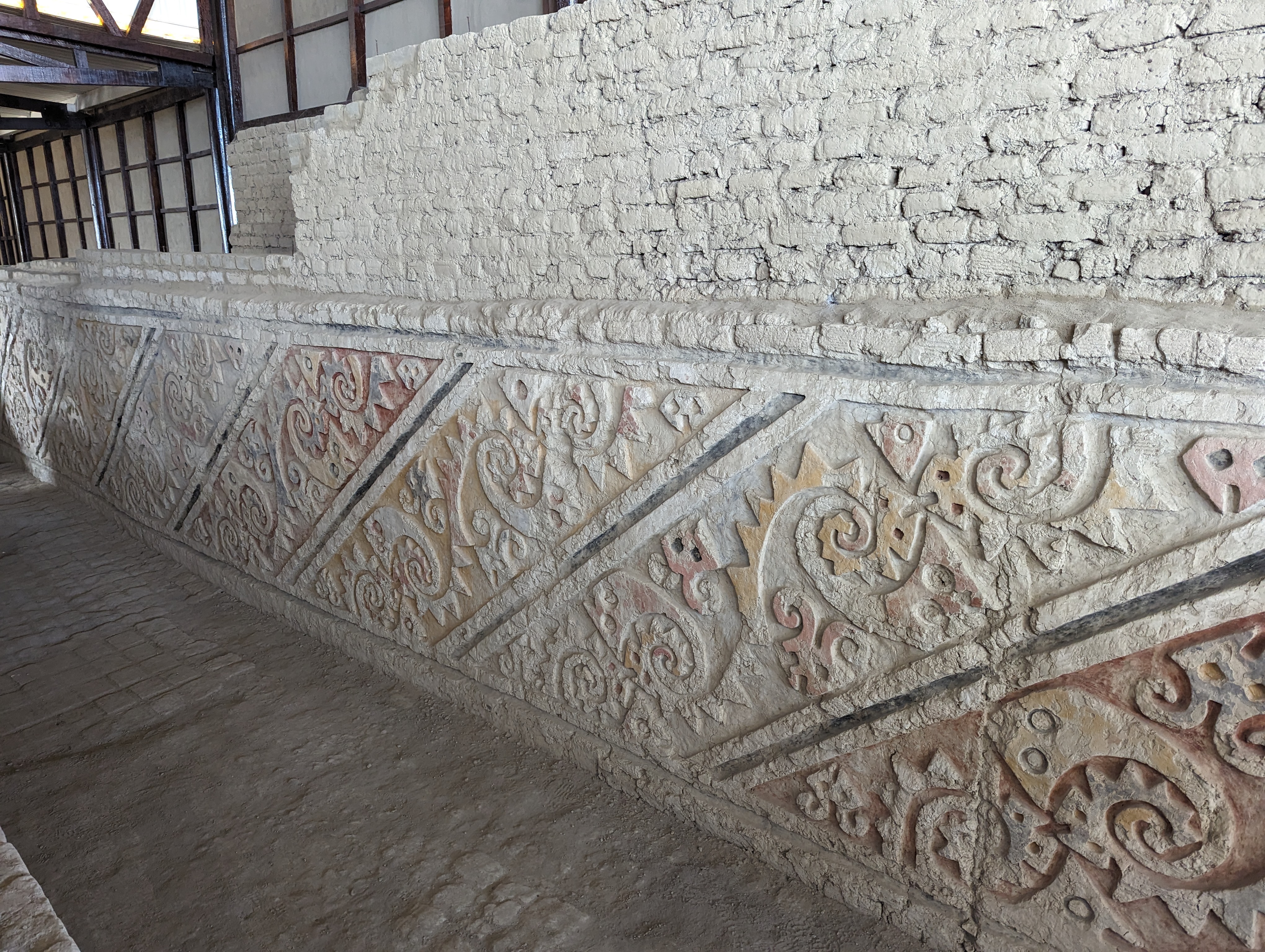
Another frieze, this time with stylized images of the ocean and its creatures.
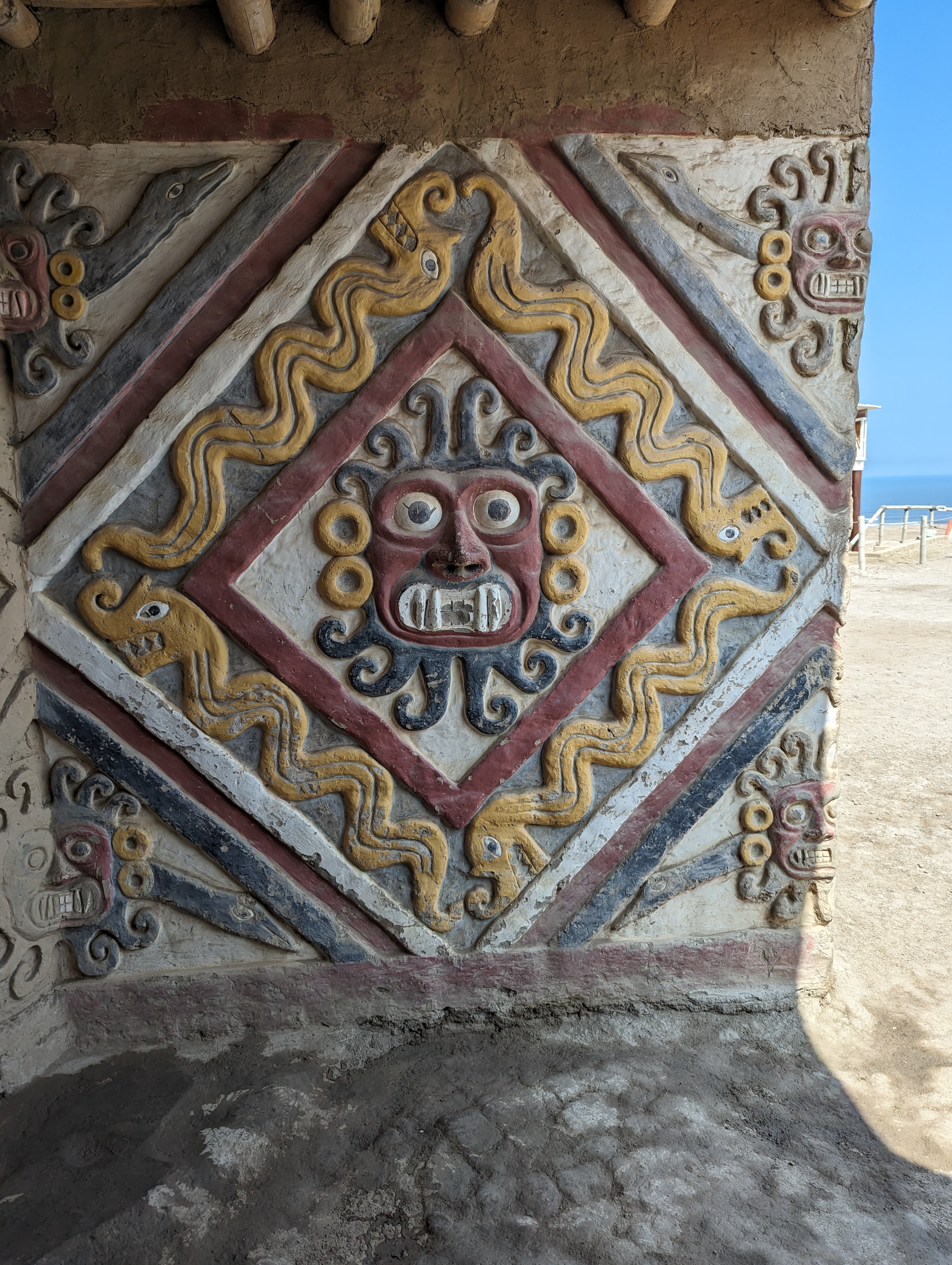
And our old friend.
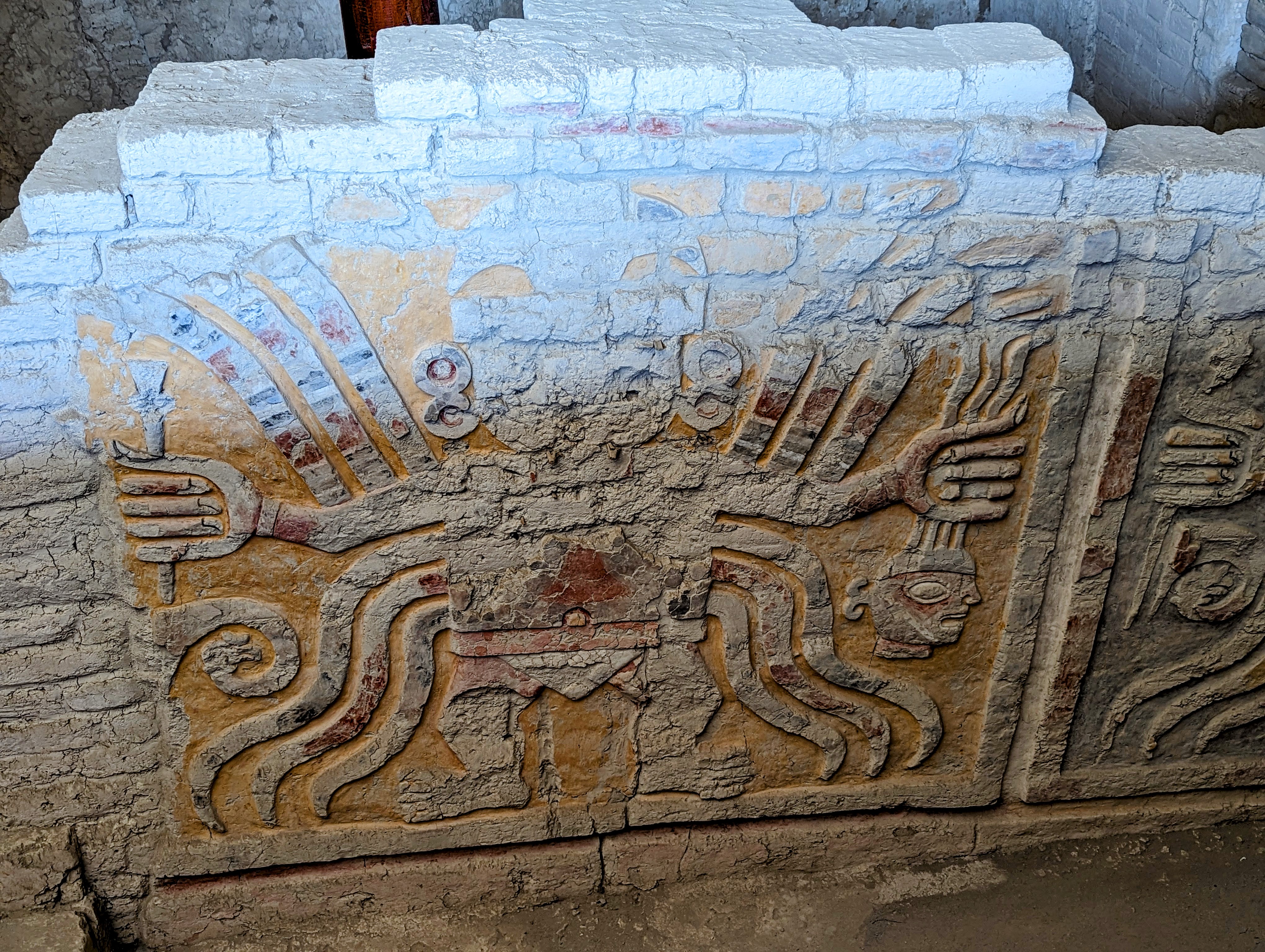
Here he is (or perhaps another god) in the form of the Spider Decapitator. You can see where he gets his name.