Virginia City, Nevada
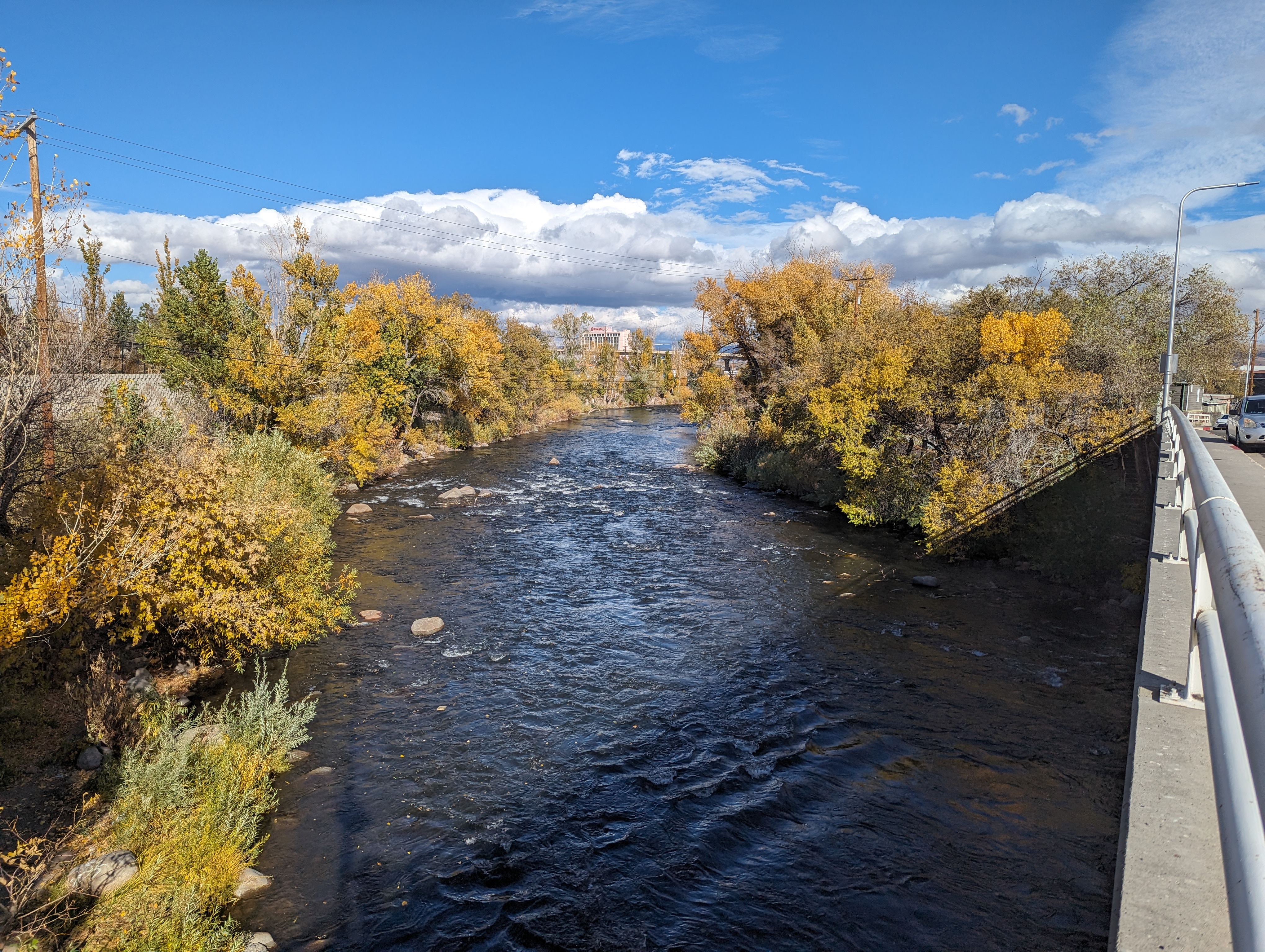
Here we are just east of downtown Reno and enjoying the Truckee River on its cheerful way from Lake Tahoe to Pyramid Lake.
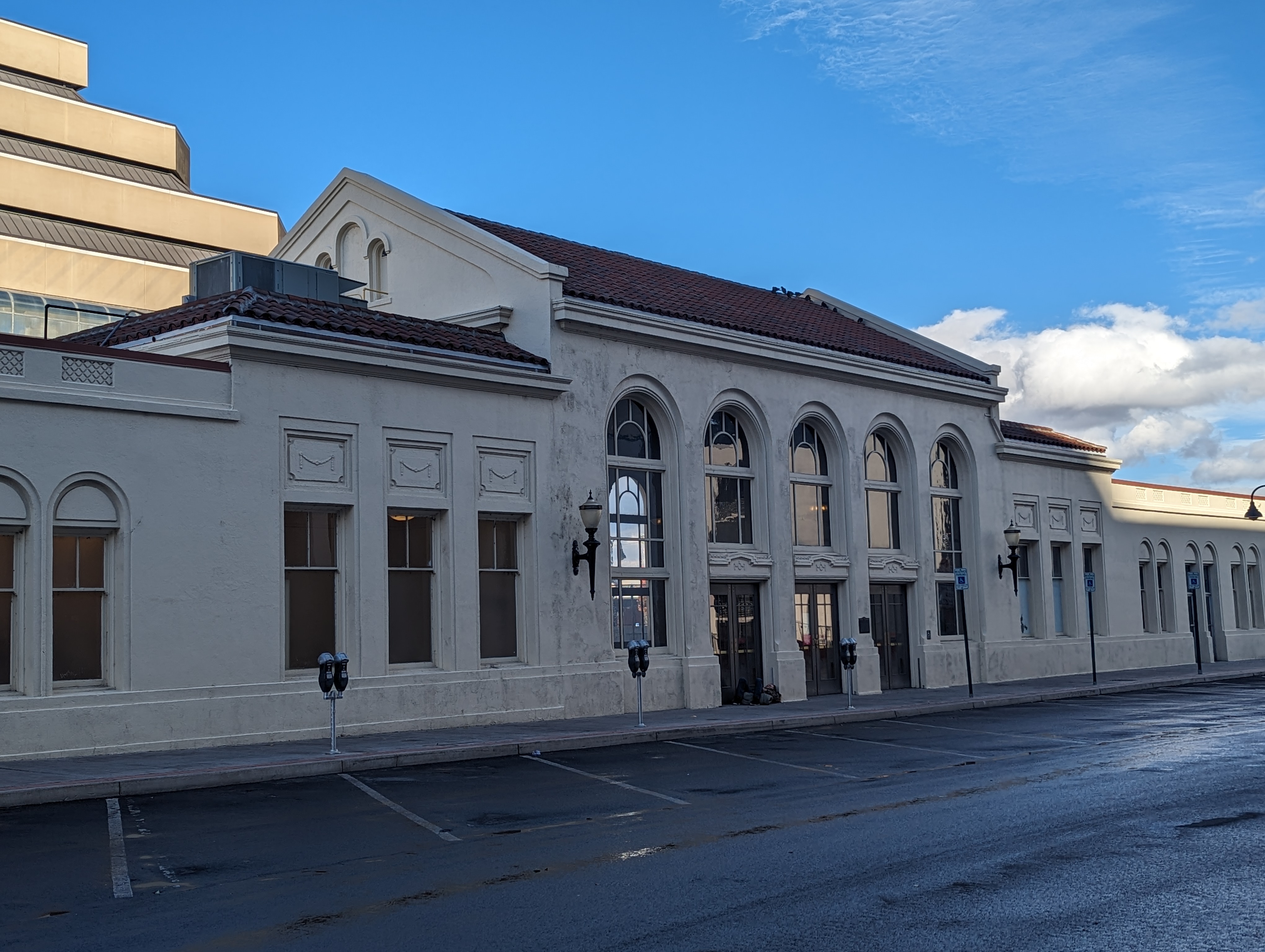
Nearby, the railway station is owned by the City of Reno but was built in 1926 by the Southern Pacific on the site of a station built by the Central Pacific in the 1860s.
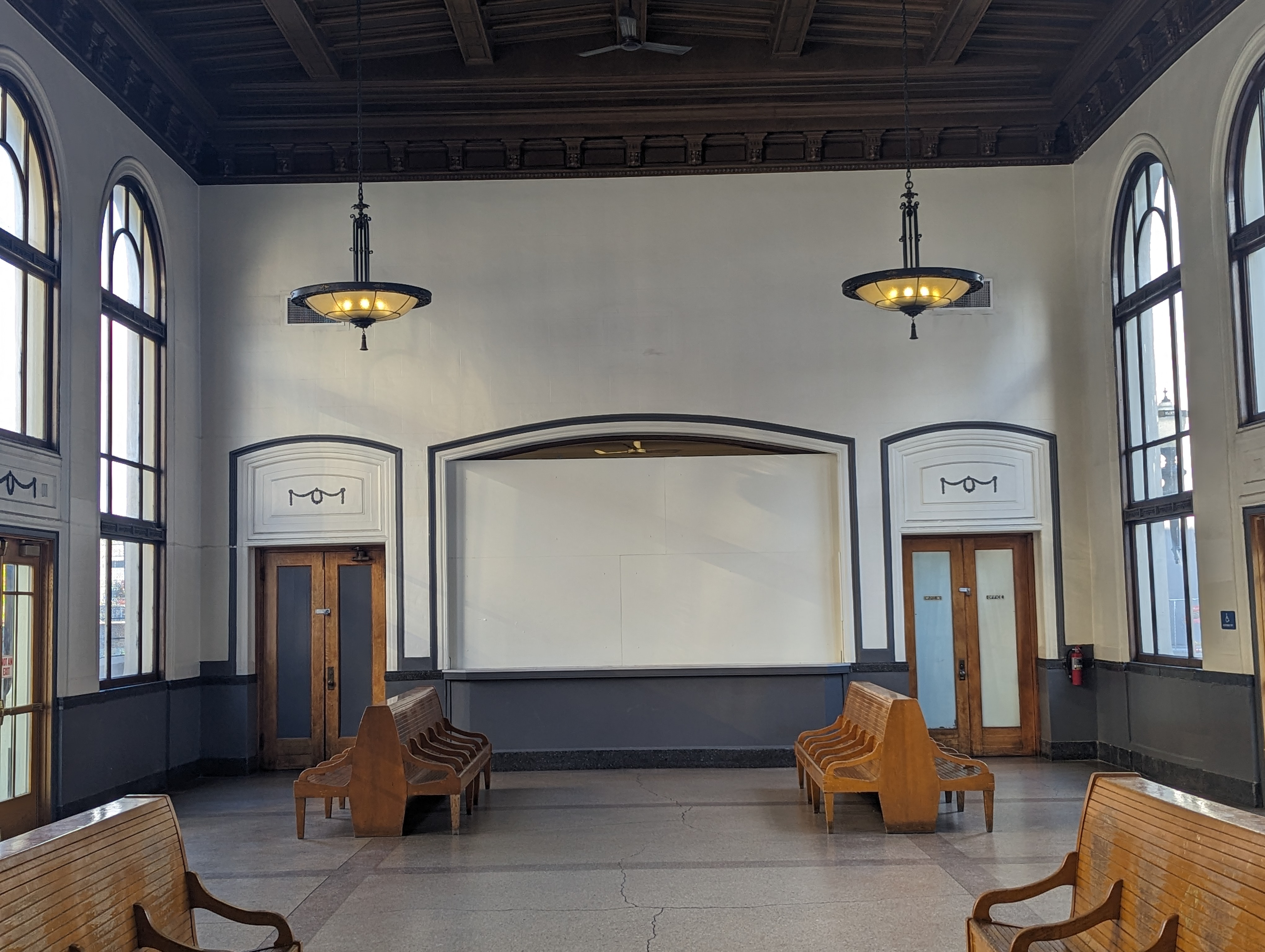
The waiting room is about as peaceful a public place as exists in Reno. Thank the decline of passenger trains.
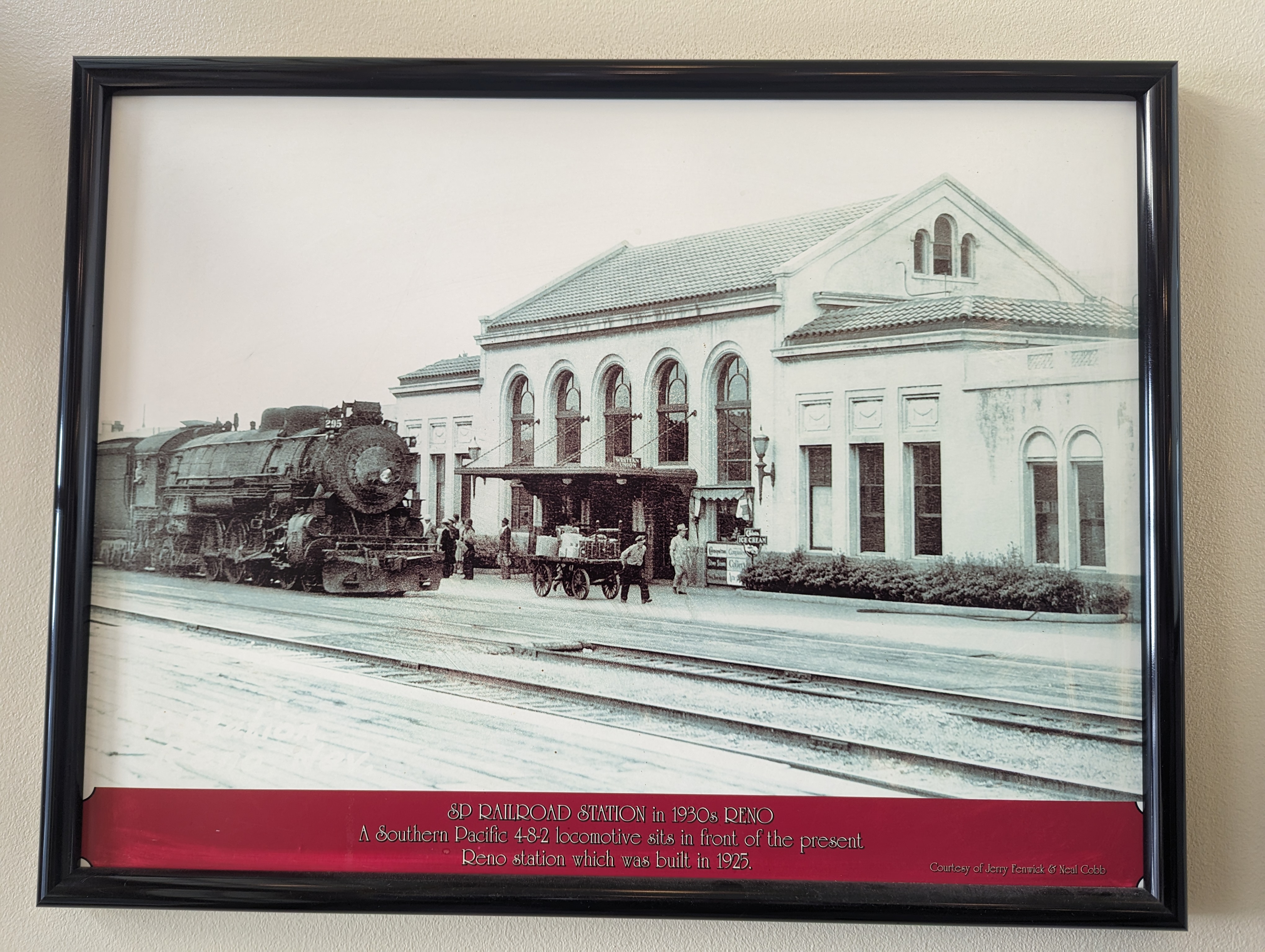
This photo, from an exhibit in the station, shows an SP engine outside the station back in the day when there was more than one train daily in each direction. Can you hear the steam?
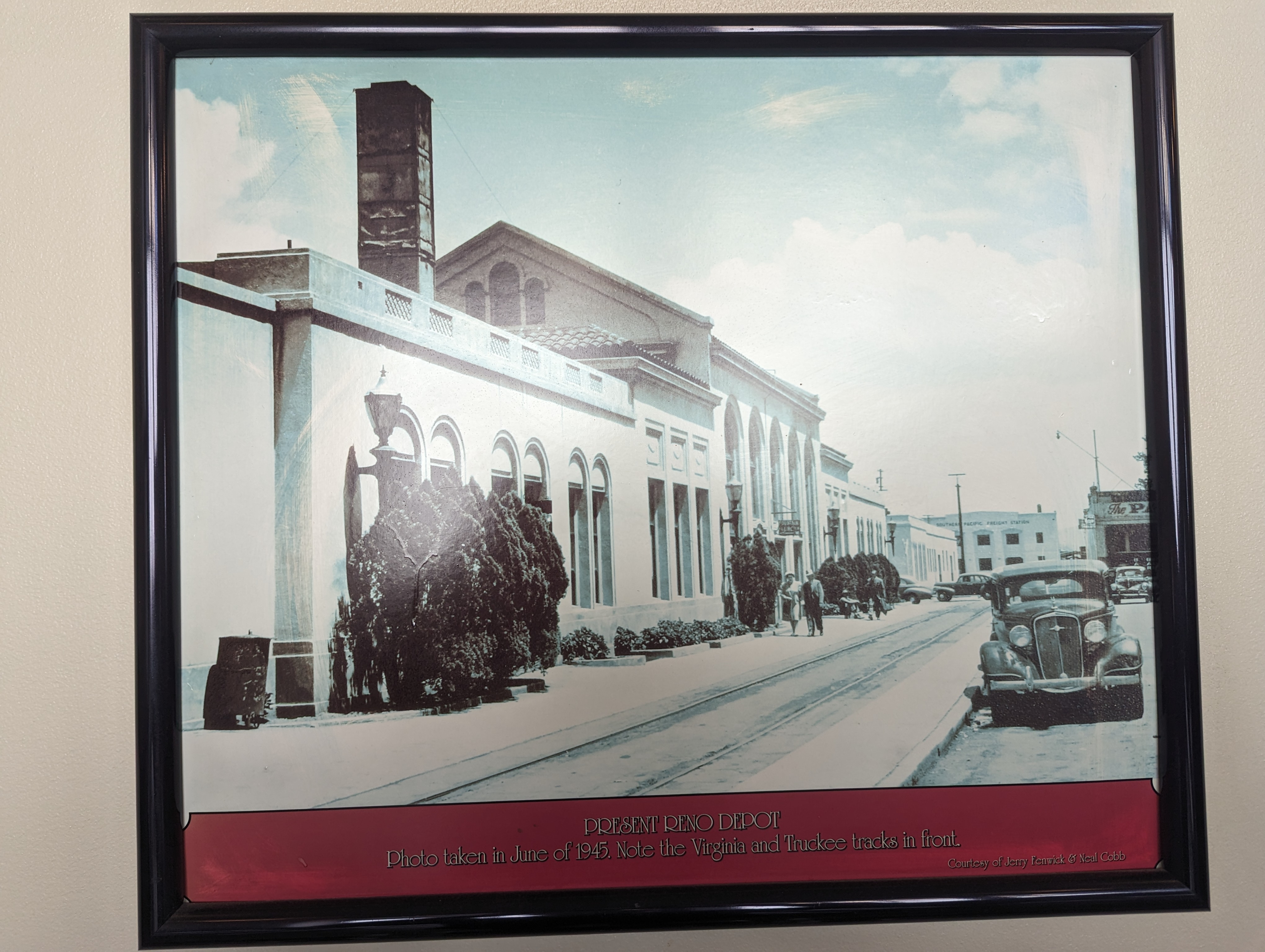
Here, on the other side of the station, is the track of the Virginia and Truckee Railroad, a shortline opened in 1872 and connecting Reno with Virginia City until the 1930s. The track is gone now.
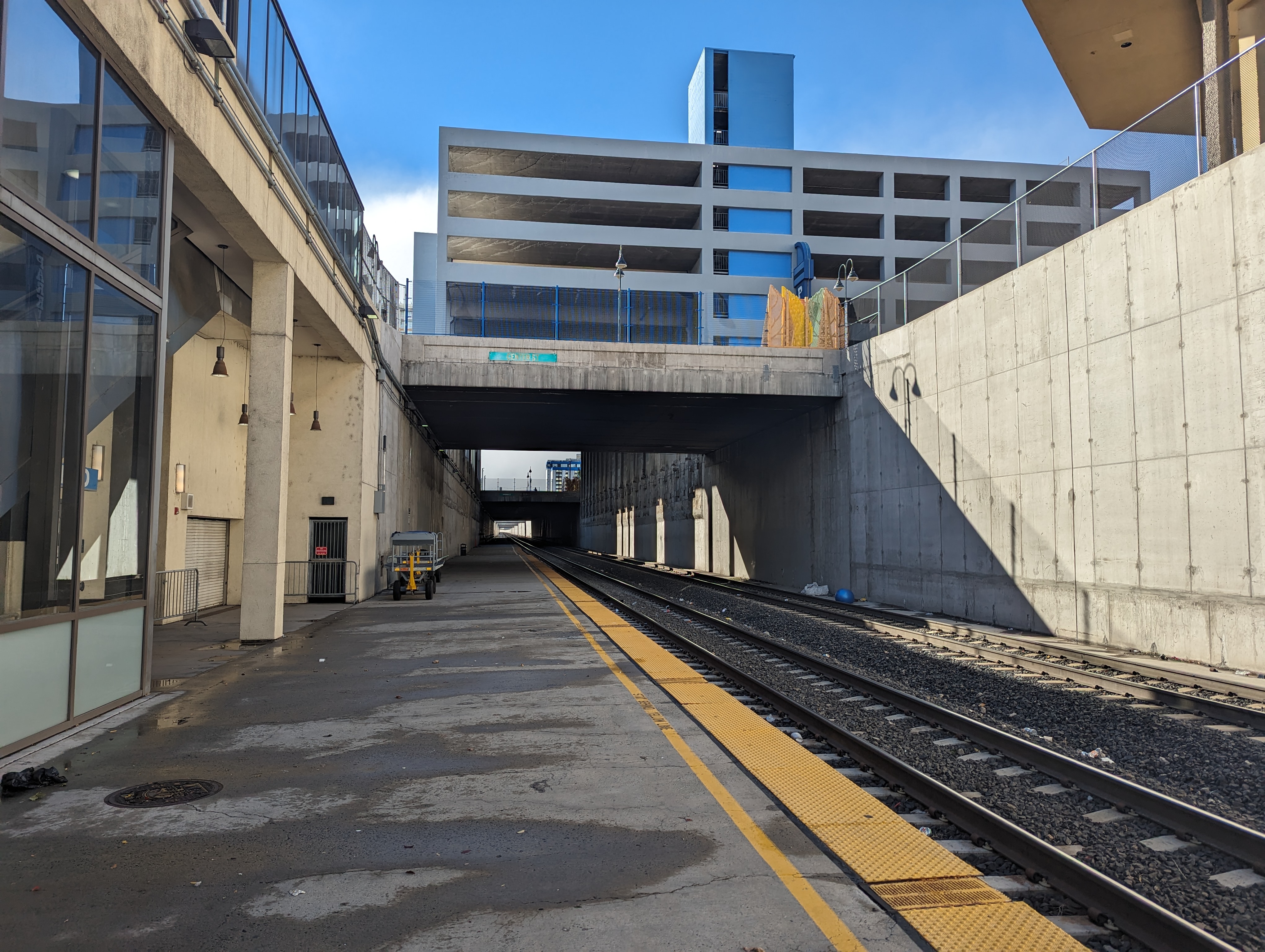
The Southern Pacific became part of the Union Pacific in 1996, and in the next decade the track through Reno was entrenched, which made life easier for motorists at grade crossings. The two passenger trains coming through daily belong to Amtrak but use the U.P. tracks.
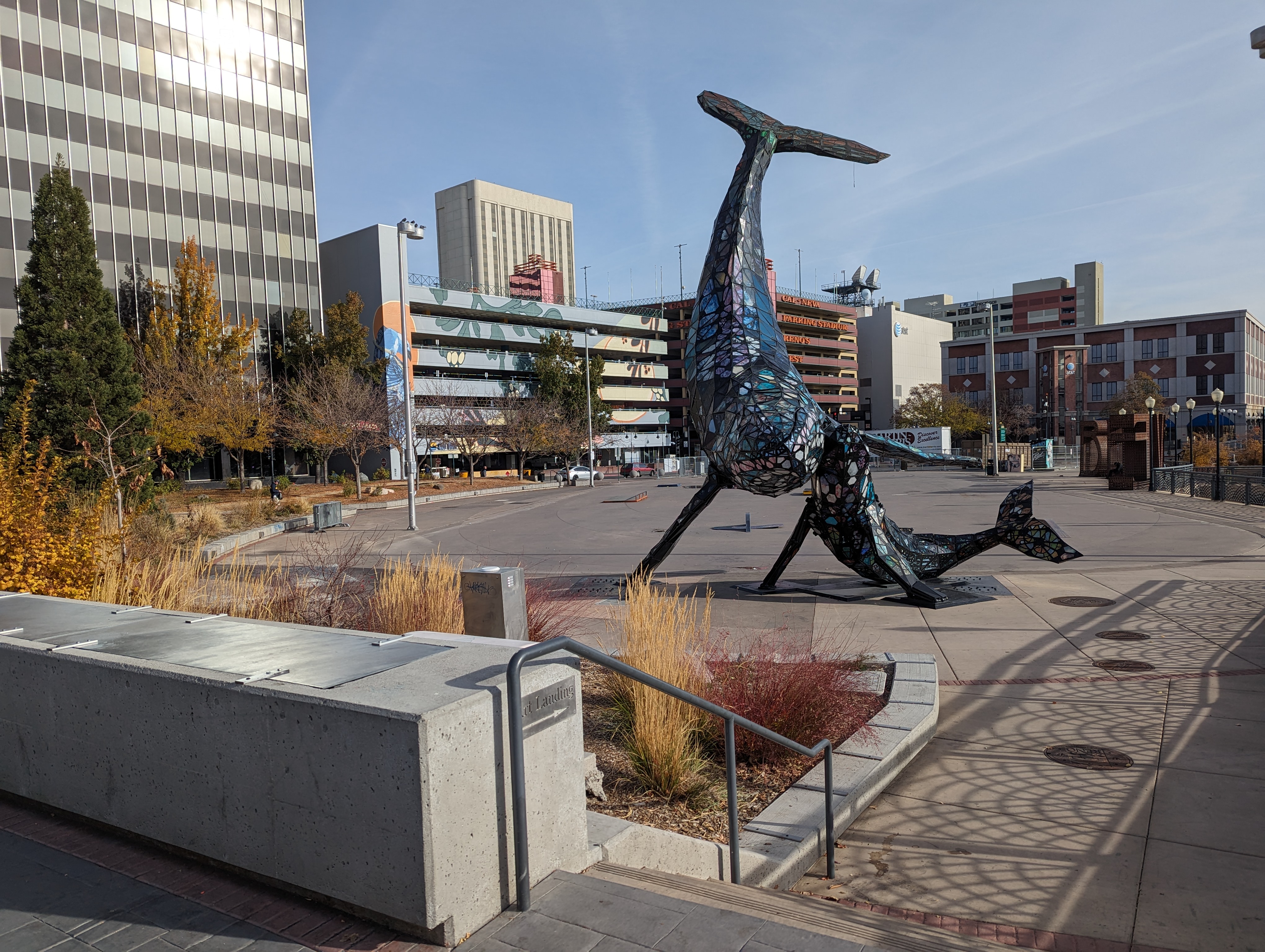
Harrah's, Harold's, and The Mapes--the casinos that made Reno modestly famous after World War II--are closed. The Mapes has left a hole that may charitably be described as open space with public art.
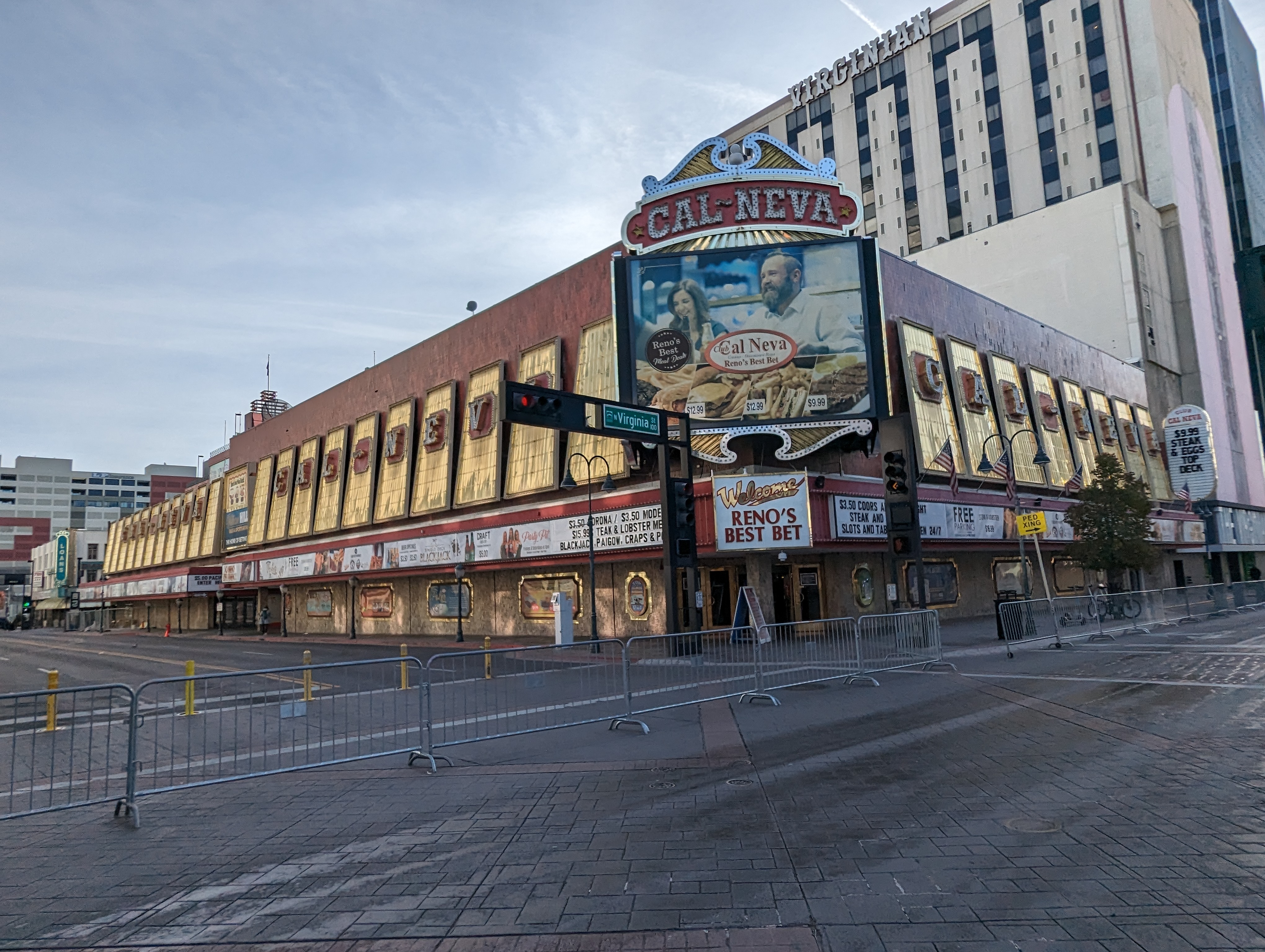
A few classically cheesy casinos remain, along with pawn shops for people who need to get home.
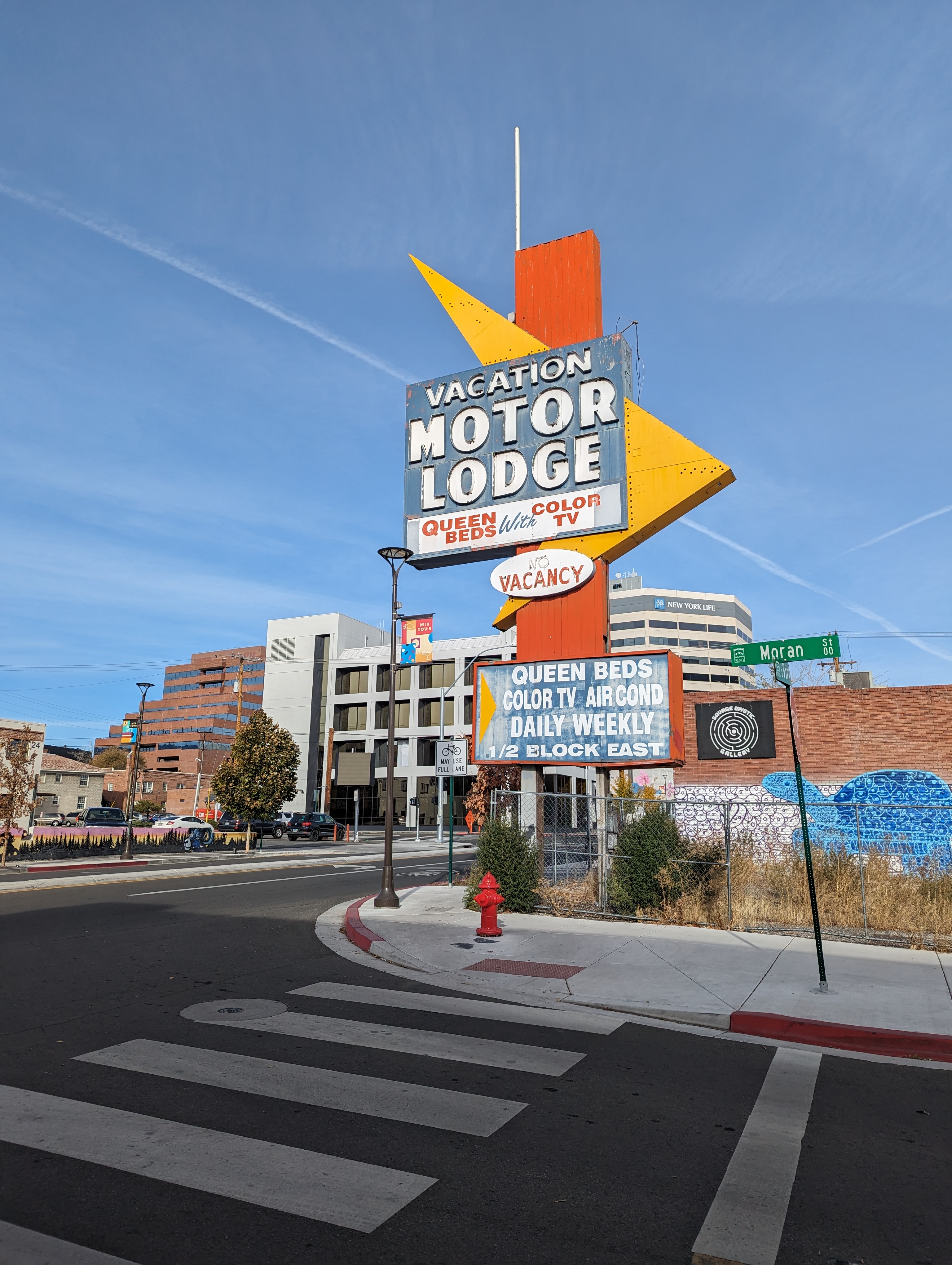
From that vintage: a downtown hotel sign.
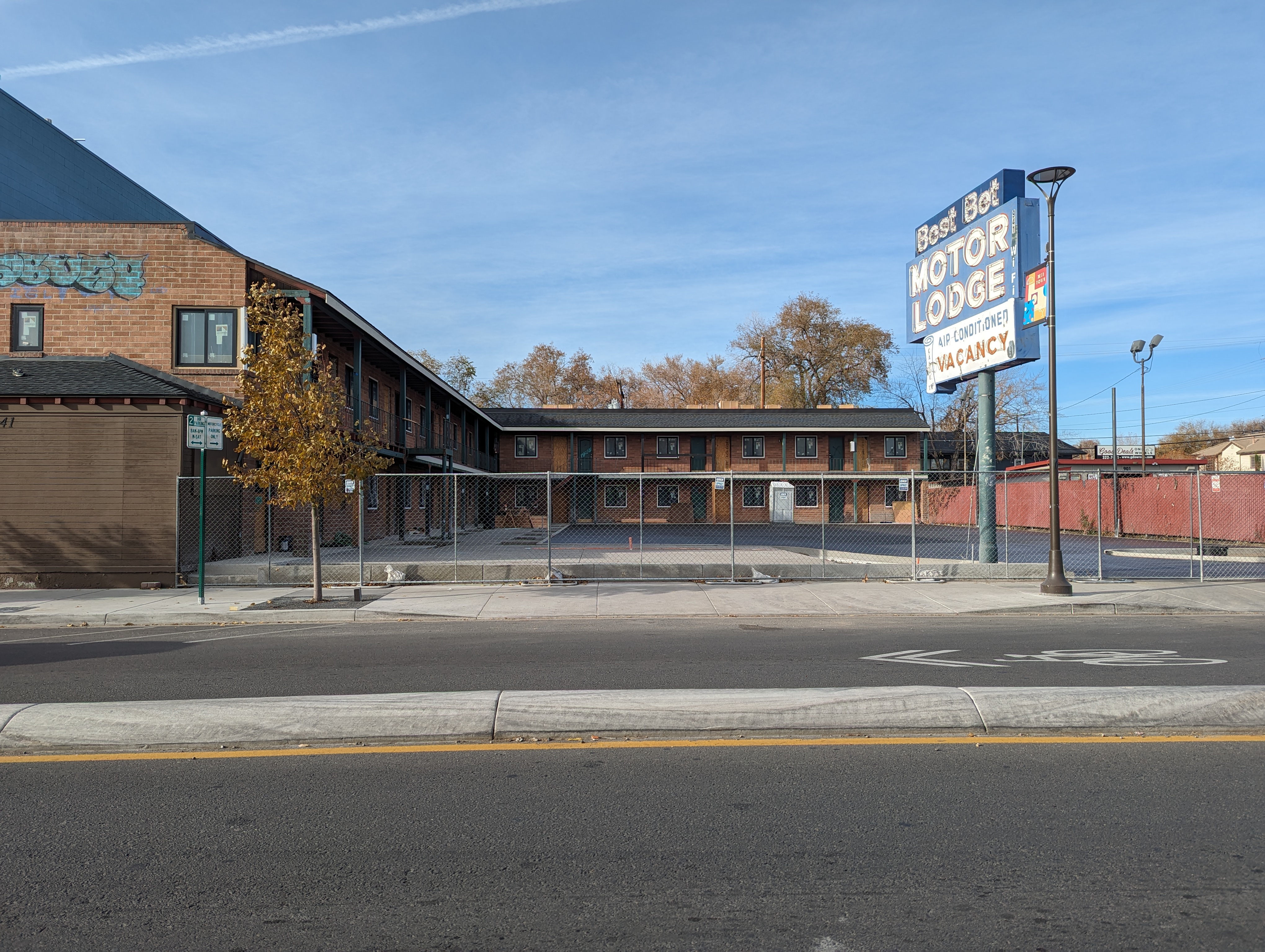
Vacancy indeed.
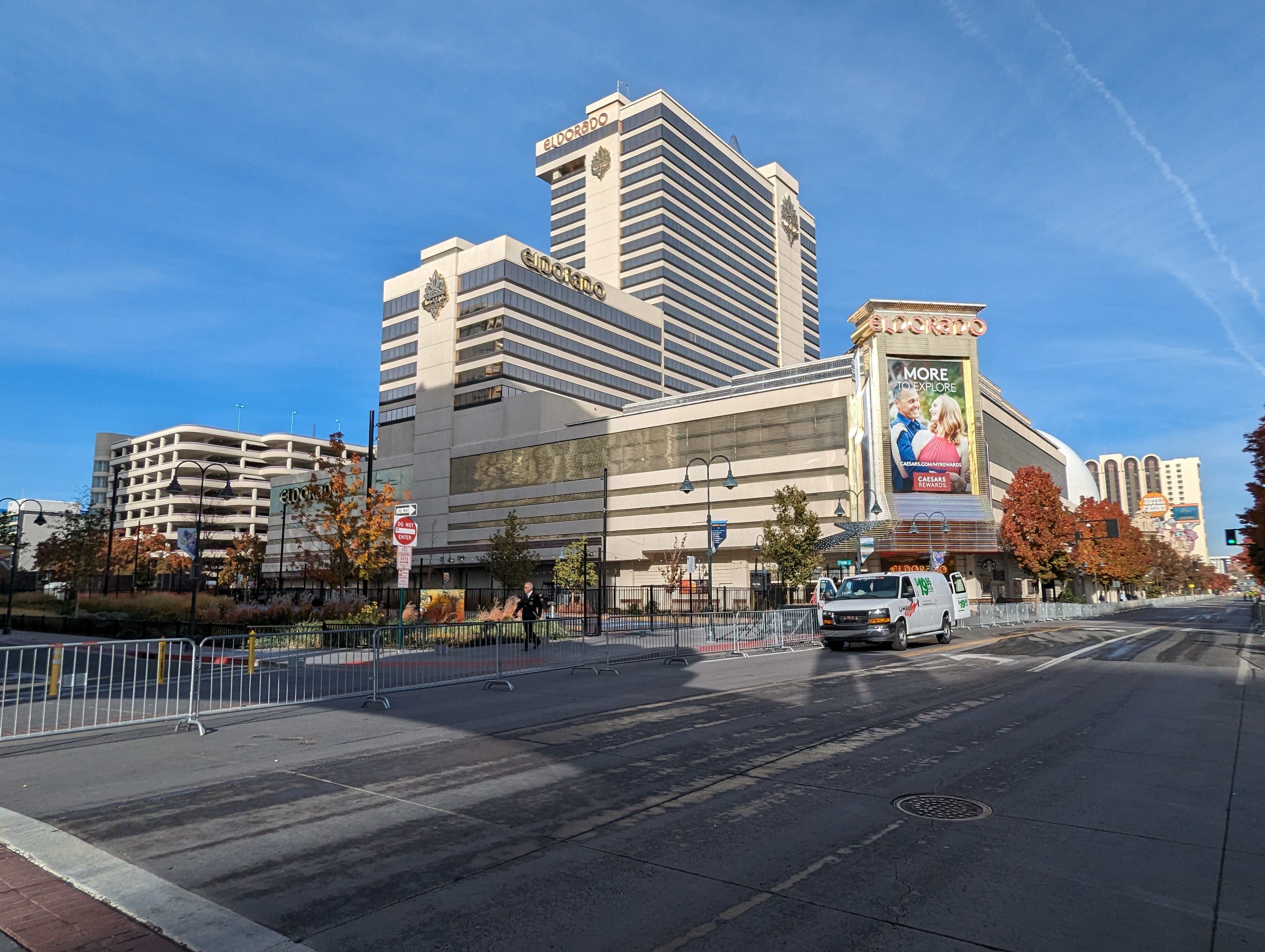
A couple of new megacasinos have been built. Here's one close to downtown.
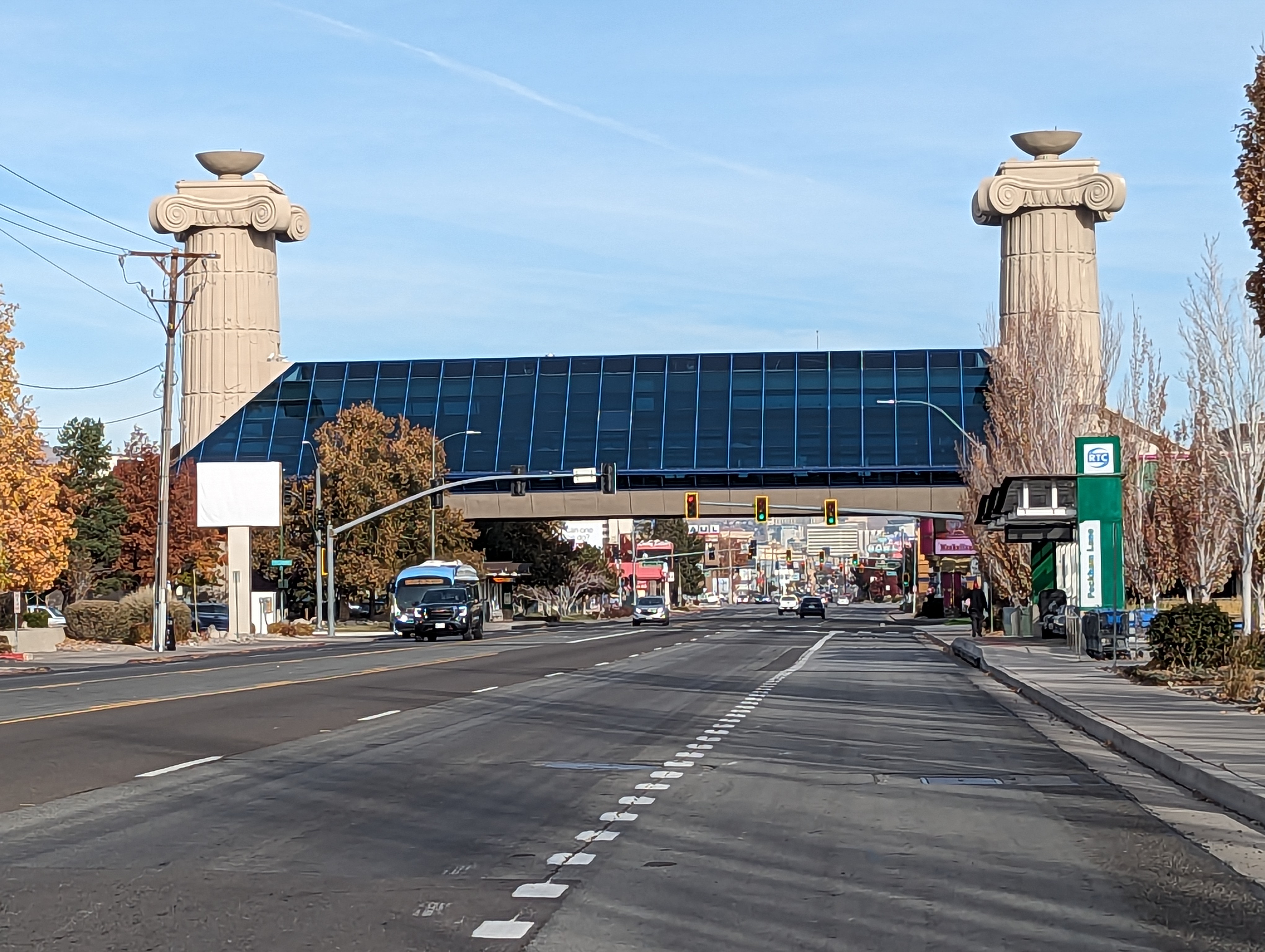
Here's another, south a bit but equipped with a monster parking lot reached through this bridge between columns lovingly transported from Luxor with a quick stop in Athens.
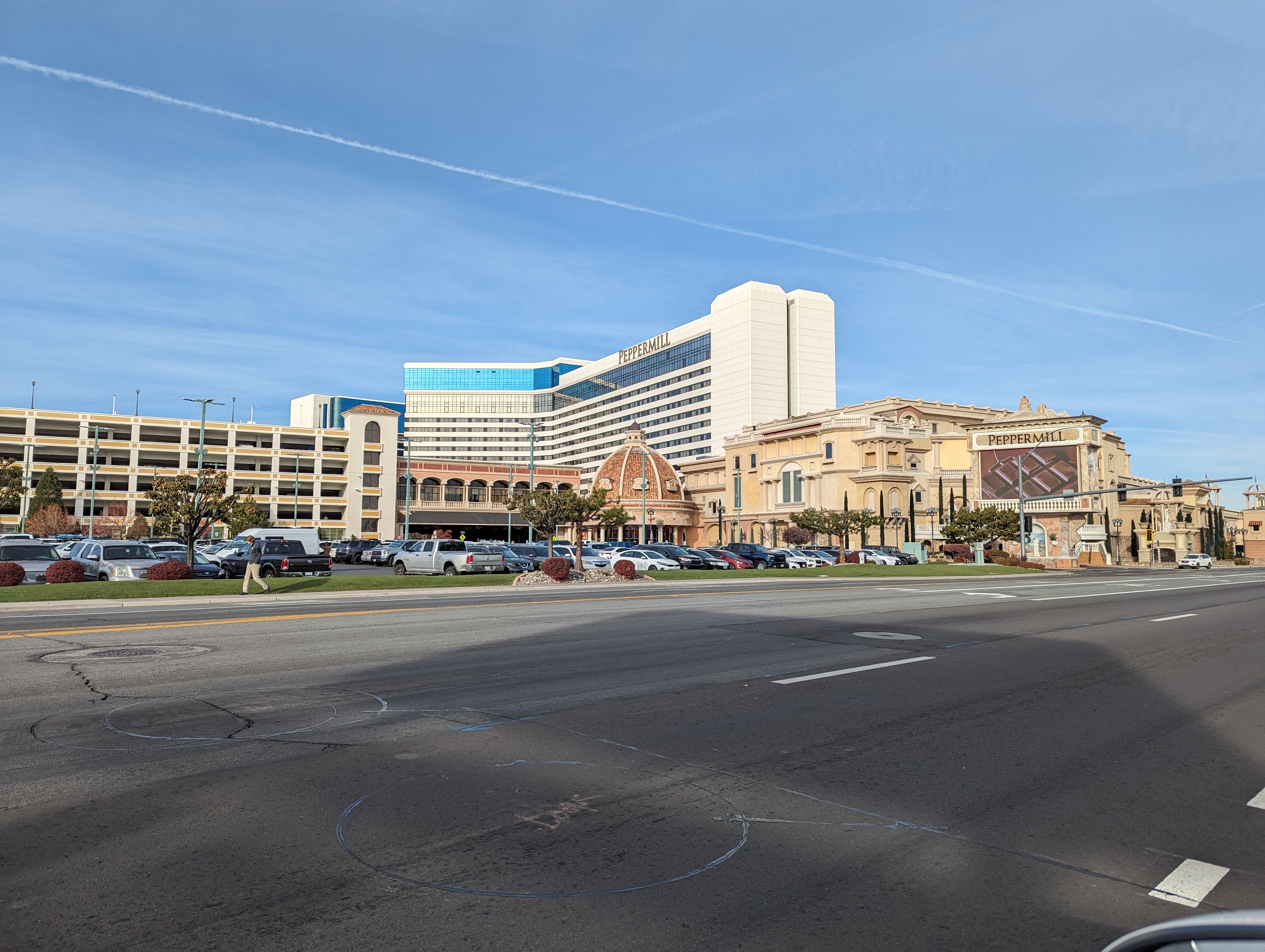
Another, this one sure to have a pizza restaurant.
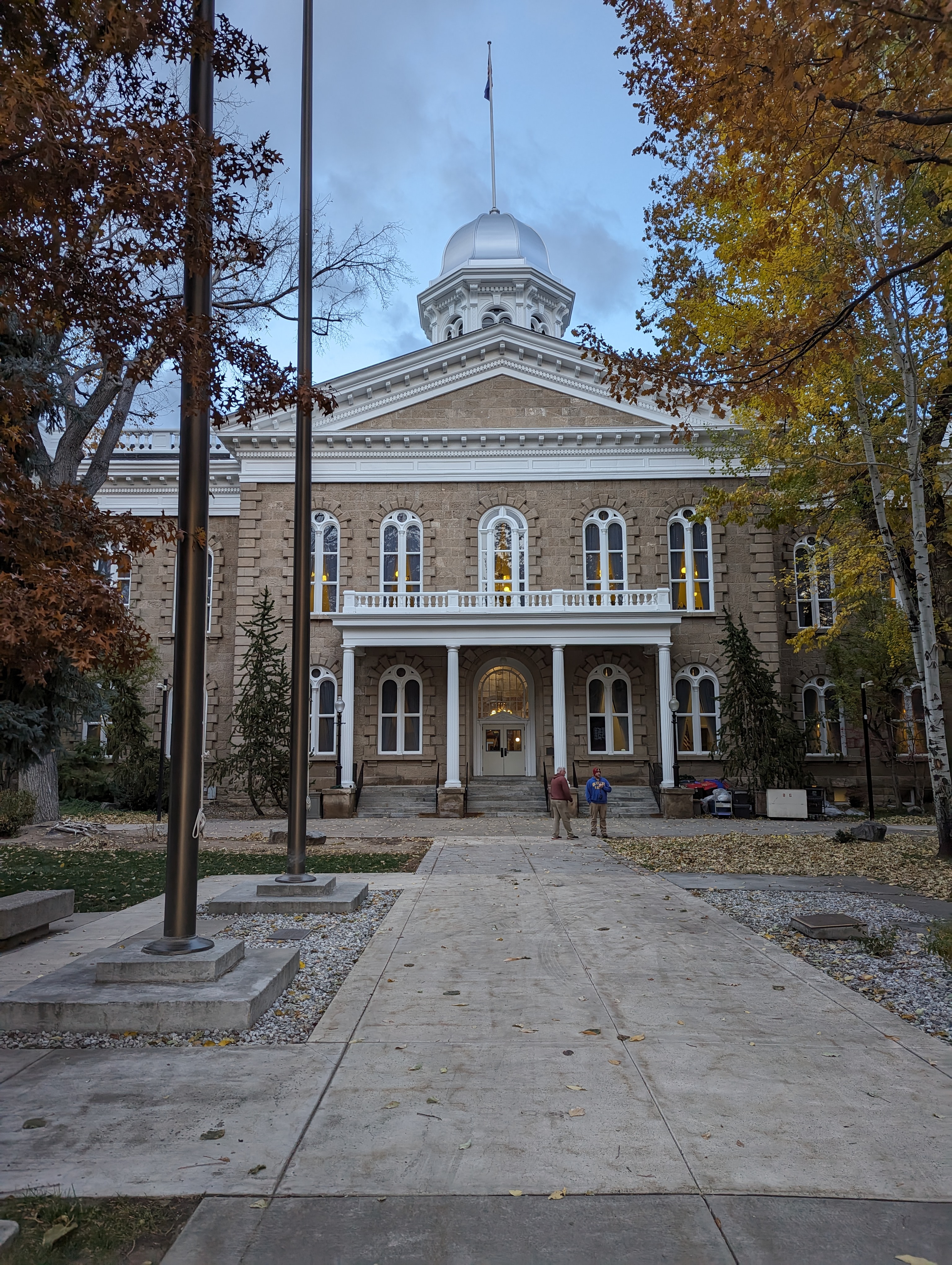
Calm down, calm down. Here's the sedate state capitol, an hour south in Carson City.
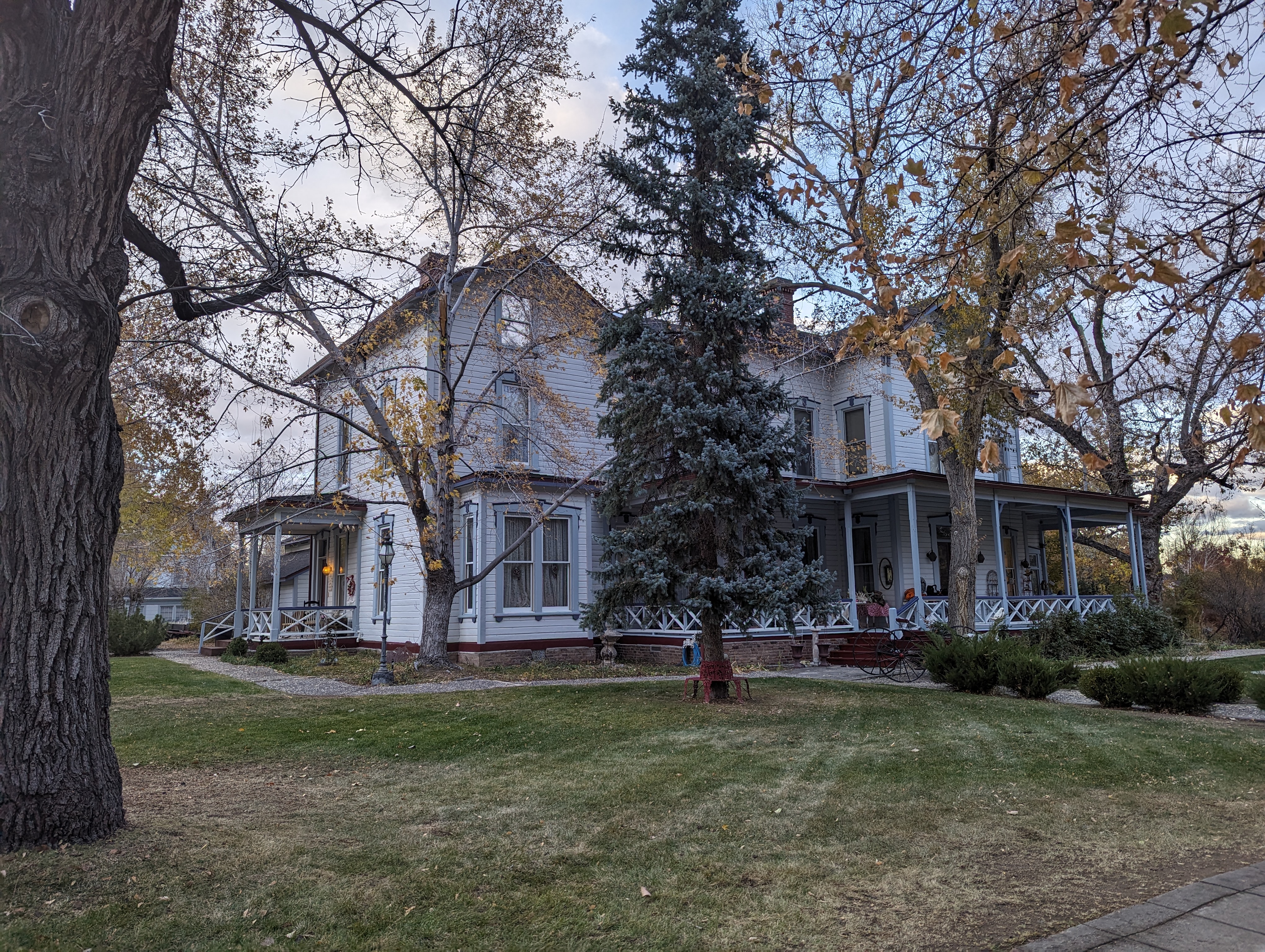
Maybe the biggest wooden house in Carson City, this was built by a 19th century lumberman who more or less butchered the forests around Lake Tahoe. Duane Bliss' spirit hoping for absolution, his name is on a state park on the west side of the lake.
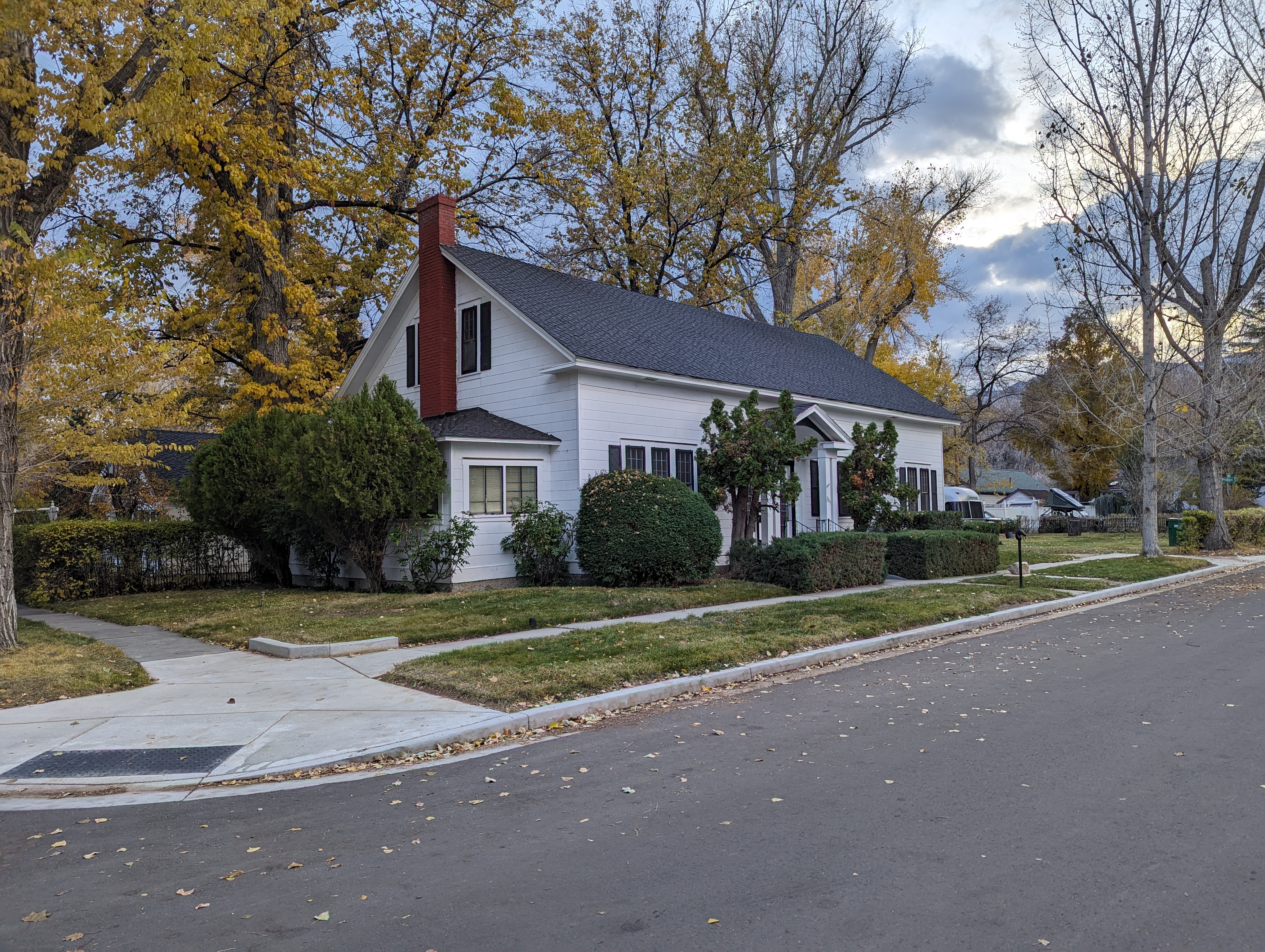
The nearby house of Senator William Stewart, the most important mining lawyer in the history of the United States. It's kind of perfect.
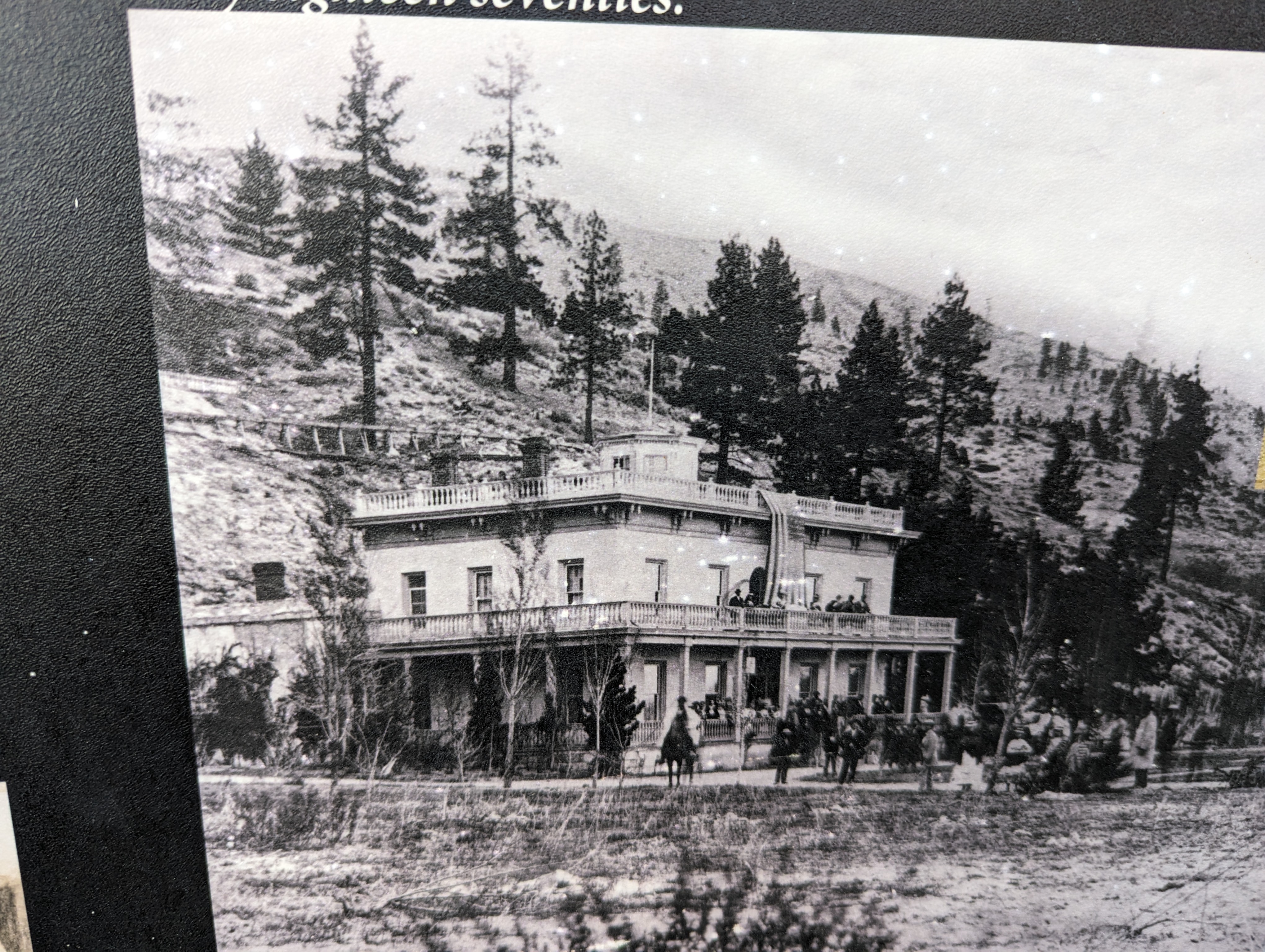
A dozen miles to the north, this is the Bowers Mansion, the first fancy place paid for by people rich from the silver under Virginia City. It's about 10 miles west of the mine but by road twice that far and a bit more.
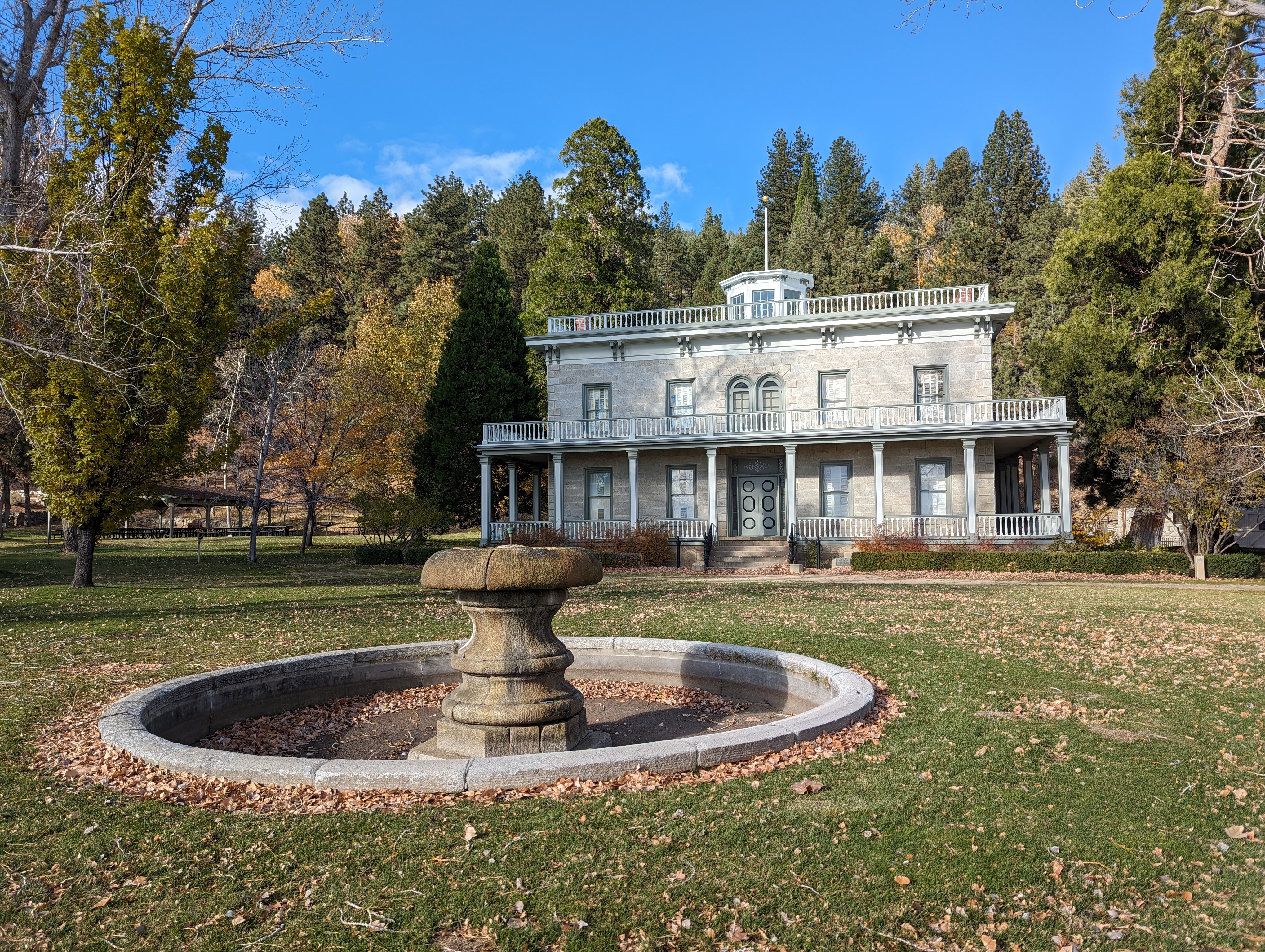
Here it is today. Hooray! The trees are back.
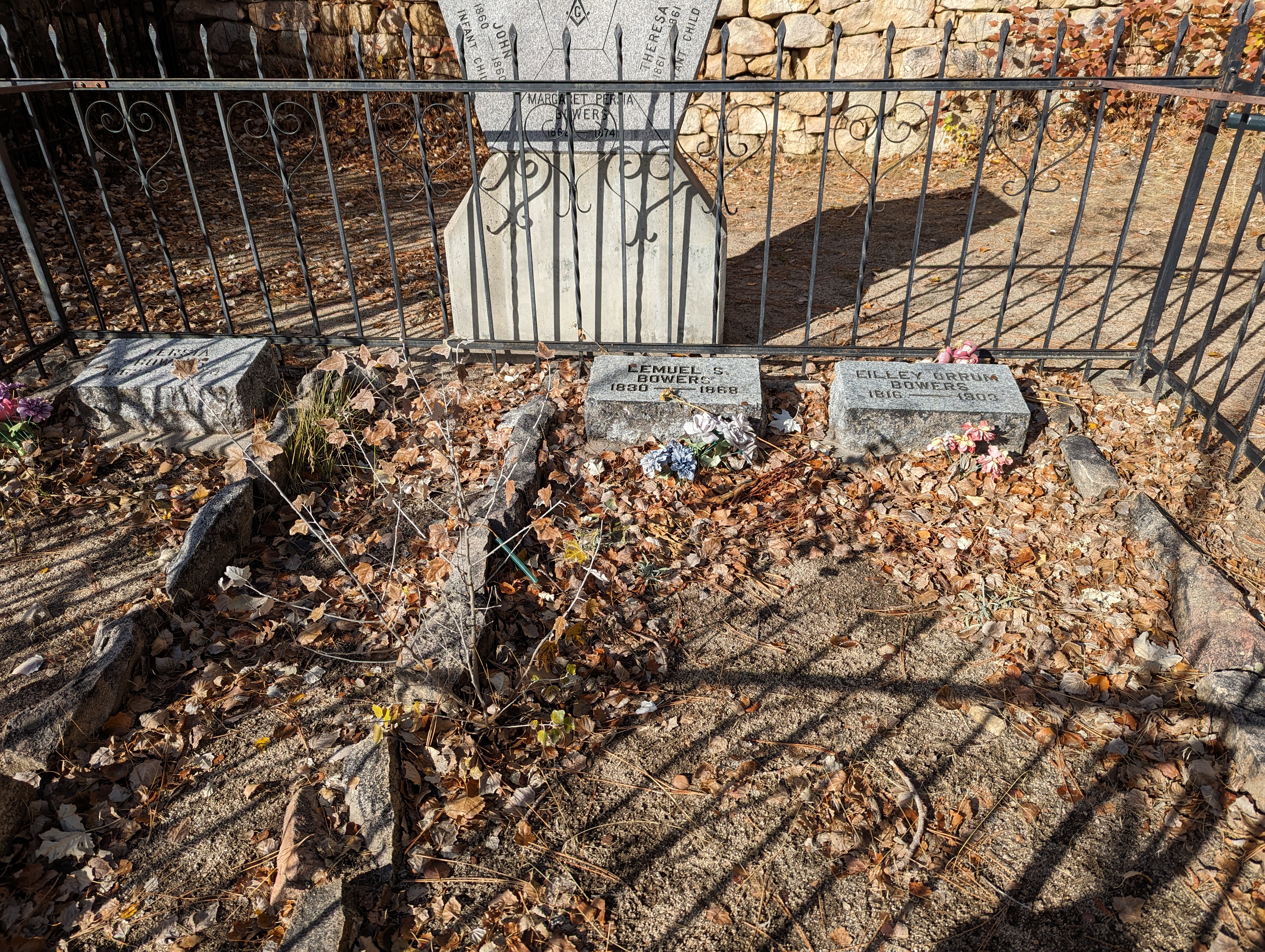
Up on the hill behind the mansion are the graves of Sandy and Eilley Bowers, who built the mansion. Their daughter, who died as a child, is on the left. Their money ran out, and the story doesn't have the ending they wanted.
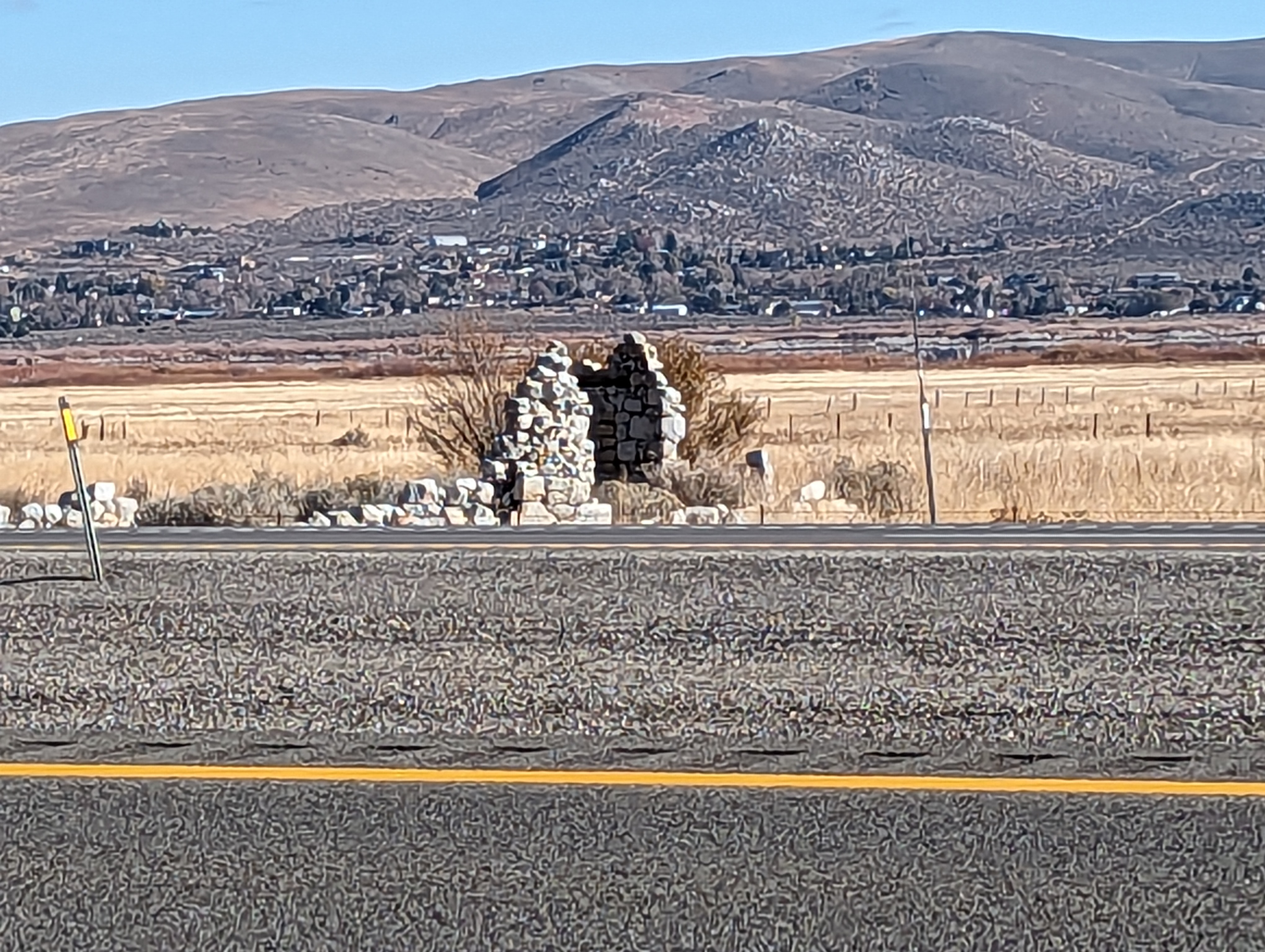
Looking east from a point near the Bowers Mansion, this is all that's left of the mill where silver was extracted from ore produced by Virginia City's Ophir Mine. The Ophir was the first Comstock bonanza or lucky strike. Today, there's a big hole on the site of the mine, which is over on the other side of the next mountain after the hill here.
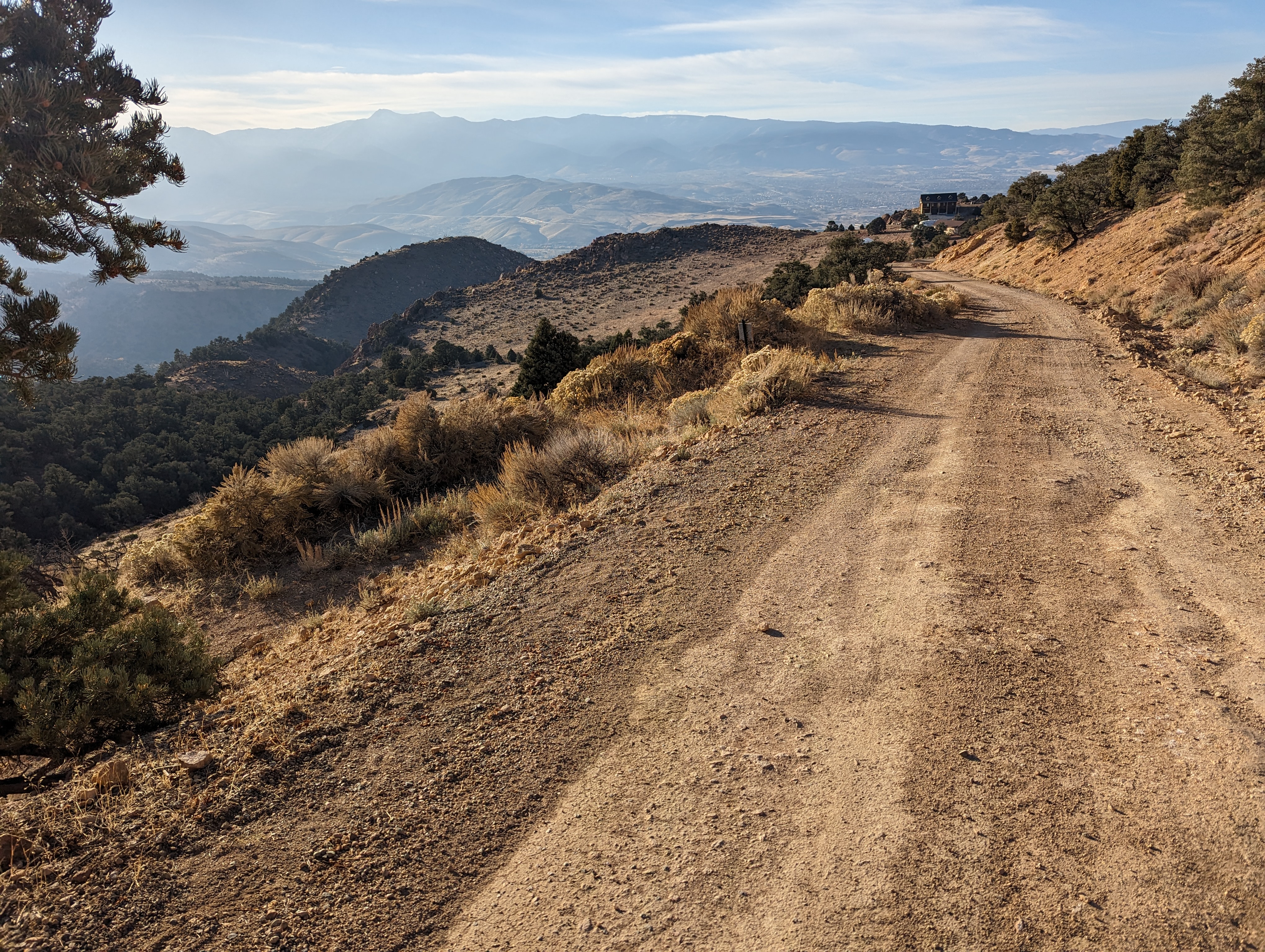
Until the 1930s, this was the road from Reno to Virginia City. It's the Geiger Grade, built as a toll road.
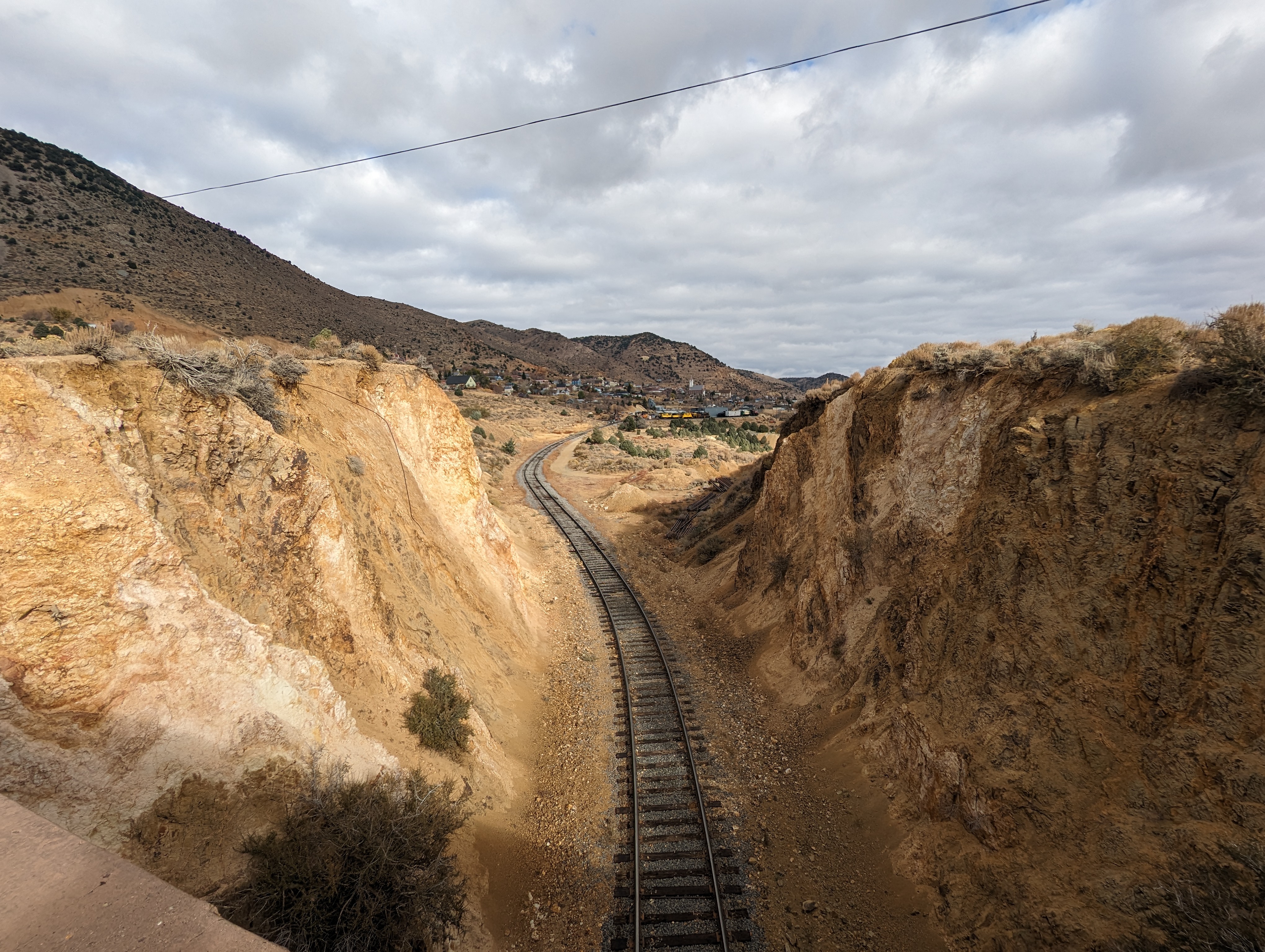
In 1872, the Virginia and Truckee made getting to Virginia City a lot easier. Ironically, the Comstock was three years from its peak and less than a dozen from its terminal decline.
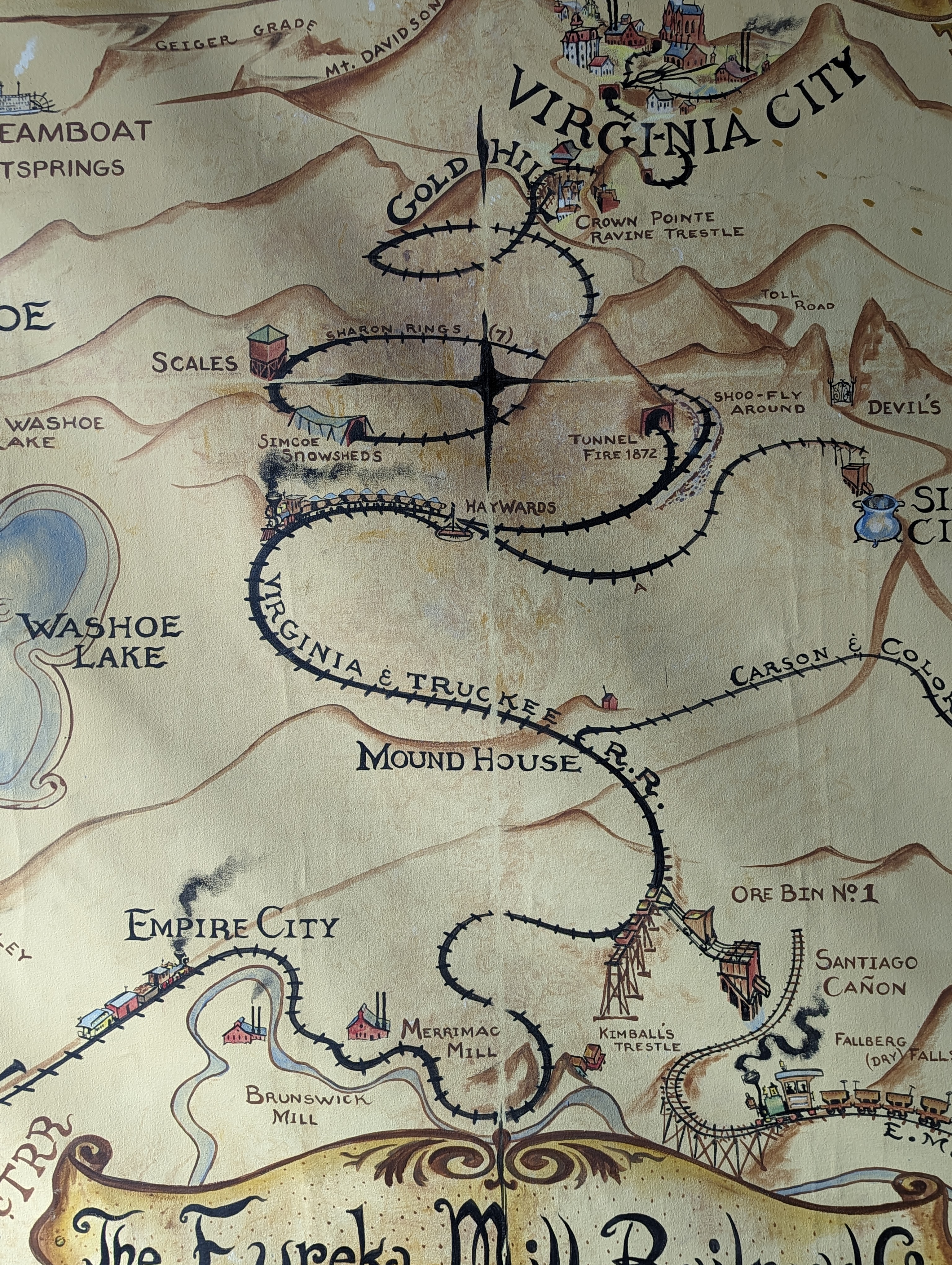
Dramamine available on request. Empire City is just east of Carson City, where the railroad stopped between Reno and Virginia City.
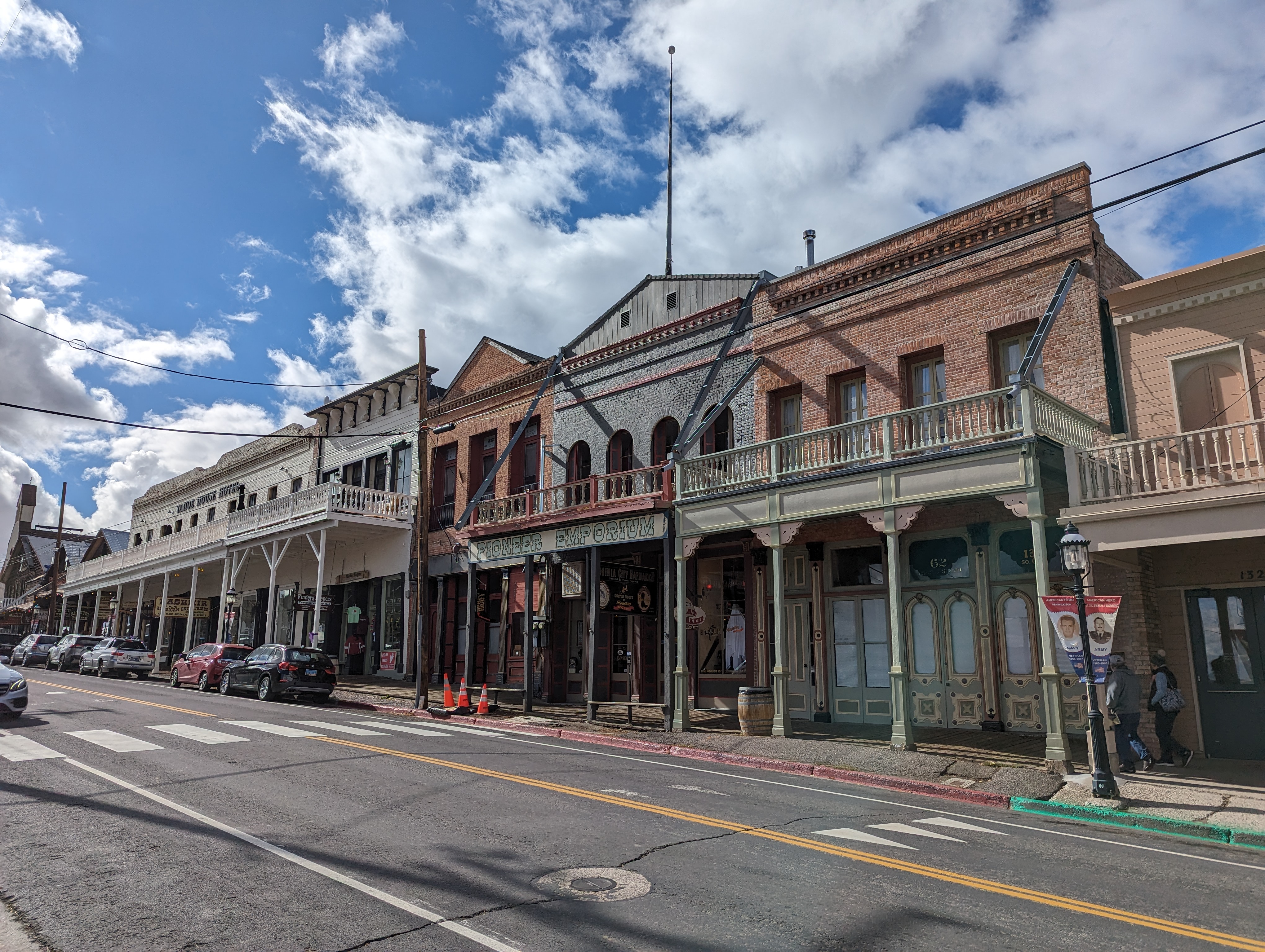
Virginia City's Main Street, C Street, is lined mostly with buildings built immediately after a devastating fire in 1875. Yes, that was just before the mines began pooping out. But nobody knew.
**
**
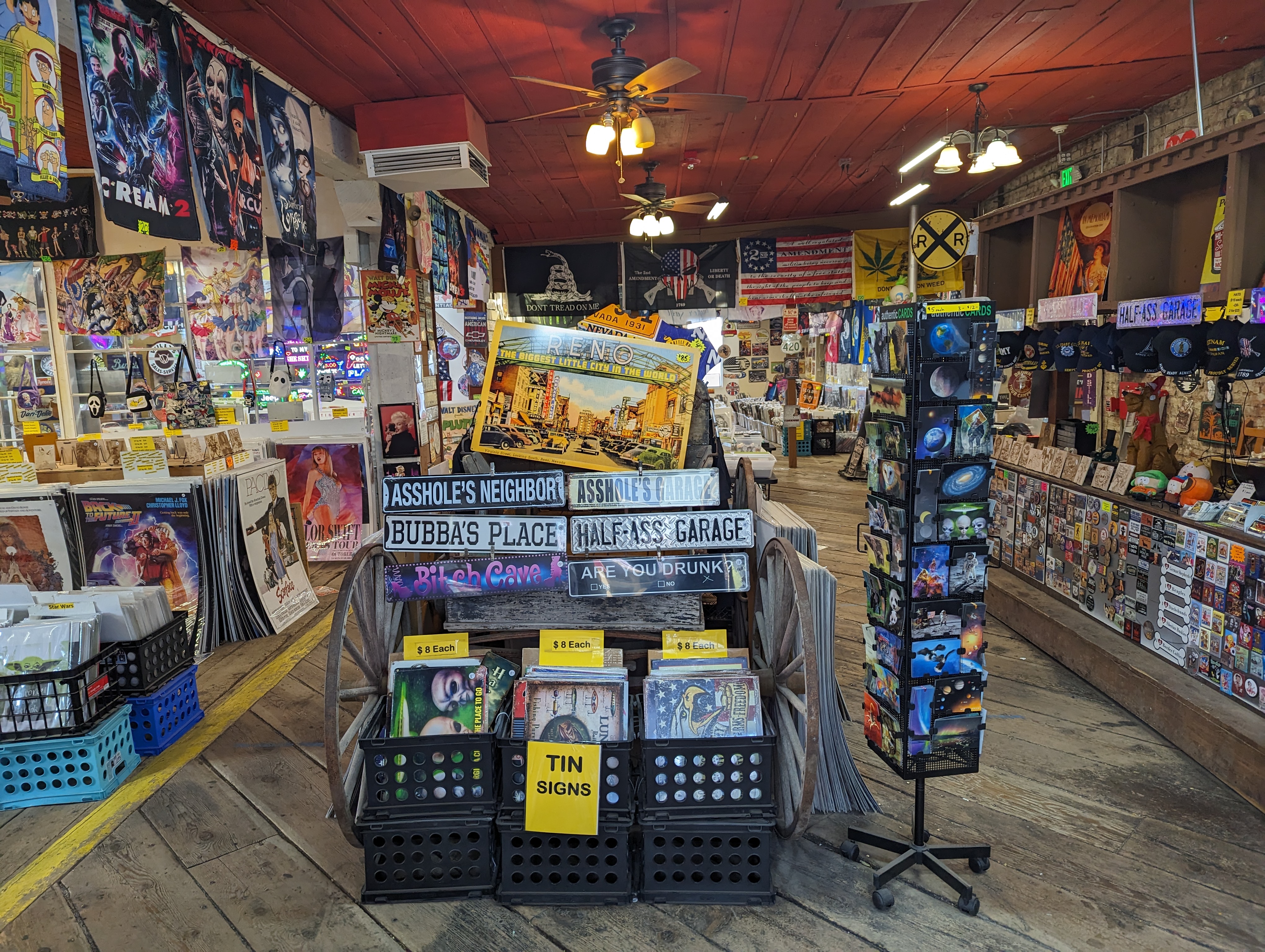
The town today is cruelly dependent today on tourists.
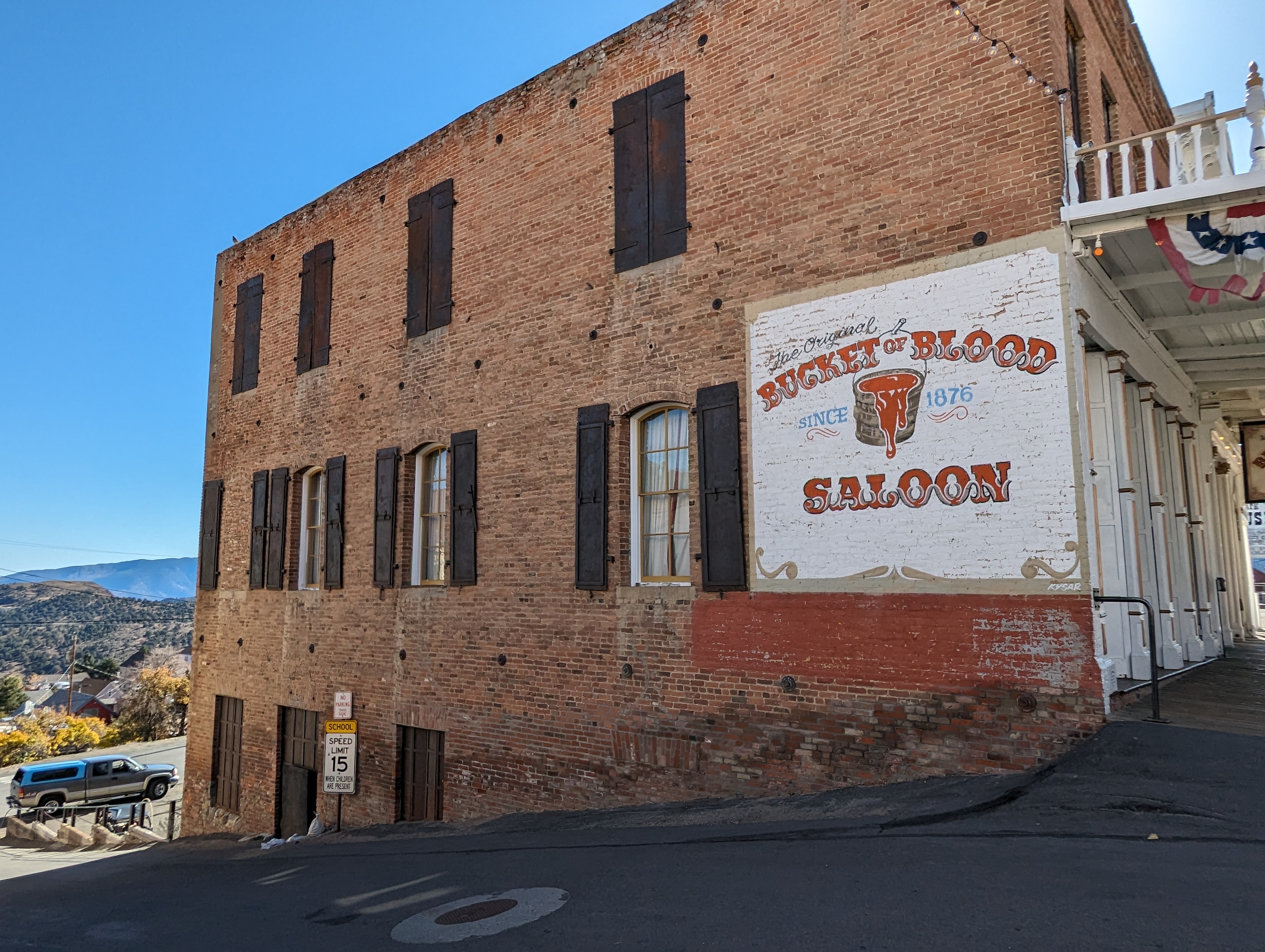
The building dates from 1876 but the business from 1931. That's a little early for mass tourism, but maybe the owner saw the future.
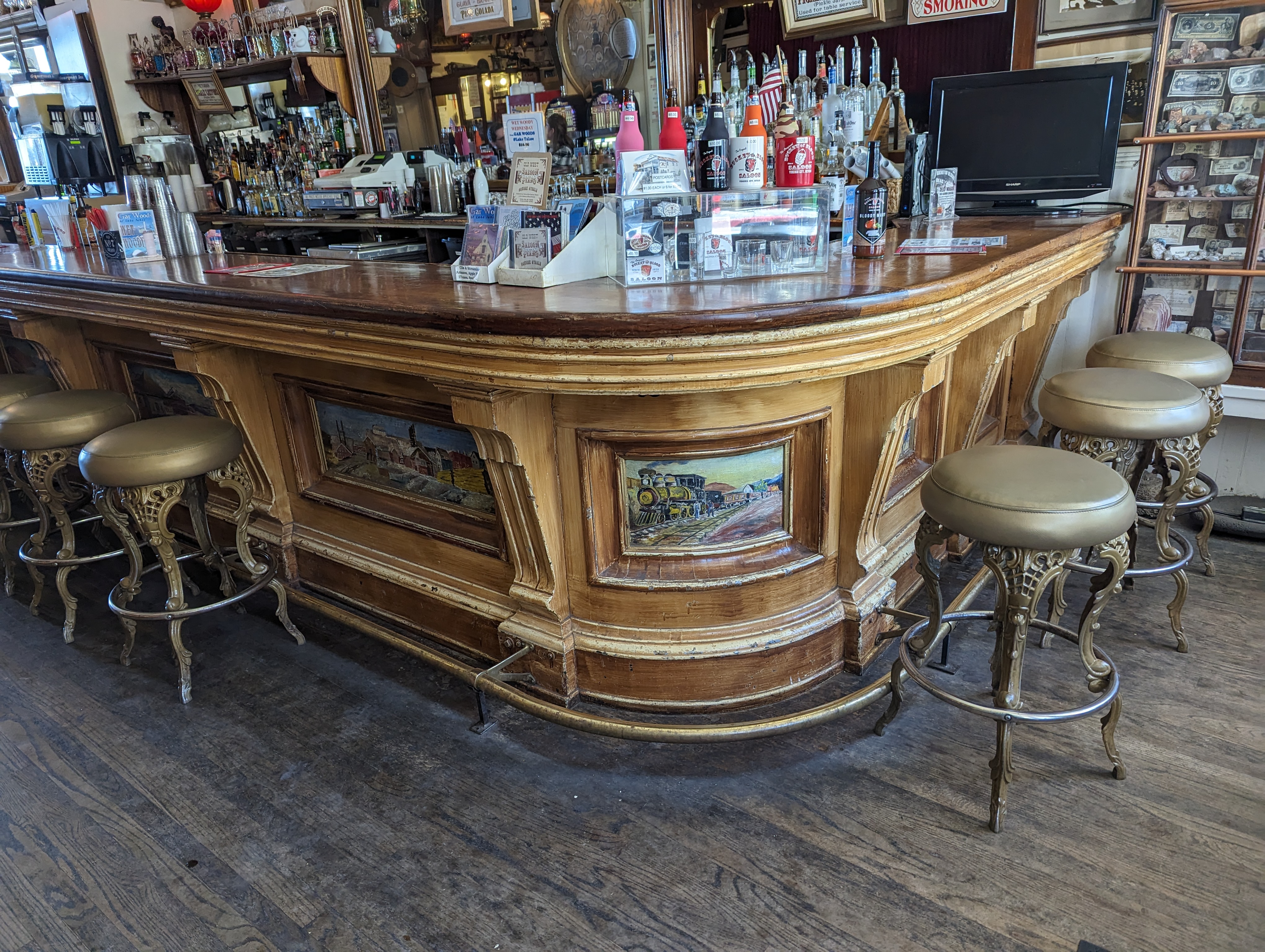
The saloon does have a fine old bar. Built in the '30s? Good question. No answer here.
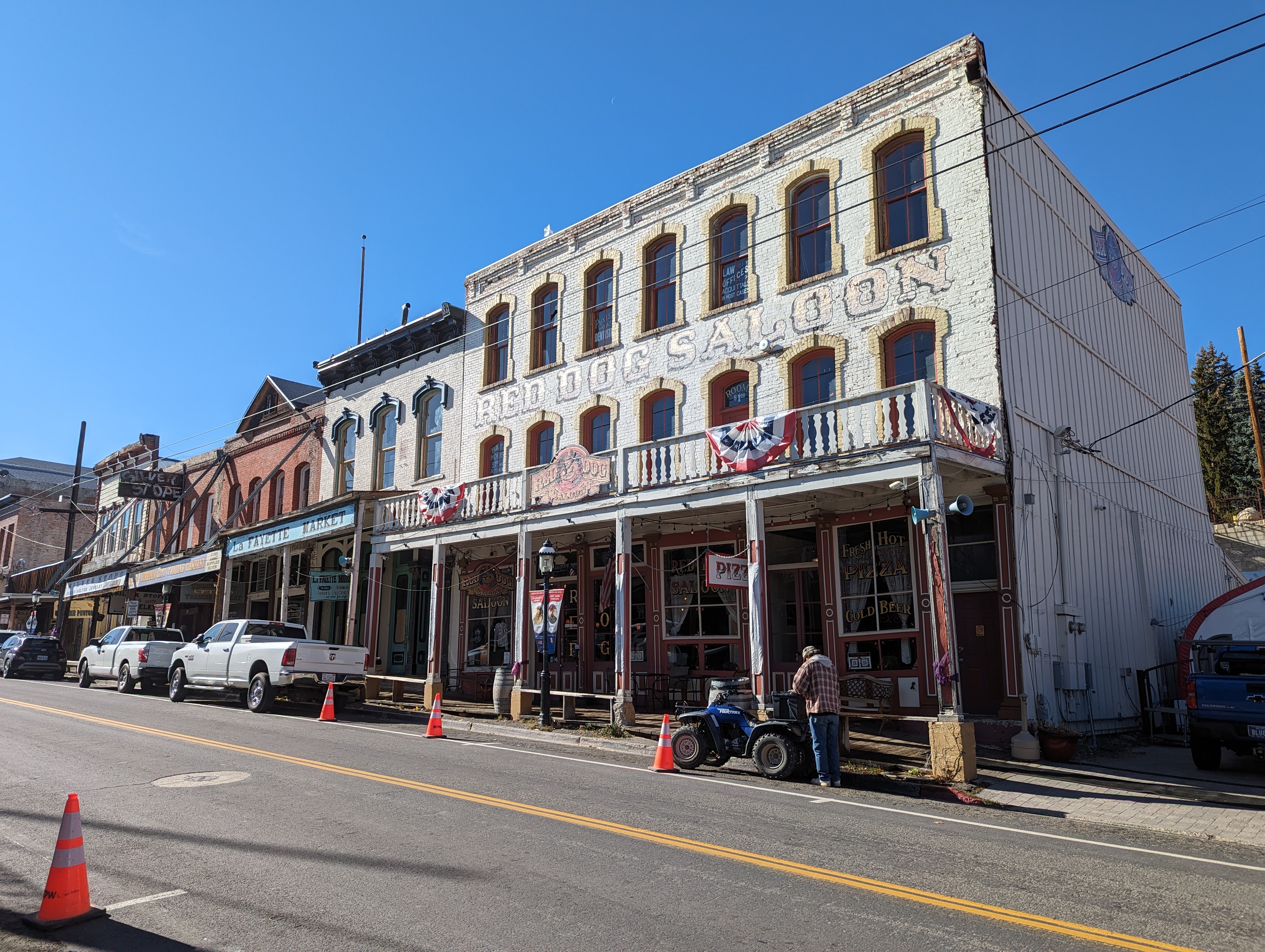
A little competition. Date of the saloon is unknown, but the building earlier housed the Comstock Hotel.
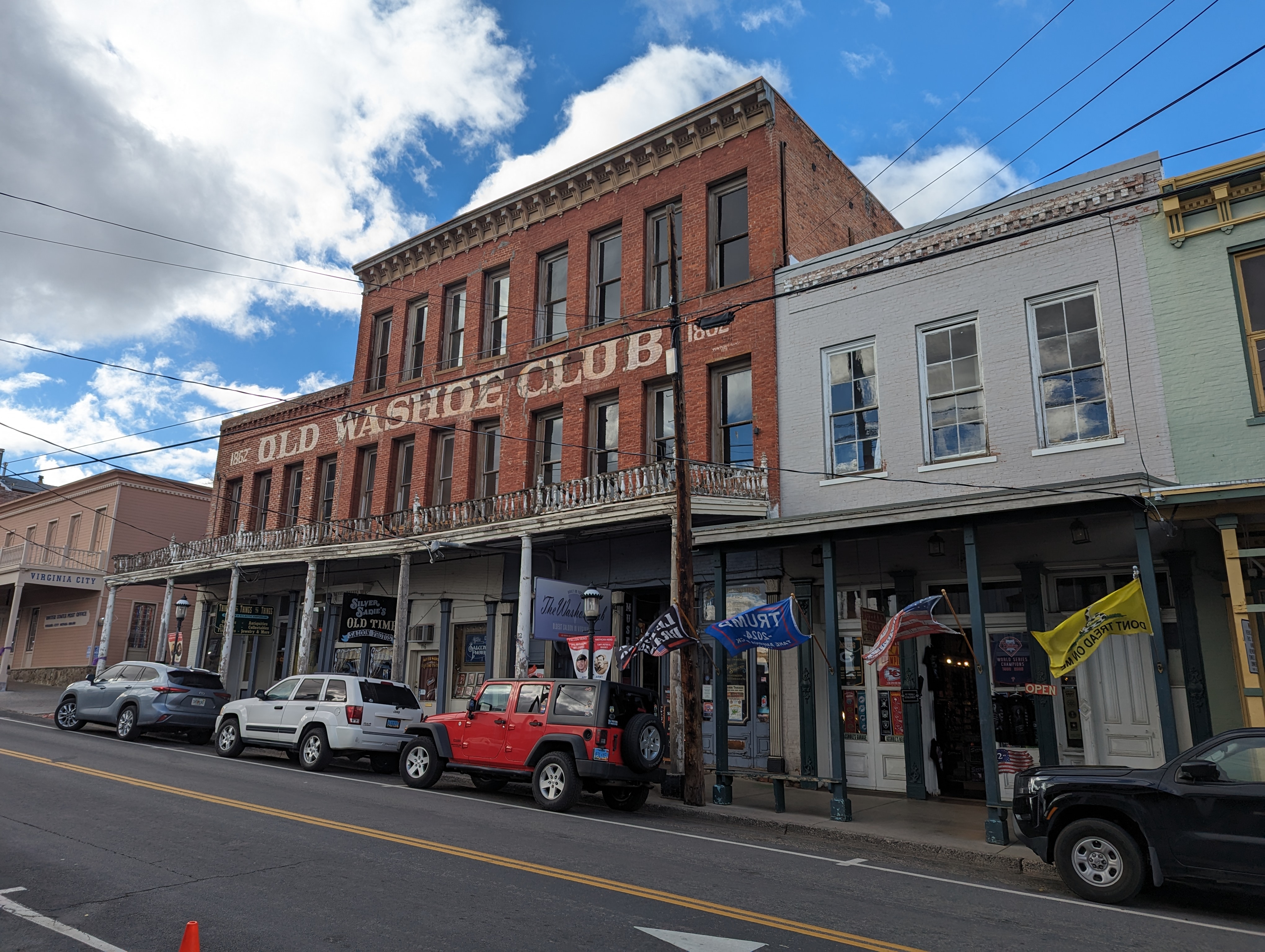
The Crystal Bar was originally on the ground floor, with the Millionaire's or Washoe Club on the floor above.
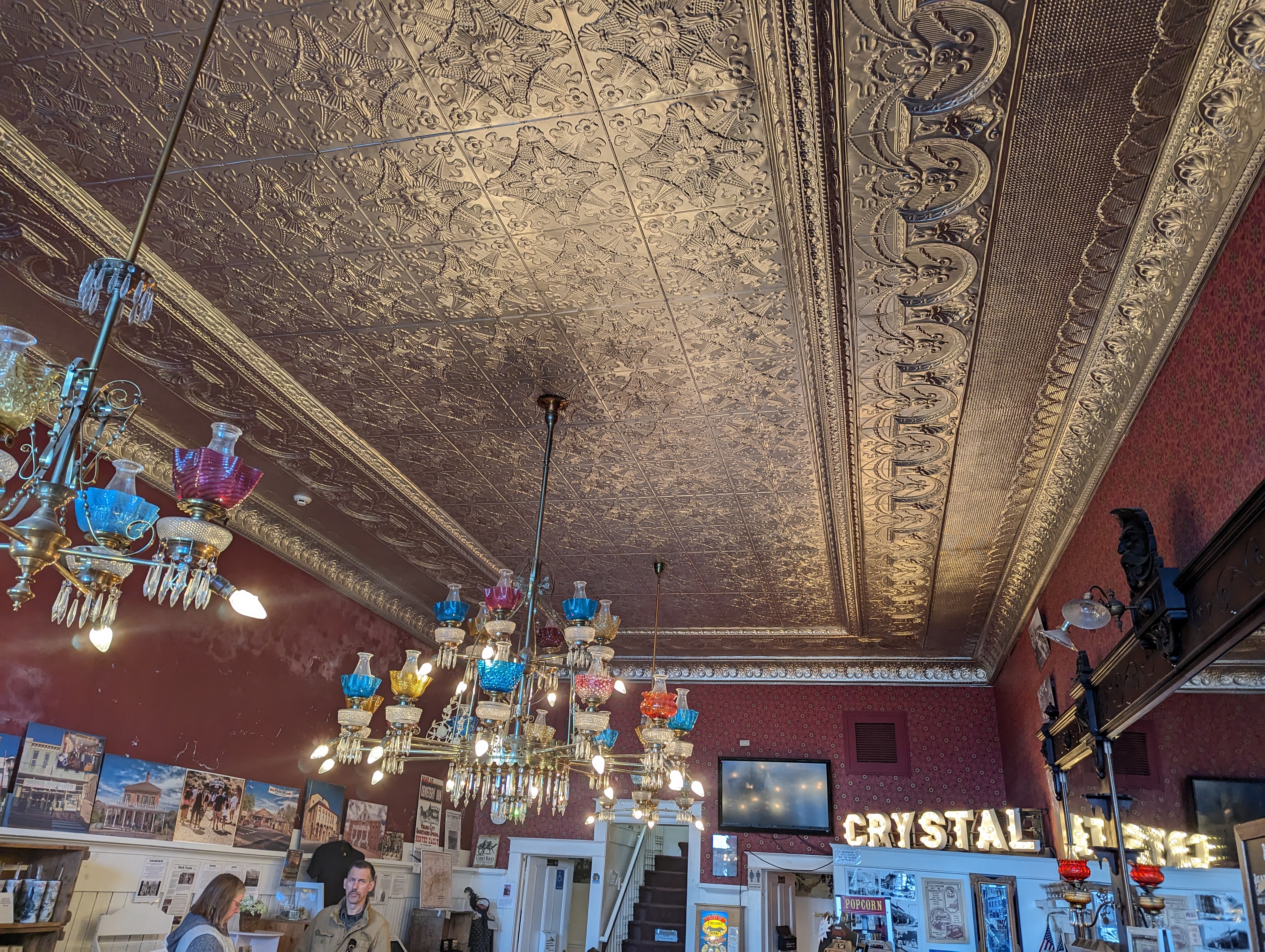
The pressed-tin ceiling of the Crystal Bar was moved down the street about 50 yards to the town's visitor center.
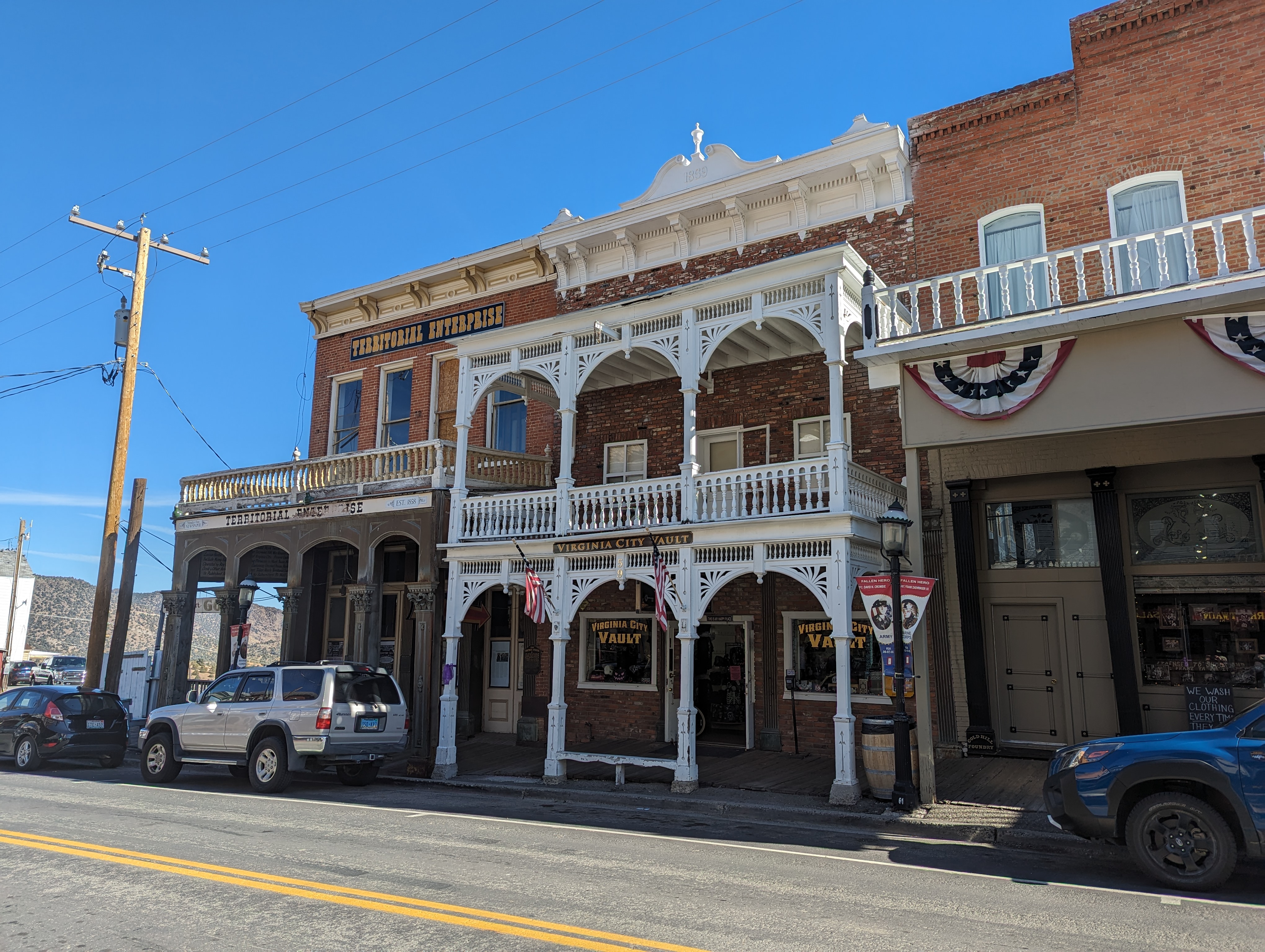
This is perhaps the building that has the greatest interest for school teachers. I mean the building on the left.
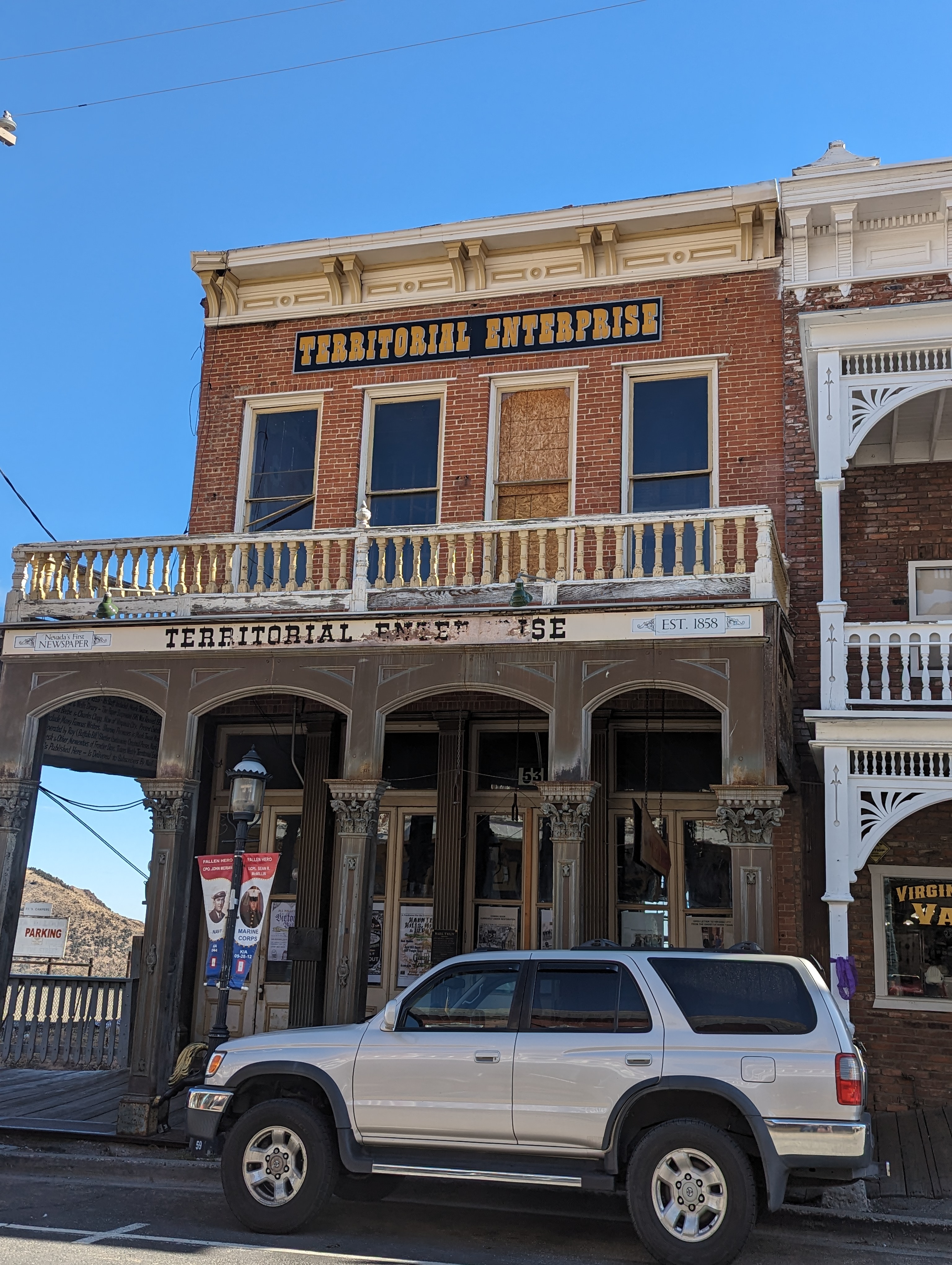
Yep--sorry, I mean yes--it's the place where Sam Clemens worked when he became Mr. Twain. Alas, it's empty inside. Just a shell.
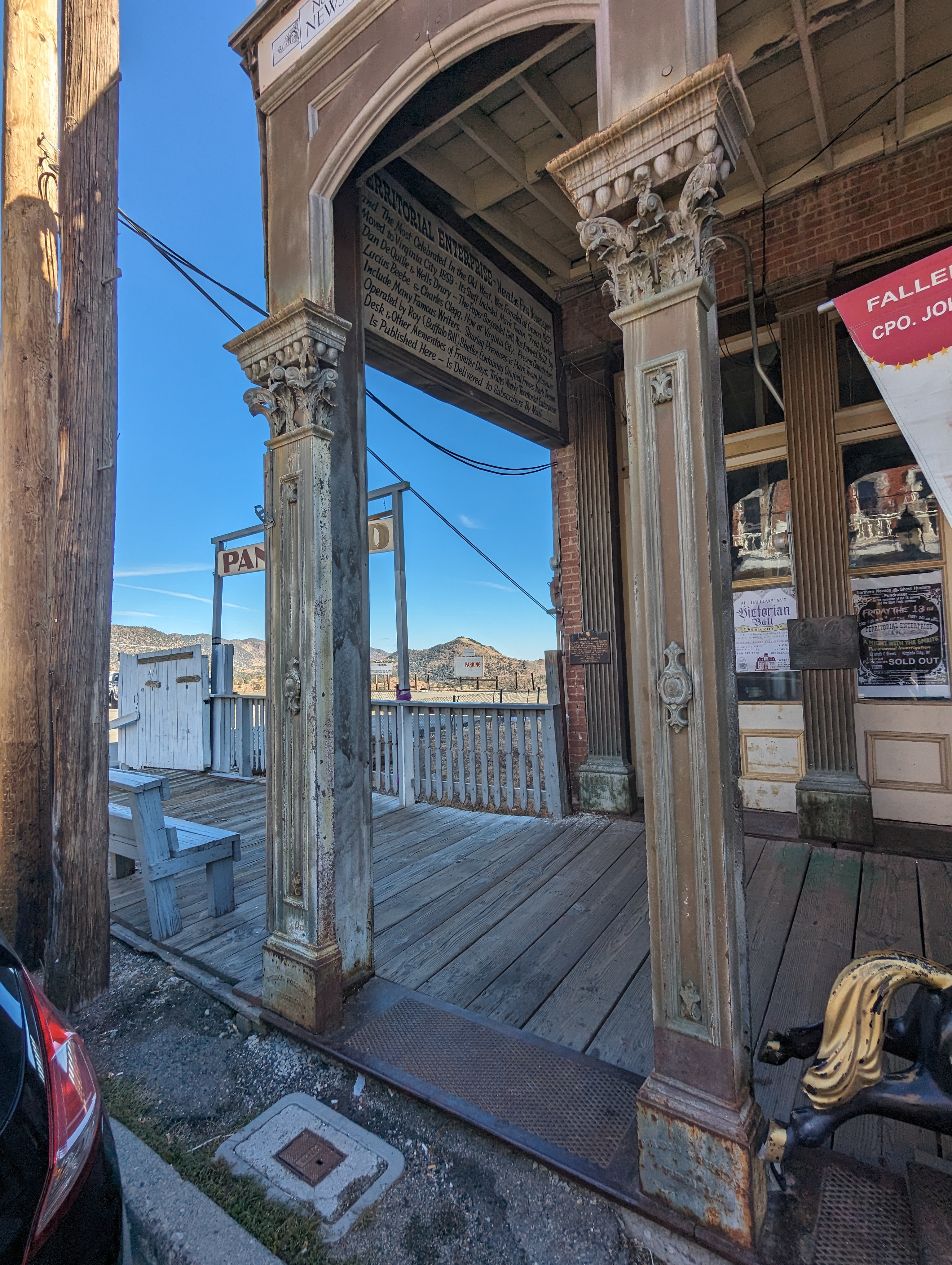
But an interesting shell. I'm thinking of these iron columns.
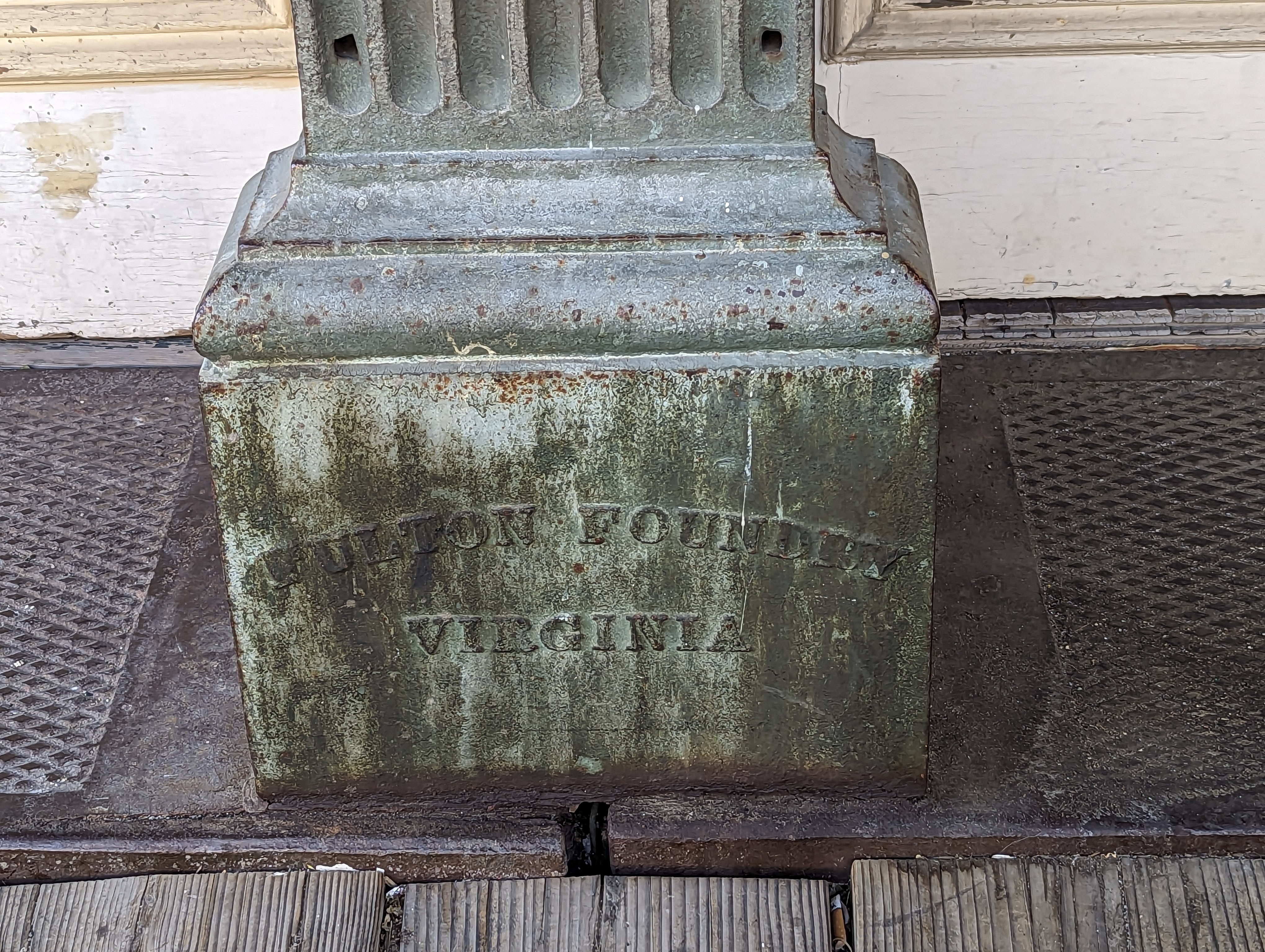
Virginia City was civilized, not only with Corinthian columns (or pilasters?) but with local foundries to make the things.
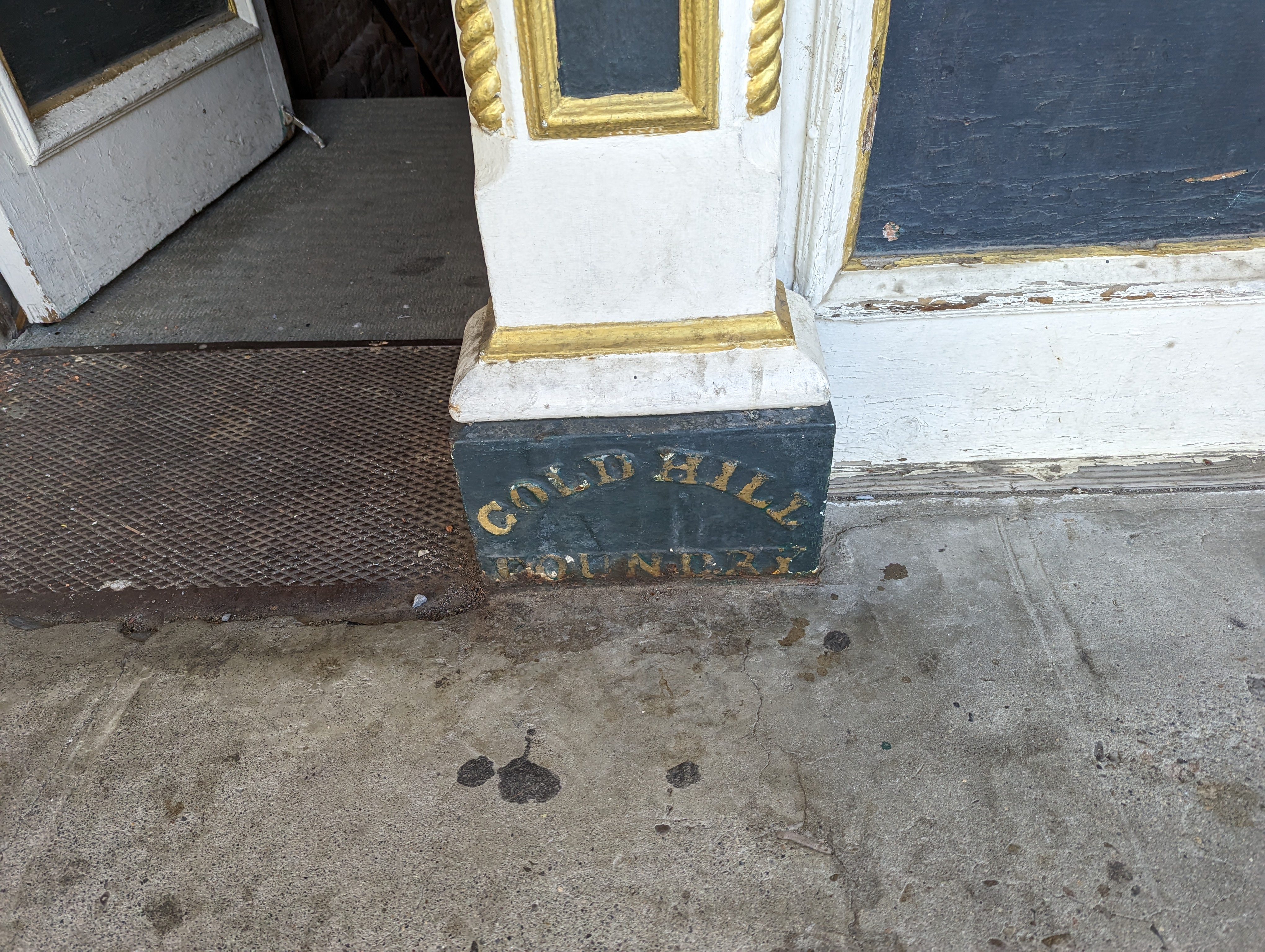
There were three of them in the 1870s.
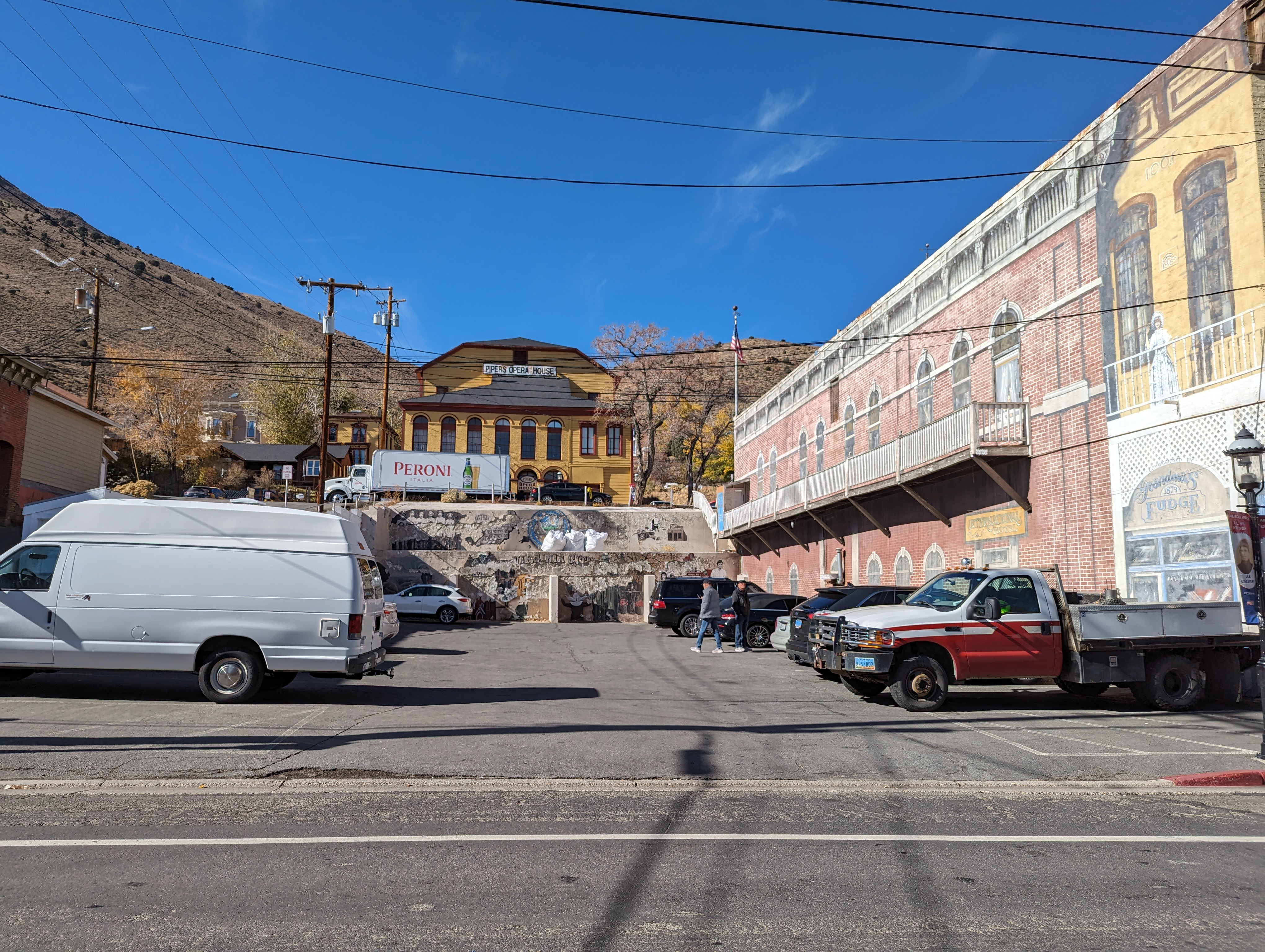
The town's fanciest private structure was the 6-story International Hotel, built after the fire but burned again in 1914. Nobody's been brave enough to try again, though somebody decided that a little trompe l'oeil would be nice. That's Pipers Opera House in the background.
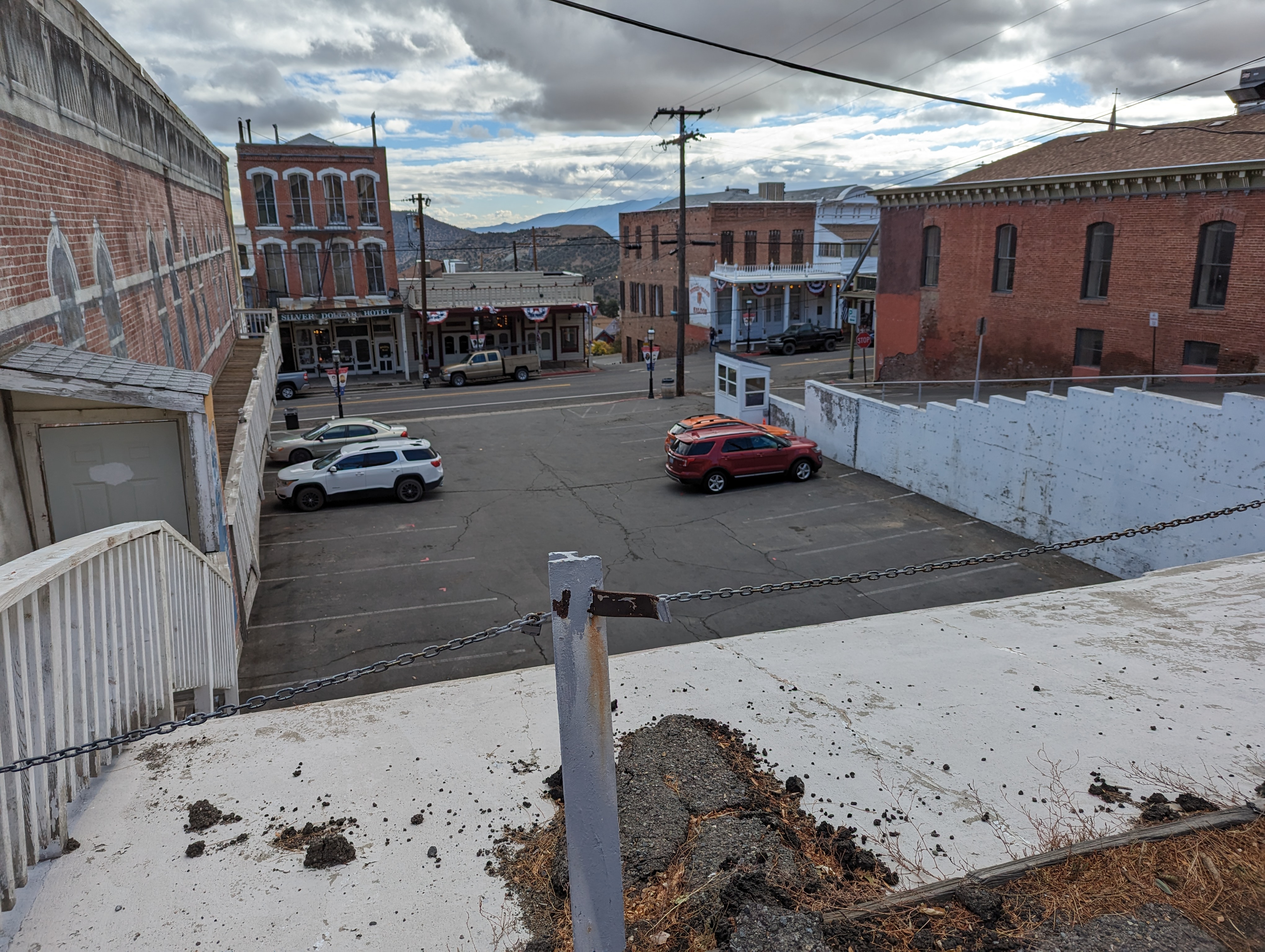
View from B street.
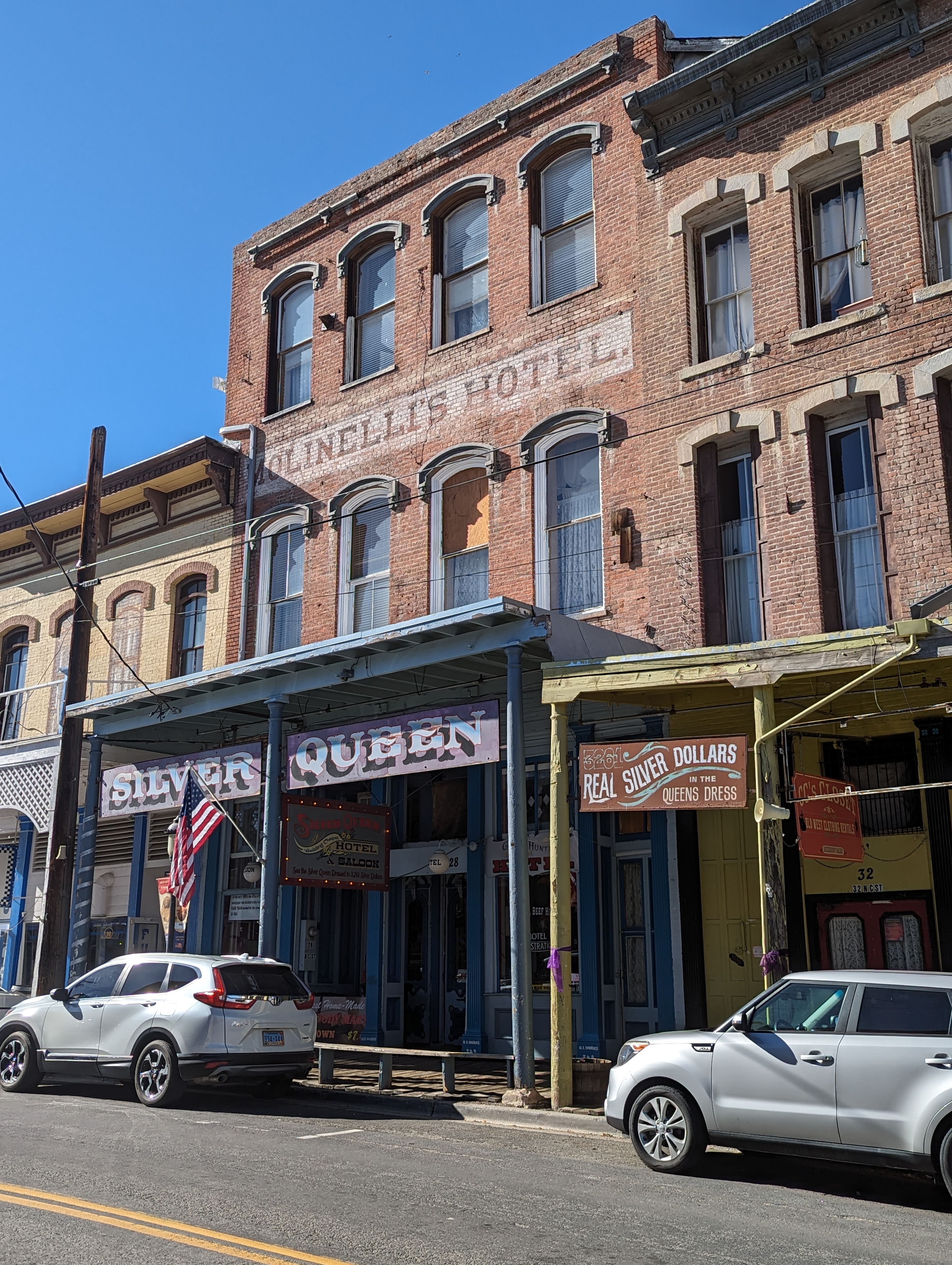
Another hotel is still in business as the Silver Queen.
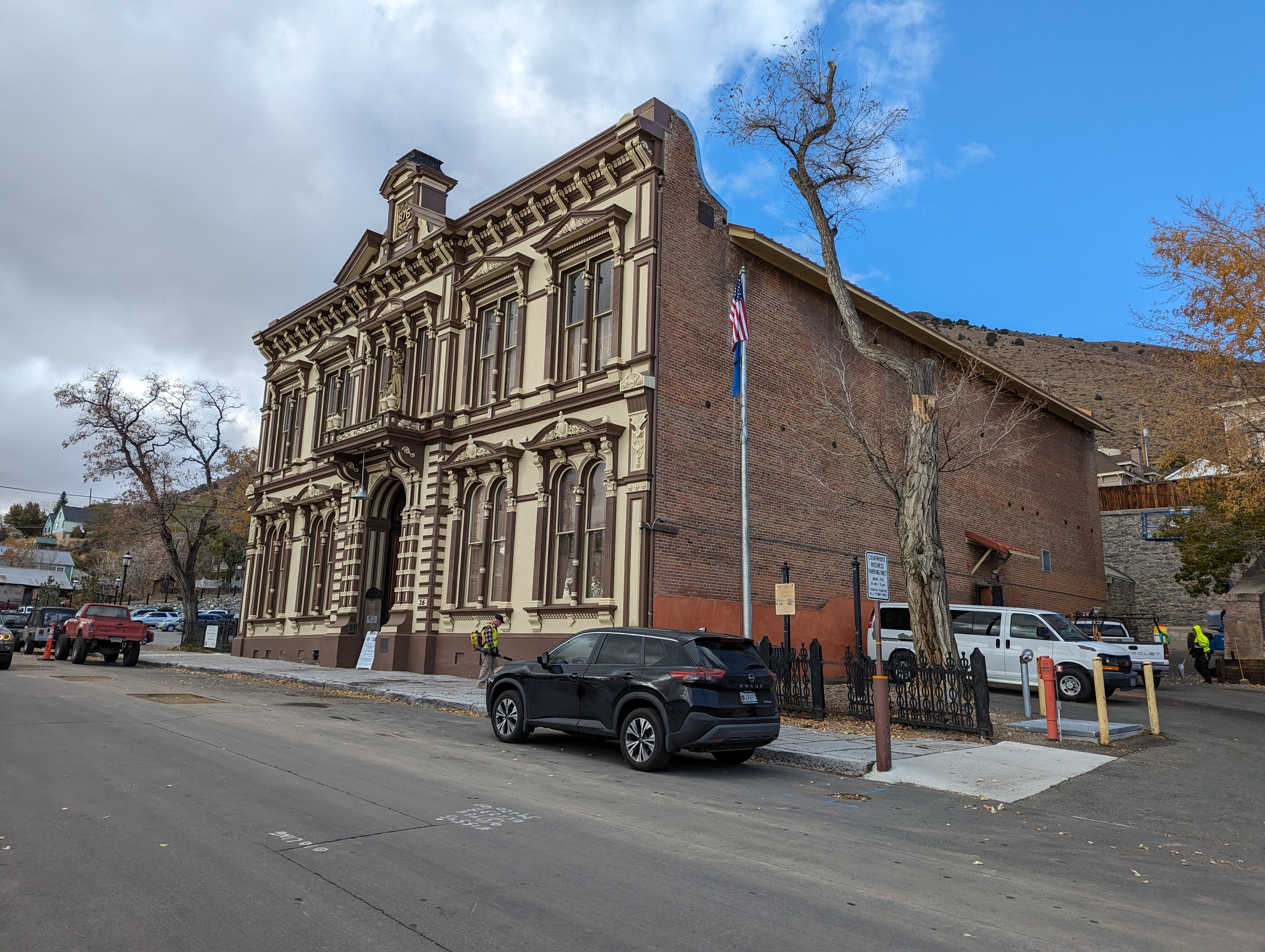
The Storey County Courthouse. Pretty fancy for a county with just 4,000 people.
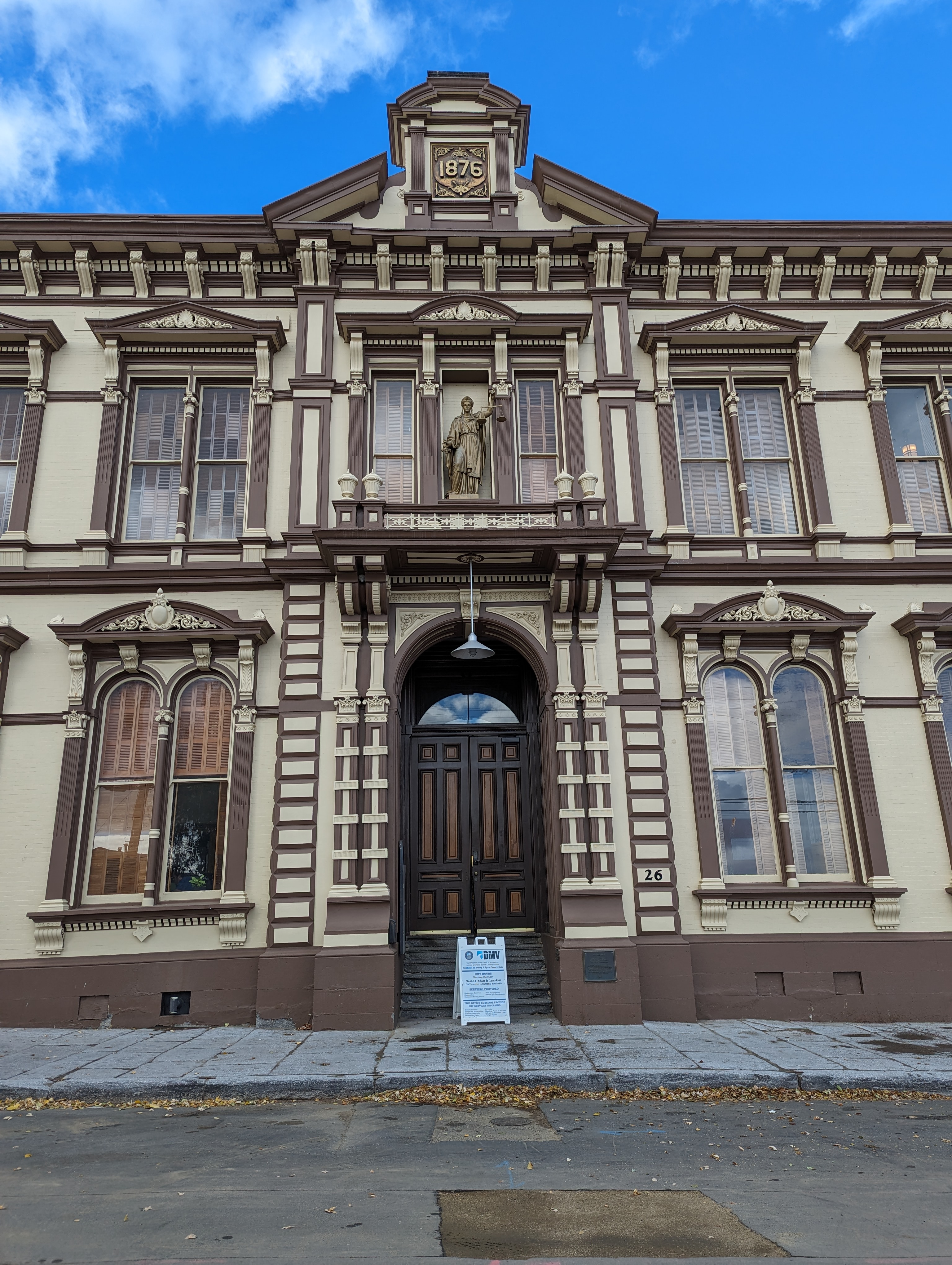
Unlike many other courthouses from the 1870s, this one is still in use.
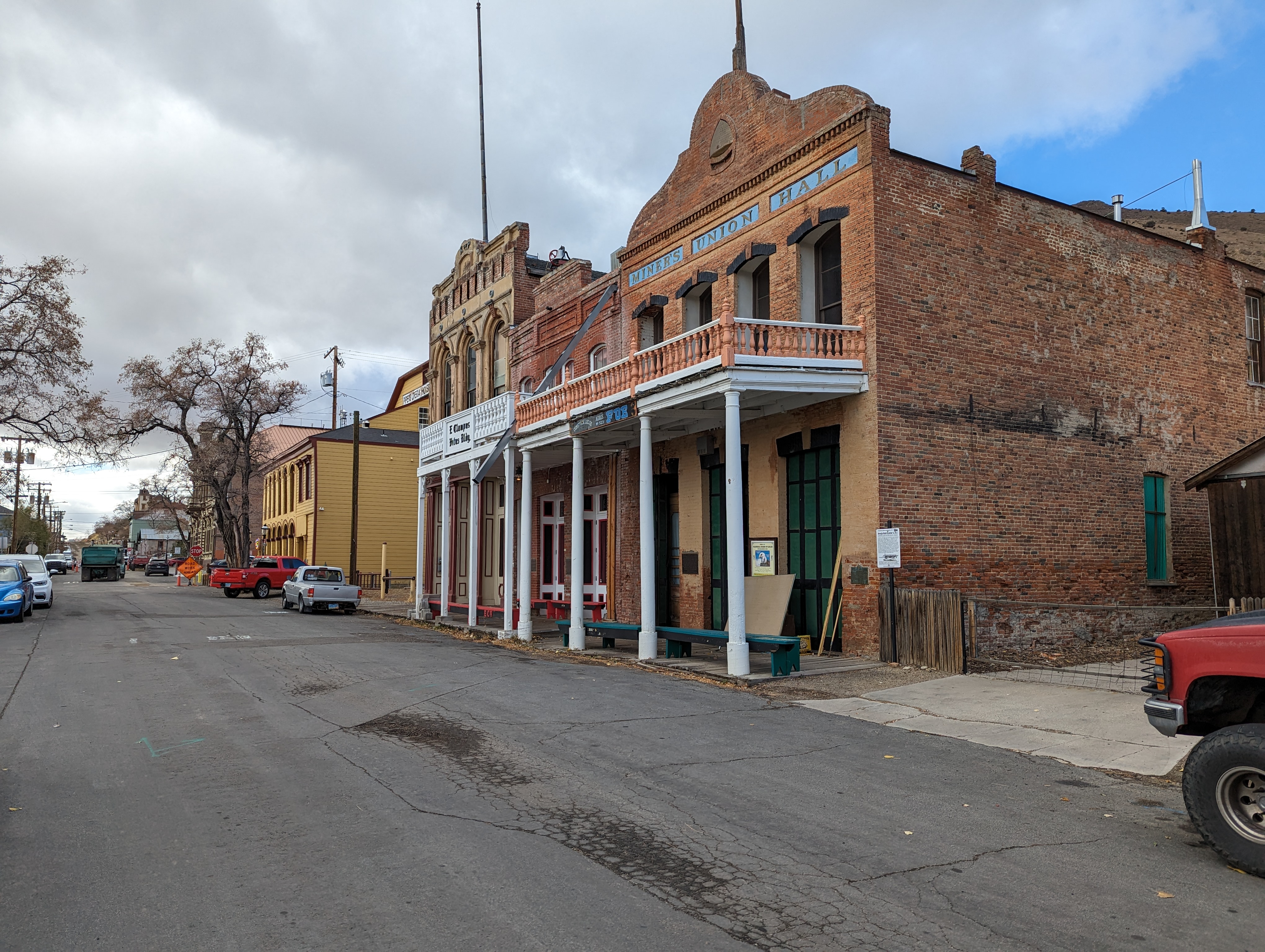
Three fraternal organizations banding together. From left to right, the Miners' Union Hall, the Knights of Pythias, and the Odd Fellows.
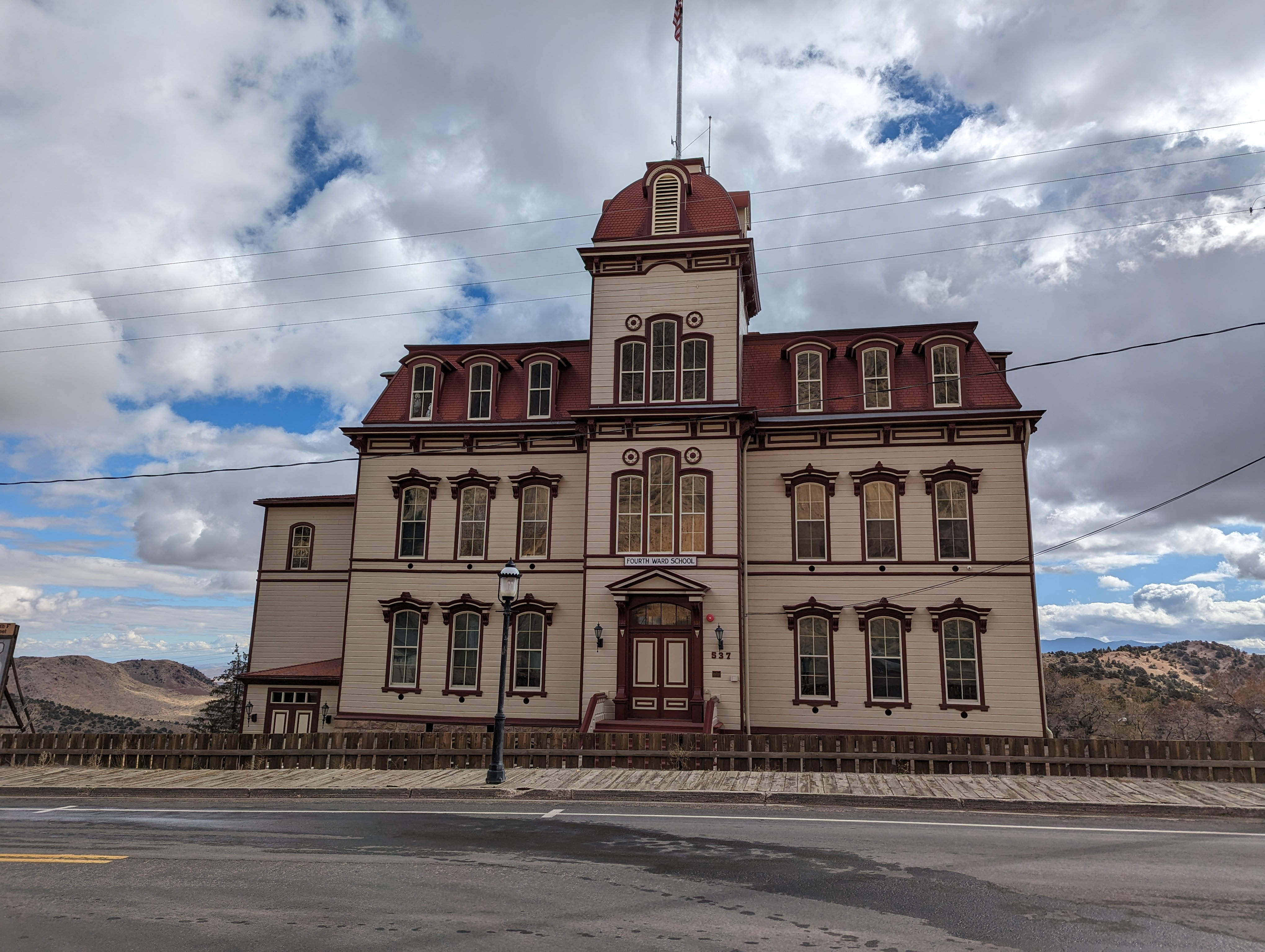
The Fourth Ward School, abandoned for many years, is now a fine museum with displays partly about school life, partly about mining, and partly about the town's famous water supply from Marlette Lake, in the Carson Range.
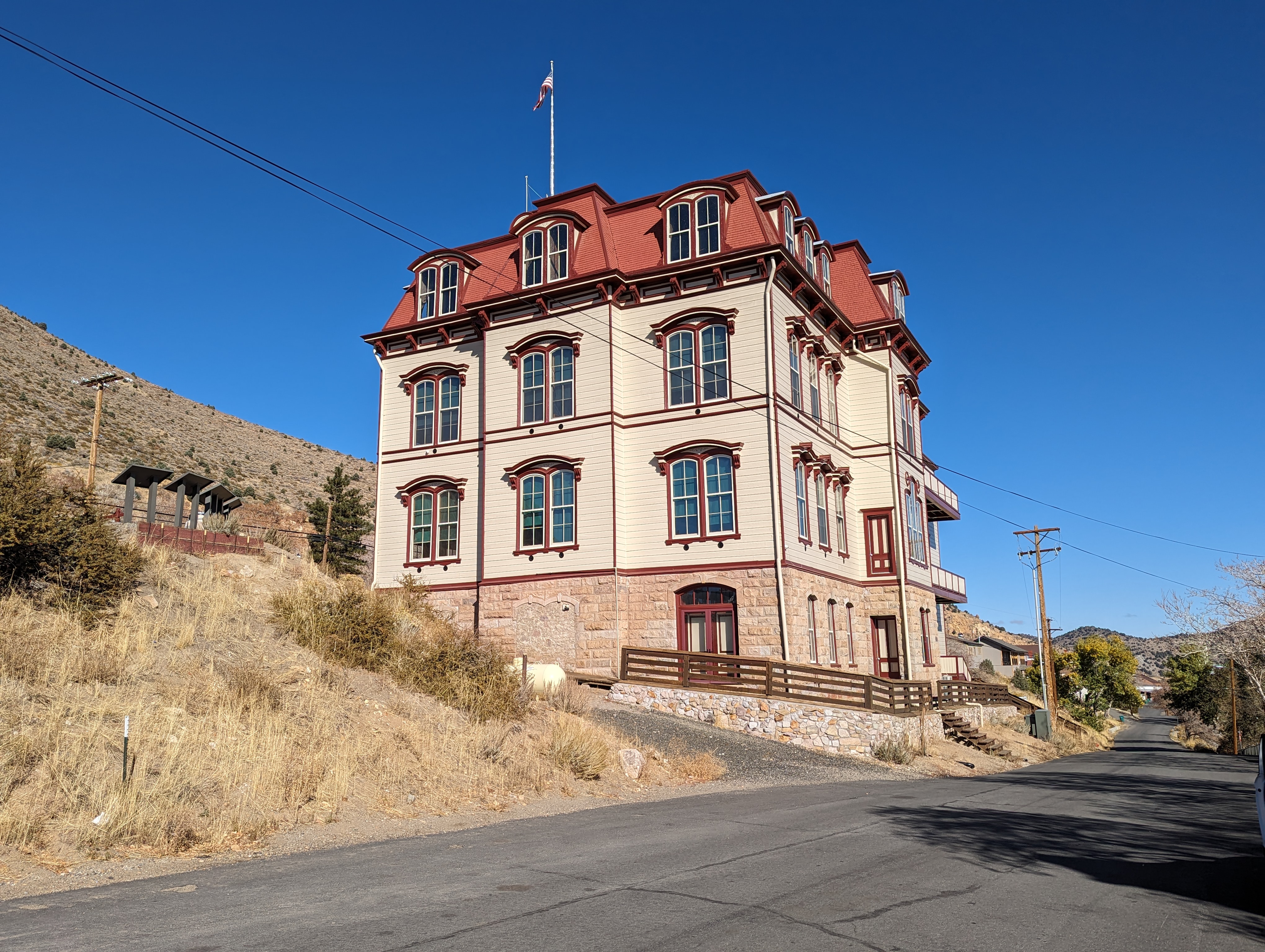
The same school seen from below. The streets in town are reasonably flat, but many buildings are taller on one side than the other.
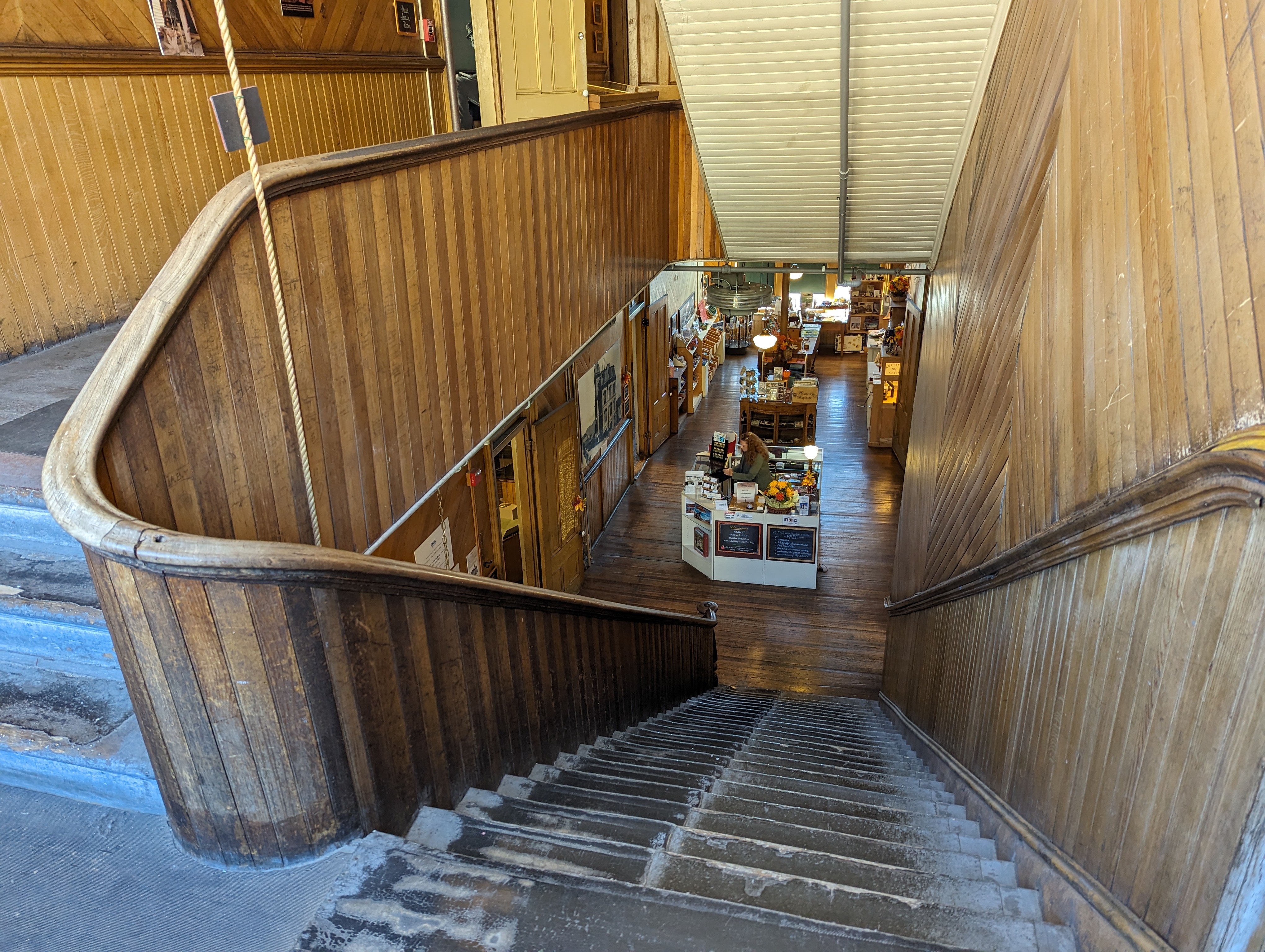
Can you hear the rampaging horde when school lets out?
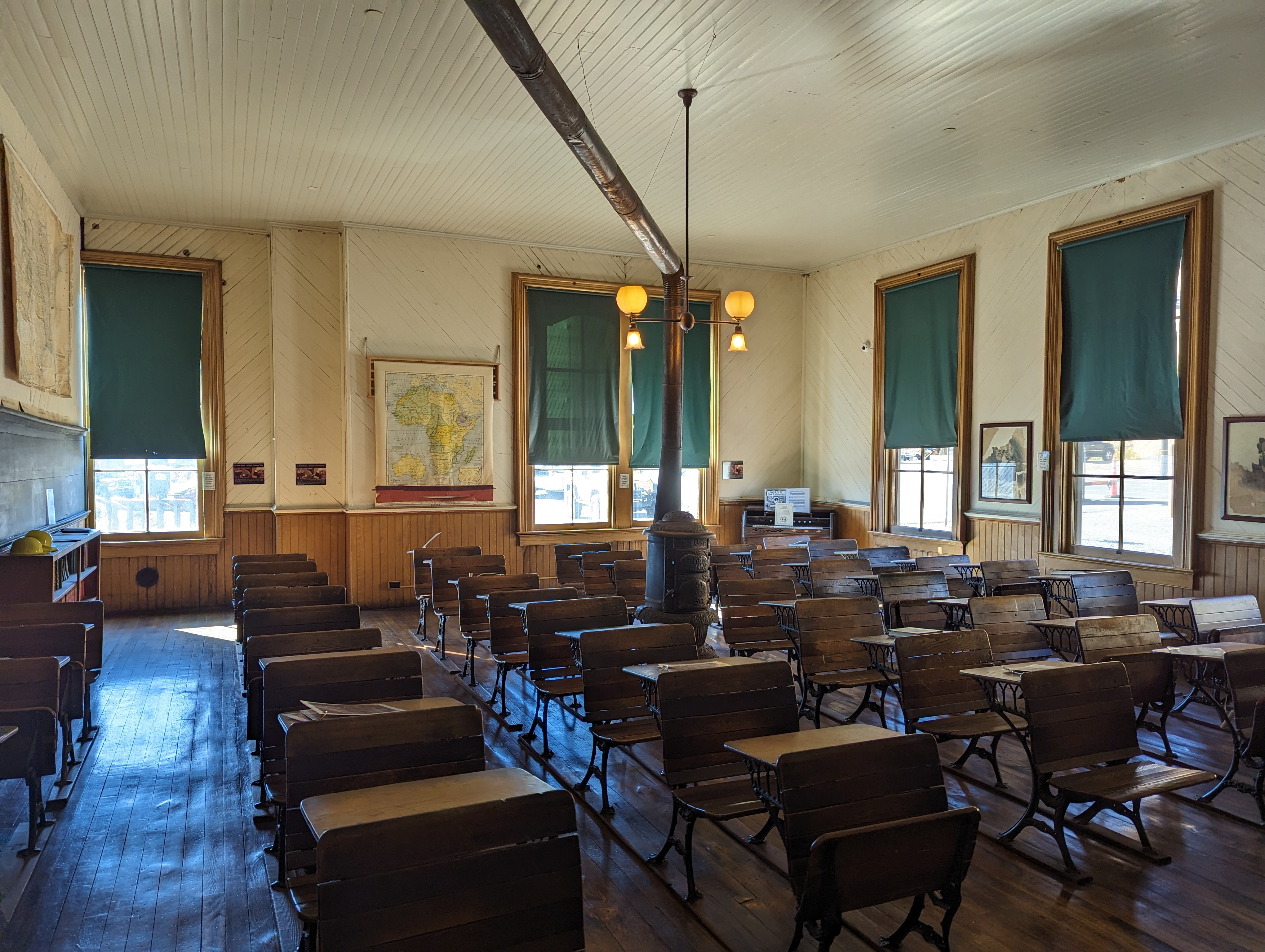
Hands folded on your desk! (Do kids today even know what that looks like?)
**
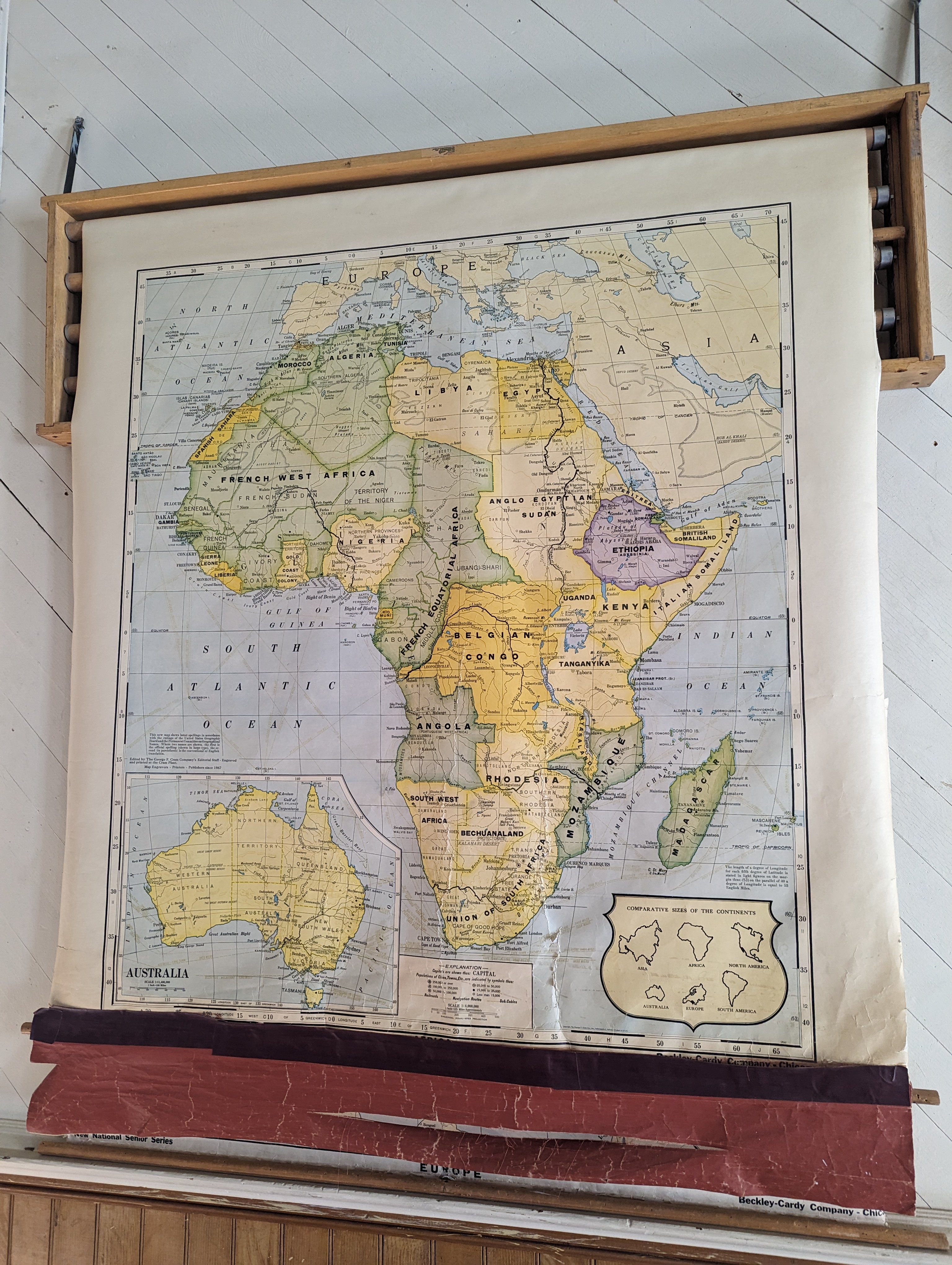
The school closed in 1936, and this map might be a leftover from the school's later years. It's certainly post-World War I.
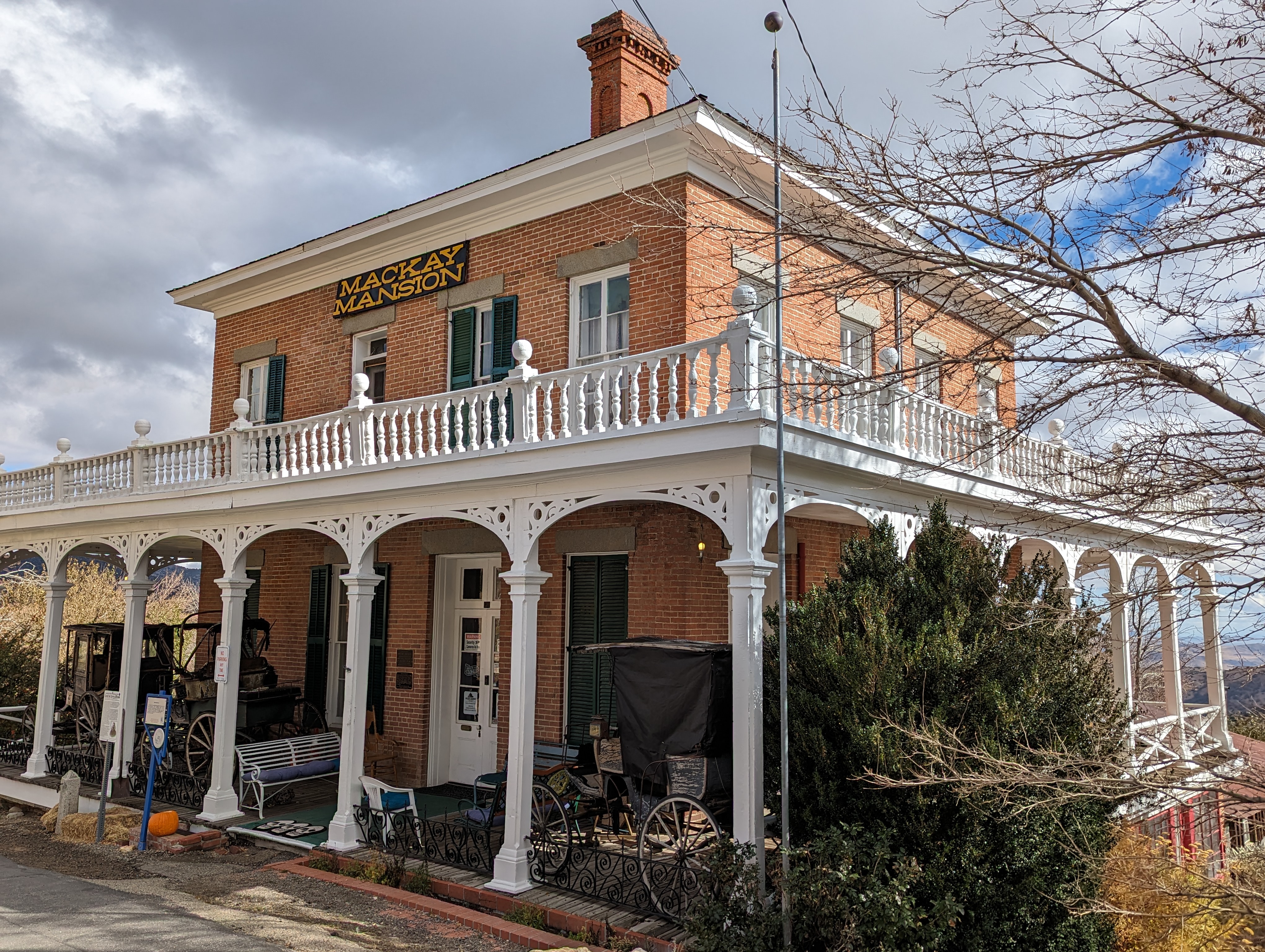
The mines often had fancy offices, sometimes with living quarters. Despite the name, this was the home and office of the superintendent of the Gould and Curry Mine, largely owned at the time of its construction in 1861 by George Hearst. For a while in 1875, John Mackay did live here. He was the leading partner of the Consolidated Virginia Mine. He gets priority here either because he lived here after Hearst or because nobody wants to celebrate the father of Rupert Murdoch's predecessor.
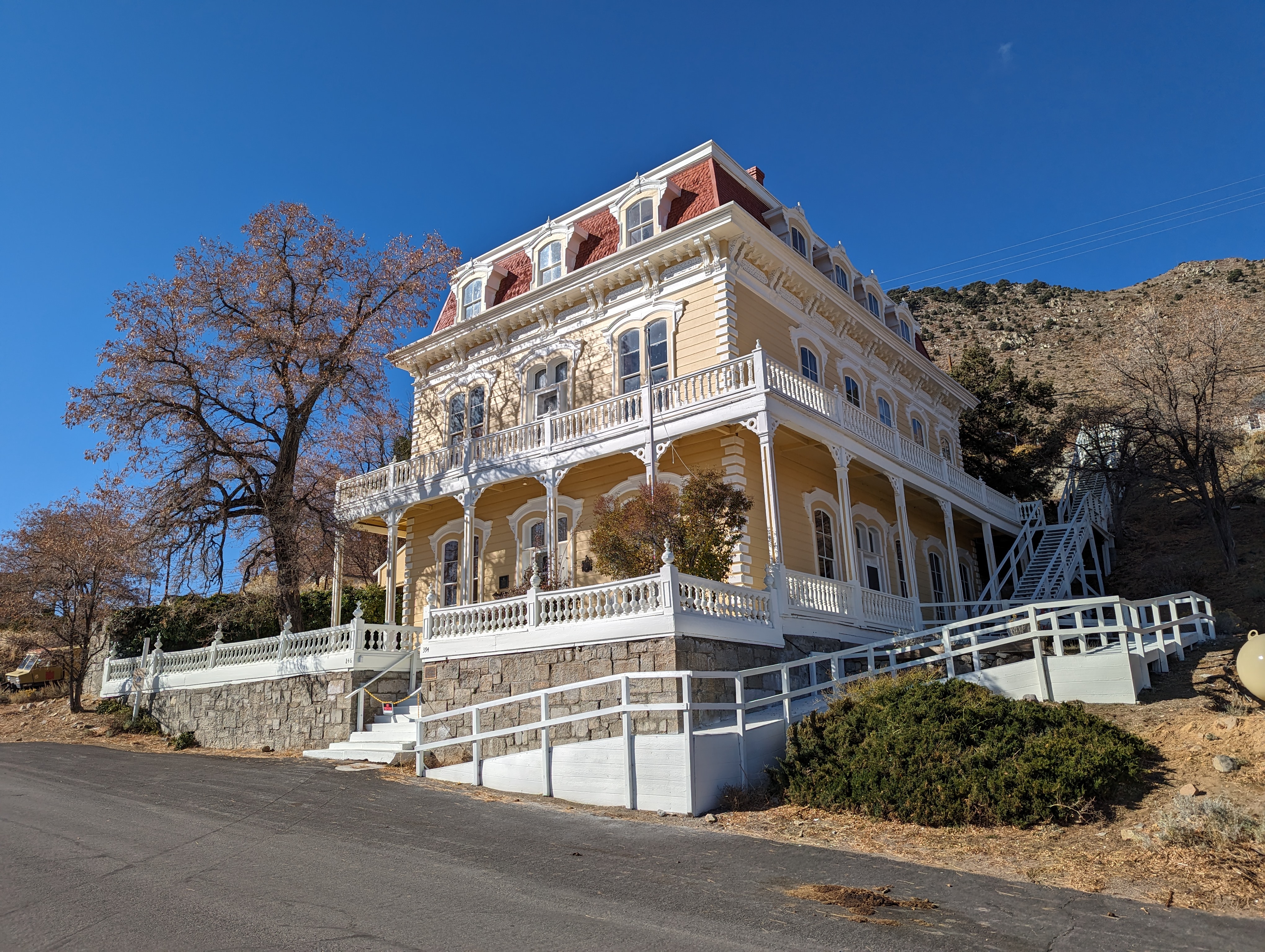
The grander Savage Mansion. Yes, there was a Savage Mine.
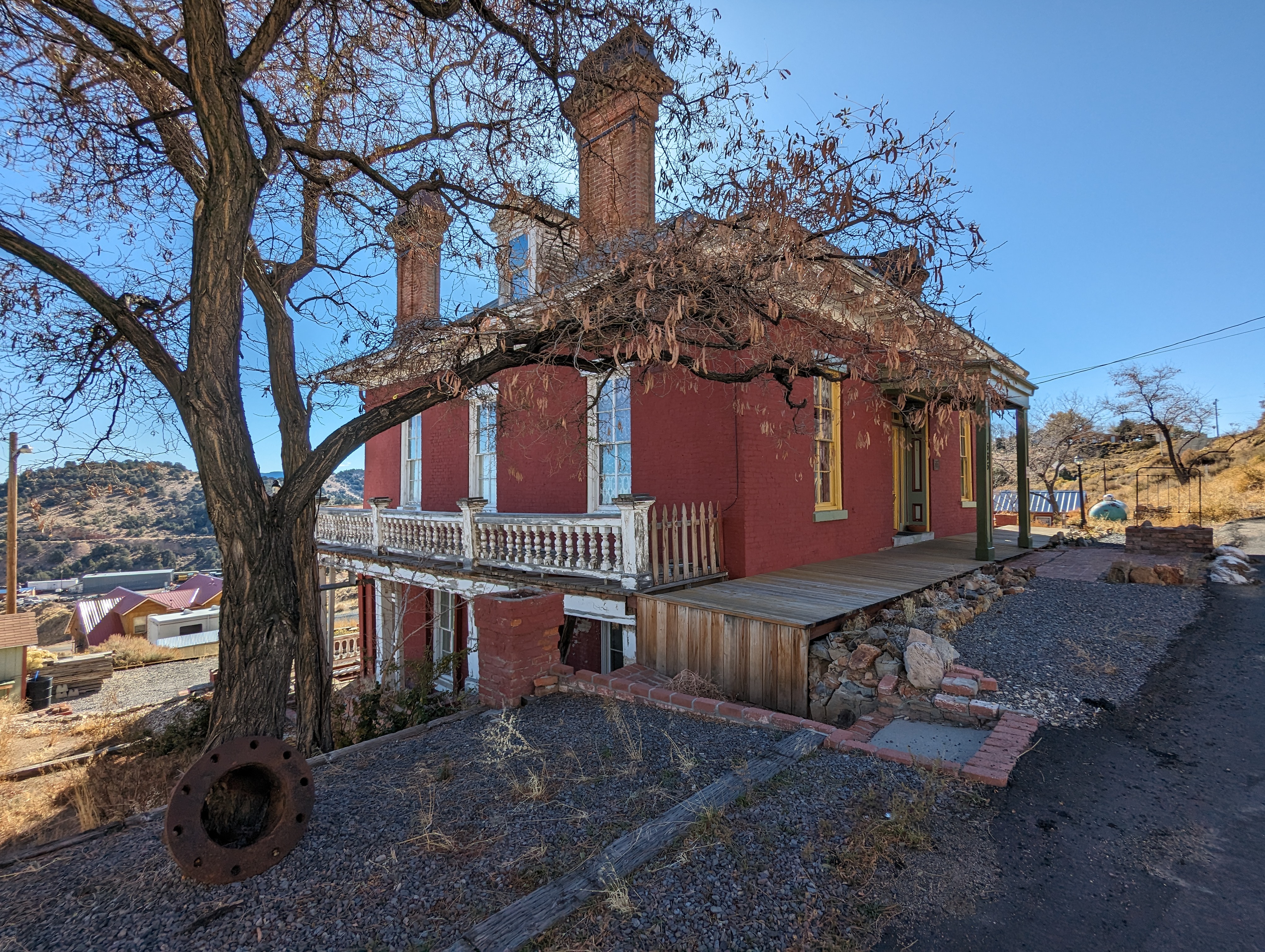
The Chollar Mansion, seen from its less imposing upside.
**
**
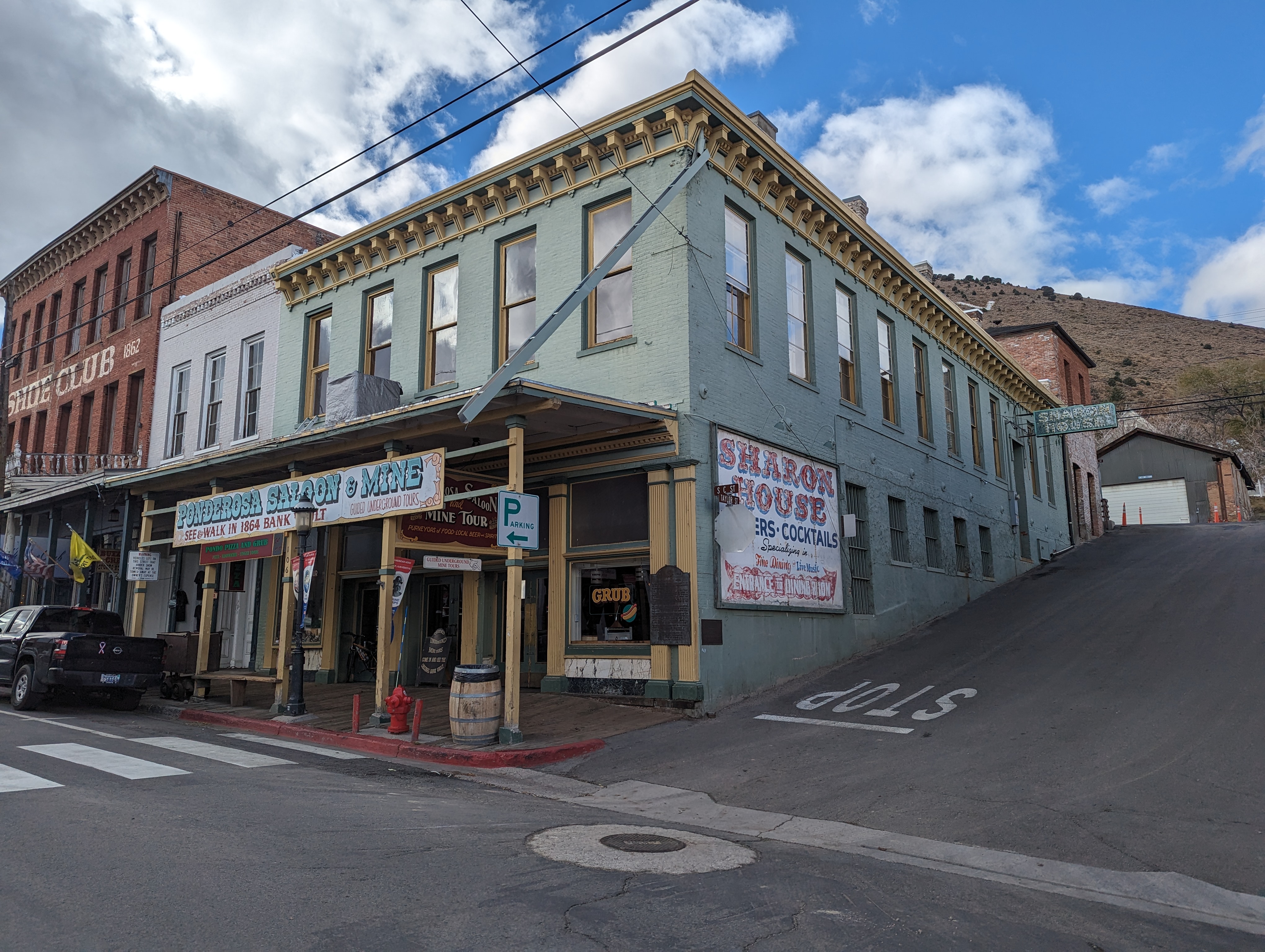
Mustn't forget the Bank of California Building, where William Sharon ruled the Comstock for some years. Later, needing to be loved, he became a U.S. Senator. The "Sharon House" was a restaurant. Notice the high-quality bars on the windows at the back.
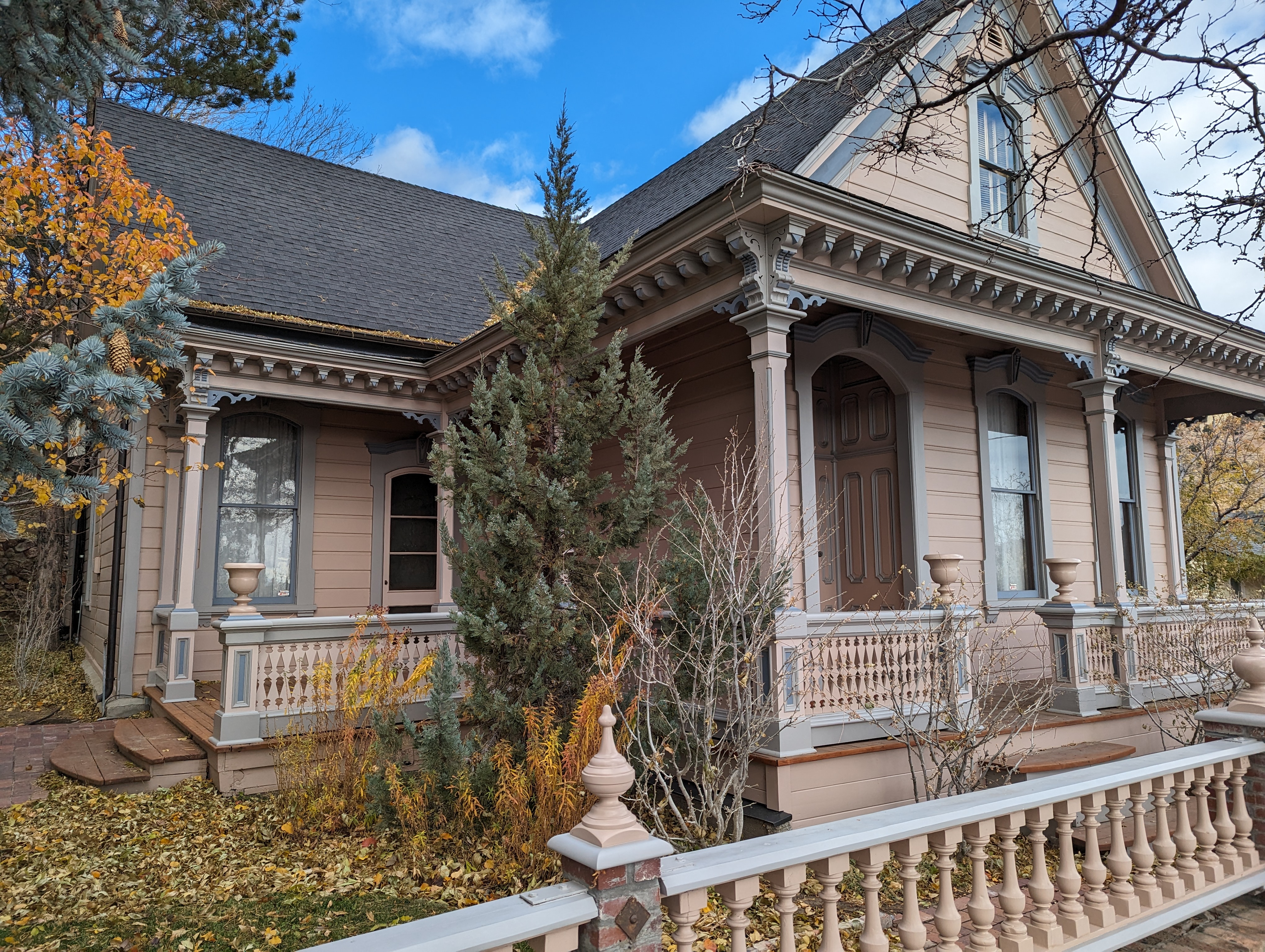
A few fine old survivors.
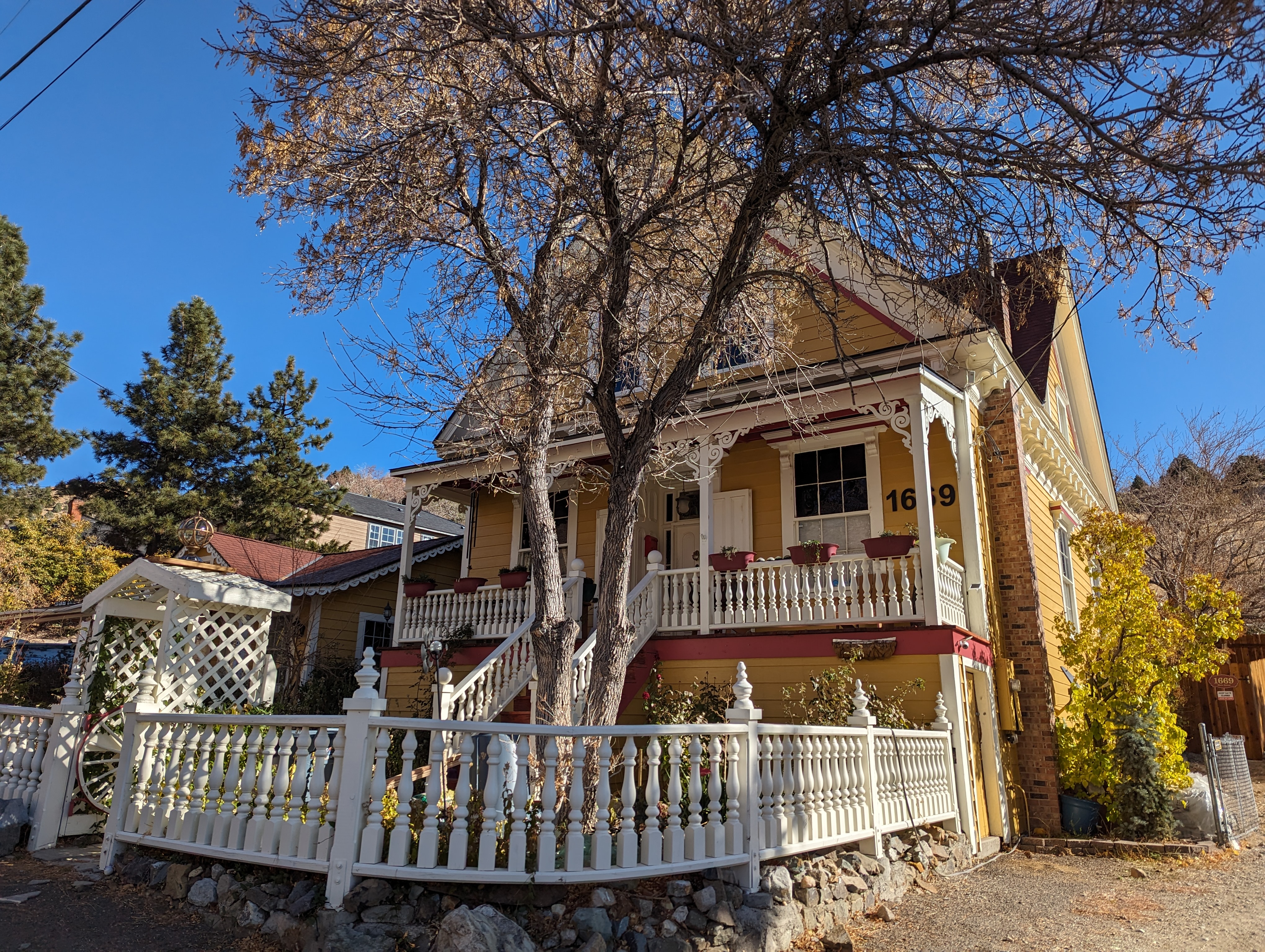
Tell me these places aren't brimming with curb appeal.
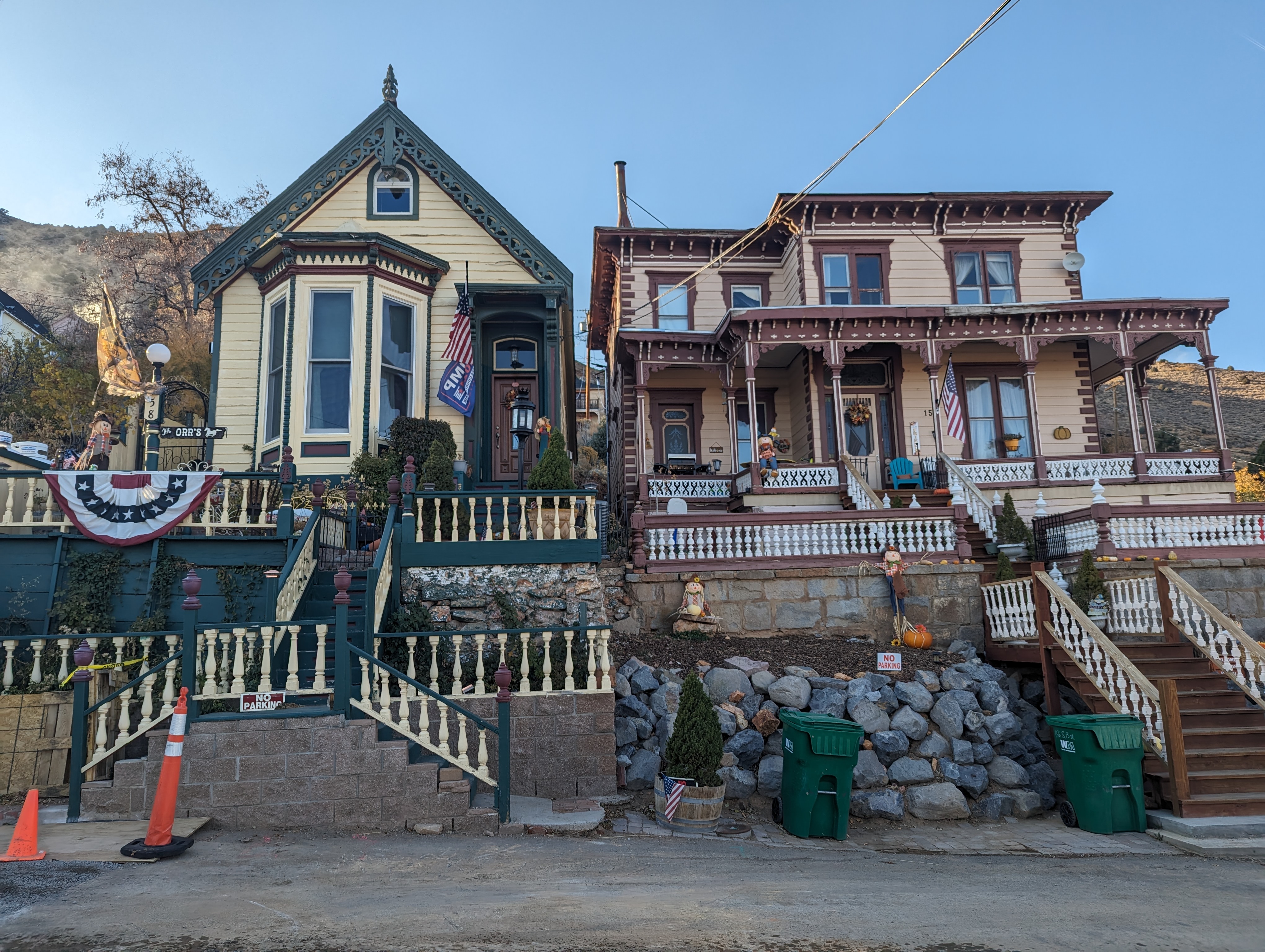
Maybe a tad too close together.
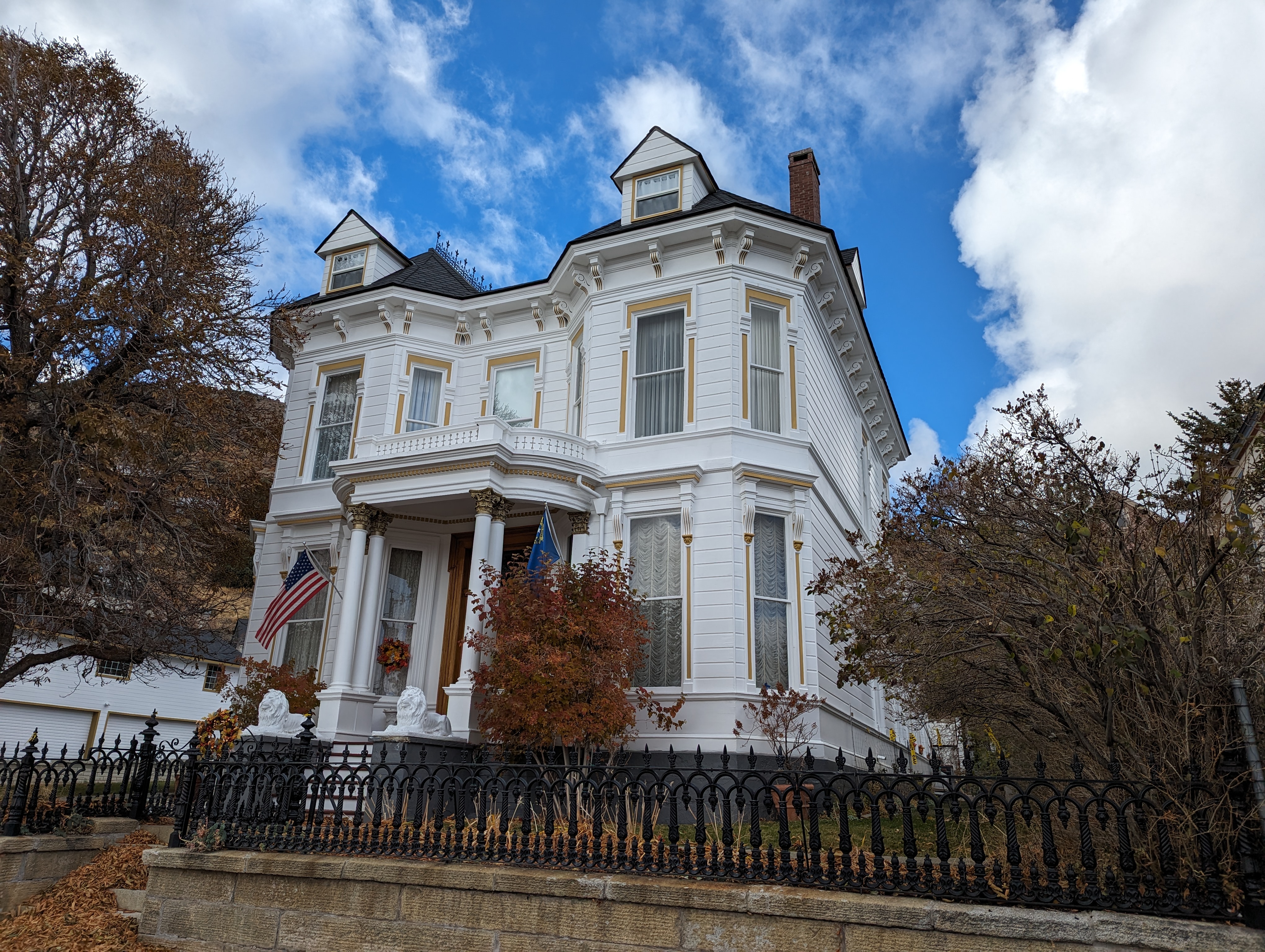
A more pretentious place, the King Mansion, was built around 1870 for a boss at the Bank of Nevada who was also a director of the V&T Railroad. It was sold in 1953 to Versal McBride, who in 1931 had opened the Bucket of Blood.
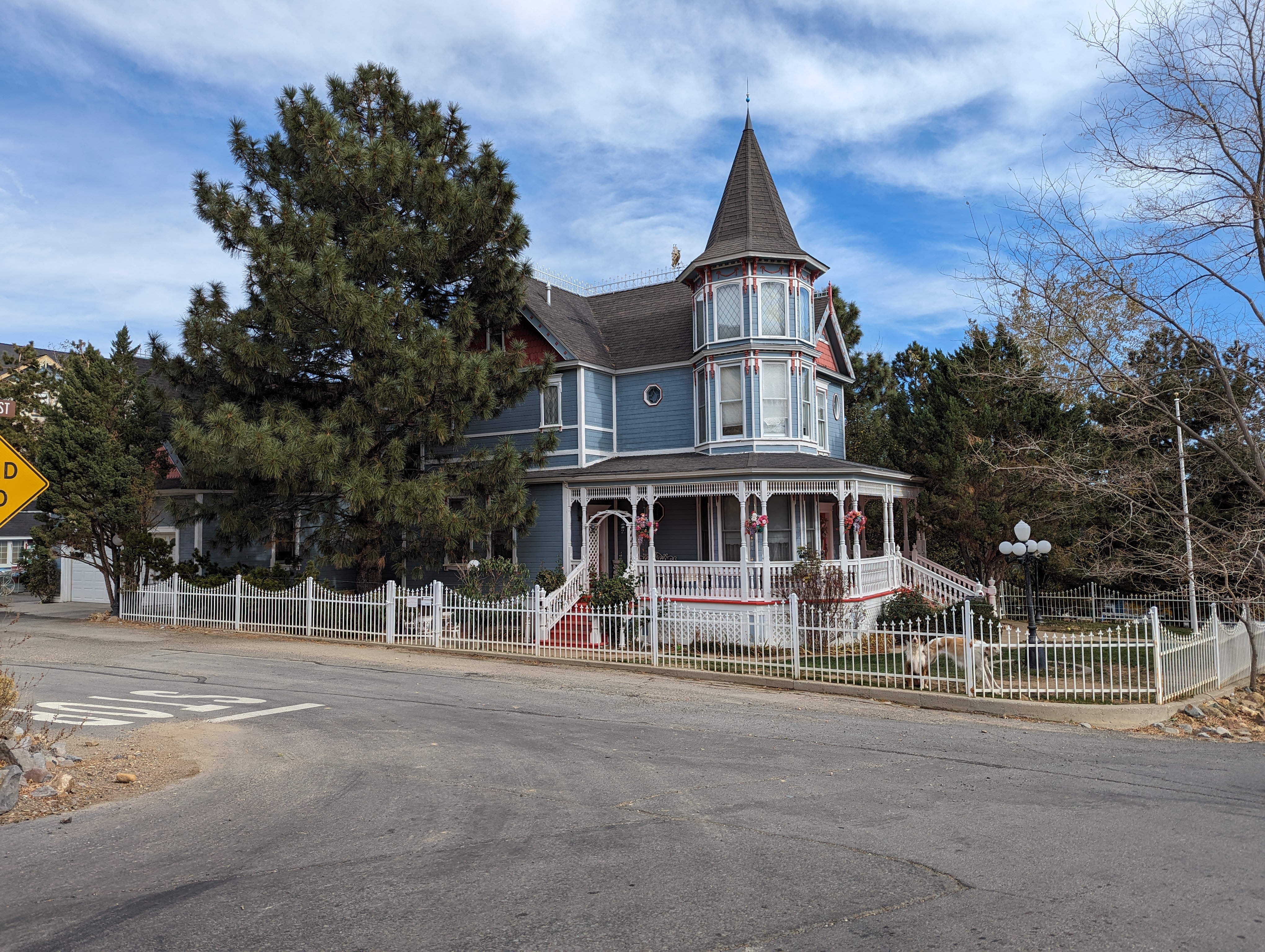
A new building conforming to local rules that ban modern buildings.
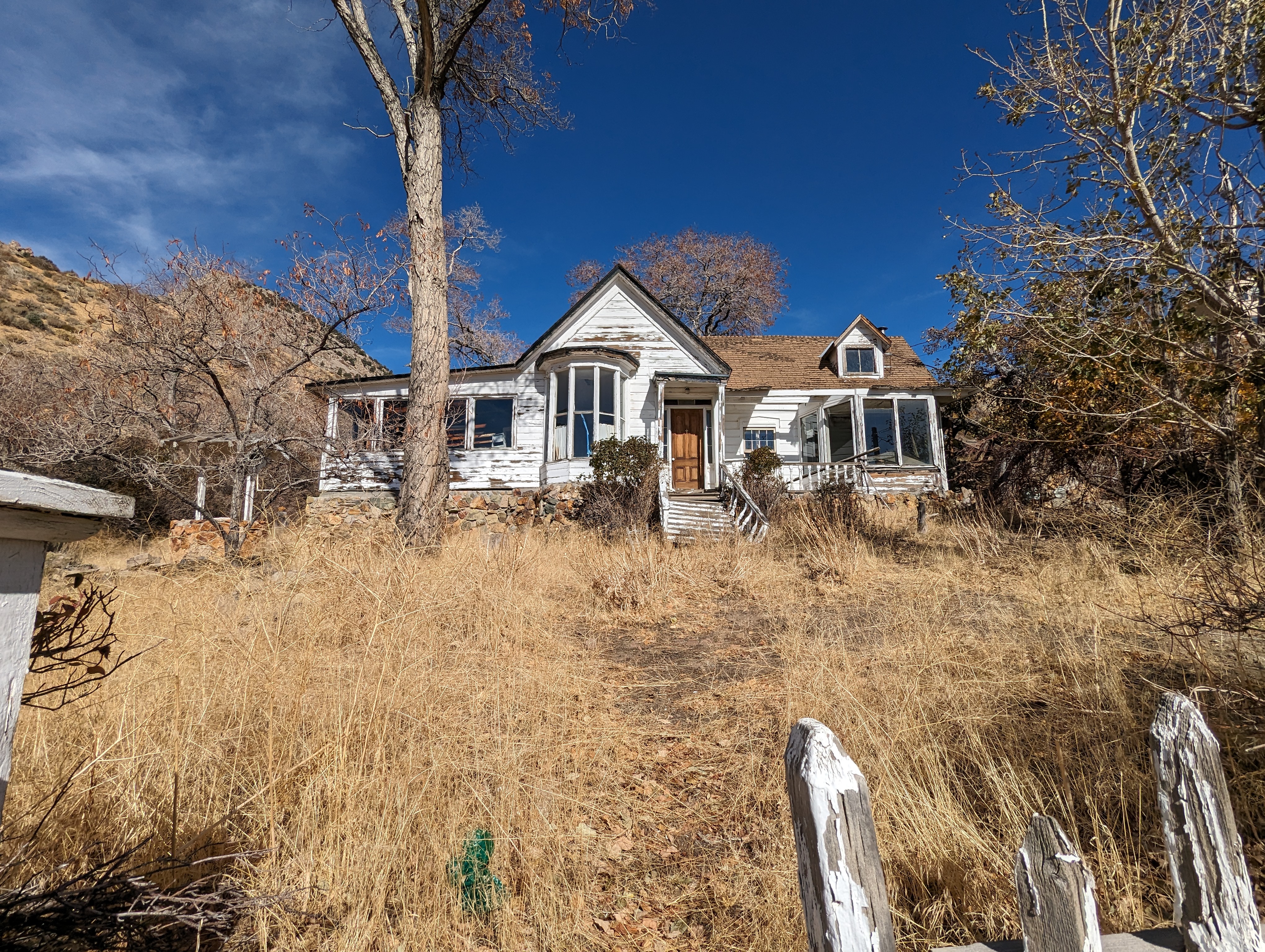
Tempted to try a little restoration? If only it wasn't so far to Starbucks.
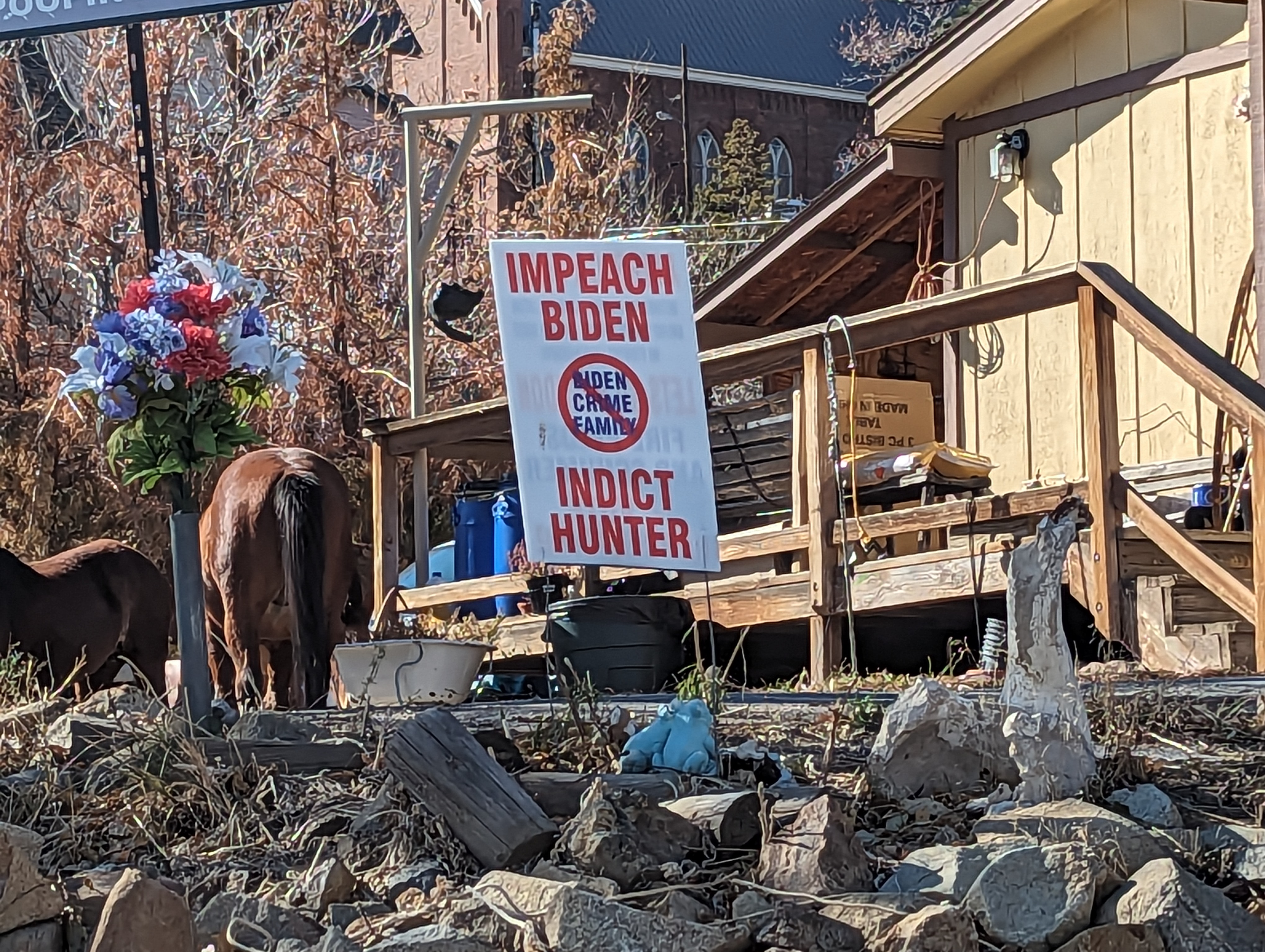
Around 800 people live in Virginia City. Some have strong opinions.
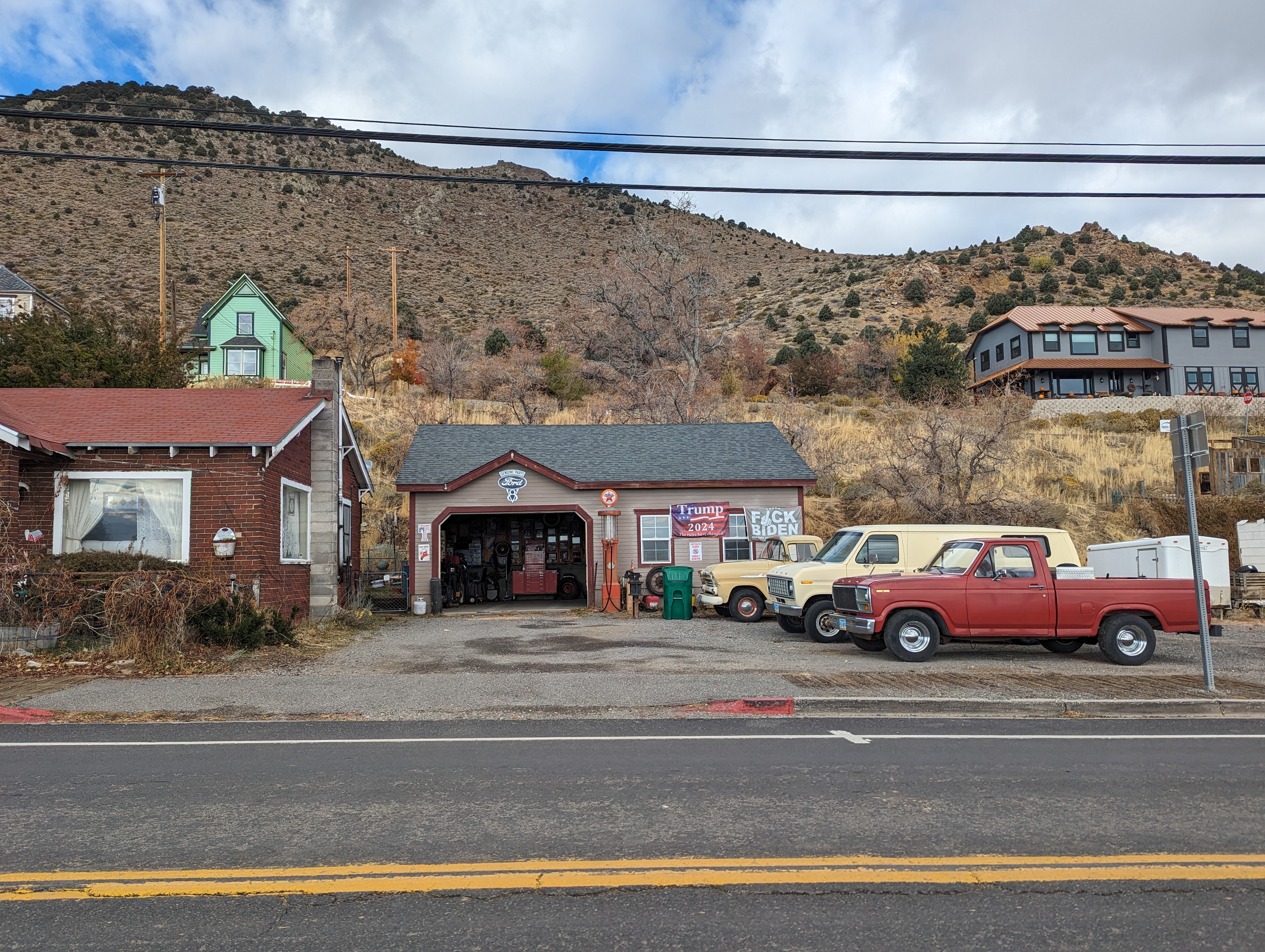
Nobody ever said that you had to exercise your first-amendment rights politely.
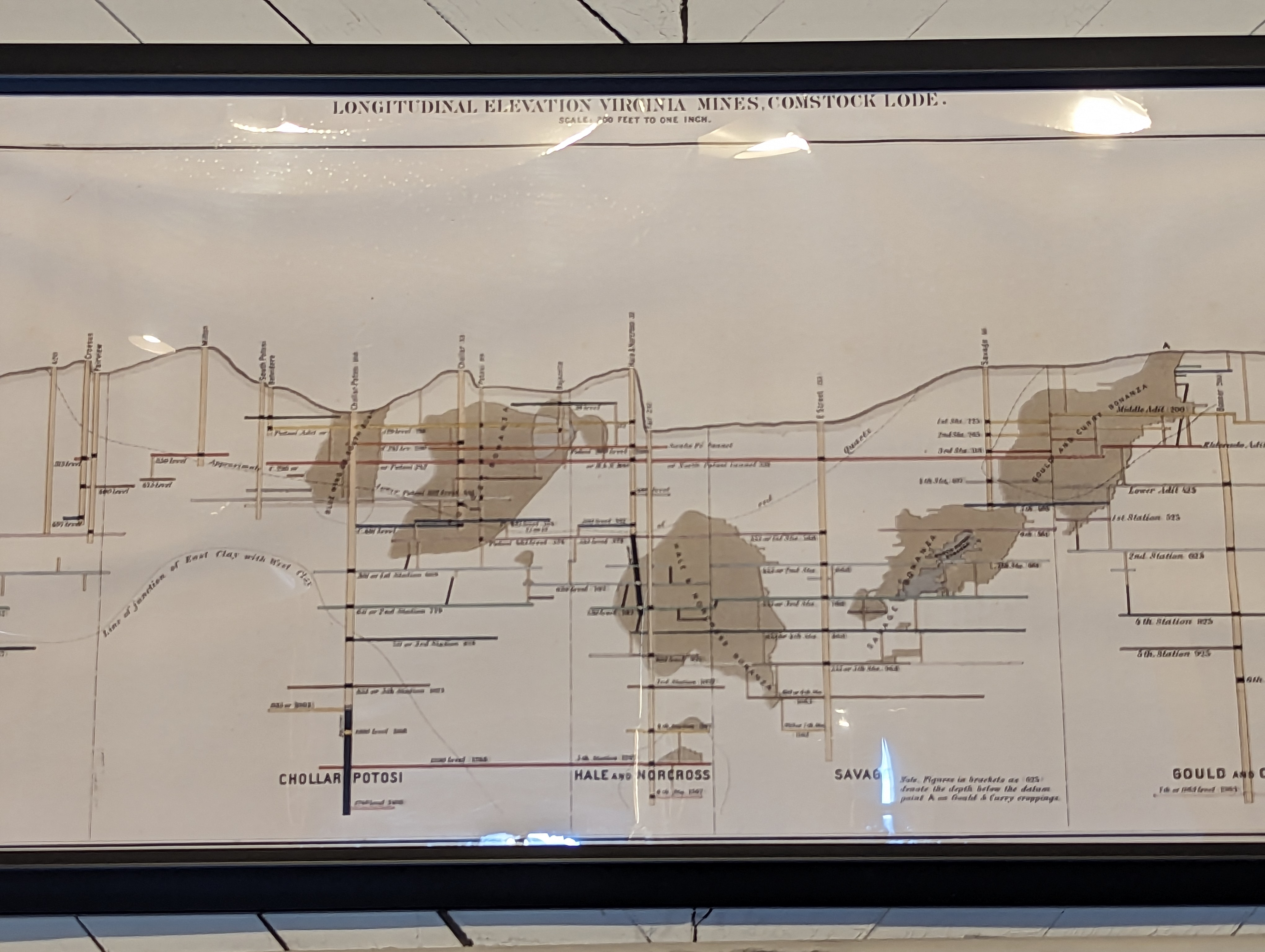
Time to look at the reason Virginia City exists. Here, from the Fourth Ward School, is a wall map of some of the silver blobs. The biggest of them is off the right side (to the north). Too bad, but you get the idea.
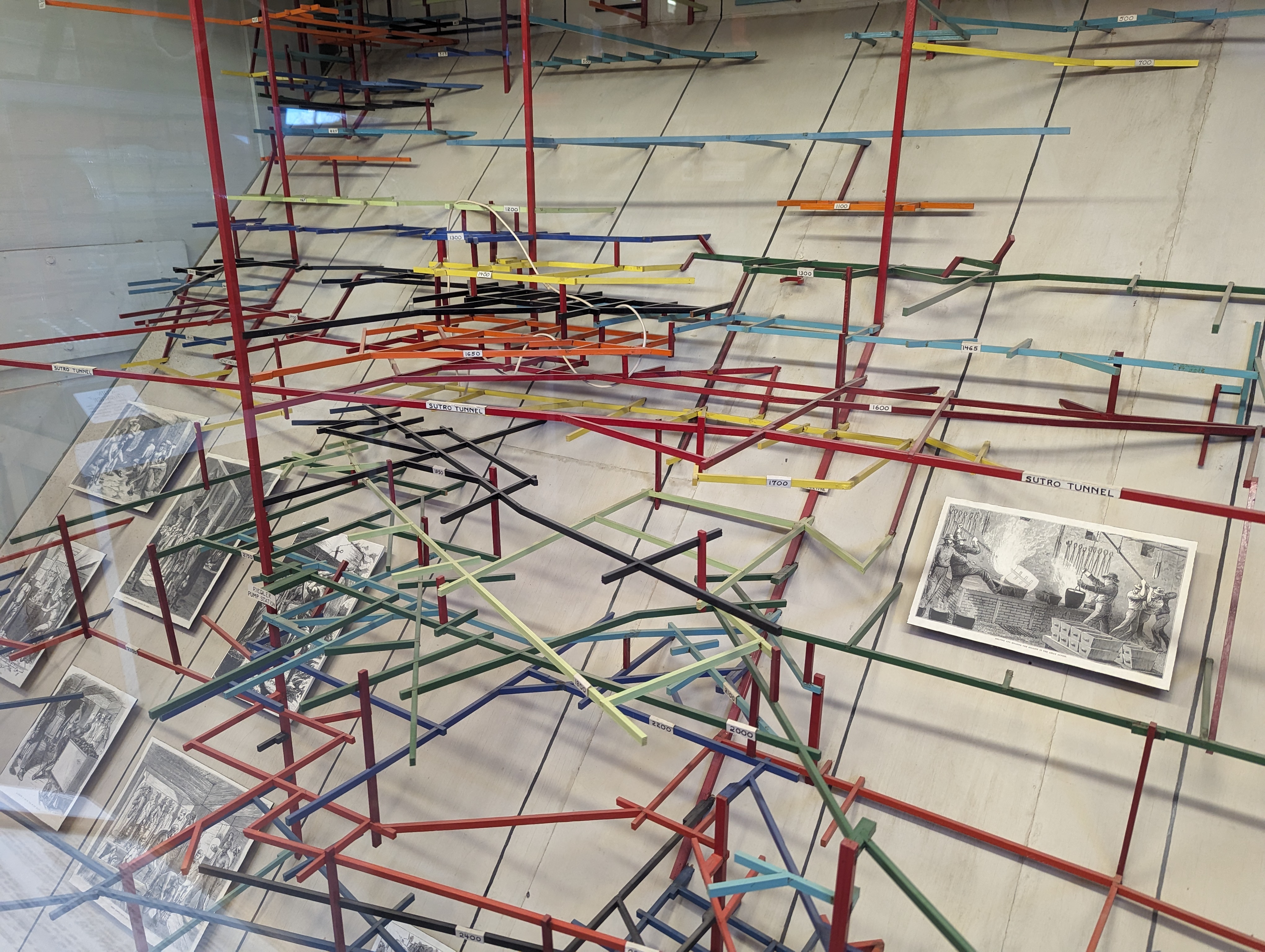
Finders keepers. The excellent The Way It Was museum includes this model of the Comstock mine shafts, tunnels, rises, drifts. Sorry, no stopes. The curvy white cord marks the Consolidated Virginia's Big Bonanza.
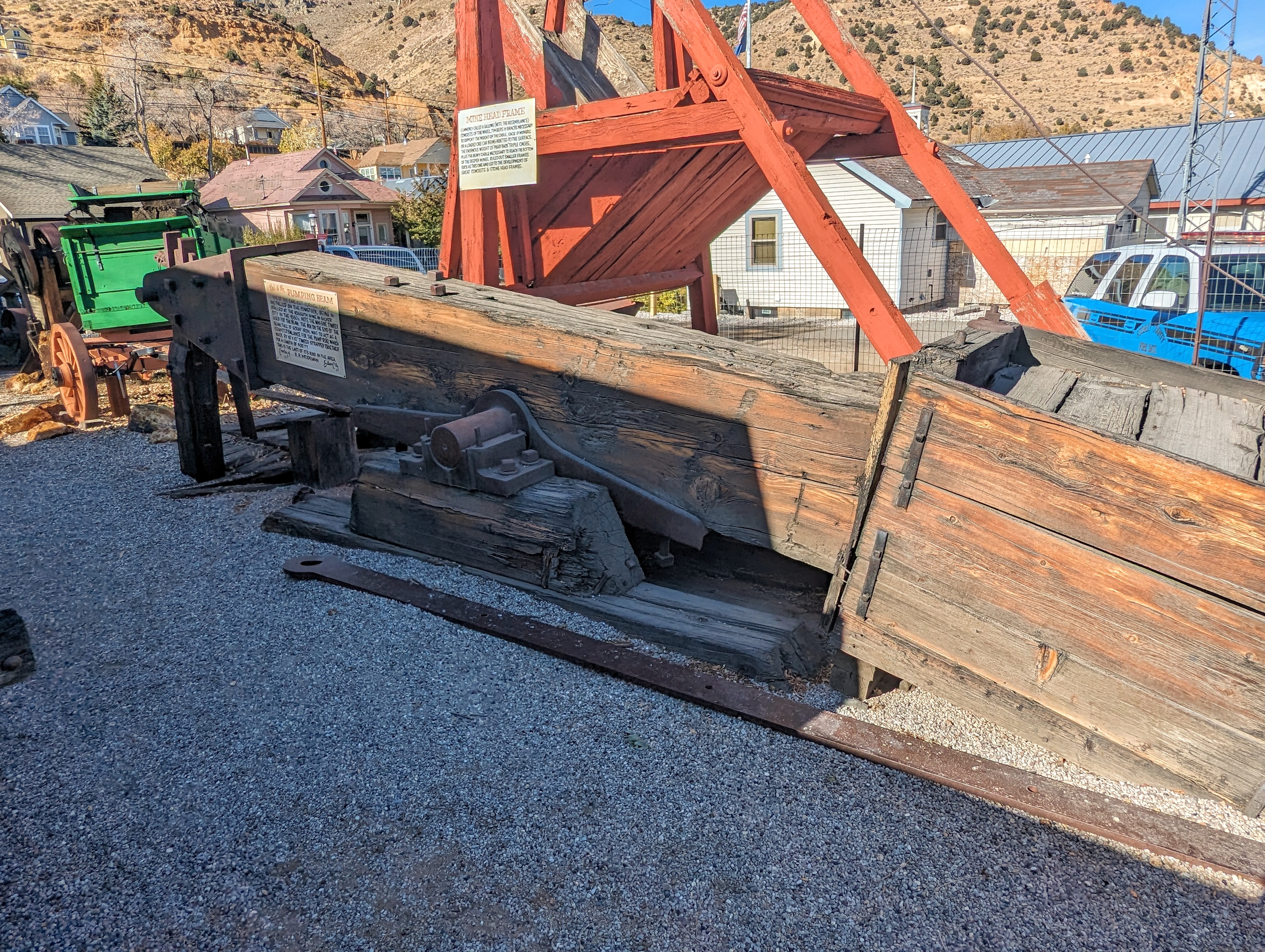
The museum also has this monster walking beam, originally driven by a huge but now absent steam engine and flywheel. The far end of the beam was connected to a pump rod reaching down 2,000 feet to the base of the shaft.
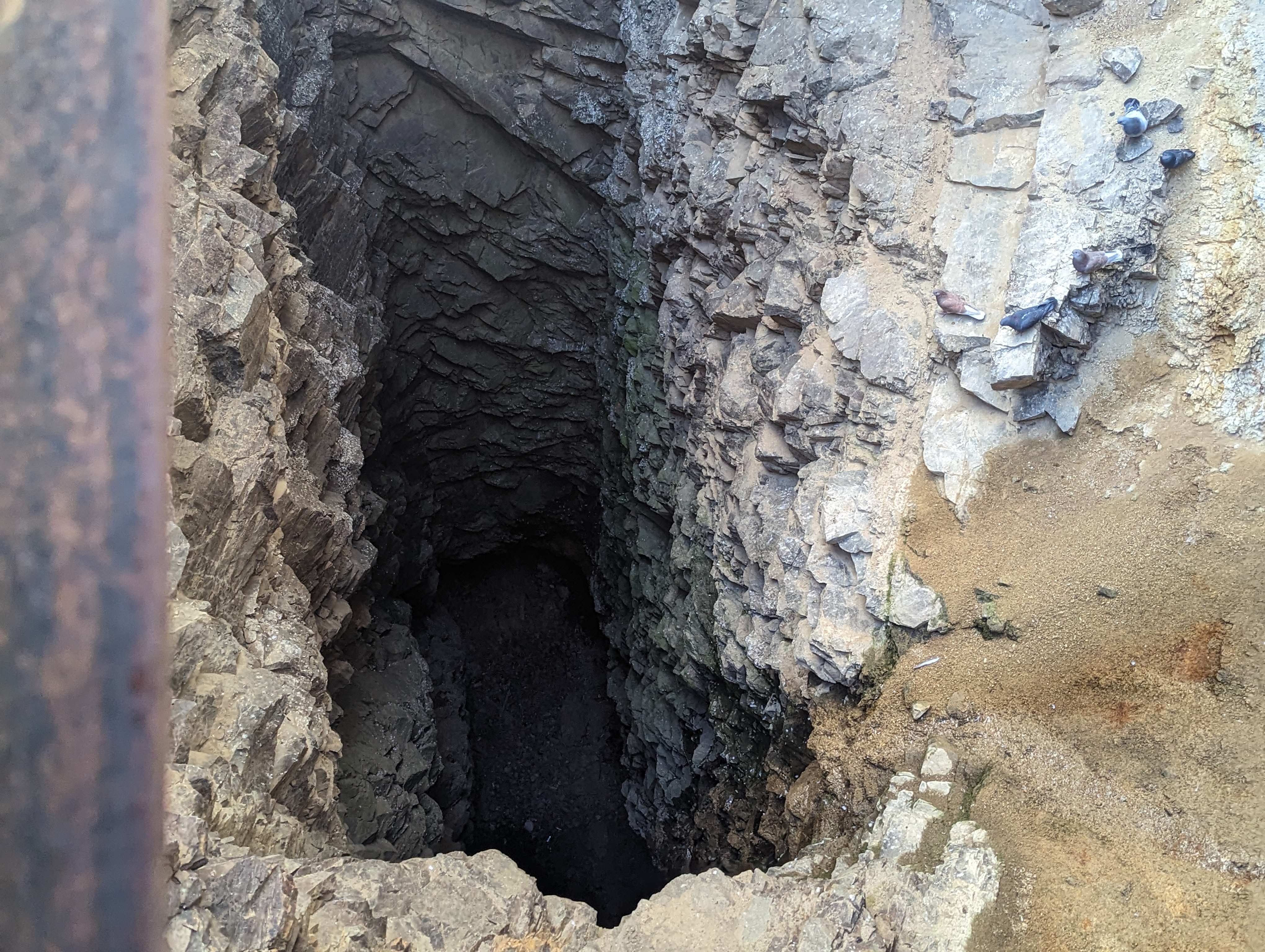
Here's a peak down one of the few still-visible shafts. It's the Combination Shaft, sunk close to 3,000 feet. It found nothing and closed in 1886.
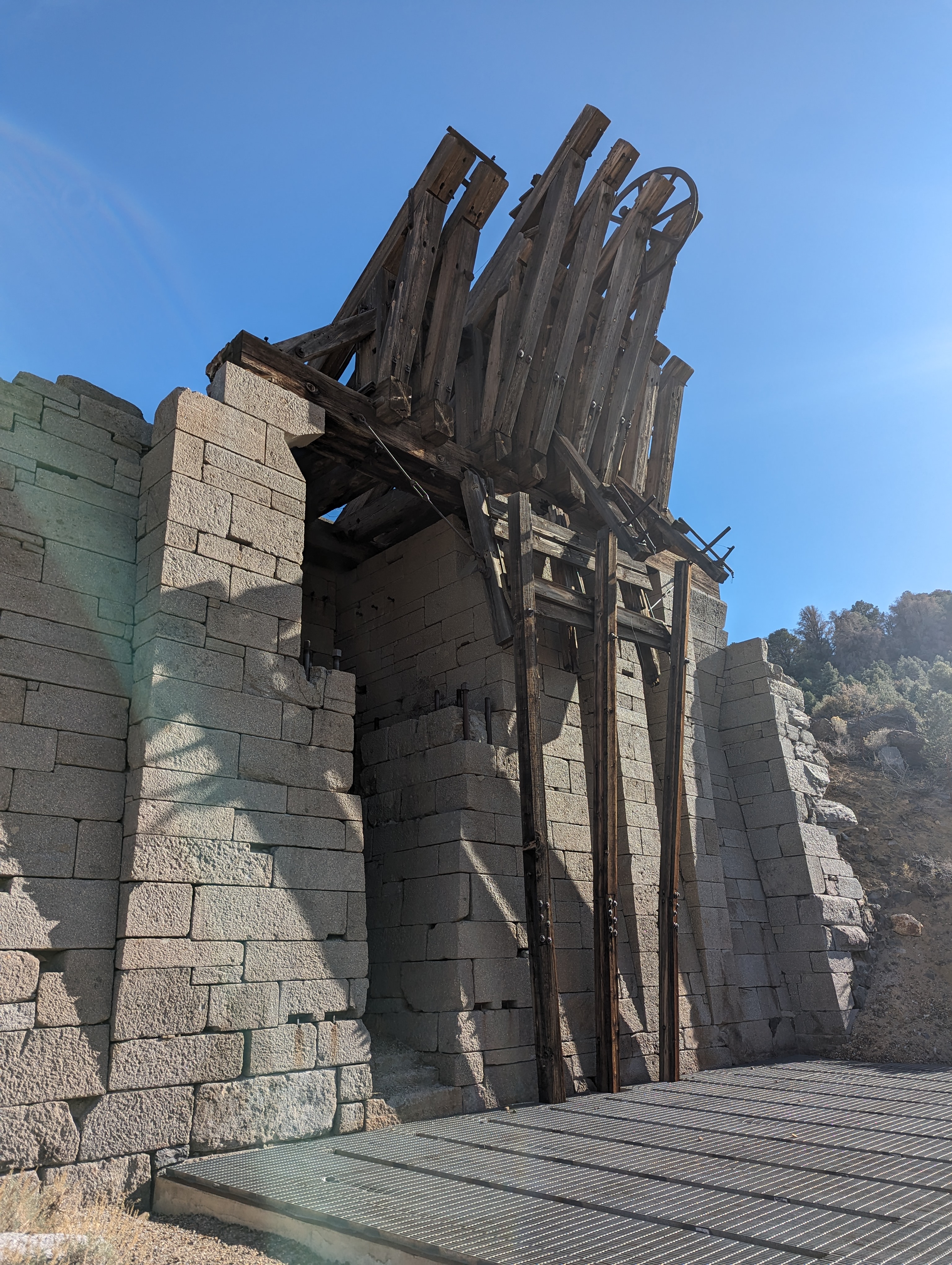
Here's a bit of the hoist for that shaft.
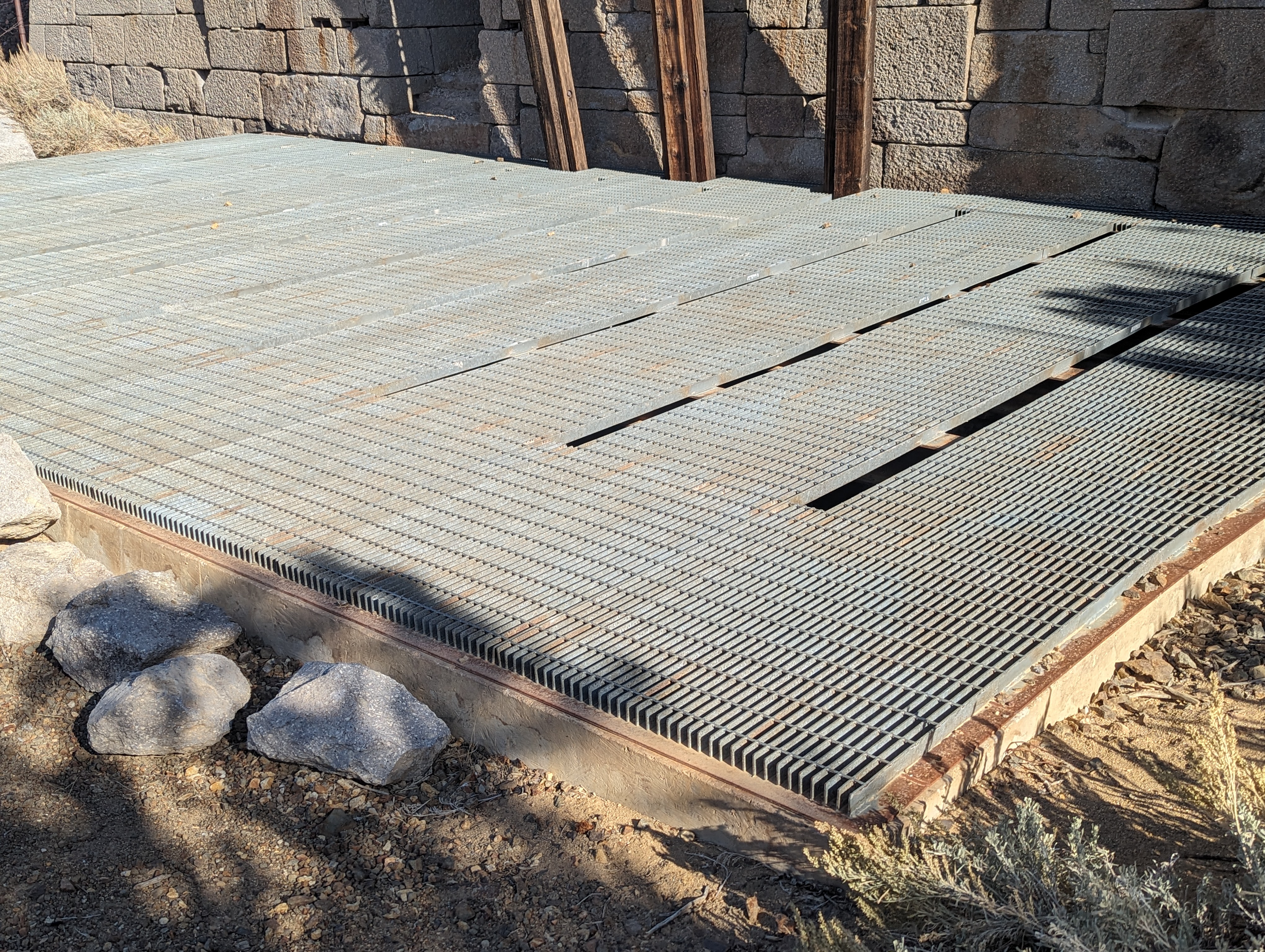
Somebody has thoughtfully provided a grating so we don't fall down the hole.
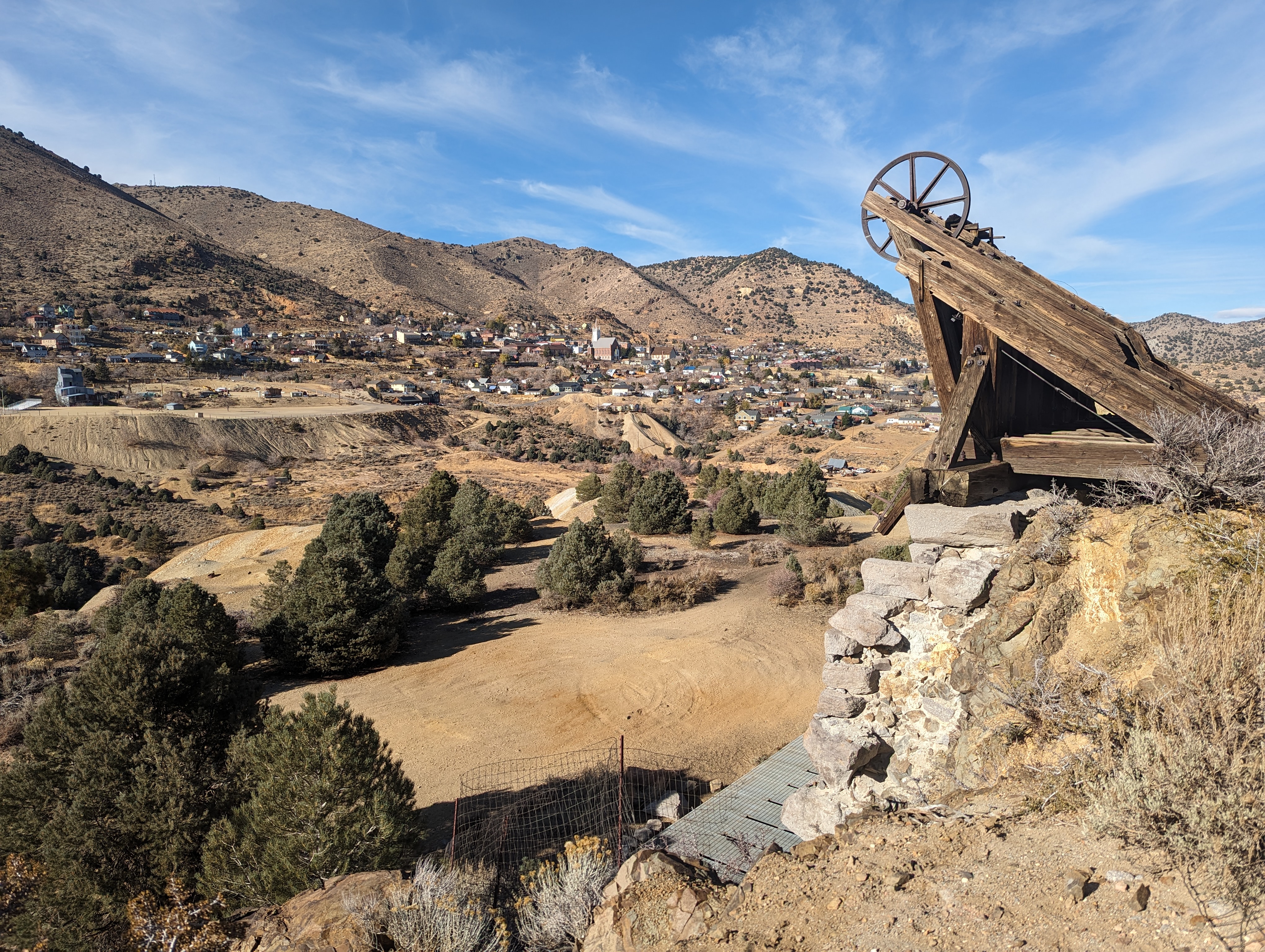
Here's the view from the top of the hoist, with Virginia City off to the north.
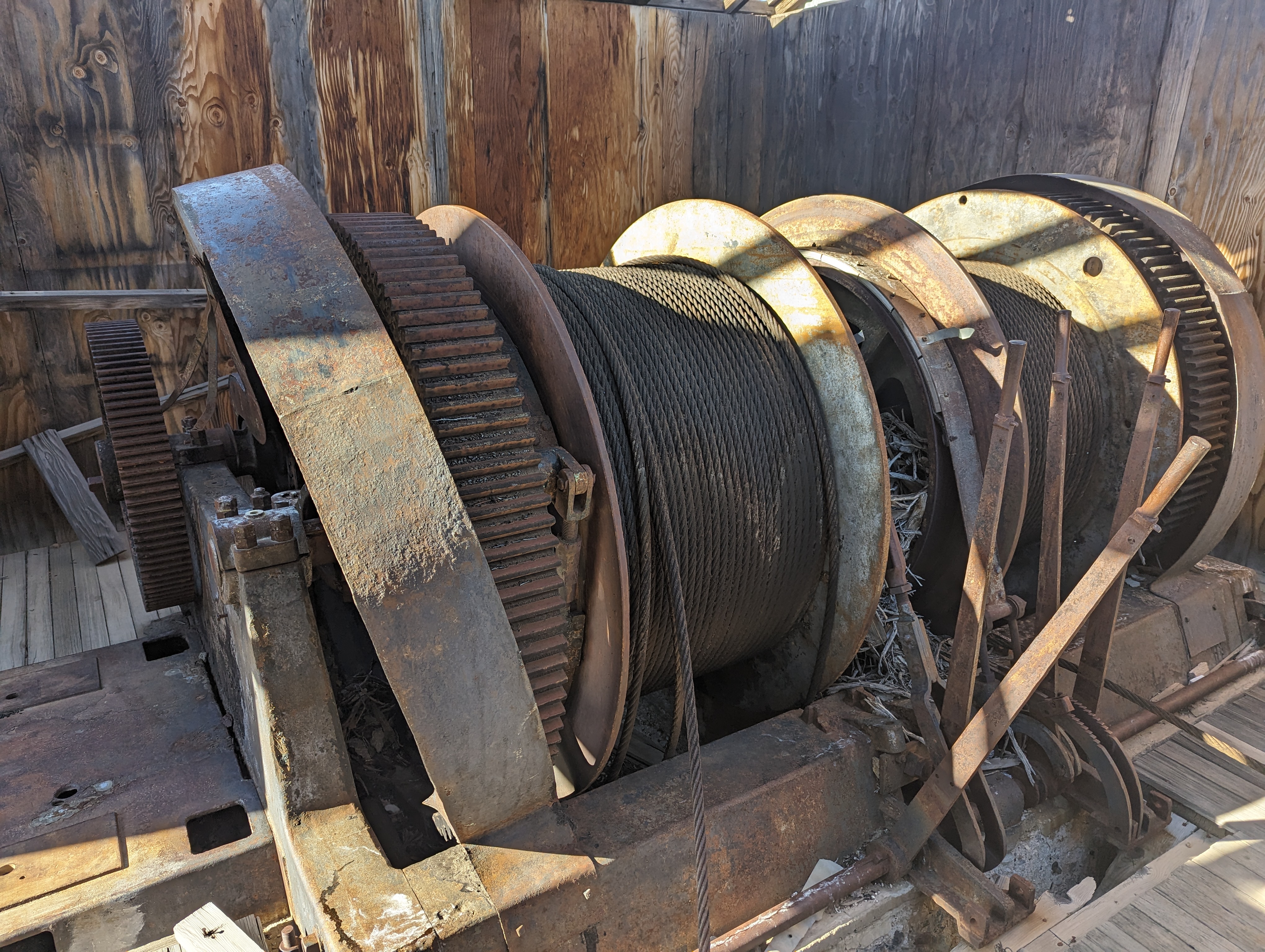
There's one surviving building atop the hoist, and it contains this spooling machine.
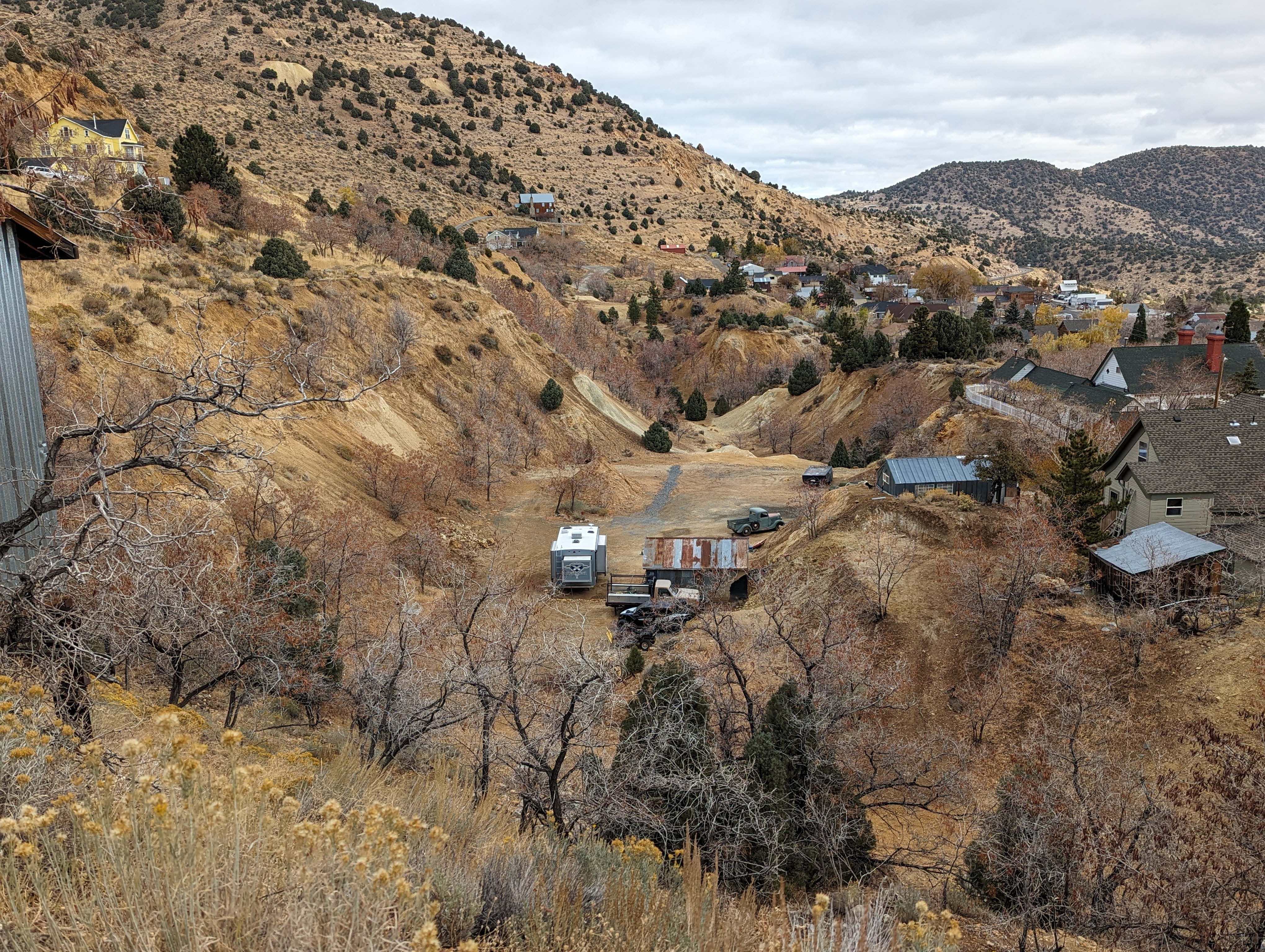
Yes, late in the day miners tried open-pit operations, as here at the Ophir Mine.
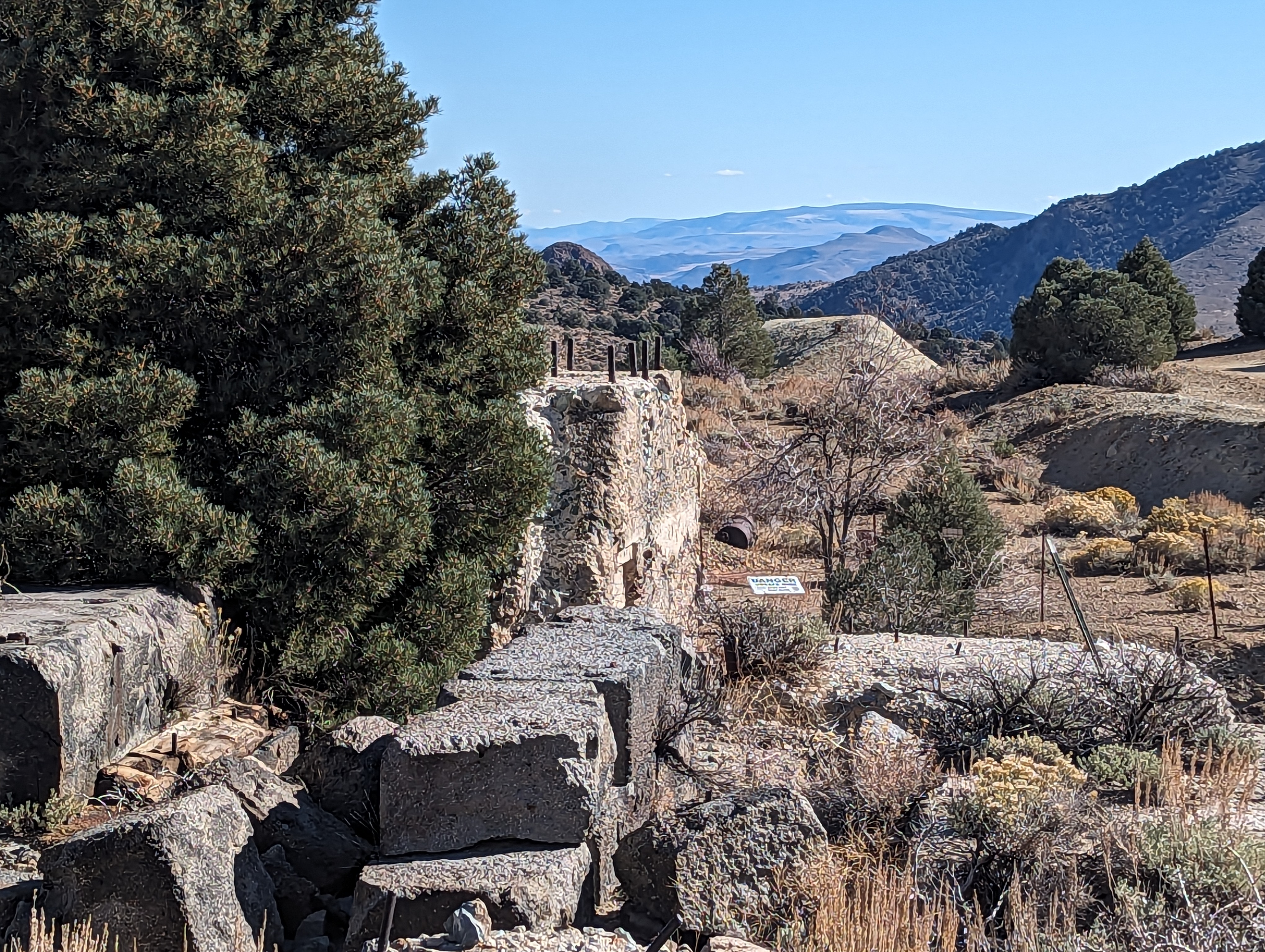
Here's a scarce fragment of the Virginia Consolidated.
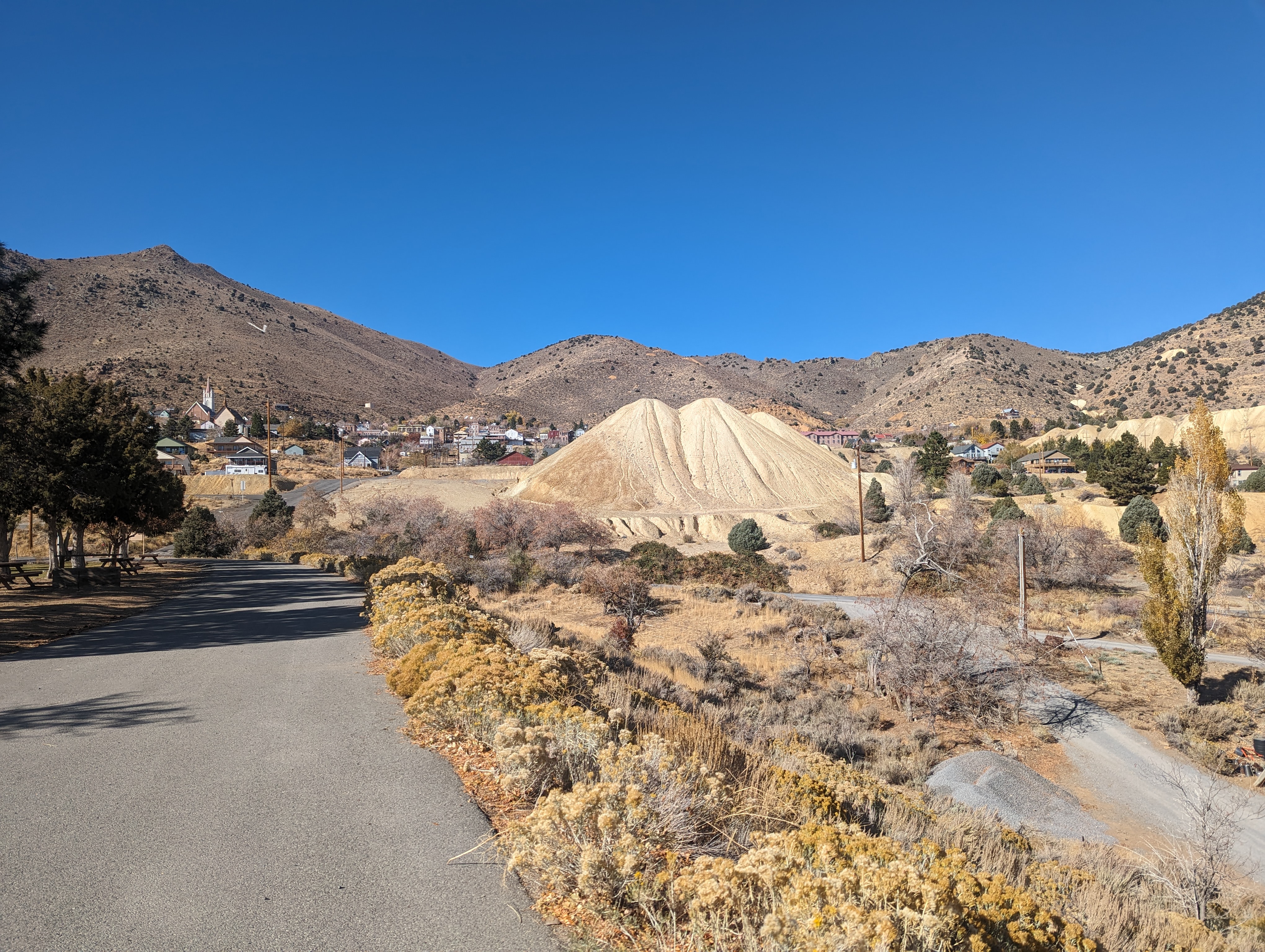
Here's some waste produced by the neighboring California Mine.
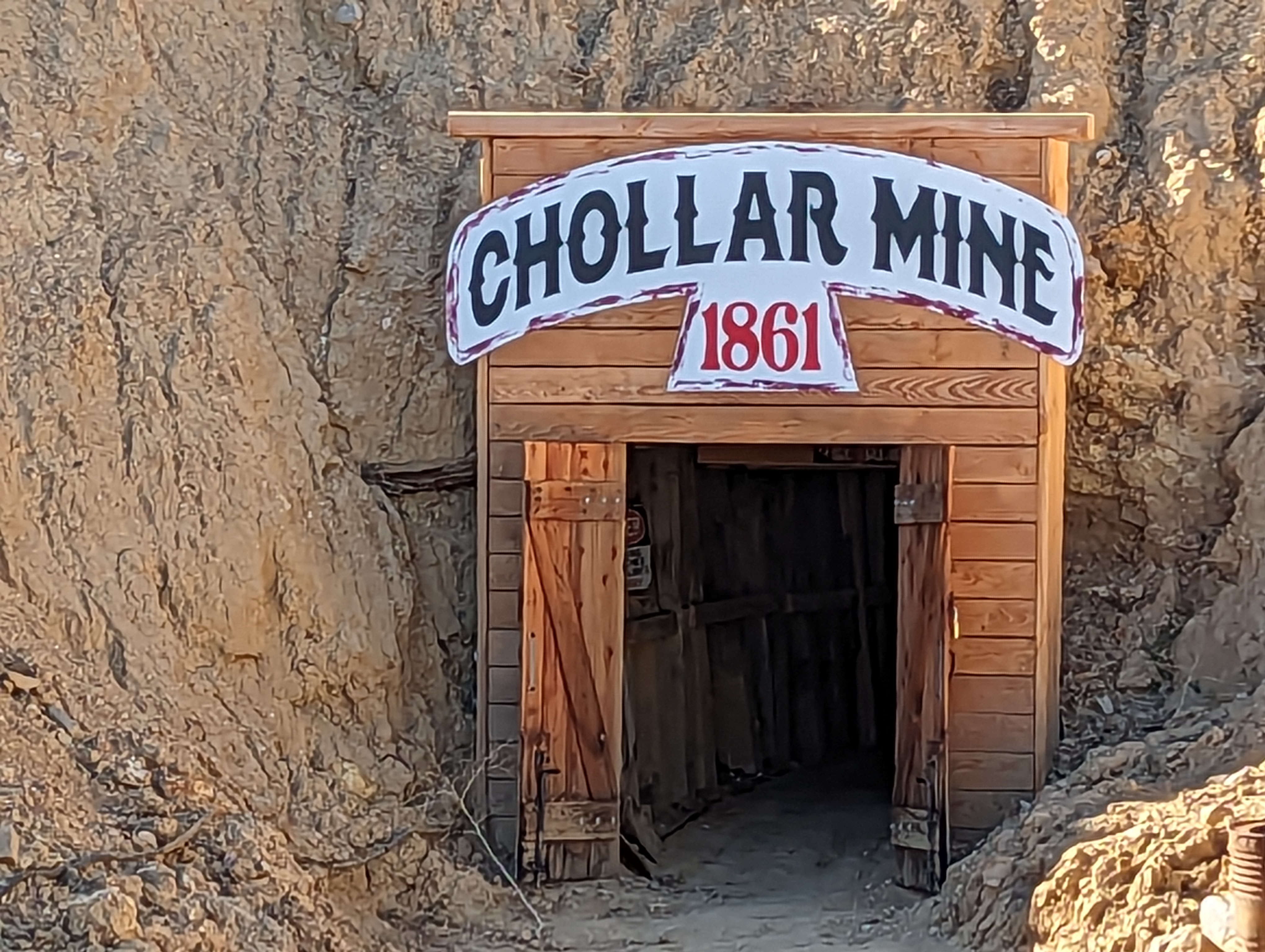
Tourist Central: the one mine that welcomes visitors with $20 in their pockets. Tips appreciated.
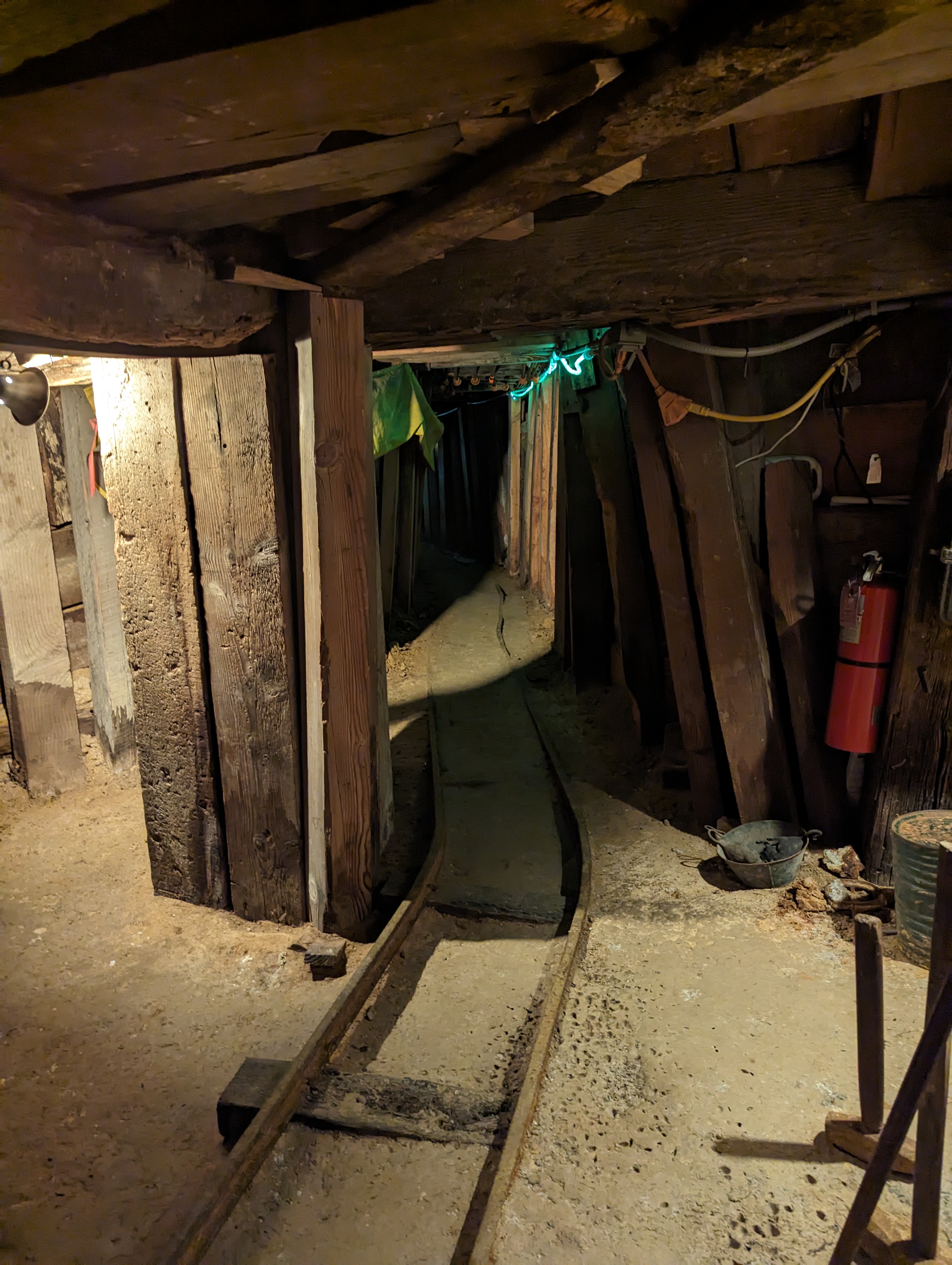
The real mine mostly operated from a shaft and, later, as an open-pit. I don't know when or even if this tunnel was part of the working mine.
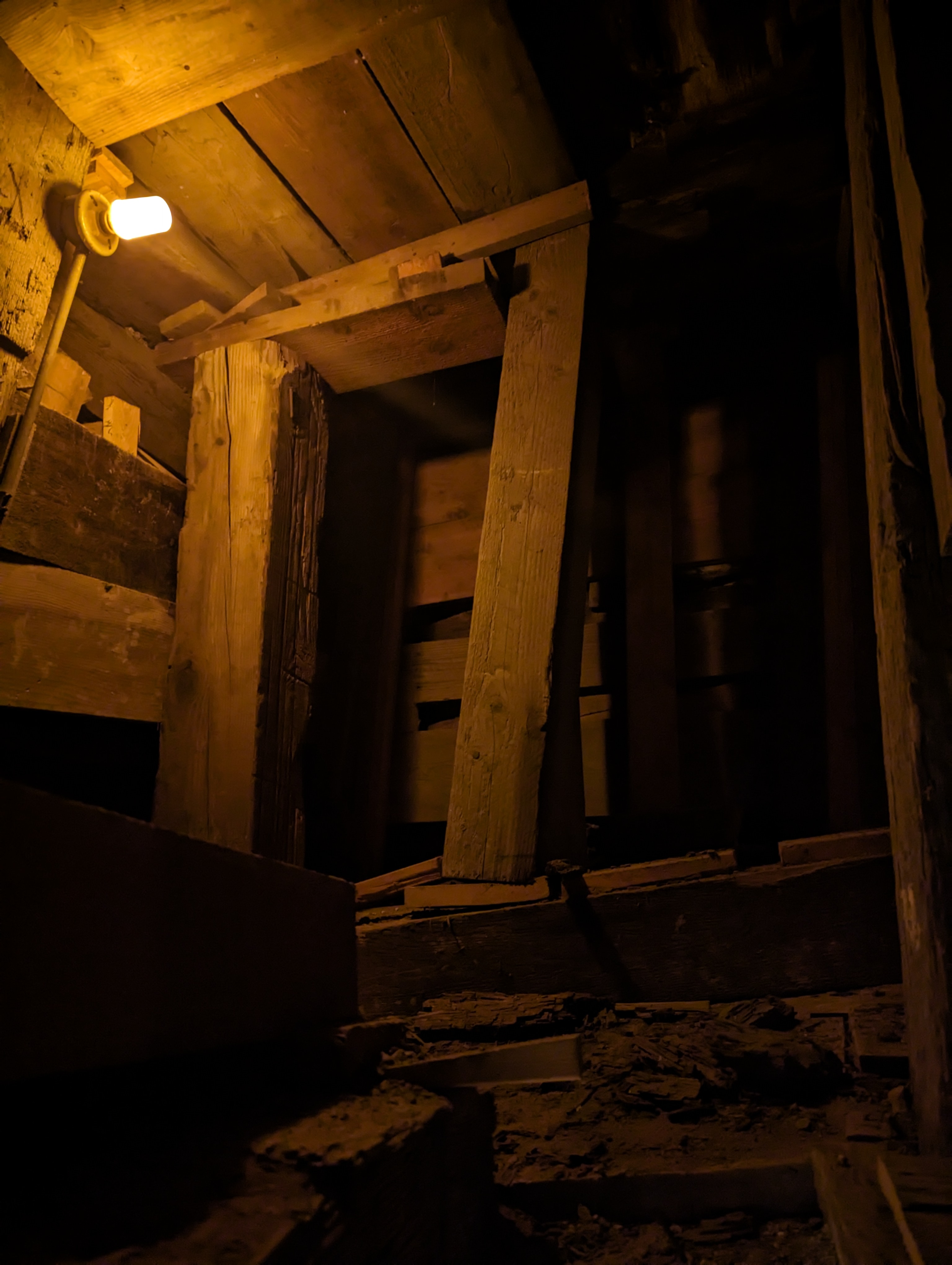
Still, it's a useful reminder that the rock here is too soft to hold itself up and therefore was a voracious consumer of timber.
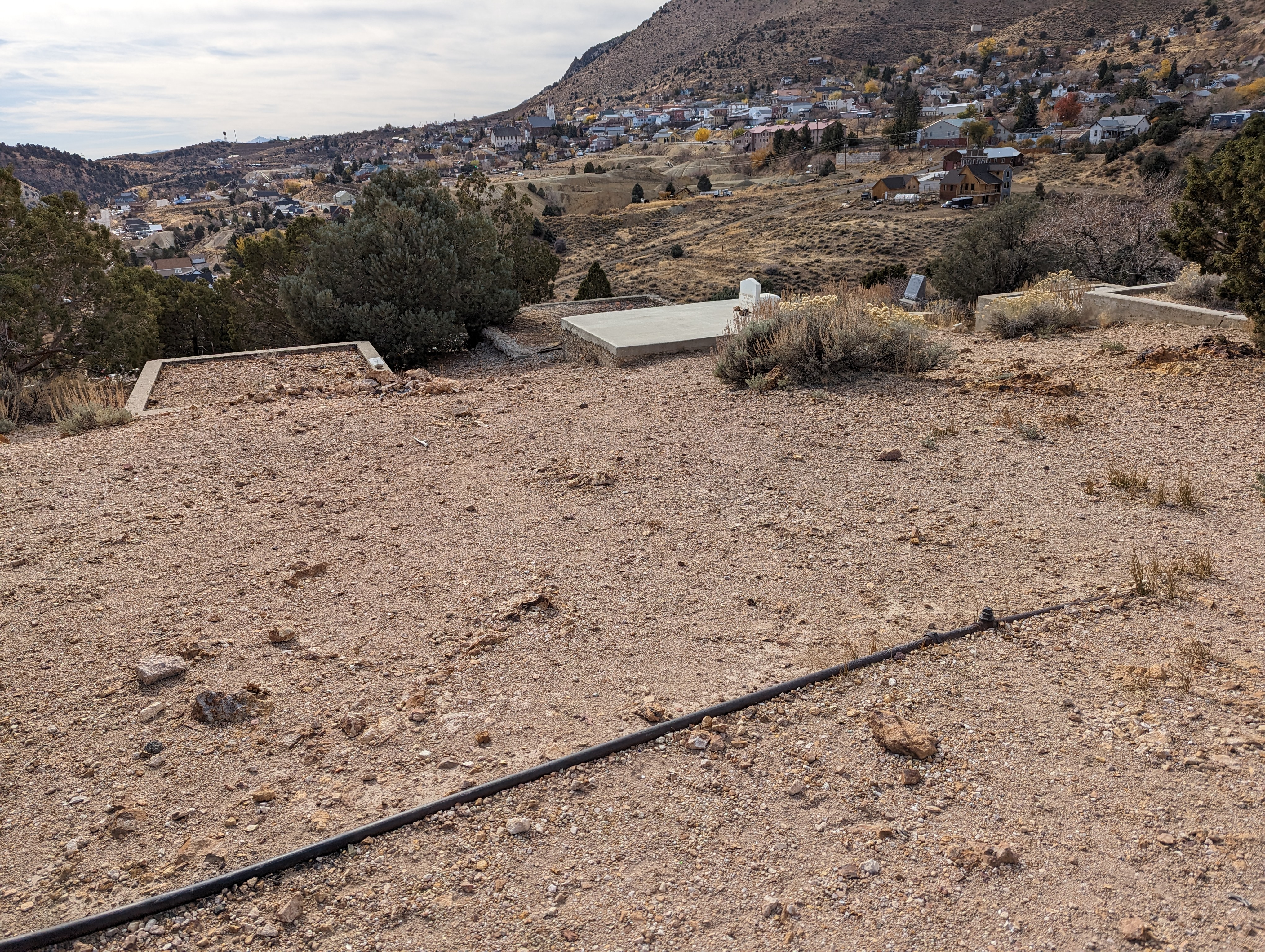
About 300 miners died in the Comstock. Here's the edge of the town's big cemetery. Perhaps the most interesting detail is the pipe, which once irrigated the place to make it the verdant park that people expect a cemetery to be.
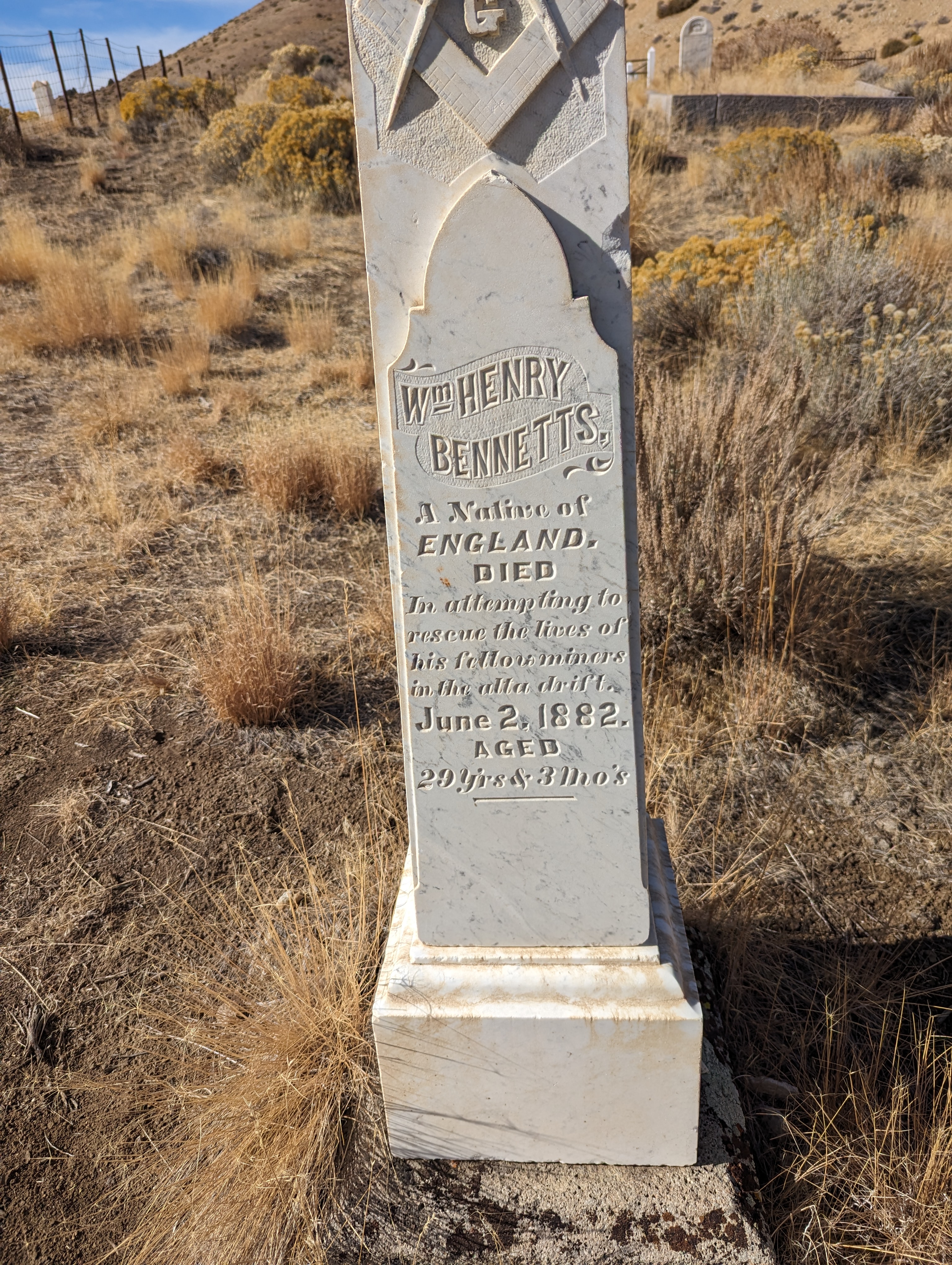
Neighboring towns had their own cemeteries. Here's a stone from the one at Gold Hill, adjacent to Virginia City on the south.
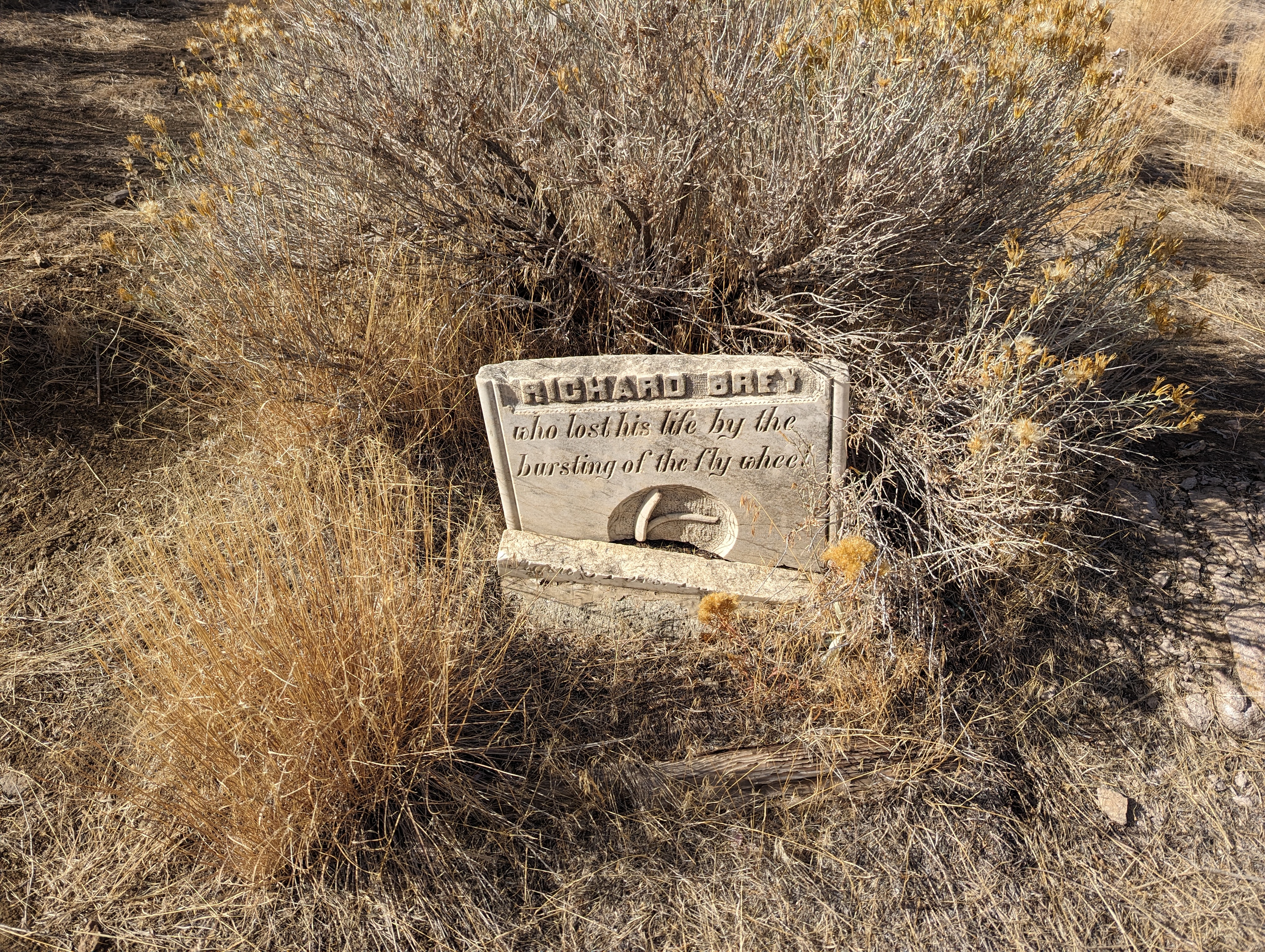
A victim of a flywheel spinning too fast.
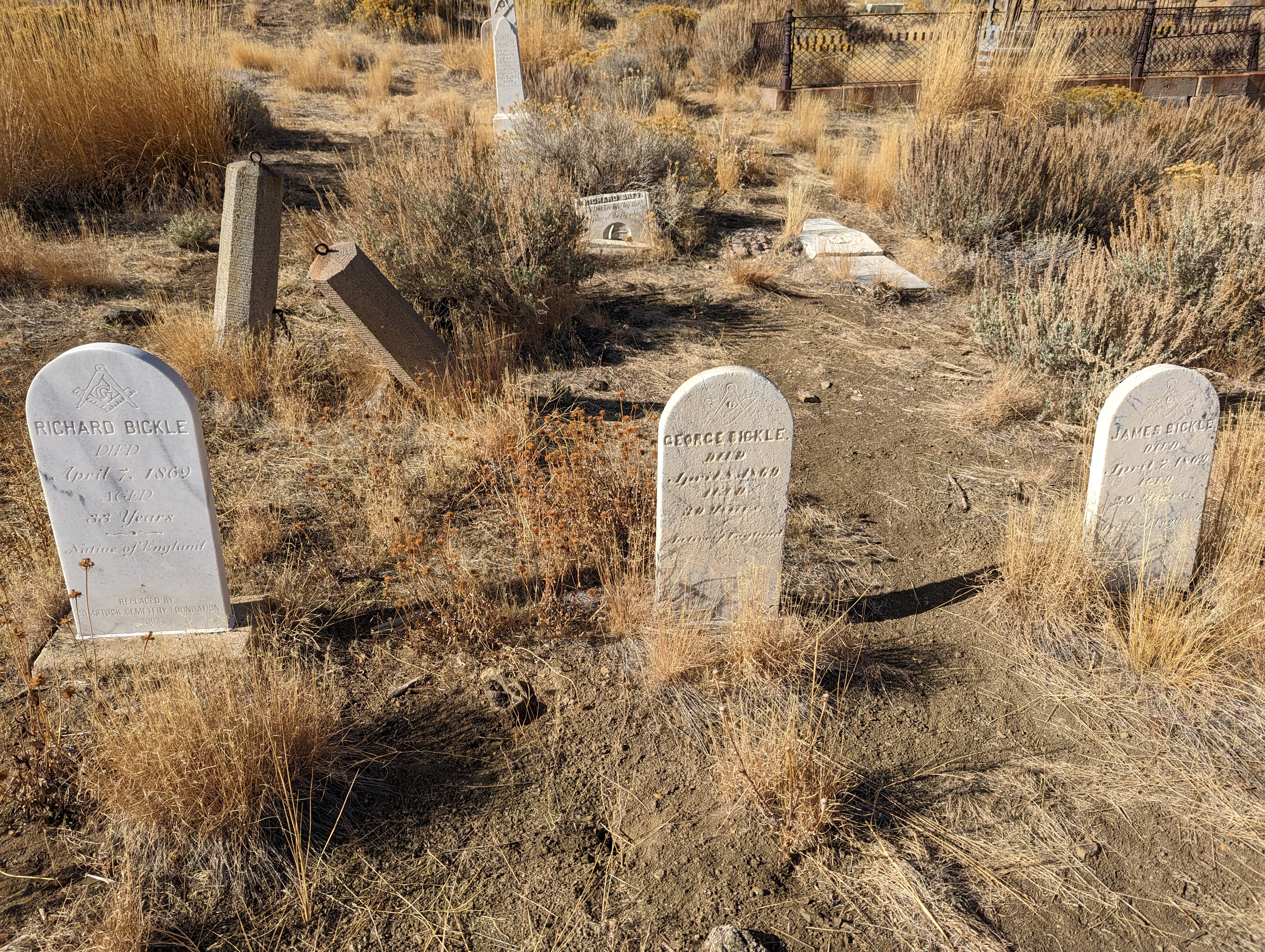
Three brothers who died together in the biggest single accident in Comstock history, an underground fire at Gold Hill's Crown Point Mine.
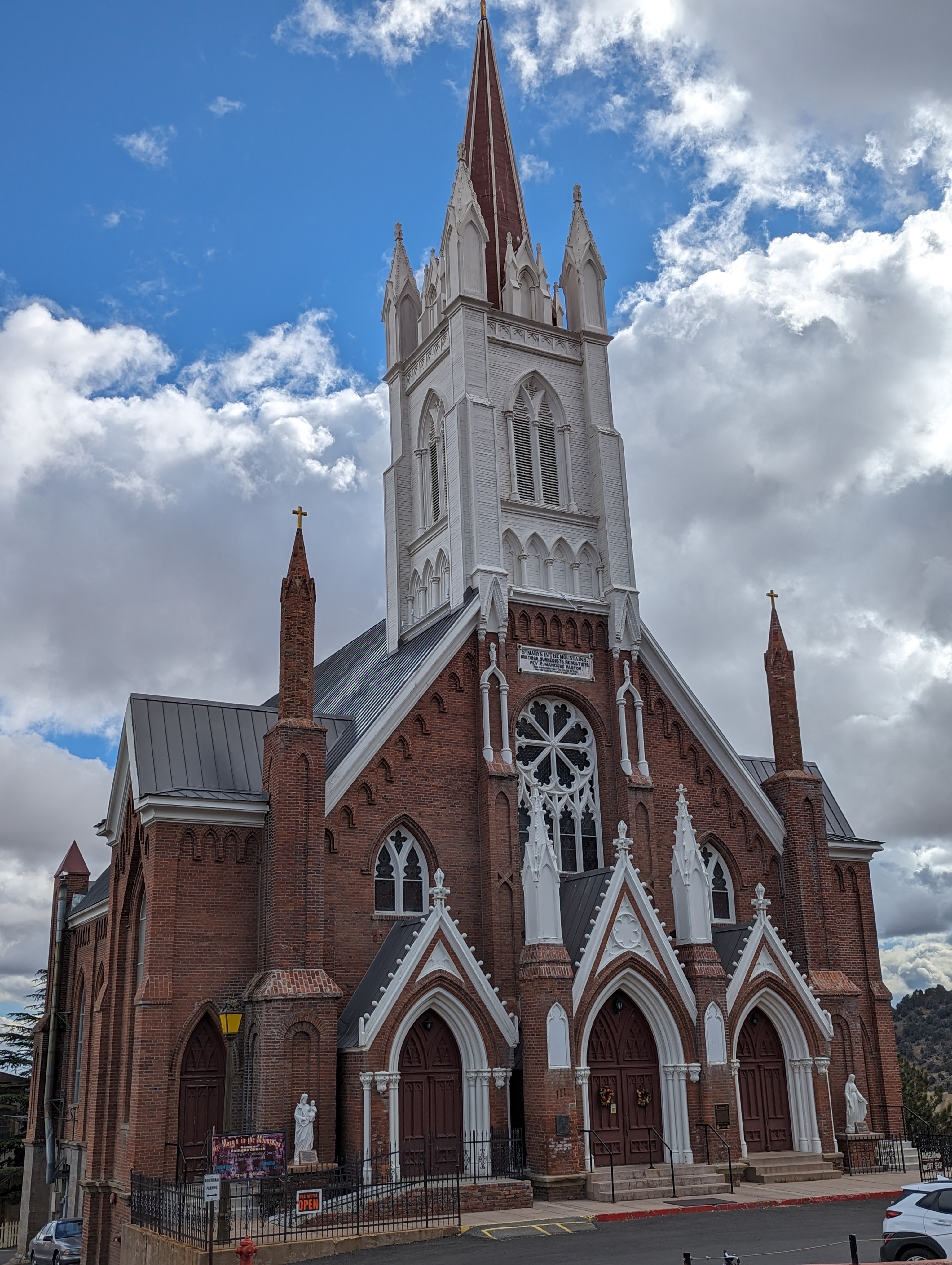
A majority of the miners at Virginia City were foreigners from England and Ireland, which is why the biggest church in town is Catholic. Don't judge this book from its cover.
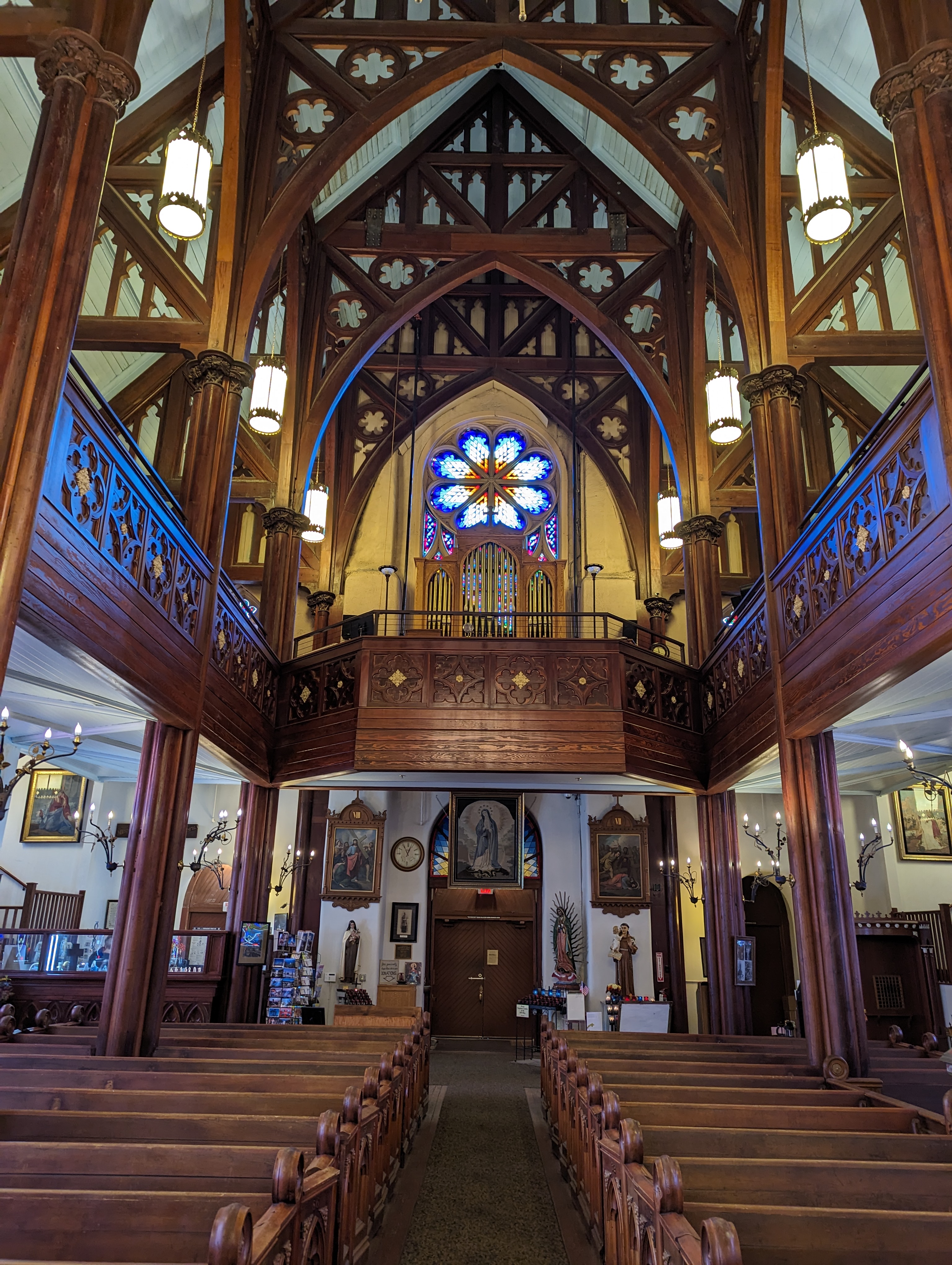
The inside suggests that there were people in town who really knew how to work with wood. And were motivated.
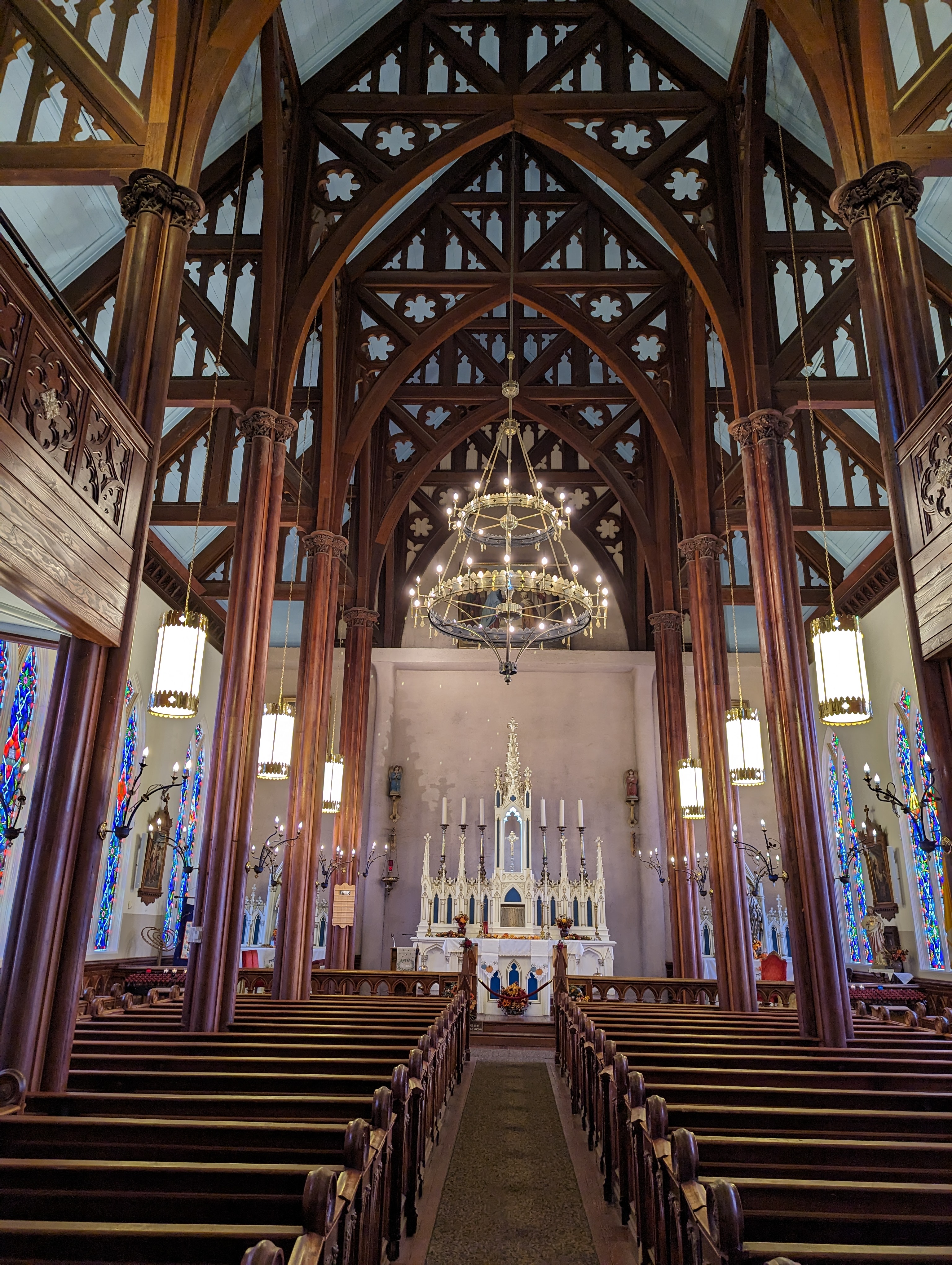
The piers are faced with half-rounds covering a 16- by 16-inch baulk, a dimension used in the mines.