Crafts and the Introduction of Machinery
Archaic technologies still thrive in India.
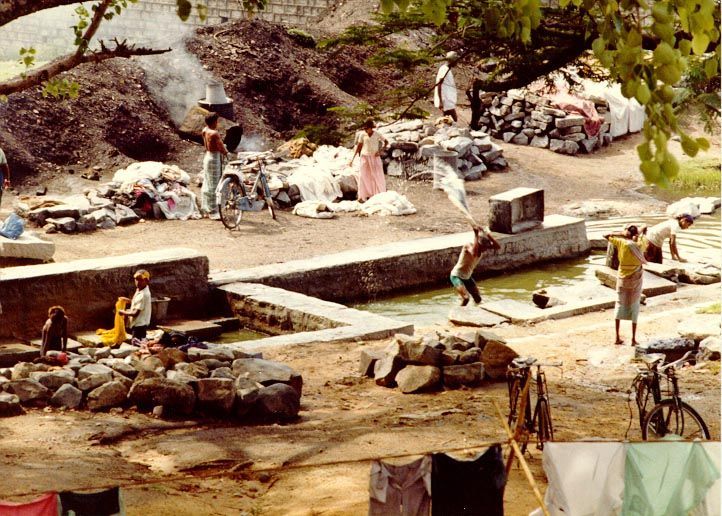
Indian laundrymen are notorious for their flogging of clothing, as here, below the Husainsagar in Hyderabad.
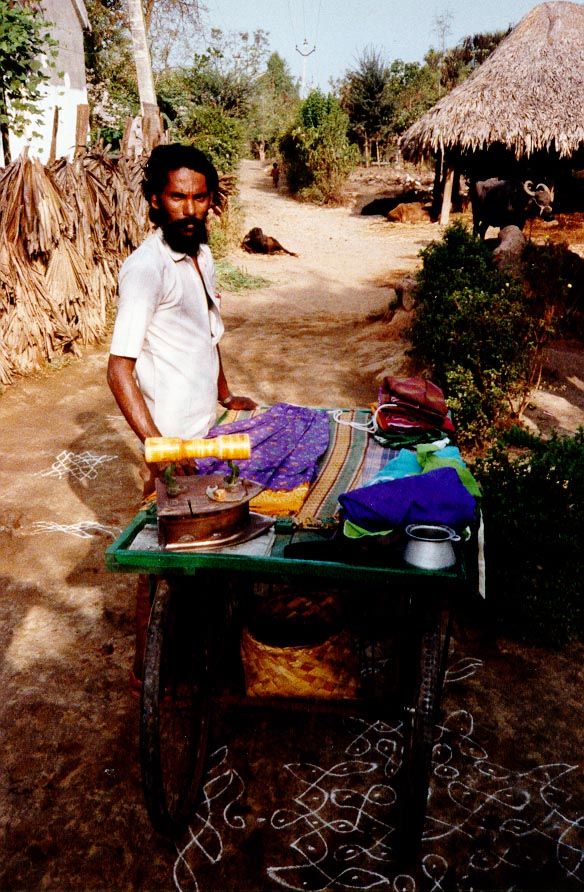
A mobile ironing-service, using a heavy, charcoal-heated iron in the Krishna delta, downstream of Vijayawada.
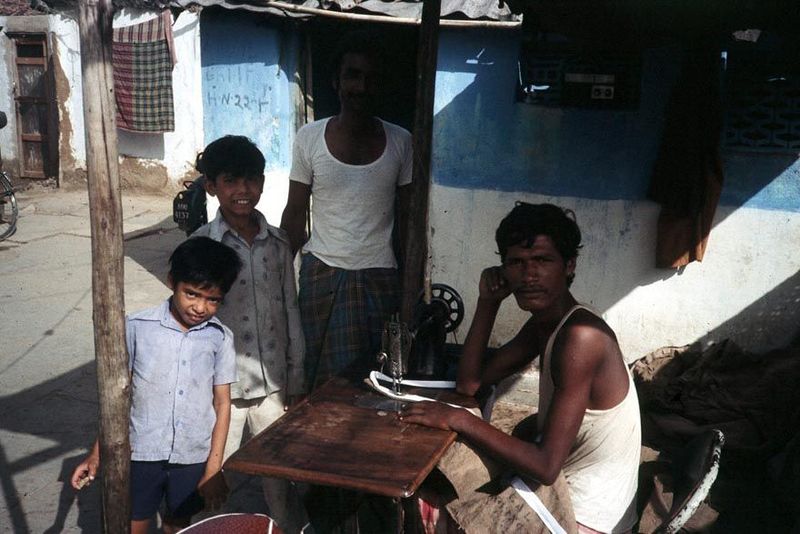
A village tailor, with a treadle-powered sewing machine.
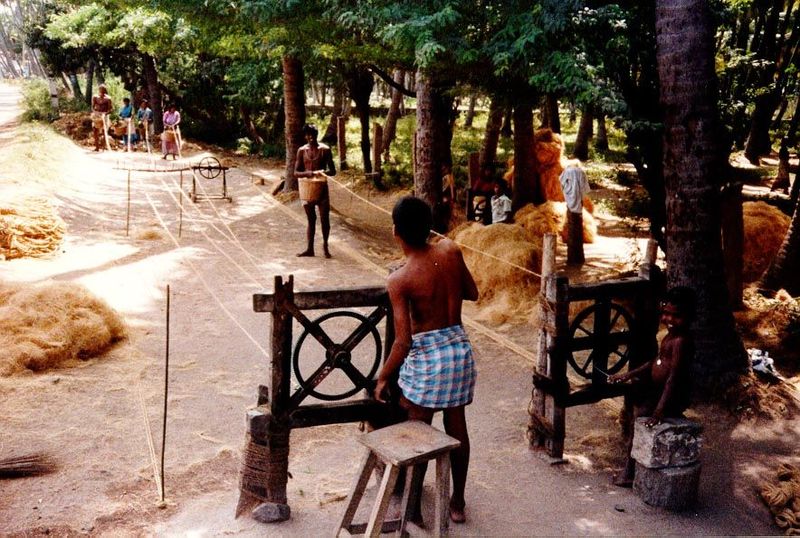
A British introduction? Probably. A rope-making machine in Tamil Nadu twists coconut fiber into rope; the women in the background feed material into the strand.
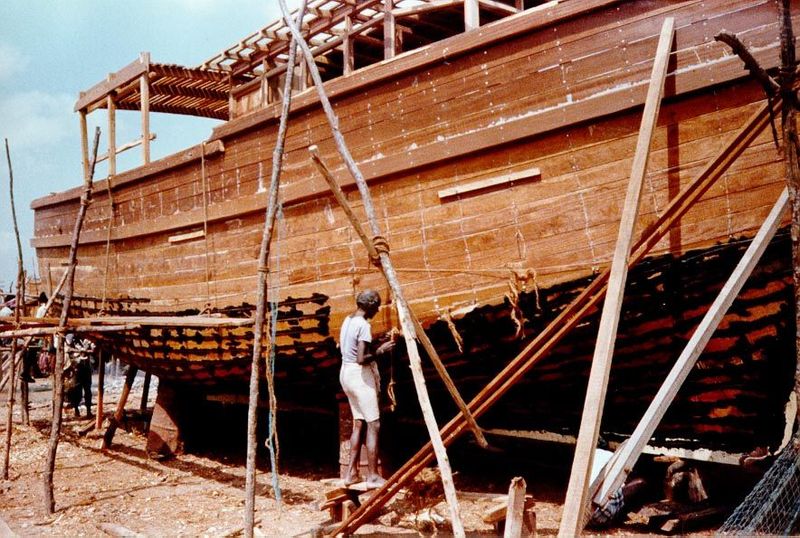
One use for such rope: caulking is forced between ship timbers at a yard near Machilipatnam, at the mouth of the Krishna. The seams are then tarred.
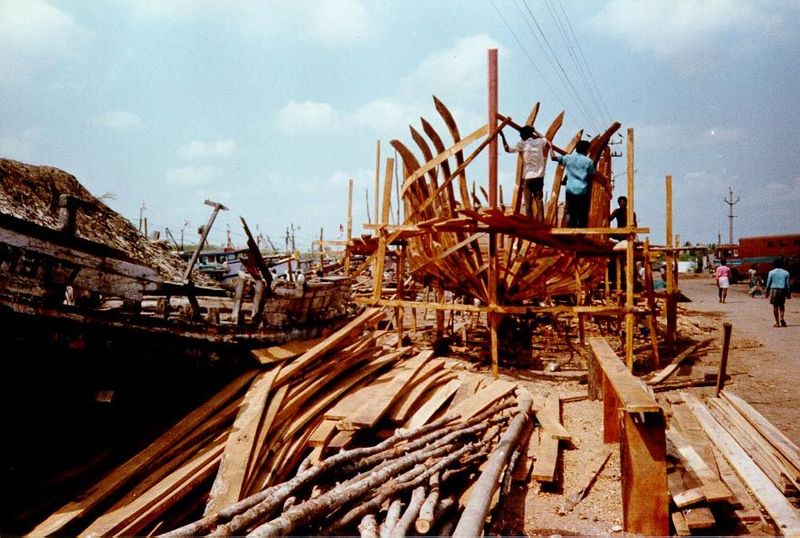
An earlier stage of construction.
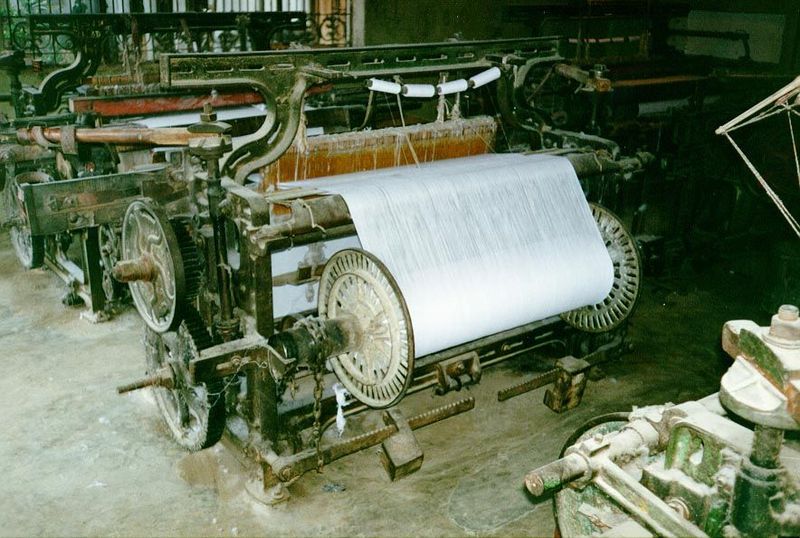
It is a truism that the British destroyed Indian textile handicrafts by flooding the Indian market with Manchester cloth. But the Indian market began using machine technology, too, and not just after 1947.
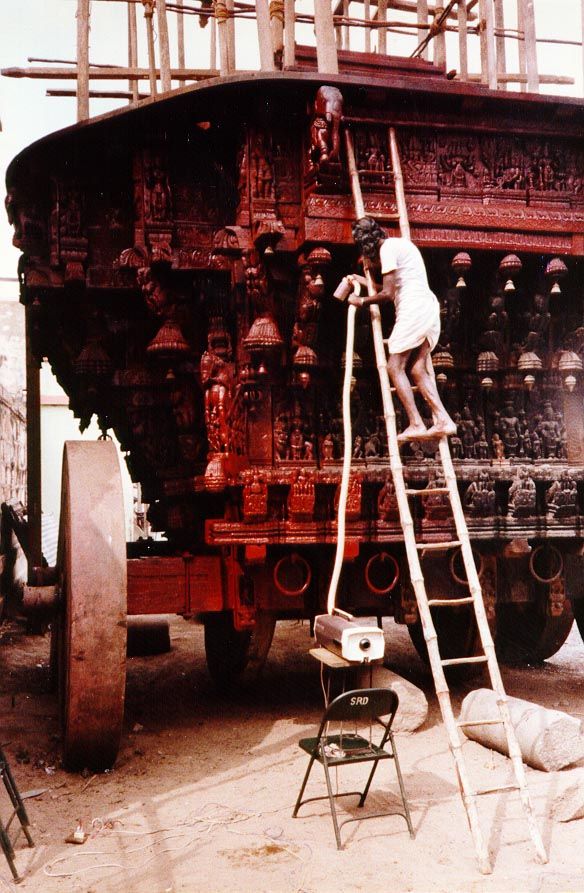
A vacuum cleaner working in reverse as a spray painter on a temple cart at Madurai, Tamil Nadu.