Yucatan 3: Campeche and Edzna
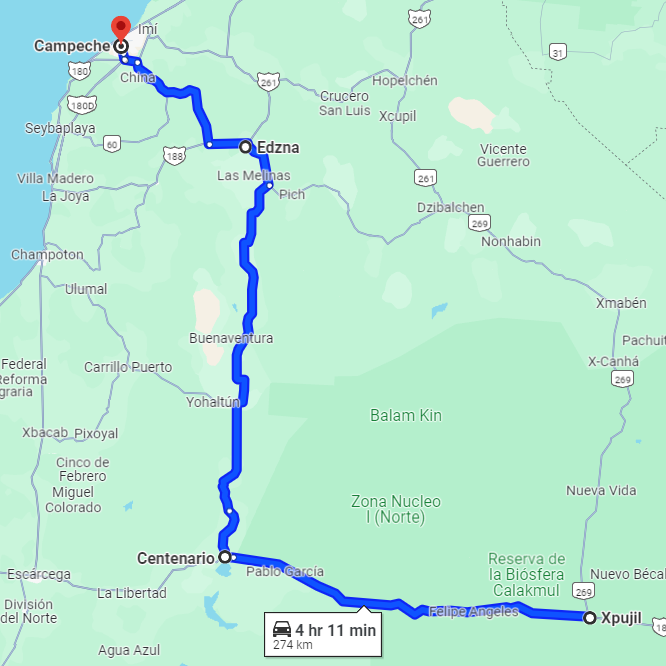
Leave Xpujil, head west to Centenario, go north to Edzna, and continue to and around Campeche. Duck soup.
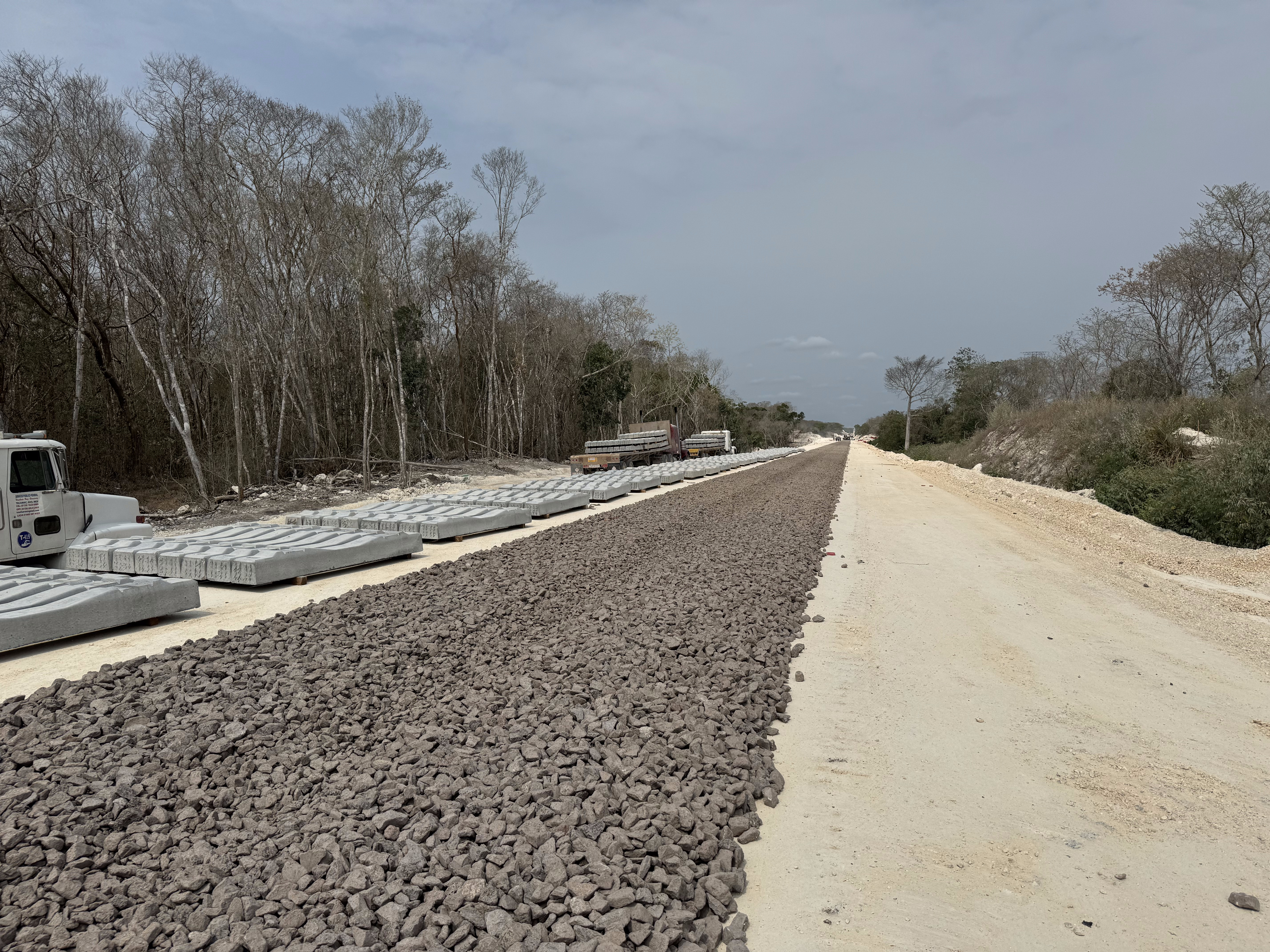
The highway west from Xpujil sometimes parallels the Maya Train, nearing completion in April, 2024.
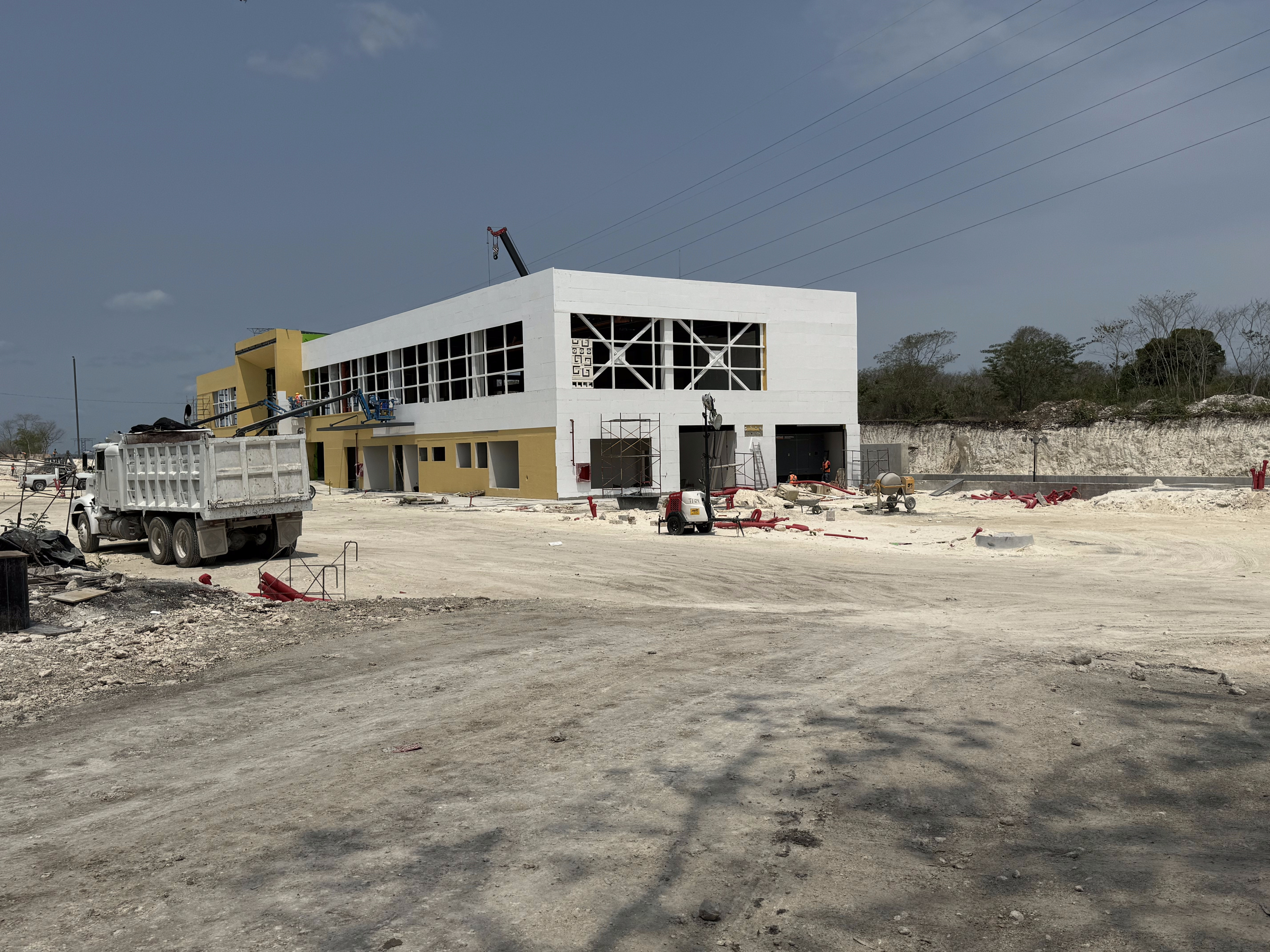
Here's the Centenario station. I'm not sure what the local attraction is.
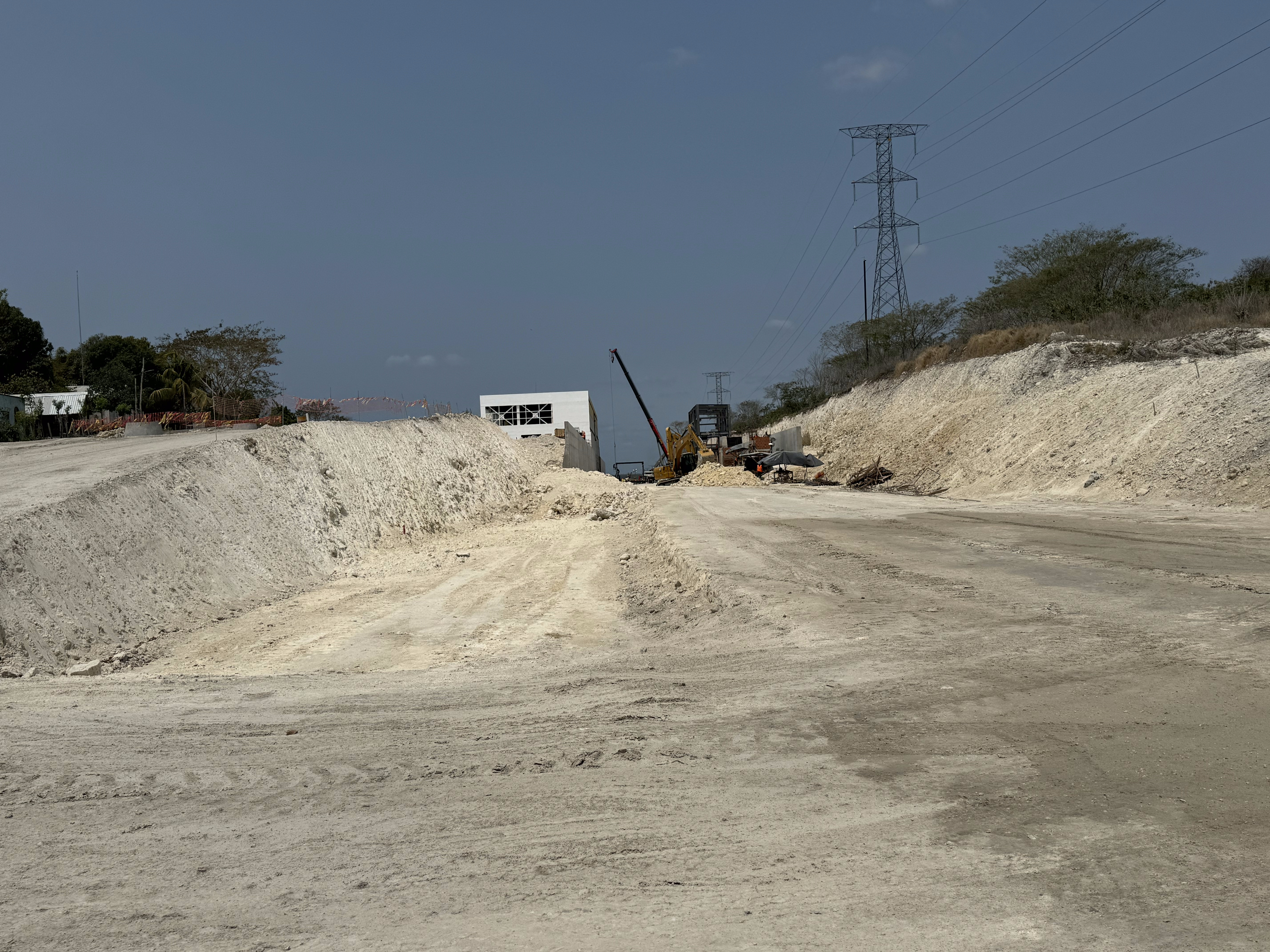
High-speed trains hate even tiny hills.
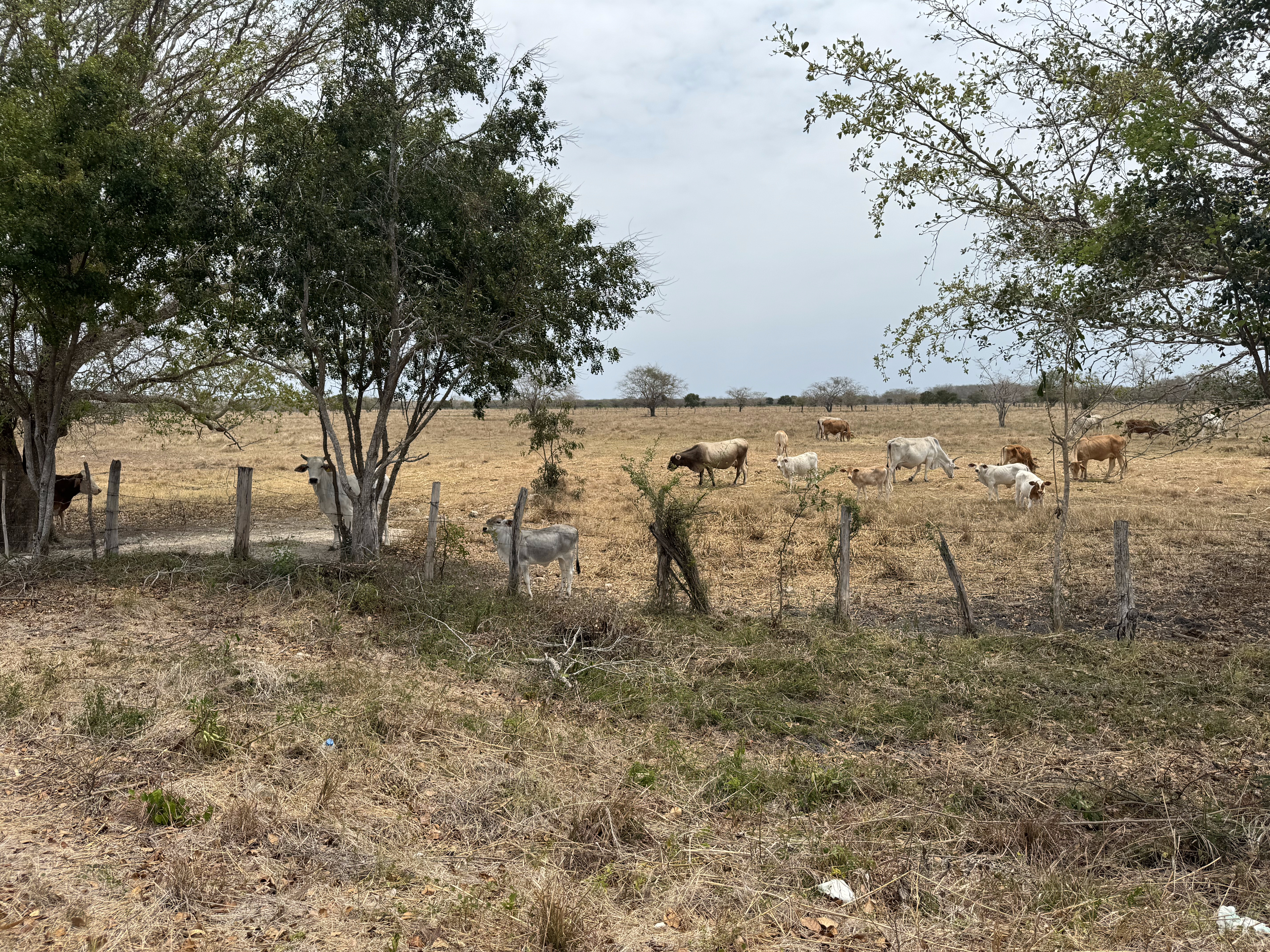
North towards Edzna, things calm down.
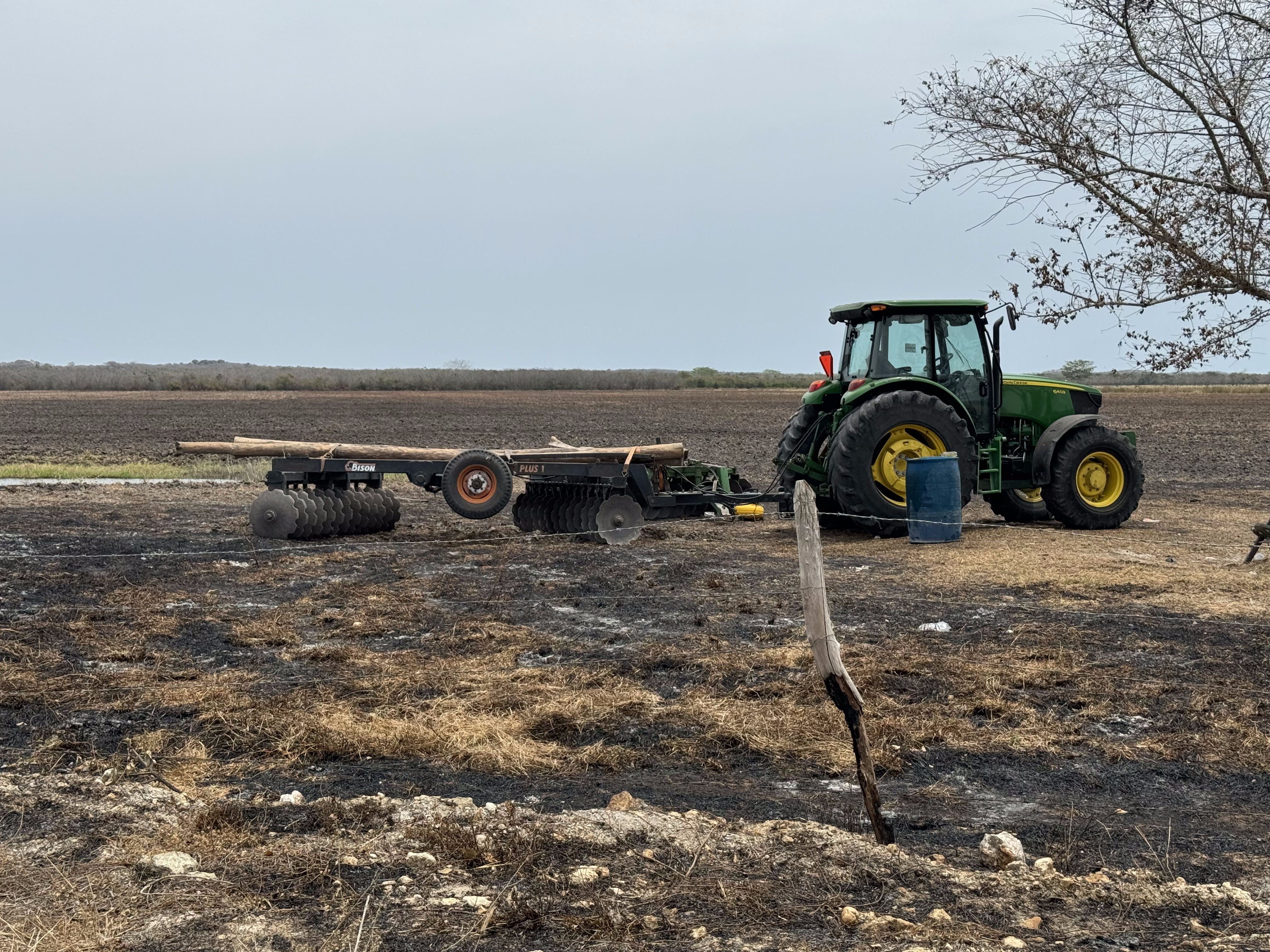
But this isn't subsistence farming.
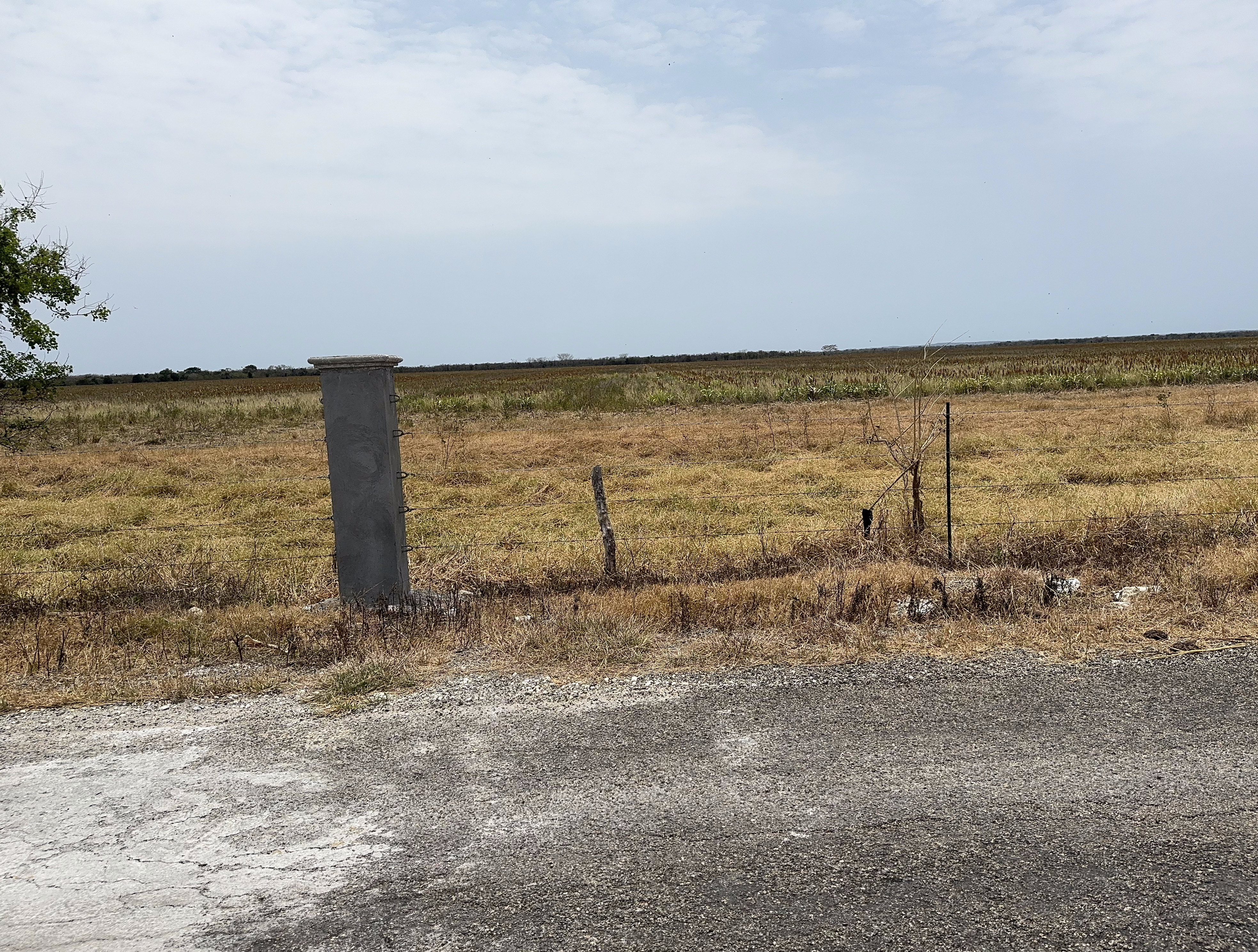
Or ranching. How do you like this gold-plated fence post?
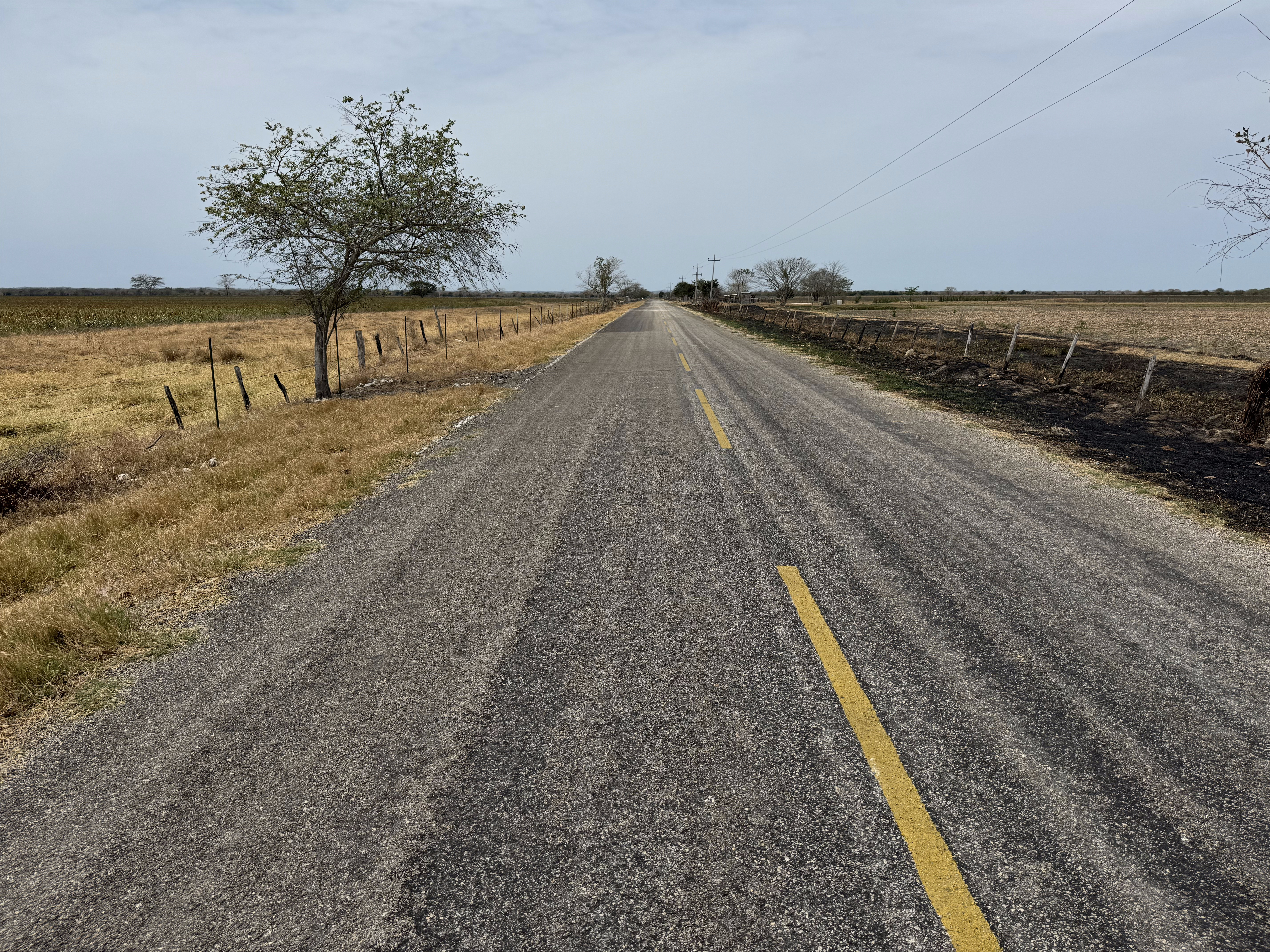
Was this area once caught-up in the agave craze? Wish I knew.
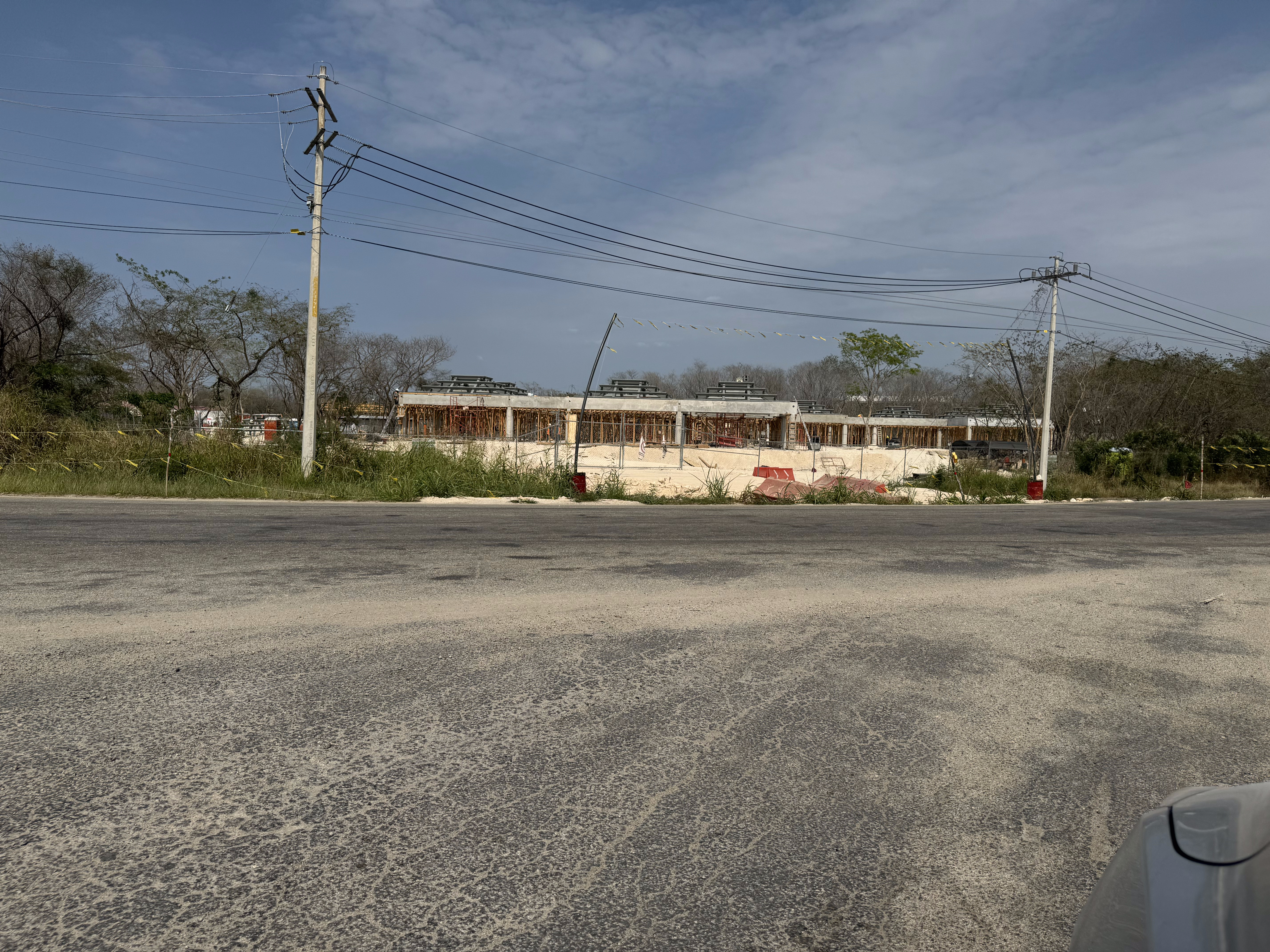
Oh no, another Maya Train station.
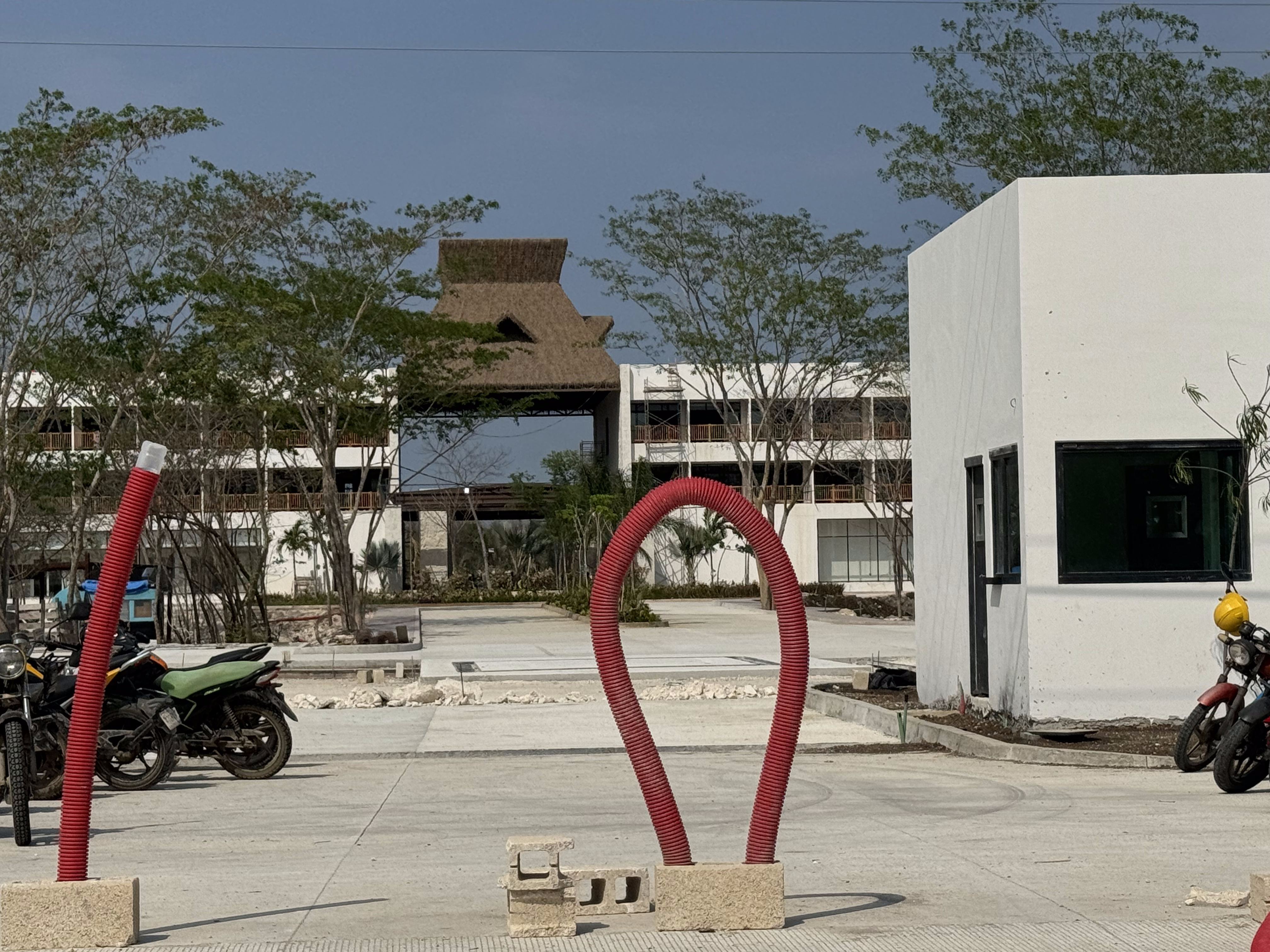
Nearby, a hotel is almost ready to accommodate train passengers getting off to see the ruins at Edzna. The trim is just like the trim on the hotel under construction at Calakmul, where the guard came racing over to make sure I didn't take a photo. And yes, the Maya built with thatched roofs, which probably inspired the so-called Maya arch found in stone buildings, but is this thatch authentic? Color me skeptical.
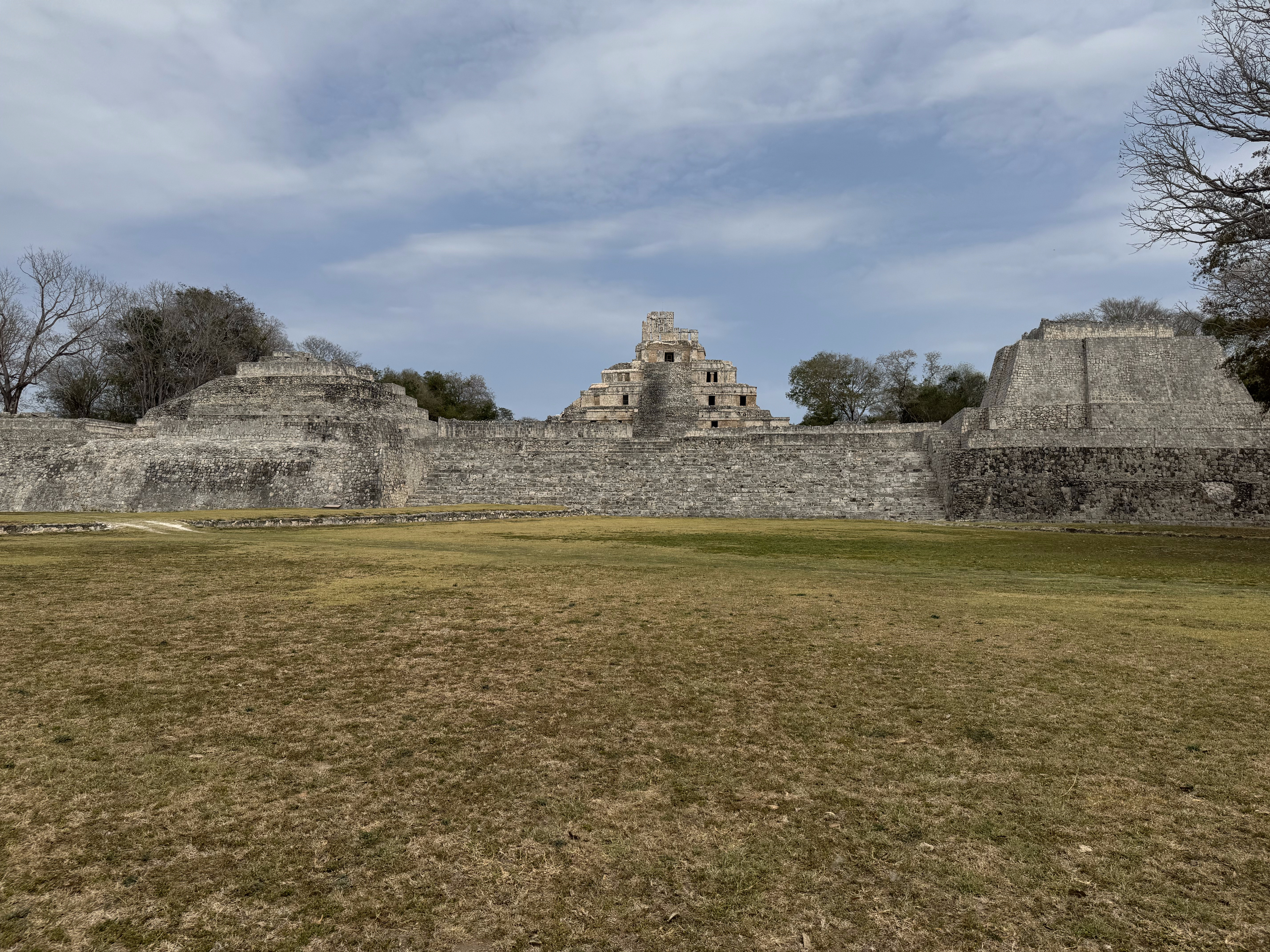
A couple of miles away: the Grand Acropolis at Edzna. We can climb up to the terrace.
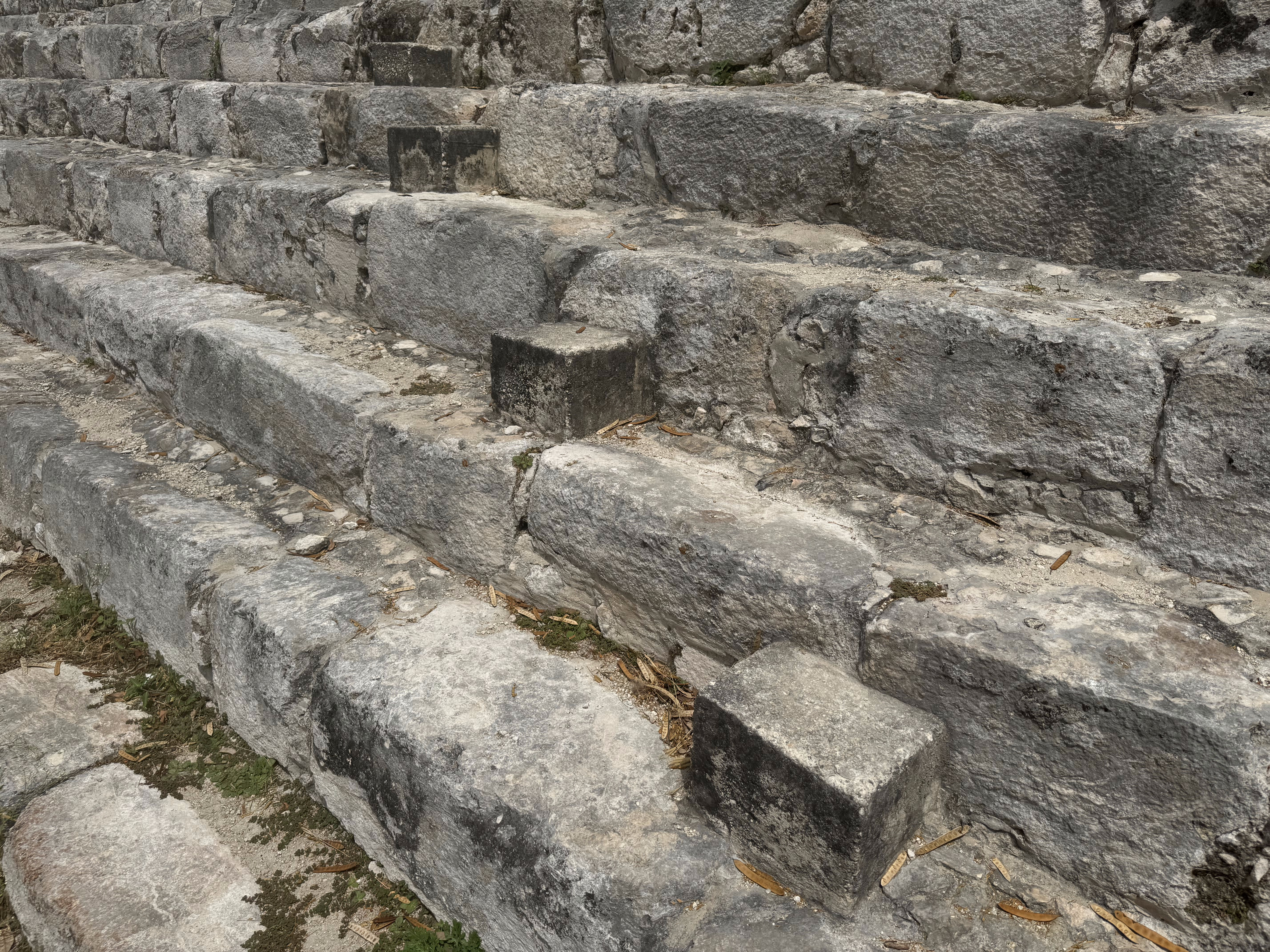
The blocks are supposed to help.
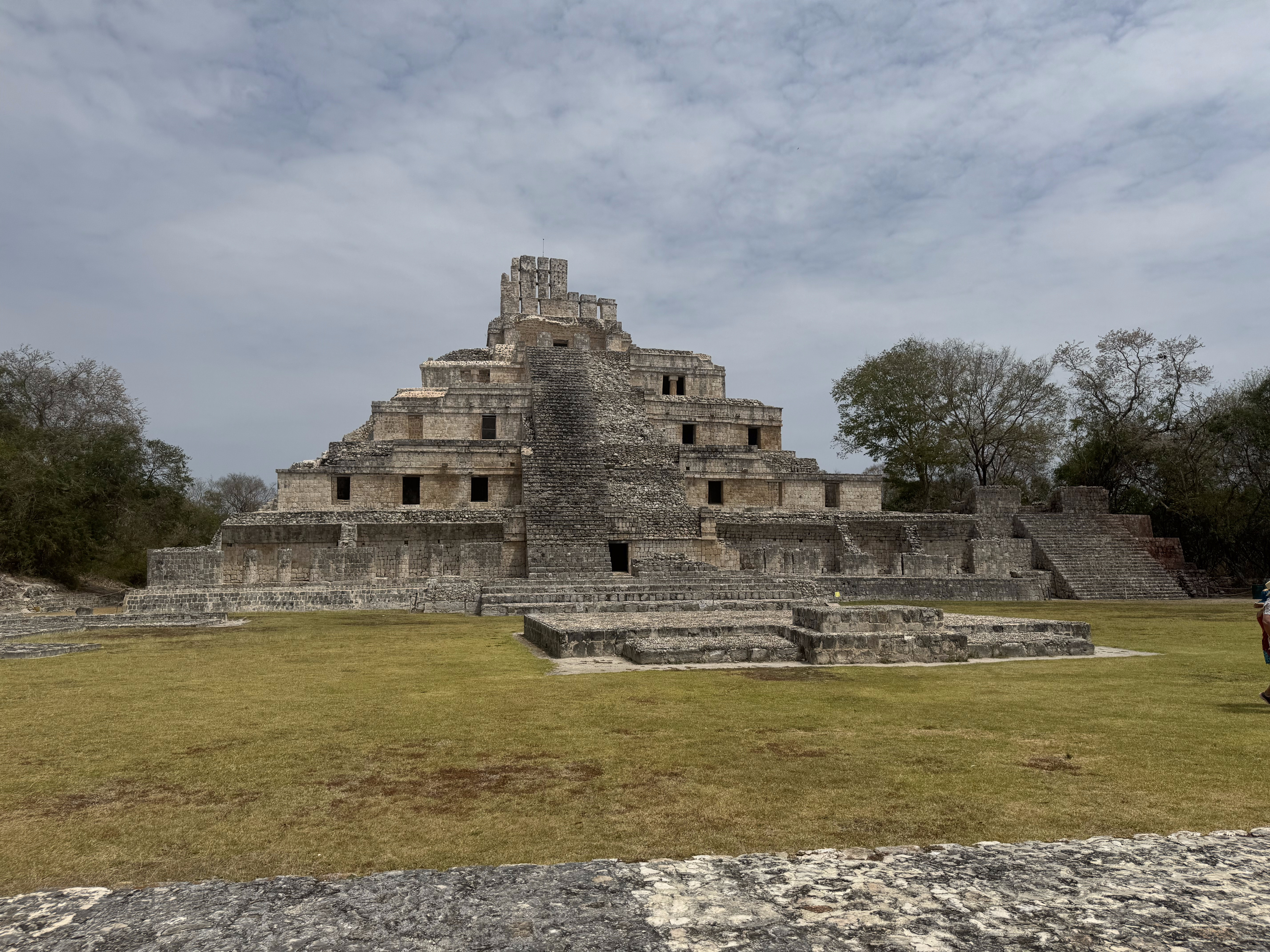
We're on the terrace now, with buildings right, left, and here, straight ahead.
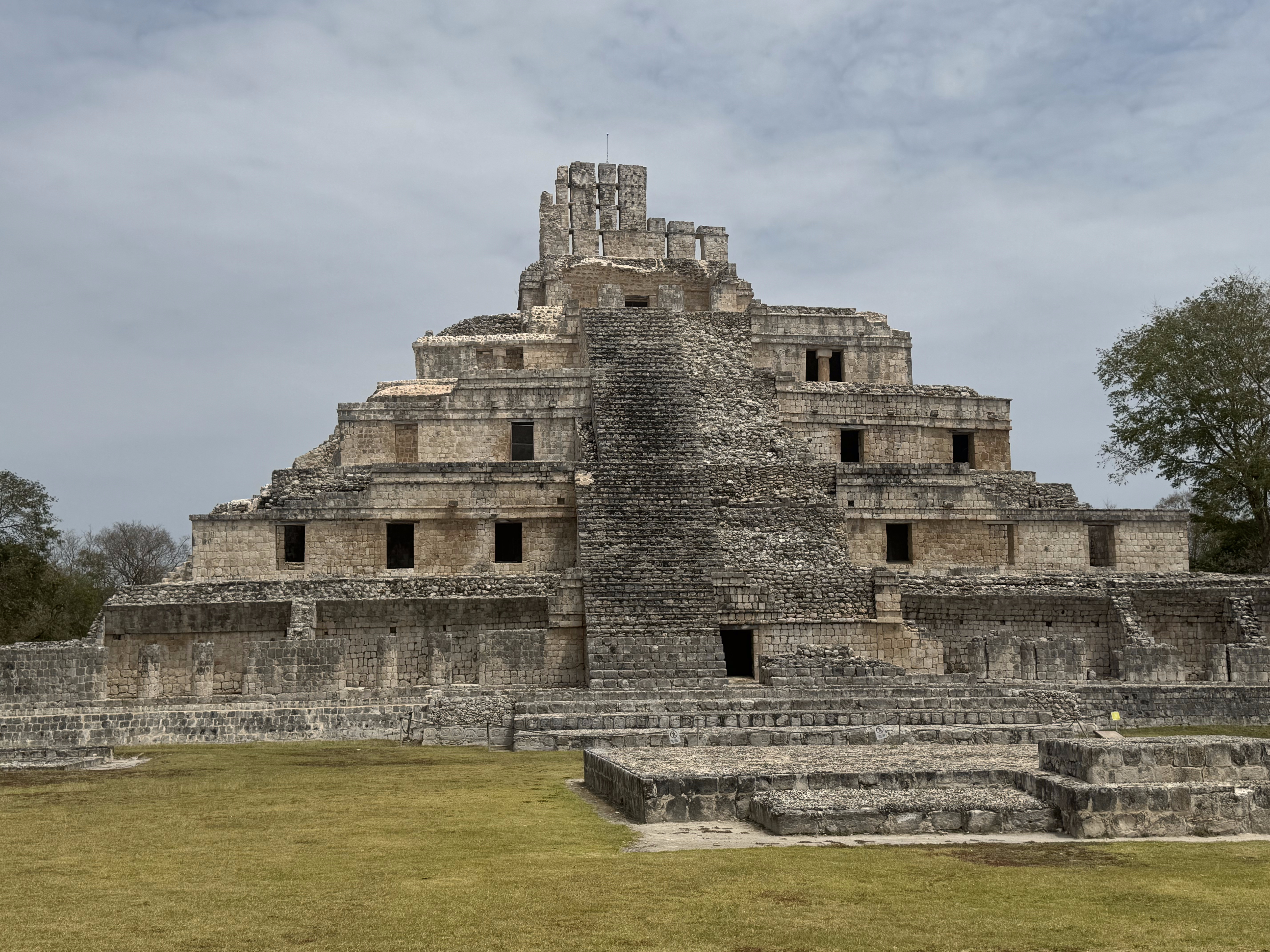
It's the palace or temple of five stories. Call me a barbarian, but I see kids playing peekaboo or hide-and-seek.
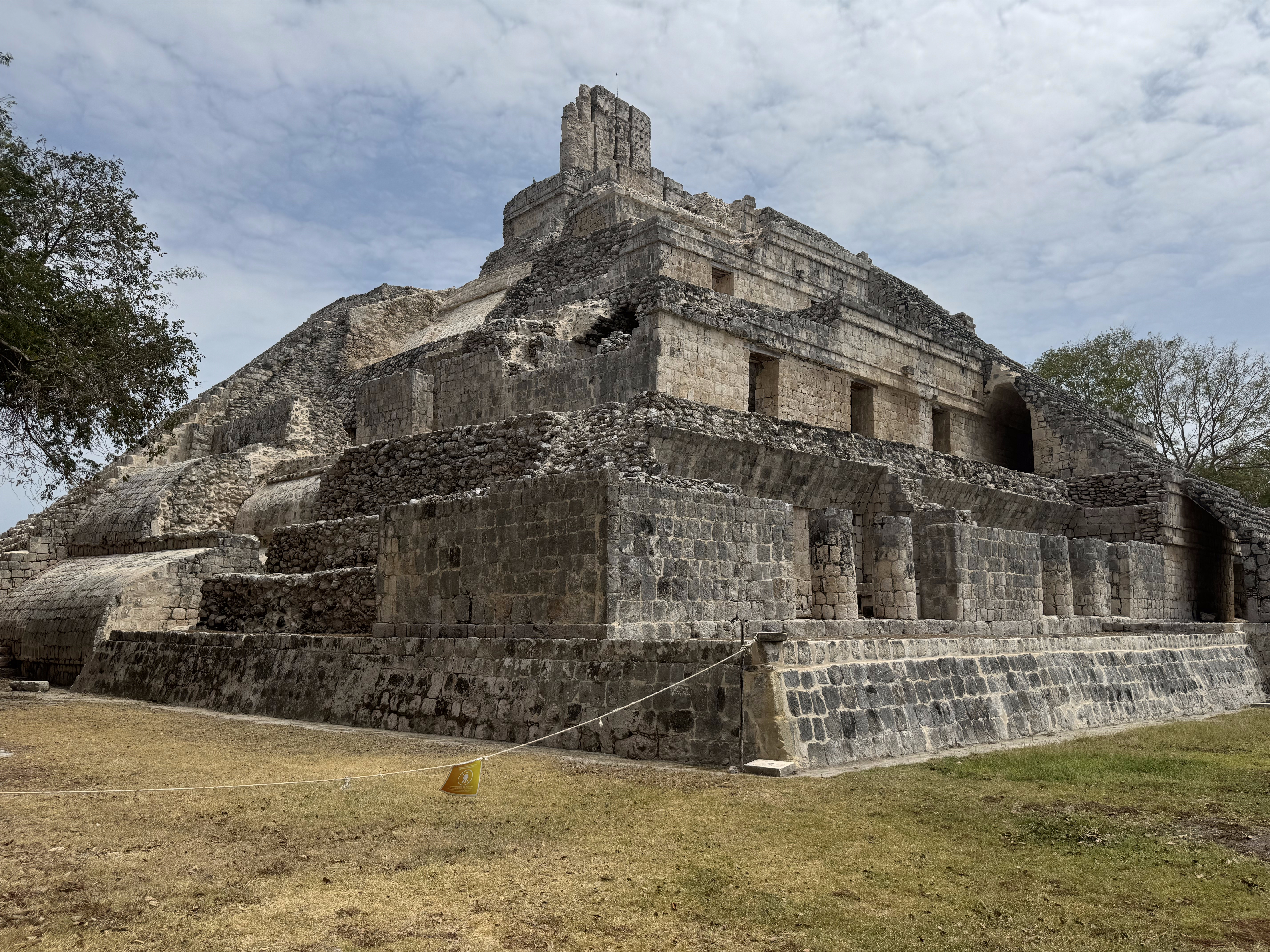
My instinct is to circle the place, but that's not allowed.
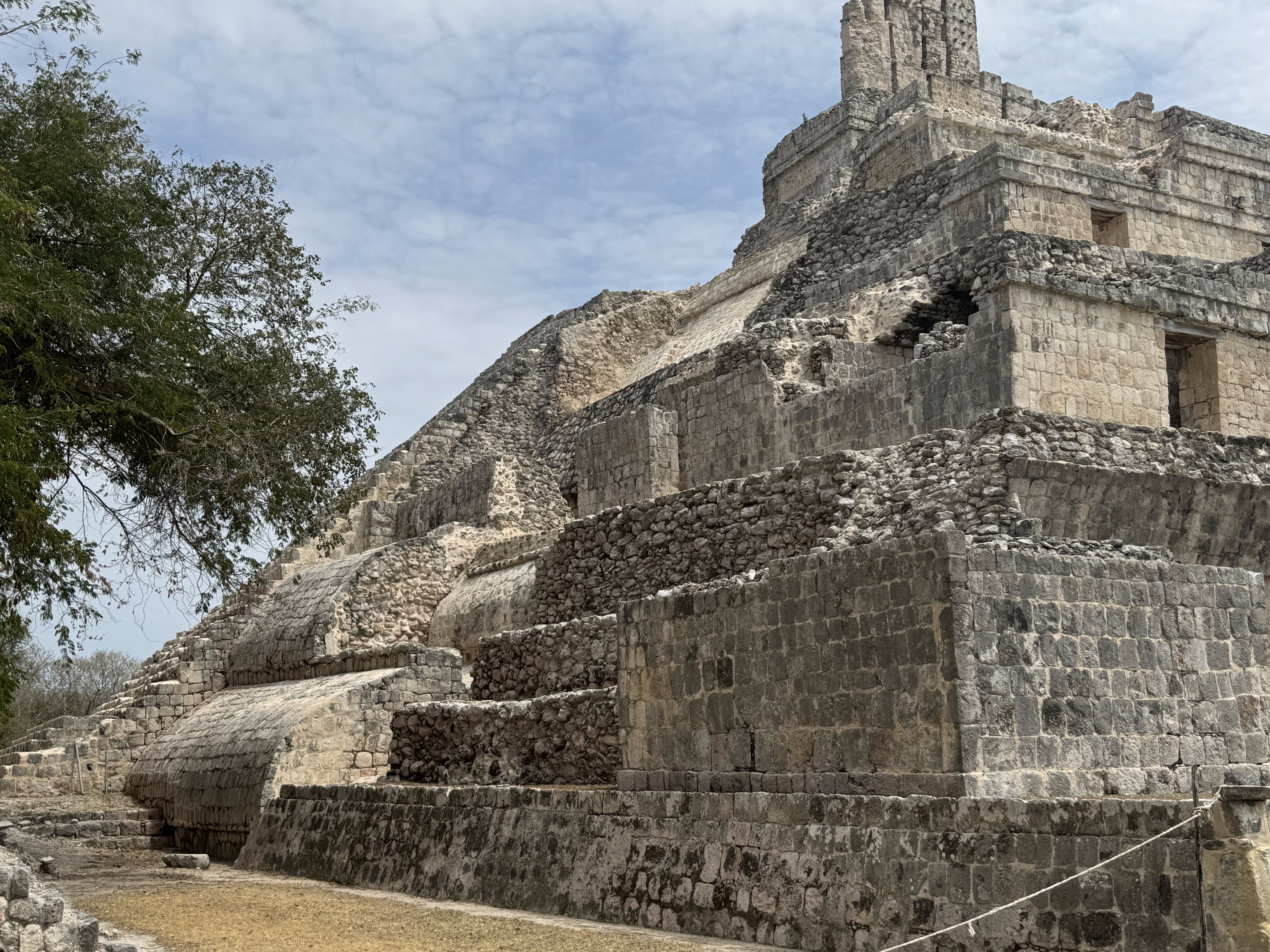
Weird shapes, presumably over rooms roofed with stone vaults.
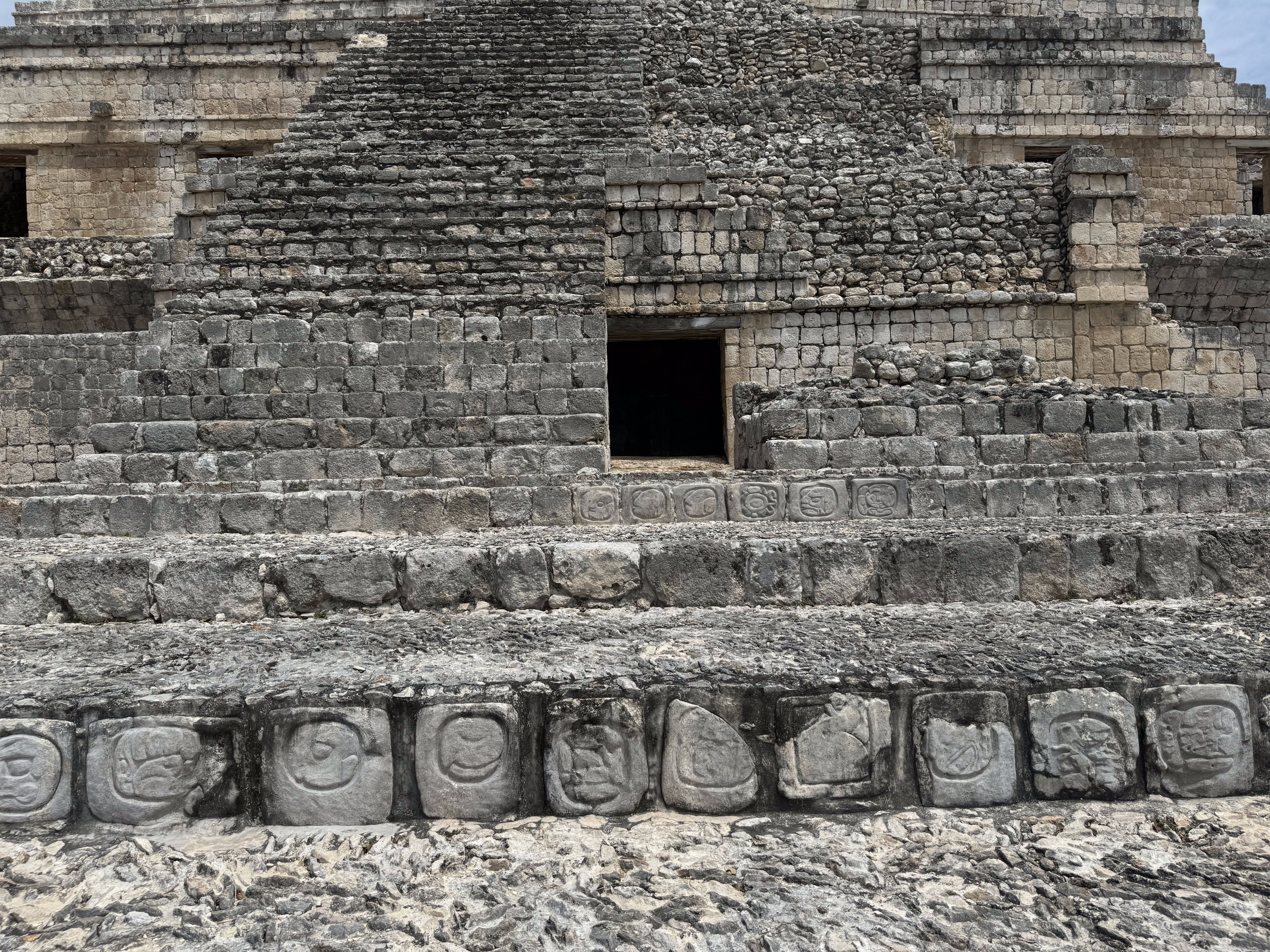
Glyphs at the foot of the main staircase indicate the year 652.
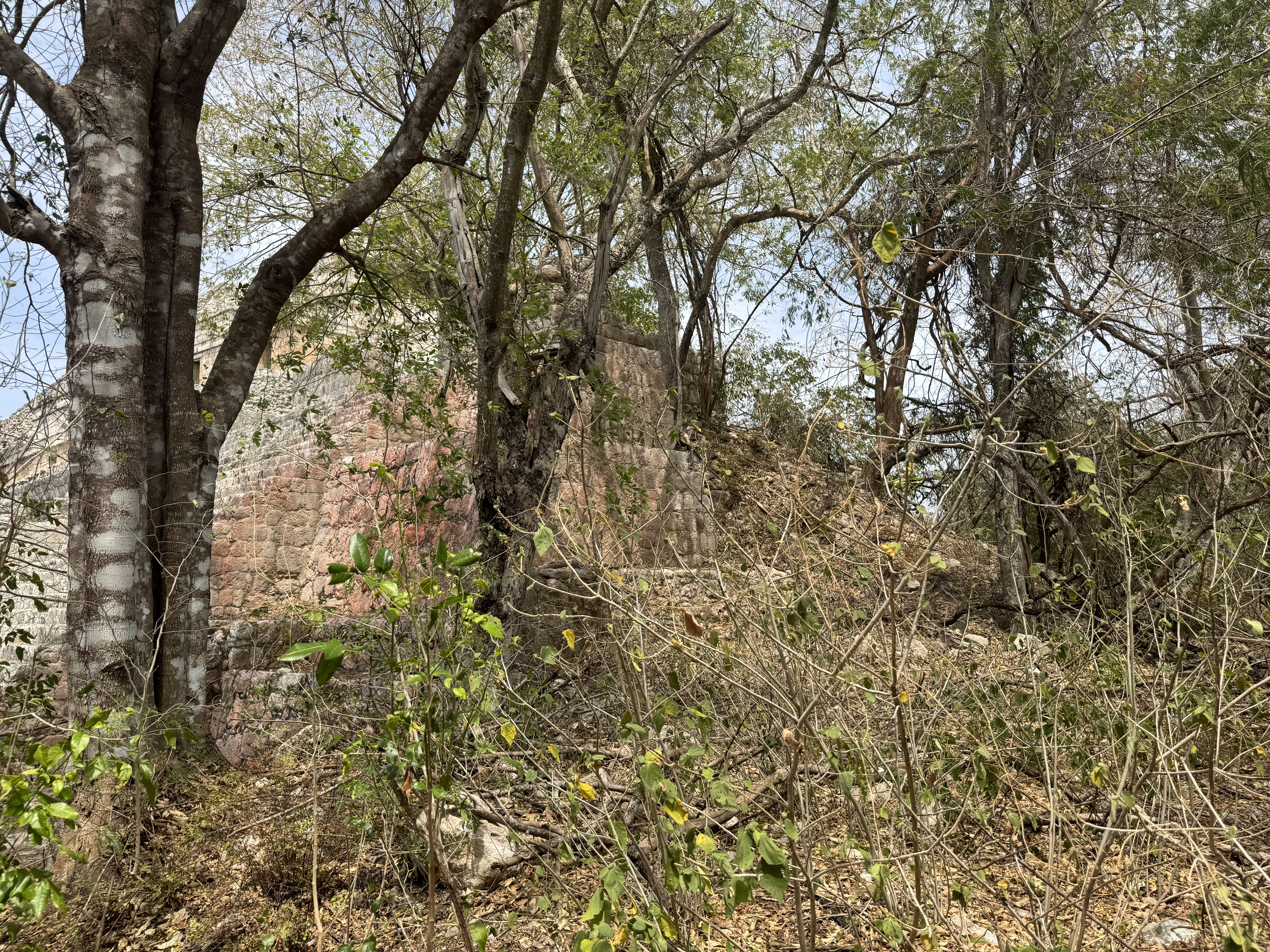
Off to one side there's something in the woods.
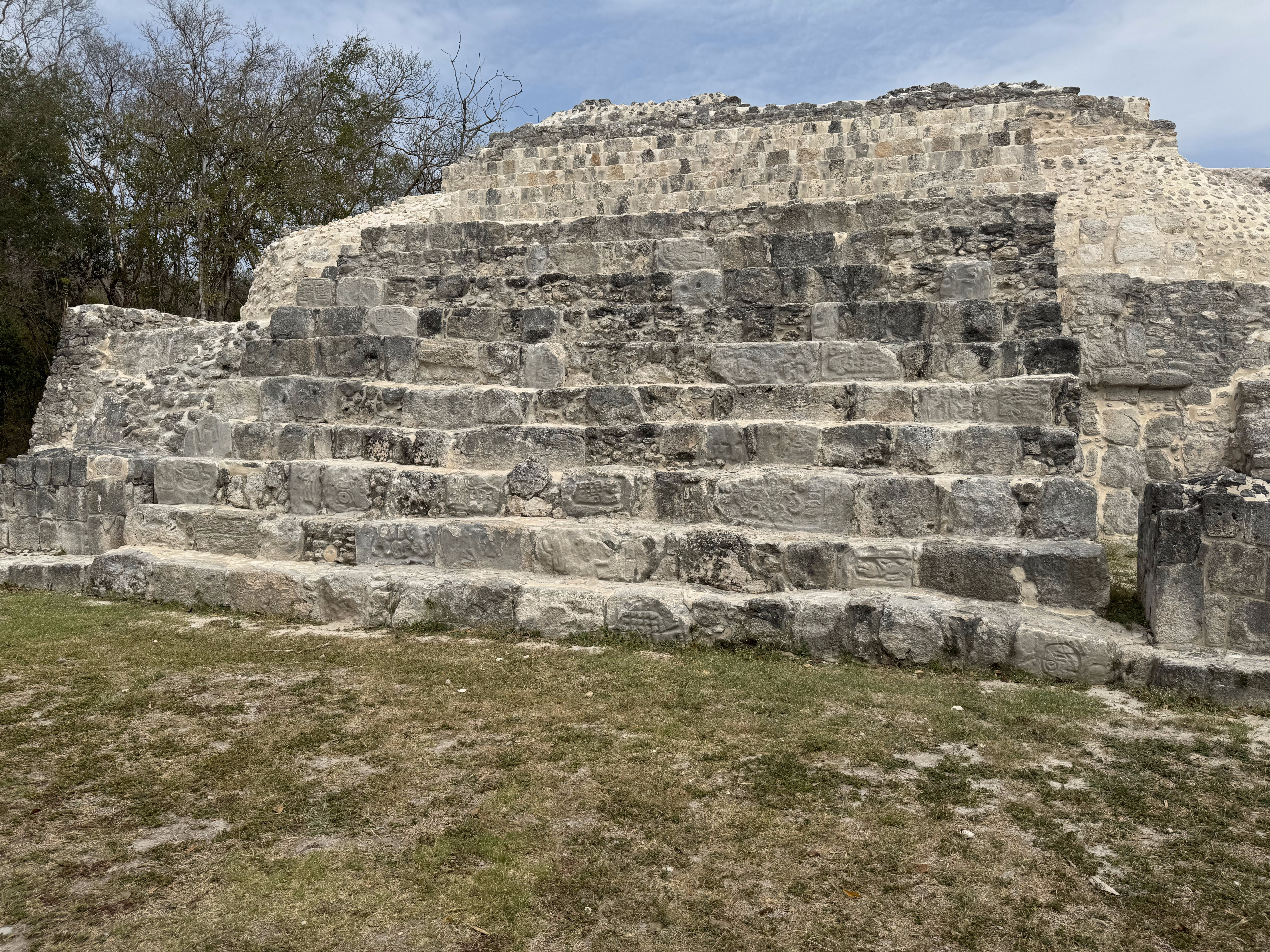
It's the small acropolis. Move along; nothing to see here unless you can interpret the glyphs.
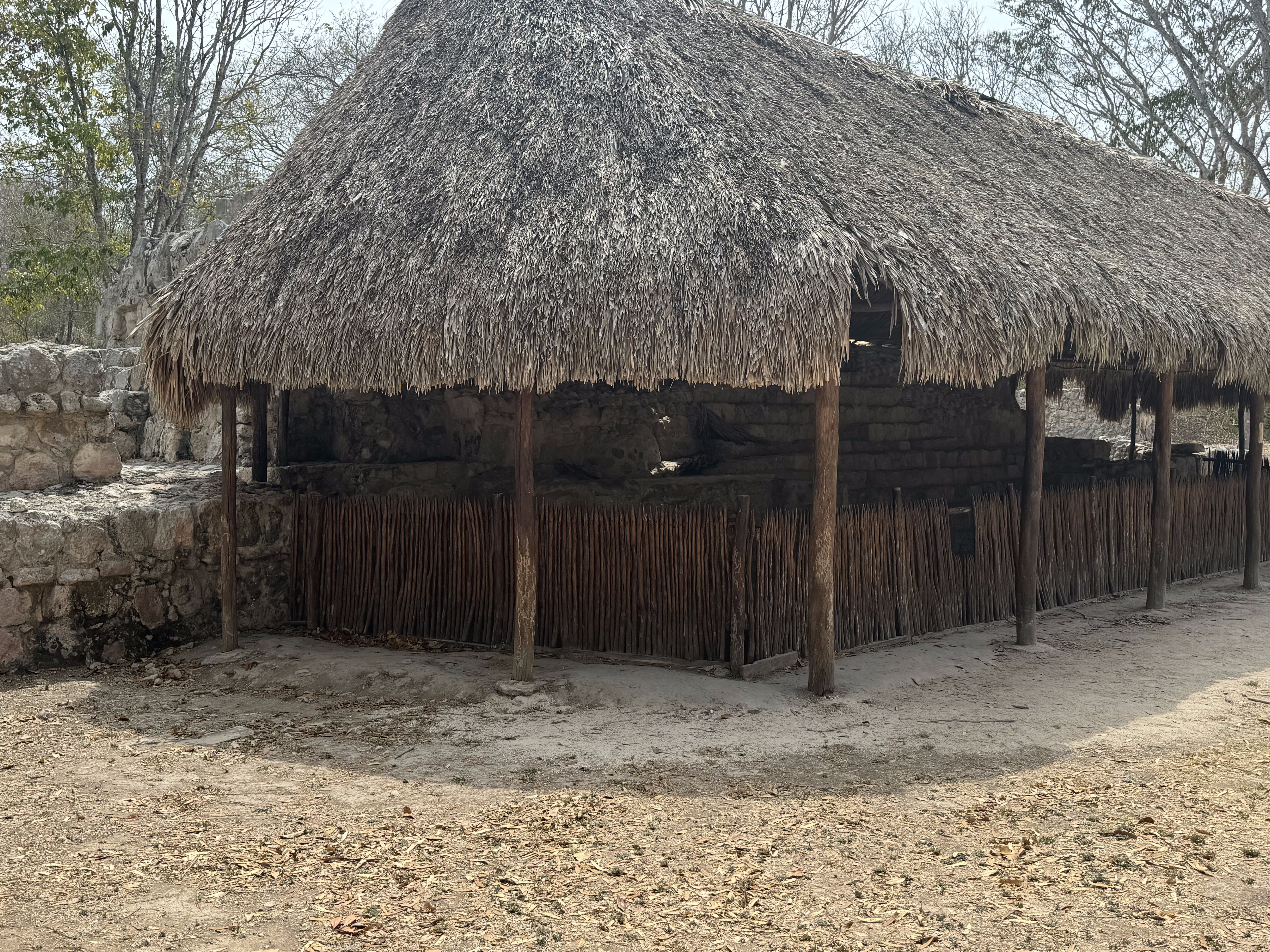
What could this be? Answer: the Temple of the Masks.
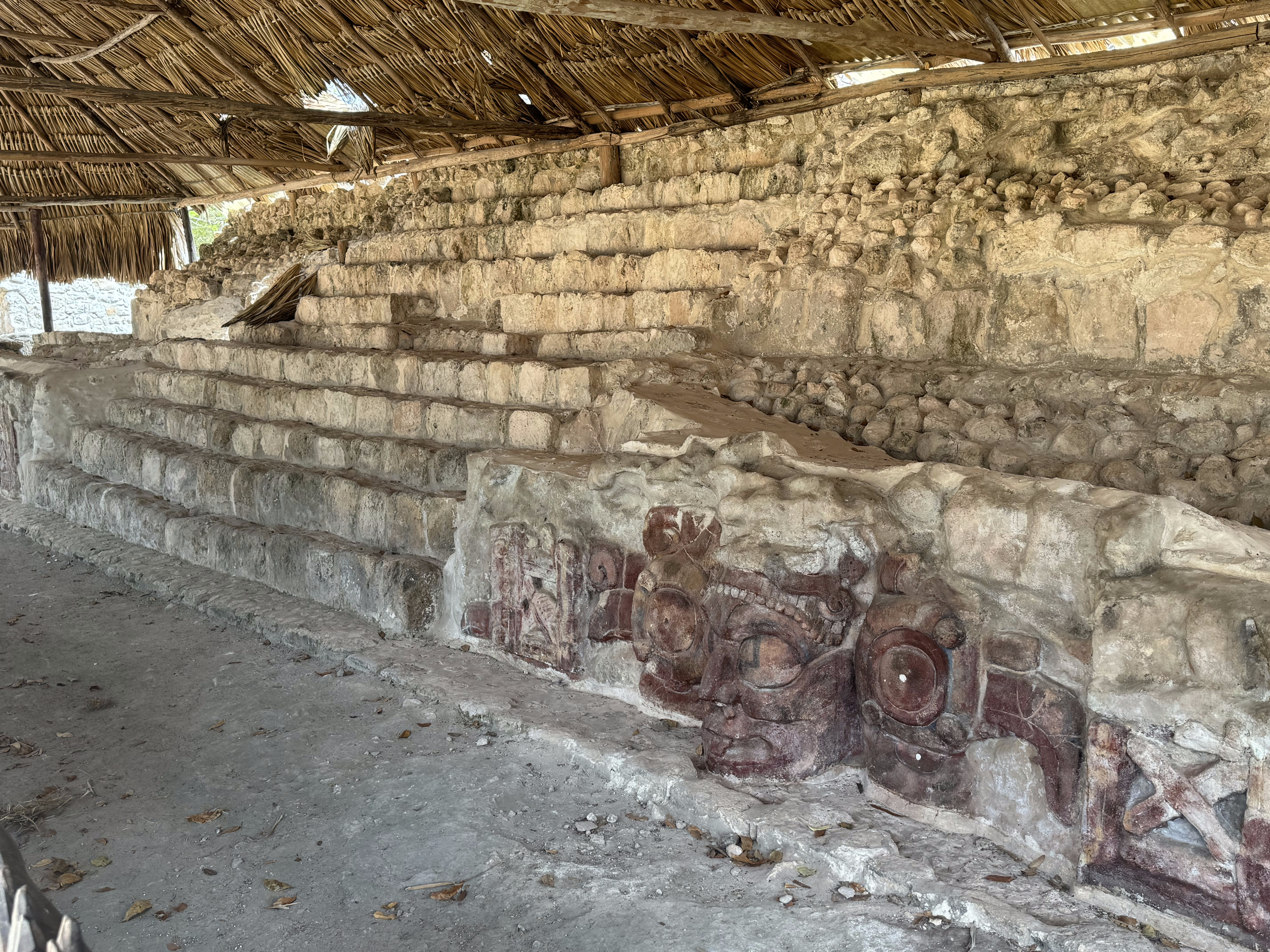
It's so-named because two stucco masks were found during excavation in 1988.
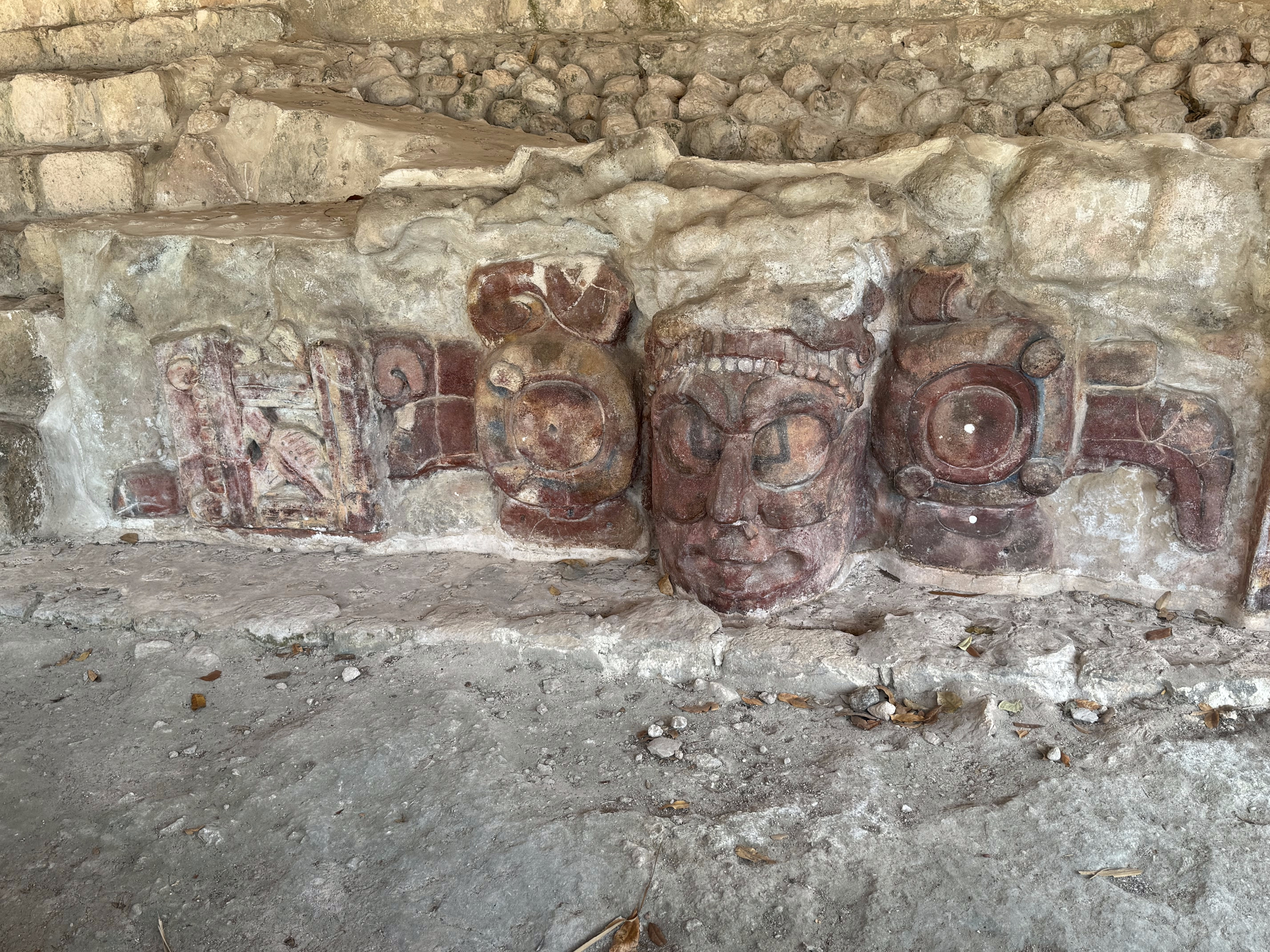
Images of K'inich Ahau, the sun god, flank a stairway.
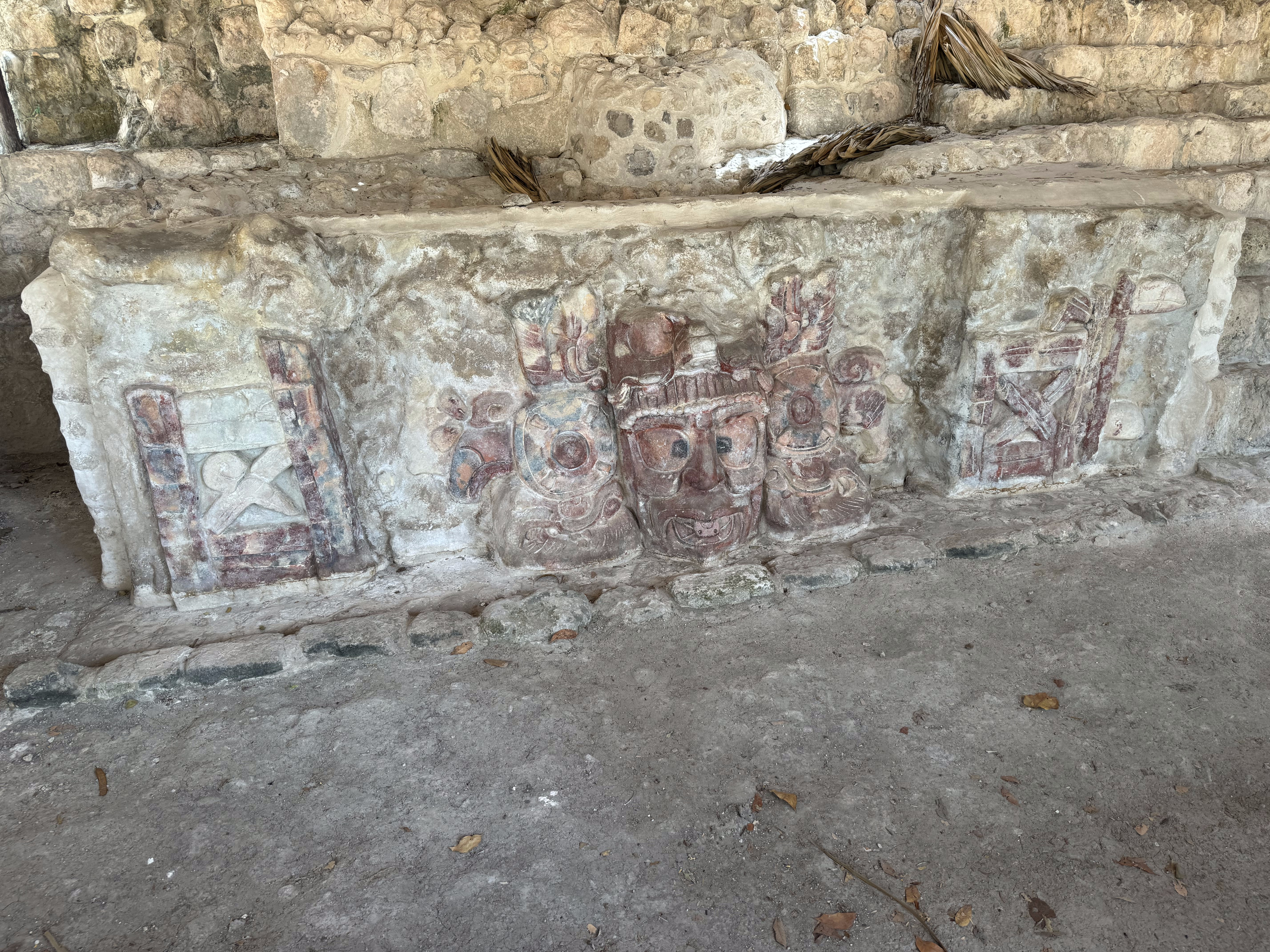
The T-shaped tooth is the god's identifying marker.
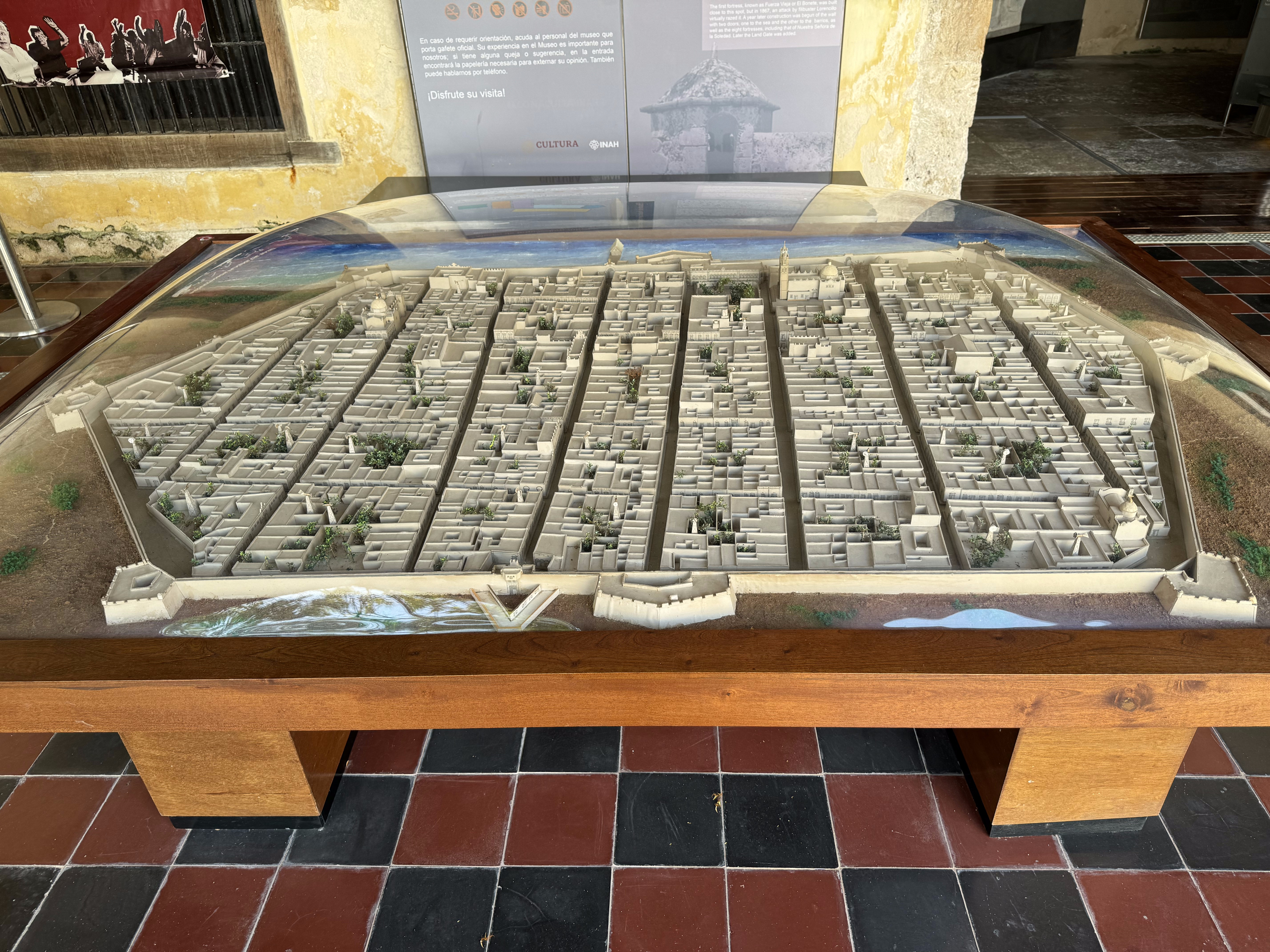
Big jump: 30 miles to a model of colonial Campeche in a museum inside the bastion which is on the far or water side of the city wall.
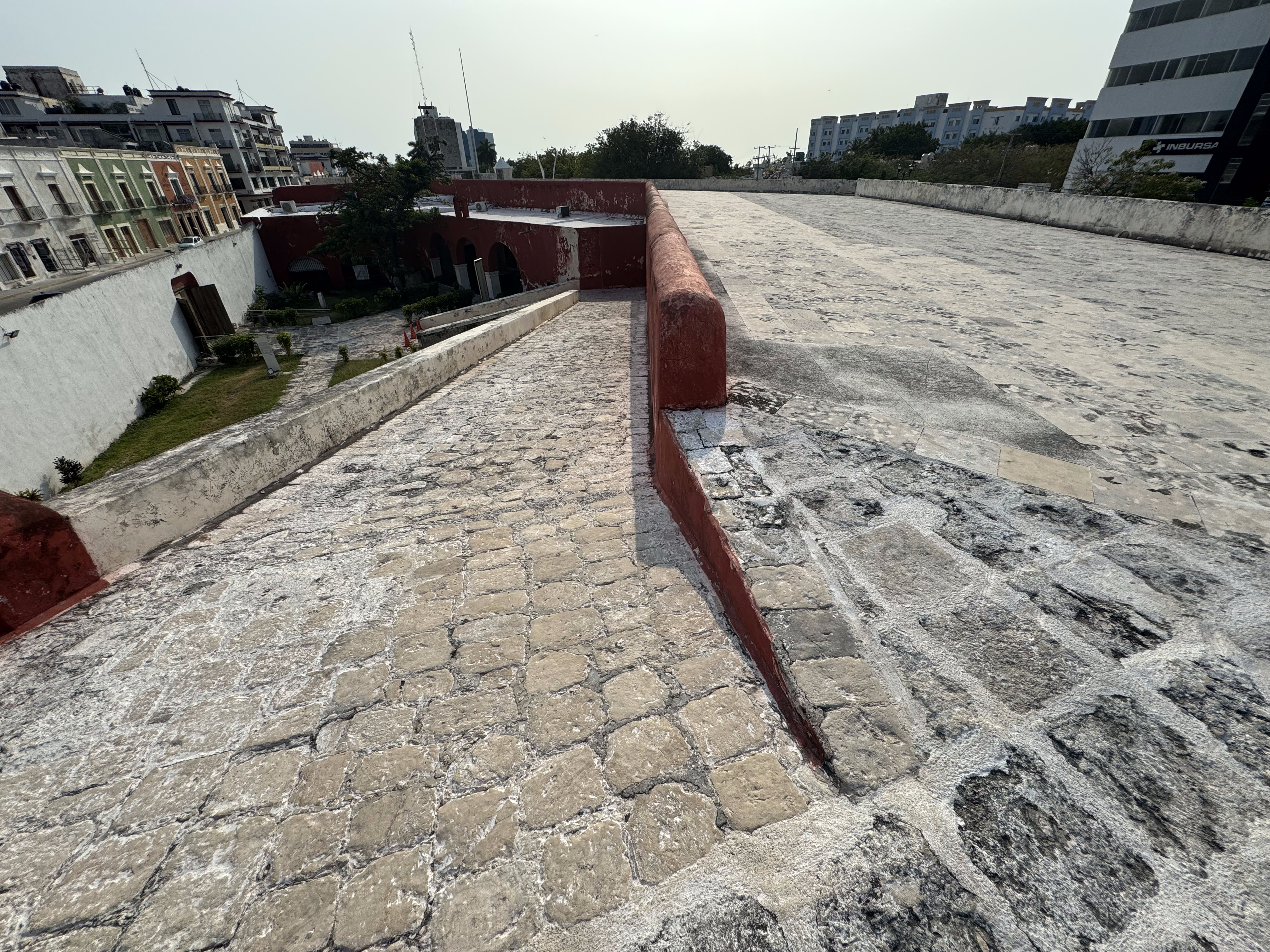
Here's that bastion, the Baluarte de la Soledad. The old city is to the left. The shallow water of the Gulf of Mexico is now off to the right about 800 feet.
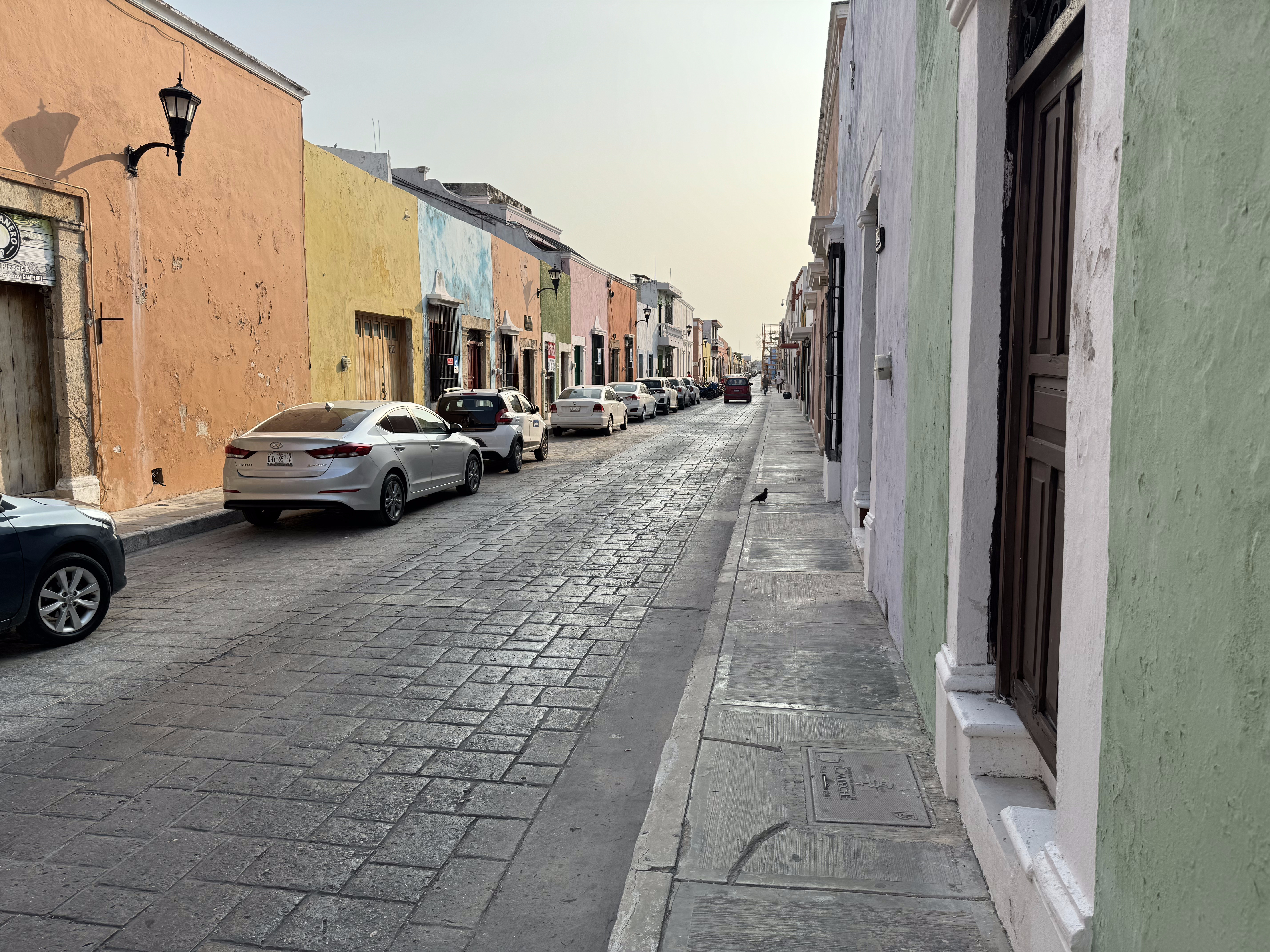
Looks like old Merida, but it's colonial Campeche.
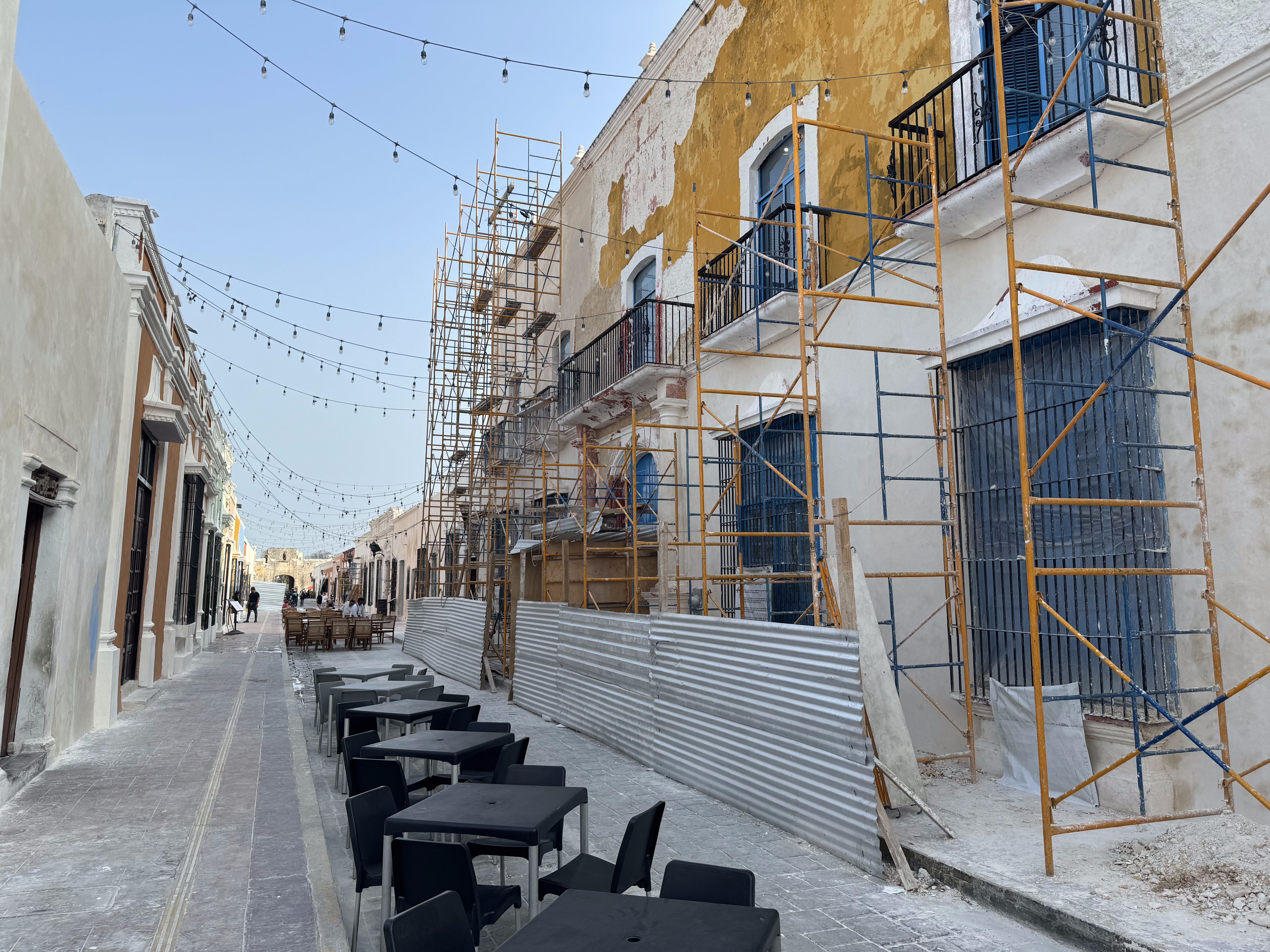
As in Merida, there's a lot of sprucing-up going on.
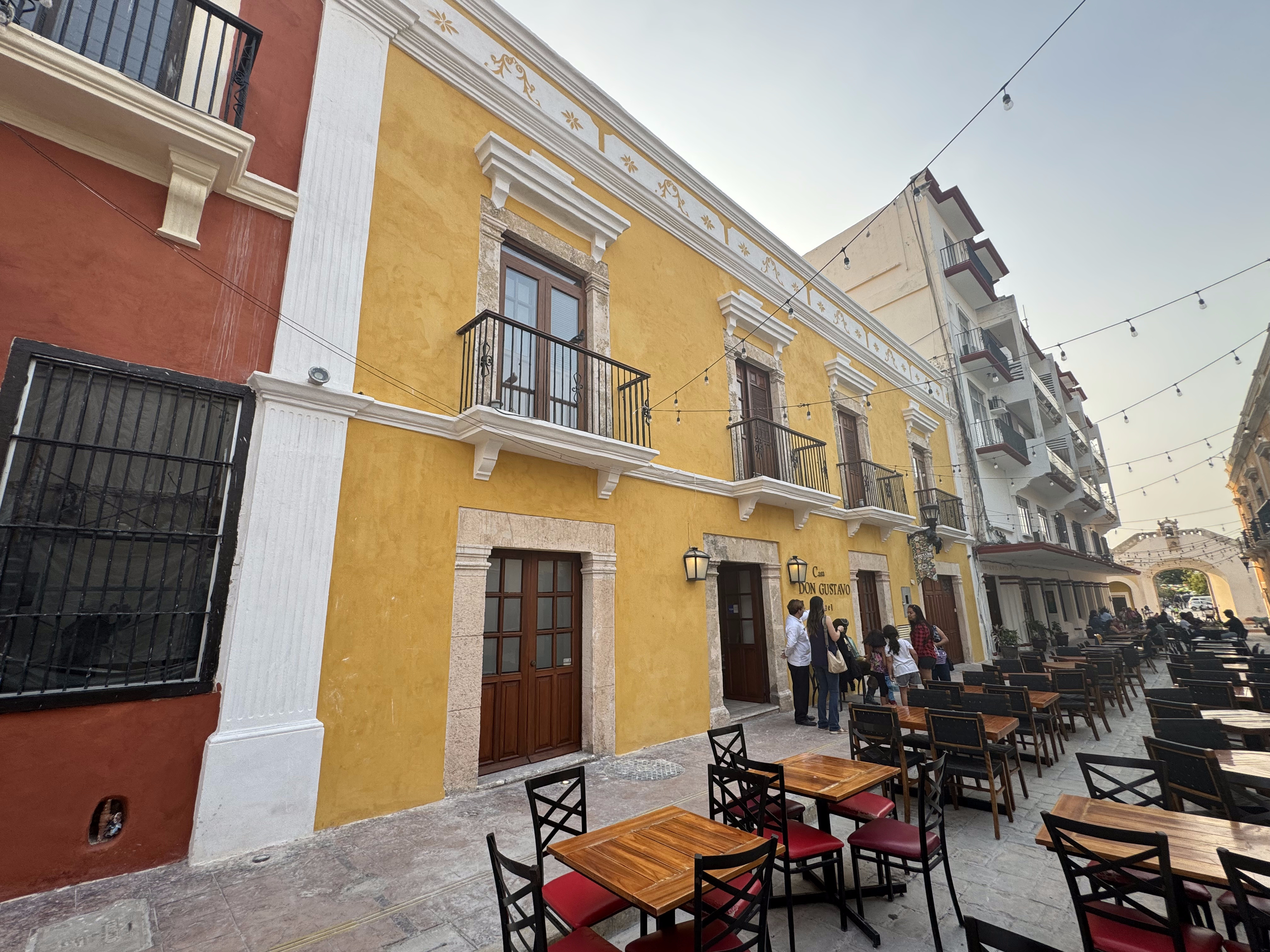
A restaurant on Calle 59, with the Puerta de Tierra in the distance.
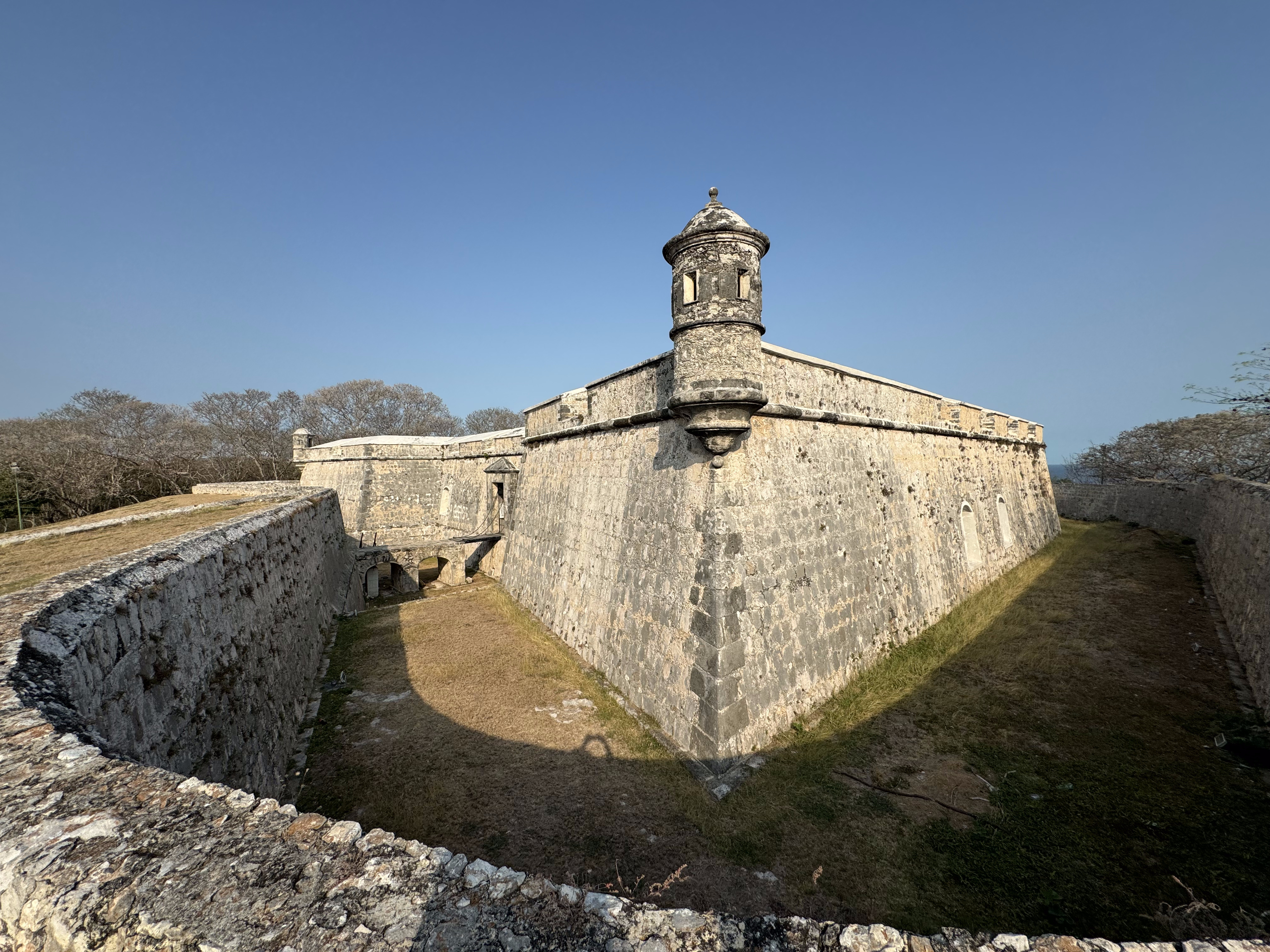
Two miles to the west, there's another old fortress, the Fort San Miguel. It, too, houses a fine museum.
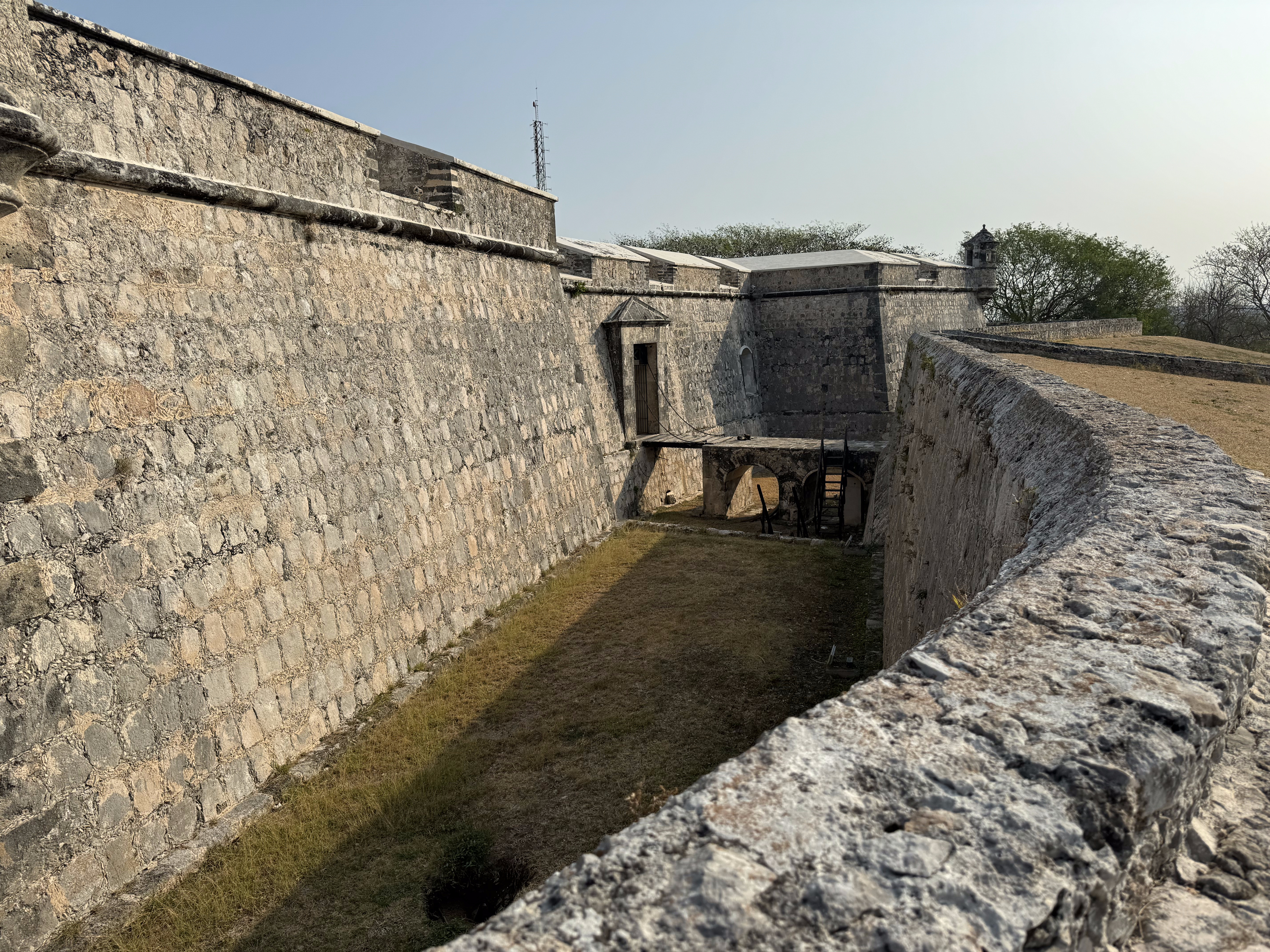
Another view of Fort San Miguel.
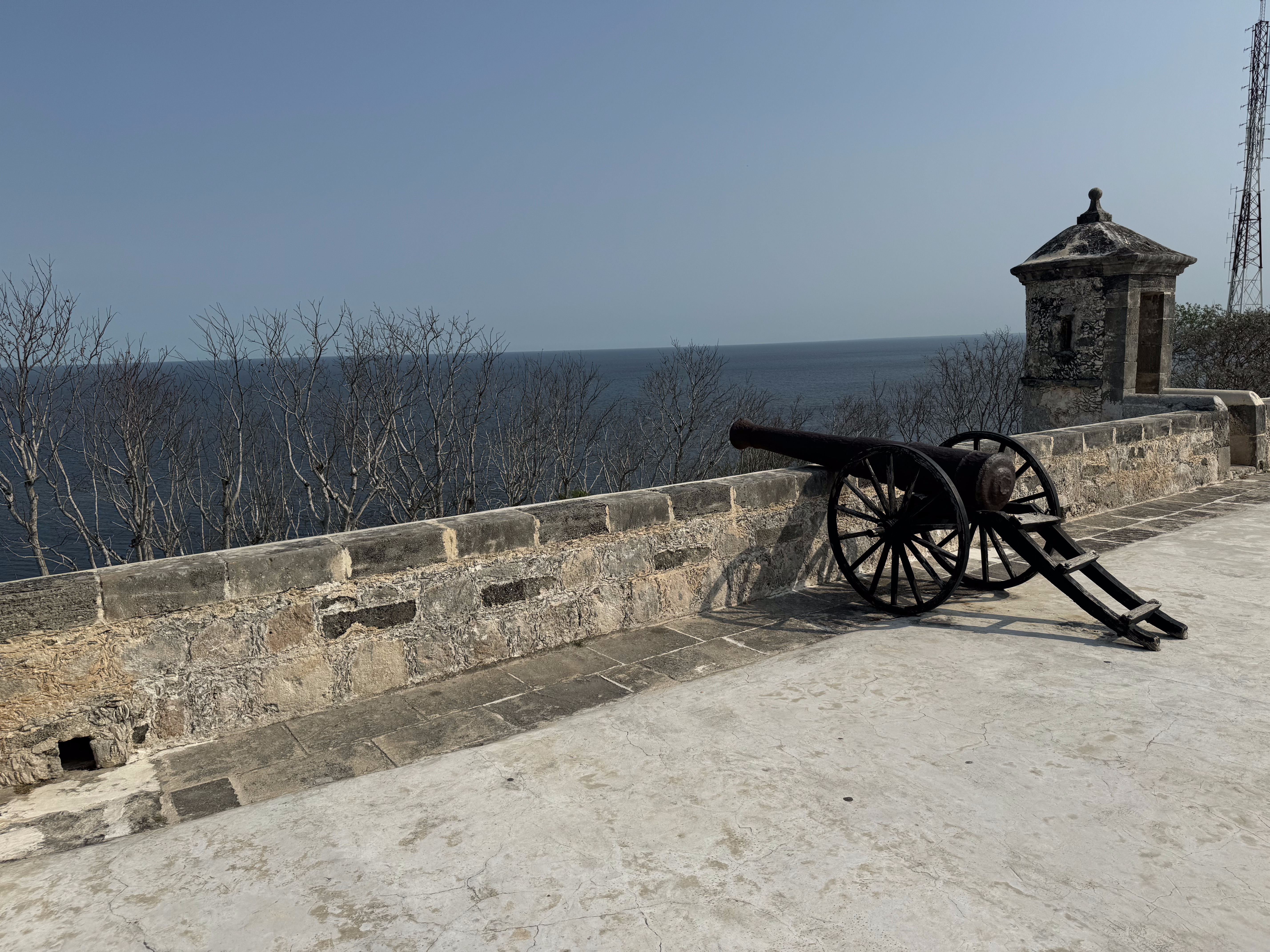
It's 600 or 700 miles north to Texas.
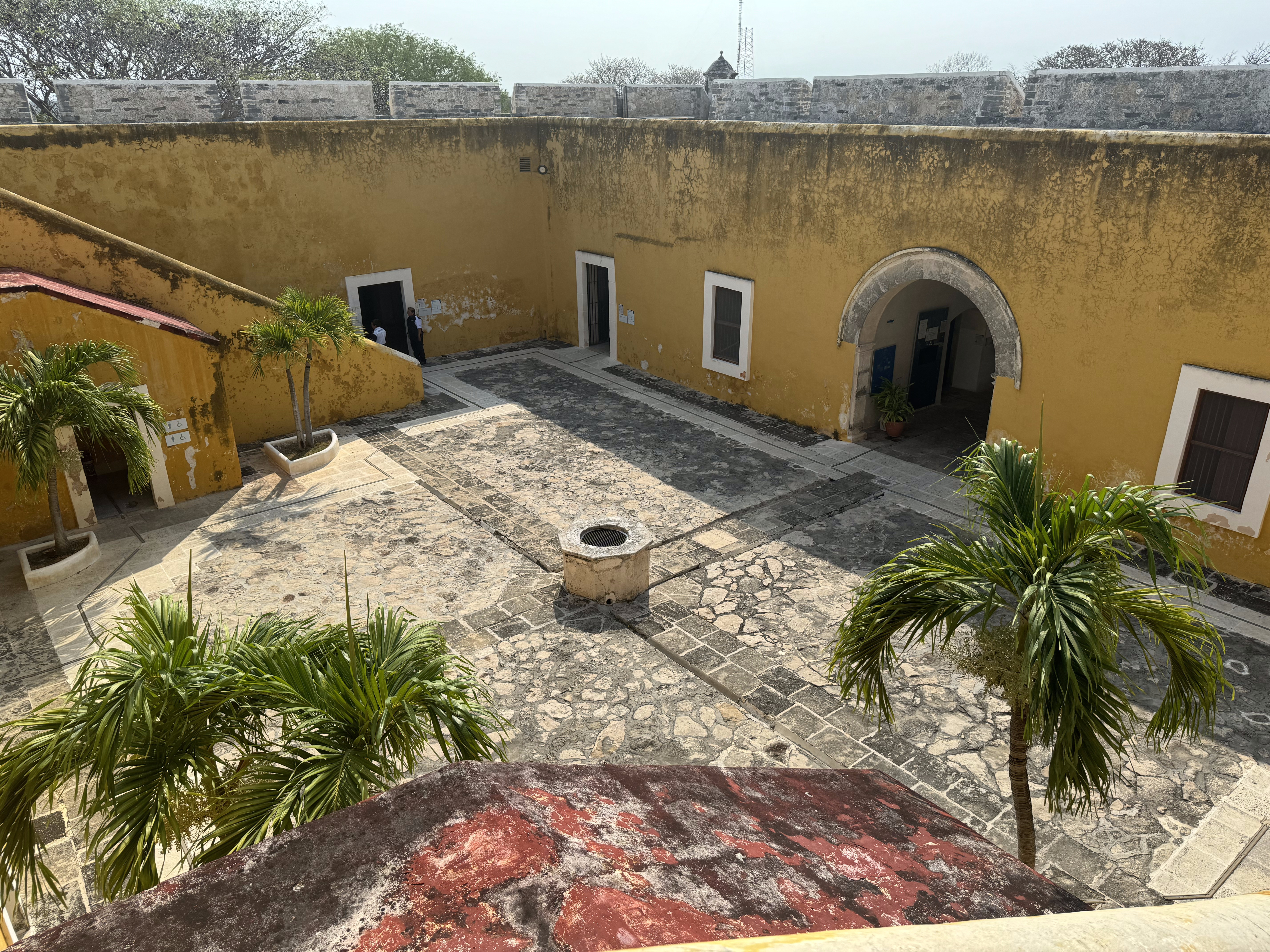
The view down into the fort. Pictures of some of the contents of the museum are included in the previous file's coverage of Calakmul.
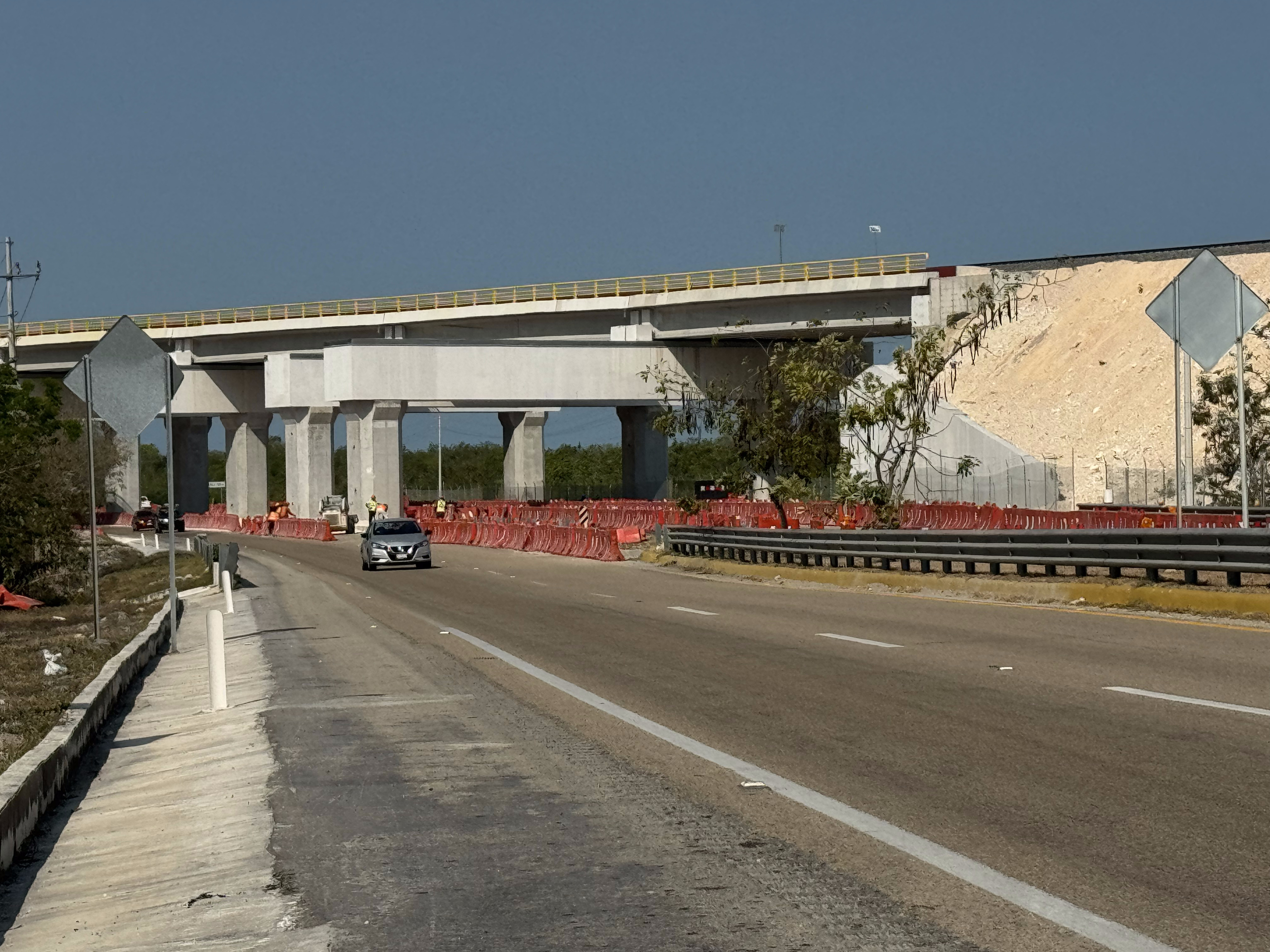
On the road back to Merida, an overpass for the Maya Train.
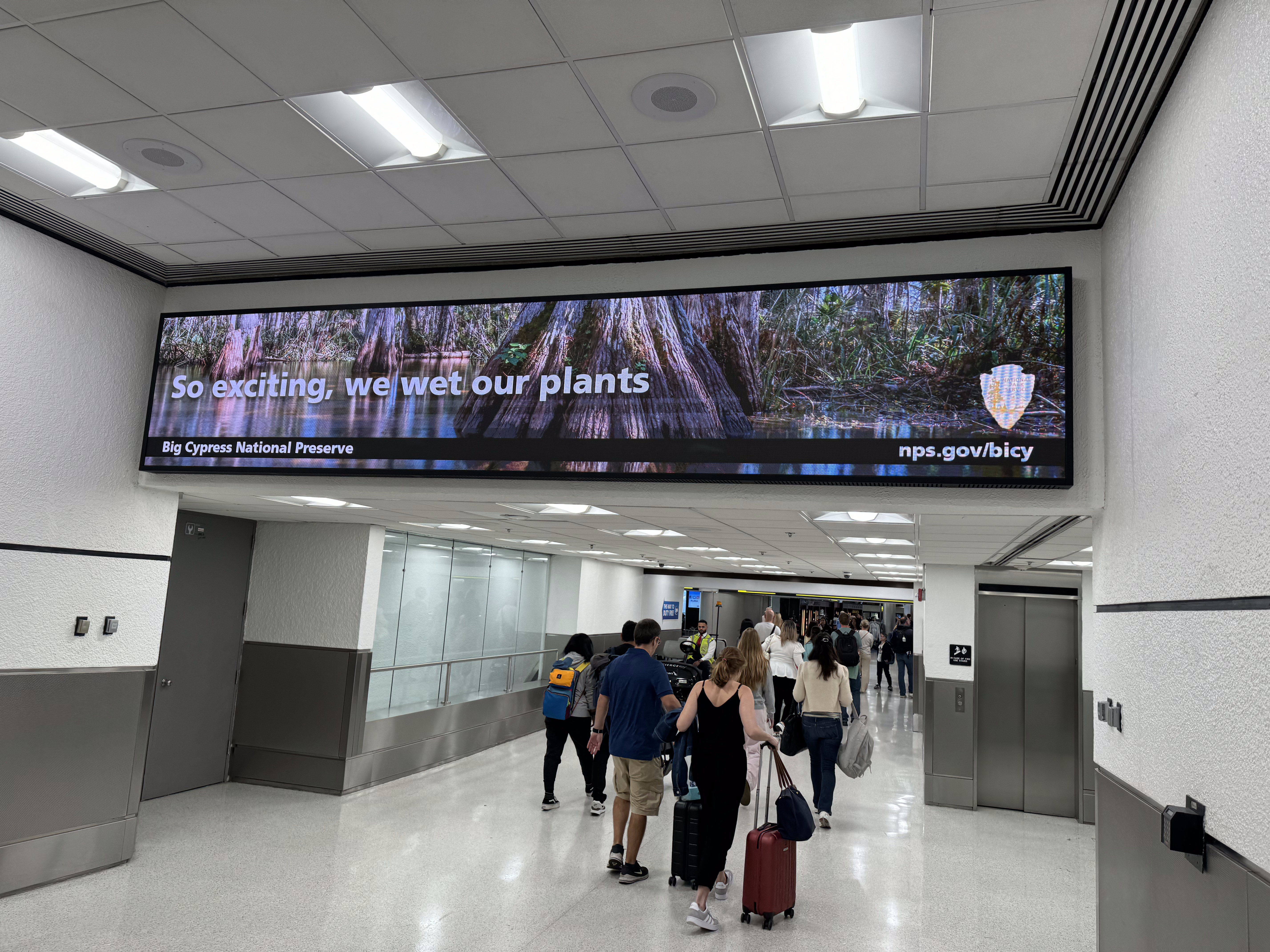
Welcome to Miami International. And I thought that Mexico was a foreign country.