3 Savai'i
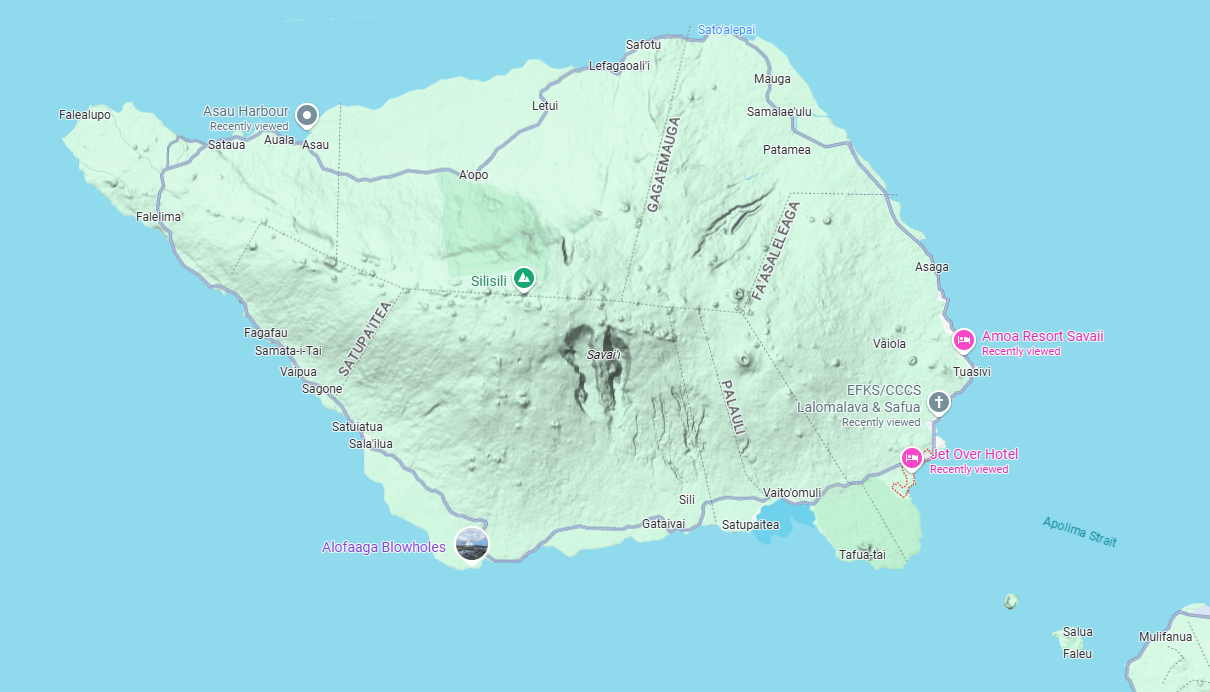
Savai'i is a little over 40 miles east to west. The interior is almost empty, and as late as 1900, most of the south coast was almost uninhabited. Now there's a ribbon of about 40,000 people forming a circle of villages around the island..
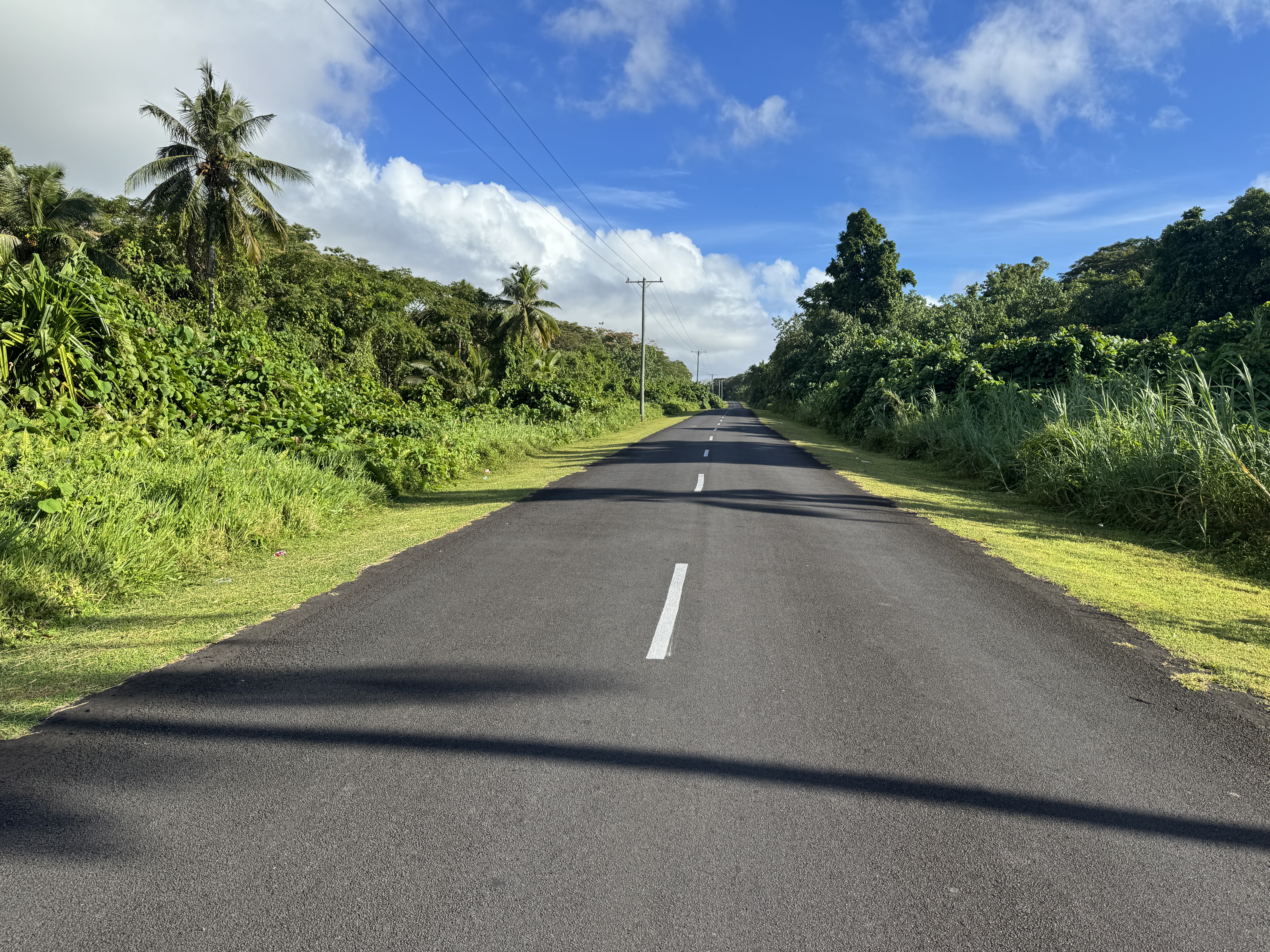
There's a circumferential road, and it's in surprisingly good shape for a lower-middle-income country. Think (or thank) foreign aid, which is a major contributor to Samoa's budget.
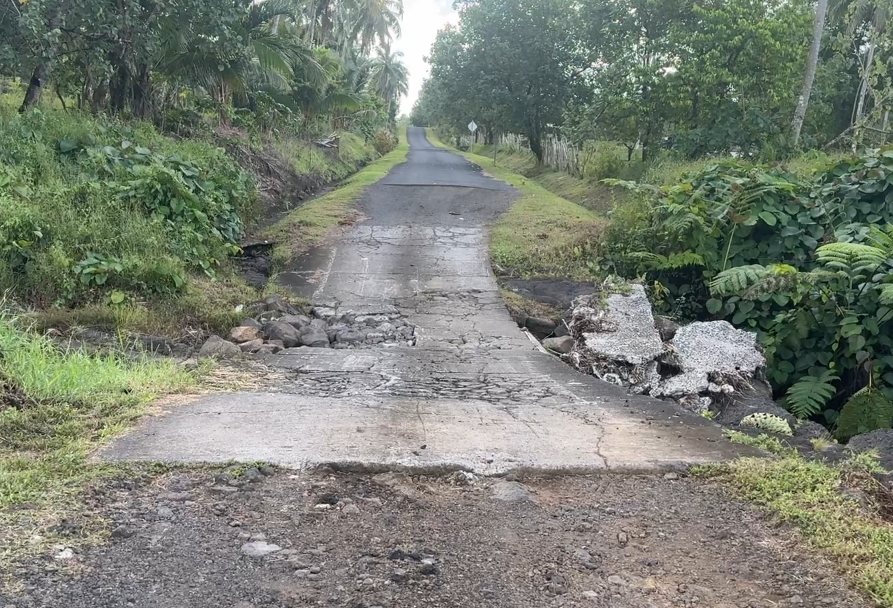
There are very few interior roads. Here's one that needs work.
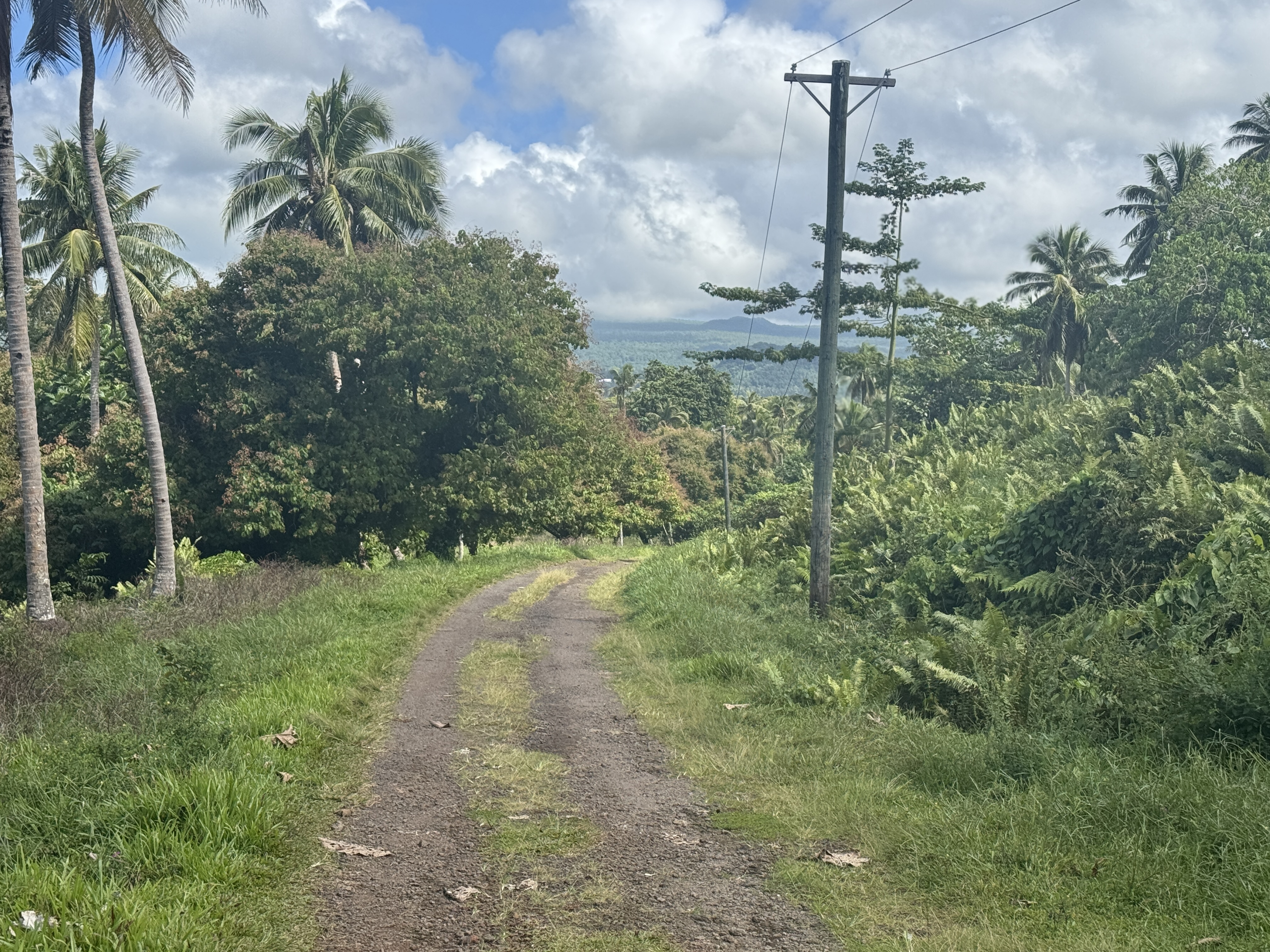
Another, which gets by without paving.

The island's residents traditionally were subsistence farmers and fishers. That began to change in the 19th century, when Europeans offered guns for land.
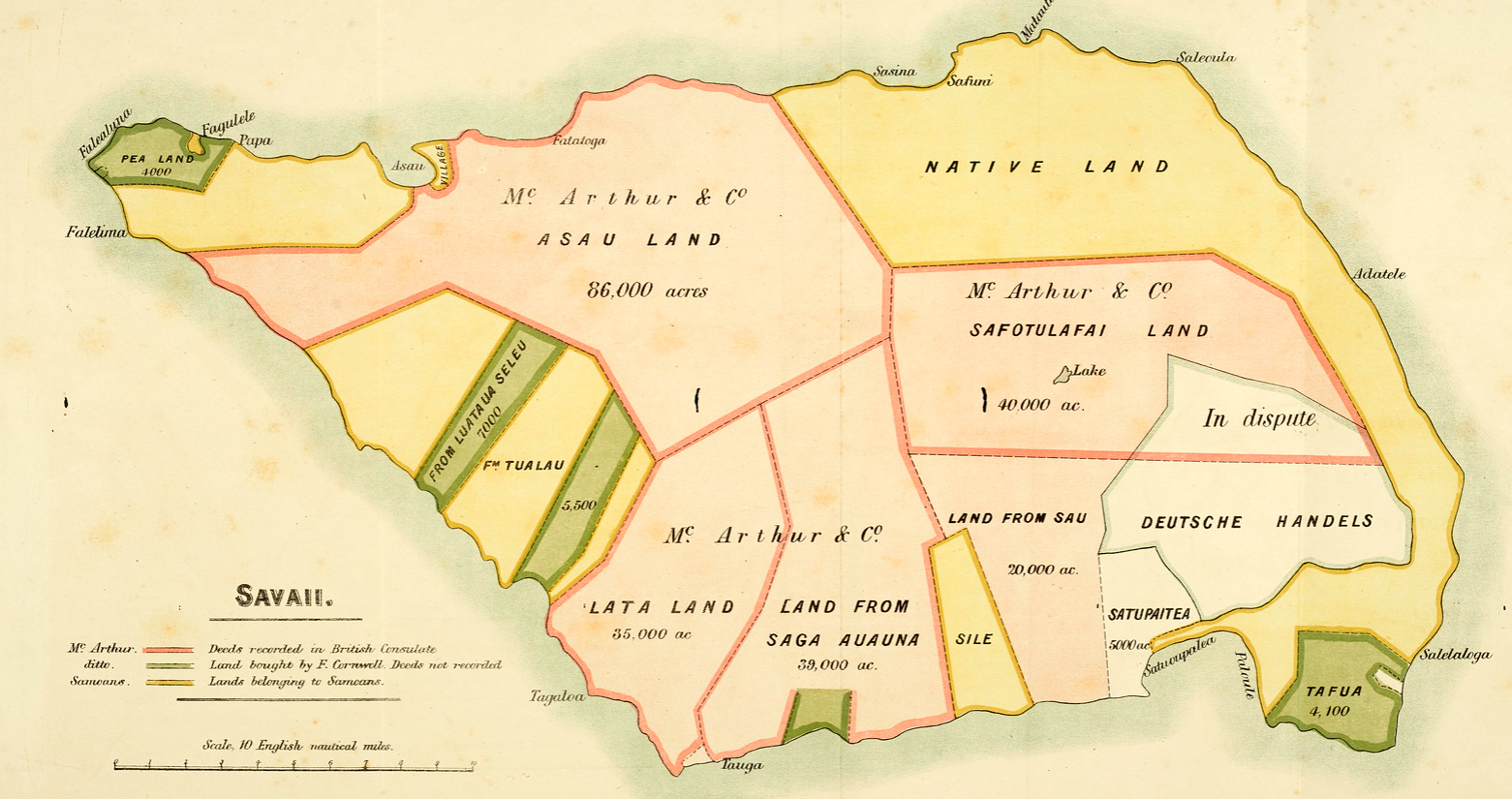
This astonishing map from 1886 shows the highly contested claims of William McArthur to most of the island. For the gory details of this, The Great Samoan Land Case, to which he was party, see https://paperspast.natlib.govt.nz/newspapers/TO18890706.2.57.2 , as well as Deryck Scarr's Fragments of Empire, 1967.
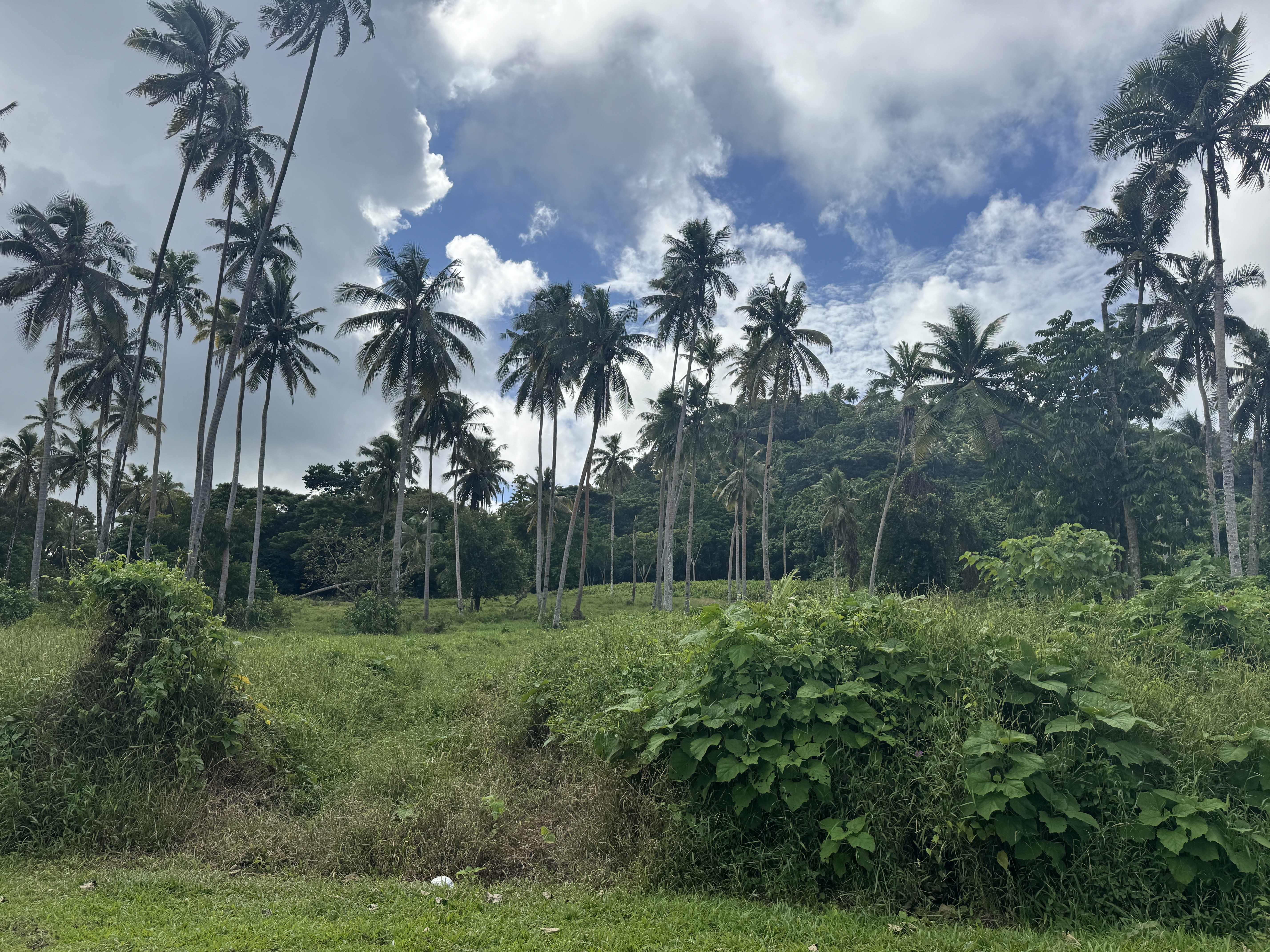
A bit of the Vaia'ata Block. Coconuts were said to produce about a thousand pounds of copra per acre annually, or 40 pounds per tree.
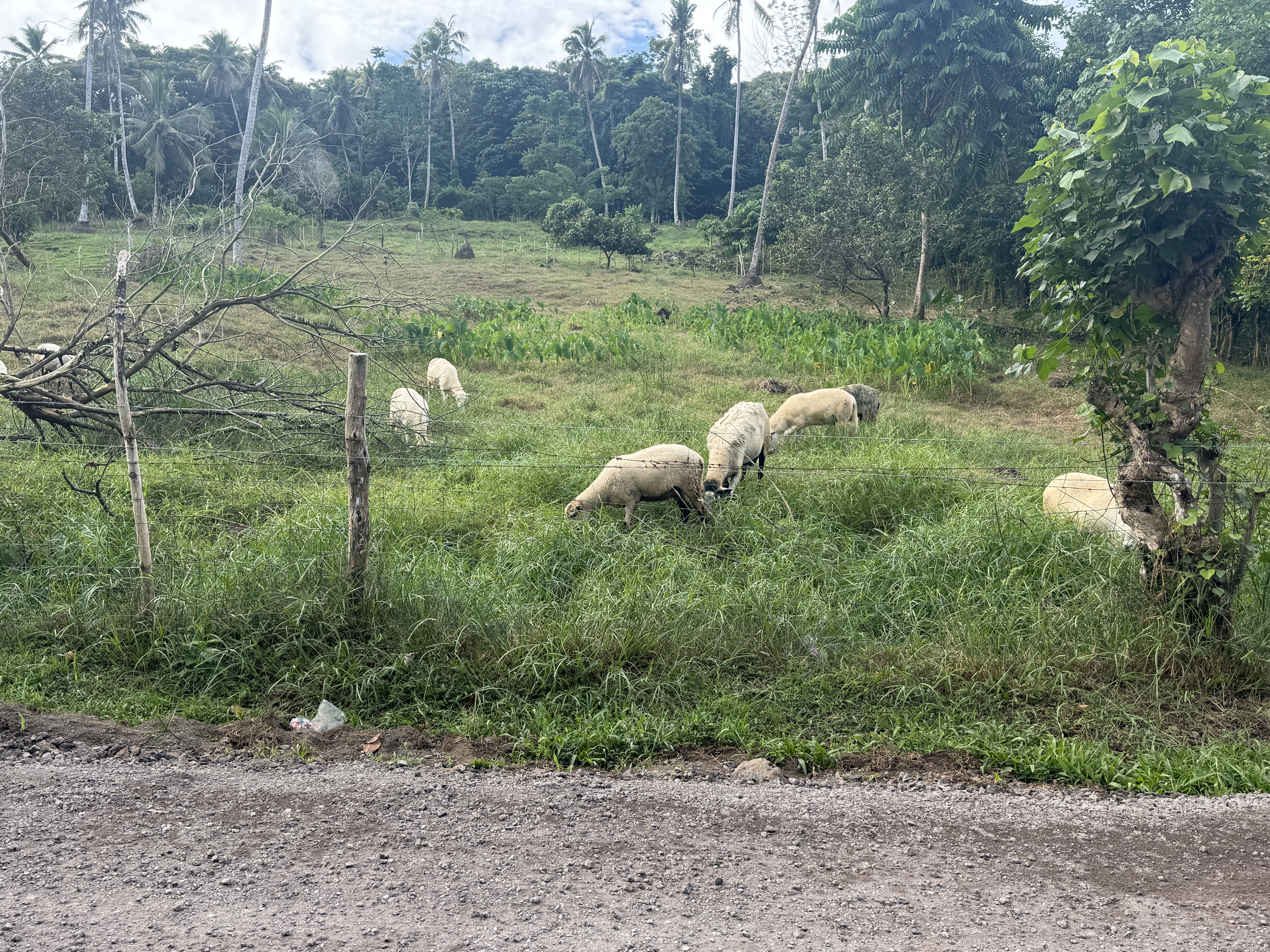
Livestock was part of the plantation program, but mostly it was cattle.
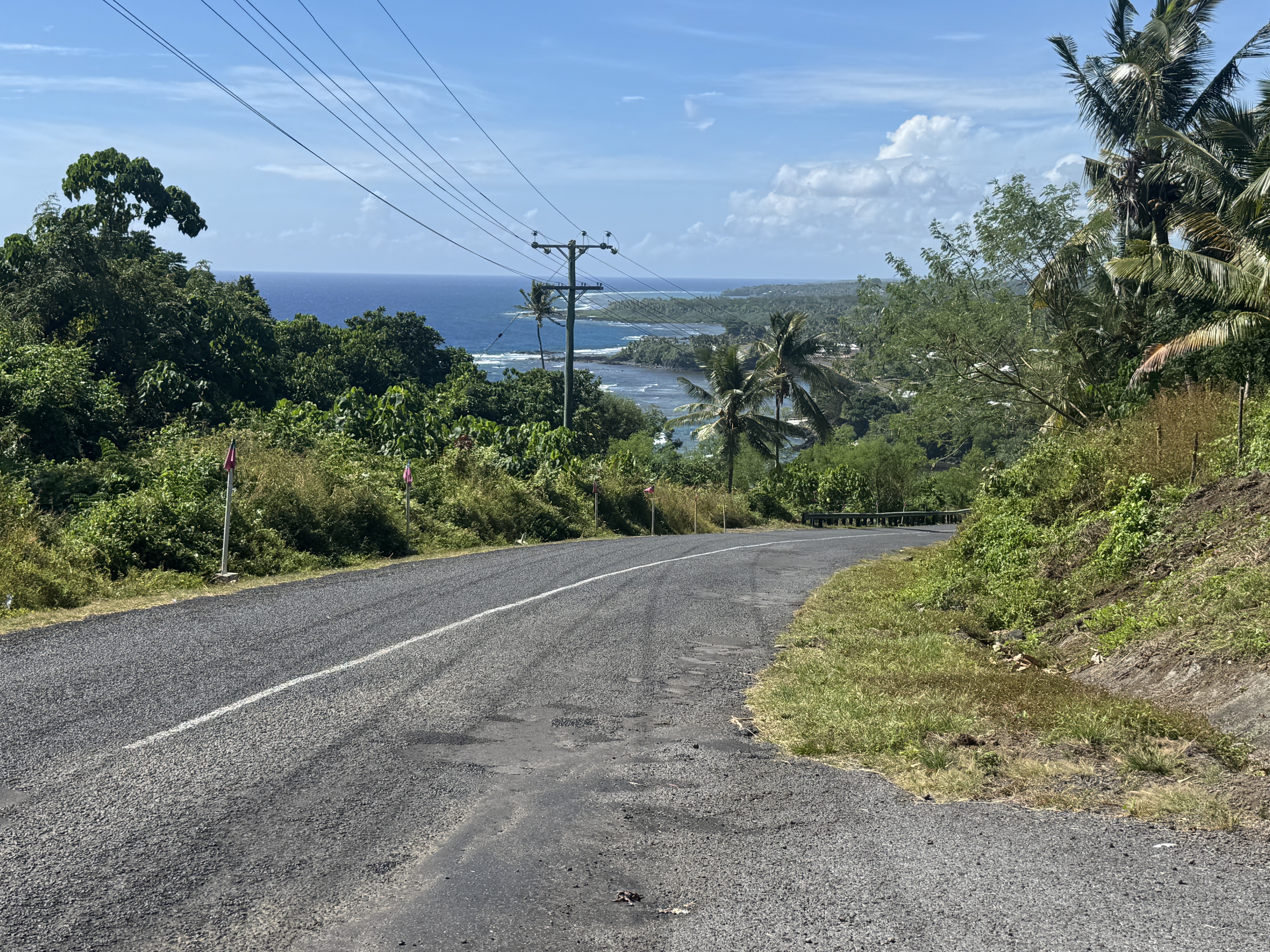
In the 1960s, an American timber company, Potlatch, signed an agreement to build a sawmill, provided it could get timber rights and provided a port could be developed at Asau, on the northwest coast. (There aren't many accessible hills near the coast, but this view overlooks the Asau neighborhood. You can't see the bay, but you can see the waves breaking on the coral reef.)
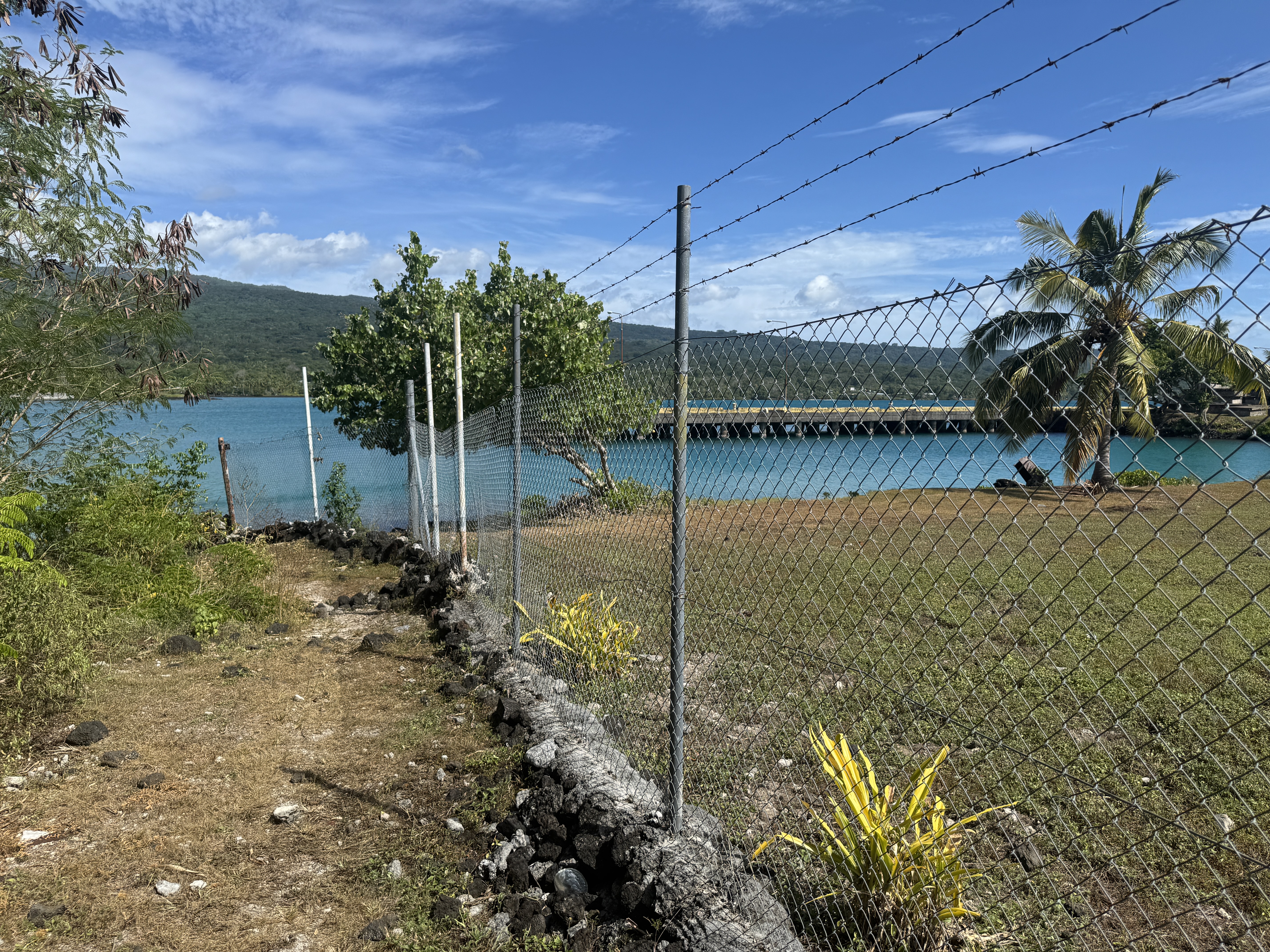
The Germans had tried before 1914 to develop a port here but the coral reef at the entrance defeated them. Independent Samoa gave it another shot when the agreement was signed with Potlatch The deal was reported as "the first real breakthrough in the struggle to improve living standards... since independence" (Pacific Islands Monthly, April 1968, p. 22).
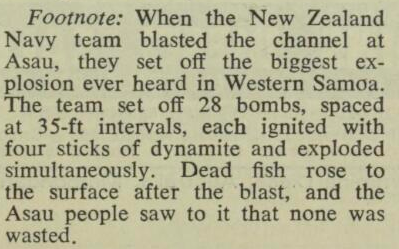
The old college try.
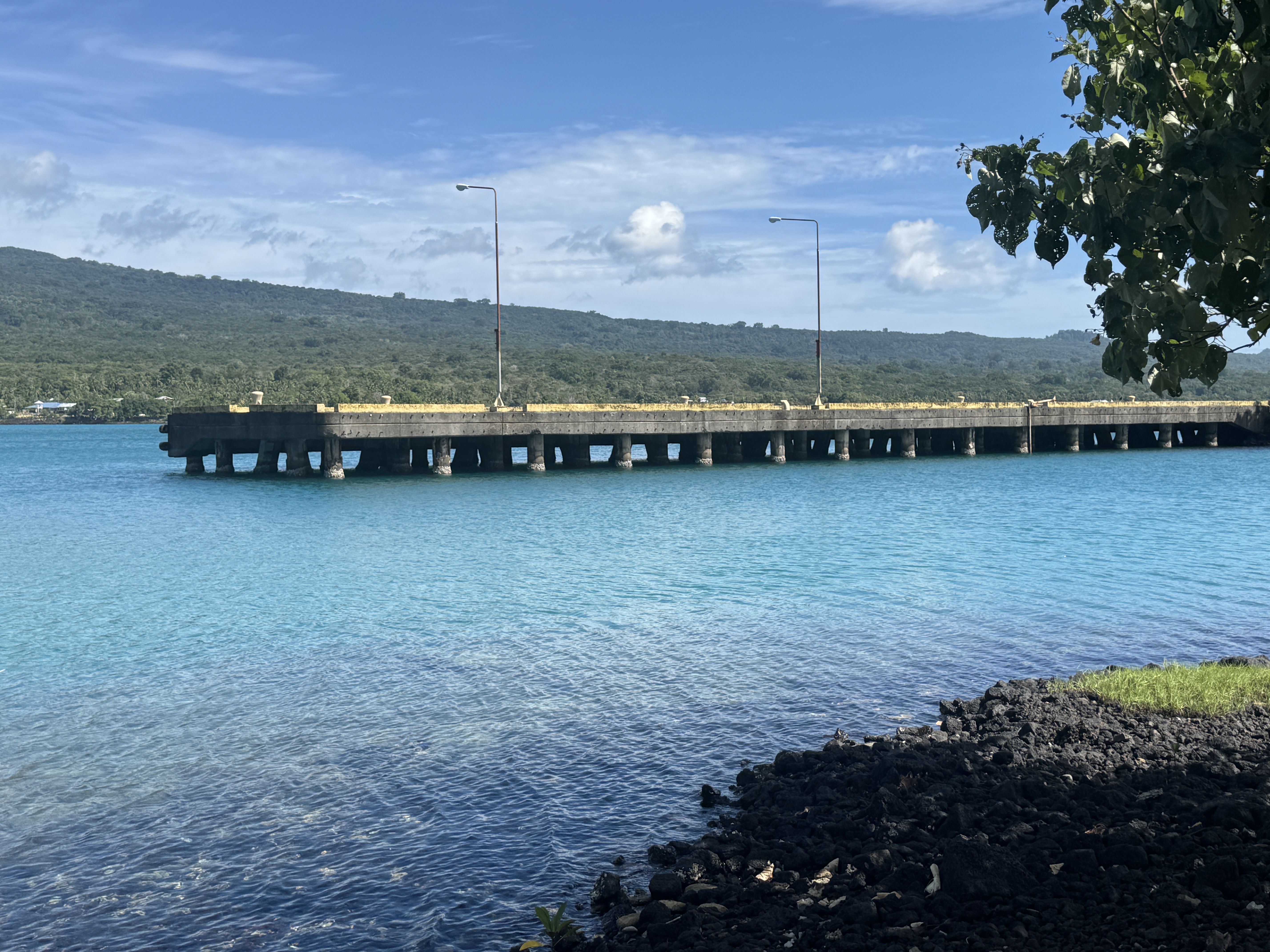
A dock was built, but the reef was still too great an obstacle. The port never happened, and Potlatch went away.
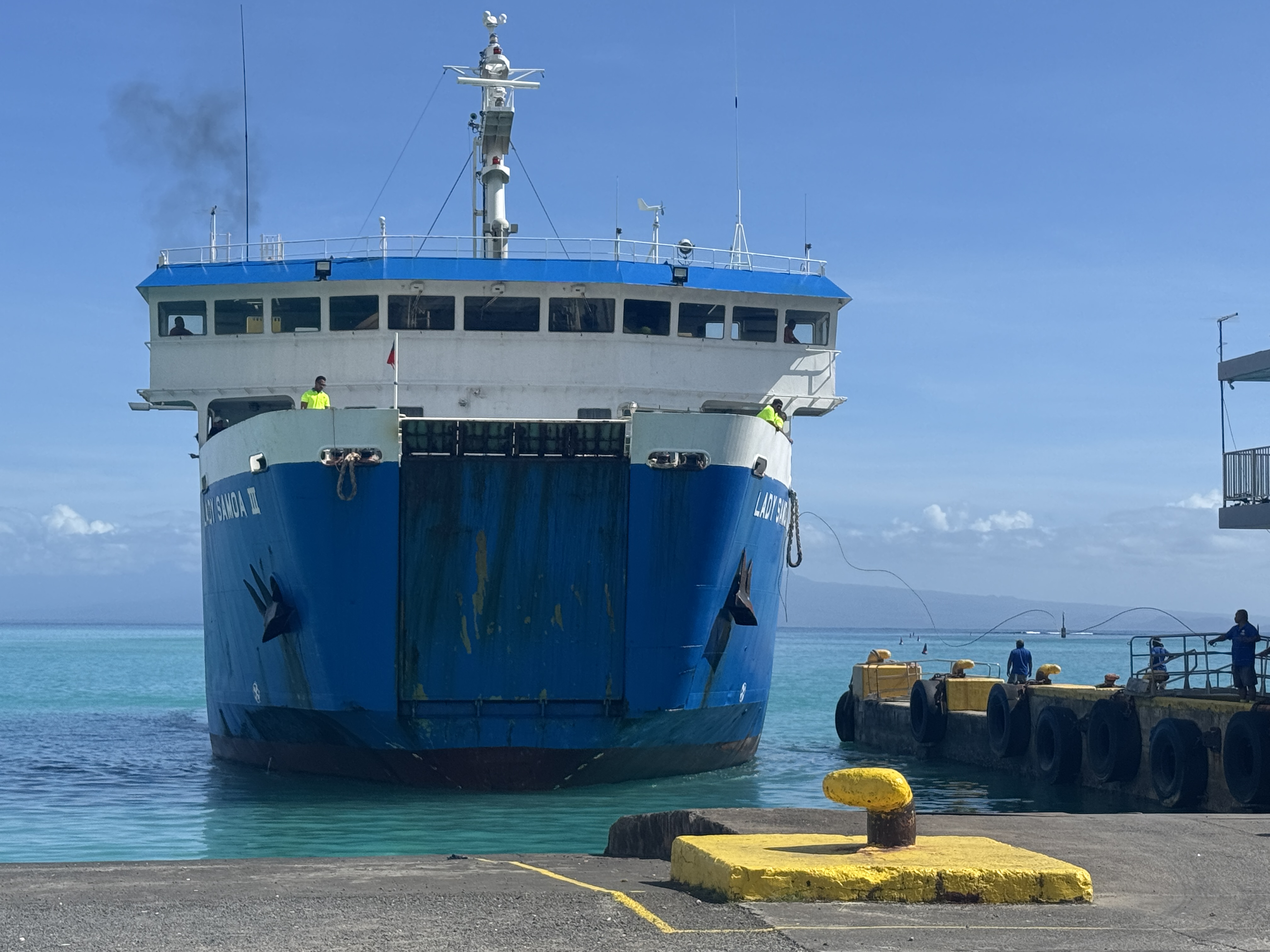
How about tourists? They arrive by this ferry.
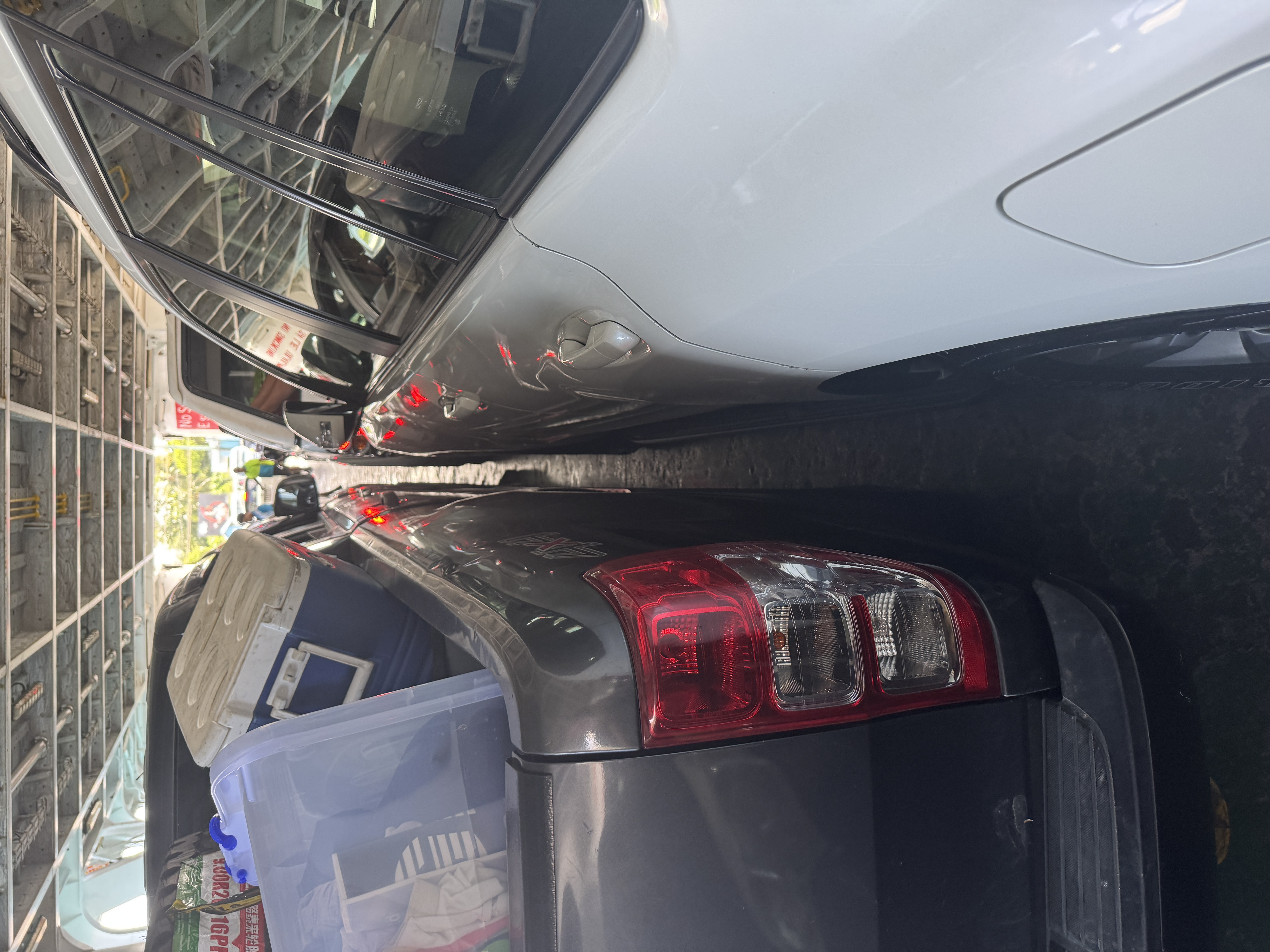
To carry as many cars as possible, vehicles are packed insanely tightly. Many people, thinking the ship couldn't possibly capsize, sleep in their cars.
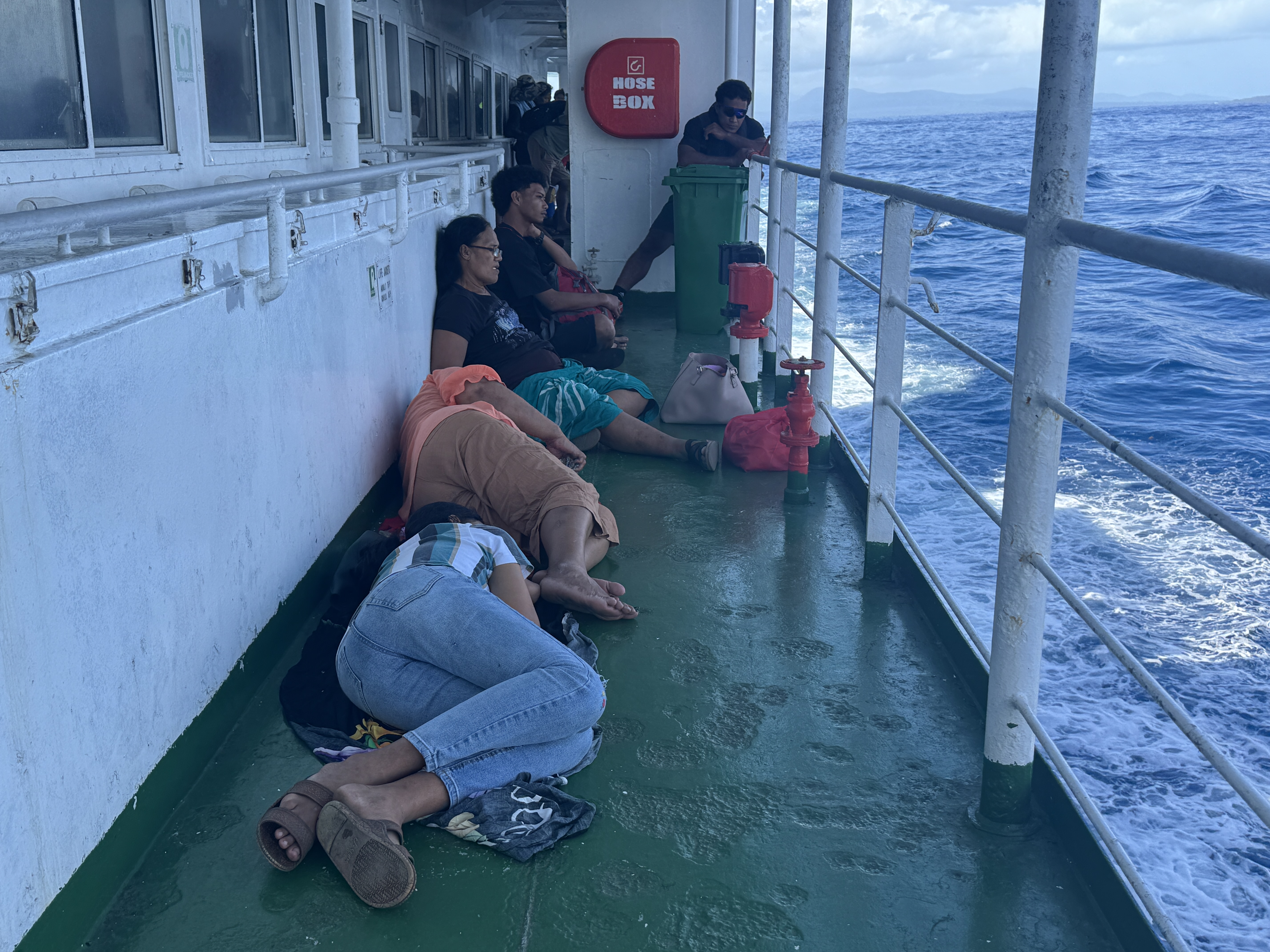
Smarter ones sleep upstairs. It's a 90-minute trip, and the swell is strong enough that if you're walking you'll want to hold on to something.
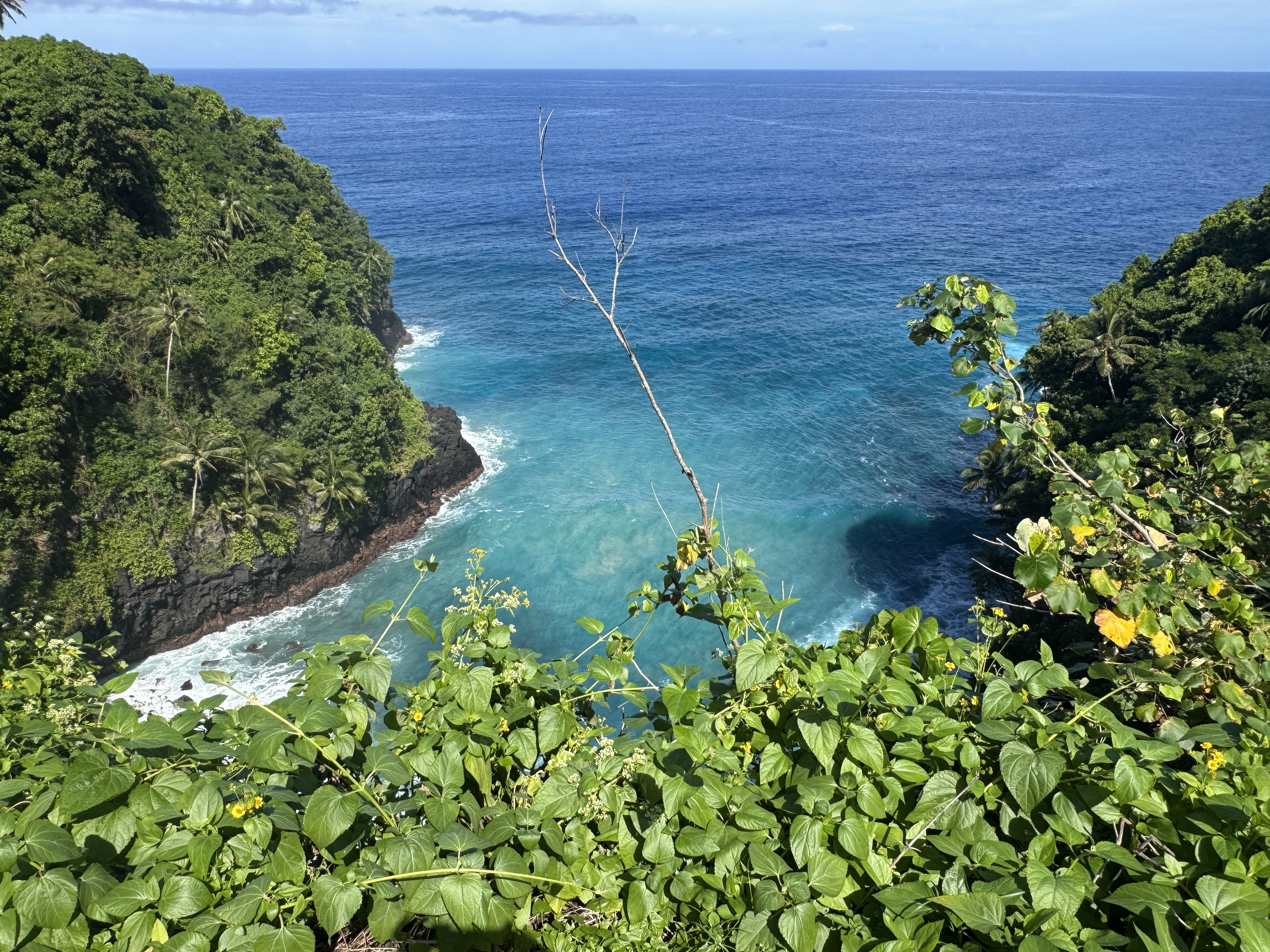
What's on the island for tourists to see? One answer is a dramatic coast, although in this case, near Falelima at the western end of the south coast, it's damned hard to get to.
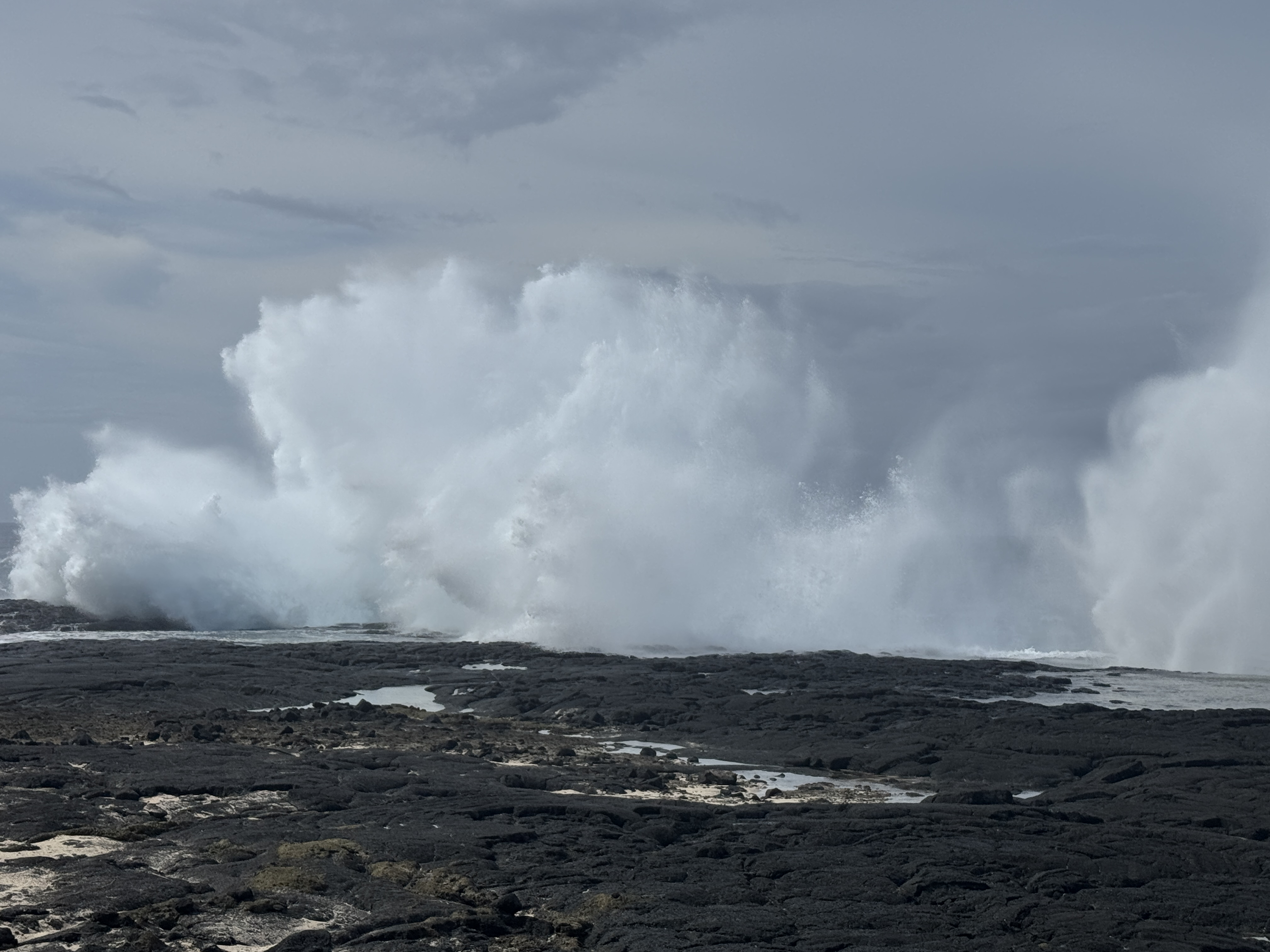
The approach is easy here. We're still on the south coast but at Alofaaga, the island's biggest attraction.
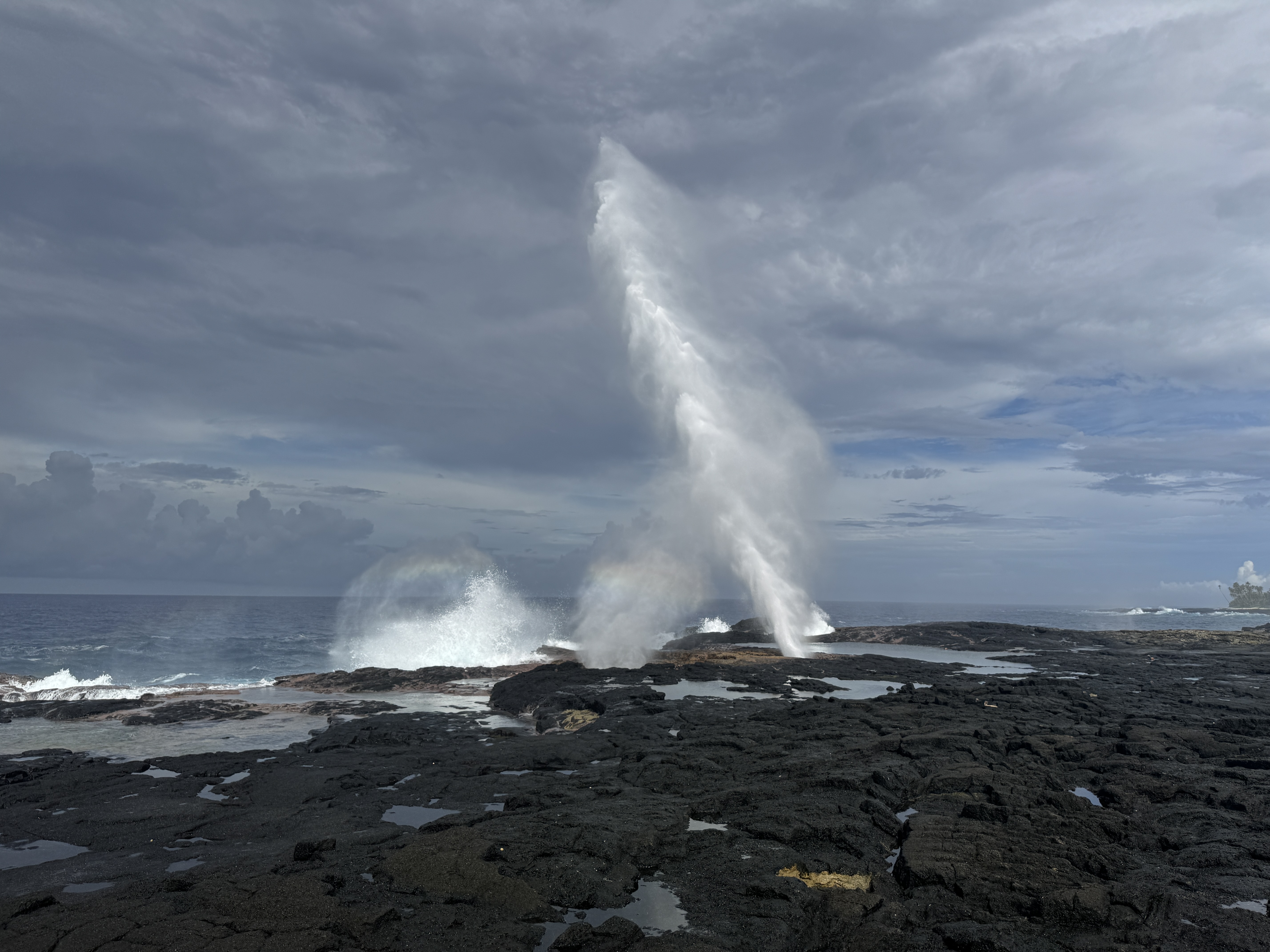
People come chiefly for these geysers, formed when waves enter caves with a hole in the roof. Every 60 or 90 seconds, boom!
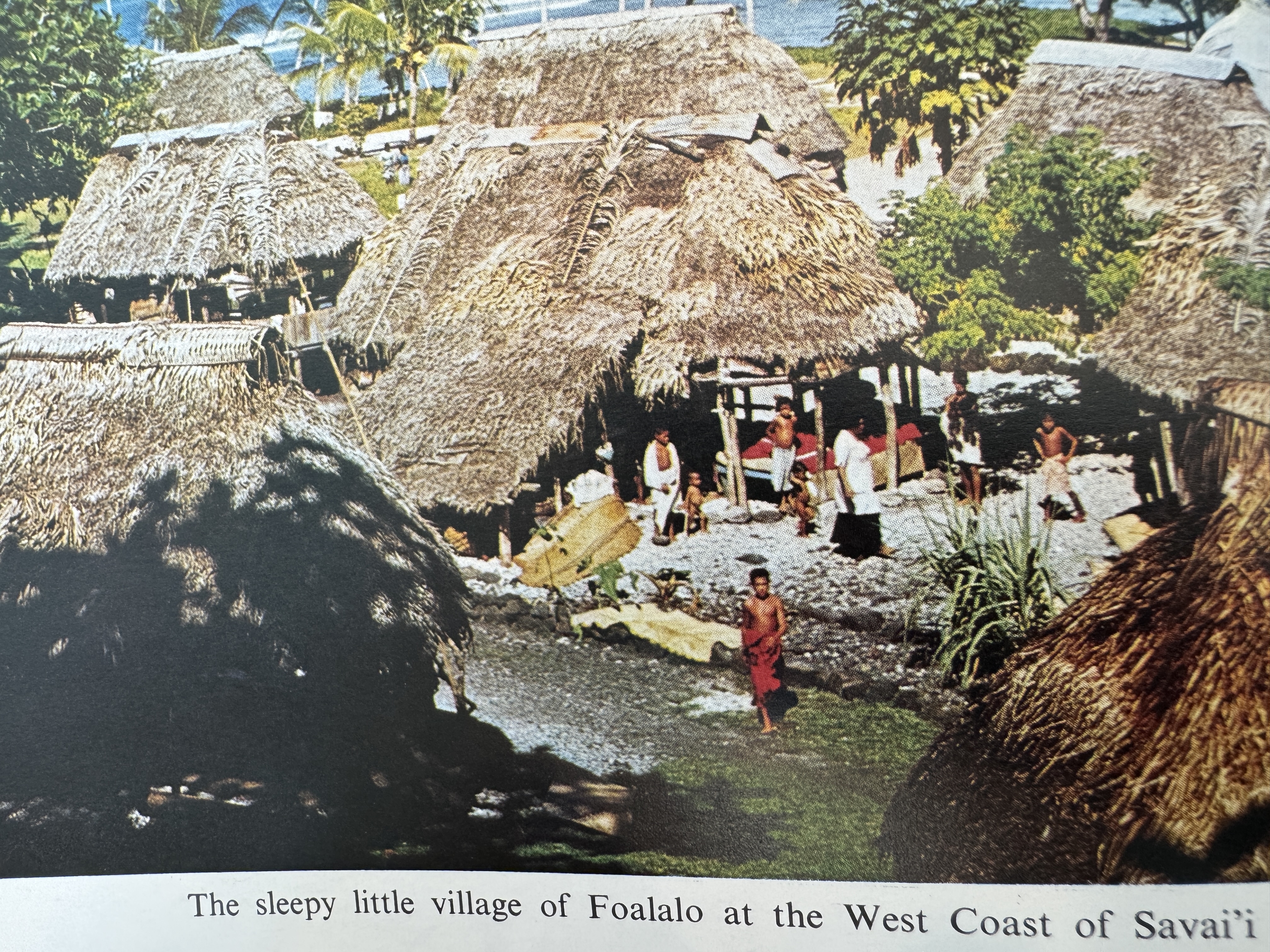
Some people might come, as I did, in search of a traditional village (Gregory Riethmaier and Richard A Goodman, Samoa, 1973).
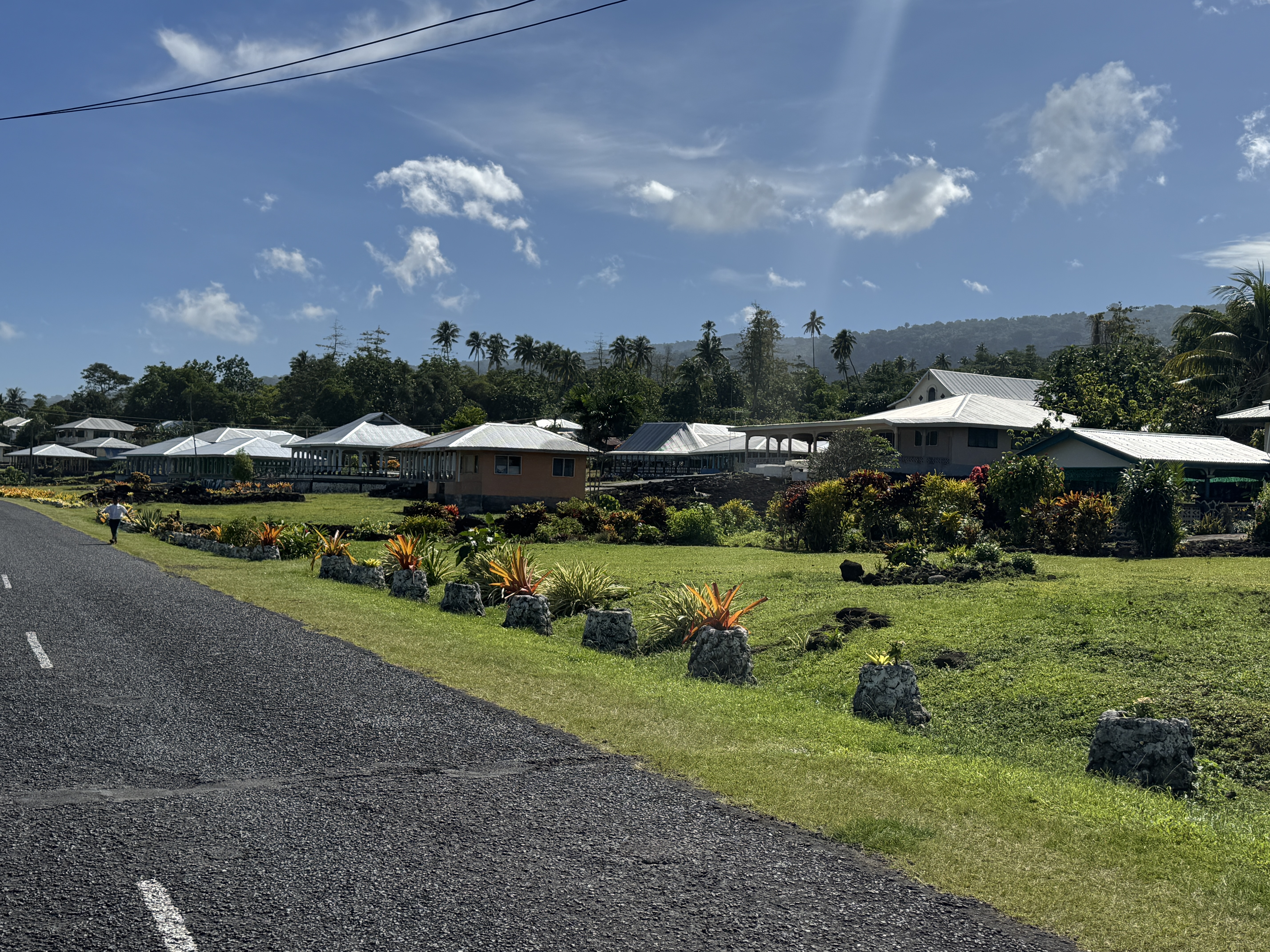
Alas, you can make a complete circuit of the island (about 100 miles) and you won't see any thatch. The decline began in the 1920s but Hurricane Val in 1991 was probably the coup de gr ce.
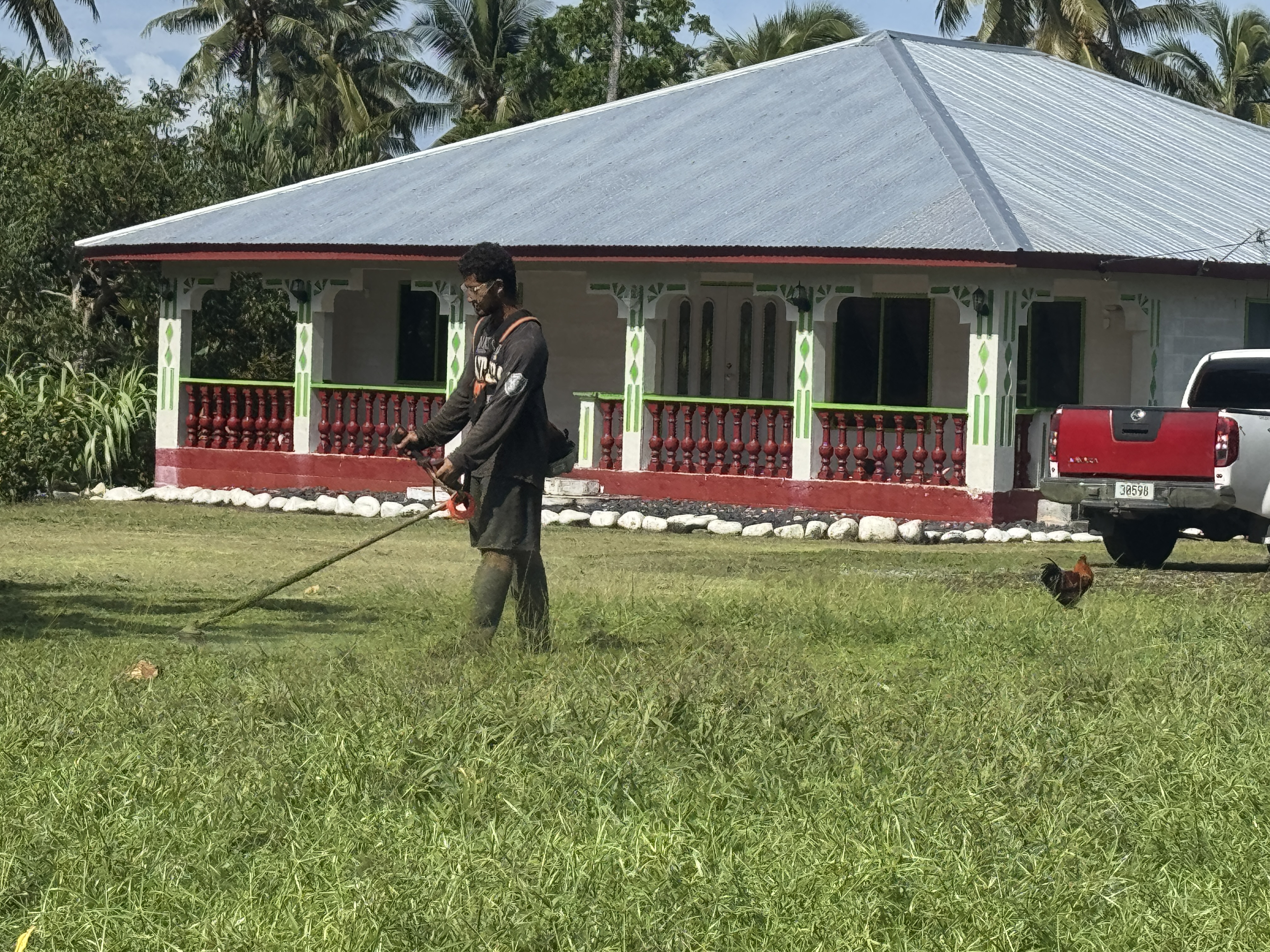
One of the abiding mysteries of Samoa is that you will never see a lawn mower. No matter how big the lawn, it's cut with a string trimmer.
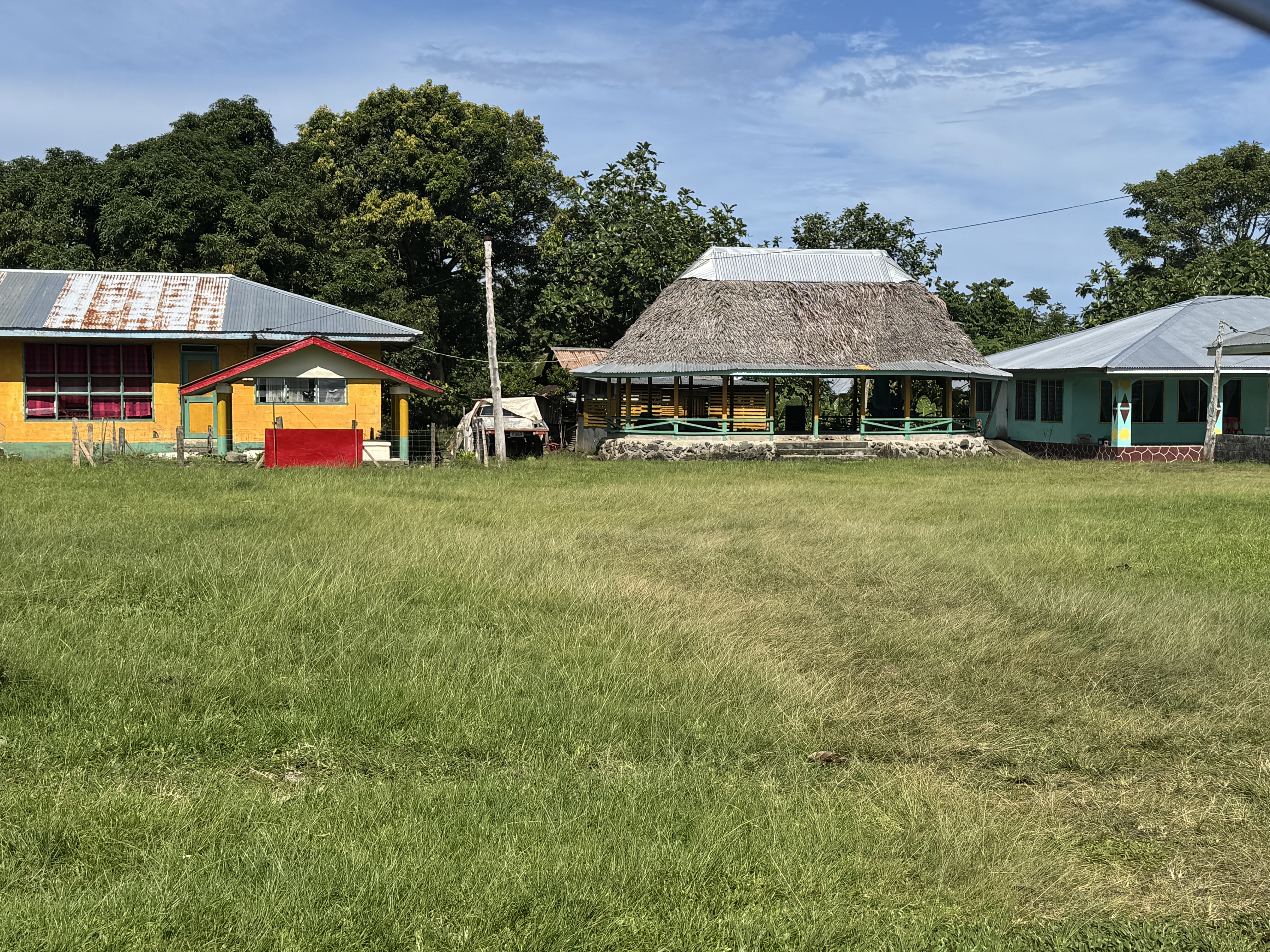
Well, OK, somebody has covered some of the sheet metal with thatch, perhaps to keep the temperature down.
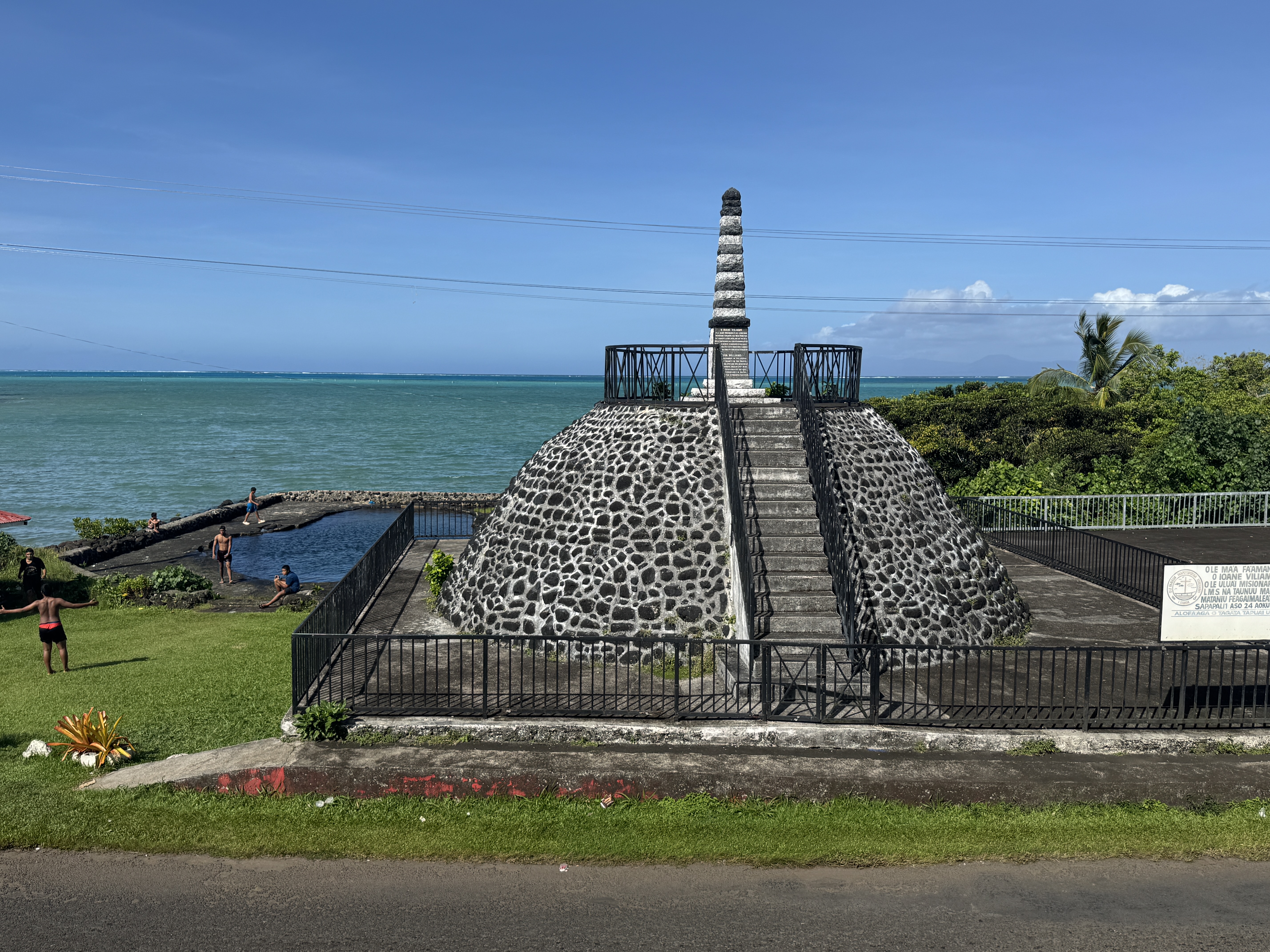
Tourists might also come is they are fascinated by missionaries. Here's the monument marking the spot at the village of Sapapali'i where John Williams arrived in 1830. He's usually credited as the man most responsible for bringing Christianity to these islands. He moved on to pastures that proved not so green and at Erromanga in the New Hebrides (Vanuatu today), he was killed and eaten.
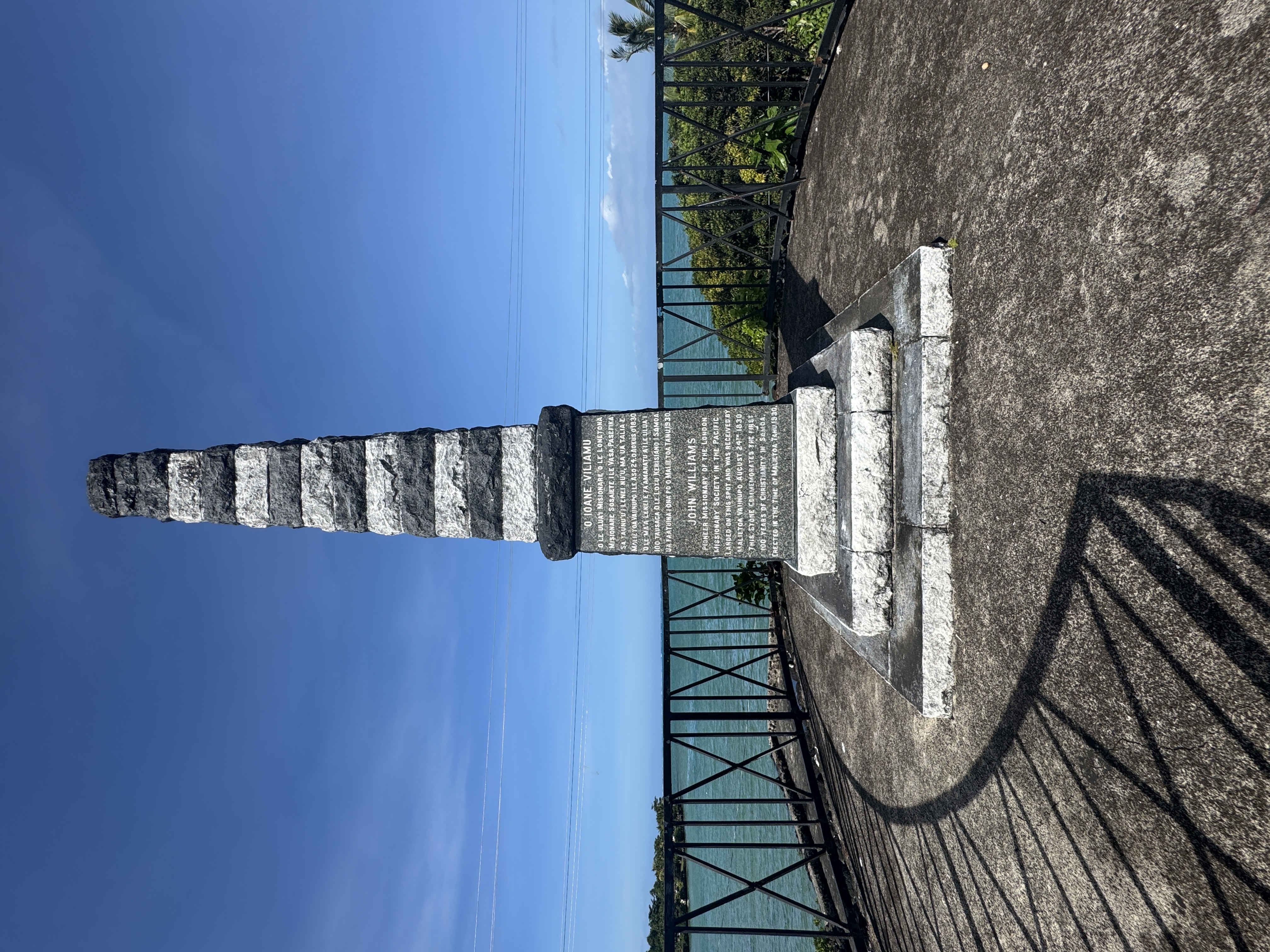
The English text reads: "John Williams, Pioneer Missionary of the London Missionary Society in the Pacific. Landed on this spot and was received by Malietoa Vaunupo, August 24th, 1830. This stone commemorates the first hundred years of Christianity in Samoa. Erected in the time of Malietoa Tanu, 1930."
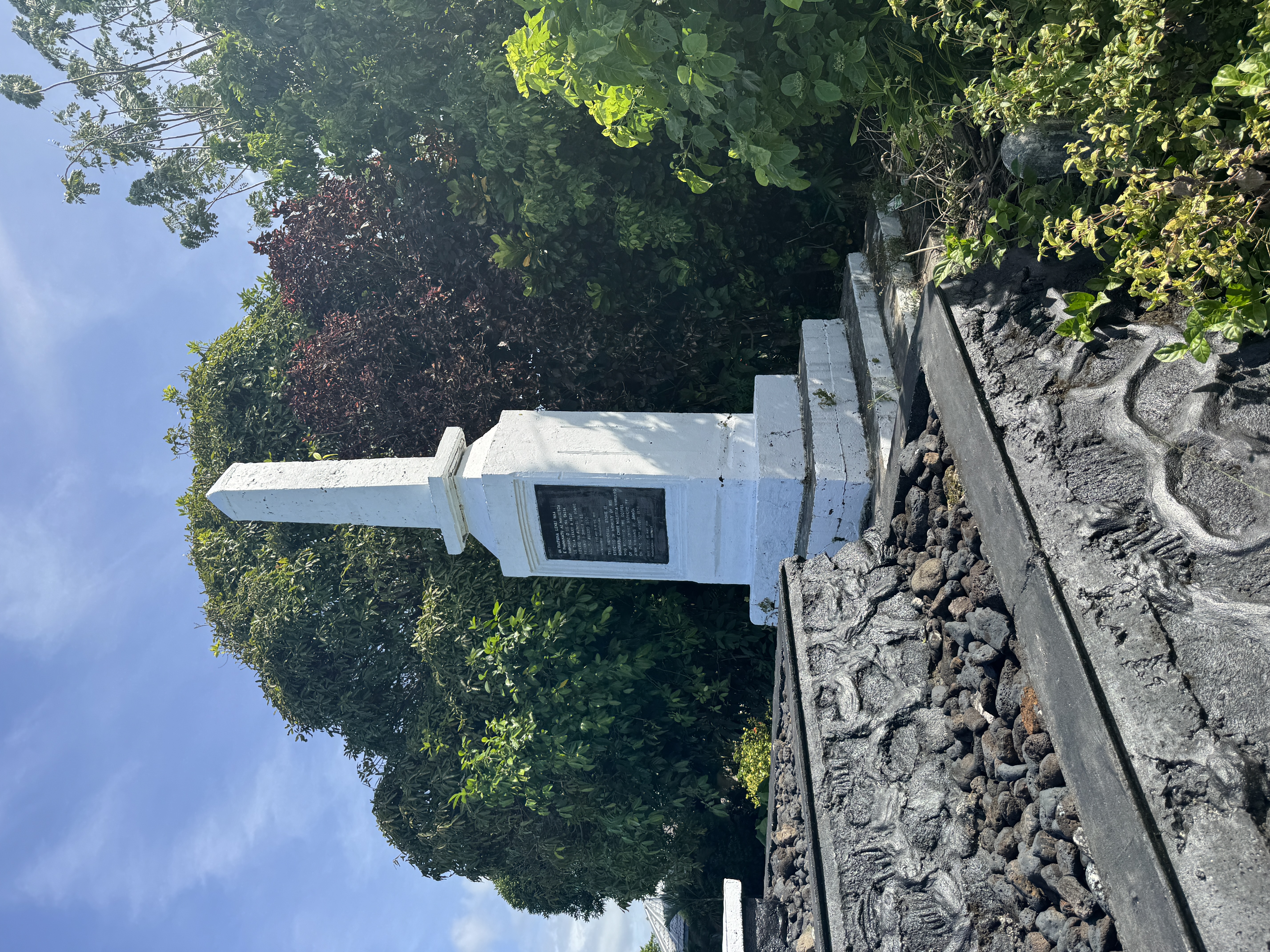
Across the road there's a monument to Malietoa Vaunuupo (1765-1841), the Samoan chieftain whose conversion started the tide.
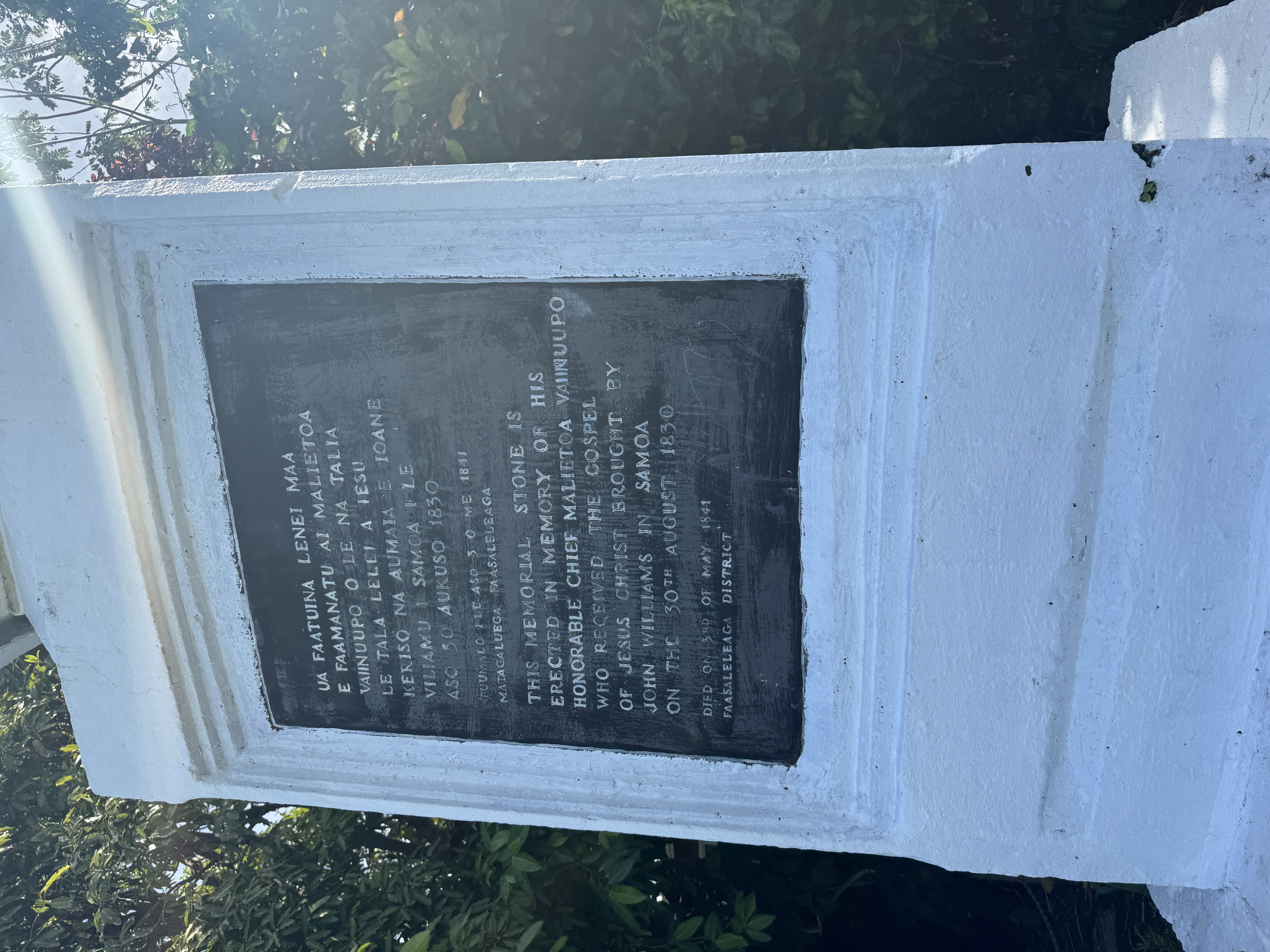
"This memorial stone is erected in memory of his Honorable Chief Malietoa Vaunuupo (1765-1841), who received the gospel of Jesus Christ brought by John Williams in Samoa on the 30th of August, 1830. Died on 3rd of May, 1841, Faasaleleaga District."
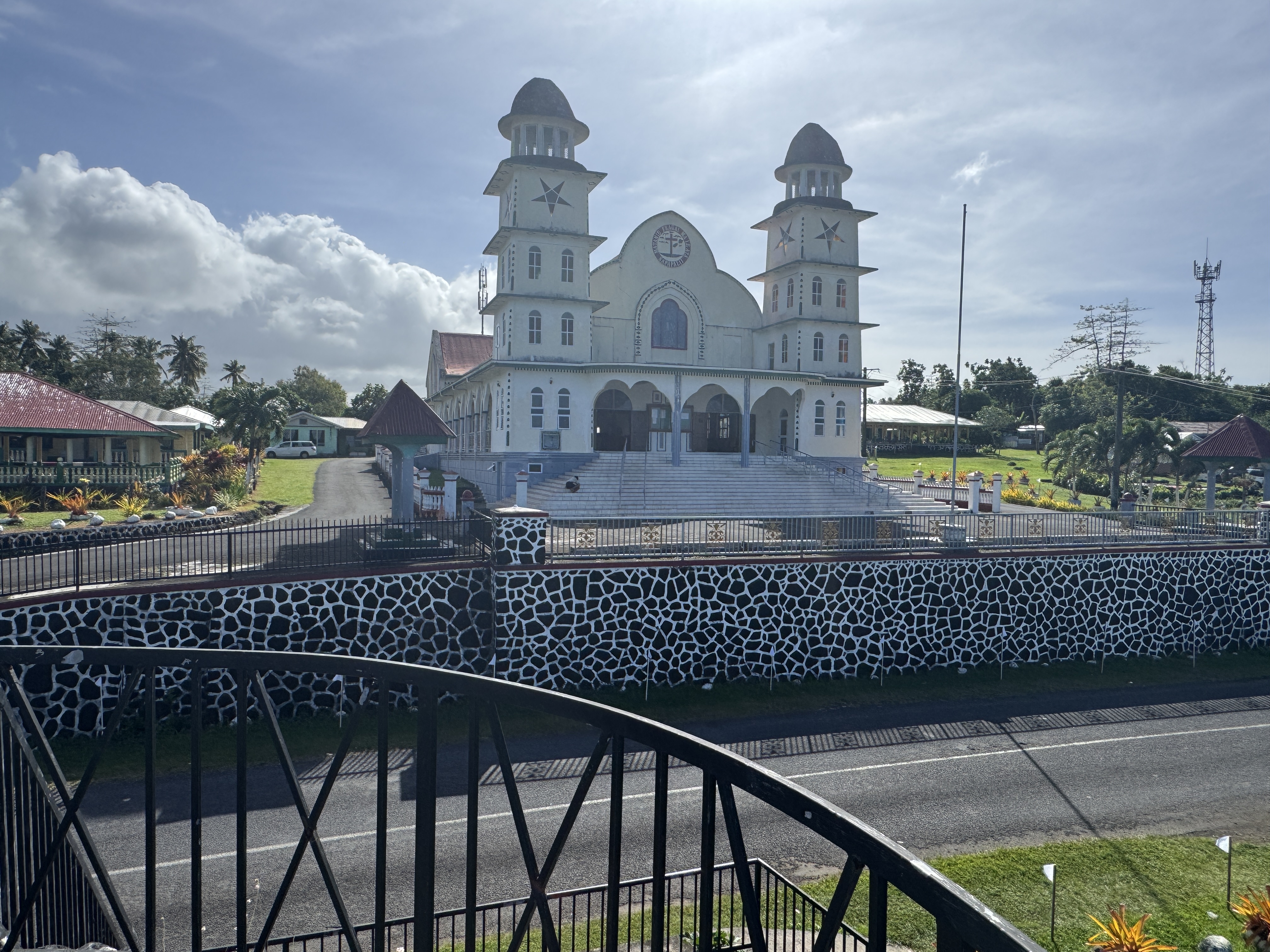
There's a church on the spot.
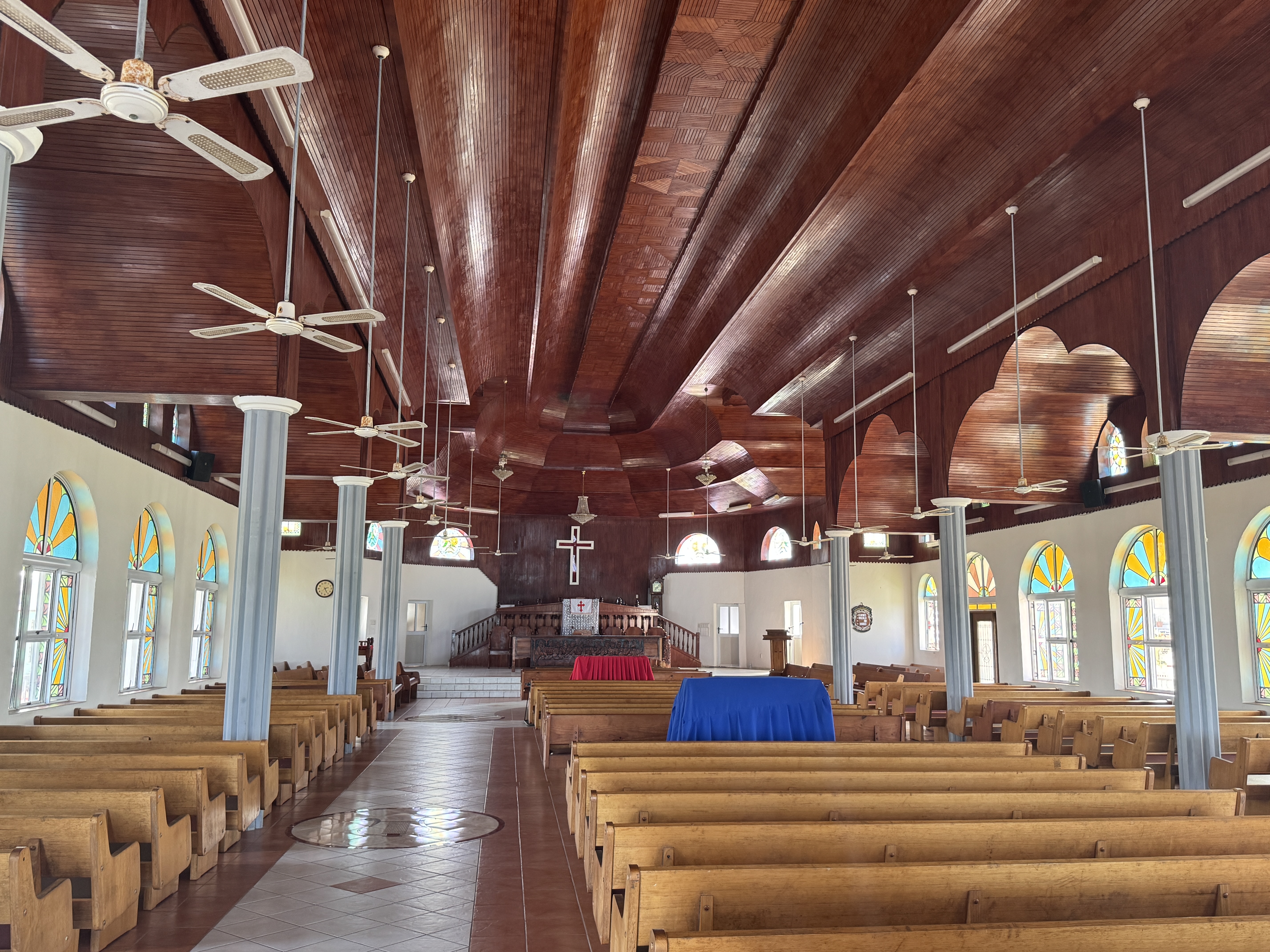
The interior woodwork is a reminder that Samoans in the old days lived in houses build by carpenters of great skill.
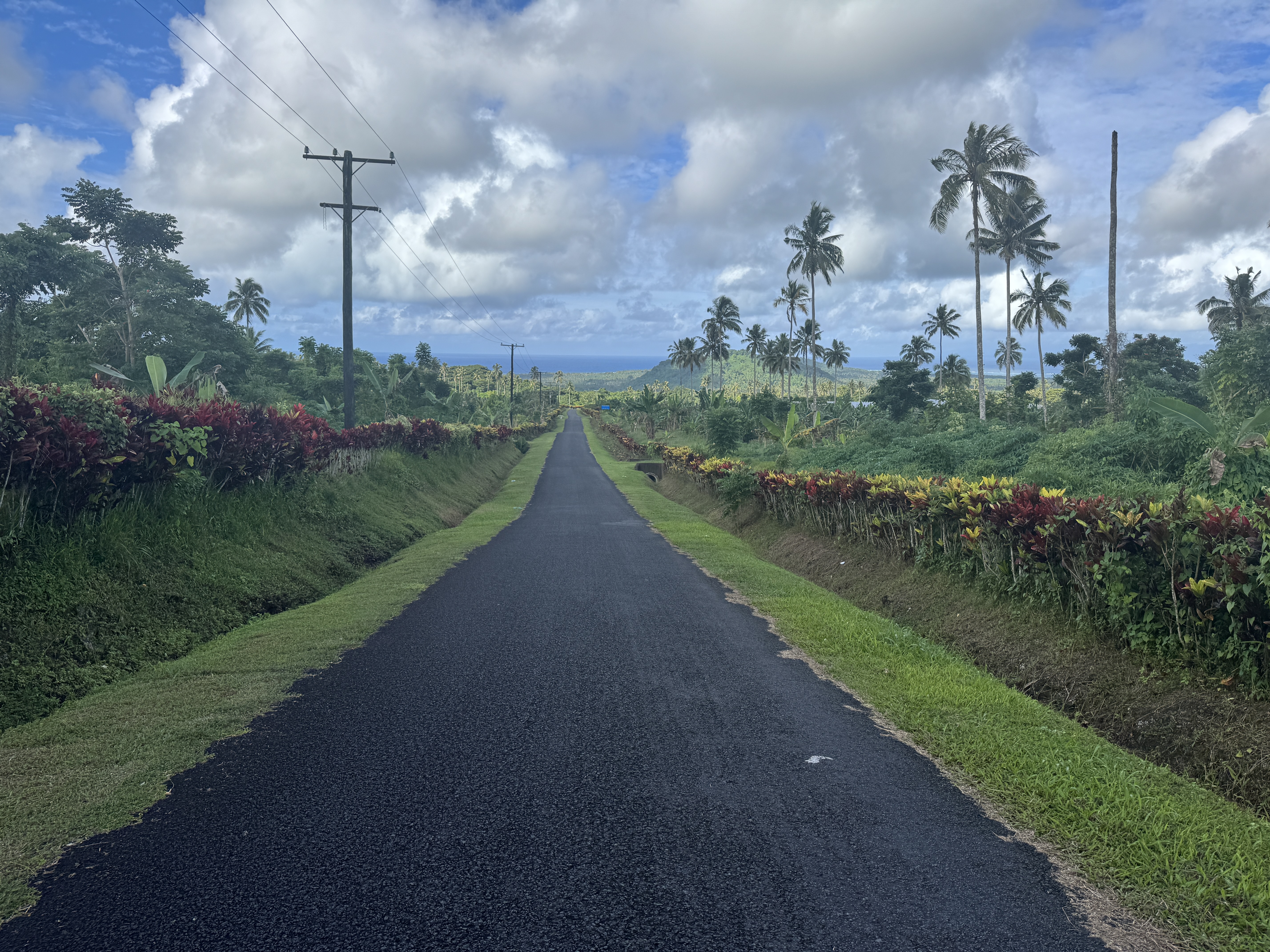
Williams established what is now the leading denomination in Samoa, the Congregrational Church of Christ in Samoa, but there are competitors. Here's the road to one. (Actually we're looking the wrong way, back down to the coast.)
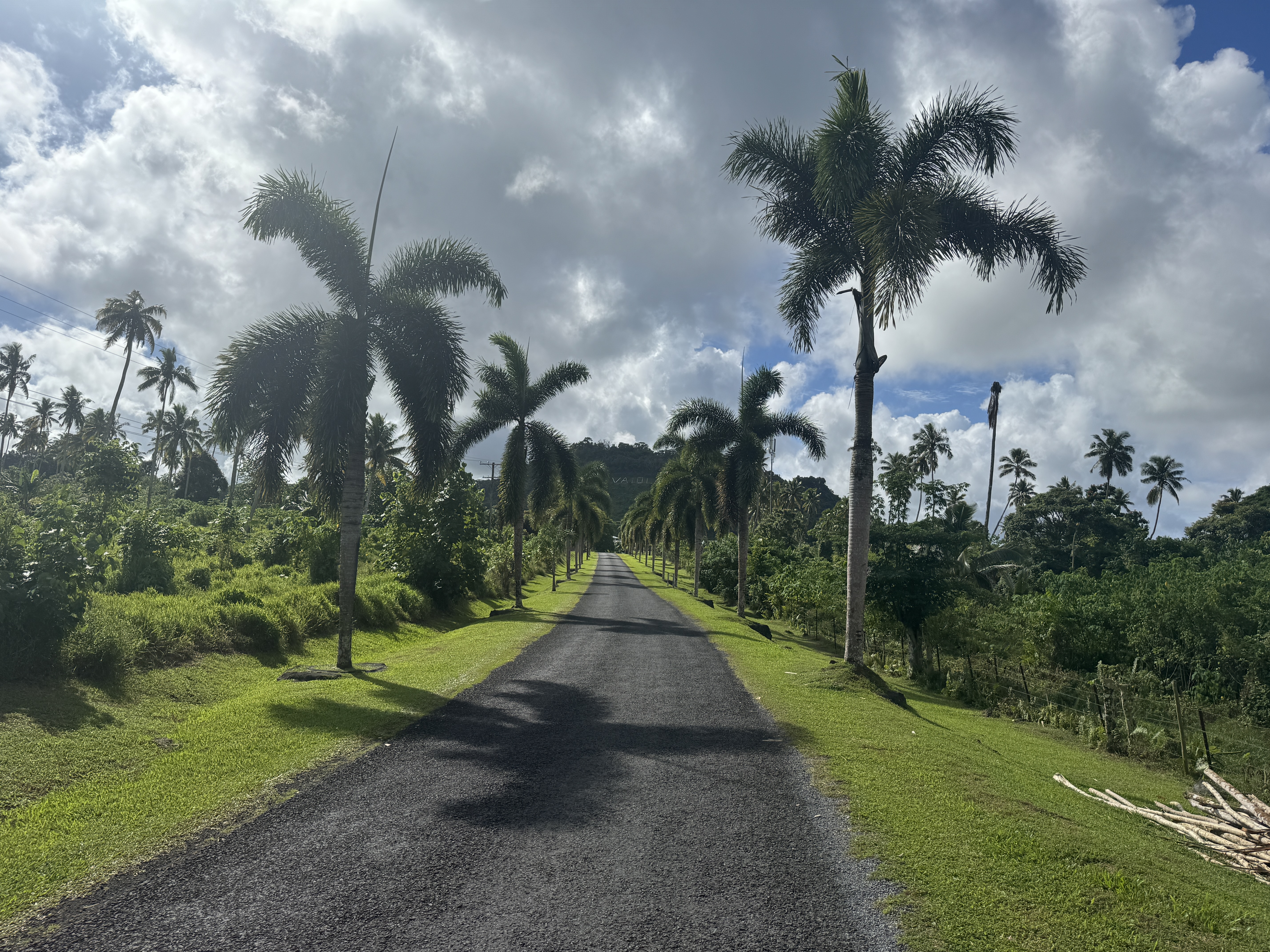
Now we've turned around and are heading the right way.
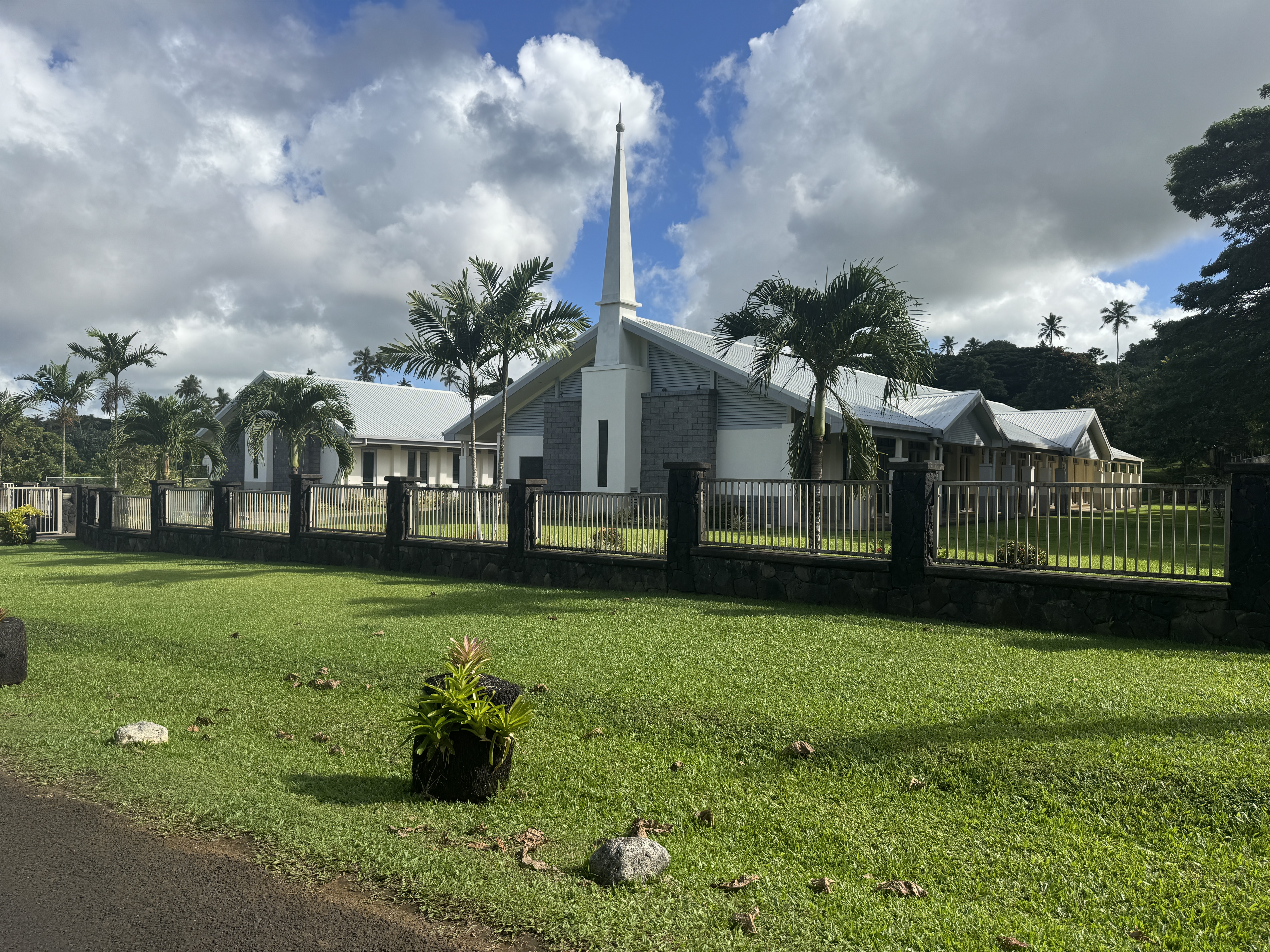
It's a Mormon Church.
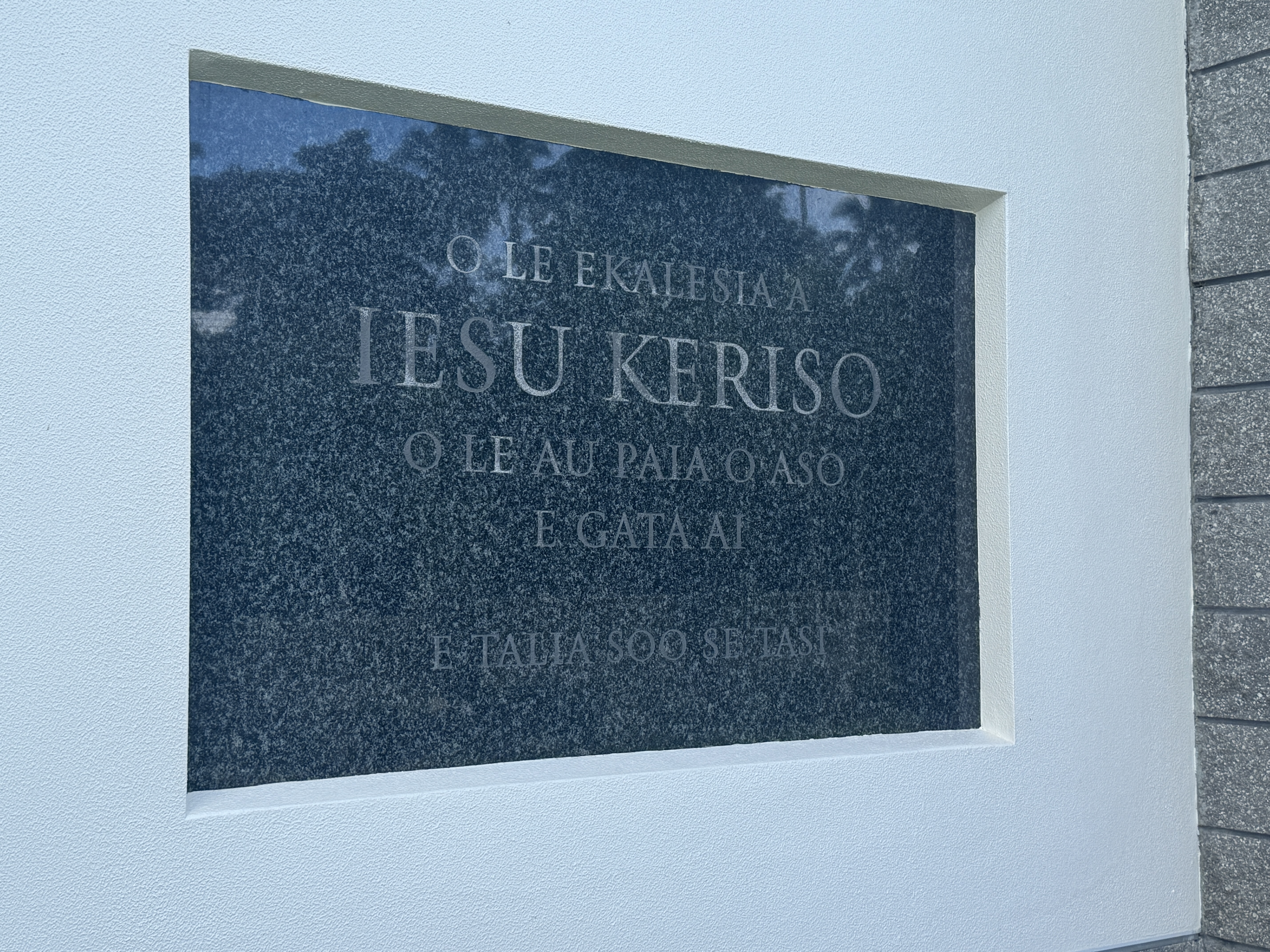
Samoan for the Church of Jesus Christ of Latter Day Saints.
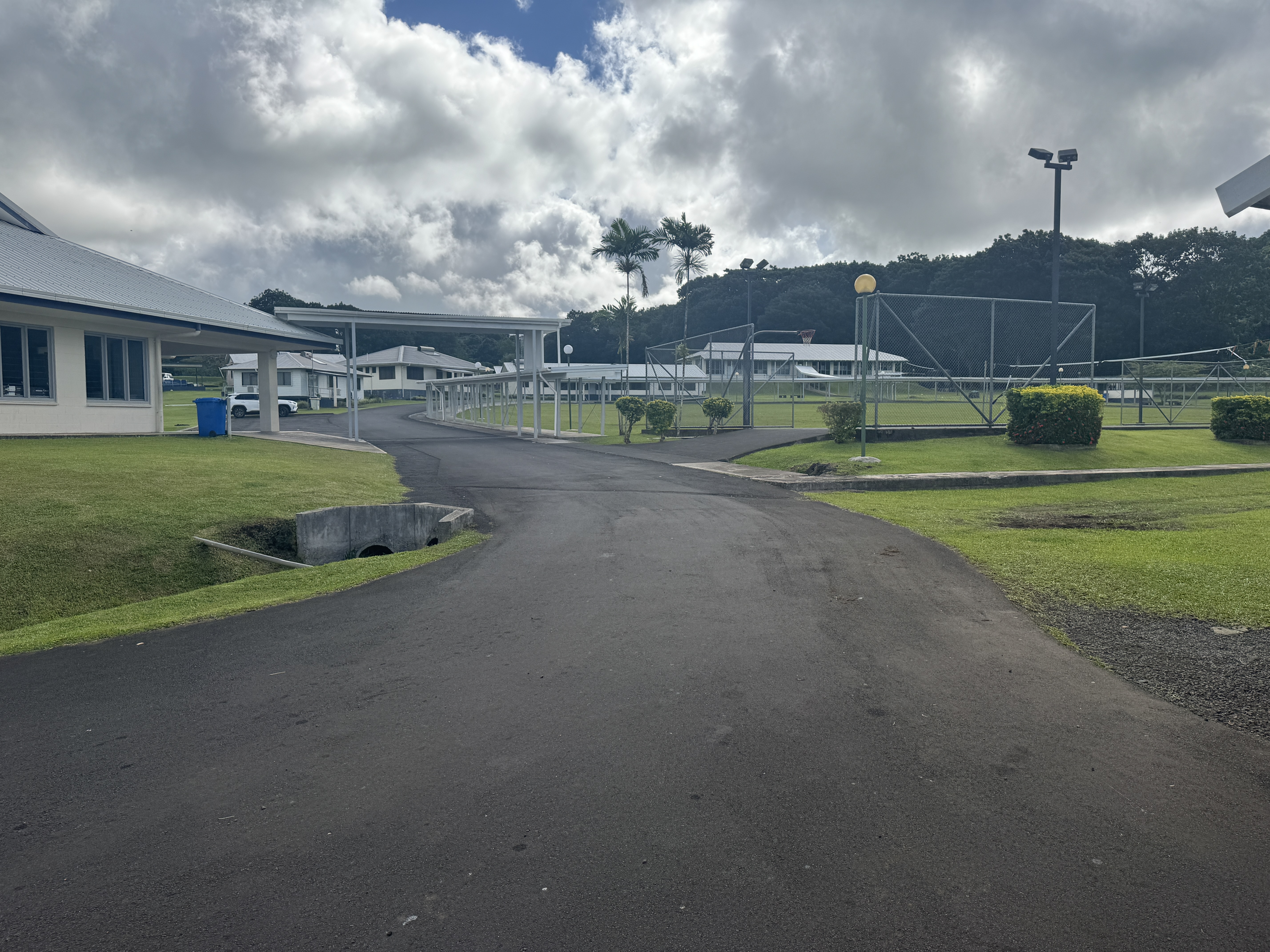
And here's the Catholic Logoipulotu College.
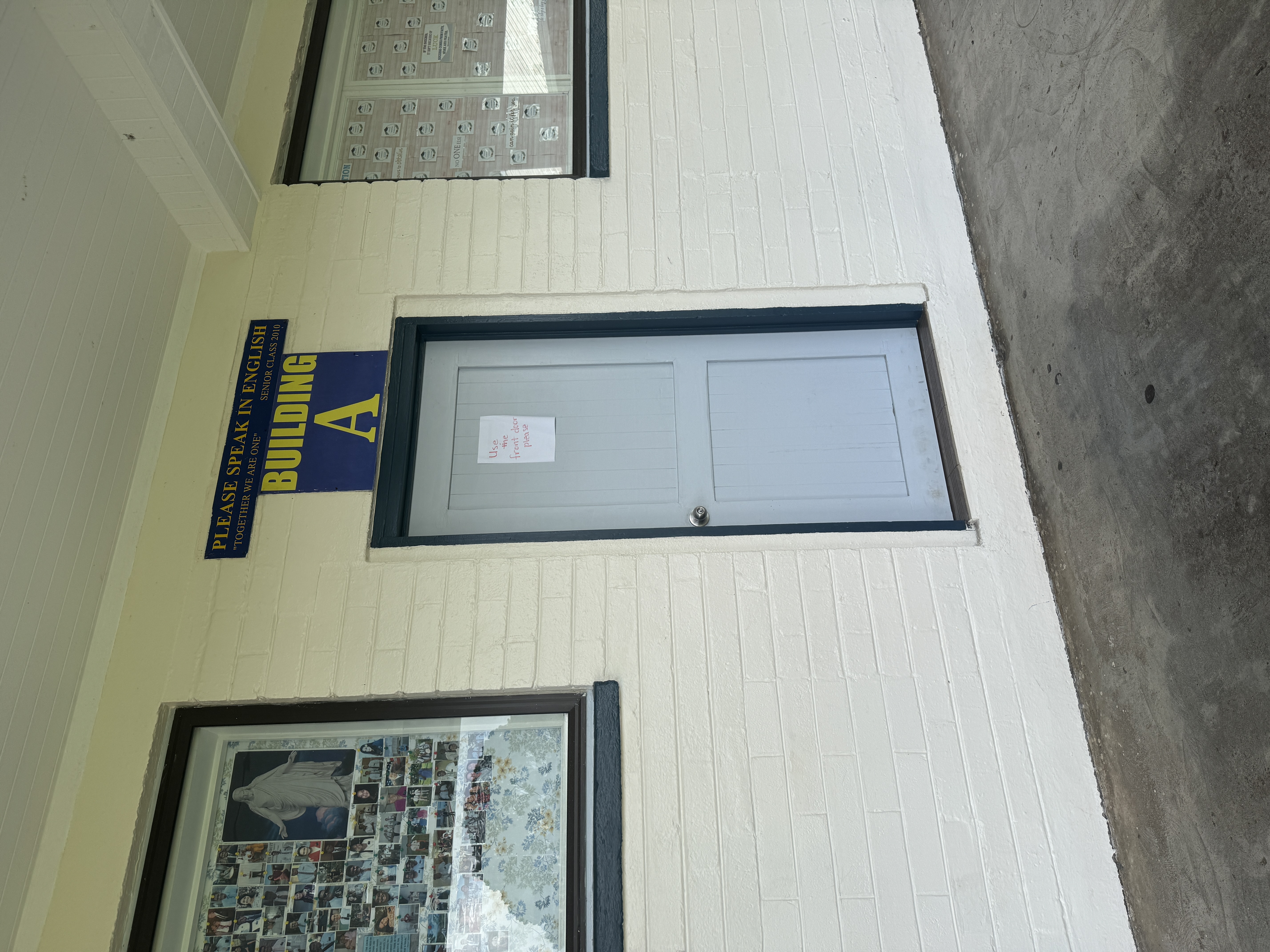
See the sign over the door? Faamolemole tautala Igilisi!
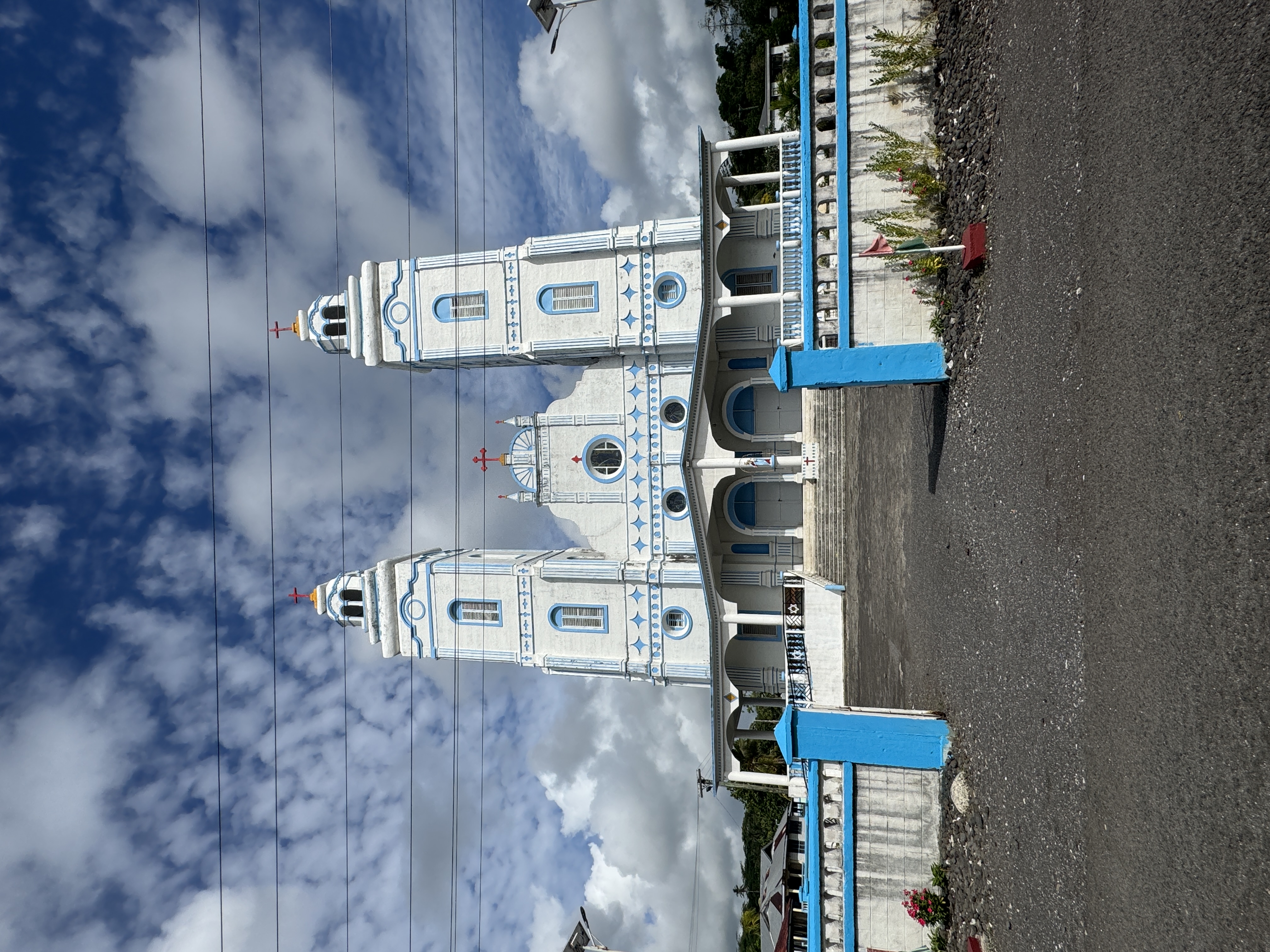
One more church, the Avao Congregational Church on the north coast at Matautu Bay. It's important because George Pratt (1817-1894) of the London Missionary Society was here from 1838 to 1861. What's so special about him?
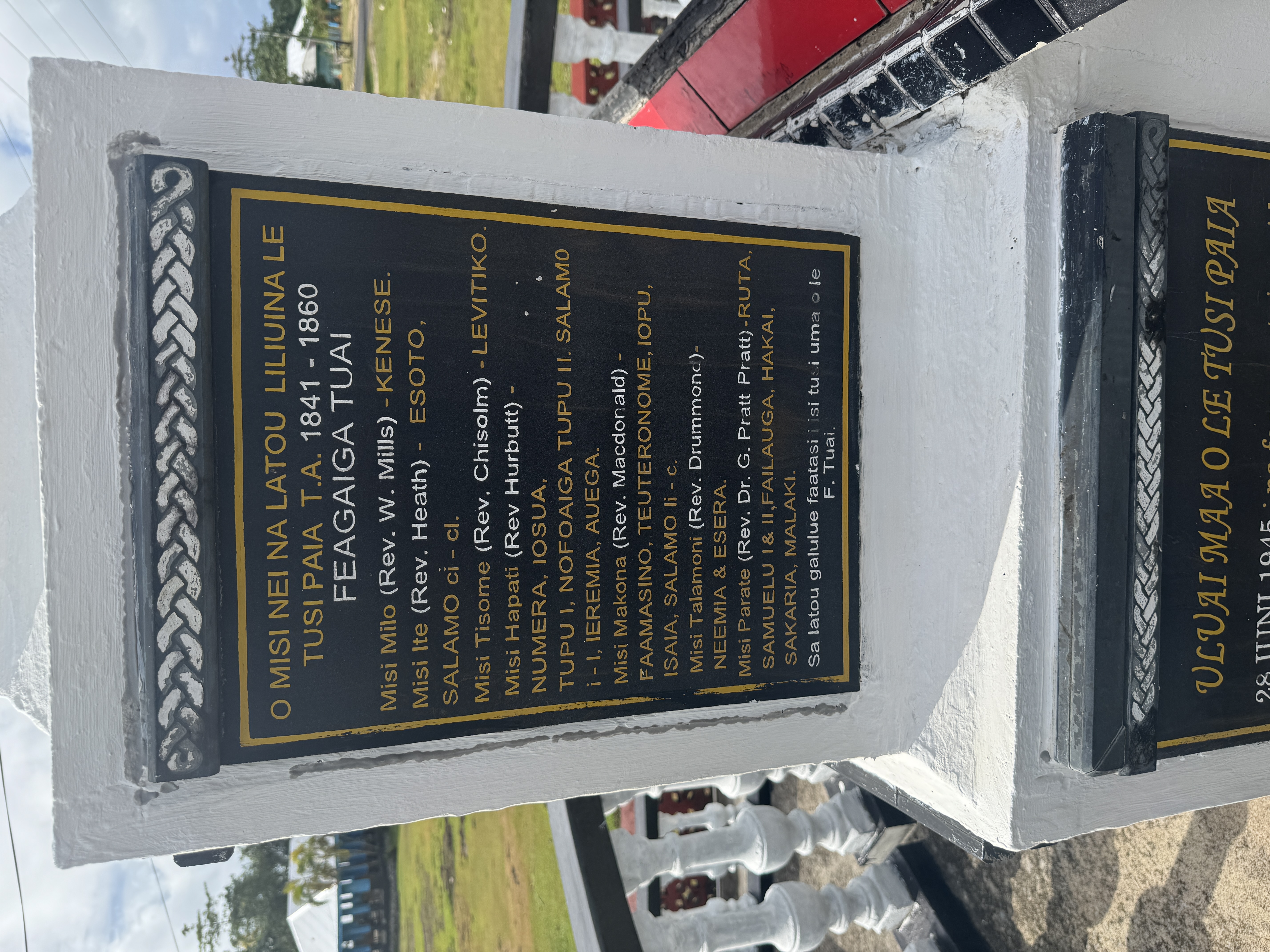
Answer: while here, he organized his fellow missionaries and, with them, translated the Bible into Samoan. He's credited here with translating Ruth, Samuel I and II, Ecclesiastes, and more.
Pratt left in 1861 for other postings, retired to Sydney in 1879 and died there in 1894, leaving a widow and 12 children. Extract from the obit published in the Sydney Morning Herald, 26 Nov. 1894: "Another veteran missionary of the London Missionary Society passed away yesterday after a long and painful illness. ...Mr Pratt pursued arduous labours on the east side of Savaii with unflagging diligence and zeal, and had the joy of witnessing multitudes abandon savagery and heathen superstition." (https://trove.nla.gov.au/newspaper/article/13996291))
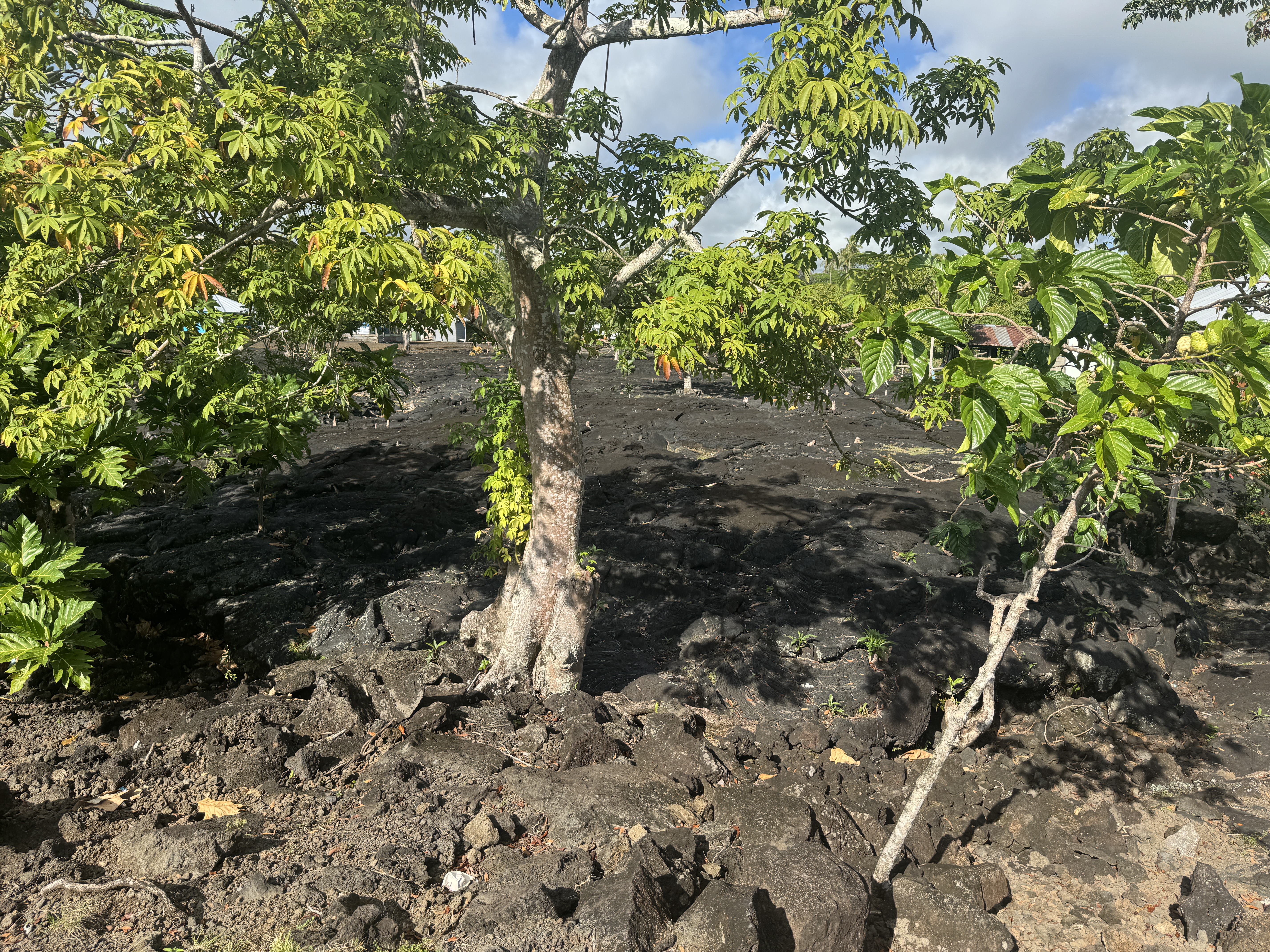
I almost forgot one more church, nearly buried under one of the island's remarkable lava flows.
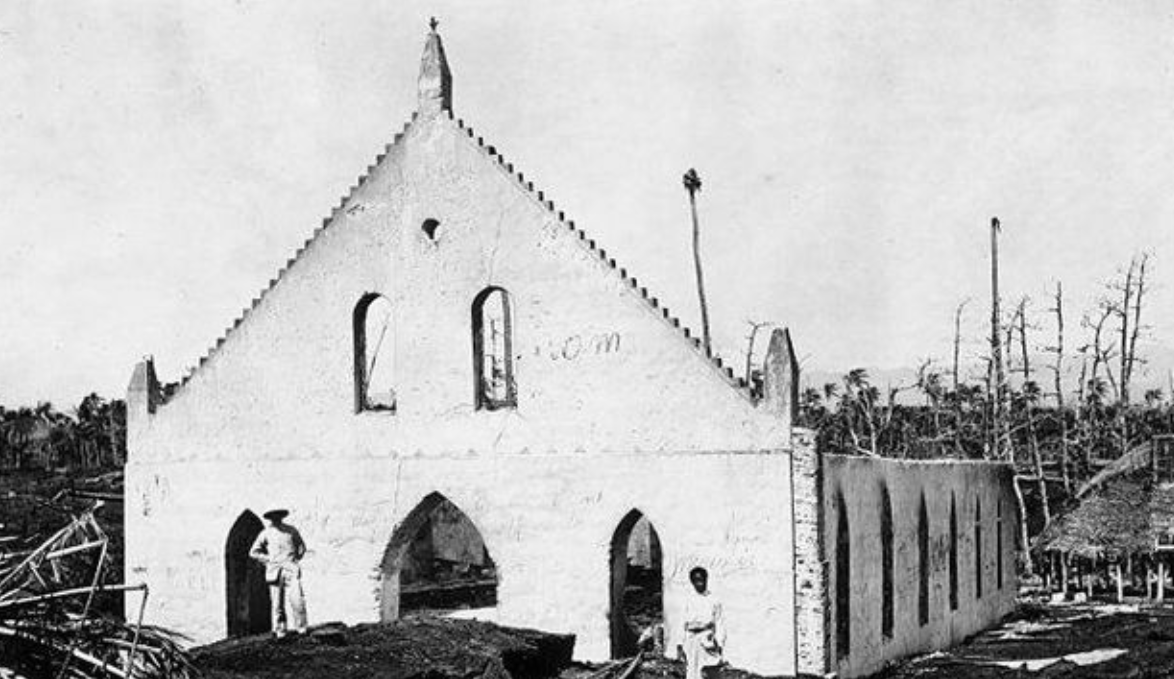
Here is it as photographed in 1905, shortly after an eruption. (https://www.facebook.com/groups/279463505493104/posts/9284625138310184/)
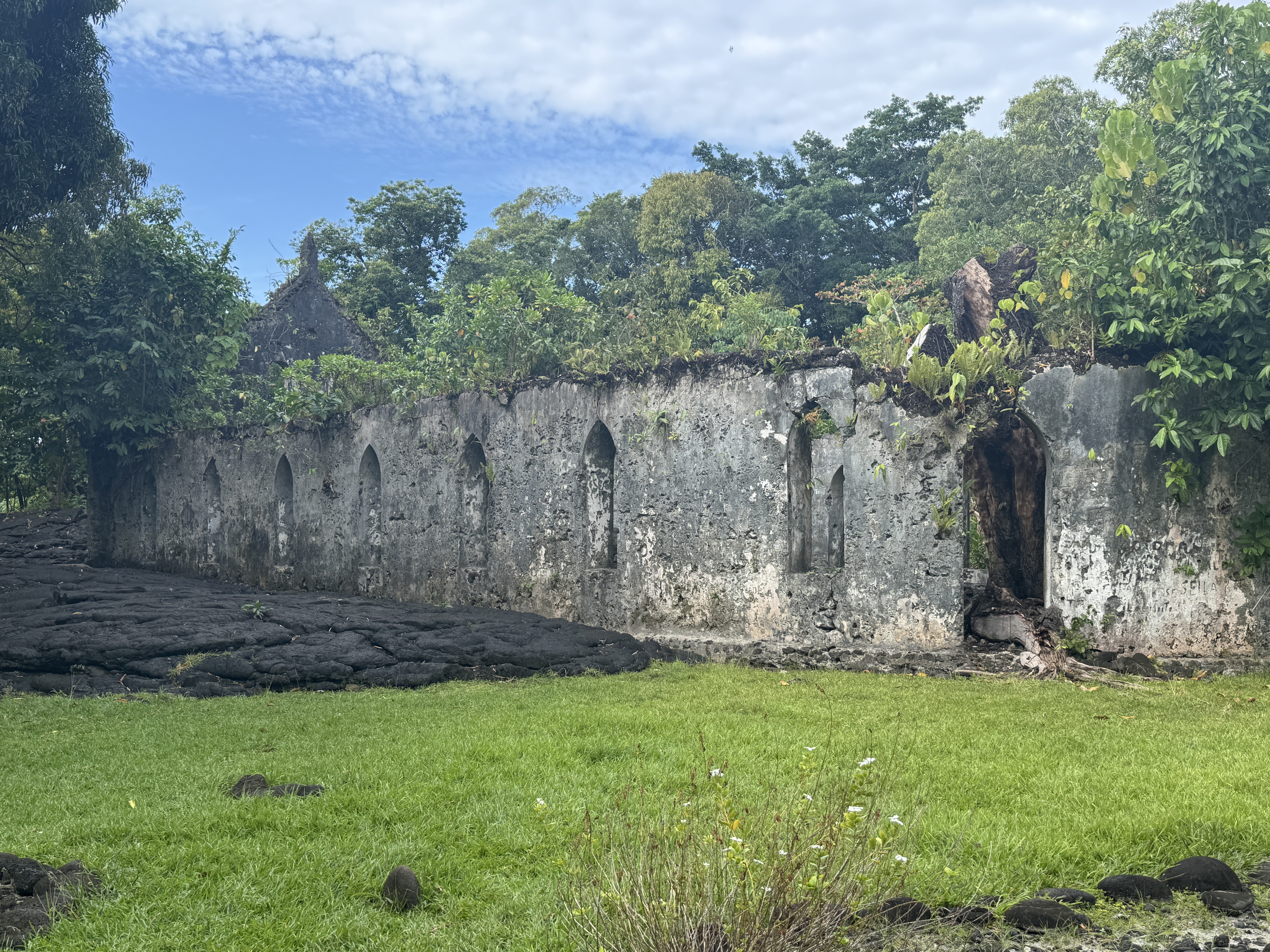
S
Here is it today, the Satoalepai church. Most sources say it was built by the London Missionary Society, but some declare that it was Catholic.
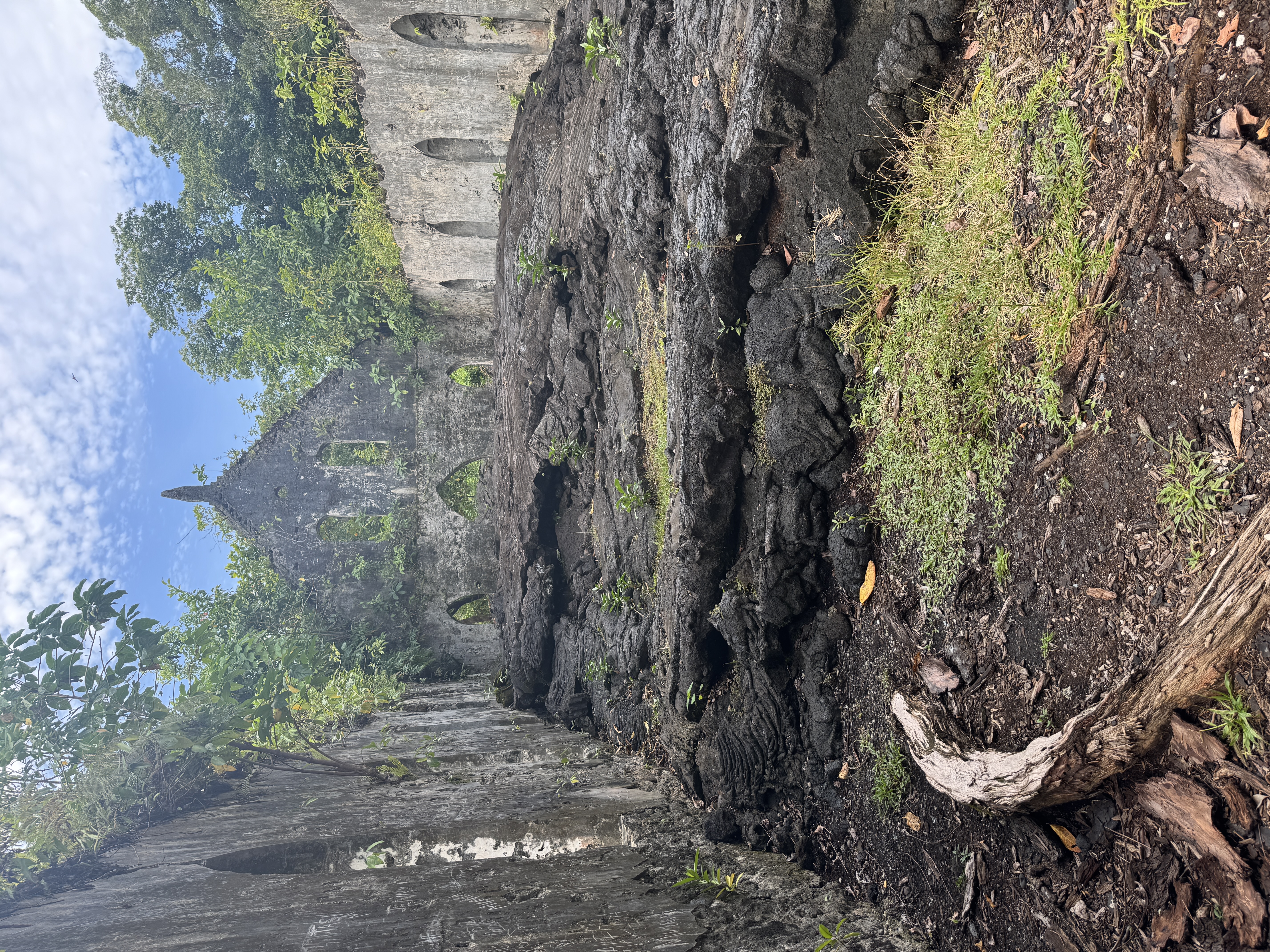
Fill 'er up.
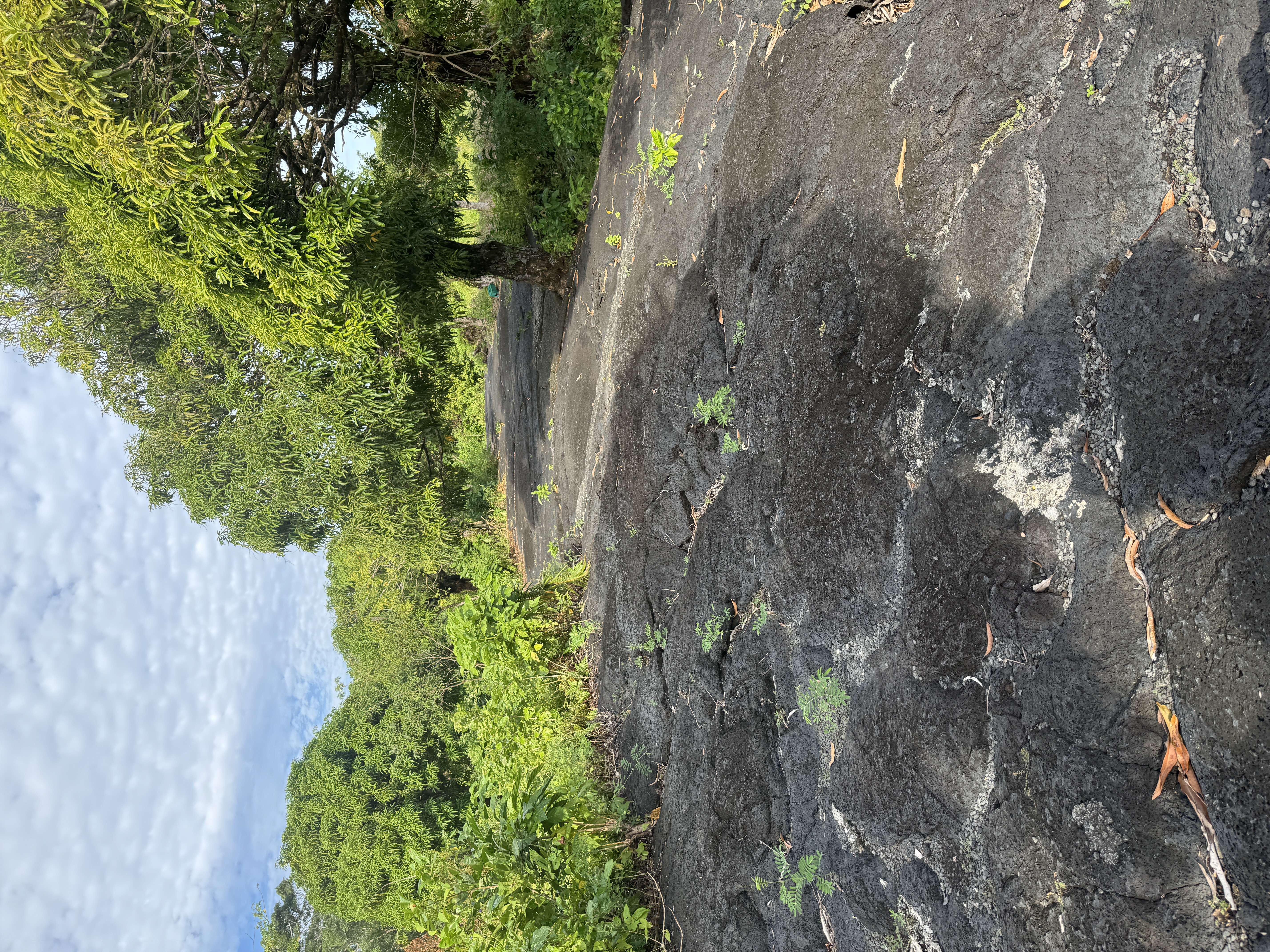
There's a path of sorts leading to the feature that attracts the most visitors.
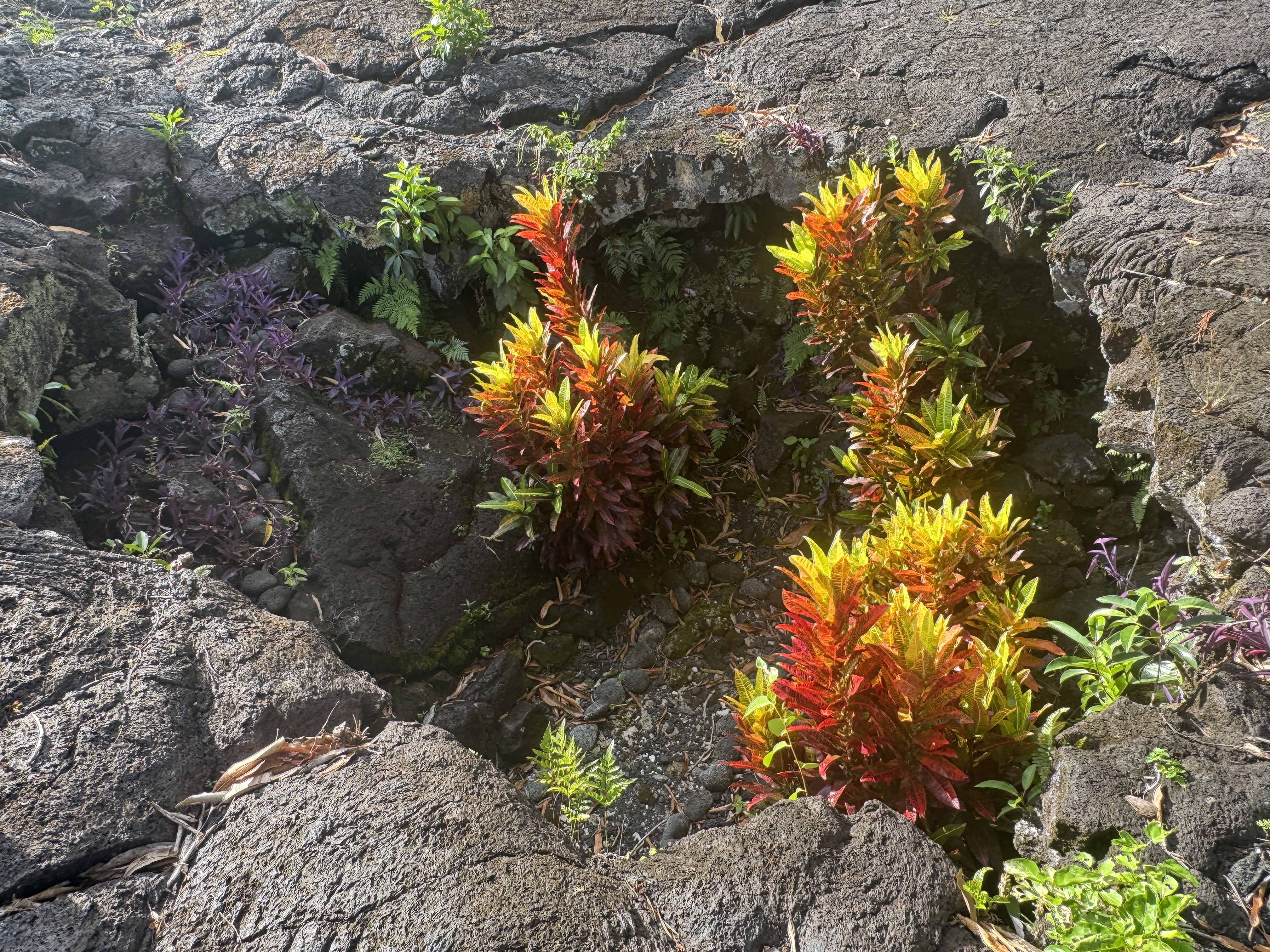
The story is that the lava flowed around the tomb of a virgin, sparing it. "When I first visited the spot, in 1920, the concrete slab and a few shrubs beside it stood peacefully, bravely and unharmed at the bottom of a round shaft down in the lava, as if in a well... the grave is still there, unmarked in the midst of desolation that spreads for miles around it, and a miracle for the disbelieving to see." (C. G. R. McKay, Samoana, p. 38).
McKay knew the islands as well as any New Zealand official, but I'm more than skeptical about this "miracle." There's no slab, only a rectangle formed by stones. And, far from lava flowing around the tomb, I think the lava cooled and hardened at the top, then moved on below to create a cave whose roof then collapsed at this spot.
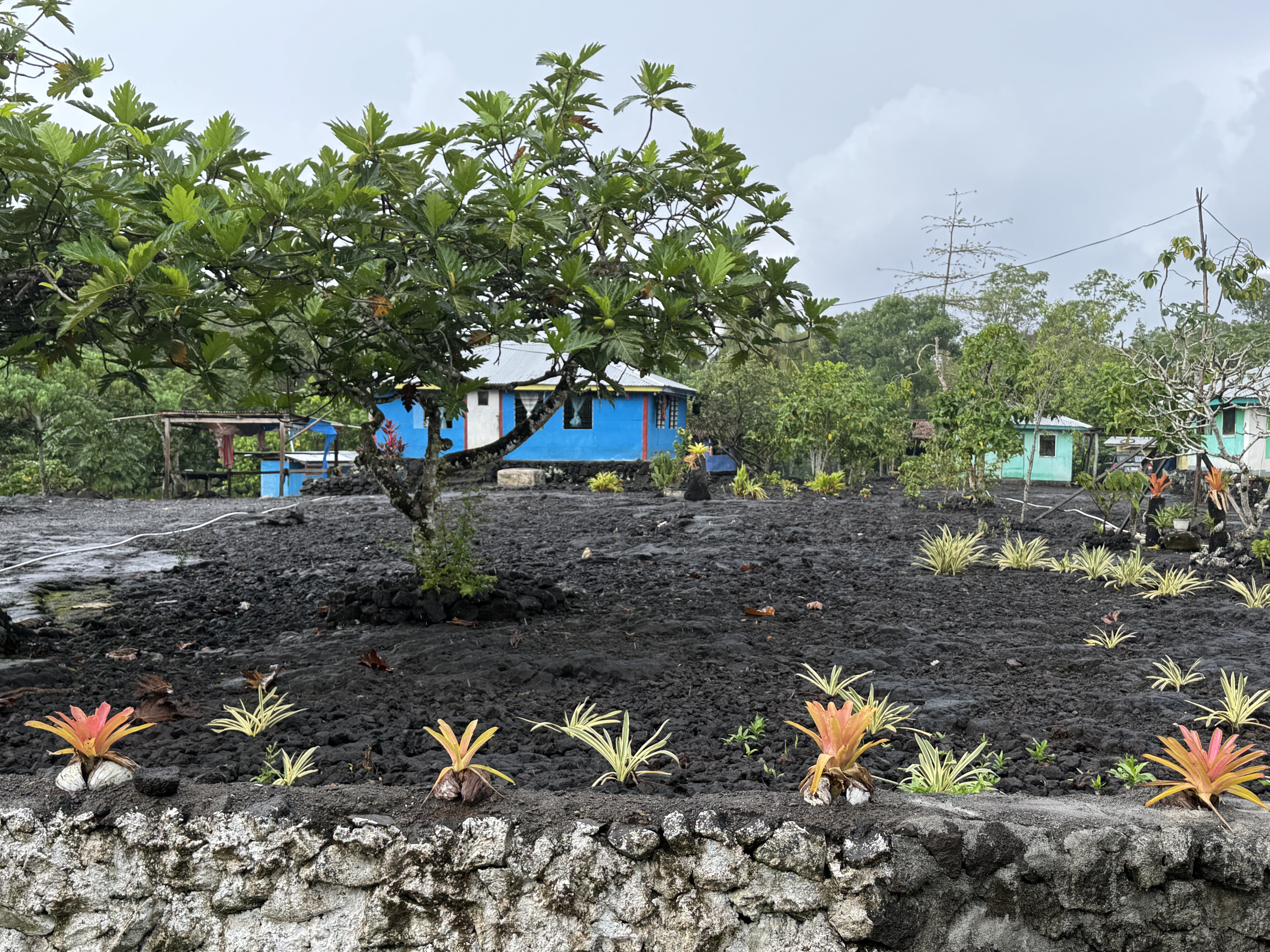
But the lava sheets are amazing. Even more amazing: people build homes right on top of them.
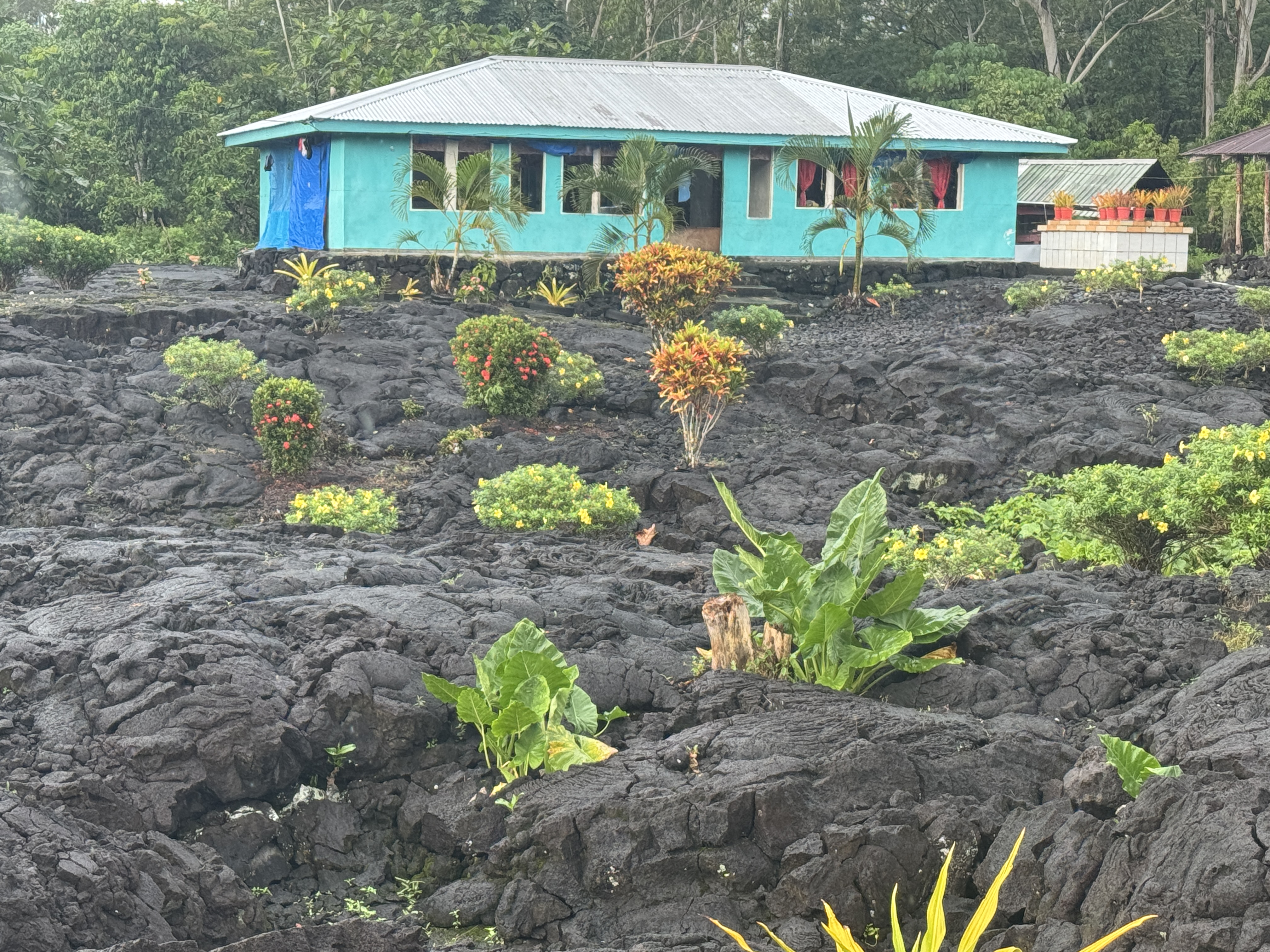
Then, somehow, they find spots that serve as pots for planting.
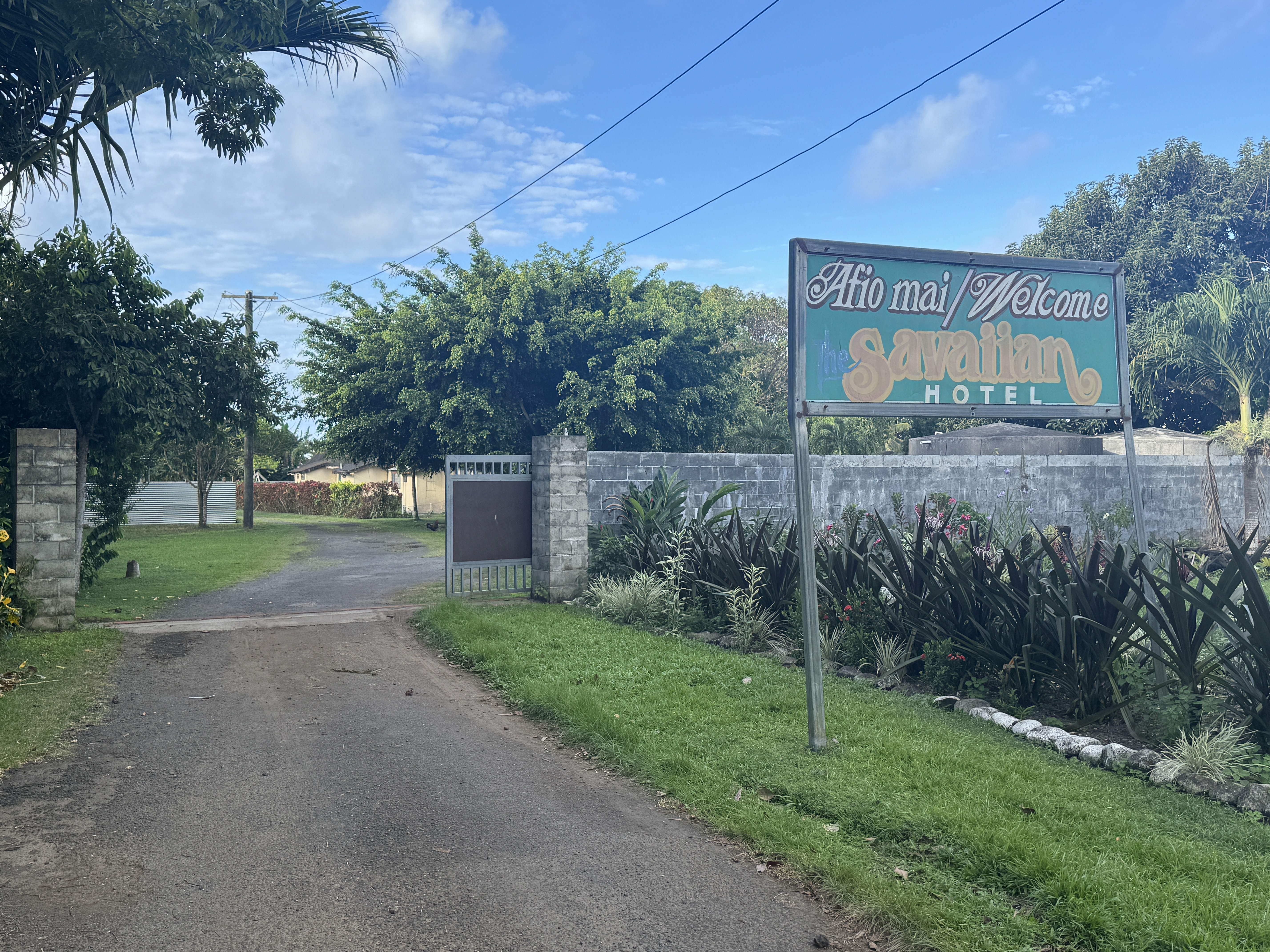
Despite these attractions, few tourists come. and the local hotels are in trouble.
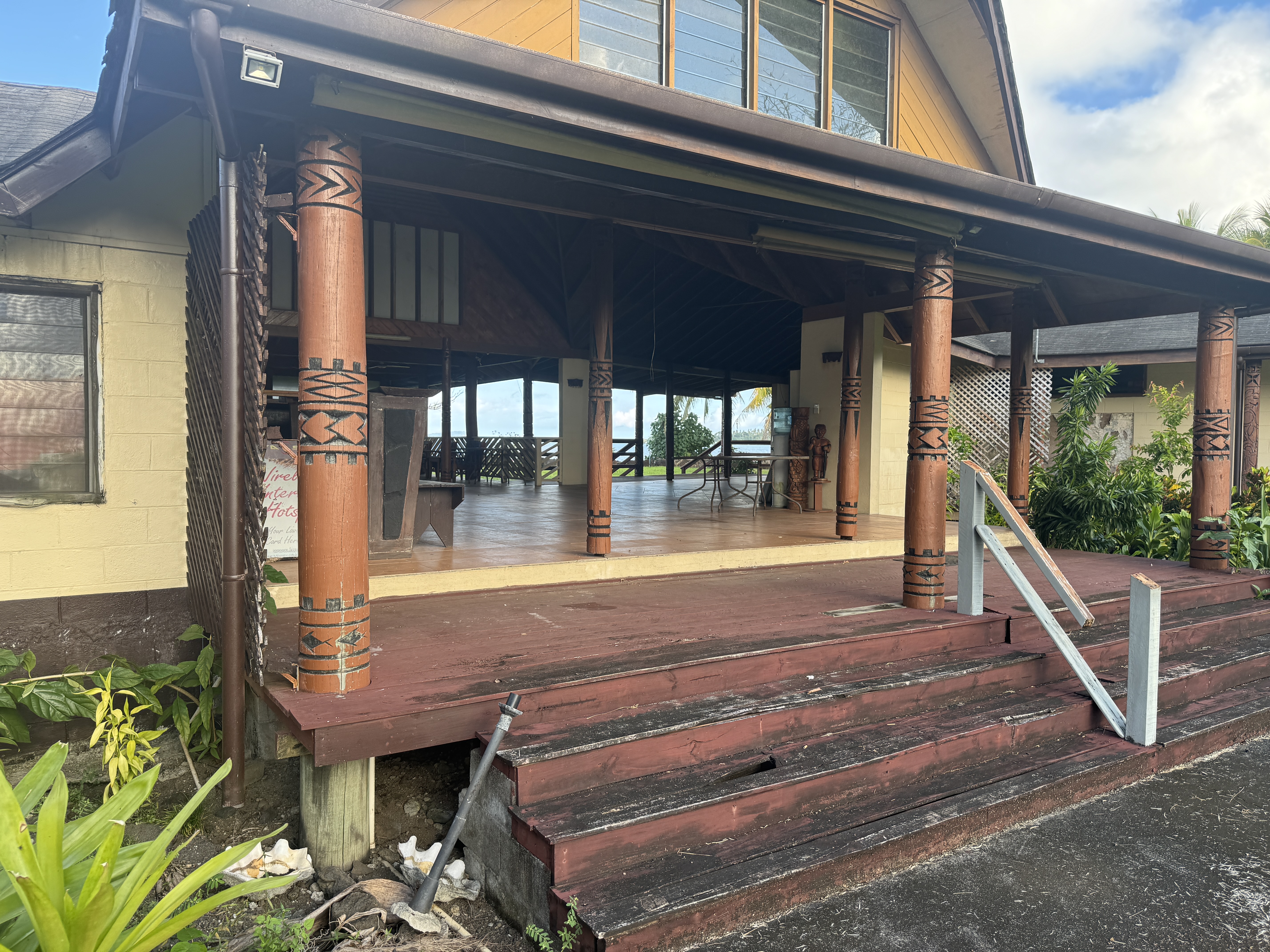
This one belongs to a recently elected head of the Savai'i Tourist Association. During the COVID pandemic he said, "There is literally nothing we can do if we can't get the overseas market. It's not anyone's fault. We will go back to the land. A lot of us are already doing that. Being Savaiians, we persist and we survive" In 1925, however, the hotel was still closed (Vaselua Gidlow, quoted in the Samoa Observer, 27 June 2020).
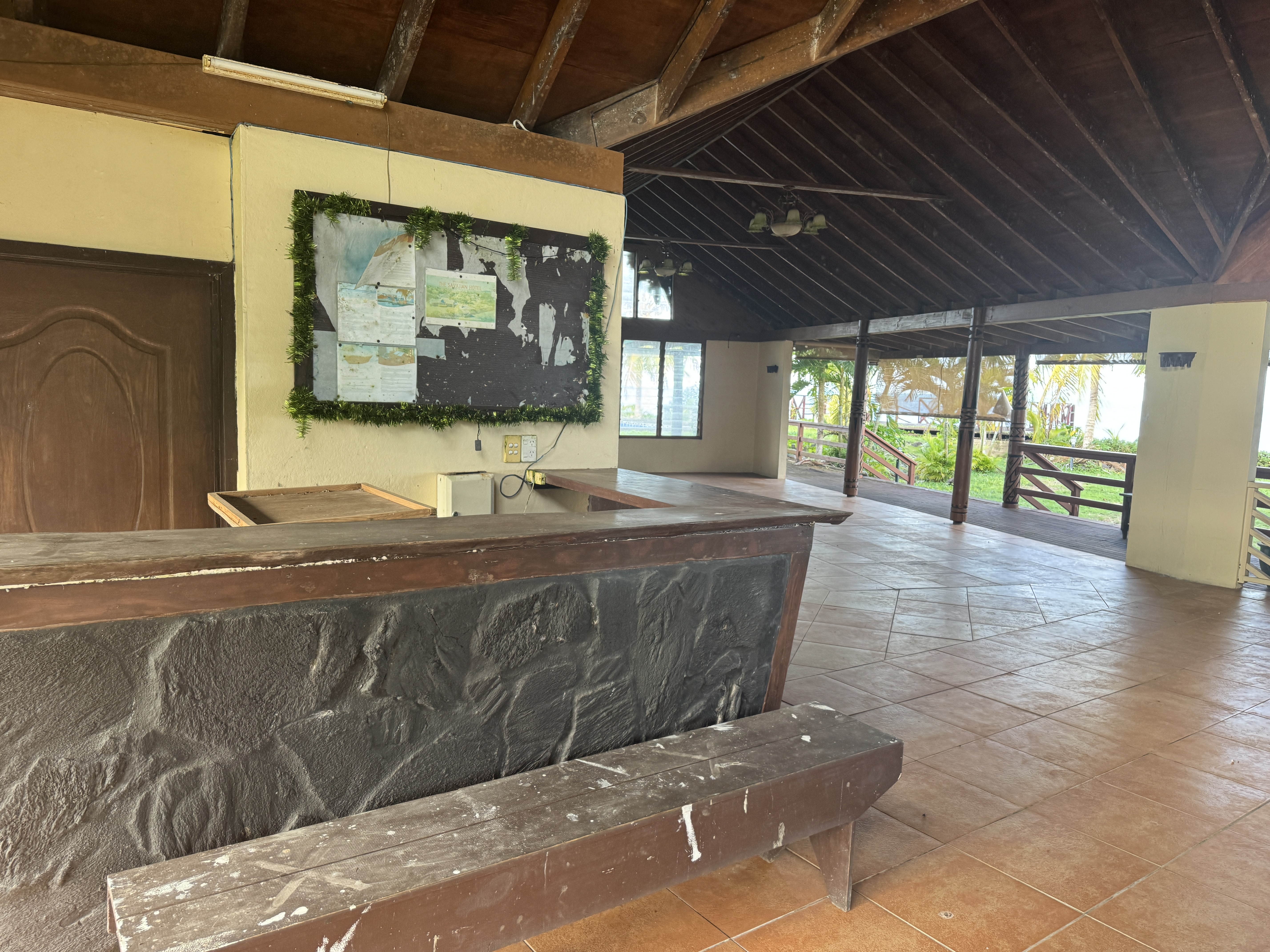
Presumably, it could be revived.
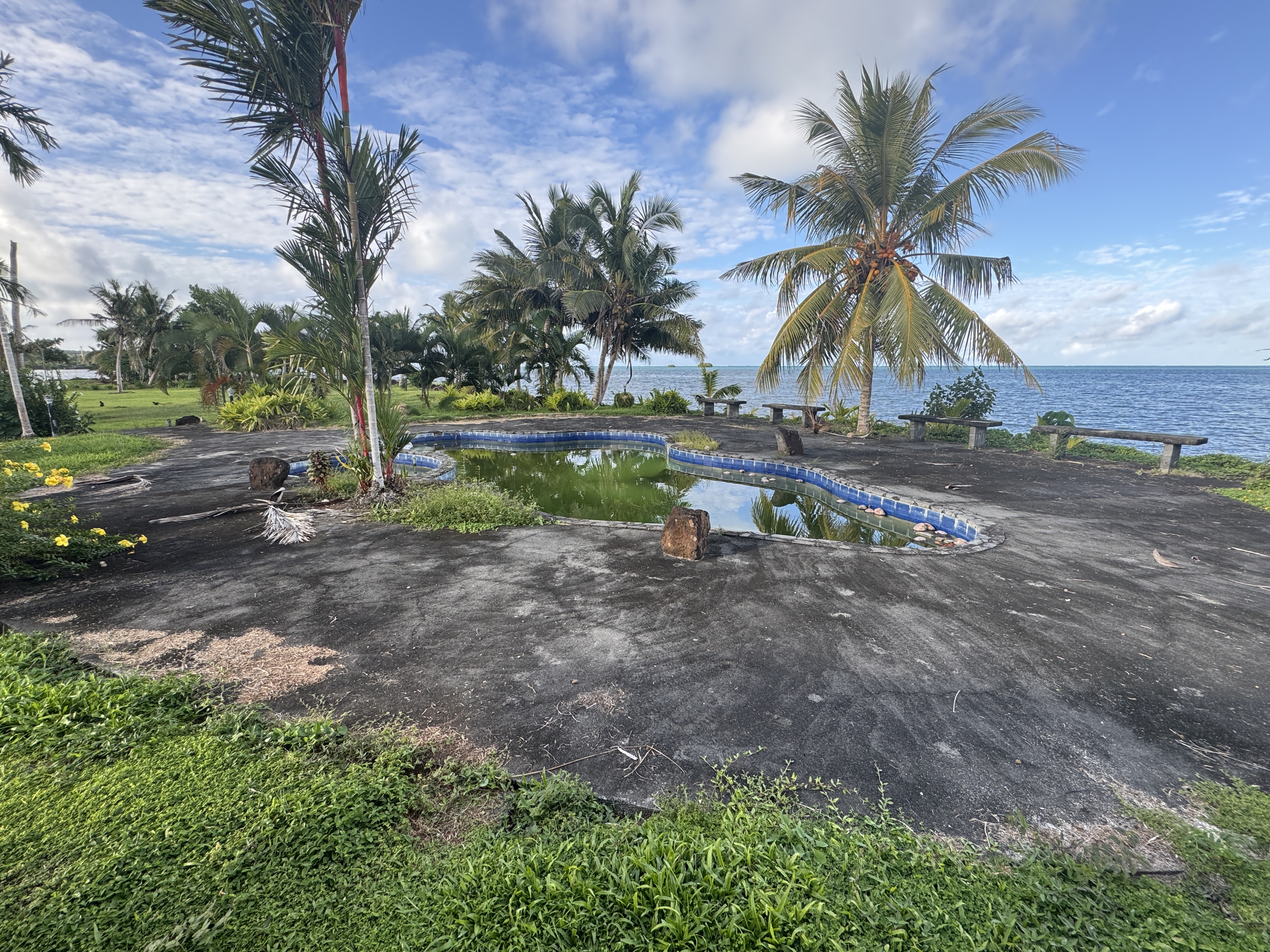
Pool.
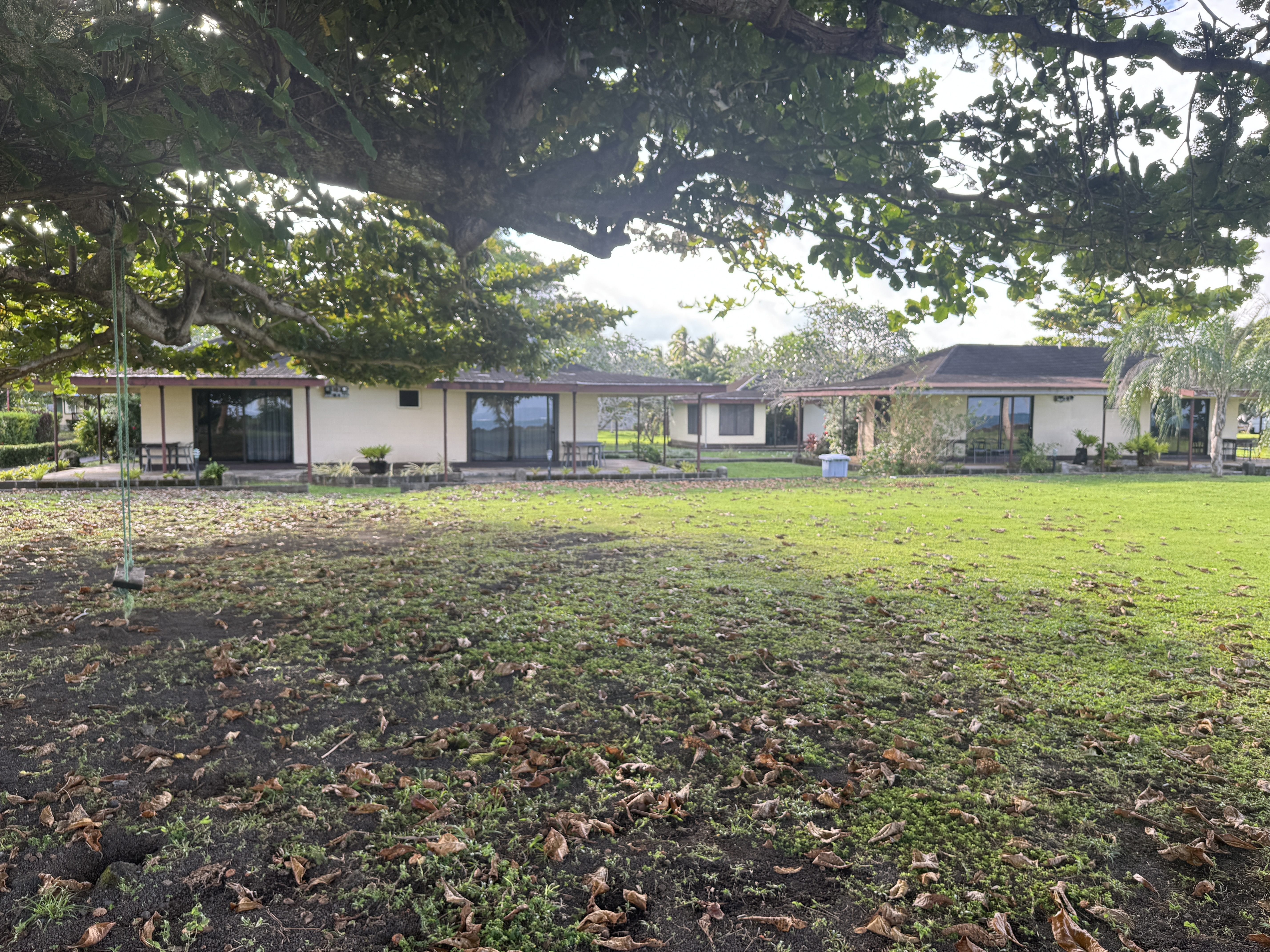
Rooms.
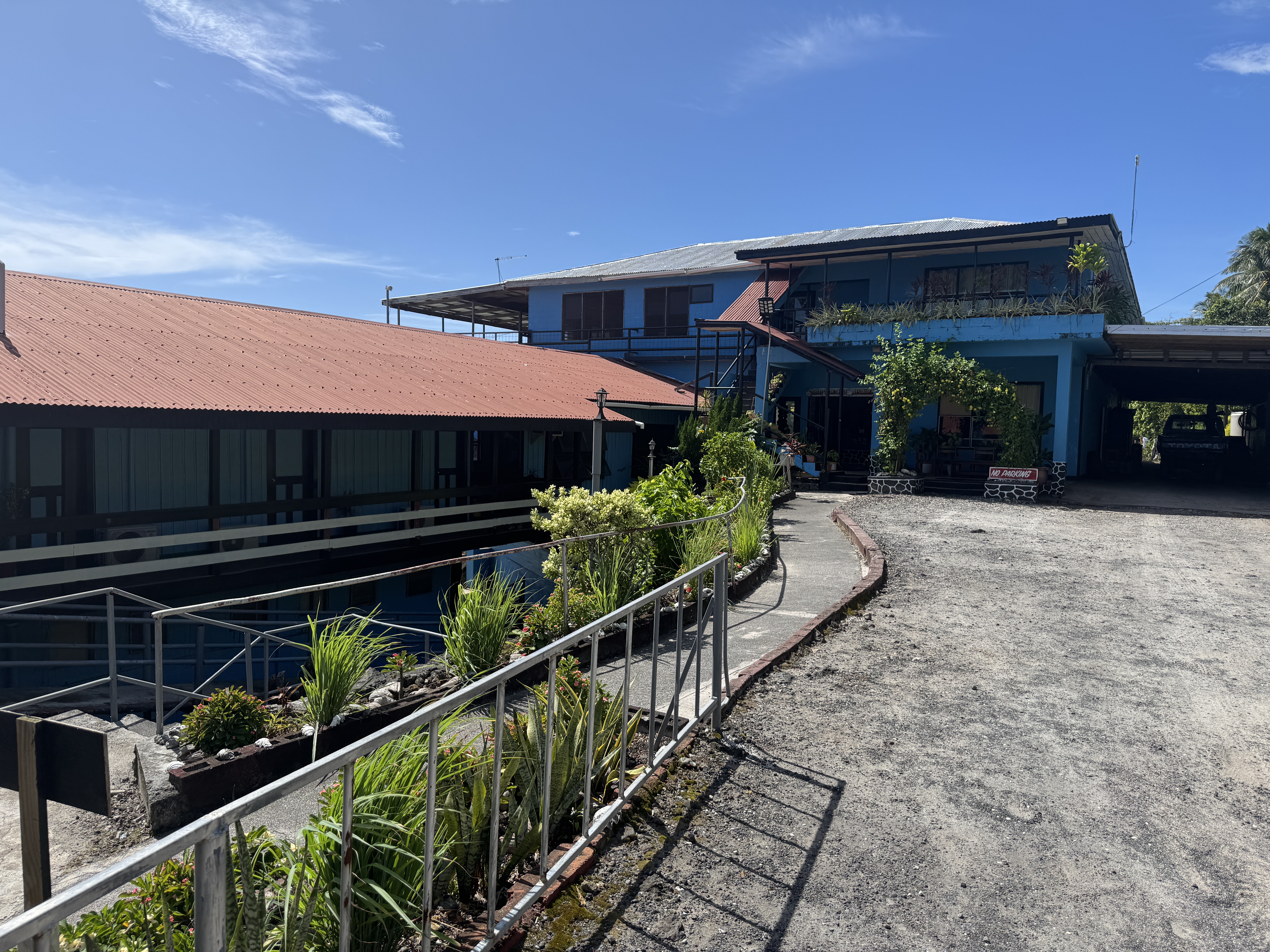
Up at the other end of the island, near Asau Bay, the Vaisala Hotel was the only modern hotel on the island in 1985 (Geoffrey Dutton, "Exploring the Polynesian Paradox," in The New York Times, September 22, 1985).
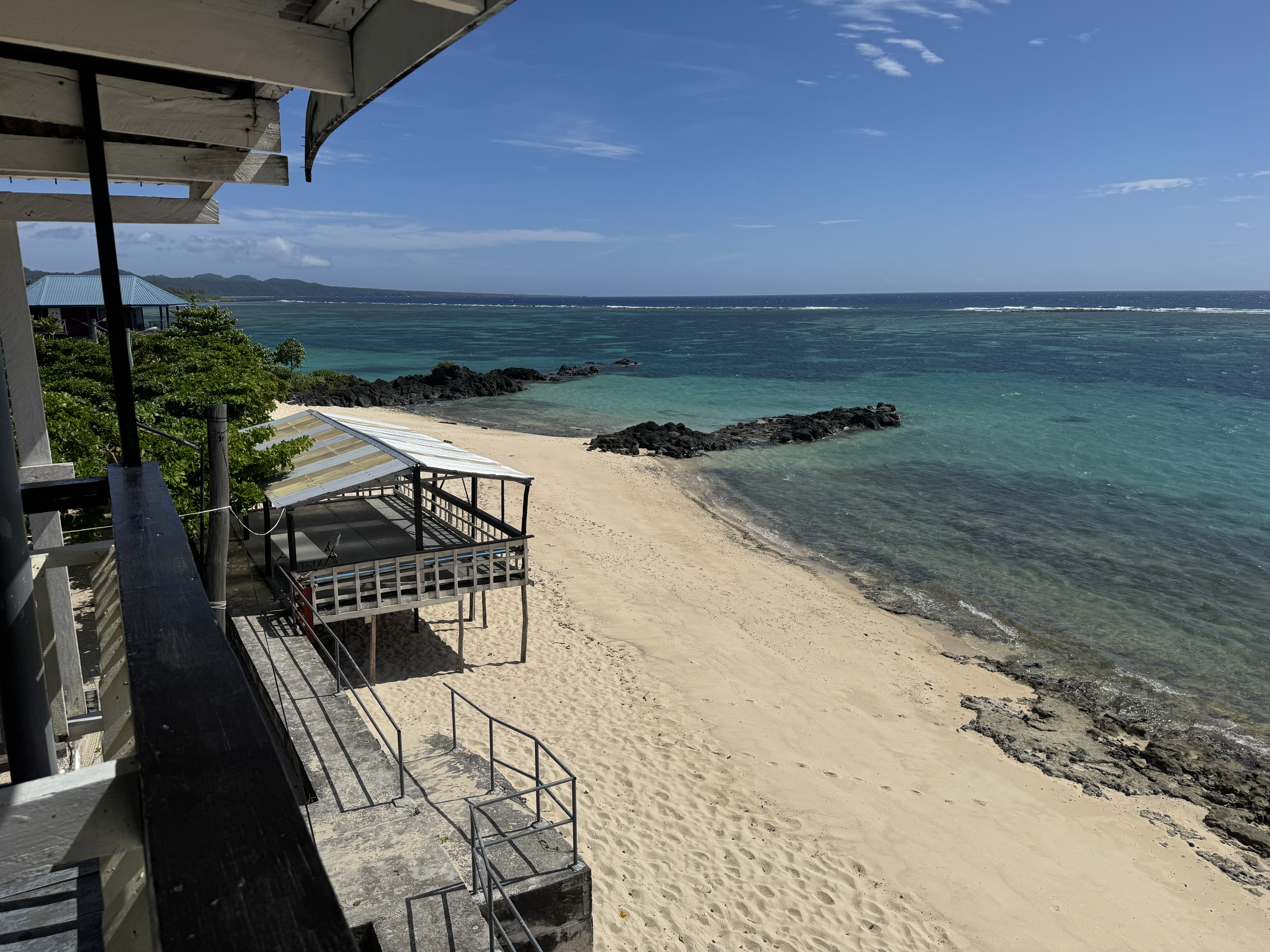
Very nice beach.
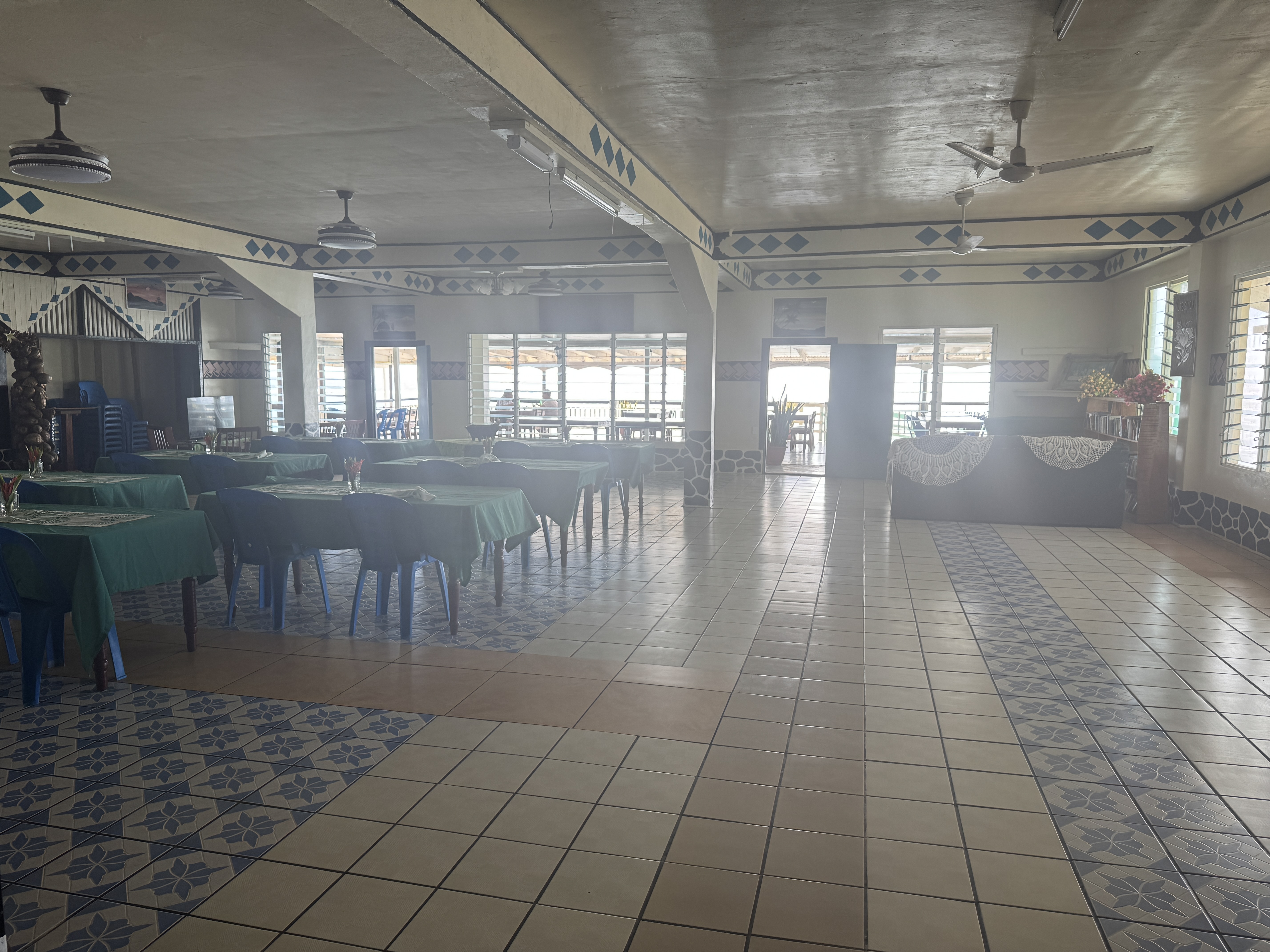
But in June, 2025, the place was on life support.