2 Colon
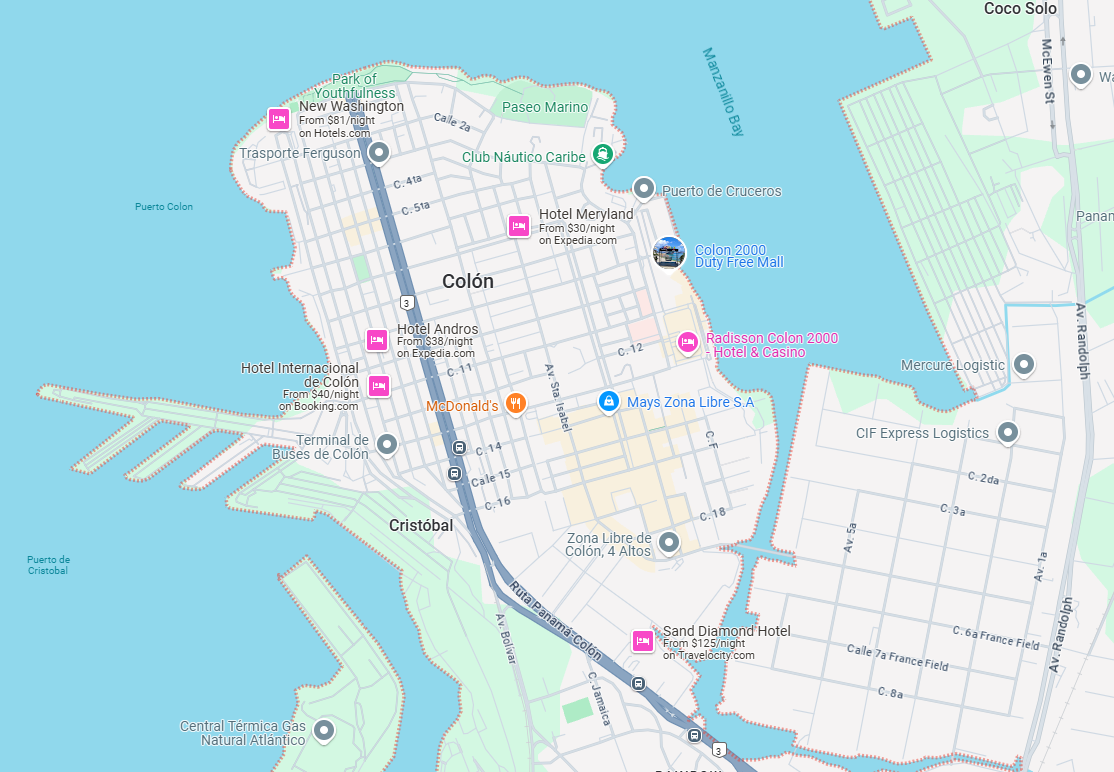
In 1848 Col n did not exist. Instead, there was Manzanillo Island, consisting of a spit on the west and a swamp to its east. Some Americans began work that year on a railroad that started on the spit and headed for Panama City. (The California Gold Rush on 1849 would speed them up, but they had gone to work when the United States in 1848 acquired the Oregon Territory.) Why they chose the spit as the railroad's terminus remains a mystery, but their first choice, Portobelo, twenty miles to the east, was private property, and its owner wanted more money than the railroad promoters were willing to pay.) By 1855 the railroad was complete, and travellers, after considering the alternatives, were happy to pay $25 for a one-way ticket for a journey of less than 50 miles. The railroad promoters were by then draining the swamp east of the spit and extending dry land as far as the Paseo de Centenario, labelled here as Highway 3. Land to the right or east of the Paseo would be reclaimed in the 20th century, primarily by the U.S. Army Corps of Engineers. The large grid at the lower right belongs to the Col n Free Trade Zone, created in 1948 and much expanded since then.
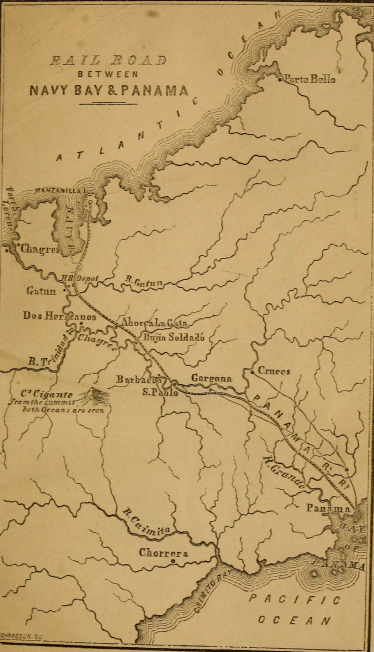
A map from 1852 shows the line of the projected railroad, which extended from Col n no farther than Barbacoa, where it awaited a bridge across the Chagres River. Lola Montez came through that year and crossed the peninsula that way, half by rail and half by mule. (Chauncey D. Griswold,The Isthmus of Panama, and What I Saw There, 1852, frontispiece.)
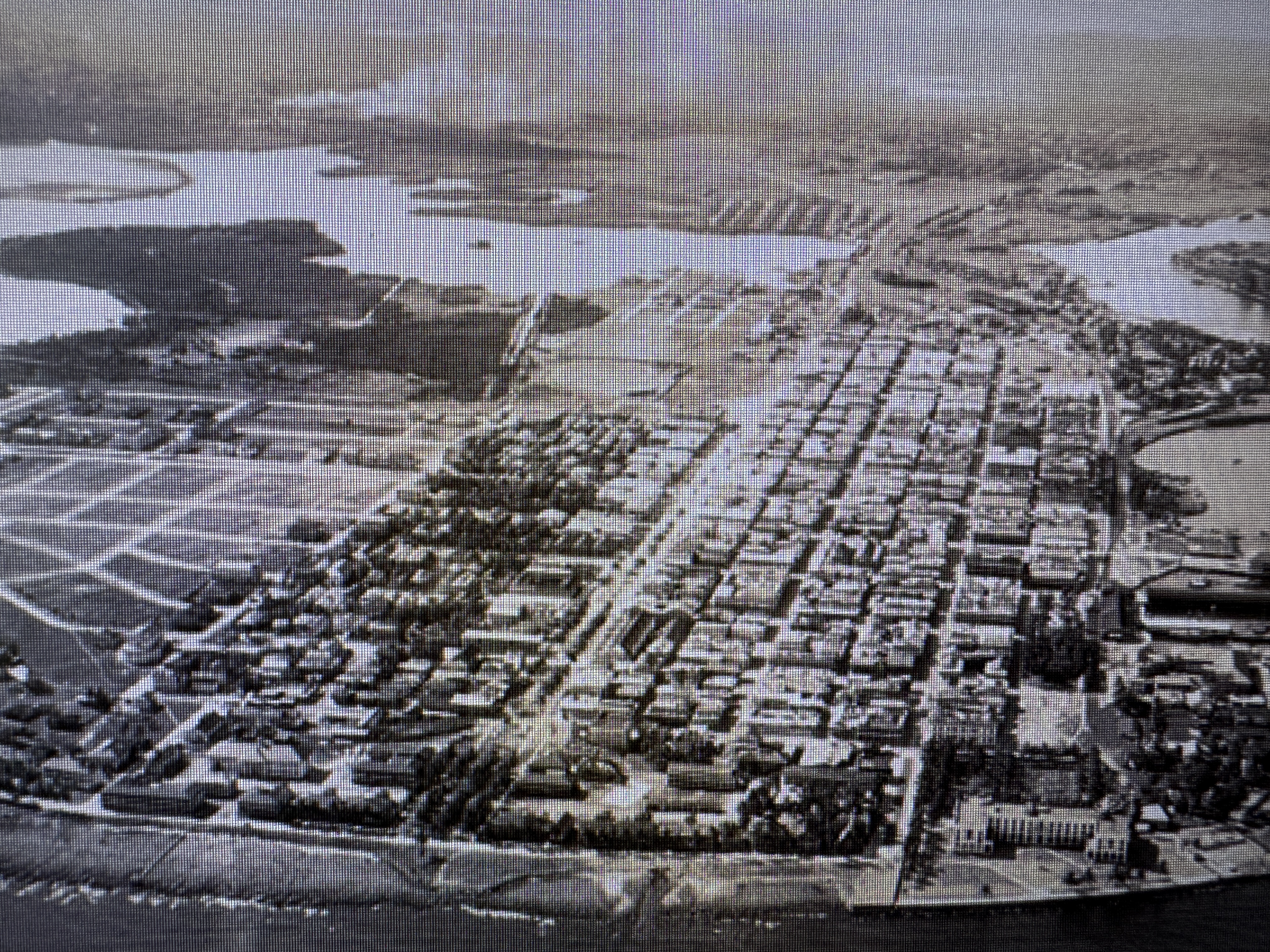
Here's a view from the 1920s. The water at the upper right was part of the Panama Canal begun by the French but abandoned before completion. The neck of the peninsula is Cristobal (Spanish for Christopher), where the French and later the Americans established their quarters. (It's now entirely industrial.) The grid below it, built by the Panama Railroad, was at first called Aspinall for William Aspinall, a founder of the Pacific Mail Steamship Company and probably the chief financier behind the railroad. At the insistence of the government of Colombia (then still called New Granada) Aspinall was renamed Col n (Spanish for Columbus). Seventy years earlier, a pioneer had written: "There was not the least sign of human life, civilized or savage, on the island of Manzanillo; nor was there a space of dry land upon which to set foot, except the narrow ridge of coral sand that had been washed up by the surf along the reef. In front, the sea; behind, the malarial, immemorial swamp." (Tracy Robinson, Fifty Years at Panama, 1907, p. 9.)
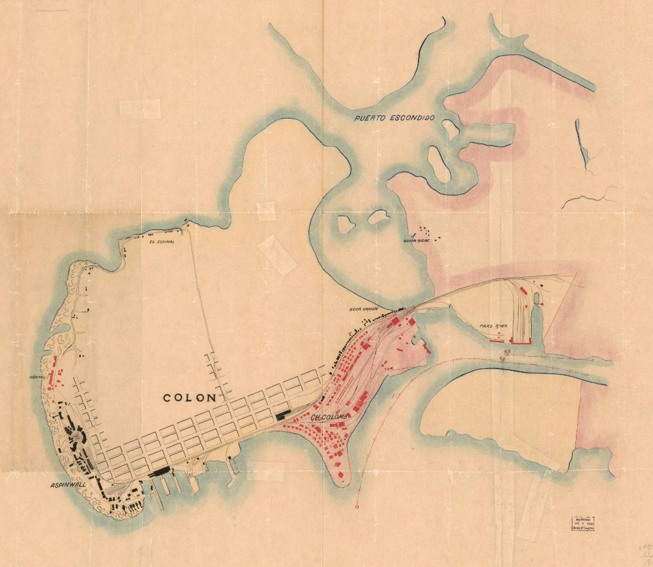
Plan de Col n, a map held by the Library of Congress and dated 1850: Cristobal is in pink,the railroad quarters are out at Aspinwall (or what people called "the beach") at the end of the peninsula, where they could catch a breeze. Col n exists mostly on paper. https://www.loc.gov/item/2021586103/
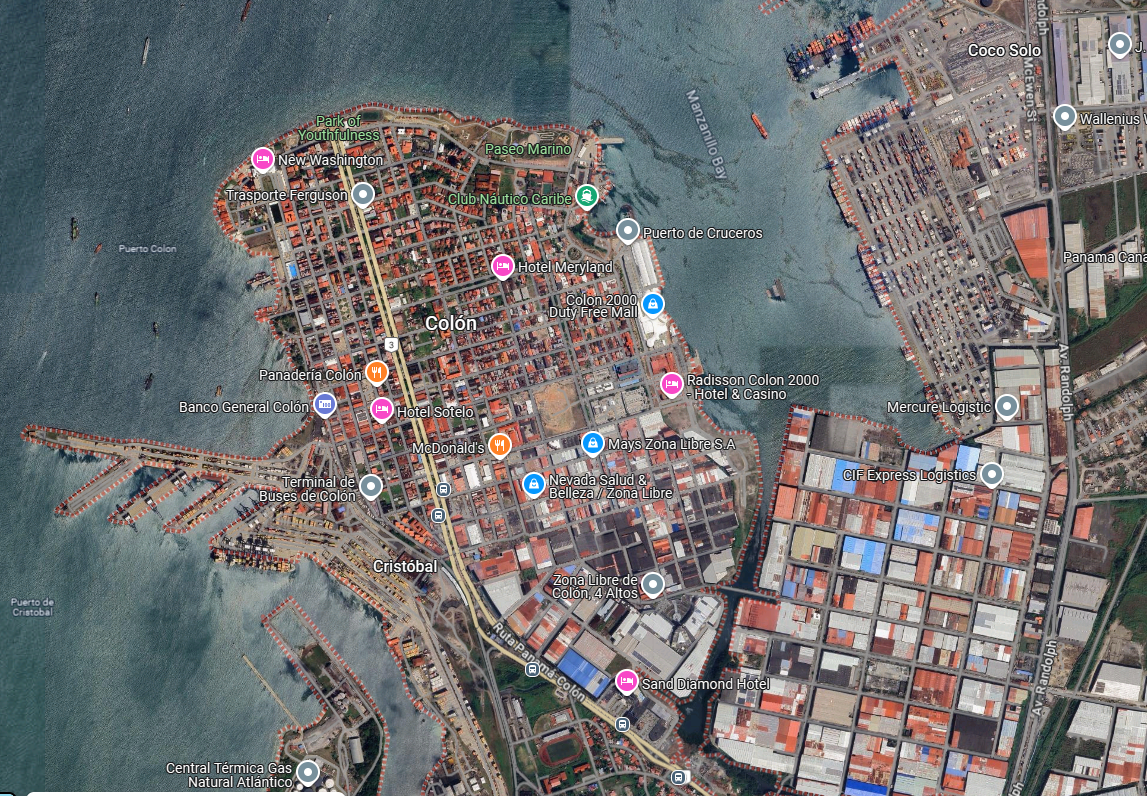
Col n today remains anchored to its port, both the old port begun by the railroad on the west (you can see the projecting piers added by the railroad about 1912) and to new ports on both sides of Manzanillo Bay. The large buildings are warehouses in the Free Trade Zone. The prominent white structures on the east side of the peninsula belong to the city's cruise-ship terminal.
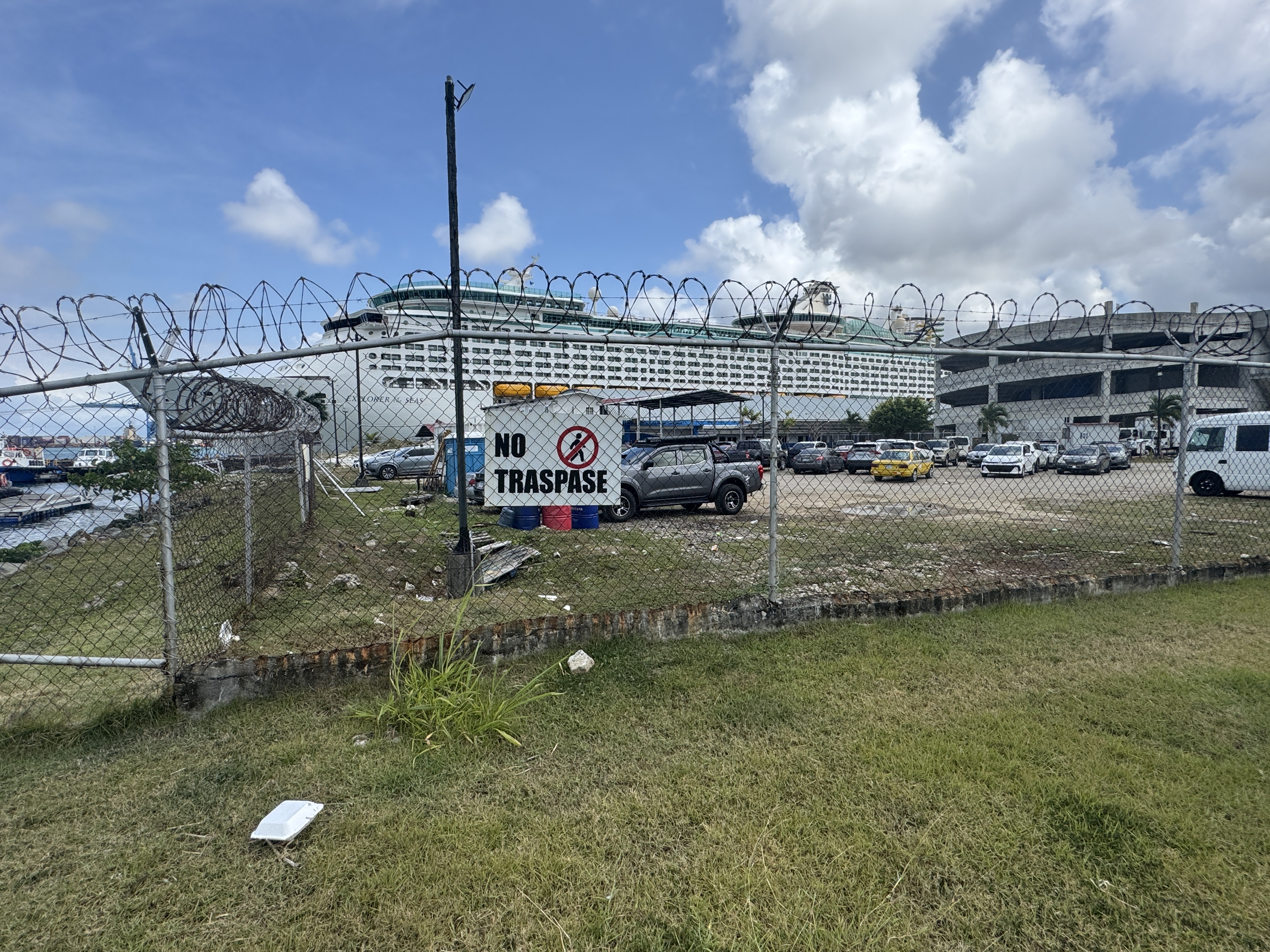
Behold the Explorer of the Seas, part of the Royal Caribbean fleet. About 250 cruise ships visit Panama annually, and many of them make brief stops here.
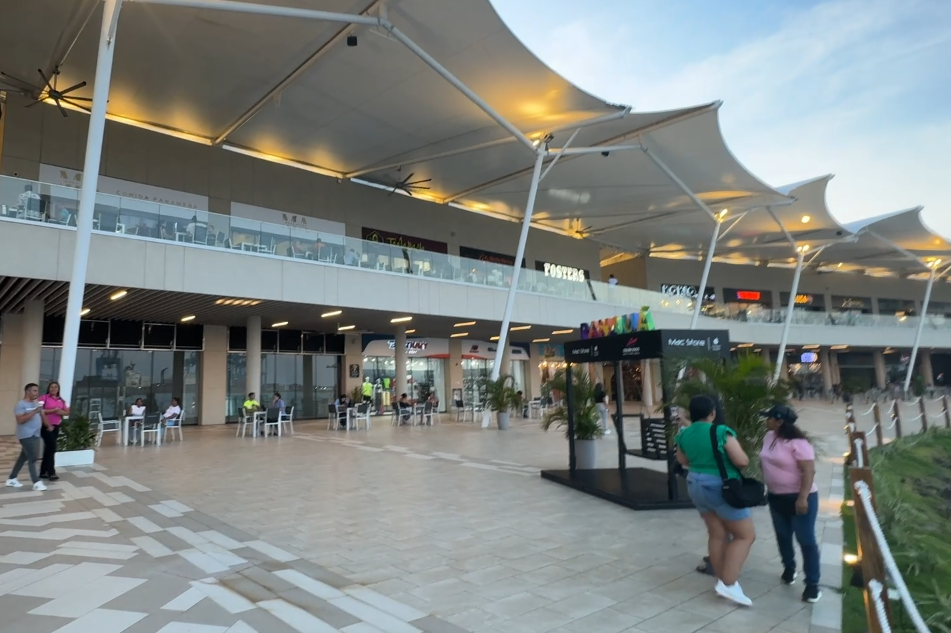
Passengers enjoy duty-free shopping. Do they? Of course they do. An article from The New York Times in 2013 introduces us to the shops as well as to the city's historically awful reputation: "...cruise-ship dock allows visitors to shop without entering the city's squalor." (Randal Archibold at https://www.nytimes.com/2013/03/24/world/americas/frustrations-in-colon-panama-as-economic-growth-skirts-by.html)
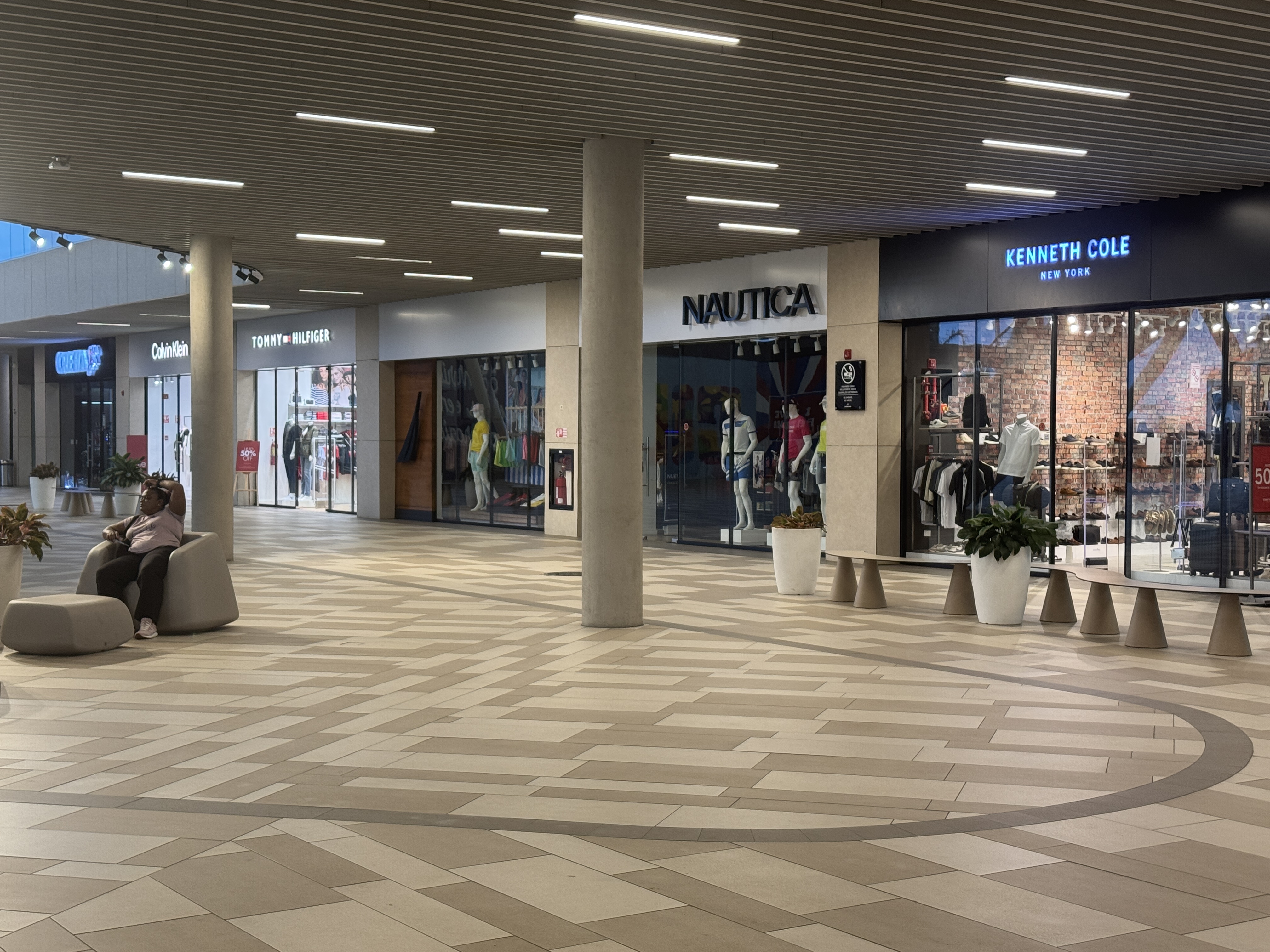
"What did you do in Panama?" "I got some stuff at Tommy Hilfiger."
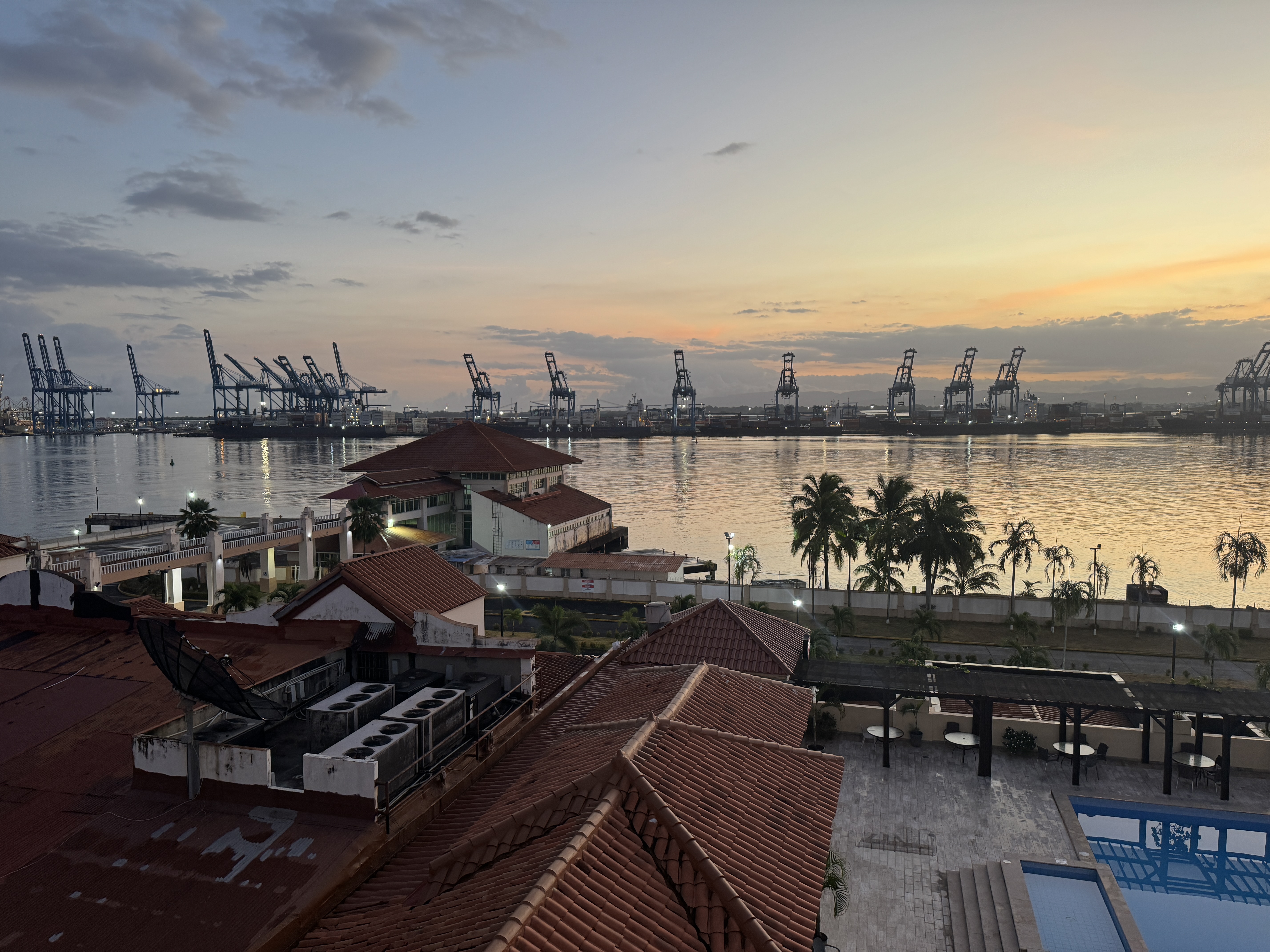
We're looking over the adjacent casino. Stay here a couple of days and you'll see ships coming and going, chiefly to pick up and drop off containers for the free trade zone. Some of the containers are put on flatcars to be carried over the isthmus to ships to the other side.
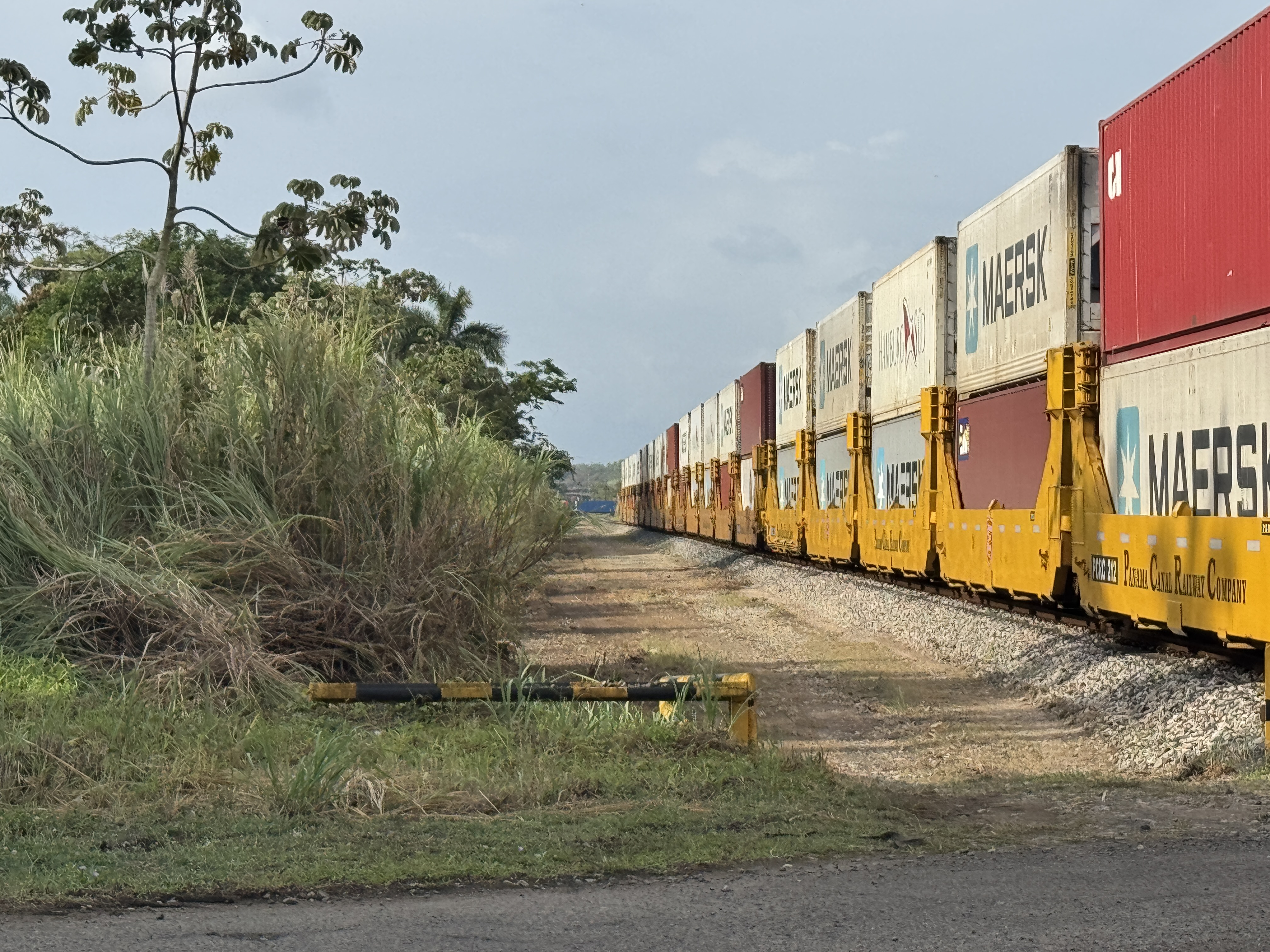
A dozen trains cross the isthmus daily. It's a contrast from 1955, when a Canal engineer wrote that "serious consideration is being given by the U.S. Government to the discontinuance of the railroad as a common carrier." He explained that there is now "a first class concrete highway linking Col n and Panama, over which passes most of the freight and passengers previously handled by the Railroad." Poor guy: he didn't see the container revolution coming our way. Nor ships too big too squeeze through the Canal. (R.W. Hebard, "The Story of the First Transcontinental Railroad," 1955, pp. 34-5.)
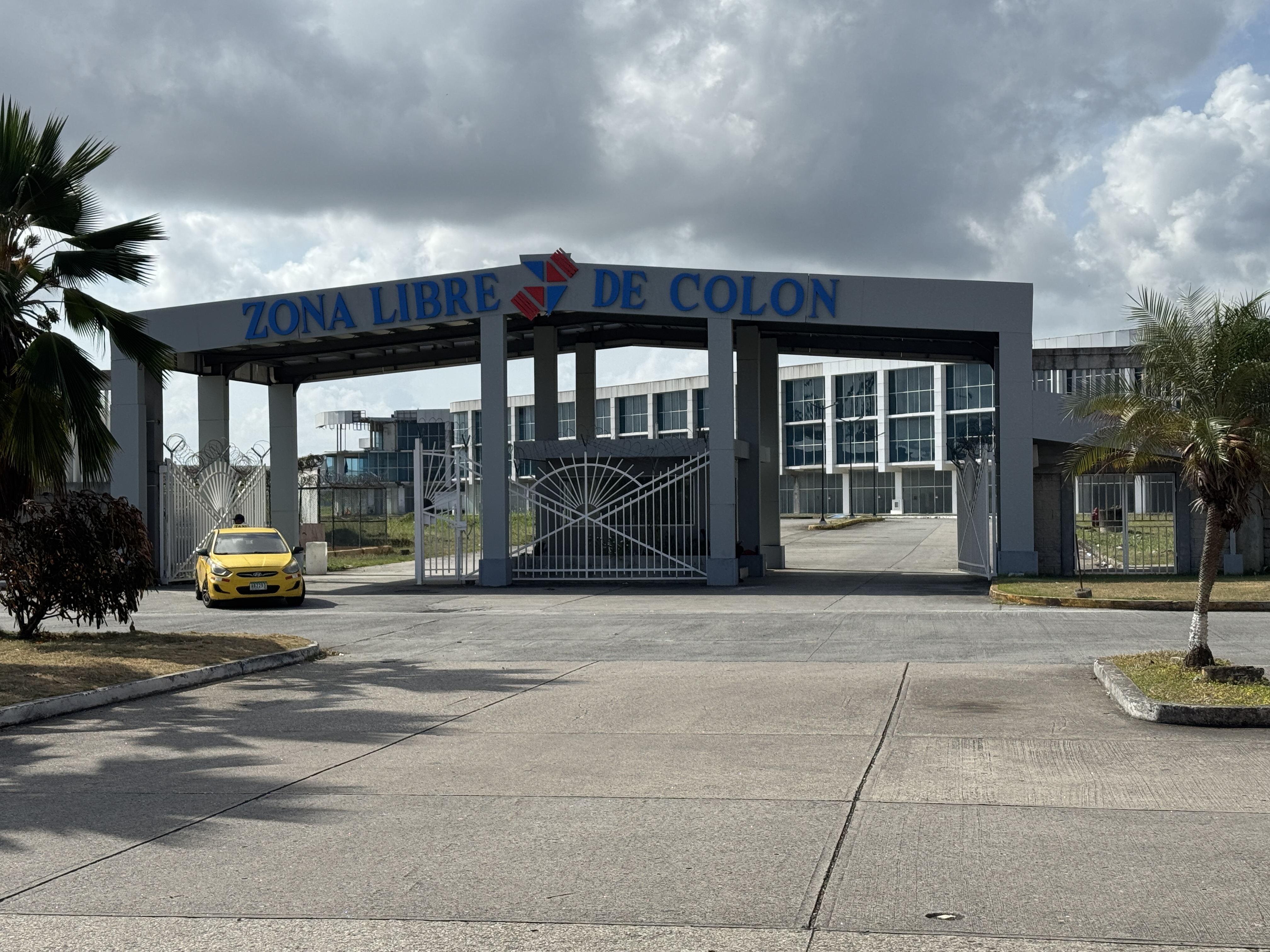
Sunday at the free trade zone.
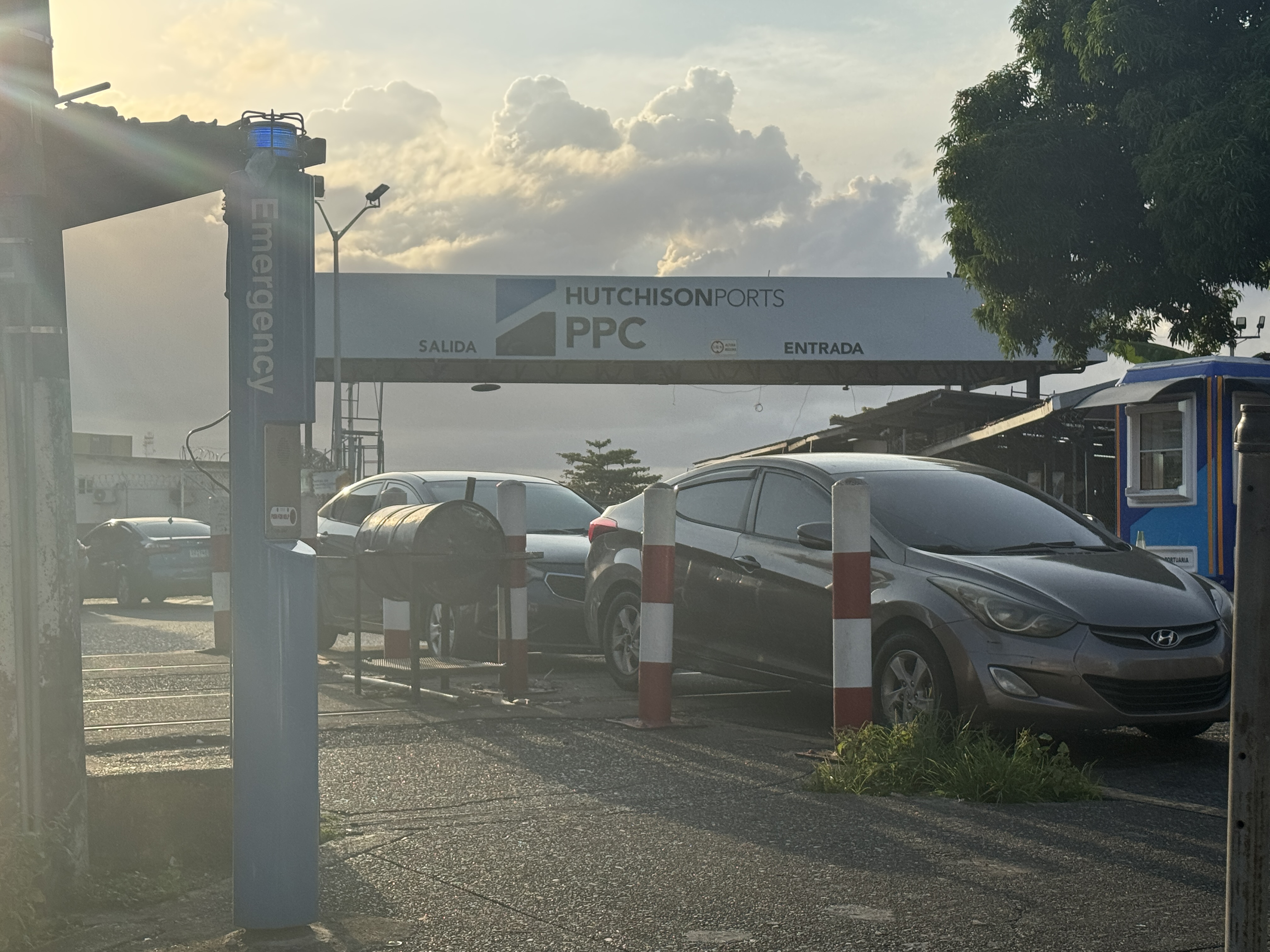
Monday. The FTZ has 20,000 or 30,000 employees, depending on who you believe. Some 2,000 wholesalers and retailers shop here for stuff they ship mostly to South America.
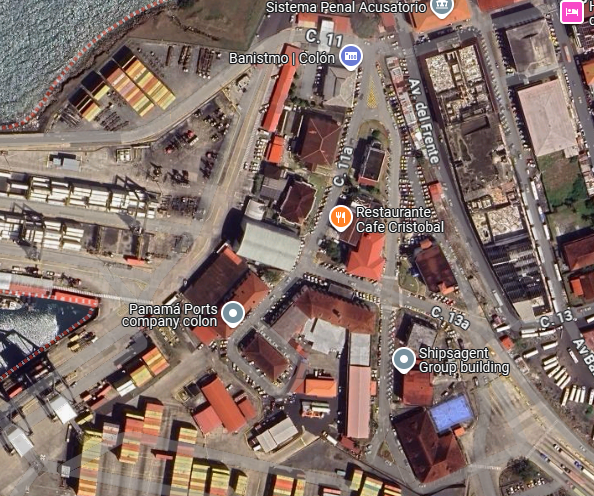
Don't forget the old side of town.
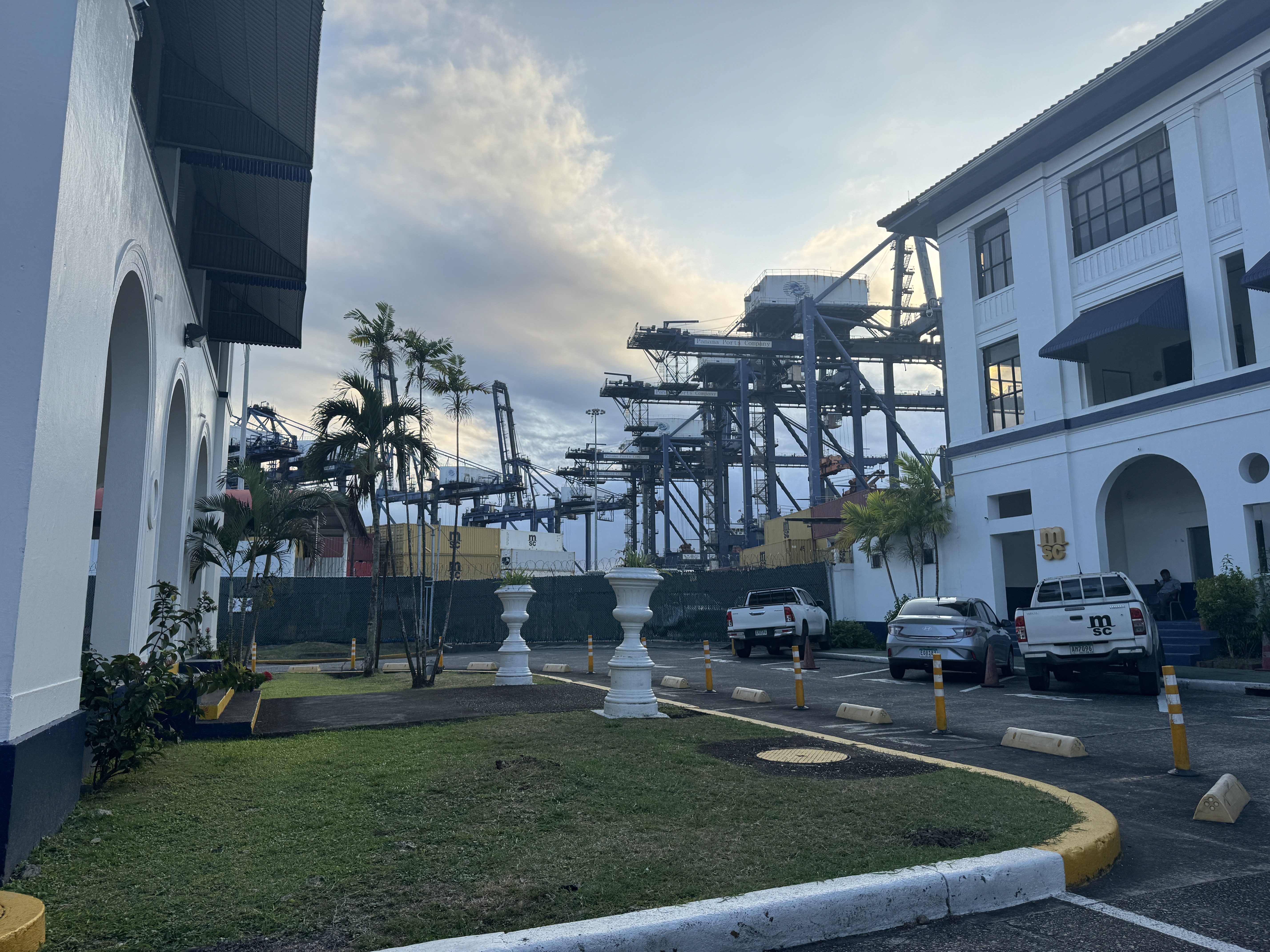
We can't get near the cranes, but we can see a bunch of office buildings.
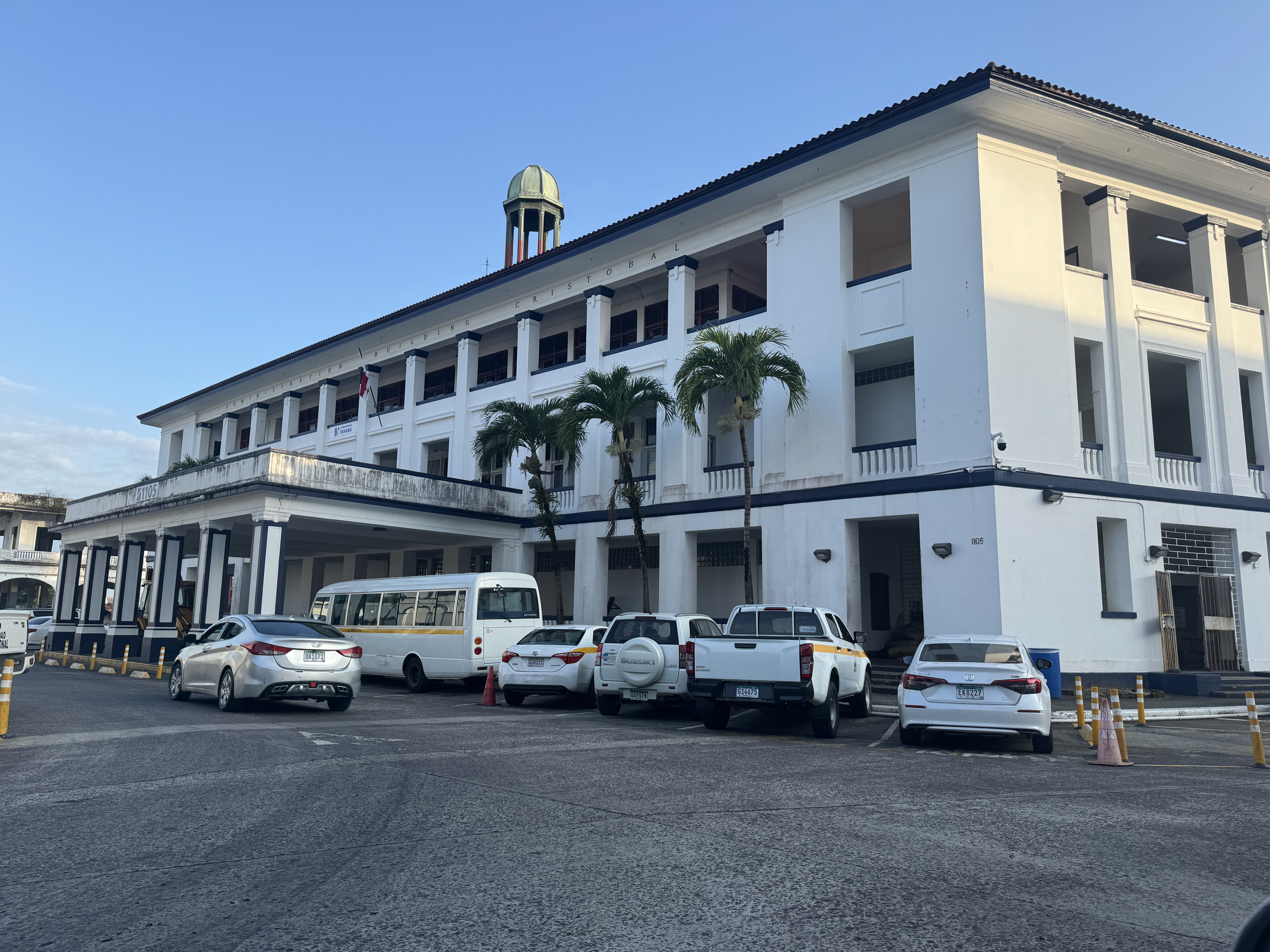
Here, from about 1930, is the Atlantic Administration building of the Port of Cristobal.
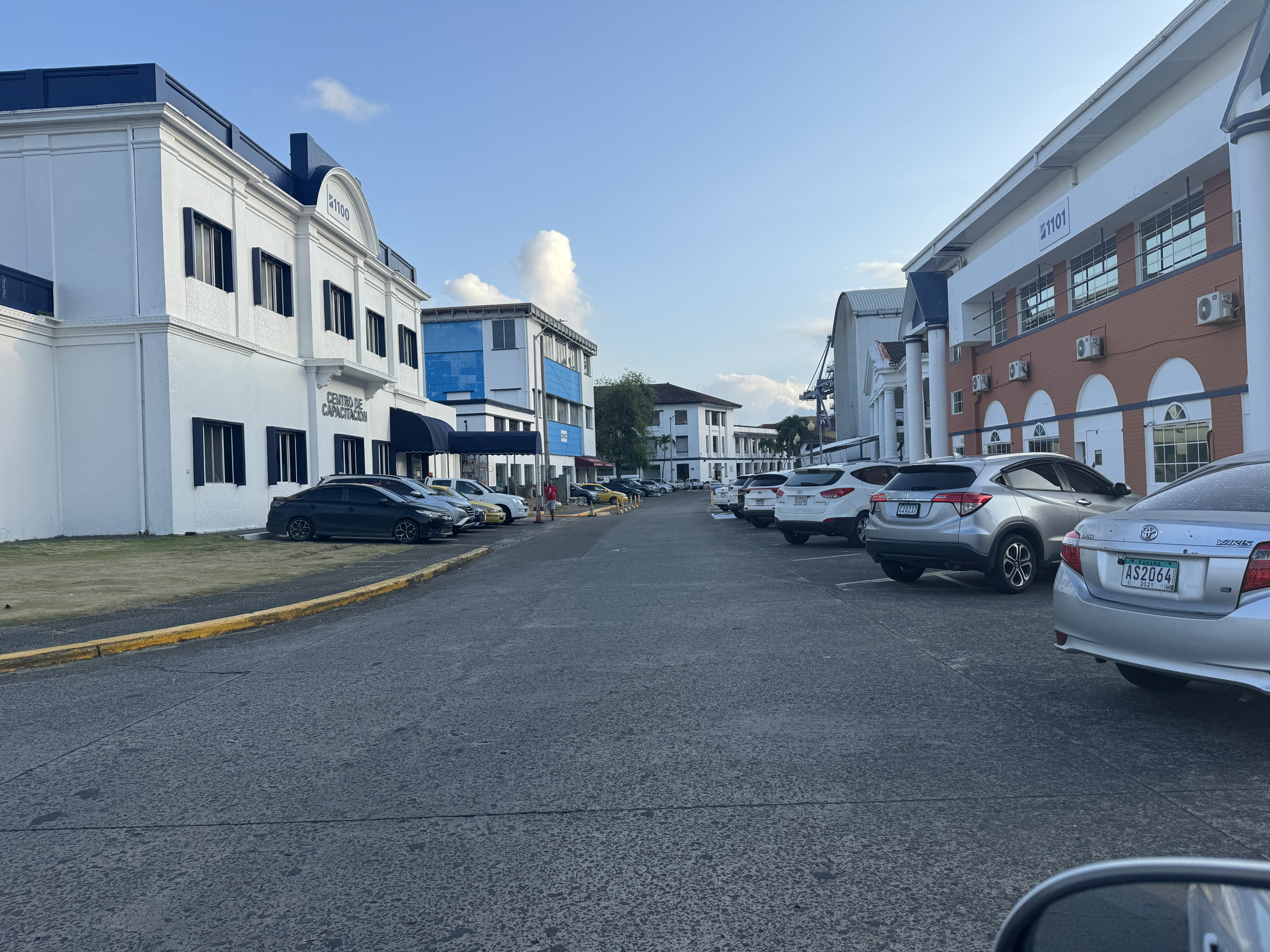
In 1930 this was Steamship Row.
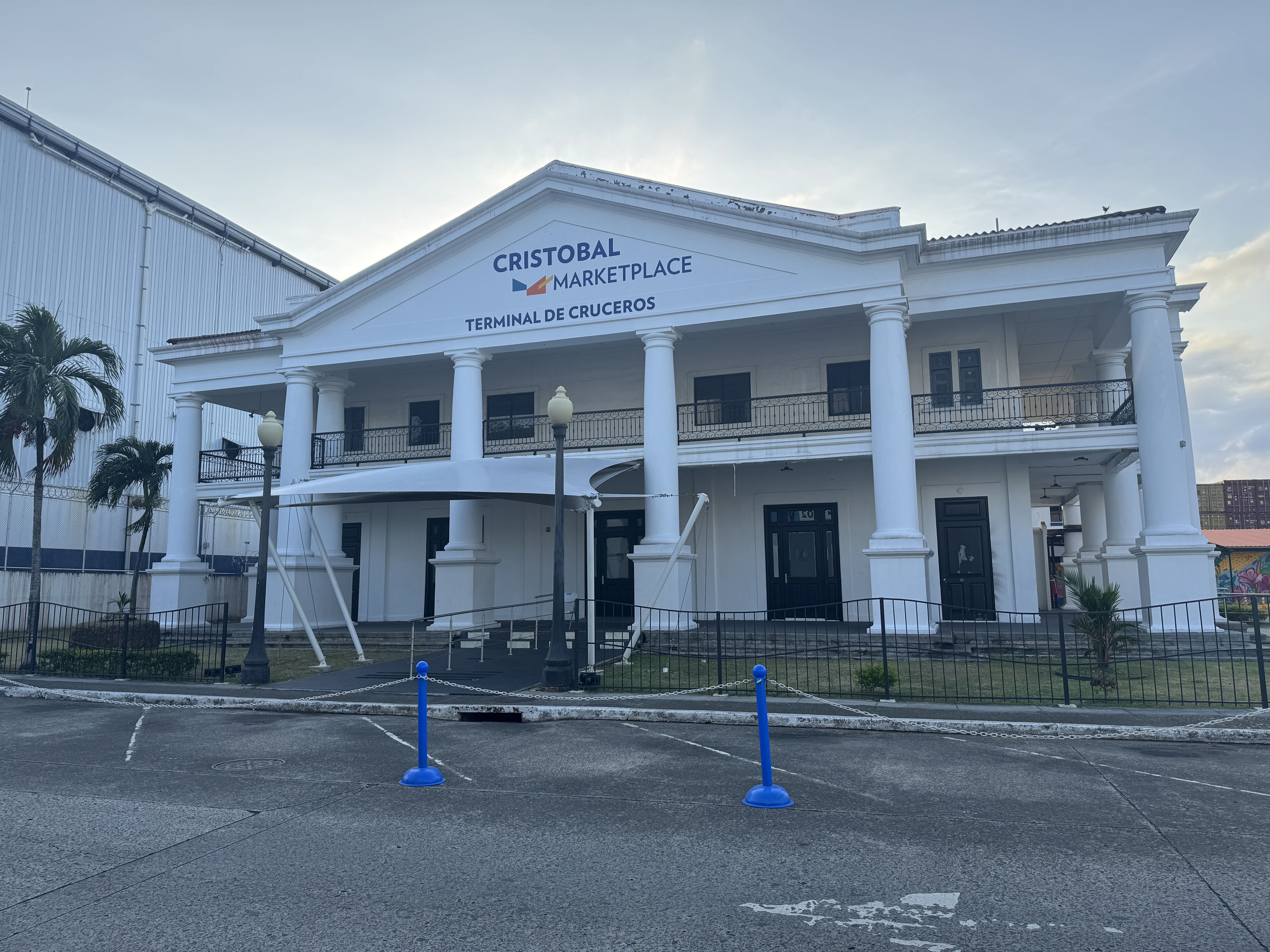
A photo from 1933 shows this building as it is today, minus the fence and with a sign reading Hamburg-American Line and North German Lloyd. Another building housed Royal Mail Lines.
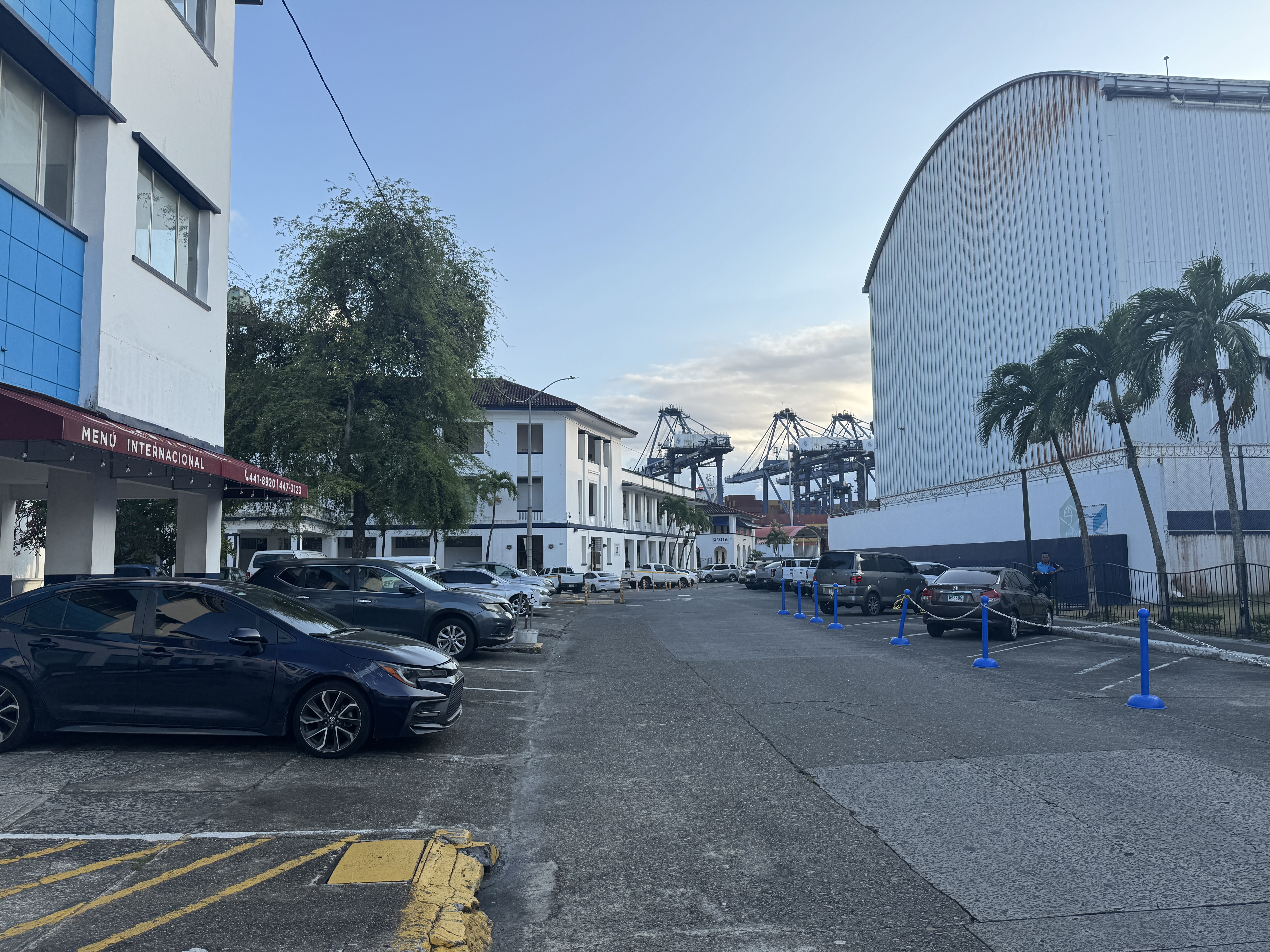
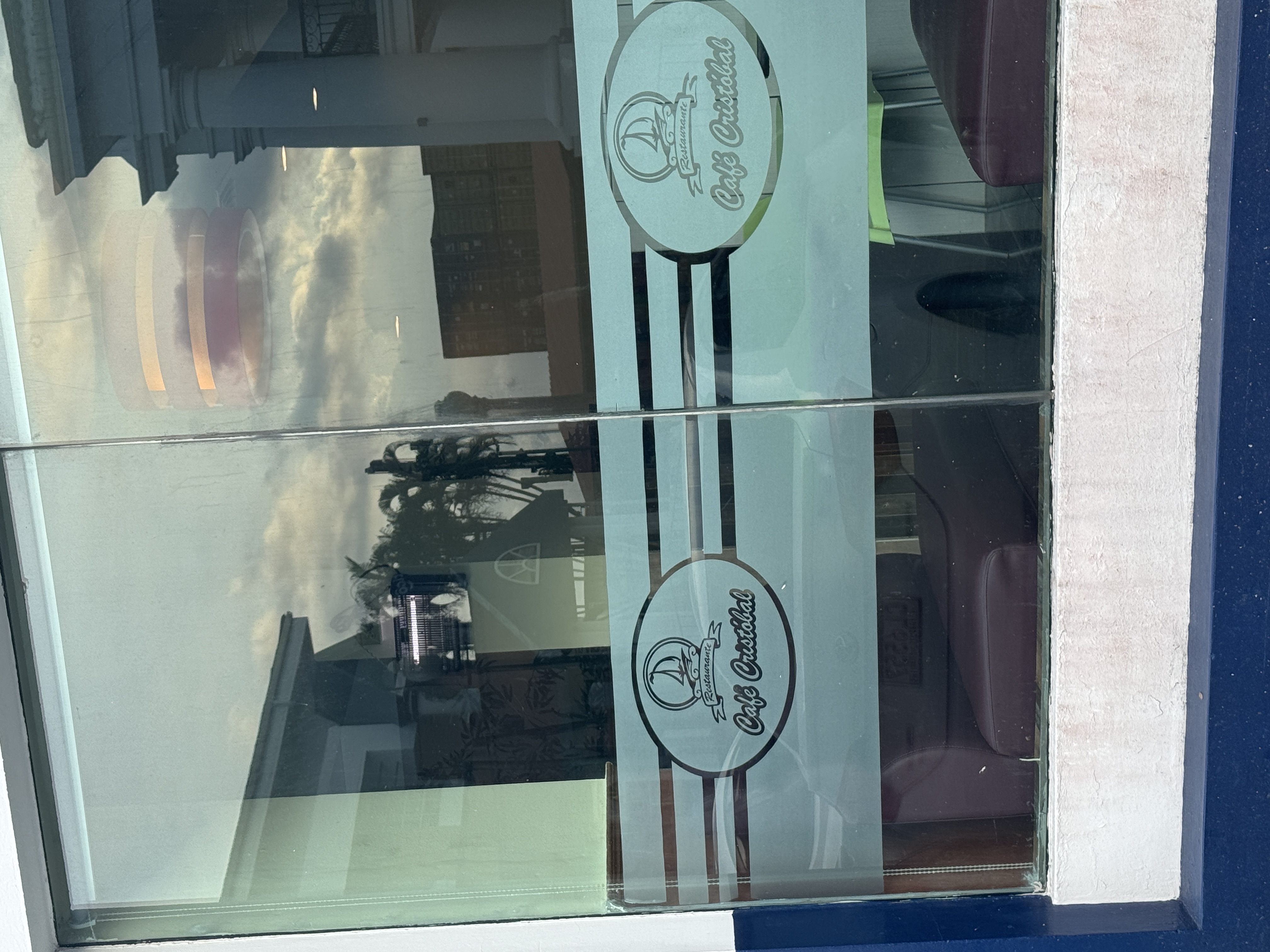
Notice the restaurant's appeal to foreign mariners.
Somebody's a romantic.
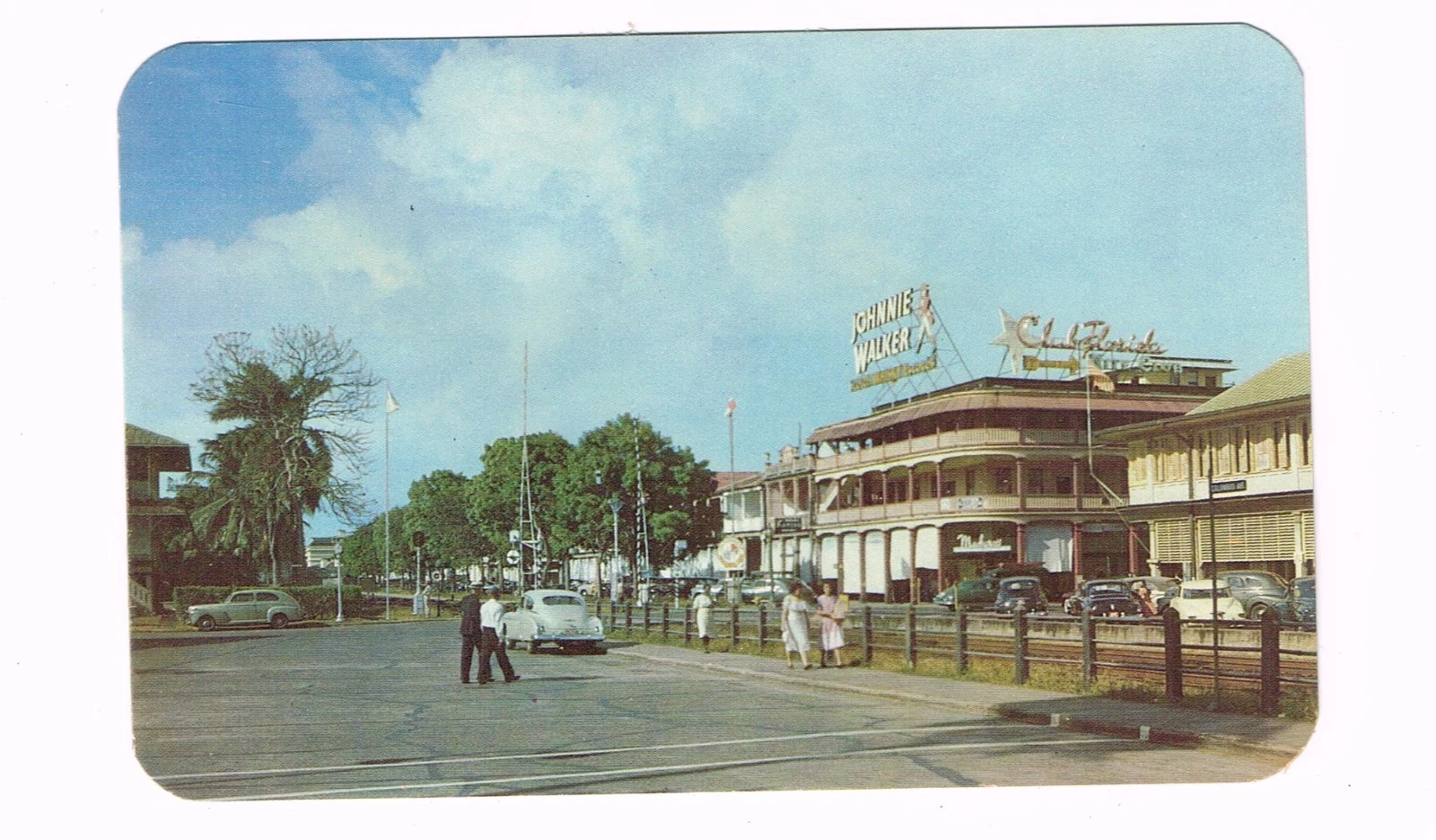
The waterfront was disappearing by the 1950s, but Front Street still seems pleasant.
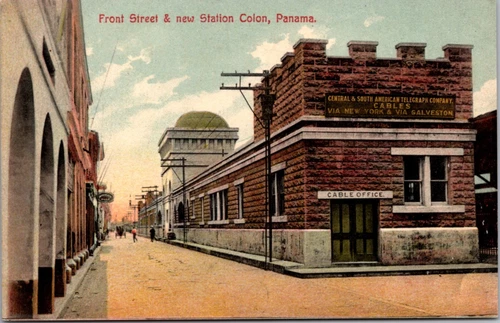
Here's the definitely fireproof station of the Panama Railroad, built by the U.S. government after it bought the railroad in 1902 from the defunct French canal company. The French had bought the railroad after deciding that it couldn't build the Canal without owning the railroad. We're still on Front Street several blocks north of the postcard scenes.
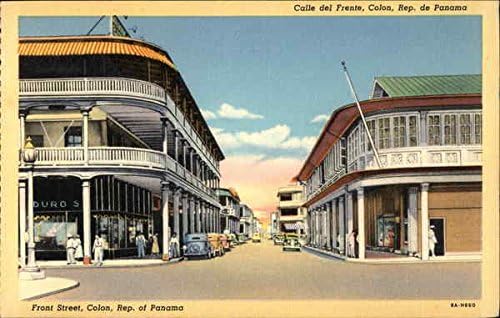
Looking across Front Street and through the old street grid toward the Paseo. Buildings in Col n often have deep balconies both for shade and for refuge from the rain, which averages about 120 inches annually. Perhaps somebody has tracked down the connection between these buildings and very similar ones in the French Quarter of New Orleans.
The waterfront was disappearing by the 1950s, but Front Street still seems pleasant.
Here's the definitely fireproof station of the Panama Railroad, built by the U.S. government after it bought the railroad in 1902 from the defunct French canal company. The French had bought the railroad after deciding that it couldn't build the Canal without owning the railroad. We're still on Front Street several blocks north of the postcard scenes.
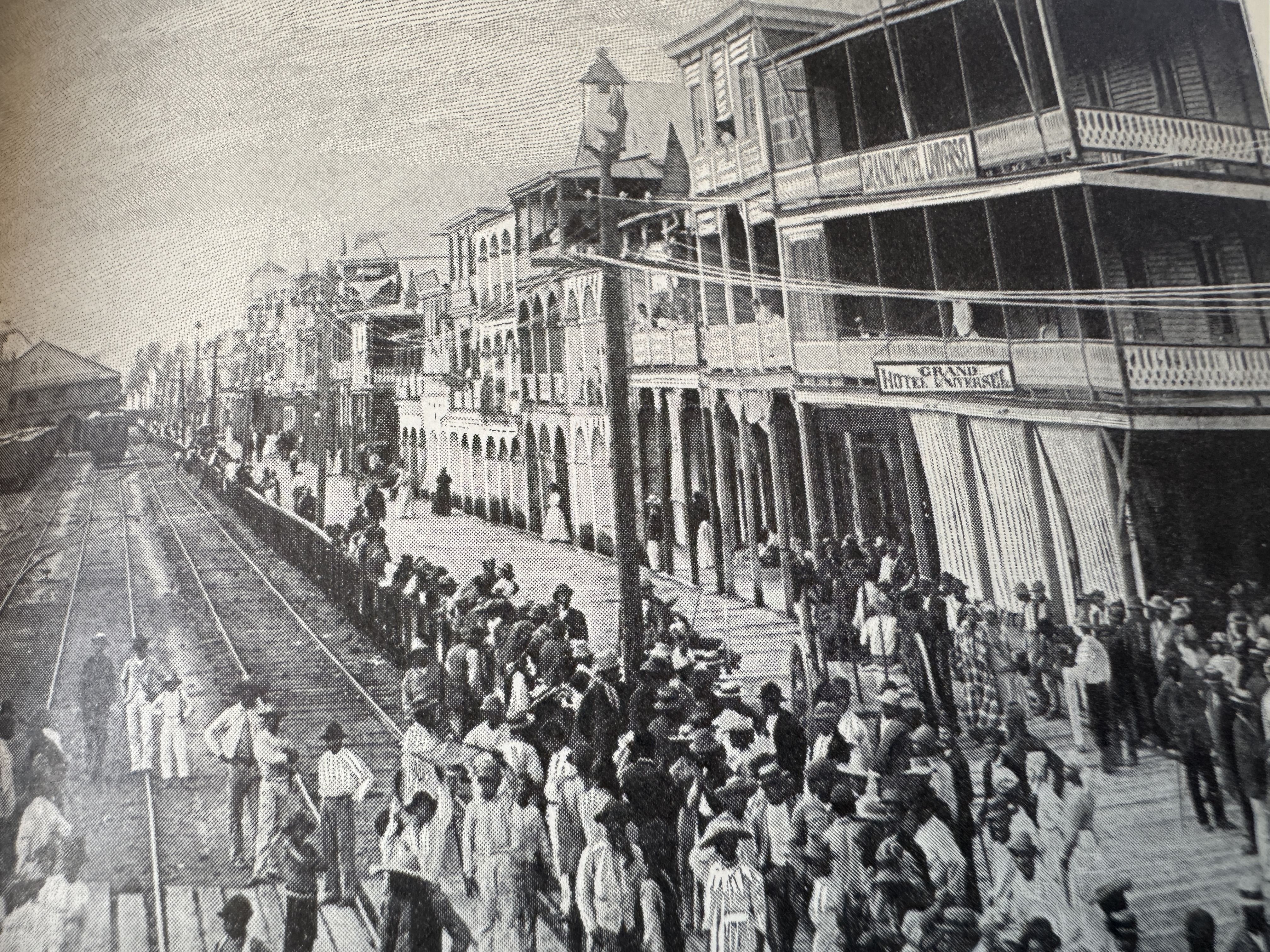
Catastrophic fires burned in 1885, 1911, 1915, and in 1940. That's why most buildings in Col n today are concrete and why wooden buildings are mostly in the newer part of town, east of the Paseo. (Joseph Bucklin Bishop, The Panama Gateway, 1913, p. 86; see Ruben Carles, The Centennial City of Col n, 1952, p. 22)
Here's the definitely fireproof station of the Panama Railroad, built by the U.S. government after it bought the railroad in 1902 from the defunct French canal company. The French had bought the railroad after deciding that it couldn't build the Canal without owning the railroad. We're still on Front Street several blocks north of the postcard scenes.
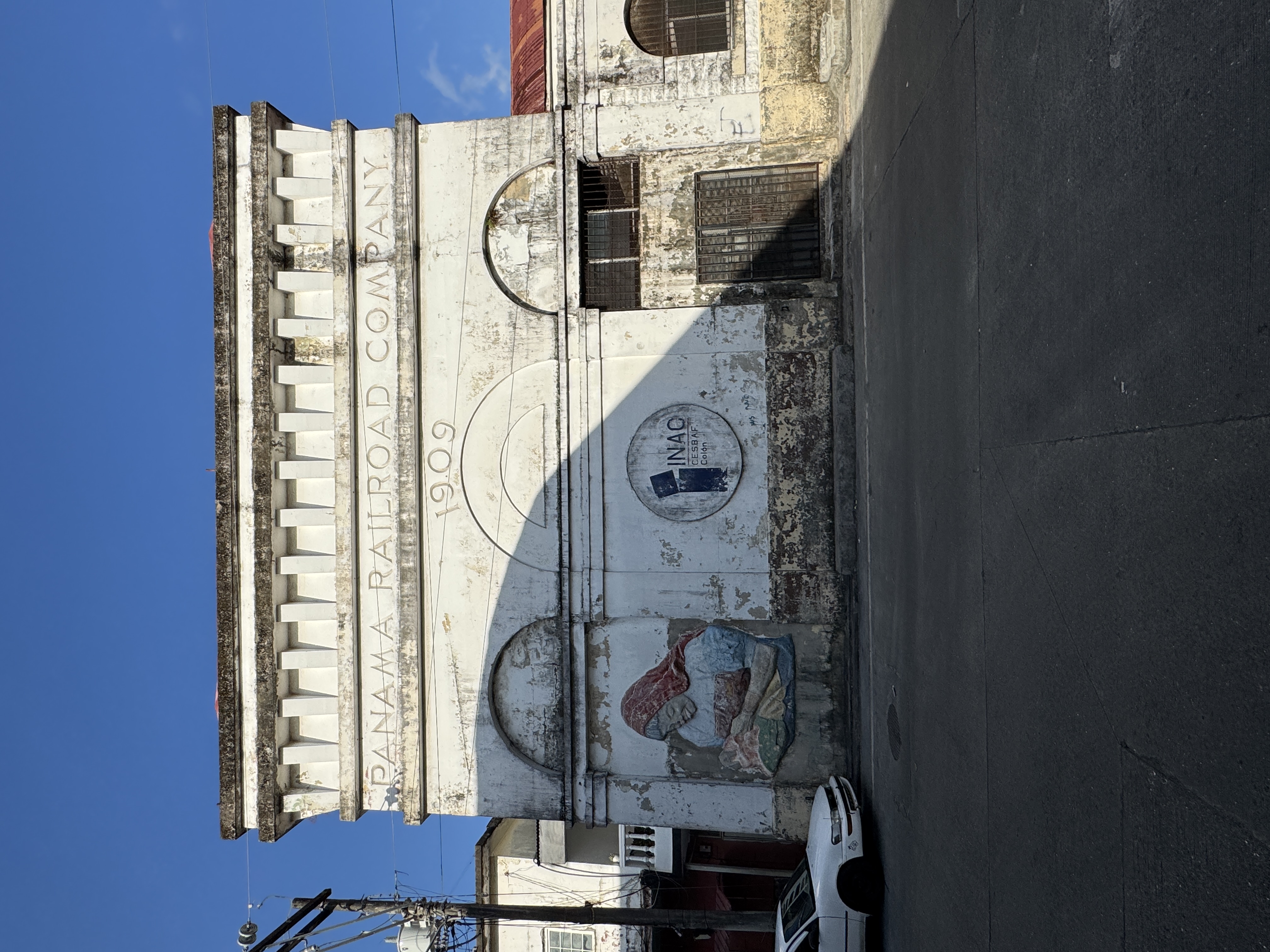
Here's the station in 2025, minus its dome. The building is now the Col n home of Panama's national institute of culture, INAC.
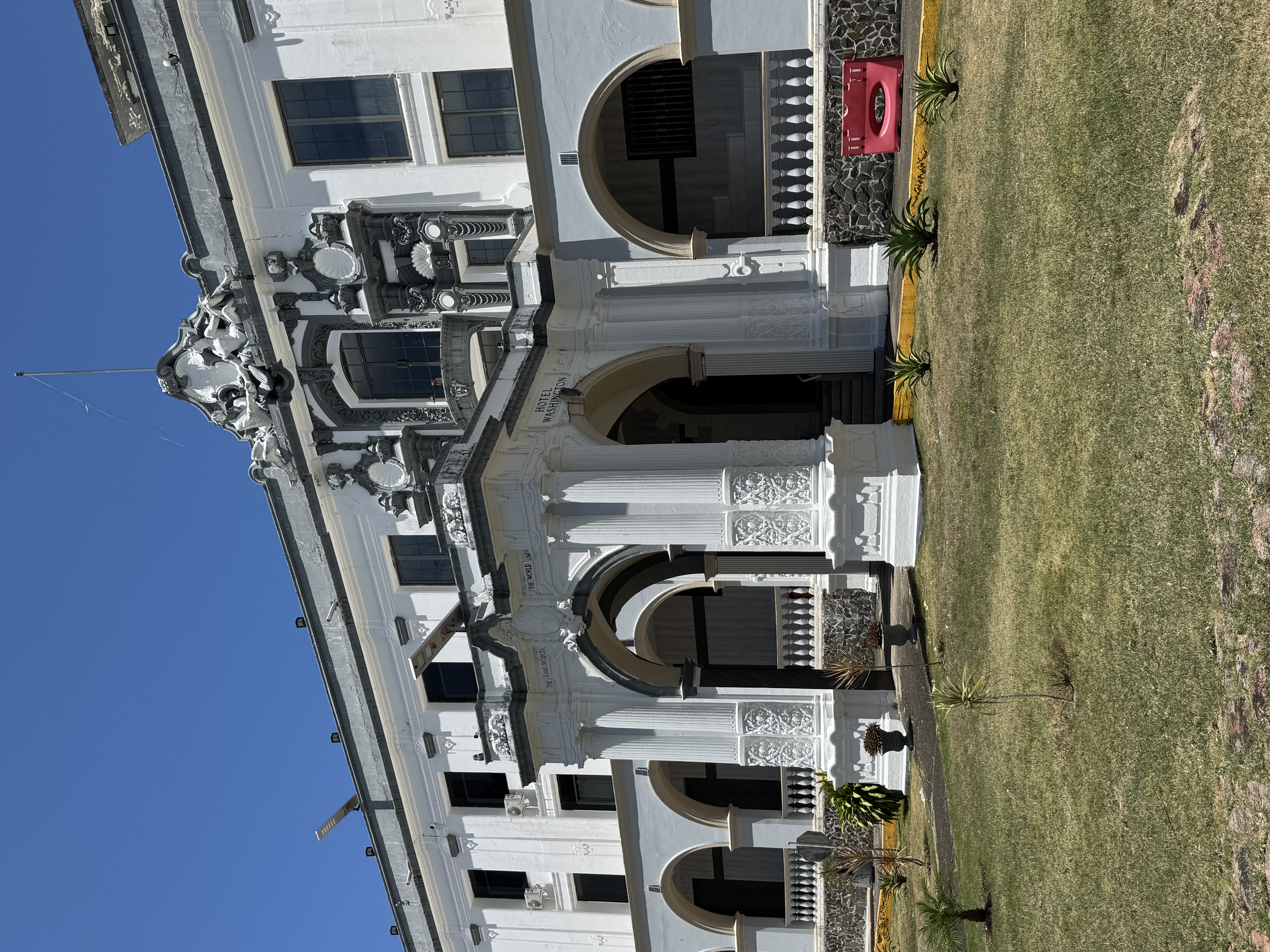
In 1913, the New Washington Hotel opened a few blocks north of the station. The owner and operator until 1943 was the U.S. government. The inscription on the porte cochere--"The land divided, the world united"--appeared on the seal of the Panama Canal Zone from 1906 to 1979. Some day I may discover who coined the phrase.
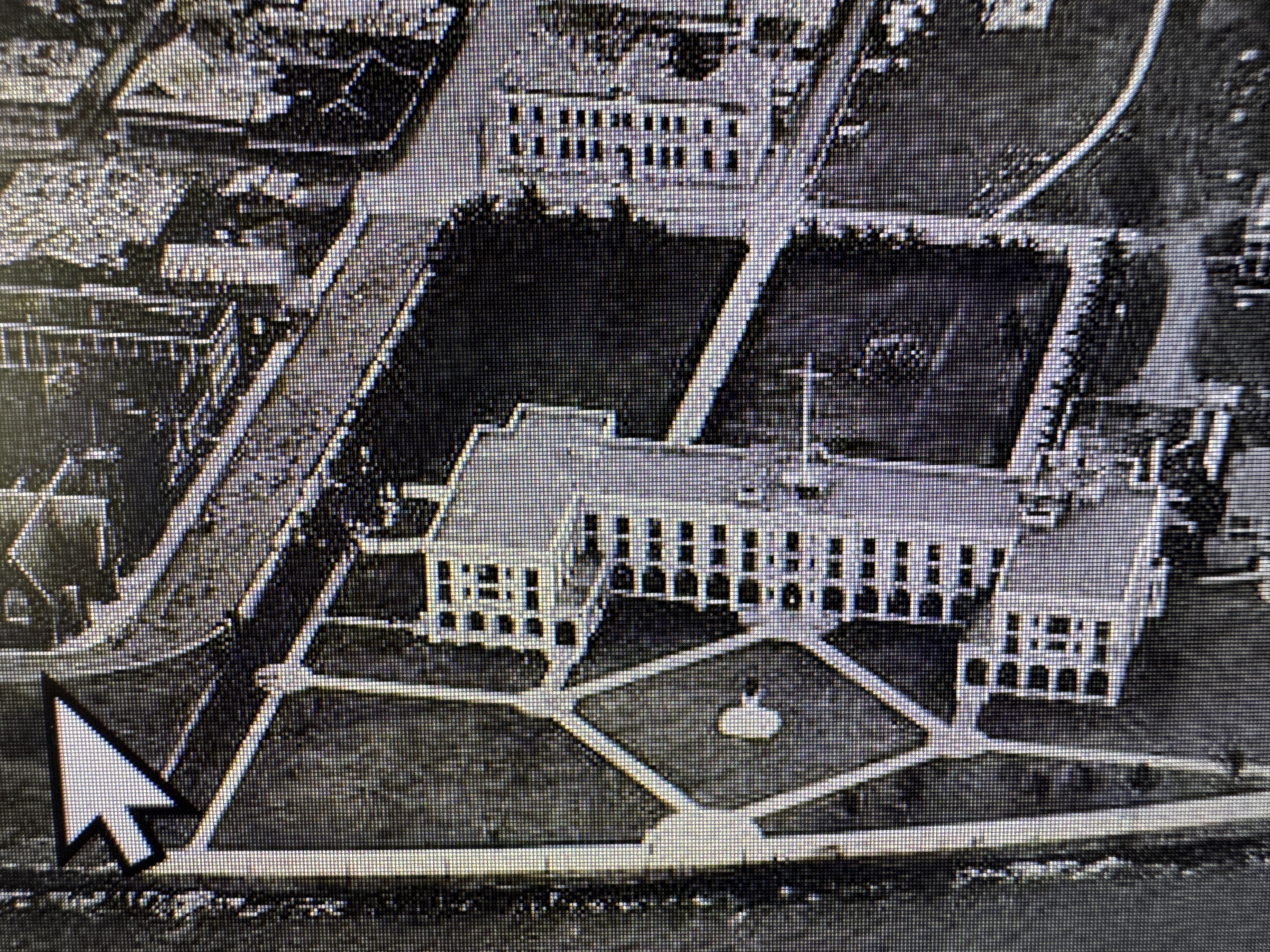
On the beach, the hotel was blessed by the trade winds. Yes, that's a church on the left.
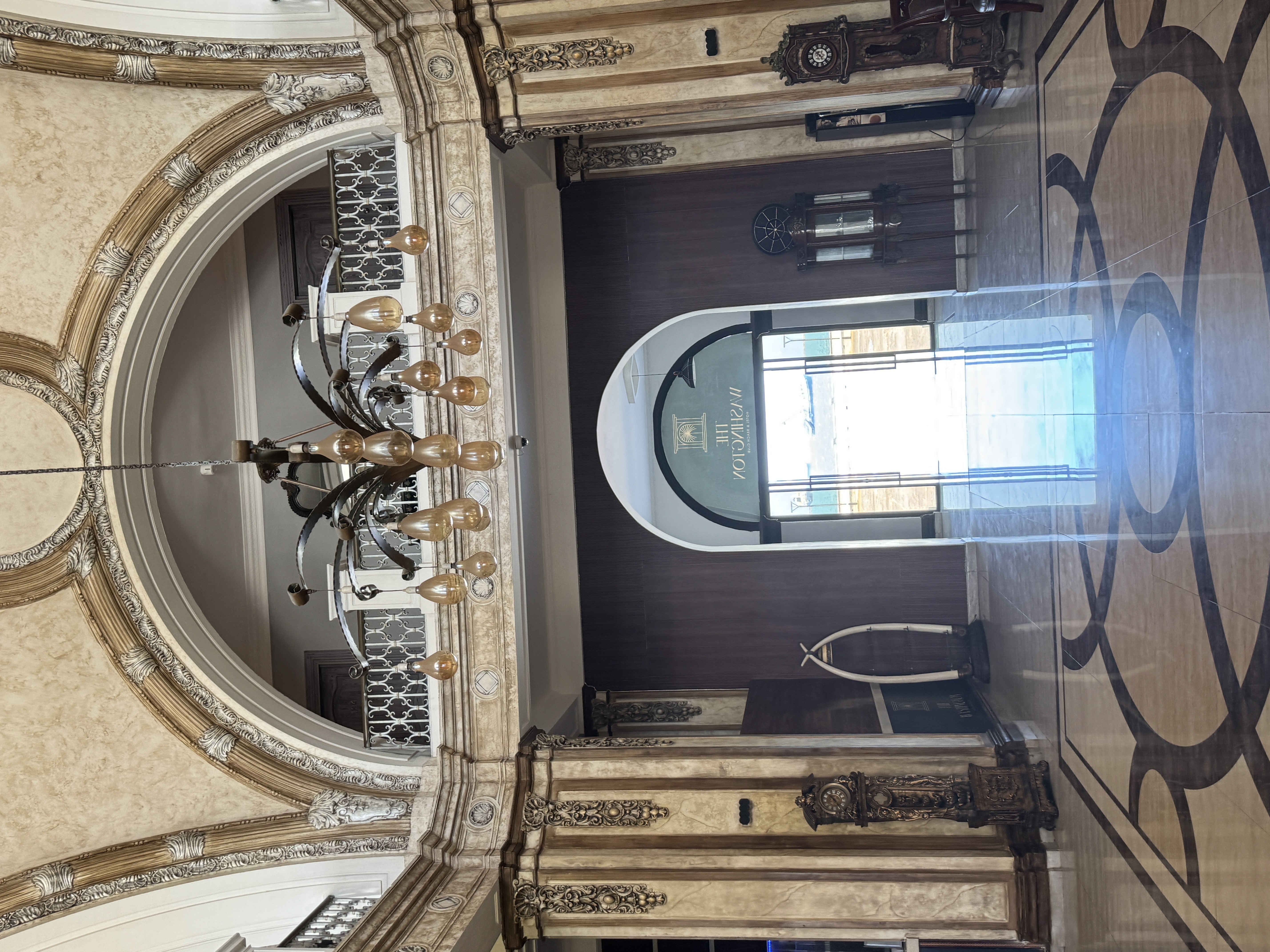
The hotel by 2025 had fallen on hard times but was still in business.
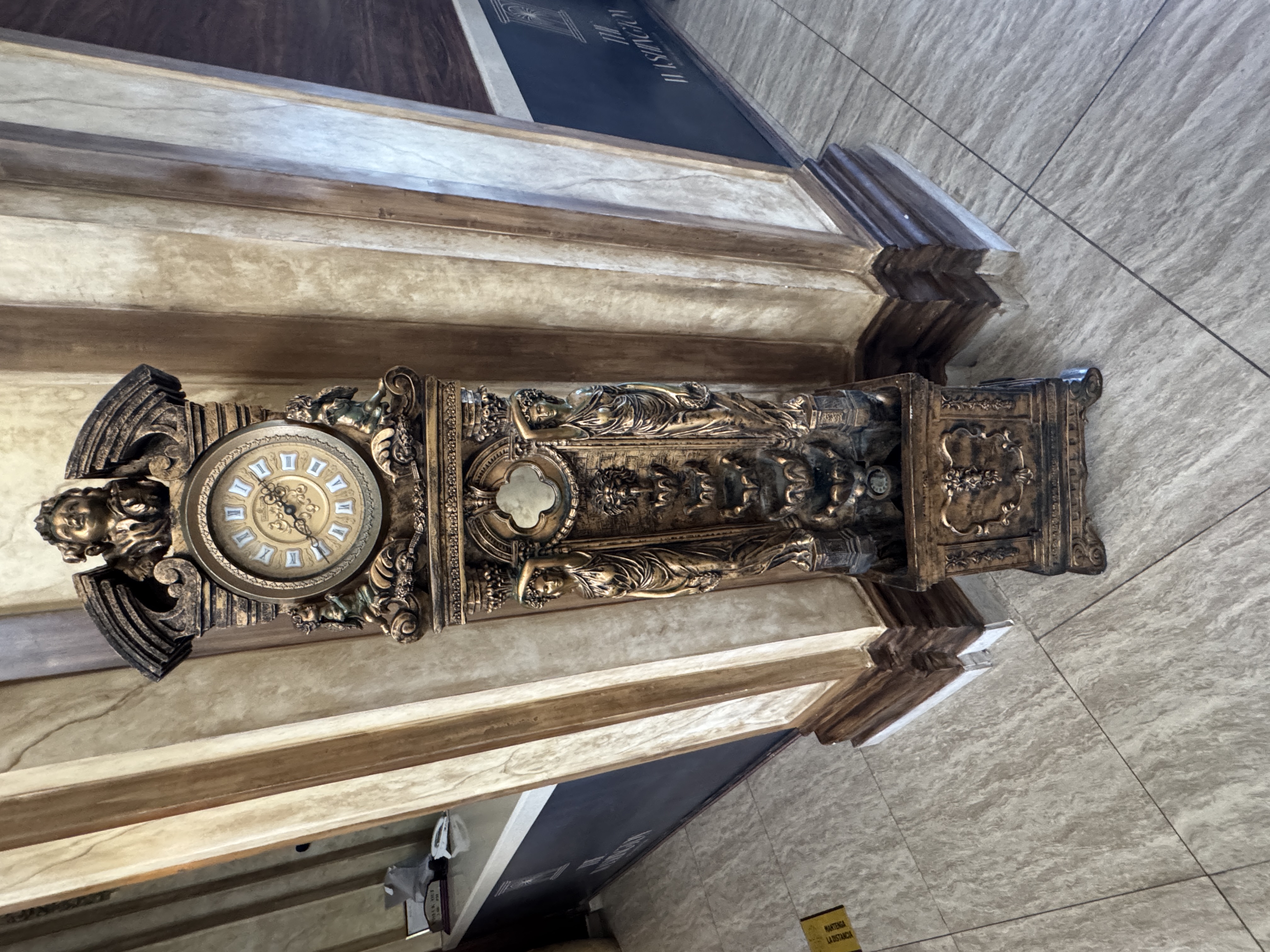
Whence this clock? Sorry, I meant, "provenance." I bet it came from Ferdinand de Lesseps' (now demolished) mansion at Cristobal.
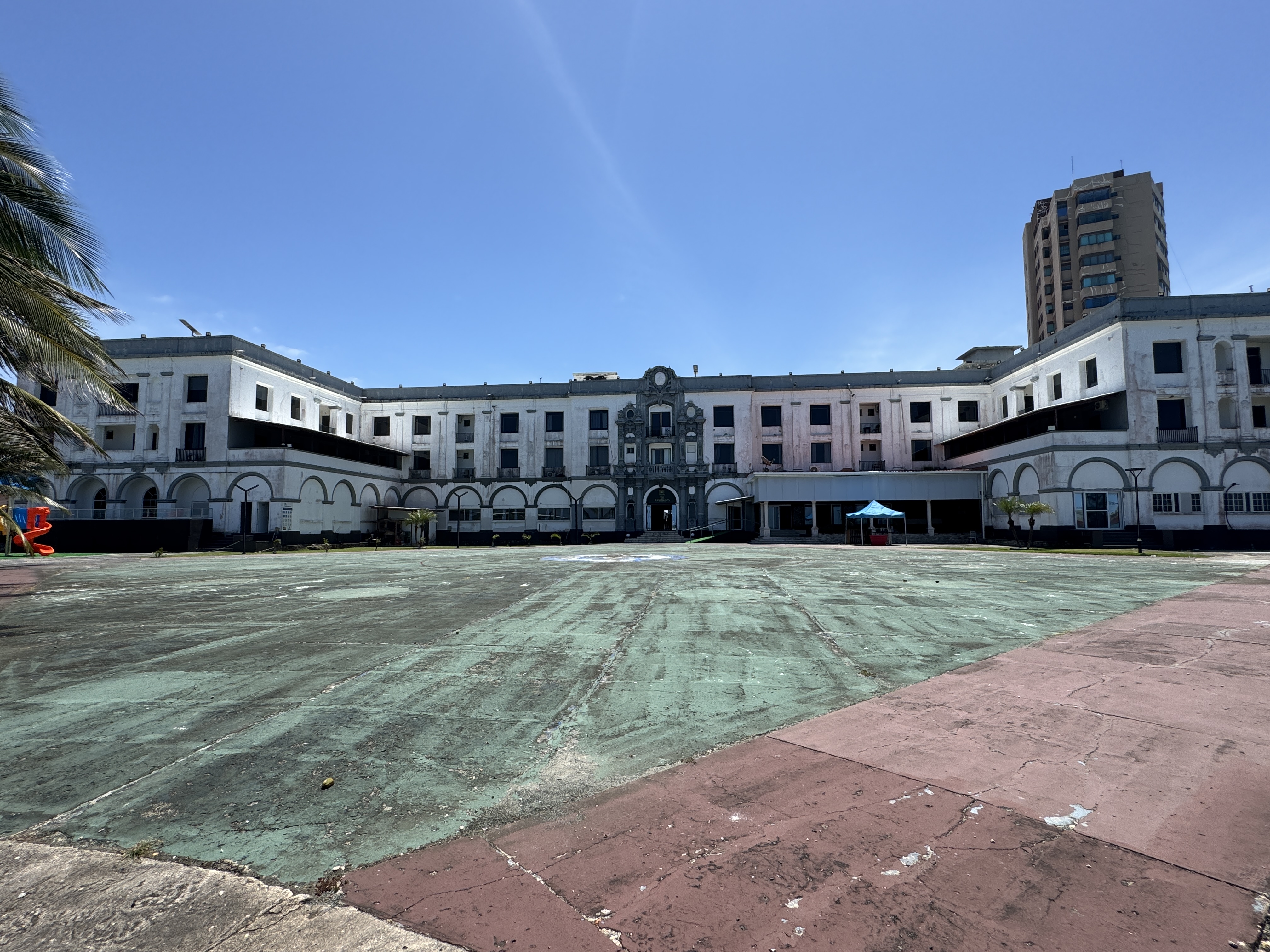
President Taft authorized the hotel. The architect was Bertram Goodhue, partner in the New York firm of Cram, Goodhue, and Ferguson. The plan was for gardens between the hotel and the seawall.
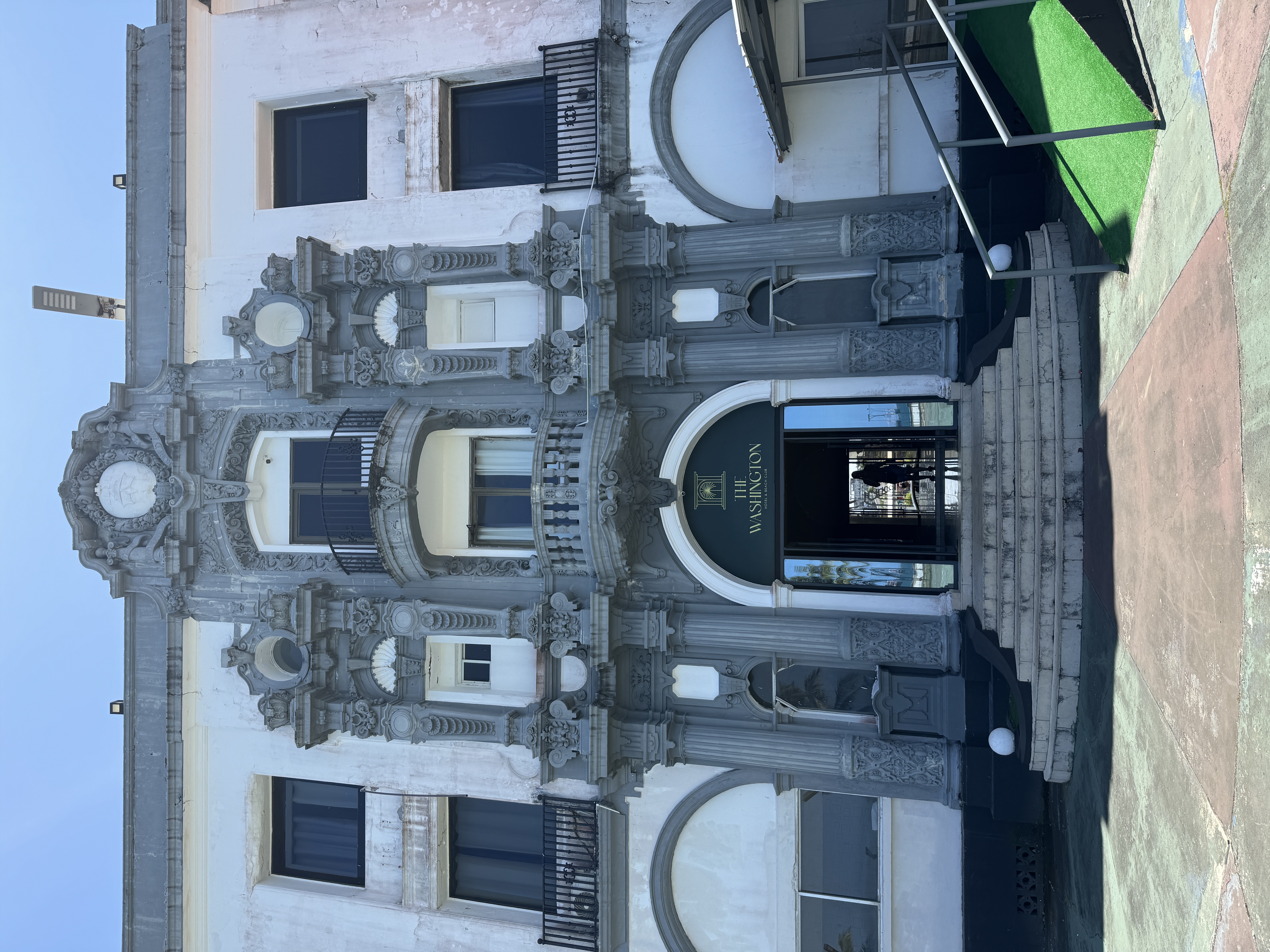
Goodhue's partner Cram was famous for Gothic churches, which may explain why Goodhue tacked a secular altar onto the hotel's severe facade. The building is made of reenforced concrete and hollow tile.
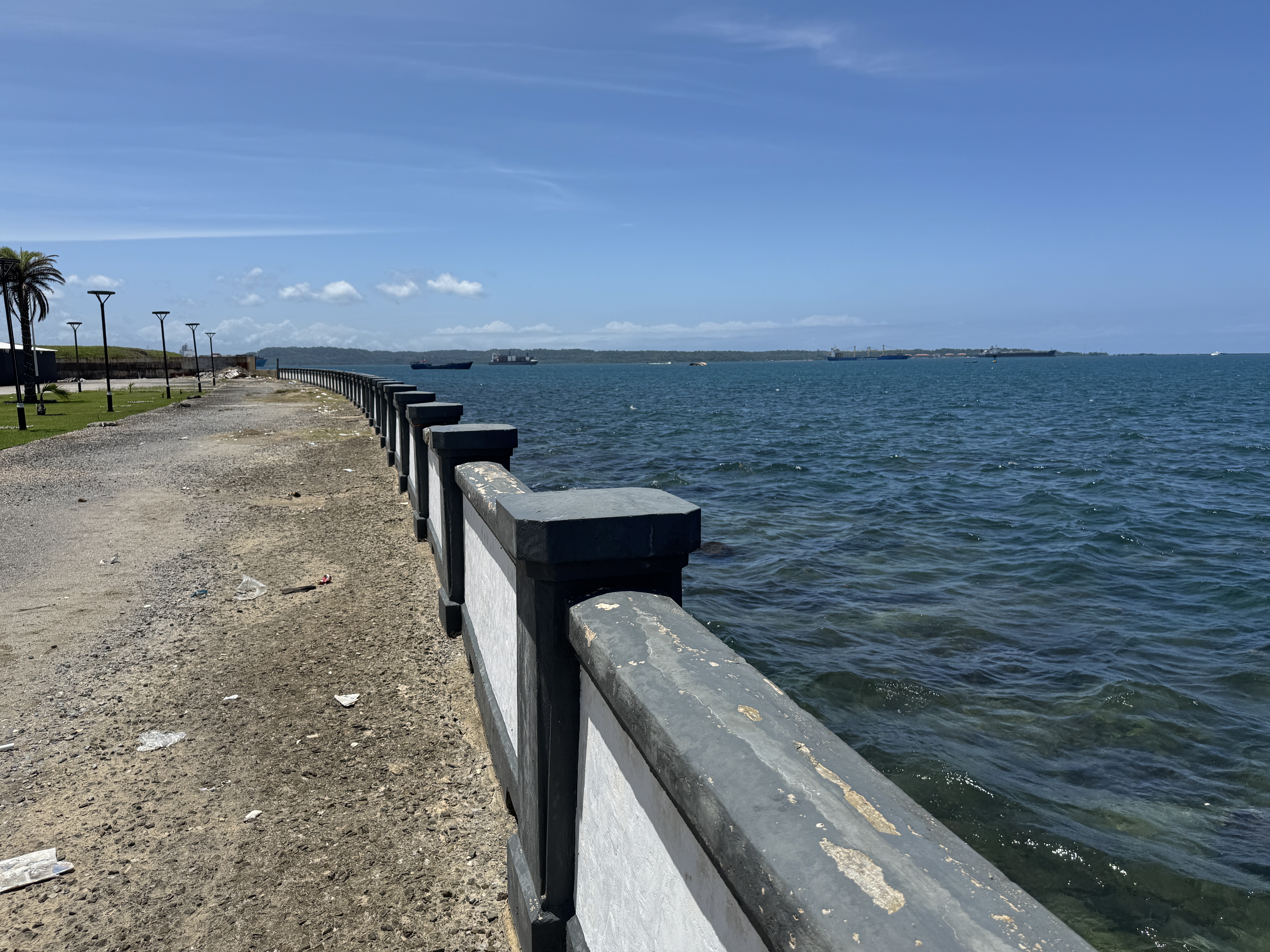
Sea wall at the hotel. There's only about one foot of tide at Colon.

Hmm...
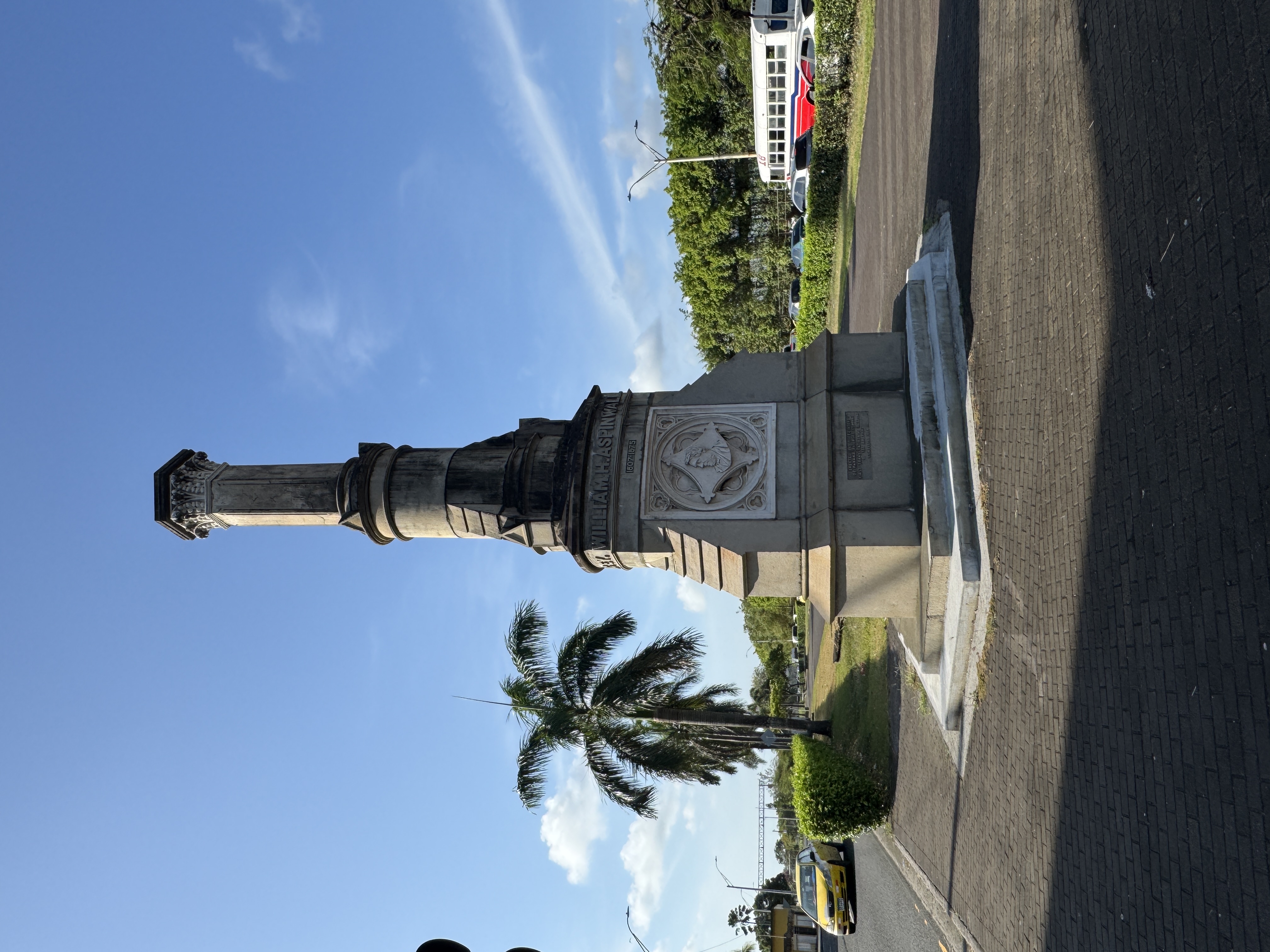
The monument still exists but has been moved to the south end of the Paseo, where traffic makes it easy to ignore but hard to approach. Here's a typical assessment from 1907: "...a feeble tripartite effort was made by the railroad company to honor W.H. Aspinwall, in connection wth two other leading spirits in its origin, Henry Chauncey and John L. Stephens. A three-cornered monument was erected to their memory, in front of the Washington House, on the beach at Col n looking northward. It is lacking in dignity, and has no artistic merit.... It has been remarked that the company of which they were the founders, and which owed them so great a debt, might have left them alone rather than have placed so unsatisfactory a memorial...." (Tracy Robinson, Fifty Years in Panama, 1907, p. 93-4)
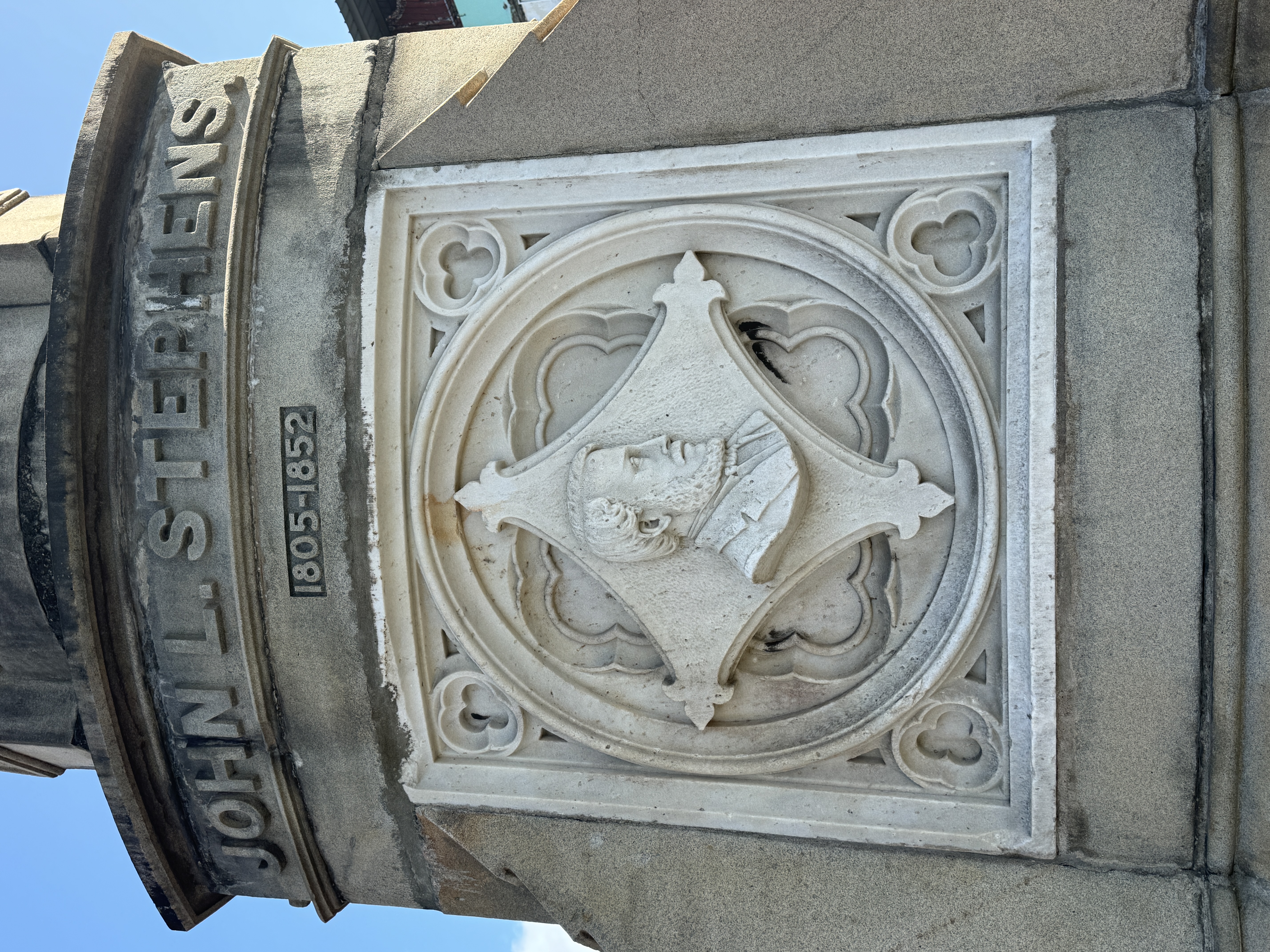
Here's Stephens, who made the perilous journey to Bogota to persuade the Colombians to permit the railroad's construction. Stephens also helped survey the railroad's route across the isthmus, but his greatest claim to fame has nothing to do with Panama. It's his Incidents of Travel in Yucatan, high on every reading list about the Maya. Somewhere in his travels he picked up malaria, which killed him at 47. Others were left to superintend construction of the railroad.
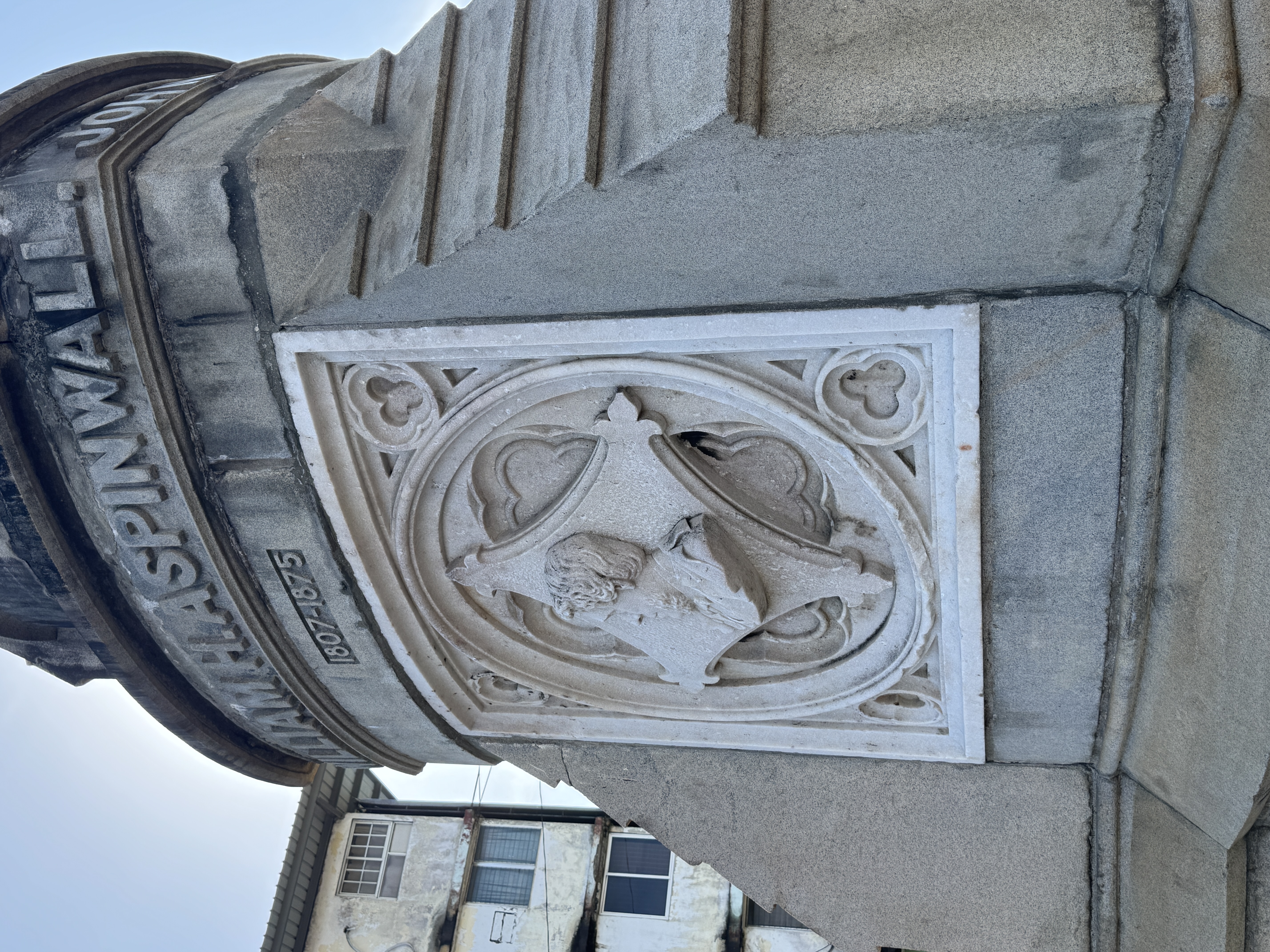
And here's William Aspinwall, a New Yorker smart enough to stay home, fund the railroad from a distance, and live to his '70s. The railroad was one piece of his plan to link the east and west coasts of the United States; another piece was the Pacific Mail Steamship Company, running north from Panama City.
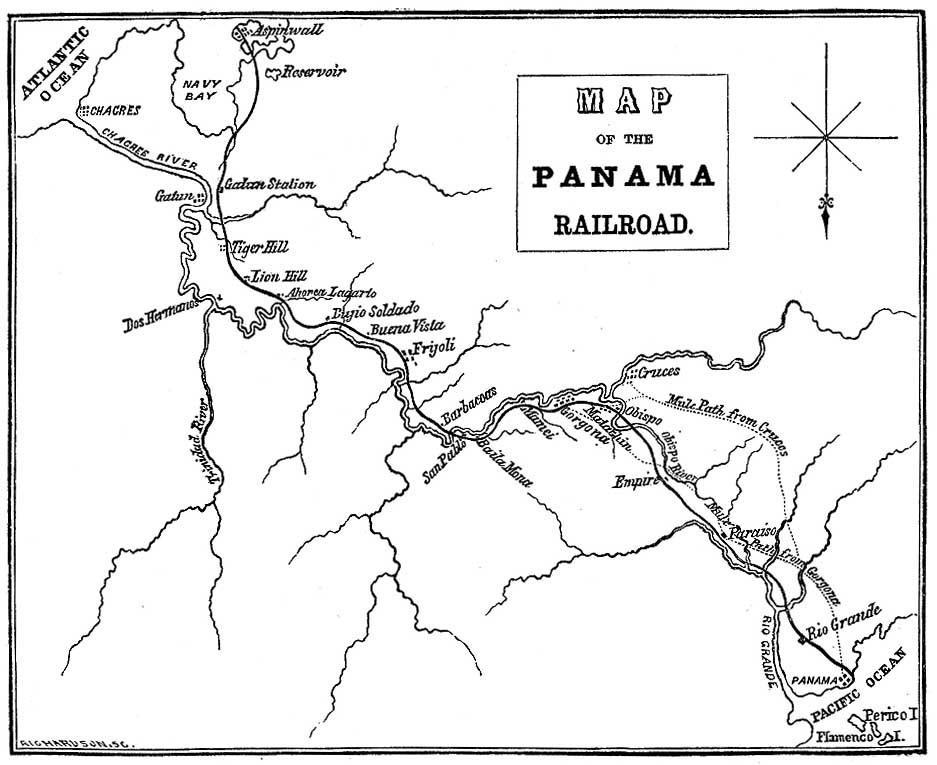
Here's an easy-to-read map of the railroad. Col n is still shown as Aspinwall. Most of the railroad stations would be flooded by Gatun Lake. Not to worry: the railroad today runs on an almost entirely new alignment. (F.N. Otis, Illustrated History of the Panama Railroad, 1862, p. frontispiece)
Here's a much harder to read map hinting at the challenge the railroad builders faced. It was published in 1857 by George M. Totten, the engineer who actually oversaw the railroad's construction. Remarkably, he stayed in Panama for many years and survived until 1884. https://library.si.edu/digital-library/book/mapisthmuspanam00harr
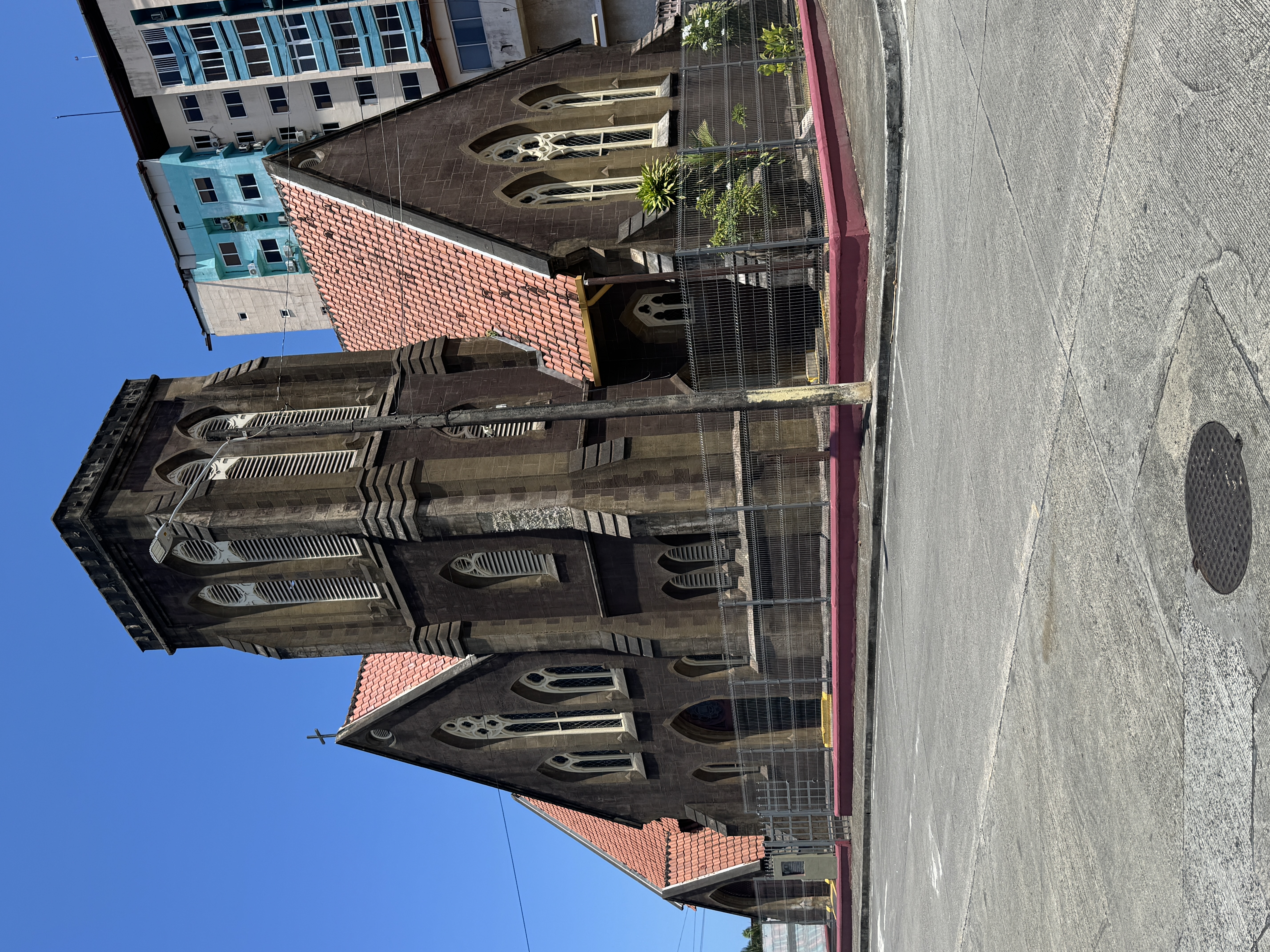
Just east of the Hotel Washington, here's the hotel we saw earlier. It's Christ Church by the Sea, an Episcopal church built by the railroad company in 1865, many years before the fancy hotel. It's Methodist today. The stone came from a quarry along the original line of the railroad.
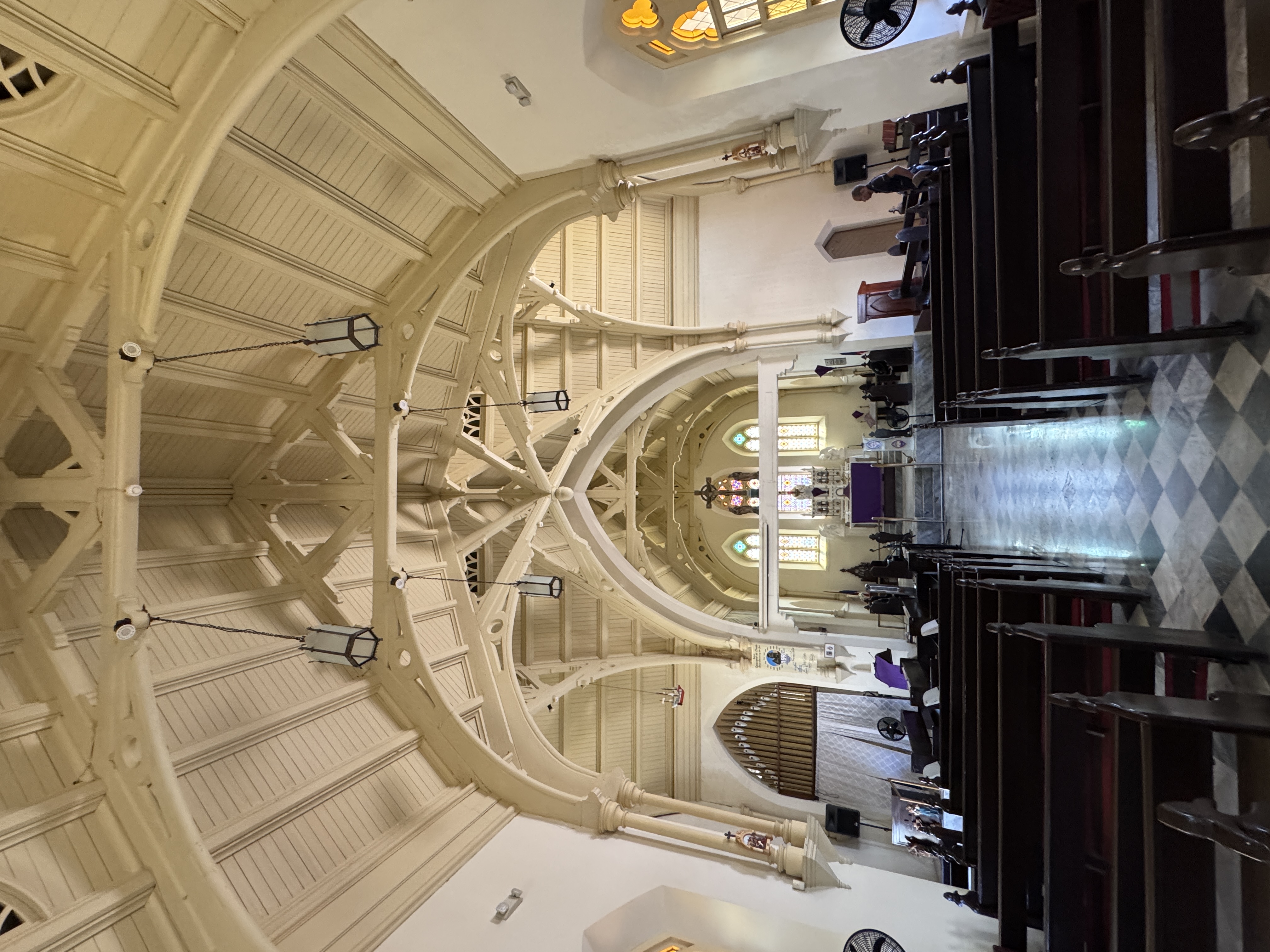
The woodwork is special, as you might expect from the architect, James Renwick. He had recently designed the Smithsonian Institution's "Castle" in Washington and was about to start on New York City's St. Patrick's. Why on earth did he take this minor commission? I'm guessing he couldn't decline it. Why? He was married to one of William Aspinwall's daughters.
Question: how can the church be in such good condition? Answer: a renovation was completed by Young-Torquemada Architects in 2014. I have not seen photos of the church's prior condition, but it is said to have been bad. (https://ytarquitectos.com/proyectos/restauracion/cristo-orillas-del-mar))
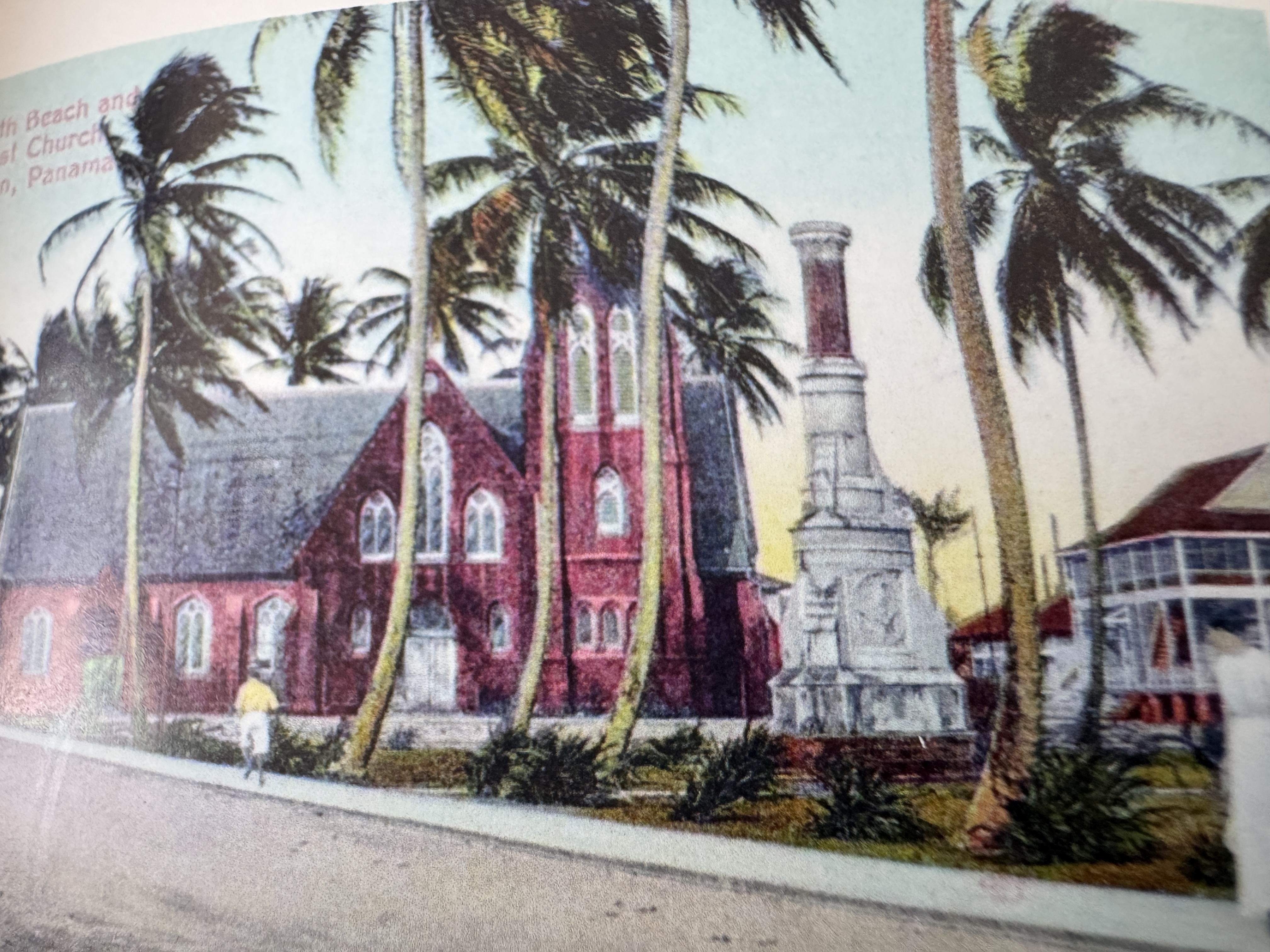
A postcard of the church and of the monument before it was moved to the other end of the Paseo. (Edith Crouch, Architecture of the Panama Canal Zone, 2014, p. 275)

Here's the monument from the other side. The picture shows the first Hotel Washington, built of wood by the railroad for its workers. Note the mosquito screens. When work on the railroad began in 1848, the mosquitoes were so bad that crews went back at night to ships anchored offshore.
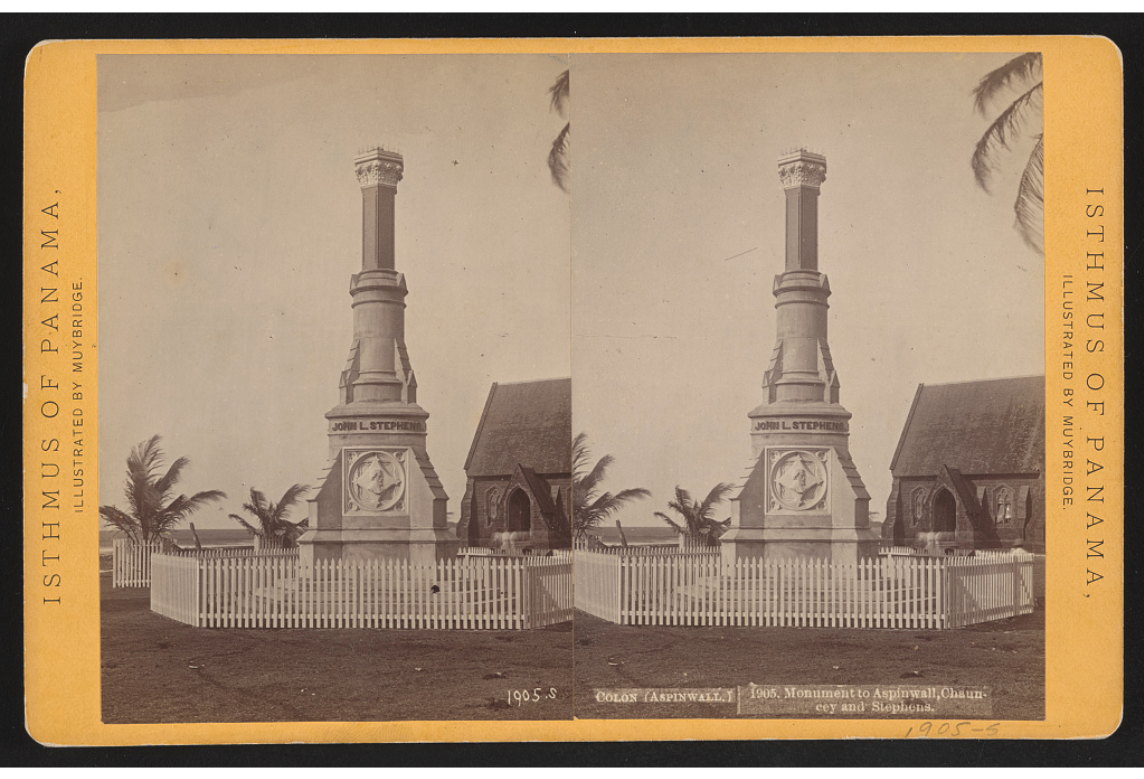
In 1875, who visited Panama but Edward Muybridge, that motion-picture pioneer. Here's one of his stereo pairs. (https://www.loc.gov/resource/stereo.1s47861/)
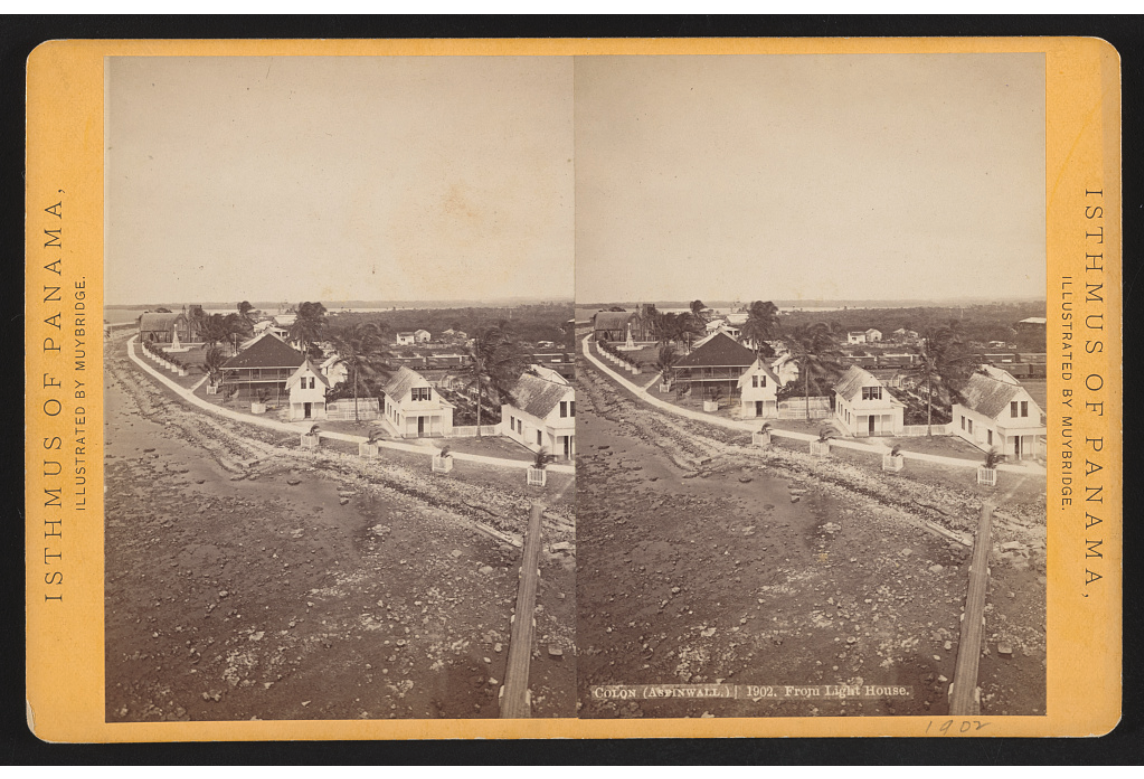
Here's another, with the church in the distance, along with the monument and the old Hotel Washington, seen end-on. (https://www.loc.gov/resource/stereo.1s47877/ \)
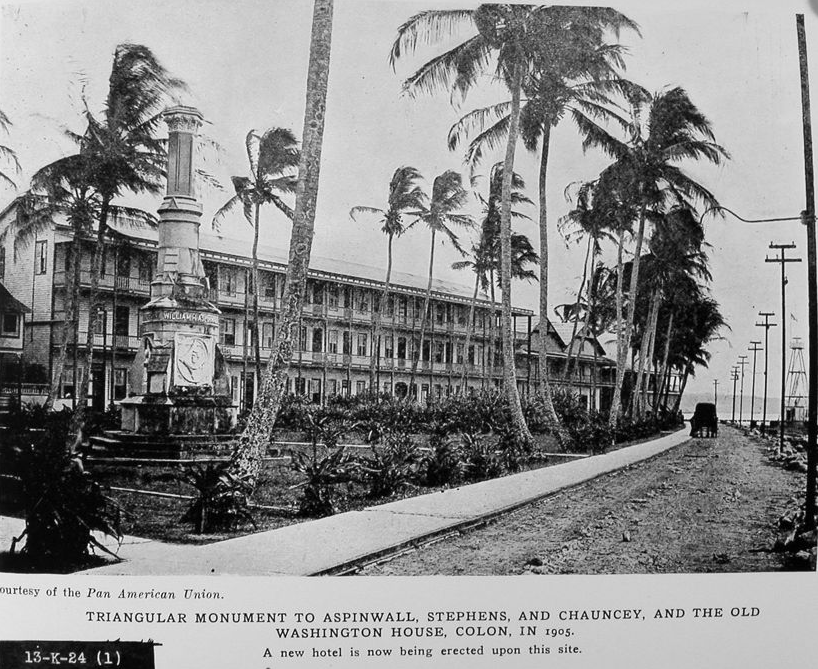
Here it is again. I think I like it better than the replacement, though guest reviews were brutal. (https://catalog.archives.gov/id/100994758)
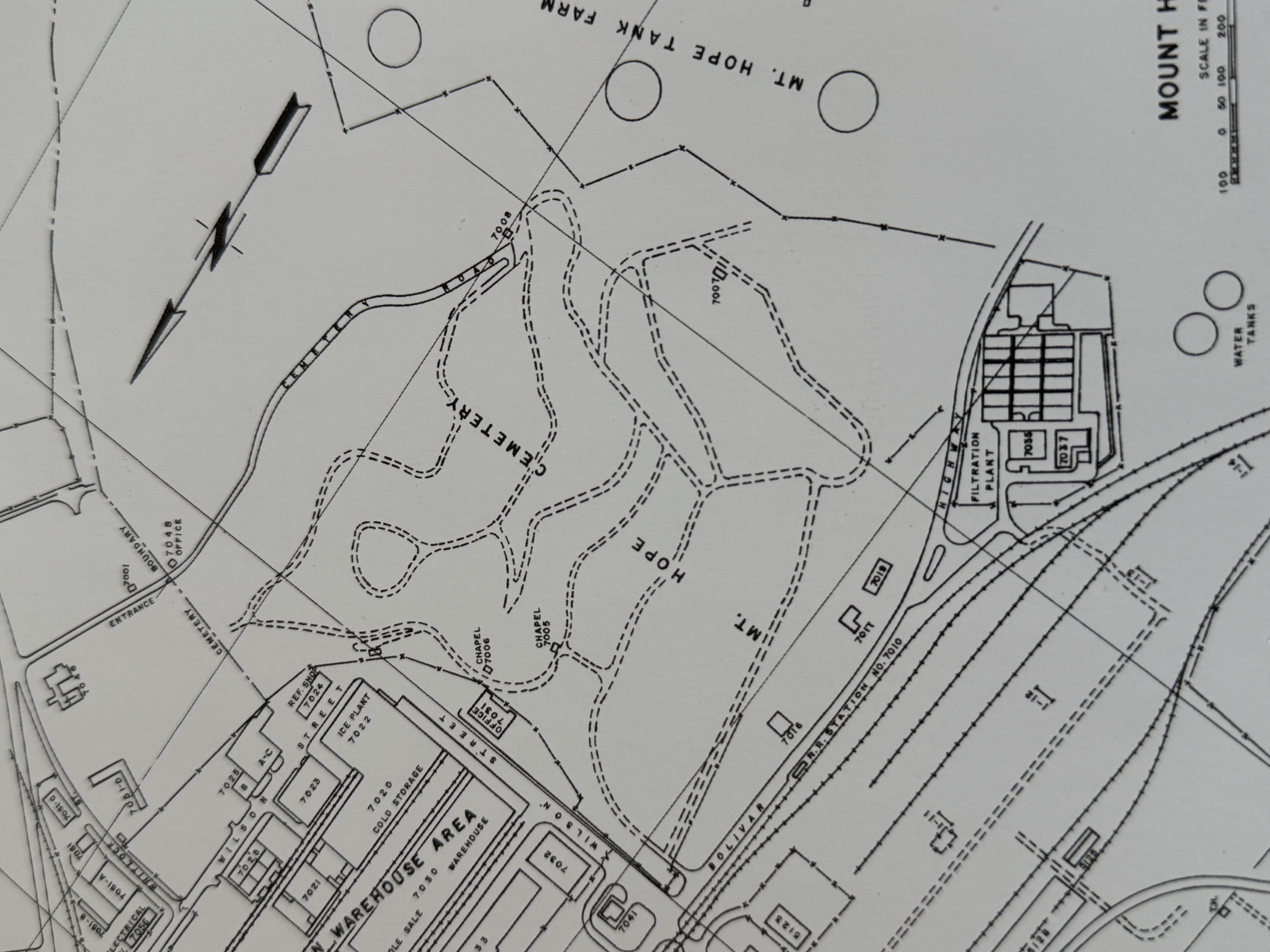
Let's go over to the town's Mt. Hope (originally Monkey Hill) Cemetery, its bucolic layout embedded in industrial land. (Edith Crouch, Architecture of the Panama Canal Zone, 2014, p. 120)
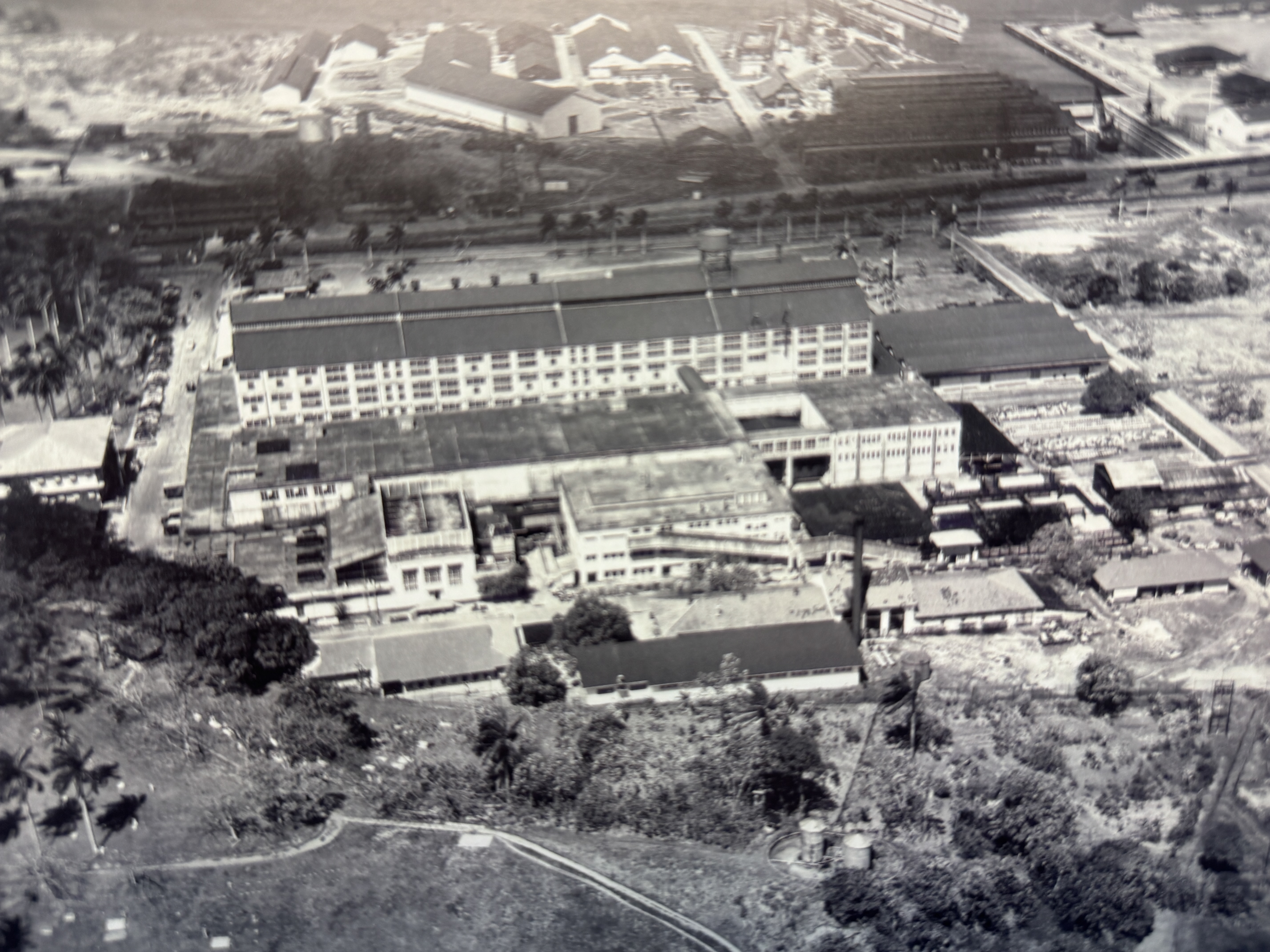
An edge of the cemetery appears here at the lower left, next to the Canal Zone commissary warehouse built in 1905 or 1906. This was the period when the Canal boss, John Frank Stevens, arrived, looked around, and ordered construction to stop until the entire project was reorganized. This included settling on a canal design with locks, but it also included taking better care of Canal employees, whose number would zoom from 4,000 in 1905 to 30,000 in 1907. Stevens approved a system of commissaries supplied from this warehouse. His successor, George Goethals, wrote a few years later that the plant turned "out each day about 90 tons of ice, 14,000 loaves of bread, 2,400 rolls, 250 gallons of ice-cream, 1,000 pounds of toasted coffee, and 7,500 pieces of laundry. Four to five refrigerator cars, loaded with meats, vegetables, and such fruits as can be obtained, are sent out on the night freight to distant points...." (George Goethals, "The Panama Canal," in The National Geographic Magazine, Feb. 1911, p.159; photo from Edith Crouch, Architecture of the Panama Canal Zone, 2014, p. 119)
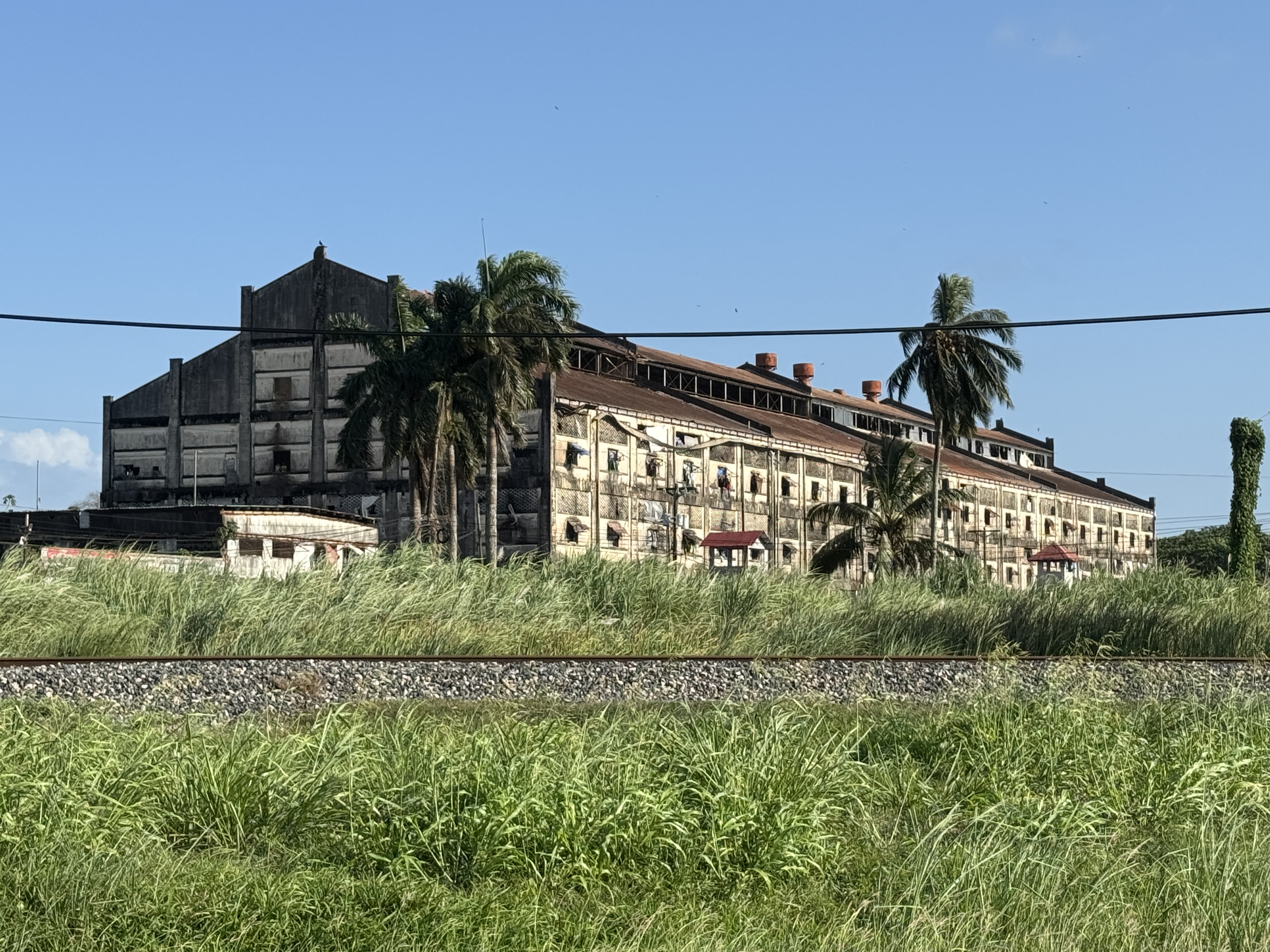
Here it is in 2025, converted in the 1990s to the Nueva Esperanza prison, reportedly with 2,500 inmates.
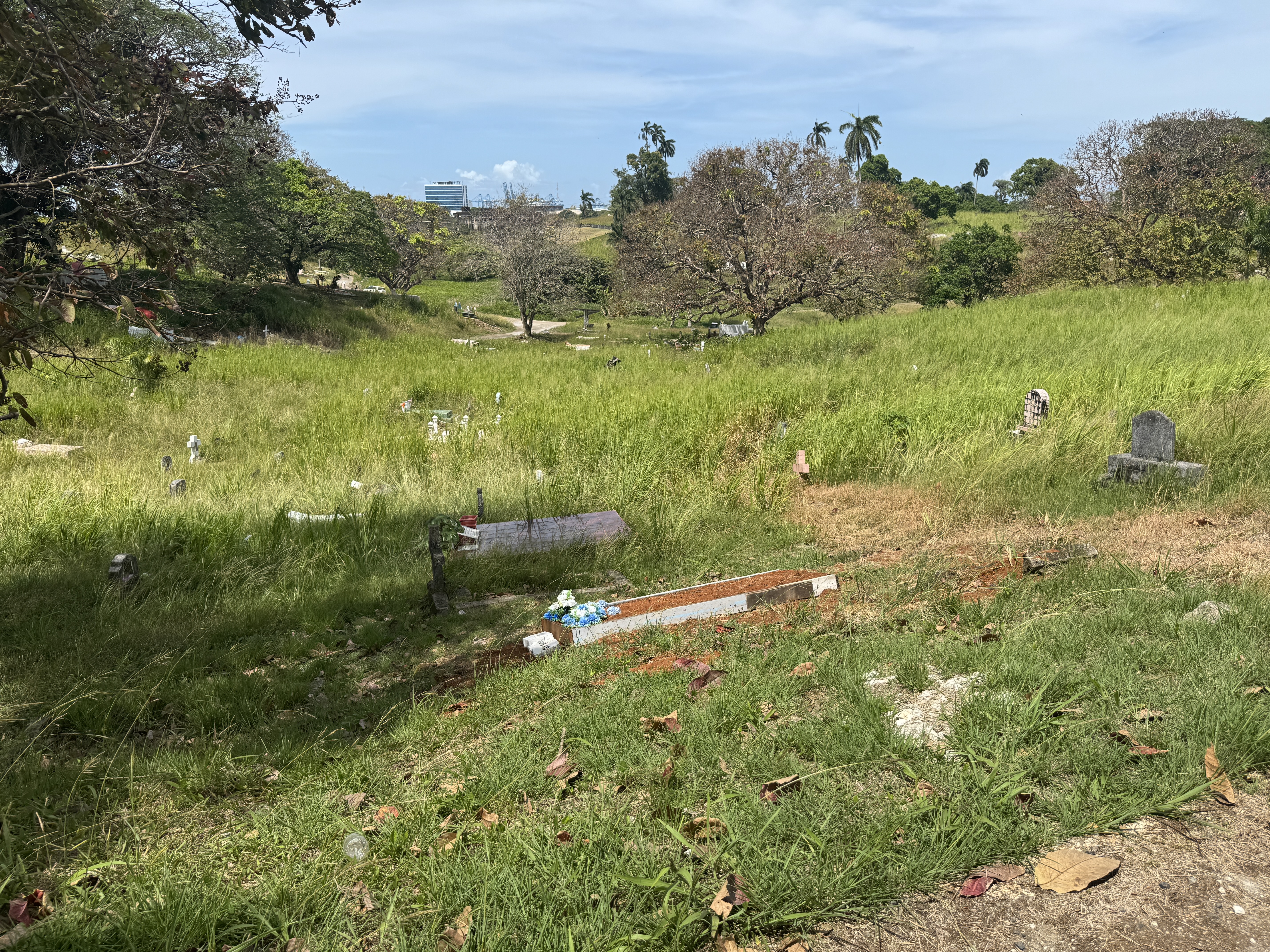
The cemetery grounds are in poor shape.
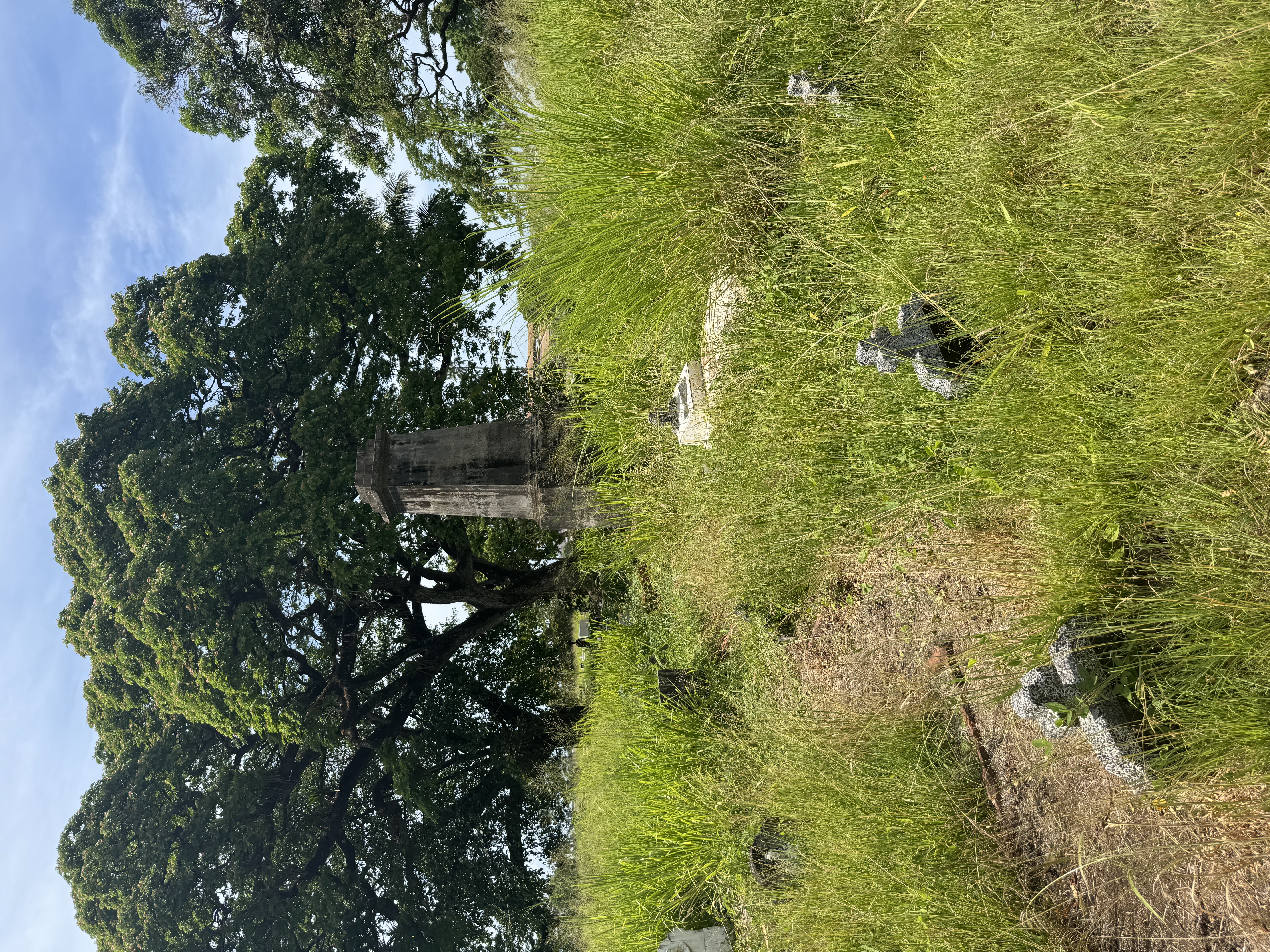
The roads are good, but the paths are rough and the graves are overgrown. The monument in the background has no inscription, or none surviving. This is still an active cemetery, but far less busy than in the 1880s, when the French were working before anyone understood the causes of malaria and yellow fever. A doctor then wrote, "During two seasons of epidemic it is said that the burials averaged from thirty to forty per day, and that for weeks together." (Wolfred Nelson, Five Years at Panama, 1888, p. 7)
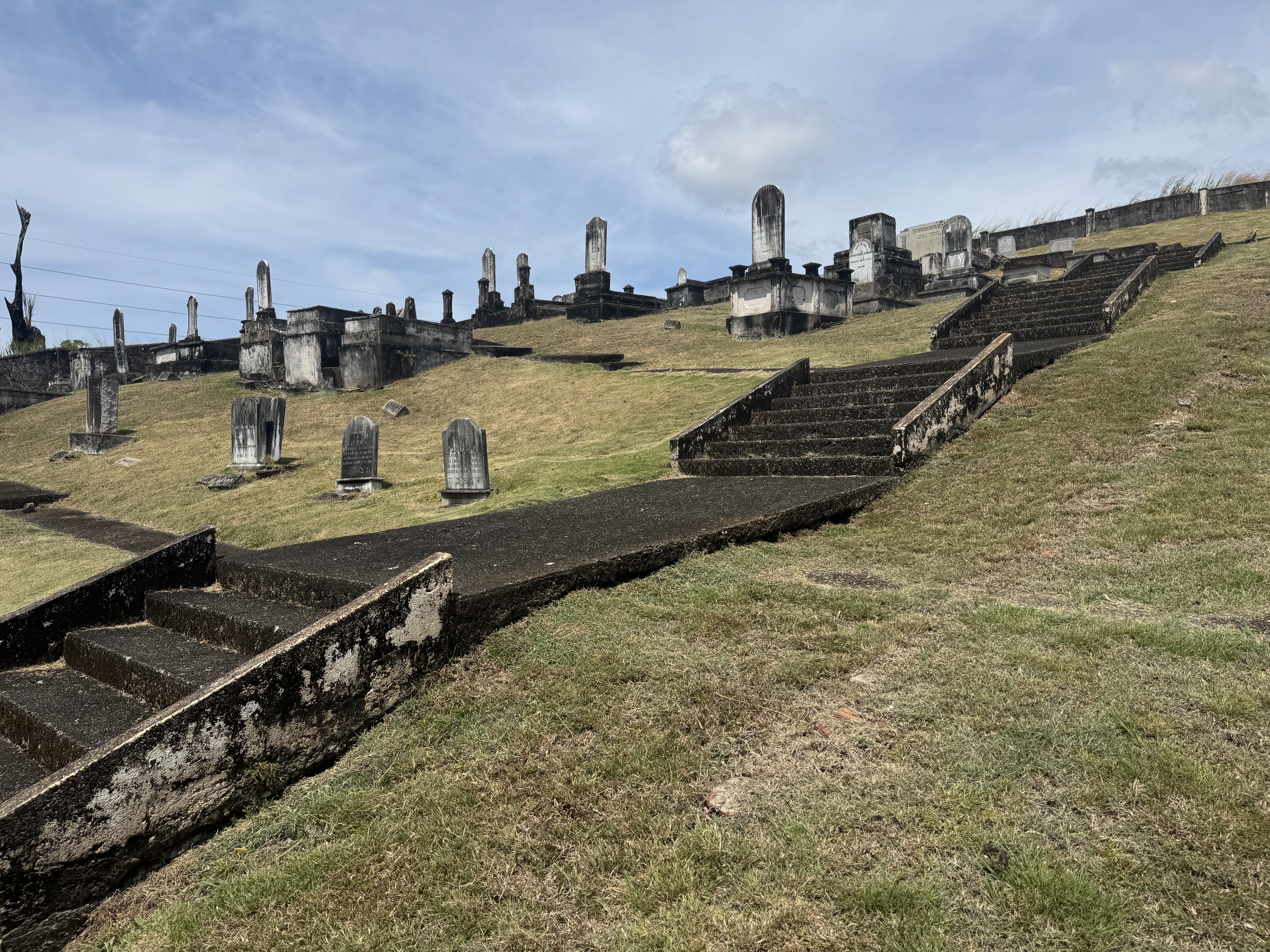
I found one section kempt. Any guesses?
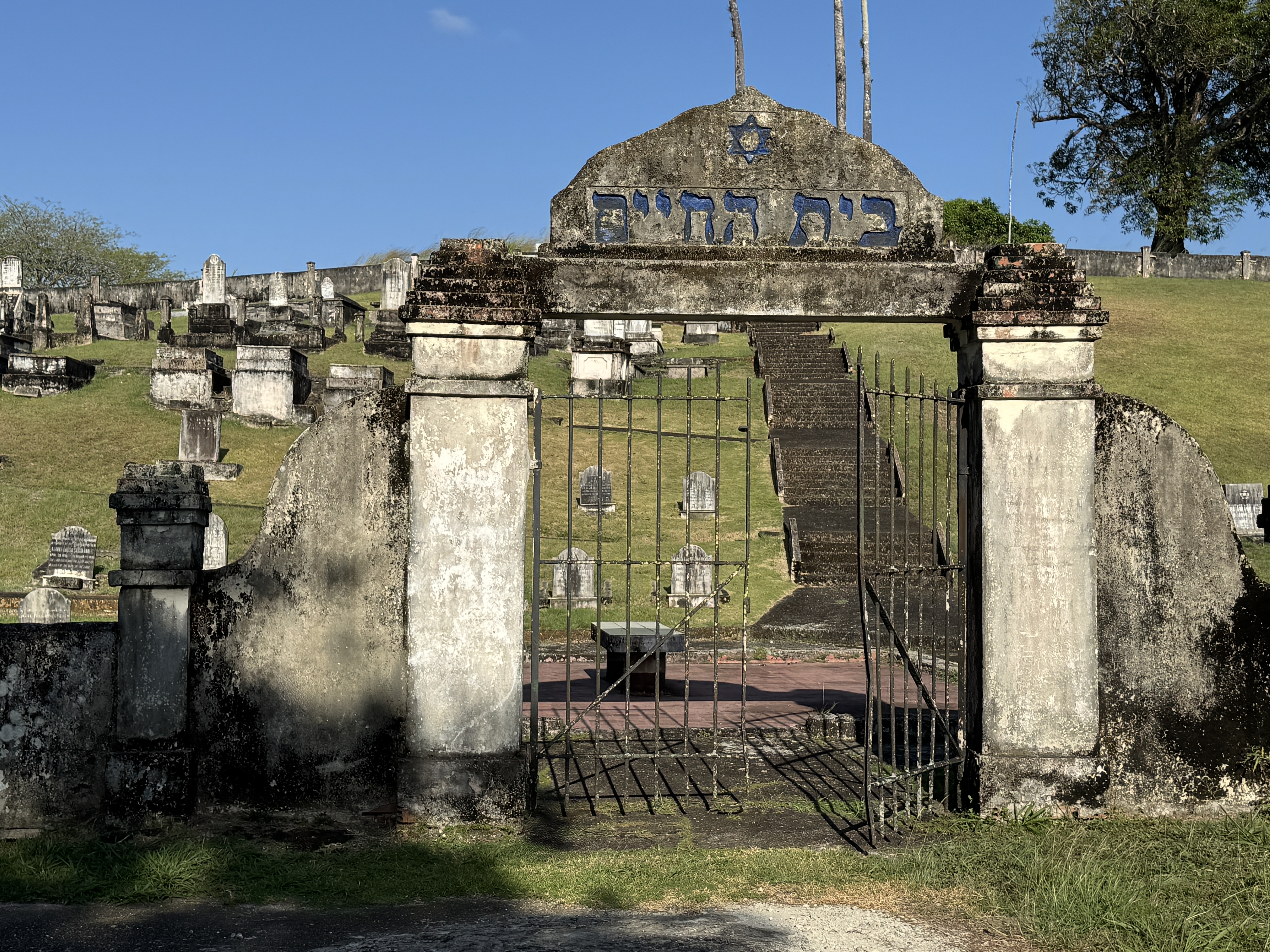
It's the Jewish cemetery, "The House of Life." The graves I saw were all from after World War I.
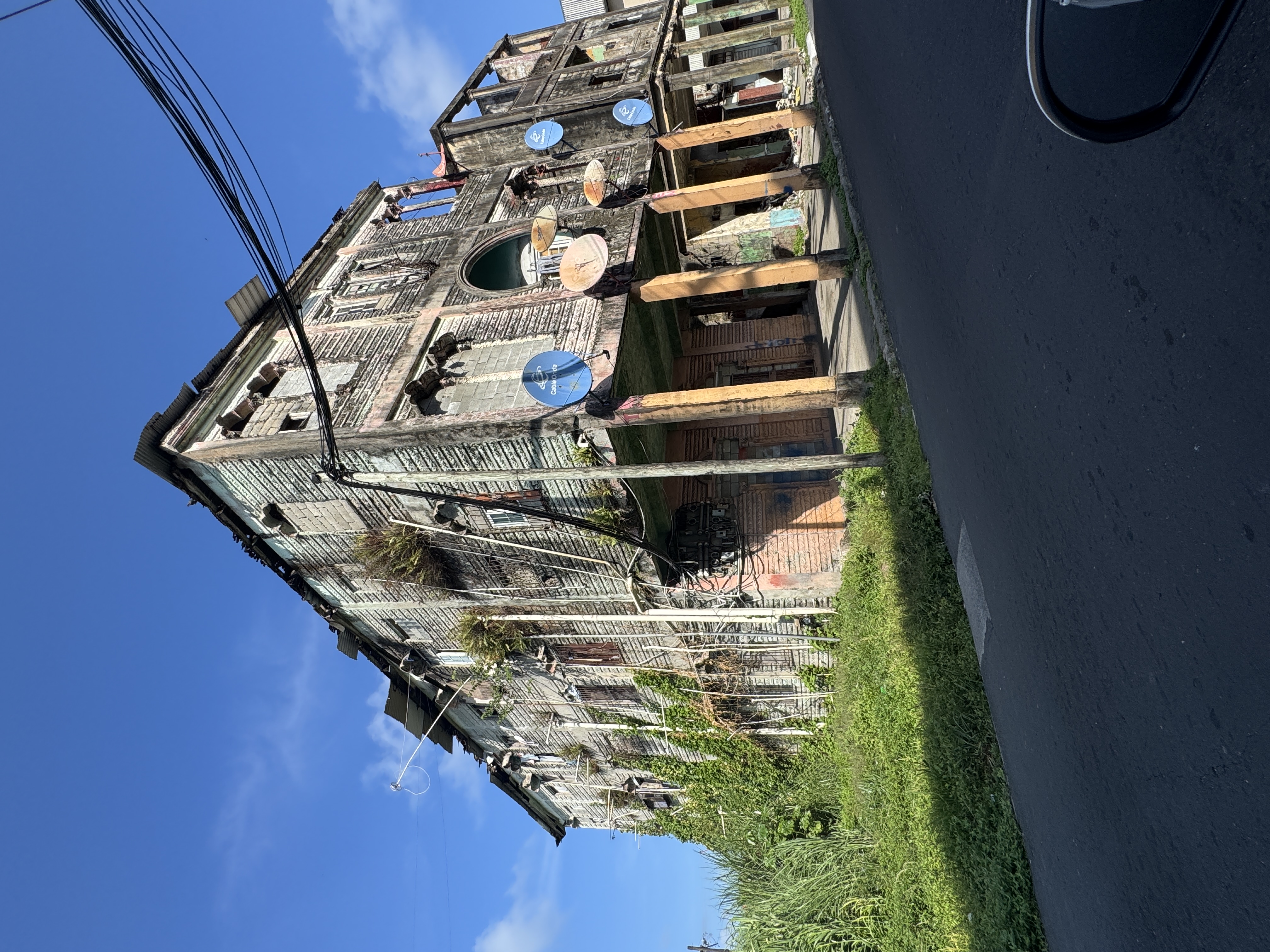
And if the cemetery's rough, try scouting Col n itself. Think this is inhabited?
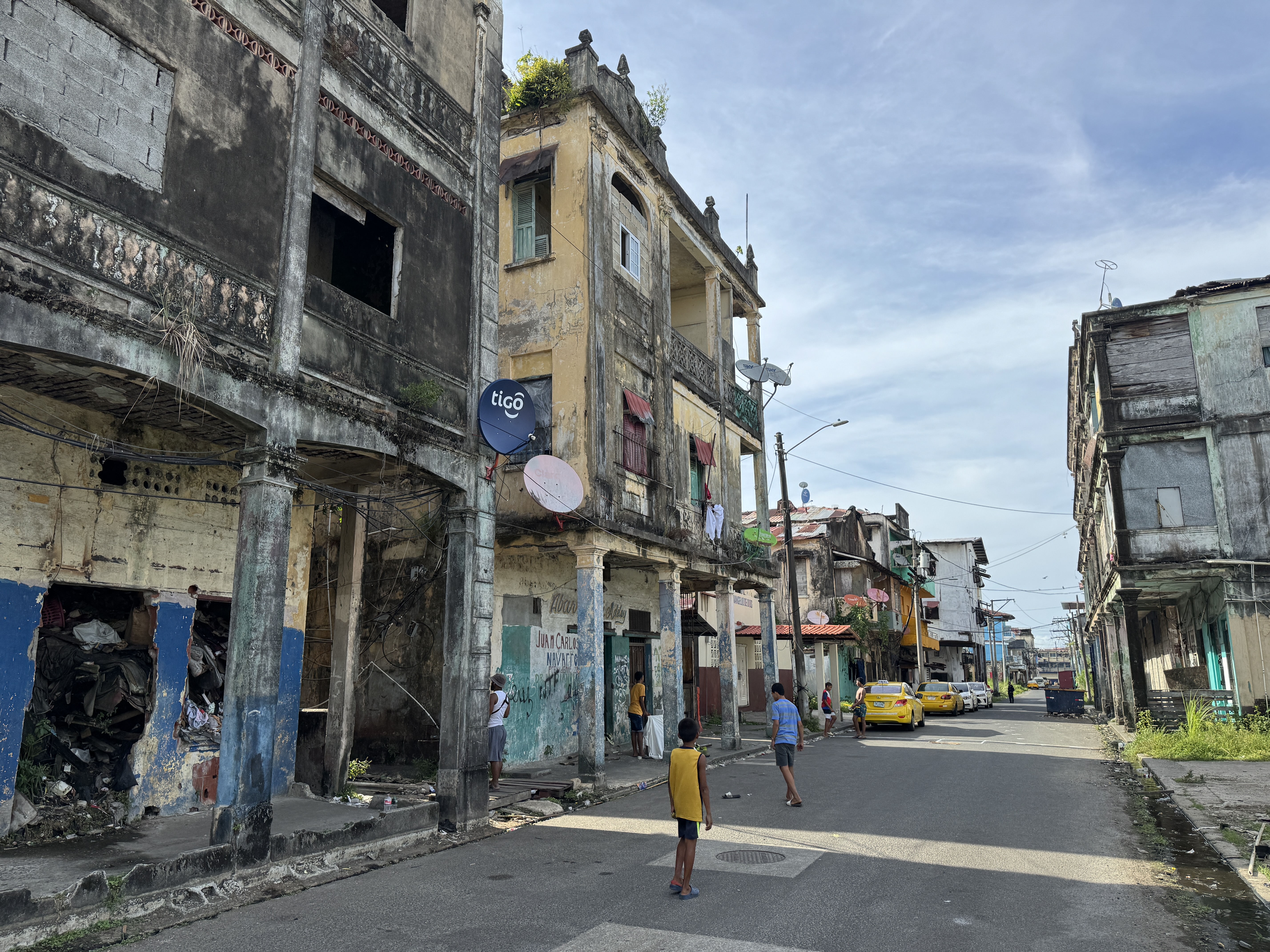
Same block. How humid is the town? Instead of statistics, let me offer a quotation from Mary Chatfield, a stenographer working in Col n in 1906. She complained that the windows of her accommodation were fixed shut: "One specially hot night, when it was impossible to sleep, owing to the heat, I got up and took my umbrella handle and smashed out four panes of glass, thereby slightly increasing the circulation of air. I made up my mind they could inflict any penalty they please." (Mary A. Chatfield, Light on Dark Places at Panama, 1908, p. 128)
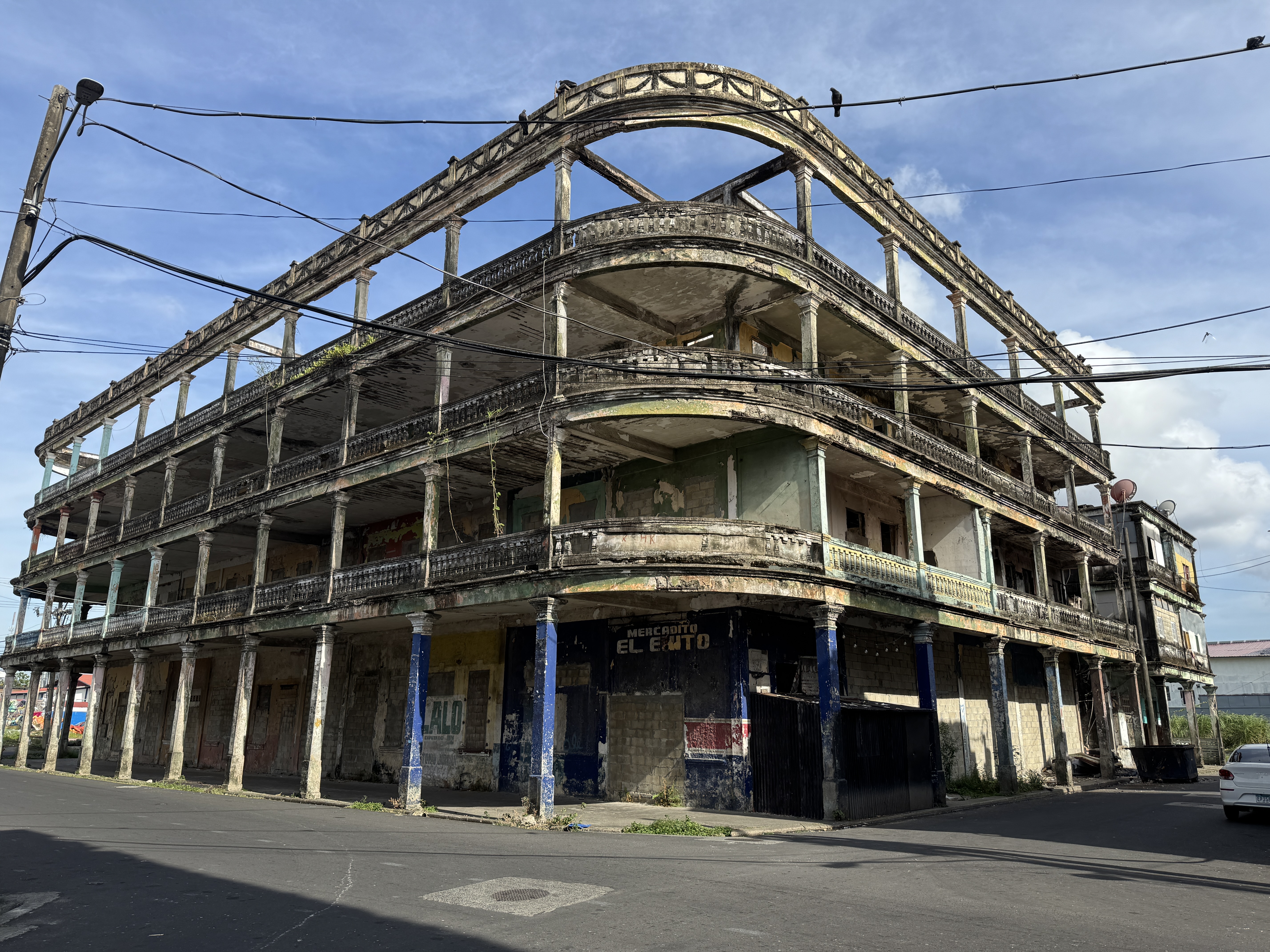
Here's a once-fine corner apartment building in that French Quarter style.
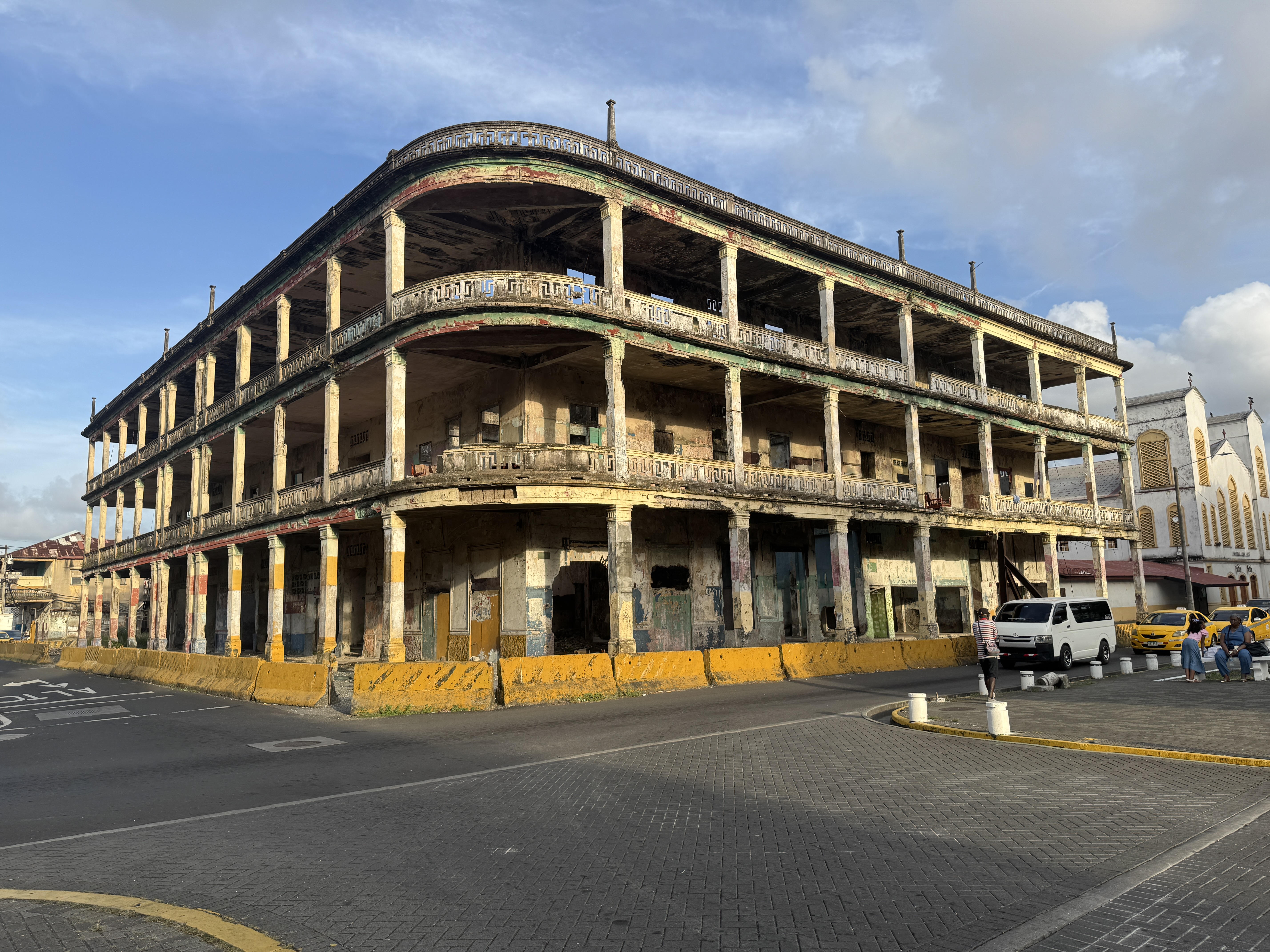
Here's another example. It's the Wilcox Building from 1913, which for some reason was chosen over others like it for rehabilitation. It was declared a national monument in 2002, and President Varela in 2017 promised its restoration. Here it is in 2025. (https://playacommunity.com/panama-articles/panama-national-news/7484-wilcox-house-renovation-plan.html))
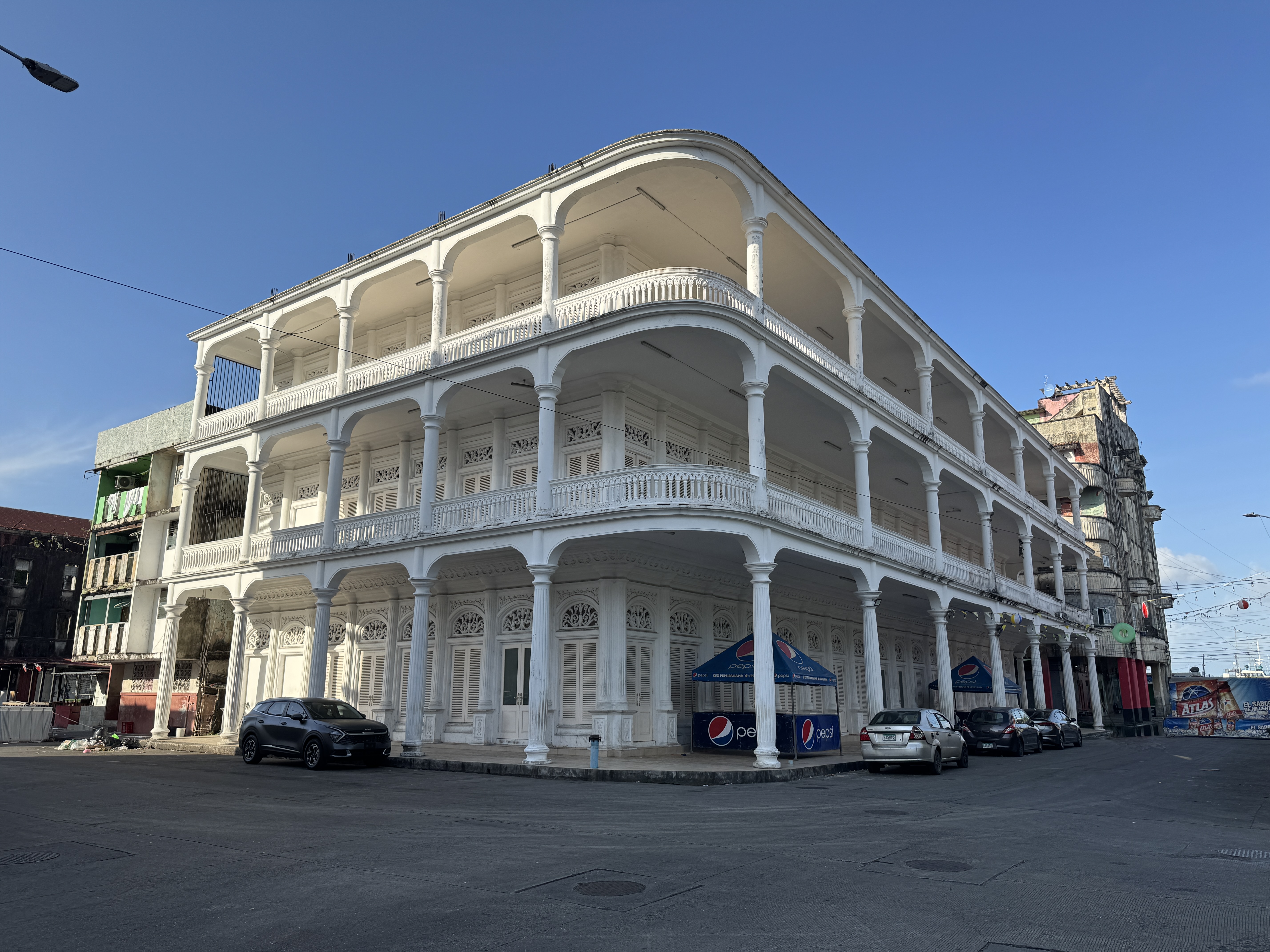
This one has been kept up, but it's the exception.
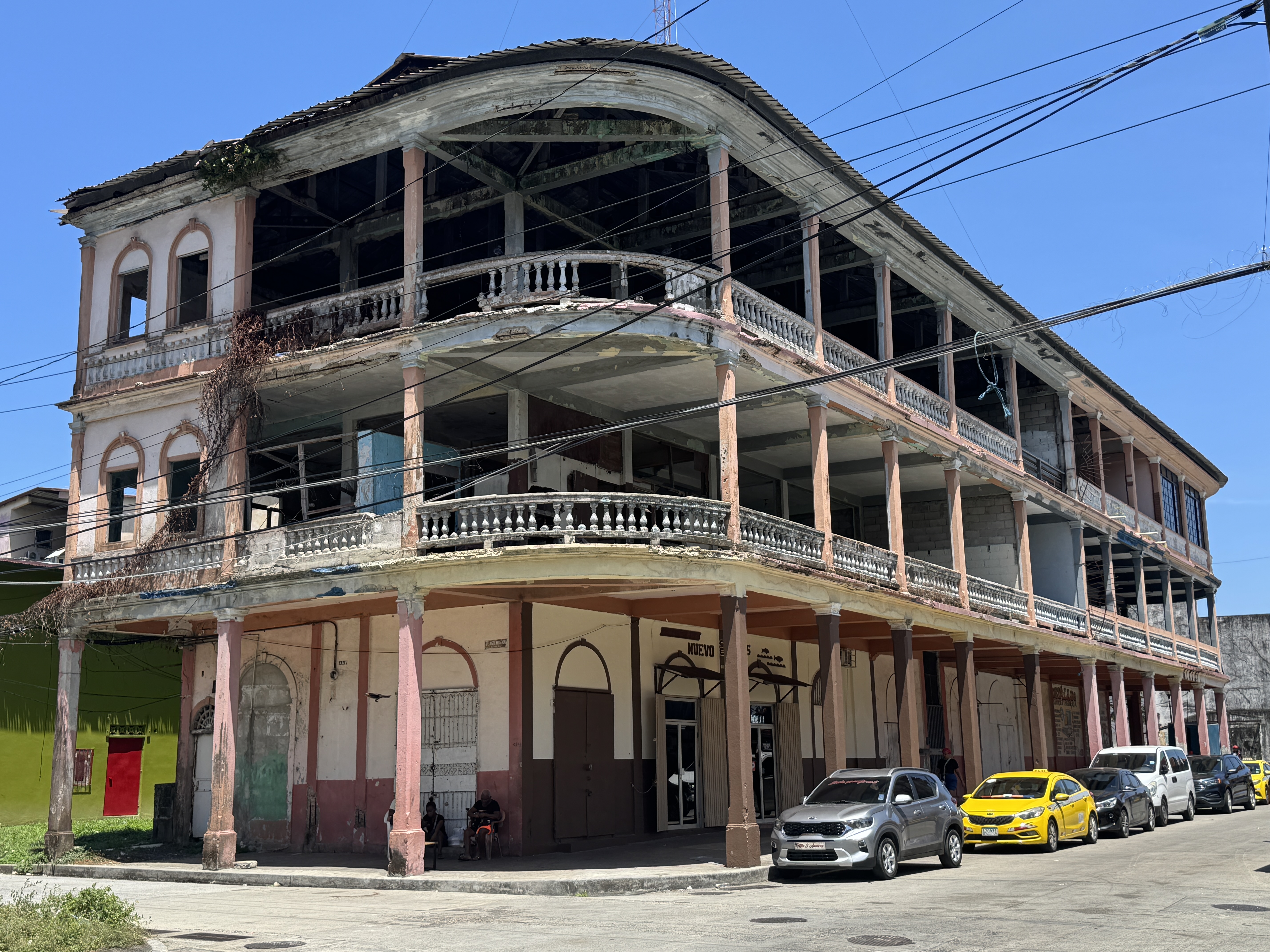
This is much more typical. The manholes has covers, which will make anyone who has driven around town smile. Sometimes they aren't.
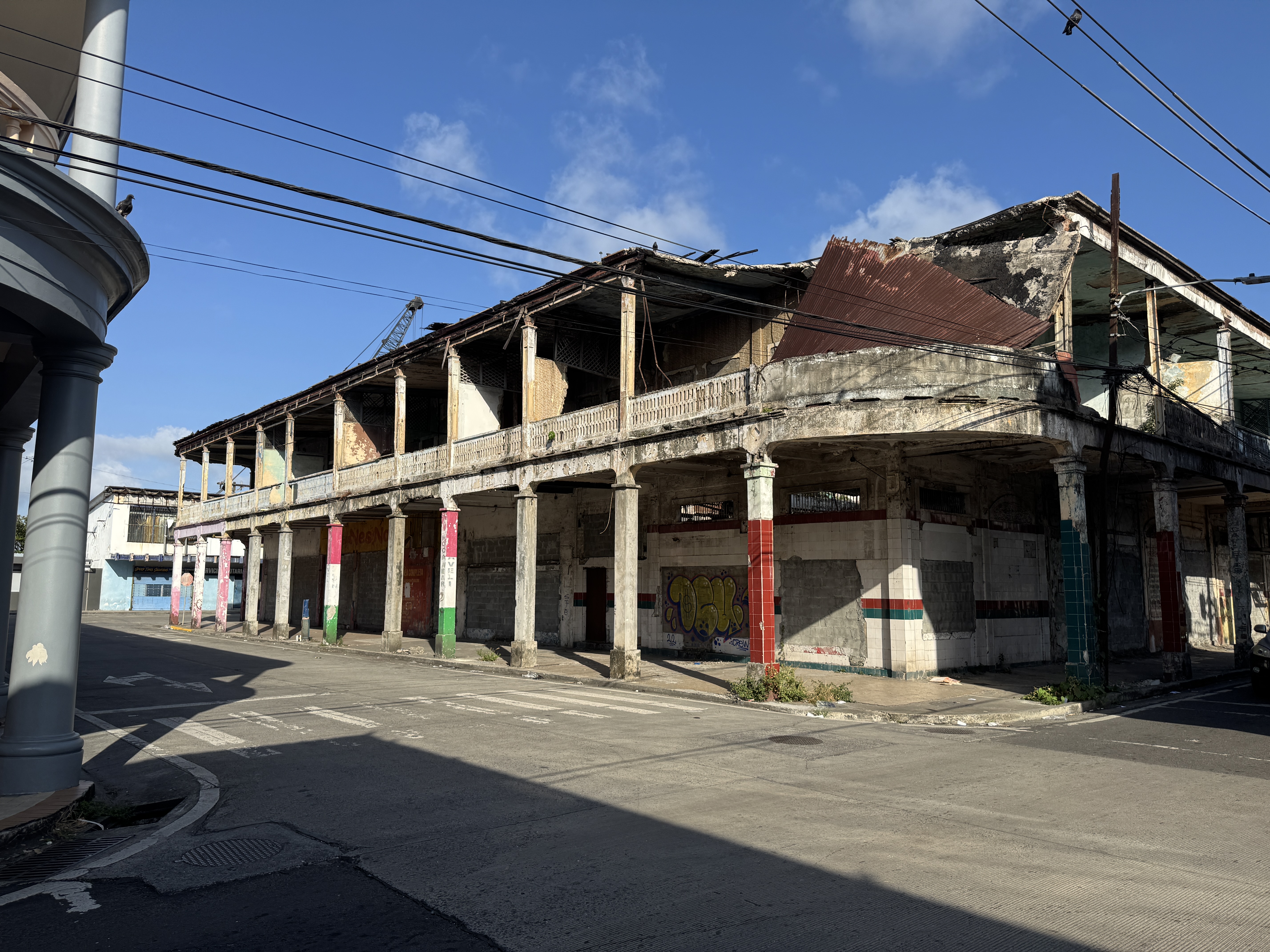
From decrepit to collapsed.
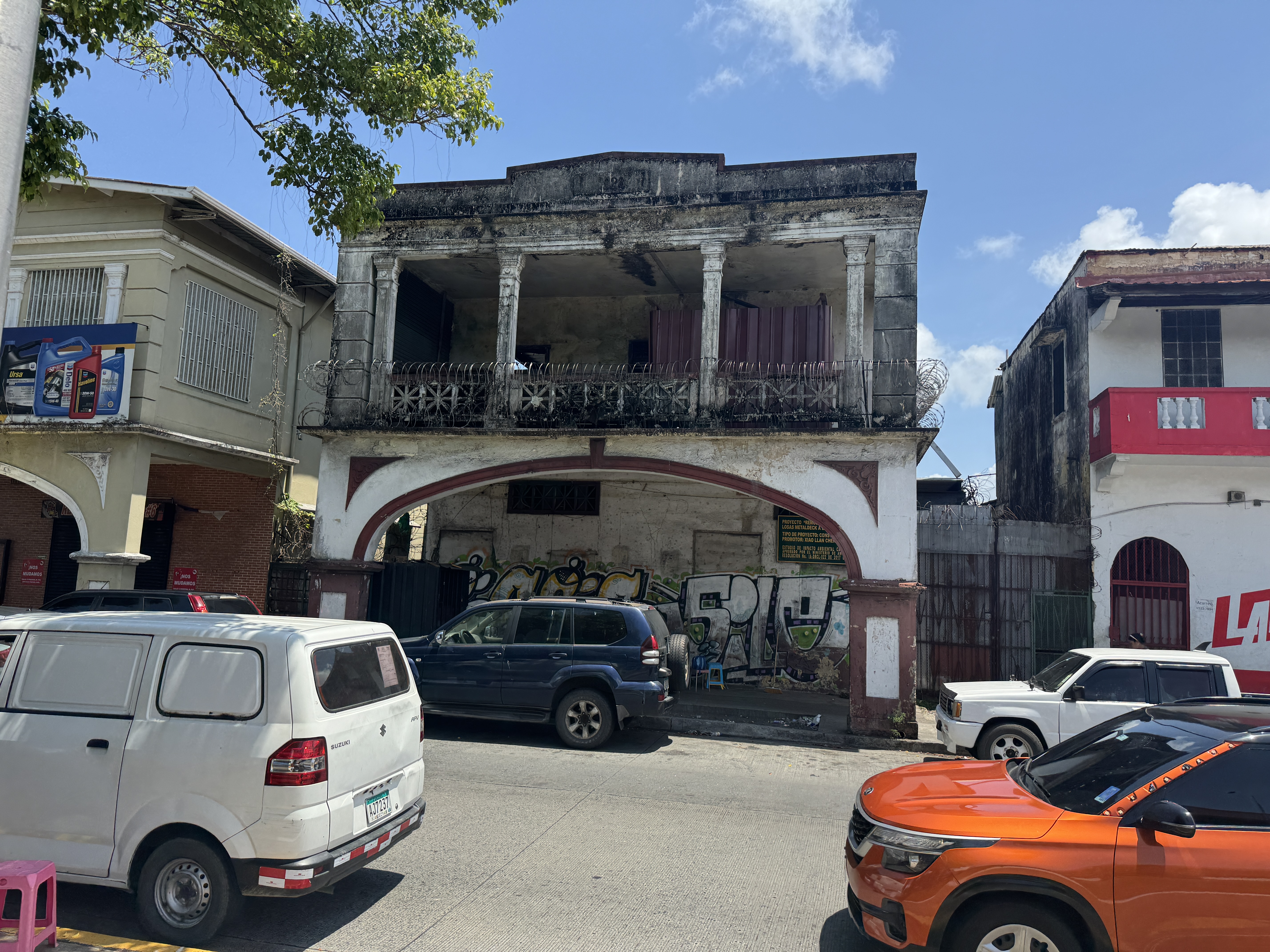
Sometimes an incomplete paint job draws more attention than no paint.
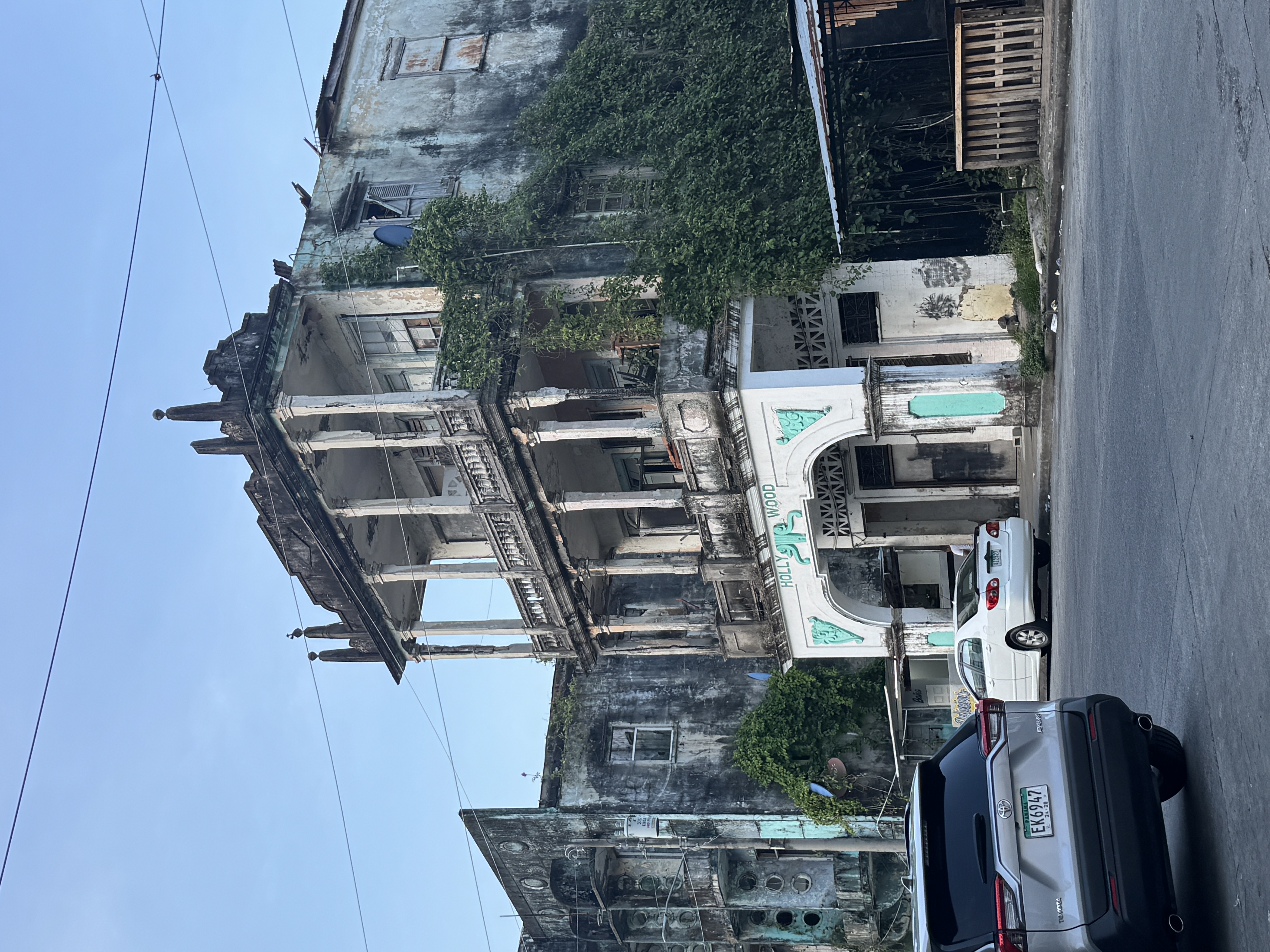
No follow-through.
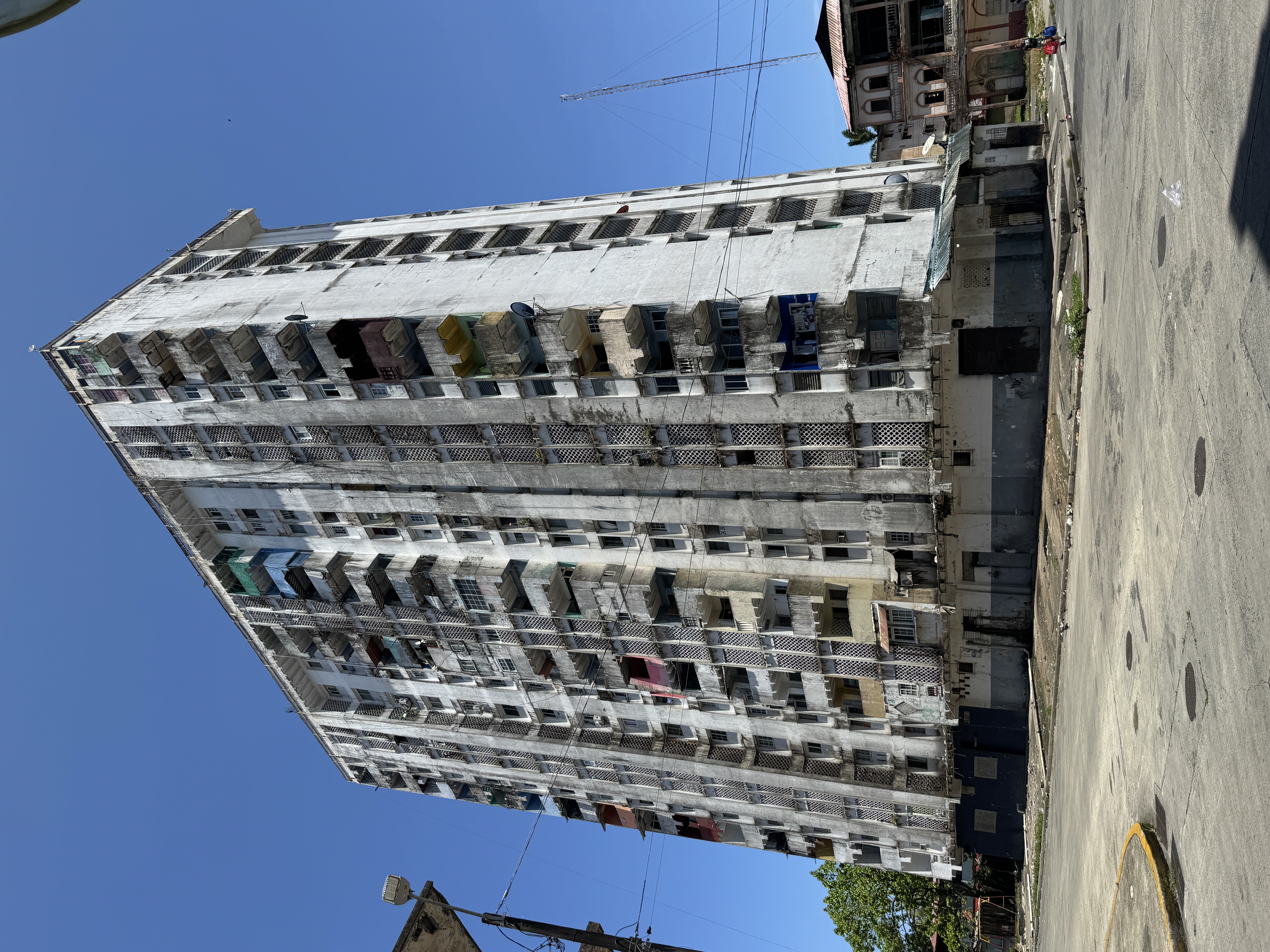
There's some newer construction, like this building known locally as "The 15 Floors." It's low-income housing, which is to say that it's poorly maintained.
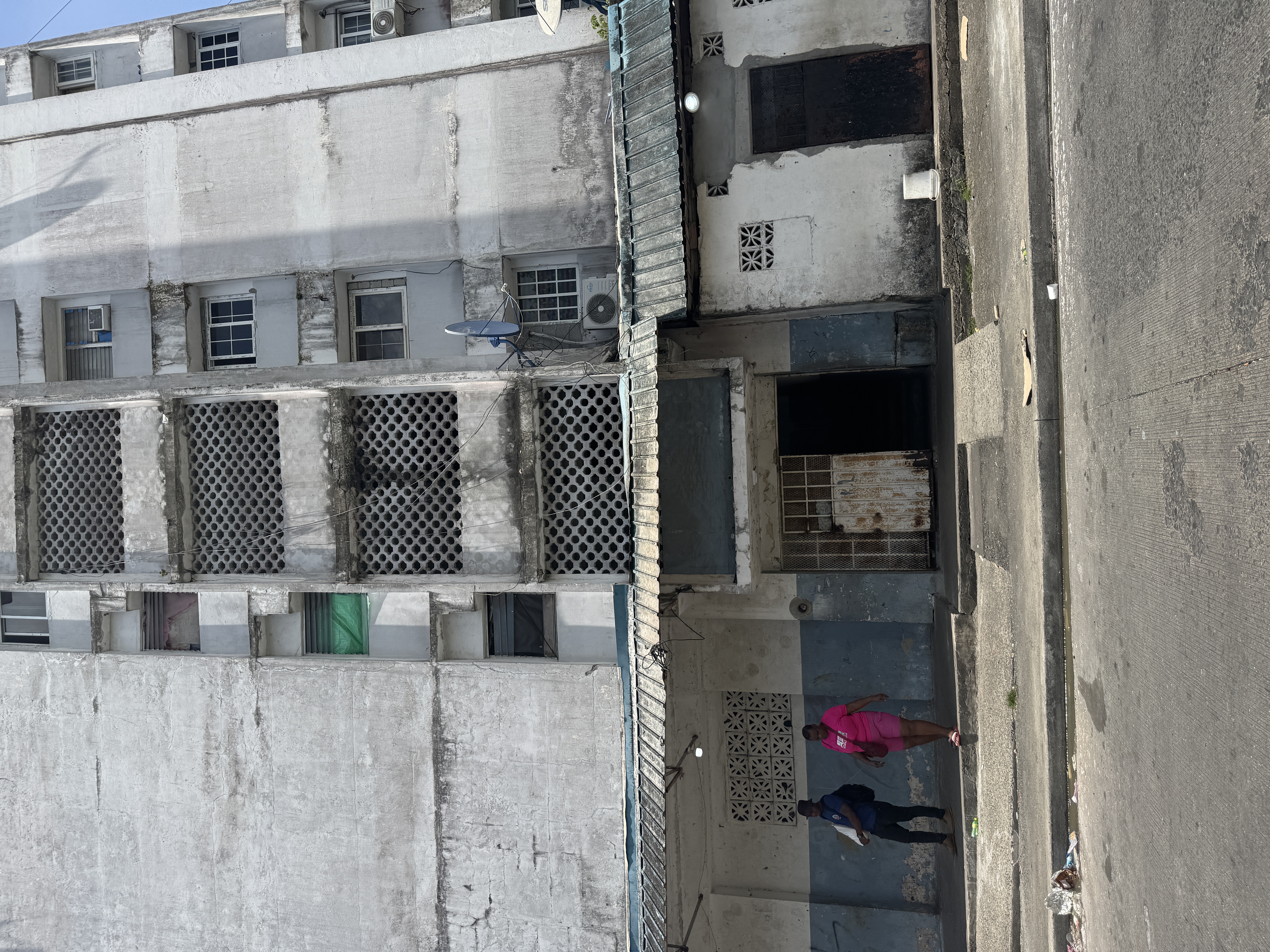
I was told, "Don't go in, or at least don't go in alone."
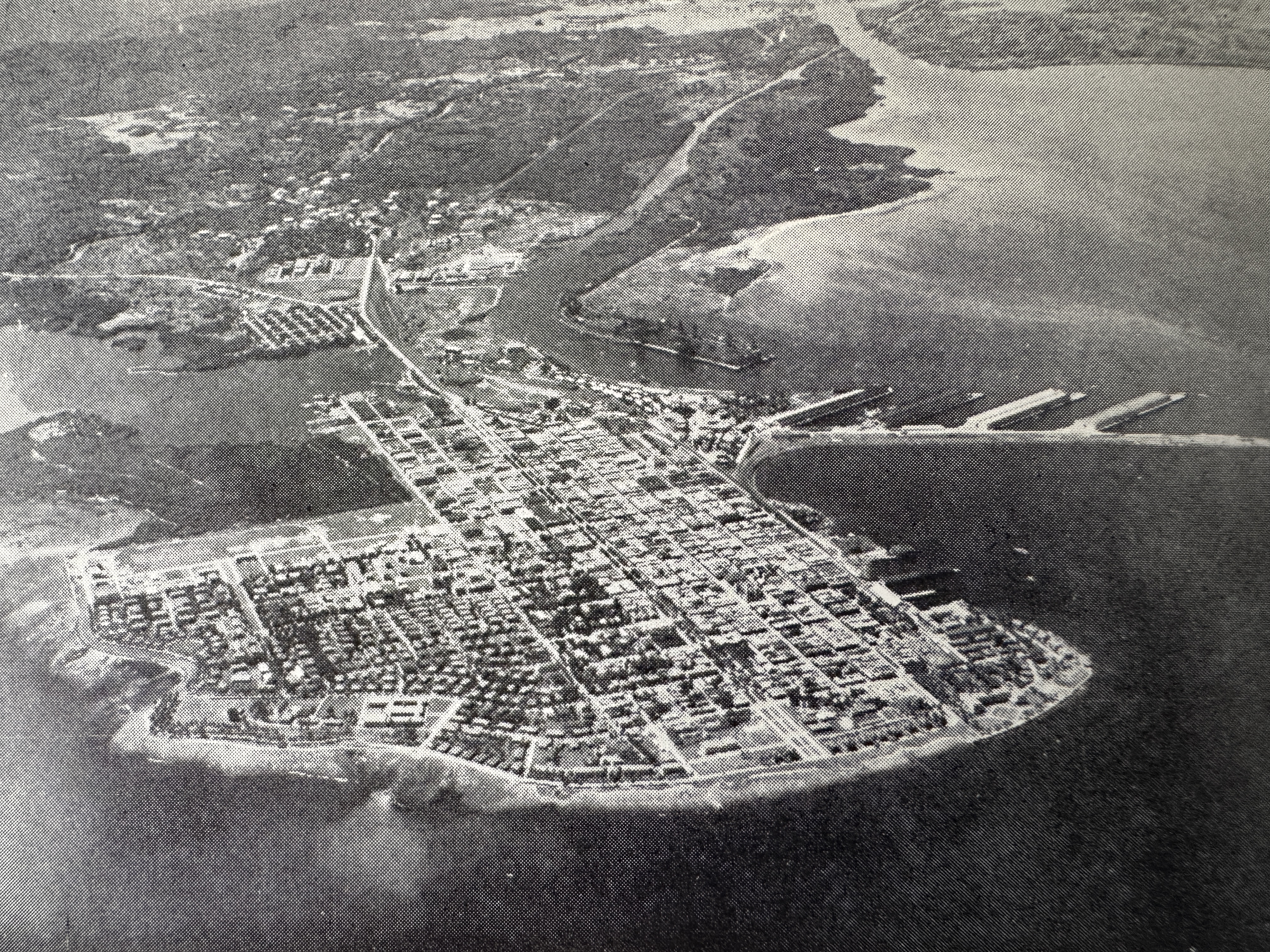
Today's Free Trade Zone is still swamp in this image from 1939. Nobody's even heard of cruise ships, but New Cristobal, in the lower left, is built up. (The Panama Canal; Twenty-Fifth Anniversary, 1939, p. 72)
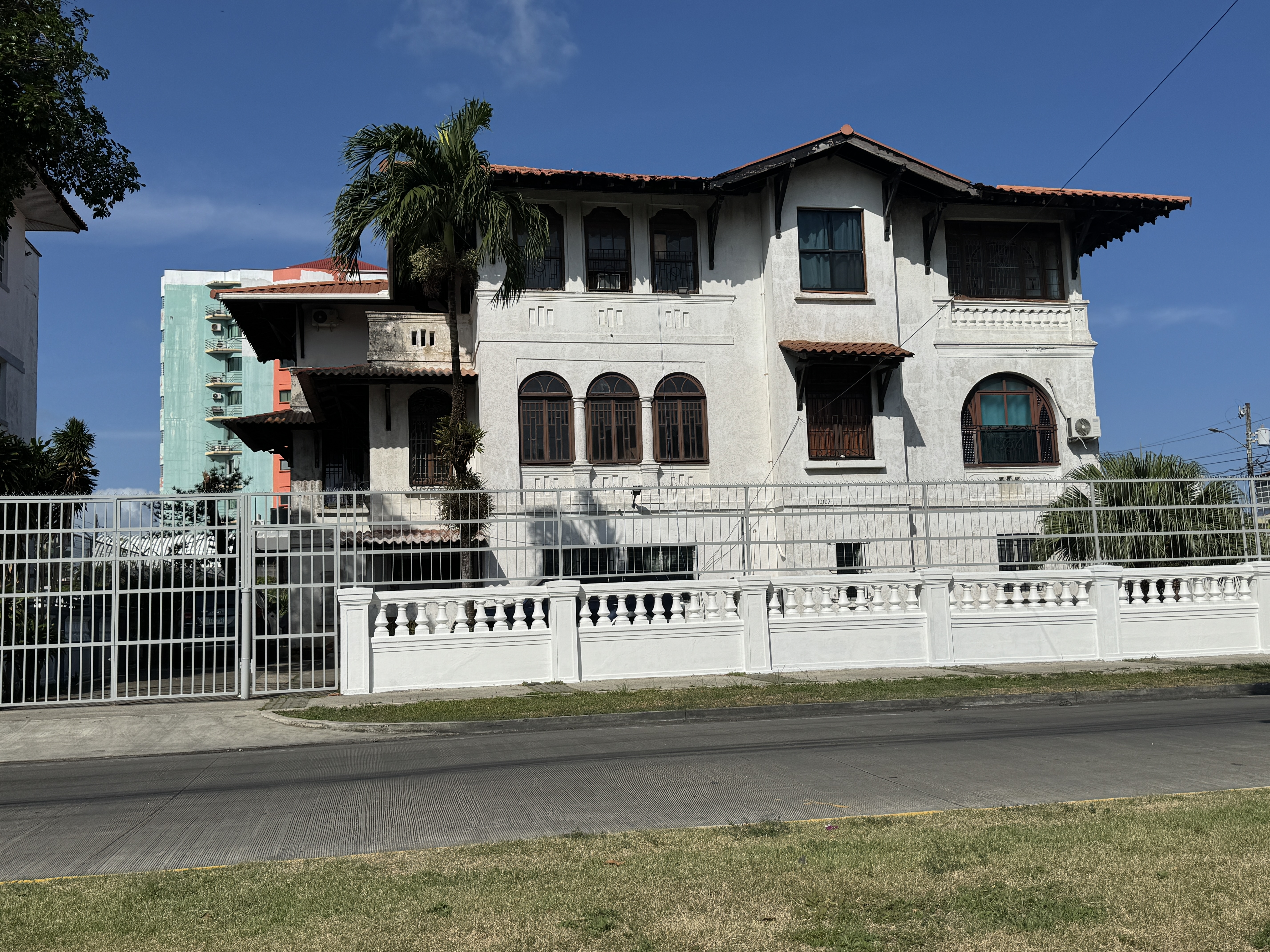
The new waterfront became prime residential space, though the cruise-ship terminal would ruin the waterfront view.
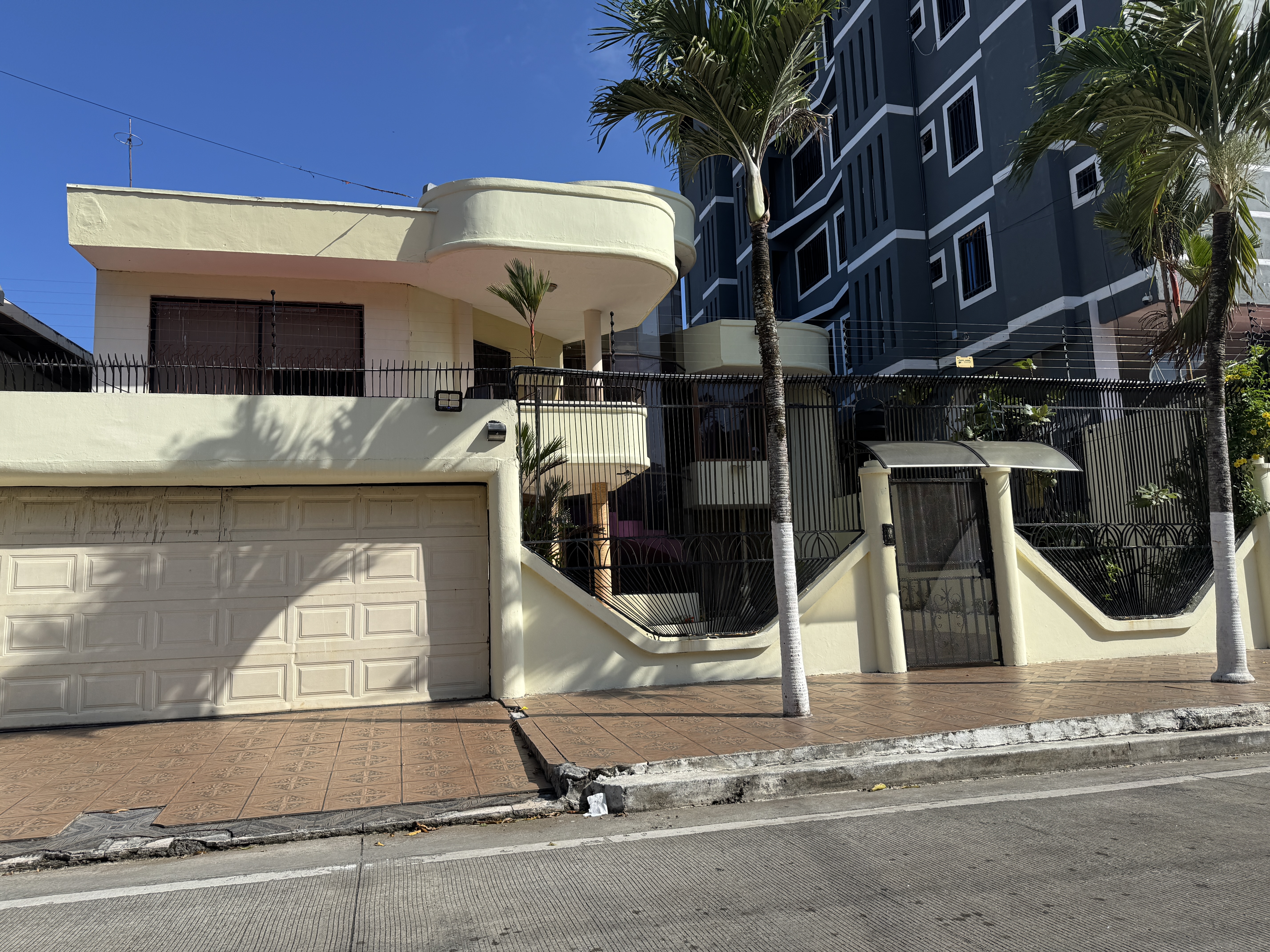
More recent waterfront construction.
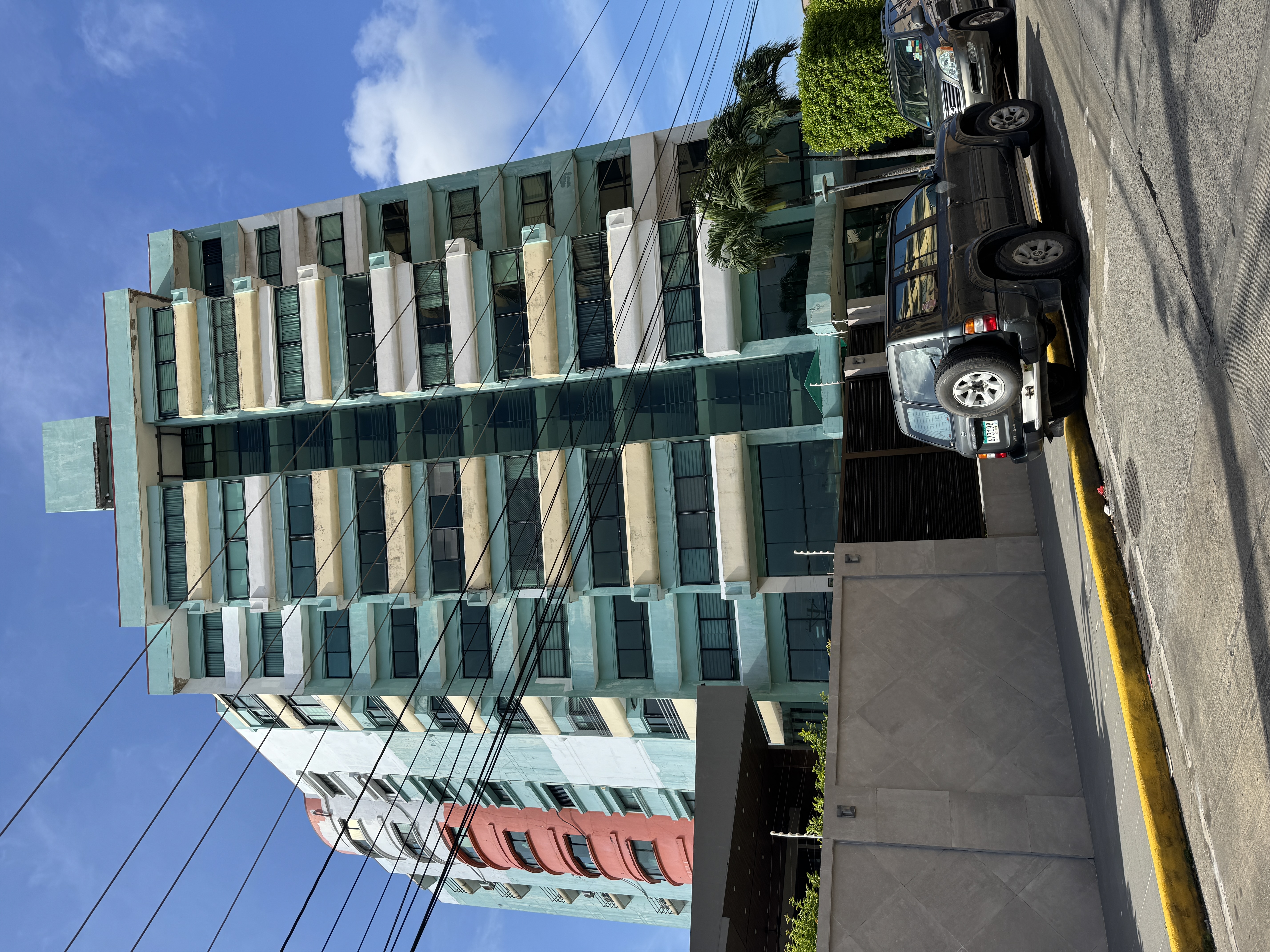
Col n has a few well-maintained high-rises, most of them on this newer side of town.
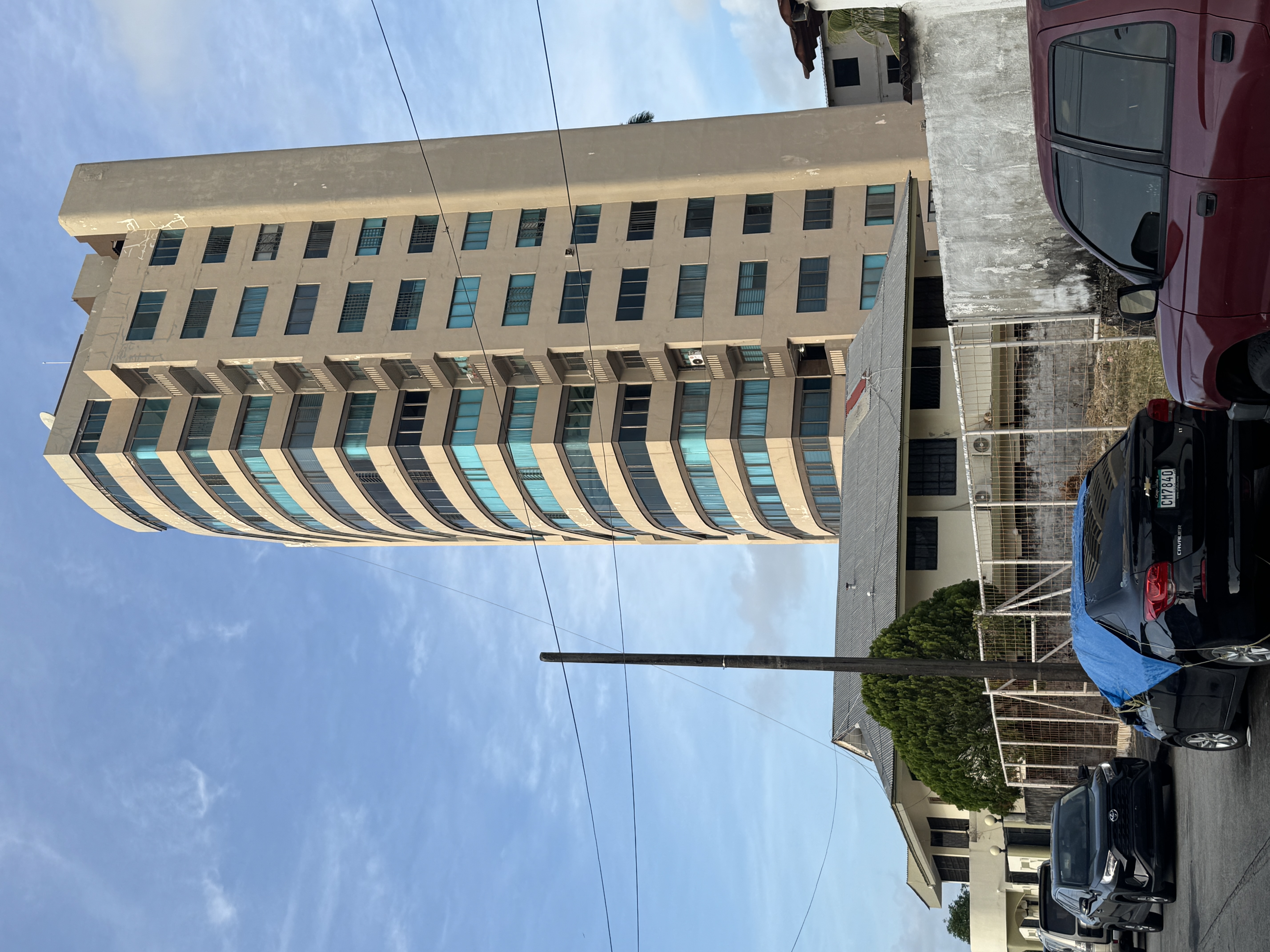
Here's an exception. It stands next to the Hotel Washington.
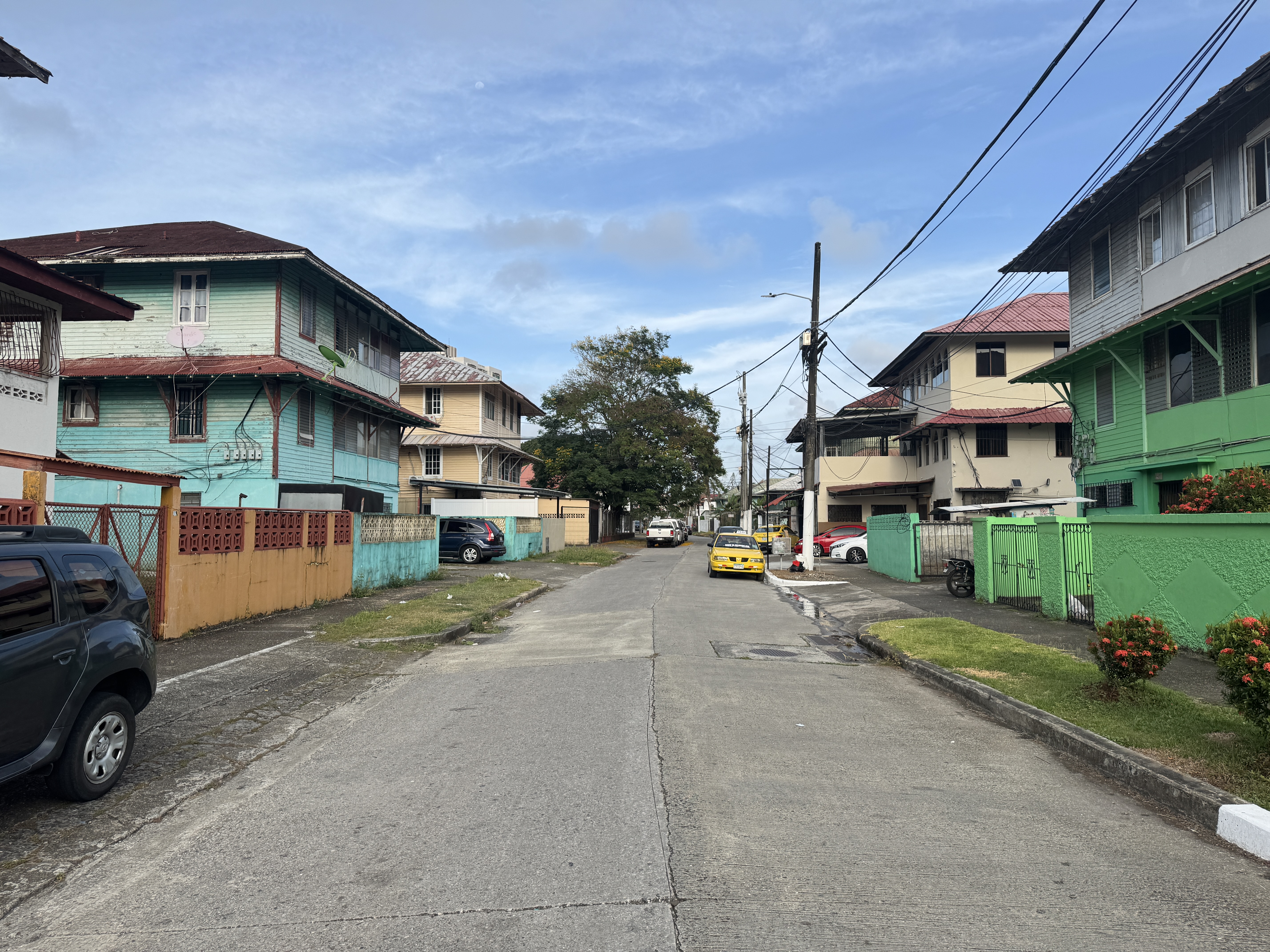
Farther from the waterfront, housing even in New Cristobal is dilapidated, like these four-family wooden quarters built by the Corps of Engineers in 1919. This was U.S. military housing until the 1950s, when new quarters opened on the far side of the water in the area called Coco Solo and now almost entirely replaced by the expanded Free Trade Zone.
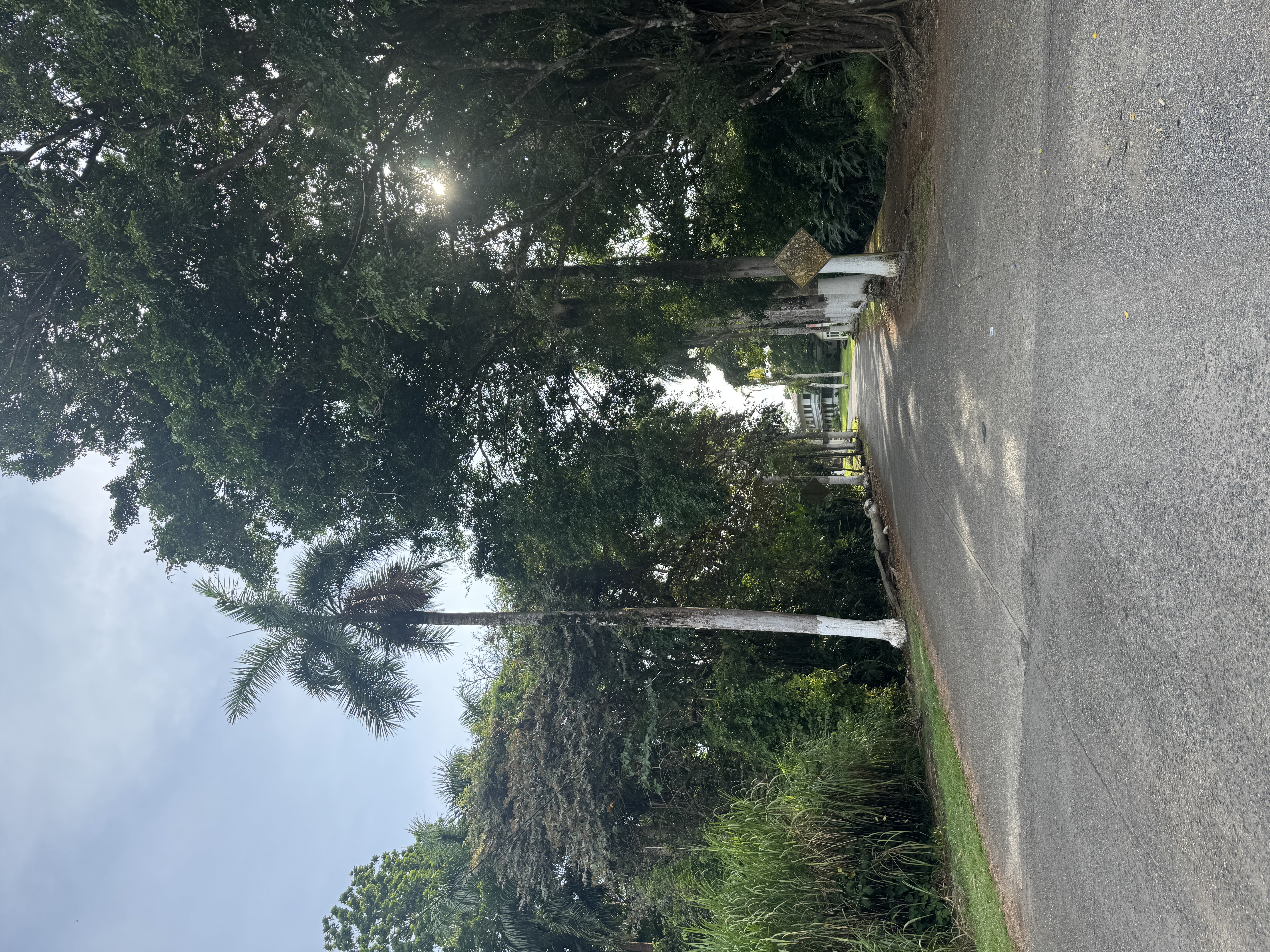
A bit of the Coco Solo residential area survives, and though getting to it means running an industrial gauntlet, the neighborhood itself, called Gold Hill, is very nice. Here's the way in.
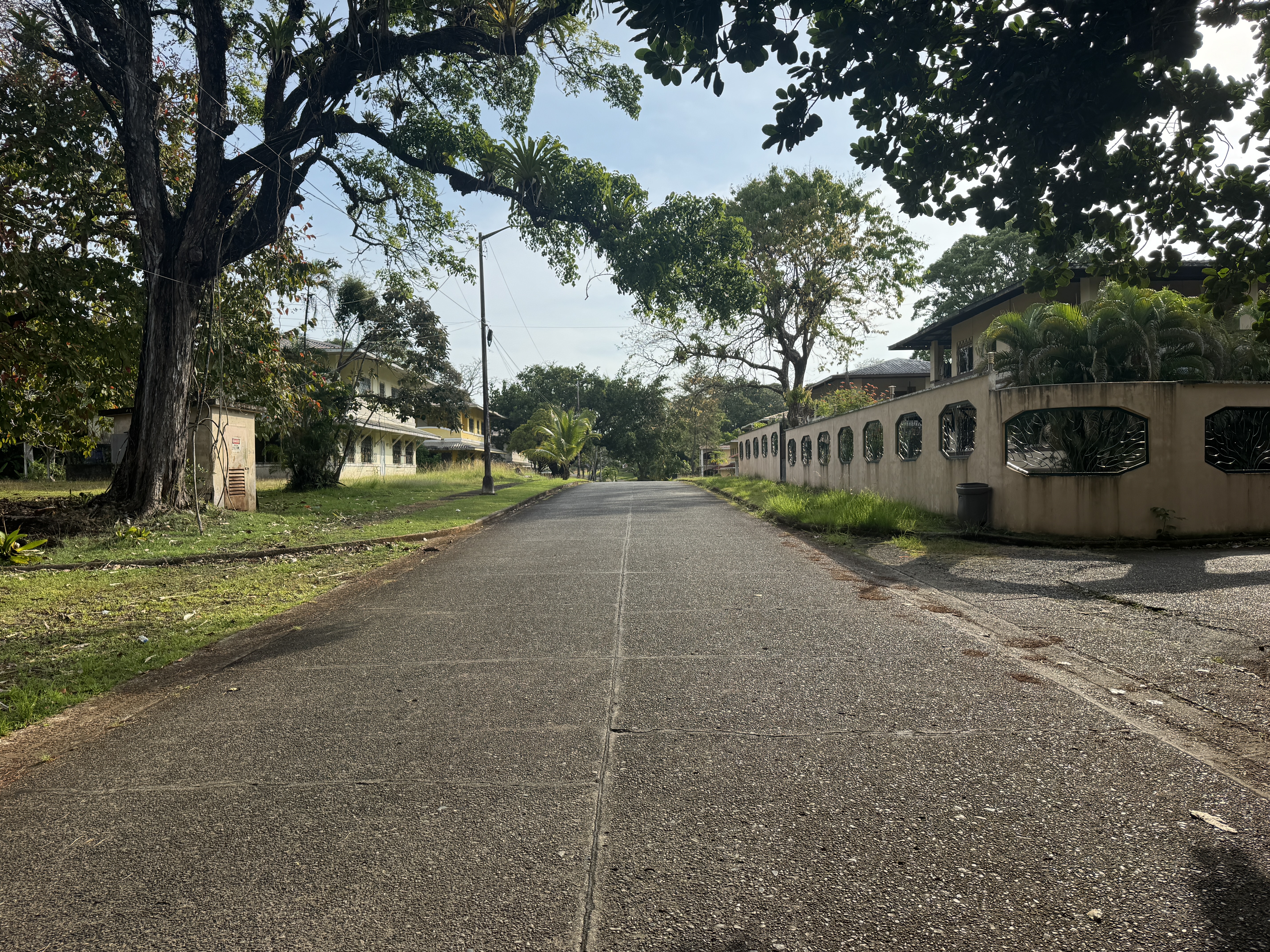
A woman walking by said, "the Colonel lived here."
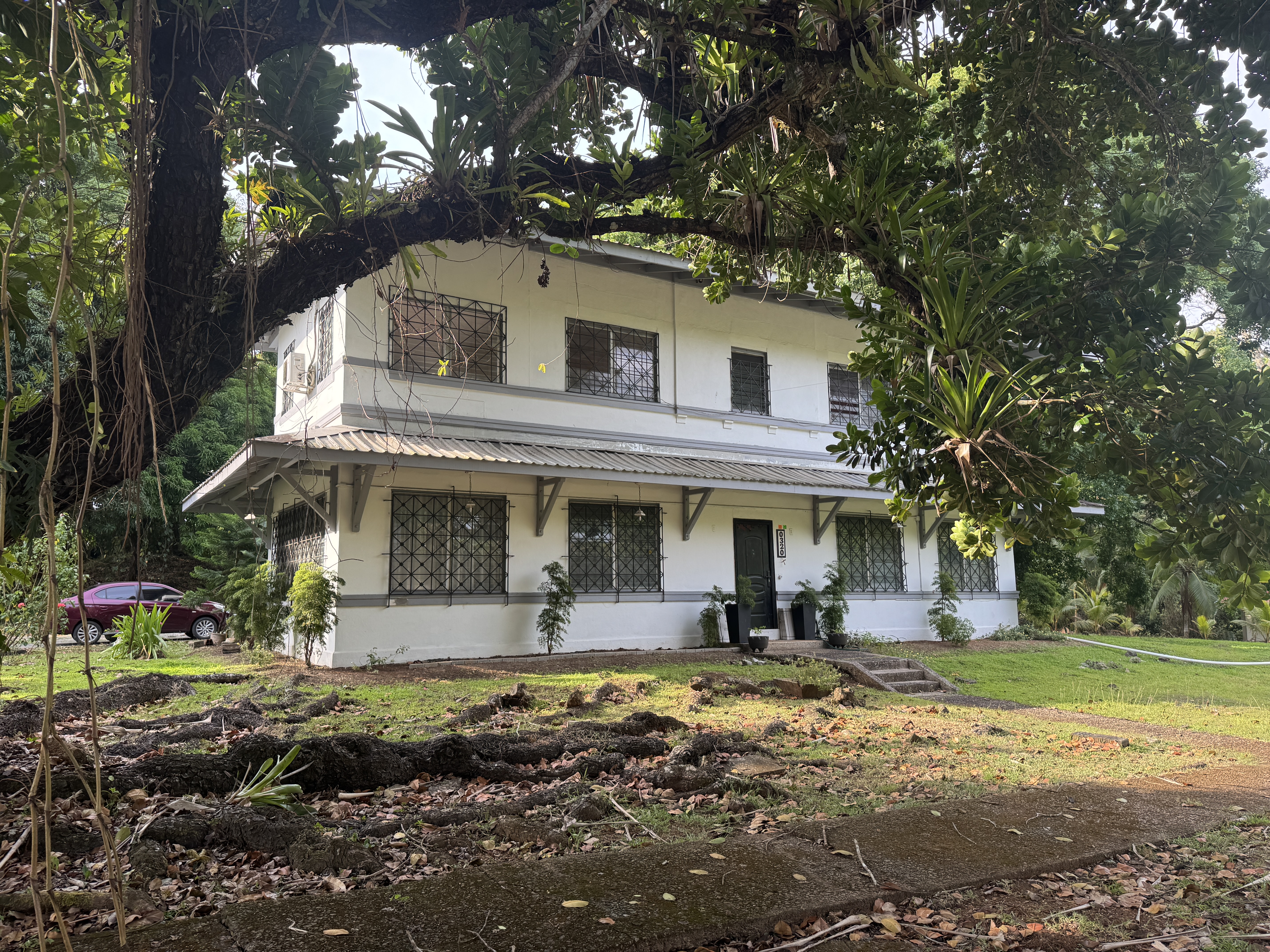
Nothing here for Architectural Digest--this is Army housing, after all--but solid and very peaceful.
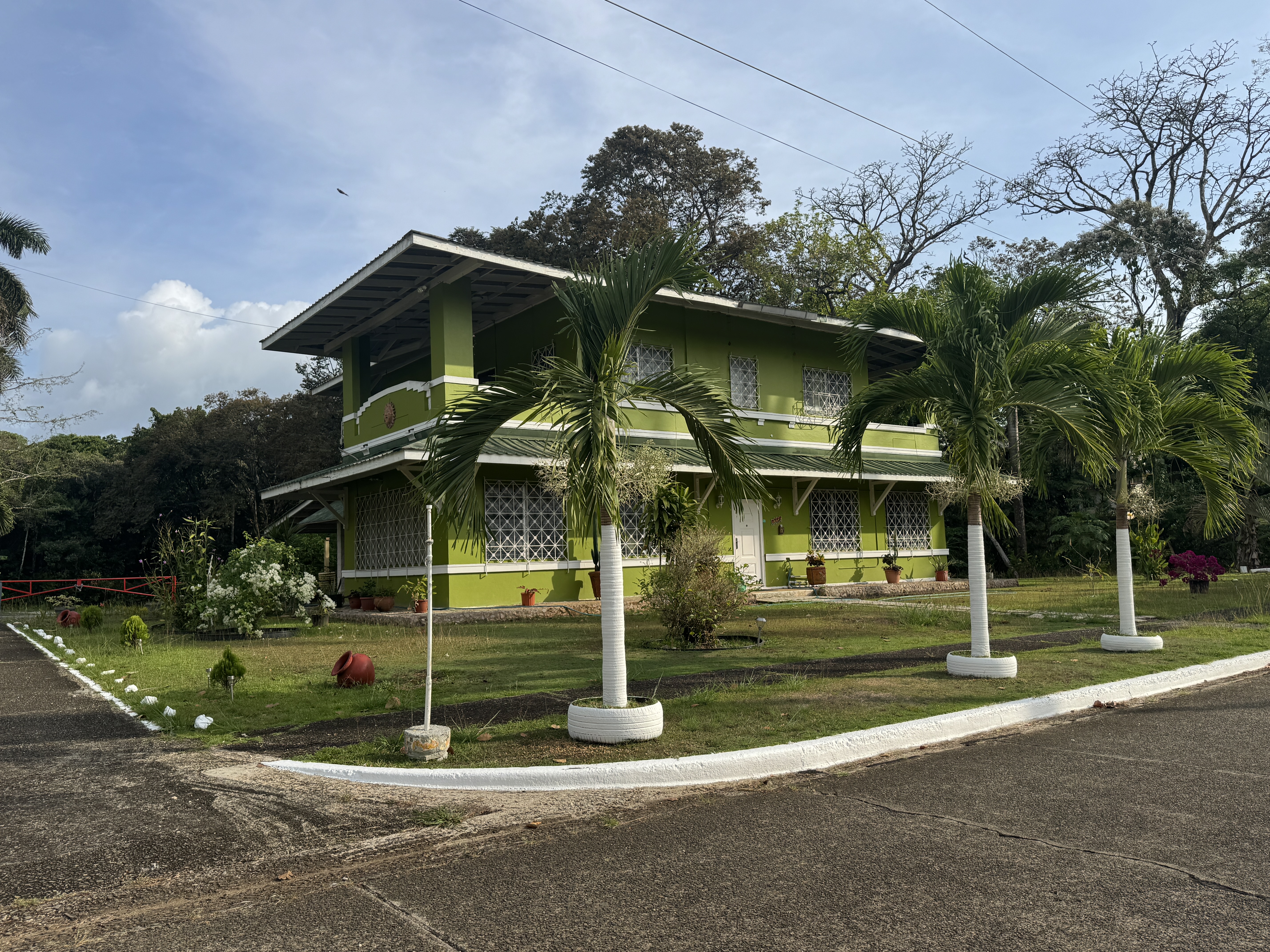
The houses are now privately owned and modified to suit the owners. I do wonder how you get truck tires around palm trees. I guess I know the answer.
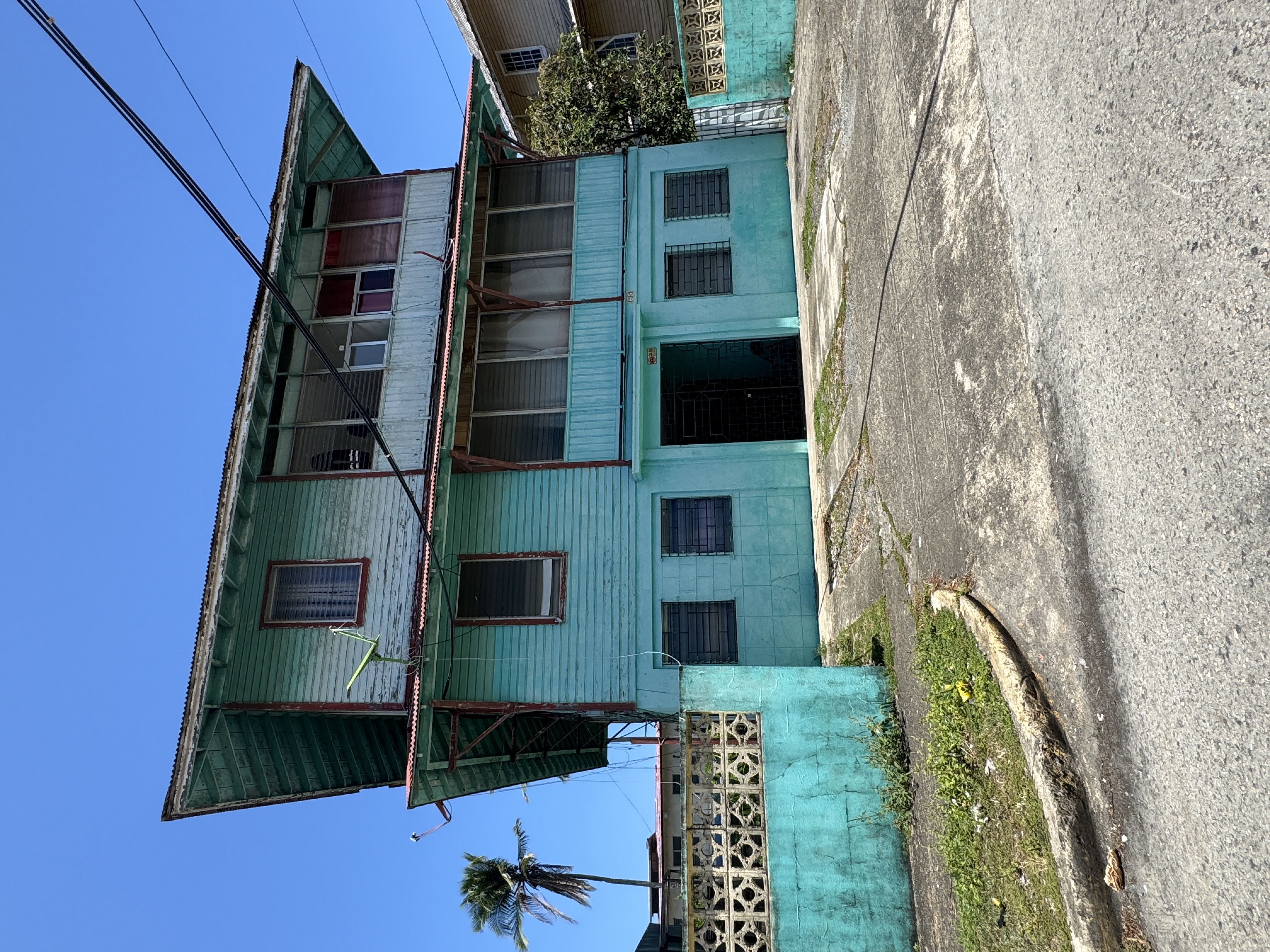
Back in New Cristobal, things aren't in such good shape.
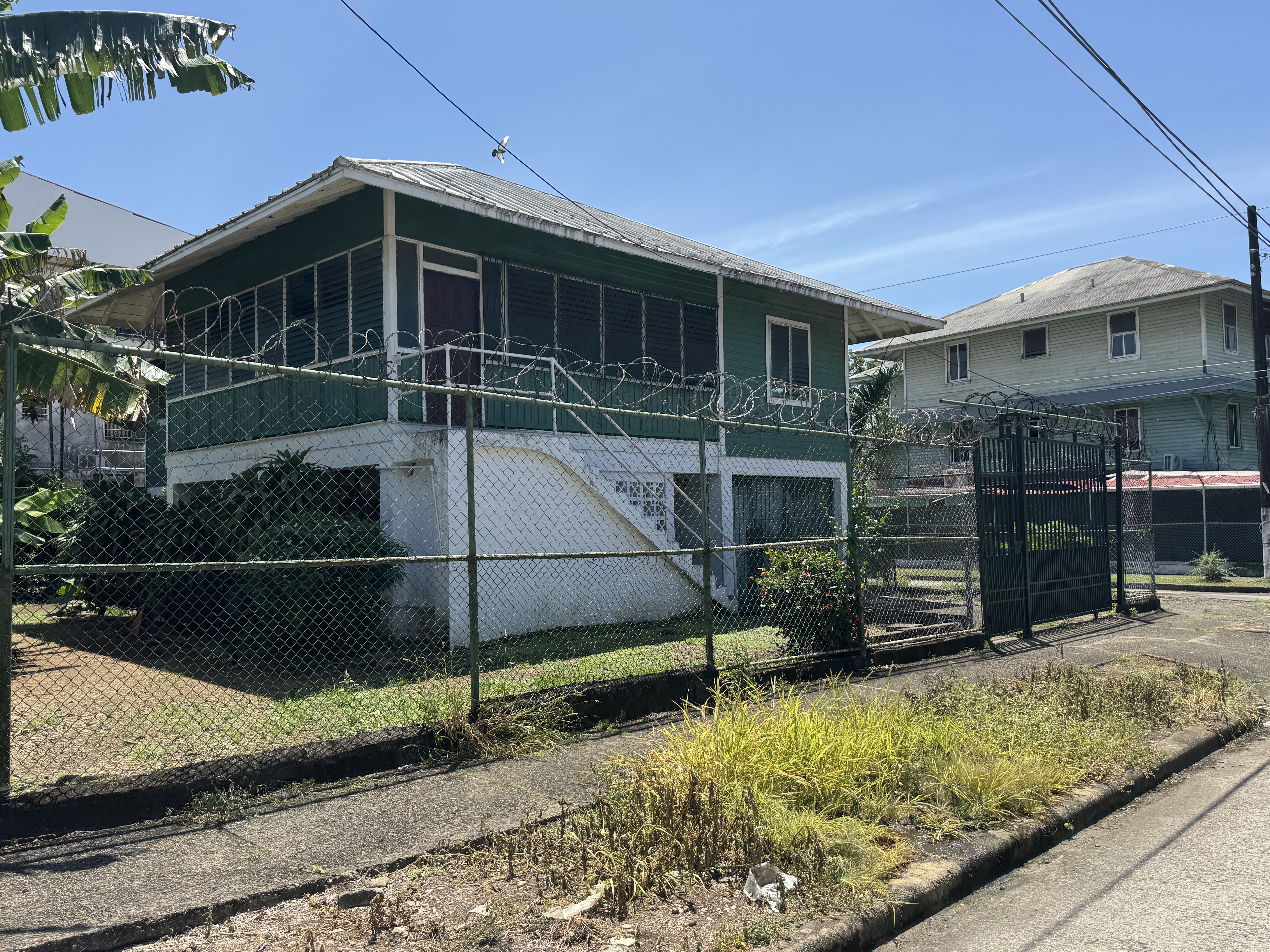
Security is an issue, too.
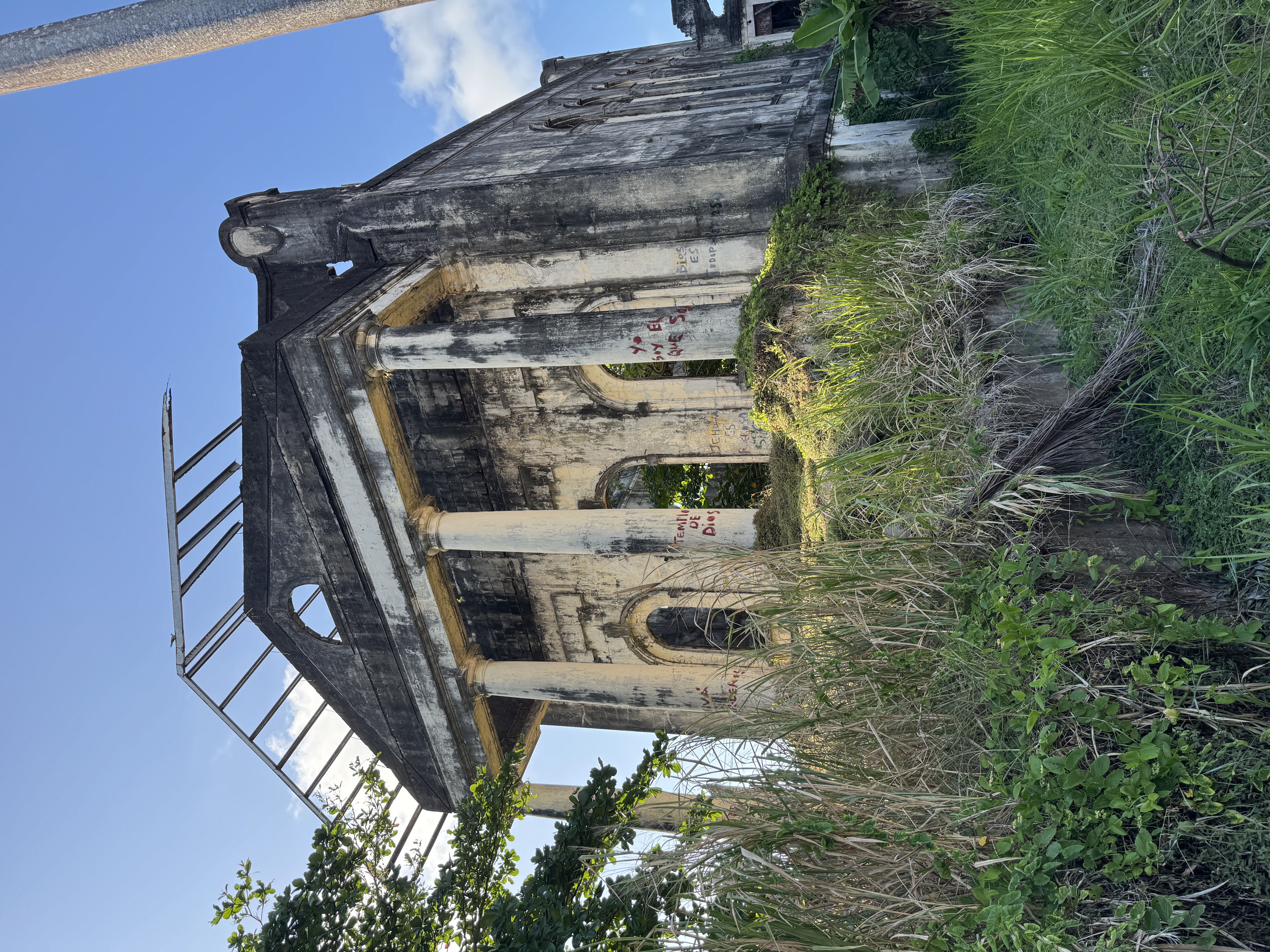
Think it's a Roman ruin? No, it's New Cristobal's Union Baptist Church, built in 1921.
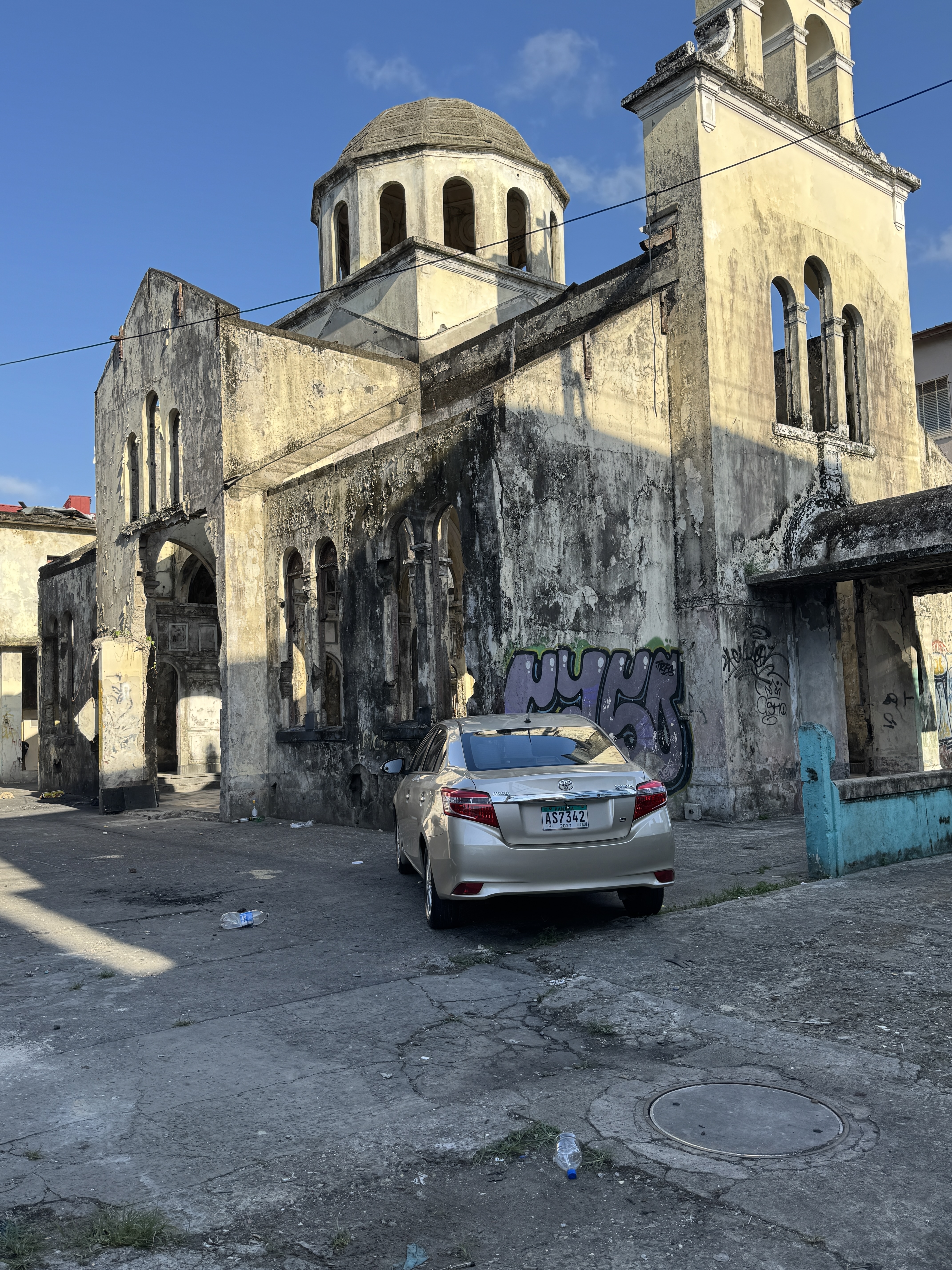
Here's another empty building of similar vintage. Greek Orthodox? A synagogue?
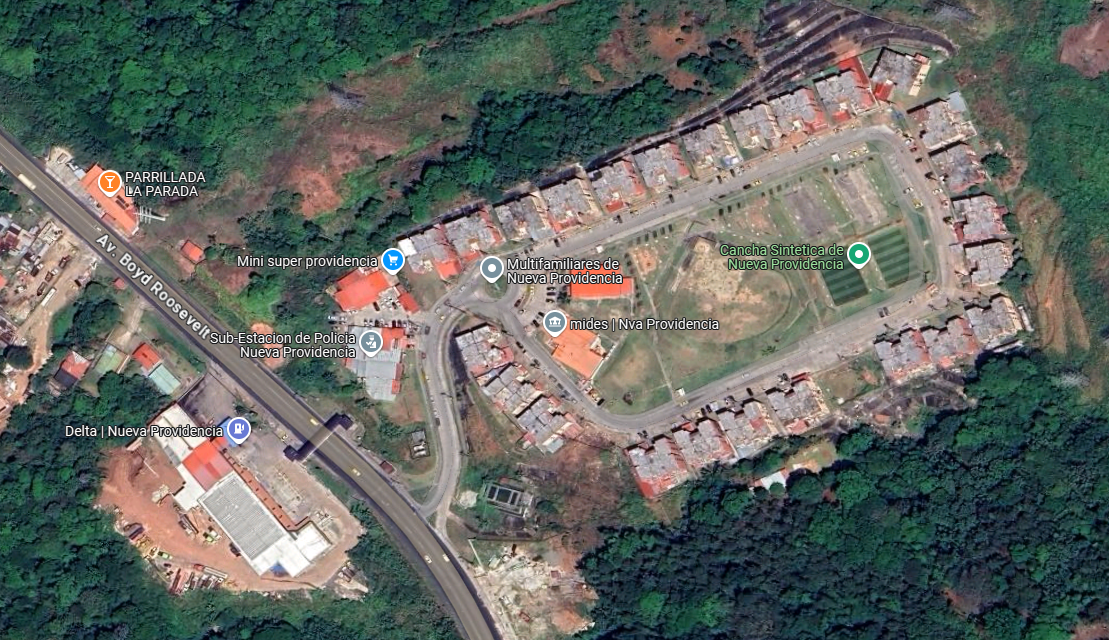
One solution is to give up, move out of town, and start over. Here, 10 miles outside Col n, is Nueva Providencia. (The highway, "Boyd Roosevelt," was the first paved highway across the isthmus. It opened during World War II and is named for FDR and Augusto Samuel Boyd, Panama's president at the time.)
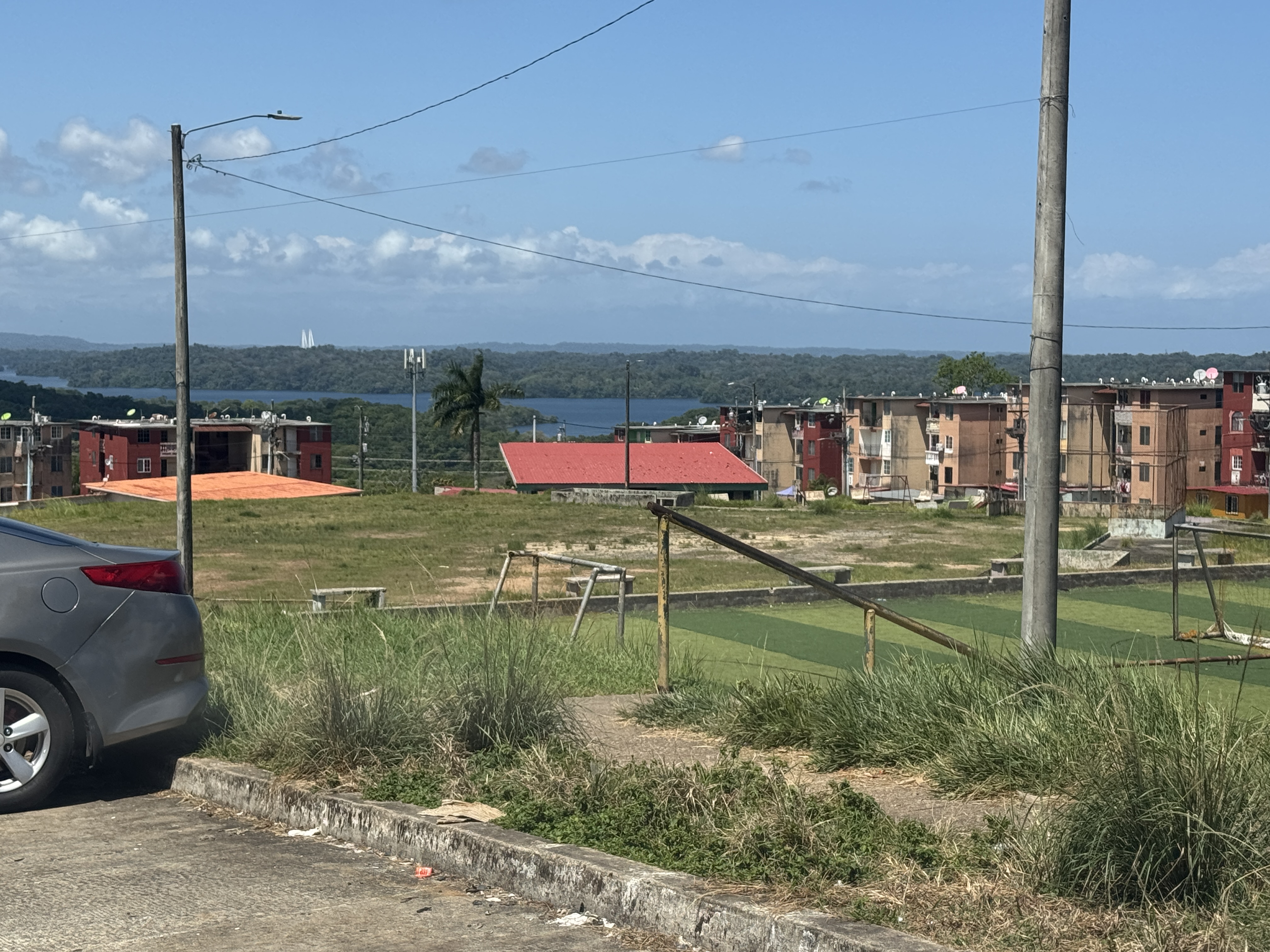
There's lots of open space, which sounds good. (The two little white points on the horizon are the towers of the Atlantic Bridge over the Canal. They're about eight miles away.)
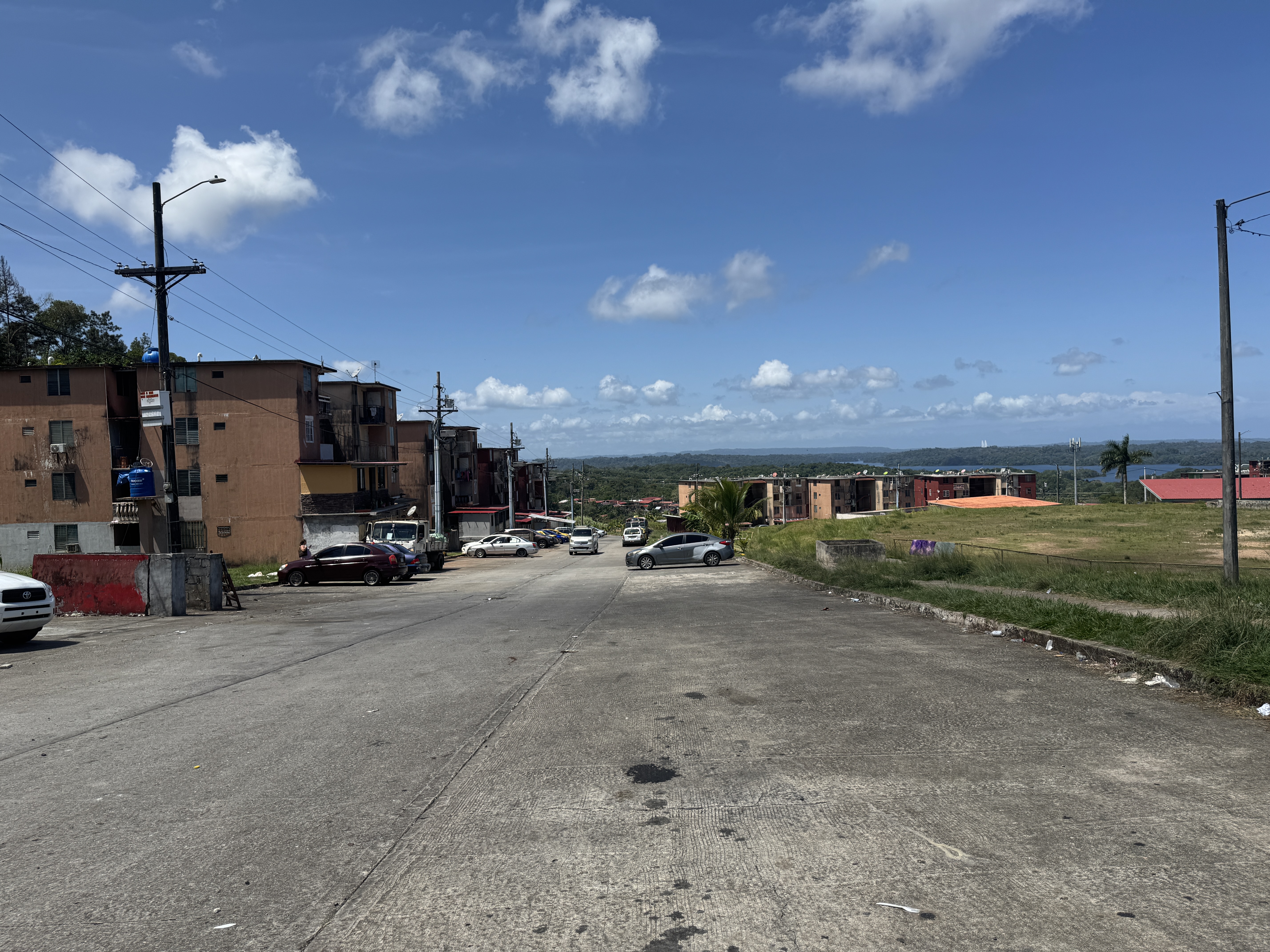
There's no traffic problem.
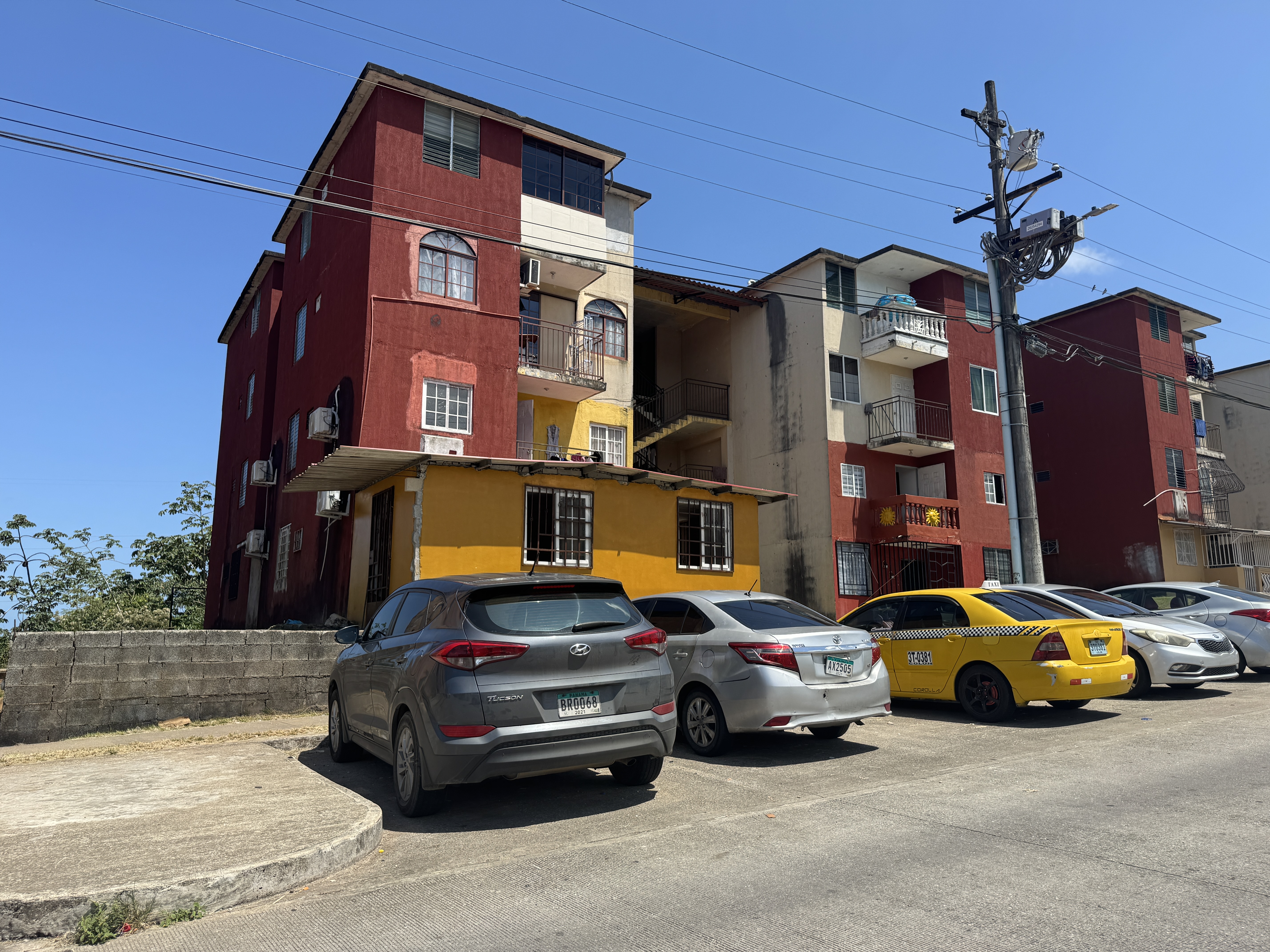
Some apartments have air conditioners.
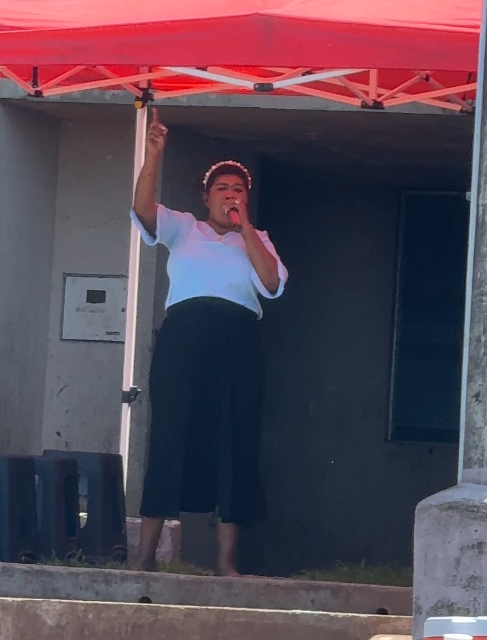
The persistent problem is poverty, which raises the question of why so much of the money generated by the ports and Free Trade Zone goes to Panama City and Hong Kong and Europe. It's not an easy nut to crack. This woman, crying "Hallelujah" over and over, uses a microphone and a powerful amplifier to preach salvation. She had no visible audience, but everybody heard her.
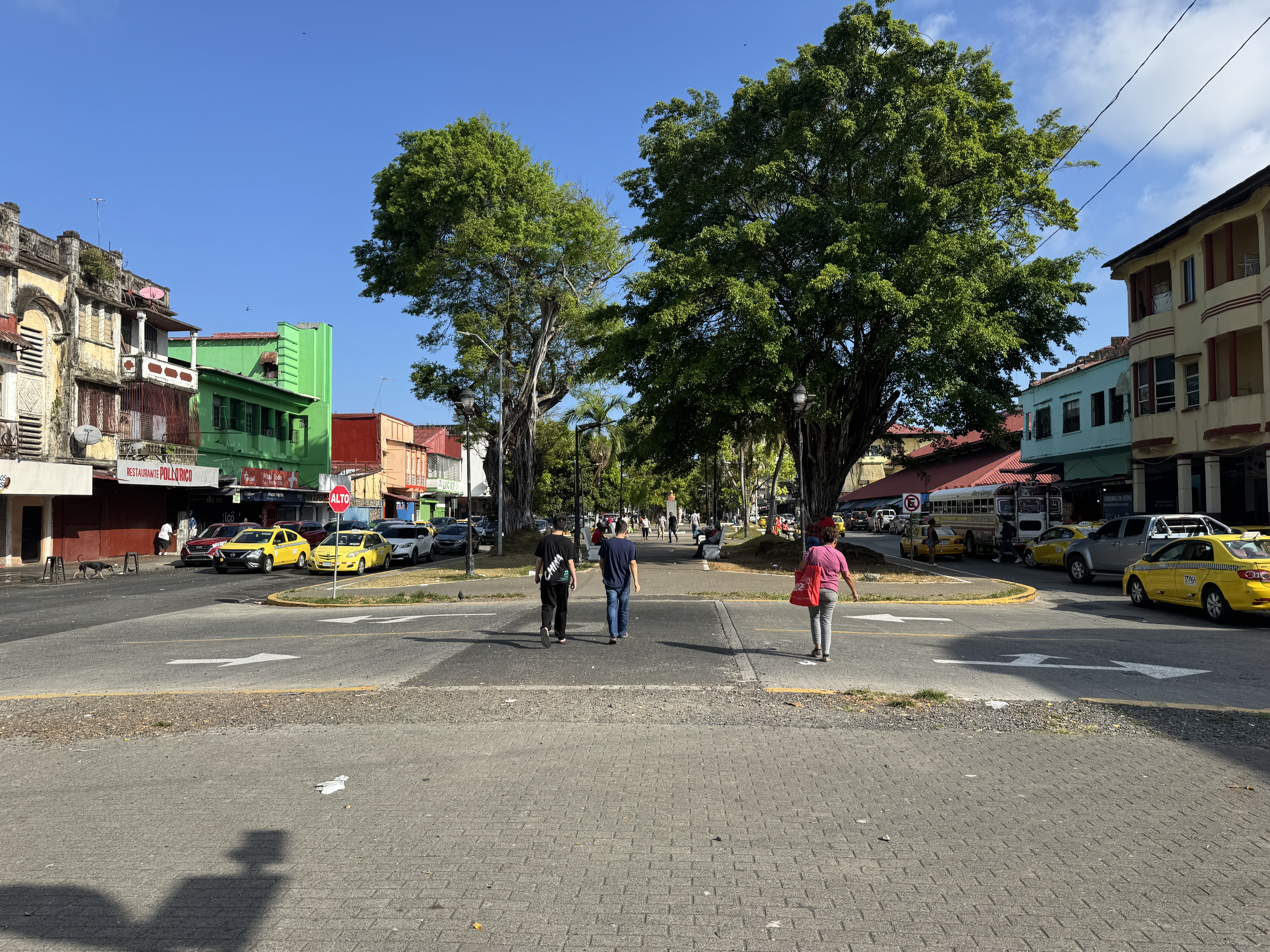
Discouraging? "A slum without a city"? Let's stroll the Paseo.
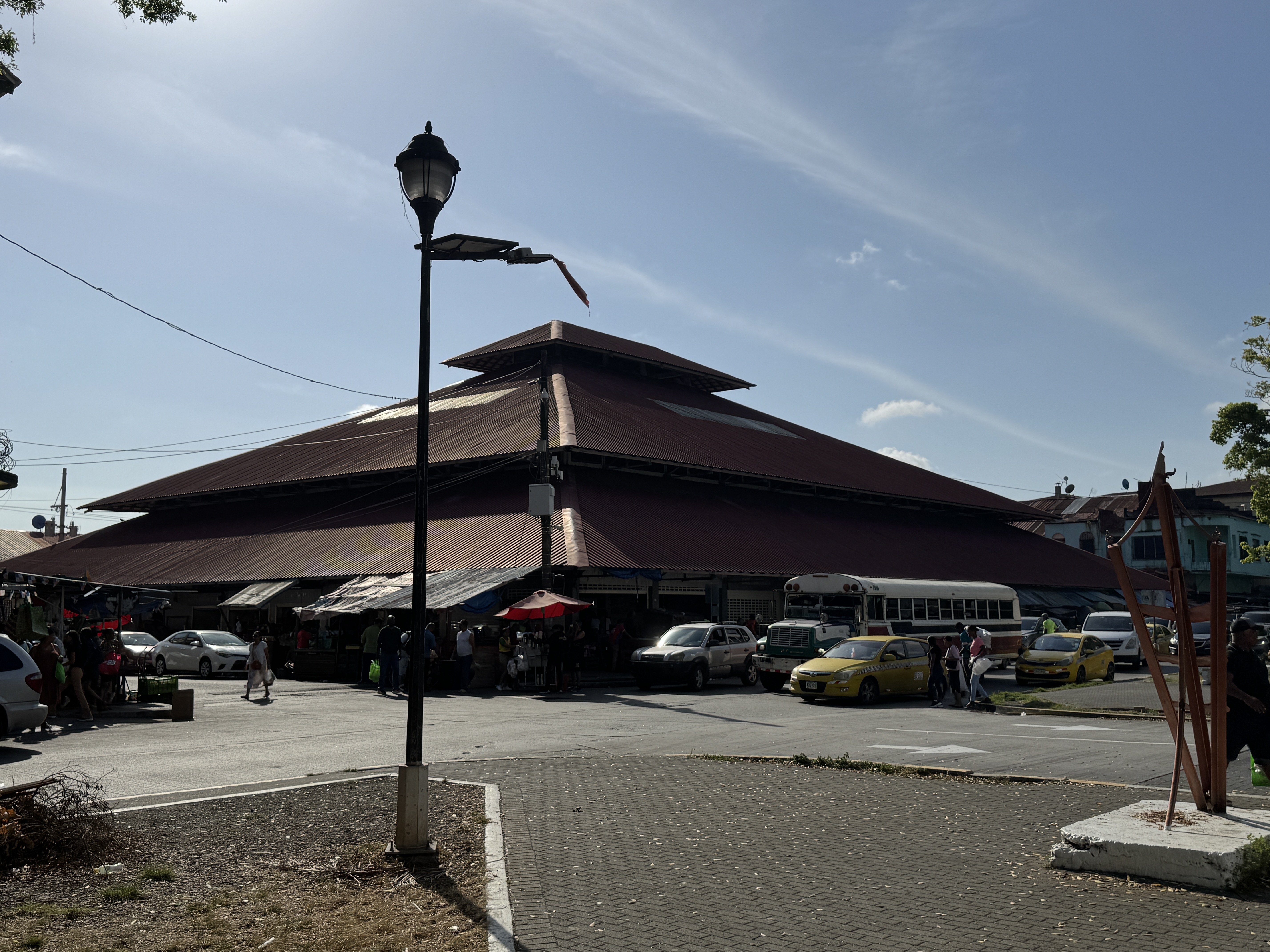
Here, right on the street, is the municipal market.
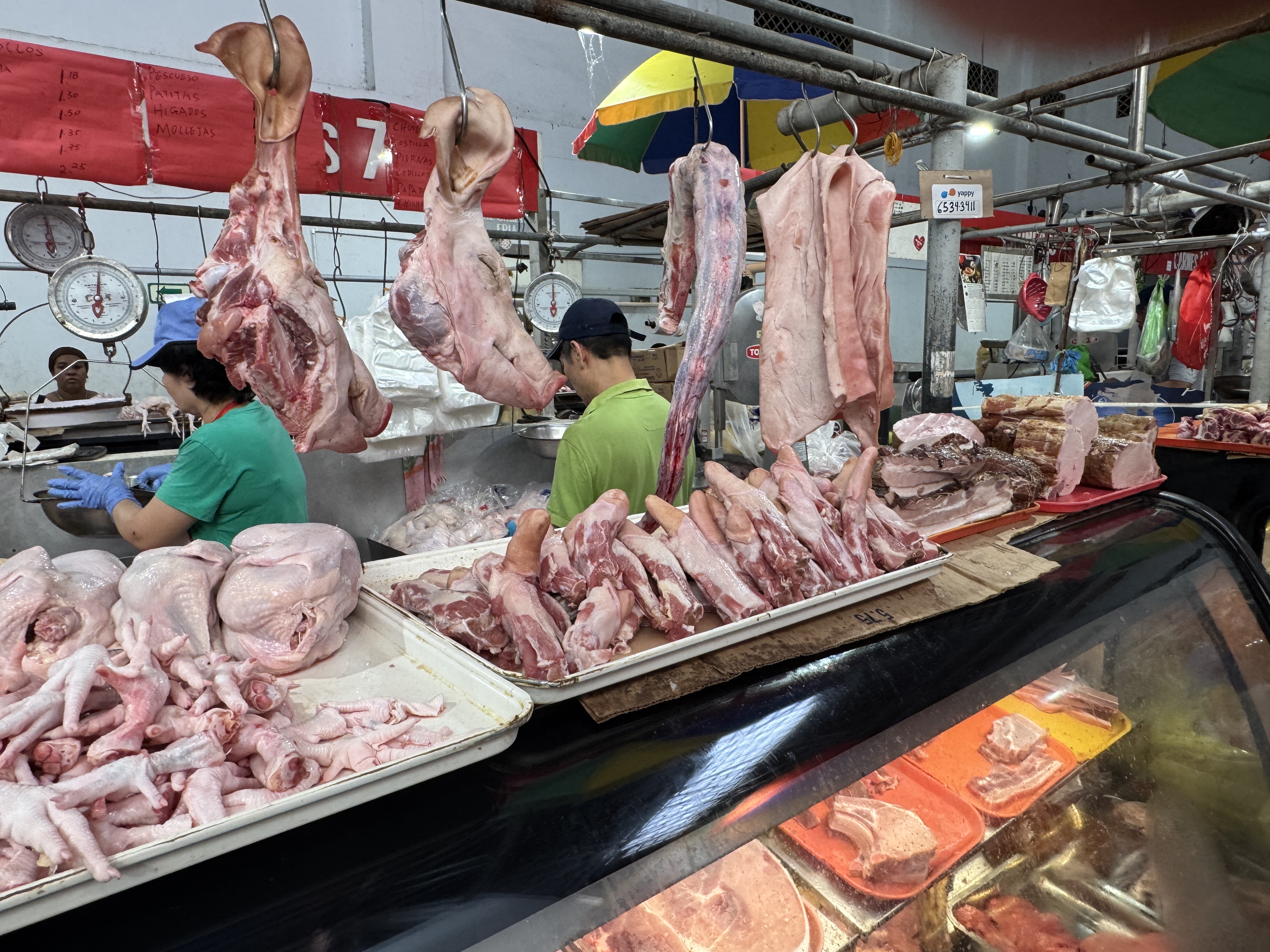
Yes, there are several supermarkets in Col n, but this is more fun.
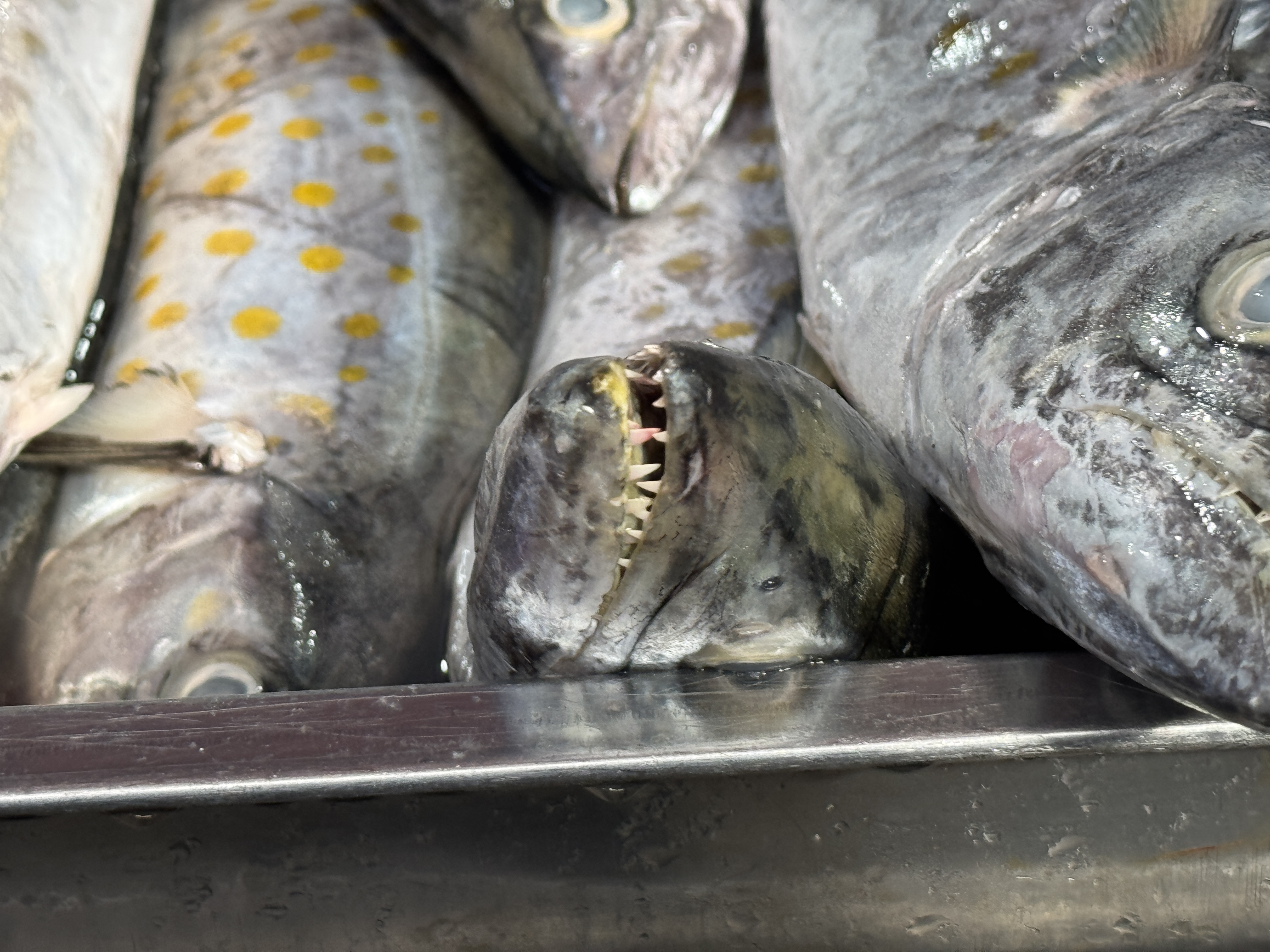
All those teeth to no avail.
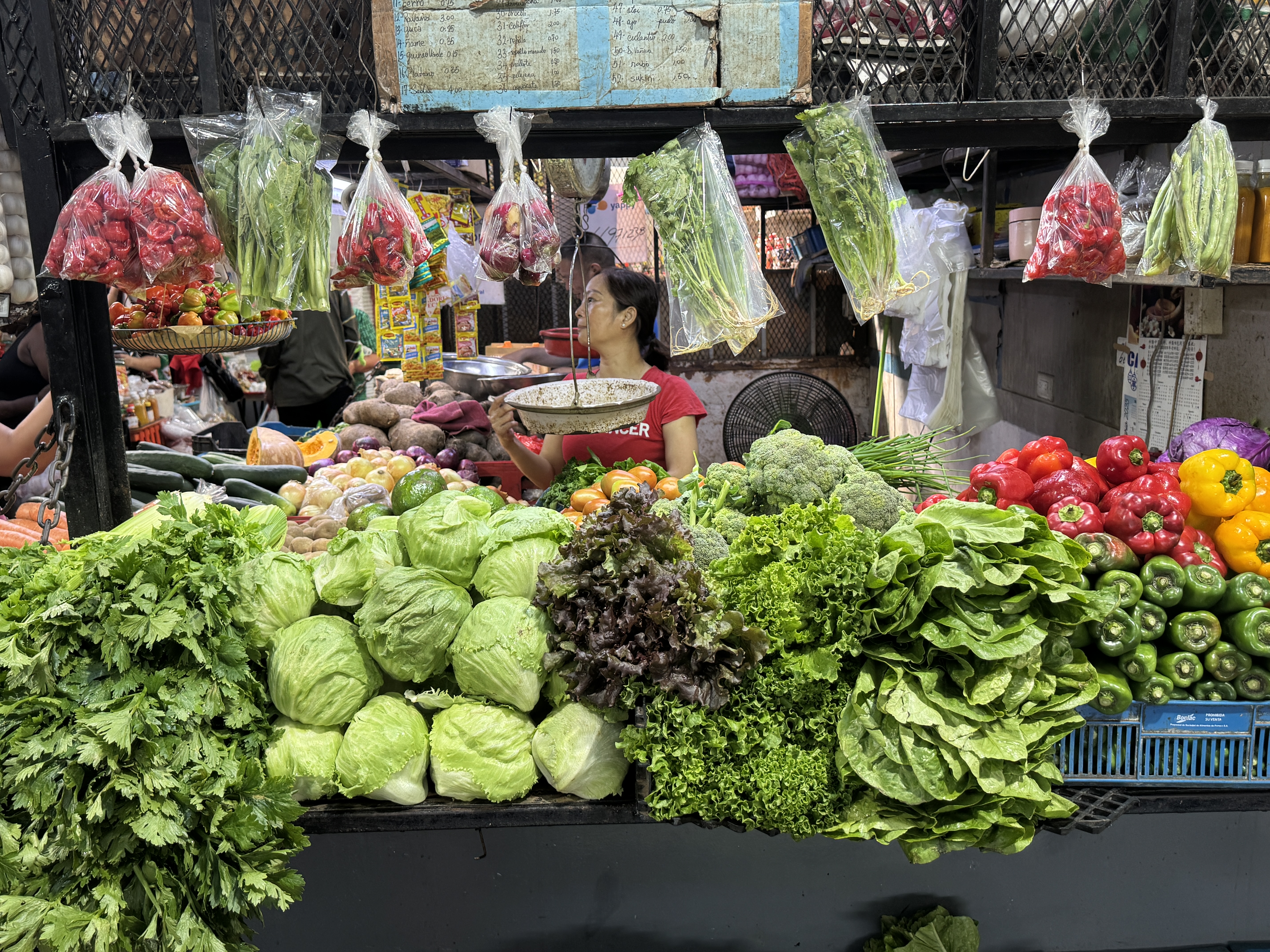
Most of the small stores across the Isthmus are owned by descendants of Chinese immigrants, a thousand of whom arrived to help build the railroad.
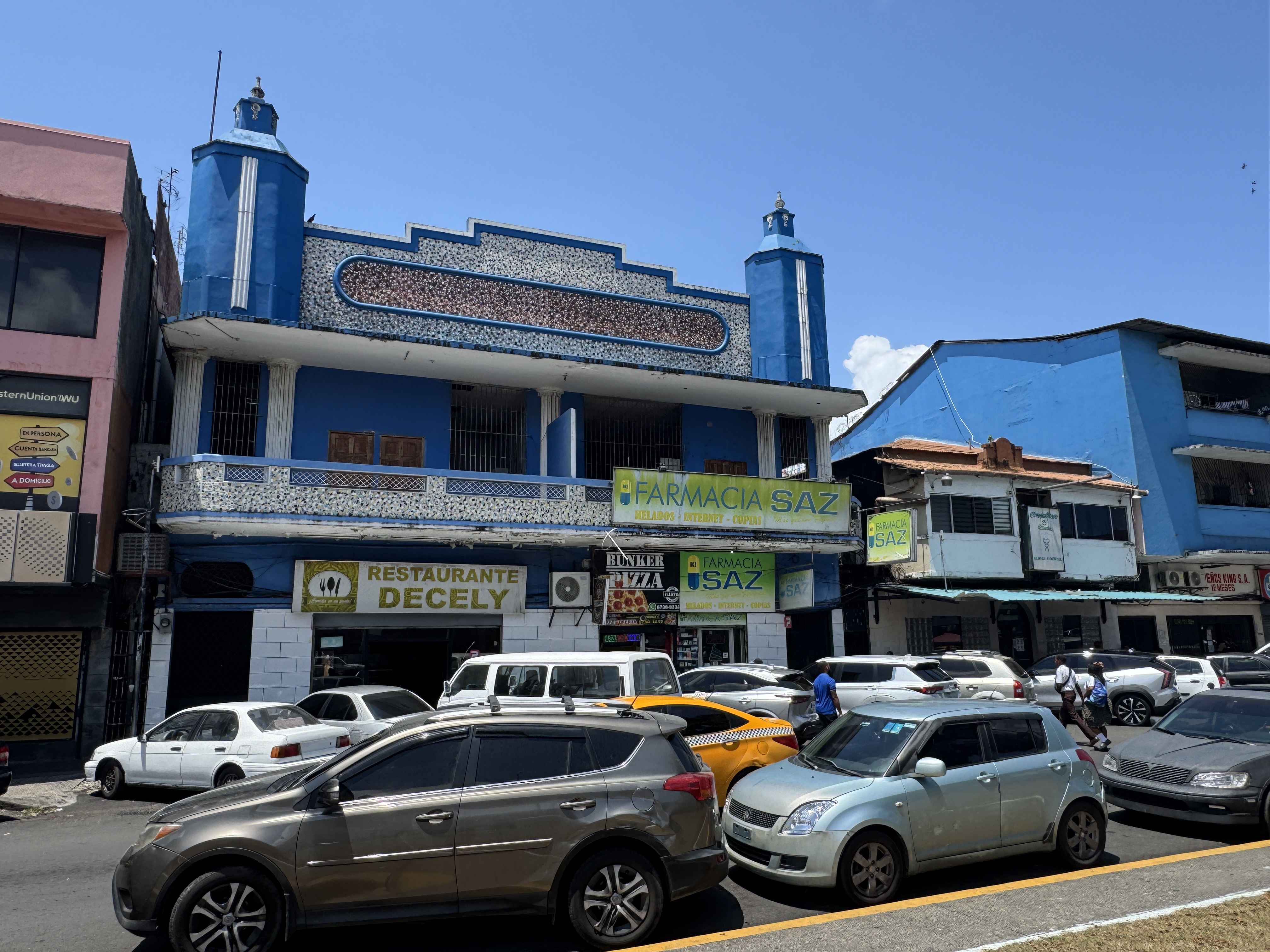
Americans were once a large part of the local population, too. Perhaps that helps explain why Col n had seven movie theaters, all on the Paseo and all defunct now.
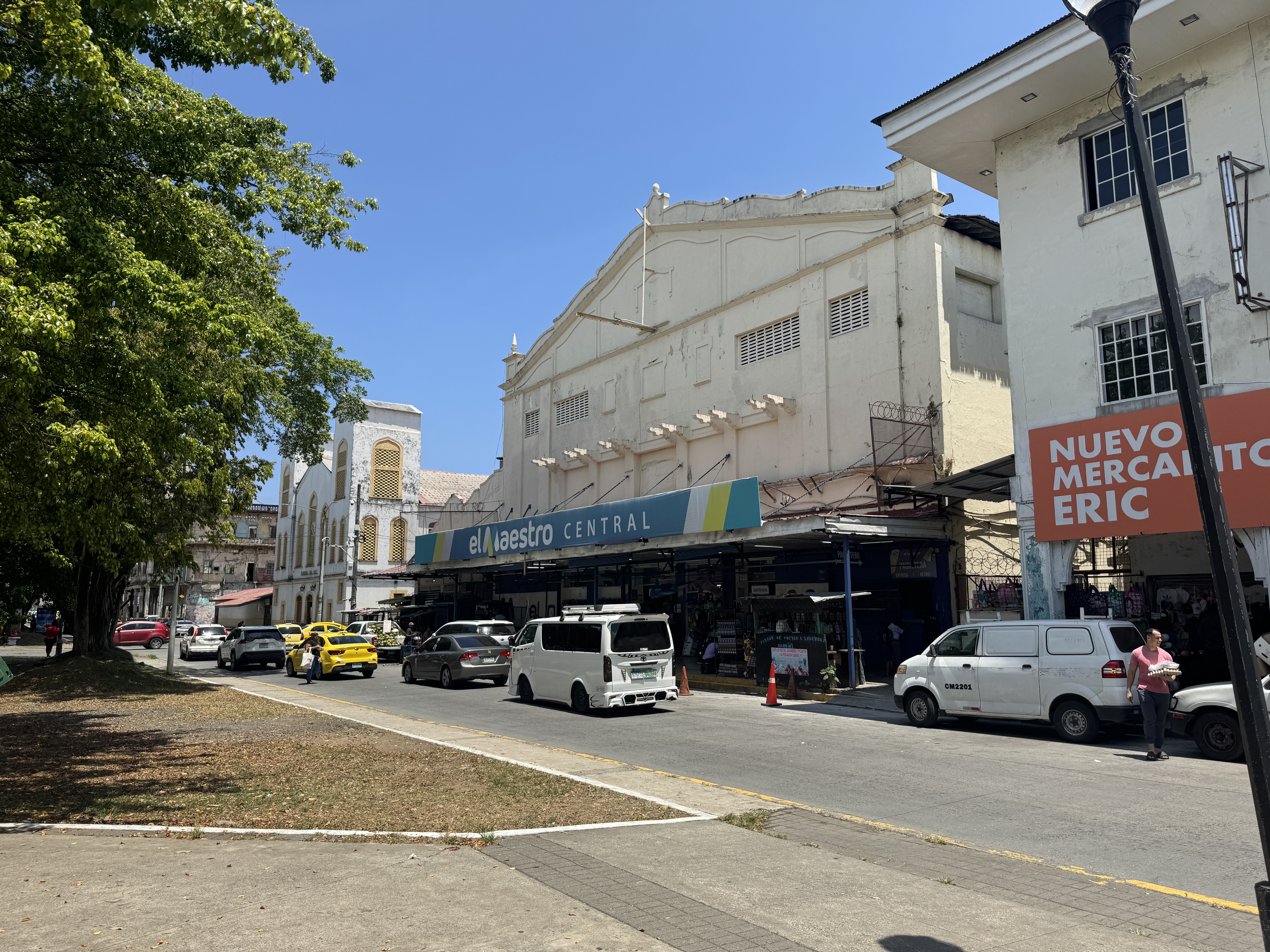
They've been repurposed. Put on your time-machine glasses, and you can see U.S. Marines out on the town.
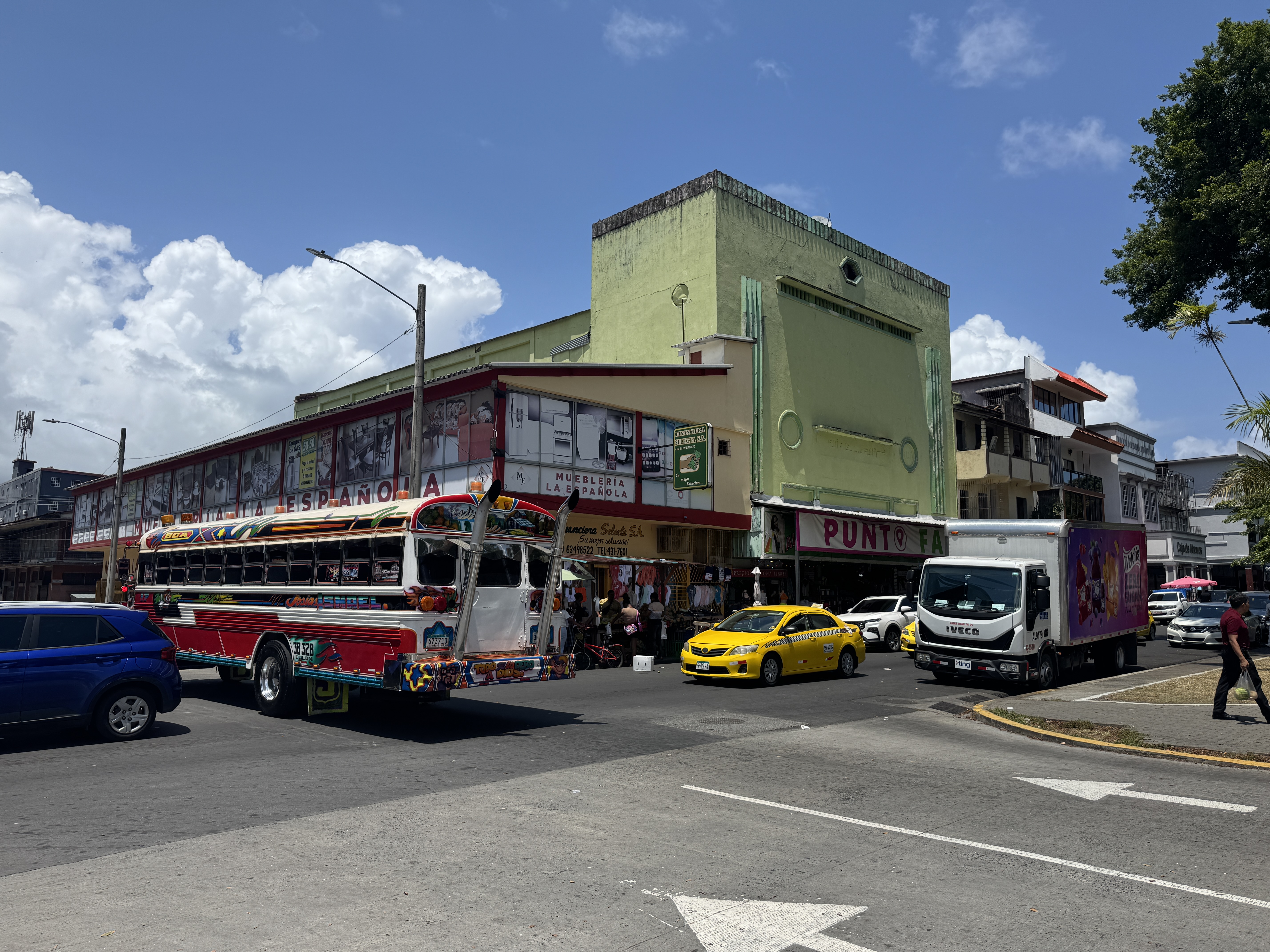
Imagine Lana Turner on the marquee.
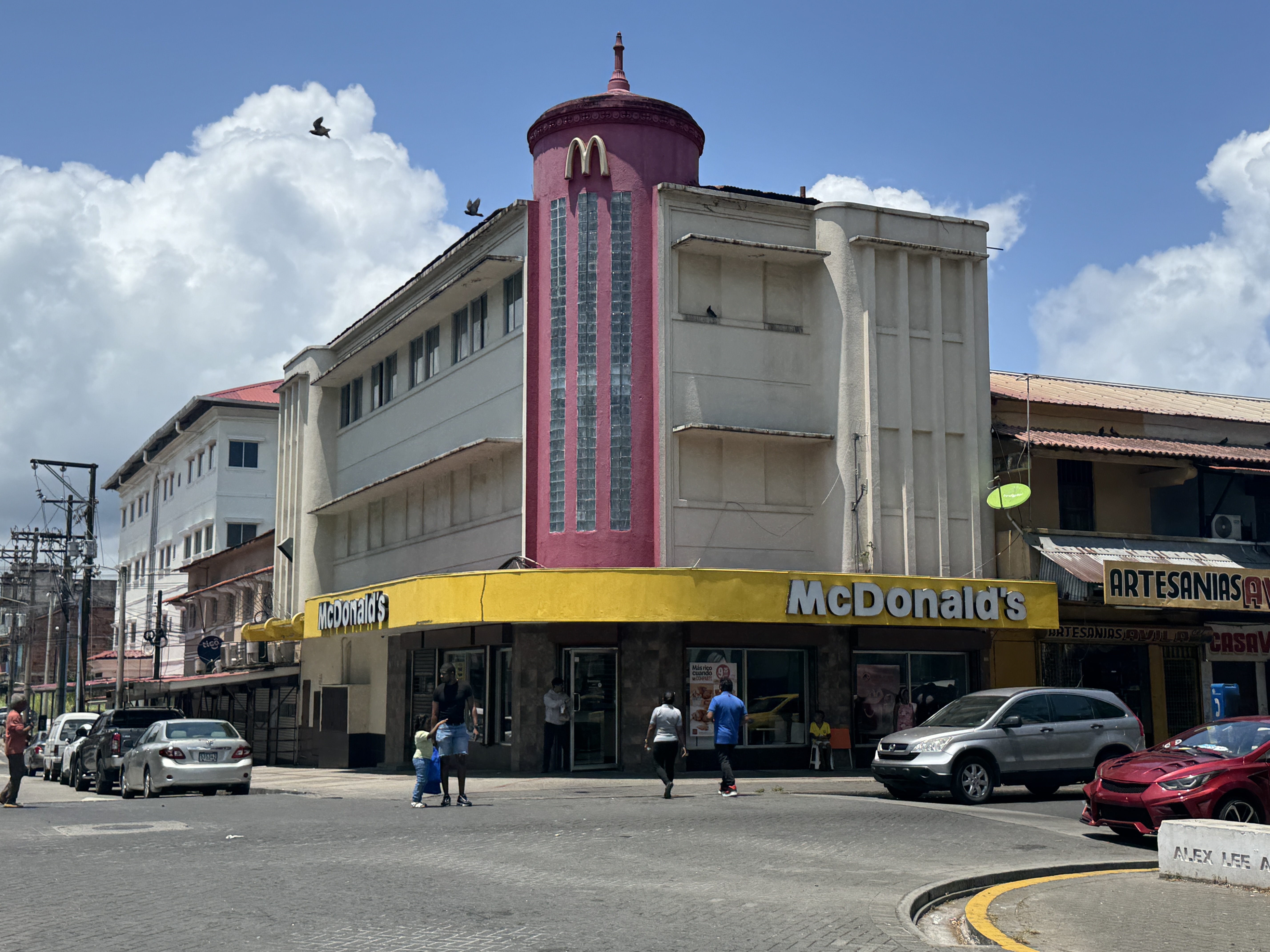
Another theater? Maybe, maybe not.
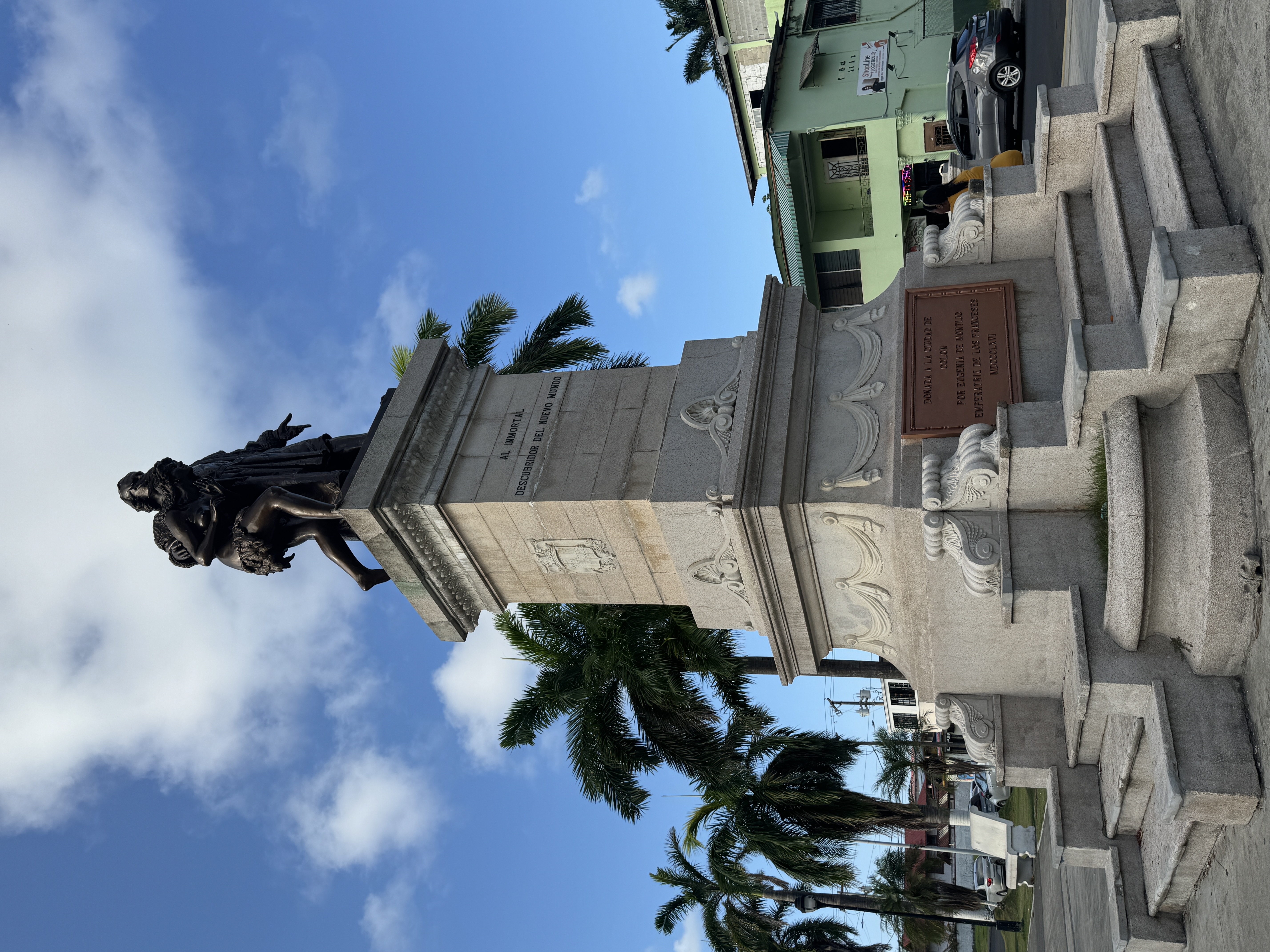
Near the end of the Paseo is this statue with the words "Immortal Discoverer of the New World." It was sculpted by Vincenzo Velo (1820-91) and given to the people of Panama in 1867 by Eugenie, Empress of France. She had intended to send the statue to Vera Cruz, Mexico, but she changed her mind when Mexican revolutionaries executed Maximilian I, the emperor of Mexico, who happened also to be an Austrian archduke. The statue has moved around Col n but has been here on the Paseo since 1930.
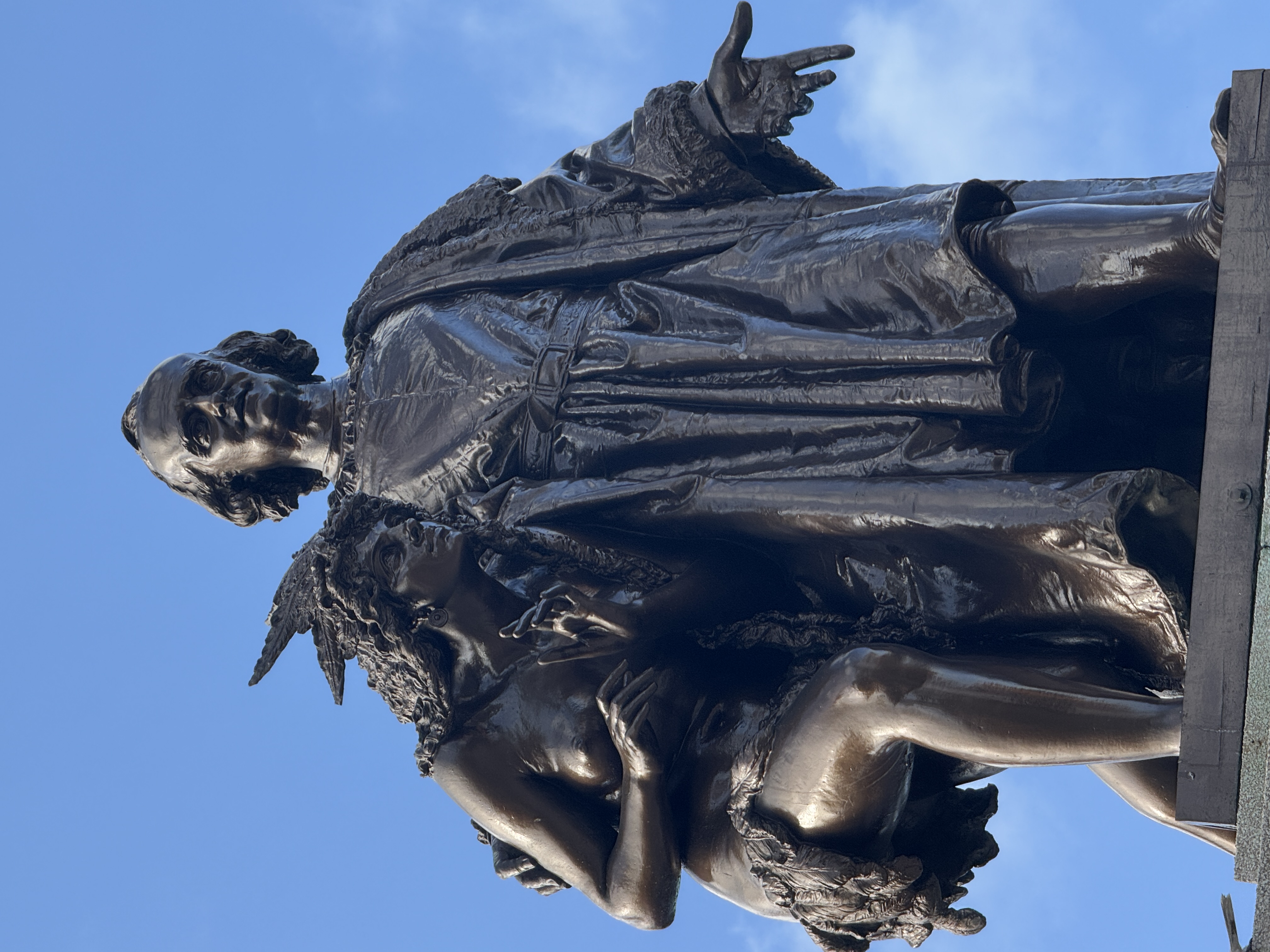
Columbus looks more avuncular than heroic, but the Indian maiden still seems afraid. Smart lady.